Things to Do in Rome
20 Best Attractions, a 3-Day Itinerary, Where to Stay, and the Food You Cannot Miss
Quick Info
Best for: Ancient ruins, the Vatican, Renaissance art, piazza life and the best food in Italy — a first trip to Europe’s oldest great city
Best time: April to early June and mid-September to October — mild weather, long light and manageable crowds; November is the value sweet spot
How long: 3 days for the Colosseum, the Vatican and the historic centre; add a fourth day for Ostia Antica or Tivoli
Budget: About €90–€160 per person per day mid-range — the big sights run €7–€25 each, but the piazzas, the churches and the parks are free
Don’t miss: The Colosseum at 8:30 a.m., the Sistine Chapel, the Pantheon, the Trevi Fountain before 9 a.m., a sunset walk in Trastevere, and carbonara where the locals eat
Rome on Wikipedia is the city most visitors get wrong before they arrive. They picture a museum and find a living city — a capital where 2,800 years of history stack on top of each other in a single street, where the metro digs up a Roman villa every time it extends a line, and where the best meal of your trip costs less than the ticket to the museum you just left. Founded, legend says, in 753 BC, Rome ruled an empire, then became the heart of the Catholic Church, and it has never stopped being both at once: the Colosseum and St Peter’s stand ten minutes apart, and the road between them is older than most countries. This guide covers the 20 best things to do in Rome, a 3-day itinerary that pairs ancient Rome with the Vatican and the neighbourhoods, where to stay without paying for a view you will not use, getting around on foot, by metro and by bus, the food you have to try, and the free things to do that cost nothing. Everything below was checked against live sources in November 2026 — including the details most guides still get wrong: the Jubilee is over, the Pantheon now costs €7, the Trevi Fountain basin costs €2, and the metro finally reaches the Colosseum.
Rome at a glance
| Topic | What to know |
|---|---|
| Full name | Rome, Italy — the capital of Italy and the largest city in the country, in the region of Lazio, on the River Tiber |
| Founded | Traditionally 753 BC, founded by Romulus; capital of the Roman Republic, then the Roman Empire, then the Papal States |
| Population | About 2.7 million in the city, about 4.3 million in the metro area |
| Location | In central Italy, about 25 km inland from the Tyrrhenian Sea, on seven hills — the Palatine, Capitoline, Aventine, Caelian, Esquiline, Viminal and Quirinal |
| Getting there | Leonardo da Vinci–Fiumicino Airport (FCO), about 30 km away; Ciampino Airport (CIA) for budget flights; high-speed trains from Florence (90 minutes) and Naples (70 minutes) |
| Best base | Centro Storico for first-timers — walkable piazzas, the Pantheon and the Trevi Fountain on foot; Trastevere for evenings and food; Monti for Colosseum access |
| Getting around | The historic centre is walkable; metro lines A, B and C cover the big sights; buses and trams fill the gaps; do not drive in the centre |
| Famous for | The Colosseum, the Vatican and the Sistine Chapel, the Pantheon, the Trevi Fountain, the Spanish Steps, carbonara, gelato and 2,800 years of history |
Rome rewards visitors who understand it is three cities, not one. Ancient Rome is the ruins — the Colosseum, the Forum, the Palatine, the baths — a city of stone that outlasted its empire by two thousand years. Christian Rome is the Vatican, the basilicas and the catacombs, a city of faith that rebuilt itself in marble and gold. And everyday Rome is the piazzas, the markets, the trattorias and the neighbourhoods, where Romans drink their morning espresso standing at the bar and argue about football in the same streets their ancestors paved. The mistake most visitors make is trying to see all three in one day, and the trap most guides fall into is the outdated detail: the Jubilee ended in January 2026, the Pantheon and the Trevi Fountain both started charging in 2026, and the metro line that was “coming soon” for a decade finally opened to the Colosseum in December 2025. This guide gets those right, because we checked them in November 2026. One more thing before you pack: Rome is a walking city on uneven stone — bring your most comfortable shoes, a reusable bottle for the free drinking fountains, and a bag you can keep in front of you at the crowded sights.
The 20 best things to do in Rome
Rome’s 20 best sights split neatly into four groups: the ancient city, the Vatican, the historic centre and the neighbourhoods. Do the ancient city first, because it runs on a schedule — the Colosseum opens at 8:30 a.m. and the good tickets sell out a month ahead — then the Vatican, which needs a whole morning of its own, then the historic centre, which is best on foot in the late afternoon, then the neighbourhoods, which reward a slow evening. The catacombs and the Appian Way are the half-day exception: they sit outside the centre and need a bus and a plan.
1. Colosseum
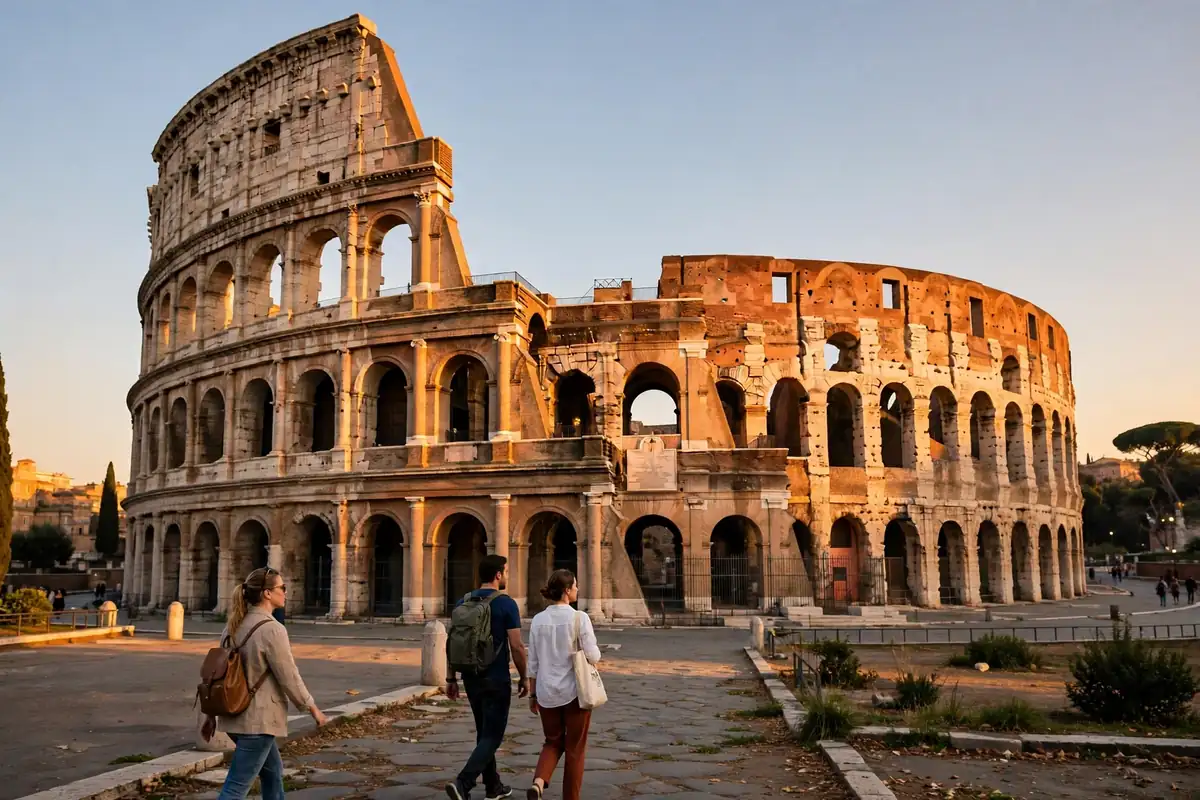
The Colosseum on Wikipedia is the most famous ruin in the world, and the one sight in Rome that justifies every photograph you have ever seen of it. Built between AD 70 and 80, it held 50,000 spectators for gladiator fights, wild animal hunts and mock sea battles, and it is still the largest ancient amphitheatre ever built — an oval of travertine stone, 189 metres long, that has survived earthquakes, stone-robbers and two thousand years of weather. Go inside, because the outside is only half of it: from the second tier you see the whole oval, the exposed underground tunnels where the gladiators waited, and the Arch of Constantine outside the south gate. In 2026 the standard ticket is €18 (24 hours, Colosseum levels 1–2 plus the Roman Forum and Palatine Hill), and the Full Experience ticket is €24, adding the arena floor, the underground (hypogeum) or the attic — plus a €2 booking fee. Tickets release 30 days ahead at 9 a.m. Rome time on the official site, ticketing.colosseo.it, and they are name-locked, so bring the photo ID that matches the booking. The Colosseum opens at 8:30 a.m. daily and closes at 7:15 p.m. in summer and 4:30 p.m. in winter, with last entry an hour before closing; it is closed on 25 December and 1 January. Under-18s enter free and EU citizens aged 18 to 25 pay €2. Two warnings: the underground needs a licensed guide, which the €24 does not include, and it sells out in seconds — book it the morning tickets release. And buy only on the official site: resellers buy up the slots and sell them on at double the price, which is why the official site can look sold out within hours. Free entry days are the first Sunday of the month, 25 April, 2 June and 4 November — free, but crowded.
2. Roman Forum and Palatine Hill
The Roman Forum on Wikipedia and Palatine Hill on Wikipedia are the reason the Colosseum ticket is worth €18, and the part of ancient Rome most visitors rush. The Forum was the centre of the Roman world for a thousand years — the Senate house, the triumphal arches, the temples, the law courts, the market — and the Palatine, the hill above it, was where the emperors lived, which is where the word “palace” comes from. Your Colosseum ticket covers both, so go straight from the amphitheatre through the Forum and up to the Palatine, where the Farnese Gardens give you the best view in Rome: the whole Forum spread out below you, the Colosseum behind it, and the pine trees the emperors planted. Allow two hours for the two sites together, and go in the morning, when the light is low and the crowds are still at the Colosseum. The Forum and the Palatine open at 9 a.m. and share the Colosseum’s closing times. The seven SUPER sites — the houses of Augustus and Livia, the frescoed halls most visitors never see — are included in the same ticket when they are open, so check the board at the entrance. Wear good shoes: the paving stones are original, uneven and slippery when wet.
3. Vatican Museums and the Sistine Chapel
The Vatican Museums on Wikipedia are the largest museum complex in the world, and the one visit in Rome that needs the most planning. Nine miles of galleries hold the art the popes collected over five centuries — the Raphael Rooms, the Gallery of Maps, the Egyptian and Etruscan collections — and at the end of the route sits the Sistine Chapel on Wikipedia, where Michelangelo painted the ceiling between 1508 and 1512 and the Last Judgement on the altar wall between 1536 and 1541. In 2026 a ticket costs €20 at the desk or €25 booked online (the €5 fee reserves a timed entry), reduced €10 or €15, under-7s free. The museums open Monday to Saturday, 8 a.m. to 8 p.m., last entry 6 p.m., and are closed on Sundays except the last Sunday of the month, when entry is free from 9 a.m. to 2 p.m. — free, and the most crowded day of the month. There are no evening openings in the 2026 calendar. The practical rule is simple: book on the official site, tickets.museivaticani.va, as soon as your dates are fixed. Tickets release about 60 days ahead and sell out weeks in advance — in mid-October 2026 every open day for the next three weeks was sold out. Allow three hours for the museums, and know the rules of the chapel: no photographs, no phone use, no talking, and the guards mean it. One more honest warning: the shortcut from the Sistine Chapel straight into St Peter’s Basilica is not guaranteed for standard ticket holders, so plan to exit through the museum entrance and walk around to the square.
4. St Peter’s Basilica
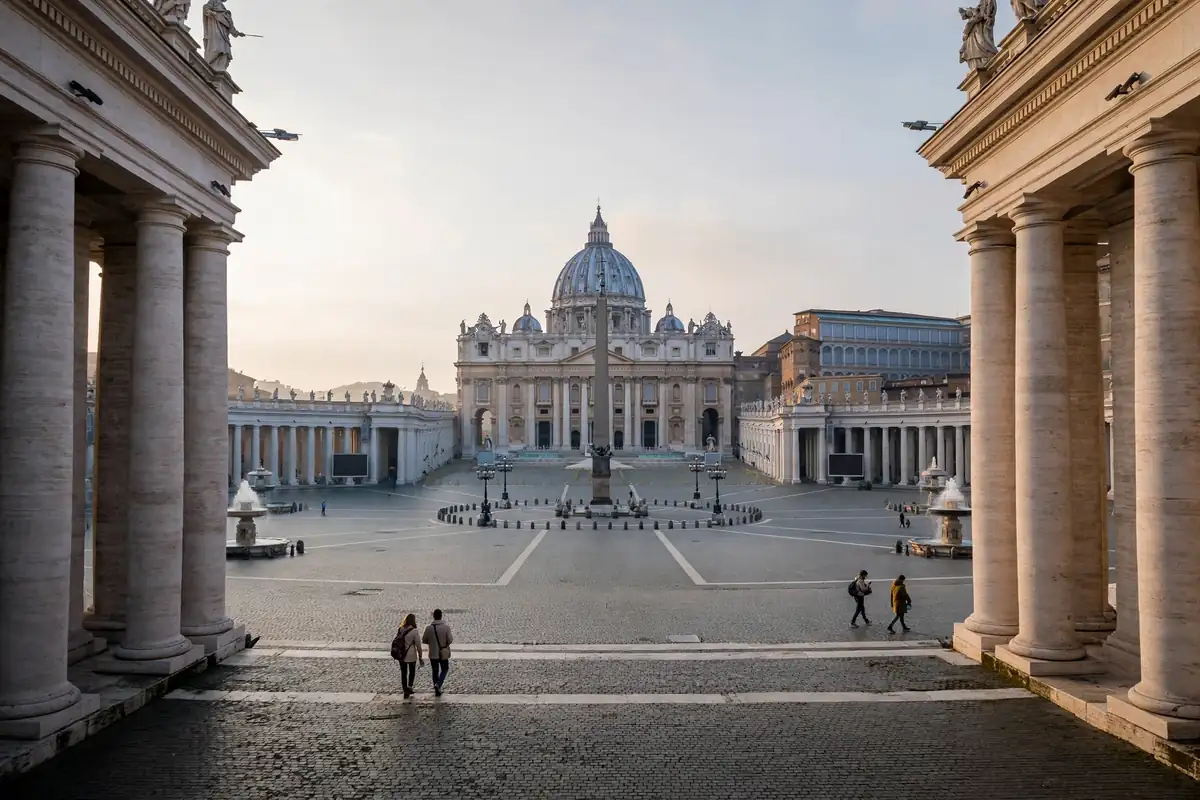
St Peter’s Basilica on Wikipedia is the largest church in the world, and the one great sight in Rome that is still free. Built over the tomb of St Peter between 1506 and 1626, it holds Michelangelo’s Pietà, Bernini’s bronze baldachin over the altar, and a dome that dominates the Roman skyline — and it is free to enter, every day, from 7 a.m. to 8 p.m. in summer. The queue is for security, not tickets, and it moves fastest in the afternoon or first thing in the morning; the basilica also sells an optional €7 reserved entry with a digital audio guide, which does not skip security. The dome is the part to pay for: €17 by the stairs (551 steps) or €22 with the lift, open 7 a.m. to 6 p.m. in summer and 7:30 a.m. to 5 p.m. in winter, and the view from the top — the whole city, the Tiber, the Colosseum in the distance — is the best in Rome. Two things to know before you go: the Jubilee ended on 6 January 2026, when Pope Leo XIV closed the Holy Door, so the basilica is back to normal visiting after a year in which about 33.5 million pilgrims passed through it; and the dress code is enforced — shoulders and knees covered, or you will be turned away at the door. Give the basilica an hour, two with the dome, and pair it with the museums the same morning if you can: they sit next to each other, and together they are a full day.
5. Pantheon
The Pantheon on Wikipedia is the most awe-inspiring single building in Rome, and the one that makes every other ancient ruin look young. Built as a temple around AD 118–125 under the emperor Hadrian, it has the largest unreinforced concrete dome in the world — 43 metres across, with a 9-metre hole, the oculus, open to the sky — and it has been in continuous use for nearly 1,900 years, first as a temple, then as a church. Stand under the oculus on a rainy day and watch the rain fall through the roof onto the marble floor; on a sunny day the shaft of light moves across the walls like a sundial. In 2026 entry costs €7 — the price went up from €5 on 1 July 2026, and older guides still print the old number. The Pantheon is open daily 9 a.m. to 7 p.m., last entry 6:30 p.m., and entry is free on the first Sunday of the month. EU citizens aged 18 to 25 pay €2 and under-18s enter free. One warning that catches people out: there is no skip-the-line option — visits run in order of arrival, so a booked ticket does not jump the queue, and the on-site ticket line can take up to an hour at peak times. Book the 9 a.m. slot on the official Musei Italiani portal and arrive at opening, when the light through the oculus is at its best and the piazza outside is still quiet. Mass is held on Saturday at 5 p.m. and Sunday at 10:30 a.m., when the monument closes to visitors.
6. Trevi Fountain
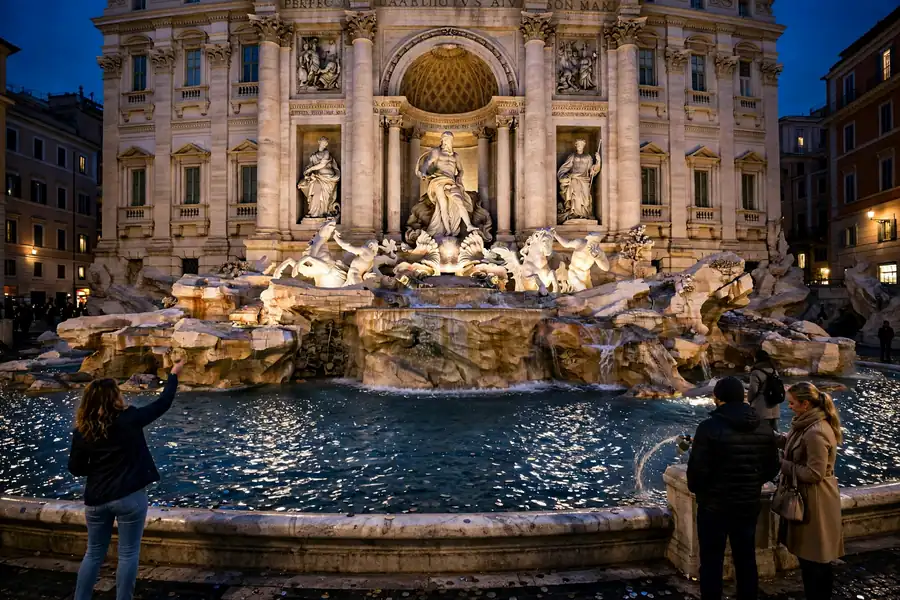
The Trevi Fountain on Wikipedia is the most beautiful fountain in the world, and the most crowded square in Rome. Nicola Salvi’s Baroque masterpiece, finished in 1762, shows the god Oceanus riding a shell chariot pulled by sea horses, and the tradition is to throw a coin with your right hand over your left shoulder — about €3,000 to €4,000 lands in the water every day, and it goes to charity. What changed in 2026 is the price of getting close: since 2 February 2026 the city charges €2 to enter the lower basin area, roughly 9 a.m. to 10 p.m. (11:30 a.m. start on Mondays and Fridays). The piazza and the view from above stay free, and after 10 p.m. anyone can see the fountain without a ticket. Rome residents, children under 6 and people with disabilities (plus one companion) enter free. The honest advice is to come twice: once at 7 a.m., before the ticket system starts and the crowds arrive, when the fountain is yours and the light is soft; and once at night, when it is lit and the water glows. Midday is the worst time — several hundred people are always there, and the selfie-stick sellers are at their busiest. The fountain was deep-cleaned and restored for the Jubilee, so in 2026 the marble is brighter than it has been in years.
7. Piazza Navona
Piazza Navona on Wikipedia is the most beautiful square in Rome, and the best place in the city to do nothing. It was built on the shape of the Stadium of Domitian, a Roman athletics arena, which is why it is long and oval — and the three fountains in it, Bernini’s Fountain of the Four Rivers in the centre, are the reason every visitor stops. The square is free, open all day, and at its best in the late afternoon, when the street artists set up, the cafés fill, and the light turns the baroque facades gold. Two honest notes: do not eat at the restaurants on the square itself — they are the most expensive in Rome and the food is the worst, and every local and every Reddit thread says so; eat a street away, where the prices halve and the quality doubles. And the church at the west end, Sant’Agnese in Agone, is free to enter and worth ten minutes for the dome alone. Come for an hour, sit on the fountain steps with a gelato, and watch the city go by — it is the most Roman hour you will spend.
8. Spanish Steps
The Spanish Steps on Wikipedia are the most famous staircase in the world, and the most photographed meeting point in Rome. The 135 steps climb from Piazza di Spagna to the church of Trinità dei Monti, and at the bottom sits the Barcaccia Fountain, shaped like a sinking boat, carved by Bernini’s father. The steps were restored for the Jubilee and in 2026 the marble is clean and bright — but one rule catches visitors out: sitting on the steps has been banned since 2019, and the police fine people who do it. So admire them, photograph them, climb them — and sit somewhere else. Come at dawn, when the steps are empty and the light comes over the church, or at sunset, when the whole staircase glows and the crowds thin. The streets around the steps — Via Condotti, Via del Corso — are Rome’s designer shopping, so the area is polished and expensive; the real Rome is a ten-minute walk away, in Monti or around the Pantheon. Pair the steps with Piazza del Popolo, a ten-minute walk north, and the Pincio Terrace above it, where the view over the city at sunset is one of the best free views in Rome.
9. Castel Sant’Angelo
Castel Sant’Angelo on Wikipedia is the most dramatic building in Rome, and the one with the strangest history. It began as the mausoleum of the emperor Hadrian in AD 139, became a papal fortress, and is joined to the Vatican by a raised secret corridor, the Passetto di Borgo, down which popes fled when the city was attacked. Inside are the papal apartments, the prison cells, and the ramp that climbs to the terrace, where the view over the Tiber, St Peter’s and the whole centre is one of the best in the city. In 2026 a ticket costs €18 — the price went up from €16 on 1 July 2026, and older guides still print the old number. The castle is open Tuesday to Sunday, 9 a.m. to 7:30 p.m., last entry 6:30 p.m., and closed on Mondays, 1 January and 25 December. EU citizens aged 18 to 25 pay €2 and under-18s enter free, and entry is free on the first Sunday of the month. One good trick: from August to December 2026 the castle also opens on the first Monday of each month, 2 to 8 p.m., for a €5 ticket sold on site only — the one Monday in Rome when a big museum is open. Book on the Musei Italiani platform, and allow two hours: the ramp, the apartments and the terrace each deserve time. Some rooms, including the Sala di Amore e Psiche and the Farnese rooms, were still closed for conservation in 2026, so check the notice at the entrance.
10. Borghese Gallery
The Borghese Gallery on Wikipedia is the finest small art museum in the world, and the one visit in Rome that punishes anyone who does not book ahead. Inside a 17th-century villa in the Villa Borghese park sit twenty rooms of Bernini sculpture — the Apollo and Daphne, the Rape of Proserpina, the David — alongside Caravaggio, Raphael and Titian, in rooms that are themselves works of art. In 2026 a ticket costs €16 plus a mandatory €2 reservation fee, €18 in total (€20 online), and the last slot of the day, 5:45 p.m., is €13. The rules are strict: a reservation is mandatory, visits run in two-hour shifts starting every hour from 9 a.m., only 180 people per shift, and the gallery is open Tuesday to Sunday, 9 a.m. to 7 p.m., closed Mondays. Book two to four weeks ahead in peak season — the 11 a.m. slot sells out fastest — and arrive ten minutes before your slot, because the gallery will not admit you late. Entry is free on the first Sunday of the month, but the reservation is still required, and the free slots fill within minutes of release. The 9 a.m. slot is the calmest. After your two hours, walk the park: the Villa Borghese gardens, the lake with its rowing boats, and the Pincio Terrace are free, and they are the best green space in central Rome.
11. Trastevere
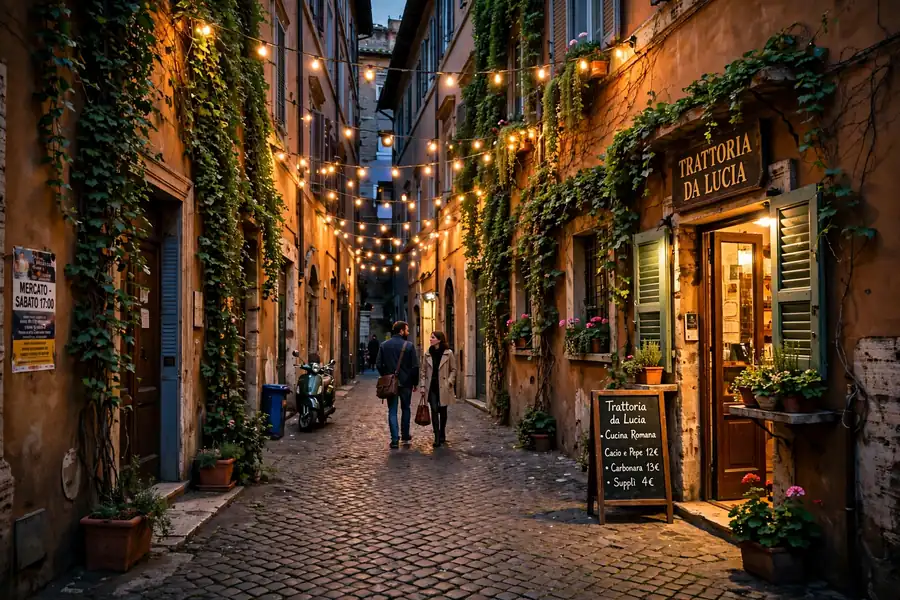
Trastevere on Wikipedia is the neighbourhood where Rome eats, drinks and shows off, and the best evening walk in the city. Across the Tiber from the historic centre, its cobblestone lanes, ivy-covered ochre buildings and small piazzas hold the city’s best concentration of trattorias, wine bars and gelaterias — and the church of Santa Maria in Trastevere, one of the oldest in Rome, with golden mosaics from the 12th century. It is free to wander, and the visit is a stroll: an hour on foot, starting at Piazza di Santa Maria in Trastevere, down the lanes to the river, takes you through the best of it. Come in the evening, when the restaurants fill and the street is alive, and book dinner ahead — the best tables in Trastevere go days in advance on weekends, and the famous names (Da Enzo al 29, Tonnarello, Taverna Trilussa) queue from before 7 p.m. Order the Roman classics: carbonara, cacio e pepe, amatriciana, fried artichokes. One warning: the main square is touristy now, and the restaurants on it charge for the view — walk two streets in any direction and the prices drop by a third.
12. Campo de’ Fiori
Campo de’ Fiori on Wikipedia is the most Roman square in the city, and the best morning in the historic centre. Every morning except Sunday it holds Rome’s oldest open-air market — fruit, vegetables, flowers and cheese under canvas awnings, with the statue of the philosopher Giordano Bruno standing in the middle, burned here in 1600. Come at 8 a.m., when the stalls are setting up and the square smells of coffee and oranges, buy fruit for breakfast, and watch the city wake up. By evening the market is gone and the square turns into the city’s busiest aperitivo scene, with the bars spilling onto the cobbles. The streets around it hold the best food shops in Rome: the delis on Via dei Giubbonari, the bakeries, the wine shops. It is free, it is open all day, and it is the square where Rome feels least like a museum and most like a city. Pair it with the Pantheon, five minutes away, and the Jewish Ghetto, ten minutes south.
13. Catacombs of San Callisto
The Catacombs of San Callisto on Wikipedia are the most moving underground in Rome, and the most unusual half-day in the city. Beneath the Appian Way, four levels of tunnels hold half a million burials, including the Crypt of the Popes — sixteen popes in a single chamber — and the Crypt of St Cecilia, with some of the earliest Christian painting in the world. San Callisto was the official catacomb of the Roman Church from the early 3rd century, and it is the biggest and most famous of the five catacombs open to the public. In 2026 a ticket costs about €15 for adults and €12 for young people and students, and the guided tour is mandatory — you cannot wander the tunnels alone, and photography is banned inside. San Callisto is open Thursday to Tuesday, 9 a.m. to noon and 2 to 5 p.m., closed Wednesdays. The other catacombs have different closing days — Domitilla is closed Tuesdays, San Sebastiano is open daily — which catches people out constantly, so check before you go. The tunnels are cool all year, so bring a warm layer even in August. Bus 118 runs from Circo Massimo along the Appian Way, but it is infrequent on the way back, so allow time.
14. Appian Way
The Appian Way on Wikipedia is the oldest great road in the world, and the best half-day out of the centre. Built in 312 BC from Rome south to Brindisi, it is still paved with the original basalt stones, lined with the ruins of tombs, villas and aqueducts — including the Tomb of Cecilia Metella and the Villa of the Quintilii, each about €6 on a combined ticket. The road is now a regional park, closed to most traffic on Sundays, when it fills with cyclists, runners and families. Rent a bike near the visitor centre for about €5 to €8 for half a day, and ride the first few kilometres past the catacombs, the aqueducts and the pine trees — it is the quietest Rome you will ever see, and the closest thing to walking through the ancient countryside. Bus 118 and 218 run from Piramide metro station for the standard €1.50 ticket. Come on a Sunday if you can, when the road is car-free, and bring water: there is almost no shade, and the stones are uneven underfoot.
15. Capitoline Hill and the Capitoline Museums
Capitoline Hill on Wikipedia is the smallest of Rome’s seven hills and the one that explains the city best. Michelangelo designed the square at the top, the Piazza del Campidoglio, with the statue of Marcus Aurelius in the centre, and from the terrace behind the town hall you get the great view down over the Roman Forum. The Capitoline Museums on Wikipedia, in the two palaces flanking the square, are the oldest public museums in the world — founded in 1471 — and hold the she-wolf with Romulus and Remus, the Dying Gaul, and the colossal head of Constantine. In 2026 a ticket costs about €16 (plus a €1 booking fee online), and the museums are open daily 9:30 a.m. to 7:30 p.m., last entry 6:30 p.m. The Tabularium, the underground gallery beneath the square, gives you a window straight onto the Forum below — the best five minutes in the museum. Allow two hours, and go in the late afternoon, when the square is golden and the Forum view from the terrace is at its best.
16. Villa Borghese and the Pincio Terrace
Villa Borghese on Wikipedia is the green lung of central Rome, and the best free afternoon in the city. Eighty hectares of gardens, pine trees, lakes and temples sit on the hill above Piazza del Popolo, and they are free to enter, all day, every day. Rent a rowing boat on the lake for about €3, walk to the Temple of Aesculapius on its island, and climb to the Pincio Terrace, where the view over Piazza del Popolo, St Peter’s dome and the whole city at sunset is one of the best free views in Rome. The park also holds the Borghese Gallery (see above — book ahead), the National Gallery of Modern Art, and the zoo, the Bioparco. Come in the late afternoon, when the heat breaks and the Romans come out to run, cycle and picnic, and stay for sunset on the Pincio. It is the Rome that locals actually use, and the perfect break from the marble and the queues.
17. Orange Garden and the Aventine Keyhole
The Orange Garden on Wikipedia is the most romantic spot in Rome, and the one most visitors never find. On the Aventine Hill, above the Tiber, this small walled garden of orange trees gives you the great view over the city — St Peter’s dome framed by the pines, the river below, the whole centre spread out — and it is free, open daily from dawn to dusk. Next door, on Piazza dei Cavalieri di Malta, is the famous keyhole: look through it and you see St Peter’s dome perfectly framed at the end of a garden corridor, a trick of perspective the Knights of Malta built into their gate. The queue for the keyhole can be twenty minutes at sunset, so come in the morning, when you will have it to yourself. Pair the garden with the church of Santa Sabina next door, one of the oldest churches in Rome, and the Protestant Cemetery at the foot of the hill, where the poets Keats and Shelley are buried. It is the quietest, most beautiful hour in Rome, and it costs nothing.
18. Baths of Caracalla
The Baths of Caracalla on Wikipedia are the most impressive ruin in Rome that nobody queues for, and the best place to understand how the Romans actually lived. Built around AD 216, these were the second-largest public baths in the empire — a complex the size of a small town, with hot rooms, cold pools, libraries, gardens and a gymnasium, where 1,600 Romans bathed at once. The walls still stand to their full height in places, and the mosaics on the floors survive, so you can walk the whole circuit and imagine the steam, the noise and the crowds. In 2026 a ticket costs about €14, and the baths are open Tuesday to Sunday, 9 a.m. to 7:15 p.m. (last entry 6:15 p.m.), closed Mondays. In summer the baths host open-air opera and concerts, with the ruins lit behind the stage — book ahead, because the best nights sell out. Come in the late afternoon, when the light comes through the broken roof and the site is almost empty, and pair it with the Appian Way, which starts a ten-minute walk south.
19. The Jewish Ghetto
The Jewish Ghetto on Wikipedia is the oldest Jewish community in the western world, and the most flavourful quarter in Rome. Rome’s Jews have lived here since the 2nd century BC, and the Ghetto, created in 1555, is a small pocket of streets between the Tiber and Campo de’ Fiori, centred on the Great Synagogue and the square of Largo di Torre Argentina, where four Roman temples stand in a pit below street level and a colony of cats lives among the ruins. The food is the reason to come: fried artichokes (carciofi alla giudia), the dish invented here, and the bakeries selling pizza ebraica and ricotta tarts. The Great Synagogue and the Jewish Museum cost about €12 combined and are open Sunday to Friday, closed Saturdays. The quarter is free to wander, and it is at its best at lunchtime, when the trattorias fill and the smell of fried artichoke drifts down the lanes. Allow an hour, and eat here rather than on Piazza Navona — the food is better and the prices are honest.
20. Piazza Venezia and the Vittoriano
Piazza Venezia on Wikipedia and the Vittoriano on Wikipedia are the most controversial monument in Rome, and the one with the best view from the top. The Vittoriano — the huge white marble monument to Victor Emmanuel II, the first king of united Italy — was finished in 1925, and Romans nicknamed it the “wedding cake” and the “typewriter” because it is so big, so white and so unlike everything around it. Climb it anyway: the glass lift to the terrace costs about €15 and gives you a 360-degree view over the Forum, the Colosseum, the Capitoline and St Peter’s, and the terrace itself is free to walk. The monument also holds the Tomb of the Unknown Soldier, with its eternal flame, and the museum of Italian unification inside. Piazza Venezia itself is the traffic heart of Rome — Via del Corso, the Via dei Fori Imperiali and the road to the Capitoline all meet here — so cross it carefully and do not linger in the traffic. Come at sunset, when the marble glows pink and the view from the terrace is the best in the city.
Rome in 3 days — a ready-made itinerary
Three days is the right length for a first trip to Rome: one day for ancient Rome, one day for the Vatican and the river, and one day for the historic centre and the neighbourhoods. This itinerary assumes you are staying in the Centro Storico or Trastevere, and it keeps the walking to a minimum by grouping the sights that sit together. Book the Colosseum, the Vatican Museums and the Borghese Gallery before you travel — they are the three tickets that sell out.
Day 1 — Ancient Rome and the historic centre
Start at the Colosseum at its 8:30 a.m. opening, with the ticket you booked 30 days ahead, and give it ninety minutes. Walk through the Roman Forum and up to Palatine Hill, where the Farnese Gardens give you the great view over the Forum, and spend two hours there. Lunch near the Forum — not on the Via dei Fori Imperiali, where the prices are tourist prices, but a street back in Monti. In the afternoon, climb Capitoline Hill for the view over the Forum from the terrace, then walk down to Piazza Venezia and take the lift up the Vittoriano for the sunset view. Dinner in Monti, the neighbourhood behind the Colosseum, where the trattorias are local and the prices are honest.
Day 2 — The Vatican, the river and Trastevere
Start at the Vatican Museums at 8 a.m., with the ticket you booked weeks ahead, and give them three hours, ending at the Sistine Chapel. Walk around to St Peter’s Square and into the basilica — free, and best in the afternoon, when the security queue is shorter — then climb the dome for the view over the city. Walk along the river to Castel Sant’Angelo, and give it two hours, ending on the terrace at sunset. Cross the bridge into Trastevere for dinner: carbonara, cacio e pepe, a glass of wine, and a walk through the lanes afterwards, when the neighbourhood is at its liveliest.
Day 3 — Piazzas, parks and the underground
Start at the Trevi Fountain at 7 a.m., before the ticket system starts and the crowds arrive, then walk to the Pantheon for its 9 a.m. opening. Spend the late morning at Piazza Navona and Campo de’ Fiori, where the market is in full swing, and lunch in the Jewish Ghetto — fried artichokes, the dish invented there. In the afternoon, take the bus to the Appian Way and the Catacombs of San Callisto, remembering that the catacombs are closed on Wednesdays, and ride or walk the first kilometres of the oldest road in the world. If you have a fourth day, spend it on a day trip: Ostia Antica, the ancient port of Rome, about 30 minutes by train and closed Mondays; Tivoli, about an hour east, for the fountains of Villa d’Este and the ruins of Hadrian’s Villa; or the Castelli Romani, the hill towns south of the city, for wine, views and a lake.
Best time to visit Rome
| Season | What it is like | What to know |
|---|---|---|
| Spring (March–May) | The best time — mild weather, long light, the city in flower | April to early June is the sweet spot; Easter week is the busiest of the year, so book everything ahead |
| Summer (June–August) | Hot, crowded and tiring — highs in the 30s Celsius, and the stone radiates heat | The Colosseum closes at 7:15 p.m.; the baths and the parks are the cool escape; August is when Romans leave and some small restaurants close |
| Autumn (September–October) | The local favourite — mild, dry and cheaper | Mid-September to October is the second sweet spot; the light is golden and the crowds thin after the summer |
| Winter (November–February) | The quietest and cheapest, with short days and real Roman life | November is the value month; the Colosseum closes at 4:30 p.m.; Christmas and New Year bring their own crowds to the Vatican |
Spring is the best time to visit Rome, and it is not close: April to early June brings mild weather, long evenings and the city at its best, and the Jubilee crowds that filled 2025 are gone. The catch is Easter week, when the city is at its busiest and every ticket sells out — book a month ahead if you come then. September and October are the smart alternative, with the same weather, no crowds and normal prices, and the light is the golden light the painters came for. Winter is the budget choice, and it has its own draw: the city belongs to the Romans again, the queues vanish, and the museums are warm. Summer is the family choice — the long days, the fountains, the gelato — but it is hot, the stone radiates heat, and the afternoons are best spent indoors or underground.
Where to stay in Rome
| Area | Best for | What to expect |
|---|---|---|
| Centro Storico | First-timers, walkers, atmosphere | The Pantheon, Piazza Navona and Campo de’ Fiori on foot; boutique hotels and apartments; the most expensive area, and noisy at night |
| Trastevere | Food lovers, couples, nightlife | The best restaurants in the city on the doorstep; cobblestone lanes and ivy; a ten-minute walk across the river to the centre |
| Monti | Colosseum access, younger feel, budget | Rome’s oldest neighbourhood, between the Colosseum and Termini; vintage shops and wine bars; the best value in the centre |
| Prati | Vatican logistics, calmer streets | Wide streets and orderly blocks near the Vatican; quieter and cheaper than the centre; a metro ride to the Colosseum |
| Near Termini | Budget, early trains, drivers | Chain hotels at half the centre price; the station area is scruffy at night, so pick a street off the main square |
| Testaccio | Local flavour, longer stays, food | The old working-class quarter, home of the food market and the best trattorias; a bus or tram ride to the centre |
The Centro Storico is the right base for a first trip: the Pantheon, the Trevi Fountain, Piazza Navona and Campo de’ Fiori are all within walking distance, and the metro and the buses cover the rest. Trastevere is the better base if food and evenings are the point of the trip — the restaurants are the best in the city, and the centre is a ten-minute walk across the river. Monti suits a first trip on a budget, with the Colosseum a short walk away and the neighbourhood’s wine bars and vintage shops. Prati is the calm choice, near the Vatican, with wide streets and lower prices. Wherever you stay, book early for Easter week and for April to June — the city’s hotels sell out, and the tourist tax of €3 to €7 per person per night is charged on top of the room rate, so check whether it is included in the price you see.
Getting around Rome
| Option | Best for | What to know |
|---|---|---|
| Walking | The historic centre, Trastevere, Monti | The Pantheon, the Trevi Fountain, Piazza Navona and Campo de’ Fiori are all within a twenty-minute walk of each other |
| Metro | The Colosseum, the Vatican, Termini | Lines A, B and C; a single ticket is €1.50 for 100 minutes; first trains 5:30 a.m., last about 11:30 p.m., 1:30 a.m. on Friday and Saturday |
| Bus and tram | The Appian Way, the Vatican, the suburbs | The same €1.50 ticket covers bus, tram and metro; buses run 5 a.m. to 11:30 p.m., then 32 night lines take over |
| Taxi | Airport, late nights, luggage | Metered from €3.50 on weekdays; Fiumicino to the centre is a fixed €55; use the official white taxis at the ranks |
| Car | Day trips only | Do not drive in the centre — the ZTL cameras fine €83–332 per entry; rent for a single day for Tivoli or the Castelli Romani |
| Bike | The Appian Way, Villa Borghese | Bike-share and rental shops near the parks; the centre’s cobbles and traffic make cycling hard work |
Central Rome is walkable, and the first two days of this itinerary need no transport at all: the Colosseum, the Forum, the Pantheon, the Trevi Fountain and Piazza Navona are all within a twenty-minute walk of each other. The metro is for the longer jumps — Line B to the Colosseum, Line A to the Vatican (Ottaviano) and the Spanish Steps (Spagna) — and since 16 December 2025 Line C also reaches the Colosseum, with its Colosseo/Fori Imperiali station. The sights that need wheels are the Vatican, the catacombs and the Appian Way, and a bus covers all of them for the €1.50 ticket. One warning for drivers: the ZTL, the limited traffic zone, covers the whole historic centre, with over 250 cameras, and the fines arrive weeks later — the Centro Storico zone runs Monday to Friday 6:30 a.m. to 6 p.m. and Saturday 2 to 6 p.m. If you do rent a car, take it for a single day for the day trips, and never drive it into the centre.
Rome food you have to try
Rome’s food is better than its reputation, and it is built on four things: pasta, pork, cheese and ice. The city eats well at every price — the pizza counters, the trattorias, the markets — and the best meals in Rome are the ones that could not exist anywhere else. Three rules: eat where the Romans eat, never on the main square; a menu in six languages with a photograph of the food is a warning; and the best trattorias do not take walk-ins at the weekend, so book.
Carbonara, cacio e pepe and amatriciana — the pasta trinity
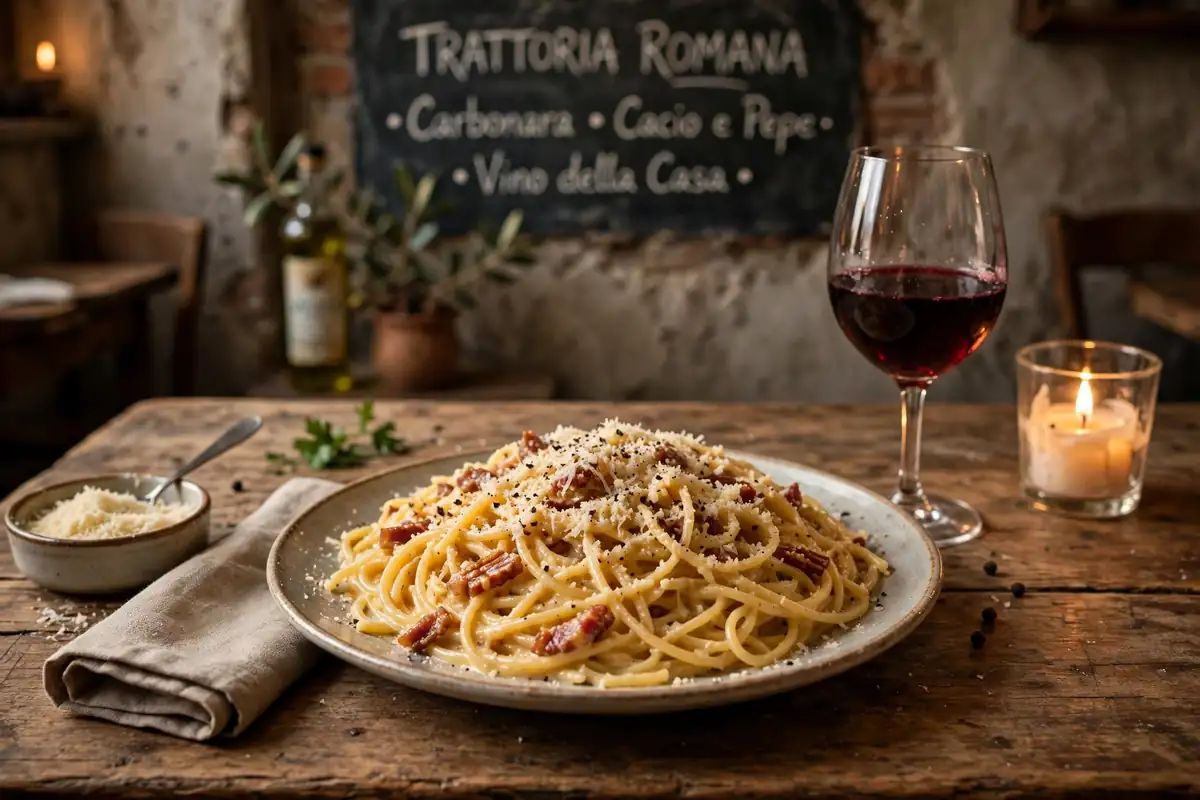
Carbonara on Wikipedia is Rome’s signature dish, and the one food every visitor should eat. It was invented in Rome in the 20th century: spaghetti or rigatoni, egg yolk, pecorino Romano, guanciale (cured pork cheek) and black pepper — no cream, ever, and any restaurant that puts cream in it is not a Roman restaurant. Cacio e pepe on Wikipedia is the older, simpler cousin: pasta, pecorino and pepper, three ingredients, and the hardest dish in Rome to get right. Amatriciana on Wikipedia adds tomato and guanciale to the same base. Expect about €14–18 for a plate of pasta in a good Trastevere or Testaccio trattoria, and order it where the menu is in Italian first — the best places are the ones with no photographs and a queue of Romans. The golden rule, from every local and every Reddit thread: never eat carbonara on Piazza Navona or at the Trevi Fountain, where it costs twice as much and tastes half as good.
Pizza al taglio and supplì — Rome’s street food
Pizza al taglio on Wikipedia is Rome’s street food, and the best lunch in the city. Sold by weight from rectangular trays in bakeries and takeaway counters, it is cut with scissors and priced by the piece — about €3–5 a slice — and the best of it is the potato pizza, the zucchini flower pizza and the plain margherita, eaten standing up or on a bench. Supplì on Wikipedia is the other Roman snack: a fried ball of risotto with a heart of melted mozzarella, named for the “surprise” of the cheese pull, and the best ones come from the fry shops in Trastevere and Testaccio. The rule for both is the same: buy them where the queue is local, eat them hot, and do not sit down — the good places have no seats, and that is how you know they are good. The best pizza al taglio in Rome, by local consensus, is at Pizzarium, near the Vatican, where the toppings change with the season.
Gelato and espresso — the Roman way to finish
Gelato on Wikipedia is not ice cream, and Rome is the city that proves it. Real gelato is made fresh daily, stored in covered steel trays (never in tall, brightly coloured mountains), and flavoured with what is in season — pistachio from Sicily, hazelnut from Piedmont, lemon from Amalfi. Expect about €3–4 a scoop in a good gelateria, and the rule is simple: if the pistachio is bright green, walk away; real pistachio is a dull, brownish green. The best gelaterias in Rome are in Trastevere, Monti and near the Pantheon — look for the covered trays and the queue of locals. And the coffee: Romans drink their espresso standing at the bar, in one minute, for about €1.50, and the price doubles if you sit down. Order a cappuccino only before 11 a.m. — after that, the Romans will know you are a tourist, and they will be right.
Free things to do in Rome
Rome is a generous city for a free day, and the best of it costs nothing. Walk the piazzas — Piazza Navona, Campo de’ Fiori, Piazza del Popolo — and sit on the fountain steps with a gelato. Cross the Tiber into Trastevere and wander the lanes, free to walk, and photograph the church of Santa Maria in Trastevere, free to enter. Climb to the Orange Garden on the Aventine Hill, free every day, and look through the keyhole on Piazza dei Cavalieri di Malta, free and one of the best views in the city. Walk the Villa Borghese gardens and the Pincio Terrace at sunset, free, and watch the city turn gold. Visit St Peter’s Basilica, free every day, and the churches of the historic centre — Santa Maria sopra Minerva, Sant’Ignazio, San Luigi dei Francesi with its three Caravaggios — all free. Drink from the nasoni, the free public fountains, all over the city. Seven free things, and not one of them feels like a compromise.
Frequently asked questions
How many days do you need in Rome?
Three days is the right answer for most visitors: one day for ancient Rome, one day for the Vatican and the river, and one day for the historic centre and the neighbourhoods. Four days is the sweet spot if you want a day trip to Ostia Antica or Tivoli, and five days lets the city breathe — a slow morning in Trastevere, a second visit to the Forum, an evening in Testaccio. Two days works if you skip the Borghese Gallery and the catacombs, and one day is enough for the Colosseum, the Pantheon and the Trevi Fountain if you start at 8:30 a.m. and walk fast. Reddit’s consensus is four to five days, and the travellers who stayed fewer than three consistently say they felt rushed.
Is Rome still crowded after the Jubilee?
Less crowded than in 2025, but still busy. The Jubilee ended on 6 January 2026, and the 33.5 million pilgrims are gone — the crowds are back to normal seasonal levels, the monuments are cleaner, and the metro stations are renovated. But Rome is still one of the most visited cities in the world, with nearly 23 million visitors a year, and the Colosseum, the Vatican Museums and the Trevi Fountain are busy every day of the year. The difference in 2026 is that the queues are manageable again, the tickets are bookable again, and the city feels like a city rather than a pilgrimage. Come in April to June or September to October, book the big three tickets ahead, and start at 8:30 a.m. — and Rome in 2026 is the best version of itself in years.
Do you need to book tickets in advance in Rome?
Yes — for the three big sights, absolutely. The Colosseum releases tickets 30 days ahead and the arena and underground slots sell out within hours. The Vatican Museums release about 60 days ahead and sell out weeks in advance — in mid-October 2026 every open day for the next three weeks was sold out. The Borghese Gallery needs a reservation even on free days, and the 11 a.m. slot sells out fastest. The Pantheon and Castel Sant’Angelo can be booked on the day, but the queues are long. Everything else — the piazzas, the churches, the parks, the neighbourhoods — needs no booking at all. The rule is simple: if it has a roof and a queue, book it; if it is a square, just walk in.
What is the best time to visit Rome?
April to early June is the best time, and it is not close: mild weather, long light, the city in flower, and the Jubilee crowds gone. September and October are the smart alternative, with the same weather, no crowds and normal prices. Winter is the budget choice, with the city to yourself and the queues gone, but the days are short and the Colosseum closes at 4:30 p.m. Summer is the family choice, with the long days and the fountains, but it is hot — highs in the 30s Celsius — and the afternoons are best spent indoors or underground. Avoid Easter week unless you have booked everything a month ahead: it is the busiest week of the year.
Is Rome safe for tourists?
Yes, for the usual care. The historic centre, Trastevere and Monti are busy and well-lit, and the sights are in the safe parts of the city. The rules are the normal European city rules: keep your bag in front of you on a crowded street, do not leave valuables visible in a parked car, and take a taxi rather than walking alone late at night in the quiet streets. The one real risk is pickpocketing, and it is concentrated in a few places: the Trevi Fountain, the Spanish Steps, Piazza Navona and buses 40 and 64. The metro is safe, the night buses are safe, and the city is walkable at night in the busy areas. The station area around Termini is scruffy after dark, so pick a hotel a street off the main square.
What should I skip in Rome?
Skip the restaurants on Piazza Navona and at the Trevi Fountain — they are the most expensive in Rome and the food is the worst, and every local says so. Skip the Vatican Museums on the last Sunday of the month unless you love crowds: entry is free, but the queues are the longest of the month and the galleries are packed. Skip the idea of driving in the centre: the ZTL cameras fine €83–332 per entry, and the fines arrive weeks later. Skip sitting on the Spanish Steps — it has been banned since 2019 and the police fine people. Skip the reseller tickets for the Colosseum and the Vatican and buy only on the official sites, where the tickets are €18 and €25, not double. And skip the idea that Rome is only the Colosseum: the visitors who leave disappointed are the ones who came for a ruin and a photograph, and never walked Trastevere, the Aventine or the Appian Way.
Further reading
St. Peter’s Basilica on Wikipedia
Castel Sant’Angelo on Wikipedia
Galleria Borghese on Wikipedia
Catacombs of Rome on Wikipedia
Capitoline Museums on Wikipedia
Villa Borghese gardens on Wikipedia
Giardino degli Aranci on Wikipedia
Baths of Caracalla on Wikipedia
Victor Emmanuel II Monument on Wikipedia
For first-hand tips from people who live in the city and travel it often, the r/Rome community on Reddit is active, with regular threads on tickets, neighbourhoods and restaurants. We could not find a live, on-topic Quora thread about visiting Rome, so we have not linked one — if you know a good one, tell us and we will add it.
Your Rome trip, in one paragraph
Rome is the place where the whole idea of this site — one honest, complete guide per place — feels most at home: a city that has been the centre of the world twice, first as the capital of an empire and then as the heart of a church, where you walk on roads laid 2,300 years ago to see art painted 500 years ago and eat pasta invented in the last hundred, all in the city that invented the road, the arch and the afternoon walk. Start with the islands and the coasts: our Hawaii guide, our Maui guide, and our Honolulu guide. Then the American cities, in the order we wrote them: our Chicago guide, our Nashville guide, our Los Angeles guide, our Orlando guide, our Miami guide, our San Diego guide, our Denver guide, our Savannah guide, our Dallas guide, our Charleston guide, our San Francisco guide, our Myrtle Beach guide, our Las Vegas guide, and our San Antonio guide. Further afield: our London guide, our Portland guide, our Pigeon Forge guide, our Puerto Rico guide, our Atlanta guide, our Phoenix guide, our Paris guide, our Key West guide, our Colorado Springs guide, our Sedona guide, our Chattanooga guide, our Palm Springs guide, our St. Louis guide, our Tokyo guide, our Japan guide, our Kansas City guide, our Tennessee guide, our Branson guide, our Florida guide, our Amsterdam guide, our Montreal guide, our Fort Lauderdale guide, our Toronto guide, our Aruba guide, our Charlotte guide, our Indianapolis guide, our New Orleans guide, our Destin guide, our Santa Barbara guide, our Mexico City guide, our Arizona guide, our Osaka guide, our Minneapolis guide, our Pittsburgh guide, our California guide, our Asheville guide, our Costa Rica guide, our Washington DC guide, our Seattle guide, our St. Augustine guide, our Lisbon guide, our Dubai guide, our Santa Fe guide, our Galveston guide, our Maine guide, our Sacramento guide, our Kauai guide, our Boston guide, our Cancun guide, our Madrid guide, our Salt Lake City guide, our Baltimore guide, our Barcelona guide, our Reno guide, our Milwaukee guide, our North Carolina guide, our New York guide, our Tucson guide, our Raleigh guide, our Corpus Christi guide, our Milan guide, our Salem guide, our Wilmington guide, our Memphis guide, our Flagstaff guide, our Austin guide, our Oahu guide, our Iceland guide, our Cincinnati guide, our Fort Worth guide, our Panama City Beach guide, our Monterey guide, our Nassau Bahamas guide, our Lexington guide, our Lake Tahoe guide, our San Jose guide, our Tulum guide, and our Louisville guide.

About the Author