Things to Do in Salem
20 Best Attractions, a 3-Day Itinerary, Where to Stay, and the Food You Cannot Miss
Quick Info
Best for: First-timers, history lovers, Halloween fans, museum lovers and food lovers — America’s most famous witch city, with a real 1692 story, a world-class art museum and a working harbour
Best time: Late May to September for the weather; the first two weeks of October for Halloween without the worst crowds; November for the quietest trip
How long: 1 day for the highlights, 2 days for the museums and the waterfront, 3 days with the day trips and the North Shore
Budget: About $120–$220 per person per day mid-range — the hotels are the biggest cost in October, and many of the best sights are free
Don’t miss: The Witch House, the Witch Trials Memorial at dawn, the Peabody Essex Museum, Derby Wharf at sunrise, and a lobster roll at the waterfront
Salem, Massachusetts on Wikipedia is the American city most visitors get wrong on the first visit — and the one they come back for. It is a small seaport of about 44,000 people, fifteen miles north of Boston, that holds two cities inside one walkable peninsula: the 1692 witch city, with the trials, the memorial and the museums, and the merchant city, with the East India trade, the national park on the waterfront and one of the best art museums in the country. This guide covers the 20 best things to do in Salem, a 3-day itinerary that actually works, where to stay without paying October prices, how to get around on the $8 train from Boston, the three foods you should not skip, and the free sights that cost nothing. Everything below was checked against live sources in November 2026 — including the Witch Museum’s October ticket rules, the cemetery’s same-day reservation system, the prices that rose in 2026, the ferry that stops after Halloween, and the 400th-anniversary year that made 2026 the biggest Salem year ever.
Salem at a glance
| Topic | What to know |
|---|---|
| Full name | Salem, Massachusetts — the Witch City, on the North Shore of Massachusetts Bay |
| Founded | 1626, when Roger Conant moved an English settlement from Cape Ann to Naumkeag; renamed Salem around 1629, from the Hebrew shalom, “peace” |
| Population | About 44,000 people |
| Distance from Boston | About 15 miles northeast — 30 minutes by train, 50 minutes by ferry in season |
| Best base | Downtown Salem around Essex Street and the Common for first-timers; the waterfront for the harbour views |
| Getting around | On foot downtown, the MBTA commuter rail to Boston, the seasonal ferry, and the trolley in season |
| Famous for | The witch trials of 1692, Haunted Happenings in October, the Peabody Essex Museum, the maritime national park and Hocus Pocus |
Salem divides into three ideas that most visitors only partly see. The 1692 city is the one the postcards show: the Witch House, the memorial, the cemetery and the museums, all within a fifteen-minute walk of each other, with the Essex Street pedestrian mall between them. The merchant city is the one the locals live in: the Derby Street waterfront, the Custom House, the wharves and the Federal mansions of Chestnut Street, with the Peabody Essex Museum in between. The North Shore is the one that makes the trip: the harbour, the willows, the lighthouse at Winter Island, and the fishing towns of Marblehead, Rockport and Gloucester a short ride away. The trap is the one that catches almost every visitor: the city looks small on the map and the sights look close together, but October turns a fifteen-minute walk into an hour, the museums sell out days ahead, and the older guides still list prices and rules from before 2026 — so plan by day, book the Witch Museum and the Witch House before you book the hotel, and check the hours before you go. For the wider New England trip, our Boston guide covers the city most visitors pair with Salem, and it is the arrival point for the train and the ferry.
The 20 best things to do in Salem
1. The Salem Witch Museum
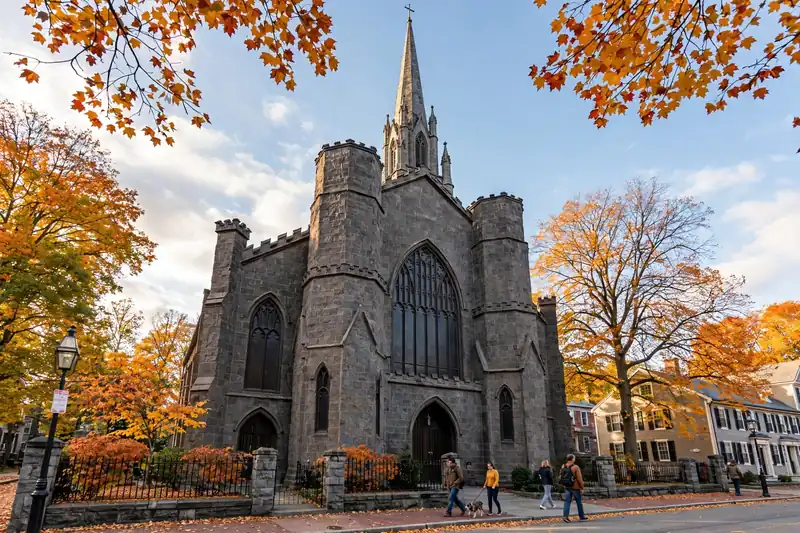
The Salem Witch Museum on Wikipedia is the most visited attraction in Salem — and the one you must understand before you judge it. The museum has told the story of the 1692 trials since it opened on 6 May 1972, inside a former stone church on the edge of Salem Common, and it is not a walk-through collection: the visit is a 30-minute staged presentation with life-size sets, mannequins and lighting that tells the story of the trials, followed by exhibits on the history of witchcraft and the museum’s own collection of documents and artefacts. The museum is open year-round from 10 a.m. to 5 p.m., with extended hours in July and August, when it stays open to 7 p.m., and later hours again in October. Admission in October is $19 for adults, $17.50 for seniors aged 62 and over, and $16 for children aged 6 to 14. The trap is the ticket, and this is where our guide beats the older ones: in October the tickets are sold online only and go on sale at 10 p.m. the night before your visit — they cannot be bought further ahead and they cannot be bought at the door — and the peak dates sell out entirely, so a walk-up visitor on a Saturday may find nothing available until the evening. Two practical notes: allow about an hour for the visit, up to 75 minutes at peak times, because the timed entry manages the crowd — and the museum is the introduction, not the history, so pair it with the Witch House and the memorial, which are the real sites. Allow one hour, and book the ticket the night before, at 10 p.m., the moment it goes on sale.
2. The Witch House — the Jonathan Corwin House
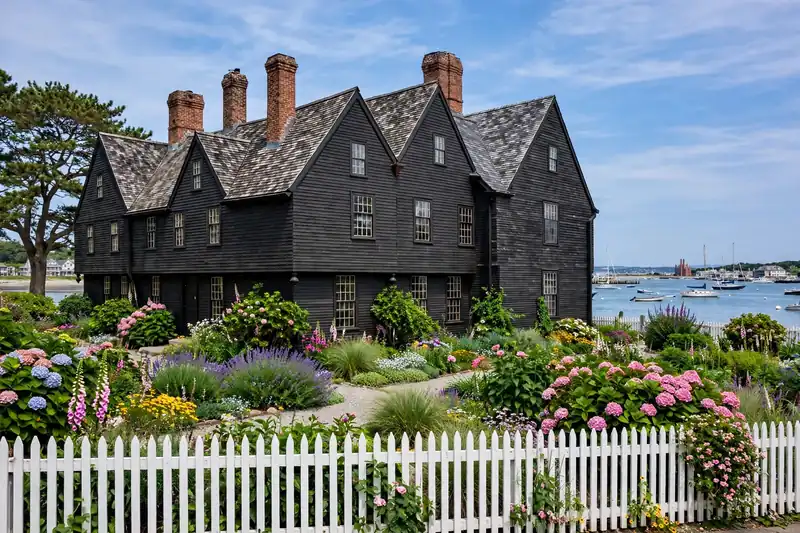
The Witch House on Wikipedia is the one real building left from 1692 — and the most important stop in Salem. The house was built around 1675 and was the home of Judge Jonathan Corwin, one of the magistrates who examined the accused before their trials, and it is the only structure still standing in Salem with a direct tie to the witch trials. It opened as a museum in 1948 and is owned by the City of Salem, and inside it is a historic house museum of 17th-century life, with period furnishings, exhibits on Corwin and Puritan life, and staff through the house to answer questions. The house is open daily from 15 March to 15 November, from 10 a.m. to 5 p.m., with last entry at 4:45 p.m., and in winter, from 16 November to 14 March, it is open Thursday to Sunday only, from noon to 4 p.m. The guided tour costs $10.25 for adults, $8.25 for seniors and $6.25 for children aged 7 to 14; the self-guided tour costs $8.25 for adults, $6.25 for seniors and $4.25 for children aged 6 to 14, and children under 6 are free. The trap is the price and the ticket, and this is where our guide beats the older ones: most guides still list the Witch House at $12, which is out of date — the official prices are the ones above — and in October the tickets go online at 8 a.m. and sell out within minutes, with visitors reporting that logging in at 8:02 a.m. was already too late. Two practical notes: the house is a 20- to 40-minute visit, not a morning — allow 40 minutes, and go in the morning, when the light is on the black timbered house and the queue is shortest — and no trials or hangings took place inside the house, despite the name, so do not expect a courtroom. Allow 40 minutes, and buy the ticket online at 8 a.m. on the day, before anything else.
3. The Salem Witch Trials Memorial and the Burying Point Cemetery
The Salem Witch Trials Memorial on Wikipedia is the quietest place in Salem — and the one that matters most. The memorial sits at 24 Liberty Street, beside the Old Burying Point Cemetery, and it is a low-walled garden with twenty granite benches, one for each of the twenty people executed in the trials of 1692 and 1693, each bench engraved with the victim’s name, the date of execution and the manner of death, with the court transcripts etched into the walls. It was dedicated on 5 August 1992 by the Nobel laureate Elie Wiesel, and it is free and open from dawn to dusk. The cemetery beside it, the Charter Street Cemetery on Wikipedia, was founded in 1637 and is the oldest cemetery in Salem and one of the oldest in the United States — and the trap is the reservation, and this is where our guide beats the older ones: the cemetery is free, but from 25 September a free same-day digital reservation is required, with time slots every 15 minutes from 10 a.m., and the reservations are only available for the day of your visit. Anyone who charges you to enter the cemetery is not affiliated with the City of Salem. Two practical notes: the memorial needs no reservation and no ticket, so go there first if you arrive early, and visit the cemetery on a weekday morning, when it is quiet — and the execution victims are not buried in this cemetery, despite what most guides say, and the judges are, so read the stones for the names you know from the trials. Allow one hour for both, and go at dawn, when the memorial is empty and the benches are at their most powerful.
4. The Peabody Essex Museum
The Peabody Essex Museum on Wikipedia is the museum that has nothing to do with 1692 — and the best museum in Salem. The museum traces its roots to the East India Marine Society of 1799, which makes it the oldest continuously operating museum in the United States, and it holds more than a million objects across three floors and twenty-five galleries in about 130,000 square feet, from New England maritime art and American decorative arts to Asian export art, fashion, photography and natural history. The signature holding is Yin Yu Tang, a two-hundred-year-old house brought from southeastern China and rebuilt on the campus, which is included with general admission but needs its own timed reservation. The museum is open Thursday to Monday from 10 a.m. to 5 p.m., and it is closed on Tuesdays and Wednesdays, and on Thanksgiving, Christmas and New Year’s Day. Admission is $25 for adults, $23 for seniors aged 65 and over, and $15 for students with ID, and it is free for visitors under 16 and for Salem residents. The trap is the Tuesday, and this is where our guide beats the older ones: the museum is the classic Tuesday mistake, because the rest of downtown is open and the museum is shut, so plan it for a Thursday or later in the week — and the Ropes Mansion, the museum’s historic house on Essex Street, is closed for the 2026 season, so do not build a visit around it. Two practical notes: the museum is a two- to three-hour visit, not a day — allow three hours, and start with Yin Yu Tang, because the timed tickets go first — and the museum is the one major attraction in Salem with nothing to do with the trials, so it is the antidote to a day of witch museums. Allow three hours, and go in the morning, when the galleries are quiet.
5. The House of the Seven Gables
The House of the Seven Gables on Wikipedia is the house that made Salem a literary city — and the prettiest stop on the waterfront. The house was built in 1668 by the merchant and ship-owner John Turner, on Salem Harbour, and it became famous as the inspiration for Nathaniel Hawthorne on Wikipedia‘s 1851 novel The House of the Seven Gables — Hawthorne’s cousin Susanna Ingersoll owned the house in his lifetime, and he visited it often. The admission includes a 45-minute guided tour of the mansion and the grounds, with the secret staircase, the gables and the seaside gardens, and the Hawthorne birth home on the same site. The house is open daily from 10 a.m. to 6 p.m. Admission is $26 for adults, $21 for seniors and $18 for youth aged 5 to 12, and children aged 4 and under are free, and there is a cheaper grounds-only pass if the mansion tours are sold out. The trap is the sell-out, and this is where our guide beats the older ones: the tickets are released on a monthly cycle and October is handled separately, and visitors report buying weeks ahead and still finding days sold out — so book the moment your dates are fixed, and take the grounds pass rather than skipping the site entirely. Two practical notes: the house is a one- to two-hour visit, not a day — allow two hours, and go in the morning, when the light is on the harbour and the gardens are quiet — and the house is a National Historic Landmark, so the tour is the history, not the novel, and the novel is the reason the house survived. Allow two hours, and book weeks ahead.
6. The Salem Maritime National Historic Site — the Custom House, Derby Wharf and the Friendship
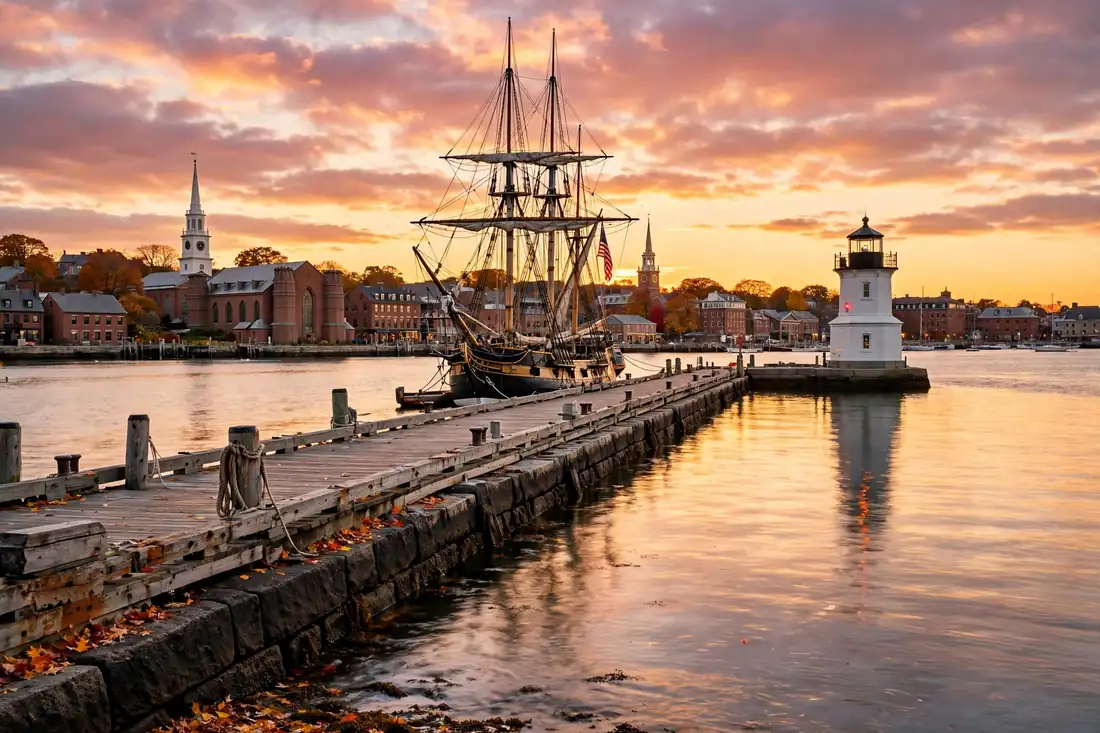
The Salem Maritime National Historic Site on Wikipedia is the national park on the waterfront — and the other half of Salem’s story. The site was created in 1938 as the first National Historic Site in the country, and it covers nine acres and twelve historic structures on Derby Street, telling the story of the East India trade that made Salem one of the richest ports in the young United States. The grounds, the wharves and the gardens are open 24 hours a day and free, and every building and program in the park is free. The Salem Armory Regional Visitor Center is open daily from 9:30 a.m. to 4:30 p.m. in the season from 21 September to 14 November, and the Custom House is open Wednesday to Sunday from 9:30 a.m. to 4:30 p.m. in that season — and the Custom House is closed for the season from 15 November to 30 April, so do not plan a winter visit around it. All buildings are closed on Thanksgiving, Christmas Day and New Year’s Day. The Custom House is the building where Nathaniel Hawthorne worked as surveyor of the Port of Salem from 1846 to 1849, and where he wrote The Scarlet Letter. Derby Wharf runs about 2,000 feet into the harbour, with the Derby Wharf Light, built in 1871, at its end. The trap is the ship, and this is where our guide beats the older ones: the Friendship of Salem on Wikipedia, the replica tall ship at the wharf, was under wraps for renovation work in May 2026, so check the National Park Service site before building a visit around boarding her — the wharf, the Custom House and the grounds are the reliable visit. Two practical notes: the park is a two- to three-hour visit, not a day — allow three hours, and go at sunrise, when Derby Wharf is empty and the light is on the harbour — and the visitor centre is the place to start, because the rangers give the free tours and the orientation that makes the buildings make sense. Allow three hours, and go at sunrise.
7. The Witch Dungeon Museum and the Witch History Museum
The Witch Dungeon Museum is the live re-enactment — and the cheapest of the witch museums. The museum at 16 Lynde Street performs a live re-enactment of a 1692 trial, with actors in the courtroom, followed by a tour of the recreated dungeon where the condemned were held, and it is open from 1 April to 30 November, from 10 a.m. to 5 p.m., with extended hours in October. Admission is about $14 for adults, and there is no way to prebook — you walk up on the day. The Witch History Museum, at 197 Essex Street, is the quieter of the two: a guided presentation on the trials and the history of witchcraft, open from 10 a.m. to 5 p.m., with extended hours in October, and admission of $9 for adults, $8 for seniors aged 65 and over, and $7 for children aged 4 to 13. The trap is the expectation, and this is where our guide beats the older ones: both museums are staged presentations, not collections of original artefacts, and recent visitors are split — some call the Dungeon the best value in Salem, others call it a five-minute show for the price — so do one of them, not both, and do the Witch House first if you only have time for one real site. Two practical notes: the Dungeon is a 30- to 45-minute visit, not a morning — allow an hour for both, and go on a weekday, when there is no queue — and the Dungeon closes for the winter on 30 November, so do not plan a December visit around it. Allow one hour, and do the Dungeon if you like theatre, the History Museum if you like the story told straight.
8. The Salem Witch Village and Count Orlok’s Nightmare Gallery
The Salem Witch Village is the kitsch — and the place to understand what Salem sells. The village is the cluster of witch shops, psychic readers and Halloween stores along Essex Street, and it is the tourist Salem that the history Salem sits beside: the broom-making classes, the candle shops, the tarot readers and the Halloween stores that stay open late in October. Count Orlok’s Nightmare Gallery, at 217 Essex Street, is the monster museum: a tribute to horror, science fiction and fantasy films, with original props, costumes and life-size figures of the classic movie monsters, named for Count Orlok, the vampire of the 1922 silent film Nosferatu. Admission is about $15, and the gallery is open from 10 a.m. to 6 p.m., and from 10 a.m. to 5 p.m. on Sundays — and the trap is the winter, and this is where our guide beats the older ones: after 31 October the gallery switches to Friday to Sunday only until the end of December, so do not plan a weekday winter visit around it. Two practical notes: the gallery is a 20-minute to one-hour visit, depending on how long you look — allow an hour, and go on a weekday morning, when it is quiet — and photography is strictly prohibited inside, so do not plan the visit around photos. Allow one hour, and go for the monsters, not the history — the history is next door, at the Witch House and the memorial.
9. The Hocus Pocus filming locations
Hocus Pocus (1993 film) on Wikipedia is the reason half of Salem’s visitors under forty are here — and the film locations are the free walk that most guides get half wrong. The film was shot in Salem in 1992 and released in July 1993, and only about two weeks of exteriors were filmed in Massachusetts — the interiors, the graveyard and the Sanderson sisters’ cottage were all shot on soundstages in California — but the exteriors are real, and most of them are free to visit. Max and Dani Dennison’s house is at 4 Ocean Avenue, a private residence built in the 1870s, with the widow’s walk on top: sidewalk photos only, and be mindful of the residents, because non-resident cars are often not allowed down the street in October. Allison’s house is the Ropes Mansion, at 318 Essex Street, a Georgian mansion built in 1727 and run by the Peabody Essex Museum: the garden is free, and the house runs timed tours in season — but the museum lists the Ropes Mansion as closed for the 2026 season, so check the PEM site before you go, and remember the party scenes were filmed in California, not inside the house. Old Town Hall, at 32 Derby Square, is the Halloween party scene, and the Phillips Elementary School on Salem Common is the school, and Pioneer Village, at 310 West Avenue, is the opening 1600s village. The trap is the sequel, and this is where our guide beats the older ones: Hocus Pocus 2 was filmed almost entirely in Rhode Island, not Salem, so do not come looking for its locations — and the Sanderson cottage does not exist, so any guide that sends you to it is wrong. Two practical notes: the locations are a two-hour walk, not a day — allow two hours, and do them in the morning, before the October crowds — and the Ropes Mansion garden and Salem Common welcome leashed dogs, while both cemeteries ban dogs entirely. Allow two hours, and start at the Ropes Mansion, because it is next to the Witch House.
10. The Bewitched statue and Lappin Park
Bewitched on Wikipedia is the sitcom that put Salem on television — and the statue is the most photographed object in the city. The bronze statue stands in Lappin Park, at the western end of the Essex Street pedestrian mall, at the corner of Essex and Washington streets, and it shows Elizabeth Montgomery as Samantha Stephens, the witch of the 1960s sitcom, sitting side-saddle on a broom against a crescent moon. The statue is nine feet tall, it was sculpted by Studio EIS in New York, and it was commissioned by the cable channel TV Land and unveiled in June 2005, when some 1,500 fans turned out. The connection is real: in 1970, after a fire damaged the Bewitched set in Hollywood, the cast and crew came to Salem and filmed eight episodes in and around the city, as the characters attended a witches’ convocation — and the cast stayed at the Hawthorne Hotel on Salem Common. The trap is the controversy, and this is where our guide beats the older ones: the statue was controversial when it was installed, with critics saying it trivialised the real people who were persecuted in 1692, and the argument has never really gone away — so enjoy the photo, and then walk two minutes to the memorial, because the two together are the honest Salem. Two practical notes: the statue is a five-minute photo stop, not a visit — allow ten minutes, and go in the morning, when the light is on the bronze and the mall is quiet — and the park is the western end of the pedestrian mall, so it is the natural start or finish of the Essex Street walk. Allow ten minutes, and take the photo, then go to the memorial.
11. Essex Street and the pedestrian mall
Essex Street is the spine of Salem — and the walk that ties the whole visit together. The pedestrian mall runs through the centre of downtown, car-free, with the shops, the cafes, the witch stores and the street performers, and the Essex Street of the witch city is the same Essex Street as the merchant city: the historic buildings, the old town hall, the museum and the memorial are all on it or a minute off it. The street is closed to through traffic on every October weekend, from noon on Friday through Sunday, and on Indigenous Peoples’ Day Monday, and the barricades go up on the stretch from Barton Square to Washington Street from Friday at noon through Sunday at midnight. The trap is the October weekend, and this is where our guide beats the older ones: on an October Saturday the mall is shoulder-to-shoulder by midday, the shop queues stretch onto the pavement, and the restaurants run hour-long waits without reservations — so walk it in the morning, eat early, and leave the afternoon for the waterfront, which is the quietest part of downtown. Two practical notes: the mall is a one- to two-hour walk, not a day — allow two hours, and go in the morning, when the shops are opening and the street is yours — and the Destination Salem app has the events calendar, the open restrooms and the live closure updates, so download it before you arrive. Allow two hours, and walk it end to end, from Lappin Park to the waterfront.
12. Haunted Happenings — Salem in October
Haunted Happenings is the month that made Salem famous — and the month that breaks the unprepared. The festival began in 1982 as a single weekend and now runs from 1 to 31 October every year, organised by Destination Salem and the City of Salem, and it draws more than a million visitors across the month: in October 2025 the city welcomed about 1.1 million unique visitors, and 96,600 people on Halloween Day alone. In 2026 the festival coincided with Salem 400+, the city’s 400th anniversary, and the month closed on Saturday 31 October with live music downtown from noon and a 400-drone show over the North River from about 10 p.m. to 10:30 p.m., replacing the old fireworks finale. The dated highlights in 2026 were the Grand Parade on Thursday 1 October at 6:30 p.m., from Shetland Park to Salem Common; the Howl-o-ween Pet Parade on Saturday 10 October at 10:30 a.m.; Witch Hats on the Wharf on Saturday 17 October at 11 a.m. on Derby Wharf; the Salem Night Faire on 16, 17, 23 and 24 October from 5 p.m. to 10 p.m. at Pioneer Village; and the Haunted Happenings Marketplace on weekends from 24 September to 1 November, on Salem Common, Derby Square and Charlotte Forten Park, from 10 a.m. to 8 p.m. The trap is the entry, and this is where our guide beats the older ones: there is no charge to enter the city and no ticket for the festival itself — the cost is the hotels, the timed museum tickets and the queues — and the city closes Essex Street to through traffic on every October weekend and closes downtown to all vehicles by noon on Halloween, so a car is a liability, not a help. Two practical notes: the best October visit is a weekday in the first half of the month, when the crowds are manageable and the tickets are easier — and the last two weekends and Halloween itself are the peak, with the heaviest crowds, the road closures and the longest queues. Allow a full day for October, and arrive before midday, because the crowds and the parking fill fast.
13. Salem Common and the Old Town Hall
Salem Common on Wikipedia is the green at the centre of the city — and the oldest public space in Salem. The Common is the historic green where the militia trained and the city gathered, and it is the anchor of the Haunted Happenings Grand Parade, the marketplace and the October crowds, and the quietest green in the city on a weekday morning. Old Town Hall, at 32 Derby Square, is the oldest surviving municipal building in Salem, built in 1816 and 1817, and it is the building from the Hocus Pocus party scene — and it now houses the Salem Museum, with exhibits on the city’s history. The trap is the assumption, and this is where our guide beats the older ones: most guides send you to the Common for the Hocus Pocus school and the parade, and then leave — but the Common is the place to understand Salem as a city, not a theme park, because the houses around it are the Federal mansions of the merchant families, and the green is where the city has gathered for four centuries. Two practical notes: the Common is a thirty-minute walk, not a morning — allow an hour, and go in the morning, when the light is on the green and the crowds are down — and the Old Town Hall is the photo stop, with the Derby Square market beside it on market days. Allow one hour, and walk the Common before the museums open.
14. Salem Willows Park and Winter Island
Salem Willows on Wikipedia is the Salem the locals go to — and the summer afternoon most visitors miss. The Willows is the waterfront park at the end of Fort Avenue, with the mature willow trees, the arcades, the food stands and the small beach at Dead Horse Beach, and it is where Salem families have spent summer afternoons for generations, with the fried clams, the chowder and the ice cream. Winter Island Park, at the other end of the harbour, is the former military and Coast Guard station turned into a day-use park and campground, with the small beach, the views across the water and Fort Pickering Light. The trap is the season, and this is where our guide beats the older ones: the Willows food stands and the arcades are a summer operation, and the parks are quiet in winter — so plan the Willows for a summer afternoon, and Winter Island for the views, not the swimming, because the water is cold even in August. Two practical notes: the Willows is a two- to three-hour afternoon, not a day — allow three hours, and take the bus or a taxi, because the walk from downtown is long — and the sunset from Winter Island is one of the best in Salem, so go in the evening, when the light is on the harbour. Allow three hours, and go for the food stands and the shade, not the sights.
15. The Salem Heritage Trail and Chestnut Street
The Salem Heritage Trail is the red line — and the easiest way to see Salem without a map. The trail is a painted red line on the sidewalks that links the city’s major historic sites, from the Common to the waterfront, and it is the wayfinding system that makes the walkable centre work: follow the line and you will pass the Witch House, the memorial, the museums and the Custom House without ever needing to navigate. Chestnut Street is the street the line does not take you down — and the one you should walk anyway: the Federal-style mansions of the merchant families, built in the early 19th century, on what is often called one of the most beautiful streets in America. The trap is the map, and this is where our guide beats the older ones: most guides list the Heritage Trail as a sight, and then give you a list of addresses — but the trail is the sight, and the point is to follow it, not to tick it off. Two practical notes: the trail is a two-hour walk, not a day — allow two hours, and follow it in the morning, when the streets are quiet — and Chestnut Street is a residential street, so walk it quietly and take the photos from the sidewalk. Allow two hours, and follow the red line.
16. The Salem Trolley and the walking tours
The Salem Trolley is the first move — and the best way to learn the city before you walk it. The trolley runs daily from 1 April through October, and Friday to Sunday in November, on a one-hour narrated loop with 14 stops at the top attractions, and you can stay on for the whole loop or hop on and off. Tickets cost $25 for adults and $15 for children aged 6 to 14, and children aged 5 and under ride free. The walking tours are the second move: the 1692 Salem Historical Tour, the History and Hauntings tour and the ghost tours after dark, with the best-rated history walks running about two hours for about $35 for adults and $10 for children. The trap is the October booking, and this is where our guide beats the older ones: the trolley and the walking tours sell out in October, and the evening ghost tours sell out first — so book the trolley for your first morning and the walking tour for your first afternoon, and book both before you travel. Two practical notes: the trolley is a one-hour loop, not a day — allow two hours with the hop-offs, and take it first, because it shows you where everything is — and the walking tours are the way to learn the trials properly, because the guides are local historians, and the museums alone do not tell the story. Allow two hours, and take the trolley on your first morning.
17. Proctor’s Ledge and Gallows Hill — the real hanging site
Proctor’s Ledge is the place most visitors never see — and the place that corrects a century of wrong history. For generations, Gallows Hill was believed to be the site where the nineteen were hanged in 1692, but researchers confirmed in 2016 that the hangings actually took place at Proctor’s Ledge, at the base of Gallows Hill, on a small rise between Proctor Street and the woods. The site is marked with a simple memorial, and it is in a residential neighbourhood with no parking, and walking tours are not permitted to visit it. The trap is the name, and this is where our guide beats the older ones: most guides still send you to the top of Gallows Hill, which is the wrong place — and the Gallows Hill Museum and Theatre on the hill is a separate attraction, a haunted house and theatre, not the historic site. Two practical notes: the Ledge is a fifteen-minute visit, not a stop on a tour — allow thirty minutes, and go on foot, quietly, because it is a residential street and a place of remembrance — and do not drive there, because there is nowhere to park and the neighbours have asked visitors not to. Allow thirty minutes, and go quietly, on foot, in the morning.
18. Salem 1630: Pioneer Village
Salem 1630: Pioneer Village is the village that opened Hocus Pocus — and the most unusual museum in Salem. The village at 310 West Avenue is a living-history reconstruction of the Salem of 1630, with the thatched cottages, the gardens and the Governor’s Faire House, and it is where the opening scenes of Hocus Pocus were filmed, with Thackery Binx and the 1600s village. The village is open on weekends in October, from noon to 4 p.m., and it hosts the Salem Night Faire on 16, 17, 23 and 24 October from 5 p.m. to 10 p.m. The trap is the season, and this is where our guide beats the older ones: the village is a seasonal site, and it is easy to arrive on a weekday and find it shut — so check the schedule before you go, and pair it with Max and Dani’s house at 4 Ocean Avenue, which is nearby, because the two together are the Hocus Pocus afternoon. Two practical notes: the village is a one- to two-hour visit, not a day — allow two hours, and go at noon, when it opens — and the Night Faire is the October event, with the market and the performances, so plan a Friday or Saturday evening around it. Allow two hours, and go on a weekend in October.
19. The Ropes Mansion and garden
The Ropes Mansion is the house from Hocus Pocus — and the garden that is free. The mansion at 318 Essex Street is a Georgian house built in 1727, run by the Peabody Essex Museum, and it is the house that played Allison’s home in Hocus Pocus, with the elegant exterior and the garden behind it. The garden is free and open to the public, and the house runs timed tours in season — but the trap is the 2026 season, and this is where our guide beats the older ones: the Peabody Essex Museum lists the Ropes Mansion as closed for the 2026 season, so do not build a visit around going inside, and do not trust a guide that says the October 2026 tours are running. Two practical notes: the garden is a thirty-minute visit, not a morning — allow thirty minutes, and go in the morning, when the garden is quiet and the light is on the house — and the mansion is next door to the Witch House, so pair the two, and take the photo from the garden, because the interior party scenes were filmed in California anyway. Allow thirty minutes, and go for the garden, not the tour.
20. The day trips — Marblehead, Rockport and Gloucester
Marblehead, Massachusetts on Wikipedia, Rockport, Massachusetts on Wikipedia and Gloucester, Massachusetts on Wikipedia are the three day trips — and the three that show the North Shore beyond Salem. Marblehead is the closest, about fifteen minutes by car or bus, with the Old Town, the harbour, the narrow lanes and the Abbot Hall, and the fishing harbour that predates Salem’s. Rockport is the granite fishing village at the end of the Rockport branch of the same commuter rail line, about an hour from Boston and thirty minutes from Salem, with Bearskin Neck, the harbour, the art galleries and Halibut Point State Park. Gloucester is the working fishing port, about forty minutes from Salem, with the Fisherman’s Memorial, the harbour, the whale watching and the freshest seafood on the North Shore. The trap is the car, and this is where our guide beats the older ones: Rockport is on the train, and Marblehead and Gloucester are on the bus, so you do not need a car for any of the three — and the ferry from Boston does not go to any of them, so do not plan the day trip around the boat. Two practical notes: each town is a half-day to a full day, not a stop — allow a day for Rockport and Gloucester together, or a half-day for Marblehead alone — and the best day trip is Rockport, because the train is direct and the village is the prettiest on the coast. Allow a full day, and take the train to Rockport.
Salem in 3 days — a ready-made itinerary
This three-day plan uses downtown Salem as the base for the trials and the museums, the waterfront as the afternoons, and the North Shore as the day trip — it needs the Witch Museum and the Witch House booked before anything else, because the tickets sell out in October, and it leaves the day trips for the third day. Book the Witch Museum and the Witch House before you fly, put the museums in the morning, and keep the evenings for the waterfront and Essex Street.
Day 1 — The trials: the Witch House, the memorial and the Witch Museum
Start at the Witch House at 10 a.m., with the guided tour, and give it 40 minutes, with the period rooms and the exhibits. Walk to the Witch Trials Memorial for the late morning, with the twenty benches and the cemetery, and allow an hour. Walk Essex Street to the Bewitched statue for the photo, and allow ten minutes. Take the Salem Witch Museum in the afternoon, with the 30-minute presentation and the exhibits, and allow an hour. Eat dinner on Essex Street, with the lobster roll, and finish the evening on the waterfront, with Derby Wharf at sunset.
Day 2 — The merchant city: the Peabody Essex Museum, the Seven Gables and the maritime park
Start at the Peabody Essex Museum at 10 a.m., with Yin Yu Tang and the galleries, and give it three hours, with the timed house ticket first. Walk to the House of the Seven Gables for the afternoon, with the 45-minute tour and the gardens, and allow two hours. Walk Derby Wharf to the Custom House and the maritime park for the late afternoon, with the wharf and the lighthouse, and allow two hours. Eat dinner at the waterfront, with the clam chowder, and finish the evening on Essex Street, with the shops and the witch village.
Day 3 — The day trip: Rockport, or Marblehead, or the Hocus Pocus walk
Take the train to Rockport, with Bearskin Neck and Halibut Point, and give it the day, with the harbour and the galleries — and in winter, check the train times, because the service runs less often. Or take the bus to Marblehead, with the Old Town and the harbour, and give it half a day, with the lanes and the views. Or stay in Salem, with the Hocus Pocus locations in the morning, Pioneer Village at noon, and Salem Willows in the afternoon, with the food stands and the shade. Finish with dinner on Essex Street, with the fried clams and the sweet finish, and a final walk through the pedestrian mall.
Best time to visit Salem
| Season | Weather | Crowds | Notes |
|---|---|---|---|
| Winter (December–February) | Highs about 36–42°F (2–6°C), lows about 18–28°F (−8 to −2°C) | Low | Cold and snowy, cheapest hotels, many attractions on winter hours or closed |
| Spring (March–May) | Highs about 45–66°F (7–19°C), lows about 26–45°F (−3 to 7°C) | Low–moderate | Mild days, the trolley and the museums reopen, the ferry returns in late May |
| Summer (June–August) | Highs about 75–81°F (24–27°C), lows about 55–61°F (13–16°C) | Moderate–high | Best weather, the ferry runs, Salem Willows is at its best, warm evenings |
| Autumn (September–November) | Highs about 51–73°F (11–23°C), lows about 33–53°F (1–12°C) | Very high in October | September is the sweet spot, October is Haunted Happenings, November is quiet and cheap |
The best time to visit Salem is late May to September for the weather, and the first two weeks of October for Halloween without the worst crowds, and if you want one answer, pick September: the days are warm, with highs in the low 70s, the ferry is still running, the Halloween decorations are going up, and the October crowds have not arrived yet. Spring is the second-best pick, for the mild days and the reopening museums — but the Witch House does not open daily until 15 March, and the ferry does not return until 22 May, so check the dates before you book. Summer is the warmest season: July averages a high of 81°F, with the longest days and the Willows at its best — and the October crowds are the price of the autumn, with 1.1 million visitors in October 2025 and hotel rates averaging $429 a night. The city gets its coldest weather in January, with an average high of about 36°F and an average low of about 18°F, and January is the snowiest month, with about 14 inches of snow. The events are worth timing a trip around: Haunted Happenings from 1 to 31 October, the Heritage Days in early August, and the Salem 400+ anniversary events through 2026 — and the hotel prices more than double in October, so book months ahead or stay in Boston and take the train.
Where to stay in Salem
| Area | Best for | Price range |
|---|---|---|
| Downtown / Essex Street | First-timers, walkers, the sights | $180–$400 a night |
| Salem Common | History, the hotels, the parade | $180–$400 a night |
| Waterfront / Derby Street | Harbour views, the wharf, the restaurants | $160–$350 a night |
| Near Salem station | Early trains, budget, the ferry | $120–$250 a night |
| Boston (day trip base) | Budget, the train in, the city | $150–$350 a night |
| Marblehead / Rockport | Quiet, the coast, the day trip | $120–$250 a night |
Stay downtown around Essex Street if this is your first visit — the Witch House, the memorial, the museums and the pedestrian mall are all within reach, and the hotels are the most central in the city — and the downtown hotels are the ones with the walk to the waterfront. Stay on Salem Common if you want the history — the Hawthorne Hotel, built in 1925, where the Bewitched cast stayed in 1970, and the green outside the door, with the parade and the marketplace in October. Stay on the waterfront if you want the harbour — the Derby Street side, with the wharf, the Custom House and the restaurants, and the sunrise from the room. Stay near Salem station if you want the trains — the early departures and the ferry, with the budget hotels and the walk to downtown. Stay in Boston if you want the budget — the train is 30 minutes and $8, and the hotels are cheaper than Salem in October, so take the train in for the day and sleep in the city. Two warnings: do not book a room in October without checking the price first — the average October rate was $429 a night in 2025, and the hotels fill months ahead — and do not book a room around the station late at night without knowing the area, because the station is a ten-minute walk from downtown and the streets are quiet after dark.
Getting around Salem
| Way to travel | Cost | Best for |
|---|---|---|
| MBTA commuter rail (Boston) | $8 one way, $16 round trip, $10 weekend pass | Boston to Salem, the day trip, October |
| Salem Ferry (Boston) | About $25–$44 one way | The scenic arrival, May to October only |
| MBTA bus (450, 455, 465) | $1.70 one way | Marblehead, the Willows, the local trips |
| Salem Trolley | $25 adult, $15 child 6–14 | The first morning, the 14 stops, April to October |
| Taxi / rideshare | About $5–$15 in town | Late nights, the Willows, Winter Island |
| Walking | Free | Downtown, Essex Street, the waterfront, the memorial |
Salem is a walking city downtown and a train city outside it: the centre is walkable and the train is cheap, but the day trips, the Willows and Winter Island are spread across the peninsula, and the bus does not go to all of them — so walk for the days you stay downtown, and take the train for the days you leave it. The MBTA commuter rail runs on the Newburyport/Rockport Line from Boston’s North Station to Salem, and Salem is in Zone 3, so a one-way ticket is $8, and a round trip is two one-way tickets, $16, and on Saturdays and Sundays the $10 Commuter Rail Weekend Pass covers unlimited travel on all lines. The ride takes about 30 to 32 minutes, and every train on the line stops at Salem, with 29 trains on a weekday, and the first weekend train leaves North Station at 6:30 a.m. The trap is the ticket, and this is where our guide beats the older ones: Salem station has no ticket window and no fare vending machines, so buy the ticket on the mTicket app before you board — and the weekend pass is only sold at North Station, South Station and Back Bay, and on the app, not at Salem. The Salem Ferry runs between Long Wharf in Boston and Blaney Street in Salem, operated by Boston Harbor City Cruises, and the crossing takes about 50 minutes — and the 2026 season ran from 22 May to 31 October, so the ferry does not operate in winter, and the fares vary by sailing, at roughly $25 to $44 one way. The MBTA buses 450, 455 and 465 cost $1.70 one way. Two warnings: do not drive into downtown Salem in October, because the city says so itself, and the garages fill early and the rates rise — and do not leave the car in the MBTA garage on Halloween night, because the garage closes to cars from 6 p.m. to 1 a.m. Take the train for the days you stay downtown, and the bus for the days you leave it — and the only reason to rent a car is a road trip up the North Shore, where the car is the trip.
Salem food you have to try
Salem eats with the harbour behind every plate. The city is a working seaport, and the kitchens are the ones that fed the fishermen and the merchants, so the food is the freshest on the North Shore — the lobster roll, the clam chowder, the fried clams, and the witch-themed cafes that the city invented — and the trap is the opposite of most tourist cities: the restaurants on Essex Street are fine, but the best food is at the waterfront and the Willows, where the locals queue, and the most Salem meal of all is the one eaten at a harbour-side table with a lobster roll in one hand and a cup of chowder in the other.
The lobster roll — the New England classic
Lobster roll on Wikipedia is the dish Salem is famous for — the lobster roll, with the chunks of lobster meat in a toasted, buttered roll, served hot with butter or cold with mayonnaise, and it is the dish every visitor orders first. The place to eat it is Turner’s Seafood at Lyceum Hall, at 43 Church Street, the Travellers’ Choice winner for 2026, with the lobster roll, the lobster bisque and the lobster risotto cake, and Red’s Sandwich Shop, with the warm lobster roll in the toasted roll, and Sea Level Oyster Bar, with the roll and the chowder, and Finz, with the roll by the water. The price is about $25 to $35 for the roll, and the lobster is the cost, so do not expect a bargain — and the hot buttered roll is the Salem order, with the butter on the side. Two practical notes: the roll is the order, so do not skip it, because it is the reason the restaurants are famous — and the reservations are the point, because Turner’s is busy in September and October, so book ahead or eat early. Eat the roll once, eat it hot with butter, and eat it where the locals eat — that is the Salem lobster roll plan.

New England clam chowder — the bowl that defines the coast
New England clam chowder on Wikipedia is the bowl Salem is famous for — the creamy chowder, with the fresh minced clams, the potatoes and the cream, served with the oyster crackers, and it is the dish the city argues about most. The place to eat it is Turner’s Seafood at Lyceum Hall, with the award-winning chowder and the lobster bisque, and Sea Level Oyster Bar, with the rich, creamy chowder packed with fresh clams, and the food stands at Salem Willows, with the chowder and the fried clams by the water. The price is about $10 to $15 for the cup, and the chowder is the order, so do not skip it, because it is the reason the restaurants are famous — and the lobster bisque is the second order, with the butter, the cream, the sherry and the lobster, because the two are the classic Salem pair. Two practical notes: the chowder is the lunch, so do not eat dinner first, because the cup is the meal — and the Willows is the summer order, with the chowder by the water, so plan it for a summer afternoon. Eat the chowder once, eat the bisque once, and eat both where the locals eat — that is the Salem chowder plan.
The witch-themed cafes and the sweet finish
The witch-themed cafes are the Salem invention — and the sweet finish that makes the city at night. The cafes and candy shops along Essex Street serve the black-cauldron hot chocolate, the witch-hat cookies, the pumpkin treats and the Halloween candy, and the witch-themed shops are the ones that stay open late in October, with the broom-making classes, the candle shops and the tarot readers. The place to eat it is the cafes of Essex Street, with the hot chocolate and the cookies, and the candy shops of the pedestrian mall, with the fudge and the salt-water taffy, and the ice cream stands at Salem Willows, with the cones by the water. The price is about $5 to $10 for the hot chocolate and the cookies, and the cafes are the evening, so do not eat dinner first, because the sweet is the finish. Two practical notes: the cafes are the evening, so do not plan them for the morning, because the shops open late in October — and the sweet is the gift, so buy it from a local shop, not a chain, because the difference is the butter and the time. Drink the hot chocolate once, eat the cookies once, and do both where the locals do — that is the Salem sweet plan.
Free things to do in Salem
Salem is cheaper than its reputation suggests, because the best sights cost nothing. The Witch Trials Memorial is free, and so is the garden and the twenty benches. Derby Wharf is free, and so is the walk to the lighthouse and the sunrise. The Salem Maritime National Historic Site grounds are free, and so are the wharves, the gardens and the visitor centre. The Ropes Mansion garden is free, and so is the walk through the grounds. Essex Street is free, and so is the walk down the pedestrian mall and the photo of the Bewitched statue. Salem Common is free, and so is the green and the market. The Hocus Pocus exteriors are free, and so are Max and Dani’s house from the sidewalk and the Old Town Hall. The Heritage Trail is free, and so is the red line and the walk. The cemeteries are free, and so is the Old Burying Point with its same-day reservation. The Peabody Essex Museum is free for visitors under 16 and for Salem residents. Do the free list on your first day, and you will have seen the memorial, the wharf, the park, the mall and the statue before you have spent a dollar on a ticket.
Frequently asked questions
How many days do you need in Salem?
One day is enough for the highlights: the Witch House, the memorial, the Witch Museum and Essex Street. Two days is the right amount for a real trip, with the Peabody Essex Museum, the Seven Gables, the maritime park and the waterfront done properly. Three days is the full trip, with the day trips to Rockport and Marblehead and the Hocus Pocus walk. Four days is too many for Salem alone — use the extra day for Boston, which is 30 minutes away by train.
Is Salem safe?
Salem is safe in the way a small American city is safe, and unsafe in one specific way that every visitor needs to know. Violent crime is rare in the tourist areas — Essex Street, the Common, the waterfront and Derby Street — which are busy with visitors at all hours. The problem is the October crowds: keep your bag zipped and in front of you, your phone in a front pocket and never on a bar or a table, and do not leave valuables visible in a parked car, because the break-ins are the local crime. The hotspots are the Essex Street pedestrian mall on an October Saturday, the train station after the Halloween drone show, when the queues run past an hour, and the station perimeter late at night. Use the same sense you would in any American city, and the only thing you will lose is money at the witch shops.
When is the best time to visit Salem?
Late May to September for the weather, when the days are warm, the ferry is running and the Willows are at their best. September is the single best pick, with the warm days, the fewer crowds and the Halloween decorations going up — but the October crowds are the price of the autumn, with 1.1 million visitors in October 2025. The first two weeks of October are the best Halloween pick, with the festival in full swing and the crowds still manageable. The last two weekends and Halloween itself are the peak, with the heaviest crowds and the longest queues. January is the coldest and cheapest month, with an average high of about 36°F. November is the quietest month, with the decorations still up and the crowds gone.
Is Salem expensive?
More expensive than most of New England in October, and one of the most expensive small cities in the country for a Halloween weekend. A downtown hotel costs $180 to $400 a night, and the average October rate was $429 a night in 2025. A museum ticket costs $9 to $26, a lobster roll about $25 to $35, a chowder about $10 to $15, and the train from Boston $8. The costs most visitors underestimate are the hotel, which is the biggest cost of the trip, and the October tickets, which add up — the Witch Museum, the Witch House and the Seven Gables together are more than $50 a person — and the October hotel prices, which can more than double. A careful three days can be done for about $120 to $220 a person a day, and the memorial, the wharf, the park, the mall and the statue are free.
Do you need a car in Salem?
No, for the city. The train, the buses and the trolley cover the centre, and the centre is walkable, with the Witch House, the memorial, the museums and the waterfront all within reach on foot or by bus. Yes, for the day trips: Marblehead and Gloucester are by bus, and Rockport is by train, and the train is faster and cheaper than driving — and the car is a liability downtown, with the traffic, the parking and the October street closures. Take the train for the days you stay downtown, and the bus for the days you leave it — and the only reason to rent a car is a road trip up the North Shore, where the car is the trip.
What should I skip in Salem?
Six things, and all six are traps older guides still get wrong. First, do not plan a trip around the Witch Museum without a ticket: in October the tickets go on sale at 10 p.m. the night before, and the peak dates sell out entirely. Second, do not plan a visit around the Ropes Mansion interior: the Peabody Essex Museum lists it as closed for the 2026 season, so go for the garden, not the tour. Third, do not plan a museum day on a Tuesday: the Peabody Essex Museum is closed on Tuesdays and Wednesdays. Fourth, do not drive into downtown Salem in October: the city says so itself, the garages fill early, the rates rise, and the MBTA garage closes to cars from 6 p.m. to 1 a.m. on Halloween night. Fifth, do not plan a visit around the Friendship of Salem without checking: the tall ship was under wraps for renovation work in May 2026, so check the National Park Service site before you go. And sixth, do not plan a night around the Sanderson cottage: it does not exist, it was a soundstage in California, and Hocus Pocus 2 was filmed in Rhode Island, not Salem.
Further reading
Start with Salem, Massachusetts on Wikipedia, which covers the history and the geography, and the Salem witch trials on Wikipedia for the trials and the executions. For the museum, the Salem Witch Museum on Wikipedia covers the presentation and the building, and for the house, The Witch House on Wikipedia covers the Corwin house and the trials. For the art museum, the Peabody Essex Museum on Wikipedia covers the collections and Yin Yu Tang, and for the literary house, the House of the Seven Gables on Wikipedia covers the Turner house and Hawthorne. For the waterfront, the Salem Maritime National Historic Site on Wikipedia covers the park and the trade, and for the film, Hocus Pocus (1993 film) on Wikipedia covers the movie and the locations. For the sitcom, Bewitched on Wikipedia covers the show and the Salem episodes. No Reddit link is included here: no live r/SalemMA thread turned up in search, so none is listed rather than linking to an unverified one. No Quora link is included either: no live on-topic Quora thread about visiting Salem turned up in search, so none is listed rather than linking to an unverified one.
Your Salem trip, in one paragraph
Salem is the city that rewards slowing down: the Witch House in the morning, the memorial at dawn, the Peabody Essex Museum at noon, Derby Wharf at sunset, a lobster roll at the waterfront in the evening, and Essex Street at night before you leave. For more guides in the same style, start with our Hawaii guide for the whole-state trip — this guide is only about Salem — then see how Salem compares with Maui, Honolulu, Chicago, Nashville, Los Angeles, Orlando, Miami, San Diego, Denver, Savannah, Dallas, Charleston, San Francisco, Myrtle Beach, Las Vegas, San Antonio, London, Portland, Pigeon Forge, Puerto Rico, Atlanta, Phoenix, Paris, Key West, Colorado Springs, Sedona, Chattanooga, Palm Springs, St Louis, Tokyo, Japan, Kansas City, Tennessee, Branson, Florida, Amsterdam, Montreal, Fort Lauderdale, Toronto, Aruba, Charlotte, Indianapolis, New Orleans, Destin, Santa Barbara, Mexico City, Arizona, Osaka, Minneapolis, Pittsburgh, California, Asheville, Costa Rica, Washington DC, Seattle, St Augustine, Lisbon, Dubai, Santa Fe, Galveston, Maine, Sacramento, Kauai, Boston, Cancun, Madrid, Salt Lake City, Baltimore, Barcelona, Reno, Milwaukee, North Carolina, New York, Tucson, Raleigh, Corpus Christi and Milan.

About the Author