Things to Do in Tokyo
20 Best Attractions, a 3-Day Itinerary, Where to Stay, and the Food You Cannot Miss
Quick Info
Best for: First-time Japan visitors, food lovers, anime and pop-culture fans, families and anyone who loves a city that never sits still — the biggest metropolitan area on Earth, done properly
Best time: Mid-to-late May and November for mild weather and smaller crowds; late March to early April for cherry blossom; late November to early December for autumn leaves
How long: 3 full days for the highlights; 4 to 5 days with a day trip to Nikko or Kamakura; a week if you want to slow down and add Hakone
Budget: Roughly ¥12,000 to ¥25,000 ($80 to $170) per person per day for a mid-range trip with a hotel and one big ticketed sight; a day of free shrines, parks and viewpoints runs much cheaper
Don’t miss: Senso-ji at dawn before the crowds, the Shibuya Crossing from above, teamLab Planets, the view from the Tokyo Metropolitan Government Building — free — and a bowl of ramen at a counter
Tokyo is the biggest city on Earth and the most surprising one to visit: a 1,400-year-old temple and a robot cafe can sit on the same street, a bowl of ramen that costs less than a coffee back home can be the best meal of your trip, and the busiest pedestrian crossing in the world is also one of the calmest places in the city, because everyone walks in perfect order. This guide gives you the 20 best things to do in Tokyo in a sensible order, a ready-made 3-day itinerary, honest advice on when to go, where to stay and how to get around, and the three foods you have to try before you leave — plus the free sights that cost nothing at all. Prices and hours change, so every price in this guide is the 2026 price as published by the attraction itself — always check the official website before you visit.
One thing to know before you go: Tokyo in 2026 is not the city of the old guidebooks, and the old guides are wrong in expensive ways. The Japan Rail Pass now costs ¥50,000 for seven days, and the Tokyo Subway Ticket went up on March 14, 2026 — any guide still quoting the old prices will cost you money. Regular Suica cards are back on sale after the chip shortage, so you no longer need a tourist-only card. teamLab Planets sells no walk-up tickets at all and closes at the end of 2027, the Imperial Palace East Gardens are closed on Mondays and Fridays, and the Bunkyo Civic Center viewpoint that half the internet recommends has been shut for renovation since March 2025. This guide tells you which of those traps to watch for, which prices changed in 2026, and what the top-ranking guides still get wrong, so you can plan with facts instead of outdated blog posts. Read about Tokyo on Wikipedia.
Tokyo at a glance
| Question | Short answer |
|---|---|
| Where is Tokyo? | On the Pacific coast of Honshu, Japan’s largest island — the capital, and the centre of the world’s largest metropolitan area, home to about 37 million people |
| What is it best for? | Ancient temples and neon streets in the same day, the best food city on Earth, anime and pop culture, and views from towers, rooftops and free observatories |
| How long should I stay? | 3 full days for the highlights; 4 to 5 days with a day trip; a week if you want Hakone and a slower pace |
| How much does it cost? | Roughly ¥12,000 to ¥25,000 ($80 to $170) per person per day mid-range; many of the best sights — shrines, parks, the free observatory — cost nothing |
| Do I need the Japan Rail Pass? | Almost certainly not for Tokyo alone — it costs ¥50,000 for 7 days and a Tokyo to Kyoto return is only about ¥27,700; buy a Suica card and a Tokyo Subway Ticket instead |
| What is the one thing not to miss? | Senso-ji Temple in Asakusa early in the morning, then the Shibuya Crossing at night |
| When is the best time to go? | Mid-to-late May and November for the best weather; late March for cherry blossom; late November for autumn leaves |
| Is it good for families? | Yes — teamLab, the Ghibli Museum, Ueno Zoo, Disney and the free parks are all built for children, and the trains are safe and easy |
The 20 best things to do in Tokyo
These are the 20 best things to do in Tokyo, ranked the way a first-time visitor should actually do them: old Tokyo first, then the neon districts, then the markets and gardens, then the towers and the bay, then the day trips. Every price below is the 2026 price as published by the attraction itself, and every trap — the pass that no longer pays, the ticket you cannot buy at the door, the viewpoint that is closed — is called out where it matters.
1. Senso-ji Temple and Nakamise
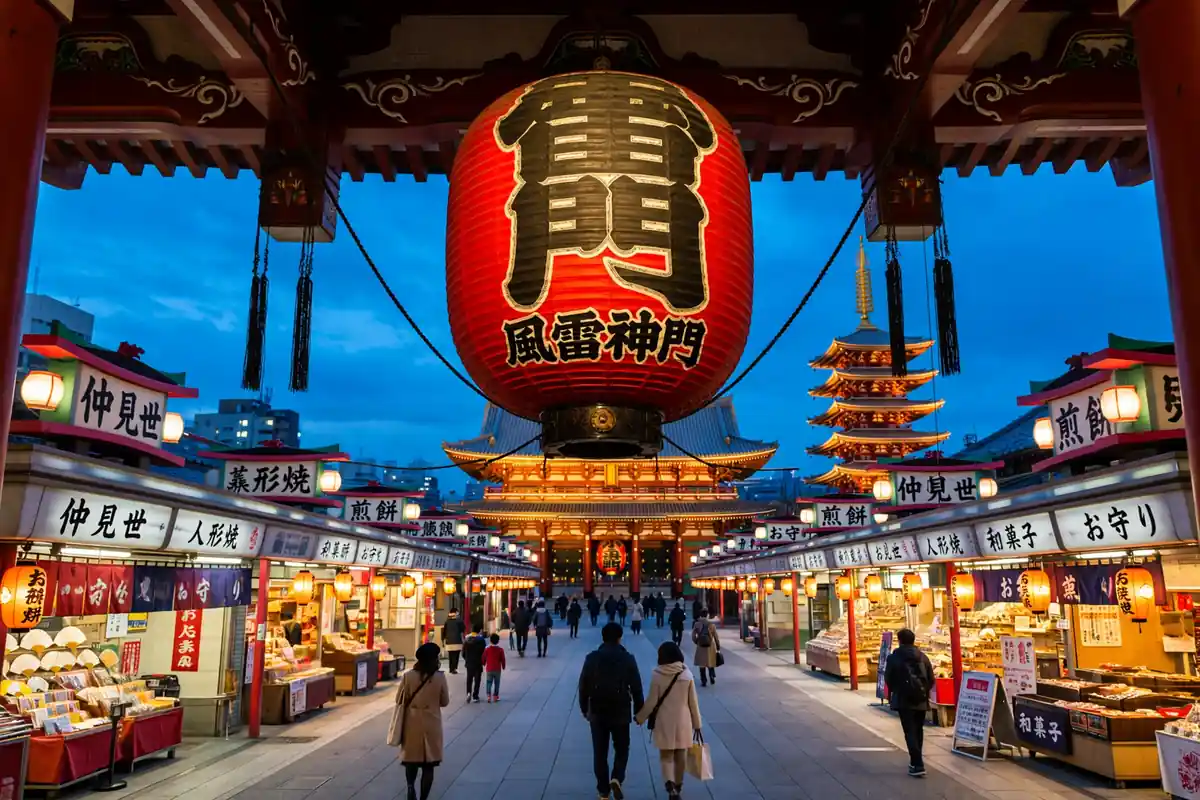
Senso-ji is the oldest temple in Tokyo, and the single best place to start your trip. Founded in 645 AD, it sits at the end of Nakamise, a shopping street of about 90 stalls selling rice crackers, sweet bean treats, fans and souvenirs, and it begins at the Kaminarimon — the Thunder Gate — with its giant red lantern, 3.9 metres tall and weighing about 700 kilograms, which is the most photographed object in the city. Walk under it, through Nakamise, past the five-story pagoda, and into the main hall, where the air smells of incense and people toss coins, clap twice and bow. The temple is free, the main hall is open from 6 a.m. to 5 p.m., and the grounds stay open later, so you can walk them at night when the buildings are lit and the crowds are gone. Read about the Senso-ji Temple on Wikipedia.
The practical facts for 2026: go early. Senso-ji opens before the shops do, and at 7 a.m. you will have the temple almost to yourself; by 11 a.m. Nakamise is shoulder to shoulder. The nearest station is Asakusa on the Ginza and Asakusa subway lines, and the walk from the station to the gate takes about five minutes. Two honest warnings: the shops on Nakamise close in the early evening, so do your shopping in the afternoon, and do not eat while walking — it is considered rude in Asakusa, and the stalls will ask you to step aside. If you are in Tokyo on the third weekend of May, the Sanja Matsuri — one of the three great Shinto festivals of Japan — fills Asakusa with portable shrines, drums and about two million people, which is either the best weekend of the year or the worst, depending on how you feel about crowds.
2. Meiji Shrine
Meiji Shrine is the quietest place in central Tokyo, and the most surprising. Dedicated to Emperor Meiji and Empress Shoken, it was completed in 1920 in a forest of about 100,000 trees planted by volunteers from across Japan, and the walk from Harajuku Station to the shrine — ten minutes under towering cedars, past a wall of sake barrels donated by brewers — feels like leaving the city entirely, even though Shibuya is one stop away. The shrine itself is simple and wooden, with no gold and no colour, which is the point: this is Shinto at its most peaceful, and on a Sunday morning you may see a traditional wedding procession crossing the courtyard in full kimono. It is free, it opens at sunrise and closes at sunset, so the hours change through the year, and the forest is at its best in the early morning, when the light comes through the trees. Read about the Meiji Shrine on Wikipedia.
The practical facts for 2026: the shrine is a five-minute walk from Harajuku Station on the JR Yamanote Line, or from Meiji-jingumae Station on the Chiyoda and Fukutoshin subway lines. The Inner Garden — a separate paid area inside the grounds, with a famous iris garden that blooms in June — costs ¥500. Do not confuse the shrine with Yoyogi Park next door, which is the big open park where Tokyo’s street performers, dog walkers and picnickers gather on Sundays; the two are neighbours and worth doing together, shrine first, park second. And if you visit in the first days of January, be ready for hatsumode — the first shrine visit of the new year — when more than three million people come to Meiji Shrine in three days, and the queue to the main hall can take hours.
3. Shibuya Crossing and Hachiko
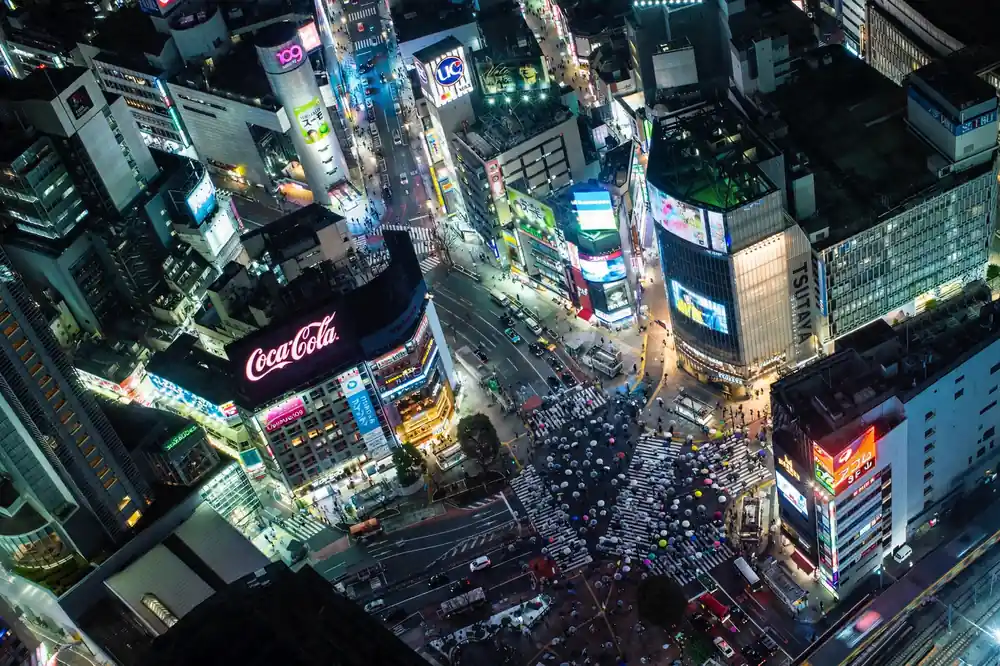
Shibuya Crossing is the busiest pedestrian crossing in the world, and the image of Tokyo that everyone knows. When the lights change, as many as 3,000 people cross at once from every direction, in perfect order, with no pushing and no shouting — it is chaos that works, and watching it is half the fun. The other half is the Hachiko statue, just outside Shibuya Station: the bronze dog who waited for his owner every day for nearly ten years after the professor’s death, and who is now the meeting point for all of Tokyo — “meet me at Hachiko” is the most common arrangement in the city. The crossing is free, it is busiest at rush hour and on Friday and Saturday nights, and it is best seen twice: once at street level, in the crowd, and once from above. Read about Shibuya Crossing on Wikipedia.
The practical facts for 2026: the best free view is from the second-floor Starbucks in the Tsutaya building on the north side of the crossing — but the window seats have a queue, so arrive early or accept a seat further back. The best paid view is SHIBUYA SKY, covered in its own section below. The Shibuya Station area was rebuilt through the 2020s and the exits have changed, so follow the signs for the Hachiko Exit rather than a memory from an old guide. Two honest warnings: do not stop in the middle of the crossing to take photos — the crowd moves fast and you will be in the way — and do not use a drone, which is banned over central Tokyo. After dark, the side streets around the crossing fill with bars, ramen counters and the late-night energy that makes Shibuya the best place in the city to end a day.
4. teamLab Planets
teamLab Planets is the most talked-about attraction in Tokyo, and the one you have to book properly. It is a museum you walk through barefoot, wading knee-deep through warm water in a room full of floating koi, standing under a ceiling of ten thousand orchids, and walking through a garden of glowing flowers that reacts to your touch — four big spaces, about an hour, and nothing like a normal museum. The catch, and the thing most guides still get wrong, is that there are two teamLabs in Tokyo, and they are not the same. Planets is in Toyosu, by the bay, and it is the water one. Borderless is in Azabudai Hills, near Tokyo Tower, and it is the mapless maze of digital rooms that used to be in Odaiba before it moved in February 2024 — any guide that still sends you to Odaiba for Borderless is two years out of date. Read about teamLab on Wikipedia.
The practical facts for 2026: Planets tickets start at ¥3,800 for adults, with dynamic pricing up to about ¥4,800 at peak times, and — this is the trap — no walk-up tickets are sold on site at all. You must book online in advance, and weekends sell out days ahead. Planets is also closing at the end of 2027, so 2026 is one of the last two years to see it. Borderless tickets start at ¥3,400 online, or ¥200 more at the door, with ages 13 to 17 at ¥2,800, ages 4 to 12 at ¥1,500 and under 3 free; allow two and a half to three hours, because there is no map and no set route, and you will get lost on purpose. One more warning: resellers list Planets tickets for as much as ¥7,826 — nearly double the real price — so book only through the official teamLab website. Wear trousers you can roll up to the knee, because the water rooms are barefoot, and leave the big bag in a locker.
5. Tokyo Skytree
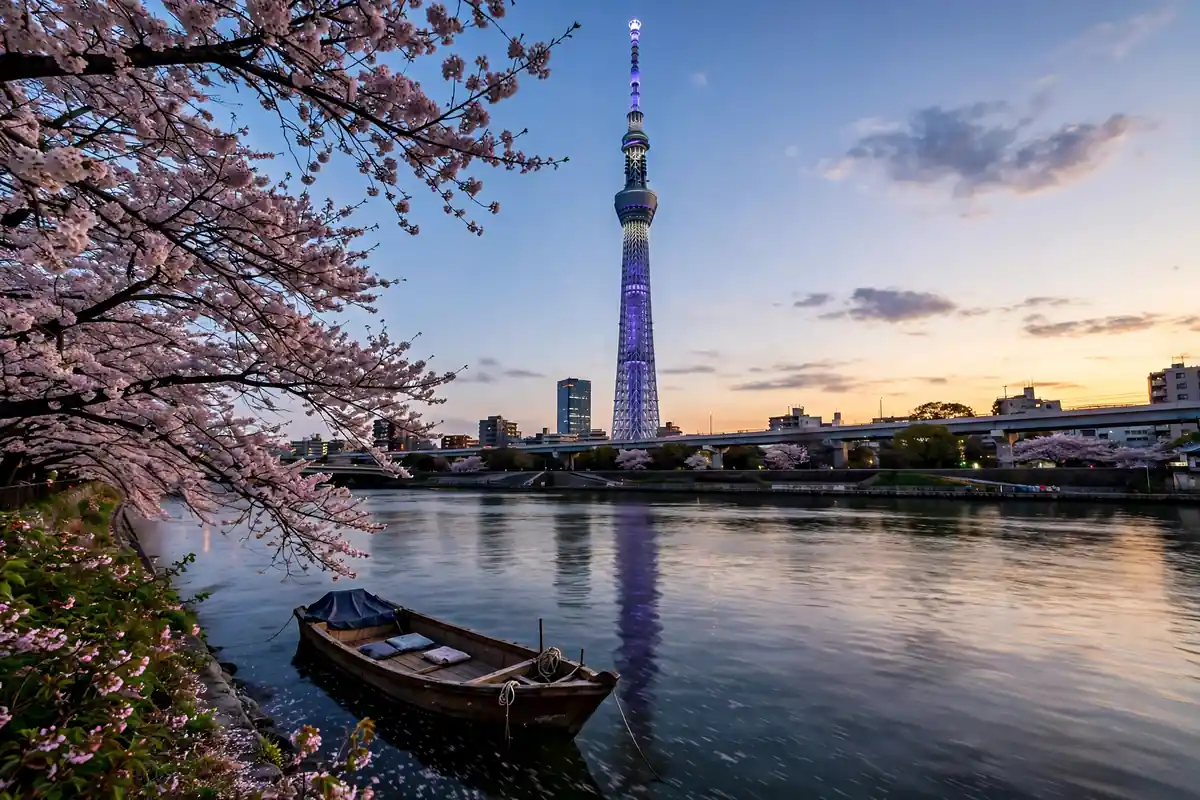
Tokyo Skytree is the tallest tower in the world, and the best view in the city on a clear day. At 634 metres — the number is a pun on the old name of the area, Musashi — it rises over the Sumida River in the east of the city, with two observation decks: the Tembo Deck at 350 metres and the Tembo Galleria at 450 metres, a glass-floored spiral walkway that feels like walking in the sky. On a clear winter morning you can see Mount Fuji from the top, and at night the tower is lit in different colours — purple, blue and gold — depending on the season. The base holds Solamachi, a shopping and restaurant complex, and the Sumida Aquarium, so the tower is a half-day in itself. Read about the Tokyo Skytree on Wikipedia.
The practical facts for 2026: tickets to the Tembo Deck start at ¥1,800 when you book online, and the combined ticket to both decks starts at ¥3,000. Buying at the fourth-floor counter on the day costs ¥500 more, and the Galleria add-on inside is ¥1,400, so booking online saves real money. Children aged 6 to 14 pay from ¥900, and under 6s are free. The tower is open roughly 9 a.m. to 10 p.m., with last admission at 9 p.m., and the hours shift by season. Two honest warnings: the tower is closed to the top decks in high winds, which happens more often than the guides admit, and the view is only as good as the weather — Tokyo’s clearest skies are in winter, from December to February, when the air is dry and Mount Fuji appears. Go at sunset if you can, when the city lights come on below you and the tower turns gold.
6. Tsukiji Outer Market
Tsukiji Outer Market is where Tokyo eats breakfast, and the best food walk in the city. The wholesale market — and the famous tuna auction — moved to Toyosu in 2018, but the outer market stayed: about 460 shops in narrow lanes around the old site, selling tuna and sea urchin, tamagoyaki omelette on a stick, wagyu beef skewers, fresh wasabi, knives, dried fish and tea, and most of it is eaten standing up, in the street, out of paper trays. It is the one place in Tokyo where you should arrive hungry and with cash, because the smallest stalls do not take cards. The market is at its best from 9 a.m. to 2 p.m., and the shops start closing in the mid-afternoon, so this is a morning activity, not an evening one. Read about the Tsukiji Market on Wikipedia.
The practical facts for 2026: the market is a five-minute walk from Tsukiji Station on the Hibiya Line, or from Tsukiji-shijo Station on the Oedo Line. Budget about ¥2,000 to ¥3,000 for a proper grazing breakfast — a tuna bowl, a skewer, an omelette and a coffee — and expect to queue at the famous stalls. Two honest warnings: December is the trap month. The market association asks tour groups to stay away in December because the lanes are packed with New Year shoppers, so if you visit in December, go on a weekday and go early. And do not confuse the outer market with the Toyosu auction, which is a different experience at a different place, covered in its own section below. If you want a sit-down sushi breakfast, the small counters around the market open at 5 a.m. and serve some of the freshest sushi in the world — but they have six to eight seats, so the queue starts before dawn.
7. Shinjuku Gyoen
Shinjuku Gyoen is the best garden in Tokyo, and the best place in the city to see cherry blossom without a crowd. It is a 58-hectare park in the middle of Shinjuku, with three gardens in one — a formal French garden, an English landscape garden and a traditional Japanese garden with a pond, a teahouse and a bridge — and about 1,000 cherry trees of 65 varieties, which means the blossom season here lasts longer than anywhere else in the city: early varieties open in February and late ones run into late April. It is also one of the few places in central Tokyo where you can sit on the grass with a picnic, which is banned in most Tokyo parks. Admission is ¥500 for adults, ¥250 for seniors and students, and free for under 15s. Read about Shinjuku Gyoen on Wikipedia.
The practical facts for 2026: the garden is open 9 a.m. to 6 p.m. from March 15 to September 30, and 9 a.m. to 4:30 p.m. from October 1 to March 14 — except in the summer, when it stays open until 7 p.m. — and it is closed on Mondays, except during cherry blossom season from March 25 to April 24 and autumn leaf season from November 1 to 15, when it opens every day. It is closed from December 29 to January 3. The nearest gates are Shinjuku-gyoemmae on the Marunouchi Line and Shinjuku-sanchome on the Marunouchi, Fukutoshin and Shinjuku lines. Two honest warnings: alcohol is banned in the garden, and the staff check bags at the gate, so buy your picnic food and soft drinks outside. And in cherry blossom season the garden limits entry when it gets full, so arrive before 10 a.m. — the early morning light on the blossom is better anyway.
8. Harajuku and Takeshita Street
Harajuku is where Tokyo’s youth culture lives, and Takeshita Street is its loudest 350 metres. The narrow lane from Harajuku Station is packed with vintage shops, cosplay stores, crepe stands, rainbow cotton candy, second-hand designer clothes and teenagers in outfits you will not see anywhere else on Earth — and on a Sunday it is one of the most crowded streets in Japan. It is not a place for a quiet walk; it is a place to eat a crepe, buy a strange souvenir and watch the fashion. The street is free to walk, the shops open around 10:30 a.m., and the best time is a weekday morning, when you can actually move. Read about Harajuku on Wikipedia.
The practical facts for 2026: Harajuku Station is on the JR Yamanote Line, one stop from Shibuya, and Meiji-jingumae Station on the Chiyoda and Fukutoshin lines drops you at the other end of the street. Do Harajuku and the Meiji Shrine together — shrine first, in the morning quiet, then Takeshita Street as it wakes up — and then walk down Omotesando, the wide tree-lined avenue of flagship stores and architecture that is Harajuku’s grown-up neighbour. Two honest warnings: the crepe and cotton candy queues can take 30 minutes on a weekend, and the street is a pickpocket’s dream, so keep your bag in front of you. If the crowds are too much, slip into the side streets of Ura-Harajuku behind the main drag, where the vintage shops are better, the cafes are quieter and the prices are lower.
9. Akihabara
Akihabara — Electric Town — is the centre of the world’s anime, manga and electronics culture, and the strangest shopping district in Tokyo. After the war it was a black market for radio parts, then the home of cheap electronics, and now it is eight floors of anime figures, retro games, manga, maid cafes, capsule toys and electronics, with giant screens and neon on every building. The main street, Chuo-dori, closes to traffic on Sundays, and the side streets hold the real treasures: the retro game shops, the figure stores where a single rare model costs more than a car, and the tiny ramen counters in the back lanes. It is free to walk, the shops open around 10 a.m. or 11 a.m., and it is best in the late afternoon, when the neon comes on. Read about Akihabara on Wikipedia.
The practical facts for 2026: Akihabara Station is on the JR Yamanote, Keihin-Tohoku and Sobu lines, and the Electric Town exit drops you on the main street. Start at the big stores — Yodobashi Camera for electronics, Mandarake and Radio Kaikan for anime and figures — then work into the side streets for the retro games and the second-hand shops. Two honest warnings: the maid cafes are an experience, not a meal, and they charge a cover fee plus a per-person table charge on top of the food and drink, so check the price board before you sit down. And if you are buying electronics, check that they work on your home voltage — Japan runs on 100 volts, and some appliances will not work abroad, even with an adapter. For a quieter version of the same culture, the anime shops of Nakano Broadway, twenty minutes west, are cheaper and less crowded.
10. Ueno Park and the Tokyo National Museum
Ueno Park is Japan’s first public park, opened in 1873, and the best museum district in Tokyo. The park itself is free — wide paths, about 1,000 cherry trees, the Shinobazu Pond with its lotus flowers in summer, and the Toshogu Shrine, a small gold-leaf shrine from 1627 that survived the wars — and around it sit four national museums, a zoo and a concert hall. The Tokyo National Museum is the biggest and the best: the oldest museum in Japan, with the largest collection of Japanese art in the world — samurai armour, swords, kimono, screens, ceramics and the national treasures that no other museum can show. It is the one museum in Tokyo that rewards a full morning. Read about Ueno Park on Wikipedia.
The practical facts for 2026: the Tokyo National Museum costs ¥1,000 for adults, ¥500 for university students, and is free for under 18s and over 70s. It is open 9:30 a.m. to 5 p.m., and until 8 p.m. on Fridays and Saturdays, and it is closed on Mondays. The National Museum of Western Art next door — a Le Corbusier building and a UNESCO site — costs ¥500, and the National Museum of Nature and Science costs ¥630. Ueno Zoo, in the south of the park, costs ¥600 for adults, ¥300 for seniors, ¥200 for junior high students and is free for elementary school children and under; it is closed on Mondays, and it is home to the giant pandas, who draw the longest queue in the park. The park is a five-minute walk from Ueno Station on the JR Yamanote Line and the Ginza and Hibiya subway lines. Two honest warnings: in cherry blossom season the park is the most crowded place in Tokyo, with hanami parties under every tree, so go at dawn; and the museums close on Mondays, so plan Ueno for any other day.
11. Imperial Palace East Gardens
The Imperial Palace East Gardens are the one place in Tokyo where you can walk inside the walls of the Imperial Palace — and they are free. The palace itself is closed to the public except for two days a year, but the East Gardens, on the site of the old Edo Castle, are open to everyone: wide lawns where the castle keep once stood, the stone foundations of the old donjon, a Japanese garden, the Ninomaru Garden with its pond and iris beds, and the Museum of the Imperial Collections. The scale is the surprise — Edo Castle was the largest castle in the world, and the moats, gates and stone walls give you a sense of a city that once had a million people when London had half that. The gardens are free, open 9 a.m. to 4 p.m. in winter and 5 p.m. in summer, and the entrance is through the Otemon Gate, a ten-minute walk from Tokyo Station. Read about the Tokyo Imperial Palace on Wikipedia.
The practical facts for 2026: the trap is the closing days. The East Gardens are closed on Mondays and Fridays — not just Mondays, which is what most guides say — and from December 28 to January 3. Go on a Tuesday, Wednesday, Thursday, Saturday or Sunday, and go in the morning, when the light on the stone walls is best and the gardeners are working. The palace opens its inner grounds to the public only twice a year, on January 2 for the New Year greeting and on the Emperor’s birthday, February 23, when thousands of people queue to see the Imperial Family on the balcony. If you want more, the free guided tour of the palace grounds runs twice a day on weekdays and must be booked in advance through the Imperial Household Agency — and the Kokyo Gaien National Garden, the big open plaza in front of the palace with the famous Nijubashi Bridge view, is free and open every day.
12. Ginza
Ginza is the most elegant shopping district in Japan, and the most expensive land in the country. The wide streets hold flagship stores for every luxury brand, the six-storey Ginza Six mall, the Kabukiza theatre where kabuki has been performed since 1889, and the basement food halls — the depachika — of Mitsukoshi, Matsuya and Isetan, which are worth a visit even if you buy nothing. On Saturday and Sunday afternoons the main street, Chuo-dori, closes to traffic and becomes a pedestrian promenade, which is the best time to walk it. Ginza is also the home of the classic Tokyo experience that most visitors miss: the tiny basement bars and the old coffee shops — the kissaten — where the coffee is poured by hand and the jazz plays on vinyl. Read about Ginza on Wikipedia.
The practical facts for 2026: Ginza Station is on the Ginza, Marunouchi and Hibiya subway lines, and the district is a ten-minute walk from Tokyo Station. You do not need a luxury budget to enjoy Ginza: the food halls are the best free show in the city, the Uniqlo flagship has twelve floors, and the rooftop gardens of the big stores are free and quiet. Two honest warnings: the department stores close around 8 p.m., earlier than the shops in Shibuya and Shinjuku, so do your browsing in the afternoon. And the famous Ginza sushi counters — including the most famous of all, Sukiyabashi Jiro — book out weeks or months ahead, and the best of them do not take walk-ins, so if omakase is on your list, book it before you fly, not after you land.
13. SHIBUYA SKY
SHIBUYA SKY is the best new viewpoint in Tokyo, and the one that sells out first. It sits on the 46th floor and the rooftop of the Shibuya Scramble Square tower, directly above Shibuya Station: a glass-walled indoor observatory at 229 metres, and then an open-air rooftop — the Sky Stage — with a 360-degree view over the city, the crossing far below, and on a clear day Mount Fuji on the horizon. There is nothing between you and the sky except a glass parapet, which is why the photos from here look the way they do. It is the view the old guides recommended from the Tokyo Metropolitan Government Building, but higher, closer to the action, and with the crossing in the frame. The catch is the ticket: you cannot just turn up at sunset and walk in.
The practical facts for 2026: tickets cost ¥2,700 before 3 p.m. and ¥3,400 after 3 p.m. when you book online, and ¥3,000 and ¥3,700 at the door — if there are any left, which there usually are not at sunset. Dates open exactly two weeks ahead at midnight Japan time, and the sunset slots sell out within hours, so set an alarm for midnight two weeks before the day you want. Book the last slot of the day if you can: the rooftop at dusk, when the city lights come on and the crossing glows below, is the best hour in Tokyo. Two honest warnings: the rooftop closes in bad weather and high winds, with no refund of the difference, only a partial one; and bags larger than a small handbag must go in a locker, so travel light. If SHIBUYA SKY is sold out, the free observatory at the Tokyo Metropolitan Government Building in Shinjuku is the fallback — and it is free.
14. Tokyo Tower
Tokyo Tower is the older, warmer rival to the Skytree, and the one Tokyoites love more. Built in 1958 and modelled on the Eiffel Tower, it is 333 metres tall, painted international orange and white, and it stands in the middle of the city rather than on the edge, so the view from its Main Deck at 150 metres looks down on the temples, the parks and the bay all at once. At night it is lit in warm orange, and in winter it wears a special illumination that the Skytree does not. The base holds shops, a One Piece theme park for the anime fans, and the FootTown building, and the tower is a ten-minute walk from the Zojo-ji Temple, a beautiful 17th-century temple that most visitors walk past without noticing. Read about the Tokyo Tower on Wikipedia.
The practical facts for 2026: the Main Deck costs ¥1,500 for adults, and the Top Deck at 250 metres is a separate guided tour at a higher price, so check the current fare before you go. The tower is open 9 a.m. to 11 p.m., with last entry at 10:30 p.m., which makes it the best late-night viewpoint in the city — the Skytree closes at 10 p.m. and SHIBUYA SKY earlier. Two honest warnings: the Top Deck tour runs on a fixed schedule and sells out on weekends, so book it online; and the tower’s glass floor on the Main Deck — the Lookdown Window — is not for anyone with vertigo. If you only have time for one tower, choose the Skytree for the height and the view of the whole city; choose Tokyo Tower for the atmosphere, the night lighting and the temple next door.
15. Toyosu Market at dawn
Toyosu Market is the biggest fish market in the world, and the dawn tuna auction is the most extraordinary thing you can see in Tokyo before breakfast. The wholesale market moved here from Tsukiji in 2018, and it is a working market, not a tourist attraction: the tuna auction runs from about 5:30 a.m. to 6:30 a.m. on trading days, in a hall where buyers in rubber boots bid on frozen bluefin by hand signals, and the first tuna of 2026 — a 243-kilogram bluefin — sold for ¥510 million, about $3.2 million, to the owner of the Sushi Zanmai chain. Visitors watch from walkways above the auction floor, and from a close-up deck reached by a free monthly online lottery that takes 100 people a day, with viewing from 5:45 a.m. to 6:25 a.m. The market walkways are free and open from 5 a.m. to 5 p.m., with no booking needed. Read about the Toyosu Market on Wikipedia.
The practical facts for 2026: the trap is the train. The first Yurikamome train arrives at Shijomae Station at 5:35 a.m., which is too late for the start of the auction — take a taxi from your hotel if you want the dawn. The market is closed on Sundays, on public holidays and on most Wednesdays, and it was open for only 251 trading days in 2026, so check the market calendar before you set an alarm. Apply for the close-up deck lottery in the month before your visit, and arrive at the meeting point by 5:30 a.m. if you win. After the auction, the restaurants on the top floor of the market buildings serve sushi breakfast from about 6 a.m. — the freshest breakfast in Tokyo, and the reason to come even if you miss the auction. And if dawn is too early, the Tsukiji Outer Market, covered above, is the same food without the alarm clock.
16. Ghibli Museum
The Ghibli Museum is the most magical museum in Tokyo, and the hardest ticket in the city to get. It is the museum of Studio Ghibli — the studio behind My Neighbor Totoro, Spirited Away and Princess Mononoke — in a storybook building in Mitaka, west Tokyo, designed by Hayao Miyazaki himself: a rooftop garden with a robot soldier from Castle in the Sky, a Catbus the children can climb inside, hand-drawn animation cells, a short film that only plays here, and a shop that sells the things you cannot buy anywhere else. There are no photos allowed inside, which is part of the charm: you have to be there. Tickets cost ¥1,000 for adults and ¥700 for ages 13 to 18, and the museum is closed on most Tuesdays. Read about the Ghibli Museum on Wikipedia.
The practical facts for 2026: the trap is the ticket. You cannot buy a ticket at the museum. Tickets are sold only through Lawson Ticket, and they go on sale at 10 a.m. Japan time on the 10th of the month before your visit — so for a November visit, you buy on October 10 — and the popular dates sell out within hours. There is no same-day ticket, no waiting list and no resale, so if you miss the sale, you miss the museum. The museum is in Inokashira Park, a twenty-minute walk from Mitaka Station on the JR Chuo Line, or a short bus ride from Kichijoji Station, and the park itself — with its pond, swan boats and cherry trees — is worth an hour on its own. Two honest warnings: the museum takes about two hours, and children under 12 will enjoy it more than adults who have never seen a Ghibli film, so watch one before you go. And if you cannot get a ticket, the Ghibli Park in Aichi is the alternative, but it is a day trip from Nagoya, not Tokyo.
17. Odaiba
Odaiba is Tokyo’s futuristic island in the bay, and the best place in the city for a sunset. Built on reclaimed land, it holds the DiverCity Tokyo Plaza shopping mall with its life-size Unicorn Gundam statue outside, the Aqua City and Decks malls along the waterfront, a small sandy beach with a view back across the bay to the Rainbow Bridge and the city skyline, and the Fuji TV building with its famous spherical observatory. It is also home to teamLab Borderless’s old address — and here is the trap most guides still get wrong: Borderless moved to Azabudai Hills in February 2024, so do not go to Odaiba looking for it. What Odaiba still has is the space, the sea air and the best free sunset in Tokyo, and it is the one place in the city where you can see the skyline as a whole. Read about Odaiba on Wikipedia.
The practical facts for 2026: take the Yurikamome line from Shimbashi Station — the driverless train crosses the Rainbow Bridge with a view of the bay, and the ride is half the fun — or the Rinkai Line from Osaki. The beach is free, the malls are open roughly 11 a.m. to 9 p.m., and the Gundam statue transforms on a schedule, which draws a crowd at dusk. Two honest warnings: Odaiba is a half-day at most, and it is best paired with the Toyosu Market in the morning or teamLab Planets, which is one Yurikamome stop away. And the island is exposed to the wind off the bay, so in winter it feels colder than the rest of the city — bring a layer.
18. Yanaka old town
Yanaka is the Tokyo that the war and the earthquake missed, and the most charming walk in the city. While most of old Tokyo was destroyed by the 1923 earthquake and the wartime bombing, Yanaka survived, and its narrow lanes still hold wooden houses, about 70 small temples, the Yanaka Ginza shopping street — a 170-metre lane of family shops, tofu sellers, butchers and a famous croquette stand — and the Yanaka Cemetery, where the last shogun is buried under the cherry trees. It is the place to see what Tokyo looked like before the towers, and it is free to walk. The best time is a weekday morning, when the shops open and the cats — Yanaka is famous for its street cats — come out. Read about Yanaka on Wikipedia.
The practical facts for 2026: Yanaka is a ten-minute walk from Nippori Station on the JR Yamanote Line, or from Sendagi Station on the Chiyoda Line. Start at the Yanaka Ginza, buy a croquette from the famous stand, and then wander the lanes to the temples — there is no set route, which is the point. Two honest warnings: Yanaka is a residential neighbourhood, not a theme park, so keep your voice down and do not photograph people’s houses. And the shops are small and family-run, so many of them close on one weekday a week and take cash only. Pair Yanaka with Ueno Park, which is one station away, for a full morning of old Tokyo.
19. Day trip to Nikko
Nikko is the best day trip from Tokyo, and the most beautiful place in Japan outside Kyoto. Two hours north of the city, in the mountains of Tochigi, it holds the Toshogu Shrine — the mausoleum of Tokugawa Ieyasu, the founder of the shogunate, a UNESCO World Heritage site since 1999, covered in gold leaf and carved with the famous three wise monkeys and the sleeping cat — and, a short bus ride away, Lake Chuzenji and the 97-metre Kegon Falls, one of the three great waterfalls of Japan. The cedar-lined avenues, the red Shinkyo Bridge over the river and the mountain air make Nikko feel like a different country from the city you left that morning. Read about Nikko on Wikipedia.
The practical facts for 2026: take the Tobu Spacia limited express from Asakusa Station — about one hour and fifty minutes, and the train itself, with its big windows, is part of the trip. Tobu sells two passes: the NIKKO PASS World Heritage Area, ¥3,000 for two days, which covers the return from Asakusa and the buses around the shrines, and the All Area version, ¥8,000 for four days, which adds Lake Chuzenji and the waterfalls. Neither pass includes the limited express ticket, which costs extra. Toshogu itself costs ¥1,600 for adults and is open 9 a.m. to 5 p.m. from April to October, and 9 a.m. to 4 p.m. from November to March. Two honest warnings: the Akechidaira Ropeway, which looks down on Lake Chuzenji and Kegon Falls, is closed for works from January 16, 2026 to August 31, 2027, so do not plan your day around it. And Nikko is at its best in autumn, from mid-October to early November, when the maples turn — which is also when it is most crowded, so book the train a day ahead.
20. Day trip to Kamakura and Enoshima
Kamakura is the seaside answer to Nikko: a former capital of Japan, an hour from Tokyo, with the Great Buddha, bamboo groves, hiking trails and a beach. The Great Buddha of Kotoku-in — a 13.35-metre bronze statue built in 1252, sitting in the open air because the hall around it was washed away by a tsunami in 1498 — is the sight, and you can climb inside it for a small fee. Around it are the Hasedera Temple with its eleven-headed Kannon and its view over the bay, the Tsurugaoka Hachimangu Shrine up the stone steps from the main street, and the Enoden — the little green tram that rattles along the coast between Kamakura and Enoshima, past the beach and the surfers, and which is a ride in itself. Enoshima, the island at the end of the line, has a shrine, a sea candle observatory and a view of Mount Fuji on a clear winter day. Read about Kamakura on Wikipedia.
The practical facts for 2026: take the JR Yokosuka Line from Tokyo Station or Shinjuku — about 55 minutes to Kamakura, roughly ¥950 to ¥1,040 — or buy the Enoshima-Kamakura Freepass for ¥1,640, which covers the return from Shinjuku and unlimited rides on the Enoden. The Great Buddha costs a few hundred yen, and the temples open around 8 a.m. Two honest warnings: Kamakura is busiest in June, when the hydrangeas bloom at Hasedera and Meigetsu-in, and on summer weekends, when the beach fills up — go on a weekday if you can. And the Enoden is a commuter train, not a tourist ride, so it gets packed at rush hour; ride it in the middle of the day, between the morning crowds and the evening ones. If you have a second day trip in you, Hakone — the hot spring loop of mountain railway, ropeway and lake boat, two hours from Shinjuku on the ¥7,100 two-day Hakone Freepass — is the other classic, but it needs a full day and an early start.
Tokyo in 3 days — a ready-made itinerary
This is the itinerary that uses the 20 attractions above in the order that wastes the least time. It groups the sights by neighbourhood, so you are never crossing the city twice in one day, and it leaves the evenings for food and viewpoints, which is when Tokyo is at its best.
| Day | Focus | Highlights |
|---|---|---|
| Day 1 | Old Tokyo — Asakusa and Ueno | Senso-ji and Nakamise at dawn, Imperial Palace East Gardens, Ueno Park and the Tokyo National Museum, Akihabara at night |
| Day 2 | Modern Tokyo — Shibuya, Harajuku and Shinjuku | Meiji Shrine, Takeshita Street, Shibuya Crossing and SHIBUYA SKY, Shinjuku Gyoen, Golden Gai and the free observatory after dark |
| Day 3 | Water, food and the bay | Toyosu tuna auction at dawn or Tsukiji Outer Market, teamLab Planets, Ginza, Tokyo Skytree at sunset, Odaiba |
Day 1 — Asakusa, the Imperial Palace and Ueno
Start at Senso-ji at 7 a.m., before the shops open and before the crowds arrive, and walk Nakamise as the stalls set up. Take the subway to Otemachi and walk the Imperial Palace East Gardens in the late morning, when the light is on the stone walls, and have lunch in the food hall of a department store near Tokyo Station. In the afternoon, take the Yamanote Line to Ueno and spend two hours in the Tokyo National Museum, then walk the park, the pond and the Toshogu Shrine. End the day in Akihabara, one stop south, for the neon, the anime shops and a bowl of ramen in a back lane. If you have the energy, the Tokyo Skytree is twenty minutes away by subway for a night view — but save it for Day 3 if you want the sunset.
Day 2 — Harajuku, Shibuya and Shinjuku
Start at the Meiji Shrine at 8 a.m., when the forest is quiet and the light comes through the cedars, and then walk to Takeshita Street as the shops open. Spend the late morning on Omotesando and in Yoyogi Park, and have lunch in Harajuku — a crepe from a street stand or a proper lunch in a side-street cafe. In the afternoon, walk or take one train stop to Shibuya: the Hachiko statue, the crossing at street level, and then SHIBUYA SKY at sunset, which you booked two weeks ago at midnight. End the day in Shinjuku: dinner in Omoide Yokocho, the narrow alley of yakitori stalls by the station, a drink in Golden Gai, the warren of six-seat bars in a few blocks of tiny two-storey buildings, and the free observatory at the Tokyo Metropolitan Government Building, open until 10 p.m., for the night view.
Day 3 — Markets, teamLab and the bay
Set an alarm for 4:30 a.m. and take a taxi to the Toyosu Market for the tuna auction — or sleep in and go to the Tsukiji Outer Market for a grazing breakfast instead, which is the more sensible choice for most people. Take the Yurikamome line to teamLab Planets for your timed slot, and allow an hour inside. Have lunch in Ginza, in a depachika food hall or at a sushi counter, and spend the afternoon browsing the stores and the Kabukiza theatre. In the late afternoon, take the subway to the Tokyo Skytree for the sunset from the Tembo Deck, and end the day in Odaiba, one Yurikamome stop from Toyosu, for the sunset over the bay and the Rainbow Bridge. If you have a fourth day, spend it on a day trip — Nikko for the shrines, Kamakura for the sea, or Hakone for the hot springs — and if you have a fifth, add the Ghibli Museum, Yanaka and the neighbourhood you liked best.
Best time to visit Tokyo
The best time to visit Tokyo is mid-to-late May and November. In May the weather is mild, the gardens are green, the crowds of cherry blossom season have gone and the rainy season has not started. In November the skies are clear, the air is crisp, the autumn leaves turn in the last week of the month, and the hotel prices drop. Late March to early April is the cherry blossom season — the most beautiful two weeks of the year, and the most crowded — and the autumn leaves run from late November to early December. Summer is hot, humid and crowded, with festivals and fireworks, and winter is cold, dry and clear, with the best views of Mount Fuji and the cheapest hotels.
| Season | Weather | What it is like |
|---|---|---|
| Spring (March to May) | 10 to 23°C (50 to 73°F) | Cherry blossom late March — first bloom March 19 and full bloom March 28 in 2026; Golden Week crowds late April to early May; the best season overall, and the busiest |
| Summer (June to August) | 25 to 31°C (77 to 88°F), humid | Rainy season early June to mid-July; festivals, fireworks and beer gardens; hot, humid and crowded |
| Autumn (September to November) | 13 to 23°C (55 to 73°F) | Clear skies, autumn leaves late November to early December; November is one of the best months to visit |
| Winter (December to February) | 2 to 10°C (36 to 50°F) | Cold, dry and clear — the best views of Mount Fuji; illuminations; the cheapest hotels; sumo in January |
A few dates to plan around. The cherry blossom in Tokyo in 2026 reached first bloom on March 19 and full bloom on March 28, and the best places to see it are Shinjuku Gyoen, where the paid entry keeps the crowds down, Ueno Park, where the crowds are part of the show, and the Meguro River, where the blossom hangs over the water — but go early, because by midday the river walk is packed. Golden Week, the cluster of public holidays in late April and early May, is the busiest week of the year for domestic travel, so hotel prices spike and the trains fill up. The rainy season, tsuyu, runs from about June 7 to July 19, with grey skies and sudden downpours, though it rarely rains all day. Sumo tournaments are held in Tokyo in January, May and September at the Ryogoku Kokugikan, and the next January tournament runs from January 10 to 24, 2027, with tickets on sale from December 5 — book early, because the good seats sell out. Read about cherry blossom on Wikipedia.
Where to stay in Tokyo
Tokyo has no single centre, so where you stay matters more than in most cities. The rule is simple: stay near a Yamanote Line station, because the Yamanote loop connects every neighbourhood that matters, and every station on it has hotels, restaurants and a subway interchange. Shinjuku is the best base for first-timers — the biggest transport hub in the world, with the most hotels, the most restaurants and the most nightlife. Shibuya is the best base if you want to be in the middle of the action, and Asakusa is the best base if you want traditional Tokyo and a lower price. Ginza is the best base for luxury and quiet, Ueno for budget and airport access, and Ikebukuro for budget and anime.
| Area | Best for | Budget |
|---|---|---|
| Shinjuku | First-timers: the biggest transport hub, nightlife, Golden Gai, department stores | Mid-range ¥15,000 to ¥30,000 a night |
| Shibuya | Young travellers, shopping, nightlife, the Crossing on your doorstep | Mid-range ¥15,000 to ¥30,000 a night |
| Asakusa | Traditional Tokyo, budget stays, Senso-ji at dawn, Skytree views | Budget ¥8,000 to ¥15,000 a night |
| Ginza | Luxury shopping, fine dining, quiet elegant streets | Luxury ¥30,000 and up a night |
| Ueno | Budget hotels, museums, the park, fast airport trains to Narita | Budget ¥8,000 to ¥15,000 a night |
| Ikebukuro | Budget stays, anime and shopping, Sunshine City | Budget ¥8,000 to ¥15,000 a night |
A few practical notes. A capsule hotel — a bed in a pod, with shared baths — costs about ¥3,000 to ¥5,000 a night and is a real option for solo travellers, and the best ones are in Shinjuku and Asakusa. A business hotel — a small, clean, efficient room with a bed, a desk and a bathroom — costs about ¥8,000 to ¥15,000 and is the best value in the city. A mid-range hotel costs ¥15,000 to ¥30,000, and a luxury hotel ¥40,000 and up. Book early for cherry blossom season and Golden Week, when prices double, and check the room size before you book — Tokyo hotel rooms are small by American standards, and a room listed for two people can be tight with two suitcases. And if you are arriving late, check the hotel’s check-in hours: many budget hotels lock their doors at 11 p.m.
Getting around Tokyo
Tokyo has the best public transport in the world, and you will not need a car, a taxi or a tour bus. The system has three parts: the JR Yamanote Line, the loop that connects Shinjuku, Shibuya, Harajuku, Ueno and Tokyo Station; the two subway networks, Tokyo Metro with nine lines and Toei with four; and the private lines that run to the suburbs and the day trips. The trick is to use the right ticket for the right day, and the 2026 prices are the ones that matter, because they changed in March.
Start with an IC card. A Suica or Pasmo card is a rechargeable card you tap at every gate, on trains, subways and buses, and in convenience stores — and regular unregistered Suica and Pasmo cards are back on sale after the chip shortage that stopped sales in 2023. Sales resumed on March 1, 2025. A regular Suica costs a ¥500 deposit, which is refundable when you return the card, minus a ¥220 handling fee. The tourist versions — the Welcome Suica and the Tourist Pasmo, which launched in May 2026 — need no deposit, are valid for 28 days, and the balance is not refundable, so do not load them with more than you will spend. If you have an iPhone, you can add a Suica to Apple Wallet and skip the physical card entirely. Read about Suica on Wikipedia.
Then add a subway pass for your heavy sightseeing days. The Tokyo Subway Ticket gives unlimited rides on all 13 subway lines — Tokyo Metro and Toei — for 24, 48 or 72 hours, and the prices went up on March 14, 2026: ¥1,000 for 24 hours, ¥1,500 for 48 hours and ¥2,000 for 72 hours, with children at half price. The old prices — ¥800, ¥1,200 and ¥1,500 — are what most guides still quote, and they are wrong. The ticket does not cover the JR lines, so the Yamanote loop costs extra, which is why most visitors use both: the subway pass for the sightseeing days, and the Suica for the JR trains and the buses. A single subway ride costs about ¥180 to ¥330, so the 72-hour pass pays for itself at about three rides a day.
The Japan Rail Pass is the trap that costs visitors the most money. The seven-day Ordinary pass costs ¥50,000 if you buy it on the official website, and ¥53,000 if you buy it through an agency, after the price rise on October 1, 2026. The 14-day pass is ¥80,000, or ¥84,000 through an agency, and the 21-day pass is ¥100,000, or ¥105,000. It only pays for itself if you take several long shinkansen trips: a Tokyo to Kyoto return on the Hikari costs about ¥27,700, which is barely half the price of a seven-day pass, so for a trip that stays in Tokyo, the pass is a waste of ¥50,000. If you are travelling on to Kyoto, Osaka and Hiroshima, it can pay — but do the maths first. Read about the Japan Rail Pass on Wikipedia.
Getting into the city is easy, and Haneda is the airport to choose if you have the choice. From Haneda, the Keikyu Line reaches Shinagawa in about 15 minutes for about ¥330, and the Tokyo Monorail reaches Hamamatsucho in about 20 minutes for about ¥520 — and both connect to the Yamanote Line. From Narita, which is 60 kilometres out, the Keisei Skyliner is the fastest train into the city: about 36 minutes to Nippori and 41 minutes to Ueno, for about ¥2,580 at the station or ¥2,310 booked online. The Narita Express is the no-change option to Tokyo Station, Shinjuku and Shibuya, at about ¥3,140 to ¥3,330 one way, with a discounted round-trip ticket for foreign visitors at about ¥5,200. The cheapest train is the Keisei limited express, about ¥1,060 and 80 minutes to Ueno, and the Airport Bus TYO-NRT runs to Tokyo Station and Ginza for about ¥1,500. One last 2026 change: the international departure tax rose from ¥1,000 to ¥3,000 on July 1, 2026, and it is normally included in your air ticket price, so you will not pay it at the airport — but it is there.
Tokyo food you have to try
Tokyo has more Michelin-starred restaurants than any other city in the world, and it also has the best cheap food on Earth. The range runs from a ¥110 plate of tuna on a conveyor belt to a ¥30,000 omakase counter, and the food at a ¥900 ramen counter can be just as good as the food at a ¥50,000 tasting menu. Plan on ¥3,000 to ¥6,000 a day for good eating without holding back, and less if you mix in convenience stores and ramen counters. The exchange rate is about ¥150 to the dollar, so ¥1,000 is roughly $6.50.
Sushi — from the conveyor belt to the omakase counter
Sushi in Tokyo runs the full range, and you should try at least two levels of it. The cheap end is kaiten-zushi, conveyor-belt sushi: chains like Sushiro, Kura Sushi and Hama Sushi charge ¥110 to ¥150 a plate, and most people leave full for ¥1,000 to ¥3,000. It is fast, fun, and the fish is good — this is the best first sushi meal in the city. The middle is a mid-range counter, where a set of 8 to 12 pieces of nigiri costs ¥3,000 to ¥8,000, and the best value of all is a lunch omakase, where a counter that charges ¥20,000 for dinner offers an eight-piece set for ¥3,500 to ¥5,000 at lunch. The top end is the evening omakase: from about ¥10,000, climbing past ¥20,000 at the renowned Ginza and Roppongi counters, and ¥30,000 to ¥60,000 at the most famous rooms. Book the top counters weeks ahead — the best ones do not take walk-ins — and remember that omakase means “I leave it to you”, so you eat what the chef serves, in the order he serves it, and you do not ask for a menu.
Ramen — the best-value meal in Tokyo
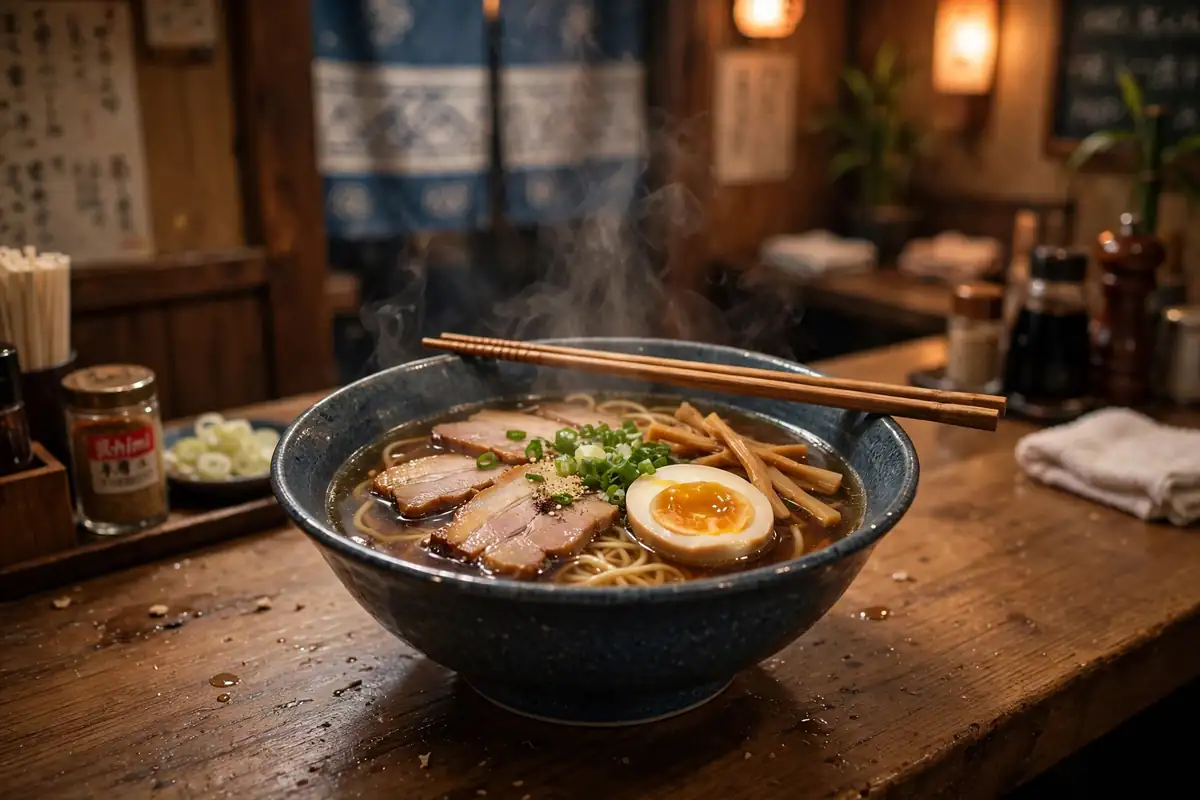
Ramen is the single best-value serious meal in the city. A standard bowl costs ¥900 to ¥1,300, and adding a marinated egg or extra chashu pork brings it to about ¥1,200 to ¥1,400 — and the national average bowl hit an all-time high of ¥736 in 2026, so Tokyo’s prices are higher than the rest of Japan, but still cheap for what you get. Tokyo’s own style is shoyu ramen, a clear soy-sauce broth with thin noodles, and the best places to try it are the small counters with six to ten seats, a ticket machine at the door and a queue outside. Order at the machine, hand the ticket to the chef, sit down and eat: no tipping, no small talk, and the bowl arrives in minutes. The other styles are worth a try too — tonkotsu, the rich pork-bone broth from Fukuoka, and tsukemen, where the noodles and the broth arrive separately and you dip. The famous chains — Ichiran, with its solitary booths, and Ippudo — are a good first bowl, but the best bowl in the city is usually the small shop with no English sign and a queue of locals.
Izakaya, depachika and konbini
The third food to try is not one dish but three ways of eating. The izakaya is the Japanese pub: a small, noisy room with a counter and low tables, where you order small plates — yakitori skewers, fried chicken, sashimi, pickles — and beer or sake, and a full evening with drinks costs about ¥3,000 to ¥5,000 a person. The best izakaya streets are Omoide Yokocho in Shinjuku, the lantern-lit alleys of Yurakucho under the train tracks, and the back streets of Asakusa. The depachika is the basement food hall of a department store, and it is the best free show in Tokyo: counters of sushi, tempura, wagyu, pickles, cakes and bento, with free samples and prices that drop by 30 to 50 percent in the last hour before closing. The konbini is the convenience store — 7-Eleven, FamilyMart and Lawson — and it is the best cheap meal in Japan: onigiri rice balls, sandwiches, fried chicken, bento boxes and hot coffee, a full meal for ¥500 to ¥800, open 24 hours. Eat at a konbini at least once, because the food is genuinely good, and because at 2 a.m., after the last train, it is the only place open.
Free things to do in Tokyo
Tokyo is not a cheap city, but its best things are often free. The shrines are free: Senso-ji, the Meiji Shrine and the Zojo-ji Temple cost nothing to enter, and the Yanaka lanes cost nothing to walk. The parks are free: Ueno Park, Yoyogi Park and the Kokyo Gaien plaza in front of the Imperial Palace are all free, and the Imperial Palace East Gardens are free too. The viewpoints are free: the Tokyo Metropolitan Government Building in Shinjuku has two free observatories on the 45th floor, 202 metres up, with a view over the whole city — the South observatory is open 9:30 a.m. to 10 p.m. and is closed on the first and third Tuesdays, and the North observatory is open 9:30 a.m. to 5:30 p.m. and is closed on the second and fourth Mondays — and from November 1, 2026, the building itself becomes the screen for a free projection mapping show every night from 5:30 p.m. to 9:30 p.m., every half hour. Shibuya Crossing is free to walk, Harajuku is free to walk, the Tsukiji Outer Market is free to browse, and the Odaiba beach is free. A full day in Tokyo — Senso-ji at dawn, the Meiji Shrine, the free observatory at sunset and the crossing at night — costs nothing but lunch and the train fare. One warning: the Bunkyo Civic Center viewpoint, which half the internet still recommends, has been closed for renovation since March 2025 and is not expected to reopen until early December 2026, so do not plan your day around it.
Frequently asked questions
How many days do you need in Tokyo?
Three full days is the right amount of time for a first visit: one day for old Tokyo, one day for modern Tokyo and one day for the markets, teamLab and the bay. Four to five days lets you add a day trip to Nikko or Kamakura without rushing, and a week lets you add Hakone, the Ghibli Museum and a slower pace. Two days covers the essentials — Senso-ji, the Meiji Shrine, the Shibuya Crossing, teamLab and the Skytree — but you will be moving fast. Tokyo is huge, so do not try to see it all: pick a neighbourhood a day, and let the city come to you.
Is the Japan Rail Pass worth it for Tokyo?
No, not for Tokyo alone. The seven-day pass costs ¥50,000, and a Tokyo to Kyoto return on the Hikari costs about ¥27,700, so you would need to take several long shinkansen trips to break even. For a trip that stays in Tokyo, buy a Suica card for the trains and a Tokyo Subway Ticket — ¥1,000 for 24 hours, ¥1,500 for 48 hours and ¥2,000 for 72 hours — for the subway. The pass only pays if you are travelling on to Kyoto, Osaka and Hiroshima in the same week, and even then, do the maths before you buy it. Read about the Japan Rail Pass on Wikipedia.
Do I need cash in Tokyo?
Yes, some, but less than you think. The big stores, the chain restaurants, the trains and the convenience stores all take cards, and Suica works in the konbini. But the small ramen counters, the market stalls, the temple offerings, the tiny bars of Golden Gai and the family shops of Yanaka are often cash only, so carry ¥10,000 to ¥20,000 in cash a day and top up at a 7-Eleven ATM, which takes foreign cards. Tipping does not exist in Japan — do not tip, because it is not expected and it can be awkward — and the price on the menu is the price you pay, with tax included in most places since the tax-free shopping rules changed on November 1, 2026 to an airport refund scheme.
When is cherry blossom season in Tokyo?
The cherry blossom in Tokyo in 2026 reached first bloom on March 19 and full bloom on March 28, and in most years the season runs from late March to early April, with the average first bloom on March 24 and full bloom on March 31. The best places to see it are Shinjuku Gyoen, where the paid entry keeps the crowds down and the 65 varieties stretch the season, Ueno Park, where the blossom is at its most crowded and most festive, and the Meguro River, where the trees hang over the water. Book hotels months ahead for blossom season, because the prices double, and check the forecast in the week before you fly — the blossom moves by a few days every year, and a warm March brings it early.
Is Tokyo expensive?
Tokyo is expensive for hotels and cheap for food, and the total depends on how you travel. A mid-range trip costs roughly ¥12,000 to ¥25,000 ($80 to $170) a person a day, with a hotel and one big ticketed sight. A budget trip — a capsule hotel or business hotel, ramen and konbini meals, free shrines and parks — can run ¥6,000 to ¥10,000 a day. The most expensive mistakes are the Japan Rail Pass you do not need, the taxi you take because you missed the last train, and the hotel you book in cherry blossom season without checking the price. The cheapest wins are the free observatory, the free shrines and parks, the ¥500 garden, the ¥900 ramen bowl and the ¥1,000 subway pass.
teamLab Planets or Borderless — which one should I choose?
Choose Planets if you want the water rooms, the floating flowers and the experience everyone talks about — and book it first, because it sells out and it closes at the end of 2027. Choose Borderless if you want the bigger museum, the mapless maze and two and a half to three hours of wandering, and if you are travelling with children, because the rooms are drier and easier. If you can only do one, do Planets, because it will not exist after 2027. If you can do both, do Planets in the morning and Borderless in the afternoon, and buy both tickets on the official teamLab website — never from a reseller, who will charge you nearly double. And remember that Borderless is in Azabudai Hills, not Odaiba, so do not follow an old guide to the wrong side of the bay.
Further reading — Wikipedia, Reddit and Quora
For more background on the city, read about Tokyo on Wikipedia, which covers the history, the wards and the economy in detail. For up-to-date local advice, restaurant tips and trip reports from people who live there, the Tokyo community on Reddit is active and helpful — search it for the neighbourhood you are visiting, and for the latest on teamLab tickets, the subway pass prices and the cherry blossom. For the lesser-known side of the city, the Quora thread on unpopular awesome places in Tokyo has real answers from people who live there, on food, onsen, sumo and the Ueno museums.
Your Tokyo trip, in one paragraph
Tokyo is the city that gives you a 1,400-year-old temple and a digital museum in the same day, a bowl of ramen for less than a coffee back home and a view from 450 metres that you will remember for the rest of your life — and it is the city that rewards a slow three days more than a rushed one. Come for Senso-ji at dawn and the Shibuya Crossing at night, stay for the markets, the gardens and the food, and leave with a plan to come back in a different season, because Tokyo in cherry blossom and Tokyo in autumn are two different cities. And if you want more city guides in the same style, we have them: Chicago, Nashville, Los Angeles, Orlando, Miami, San Diego, Denver, Savannah, Dallas, Charleston, San Francisco, Myrtle Beach, Las Vegas, San Antonio, London, Portland, Pigeon Forge, Puerto Rico, Atlanta, Phoenix, Paris, Maui, Key West, Colorado Springs, Sedona, Chattanooga, Palm Springs and St Louis.

About the Author