Things to Do in Asheville, North Carolina
20 Best Attractions, a 3-Day Itinerary, Where to Stay, and the Food You Cannot Miss
Quick Info
Best for: First-time visitors, mountain hikers, art lovers, beer lovers and families who want a walkable small city with big scenery
Best time: April to June and September to November, with leaf colour peaking in October
How long: 3 days is ideal; 2 days covers the highlights
Budget: Roughly $150–$250 per person per day, mid-range, before hotel
Don’t miss: Biltmore Estate, a drive on the Blue Ridge Parkway, the River Arts District, Mount Mitchell and a plate of smoked barbecue
Asheville is the small city the Blue Ridge Mountains built. At about 2,200 feet above sea level, it sits in a valley ringed by the highest peaks east of the Mississippi, and it packs an improbable amount into one place: America’s largest private home, more breweries per person than almost anywhere in the country, a working arts district, and a 469-mile scenic parkway that runs right through town. Here are the 20 best things to do in Asheville, North Carolina, with honest 2026 prices and the traps older guides still get wrong. Use our 3-day itinerary to plan the trip, check where to stay for the best bases, read how to get around on foot, by bus and by car, taste the three foods every visitor should try, and finish with the free sights that cost nothing at all.
The first thing to know about Asheville in 2026 is that it is open. Hurricane Helene hit western North Carolina on September 27, 2024, and it did real damage — the French Broad River flooded the River Arts District, roads and bridges washed out, and the Blue Ridge Parkway closed for months. As of 2026, downtown Asheville, Biltmore Estate, the River Arts District and nearly everything in this guide are open and running normally. The recovery is not finished: one stretch of the Blue Ridge Parkway is still closed for repairs, a few trails are still off limits, and some studios and shops are still rebuilding. This guide tells you exactly what is open, what is still closed, and what the older guides get wrong. Read the Asheville page on Wikipedia for the city’s full story, from the Vanderbilt era to the craft-beer boom.
Asheville at a glance
| Topic | What to know |
|---|---|
| Best for | First-time visitors, mountain hikers, art lovers, beer lovers and families |
| Best time to visit | April to June and September to November; peak leaf colour in October |
| How long | 3 days is ideal; 2 days covers the highlights |
| Budget | Roughly $150–$250 per person per day, mid-range, before hotel |
| Getting around | Walkable downtown; a car is essential for the Parkway, the mountains and the waterfalls |
| Don’t miss | Biltmore Estate, the Blue Ridge Parkway, the River Arts District, Mount Mitchell and smoked barbecue |
| Airport | Asheville Regional Airport (AVL), about 15 miles south of downtown; new terminal opened in 2025 |
| Famous for | Biltmore Estate, the Blue Ridge Parkway, craft beer, Art Deco downtown and mountain views |
The 20 best things to do in Asheville
1. Tour the Biltmore Estate, America’s largest home
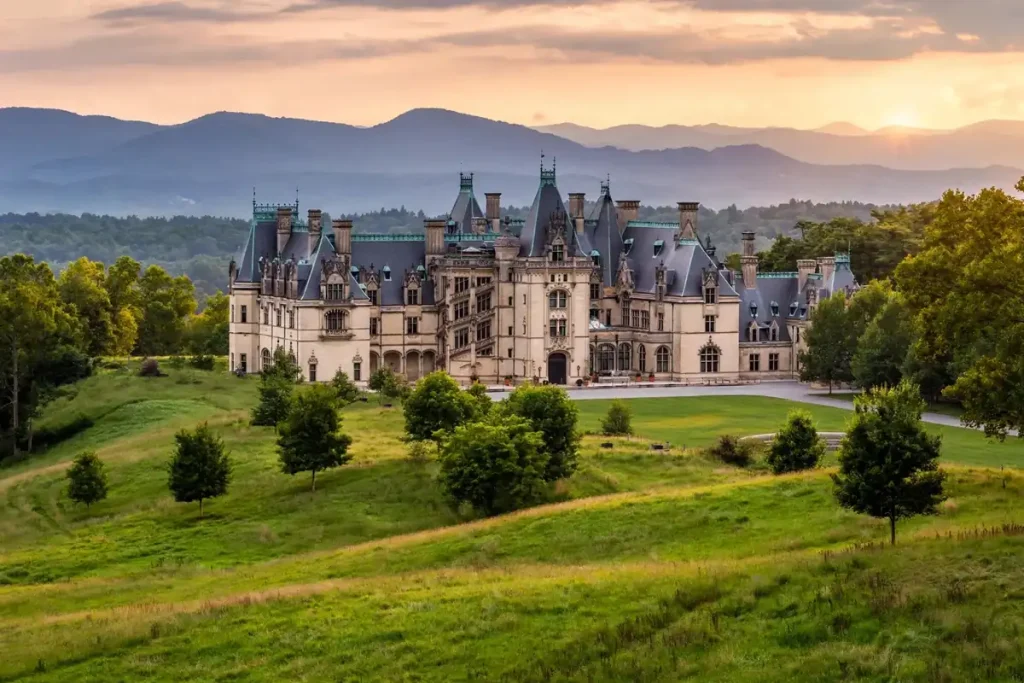
Biltmore Estate is the reason most people come to Asheville, and it earns the trip. George Vanderbilt’s 250-room French Renaissance chateau, finished in 1895, is the largest privately owned home in the United States, set on 8,000 acres of gardens, forest and farmland just south of downtown. The house tour runs through the Banquet Hall, the Winter Garden, the library with its 10,000 books, and the basement, where the bowling alley, the swimming pool and the servants’ quarters show how the other half lived. Outside, the gardens designed by Frederick Law Olmsted — the man behind Central Park — change with the seasons, and Antler Hill Village holds the winery, where a tasting is included with admission.
The 2026 prices are the trap here, because Biltmore uses date-based pricing and the numbers move. Daytime House and Grounds tickets start from about $105 outside the Christmas season and from $110 during Christmas at Biltmore, which runs from November 3, 2026 to January 10, 2027. Candlelight Christmas Evenings, when the house glows by candlelight, start from $135 and run from November 3, 2026 to January 9, 2027 — not on November 17, Thanksgiving or Christmas Eve — and a grounds-only ticket, with no house entry, starts from $85. Children aged 9 and under are free, and buying online at least seven days ahead saves $10 per ticket. New for 2026 is Luminere, an evening light-and-sound show on the house, from $155 on select nights from late March through October. Book a timed house entry when you buy — the popular times sell out, especially in December, when the Banquet Hall holds a 35-foot Fraser fir. Read about Biltmore Estate on Wikipedia.
2. Drive the Blue Ridge Parkway
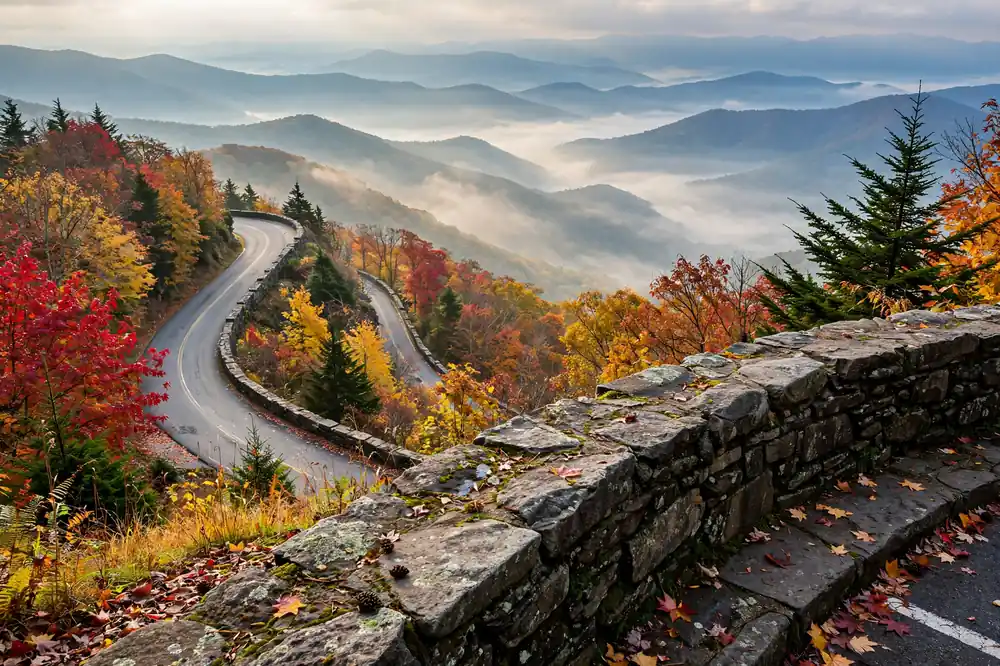
The Blue Ridge Parkway is the most visited unit in the entire National Park System, and Asheville sits right on it — the 469-mile road runs through the city at around milepost 382. From downtown you can be at an overlook in ten minutes, and the drive in either direction is the classic Asheville experience: ridge after ridge fading blue into the distance, tunnels cut through the rock, and overlooks every few miles. The best short drive from town is north to Craggy Gardens, about 20 minutes, or south past Mount Pisgah toward Graveyard Fields, about 45 minutes.
The 2026 news is mostly good, but this is the section where older guides are most out of date. Hurricane Helene closed the North Carolina parkway entirely in September 2024, and as of the National Park Service’s October 6, 2026 update, 458 of the 469 miles are open again. The stretch from Asheville to Mount Mitchell is open, and so is the stretch south toward Cherokee. The one closure that still matters is milepost 344.2 to 355.3, between NC Highway 80 and Mount Mitchell State Park, which is closed for Helene repairs with all recreation prohibited inside it — the Park Service expects those repairs finished by the end of 2026. The Linville Falls to Little Switzerland stretch, further north, has newly reopened. A few things are still closed even where the road is open: the Linville Falls Visitor Center, the Linville Falls Campground, and hiking at Crabtree Falls. Check the Park Service’s road status page the morning you drive, fill up before you go — there are no gas stations on the parkway — and remember the high sections close in winter for ice and snow. Read about the Blue Ridge Parkway on Wikipedia.
3. Wander the River Arts District
The River Arts District, or RAD, is Asheville’s working-art neighbourhood: a mile of former warehouses along the French Broad River holding more than 200 working artist studios and galleries, where you can watch painters, potters, glassblowers and metalworkers at work and buy straight from the maker. It is the most hands-on art experience in the city, and the studios are free to walk into. Come on the second Saturday of the month for the Studio Stroll, when most studios open their doors together.
The RAD took the worst of Helene’s flooding, and the recovery is the story here. By 2026 the district has rebuilt most of its footprint and is open and active, though individual studios keep different hours and a few are still rebuilding — check before you go if you have a specific studio in mind. The French Broad River Greenway, the riverside path through the district, is open, and the district’s anchor businesses, including the Wedge Brewery at the river’s edge, are pouring again. Do not believe guides that still describe the RAD as closed or destroyed; do not believe the ones that describe it as fully back to normal either. The honest version is in between, and it is worth your afternoon either way. Read about the River Arts District on Wikipedia.
4. Walk downtown Asheville’s Art Deco streets
Downtown Asheville is one of the best-preserved Art Deco downtowns in America, and it is best seen on foot. The 1.7-mile Asheville Urban Trail threads 30 bronze sculptures and plaques through the streets, telling the city’s story from the Vanderbilt era to the present. Start at Pack Square, where the Vance Monument once stood, and look up: the Jackson Building, finished in 1924, was the first skyscraper in western North Carolina, and the City Hall and the Buncombe County Courthouse face each other across the square in matching Art Deco stone. The Basilica of St. Lawrence, a Spanish Renaissance church with a dome built by Rafael Guastavino, is free to step into and is one of the most beautiful interiors in the South.
Downtown is also where Asheville’s food, bookshops and buskers live. Lexington Avenue and Wall Street hold the independent shops, the Asheville Pinball Museum, and the Friday-night drum circle in Pritchard Park, which has run for decades and is free to join or watch. The trap for first-timers is parking: downtown garages fill on weekend evenings, and the city now charges for on-street parking most hours. Walk if your hotel is downtown, and save the car for the mountains. Read about downtown Asheville on Wikipedia.
5. Watch the sunset from the Omni Grove Park Inn
The Omni Grove Park Inn is Asheville’s grand old hotel, and you do not need to stay there to enjoy it. Built in less than a year and opened on July 12, 1913, the Arts and Crafts lodge is made of rough granite blocks hauled up Sunset Mountain, with two enormous stone fireplaces in the Great Hall and a subterranean spa built into the hillside below the lawns. The Sunset Terrace, the outdoor restaurant off the Great Hall, is the place to be at dusk: steaks and seafood with the whole Blue Ridge spread out in front of you, and a daily sunset gong that calls everyone to the terrace to watch the light go.
The inn closed after Hurricane Helene in September 2024 and fully reopened to overnight guests in December 2024. In November and December it hosts the National Gingerbread House Competition, and the entries — life-size gingerbread houses built by pastry chefs from across the country — are free to view in the lobby. The spa, which opened in 2001, books out on weekends, so reserve ahead. Even if you only come for a drink in the Great Hall, the building itself is the attraction. Read about the Omni Grove Park Inn on Wikipedia.
6. Stroll the North Carolina Arboretum
The North Carolina Arboretum is 434 acres of gardens and forest trails at the edge of Pisgah National Forest, just southwest of downtown where the Blue Ridge Parkway meets NC 191. The Bonsai Exhibition Garden is one of the best in the country, the Heritage Garden recreates a mountain homestead, and the Quilt Garden changes its planting every year. Ten miles of trails run through the grounds, and the Winter Lights show, from mid-November to early January, turns the gardens into a mile of lights after dark.
The price trap here is parking, not admission: the grounds themselves are free, but parking is now $25 per car as of March 2026. Older guides still quote $14, which is out of date. Go early on a weekend — the lot fills by mid-morning in leaf season — and bring the $25 in a card, since the booths are cashless. If you are staying for Winter Lights, buy tickets online; the popular nights sell out. Read about the North Carolina Arboretum on Wikipedia.
7. Visit the Asheville Art Museum
The Asheville Art Museum, at 2 South Pack Square in the heart of downtown, is the city’s main art museum, focused on 20th- and 21st-century American art with a strong Southern Appalachian collection — the Black Mountain College artists, the studio craft movement, and contemporary makers from the region. The rooftop terrace, with its mountain views over the city, is worth the visit on its own, and the museum store is one of the best places in town to buy work by local artists.
Admission is the trap: the price has risen twice in recent years, and older guides quote $8 or $15. In 2026, general admission is $20, seniors aged 65 and over pay $15, and students and children aged 6 to 17 pay $10; children under 6 are free, Buncombe County residents get 20 percent off, and Bank of America cardholders get in free on the first full weekend of the month through Museums on Us. The museum is also free on the first Wednesday of every month from 3 to 5 p.m., and pay-what-you-wish on the first Friday of the month from 6 to 8 p.m. during the Downtown Art Walk. Check the calendar before you pay full price. Read about the Asheville Art Museum on Wikipedia.
8. Play all day at the Asheville Pinball Museum
The Asheville Pinball Museum, at 1 Battle Square downtown, is exactly what it sounds like: a museum of more than 40 pinball machines and 40 classic video games, all of them playable. One flat admission — $17 per person in 2026 — buys unlimited play for as long as you stay, with no quarters and no tokens. The collection runs from 1960s electromechanical machines to modern Stern tables, and the staff keep them all in working order.
It is small — the room holds about 80 people — and it fills up on rainy weekend afternoons, so go on a weekday if you can. Hours are Wednesday to Friday from 2 to 9 p.m., Saturday from noon to 9 p.m., and Sunday and Monday from 1 to 6 p.m.; it is closed on Tuesdays. It is the best rainy-day stop in downtown Asheville, and the best value for a family with teenagers.
9. Taste your way through Beer City USA
Asheville has more breweries per person than almost any city in America — more than 50 in the metro area — and it has won the Beer City USA title four times. The big names are the reason to start here: Sierra Nevada’s Mills River brewery, about 20 minutes south of downtown, is a cathedral of beer with its own restaurant, garden and free tours; New Belgium’s riverside brewery in the River Arts District has a Liquid Center tasting room on the French Broad; Wicked Weed’s downtown brewpub pours sours and barrel-aged beers you will not find anywhere else; and Highland Brewing, the city’s oldest craft brewery, pours on its rooftop in East Asheville.
The practical advice: do not try to drive between breweries. The South Slope, the downtown brewery district, has a dozen taprooms within walking distance of each other, and the free Asheville Ale Trail map lists them all. Most breweries are family-friendly until the evening, and most serve food or host food trucks. The trap is the old claim that Asheville has “more breweries per capita than anywhere in the USA” — the number is still impressive, but the exact ranking changes every year, and the 50-plus count is the honest figure. Read about Asheville’s breweries on Wikipedia.
10. Stand on top of Mount Mitchell
Mount Mitchell is 6,684 feet high, the tallest peak east of the Mississippi River, and it is about 35 miles northeast of Asheville. The summit is a short, paved walk from the parking lot — about a quarter of a mile — and on a clear day the view runs across a sea of blue ridges to the Great Smoky Mountains. The state park at the top is free to enter, and the summit tower gives you a few extra feet of elevation and a 360-degree panorama. It is also noticeably colder up there: the summit averages about 10 degrees cooler than downtown Asheville, and it can be windy even on a calm day in town, so bring a layer in every season.
The approach is the 2026 detail that matters. Mount Mitchell State Park itself is open, and the Blue Ridge Parkway stretch from Asheville to the park entrance at milepost 355.3 is open. The closed stretch is the other side — milepost 344.2 to 355.3, from NC Highway 80 — so do not try to reach the summit from the north. Drive up from Asheville, check the parkway road status first, and do not plan a sunset visit in winter: the parkway’s high sections close for ice and snow, and the summit road can shut with little warning. Read about Mount Mitchell on Wikipedia.
11. Walk through the rhododendron at Craggy Gardens
Craggy Gardens, at milepost 364 on the Blue Ridge Parkway about 20 minutes north of downtown, is the parkway’s most famous wildflower stop. In mid-June the slopes explode with pink and purple Catawba rhododendron, and the short Craggy Pinnacle Trail — about 1.4 miles round trip — climbs to a 360-degree view over the Black Mountains. The rest of the year it is a quiet, rocky, windswept ridge with gnarled trees and long views, and it is one of the best places near Asheville to watch a sunset without a crowd.
It is free, and it is open, but the parking lot is small and it fills by mid-morning on June weekends. Go on a weekday, go early, or go for the sunset, when the day-trippers have left. The visitor centre here is seasonal, so bring water and check the weather — the ridge is exposed, and fog can roll in fast. Read about Craggy Gardens on Wikipedia.
12. Climb Chimney Rock State Park
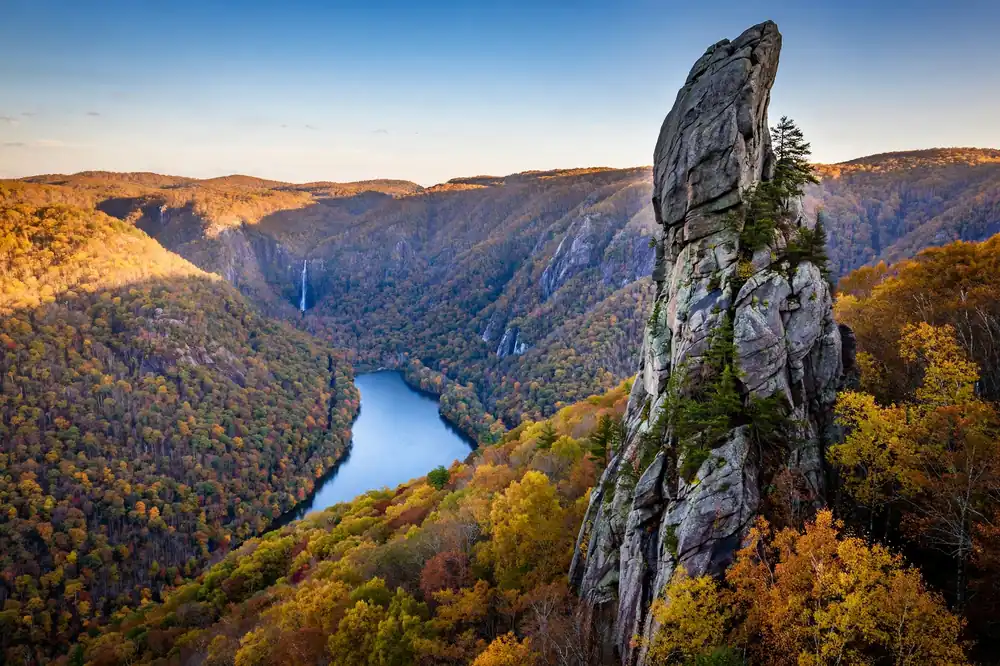
Chimney Rock is the 315-foot granite spire that rises above Hickory Nut Gorge, about 25 miles southeast of Asheville, and the park around it is one of the most dramatic day trips in western North Carolina. The elevator — carved through the rock in 1949 — takes you most of the way up, and the last 26 steps put you on top of the Chimney with Lake Lure and the gorge spread out below. Down below, Hickory Nut Falls drops 404 feet down the cliff, and the finale of the film The Last of the Mohicans was shot at its base.
Chimney Rock is the comeback story of 2026. Hurricane Helene destroyed the park’s entrance bridge and closed it for nine months; it reopened on June 27, 2025, and now operates seven days a week. Two things have changed since the old guides were written: advance reservations are now required for everyone, including annual passholders, and the main road in is US 64 from Bat Cave, which only reopened to general traffic on March 28, 2026. Admission is about $17 for adults, the gate is open from 8:30 a.m. to 5:30 p.m. with the park closing at 7 p.m., and Lake Lure below is refilling after the storm, with full capacity expected by Memorial Day 2026. Book the reservation before you drive out — walk-ups are not guaranteed a slot. Read about Chimney Rock State Park on Wikipedia.
13. Chase waterfalls in Pisgah National Forest
Pisgah National Forest holds more than 500,000 acres of mountain forest, and the waterfall corridor along US 276 south of Asheville is the most waterfall-dense stretch of road in the eastern United States. The star is Looking Glass Falls, a 60-foot roadside waterfall about 25 miles from downtown: you park, walk down a short staircase, and you are standing at the base of the most visited waterfall in North Carolina. It is free, open year-round, and it is at its best after rain. A mile and a half up the same road is Sliding Rock, a 60-foot natural granite water slide that drops into an eight-foot-deep pool — the classic Asheville summer rite of passage.
Sliding Rock is the one with the price trap. Older guides call it free or quote $4 or $5. In 2026 the fee is $6 per person, charged from Memorial Day through Labor Day when lifeguards are on duty from 9 a.m. to 6 p.m.; children aged 5 and under are free, and off-season it is free but unguarded, so you swim at your own risk. Wear water shoes, bring a towel, and only slide sitting upright — the rangers are strict about it. The whole US 276 corridor is worth half a day: Looking Glass Falls, Sliding Rock, Moore Cove Falls and the Cradle of Forestry, the birthplace of American forestry, all sit within a few miles of each other. Read about Pisgah National Forest on Wikipedia.
14. Shop the Folk Art Center
The Folk Art Center, at milepost 382 on the Blue Ridge Parkway right where it passes Asheville, is the home of the Southern Highland Craft Guild and one of the best craft shops in the South. Three galleries show work by more than 200 regional artists — quilts, pottery, woodwork, glass and jewellery — and the shop sells it all, from a $20 mug to a $2,000 quilt. Daily craft demonstrations run in the summer, with weavers, woodcarvers and potters working in the galleries and happy to talk.
It is free to enter and open daily, and it is the easiest parkway stop in Asheville: you can pull off the road, spend half an hour, and be back in town for lunch. The trap is assuming it is a museum with an admission fee — it is not. Buy something small and handmade; it is the most Asheville souvenir there is. Read about the Folk Art Center on Wikipedia.
15. Meet the red wolves at the WNC Nature Center
The Western North Carolina Nature Center, on 42 acres in east Asheville, is the region’s small zoo and nature centre, and it is built around animals that actually live in these mountains: black bears, red wolves, otters, bobcats and birds of prey. The red wolf enclosure is the highlight — the centre is part of the breeding programme for one of the most endangered mammals in North America — and the farmyard and the reptile house keep younger children happy for hours.
Admission in 2026 is $16.95 for adults and teenagers aged 13 to 15, $15.95 for seniors aged 65 and over, and $12.95 for children aged 3 to 12; children aged 2 and under are free, and Asheville city residents pay less — $11.95, $10.95 and $9.95. It is open daily from 10 a.m. to 4:30 p.m., with last admission at 3:30 p.m., and the ticket office is cashless. One Helene detail: the Gashes Creek Bridge on the usual approach was lost in the storm, so the route in has changed — follow the signs, not your memory or an old map. Read about the Western North Carolina Nature Center on Wikipedia.
16. Browse the Grove Arcade
The Grove Arcade, at 1 Page Avenue downtown, is Asheville’s most beautiful building and its best indoor shopping stop. Built in 1929 by E. W. Grove — the same man behind the Grove Park Inn — it is a full city block of Tudor Revival stonework, gargoyles and arched windows, built as a covered public market and now home to shops, galleries, restaurants and the Grove Arcade’s own farmers market. The architecture alone is worth a walk-through: the gargoyles on the corners, the ironwork, and the courtyard in the middle.
It is free to wander, and the shops are mostly local — jewellery, books, outdoor gear, chocolates and art. The farmers market runs on Saturdays, and the arcade is the best rainy-day shopping in town. Pair it with the Asheville Art Museum across the square and the Pinball Museum a block away for a full downtown morning. Read about the Grove Arcade on Wikipedia.
17. Float the French Broad River
The French Broad is one of the oldest rivers in the world — older than the mountains it flows through — and in summer it is Asheville’s playground. Outfitters in the River Arts District rent tubes, kayaks and stand-up paddleboards by the half day, and the gentle stretch through town is an easy float of about two hours, with herons, ducks and the occasional river otter for company. The water is warm enough to swim from June to September, and the take-out points are well marked.
Two warnings. First, the river flooded badly in Helene, and while the outfitters are running again, water levels and hazards change after rain — go with an outfitter, not on your own, and check the river gauge before you go. Second, the French Broad is a working river with dams downstream; never float past the marked take-out. A guided float costs about $40 to $60 per person with gear included, and the sunset floats in July and August are the ones to book. Read about the French Broad River on Wikipedia.
18. Day trip to the Great Smoky Mountains
The Great Smoky Mountains National Park is about an hour from Asheville by interstate, and it is the most visited national park in America. The closest entrance is at Oconaluftee, near Cherokee, about 55 miles west on US 19/23, and the classic day is the drive up to Newfound Gap, the mountain pass on the Tennessee line, and then on to Kuwohi — the 6,643-foot peak that was called Clingmans Dome until it was renamed in 2024, the highest point in the park. The half-mile paved trail from the parking lot to the observation tower is steep but short, and on a clear day you can see seven states.
There is no entrance fee, which surprises first-timers, but you do need a parking tag: $5 a day, $15 a week or $40 a year, and the tag is physical — buy it at a visitor centre or online before you go, because the America the Beautiful pass does not cover it. The trap is the name: guides written before 2024 call the peak Clingmans Dome, and the signs now say Kuwohi, so do not think you are in the wrong place. Go early — Newfound Gap’s parking lot fills by late morning in leaf season — and bring a jacket: the summit is 20 degrees colder than Asheville. Read about Great Smoky Mountains National Park on Wikipedia.
19. Hear live music at The Orange Peel and the drum circle
Asheville’s music scene is out of proportion to the city’s size, and its centre is The Orange Peel, the downtown rock club on Biltmore Avenue that has hosted everyone from the Smashing Pumpkins to the Avett Brothers. The room holds about 1,000 people, the sound is famously good, and the calendar runs most nights of the week — check what is on before you come, because the best shows sell out. The smaller stage next door, The Orange Peel’s Pulp, hosts local bands and touring acts on the rise.
The free version is the Friday-night drum circle in Pritchard Park, which has run for decades: dozens of drummers, dancers and onlookers gathering at dusk, free to join or watch. In summer, Shindig on the Green brings free bluegrass and old-time music to Pack Square Park on Saturday evenings, and the LEAF festival, held twice a year at Lake Eden just east of town, is the region’s biggest music and arts gathering. Asheville’s music is not a side attraction — for a lot of visitors, it is the reason to stay an extra night. Read about The Orange Peel on Wikipedia.
20. Wander the Asheville Botanical Garden
The Asheville Botanical Garden, on the University of North Carolina Asheville campus, is ten acres of native plants, streams and trails, and it is free. More than 600 species grow here, most of them native to the Southern Appalachians, and the garden is at its best in spring, when the wildflowers bloom, and in autumn, when the maples turn. The trails are flat and easy, the garden is quiet even on busy weekends, and it is the best free hour in Asheville if you want to slow down after the Biltmore crowds.
It is open daily from dawn to dusk, and there is no admission fee and no parking fee — a rarity in a city where most gardens charge for one or the other. Pair it with the North Carolina Arboretum for a full garden day, or stop here on your way out of town: it is five minutes from the highway. Read about the Asheville Botanical Garden on Wikipedia.
Asheville in 3 days — a ready-made itinerary
Three days is the right length for Asheville: one day for Biltmore and the gardens, one day for downtown and the arts, and one day for the mountains. The parkway and the waterfalls need a car, but downtown is walkable, so this itinerary splits the driving across two days and keeps one day car-free.
| Day | Where | Highlights |
|---|---|---|
| Day 1 | Biltmore and the gardens | Biltmore Estate in the morning, the North Carolina Arboretum in the afternoon, dinner downtown |
| Day 2 | Downtown and the arts | Asheville Art Museum, Grove Arcade, River Arts District, breweries on the South Slope, drum circle at dusk |
| Day 3 | The mountains | Blue Ridge Parkway to Craggy Gardens and Mount Mitchell, waterfalls in Pisgah National Forest, sunset at the Grove Park Inn |
Day 1 — Biltmore and the gardens
Start at Biltmore Estate when it opens — book the first timed house entry of the day, tour the house in the morning, then spend the afternoon in the gardens and Antler Hill Village, with the winery tasting included in your ticket. Drive to the North Carolina Arboretum in the late afternoon for the bonsai garden and the trails, then come back downtown for dinner. If you are visiting in November or December, swap the afternoon for a Candlelight Christmas Evening at Biltmore instead.
Day 2 — Downtown and the arts
Spend the morning on the Asheville Urban Trail and the Art Deco streets, with the Asheville Art Museum and the Grove Arcade, then lunch on Lexington Avenue. In the afternoon, walk the River Arts District studios and the French Broad River Greenway, and finish the day on the South Slope breweries — Wicked Weed, the Whale, and Burial Beer are all within a few blocks. If it is a Friday, end the evening at the drum circle in Pritchard Park; if it is a Saturday in summer, head to Shindig on the Green in Pack Square Park instead.
Day 3 — The mountains
Drive the Blue Ridge Parkway north to Craggy Gardens for the morning view, then continue to Mount Mitchell, the tallest peak east of the Mississippi, for the summit walk. Come back down the parkway and drive south to Pisgah National Forest for Looking Glass Falls and Sliding Rock in the afternoon — check the parkway road status first, since the milepost 344.2 to 355.3 closure is on the far side of Mount Mitchell and does not affect this route. End the day with sunset drinks on the terrace at the Omni Grove Park Inn.
Best time to visit Asheville
Asheville has four real seasons, and the best time to visit is from April to June and from September to October. Spring brings wildflowers on the parkway and the rhododendron bloom at Craggy Gardens in mid-June, and autumn brings the leaf colour that makes Asheville famous — the peak usually hits in mid-to-late October up high and in early November down in the valleys. October is also the busiest month of the year, and hotels book up months ahead, so reserve early and expect the highest prices.
| Season | Weather | Crowds | Best for |
|---|---|---|---|
| Spring (Mar–May) | Mild, highs 59°F to 74°F, wildflowers blooming | Moderate | Hiking, waterfalls, the gardens, Biltmore in bloom |
| Summer (Jun–Aug) | Warm and humid, highs 80°F to 84°F, afternoon thunderstorms | Busy | Sliding Rock, river floats, festivals, live music |
| Autumn (Sep–Nov) | Crisp, highs 76°F to 58°F, best light of the year | Busiest in October | Leaf colour, the parkway, Biltmore at Christmas |
| Winter (Dec–Feb) | Cold, highs 47°F to 50°F, lows near 29°F, some snow | Quietest | Biltmore at Christmas, breweries, the lowest hotel prices |
January is the coldest month, with an average high of about 45°F and lows near 27°F, while July is the warmest, with an average high of about 84°F. Asheville gets about 41 inches of rain a year, spread fairly evenly, and about 10 inches of snow — most of it in December and January. The city sits at 2,200 feet, so it stays cooler than the rest of North Carolina in summer, and the mountains are colder still: Mount Mitchell averages about 10 degrees cooler than downtown. Pack layers in every season, and a rain jacket in summer, when afternoon thunderstorms are common.
The 2026 calendar is worth planning around. Christmas at Biltmore runs from November 3, 2026 to January 10, 2027. The LEAF festival runs twice a year at Lake Eden, in spring and autumn. Shindig on the Green runs on Saturday evenings in summer at Pack Square Park, free. The National Gingerbread House Competition takes over the Grove Park Inn lobby in November and December. And the Asheville City Market, the downtown farmers market, runs on Saturdays from spring through autumn.
Where to stay in Asheville
Downtown is the best base for first-time visitors: walkable, close to the restaurants, the breweries and the music, and next to the parkway entrance. Biltmore Village, at the estate’s gate, suits Biltmore visitors and couples who want a quieter, village feel. West Asheville suits food lovers and younger travellers, with its own strip of restaurants and bars on Haywood Road. The River Arts District suits art lovers who want to stay near the studios, and the Grove Park neighbourhood suits luxury travellers, with the Omni Grove Park Inn at its centre.
| Area | Best for | What to expect |
|---|---|---|
| Downtown | First-time visitors | Walkable, close to restaurants and breweries; the best base for a short trip |
| Biltmore Village | Biltmore visitors and couples | Quiet, village feel, right at the estate gate |
| West Asheville | Food lovers and younger travellers | Haywood Road restaurants and bars; a local, lived-in feel |
| River Arts District | Art lovers | Studios and galleries nearby; quieter at night |
| Grove Park | Luxury travellers | The Omni Grove Park Inn, mountain views, the highest prices in town |
| Montford | Budget travellers and walkers | Historic homes, quiet streets, a 15-minute walk to downtown |
Book early for October: leaf season fills the city, and the best downtown hotels sell out months ahead. Winter is the cheapest time to visit, and the hotels run their best deals in January and February. Expect resort fees at the larger hotels, and check whether your hotel charges for parking — downtown garages are not free, and some hotels charge $20 or more a night.
Getting around Asheville
Downtown Asheville is walkable, and that is how you should see it: the Urban Trail, the Art Deco streets, the breweries and the restaurants are all within a mile of Pack Square. For everything else, you need a car. The Blue Ridge Parkway, Mount Mitchell, the waterfalls, Chimney Rock and the Great Smoky Mountains are all a drive away, and there is no public transport to any of them. Rent a car at Asheville Regional Airport — the new terminal, with its ticket lobby opened in June 2025 and its North Concourse opened the same month, is part of a $400 million rebuild, and the rental counters are in the terminal.
The city’s bus system, Asheville Rides Transit, runs downtown and to the main neighbourhoods for $1 a ride, and the S3 bus runs from downtown to the airport, also for $1 — but only about once every 90 minutes, so it is a backup, not a plan. Rideshares work well downtown and to Biltmore, but they are scarce on the parkway and in the mountains. Parking downtown is metered and the garages fill on weekend evenings; the city lots on the edge of downtown are cheaper and usually have space. One warning for drivers: the I-26 Connector project, the long-running highway rebuild through West Asheville, has been under construction for years and still causes delays — allow extra time if your route crosses it.
Asheville food you have to try
1. Smoked barbecue at 12 Bones Smokehouse
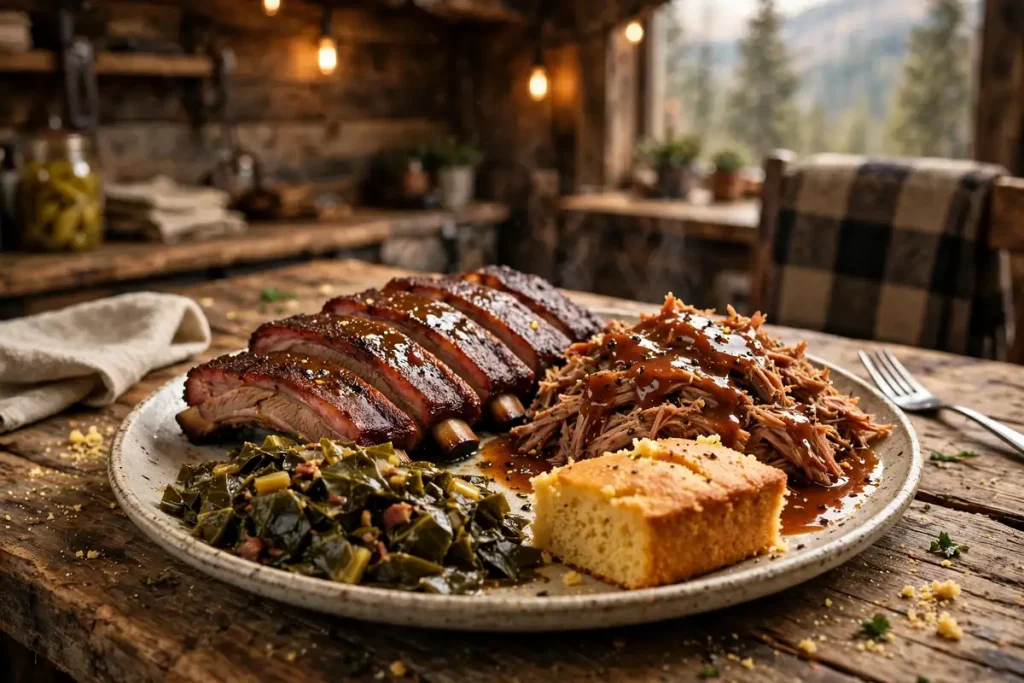
Asheville’s barbecue is eastern North Carolina style with a mountain twist, and 12 Bones Smokehouse, in the River Arts District, is where to eat it. The ribs and the pulled pork are smoked low and slow over wood, the vinegar-based sauce is sharp and thin rather than sweet and thick, and the sides — collard greens, mac and cheese, corn pudding — are as good as the meat. A plate costs about $15 to $20, the line moves fast, and the dining room is a converted warehouse with picnic tables. The original Arden location, south of town, is quieter if the downtown line is long. Read about North Carolina barbecue on Wikipedia.
2. Biscuits and gravy at Biscuit Head
Biscuit Head, on Biltmore Avenue and in West Asheville, is Asheville’s biscuit institution: cat-head biscuits the size of a fist, baked fresh all day, served with gravy flights — sausage gravy, espresso red-eye gravy, sweet potato gravy — and jam flights with local preserves. A biscuit with gravy costs about $6 to $9, and the full breakfast plate, with eggs and a side of fried green tomatoes, is about $14. Go early on weekends: the line is out the door by 9 a.m., and the biscuits sell out. Read about the Southern biscuit on Wikipedia.
3. Tacos at White Duck Taco Shop
White Duck Taco Shop, in the River Arts District and on the South Slope, is Asheville’s taco counter: a short menu of creative tacos on handmade tortillas, from Bangkok shrimp to Korean bulgogi beef to the classic Baja fish, most of them $4 to $6 each. Order three, eat them standing up at the counter, and wash them down with a local beer. It is the best cheap meal in Asheville, and the most Asheville meal in Asheville — a food truck that grew up into a restaurant without losing the truck. Read about the taco on Wikipedia.
Free things to do in Asheville
Asheville is generous with free things. The Blue Ridge Parkway is free to drive, Craggy Gardens is free to hike, and the Folk Art Center is free to enter. Looking Glass Falls is free, the Asheville Botanical Garden is free, and the Friday-night drum circle in Pritchard Park is free to join or watch. Downtown’s Art Deco streets and the Asheville Urban Trail cost nothing, the Basilica of St. Lawrence is free to step into, and the National Gingerbread House Competition entries at the Grove Park Inn are free to view in November and December. The Asheville Art Museum is free on the first Wednesday of the month from 3 to 5 p.m., and the Arboretum’s grounds are free — you only pay for parking. The best free thing of all is the view: from the parkway overlooks, from the Grove Park Inn terraces, and from the top of Mount Mitchell, where the highest peak east of the Mississippi costs nothing to stand on.
Frequently asked questions
How many days do you need in Asheville?
Three days is ideal. Two days covers the highlights — Biltmore, downtown and a parkway drive — but three days lets you add the mountains and the waterfalls without rushing. If you only have a weekend, spend one day at Biltmore and one day downtown and on the parkway.
Do you need a car in Asheville?
Yes, for almost everything outside the city centre. Downtown is walkable and the bus costs $1, but the Blue Ridge Parkway, Mount Mitchell, the waterfalls, Chimney Rock and the Great Smoky Mountains are all a drive away, and there is no public transport to any of them. Rent a car at the airport.
Is Asheville open after Hurricane Helene?
Yes. Downtown Asheville, Biltmore Estate, the River Arts District and nearly everything in this guide are open and running normally in 2026. The exceptions are one stretch of the Blue Ridge Parkway, from milepost 344.2 to 355.3, which is closed for repairs until the end of 2026, and a handful of trails that are still off limits. Check the National Park Service road status page the morning you drive.
When is the best time to visit Asheville?
April to June and September to October are the best overall, with wildflowers in spring and the best light in autumn. October is peak leaf season and the busiest month — book hotels months ahead. Winter is the quietest and cheapest time, and Biltmore at Christmas runs from November 3, 2026 to January 10, 2027.
How much does an Asheville trip cost?
Budget roughly $150 to $250 per person per day, mid-range, before hotel, and $150 to $300 a night for a hotel, depending on the season. Biltmore is the big ticket — daytime tickets start from about $105 — while the parkway, the waterfalls, the gardens and the drum circle are free. A brewery crawl and a barbecue dinner will run about $40 to $60 a person.
Is Asheville good for families?
Yes. The Pinball Museum, the WNC Nature Center, Sliding Rock, the Arboretum and the French Broad River float are all built for children, and Biltmore’s gardens and the winery village keep younger visitors happy. The parkway overlooks and the short trails at Craggy Gardens work for all ages, and the drum circle is free entertainment on a Friday night.
Further reading — Wikipedia and Reddit
For more background, read the Asheville page on Wikipedia, and join the conversation on the Asheville subreddit. No Quora link is included here — we could not verify an Asheville-specific thread on Quora, so we have not invented one.
Your Asheville trip, in one paragraph
Asheville is the small city that has everything the mountains offer: America’s largest home at Biltmore, the most beautiful drive in the East on the Blue Ridge Parkway, a working arts district on the French Broad, the tallest peak east of the Mississippi at Mount Mitchell, and more breweries and barbecue than a city its size has any right to hold — and if you plan around the 2026 prices and the Helene repairs, it is easier to enjoy than the older guides make it sound. If Asheville has whetted your appetite for American travel, our guides to Chicago, Nashville, Los Angeles, Orlando, Miami, San Diego, Denver, Savannah, Dallas, Charleston, San Francisco, Myrtle Beach, Las Vegas, San Antonio, London, Portland, Pigeon Forge, Puerto Rico, Atlanta, Phoenix, Paris, Maui, Key West, Colorado Springs, Sedona, Chattanooga, Palm Springs, St Louis, Tokyo, Japan, Kansas City, Tennessee, Branson, Florida, Amsterdam, Montreal, Honolulu, Fort Lauderdale, Toronto, Aruba, Charlotte, Indianapolis, New Orleans, Destin, Santa Barbara, Mexico City, Arizona, Osaka, Minneapolis, Pittsburgh and California cover the rest of the map — pick your next place and go.

About the Author