Things to Do in Miami: 20 Best Attractions, Itinerary & Tips (2026 Guide)
20 Best Attractions, a 3-Day Itinerary, Where to Stay, and the Food You Cannot Miss
Quick Info
Best for: Beach lovers, art fans and first-time visitors — Art Deco streets, Cuban food, world-class museums and the Everglades in one sunny, tropical city
Best time: December–April for dry, sunny days; March–May for the best balance of weather, prices and crowds
How long: 3 full days for the highlights; 5 days if you add the Everglades and Key Biscayne
Budget: Miami is pricey — roughly $200–$380 per person per day for a mid-range trip; the beaches, the Art Deco streets and Little Havana are free
Don’t miss: Sunset on South Beach, the Wynwood murals, a cafecito on Calle Ocho, Vizcaya’s gardens and an Everglades airboat ride
Miami is a city that refuses to be one thing. It is the second-largest city in Florida and the working capital of Latin America in the United States, but it is far more than its beach-and-nightlife image: world-class museums with free evenings, 800 Art Deco buildings in pastel, neighbourhoods that speak Spanish first and English second, and some of the best food in America, from two-dollar cafecitos to tasting menus. The good news for a first-time visitor is that the city rewards a simple plan — one area a day — so you can see a lot without spending your trip in traffic.
This guide gives you the 20 best things to do in Miami in a sensible order, a ready-made 3-day itinerary, honest advice on when to go, where to stay and how to get around, and the three foods you have to try before you leave. Prices and hours change, so every price in this guide is marked as approximate — always check the official website before you visit.
Miami at a glance
| Question | Short answer |
|---|---|
| How long do you need? | 3 full days for the highlights; 5 days is the balanced first trip; 7 days for the Everglades plus the Florida Keys. |
| Best area for a first trip | South Beach for the beach and Art Deco, or downtown and Brickell for museums and day trips — both are walkable bases. |
| One thing to book early | Everglades airboat tours, Vizcaya timed-entry tickets and hotels for Art Basel week in early December — weekends sell out. |
| One thing that is free | South Beach — the sand, the boardwalk and the Art Deco streets cost nothing. |
| Do you need a car? | Helpful but not essential — the free Metromover and trolleys cover downtown and the beach; a car helps for the Everglades, Key Biscayne and the gardens. |
For background before you go, the Wikipedia entry on Miami covers the city’s history, its Cuban community and its neighbourhoods in depth, and its South Beach and Vizcaya pages explain how the beach town and the Gilded Age estate became the city’s two great landmarks — all three are linked in Further reading at the end of this guide.
The 20 best things to do in Miami
The list starts with the experiences that define Miami and that first-time visitors should protect time for, then moves into neighbourhoods, culture and the wild Florida beyond the city. If you only have two days, do numbers 1 to 10. If you have three or more, work through the rest at a slower pace.
1. Relax on South Beach
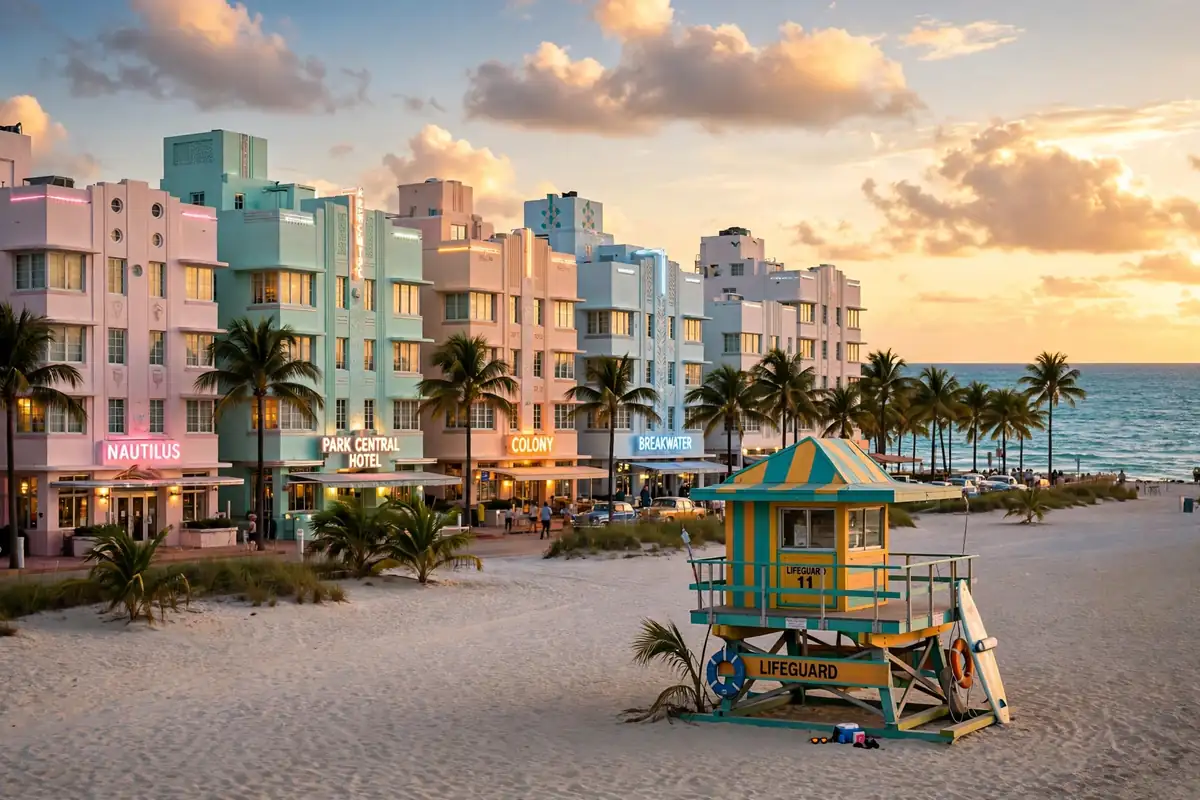
South Beach is the most famous beach in the United States, and the one every first-time visitor should start with. The stretch between 5th and 15th Streets, backed by Lummus Park and the pastel hotels of Ocean Drive, is wide white sand and warm turquoise water, with the candy-coloured lifeguard towers that have become the symbol of Miami. Come for a swim in the morning, when the sand is quiet and the light is soft, and stay for the people-watching — South Beach is a show in itself.
Practical tip: The beach is free and open from 5am to 10pm — it closes overnight, and alcohol and glass are banned on the sand all year. Go early for the quietest sand, bring your own towel and water, and leave valuables at the hotel: the beach is a pickpocket spot.
2. Walk Ocean Drive and the Art Deco Historic District
Ocean Drive is the most photographed street in Miami, and the Art Deco Historic District around it holds the largest concentration of 1920s and 1930s Art Deco architecture in the world — roughly 800 protected buildings of pastel facades, porthole windows and neon signs, listed on the National Register of Historic Places in 1979. Walk it in the morning, when the light is kind and the crowds are thin, then come back at dusk, when the neon comes on and the whole street glows. The Miami Design Preservation League runs official walking tours of the district.
Practical tip: Guided Art Deco walking tours cost roughly $35–$50 per person — prices are approximate, so check before visiting. The walk itself is free, and the best photographs are at the golden hour, when the pastel facades catch the low sun.
3. See the street art at Wynwood Walls
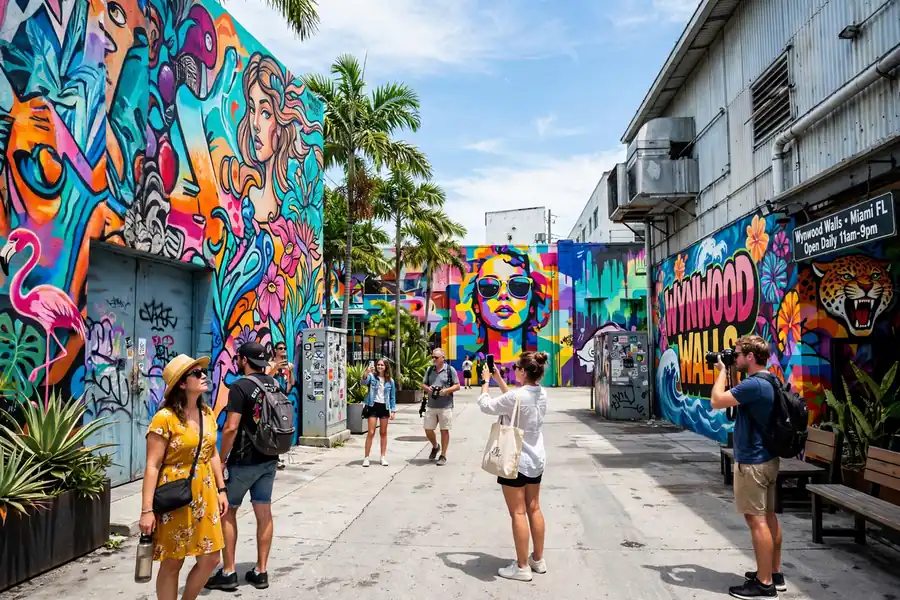
Wynwood was a run-down warehouse district until 2009, when developer Tony Goldman turned its blank walls into a canvas for the world’s best street artists. The Wynwood Walls, the curated outdoor gallery at its heart, now covers more than 60,000 square feet of murals by over 130 artists from 30 countries — a rotating open-air museum that changes every year. The streets around it are covered in free murals, galleries, craft breweries and boutiques for blocks in every direction.
Practical tip: Entry to the Wynwood Walls costs roughly $12 for adults — prices are approximate, so check before visiting. The murals on the surrounding streets are free, so arrive early, walk the whole district, and save the paid Walls for the end of the visit.
4. Eat and drink your way down Calle Ocho in Little Havana
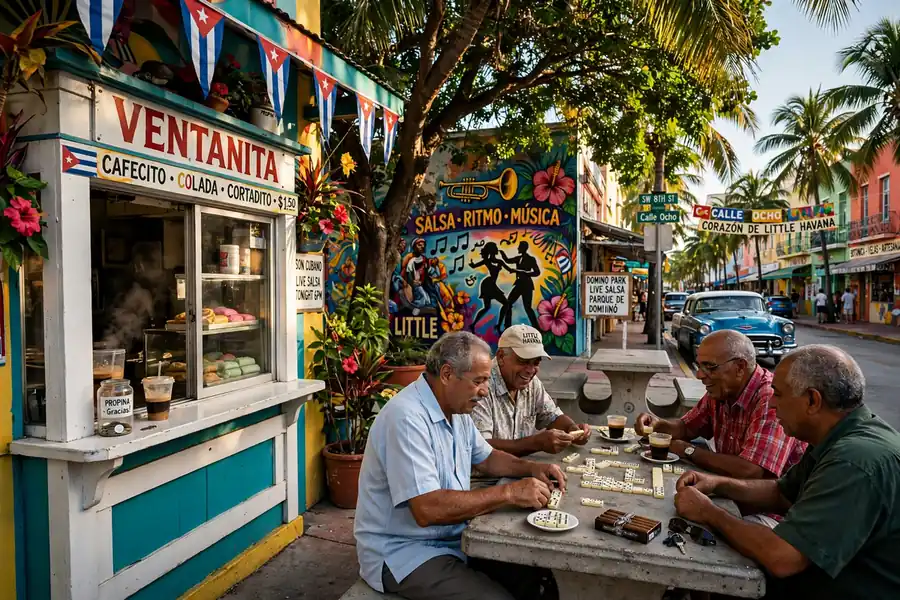
Little Havana is the cultural heart of Cuban Miami, and its main street, Calle Ocho (SW 8th Street), is the closest you can get to Havana without leaving the United States. Walk it slowly: hand-rolled cigars taking shape in shop windows, salsa spilling out of doorways, old men playing dominoes at Máximo Gómez Park — better known as Domino Park — and the smell of Cuban coffee from every ventanita window. Stop at the Tower Theater, the neighbourhood’s 1926 cinema, and finish at Ball & Chain, the 1935 jazz club where Billie Holiday once sang.
Practical tip: The walk is free; budget a few dollars for a cafecito and a pastelito from a ventanita. Locals on r/Miami regularly point first-timers to Calle Ocho and Domino Park when they ask where the real Miami is. Go in the late afternoon, when the street is at its liveliest.
5. Tour Vizcaya Museum and Gardens
Vizcaya Museum and Gardens is Miami’s most beautiful historic landmark: a Gilded Age winter estate built for industrialist James Deering between 1914 and 1923, on the shore of Biscayne Bay in Coconut Grove. The Italian Renaissance villa holds more than 70 rooms of European art and antiques, and the 10 acres of formal gardens — fountains, a maze, a secret garden and a stone barge on the bay — are the most romantic walk in the city. Deering moved in on Christmas Day 1916, and the estate is now a National Historic Landmark.
Practical tip: Admission costs roughly $25 for adults — prices are approximate, so check before visiting. Go on a weekday morning for the quietest gardens, allow two to three hours, and take the Metrorail to Vizcaya station, which stops at the gate.
6. See modern art at Pérez Art Museum Miami
The Pérez Art Museum Miami — PAMM — is the city’s flagship modern and contemporary art museum, in a striking Herzog & de Meuron building wrapped in hanging gardens and shaded verandas over Biscayne Bay. The collection focuses on art of the Atlantic world, from the Americas, the Caribbean and Africa, and the terrace alone is worth the visit: it looks straight out over the water to the cruise ships and the skyline. It sits in Maurice A. Ferré Park, next door to the Frost Museum of Science, so the two museums make one easy morning.
Practical tip: Admission costs roughly $16–$18 for adults — prices are approximate, so check before visiting. The museum is free for everyone on Thursday evenings after 5pm, when it stays open until 9pm, and it is closed on Tuesdays and Wednesdays.
7. Dive into the Frost Museum of Science
The Phillip and Patricia Frost Museum of Science is downtown Miami’s hands-on science complex: a multi-level aquarium with hammerhead sharks and rays, a full-dome planetarium with 8K shows, and interactive exhibition halls — all in one bayfront building next to PAMM. It is the best rainy-day stop in the city and the best family museum in Miami. It is also, since 2026, the place to go for marine life in Miami: the Miami Seaquarium, the city’s old marine park, closed permanently on October 12, 2025 after 70 years, and its Virginia Key site is being redeveloped into a marina and a new aquarium without marine mammals — so do not plan a trip around it.
Practical tip: Admission costs roughly $30 for adults — prices are approximate, so check before visiting. Book the planetarium show when you arrive, as the popular times sell out, and allow at least three hours for the aquarium and the exhibitions.
8. Take an airboat through the Everglades
Everglades National Park is the largest subtropical wilderness in the United States — 1.5 million acres of sawgrass prairie, mangrove forest and slow-moving river, beginning less than an hour west of downtown Miami. The classic way to see it is an airboat ride: a flat-bottomed boat with a huge fan, skimming across marshes too shallow for anything else, with alligators, herons and roseate spoonbills along the way. The Shark Valley tram tour, inside the park, is the quieter alternative — a two-hour loop with a stop at the observation tower.
Practical tip: Airboat tours cost roughly $30–$65 per person, and the Shark Valley tram costs roughly $36 — prices are approximate, so check before visiting. Go in the dry season, December to April, when the water is low and the wildlife concentrates; in summer the mosquitoes are fierce, so bring repellent.
9. Spend a day on Key Biscayne
Key Biscayne, a short causeway drive from downtown, is the Miami the locals keep for themselves. Crandon Park Beach, a two-mile stretch of calm, shallow water, is consistently ranked among the best family beaches in the country, and at the far end of the island, Bill Baggs Cape Florida State Park holds the Cape Florida Lighthouse — built in 1825, the oldest structure in South Florida — with a beach that has been named one of the best in the United States. Climb the lighthouse for the view back across the bay to the Miami skyline.
Practical tip: Crandon Park parking costs roughly $7 on weekdays and $10 at weekends, and Bill Baggs entry costs roughly $8 per vehicle — prices are approximate, so check before visiting. Arrive before 10am on weekends, as the car parks fill up, and bring a picnic: the island has few restaurants.
10. Cruise Biscayne Bay past Millionaires’ Row
Miami is a city built on water, and the best way to understand it is from the bay. Sightseeing cruises from Bayside Marketplace run past the downtown skyline, the cruise port — PortMiami, the busiest cruise port in the world — and Star Island and Fisher Island, where the waterfront mansions of Millionaires’ Row sit behind their own docks. The 90-minute cruises are the best value on the water, and the sunset departures, when the skyline turns gold, are the ones to book.
Practical tip: Ninety-minute cruises cost roughly $20–$30 per person — prices are approximate, so check before visiting. Book the sunset sailing online, arrive 30 minutes early for a good seat on the upper deck, and bring a light jacket: the breeze on the bay is cool after dark.
11. Wander Coral Gables — Miracle Mile and the Venetian Pool
Coral Gables, the City Beautiful, is the Miami that surprises first-time visitors: a planned 1920s city of Mediterranean Revival streets, coral-rock walls and banyan trees, ten minutes south of downtown. Walk Miracle Mile for boutiques and cafes, look up at the Biltmore Hotel — the 1926 landmark with its tower modelled on Seville’s Giralda — and swim at the Venetian Pool, a fantastical public pool carved from a coral-rock quarry in 1924 and fed by spring water, with grottoes, waterfalls and a palm-lined loggia.
Practical tip: The Venetian Pool is open seasonally and costs roughly $21–$26 for non-residents — prices are approximate, so check the season and the price before you go. Go on a weekday morning, when the pool is quiet, and pair it with lunch on Miracle Mile.
12. Stroll Coconut Grove and the Barnacle
Coconut Grove is Miami’s oldest neighbourhood — a leafy, village-like corner of the city that feels nothing like South Beach. The Barnacle Historic State Park, the 1891 home of yacht designer Ralph Munroe, is the oldest house still standing in Miami-Dade County, set in five acres of tropical hardwood hammock on the bay. Around it, the Grove’s streets hold cafes, bookshops and the CocoWalk, and peacocks wander the gardens as if they own them. It is the calmest afternoon in Miami, and it pairs perfectly with Vizcaya, a five-minute drive away.
Practical tip: Entry to the Barnacle costs a few dollars — prices are approximate, so check before visiting. Go in the late afternoon, when the light comes through the trees, and walk down to the bayfront parks for the sunset.
13. Explore the Miami Design District
The Miami Design District, a short walk from Wynwood, is the city’s open-air gallery of architecture and design: luxury flagships beside public art, Buckminster Fuller’s Fly’s Eye Dome, the Sou Fujimoto building facade, and the wildly creative Museum Garage and City View Garage — car parks that are genuinely worth photographing. The Institute of Contemporary Art, ICA Miami, sits in the middle of it with a sculpture garden and free general admission, which makes it the best-value hour in a neighbourhood where almost nothing else is cheap.
Practical tip: The district is free to walk and ICA Miami is free to enter — prices are approximate, so check before visiting. Go in the morning, when the shops are quiet and the light is good for the architecture, and pair it with Wynwood, ten minutes away on foot.
14. Kayak the mangroves at Oleta River State Park
Oleta River State Park, about 10 miles north of Miami Beach, is Florida’s largest urban park — 1,000 acres of mangrove forest, river and bay, with kayak and canoe trails winding through tunnels of mangroves that feel a world away from the city. Paddle the river at your own pace, or take a guided night kayak tour in summer, when the plankton light up the water with a blue-green glow on every paddle stroke. The park also has mountain-bike trails, a sandy beach for swimming and picnic pavilions under the trees.
Practical tip: Entry costs roughly $6 per vehicle and kayak rental roughly $25–$40 — prices are approximate, so check before visiting. Book the bioluminescent night tour in advance in summer, bring insect repellent, and wear shoes you do not mind getting wet.
15. See the gardens at Fairchild Tropical Botanic Garden
Fairchild Tropical Botanic Garden, in Coral Gables, is one of the great tropical gardens of the world: 83 acres of palm glades, orchid collections, a butterfly garden and a tropical arboretum, founded in 1938. It is the quietest morning in Miami, and the best place in the city to slow down after two days of beaches and neighbourhoods. The garden is also a working research centre, and its plant sales and festivals — the mango festival in summer, the orchid shows in spring — are worth planning around.
Practical tip: Admission costs roughly $25 for adults — prices are approximate, so check before visiting. Allow two to three hours, wear walking shoes and a hat, and visit in the morning, when the garden is at its coolest and the butterflies are out.
16. Meet the animals at Zoo Miami
Zoo Miami is the only tropical zoo in the continental United States, and the largest zoo in Florida: more than 2,000 animals across 340 acres of open-air, cageless exhibits, grouped by continent, with the animals roaming in moated habitats instead of cages. The Amazon, the African savannah and the Asian river exhibits are the highlights, and the monorail and the safari cycles make the distances manageable. It is the best full family day in Miami, and the one children remember longest.
Practical tip: Admission costs roughly $30 for adults and $26 for children — prices are approximate, so check before visiting. Go at opening, when the animals are active, rent a safari cycle for the long distances, and bring sunscreen: there is almost no shade between the exhibits.
17. Watch the sunset at South Pointe Park
South Pointe Park caps the southern tip of Miami Beach, and it is the best free sunset in the city. The 450-foot pier puts you close enough to Government Cut to watch the cruise ships slide past on their way out to sea, and the lawns behind it fill with locals every evening as the sky turns pink over the water and the downtown skyline lights up across the bay. It is a short walk from Ocean Drive, it costs nothing, and it is the calmest hour on the beach.
Practical tip: The park is free and the pier is free to walk. Come an hour before sunset for a good spot on the pier, and stay for the cruise ships — the big ones usually leave in the late afternoon, right as the light turns gold.
18. Walk the Miami Beach Boardwalk and Lincoln Road
The Miami Beach Boardwalk — the Beachwalk — is a paved oceanfront path that runs for about four miles through South Beach and Mid-Beach, behind the dune line, past the lifeguard towers and the Art Deco hotels. Walk it, cycle it or run it in the morning, when the city is waking up, then turn inland to Lincoln Road, the pedestrian-only shopping street between 16th and 17th Streets, where the cafes, galleries and people-watching are the point. Together they are the most walkable day in Miami, and they cost nothing.
Practical tip: The boardwalk and Lincoln Road are free to walk. Rent a Citi Bike from a station on the beachfront for the four-mile ride, and stop for an iced coffee on Lincoln Road — the people-watching there is the best in the city.
19. Catch a show at the Adrienne Arsht Center
The Adrienne Arsht Center for the Performing Arts, on Biscayne Boulevard in downtown Miami, is where the city dresses up: Broadway touring productions in the Ziff Ballet Opera House, the Miami City Ballet, the New World Symphony and big-name concerts in the Knight Concert Hall. The building itself — all glass and white stone, opening onto the plaza — is worth a walk past even without a ticket, and the centre’s free community events on the lawn are the best free evenings downtown. It is the grown-up night out in a city better known for its clubs.
Practical tip: Broadway tickets cost roughly $60–$150 depending on the seat — prices are approximate, so check before visiting. Book ahead for popular shows, and check the free events calendar: the lawn concerts cost nothing.
20. Take a day trip to Key West
Key West, the southernmost point of the continental United States, is a long day trip from Miami — and the one most visitors remember best. The drive down the Overseas Highway crosses 42 bridges over turquoise water, including the Seven Mile Bridge, and ends on Duval Street, with its bars, galleries and the nightly sunset celebration at Mallory Square. Visit the Ernest Hemingway Home, where the writer lived in the 1930s with his six-toed cats, and stay for the sunset — it is the most famous in Florida.
Practical tip: The drive takes roughly three and a half to four hours each way, so leave at dawn and expect a long day — prices are approximate, so check before visiting. Day tours with transport run from downtown Miami if you would rather not drive, and the sunset at Mallory Square is worth staying for.
Miami in 3 days — a ready-made itinerary
This plan groups sights that sit near each other, so you are sightseeing instead of crossing the city. Miami is a spread-out city, so each day stays in one area. Timings are a guide, not a schedule to stress about — swap Day 2 and Day 3 if the weather demands it, and always do the beach in the morning and the bay at sunset.
| Day | Morning | Afternoon | Evening |
|---|---|---|---|
| Day 1 — South Beach and Art Deco | South Beach — swim, then walk the boardwalk to South Pointe Park | Ocean Drive and the Art Deco Historic District, then Lincoln Road | Sunset at South Pointe Park, dinner on Ocean Drive |
| Day 2 — Art and Cuban Miami | Wynwood Walls and the Wynwood murals, then the Design District | Little Havana — Calle Ocho, Domino Park and a cafecito | Salsa at Ball & Chain, dinner in Little Havana |
| Day 3 — Gardens and the bay | Vizcaya Museum and Gardens, then Coconut Grove | Coral Gables — Miracle Mile and the Venetian Pool | Biscayne Bay sunset cruise from Bayside Marketplace |
Day 1: South Beach and Art Deco
Start on South Beach in the morning, when the sand is quiet — swim, then walk the boardwalk north to South Pointe Park for the cruise ships. After lunch, walk Ocean Drive and the Art Deco Historic District while the light is good, then turn inland to Lincoln Road for coffee and people-watching. Finish the day at South Pointe Park for sunset, with dinner on Ocean Drive — the neon, the palm trees and the pastel hotels are Miami at its most famous.
Day 2: Art and Cuban Miami
Check the weather first: Day 2 is the neighbourhood day. Start at the Wynwood Walls in the morning, then walk the Design District for the architecture and the free ICA Miami. In the afternoon, drive to Little Havana for Calle Ocho — Domino Park, a cafecito from a ventanita, the cigar shops and the Tower Theater — and stay for the evening: salsa at Ball & Chain and dinner in Little Havana, where the food is the best value in the city.
Day 3: Gardens and the bay
Spend the morning at Vizcaya, arriving at opening for the quietest gardens, then drive to Coconut Grove for the Barnacle and a slow lunch by the bay. In the afternoon, wander Coral Gables — Miracle Mile and the Venetian Pool — and end the trip on a Biscayne Bay sunset cruise from Bayside Marketplace, watching the skyline light up as the cruise ships slide out to sea.
Only have 2 days? Do Day 1 and Day 2, and add Vizcaya on the morning of Day 2 if your flight is late. Only have 1 day? Do South Beach, Wynwood and a Cuban dinner in Little Havana — that is Miami in miniature. With 5 days, add an Everglades airboat day and a Key Biscayne beach day; with 7, add a Key West day trip.
Best time to visit Miami
Miami has a tropical monsoon climate, so there is no bad month — but the city feels very different by season. The honest summary is this: December to April gives you the best balance of dry, sunny weather and manageable humidity, while summer is hot, busy and stormy, and autumn is the cheapest and quietest stretch of the year.
| Season | What it is like | Best for |
|---|---|---|
| Winter (December–February) | Cool and dry, highs in the 70s°F, the most comfortable weather — and the most expensive hotels, with Art Basel in early December | First trips, the full classic itinerary — if you book early |
| Spring (March–May) | Warm days in the low 80s, low humidity, little rain; March brings spring break crowds and the Miami Open | First trips, hiking and the beach — April and May are the sweet spot |
| Summer (June–August) | Hot and humid, near-daily afternoon thunderstorms, hurricane season, cheapest hotels | Budget trips, water parks — if you can take the heat |
| Autumn (September–November) | Warm and quieter, hurricane season until November 30, peaking mid-August to mid-October | Budget trips, relaxed sightseeing, the city at its calmest |
Remember that hurricane season runs from June 1 to November 30, peaking from mid-August to mid-October, and that summer brings near-daily afternoon thunderstorms — plan the beach for the morning and the museums for the afternoon. One more 2026 note: Miami hosted seven FIFA World Cup matches at Hard Rock Stadium in June and July 2026, including the third-place match on July 18 — the tournament crowds have gone, and hotel prices have settled back to normal. Whatever month you choose, pack for humidity in summer and layers in winter: Miami weather changes fast, and the rain arrives without warning.
Where to stay in Miami
For a first trip, stay in South Beach for the beach or in downtown and Brickell for the museums. You will be close to the sights in this guide, you will be able to walk in the evenings, and you will not lose time commuting. These are the areas to look at first:
| Area | Who it suits | Why stay there |
|---|---|---|
| South Beach | First-timers, beach lovers, nightlife | Ocean Drive, the beach and the Art Deco streets on your doorstep |
| Downtown / Brickell | Museums, food, business, day trips | PAMM, Frost Science and the free Metromover on your doorstep |
| Coral Gables | Couples, a leafy feel, gardens | Miracle Mile, the Venetian Pool and Fairchild nearby |
| Coconut Grove | A village feel, families, repeat visitors | Bayfront parks and Vizcaya a short ride away |
| Key Biscayne | Families, a quiet beach base | Crandon Park and the lighthouse, a short drive from downtown |
Wherever you choose, check how far the nearest beach or Metromover station is before you book — Miami is spread out, and a hotel that looks central can still be a 30-minute drive from the beach you visit most. Hotel prices swing sharply with Art Basel, spring break and big weekends, so comparing dates by even a day or two can save real money.
Getting around Miami
Miami is a spread-out city, and the honest advice is to use the free Metromover and trolleys for the downtown and beach days and a car or rideshare for everything else. The neighbourhoods are 20–30 minutes apart by road, and the gardens and the Everglades are further — but the core is well served.
- Metromover: The free elevated train loops around downtown Miami and Brickell, stopping at the museums, Bayside Marketplace and the Arsht Center. It is the easiest way around the museum district, and it costs nothing.
- Miami Trolley: Free trolleys run across the city, including Coral Gables and Coconut Grove, and Miami Beach has its own free trolley routes along the beach. Check the routes before you travel — they are slower than a car, but they are free.
- Metrorail: The elevated train links the airport, downtown, Brickell, Coconut Grove and Vizcaya. A day pass costs a few dollars and the trains beat the traffic on the causeways.
- Rideshare: Rideshare is the easiest way to move between neighbourhoods at night, and it is cheaper than parking on South Beach. Across Miami distances it adds up fast over several days, so use it for evenings, not everything.
- Driving: A car is the most flexible way to see Miami, and the sights in this guide are spread across it. Traffic is worst on weekend mornings and around the causeways, so plan one area a day and drive once, not back and forth. Miami Beach hotel parking costs roughly $40–$60 a night.
- From the airport: Miami International Airport (MIA) is about 8 miles west of downtown, roughly 20–30 minutes by car depending on traffic. The MIA Mover connects the airport to Metrorail, and Brightline runs from MiamiCentral to Fort Lauderdale, West Palm Beach and Orlando.
- Cycling: Citi Bike stations cover Miami Beach and downtown, and the Beachwalk is the best ride in the city — four miles of oceanfront path. Elsewhere, Miami is not a cycling city, so keep the bike to the beach.
Miami food you have to try
You can eat very well in Miami at every budget, from ventanita windows in Little Havana to tasting menus in the Design District. But three foods are Miami’s signatures, and a first trip is not complete until you have tried all three.
Cuban sandwich
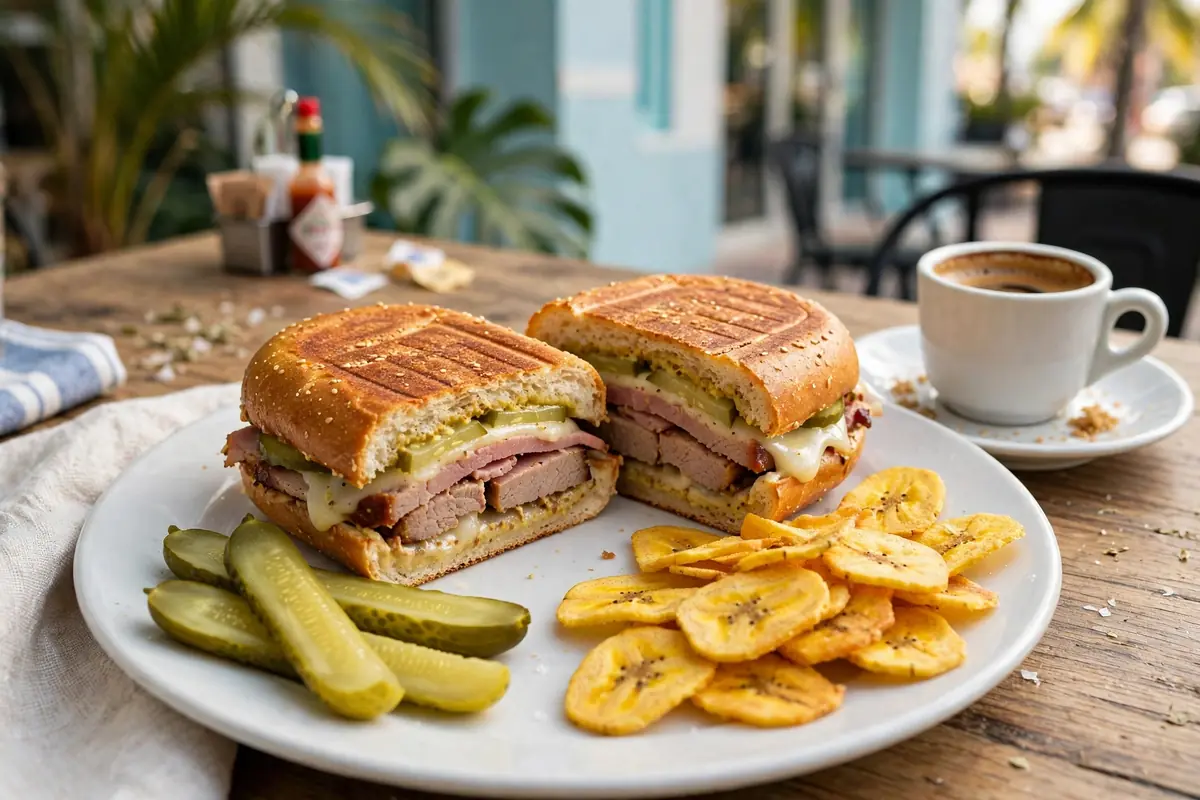
The Cuban sandwich is the signature lunch of South Florida: roast pork, ham, Swiss cheese, pickles and mustard, pressed flat on Cuban bread until the outside crackles. Miami’s large Cuban community makes some of the best in the state, and the sandwich is everywhere — from downtown cafes to food trucks and the ventanitas of Little Havana. It is cheap, filling and unmistakably Miami.
Practical tip: A good Cuban sandwich costs roughly $10–$14 — prices are approximate, so check before visiting. Order it pressed and hot, and pair it with plantain chips and a cafecito, the sweet Cuban coffee that comes with it.
Stone crab
Stone crab is Miami’s great seasonal luxury, and Joe’s Stone Crab — open on South Beach since 1913 — is where it began. The claws are served chilled with mustard sauce, and the season runs from October 15 to May 1, so a winter trip is the time to eat them. The claws are harvested sustainably: only one claw is taken and the crab is returned to the water to regrow it. It is the most famous meal in Miami, and the one worth saving a special night for.
Practical tip: A stone crab dinner at Joe’s runs roughly $60–$100 per person — prices are approximate, so check before visiting. Book ahead in season, and if the price stings, order the claws as a shared starter and eat your main course elsewhere.
Cafecito and pastelitos
The cafecito — sweet Cuban espresso, served in a tiny cup from a walk-up ventanita window — is the fuel of Miami, and the pastelito, a flaky pastry filled with guava and cheese, is its perfect partner. Together they cost a few dollars and they are everywhere in Little Havana: Versailles, La Carreta and the ventanitas along Calle Ocho. Order a colada — a larger cup to share — and drink it the local way, standing at the window with everyone else.
Practical tip: A cafecito costs roughly $1–$2 and a pastelito roughly $2–$4 — prices are approximate, so check before visiting. Go to a ventanita, not a sit-down restaurant, for the original experience, and try the guava-and-cheese pastelito first.
Beyond the big three, leave room for a plate of ceviche, a bowl of arroz con pollo, a pastelito de guayaba from a bakery on Calle Ocho, and at least one neighbourhood meal in Coral Gables or Coconut Grove.
Free things to do in Miami
Miami is unusually generous to budget travellers. Several of its very best experiences cost nothing at all, so mix these into every day of your trip:
- South Beach and the boardwalk: The sand, the lifeguard towers and the four-mile Beachwalk cost nothing — the number-one free experience in the city.
- Ocean Drive and the Art Deco Historic District: Free to walk, with the world’s largest collection of Art Deco buildings and the neon at dusk.
- Wynwood’s street murals: The murals on the streets around the Walls are free — the whole district is an open-air gallery.
- Little Havana — Calle Ocho and Domino Park: Free to walk, with dominoes, salsa and Cuban coffee windows on every corner.
- South Pointe Park and its pier: Free to walk, with cruise ships passing at Government Cut and the best free sunset in Miami.
- Miami Beach Botanical Garden: A free 3-acre garden with a Japanese garden, colourful blooms and tranquil water features.
- ICA Miami in the Design District: Free general admission to contemporary art and a sculpture garden, in the city’s design quarter.
- Bayfront Park and the free Metromover: Free to walk, with the bayfront lawns, the skyline and the free elevated train around downtown.
Build each day around one paid highlight and fill the rest with free sights. That rhythm — one big ticket, lots of walking, one great meal — is how you get the best Miami trip for the least money.
Frequently asked questions
How many days do you need in Miami?
Three full days is the minimum for a first trip: one day for South Beach and Art Deco, one day for Wynwood and Little Havana, and one day for Vizcaya, Coconut Grove and the bay. Five days is the balanced first trip, with time for the Everglades and Key Biscayne; seven days works best for families adding the Florida Keys.
What is the best time to visit Miami?
December to April is the dry season, with sunny days in the 70s°F and the lowest humidity — but it is also the most expensive time, with Art Basel in early December and spring break in March. March to May is the sweet spot: warm, dry and cheaper than winter. Summer is hot, humid and stormy, and hurricane season runs from June 1 to November 30, peaking from mid-August to mid-October.
Do you need a car in Miami?
Not for the main sights — the free Metromover covers downtown and Brickell, the free trolleys cover Miami Beach, Coral Gables and Coconut Grove, and rideshare fills the gaps. A car helps for the Everglades, Key Biscayne and the gardens, and it is essential for a Key West day trip. If you do rent one, remember that Miami Beach hotel parking costs roughly $40–$60 a night.
Is Miami expensive?
Yes — Miami is one of the most expensive beach cities in the United States, and South Beach is the priciest part of it. A mid-range trip runs roughly $200–$380 per person per day, and a South Beach hotel room that costs $350 or more in February can drop to $150–$200 in summer. The way to keep costs down is to eat in Little Havana and the mainland neighbourhoods, use the free Metromover and trolleys, and fill your days with the free beaches, streets and parks.
Is Miami safe for tourists?
The tourist areas are safe with normal city sense: stay aware at night on Ocean Drive and in the entertainment district, do not leave valuables unattended on the beach, and remember the beach closes at 10pm. March is spring break season: in 2026 the city dropped the blanket midnight curfew used in 2024 and 2025, but March is still a high-impact month with limited beach entrances and security checkpoints on Thursday to Sunday. Stick to the busy, well-lit streets and you will be fine.
Is Miami worth visiting if you don’t like beaches or nightlife?
Yes. Miami is far more than its beaches and clubs: the art at Wynwood and PAMM, the Cuban culture of Little Havana, the gardens at Vizcaya and Fairchild, the Everglades, and a food scene that runs from $2 cafecitos to tasting menus are all worth the trip on their own. Many visitors arrive for the beach and leave talking about the neighbourhoods and the food.
Further reading — Wikipedia and Reddit
Want to dig deeper or hear directly from locals and other travellers? These pages are the best next stops:
- Wikipedia — Miami — the city’s history, geography and neighbourhoods, and how a railroad town became the Capital of Latin America.
- Wikipedia — South Beach — how a 1910s beach town became the world’s Art Deco capital, and the story of the district’s rescue in the 1970s.
- Wikipedia — Vizcaya Museum and Gardens — the story of James Deering’s Gilded Age estate, from its construction in 1914–1923 to its life as a public museum.
- Reddit — r/Miami — the Miami community on Reddit, where locals answer first-time visitors’ questions and share current tips on beaches, food and neighbourhoods.
Your Miami trip, in one paragraph
Start on South Beach in the morning, walk Ocean Drive at dusk, spend a day on the murals of Wynwood and the cafecitos of Little Havana, and finish with Vizcaya’s gardens and a sunset cruise on Biscayne Bay — then add the Everglades and one neighbourhood of your own choosing. Do that, and you will leave Miami understanding exactly why people who visit once tend to come back. And if you liked this guide, read our guide to things to do in Chicago, our guide to things to do in Nashville, our guide to things to do in Los Angeles and our guide to things to do in Orlando — the same format, the same honest prices, and four more great American cities.
Prices, hours and seasonal schedules in this guide are approximate and were given as a guide only. Please check the official website of each attraction before you visit.

About the Author