Things to Do in Iceland
20 Best Attractions, a 3-Day Itinerary, Where to Stay, and the Food You Cannot Miss
Quick Info
Best for: First-timers, waterfall chasers, glacier hikers, northern lights hunters, photographers and families — one country with volcanoes, glaciers, black sand beaches and geothermal lagoons all within a few hours’ drive
Best time: June to August for the midnight sun, the open highlands and the puffins; September to March for the northern lights and the ice caves; May and September for the balance of decent weather and thinner crowds
How long: 3 days for Reykjavík, the Golden Circle and the South Coast; 5 days adding Snæfellsnes and the glacier lagoon properly; 7 to 10 days for the full Ring Road
Budget: About $300–$450 per person per day mid-range — Reykjavík hotels run about $200–$400 a night, a rental car about $80–$150 a day, and the big sights $60–$120 each, while the waterfalls, the beaches and the glacier lagoon cost nothing but parking
Don’t miss: The Golden Circle, the Blue Lagoon, the northern lights in winter, Jökulsárlón glacier lagoon, Reynisfjara black sand beach, and a bowl of lamb soup on a cold day
Iceland is the island where fire and ice share the same postcode — a country of glaciers and volcanoes, black sand beaches and milky-blue lagoons, where you can snorkel between two continents in the morning and watch the northern lights at night. This guide covers the 20 best things to do in Iceland, a 3-day itinerary that packs the Golden Circle, the South Coast and Reykjavík into three days without rushing, where to stay so you are not driving back to the capital every night, how to get around on the Ring Road in summer and in winter, the three foods you should not leave without tasting, and the free sights that cost nothing at all. Everything below was checked against live sources in November 2026 — including the Blue Lagoon’s volcanic status, the February 2026 erosion that changed Reynisfjara beach, the ice cave season dates, and the new per-kilometre road fee that most older guides do not mention.
Iceland at a glance
| Topic | What to know |
| Full name | Iceland — an island country in the North Atlantic, just below the Arctic Circle, about 1,800 miles from New York and 3 hours by air from London |
| Size | About 40,000 square miles, roughly the size of Kentucky — small on a map, but a full Ring Road drive takes 7 to 10 days to do properly |
| Population | About 390,000 people, roughly two-thirds of them in the Reykjavík area — one of the least densely populated countries in Europe |
| Capital | Reykjavík, the world’s northernmost capital, on the south-west coast |
| Best base | Reykjavík for first-timers; Vík for the South Coast; Höfn for the glacier lagoon; Akureyri for the North; Stykkishólmur for Snæfellsnes |
| Getting around | A rental car for almost everything outside Reykjavík; domestic flights to Akureyri; buses are limited and slow |
| Famous for | The northern lights, the Golden Circle, the Blue Lagoon, glaciers and ice caves, black sand beaches, waterfalls, puffins and volcanoes |
Iceland works as several countries in one, and the mistake most first-timers make is trying to see all of it in three days. The south-west is the city and the Golden Circle, an easy day trip from Reykjavík. The South Coast is the waterfall coast, a string of falls and black sand beaches along the Ring Road. The south-east is the glacier country, where Vatnajökull, Europe’s largest glacier, calves icebergs into a lagoon. The west is the Snæfellsnes Peninsula, often called Iceland in miniature. The north is the quiet side, with whale watching, geothermal fields and Europe’s most powerful waterfall. The trap is the season, and this is where our guide beats the older ones: the ice caves only exist in winter, the highland roads only open in summer, the northern lights only appear on dark nights, and the Blue Lagoon sits beside an active volcanic system that has closed it at short notice — so read the season notes in each section before you plan a day around them. For the wider trip, the Ring Road (Route 1) on Wikipedia covers the 1,322-kilometre loop around the island.
The 20 best things to do in Iceland
1. The Golden Circle — Þingvellir, Geysir and Gullfoss
The Golden Circle is Iceland’s most famous day trip and the single best introduction to the country — a 230-kilometre loop from Reykjavík that packs three very different sights into one day. The Golden Circle on Wikipedia covers the route, and the three stops are Þingvellir National Park, where you can walk between the North American and Eurasian tectonic plates in a rift valley and stand where Iceland’s parliament, the Alþingi, was founded in 930 AD, making it one of the world’s oldest democratic assemblies; the Geysir geothermal area, where the Strokkur geyser erupts every 5 to 10 minutes, shooting boiling water 20 to 30 metres into the air; and Gullfoss, the Golden Falls, where the Hvítá river plunges 32 metres in two tiers into a canyon. Þingvellir on Wikipedia covers the park and its history, Geysir on Wikipedia covers the geothermal field, and Gullfoss on Wikipedia covers the waterfall. All three sites are free to visit, though Þingvellir charges for parking, and the loop runs all year — in winter the roads are kept clear but daylight is short, so start early. Allow a full day, drive it yourself or take a guided tour, and go to Gullfoss last, when the low sun lights the canyon.
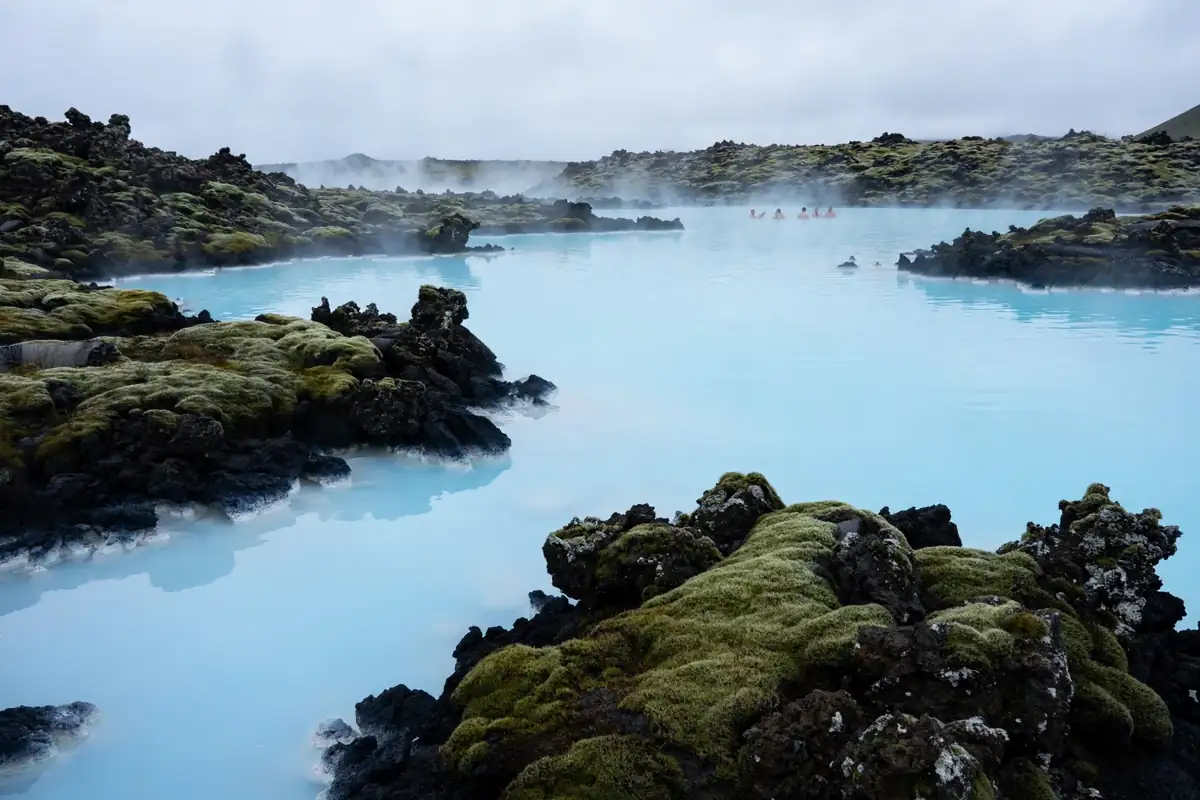
2. The Blue Lagoon
The Blue Lagoon is Iceland’s most-visited attraction and the one that needs the most planning — a milky-blue geothermal spa in a black lava field on the Reykjanes Peninsula, about 20 minutes from Keflavík Airport and 50 minutes from Reykjavík. The Blue Lagoon on Wikipedia covers the spa and its history. The water sits at 37 to 39°C year-round, rich in silica and minerals, and the entry packages are Comfort from about 11,990 ISK, Premium from about 14,990 ISK and Signature from about 18,490 ISK, all with timed entry that must be booked in advance — walk-ins have not been possible for years, and popular slots sell out weeks ahead. The volcanic status is the thing older guides get wrong, and this is where our guide beats them: the lagoon sits beside the Sundhnúkur crater row, which erupted nine times between December 2023 and August 2025, and the lagoon was evacuated and closed several times, most recently when lava flowed over its car park in November 2024. As of October 2026 the lagoon is open and operating normally, with no eruption underway since the last one ended on 5 August 2025 — but the Icelandic Met Office reported on 30 September 2026 that magma is still building up under Svartsengi, and it rates a new eruption the most likely scenario, possibly with short warning. Book with flexible cancellation, keep a back-up plan, and check vedur.is and safetravel.is on the day. Allow two to three hours, go in the evening in winter for the steam and the dark, and do not wear silver jewellery in the water.
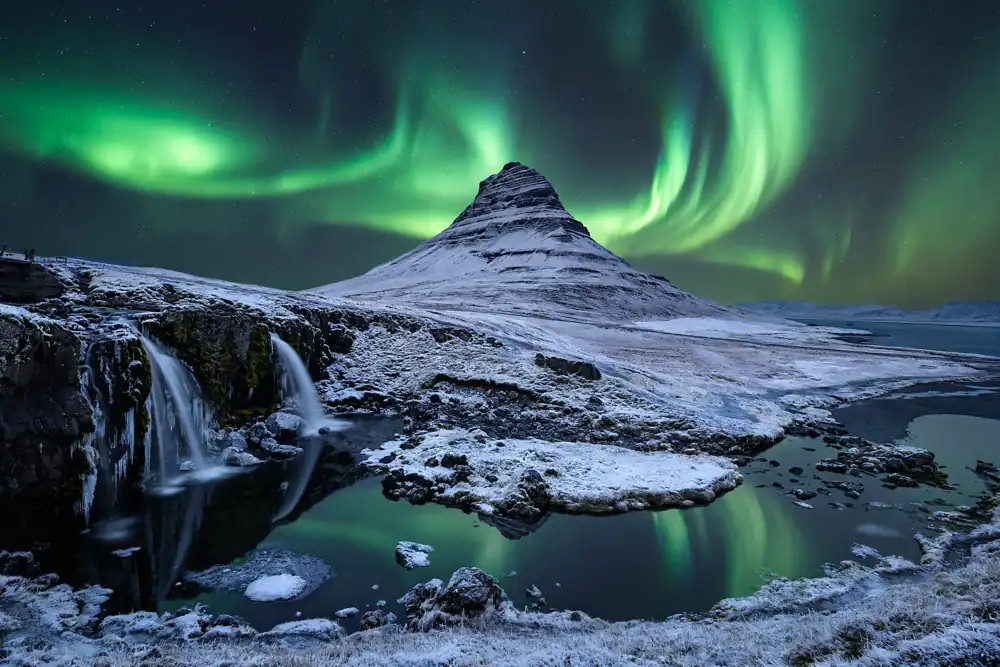
3. The Northern Lights
The northern lights are the reason most people come to Iceland in winter, and the 2026–27 season is one of the best in over a decade. The aurora on Wikipedia covers the science, and the practical facts are these: the season runs from late August to mid-April, when the nights are dark enough, with the best balance of darkness and weather in September to October and February to March, and the best hours usually between 22:00 and 02:00. Solar Cycle 25 peaked in October 2024, and elevated solar activity is carrying into 2026 and 2027, producing more frequent and more intense displays than in a typical year — the next comparable solar maximum will not arrive until the mid-2030s. The new moons on 9 November and 9 December 2026, and 7 January, 6 February and 8 March 2027, give the darkest skies. The honest warning is that nobody can guarantee a sighting: you need solar activity and a clear sky together, and Iceland is one of the cloudiest countries in northern Europe, so cloud, not darkness, is what stops most people seeing anything. Book your tour early in the trip, choose one with a free retry on another night, get away from Reykjavík’s lights, and check the Icelandic Met Office aurora forecast before you drive out. Allow three or four nights in Iceland if the lights are the point of the trip.
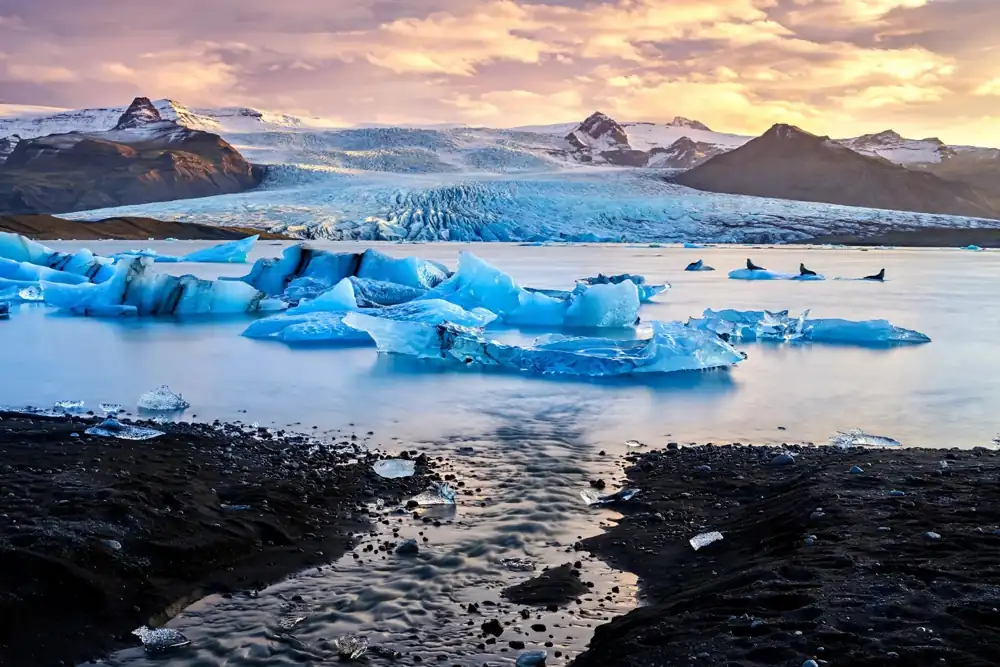
4. Jökulsárlón Glacier Lagoon and Diamond Beach
Jökulsárlón is the most beautiful place in Iceland and the one that makes first-timers stop the car in disbelief — a lagoon of floating icebergs at the foot of Breiðamerkurjökull, an outlet glacier of Vatnajökull, right beside the Ring Road in the south-east. Jökulsárlón on Wikipedia covers the lagoon. The lagoon is free to visit at any hour and is Iceland’s deepest lake, still growing as the glacier retreats; the only fixed cost is the Vatnajökull National Park parking fee of 1,110 ISK per car, valid until midnight and covering the lagoon and both Diamond Beach car parks. The boat tours run in summer only: the amphibian boat costs 7,100 ISK for adults for 30 to 40 minutes on the water, from May to November, and the Zodiac costs 16,600 ISK for about 1 hour 15 minutes, from May to October, with a minimum age of 10. Across the bridge, Diamond Beach is where the icebergs wash up on black sand — walk the shore at sunset, watch for seals in the lagoon, and keep off the ice, which is unstable and drifts with the tide. In winter the boats stop, but the lagoon car park becomes the meeting point for the ice cave tours. Allow two to four hours, and fill up with fuel in Kirkjubæjarklaustur or Höfn, because there is almost nothing in between.
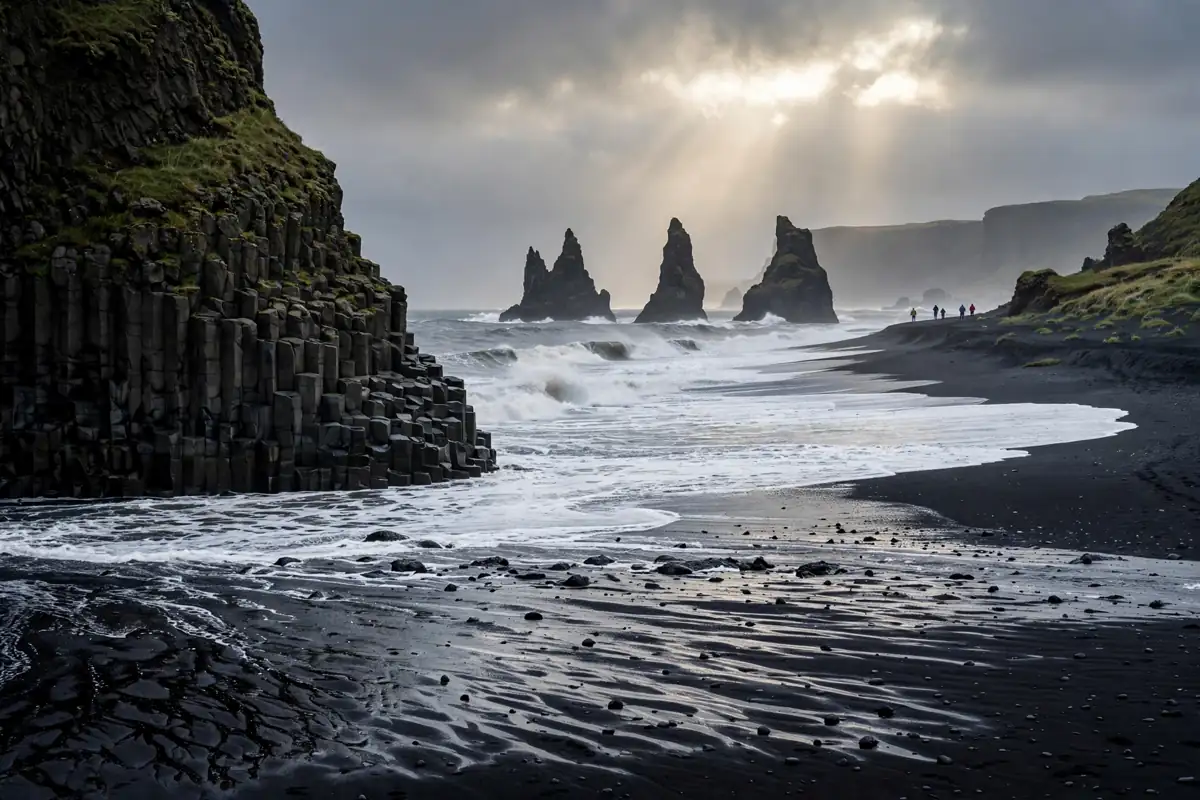
5. Reynisfjara Black Sand Beach
Reynisfjara, near Vík on the South Coast, is Iceland’s most famous beach and its most dangerous — black volcanic sand, towering basalt columns, the Hálsanefshellir sea cave and the Reynisdrangar sea stacks rising from the Atlantic. Reynisfjara on Wikipedia covers the beach, and Reynisdrangar on Wikipedia covers the sea stacks. The danger is the sneaker waves: single waves that run much further up the sand than the ones before them, with no warning, even when the sea looks calm. Six people have died at Reynisfjara since 2007, four of them by drowning, and the most recent was a nine-year-old girl swept out in August 2025 while the warning light showed yellow. The beach uses a warning light system — green for low danger, yellow for moderate, red for high — and after the 2025 death the red light was recalibrated to switch on sooner and more often. Then, in February 2026, weeks of unusual easterly winds and heavy seas stripped sand from the beach and part of the slope below Reynisfjall collapsed onto it; the Hálsanefshellir cave is no longer reachable at high tide, the shoreline has moved inland, and the layout differs from older photos. SafeTravel reported viewpoint-only access on 25 September 2026. The rules are simple: stay at least 30 metres from the water’s edge, never turn your back on the sea, never stand at the foot of the basalt columns or in the cave when waves are reaching them, and if the light is red, stay on the viewing platform. Check safetravel.is before you go, and allow one hour.
6. Seljalandsfoss — the waterfall you walk behind
Seljalandsfoss is the waterfall every Iceland photo album needs — a 60-metre fall off a cliff on the South Coast that you can walk right behind, through a gap in the rock, for a view no other waterfall in the country offers. Seljalandsfoss on Wikipedia covers the falls. The path behind the falls is open in summer and in good weather; in winter it is often closed because of ice, so check on the day. The falls are free to visit, with a paid car park, and the best light is in the evening, when the low sun shines through the falling water. Bring a waterproof jacket and a cover for your camera, because the mist soaks everything within metres, and wear shoes with grip — the path is wet rock. The smaller Gljúfrabúi waterfall hides in a canyon a short walk north along the cliff, and most tour buses skip it, which is exactly why you should not. Allow one hour, and pair it with Skógafoss, 30 minutes east.
7. Skógafoss — the waterfall with the rainbow
Skógafoss is the waterfall that looks too perfect to be real — a 60-metre drop in a 25-metre-wide curtain of white water on the South Coast, so powerful that its mist makes a permanent rainbow in sunlight. Skógafoss on Wikipedia covers the falls. The falls are free to visit, with a paid car park, and a staircase of more than 500 steps climbs to the top, where a viewpoint looks down the river and a trail continues into the highlands. Come in the morning for the rainbow, when the sun is behind you, and in winter for the ice formations that coat the cliff. The Skógar museum, a short walk away, holds a folk museum and a transport museum that most visitors skip — it is worth an hour if the weather turns. Allow one to two hours, and do not climb the rocks at the base, which are slippery and have injured careless visitors.
8. The ice caves of Vatnajökull
The blue ice caves of Vatnajökull are the most surreal thing you can do in Iceland — natural meltwater caves inside Europe’s largest glacier, with walls of glowing blue ice that change shape every year and never look the same twice. Vatnajökull on Wikipedia covers the glacier. The season is the thing to get right: the natural caves are safe to enter only in the cold months, roughly October to April, with the most reliable conditions from November to March, and they are closed from May to September. Tours leave from the Jökulsárlón car park and cost from about 23,900 ISK for 2.5 to 4 hours, with small groups and a licensed guide — every ice cave visit must be with a guide, and after a fatal ice collapse on Breiðamerkurjökull in August 2024, the park brought in stricter rules, including a daily risk assessment of each cave, so on any given day a cave can be closed and your tour moved. The Katla ice cave near Vík is the exception: it runs all year, with darker ice striped with black volcanic ash, from about 23,666 ISK, and the man-made Into the Glacier tunnel on Langjökull runs all year from about 24,900 ISK. Book weeks ahead for Christmas, New Year and February, wear warm layers and waterproof boots, and never enter a cave without a guide. Allow half a day.
9. Snorkelling at Silfra — between two continents
Silfra is the crack between the North American and Eurasian tectonic plates, and you can snorkel in it — floating in glacial meltwater so clear that visibility can exceed 100 metres, between two rock walls that are drifting apart by about two centimetres a year. Silfra on Wikipedia covers the fissure. The water is 2 to 4°C all year, so you wear a dry suit over thermal layers, and the guided snorkel takes about 30 to 40 minutes in the water, with the whole tour running three to four hours from Þingvellir National Park. No diving experience is needed for snorkelling, but you must be a comfortable swimmer, at least 12 years old, and able to fit the dry suit. Book ahead, because the daily slots are limited, and go in the morning, when the light in the fissure is at its best. The water is so pure you can drink it — and your guide will tell you to. Allow half a day, and pair it with the rest of Þingvellir, which is right there.
10. Kirkjufell and the Snæfellsnes Peninsula
Kirkjufell is the most photographed mountain in Iceland — a steep, cone-shaped peak on the Snæfellsnes Peninsula with a waterfall, Kirkjufellsfoss, in front of it, a composition so perfect it has appeared in films and on a thousand postcards. Kirkjufell on Wikipedia covers the mountain, and Snæfellsnes on Wikipedia covers the peninsula. Snæfellsnes is often called Iceland in miniature, because it packs a glacier, a volcano, black sand beaches, lava fields, fishing villages and a mountain into a single peninsula about two and a half hours from Reykjavík. Drive the coastal road past the Snæfellsjökull glacier, stop at the black church of Búðir, the basalt cliffs of Arnarstapi and Hellnar, and the Djúpalónssandur beach with its rusted shipwreck, and base yourself in Stykkishólmur, the peninsula’s prettiest town. In winter, check the road conditions on the day — Snæfellsnes in a winter gale is the first thing to drop from a trip. Allow a full day, or two if you want to hike.
11. Hallgrímskirkja and old Reykjavík
Hallgrímskirkja is the church that defines Reykjavík’s skyline — a 73-metre tower of pale concrete shaped like basalt columns, visible from almost anywhere in the city, with a lift to the top for the best view in town. Hallgrímskirkja on Wikipedia covers the church. The tower lift costs 1,500 ISK for adults, needs no booking, and takes about 45 minutes including the view over the coloured rooftops to Mount Esja; the church itself is free to enter. From there, walk down Skólavörðustígur, the rainbow-painted street, to the old town: the Sun Voyager sculpture on the waterfront, the Harpa concert hall with its glass facade, the old harbour, and the colourful houses of Þingholt. Reykjavík on Wikipedia covers the city. Reykjavík is compact and walkable, and most of its museums open Tuesday to Sunday from 10 a.m. to 5 p.m., daily in summer. Allow a morning for the church and the old town, and an evening for the restaurants and bars.
12. Sky Lagoon — the ocean-view alternative
Sky Lagoon is the lagoon to book when the Blue Lagoon does not fit your trip — a geothermal spa at Kársnes harbour in Kópavogur, about 15 minutes from central Reykjavík, with a long infinity edge looking straight over the Atlantic. It opened in 2021, and its ticket includes the seven-step Skjól ritual: a warm soak, a cold plunge, a sauna with a sea view, a cold mist, a body scrub, a steam room and a final shower. The Saman pass, with shared changing rooms, starts from about 14,990 ISK, and the Sér pass, with a private changing suite, from about 17,990 ISK. You must be at least 12 years old, and you must book a time slot in advance. The practical advantage is the location: Sky Lagoon has never had an eruption-related closure, because it sits outside the Reykjanes eruption zone, so it is the safe back-up when the Blue Lagoon shuts at short notice. Go in the evening, when the sun sets over the water, and allow two to three hours.
13. Skaftafell and Svartifoss
Skaftafell is Vatnajökull National Park’s best base for hiking — a green oasis between black sand plains and glaciers, with trails to a basalt waterfall, a glacier tongue and a viewpoint over the whole south-east. Skaftafell on Wikipedia covers the area. The short walk is Svartifoss, a waterfall framed by black basalt columns, about 1.5 kilometres each way on a marked path, and the longer trails climb to Sjónarsker and the glacier viewpoints. Svartifoss on Wikipedia covers the falls. Glacier hikes leave from the Skaftafell car park all year with certified guides, and the park charges the same regional parking fee as Jökulsárlón — 1,110 ISK per car, valid until midnight, with 50 per cent off at a second fee area of the park on the same day. The visitor centre has trail maps and current conditions, and the campsite is one of the few places to stay between Vík and Höfn. Allow half a day for the walks, or a full day with a glacier hike.
14. Dettifoss and the Mývatn geothermal area
Dettifoss is Europe’s most powerful waterfall by volume — a 100-metre-wide, 44-metre-high wall of grey glacial water thundering into a canyon in the north-east, so loud you feel it in your chest before you see it. Dettifoss on Wikipedia covers the falls. Pair it with the Mývatn area, an hour west: a shallow lake ringed by geothermal fields, the steaming mud pots of Námaskarð, the lava formations of Dimmuborgir, and the Grjótagjá cave, a warm-water fissure made famous by a television show — look, but do not bathe, because the water is dangerously hot and bathing is forbidden. Mývatn on Wikipedia covers the lake and the area. Dettifoss is best from June to September, when both access roads are open; in winter, check which side is passable on the day. Base yourself in Akureyri or at Mývatn, and allow a full day for the two together.
15. Whale watching in Húsavík
Húsavík, a fishing town on the north coast, is called the whale watching capital of Europe — and the claim is earned, with sightings almost guaranteed from May through October. Húsavík on Wikipedia covers the town. The boats leave the harbour for Skjálfandi Bay, where humpback whales, minke whales, white-beaked dolphins and harbour porpoises feed in summer, and the tours run three to four hours, usually with a guide explaining the whales and the bay. The season runs roughly April to October, with May to September the most reliable, and the boats provide warm overalls because the bay is cold even in July. Húsavík is also the town from the Eurovision film, and the whale museum on the harbour is worth an hour before or after your trip. Book ahead in summer, dress warmer than you think you need, and allow half a day.
16. Perlan — the Wonders of Iceland
Perlan is Reykjavík’s best bad-weather attraction — a glass-domed building on Öskjuhlíð hill holding the Wonders of Iceland exhibition, a real indoor ice cave, a planetarium, and an observation deck with a 360-degree view over the city. Perlan on Wikipedia covers the building. The ice cave is the highlight: a man-made tunnel of real glacier ice, kept at minus 15°C, with an exhibition on Iceland’s glaciers and volcanoes, and the planetarium runs a northern lights show for the nights when the clouds win. Entry costs about 5,000 to 7,000 ISK for adults, and the observation deck alone is free. It is the place to go on a rainy afternoon, or on your first day, to get the whole country explained before you drive out into it. Allow two hours.
17. Hiking on Sólheimajökull glacier
Walking on a glacier is the experience that makes Iceland feel like another planet, and Sólheimajökull, on the South Coast between Vík and Skógar, is the easiest place to do it. Sólheimajökull on Wikipedia covers the glacier. Guided hikes run all year with certified guides, crampons and an ice axe provided, and no experience is needed — the guides teach you to walk on ice in minutes. The standard hike takes about three hours on the ice, crossing crevasses and blue ice formations, and the longer hikes add ice climbing. Never walk on a glacier without a guide: the ice is full of hidden crevasses, and people have died doing it alone. Book ahead, wear warm layers and waterproof boots, and allow half a day. The glacier car park is on a gravel road off the Ring Road, so drive slowly.
18. Landmannalaugar — the highlands in colour
Landmannalaugar is the highlands at their most beautiful — a valley of rhyolite mountains in red, yellow, green and black, with steaming hot springs, lava fields and the start of the Laugavegur trail, Iceland’s most famous multi-day hike. Landmannalaugar on Wikipedia covers the area. It is only reachable in summer, roughly late June to early September, and only by F-road, which means a proper 4×4 with high clearance and a hire company that allows it — the river crossings are the real test, and a small car will not make it. The reward is a landscape nothing else in Iceland matches, and a natural hot river you can bathe in at the end of the walk. Most people come on a day tour from Reykjavík or the South Coast, which is the sensible choice if you have never driven an F-road. Check the highland road openings on umferdin.is before you go, and allow a full day.
19. Harpa Concert Hall
Harpa is Reykjavík’s glass concert hall on the harbour — a building of coloured glass panels that changes colour with the light, and the best free thing to do in the city after dark. Harpa on Wikipedia covers the hall. The outside is free to admire and photograph, the inside is free to walk into, with a cafe and a shop, and guided tours run most days. The concert programme runs all year, from the Iceland Symphony Orchestra to the Iceland Airwaves festival every November, and tickets are cheaper than you would expect for a hall of this quality. Even if you do not see a show, go at sunset, when the glass catches the last light over the harbour. Allow one hour, or an evening for a concert.
20. The Westman Islands — puffins and a buried town
The Westman Islands, Vestmannaeyjar, are Iceland’s wild card — a small archipelago off the South Coast where 60 per cent of the world’s Atlantic puffins breed, and where a volcanic eruption in 1973 buried a third of the town of Heimaey under lava and ash. Vestmannaeyjar on Wikipedia covers the islands. The ferry from Landeyjahöfn takes about 35 minutes, and the islands are best from May to mid-August, when the puffins nest on the cliffs and you can watch them from the viewing points at Stórhöfði. The Eldheimar museum tells the story of the 1973 eruption, with a house excavated from the ash, and the Eldfell volcano hike climbs the crater that buried the town. The Atlantic puffin on Wikipedia covers the bird. Allow a full day, book the ferry ahead in summer, and check the sailing on the day, because high winds cancel it.
Iceland in 3 days — a ready-made itinerary
Day 1 — Reykjavík and the Golden Circle
Start in Reykjavík with the Hallgrímskirkja tower for the view over the city, then drive the Golden Circle: Þingvellir in the morning, the Geysir area for lunch, and Gullfoss in the afternoon, when the low sun lights the canyon. Back in Reykjavík, walk the old harbour, eat dinner in the city, and if it is winter and the sky is clear, drive out of town after 22:00 to look for the northern lights.
Day 2 — The South Coast to Vík
Drive the South Coast from Reykjavík: Seljalandsfoss first, walking behind the falls, then Skógafoss for the rainbow, then a glacier hike on Sólheimajökull in the afternoon, and on to Reynisfjara black sand beach — remembering the 30-metre rule and the warning light. Sleep in Vík, the South Coast’s main village, and eat lamb soup for dinner.
Day 3 — The glacier lagoon and the drive back
Drive east from Vík past Skaftafell to Jökulsárlón glacier lagoon, take the amphibian boat among the icebergs if it is summer, walk Diamond Beach across the bridge, and drive back to Reykjavík in the evening — it is about five hours each way, so start early. If the long drive is too much, swap the lagoon for the Blue Lagoon on the way back to the airport, or a slow morning in Vík and the Sky Lagoon in the evening.
Best time to visit Iceland
| Season | What it is like | Best for |
| Winter (December to February) | 4 to 5 hours of daylight in December, snow and storms, the cheapest hotels | Northern lights, ice caves, empty landscapes — but expect Ring Road closures and plan flexibly |
| Spring (March to May) | Longer days, aurora until mid-April, ice caves until April, puffins arrive in late April | Aurora with milder weather, shoulder prices, fewer crowds |
| Summer (June to August) | Near-24-hour daylight, the warmest weather at 12 to 15°C, the highlands open | Midnight sun, puffins, hiking, the full Ring Road — but the peak prices and the biggest crowds, and no northern lights |
| Autumn (September to November) | Aurora returns in late August, fewer crowds, shoulder prices, storms increase | Northern lights with decent weather, ice caves from October, the best balance for many travellers |
The short answer is that there is no single best month, only a best month for what you want. Come in June to August for the midnight sun, the open highlands and the puffins, and accept the crowds and the prices. Come from September to March for the northern lights and the ice caves, and accept the short days and the weather. Come in May or September for the balance — decent weather, open roads, thinner crowds and lower prices. The one mistake is coming in deep winter and expecting to drive the whole Ring Road on a schedule: mid-October 2026 storms closed sections of Route 1 outright, and that kind of volatility is normal from late autumn through spring. Treat the winter loop as an intention, not a schedule.
Where to stay in Iceland
| Base | Best for | What to know |
| Reykjavík | First-timers, the Golden Circle, day trips, restaurants and nightlife | The most choice and the highest prices; book months ahead in summer; the city centre is walkable |
| Vík í Mýrdal | The South Coast waterfalls, Reynisfjara and the glacier hikes | The main village on the South Coast, about 2.5 hours from Reykjavík; book ahead, it sells out in summer |
| Höfn | Jökulsárlón, the ice caves and the south-east | A small fishing town about 45 minutes east of the lagoon; famous for langoustine |
| Akureyri | The North, Mývatn, Dettifoss and whale watching | Iceland’s second city, with more choice and lower prices than Reykjavík; the Vaðlaheiðargöng tunnel toll is about 2,150 ISK |
| Stykkishólmur | The Snæfellsnes Peninsula | The peninsula’s prettiest town, with good guesthouses and restaurants; about 2.5 hours from Reykjavík |
| Húsavík and Mývatn | Whale watching and the geothermal north | Small towns with guesthouses and farm stays; book early in the whale season |
The rule is to move your base as you travel, not to drive back to Reykjavík every night — the distances are long, the daylight in winter is short, and the best sights are hours apart. Book months ahead for June to August, when the popular guesthouses sell out, and expect to pay $200 to $400 a night for a mid-range hotel in Reykjavík in summer. Winter is cheaper, and the guesthouses and farm stays outside the capital are often half the price of the city. Self-catering apartments with a kitchen save real money, because eating out in Iceland is expensive — a main course in a Reykjavík restaurant is easily $25 to $50.
Getting around Iceland
| Way to travel | What to know |
| Rental car | The way almost everyone travels — a small 2WD car is fine for the Ring Road and the Golden Circle in summer; a 4×4 is needed in winter and for F-roads |
| Domestic flights | Reykjavík to Akureyri in about 45 minutes, saving a five-hour drive; useful for a north Iceland add-on |
| Buses | The Strætó network covers the main towns, but services are infrequent and slow — not a good way to see the sights |
| Guided tours | Day tours from Reykjavík cover the Golden Circle and the South Coast; multi-day tours handle the Ring Road in winter |
| Walking | Reykjavík is compact and walkable; everywhere else you need a car or a tour |
Driving is the heart of an Iceland trip, and the rules are different from home. Speed limits are 90 km/h on paved roads outside towns, 80 km/h on gravel and 50 km/h in towns. Winter tyres are a legal requirement in the cold months, and studded tyres are strongly recommended. F-roads into the highlands are mountain tracks that need a 4×4 and are usually closed from mid-September until June or July — driving on a closed road is illegal and voids your insurance. Since 1 January 2026 Iceland charges a per-kilometre road fee of 6.95 ISK per km for cars, usually included in the rental as a fixed daily fee, and fuel costs roughly 180 to 285 ISK a litre depending on the station. Take gravel protection, sand and ash protection and a windscreen waiver with your rental — wind can rip a car door off its hinges, and rental insurance frequently excludes it. Before every drive, check the road conditions on umferdin.is, the forecast on vedur.is and the alerts on safetravel.is, and never drive around a closed barrier. Fill up above half a tank in the East Fjords and the north, where the gaps between stations are long.
Iceland food you have to try
Lamb soup and Icelandic lamb
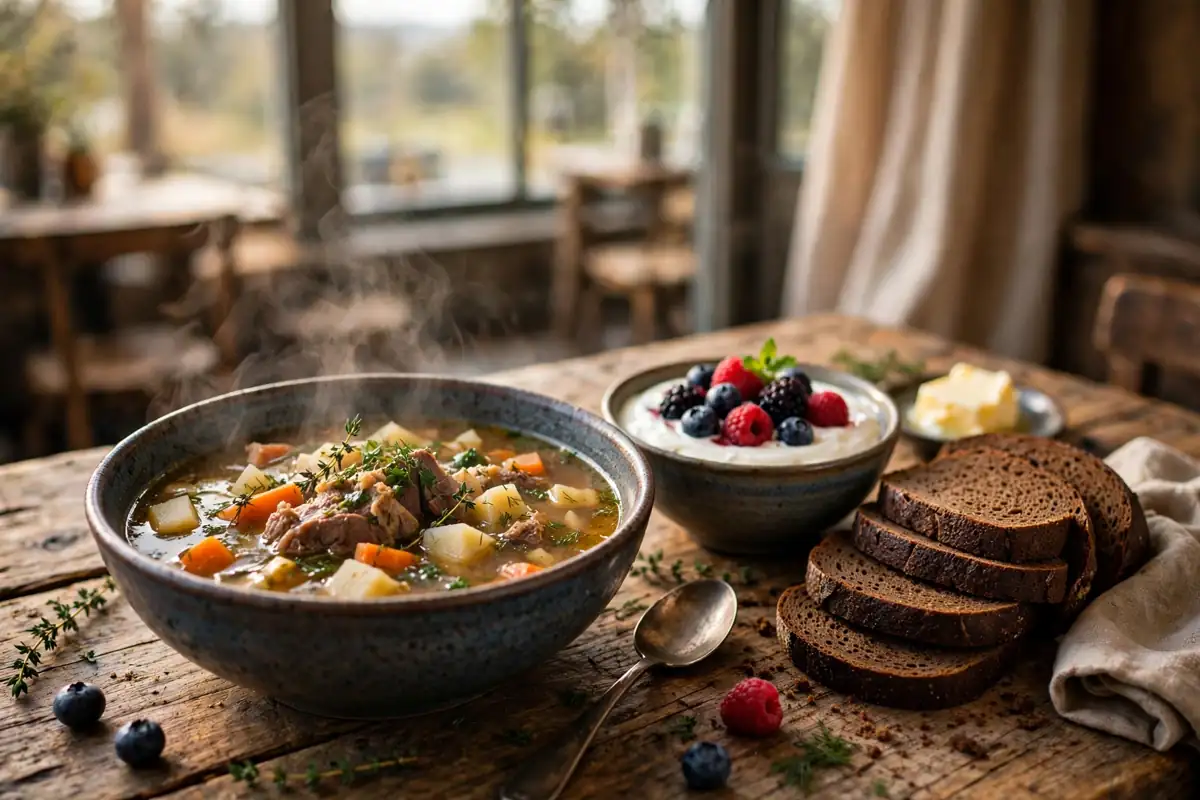
Lamb soup, kjötsúpa, is the dish that gets Icelanders through winter — a hearty broth of lamb, potatoes, carrots, turnips and herbs, served in a big bowl with bread, and the best value hot meal in the country. Icelandic lamb is free-range, grazed on wild herbs and mountain grass, and it shows in the flavour. Try it at a roadside cafe on the South Coast or in Vík, where a bowl costs far less than a restaurant main course, and order the refill — most places offer one.
Skyr, rye bread and the famous hot dog
Skyr is Iceland’s thick, high-protein yoghurt, eaten for breakfast with berries or cream, and it is in every supermarket for a few hundred krónur. Rye bread, rúgbrauð, is the dark, dense loaf traditionally baked underground in geothermal heat, and it comes with butter and smoked trout or lamb. The hot dog is the national fast food: Bæjarins Beztu Pylsur, the famous stand in Reykjavík, has served them since 1937, and the order is “eina með öllu” — one with everything, meaning mustard, ketchup, remoulade, raw onion and crispy onion. Icelandic cuisine on Wikipedia covers the food, and skyr on Wikipedia covers the yoghurt.
Langoustine, fresh fish and the food halls
Höfn, on the south-east coast, is the langoustine capital of Iceland, and the small pink shellfish, served grilled with garlic butter, is the best meal in the country for the money. Everywhere else, the fish is the freshest you will eat — cod, haddock and Arctic char, caught that morning and served simply. In Reykjavík, the food halls are the smart way to eat: Hlemmur Mathöll and Grandi Mathöll gather a dozen small kitchens under one roof, from ramen to fish and chips, so a group can eat well for half the price of a restaurant. Wash it down with a local beer — alcohol is expensive and only sold in state-run Vínbúðin shops and licensed bars.
Free things to do in Iceland
The waterfalls are free. Seljalandsfoss, Skógafoss, Gullfoss and Dettifoss cost nothing to see — you pay only for parking at some of them. The beaches are free: Reynisfjara, Diamond Beach and the black sand at Vík cost nothing, though Reynisfjara demands respect for its waves. In Reykjavík, the Sun Voyager sculpture, the Harpa concert hall exterior, the old harbour and the street art cost nothing, and the Grótta lighthouse at the end of the Seltjarnarnes peninsula is one of the best northern lights spots near the city. The Reykjadalur hot river, a 45-minute hike from Hveragerði, is a naturally warm river you can bathe in for free — one of the best free things to do in Iceland. Kirkjufell, the viewpoints on the Ring Road and the glacier lagoon shore are all free. The rule is simple: the sights are free, the baths and the museums are not — so build your days around the free nature and save your money for one lagoon and one glacier tour.
Frequently asked questions
How many days do you need in Iceland?
Three days covers Reykjavík, the Golden Circle and the South Coast, which is the classic first trip. Five days adds Snæfellsnes and the glacier lagoon properly. Seven to ten days covers the full Ring Road at a sane pace. Less than three days is not enough — you will spend most of it in the car — and more than ten days is when the Westfjords and the highlands become worth adding.
When is the best time to see the northern lights in Iceland?
Any clear, dark night from late August to mid-April, with the best balance in September to October and February to March, and the best hours between 22:00 and 02:00. Solar Cycle 25 peaked in October 2024 and activity is still elevated through 2026 and 2027, so this season is stronger than a typical year — but no tour can guarantee a sighting, because cloud, not darkness, is what stops most people seeing anything. Book your tour early in the trip, pick one with a free retry, and give yourself at least three or four nights.
Do you need a car in Iceland?
Yes, for anything beyond Reykjavík. A small 2WD car is fine for the Ring Road and the Golden Circle in summer, and a 4×4 is the sensible choice in winter and essential for F-roads. Book early, especially for an automatic, take the full insurance, and check umferdin.is, vedur.is and safetravel.is before every drive. Without a car, day tours from Reykjavík cover the Golden Circle and the South Coast, but you will see far less.
Is Iceland expensive?
Yes — it is one of the most expensive countries in Europe. Budget about $300 to $450 per person per day mid-range, with hotels $200 to $400 a night in Reykjavík in summer, a rental car $80 to $150 a day, and a restaurant main course $25 to $50. Save money by shopping at Bónus or Krónan supermarkets, cooking where you stay, drinking the tap water, which is excellent and free, and building your days around the free sights.
Is the Blue Lagoon still open after the volcanic eruptions?
Yes. As of October 2026 the Blue Lagoon is open and operating normally, with no eruption underway since the last one on the Sundhnúkur crater row ended on 5 August 2025. But magma is still building up under Svartsengi, the Met Office rates a new eruption the most likely scenario, and the lagoon has closed at short notice several times since 2023. Book with flexible cancellation, keep Sky Lagoon as a back-up — it sits outside the eruption zone and has never closed for volcanic reasons — and check vedur.is and safetravel.is on the day.
What should I skip in Iceland?
Skip the Sólheimasandur plane wreck walk in bad weather — it is a 4-kilometre walk each way across black sand to a rusted fuselage, and in wind and rain it is a miserable trudge for a photo. Skip the full Ring Road in deep winter on a tight schedule, because storms close sections of Route 1 and you will spend the trip re-planning. Skip standing near the water at Reynisfjara, where six people have died since 2007. And skip trying to do the Golden Circle, the South Coast and Snæfellsnes in one day — Iceland rewards slowing down, and the best moments are the ones you did not schedule.
Further reading
Iceland on Wikipedia; the Golden Circle on Wikipedia; Þingvellir National Park on Wikipedia; Geysir on Wikipedia; Gullfoss on Wikipedia; the Blue Lagoon on Wikipedia; the aurora on Wikipedia; Jökulsárlón on Wikipedia; Reynisfjara on Wikipedia; Seljalandsfoss on Wikipedia; Skógafoss on Wikipedia; Vatnajökull on Wikipedia; Silfra on Wikipedia; Kirkjufell on Wikipedia; Snæfellsnes on Wikipedia; Hallgrímskirkja on Wikipedia; Reykjavík on Wikipedia; Skaftafell on Wikipedia; Svartifoss on Wikipedia; Dettifoss on Wikipedia; Mývatn on Wikipedia; Húsavík on Wikipedia; Perlan on Wikipedia; Sólheimajökull on Wikipedia; Landmannalaugar on Wikipedia; Harpa on Wikipedia; the Westman Islands on Wikipedia; the Ring Road on Wikipedia; Grindavík on Wikipedia; Icelandic cuisine on Wikipedia; skyr on Wikipedia; the Atlantic puffin on Wikipedia.
The r/VisitingIceland community on Reddit is where travellers post trip reports and ask questions about Iceland.
No Quora link is included here: no live on-topic Quora thread about visiting Iceland turned up in search, so none is listed rather than linking to an unverified one.
Your Iceland trip, in one paragraph
Iceland is the trip that ruins ordinary holidays, because after you have watched icebergs drift across a lagoon, walked behind a waterfall, soaked in a milky-blue lagoon in a lava field and stood under the northern lights, everywhere else feels quieter — so start with the Golden Circle and the South Coast, give the glacier lagoon a full day, and leave room for the weather to surprise you. If you want more city guides after Iceland, our Hawaii guide covers the islands of Hawaii, our Maui guide covers the Valley Isle, our Honolulu guide covers the capital of Hawaii, our Chicago guide covers the Windy City, our Nashville guide covers Music City, our Los Angeles guide covers the City of Angels, our Orlando guide covers the theme park capital, our Miami guide covers South Beach, our San Diego guide covers the California coast, our Denver guide covers the Mile High City, our Savannah guide covers the Hostess City, our Dallas guide covers Big D, our Charleston guide covers the Holy City, our San Francisco guide covers the City by the Bay, our Myrtle Beach guide covers the Grand Strand, our Las Vegas guide covers Sin City, our San Antonio guide covers the Alamo City, our London guide covers the British capital, our Portland guide covers the Rose City, our Pigeon Forge guide covers the Smokies gateway, our Puerto Rico guide covers the island, our Atlanta guide covers the Georgia capital, our Phoenix guide covers the Valley of the Sun, our Paris guide covers the City of Light, our Key West guide covers the southernmost point, our Colorado Springs guide covers Pikes Peak, our Sedona guide covers the red rocks, our Chattanooga guide covers the Scenic City, our Palm Springs guide covers the desert oasis, our St Louis guide covers the Gateway City, our Tokyo guide covers the Japanese capital, our Japan guide covers the whole country, our Kansas City guide covers the City of Fountains, our Tennessee guide covers the Volunteer State, our Branson guide covers the live music capital, our Florida guide covers the Sunshine State, our Amsterdam guide covers the Dutch capital, our Montreal guide covers the Quebec metropolis, our Fort Lauderdale guide covers the Venice of America, our Toronto guide covers the Canadian metropolis, our Aruba guide covers the happy island, our Charlotte guide covers the Queen City, our Indianapolis guide covers the Circle City, our New Orleans guide covers the Big Easy, our Destin guide covers the Emerald Coast, our Santa Barbara guide covers the American Riviera, our Mexico City guide covers the Mexican capital, our Arizona guide covers the Grand Canyon State, our Osaka guide covers the Japanese food capital, our Minneapolis guide covers the Twin Cities, our Pittsburgh guide covers the Steel City, our California guide covers the Golden State, our Asheville guide covers the mountain city, our Costa Rica guide covers the pura vida country, our Washington DC guide covers the American capital, our Seattle guide covers the Emerald City, our St Augustine guide covers the oldest city, our Lisbon guide covers the Portuguese capital, our Dubai guide covers the desert city, our Santa Fe guide covers the City Different, our Galveston guide covers the Texas island city, our Maine guide covers the Pine Tree State, our Sacramento guide covers the California capital, our Kauai guide covers the Garden Isle, our Boston guide covers the Hub, our Cancun guide covers the Mexican resort city, our Madrid guide covers the Spanish capital, our Salt Lake City guide covers the Utah capital, our Baltimore guide covers the Charm City, our Barcelona guide covers the Catalan capital, our Reno guide covers the Biggest Little City, our Milwaukee guide covers the Brew City, our North Carolina guide covers the Tar Heel State, our New York guide covers the Big Apple, our Tucson guide covers the Old Pueblo, our Raleigh guide covers the City of Oaks, our Corpus Christi guide covers the Sparkling City by the Sea, our Milan guide covers the Italian fashion capital, our Salem guide covers the Witch City, our Wilmington guide covers the Port City, our Memphis guide covers the Home of the Blues, our Flagstaff guide covers the Route 66 town, our Austin guide covers the Texas capital, and our Oahu guide covers the Hawaiian island.

About the Author