Things to Do in Charlotte, North Carolina
20 Best Attractions, a 3-Day Itinerary, Where to Stay, and the Food You Cannot Miss
Quick Info
Best for: First-time visitors, NASCAR fans, outdoor adventurers, families and anyone who wants a big Southern city that is easy to explore in a weekend
Best time: April to May and September to October for warm days and cool evenings; late November to December for the holiday lights and parades
How long: 3 days covers the essentials; add a fourth day for Carowinds, Lake Norman or Crowders Mountain
Budget: Roughly $150 to $250 per person per day, mid-range, before your hotel
Don’t miss: The NASCAR Hall of Fame, whitewater rafting at the U.S. National Whitewater Center, a ride on Fury 325 at Carowinds, sunset in Romare Bearden Park, and a plate of Lexington-style barbecue
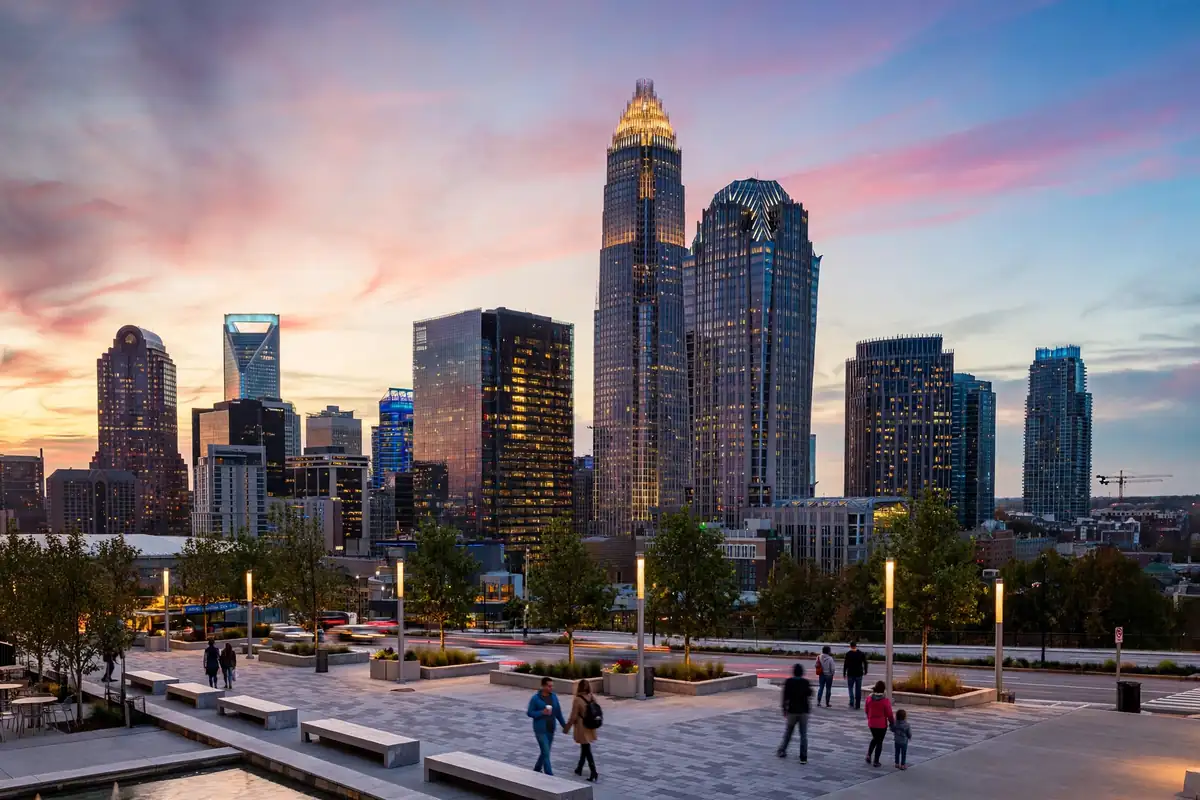
Charlotte is the Queen City, and it earns the nickname twice over: it is named for Queen Charlotte of Mecklenburg-Strelitz, and it is the largest city in the Carolinas, a banking capital with a skyline of glass towers, a racing heritage no other American city can match, and a food scene that takes Carolina barbecue very seriously. This guide covers the 20 best things to do in Charlotte, North Carolina, with honest 2026 prices and the traps outdated guides still fall into. Use the 3-day itinerary to plan your days, the where to stay section to pick a base, and the how to get around notes to ride the light rail like a local — then finish with the three foods every visitor should taste and the free sights that cost nothing at all.
Charlotte sits in the Piedmont of North Carolina, about halfway between the Blue Ridge Mountains and the Atlantic coast, and it is one of the fastest-growing big cities in the United States, with around 945,000 residents in the city itself and nearly 3 million across the metro area. The city was founded in 1768 and named for the queen consort of King George III; during the Revolutionary War, British General Cornwallis called it a “hornet’s nest of rebellion”, and the hornet is still on the city seal and the name of its NBA team. Today Charlotte is the second-largest banking centre in the United States after New York, home to Bank of America headquarters, and the hub of American stock-car racing, with most NASCAR teams based within an hour of Uptown. Read about Charlotte on Wikipedia before you go, then plan on three days: one for Uptown, one for racing and the outdoors, and one for the neighbourhoods.
Charlotte at a glance
| Attraction | What it is | Adult price in 2026 | Where |
|---|---|---|---|
| NASCAR Hall of Fame | Stock-car racing museum and shrine | $27 online, $29 at the door | Uptown, 400 E Martin Luther King Jr Blvd |
| U.S. National Whitewater Center | Man-made whitewater river and outdoor park | Free entry; parking $13; All Access day pass from about $79 | West Charlotte, Catawba River |
| Discovery Place Science | Hands-on science museum with IMAX dome | $23.95 online, $28.95 walk-up | Uptown, 301 N Tryon St |
| Carowinds | Theme park with Fury 325 and Carolina Harbor | From $45 online, $80 at the gate | South Charlotte, on the SC state line |
| Charlotte Motor Speedway | NASCAR’s home track, Coca-Cola 600 | Race tickets vary; tours from about $25 | Concord, about 25 min northeast |
| Mint Museum | North Carolina’s first art museum, two sites | $15, under 18 free | Uptown and Randolph Road |
| Billy Graham Library | Free museum at the evangelist’s childhood home | Free | Southwest Charlotte, 4330 Westmont Dr |
| Sullenberger Aviation Museum | Home of the Miracle on the Hudson plane | $24 | By the airport, 4108 Minuteman Way |
| Freedom Park | 98-acre city park with a lake and trails | Free | Dilworth and Myers Park |
| Daniel Stowe Conservancy | Botanical garden and conservatory | $18.95 plus tax | Belmont, about 25 min southwest |
The 20 best things to do in Charlotte, North Carolina
1. NASCAR Hall of Fame
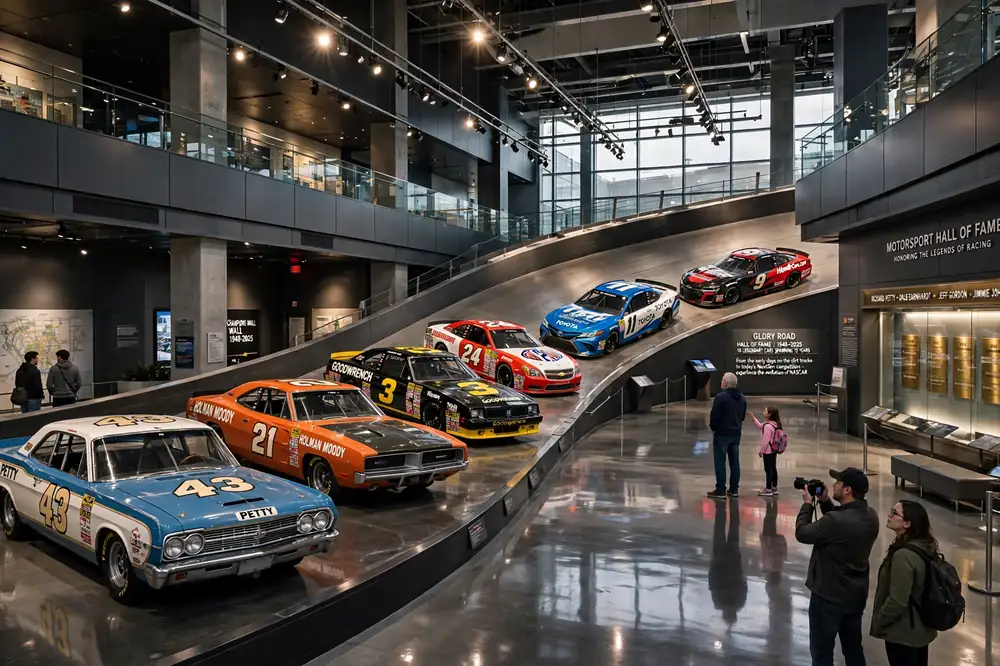
The NASCAR Hall of Fame is the single most Charlotte attraction in the city, and it belongs at the top of any visit. Charlotte is the capital of stock-car racing: most NASCAR teams are based in the Charlotte area, the sport grew out of the moonshine-running back roads of the Carolinas, and this Uptown museum, opened in 2010, tells that whole story in a 150,000-square-foot building shaped like a banked racetrack. Inside you will find Glory Road, a banked ramp lined with 18 historic race cars, the Hall of Honor with the inductees’ plaques, hands-on pit-crew challenges, and racing simulators that let you feel what 200 mph does to your arms. Read about the NASCAR Hall of Fame on Wikipedia before you go, then allow at least two hours, because the simulators and the interactive exhibits eat time fast.
The practical facts for 2026: this is the first trap in this guide — older guides still quote the old $19.95 admission, but general admission is now $27 for adults when you buy online and $29 at the door, with seniors at $24 and youth ages 4 to 12 at $20, all prices including tax. Buying online also saves $2 per ticket. The simulators are not included in basic admission; the High Octane combo packages run from $38 to $51 and add the simulators, a lanyard and, at the top tier, cafe and shop vouchers. The Hall is closed on Tuesdays. Fresh for 2026, the signature Glory Road exhibit is in its sixth edition, Glory Road: Owners, and the Class of 2026 — Kurt Busch, Harry Gant and Ray Hendrick — was inducted on January 23, 2026. The Hall sits at 400 East Martin Luther King Jr. Boulevard, a short walk from the LYNX Blue Line’s 3rd Street station.
2. U.S. National Whitewater Center
The U.S. National Whitewater Center is the most surprising thing about Charlotte: a 1,300-acre outdoor adventure park built around the world’s largest man-made recirculating whitewater river, sitting on the Catawba River on the city’s western edge, about 20 minutes from Uptown. It is an official U.S. Olympic training site for whitewater slalom, and it packs in rafting, kayaking, stand-up paddleboarding, zip lines, a ropes course, rock climbing, deep-water solo climbing, mountain biking on more than 40 miles of trails, and a treetop adventure course for kids. In the evenings the River Jam concert series turns the riverside lawn into Charlotte’s best free outdoor show. Read about the U.S. National Whitewater Center on Wikipedia before you go, and plan on a full half-day at least.
The practical facts for 2026: entry to the property is free — you only pay for what you do, which is the part most guides get wrong. The price that has moved is parking: it is now $13 per vehicle for the day, up from $6 in older guides and $12 more recently, with an annual parking pass at $47. The All Access day pass, which covers rafting, zip lines, climbing and the rest, runs from about $79 per person ($69 for ages 9 and under), and a single rafting run is about $59. Trails are free to hike and bike, and the winter season brings Winter at Whitewater from mid-November to mid-February, with an outdoor ice rink, a lighted winter trail and night zip lines. One honest note: the whitewater channels are recirculating and the water is cold and powerful, so first-timers should take the guided raft trip rather than renting a kayak on their own.

3. Discovery Place Science
Discovery Place Science is Uptown’s hands-on science museum, and it is the best rainy-day stop in Charlotte, especially with kids. The museum fills three floors with interactive exhibits, live science demonstrations, an indoor rainforest, aquariums, and a planetarium, and the IMAX Dome Theatre shows nature films on a screen that wraps over your head. It sits on North Tryon Street in the heart of Uptown, a five-minute walk from the NASCAR Hall of Fame, which makes it an easy second stop on the same day. Read about Discovery Place on Wikipedia before you go, and check the daily schedule when you arrive, because the live science shows are the highlight and they run at set times.
The practical facts for 2026: general admission bought online is $23.95 for adults ages 14 to 59, $18.95 for children ages 2 to 13 and $20.95 for seniors 60 and over, while walk-up tickets cost about $5 more across the board — so book online. Children under 2 are free, and people receiving WIC or EBT benefits in North or South Carolina can get $3 tickets through the Welcome program. IMAX films and planetarium shows are separate add-ons. The museum turned 45 in 2026, and it celebrated the anniversary with a 45-percent-off admission day on October 31, 2026. One honest note: Discovery Place Science is often confused with Discovery Place Nature, the old nature museum in Freedom Park. That museum was demolished in 2024 and is being rebuilt as the Charlotte Museum of Nature — it is not open yet, so do not plan a visit around it; see the Freedom Park section below for the full story.
4. Carowinds
Carowinds is the region’s big theme park, and it is the reason many families plan a Charlotte trip at all. The park opened in 1973 on 407 acres straddling the North Carolina–South Carolina state line, and the border is painted across the main entrance, so you can stand in two states at once. The headline ride is Fury 325, a 325-foot giga coaster that hits 95 mph and is consistently ranked among the best steel coasters in the world, backed by Copperhead Strike, Afterburn, the Intimidator and 13 coasters in total, plus the Camp Snoopy kids’ area and the Carolina Harbor water park in summer. Read about Carowinds on Wikipedia before you go, and arrive at opening, because the Fury 325 queue grows fast on summer weekends.
The practical facts for 2026: a one-day ticket starts from $45 online, while the gate price is $80, so buying online saves up to $35 — but note that online tickets add up to a $9.99 processing fee plus tax. Children 2 and under are free, and a 2027 Silver Pass costs $79 with free parking. The park runs SCarowinds on select nights from September 11 to November 1, 2026, when the haunted mazes need a separate Haunted Attractions Pass from $10, and WinterFest runs select dates from November 27, 2026 to January 3, 2027. One rule to know before you go: children 15 and younger must be accompanied by a chaperone aged 21 or over to enter or stay in the park after 4 p.m. Carowinds sits beside Interstate 77 at the southern edge of the city, about 20 minutes from Uptown, and parking is not included in the ticket.
5. Charlotte Motor Speedway
Charlotte Motor Speedway is not actually in Charlotte — it sits in Concord, about 25 minutes northeast of Uptown — but it is the track that made the region the capital of stock-car racing, and no racing fan should skip it. The 1.5-mile quad-oval opened in 1960 and hosts the Coca-Cola 600, NASCAR’s longest race at 600 miles, every Memorial Day weekend, along with a second Cup Series weekend in the fall. Between races you can take a track tour, stand on the start-finish line, and visit the zMAX Dragway and the dirt track on the same sprawling property. Read about Charlotte Motor Speedway on Wikipedia before you go, and if you are visiting on a race weekend, book months ahead, because hotels across the metro area sell out.
The practical facts for 2026: the 67th Coca-Cola 600 ran on Sunday, May 24, 2026, with a special America250 patriotic celebration for the country’s 250th birthday, and the fall Cup race returned to the oval on Sunday, October 11, 2026 as the Bank of America 400. That is the trap for 2026 guides: the fall race ran on the ROVAL road course from 2018 to 2025, so older guides that tell you to watch the playoff race on the road course are out of date — both 2026 Cup weekends were oval races, with the ROVAL still used for the Xfinity and Truck series races on October 9 and 10. In the holiday season the speedway becomes Speedway Christmas, a drive-through light show that ran from November 20, 2026 to January 3, 2027, with a Christmas Village in the infield on Thursday to Sunday nights. Track tours run on non-race days and cost from about $25.
6. Mint Museum Uptown and Randolph
The Mint Museum is North Carolina’s first art museum, and your one ticket covers two very different buildings. Mint Museum Uptown, at the Levine Center for the Arts on South Tryon Street, shows contemporary art, craft and design in a sleek modern building, while Mint Museum Randolph, in the Eastover neighbourhood, occupies the 1836 building that was once a branch of the United States Mint — the building was literally moved brick by brick to its current site — and holds the collections of American art, European art, African art and art of the ancient Americas. The Randolph building turned 90 in October 2026, and its autumn exhibition, Brilliant by Design: The Handbags of Judith Leiber, runs from October 24, 2026 through July 3, 2027. Read about the Mint Museum on Wikipedia before you go, and pick one site per visit unless you have a full afternoon.
The practical facts for 2026: general admission is $15 for adults, $10 for college students, teachers and seniors 65 and over, and free for everyone 18 and under, and one ticket covers both locations for two consecutive days. The smart move is Wednesday Night Live: every Wednesday from 5 to 9 p.m. both Mint locations are free, along with the Bechtler and the Gantt Center next door, with live performances and films at one of the museums each week. Both sites are closed on Mondays. Randolph has free parking in the lot in front of the building, while Uptown visitors use the Levine Center garage. One honest note: the two sites are about 15 minutes apart by car, so do not try to walk between them.
7. Billy Graham Library
The Billy Graham Library is one of the most visited attractions in Charlotte, and it is completely free. The library sits on the grounds of the Charlotte farm where the evangelist Billy Graham grew up, in a barn-shaped building that recreates his childhood home, and its Journey of Faith tour walks visitors through his life and global ministry with films, photographs and memorabilia. The grounds are landscaped with gardens, a dairy barn and a bookstore, and the whole visit feels more like a peaceful park than a museum. Read about the Billy Graham Library on Wikipedia before you go, and allow two hours for the tour and the gardens.
The practical facts for 2026: admission is free, and the library reopened on February 2, 2026 after a scheduled winter closure for maintenance and technical upgrades, with a new permanent section about Graham’s statue now on display in the United States Capitol and a special exhibit, The Calling of an Evangelist, marking the 40th anniversary of his 1986 Amsterdam conference. That is the trap in older guides: many still list the library as closed for renovation or give the old hours, but it is open and running its full calendar again, including Easter at the Library and the popular Christmas at the Library season in December. The library is in southwest Charlotte at 4330 Westmont Drive, about 20 minutes from Uptown, and it is closed on Sundays. Since opening in 2007 it has welcomed more than 2.1 million visitors.
8. Sullenberger Aviation Museum
The Sullenberger Aviation Museum is Charlotte’s aviation museum, and its centrepiece is one of the most famous aeroplanes in the world: the US Airways Airbus A320, flight 1549, that Captain Chesley “Sully” Sullenberger landed on the Hudson River in New York on January 15, 2009, saving all 155 people on board. The plane itself sits in the main hangar, remarkably intact, surrounded by exhibits on the history of aviation in the Carolinas, from the Wright brothers’ first flight at Kitty Hawk to the growth of Charlotte Douglas International Airport. The museum sits right beside the airport runways, so you can watch planes landing and taking off while you are there. Read about the Sullenberger Aviation Museum on Wikipedia before you go, and bring the kids — the flight simulators and the hands-on exhibits are built for them.
The practical facts for 2026: the museum reopened on June 1, 2024 after a $34 million rebuild and a rename — older guides still call it the Carolinas Aviation Museum, which is the old name, so do not be confused if a search result uses it. Admission is $24 for adults, $18 for students ages 5 to 17, and $20 for seniors, military and educators, with children under 5 free; several sources quote $25.50 at the door once tax is added, so buy online if you want the exact price. The museum is open Tuesday to Saturday from 10 a.m. to 4:30 p.m. and Sunday from noon to 4:30 p.m., and it is closed on Mondays. It sits at 4108 Minuteman Way, on the airport grounds, and parking is free. Allow 90 minutes to two hours.
9. Freedom Park
Freedom Park is Charlotte’s best-loved city park, and it is the place locals go when they want to feel like they are not in a banking city at all. The 98-acre park sits between the historic Dilworth and Myers Park neighbourhoods, about three miles from Uptown, with a seven-acre lake, walking and biking paths, playgrounds, sports fields, a band shell that hosts free concerts in summer, and the Little Sugar Creek Greenway running through it. It is free, it is open from dawn to dusk, and on a sunny weekend it fills with picnics, joggers, dog walkers and pickup soccer games. Read about Freedom Park on Wikipedia before you go, and come in the morning, when the light on the lake is at its best and the paths are quiet.
The practical facts for 2026: here is the biggest trap in this whole guide. Many 2025 and early-2026 guides tell you to visit the nature museum in Freedom Park, or promise that the brand-new Charlotte Museum of Nature will open in summer 2026. Neither is true. The old Discovery Place Nature museum was demolished in early 2024, and the new $65 million Charlotte Museum of Nature rising on the same site has been hit by funding problems — as of November 2026, Mecklenburg County commissioners had only just approved a $13.7 million rescue deal to cover the remaining gap, and no firm opening date has been announced. The park itself is fully open and wonderful, but the museum is not. Do not plan a visit around it, and do not trust any guide that lists it as an open attraction.
10. Romare Bearden Park
Romare Bearden Park is Uptown’s front lawn, and it is the single best free viewpoint in the city. The 5.4-acre park sits at the corner of Church Street and Martin Luther King Jr. Boulevard, right beside the Truist Field baseball stadium and the NASCAR Hall of Fame, with a waterfall, gardens, a children’s play area and a great lawn that looks straight up at the Uptown towers. It is named for Romare Bearden, the Charlotte-born artist whose collages of Black American life hang in museums around the world, and the park’s design borrows from his work, with mosaic walls and art installations throughout. Read about Romare Bearden on Wikipedia before you go, then come at sunset, when the towers catch the last light and the park fills with people.
The practical facts for 2026: the park is free and open daily, and it is at its liveliest on game days, when Charlotte Knights fans spill out of Truist Field next door, and during the summer concert and movie series on the lawn. It is also the natural meeting point for a walk through Uptown: from here you can reach the Levine Center for the Arts in five minutes, the Mint, Bechtler and Gantt museums in one cluster, and the LYNX Blue Line’s 3rd Street station in two. One honest note: the park has no shade in the middle of the lawn, so on a July afternoon it is brutally hot — come early or late, or duck into the Bechtler for the air conditioning and the $10 modern art collection next door.
11. Bank of America Stadium
Bank of America Stadium is the home of the Carolina Panthers of the NFL and Charlotte FC of Major League Soccer, and on a game day it is the loudest place in North Carolina. The open-air stadium opened in 1996 in Uptown, seats more than 74,000 fans, and its bowl is designed so that even the upper deck feels close to the field. Panthers games run from September to January, Charlotte FC plays from February to October, and the stadium also hosts big concerts and college football games through the year. Read about Bank of America Stadium on Wikipedia before you go, and if you are not going to a game, walk past it anyway — the statues of panthers outside the gates are a classic photo stop.
The practical facts for 2026: ticket prices vary wildly by opponent and seat, but the honest budget for a casual fan is about $50 to $100 for an upper-deck seat bought in advance, with prices climbing sharply for rivalry games. The smart move for visitors is a Charlotte FC match, which is usually cheaper and easier to get into than a Panthers game, and the atmosphere is just as loud. Getting there is easy: the LYNX Blue Line stops at the Stonewall station a short walk away, and driving on game day means expensive event parking and long delays. One honest note: the stadium is cashless, so bring a card. Charlotte FC joined MLS in 2022 and set an MLS attendance record of 74,479 at its first home match, a record that still stands.
12. Spectrum Center
Spectrum Center is Uptown’s indoor arena, home of the Charlotte Hornets of the NBA and the city’s main stop for big touring concerts, and in 2026 it is effectively a brand-new building. The arena opened in 2005 as the Charlotte Bobcats Arena, and after twenty years it has just come through a two-phase, $245 million renovation that added 1,400 new lower-level seats, rebuilt the concourses with better sightlines, upgraded the food and added a dedicated light-rail entrance at the CTC/Arena station. The arena reopened in October 2025 with six concerts in eight nights — Billie Eilish twice, Stevie Nicks, Tate McRae, Lainey Wilson and NBA YoungBoy — followed by the Hornets’ 2025–26 home opener. Read about Spectrum Center on Wikipedia before you go, and check the calendar before you plan, because the arena hosts something almost every week.
The practical facts for 2026: Hornets tickets start from about $15 to $25 for upper-deck seats bought early, and the 2025–26 season was the first in the renovated building, so older guides that describe the old concourses and the old food are out of date. The arena was even named a finalist for the Sports Business Journal’s 2026 Sports Facility of the Year award. One rule to know: as of the 2025–26 season, bags may be no larger than 5 by 7 by 1.5 inches, clear or not, so leave the backpack at the hotel. The arena sits at 333 East Trade Street, and the LYNX Blue Line stops at CTC/Arena station right outside the doors. The Hornets’ name honours Charlotte’s Revolutionary War nickname, the Hornet’s Nest, and the team’s colours are the same teal and purple the city wore in the 1990s.
13. South End and the Rail Trail
South End is the neighbourhood that shows you what Charlotte is becoming, and it is the best place in the city to spend an evening without a plan. Ten years ago it was warehouses and rail yards; today it is Charlotte’s densest cluster of breweries, restaurants, murals and apartments, all strung along the Rail Trail, a 3.5-mile paved greenway that follows the LYNX Blue Line from Uptown to the Atherton Mill area. Walk it on a Friday evening and you will pass food halls, rooftop bars, street art, a farmers’ market and dozens of people with dogs and strollers. Read about South End on Wikipedia before you go, and start at the Bland Street station, which drops you in the middle of the action.
The practical facts for 2026: the Rail Trail is free and open 24 hours, and the best way to explore it is on foot or by light rail, hopping on and off at the East/West Boulevard, Bland Street and New Bern stations. The neighbourhood’s brewery count is now over a dozen, with big names like the Olde Mecklenburg Brewery, Charlotte’s oldest craft brewery, and the newer taprooms along Camden Road. One honest note: South End is also the neighbourhood where Charlotte’s history gets erased fastest. The legendary Price’s Chicken Coop, the cash-only fried chicken institution on Camden Road, closed for good in June 2021 after 59 years, and older guides still list it as a must-visit. It is gone. Eat at Midwood Smokehouse or Brooks’ Sandwich Shop instead, and save the nostalgia for the photographs on the walls.
14. NoDa — the North Davidson arts district
NoDa, short for North Davidson, is Charlotte’s arts district, and it is the most fun neighbourhood to wander in the city. The old mill district north of Uptown is painted with murals, lined with galleries, record shops, vintage stores and coffee houses, and anchored by the Neighborhood Theatre and the Evening Muse, two of the city’s best small live-music venues. On the first Friday of each month the galleries stay open late for the NoDa gallery crawl, and on weekends the streets fill with people browsing the shops and eating at the neighbourhood’s eclectic restaurants. Read about NoDa on Wikipedia before you go, and take the LYNX Blue Line to the 36th Street station, which drops you right in the middle of it.
The practical facts for 2026: NoDa is free to wander, and the best time to visit is a Friday or Saturday evening, when the galleries, bars and music venues are all open at once. The neighbourhood’s food is as eclectic as its art — expect everything from wood-fired pizza to Vietnamese banh mi within a few blocks — and the craft beer scene is strong, with NoDa Brewing Company, one of the city’s first craft breweries, still pouring a few blocks from the station. One honest note: NoDa is small, about ten walkable blocks, so it pairs well with a morning in Uptown rather than filling a whole day on its own. Parking is street parking and it fills up fast on weekend evenings, so the light rail is the better choice.
15. Camp North End
Camp North End is Charlotte’s most creative redevelopment, and it is the best place in the city for an afternoon of browsing without an agenda. The 76-acre former industrial complex — once a Ford Model T factory and later a munitions plant — is now a village of restored warehouses filled with food stalls, breweries, shops, art studios and offices, all connected by outdoor courtyards, string lights and murals. The Boileryard food hall is the heart of it, with a rotating cast of local vendors, and the whole complex hosts markets, live music and festivals through the year. Read about Camp North End on Wikipedia before you go, and come hungry, because the food hall alone can fill an afternoon.
The practical facts for 2026: Camp North End is free to enter and wander, and it sits just northwest of Uptown at 300 Camp Road, about a ten-minute drive from the city centre or a short ride on the LYNX Blue Line to the 9th Street station plus a walk. The best time to visit is a weekend afternoon, when the food hall, the shops and the outdoor bars are all open, and the complex hosts a farmers’ market and live music. One honest note: Camp North End is still growing, and some of the buildings are offices rather than attractions, so follow the signs to the Boileryard and the retail courtyards rather than wandering the whole site. Parking is free in the on-site lots, which is rare this close to Uptown.
16. Charlotte Museum of History
The Charlotte Museum of History is the place to go if you want to understand how a small trading town became a banking capital, and it holds the oldest surviving house in Mecklenburg County. The museum sits on 8 acres in east Charlotte, and its centrepiece is the Hezekiah Alexander House, a stone house built around 1774 by one of the men who signed the Mecklenburg Declaration of Independence, furnished as it would have been in the Revolutionary era. The museum’s galleries cover Charlotte’s history from its Native American roots through the gold rush — Charlotte was the site of America’s first gold rush, in 1799, decades before California — to the textile mills and the banking boom. Read about the Charlotte Museum of History on Wikipedia before you go, and take the guided house tour, because the house only opens with a guide.
The practical facts for 2026: general admission is about $12 for adults, with the house tour included, and the museum is open Tuesday to Saturday. It also participates in the free Wednesday evening museum program with the Uptown museums on some weeks, so check the calendar. Here is the trap to know: many guides still send visitors to the Levine Museum of the New South as Charlotte’s history museum, but the Levine Museum closed its interim Uptown space in May 2025 and has no gallery to visit. Its new permanent home at 1800 South Boulevard in South End is not expected to be complete until the early 2030s. Until then, the Charlotte Museum of History is the place for Charlotte’s story, and the Levine Museum runs only travelling exhibits and community programmes around the city.
17. Daniel Stowe Conservancy
The Daniel Stowe Conservancy, the garden most guides still call the Daniel Stowe Botanical Garden, is the best day trip from Charlotte for anyone who likes gardens. The 380-acre site in Belmont, about 25 minutes southwest of the city, holds a 12,000-square-foot glass conservatory, a Lost Hollow children’s adventure trail that opened in spring 2025, miles of woodland trails, and seasonal displays that change through the year — orchids in winter, tulips in spring, and more than a million lights at the Holidays at the Garden event in December. Read about the Daniel Stowe Botanical Garden on Wikipedia before you go, and allow two to three hours, because the grounds are bigger than they look.
The practical facts for 2026: the garden formally dropped “Botanical Garden” from its name in April 2025 and is now the Daniel Stowe Conservancy, so older guides that use the old name are talking about the same place. General admission is $18.95 for adults plus tax, $16.95 for seniors 60 and over, and $10.95 for children ages 2 to 12, with the trails, dog park and store free. The garden is open daily from 9 a.m. to 5 p.m., with last entry at 4 p.m., and it is closed on Tuesdays from January to March. Holidays at the Garden runs on select dates from November 28 to December 30, 2026, from 5 to 10 p.m., with tickets from $24 to $33 depending on the night. One honest note: the garden is in Belmont, not Charlotte, so you need a car or a rideshare — there is no public transit.
18. Crowders Mountain State Park
Crowders Mountain State Park is the best hike within half an hour of Charlotte, and it is the view that surprises first-time visitors most. The park’s two peaks, Crowders Mountain at 1,625 feet and the Pinnacle at 1,705 feet, rise suddenly out of the Piedmont flatlands, and from the summit you can see the Charlotte skyline on a clear day, about 25 miles to the east. The trails range from an easy lakeside walk to a steep, rocky climb to the summit, and the park is also one of the best rock-climbing spots in the region. Read about Crowders Mountain State Park on Wikipedia before you go, and bring water and proper shoes, because the summit trail is steeper than it looks.
The practical facts for 2026: entry to the park is free, and parking is free too, which makes this one of the best free days out in the Charlotte area. The park is open daily from 8 a.m. to 6 p.m. in winter and until 9 p.m. in summer, and the gates close at the posted time, so do not start the summit trail late in the afternoon. The most popular hike is the Crowders Mountain summit trail, about 2 miles round trip and moderately strenuous, while the Ridgeline Trail connects Crowders to Kings Mountain across the state line for a longer day. One honest note: the main parking lot fills up by mid-morning on spring and fall weekends, so arrive before 9 a.m. or use the Linwood Road access point, which is usually quieter.
19. Lake Norman
Lake Norman is the largest man-made lake in North Carolina, and it is where Charlotte goes to escape the city on a hot day. The 32,000-acre lake sits about 30 minutes north of Uptown, with more than 500 miles of shoreline, marinas, lakeside restaurants, boat rentals and public parks with swimming beaches. Ramsey Creek Park, on the lake’s southeastern shore, is the easiest public access point, with a beach, picnic areas, boat ramps and a playground. Read about Lake Norman on Wikipedia before you go, and if you want to be on the water, book a pontoon rental in advance for summer weekends, because they sell out.
The practical facts for 2026: the lake itself is free to visit, and Ramsey Creek Park charges a small parking fee on summer weekends. The lake was created in the early 1960s when Duke Energy dammed the Catawba River for a hydroelectric plant, and it is named for Norman Atwater Cocke, a former president of Duke Power. The lakeside towns of Cornelius, Davidson and Mooresville each have their own character — Davidson is a college town with a walkable main street, Mooresville is known as Race City USA for its NASCAR teams — and all three are worth a stop. One honest note: Lake Norman is a reservoir, not a natural lake, so the water level can drop in dry summers and some boat ramps close. Check conditions before you drive up.
20. CLT Airport Overlook
The CLT Airport Overlook is the most Charlotte free attraction of all: a free public park beside the runway where you can watch planes land and take off at one of the busiest airports in the world. Charlotte Douglas International Airport is an American Airlines hub and the sixth-busiest airport in the United States by passenger traffic, with more than 58 million travellers in 2024, so the traffic is constant — a plane lands or takes off about every minute at peak times. The overlook has picnic tables, a playground, and a direct view of the runways, and it is a favourite with families, plane spotters and locals killing time before a flight. Read about Charlotte Douglas International Airport on Wikipedia before you go, and come at sunset, when the light on the planes is at its best.
The practical facts for 2026: the overlook is free, it is open daily from 8 a.m. to 10 p.m., and it sits at 5500 Airport Overlook Drive, about ten minutes from Uptown. The airport itself is worth a note too: its $608 million Terminal Lobby Expansion, the largest passenger project in the airport’s history, was completed in September 2025, adding 175,000 square feet of new space, consolidating security from five checkpoints to three, and bringing back the statue of Queen Charlotte as the centrepiece of the new lobby. Older guides that warn about years of construction at CLT are out of date — the work is done. One honest note: the overlook has no food or drink, so bring your own, and it can be windy and loud, which is exactly the point.
Charlotte in 3 days — a ready-made itinerary
| Day | Theme | Highlights |
|---|---|---|
| Day 1 | Uptown Charlotte | NASCAR Hall of Fame, Discovery Place Science, Mint Museum Uptown, Romare Bearden Park at sunset, dinner in South End |
| Day 2 | Racing and the outdoors | Charlotte Motor Speedway tour, Sullenberger Aviation Museum, U.S. National Whitewater Center, evening at the River Jam concert |
| Day 3 | Neighbourhoods and nature | Freedom Park, Charlotte Museum of History, NoDa and Camp North End, Daniel Stowe Conservancy or Crowders Mountain |
Day 1 — Uptown Charlotte
Start at the NASCAR Hall of Fame when it opens at 10 a.m., and give it two full hours, including the simulators. Walk five minutes to Discovery Place Science for the late morning, and catch a live science show if the timing works. After lunch on Tryon Street, spend the afternoon at the Levine Center for the Arts — the Mint Museum Uptown and the Bechtler are side by side, and the Gantt Center is a minute away. Finish the day in Romare Bearden Park at sunset, with the towers lighting up around you, then take the LYNX Blue Line two stops south to South End for dinner and a walk along the Rail Trail. If it is a Wednesday, reverse the afternoon: the three Uptown museums are free from 5 to 9 p.m., so save them for the evening and spend the afternoon in Fourth Ward, Uptown’s historic residential neighbourhood, instead.
Day 2 — Racing and the outdoors
Drive northeast to Charlotte Motor Speedway in Concord for a morning track tour, then head back toward the airport for the Sullenberger Aviation Museum and the Miracle on the Hudson plane. After lunch, drive west to the U.S. National Whitewater Center for the afternoon — book the All Access pass in advance on summer weekends, and plan on rafting first, then the zip lines and the climbing wall. Stay into the evening if a River Jam concert is on, because the riverside lawn at sunset is one of the best free experiences in the city. If you are visiting on a race weekend, flip this day entirely: the speedway is the whole day, and the Whitewater Center moves to the morning of Day 3.
Day 3 — Neighbourhoods and nature
Start the morning in Freedom Park, walking the lake loop and the Little Sugar Creek Greenway, then visit the Charlotte Museum of History in the late morning for the Hezekiah Alexander House tour. After lunch, spend the afternoon in the neighbourhoods: NoDa for galleries, murals and coffee, then Camp North End for the food hall and the shops. If you have a car and the weather is good, swap the afternoon for a half-day at Crowders Mountain or the Daniel Stowe Conservancy instead, and finish with dinner in Plaza Midwood, the city’s most eclectic dining neighbourhood, on Central Avenue. If it is a game day, end the trip at Truist Field for a Charlotte Knights baseball game — tickets start from about $12, and the skyline view from the outfield is one of the best in minor league baseball.
Best time to visit Charlotte
Charlotte has a humid subtropical climate, which means hot summers, mild winters and two genuinely lovely shoulder seasons. Spring and fall are the sweet spot: April and May bring warm days in the 70s, blooming dogwoods and azaleas, and the start of the outdoor season at the Whitewater Center and Carowinds, while September and October bring cooler evenings, fall colour in the parks and the SCarowinds Halloween season. Summer, from June to August, is hot and humid, with highs in the high 80s and low 90s and regular afternoon thunderstorms — the parks and the lake are at their best, but you will want air conditioning and water by mid-afternoon. Winter, from December to February, is mild by northern standards, with highs in the 50s and occasional cold snaps, and it is the cheapest time to visit, with hotel rates at their lowest.
| Season | Weather | What to expect |
|---|---|---|
| Spring (Mar–May) | 60–80°F, warm days, cool nights | Best all-round weather; dogwoods and azaleas bloom; outdoor season opens |
| Summer (Jun–Aug) | 85–92°F, humid, afternoon storms | Carowinds and the lake at their best; hottest and most crowded |
| Fall (Sep–Nov) | 60–78°F, cooling evenings | Fall colour; SCarowinds; best weather for hiking Crowders Mountain |
| Winter (Dec–Feb) | 45–58°F, mild, occasional cold snaps | Cheapest hotels; holiday lights and parades; Speedway Christmas |
The holiday season deserves a special note, because Charlotte does Christmas well. The 80th Novant Health Thanksgiving Eve Parade marched down Tryon Street on Wednesday, November 25, 2026, the Charlotte Christmas Village ran in Uptown from November 20, 2026 to January 3, 2027, with a European-style market and an ice rink, and Carowinds WinterFest and Speedway Christmas both ran through the same window. If you visit in December, book hotels early, because the holiday weekends fill up. One warning for summer visitors: Charlotte sits in the path of tropical systems, and while the city is inland, the remnants of hurricanes can bring days of heavy rain in August and September, so check the forecast before a long outdoor day.
Where to stay in Charlotte
Uptown is the best base for first-time visitors, because the museums, the stadiums and the LYNX Blue Line are all within walking distance, and the hotels range from the grand to the practical. South End suits younger travellers and anyone who wants nightlife, breweries and the Rail Trail outside the door, while the Dilworth and Myers Park neighbourhoods suit families who want quiet streets and the park. If you are visiting for a race, stay near the speedway in Concord, because Uptown hotels triple in price on race weekends. The airport area is the budget option, with reliable chain hotels and a ten-minute drive to Uptown.
| Area | Best for | Price range per night |
|---|---|---|
| Uptown | First-timers, museums, sports, light rail | $180–$350 |
| South End | Nightlife, breweries, younger travellers | $160–$300 |
| Dilworth and Myers Park | Families, quiet streets, Freedom Park | $150–$280 |
| Airport area | Budget stays, early flights | $90–$160 |
| Concord | Race weekends at the speedway | $120–$250, much higher on race weekends |
Hotel prices in Charlotte have risen with the city’s growth, and the mid-range sweet spot is now about $150 to $250 a night for a good Uptown or South End hotel booked a few weeks ahead. The most expensive nights of the year are the Coca-Cola 600 weekend in late May and the fall race weekend in October, when rooms across the metro area can cost two or three times the normal rate. One practical tip: Charlotte’s hotel tax is 8 percent on top of the state sales tax, so the price you see online is not the price you pay — budget about 15 percent more. And if you are driving, check whether parking is included, because Uptown hotels commonly charge $25 to $40 a night for parking, while the airport-area hotels usually include it free.
Getting around Charlotte
Charlotte is a driving city with one strong exception: the LYNX Blue Line light rail, which runs north to south from the I-485 station through South End, Uptown and NoDa to the UNC Charlotte campus. It is the single most useful thing for a visitor, because it connects the airport-free city centre, the museums, the stadiums and the two best nightlife neighbourhoods on one line. The Blue Line runs every 10 to 15 minutes for most of the day, and the ride from one end to the other takes about 45 minutes. The CityLYNX Gold Line streetcar runs east to west through Uptown, connecting the transit centre to the Johnson C. Smith University area, and it is currently free to ride, with a $2.20 fare under discussion as part of the city’s fare overhaul.
A one-way ride on the Blue Line costs $2.20 for adults and $1.10 for seniors 62 and over, people with disabilities and Medicare card holders, while a day pass is $6.60, a weekly pass is $30.80 and a monthly pass is $88. Children 5 and under ride free with an adult. Buy your ticket in the CATS-Pass app or at the vending machine on the platform before you board, because the Blue Line runs on proof of payment — there are no turnstiles, and fare inspectors board the trains. Since October 30, 2026, a team of 60 fare ambassadors has been checking tickets on the Blue Line, and riding without a valid ticket can bring a $50 citation and a Class 3 misdemeanour charge, so do not gamble on it. The app also offers fare capping, so your fares stop adding up at $6.60 a day, $30.90 a week or $88 a month.
For everything the light rail does not reach — the Whitewater Center, the speedway, the gardens, Crowders Mountain, Lake Norman — you need a car or a rideshare. Uber and Lyft both operate across the city, and a ride from Uptown to the Whitewater Center or the speedway costs about $20 to $30. Driving is easy by big-city standards: the interstates are wide, the street grid in Uptown is simple, and parking is plentiful, though Uptown garages charge $10 to $25 for the day. One honest warning: the interstates around Charlotte, especially I-77 and I-485, jam badly at rush hour, so allow extra time if you are driving to a race or a game. There is no train from Charlotte Douglas International Airport to the city centre, so take the Sprinter bus, which runs to Uptown for the standard $2.20 fare, or a rideshare, which costs about $20 to $25 to Uptown.
Charlotte food you have to try
Charlotte’s food scene is one of the best in the Southeast, and it is built on three things: Carolina barbecue, Lowcountry seafood, and the Southern breakfast. The city has more than 200 breweries and restaurants within a few miles of Uptown, and the neighbourhoods each have their own flavour — Plaza Midwood for eclectic dining, South End for modern restaurants and food halls, NoDa for casual cafes and bakeries, and Optimist Hall, the former textile mill turned food hall, for a dozen vendors under one roof. Prices are reasonable by big-city standards: a barbecue plate runs $14 to $20, a proper dinner in Uptown runs $30 to $50 per person, and the food halls keep a full meal under $15.
1. Lexington-style barbecue
Carolina barbecue is a religion in North Carolina, and Charlotte sits on the fault line between the two styles. Eastern Carolina barbecue is whole hog with a thin vinegar sauce, while Lexington-style barbecue, from the Piedmont town of Lexington about an hour northeast, is pork shoulder with a tangy red sauce made from vinegar, ketchup and pepper flakes. Charlotte’s best barbecue is Lexington-style, and the place to eat it is Midwood Smokehouse, in Plaza Midwood, where the brisket and the pulled pork are smoked over North Carolina hickory and the burnt ends sell out on weekends. Read about Lexington-style barbecue on Wikipedia before you go, and order the two-meat plate with hushpuppies and mac and cheese.
The practical facts for 2026: a barbecue plate at Midwood Smokehouse runs about $15 to $20, and the original Plaza Midwood location at 1401 Central Avenue is the one to visit, though there are now branches in SouthPark and Ballantyne. Sweet Lew’s BBQ, near Uptown, is the other name locals give, and Noble Smoke, in the South End, is the newer craft option. One honest note: Charlotte’s most famous barbecue name is gone. Bill Spoon’s Barbecue, a Charlotte institution since 1963, closed in 2021, and the legendary Price’s Chicken Coop closed the same year. If a guide sends you to either one, it is years out of date. And if you drive an hour to Lexington itself, you will find the style’s home turf — but Charlotte’s versions are good enough that you do not need to.

2. Shrimp and grits
Shrimp and grits is the Lowcountry dish that Charlotte has made its own, and it is the single most-ordered dish in the city’s restaurants. The classic version is stone-ground grits, creamy and buttery, topped with shrimp cooked in bacon, garlic and a little lemon, and the best versions in Charlotte come from the city’s Southern restaurants, where the grits are made from local cornmeal and the shrimp come from the Carolina coast. Mert’s Heart and Soul, in Uptown, is the classic choice — a soul food restaurant that has been serving shrimp and grits, fried chicken and collard greens since 1998 — while the newer restaurants in South End and Plaza Midwood do their own takes, some with tasso ham, some with a tomato gravy. Read about shrimp and grits on Wikipedia before you go, and order it for brunch, when it tastes best.
The practical facts for 2026: a plate of shrimp and grits in Charlotte runs about $16 to $24, and it is worth every cent if the grits are stone-ground and the shrimp are fresh. Mert’s Heart and Soul sits at 214 North College Street in Uptown, and it is cash-friendly and famously busy at lunch, so arrive early or be ready to wait. One honest note: shrimp and grits is a breakfast dish in the Lowcountry, but in Charlotte it is served all day, and the brunch version with a fried egg on top is the one to order. If you want the full Southern breakfast, pair it with a biscuit and a glass of sweet tea, and skip the coffee — sweet tea is the drink of the city.
3. Livermush and the Southern breakfast
Livermush is the dish that proves you are in Charlotte and not in any other Southern city. It is a pork liver and cornmeal loaf, sliced and fried until crisp on the outside, and it is a breakfast staple in the western Carolinas, served with eggs, grits and a biscuit. It sounds alarming and tastes wonderful — rich, savoury and deeply satisfying — and the best place to try it is at a local diner or at the farmers’ markets around the city. Brooks’ Sandwich Shop, a tiny walk-up in NoDa, is the cult favourite for a livermush sandwich, while the breakfast spots in Plaza Midwood and South End serve it as part of a full Southern plate. Read about livermush on Wikipedia before you go, and order it with a fried egg and a side of grits.
The practical facts for 2026: a livermush sandwich costs about $5 to $8, and a full Southern breakfast plate runs $12 to $18. Brooks’ Sandwich Shop is cash-only and famously small — there is no seating, just a counter and a line — so go early and eat standing up like a local. One honest note: livermush is not for everyone, and that is fine. If the idea of pork liver puts you off, order the chicken biscuit instead, which is the other Charlotte breakfast classic, and save the livermush for a braver morning. Either way, breakfast is the meal Charlotte does best, and the diners and cafes of Plaza Midwood and NoDa are where to eat it.
Free things to do in Charlotte
Charlotte is a generous city for free things to do, and a whole day can cost nothing but the light rail fare. Romare Bearden Park, Freedom Park and the Rail Trail are all free, and the Little Sugar Creek Greenway offers miles of free walking and biking through the city. The CLT Airport Overlook is free, and so is the Billy Graham Library. On Wednesday evenings from 5 to 9 p.m., the Mint Museum, the Bechtler and the Gantt Center are all free, and the first weekend of every month brings Bank of America’s Museums on Us programme, with free admission to participating museums for Bank of America and Merrill card holders. The U.S. National Whitewater Center is free to enter, with free hiking trails and free River Jam concerts in summer, and the Whitewater Center’s Winter at Whitewater trail is free in the holiday season. The Fourth Ward Park, the city’s oldest park, is free, and the Charlotte Christmas Village and the Thanksgiving Eve Parade are free to watch. Even the light rail is free on the Gold Line streetcar, for now. A free day in Charlotte is not a compromise — it is one of the best days you can have in the city.
Frequently asked questions
Is Charlotte worth visiting?
Yes, and it is worth more than the one-day stop most people give it. Charlotte is the largest city in the Carolinas, with a world-class racing museum, one of the best outdoor adventure parks in the United States, a genuinely good food scene, and a light rail that makes the centre easy to explore without a car. It is not a city of one famous sight, like the Grand Canyon or the Statue of Liberty — it is a city of twenty good ones, and three days is the right amount of time to see them. If you only have one day, do the NASCAR Hall of Fame in the morning, the Whitewater Center in the afternoon, and South End in the evening.
How many days do you need in Charlotte?
Three days is the sweet spot, and it is what this guide’s itinerary is built around. One day covers Uptown, one day covers racing and the outdoors, and one day covers the neighbourhoods and a nature trip. Two days works if you skip Carowinds and the day trips, and one day works if you stick to Uptown and South End. Add a fourth day if you want to do Carowinds properly, because the theme park alone is a full day, or if you want to add Lake Norman or Crowders Mountain. Most visitors who plan two days wish they had planned three.
What is Charlotte most famous for?
Charlotte is most famous for three things: NASCAR, banking and the Queen City name. It is the capital of American stock-car racing, with the NASCAR Hall of Fame, the Charlotte Motor Speedway and most of the sport’s teams in the area. It is the second-largest banking centre in the United States after New York, home to Bank of America’s headquarters, and its skyline is built on finance. And it is the Queen City, named for Queen Charlotte of Mecklenburg-Strelitz, the wife of King George III, which is why the city’s symbols are crowns and why the airport is named for a queen. The city’s other nickname, the Hornet’s Nest, comes from the Revolutionary War, when a British general complained that Charlotte was a hornet’s nest of rebellion.
Is Charlotte walkable?
Uptown Charlotte is walkable, and South End, NoDa and Plaza Midwood are walkable too, but Charlotte as a whole is not. The city is spread out across 300 square miles, and the attractions outside the centre — the Whitewater Center, the speedway, the gardens, Crowders Mountain and Lake Norman — all need a car or a rideshare. The good news is that the LYNX Blue Line light rail connects Uptown, South End, NoDa and the university area on one line, so a visitor staying in Uptown can see the whole centre without driving. Plan on walking in the centre and driving everywhere else, and budget for rideshares if you do not rent a car.
What is the best time of year to visit Charlotte?
April to May and September to October are the best times to visit Charlotte, when the weather is warm, the humidity is low, and the outdoor attractions are at their best. Spring brings blooming dogwoods and the start of the outdoor season, while fall brings cooler evenings, fall colour and the Halloween season at Carowinds. Summer is hot and humid, with afternoon thunderstorms, but it is the best time for the lake and the water park. Winter is mild and cheap, with hotel rates at their lowest, and the holiday season from late November to early January brings the Thanksgiving Eve Parade, the Christmas Village, WinterFest and Speedway Christmas. Avoid the Coca-Cola 600 weekend in late May and the fall race weekend in October unless you are coming for the race, because hotel prices triple.
Do you need a car in Charlotte?
You do not need a car for Uptown, South End and NoDa, because the LYNX Blue Line covers them all, and rideshares are cheap and plentiful. You do need a car, or at least a rideshare budget, for the Whitewater Center, the speedway, the gardens, Crowders Mountain and Lake Norman, because none of them is on the light rail. A good compromise is to stay in Uptown without a car for two days, then rent a car for one day to cover the outdoor attractions and the day trips. If you do rent, book early for race weekends, and remember that Uptown hotel parking typically costs $25 to $40 a night.
Further reading — Wikipedia, Reddit and Quora
If you want to go deeper before your trip, start with the Charlotte page on Wikipedia, which covers the city’s history from its founding in 1768 to its growth into a banking capital, and the NASCAR Hall of Fame page on Wikipedia and the U.S. National Whitewater Center page on Wikipedia, which cover the two attractions that define a Charlotte visit. For local voices, the Charlotte community on Reddit is the city’s main online forum, where residents and visitors share news, events and recommendations, including a long-running list of things to do in Charlotte. And the Quora thread on the best things to do in Charlotte has honest answers from people who live there, including free and low-key suggestions that the guidebooks miss.
Your Charlotte trip, in one paragraph
Three days in Charlotte gives you a racing shrine, a whitewater river, a world-class coaster, a skyline of glass towers and a plate of barbecue, and it is a trip that works for families, couples and solo travellers alike. If you have already read our guides to Chicago, Nashville, Los Angeles, Orlando, Miami, San Diego, Denver, Savannah, Dallas, Charleston, San Francisco, Myrtle Beach, Las Vegas, San Antonio, London, Portland, Pigeon Forge, Puerto Rico, Atlanta, Phoenix, Paris, Maui, Key West, Colorado Springs, Sedona, Chattanooga, Palm Springs, St Louis, Tokyo, Japan, Kansas City, Tennessee, Branson, Florida, Amsterdam, Montreal, Honolulu, Fort Lauderdale, Toronto and Aruba, you will recognise the pattern: arrive curious, check the prices before you go, and trust the local advice over the outdated guide. Charlotte rewards the visitor who looks past the banking towers to the racing heritage, the neighbourhoods and the food — and after three days here, you will understand why the Queen City keeps growing, and why the people who move here rarely leave.

About the Author