Things to Do in San Diego
20 Best Attractions, a 3-Day Itinerary, Where to Stay, and the Food You Cannot Miss
Quick Info
Best for: Zoo and Balboa Park lovers, beach days, families and first-time visitors — world-class museums, sea cliffs, Mexican food and 70 miles of coastline in one sunny city
Best time: March–May and September–October for warm, dry days and smaller crowds; June–August for beach weather, with the marine layer (“June Gloom”) in the mornings
How long: 3 full days for the highlights; 5 days if you add the Safari Park, LEGOLAND and a North County coast day
Budget: Roughly $180–$320 per person per day for a mid-range trip; Balboa Park’s gardens, the beaches and the Gaslamp streets are free
Don’t miss: The San Diego Zoo, La Jolla Cove’s sea lions, the USS Midway, a sunset at Sunset Cliffs and a fish taco in Ocean Beach
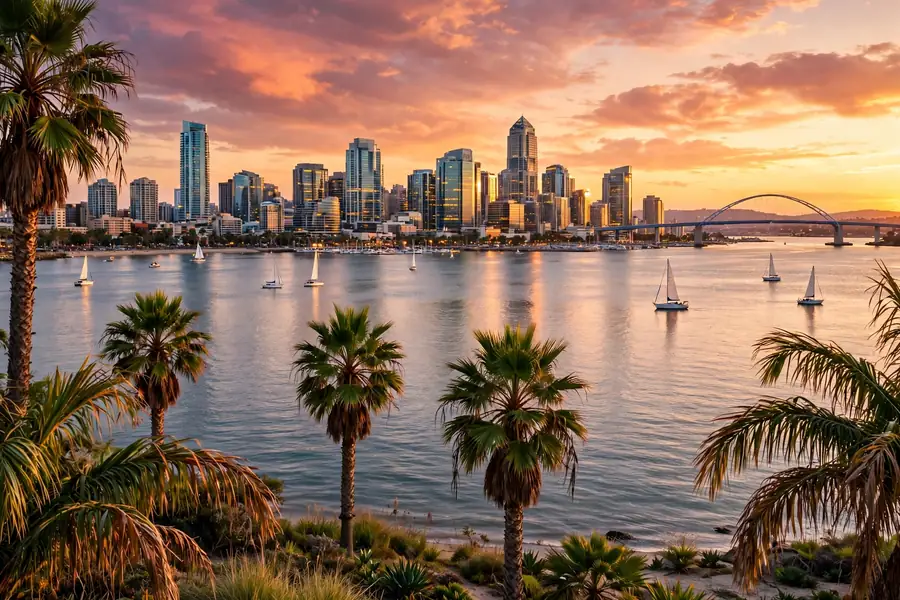
San Diego is the city the rest of California envies. It is the eighth-largest city in the United States and the second-largest in California, with 1.4 million people, 70 miles of coastline, and the mildest weather in the country — but it feels like a beach town that never grew up. It is also the birthplace of California: the Presidio and the Mission founded here in 1769 were the first European settlement on the West Coast, built on the Kumeyaay village of Kosa’aay. Today it is a Navy town, a biotech hub and a surf city at the same time, with a world-famous zoo, a 1,200-acre park, sea cliffs full of sea lions, and Mexican food better than anywhere else in the United States. It is the second stop in our California series, after Los Angeles, about two hours south.
This guide gives you the 20 best things to do in San Diego in a sensible order, a ready-made 3-day itinerary, honest advice on when to go, where to stay and how to get around, and the three foods you have to try before you leave. Prices and hours change, so every price in this guide is marked as approximate — always check the official website before you visit.
San Diego at a glance
| Question | Short answer |
|---|---|
| How long do you need? | 3 full days for the highlights; 5 days is the balanced first trip; 7 days if you add LEGOLAND, the Safari Park and North County. |
| Best area for a first trip | Gaslamp Quarter or Little Italy for walkable downtown, or La Jolla for the coast — Balboa Park sits between them and is easy to reach from either. |
| One thing to book early | Zoo and Safari Park tickets, LEGOLAND weekends and whale-watching tours in winter — and any hotel during Comic-Con in July, when the city sells out. |
| One thing that is free | Balboa Park’s gardens and the beaches — the sand, the sea cliffs and the sunset at Sunset Cliffs cost nothing. |
| Do you need a car? | Helpful but not essential — the trolley covers downtown, Old Town and the border; a car helps for La Jolla, the Safari Park and North County. |
For background before you go, the Wikipedia entry on San Diego covers the city’s history, its Kumeyaay roots and its neighbourhoods in depth — all four are linked in Further reading at the end of this guide.
The 20 best things to do in San Diego
The list starts with the experiences that define San Diego and that first-time visitors should protect time for, then moves into neighbourhoods, the coast and the wild country beyond the city. If you only have two days, do numbers 1 to 10.
1. Spend a day at the San Diego Zoo
San Diego Zoo is the most visited zoo in the United States, and the single best reason to come to San Diego. It sits on 100 acres inside Balboa Park, and it holds more than 12,000 animals from over 650 species, in open-air, cageless exhibits that were revolutionary when the zoo opened in 1916. Start at Panda Ridge, where giant pandas Yun Chuan and Xin Bao arrived in August 2024, then walk the Lost Forest for the gorillas and orangutans, Africa Rocks for the penguins, and the Australian Outback for the largest koala colony outside Australia. Ride the guided bus tour first, then take the Skyfari gondola across the canyon for the view.
Practical tip: Admission costs roughly $70–$78 for adults — prices are approximate, so check before visiting. Arrive at opening, when the animals are most active, and book online: the zoo sells timed-entry tickets on busy days. See number 7 for the Safari Park’s new Elephant Valley.
2. Wander Balboa Park
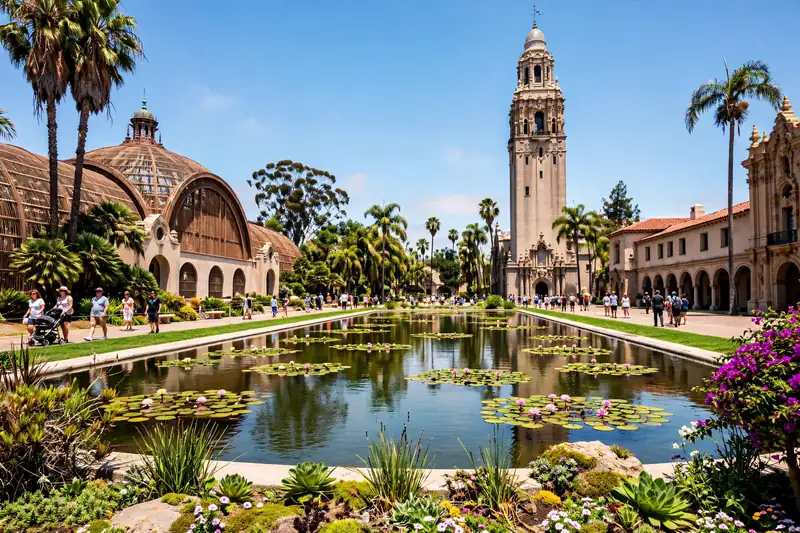
Balboa Park is the beating heart of San Diego: 1,200 acres of gardens, museums and Spanish Colonial Revival architecture, built for the 1915–16 Panama–California Exposition and still the city’s great public room. Walk El Prado, the long promenade past the California Tower and the reflecting pool, and you pass 17 museums in a few hundred yards — the San Diego Museum of Art, the Natural History Museum, the Air & Space Museum, the Fleet Science Center, the Model Railroad Museum and the free Timken Museum of Art among them. Between the museums, the gardens are free: the Botanical Building, the Japanese Friendship Garden and the rose garden. The San Diego Museum of Art is marking its centennial in 2026–27 with the exhibition “SDMA 100 Years”, running through January 24, 2027 — the best reason to go inside this year.
Practical tip: The park grounds and gardens are free; most museums charge roughly $15–$25, and a Balboa Park Explorer Pass costs roughly $50–$65 for a week of museums — prices are approximate, so check before visiting. Allow a full day: the park is bigger than Central Park.
3. Watch the sea lions at La Jolla Cove
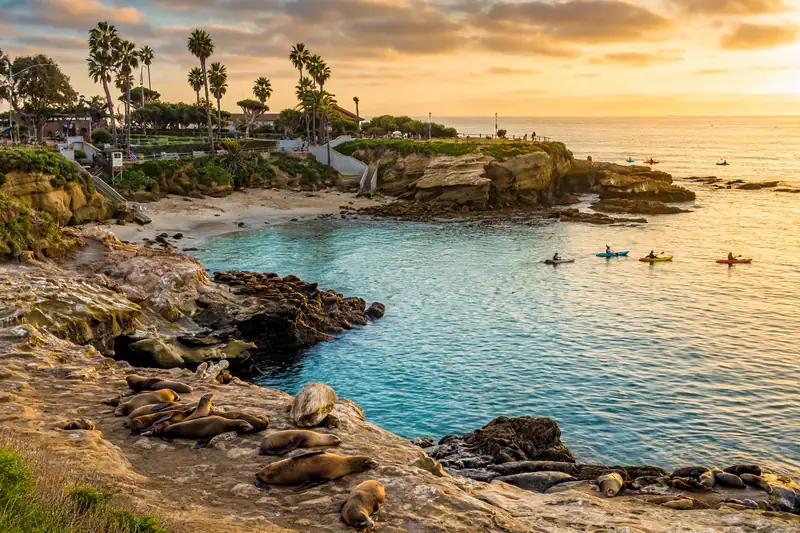
La Jolla Cove is the prettiest corner of San Diego: a small, cliff-ringed cove of turquoise water where hundreds of California sea lions haul out onto the rocks to rest, bark and argue with each other all day long. The cove is part of a protected marine reserve, so the water is clear and full of life — orange Garibaldi fish, the state fish, swim right under the surface — and snorkellers and swimmers share it with the sea lions. Just north of the cove are the seven sea caves, including Sunny Jim’s, reached by a staircase through The Cave Store. Come at low tide, when the tide pools at the cove’s edges fill with starfish and anemones.
Practical tip: The cove is free to visit, but parking is extremely limited — take a rideshare or the bus and walk down from the village. Keep your distance from the sea lions: harassing them is illegal under the Marine Mammal Protection Act, and they bite. The water is colder than at other San Diego beaches.
4. Tour the USS Midway Museum
USS Midway Museum is the most popular naval warship museum in the United States — and the most hands-on museum in San Diego. The aircraft carrier Midway served from 1945 to 1992, the longest-serving carrier of the 20th century, and it has been moored at Navy Pier since it opened as a museum on June 7, 2004. Climb through the engine room, the galley, the brig and the bridge on the self-guided audio tour narrated by former Midway sailors, then walk the flight deck among more than 30 restored aircraft, from the F-14 Tomcat to the F/A-18 Hornet. In June 2025 the museum opened “Top Secret: Inside the High-Stakes World of Naval Intelligence”, a new exhibit inside the ship’s restored Carrier Intelligence Center — the room that ran naval intelligence during Desert Storm — and the pier around the ship is being rebuilt as a waterfront park.
Practical tip: Admission costs roughly $39 for adults booked online — prices are approximate, so check before visiting. Allow three to four hours, arrive at opening to beat the school groups, and take the flight simulators early. The flight deck is the best sunset spot on the bay, so time your visit for the last hour.
5. Stroll the Gaslamp Quarter
The Gaslamp Quarter is downtown San Diego’s historic heart: 16 and a half blocks of restored Victorian-era buildings along Fifth Avenue, packed with restaurants, rooftop bars, theatres and boutiques, all lit by gas lamps after dark. By day it is the city’s best shopping and people-watching street; by night it is the liveliest nightlife district in Southern California, with everything from craft cocktail bars to dance clubs. It is also the most convenient base for a first trip — the trolley stops here, the waterfront is a ten-minute walk, and Balboa Park is a short ride away.
Practical tip: The quarter is free to walk and liveliest after 6pm, when the restaurants fill and the lamps come on. The streets are safe and busy at night, but keep the usual city sense after midnight, when the bar crowds thin out.
6. Cross the bridge to Coronado
Coronado is the San Diego you see on postcards: a quiet island town across the bay, reached by the sweeping Coronado Bridge, opened in 1969, or by the ferry from downtown. Its centrepiece is the Hotel del Coronado, the great wooden Victorian beach resort opened in 1888, where Marilyn Monroe filmed “Some Like It Hot” in 1958 and where presidents and royalty have stayed ever since. In front of it stretches Coronado Beach, a wide, flat ribbon of pale sand consistently ranked among the best family beaches in the United States — gentle surf, lifeguards, and room to spread out even in summer. Stay for the sunset: the view back across the bay to the downtown skyline is the best in the city.
Practical tip: The beach is free and the ferry costs roughly $8–$10 one way — prices are approximate, so check before visiting. The bridge has no pedestrian lane, so walk across only by ferry or bike. The hotel’s restaurants are open to non-guests.
7. Meet the elephants at the San Diego Zoo Safari Park
The San Diego Zoo Safari Park, 30 miles northeast of the city near Escondido, is the zoo’s wild sister: 1,800 acres of open savannah where giraffes, rhinos, antelope and lions roam in herds across grassy hills instead of enclosures. The Africa Tram is the classic ride — a free, 25-minute loop through the field exhibits — and the real news is the Denny Sanford Elephant Valley, the largest project in the San Diego Zoo Wildlife Alliance’s 109-year history, which opened on March 5, 2026 with a huge new savannah habitat for the park’s African elephant herd.
Practical tip: Admission costs roughly $70–$80 for adults — prices are approximate, so check before visiting. The park is a full day and a 45-minute drive from downtown, so pair it with a North County stop rather than a downtown day. Go at opening, when the animals are fed and the savannah is at its most active.
8. Ride the coasters at SeaWorld San Diego
SeaWorld San Diego, the first SeaWorld, opened on Mission Bay in 1964 — and it is still the city’s biggest theme park day. The headline rides are the coasters: Emperor, the tallest and fastest dive coaster in California, Electric Eel, and the manta-ray-shaped Manta, which flies you face-down over the bay. The animal side is still the heart of it: dolphins, sea lions, penguins and the shark tunnel, which was completely reimagined in spring 2026 as a new Shark Encounter with more species and a longer walk-through. The orcas now appear in the educational Orca Encounter presentation, not a theatrical show.
Practical tip: Tickets cost roughly $70–$100 depending on the day — prices are approximate, so check before visiting, and book online for the best price. The park is best in the morning, before the heat and the queues build, and the Sesame Street area is made for small children.
9. Step back in time in Old Town San Diego
Old Town is where California began. The Presidio and Mission San Diego de Alcalá were founded here in 1769, making this the first European settlement on the West Coast, and the Old Town San Diego State Historic Park preserves the adobe buildings, the plaza and the shops of the Mexican-era town that grew up below the hill. Walk the plaza, visit the free museums — the Robinson-Rose House, the blacksmith shop, the old schoolhouse — and eat in one of the Mexican restaurants on San Diego Avenue, where the margaritas and the handmade tortillas are the real thing. It is the most atmospheric free afternoon in the city.
Practical tip: The park and its museums are free to walk. Locals on r/sandiego regularly point first-timers to Old Town for the best Mexican food in the city. Go in the late afternoon, when the mariachis play on the plaza and the restaurants fill up.
10. Hike Torrey Pines State Natural Reserve
Torrey Pines State Natural Reserve protects one of the rarest trees in North America: the Torrey pine, which grows naturally in only two places on earth, here and on Santa Rosa Island. The reserve’s trails wind through the pine groves and along sandstone cliffs 300 feet above the Pacific, with views that run from La Jolla to Del Mar on a clear day. The Guy Fleming Trail, an easy 0.7-mile loop, is the best first walk; the Beach Trail drops down the cliffs to the wide, quiet beach below. It is the best half-day hike in the city.
Practical tip: Entry to the reserve is free on foot; parking costs roughly $15–$25 — prices are approximate, so check before visiting. Plan around the construction: the trails, the park road and the upper car parks are closed for work through February 2027, but the beach below the cliffs stays open. Go on a weekday morning.
11. Watch the sunset at Sunset Cliffs
Sunset Cliffs Natural Park, on the Point Loma peninsula, is the best free sunset in San Diego — and the locals’ favourite. The 68-acre park runs along sandstone cliffs above the ocean, with sea caves below, surfers on the breaks, and a view west into nothing but Pacific and sky. Come an hour before sunset, find a spot on the cliffs near Luscomb’s Point, and watch the sky turn pink and gold over the water while the city lights come on behind you. It costs nothing, and it is the calmest hour in the city.
Practical tip: The park is free and open from dawn to dusk. Stay behind the fences and off the cliff edges: the sandstone is unstable and people are hurt here every year. Bring a jacket — the wind is cold after the sun goes down.
12. Meet an axolotl at Birch Aquarium at Scripps
Birch Aquarium at Scripps, on the bluffs above La Jolla Shores, is the public face of the Scripps Institution of Oceanography — and the best small aquarium in Southern California. The centrepiece is the 70,000-gallon kelp forest tank, a two-storey wall of swaying kelp, leopard sharks and Garibaldi fish, and the hands-on tide-pool plaza, where you can touch sea stars and anemones. The newest draw is “The Axolotl’s Garden”, a new exhibit about the endangered Mexican salamander that opens on October 21, 2026 — the first axolotl exhibit of its kind on the West Coast.
Practical tip: Admission costs roughly $25 for adults — prices are approximate, so check before visiting. Allow two hours. Parking is free but fills up by midday on weekends.
13. Take the kids to LEGOLAND California
LEGOLAND California, in Carlsbad, 30 minutes north of downtown, is the best theme park in the county for children under twelve. The headline is Miniland USA, seven miniature American cities built from more than 20 million LEGO bricks, and the driving school, where children earn their own little driving licence. The big news for 2026 is LEGO Galaxy, a whole new space-themed land that opened on March 6, 2026 with the Galacticoaster — the park’s first new coaster in 20 years — and a build-your-own rocket ride. The water park and the SEA LIFE aquarium next door make it a full day.
Practical tip: One-day tickets cost roughly $90–$120 depending on the day — prices are approximate, so check before visiting, and book online for the best price. Weekends sell out in summer, so go on a weekday if you can, and arrive at opening.
14. Stroll Seaport Village and the Embarcadero
Seaport Village, the waterfront shopping village that opened in 1980, is the gentlest walk in downtown San Diego: cobbled lanes, bay views, ice cream, buskers and the carousel, all on the edge of the bay. From there the Embarcadero runs north past the harbourfront — the Maritime Museum’s Star of India, the iron-hulled sailing ship launched in 1863 and the oldest active sailing ship in the world, the bobbing “Unconditional Surrender” statue, and the fish market at the end of the pier. Navy ships, fishing boats and the ferries to Coronado all pass within a few hundred yards.
Practical tip: Seaport Village is free to walk; the Maritime Museum costs roughly $20–$25 for adults — prices are approximate, so check before visiting. Go in the late afternoon, when the light on the bay is at its best,
15. Kayak the sea caves at La Jolla Shores
La Jolla Shores, the long, gentle beach just north of the Cove, is where San Diego gets in the water. The seven sea caves, carved into the sandstone cliffs at the north end of the beach, are the city’s best kayak trip: paddle out from the Shores, round the point, and duck into the caves — the biggest, Sunny Jim’s, is tall enough to stand a kayak inside — while sea lions watch from the rocks and leopard sharks glide through the shallows below. The underwater park here is a protected reserve, so the kelp forests are thick with Garibaldi and rays.
Practical tip: Guided kayak tours cost roughly $60–$90 per person and include the gear — prices are approximate, so check before visiting. Book the morning tour, when the ocean is calmest, and wear a wetsuit: the water is cold even in summer. Kayaks are not allowed inside La Jolla Cove itself.
16. Ride the boardwalk at Mission Beach and Belmont Park
Mission Beach is San Diego’s classic beach town: a three-mile boardwalk packed with surfers, rollerbladers, taco stands and beach rentals, running from the jetty at the south end to Pacific Beach in the north. In the middle sits Belmont Park, the 1925 oceanfront amusement park, home to the Giant Dipper — the wooden roller coaster built in 1925, now a National Historic Landmark — and the WaveHouse, where the FlowRider lets you surf a standing wave without ever leaving the sand. Rent a bike and ride the whole boardwalk in an hour, then stop for a fish taco on the sand.
Practical tip: The boardwalk and the beach are free; Belmont Park rides cost roughly $5–$12 each, and the Giant Dipper roughly $12 — prices are approximate, so check before visiting. Parking is tight on summer weekends, so take the bus. Just south, Ocean Beach is the city’s bohemian beach town — note that its pier has been closed since storm damage in October 2023.
17. Stand where California began at Cabrillo National Monument
Cabrillo National Monument, on the tip of Point Loma, marks the spot where Juan Rodríguez Cabrillo landed on September 28, 1542 — the first European to set foot on the West Coast of what is now the United States. The statue of Cabrillo looks out over the bay he claimed for Spain, and the Old Point Loma Lighthouse, built in 1855, stands behind it, restored to its 1880s furnishings. Below the cliffs, the tide pools are the best in Southern California at low tide. From December to March, the point is also one of the best land-based whale-watching spots on the coast, as the grey whales pass on their migration south.
Practical tip: Entry costs roughly $30 per vehicle — prices are approximate, so check before visiting — and covers a week of visits. Check the tide tables before you go: the tide pools are only worth it at low tide. Arrive early in whale season.
18. Hike Cowles Mountain for the best view in the city
Cowles Mountain, at 1,591 feet, is the highest point in the city of San Diego — and the most popular hike in the county. The three-mile round trip from the Golfcrest Drive trailhead climbs steadily through chaparral to a summit with a 360-degree view: downtown and the bay to the west, the mountains to the east, and on the clearest winter days, the ocean and the desert in the same panorama. It is the hike San Diegans do before work.
Practical tip: The hike is free and takes about 90 minutes round trip. Start early — the trail is exposed, with no shade, and the summer heat is serious by 10am. Bring more water than you think you need, and wear proper shoes.
19. Eat your way through Little Italy
Little Italy, just northwest of downtown, is San Diego’s oldest Italian neighbourhood — and its best food street. The Saturday Mercato farmers market, the largest in the county, fills Date Street with more than 150 stalls of produce, flowers, bread and street food, and the restaurants along India Street run from old-school red-sauce joints to modern wine bars. Come hungry, and come on a Saturday if you can — the market is the neighbourhood at its best.
Practical tip: The market is free to browse and runs on Saturday mornings — arrive before 10am for the best produce and the shortest queues. The trolley stops at County Center/Little Italy, two minutes from India Street.
20. Take a day trip to Julian and the Anza-Borrego Desert
The best day trip from San Diego is inland, not along the coast. Julian, an hour east in the Cuyamaca Mountains, is a gold-rush town from the 1870s that still feels like one: wooden sidewalks, an old-fashioned main street, and apple pie — the town’s famous crop, baked in a dozen little bakeries, best eaten warm with a scoop of ice cream. From Julian, the road drops into the Anza-Borrego Desert, California’s largest state park, where the wildflowers bloom in February and March and the night sky is among the darkest in Southern California.
Practical tip: The drive takes about an hour each way, so leave at dawn and expect a long day — prices are approximate, so check before visiting. In summer the desert is dangerously hot, so go in spring or autumn, and carry more water than you think you need.
San Diego in 3 days — a ready-made itinerary
This plan groups sights that sit near each other, so you are sightseeing instead of crossing the city. San Diego is a spread-out city, so each day stays in one area. Timings are a guide, not a schedule to stress about — swap Day 2 and Day 3 if the weather demands it, and always do the beach in the morning.
| Day | Morning | Afternoon | Evening |
|---|---|---|---|
| Day 1 — Balboa Park and the Zoo | San Diego Zoo — arrive at opening, then the Skyfari gondola | Balboa Park museums and gardens, then El Prado | Dinner and drinks in the Gaslamp Quarter |
| Day 2 — La Jolla and the coast | La Jolla Cove — sea lions, snorkelling and the sea caves | Torrey Pines hike, then La Jolla Shores kayaking | Sunset at Sunset Cliffs, dinner in Ocean Beach |
| Day 3 — The bay and Old Town | USS Midway Museum, then Seaport Village | Old Town San Diego and the Mission | Coronado — the beach, Hotel del Coronado and a ferry back at dusk |
Day 1: Balboa Park and the Zoo
Start at the San Diego Zoo at opening, when the animals are most active — take the guided bus tour first, then walk Panda Ridge, the Lost Forest and Africa Rocks, and ride the Skyfari gondola across the canyon. In the afternoon, walk El Prado through Balboa Park: the Botanical Building and the lily pond, the Japanese Friendship Garden, and two museums of your choice — the Museum of Art and the Air & Space Museum are the best first picks. Finish the day in the Gaslamp Quarter for dinner, for dinner.
Day 2: La Jolla and the coast
Check the weather first: Day 2 is the coast day. Start at La Jolla Cove in the morning for the sea lions and the snorkelling, In the afternoon, hike Torrey Pines — the Guy Fleming loop if you want it easy, the Beach Trail if you want the beach below — then paddle the sea caves from La Jolla Shores. End the day at Sunset Cliffs for the sunset, with dinner in Ocean Beach, where the fish tacos and the craft beer are the best in the city.
Day 3: The bay and Old Town
Spend the morning on the USS Midway, arriving at opening for the quietest decks, then walk the Embarcadero to Seaport Village for lunch on the waterfront. In the afternoon, take the trolley to Old Town San Diego — the plaza, the free museums and the Mexican restaurants on San Diego Avenue. End the trip in Coronado: the beach, a walk past the Hotel del Coronado, and the ferry back to downtown at dusk, with the skyline lighting up behind you.
Only have 2 days? Do Day 1 and Day 2. Only have 1 day? Do the Zoo, Balboa Park and a fish taco dinner in the Gaslamp — that is San Diego in miniature. With 5 days, add a Safari Park day and a North County coast day; with 7, add LEGOLAND and a Julian and Anza-Borrego day trip.
Best time to visit San Diego
San Diego has a Mediterranean climate, so there is no bad month — but the city feels very different by season. The honest summary is this: March to May and September to October give you the best balance of warm, dry weather, smaller crowds and lower prices, while summer is the busiest and most expensive stretch.
| Season | What it is like | Best for |
|---|---|---|
| Winter (December–February) | Cool and sunny, highs in the mid-60s°F, whale-watching season, the greenest hills — and the fewest crowds | First trips, whale watching, hiking |
| Spring (March–May) | Warm days in the low 70s, wildflowers in the desert, May Gray mornings on the coast | First trips, the desert, the coast |
| Summer (June–August) | Warm and dry, highs in the 70s–80s°F, June Gloom mornings, the busiest beaches and the highest hotel prices | Beach days, families — if you book early |
| Autumn (September–November) | The warmest, clearest weather of the year, the ocean at its warmest, smaller crowds | First trips, the beach, the best weather of the year |
Remember that the marine layer — “May Gray” and “June Gloom” — brings grey mornings to the coast in late spring and early summer, though it usually burns off by midday. The grey whales pass the coast from December to March, the desert wildflowers bloom in February and March, and the ocean is at its warmest in September and October. Whatever month you choose, pack a light jacket: the coast is cool after sunset.
Where to stay in San Diego
For a first trip, stay in the Gaslamp Quarter or Little Italy for walkable downtown, or in La Jolla for the coast. These are the areas to look at first:
| Area | Who it suits | Why stay there |
|---|---|---|
| Gaslamp Quarter | First-timers, nightlife, walkers | Restaurants, bars and the trolley on your doorstep |
| Little Italy | Food lovers, couples | The Mercato market, cafes and the waterfront a short walk away |
| La Jolla | The coast, families, a quieter base | The Cove, the village shops and the beach on your doorstep |
| Coronado | Families, a resort feel, the beach | Hotel del Coronado, the beach and the ferry to downtown |
| Mission Beach / Pacific Beach | Beach days, surfers, a younger crowd | The boardwalk, Belmont Park and the sand on your doorstep |
Wherever you choose, check how far the nearest beach or trolley station is before you book — San Diego is spread out, and a hotel that looks central can still be a 30-minute drive from the beach you visit most. Hotel prices swing sharply with Comic-Con in July and summer weekends, so comparing dates can save real money.
Getting around San Diego
San Diego is a spread-out city, and the honest advice is to use the trolley and the bus for the downtown and beach days and a car or rideshare for everything else. The neighbourhoods are 20–30 minutes apart by road, but the core is well served.
- San Diego Trolley: The Blue, Green and Orange lines link downtown, Old Town, the Gaslamp Quarter, Mission Valley, San Diego State University and the Mexican border, and the Blue Line extension reaches UC San Diego and UTC. A day pass costs a few dollars
- Bus: MTS buses cover the city, including routes to Balboa Park, La Jolla and the beaches. The 992 bus links the airport to downtown and the trolley. The buses go everywhere the trolley does not.
- Rideshare: Rideshare is the easiest way to move between neighbourhoods at night, and the simplest way to reach La Jolla Cove, where the trolley does not go. Across San Diego distances it adds up fast over several days, so use it for evenings, not everything.
- Driving: A car is the most flexible way to see San Diego, and the sights in this guide are spread across it. Traffic is worst at rush hour on I-5 and I-8 and on beach weekends, so plan one area a day and drive once, not back and forth. Downtown hotel parking costs roughly $30–$50 a night.
- From the airport: San Diego International Airport (SAN) is about 3 miles northwest of downtown, roughly 10–15 minutes by car depending on traffic — and the busiest single-runway airport in the United States. The 992 bus links the airport to downtown and the trolley.
- Cycling: The boardwalks at Mission Beach and Pacific Beach are the best rides in the city, and the Bayshore Bikeway loops 24 miles around the bay. Elsewhere San Diego is hilly, so keep the bike to the beach and the bay
- Ferry: The Coronado Ferry runs from downtown to Coronado in about 15 minutes, with the skyline behind you — roughly $8–$10 one way, prices approximate. It is the prettiest crossing in the city, and the best way to reach the island without a car.
San Diego food you have to try

You can eat very well in San Diego at every budget, from taco trucks in Ocean Beach to tasting menus in Little Italy. But three foods are San Diego’s signatures, and a first trip is not complete until you have tried all three.
Fish tacos
The fish taco is San Diego’s signature bite, and the city does it better than anywhere else in the United States. The Baja style — battered white fish, shredded cabbage, crema and pico de gallo in a corn tortilla, with a squeeze of lime — crossed the border from Ensenada, 70 miles south, and San Diego made it its own. You will find it everywhere, from taco trucks in Ocean Beach to sit-down restaurants in La Jolla, and the best ones are still the cheapest.
Practical tip: A good fish taco costs roughly $5–$8 — prices are approximate, so check before visiting. Order it Baja style, with battered fish, and try the shrimp taco too. The best taco stands are in Ocean Beach, Pacific Beach and Old Town — ask a local, and they will have a strong opinion.
California burrito
The California burrito is a San Diego invention, and it is exactly what it sounds like: carne asada, french fries, cheese, sour cream and guacamole, all wrapped in a flour tortilla. It was invented in San Diego in the 1980s, and it is now the city’s late-night institution — the thing you eat at 1am after a night in the Gaslamp, and the thing you crave the morning after. It is cheap, filling and unmistakably San Diego.
Practical tip: A California burrito costs roughly $10–$14 — prices are approximate, so check before visiting. Order it with carne asada and guacamole, and eat it the local way: in the car, in the car park, straight from the foil. The 24-hour taco shops are the original experience.
Craft beer
San Diego is the craft beer capital of the United States, with more than 150 breweries in the county — more than any other American city. The West Coast IPA was perfected here, and the tasting rooms of Miramar, the neighbourhood locals call “Beeramar”, and the bars of North Park’s 30th Street are the best beer crawl in the country. Stone, Ballast Point, Modern Times, Societe and AleSmith all started here, and the small tasting rooms are where the real discoveries happen.
Practical tip: A tasting flight costs roughly $12–$18 — prices are approximate, so check before visiting. Start in Miramar for the big breweries, then finish on 30th Street in North Park, where a dozen tasting rooms sit within walking distance. Take a rideshare between the two: the breweries are spread out, and the police are strict.
Beyond the big three, leave room for a plate of carne asada fries, a bowl of clam chowder on the Embarcadero, a wood-fired pizza in Little Italy, and at least one neighbourhood meal in North Park or South Park.
Free things to do in San Diego
San Diego is unusually generous to budget travellers. Several of its very best experiences cost nothing at all:
- Balboa Park’s gardens: The gardens, the Botanical Building and the grounds are free — the best free morning in the city, with the lily pond and the rose garden.
- La Jolla Cove and the seals: Free to watch, with hundreds of sea lions on the rocks and the tide pools at low tide — the number-one free wildlife experience in the city.
- Sunset Cliffs at sunset: Free to walk, with the best sunset in San Diego and the sea caves below the cliffs.
- Old Town San Diego State Historic Park: Free to walk, with the plaza, the adobe buildings and the free museums of the city’s birthplace.
- Mission Beach boardwalk: Free to walk, cycle or run — three miles of oceanfront path past Belmont Park and the Giant Dipper.
- Coronado Beach: Free to walk, with the widest sand in the county and the Hotel del Coronado behind it.
- Little Italy Mercato: Free to browse on Saturday mornings — the largest farmers market in the county, with 150 stalls of food, flowers and crafts.
- Seaport Village and the Embarcadero: Free to walk, with the bay, the Star of India and the ferries to Coronado.
Build each day around one paid highlight and fill the rest with free sights. That rhythm — one big ticket, lots of walking, one great meal — is how you get the best San Diego trip for the least money.
Frequently asked questions
How many days do you need in San Diego?
Three full days is the minimum for a first trip: one day for Balboa Park and the Zoo, one day for La Jolla and the coast, and one day for the bay, Old Town and Coronado. Five days is the balanced first trip; seven days works best for families adding LEGOLAND.
What is the best time to visit San Diego?
March to May and September to October are the sweet spot: warm, dry days in the 70s°F, smaller crowds and cheaper hotels than summer. Autumn is the warmest and clearest season of the year, with the ocean at its warmest. Winter is cool and sunny, with whale-watching season from December to March.
Do you need a car in San Diego?
Not for the main sights — the trolley covers downtown, Old Town, the Gaslamp and the border, and the bus covers Balboa Park and the beaches. A car helps for La Jolla Cove, the Safari Park, LEGOLAND and North County. If you do rent one, remember that downtown hotel parking costs roughly $30–$50 a night.
Is San Diego expensive?
San Diego is pricey, but cheaper than Los Angeles or San Francisco: a mid-range trip runs roughly $180–$320 per person per day. The way to keep costs down is to eat in Old Town, Little Italy and the taco shops, use the trolley, and fill your days with the free beaches, gardens and cliffs.
Is San Diego safe for tourists?
The tourist areas are safe with normal city sense: stay aware late at night in the Gaslamp Quarter, do not leave valuables visible in parked cars at trailheads and beaches, and stay behind the fences at Sunset Cliffs, where the sandstone is unstable. The border crossing at San Ysidro is the busiest land crossing in the world outside Asia, and day trips to Tijuana are common — check the current travel advice before you go, and cross on foot.
Which beach should I choose?
La Jolla Cove for the sea lions and snorkelling, Coronado Beach for families and wide, gentle sand, Mission Beach for the boardwalk and the surfers, and La Jolla Shores for kayaking and learning to surf. Ocean Beach is the bohemian choice — but note its pier has been closed since storm damage in October 2023.
Further reading — Wikipedia, Reddit and Quora
Want to dig deeper or hear directly from locals and other travellers? These pages are the best next stops:
- Wikipedia — San Diego — the city’s history, from the Kumeyaay village of Kosa’aay to the Mission of 1769, and how it became America’s Finest City.
- Wikipedia — Balboa Park (San Diego) — how the 1915–16 Panama–California Exposition built the park’s Spanish Revival palaces, and the story of its 17 museums.
- Wikipedia — USS Midway Museum — the story of the longest-serving carrier of the 20th century, from 1945 to 1992, and its life as a museum since 2004.
- Wikipedia — San Diego Zoo — how a handful of animals left over from the 1915 exposition became the most visited zoo in the United States.
- Reddit — r/sandiego — the San Diego community on Reddit, where locals answer first-time visitors’ questions and share current tips on beaches, food and neighbourhoods.
- Quora — fun things to do in San Diego — travellers’ answers to what to do in San Diego beyond SeaWorld and the Zoo, from snorkelling at La Jolla Cove to the tacos.
Your San Diego trip, in one paragraph
Start at the Zoo in the morning, walk El Prado at dusk, spend a day on the sea lions of La Jolla Cove and the sunset at Sunset Cliffs, and finish with the Midway, Old Town and a ferry ride to Coronado. Do that, and you will leave San Diego understanding exactly why people who visit once tend to come back. And if you liked this guide, read our guide to things to do in Chicago, our guide to things to do in Nashville, our guide to things to do in Los Angeles, our guide to things to do in Orlando and our guide to things to do in Miami — the same format, the same honest prices, and five more great American cities.
Prices, hours and seasonal schedules in this guide are approximate and were given as a guide only. Please check the official website of each attraction before you visit.

About the Author