Things to Do in Corpus Christi
Things to Do in Corpus Christi
20 Best Attractions, a 3-Day Itinerary, Where to Stay, and the Food You Cannot Miss
Quick Info
Best for: First-timers, beach lovers, families, birders and Selena fans — the Gulf Coast city with a WWII aircraft carrier, the best aquarium in Texas and 66 miles of wild barrier-island beach
Best time: March–May and October–November for the weather; June–August for the turtle hatchling releases and the warmest water
How long: 3 days for the bayfront, the museums and the islands; 4–5 days with Port Aransas, Rockport and the whooping cranes
Budget: About $100–$200 per person per day mid-range — the aquarium and the carrier are the big tickets, and many of the best sights are free
Don’t miss: The USS Lexington flight deck at sunset, the aquarium’s shark tunnel, a Kemp’s ridley hatchling release in summer, the Selena memorial on the seawall, and a Gulf shrimp plate at Snoopy’s Pier
Corpus Christi on Wikipedia is the Gulf Coast city most Texans drive past on the way to South Padre Island — and the one they should have stopped in. It is the city they call the Sparkling City by the Sea, founded in 1839 as a trading post on the bluff above Corpus Christi Bay, a working port where shrimp boats, tankers and windsurfers share the same water, and the home of a WWII aircraft carrier, the best aquarium in Texas and the wildest beach in the country. This guide covers the 20 best things to do in Corpus Christi, a 3-day itinerary that actually works, where to stay without paying for a room you do not need, how to get around on the $0.75 bus and the free ferry, the three foods you should not skip, and the free sights that cost nothing. Everything below was checked against live sources in November 2026 — including the new Harbor Bridge, the aquarium’s rescue-centre closure, the Selena Museum’s weekday-only hours, the turtle season that has just ended, and the beach permit that catches out first-timers.
Corpus Christi at a glance
| Topic | What to know |
|---|---|
| Full name | Corpus Christi — the Sparkling City by the Sea, the county seat of Nueces County on Corpus Christi Bay |
| Founded | 1839, as Kinney’s Trading Post on the bluff above the bay |
| Population | About 317,000 people in the city, about 450,000 in the metro area |
| Elevation | About 7 feet above sea level, on the flat Gulf Coastal Plain |
| Airport | Corpus Christi International Airport (CRP), about 10 minutes west of downtown |
| Best base | Downtown and the bayfront for first-timers; North Padre Island for the beach |
| Getting around | A car for the islands and the day trips; downtown and the bayfront are walkable; CCRTA bus at $0.75 a ride |
| Famous for | The USS Lexington, the Texas State Aquarium, Padre Island’s wild beaches, Selena, and the first Whataburger |
Corpus Christi divides into three ideas that most visitors only partly see. Downtown is the one the postcards show: the seawall, the marina, the bayfront museums and the Mirador de la Flor, all within walking distance of each other, with the new Harbor Bridge rising behind them. North Beach is the one across the ship channel: the aircraft carrier and the aquarium side by side on the old Rincon Point peninsula, with the calm bay beach in front of them. The islands are the one that makes the trip: Mustang Island and Padre Island, the long barrier islands that shield the bay from the Gulf, with the wildest beach in the country, the shallow Laguna Madre behind it, and the wind that never stops. The trap is the one that catches almost every visitor: the city looks small on the map and the sights look close together, but the beaches are three different things — the free bay beaches downtown, the paid Gulf beaches on the islands, and the wild National Seashore that charges its own fee and has no fuel, no food and no shade — and the older guides still list prices from years ago, a museum that is closed on weekends, and a bridge that was replaced in 2025. Plan by area, go early in summer, and check the hours before you go, and the city rewards you in every month of the year. For the wider state, our San Antonio guide covers the city two hours up the road, and our Galveston guide covers the other great Texas beach city.
The 20 best things to do in Corpus Christi
1. Texas State Aquarium
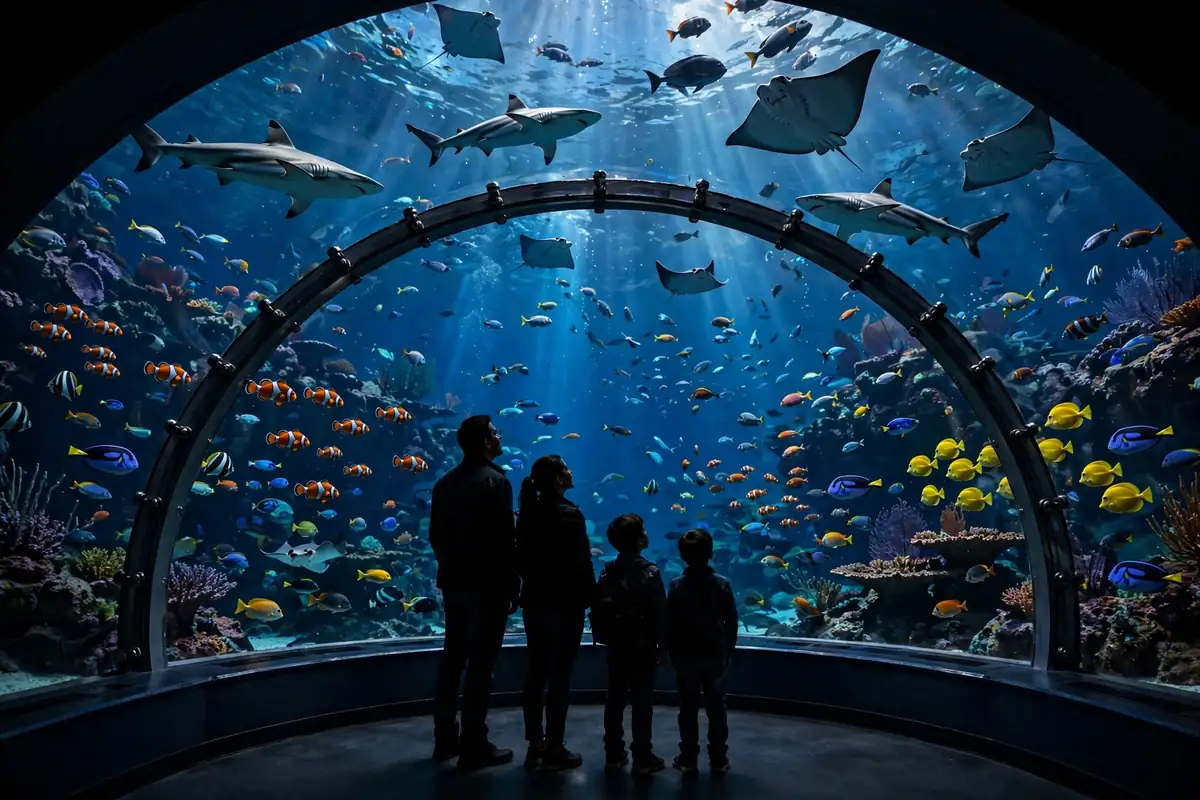
The Texas State Aquarium on Wikipedia is the best aquarium in Texas — the largest aquarium in the state, voted the number 3 aquarium in North America in the USA Today 10Best Readers’ Choice Awards in 2025, at 2710 North Shoreline Boulevard on North Beach. The aquarium opened in 1990 and celebrated its 35th anniversary in 2025, and it now cares for more than 4,000 animals representing over 300 species, from the Gulf of Mexico and the Caribbean. The visit is the shark tunnel: the 400,000-gallon H-E-B Caribbean Sea exhibit, with its 68-foot viewing window, the sharks, the rays and the green sea turtles swimming over your head, and the Ocean Odyssey dolphin habitat outside, with the splash park beside it. The stingray touch pool and the Wild Flight bird show are the other stops, and the Caribbean Journey wing, opened in 2017, doubled the aquarium’s size. The aquarium is open daily from 10 a.m. to 5 p.m., and tickets are about $49.95 for adults and $36.95 for children aged 3 to 12, with children under 2 free — the price varies by date, so buy online, and the aquarium is cashless, so bring a card. The trap is the rescue centre, and this is where our guide beats the older ones: the Wildlife Rescue Center building is closed to visitors for maintenance, while animal intake continues, so do not plan a visit around seeing it — and the splash park runs at weekends only. Two practical notes: the aquarium is a half-day visit, not an hour — allow three hours, because the shark tunnel alone deserves thirty minutes — and it is busiest on summer weekends and spring break, so go on a weekday morning for the quietest visit. Allow half a day, and pair it with the USS Lexington next door, which is a five-minute walk away.
2. USS Lexington Museum on the Bay
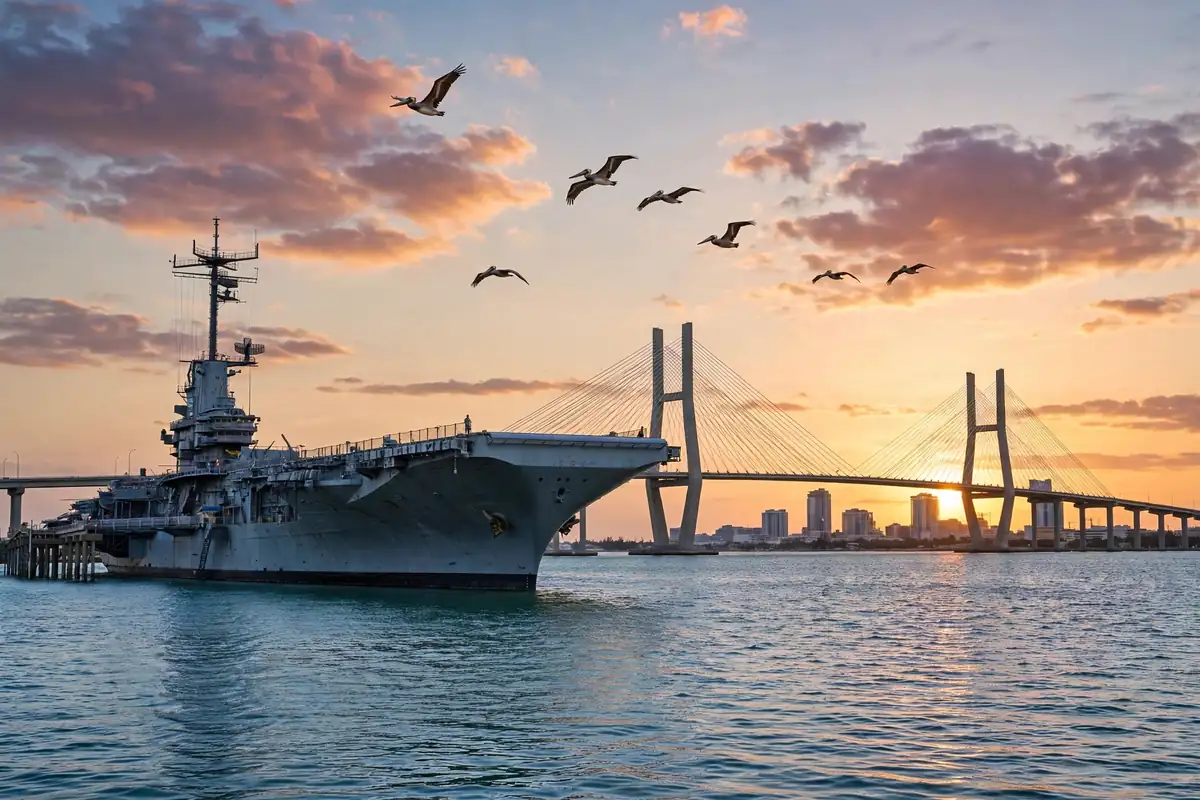
The USS Lexington on Wikipedia is the ship that defines the Corpus Christi skyline — an Essex-class aircraft carrier commissioned in 1943, nicknamed the Blue Ghost, that served in the Second World War, the Korean War and the Vietnam War, then as a training carrier, and was retired in 1991 as the longest-serving Essex-class carrier. She has been docked at 2914 North Shoreline Boulevard on North Beach since 1992, and she is a National Historic Landmark. The visit is the climb through the ship: the hangar deck with the aircraft, the flight deck with the planes and the view across the bay, the bridge, the flight simulator, the escape rooms and the 3D theatre, with the narrow passageways and the ladders between decks. The museum is open daily from 9 a.m. to 5 p.m., and until 6 p.m. in summer, closed on Thanksgiving and Christmas Day. Tickets are $25 for adults, $21 for seniors, $16 for military with ID, $20 for ages 13 to 17 and $15 for children aged 4 to 12, with children 3 and under free, and parking is $5 all day — and general admission is sold only at the museum’s own ticket booths on the day, not online, so allow queue time on arrival. The trap is the ladders, and this is where our guide beats the older ones: the hangar deck and the flight deck are wheelchair accessible by the LEX LIFT elevator, but the deeper decks are reached by steep original ladders, so plan the route if anyone in your party has limited mobility — and the ship is mostly steel and mostly outdoors on the flight deck, so go in the morning in summer, before the decks get hot. Two practical notes: the ship is a two- to four-hour visit, not an hour — allow three hours, because the route is long — and the Mess Deck Café on the hangar deck sells lunch from 10 a.m. to 4 p.m., with no outside food allowed. Allow half a day, and go at sunset, when the flight deck looks across the bay to downtown and the new Harbor Bridge.
3. Padre Island National Seashore
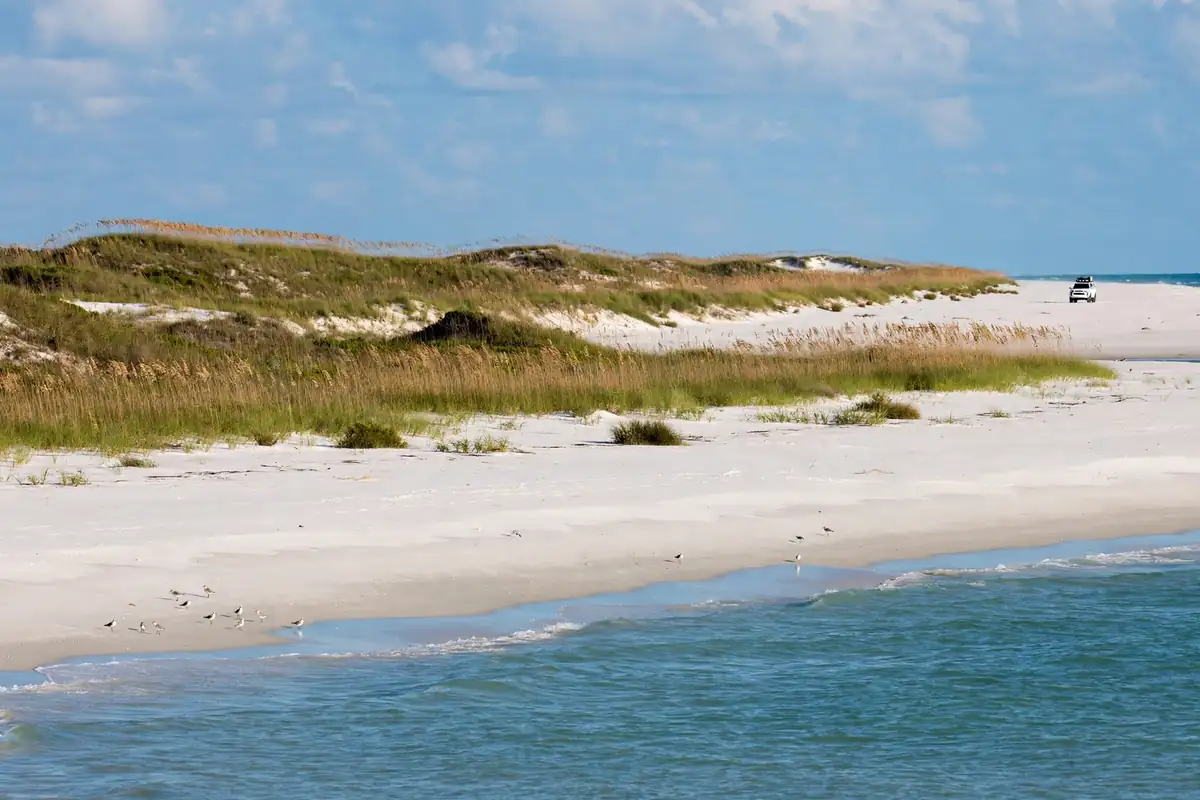
Padre Island National Seashore on Wikipedia is the reason this coast is worth the drive — 66 miles of undeveloped barrier island, the longest stretch of undeveloped barrier island in the world, protected since 28 September 1962, with more than 130,000 acres of beach, dunes, grasslands and tidal flats, and no fuel, no lodging and no dining anywhere inside the park. The Malaquite Visitor Center, at 20420 Park Road 22, is the start: open from 9 a.m. to 5 p.m. every day except Thanksgiving and Christmas, with the exhibits, the park store and the deck chairs looking out over the Gulf. The beach is the visit: Malaquite Beach, the only developed beach, where you cannot drive, then the 60 miles of sand that run south to the Mansfield Channel, where you can drive your own car, with the speed limit at 15 miles per hour, and 25 miles per hour from the day after Labor Day to the end of February. The trap is the driving, and this is where our guide beats the older ones: a two-wheel-drive car is fine on North Beach and the first five miles of South Beach, but past mile five you want four-wheel drive, and the park does not tow — and a high tide of 1.5 feet or more can reach the dunes and cover the beach, so read the tide table before you pick a spot. The entrance fee is $10 per vehicle for one day, $25 for seven days, or $45 for the annual pass, and beach camping is free with the pass, first come, for up to 14 nights, except on Malaquite Beach itself. Two practical notes: there is almost no shade anywhere in the park, so bring water, a hat and sunscreen, and fill the tank before you enter, because there is no fuel inside — and the Little Shell and Big Shell beaches, about 20 miles down South Beach, are where the shells collect, because of the offshore currents. Allow a full day, and go in the cooler months, when the sand is a strolling paradise and the crowds are gone.
4. Mustang Island State Park
Mustang Island on Wikipedia is the easy beach day — the state park on the 18-mile barrier island between Corpus Christi and Port Aransas, with 3,954 acres and five miles of Gulf beach, at 9394 State Highway 361. The park is the one for families and campers: the wide beach, the dunes, the 20-mile paddling trail through the Laguna Madre on the bay side, and the ranger programmes on birding, stargazing and beachcombing. The entrance fee is $7 per person aged 13 and over, with children 12 and under free, and the day-use gate runs from 8 a.m. to 5 p.m., with registered campers coming and going around the clock. The trap is the capacity, and this is where our guide beats the older ones: the park often reaches capacity on busy days, so reserve a day pass online before you drive out, or you may be turned away at the gate — and the beach sites close at times for high tides and storms, with coastal flooding closing them before Memorial Day 2026, so call the park before you go. Primitive beach camping is available on 50 undesignated sites along a 1.5-mile stretch, at about $13 a night plus the daily entrance fee, with small beach campfires allowed. Two practical notes: the park is about 35 minutes from downtown, so it is a half-day trip, not a walk from the hotel — and the beach inside the park is walk-in, so the beach driving is on the county beaches to the south, with the $12 permit. Allow half a day, and go in the morning, when the beach is empty and the wind is low.
5. North Beach and the Corpus Christi Bayfront
North Beach, Corpus Christi on Wikipedia is the peninsula across the ship channel from downtown — historically called Rincon Point, with the calm bay beach, the aquarium and the carrier, and the best free view in the city. The bayfront is the walk: the downtown seawall and the roughly nine-mile Corpus Christi Bay Trail, which runs from North Beach along Shoreline Boulevard and Ocean Drive past the marina, with more than 560 wet slips, the parks and the historic markers, and the eight Miradores del Mar gazebos along the way. McGee Beach is the swim spot: the small bay beach in the middle of the seawall, with seaweed-free, manicured sand and the warm, calm waters of the bay, free to walk onto. The trap is the bridge, and this is where our guide beats the older ones: the old through-arch Harbor Bridge, opened in 1959, closed on 3 September 2025, and traffic now uses the New Harbor Bridge, which opened on 28 June 2025 — a cable-stayed span with 538-foot towers and a 1,661-foot main span, the longest cable-stayed bridge in the United States and the tallest point in South Texas, with a shared-use path for pedestrians and cyclists — and demolition of the old span began in late 2025, so any guide that still shows the old arch is out of date. Two practical notes: the bay beaches are free and calm, and the Gulf beaches out on the islands charge for parking or entry, so do not treat them as one thing — and the seawall is the sunset walk, so finish the day there, with the carrier lit up across the channel. Allow half a day, and walk the trail in the morning, when the breeze is up and the bay is flat.
6. Mirador de la Flor — the Selena Memorial
Mirador de la Flor is the most photographed spot in Corpus Christi — a life-size bronze statue of Selena Quintanilla-Pérez, the Queen of Tejano music, standing on the bayfront seawall at 600 North Shoreline Boulevard and gazing out over the water. The memorial was dedicated on 25 May 1997, two years after Selena was murdered on 31 March 1995 at the age of 23, and the statue was made by the Corpus Christi sculptor H. W. “Buddy” Tatum. Selena on Wikipedia was born in Lake Jackson, Texas, grew up in Corpus Christi, and became the most famous Mexican-American singer in history, with the crossover album Dreaming of You released after her death. The memorial is free, open all hours, with Selena’s music playing in the area and fans leaving flowers and mementos at the base all year round, and the engraved bricks from family and fans around it. The trap is the crowds, and this is where our guide beats the older ones: the memorial is busiest on the anniversaries — her birthday on 16 April and the anniversary of her death on 31 March — when the crowds are large and the parking fills, so go early in the morning or at sunset for a quiet visit. Two practical notes: the memorial is free and it is on the seawall, so it is a ten-minute stop on the Bay Trail walk, not a half-day — and the Selena Museum, on Leopard Street, is the deeper stop, with the costumes and the red Porsche, but it is only open on weekdays. Allow thirty minutes, and go at sunset, when the statue is lit and the bay is behind her.
7. The Selena Museum
The Selena Museum is the intimate stop for Selena fans — the small museum on the grounds of Q-Productions, the family recording studio at 5410 Leopard Street, where Selena recorded many of her hits. The museum displays her stage outfits, her awards, her gold records and the red Porsche, with the studio itself, where visitors stand in the room where she sang, and the concert hall where Q-Productions still makes music videos. The trap is the hours, and this is where our guide beats the older ones: the museum is open Monday to Friday only, from 10 a.m. to 4 p.m., and it is closed on Saturdays and Sundays — so a weekend visitor who plans a Selena day will find the doors shut, and the Mirador de la Flor on the bayfront is the only Selena stop open at the weekend. Admission is $5 for ages 2 and over, with children 1 and under free, and the visit takes about an hour, though fans who meet the family sometimes stay for three. Two practical notes: the museum is small and the tours are personal, so arrive before 3 p.m., because the doors close at 4 p.m. sharp — and the museum is a working studio, so be respectful of the staff and the family, who run the place themselves. Allow one to two hours, and pair it with the Mirador de la Flor, which is the free memorial ten minutes away on the bayfront.
8. Corpus Christi Museum of Science and History
The Corpus Christi Museum of Science and History on Wikipedia is the rainy-day museum — founded in 1957, at 1900 North Chaparral Street on the downtown bayfront, in the Sports, Entertainment and Arts district. The museum covers the science and the human history of this stretch of coast together: the shipwreck treasures, the dinosaur bones, the gems and minerals, the oil refinery exhibit, the H-E-B science centre, and the 16th-century Spanish wood-carved dome ceiling, which is the prize piece. The museum is open Tuesday to Saturday from 10 a.m. to 5 p.m. and Sunday from 12 p.m. to 5 p.m., and it is closed on Mondays. Admission is $15 for adults and teens aged 13 to 17, $11 for children aged 3 to 12 and for seniors aged 60 and over, with children 2 and under free, and prices do not include tax. The trap is the Monday, and this is where our guide beats the older ones: the museum is closed on Mondays, and so is the Art Museum of South Texas, so a Monday museum day in Corpus Christi is a wasted day — plan the museums for Tuesday to Saturday, and keep Monday for the beaches and the bayfront. In summer, from 1 June to 31 July, the museum stays open until 7 p.m. on Fridays and Saturdays, which makes it a genuine evening option when the middle of the day is unbearable outdoors. Two practical notes: the museum is a two- to three-hour visit, not an hour — allow half a morning — and the discounted Museums for All admission, at $3 for adults and $1 for children, is available to visitors with SNAP benefits and ID. Allow half a day, and pair it with the Art Museum of South Texas next door, which is a five-minute walk away.
9. Art Museum of South Texas
The Art Museum of South Texas on Wikipedia is the bayfront landmark — established in 1936, at 1902 North Shoreline Boulevard, in the striking waterfront building designed by the architect Philip Johnson, with more than 1,900 works ranging from photography and ceramics to large-scale installations and contemporary paintings. The collection is the reason to go: the regional Texas art, the Dorothy Hood abstract paintings, the Kent Ullberg wildlife sculptures and the Dale Chihuly chandelier, with the Chapman Gallery exhibitions rotating quarterly. The museum is open Tuesday to Saturday from 10 a.m. to 5 p.m. and Sunday from 1 p.m. to 5 p.m., and it is closed on Mondays. Admission is $10 for adults, $8 for seniors and military, and $6 for students, with children 12 and under free — and there are four free days every month: the first Friday, the second Saturday, the third Thursday and the fourth Sunday. The trap is the price, and this is where our guide beats the older ones: admission is free throughout November and December 2026, courtesy of H-E-B’s Explore More programme, so a winter visitor pays nothing — but check the current exhibitions before you go, because some galleries were under renovation in autumn 2026, with artworks covered during the work. Two practical notes: the museum is a one- to two-hour visit, not a day — allow two hours, and eat at Elizabeth’s, the museum’s on-site restaurant, with its Mediterranean-inspired dishes and harbour views — and the First Friday opening, with free admission until 9 p.m., is the best time to go, because the galleries stay open late and the street is full. Allow two hours, and go in the late afternoon, when the light is on the bay and the terrace is at its best.
10. South Texas Botanical Gardens & Nature Center
The South Texas Botanical Gardens & Nature Center is the quiet escape — 182 acres of gardens and wetlands at 8545 South Staples Street, along Oso Creek, with the Butterfly House, the bromeliad and orchid conservatories, the large rose garden, the plumeria garden, the resident reptiles and the exotic parrots. The gardens began with the Corpus Christi Botanical Society in 1983, and the site is now a living museum, with the shaded native habitat trails and the natural wetlands beside the flower beds. The gardens are open daily from 9 a.m. to 6 p.m., closed on Thanksgiving Day, Christmas Eve and Christmas Day, with free parking, and well-behaved leashed dogs are welcome. Admission is about $10 for adults, $8 for visitors aged 60 and over, active military and college students, and $6 for children aged 3 to 12, with children under 3 and members free. The trap is the price, and this is where our guide beats the older ones: admission is free on Fridays in November and December 2026, courtesy of H-E-B’s Explore More programme, and free on 13, 14 and 15 November for anyone who brings a plastic bottle or a single-use plastic bag for Texas Recycles Day — so a winter visitor may pay nothing at all. The gardens also host Corpus Christi’s five-day Birdiest Festival in America, the birding festival that draws visitors from around the country. Two practical notes: the gardens are a two-hour visit, not a day — allow two hours, and go in the morning, when the butterflies are out and the light is on the roses — and the site is on the south side of the city, a fifteen-minute drive from downtown, so take the car rather than the bus. Allow half a day, and pair it with the Oso Bay Wetlands Preserve, which is a short drive away.
11. Laguna Madre — windsurfing on the shallow lagoon
Laguna Madre (United States) on Wikipedia is the water behind the islands — a long, shallow lagoon between Padre Island and the mainland, one of only a handful of hypersaline lagoons in the world, saltier than the ocean, with the calm water, the wind and the birdlife that make it famous. The lagoon is the reason Corpus Christi is a windsurfing city: the steady Gulf winds, the shallow water and the long fetch have made it one of the best windsurfing and kiteboarding spots in the United States, and the Windsurfing World Championships have been held here. The launch is Bird Island Basin, inside Padre Island National Seashore, with the boat ramp, the windsurfing beach and the camping, and the rental shops and the lessons on North Padre Island. The fishing is the other draw: the lagoon is one of the best shallow-water fishing spots on the Texas coast, with redfish, speckled trout and flounder, and the guides run trips from the island and from Port Aransas. The trap is the wind, and this is where our guide beats the older ones: the wind that makes the lagoon great for windsurfing also makes it hard for a first-time kayaker, so take a lesson or a guided trip before you paddle out alone — and the lagoon is shallow, so mind the seagrass beds and the oyster reefs, which can cut feet and snag a board. Two practical notes: the lagoon is best in spring and autumn, when the wind is steady and the heat is down — and the birding is the quiet reward, with the herons, the egrets and the roseate spoonbills feeding in the shallows at dawn. Allow half a day, and go in the morning, when the wind is building and the water is flat.
12. Texas Surf Museum
The Texas Surf Museum is the free quirk — the only surf museum in Texas, downtown on Water Street, devoted to the surfing culture of the Gulf Coast and Texas in particular. The museum is small and it is free, with the vintage boards, the photographs, the local surf history and the stories of the surfers who ride the Gulf, which is not the Pacific and never pretends to be. The surf here is the Gulf surf: the small, wind-driven waves at Bob Hall Pier, the North Padre Seawall and the Packery Channel jetties, with the board rentals and the lessons at the pier for beginners. The trap is the expectation, and this is where our guide beats the older ones: Corpus Christi is not a surf town in the California sense, and the waves are small and fickle, so do not plan a trip around the surf — come for the museum, the history and the culture, and take the waves as a bonus when they arrive. Two practical notes: the museum is a thirty-minute stop, not a morning — allow an hour, and pair it with the South Texas Music Walk of Fame, which winds behind and between the restaurants and the museum, with the stars honouring the singers of the region — and the Executive Surf Club next door is the live music venue, with the fried shrimp basket and the fish tacos. Allow one hour, and go in the afternoon, when the downtown is at its liveliest.
13. Whataburger Field — the Corpus Christi Hooks
The Corpus Christi Hooks on Wikipedia are the summer night out — the Double-A affiliate of the Houston Astros, playing at Whataburger Field, at 734 East Port Avenue, in the downtown ballpark that opened in 2005. The Hooks play 69 home games across 11 homestands, with 13 fireworks shows, more than two dozen giveaways, and the Bud Light Friday Fireworks after every Friday home game, with tickets from about $11 and the Tuesday 4-for-$40 deal — four tickets, four hot dogs and four sodas for $40. The 2026 season ran from Opening Night on 2 April to the final homestand on 1 to 6 September, with the CITGO Global Jersey Series honouring former Hooks who now star with the Astros, including Carlos Correa, Josh Hader, Yainer Díaz, Yordan Alvarez and José Altuve. The trap is the calendar, and this is where our guide beats the older ones: the season runs from April to early September, so a winter visitor finds the ballpark quiet — and the 2027 season starts on 2 April 2027, with the Banana Ball World Tour stopping at Whataburger Field on 23 and 24 April 2027, so check the schedule before you plan a night around the game. Two practical notes: the ballpark is a three-hour evening, not a day — allow an evening, and arrive early, because the gates and the food lines fill on fireworks nights — and the ballpark is downtown, so walk from the bayfront and eat on Water Street afterwards. Allow one evening, and go on a Friday, when the fireworks light up the sky after the game.
14. Harbor Playhouse
Harbor Playhouse is the theatre night — the community theatre at 1802 North Chaparral Street, on the bayfront, with a year-round schedule of classic and contemporary musicals and plays, produced by and for the community. The 2026 season ran The Addams Family from 25 September to 25 October, and A Christmas Carol from 20 November to 20 December 2026, with the youth shows and the educational programmes alongside. Tickets are $20, with no refunds or exchanges, and shows run on Fridays and Saturdays at 7:30 p.m. and Sundays at 2:30 p.m. The trap is the tickets, and this is where our guide beats the older ones: tickets are only available through the official Ovationtix platform, the theatre’s own website, or the box office — the theatre is not affiliated with third-party resellers, so do not buy from a reseller — and online ticket sales close two hours before show time, so book ahead. Paid parking is available through ParkWhiz, at $5 pre-paid or $7 at the gate, and the pre-paid parking closes four hours before show time. Two practical notes: the theatre is a three-hour evening, not a day — allow an evening, and book the tickets the moment your dates are fixed, because the popular shows sell out — and the box office is only open on show weekends, so buy online. Allow one evening, and go on a Friday, when the theatre is at its liveliest and the bayfront is full.
15. Downtown Corpus Christi — Water Street and the Art Trail
Downtown Corpus Christi is the evening — the Water Street Market, the restaurants, the bars and the art that runs through the centre of the city. The Corpus Christi Art Trail is the walk: a free downloadable map from Visit Corpus Christi that takes you past the public artworks sprinkled around the city, including the Loteria Corpus Christi mural, a 52-by-24-foot public artwork near the bayfront, and the South Texas Music Walk of Fame, with the stars honouring the singers of the region. The Downtown Farmers’ Market is the Saturday morning: the stalls, the produce and the local makers, with the food trucks and the live music. The First Friday Art Walk is the monthly night: on the first Friday of every month, the galleries, the studios and the shops stay open late, with free admission at the Art Museum of South Texas until 9 p.m. The trap is the quiet, and this is where our guide beats the older ones: downtown is quiet on weekday afternoons and comes alive in the evening, so plan the museums for the day and Water Street for the night — and the parking is the trap, because the garages fill on event nights, so take the bus or a rideshare instead. Two practical notes: downtown is the dinner stop, and the bayfront is the after-dinner stop, so plan them in that order — and the Executive Surf Club, the live music venue on Water Street, is the place for a fried shrimp basket and a cold beer with the music. Allow one evening, and walk from the Art Museum down Water Street to the marina, then eat on the street in the evening.
16. Cole Park and the Corpus Christi Bay Trail
Cole Park is the sunset park — the bayfront park on Ocean Drive, with the lawns, the playgrounds, the skate park, the pier and the view across the bay to downtown, and the best free sunset in the city. The Corpus Christi Bay Trail is the walk that joins it all: roughly nine miles of paved waterfront path from North Beach along Shoreline Boulevard and Ocean Drive to Oso Bay, linking the marina, the parks, the museums and the historic markers, with the seawall, the gazebos and the bay views all the way. The trail is free, and it is ideal for a morning jog, a sunset stroll or a leisurely bike ride, with the bike rentals downtown. The trap is the heat, and this is where our guide beats the older ones: the trail has almost no shade, so do not start a nine-mile walk in the middle of a summer day — walk a section in the morning or at sunset, and carry water, because the breeze off the bay is no substitute for shade. Two practical notes: the trail is the way to see the bayfront without a car, so walk a section, not the whole nine miles — and Cole Park is the sunset stop, so finish the day there, with the skyline behind you and the bay in front of you. Allow two to three hours, and go at sunset, when the park is full and the bay is at its best.
17. Bob Hall Pier and Padre Balli Park
Bob Hall Pier is the comeback story — the fishing pier on North Padre Island, destroyed by Hurricane Hanna in 2020 and rebuilt and reopened in 2026, with the fishing, the surfing and the views out over the Gulf. The pier is the place for the surf: the board rentals and the lessons for beginners, with the waves at the pier, the North Padre Seawall and the Packery Channel jetties the best on this stretch of coast. Padre Balli Park is the beach beside it: 374.5 acres of county beach park between Padre Island National Seashore and the city, with the beach driving, the camping and the fishing, and the $12 annual beach parking permit for parking on the beach. The trap is the permit, and this is where our guide beats the older ones: the $12 annual permit, valid from 1 January to 31 December, is required for parking on the beach at Whitecap Beach, the North Packery Beach, Padre Balli Park and the South Packery Channel Beach — and it is sold at H-E-B, Stripes and Circle K stores, so buy it before you drive onto the sand, not after. Two practical notes: the pier is a morning visit, when the fishermen are out and the surf is up — and the beach is a full-day visit, so bring everything you need, because there are no shops on the sand. Allow half a day, and go in the morning, when the pier is busy and the beach is empty.
18. Oso Bay Wetlands Preserve and the Hans and Pat Suter Wildlife Refuge
Oso Bay Wetlands Preserve is the free nature stop — the wetlands preserve on the south side of the city, with the boardwalks, the trails and the birding, and the quietest green space in Corpus Christi. The Hans and Pat Suter Wildlife Refuge is the other one: the refuge in town, with the easy boardwalk over the wetlands, the herons, the egrets and the roseate spoonbills, and the birding that made Corpus Christi famous. Corpus Christi was named the Birdiest City in America for nine straight years, from 2003 to 2011, with more individual species recorded than any other city in the United States, and the Coastal Bend is still one of the best birding regions in the country. The trap is the mosquitoes, and this is where our guide beats the older ones: the wetlands are beautiful and they are buggy, especially after rain, so bring repellent and long sleeves, and go in the morning, when the birds are out and the mosquitoes are down. Two practical notes: both places are free, so they are the cheapest half-day in Corpus Christi — and the refuges are the warm-up for Aransas National Wildlife Refuge, an hour up the coast, where the whooping cranes spend the winter. Allow two to three hours, and go at dawn, when the birds are feeding and the light is low.
19. Aransas National Wildlife Refuge — the whooping cranes
Aransas National Wildlife Refuge on Wikipedia is the winter pilgrimage — the refuge about an hour up the coast from Corpus Christi, the winter home of the endangered whooping crane, the tallest bird in North America. The whooping crane on Wikipedia was down to 15 birds in 1941, and fewer than 600 wild whooping cranes remain today, with the Aransas flock the only naturally migrating flock in the world. The cranes arrive in October and leave in April, and the best way to see them is the boat tour from Rockport or Fulton, which takes you into the refuge’s bays and marshes, with the guides who know where the birds feed. The refuge itself has the trails, the observation tower and the alligators, with the 115,000 acres of coastal prairie, marsh and oak woodland. The trap is the season, and this is where our guide beats the older ones: the cranes are only there from October to April, so a summer visitor will not see them — and the boat tours book out in the winter, so reserve ahead, and bring binoculars, because the birds are far away. Two practical notes: the refuge is a full-day trip, not a half-day — allow a day, and pair it with Rockport and Fulton, which are on the way — and the winter is the best birding season on the whole coast, with the cranes, the ducks and the shorebirds all in at once. Allow a full day, and go in winter, when the cranes are in and the weather is cool.
20. Port Aransas and Rockport — the two day trips
Port Aransas, Texas on Wikipedia is the beach town day trip — the town at the northern tip of Mustang Island, about 30 miles and 35 to 45 minutes from downtown Corpus Christi, with the Gulf beaches, the beach driving, the surf, the jetty fishing and the livelier beach-town scene. There are two ways to get there: over the JFK Causeway on State Highway 358 and 361, with no ferry, or through Aransas Pass on the free TxDOT car ferry, which runs 24 hours a day, 365 days a year, weather permitting, with the crossing taking under ten minutes and the dolphins playing in the wake. The ferry is free, but the wait can stretch to over an hour on summer weekends, during spring break and on holidays, so check the wait times before you go — and the JFK Causeway route is the predictable one when the ferry line is long. Rockport, Texas on Wikipedia is the quieter day trip: about 30 minutes from Port Aransas via the ferry, with the galleries, the oysters and the Aransas Bay, the Fulton Mansion State Historic Site — the elegant 1870s mansion of George and Harriet Fulton, overlooking the bay — and Rockport Beach, voted one of the best and cleanest beaches in Texas. The Texas Maritime Museum is the other stop, with the history of the coast, the boats and the fishing. The trap is the permit, and this is where our guide beats the older ones: parking on the beach in Port Aransas needs the town’s own $12 beach parking permit, separate from the Corpus Christi permit, so buy the Port Aransas one in town — and the ferry construction at the landing is affecting a couple of the ramps, so check conditions before you go. Two practical notes: Port Aransas is the beach day, and Rockport is the culture day, so do one or the other, not both in a rush — and the Red Dragon Pirate Cruise, with the sword fighting and the music, is the children’s stop in Port Aransas. Allow a full day, and take the ferry one way and the causeway back, so you see both routes.
Corpus Christi in 3 days — a ready-made itinerary
This three-day plan uses downtown as the base for the museums, the islands as the escape, and the seafood as the evenings — it needs a car for the islands and the day trips, because the beaches and the refuges are spread across the coast, and it leaves Port Aransas, Rockport and the whooping cranes for the third day. Book the Mustang Island day pass and the Aransas boat tour before you fly, put the museums in the morning, and keep the evenings for Water Street and the bayfront.
Day 1 — Downtown and North Beach: the aquarium, the carrier and the seawall
Start at the Texas State Aquarium at 10 a.m., and give it three hours, with the shark tunnel and the dolphins. Walk five minutes to the USS Lexington for the afternoon, with the flight deck and the bridge, and allow three hours for the climb through the ship. Walk the seawall to the Mirador de la Flor at sunset, with the statue lit and the bay behind her, then eat dinner on Water Street, with the oysters at Water Street Oyster Bar and a drink at the Executive Surf Club. If it is the first Friday of the month, the First Friday Art Walk is the evening.
Day 2 — The islands: Padre Island National Seashore, Mustang Island and the pier
Drive to Padre Island National Seashore in the morning, and give it the morning, with the Malaquite Visitor Center, the beach walk and the drive down South Beach — and in summer, be at Malaquite Beach at 6:45 a.m. for the turtle hatchling release, if one is scheduled. Drive north to Mustang Island State Park for the afternoon, with the beach and the paddling trail, then finish at Bob Hall Pier for the sunset, with the surfers and the fishermen. Eat dinner at Snoopy’s Pier, with the fried shrimp and the Laguna Madre views, and finish the evening on North Padre Island, with the wind in the palms and the beach at your feet.
Day 3 — Culture and the day trip: the Selena Museum, the art museum and Port Aransas
Start at the Selena Museum at 10 a.m. — but only on a weekday, because it is closed on Saturdays and Sundays — and give it an hour, with the outfits and the red Porsche. Walk to the Corpus Christi Museum of Science and History and the Art Museum of South Texas for the late morning, with the shipwreck treasures and the Philip Johnson building. Drive to the South Texas Botanical Gardens for the afternoon, with the Butterfly House and the rose garden, or take the day trip instead: the ferry to Port Aransas for the beach town, with the jetty fishing and the pirate cruise, or Rockport and Fulton for the mansion, the galleries and the oysters. Finish with dinner at Doc’s Seafood & Steaks, with the stuffed flounder, and a final walk on the seawall.
Best time to visit Corpus Christi
| Season | Weather | Crowds | Notes |
|---|---|---|---|
| Winter (December–February) | Highs about 66–72°F (19–22°C), lows about 45–52°F (7–11°C) | Low | Cool days, cheapest hotels, best birding — the whooping cranes are at Aransas |
| Spring (March–May) | Highs in the 70s–80s°F (21–29°C), lows in the 50s–60s°F (10–20°C) | Moderate–high | Best weather; Buc Days in May; spring break crowds in mid-March |
| Summer (June–August) | Highs about 92–95°F (33–35°C), lows about 76–78°F (24–26°C) | High | Hot and humid, warmest water, turtle hatchling releases, sargassum season |
| Autumn (September–November) | Highs in the 70s–80s°F (21–29°C), lows in the 60s°F (15–20°C) | Moderate | Warm water, fewer crowds, Dia de los Muertos festival; hurricane season until 30 November |
The best time to visit Corpus Christi is March to May and October to November, and if you want one answer, pick October: the days are in the 70s and 80s, the humidity is down, the water is still warm enough to swim, and the crowds are gone. Spring is the second-best pick, for the warm sun, the wildflowers and Buc Days in May, with the days in the 70s and 80s — but mid-March is spring break, with the crowds and the higher prices. Summer is the hardest season: July and August average highs of 92 to 95 degrees, with humidity that never lets up, and the open sand offers no shade — but summer is also the turtle season, with the Kemp’s ridley hatchling releases from mid-June to August, and the water at its warmest, above 80 degrees from June to September. The city gets about 31 inches of rain a year, with September the wettest month, and the hurricane season runs from 1 June to 30 November, with August to October the most common months for hurricanes in the Gulf — so check the forecast closely if you visit in early autumn. The sargassum is the other seasonal fact: the brown seaweed peaks from April to July, and 2026 was a record year, with 5 million metric tons washing up on the Gulf Coast in June alone — but Port Aransas beaches saw little accumulation in June 2026, and McGee Beach downtown is seaweed-free, with manicured sand. January is the coldest month, with an average high of about 64 degrees, and the cheapest hotels of the year. The events are worth timing a trip around: Buc Days in May, the Dia de los Muertos Street Festival in October and November, and the Birdiest Festival in America in spring.
Where to stay in Corpus Christi
| Area | Best for | Price range |
|---|---|---|
| Downtown / Bayfront | First-timers, walkers, the museums | $120–$250 a night |
| North Beach | Families, the aquarium and the carrier | $100–$200 a night |
| North Padre Island | Beach lovers, windsurfers, quiet | $120–$250 a night |
| Mustang Island / Port Aransas | Beach town, fishing, families | $130–$280 a night |
| Southside / Staples Street | Budget, the botanical gardens | $80–$150 a night |
| Near the airport (CRP) | Early flights, business | $90–$160 a night |
Stay downtown or on the bayfront if this is your first visit — the seawall, the museums, the marina and the First Friday art walk are all within reach, and the hotels are the most central in the city — and the bayfront hotels are the ones with the view across the water to the carrier. Stay on North Beach if you want the aquarium and the carrier outside the door — the family hotels are there, with the beach in front of them, and the prices lower than downtown. Stay on North Padre Island if you want the beach — the quiet island, the windsurfers and the wetlands, with the beach at your feet and the city a thirty-minute drive away. Stay in Port Aransas if you want the beach town — the fishing, the beach bars and the Gulf at your door, with the prices to match in summer. Stay on the Southside or on Staples Street if you want the budget — the botanical gardens, the shopping and the cheapest hotels in the city. Two warnings: do not book a room in mid-March without checking the price first — spring break books out and the rates spike — and do not book a room in May or July expecting a deal, because Buc Days and the summer are the most expensive months, with January the cheapest.
Getting around Corpus Christi
| Way to travel | Cost | Best for |
|---|---|---|
| Rental car | About $40–$70 a day | The islands, the parks, the day trips |
| CCRTA bus | $0.75 a ride ($1.75 day pass) | Downtown, North Beach, the airport, Padre Island |
| Port Aransas ferry | Free | Aransas Pass to Port Aransas, 24 hours, about 10 minutes |
| Taxi / rideshare | About $10–$25 in town | Late nights, the airport with luggage |
| Bike / Bay Trail | Varies | The 9-mile bayfront trail, the seawall, downtown |
| Walking | Free | Downtown, the seawall, the marina, North Beach |
Corpus Christi is a bus city downtown and a car city outside it: the centre is walkable and the buses are cheap, but the islands, the parks and the day trips are spread across the coast, and the bus does not go to all of them — so take the bus for the days you stay in the centre, and rent a car for the days you leave it. The CCRTA bus costs $0.75 a ride, with a $1.75 day pass, and the Route 6 bus runs from downtown to North Beach, the aquarium and the carrier, in about fifteen minutes — and the Route 65 Padre Island Connection runs to the island, with a regional fare of $1.25. The trap is the ferry, and this is where our guide beats the older ones: the free TxDOT ferry from Aransas Pass to Port Aransas runs 24 hours a day, but the wait can stretch to over an hour on summer weekends, so check the wait times before you go, and take the JFK Causeway route if the line is long. The car is the way to the islands: State Highway 358 runs south to the JFK Causeway and North Padre Island, and State Highway 361 runs north along Mustang Island to Port Aransas. Corpus Christi International Airport is about 6 miles west of downtown, and the drive takes about ten minutes, with the rideshare costing about $15. Two warnings: do not drive onto the beach without the $12 annual permit, because the county beaches require it — and do not trust the phone signal on the National Seashore, because the 66 miles of beach have dead zones, so download the map before you go. San Antonio is about two hours and fifteen minutes north by car — our San Antonio guide covers the drive and the city at the other end — and Houston is about three and a half hours north.
Corpus Christi food you have to try
Corpus Christi eats with the Gulf behind every plate. The city is a working port, and the shrimp boats come in every day, so the seafood is the freshest on the Texas coast — the Gulf shrimp, the oysters, the red snapper and the flounder — and the Tex-Mex is the other half of the table, with the fajitas, the enchiladas and the breakfast tacos that the city has eaten for generations. The food is the reason many visitors come back: the seafood, the Tex-Mex and the burger that was born here, and the trap is the opposite of most cities — the restaurants on the tourist streets are fine, but the best food is on the island, on the water and on the side streets, where the locals queue, and the most Corpus Christi meal of all is the one eaten on a pier with a shrimp plate in one hand and a cold beer in the other.
Gulf shrimp and seafood — the catch of the day
Gulf shrimp are the food Corpus Christi is famous for — the plump, sweet shrimp from the Gulf of Mexico, served grilled, fried or sautéed, on menus all over the city. The place to eat them is Water Street Oyster Bar, in the heart of downtown, with the raw bar, the sushi bar and the cocktail bar, and the dozen Gulf Coast oysters on the half shell, served with lemon wedges, horseradish and Tabasco, and the shrimp and grits, topped with a spicy and tangy sauce. Snoopy’s Pier is the island classic: founded by a long-time fisherman in 1980, on the water with the views across Laguna Madre, with the crispy fried shrimp, the flaky fish sandwiches and the hush puppies, and the best sunset on the island. Doc’s Seafood & Steaks is the waterfront stop on Padre Island, with the views of the Intracoastal Waterway and the shrimp and crab-stuffed flounder, which is the local favourite. Blackbeard’s on the Beach is the longtime favourite since 1991, with the Baja shrimp tacos, the seared tuna and the captain’s platter. Harrison’s Landing is the floating barge on the marina, with the seafood tacos, the spicy shrimp diablos and the crispy fried platters on a breezy patio. Two practical notes: the seafood is freshest where the boats come in, so eat on the island and on the water, not inland — and the oysters are the order at Water Street, so do not skip them, because they are the reason the restaurant is famous. Eat the shrimp once, eat the oysters once, and eat both where the locals eat — that is the Corpus Christi seafood plan.

Tex-Mex — fajitas, enchiladas and breakfast tacos
Tex-Mex is the other half of the Corpus Christi table — the fajitas, the enchiladas and the breakfast tacos that the city has eaten for generations, with the sizzling steak, chicken and shrimp, the cheese, the chillies and the flour tortillas. Kiko’s Mexican Food Restaurant & Cantina is the institution: serving traditional Tex-Mex since 1977, with the fajitas, the enchiladas and the tacos that the locals queue for. Frida’s Mexican Restaurant is the downtown stop, with the bold flavours, the handcrafted cocktails and the atmosphere inspired by Frida Kahlo. YOLA Cocina Mexicana is the elevated stop, with the traditional Mexican dishes and the Tex-Mex favourites, including the enchiladas smothered in ground beef sauce and topped with Cheddar and American cheeses. Guajillo’s on the Island is the island stop, with the Mexican food and the Gulf views. Two practical notes: the fajitas are the order, so do not skip them, because they are the reason the restaurants are famous — and the breakfast taco is the Corpus Christi breakfast, so eat it early, because the best places close by the afternoon. Eat the fajitas once, eat the breakfast taco once, and eat both where the locals eat — that is the Corpus Christi Tex-Mex plan.
The Whataburger — the burger born in Corpus Christi
Whataburger on Wikipedia is the burger that was born in Corpus Christi — the first Whataburger was sold through the window of a portable building on 8 August 1950, at 2609 Ayers Street, across from Del Mar College, by Harmon Dobson and Paul Burton, for 25 cents. Dobson’s goal was a burger so big it took two hands to hold, and so good that with one bite customers would say, “What a burger!” — and on the first day the take was $50, and within a few days it was triple that. The chain now has more than 1,100 locations in 17 states, and the headquarters moved to San Antonio in 2009 — but the burger is still a Corpus Christi baby. The trap is the original, and this is where our guide beats the older ones: the original 1950 stand is gone, and the Ayers Street site is a working restaurant, not a museum — but there is a replica of the original stand downtown, at 121 North Shoreline Boulevard, on the bayfront, and that is the photo stop. Two practical notes: the Whataburger is the late-night meal, because the restaurants are open 24 hours — and the A-frame design, with the white and orange striped roof, did not arrive until 1961, in Odessa, so the 1950 stand was a plain portable building, not the A-frame. Eat the Whataburger once, eat it at the replica on Shoreline, and eat it where the city was born — that is the Corpus Christi Whataburger plan.
Free things to do in Corpus Christi
Corpus Christi is cheaper than its reputation suggests, because the best sights cost nothing. The downtown seawall and the nine-mile Bay Trail are free, and so are the marina, the parks and the historic markers. The Mirador de la Flor is free, and so is the statue, the music and the bay view. The Texas Surf Museum is free, and so is the surf history and the South Texas Music Walk of Fame. McGee Beach is free, and so is the seaweed-free sand and the calm bay water. North Beach is free, and so is the beach and the promenade. Cole Park is free, and so is the sunset and the pier. Oso Bay Wetlands Preserve is free, and so is the boardwalk and the birding. The Hans and Pat Suter Wildlife Refuge is free, and so is the boardwalk over the wetlands. The First Friday Art Walk is free, and so are the galleries and the studios. The Art Museum of South Texas is free on the first Friday, the second Saturday, the third Thursday and the fourth Sunday of every month — and free throughout November and December 2026, courtesy of H-E-B’s Explore More programme. The South Texas Botanical Gardens are free on Fridays in November and December 2026, courtesy of the same programme. The Kemp’s ridley hatchling releases at Padre Island National Seashore are free, in summer, at 6:45 a.m. on Malaquite Beach. Do the free list on your first day, and you will have seen the seawall, the memorial, the surf museum, the beaches and the birds before you have spent a dollar on a ticket.
Frequently asked questions
How many days do you need in Corpus Christi?
Three days is the minimum: one day for downtown and North Beach, one day for the islands, and one day for the culture and the day trip. Four to five days is the right amount for a real trip, with Port Aransas, Rockport and the whooping cranes, and the National Seashore and Mustang Island done properly. Two days works if you plan well — the aquarium, the carrier and a beach — but you will leave having seen a third of the city, and you will have missed the islands and the day trips, which is the reason to come back.
Is Corpus Christi safe?
Corpus Christi is safe in the way a Gulf Coast port city is safe, and unsafe in one specific way that every visitor needs to know. Violent crime is rare in the tourist areas — downtown, the bayfront, North Beach and the islands — which are busy with visitors at all hours. The problem is the petty crime in the crowds and late at night: keep your bag zipped and in front of you, your phone in a front pocket and never on a bar or a table, and do not leave valuables visible in a parked car at a beach or a trailhead, because the trailhead break-ins are the local crime. The real danger is the heat and the water, not the people: the summer days reach 95 degrees with humidity that never lets up, and the Gulf has rip currents, so swim near the lifeguards and mind the flags. Use the same sense you would in any American city, and the only thing you will lose is money at the resort restaurants.
When is the best time to visit Corpus Christi?
March to May and October to November, when the days are in the 70s and 80s, the humidity is down and the parks are at their best. October is the single best pick, with the warm water, the fewer crowds and the Dia de los Muertos festival. Spring is the second-best, for the warm sun, the wildflowers and Buc Days in May. Summer is the hardest season, with July and August averaging highs of 92 to 95 degrees and humidity that never lets up — and the turtle hatchling releases from mid-June to August are the reason to come anyway. January is the coldest and cheapest month, with an average high of about 64 degrees. The city gets about 31 inches of rain a year, with September the wettest month, and the hurricane season runs from 1 June to 30 November, with August to October the most common months for hurricanes in the Gulf.
Is Corpus Christi expensive?
Cheaper than Austin and far cheaper than the Florida beach cities, and one of the cheapest Gulf Coast cities for a weekend. A downtown hotel costs $100 to $250 a night, a museum ticket $0 to $15, a shrimp plate about $15 to $20, a beer about $6, and the bus $0.75. The costs most visitors underestimate are the car, which is $40 to $70 a day and useful for the islands, and the tickets, which add up — the aquarium, the carrier and the National Seashore together are more than $80 a person — and the spring break hotel prices, which spike in mid-March. A careful three days can be done for about $100 to $200 a person a day, and the seawall, the memorial, the surf museum, the beaches and the refuges are free.
Do you need a car in Corpus Christi?
Yes, for the islands and the day trips. Padre Island National Seashore, Mustang Island State Park, the South Texas Botanical Gardens, Port Aransas and Rockport all need a car, and the bus does not go to all of them. No, for downtown: the CCRTA bus costs $0.75 a ride, the centre is walkable, and the seawall, the marina, the museums and North Beach are all within reach on foot or by bus. Rent the car only for the days you leave the city, and take the bus for the days you do not — the downtown parking costs more than the rental on a show night. The only reason to rent for the whole trip is a road trip to Port Aransas, Rockport or San Antonio, where the car is the trip.
What should I skip in Corpus Christi?
Six things, and all six are traps older guides still get wrong. First, do not plan a trip around the Selena Museum on a weekend: the museum is open Monday to Friday only, from 10 a.m. to 4 p.m., and it is closed on Saturdays and Sundays. Second, do not plan a trip around the turtle hatchling releases outside the summer: the 2026 season has concluded, with the releases running from mid-June to August, so check back in June 2027. Third, do not plan a visit around the aquarium’s Wildlife Rescue Center: the building is closed to visitors for maintenance, while animal intake continues. Fourth, do not treat the beaches as one thing: the bay beaches downtown are free and calm, the Gulf beaches on the islands charge for parking or entry, and the National Seashore charges its own fee and has no fuel, no food and no shade. Fifth, do not drive onto the beach without the $12 annual permit: the county beaches require it, and Port Aransas needs its own $12 permit. And sixth, do not plan a night around a Hooks game outside the season: the season runs from April to early September, so a winter visitor finds the ballpark quiet.
Further reading
Start with Corpus Christi on Wikipedia, which covers the history and the geography, and the Texas State Aquarium on Wikipedia for the aquarium and the Gulf. For the ship, the USS Lexington (CV-16) on Wikipedia covers the Blue Ghost and her wars, and for the beach, Padre Island National Seashore on Wikipedia covers the 66 miles of wild barrier island. For the singer, Selena on Wikipedia covers the Queen of Tejano, and for the burger, Whataburger on Wikipedia covers the first stand on Ayers Street. For the turtles, Kemp’s ridley sea turtle on Wikipedia covers the most endangered sea turtle on Earth, and for the lagoon, Laguna Madre (United States) on Wikipedia covers the hypersaline water behind the islands. No Reddit link is included here: no live r/CorpusChristi thread turned up in search, so none is listed rather than linking to an unverified one. No Quora link is included either: no live on-topic Quora thread about visiting Corpus Christi turned up in search, so none is listed rather than linking to an unverified one.
Your Corpus Christi trip, in one paragraph
Corpus Christi is the city that rewards slowing down: the sharks at the Texas State Aquarium in the morning, the flight deck of the USS Lexington at noon, the wild beach of Padre Island at sunset, a Gulf shrimp plate at Snoopy’s Pier in the evening, and the Selena memorial on the seawall before you leave. For more guides in the same style, start with our Hawaii guide for the whole-state trip — this guide is only about Corpus Christi — then see how Corpus Christi compares with Maui, Honolulu, Chicago, Nashville, Los Angeles, Orlando, Miami, San Diego, Denver, Savannah, Dallas, Charleston, San Francisco, Myrtle Beach, Las Vegas, San Antonio, London, Portland, Pigeon Forge, Puerto Rico, Atlanta, Phoenix, Paris, Key West, Colorado Springs, Sedona, Chattanooga, Palm Springs, St Louis, Tokyo, Japan, Kansas City, Tennessee, Branson, Florida, Amsterdam, Montreal, Fort Lauderdale, Toronto, Aruba, Charlotte, Indianapolis, New Orleans, Destin, Santa Barbara, Mexico City, Arizona, Osaka, Minneapolis, Pittsburgh, California, Asheville, Costa Rica, Washington DC, Seattle, St Augustine, Lisbon, Dubai, Santa Fe, Galveston, Maine, Sacramento, Kauai, Boston, Cancun, Madrid, Salt Lake City, Baltimore, Barcelona, Reno, Milwaukee, North Carolina, New York, Tucson and Raleigh.

About the Author