Things to Do in Oahu
20 Best Attractions, a 3-Day Itinerary, Where to Stay, and the Food You Cannot Miss
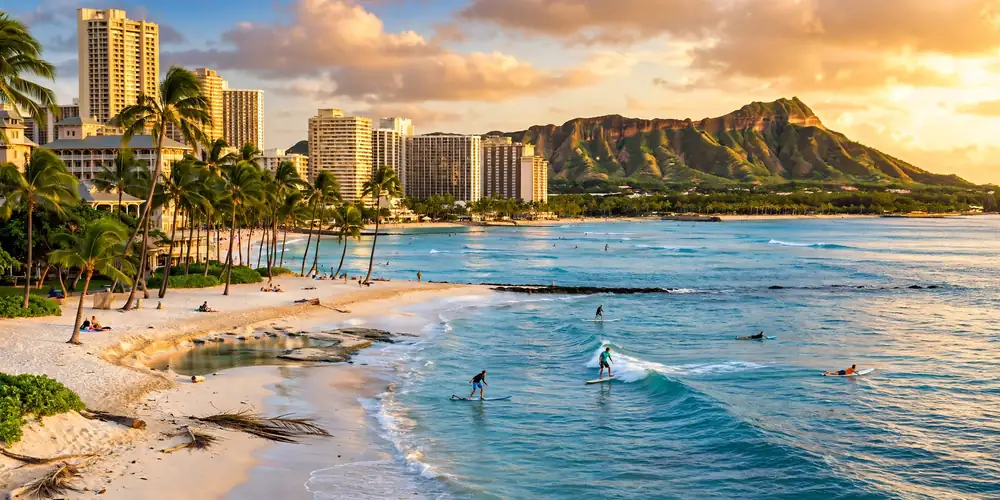
Quick Info
Best for: First-timers, beach lovers, surfers, snorkellers, history buffs and families — one island with a world-famous beach, a volcano crater, a war memorial, a coral bay and a big-wave coast all within an hour’s drive
Best time: April to May and September to October for the weather and the thinner crowds; December to February for the big North Shore surf and the humpback whales; November to April is whale season
How long: 1 day for Waikiki and Diamond Head; 2 days adding Pearl Harbor and Hanauma Bay; 3 days for the full loop — the North Shore, the Windward Coast and the Leeward Coast
Budget: About $200–$350 per person per day mid-range — Waikiki hotels run about $250–$450 a night, a rental car about $60–$90 a day, and the big sights $25–$60 each, while the beaches, the trails and Pearl Harbor cost nothing
Don’t miss: Waikiki Beach at sunrise, Diamond Head, Pearl Harbor and the USS Arizona Memorial, Hanauma Bay, the North Shore in winter, and a plate lunch eaten at a picnic table
Oahu on Wikipedia is the island most visitors mean when they say Hawaii — a 597-square-mile island that holds about two-thirds of the state’s people, the capital city of Honolulu, the famous beach of Waikiki, and the surf coast the whole world watches in winter. It is the island of four coasts that barely resemble each other: the city shore of Honolulu and Waikiki in the south, the big-wave North Shore, the green Windward Coast in the east, and the dry Leeward Coast in the west, all of it ringed by a single coastal road you can drive in a day. This guide covers the 20 best things to do in Oahu, a 3-day itinerary that groups the island by coast so you are not criss-crossing it, where to stay without paying Waikiki prices for a room you only sleep in, how to get around with a rental car for two days and the bus and the new rail for the rest, the three foods you should not skip, and the free sights that cost nothing. Everything below was checked against live sources in November 2026 — including the three separate reservation systems that turn people away every day, the Diamond Head booking window, the Hanauma Bay closed days, the Pearl Harbor ticket release, the Lanikai parking ban that went permanent on 1 July 2026, the Nuuanu Pali Lookout closure after Hurricane Lowell, and the Waimea Valley closed day that half the guides on the internet get wrong.
Oahu at a glance
| Topic | What to know |
| Full name | Oahu — the third-largest Hawaiian island, in Honolulu County, about 2,400 miles from California and five hours by air from Los Angeles |
| Size | 597 square miles, about 44 miles long and 30 miles wide — small on a map, but an hour or more across in Honolulu traffic |
| Population | About 1 million people, roughly two-thirds of Hawaii’s population, most of them in Honolulu and its suburbs |
| Capital | Honolulu, the state capital and the largest city in Hawaii, at the south-east corner of the island |
| Best base | Waikiki for first-timers; Kailua for the Windward Coast; Haleiwa or Turtle Bay for the North Shore; Ko Olina for the Leeward Coast |
| Getting around | A rental car for the North Shore and the Windward Coast; TheBus and the Skyline rail in town; walking in Waikiki |
| Famous for | Waikiki Beach, Diamond Head, Pearl Harbor, the North Shore surf, Hanauma Bay, humpback whales, plate lunch and shave ice |
Oahu works as four islands in one, and the mistake most first-timers make is treating it as a single beach. The south shore is the city: Honolulu and Waikiki, where the hotels, the museums, the palace and the memorials sit within a few miles of each other. The North Shore is the surf coast, a string of small towns and big beaches where the waves in winter are thirty feet high and the same sand is calm enough for children in summer. The Windward Coast is the green side, where the Koolau mountains drop straight into the sea at Kailua, Lanikai and Kaneohe, and the rain makes everything lush. The Leeward Coast is the dry side, with the resort lagoons of Ko Olina and the wild, road-damaged edge of Kaena Point. The trap is the reservations, and this is where our guide beats the older ones: three of Oahu’s best sights — Diamond Head, Hanauma Bay and the USS Arizona Memorial — now run on three different booking systems with three different release windows, and showing up without a booking means being turned away at the gate, so read the reservation notes in each section before you plan a day around them. For the wider Hawaii trip, our Hawaii guide covers the whole state and the other islands, and our Kauai guide covers the Garden Isle to the north-west.
The 20 best things to do in Oahu
1. Waikiki Beach
Waikiki Beach is the beach that taught the world to surf, and it is still the best place on Oahu to learn. The two-mile curve of white sand in front of the hotels at the foot of Diamond Head is where Duke Kahanamoku, the Olympic swimmer who carried surfing to the world, gave his first lessons a century ago, and the waves here are still slow, forgiving rollers that break over a shallow reef — the reason every surf school on the island works this beach. The water is warm year-round, the sand is wide at the central stretch by the Royal Hawaiian and the Moana Surfrider, and the whole beach is public, so you can walk the full length from the Hilton Hawaiian Village at the west end to Kapiolani Park and the Natatorium at the east end without ever leaving the sand. Come before 9 a.m., when the light is low and the beach belongs to local swimmers and outrigger canoe crews, and come back at dusk for the free hula show and torch lighting at Kuhio Beach, which runs most evenings, and for the Friday-night fireworks off the Hilton Hawaiian Village. Two practical notes: the sand is narrowest and the crowds thickest at the central hotels, so walk east past the Natatorium to Kaimana Beach for space, and the ocean here is gentle but not a swimming pool — check the lifeguard flags, because the south shore gets its own swells in summer. Allow a morning or a whole lazy day. Waikiki on Wikipedia covers the beach and its history, and Duke Kahanamoku on Wikipedia covers the man who made it famous.
2. Diamond Head State Monument
Diamond Head is the crater on every postcard of Waikiki, and the hike to its summit is the single best hour you can spend on Oahu. The 1.6-mile round-trip trail climbs 560 feet from the crater floor to the 760-foot summit, through a dark tunnel and up two sets of stairs — 99 steps, then a 54-step spiral staircase — to a lookout with the whole of Waikiki, Honolulu and the south coast spread out below. The crater itself is a volcanic tuff cone formed about 300,000 years ago, and the trail was built in 1908 as part of the coastal defences, which is why the summit still has its old fire-control station and pillboxes. The reservation rule is the thing older guides get wrong, and this is where our guide beats them: since 2022, non-residents must book a timed entry in advance at the state parks site, up to 30 days ahead, and arrive within the first 30 minutes of your slot or you can be turned away. Entry is $5 per non-resident person and $10 per vehicle to park, Hawaii residents are free with ID and need no booking, the park is open 6 a.m. to 6 p.m. and closed on Christmas Day and New Year’s Day, and credit card only — no cash. Book the first slot of the day, go before the heat builds, bring water because there is no shade at all on the upper trail, and allow about two hours. Diamond Head is also closed on 13 December 2026 for the Honolulu Marathon, so do not plan a mid-December Sunday visit. Diamond Head on Wikipedia covers the crater and its history.
3. Pearl Harbor and the USS Arizona Memorial
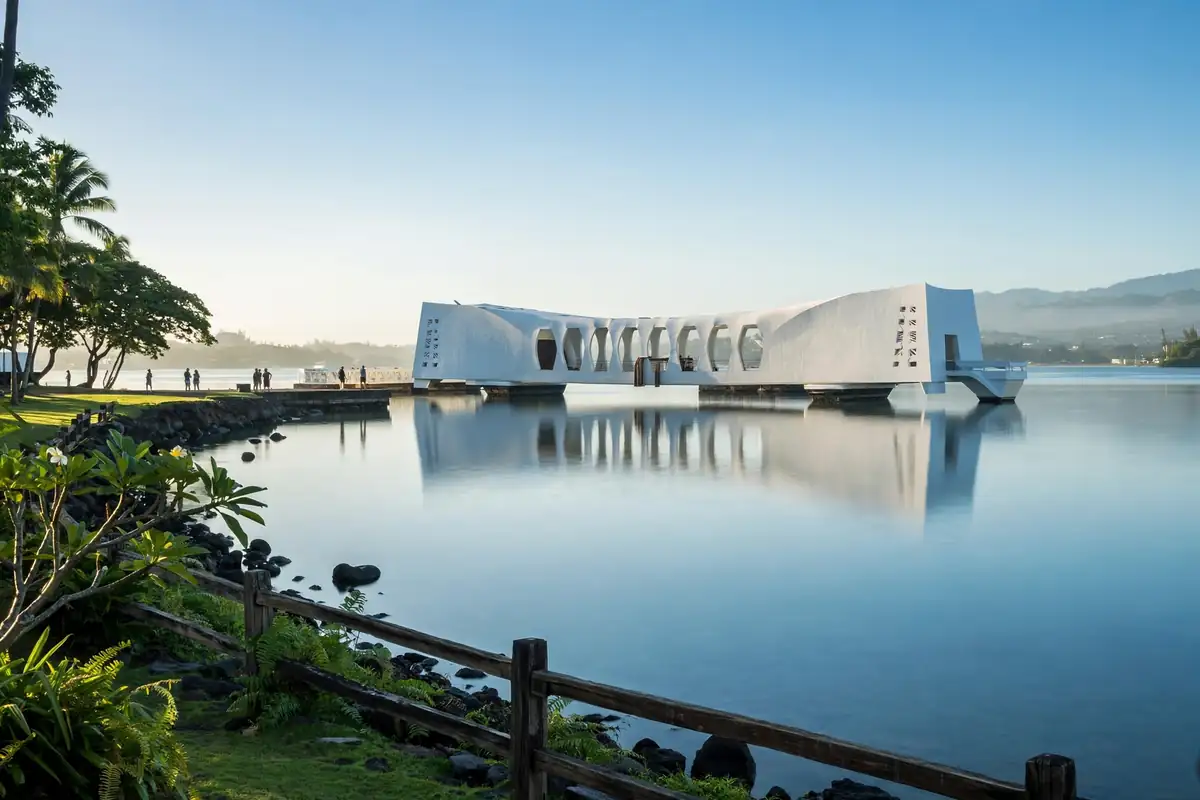
Pearl Harbor is the most important historic site in Hawaii and the one that demands the most planning. The National Park Service runs the visitor centre, its two free museums and the boat programme out to the USS Arizona Memorial, the white structure that straddles the sunken battleship where 1,177 sailors and Marines died on 7 December 1941 — and 7 December 2026 is the 85th anniversary of the attack, so expect the busiest week the site has seen in a decade. The memorial itself is free, but there are no walk-in tickets any more: book on Recreation.gov, where tickets are released at 3 p.m. Hawaii time 56 days ahead and again one day ahead, with a $1 non-refundable fee per ticket, and the one-day batch is gone within minutes. There is a free standby callback line at the visitor centre, but it is not guaranteed and may not run in peak weeks, so do not build a day around it. The visitor centre is open 7 a.m. to 5 p.m. daily, closed on Thanksgiving, Christmas and New Year’s Day, and the boat programmes run from 8 a.m. to 3:30 p.m. Parking is $7 a day, paid by phone through the QR codes on the lot signs, and bags are not allowed inside the visitor centre — storage costs $7 a bag. The three partner sites cost extra: the Battleship Missouri is $44.99 for adults and $19.99 for children, the USS Bowfin submarine is $25.99 and $14.99, the Pearl Harbor Aviation Museum is $29.99 and $17.99, and the Passport to Pearl Harbor is $99.99 for adults and $49.99 for children aged 4 to 12 — and it does not include the Arizona, which you must book separately. Allow a full morning, book the earliest programme, and read the bag rule before you leave the hotel. Pearl Harbor on Wikipedia covers the harbour and the base, the USS Arizona Memorial on Wikipedia covers the memorial, and the attack on Pearl Harbor on Wikipedia covers the day itself.
4. Hanauma Bay Nature Preserve
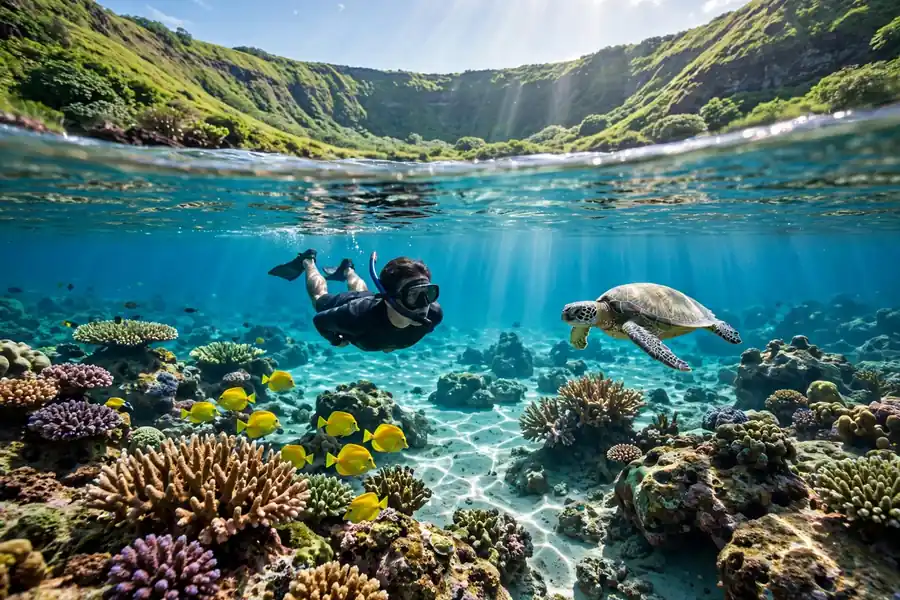
Hanauma Bay is the prettiest snorkelling spot on Oahu and the most tightly managed — a drowned volcanic crater whose reef holds more than 400 species of fish, and a marine conservation district where the rules are the point. The bay is open Wednesday to Sunday only and closed every Monday and Tuesday, plus Christmas Day and New Year’s Day, with entry from 6:45 a.m. to 1:30 p.m., the beach clearing at 3:30 p.m. and everyone out by 4 p.m. Non-residents pay $25 per person aged 13 and over, children 12 and under are free, and parking is $3, cash only. The reservation is the catch that turns people away daily: bookings open exactly two days ahead at 7 a.m. Hawaii time on the city’s reservation site, they are non-refundable, and the morning slots go first, especially at weekends — set an alarm for 7 a.m. two days before you want to go. Before you enter the water you watch a short marine education video on site, and the rules are strict: no standing on the coral, no touching the turtles, reef-safe sunscreen only. The city has also announced a temporary closure in early 2027 for sewer work, with the dates still to be confirmed, so check before you book a trip around it. Go early, when the water is calmest and the fish are closest in, and allow three to four hours. Hanauma Bay on Wikipedia covers the bay and its reef.
5. The North Shore — Waimea Bay, Banzai Pipeline and Sunset Beach
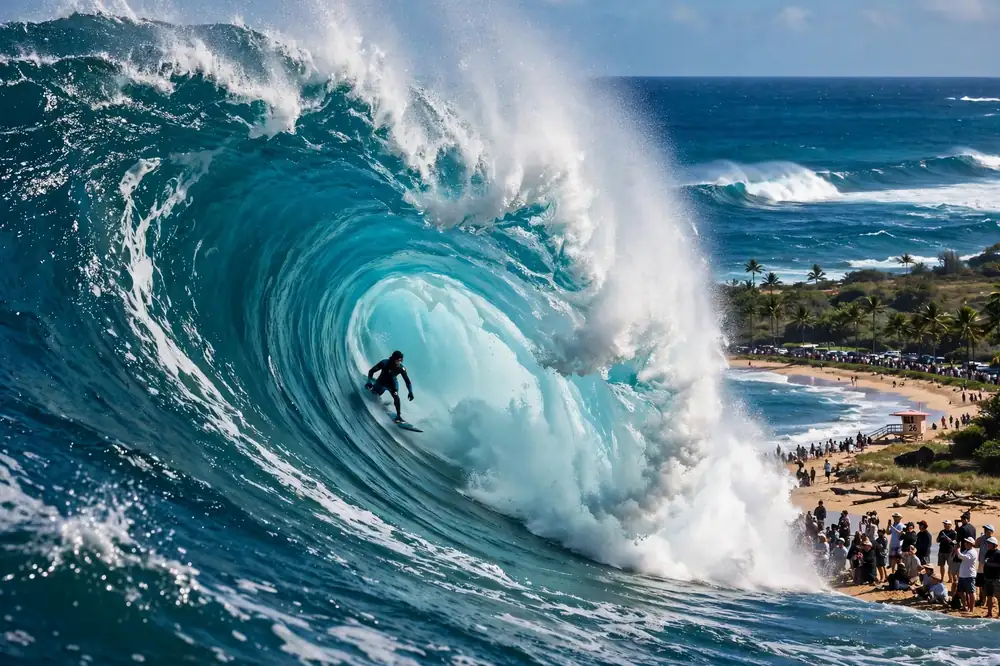
The North Shore is where surfing became a religion, and in winter it is the most exciting shoreline in the world. From November to February, storms in the North Pacific send swells to this coast that build into waves thirty feet high and more at Waimea Bay, Banzai Pipeline and Sunset Beach, and the world’s best surfers gather here for the Triple Crown of Surfing, which runs across Haleiwa, Sunset Beach and Pipeline through November and December. The rule for everyone else is simple: in winter, watch from the sand and do not go in. Pipeline is a shallow reef break and one of the most dangerous waves on earth, Waimea Bay closes out and becomes unrideable except on the biggest swells, and lifeguards close beaches to swimming when conditions turn. In summer the same coast flips — the swell all but disappears from May to September, the water goes flat and warm, and Waimea Bay and Shark’s Cove become some of the best swimming and snorkelling on the island. The three beaches sit within a few miles of each other on Kamehameha Highway, so drive the coast slowly, stop at the viewpoints, and expect heavy traffic on contest days. Allow a full day, bring food because the food trucks are the lunch here, and check the surf report before you decide whether to swim or watch. The North Shore on Wikipedia covers the coast, Banzai Pipeline on Wikipedia covers the famous break, Waimea Bay on Wikipedia covers the bay, Sunset Beach on Wikipedia covers the third beach, and the Triple Crown of Surfing on Wikipedia covers the contest series.
6. Polynesian Cultural Center
The Polynesian Cultural Center in Laie is the biggest cultural attraction on Oahu and a full-day commitment — 42 acres of six recreated island villages (Hawaii, Samoa, Tonga, Aotearoa, Fiji and Tahiti) run by students of Brigham Young University-Hawaii, with demonstrations, canoe rides, crafts and dancing from midday until the evening show. The schedule is the thing to get right: the centre is open Monday, Tuesday, Thursday, Friday and Saturday from noon to 9 p.m., and closed on Sundays and on most Wednesdays, as well as Thanksgiving and Christmas Day, so a Wednesday or Sunday plan is a wasted drive up the coast. Villages-only tickets start from about $94.95 per adult, the Alii Luau package is about $198, and the top Super Ambassador package is about $294, with children paying roughly 20 per cent less, and booking online ahead is usually cheaper than the gate. The evening show, Ha: Breath of Life, runs from 7:15 to 8:50 p.m. with reserved seating, and photography is not allowed during it. Come at opening, work through the villages in the afternoon, eat the luau dinner and stay for the show — a full visit runs seven to eight hours, and the drive back to Waikiki is about an hour. The Polynesian Cultural Center on Wikipedia covers the centre and its villages, and Laie on Wikipedia covers the town around it.
7. Kualoa Ranch
Kualoa Ranch is the valley Hollywood uses when it needs Hawaii — a 4,000-acre private nature reserve and working cattle ranch on the Windward Coast where Jurassic Park, Jurassic World, Lost, Godzilla and dozens more were filmed, with the jagged Koolau cliffs rising behind every shot. There is no general admission ticket: you book one specific guided tour, and the prices run from $59.95 per adult for the 90-minute Movie Sites and Ranch Tour, through $149.95 for the 2.5-hour Jurassic Adventure Tour, to $154.95 for the two-hour self-drive UTV Raptor Tour (drivers 21 and over, riders 5 and over) and $184.95 for the three-hour zipline, all before Hawaii’s 4.712 per cent tax. The half-day package pairs the Movie Sites tour with the Ocean Voyage and a buffet lunch for $124.95. First-timers should take the Movie Sites tour, which covers the Ka’a’awa Valley locations with a guide driving; Jurassic fans should take the longer Jurassic Adventure; thrill-seekers should take the UTV or the zipline. Book days ahead in summer and at weekends, arrive 30 minutes early because tours leave on time, and wear closed-toe shoes and clothes you do not mind getting dusty. Allow half a day. Kualoa Ranch on Wikipedia covers the ranch and its film history.
8. Waimea Valley
Waimea Valley is the North Shore’s green heart — a botanical garden and cultural site in a valley that was sacred to Native Hawaiians for centuries, ending in a 45-foot waterfall you can swim under. The valley holds more than 5,000 kinds of plants across its gardens, with Hawaiian cultural sites along the paved 1.5-mile path to the falls, and the swim is the payoff: when the lifeguard says it is safe, you can swim to the base of the falls, with life vests mandatory and free. Admission is $26 for adults, $20 for seniors and students, and $18 for children aged 4 to 12, with children under 4 free, and a shuttle up the valley costs $10 one way. The closed day is the detail half the guides on the internet get wrong: Waimea Valley is open Tuesday to Sunday from 9 a.m. to 4 p.m. and closed on Mondays — we checked the valley’s own site, whose published hours list Tuesday to Sunday and no Monday at all, while several popular guides still say it is closed on Fridays. Go in the morning before the tour buses, wear shoes that can get muddy, and allow three hours. Waimea Valley on Wikipedia covers the valley and its history.
9. Lanikai Beach
Lanikai Beach is the most photographed beach on Oahu — a half-mile of white sand and water so blue-green it looks edited, with the twin Mokulua Islands sitting offshore and no buildings, no crowds and no noise. The catch is that there is nothing here at all: no parking lot, no restrooms, no showers and no lifeguards, and the parking rule changed for good in 2026. On 1 July 2026 the city made the parking ban on Mokulua Drive permanent and all day, every day, with the same ban following on A’alapapa Drive, and the cross streets are being converted to one-way with parking allowed on one side only and banned from 10 a.m. to 4 p.m. — the only exceptions are a handful of three-minute loading spots, and illegally parked cars are towed and fined. The plan that works is to park at Kailua Beach Park, about half a mile away, which has free parking, restrooms and showers, and walk or bike to Lanikai, or take TheBus Route 671 through the loop. Come at sunrise, when the light hits the Mokulua Islands and the beach is nearly empty, bring everything you need including water, and respect the neighbourhood — this is a residential street, not a resort. Lanikai Beach on Wikipedia covers the beach.
10. Makapuu Point Lighthouse Trail
The Makapuu Point Lighthouse Trail is the easiest great hike on Oahu and the best sunrise walk on the island — a fully paved two-mile round trip that climbs about 500 feet to the island’s south-eastern point, with views of the lighthouse, the windward coast, Koko Head and, in winter, humpback whales breaching offshore. The lighthouse itself was built in 1909 and is still an active Coast Guard light, so it is off-limits to the public, but the viewpoint beside it is the reward, and the trail is wide and smooth enough for wheelchairs and strollers for much of its length. There is no fee to enter or to park, and the park is open from 7 a.m. to 7:45 p.m. in summer (from 1 April) and 7 a.m. to 6:45 p.m. in winter (from the day after Labor Day). Arrive early, because the free parking lot fills fast and there is no shade on the trail at all — bring water, sunscreen and a hat, and allow one to two hours. In whale season, from November to April, bring binoculars: Makapuu is one of the best shore spots on the island for spotting spouts. Makapuu Point Light on Wikipedia covers the lighthouse, and Koko Head on Wikipedia covers the crater across the bay.
11. Byodo-In Temple
The Byodo-In Temple in Kaneohe is the quietest, most beautiful stop on the Windward Coast — a scarlet replica of a nearly 1,000-year-old temple in Uji, Japan, set in a koi pond at the foot of the Koolau mountains, with a nine-foot Buddha inside and wild peacocks wandering the grounds. The temple was dedicated in June 1968 to mark one hundred years since the first Japanese immigrants arrived in Hawaii in 1868, and it sits inside the Valley of the Temples Memorial Park, a working cemetery founded in 1963 — which is why the visit asks for quiet and respect rather than noise and selfies. Admission in 2026 is $10 for adults aged 13 to 64, $8 for seniors 65 and over, and $6 for children aged 2 to 12, with children under 2 free, and the grounds are open daily from 8:30 a.m. to 4:30 p.m., with the last entry at 4:15 p.m. Two things older guides get wrong: the temple no longer takes cash at all — cards and contactless payment only — and parking is now $6 an hour, so this is a one-hour stop, not a place to leave the car. Ring the three-ton Bon-sho bell before you enter, feed the koi, and allow about an hour. The Byodo-In Temple on Wikipedia covers the temple and its original in Japan.
12. ‘Iolani Palace
‘Iolani Palace is the only official royal residence on American soil, and the one Honolulu sight that explains Hawaii’s history better than any museum. Built in 1882 for King Kalakaua, the palace had electric light and indoor plumbing before the White House did, and it was here that Queen Liliuokalani, Hawaii’s last monarch, was imprisoned for nine months after the overthrow of the monarchy in 1893 — her quilt, her music and her rooms are still on display. The ticket rule is strict: tickets are sold online only, with no same-day sales at the door, so book before you go. The audio tour is $28 for adults, $23 for ages 13 to 17 and $13 for ages 5 to 12; the docent-guided tour is $34, $31 and $16; and the palace is open Tuesday to Saturday from 9 a.m. to 4 p.m., closed on Sundays and Mondays and on Thanksgiving, Christmas, New Year’s Day, Prince Kuhio Day on 26 March, King Kamehameha Day on 11 June and Statehood Day on the third Friday in August. Take the docent tour if you can — the guides tell the story of the overthrow and the Queen’s imprisonment the way no audio guide does — and allow two hours. For the rest of downtown Honolulu, our Honolulu guide covers the historic district, the waterfront and the neighbourhoods around the palace. ‘Iolani Palace on Wikipedia covers the palace and its monarchs, and Kamehameha I on Wikipedia covers the king who united the islands.
13. Bishop Museum
The Bishop Museum is the best museum in Hawaii and the one that puts the rest of the island in context — the largest collection of Hawaiian and Pacific cultural treasures in the world, in a Romanesque building founded in 1889 by Charles Reed Bishop in memory of his wife, Princess Bernice Pauahi Bishop, the last direct descendant of Kamehameha I. Hawaiian Hall is the heart of it: three floors of feather cloaks, canoes, weapons and royal regalia, with the skeleton of a sperm whale hanging in the atrium. Pacific Hall covers the cultures of the wider Pacific, the planetarium runs shows about the Hawaiian night sky, and the science adventure centre is the one children remember. Admission is $28.95 for adults, and the museum is open Wednesday to Monday, closed on Tuesdays — allow two to three hours, and go on a weekday morning, when the school groups have not yet arrived. The Bishop Museum on Wikipedia covers the museum and its collections.
14. Manoa Falls
Manoa Falls is the rainforest walk that feels furthest from Waikiki while being fifteen minutes from it — a 1.6-mile out-and-back trail through a dripping green valley of bamboo, ginger and banyan trees to a 150-foot waterfall. The trail is free, needs no permit and no reservation, and is open daily from sunrise to sunset, with the paid trailhead lot open from 8 a.m. to 6 p.m. The trail was closed for weekday maintenance in spring 2026, but normal hours resumed on 11 April 2026, and it is open year-round now — the best flow is in the rainy season from November to March, when the falls run at their fullest, and the thinnest trickle is in summer. Two rules: do not swim at the base of the falls — swimming is banned after rockfalls and because of the risk of leptospirosis — and wear shoes with grip, because the trail is muddy and slippery after rain, which in this valley is most days. The Aihualama Trail branch off the main path is currently closed. Allow two hours, go in the morning, and bring a rain jacket even if Waikiki is sunny. Manoa Falls on Wikipedia covers the falls and the trail.
15. Honolulu Museum of Art
The Honolulu Museum of Art is the calm, air-conditioned counterweight to a week of beaches — a collection of more than 50,000 works spanning Asia, Hawaii, Europe and America, set around open courtyards in a 1927 building that feels more like a palace than a museum. The Asian art is the strength, especially the Japanese and Chinese collections, and the Hawaiian art tells the story of the islands in a way the history museums do not. Admission is $25 for adults, $15 for Hawaii residents with ID, and free for everyone aged 18 and under. The hours are the trap: the museum is open Wednesday, Thursday, Saturday and Sunday from 10 a.m. to 6 p.m., and Friday from 10 a.m. to 9 p.m., and closed on Mondays and Tuesdays, plus New Year’s Day, 4 July, Thanksgiving and Christmas — do not show up on a Tuesday, because the doors will be locked. Friday is the best night, when the museum stays open late with live music in the central courtyard, and the third Sunday of every month is Community Sunday, when Hawaii residents get in free all day. The Shangri La house museum, the museum’s Islamic art house on the water, was closed for all of September 2026 for conservation work and reopened in October. Allow two to three hours. The Honolulu Museum of Art on Wikipedia covers the museum and its collections.
16. Dole Plantation
The Dole Plantation in Wahiawa is the easy, cheerful stop in the middle of the island — the pineapple attraction in the cool central saddle between the Koolau and Waianae ranges, about halfway between Honolulu and the North Shore. Walking in costs nothing: the grounds, the country store, the free pineapple-cutting and chocolate-making demonstrations and the fish-feeding pond are all free, and you only pay for the three activities. The Pineapple Express train is $15 for adults, $12.85 for children aged 4 to 12 and $14.10 for Hawaii residents and military, for a 20-minute narrated loop of about two miles through the fields; the Pineapple Garden Maze is $10; the Plantation Garden Tour is $8.50; and all three together are $28 for adults and $24 for children. The plantation is open daily from 9:30 a.m. to 5:30 p.m., closed on Christmas Day, with ticket sales ending 30 minutes before closing, and tickets are sold at the booth on the day — there are no reservations and no advance sales except an online priority-boarding train ticket. Come early, because the train line grows through the morning, and do not skip the Dole Whip at the counter — it is the best three dollars on the island. Allow one to two hours. Dole Plantation on Wikipedia covers the plantation and the pineapple industry.
17. Kailua Beach Park
Kailua Beach Park is the beach locals choose when they want Lanikai’s beauty with actual facilities — a 2.5-mile stretch of white sand on the Windward Coast with free parking, restrooms, showers, picnic tables and lifeguards, and water that is calm enough for kayaking and paddleboarding. The beach is the launch point for the paddle out to the Mokulua Islands and to the seabird sanctuary of Popoia Island, and the rental shops along Kailua Road will set you up with a kayak, a paddleboard or a bike for the day. The park is open from 5 a.m. to 10 p.m. daily, and the practical move is to park here and walk the half mile to Lanikai Beach, which has no parking at all since the July 2026 ban — Kailua Beach Park is the anchor for the whole area, including the Lanikai Pillbox hike, which starts from the same streets. Come early for a parking spot, stay for the sunset, and stop in Kailua town afterwards for shave ice and a plate lunch. Kailua on Wikipedia covers the town and the beach.
18. Haleiwa Town
Haleiwa is the North Shore’s town — a slow, one-street historic plantation town of surf shops, art galleries, food trucks and shave ice stands, where the pace drops the moment you cross the Anahulu Stream bridge. The town was the sugar plantation centre of the North Shore, and its wooden storefronts are protected as a historic district, so the main street still looks like it did a century ago. Walk it: the surf shops where the winter pros buy their boards, the galleries, the Matsumoto shave ice stand that has been serving since 1951, and the food trucks along Kamehameha Highway, including Giovanni’s Shrimp Truck, whose garlic shrimp plate is the North Shore’s most famous lunch. Haleiwa is also the practical base for the coast — the harbour here runs the whale-watching boats from December to April, the shark dives and the sunset sails, and the town’s shops are where you buy reef-safe sunscreen and a rash guard before you get in the water. Come in the late afternoon, when the surf traffic has eased and the light turns the town gold, and allow two to three hours. Haleiwa on Wikipedia covers the town and its history.
19. Shark’s Cove
Shark’s Cove at Pupukea is the best shore snorkelling on Oahu in summer — a lava-rock cove on the North Shore where the reef forms natural tide pools full of fish, eels and turtles, and the water is clear enough to see the bottom from the rocks. The name is misleading: there are no sharks here, and the cove is named for the shape of the rocks. The season is everything: from May to September the ocean is flat and the cove is a gentle, family-friendly swim, but in winter the same cove takes the full North Shore swell and is dangerous, with waves breaking over the rocks — check the surf report and the lifeguard flags before you get in, and do not swim here on a big winter day. There is no fee, no reservation and no facilities, just a small parking area on Kamehameha Highway and a rocky entry, so bring water shoes and go in the morning, when the water is calmest and the light is best underwater. Allow two hours, and pair it with a food-truck lunch in Haleiwa. The North Shore on Wikipedia covers the coast around the cove.
20. A day trip to Maui
Maui is a separate island, but it is the easiest day trip from Oahu and the one worth taking if you have a spare day — a 30-minute flight from Honolulu to Kahului, with flights running all day, puts you on the Valley Isle by breakfast. The day that works is the sunrise at Haleakala, the 10,000-foot volcano whose crater fills with cloud at dawn, followed by the Road to Hana or the beaches of Wailea and Kaanapali, and back to Honolulu by the evening flight. The best reason to go in winter is the whales: humpback whales gather off Maui in far greater numbers than off Oahu, and a whale-watching boat out of Lahaina in January or February is the most reliable whale trip in Hawaii. Book the flights and the Haleakala sunrise reservation separately — the sunrise needs a booking, and the flights are cheapest booked a week or two ahead — and do not try to drive the whole Road to Hana and fly home the same night. For the full island, our Maui guide covers the 20 best things to do there, and our Hawaii guide covers the whole state. Maui on Wikipedia covers the island.
Oahu in 3 days — a ready-made itinerary
Day 1 — Diamond Head, Waikiki and downtown Honolulu
Start before sunrise at Diamond Head, with the first entry slot you could book — the climb takes about an hour, the summit at dawn is the best view on the island, and you are back down before the heat builds. Spend the late morning on Waikiki Beach, learning to surf on the gentle rollers or just swimming, then walk the beach to Kapiolani Park and eat lunch in Waikiki. The afternoon is downtown: ‘Iolani Palace on a docent tour, then the Bishop Museum or the Honolulu Museum of Art, depending on whether you want history or art. Come back to Waikiki for sunset, the free hula show at Kuhio Beach, and, if it is a Friday, the fireworks off the Hilton Hawaiian Village. Dinner is a plate lunch or poke in Waikiki, and an early night — you have an early start tomorrow.
Day 2 — Hanauma Bay, Makapuu and the Windward Coast
Day two starts with the alarm you set two days ago: your Hanauma Bay reservation, booked for the first morning slot, with the education video, the reef and the turtles, out of the water by late morning. Drive east along the coast to the Makapuu Point Lighthouse Trail for the paved walk and the whale watching, then on to Lanikai Beach — parking at Kailua Beach Park and walking the half mile in — for the afternoon swim and the sunset light on the Mokulua Islands. On the way back, stop at the Byodo-In Temple in Kaneohe for an hour of quiet, then dinner in Kailua town. This is the day that needs the most advance booking, because Hanauma Bay’s reservations open only two days ahead and the morning slots go first.
Day 3 — Pearl Harbor, Dole Plantation and the North Shore
Day three is the big loop. Start at Pearl Harbor with the earliest Arizona Memorial programme you booked 56 days ahead, then the Missouri and the Bowfin if you want the full morning. Drive north to the Dole Plantation in Wahiawa for the train and a Dole Whip, then on to the North Shore: Waimea Valley for the waterfall swim, Haleiwa town for shave ice and the garlic shrimp trucks, and Sunset Beach or Banzai Pipeline for the sunset — in winter, the waves at their biggest; in summer, a calm swim at Shark’s Cove instead. If you would rather spend the day on culture than on surf, swap the North Shore afternoon for the Polynesian Cultural Center in Laie, but remember it is closed on Sundays and Wednesdays, and it needs a full afternoon and evening of its own.
Best time to visit Oahu
| Season | Weather | Crowds | Best for |
| Winter (Dec–Feb) | 78°F days, more rain, big surf | High at the holidays, quieter in January | Big-wave surfing, whale watching, the Triple Crown |
| Spring (Mar–May) | Warming up, showers easing | Moderate, busy at spring break | Waterfalls at full flow, good prices, fewer crowds |
| Summer (Jun–Aug) | 85°F days, driest, calm seas | Highest, family holidays | Swimming, snorkelling, calm North Shore beaches |
| Autumn (Sep–Nov) | Warm, showers returning | Lowest in September, rising in November | Shoulder-season prices, first winter swells, early whales |
Hawaii has two seasons, not four: kau, the summer, runs from May to October, and hooilo, the winter, runs from November to April, and the temperature barely moves — about 85°F in summer and 78°F in winter. What changes is the ocean and the rain. Winter is when the North Pacific storms send the big swells to the North Shore and the humpback whales arrive from Alaska, and it is also when the rain comes, though the showers are usually brief and localised, and the leeward side where most visitors stay is the driest part of the island. Summer is when the North Shore goes flat and the snorkelling is at its best, and when Waikiki is at its busiest. The sweet spot for most visitors is April to May or September to October: the weather is warm and dry, the crowds are thinner, the prices are lower, and the ocean is calm enough to swim everywhere. If you come for the surf and the whales, come between December and February — but know that November whale sightings are early and less reliable, and that the biggest surf days cannot be planned around, because the swells arrive when they arrive. Hawaii does not observe daylight saving, so check the time difference before you set your 7 a.m. reservation alarms. The humpback whale on Wikipedia covers the whales that visit every winter.
Where to stay in Oahu
| Area | Best for | Price feel | Note |
| Waikiki | First-timers, walkers, nightlife | $250–$450 a night | Stay east of the centre for quieter sand; parking is $30–$50 a night |
| Honolulu and Ala Moana | Value, shopping, longer stays | $180–$300 a night | A short bus or walk from Waikiki, with the mall and the beach park |
| Kailua | Windward Coast, families, slow days | $200–$400 a night | Mostly vacation rentals; check the listing is licensed |
| North Shore (Haleiwa, Turtle Bay) | Surf, quiet, winter watching | $250–$500 a night | A full day’s drive from Honolulu in traffic; book early for winter |
| Ko Olina | Resorts, lagoons, families | $350–$600 a night | The Leeward Coast is dry and sunny, but far from the North Shore |
Stay in Waikiki if it is your first trip. Everything a first-timer needs is within walking distance — the beach, the restaurants, the shops, the bus to Diamond Head and the museums — and the hotels run from the big resorts on the sand to smaller hotels a block back that cost half as much. The money trap is the extras: Waikiki hotels add a resort fee and charge $30 to $50 a night for parking, and Hawaii’s hotel taxes, including the transient accommodations tax that rose to 11 per cent on 1 January 2026, sit on top of the room rate, so the price you see is never the price you pay. If you want a slower trip, base yourself in Kailua on the Windward Coast, where the rentals are houses rather than hotel rooms — but check the listing is licensed, because the city restricts short stays outside resort areas and unlicensed rentals do get shut down. The North Shore is the right base for a surf trip in winter and the wrong base for a first trip, because every drive to Honolulu is an hour in traffic. Wherever you stay, book the room before you book the Diamond Head and Hanauma Bay reservations, because those are tied to your dates, not your hotel.
Getting around Oahu
| Option | Cost | Best for | Watch out |
| Rental car | About $60–$90 a day, plus parking | The North Shore, the Windward Coast, day trips | Waikiki hotel parking is $30–$50 a night |
| TheBus | $3.25 cash, $3.00 on a HOLO card | Waikiki, Honolulu, the coast roads | No transfers on cash fares; slow across the island |
| Skyline rail | HOLO card only, $3.00 for a 2-hour pass | The airport, Pearl Harbor, Kapolei | Does not reach downtown, Ala Moana or Waikiki yet |
| Rideshare and taxi | $20–$40 across Honolulu | Airport runs, nights out | Surge pricing at Waikiki closing time |
| Waikiki Trolley | Day passes from the hotels | The main Waikiki and Honolulu sights | Tourist loops only, not the rest of the island |
You need a car for two days and not for the rest. Rent one for the North Shore and Windward Coast days, when the bus is slow and the sights are spread out, and give it back for the Waikiki and Honolulu days, when walking and the bus are faster and hotel parking costs more than the car. TheBus is the workhorse: $3.25 cash per ride with no transfers, or $3.00 for a two-hour pass on a HOLO card, which covers unlimited rides on TheBus and the Skyline rail inside the window. The Skyline rail changed in 2026: the second segment opened on 16 October 2025, so the line now runs about 16 miles through 13 stations from East Kapolei to the airport and on to Kahauiki, with trains from 4 a.m. to 10:30 p.m. every 10 to 15 minutes — but it still does not reach downtown Honolulu, Ala Moana or Waikiki, so you transfer to TheBus for the last stretch, and the next segment into downtown is not expected before 2031. The rail is cashless, so you need a HOLO card. Two warnings for drivers: Honolulu traffic is real, and a 22-mile drive can take 75 minutes at peak, so leave early for the North Shore; and the Nuuanu Pali Lookout and its access road have been closed since Hurricane Lowell hit on 7 and 8 September 2026, with no reopening announced, so do not plan a stop there. TheBus on Wikipedia covers the bus system, and Skyline on Wikipedia covers the rail line.
Oahu food you have to try
Plate lunch and loco moco
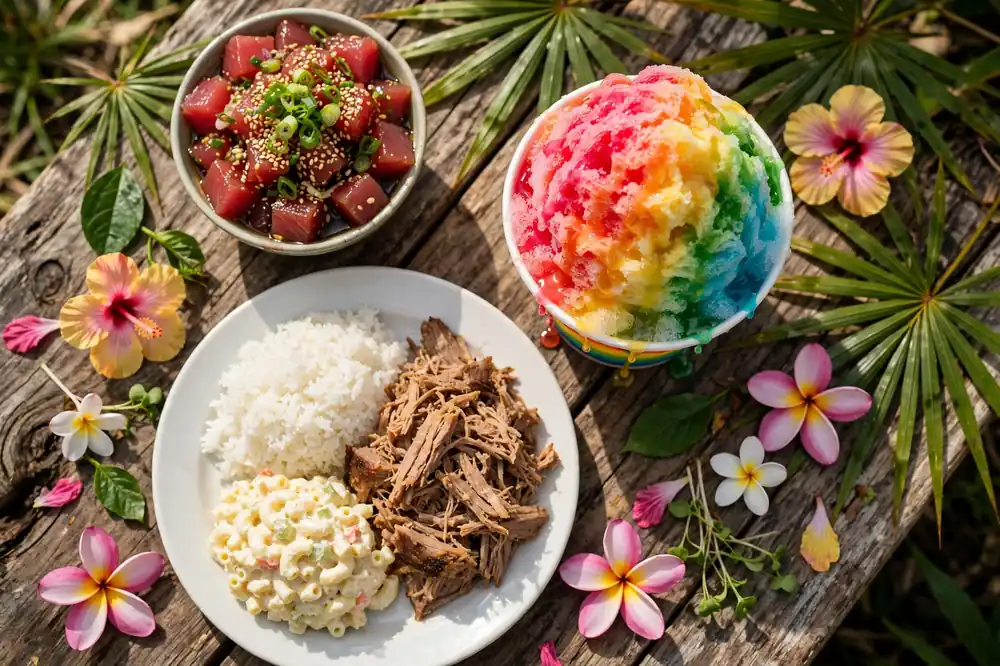
The plate lunch is Hawaii’s everyday meal and the best value on the island: two scoops of rice, a scoop of macaroni salad, and a main — kalua pork, teriyaki chicken, garlic shrimp or fried mahimahi — on a paper plate at a picnic table, for about $15 to $20. The loco moco is its cousin: white rice topped with a hamburger patty, a fried egg and brown gravy, invented in Hilo in 1949 and now on every diner menu on Oahu. Eat them where the locals eat them — the plate lunch spots in Kailua and Honolulu, the shrimp trucks on the North Shore, the diners near the harbour — and not at the hotel restaurants, which charge twice as much for half the food. The plate lunch on Wikipedia covers the meal, and loco moco on Wikipedia covers its history.
Poke
Poke is Hawaii’s raw fish salad and Oahu’s best snack: cubes of fresh ahi tuna tossed with soy sauce, sesame oil, green onions and seaweed, sold by the pound at grocery delis and fish markets all over Honolulu. The best poke on the island is not in a restaurant — it is at the seafood counters of the supermarkets and the small poke shops in Kakaako and Kailua, where the fish was caught that morning and the price is half what the hotels charge. Order the shoyu ahi if it is your first time, the spicy ahi if you like heat, and eat it the same day, because poke does not keep. Poke on Wikipedia covers the dish.
Shave ice and malasadas
Shave ice is not a snow cone: it is ice shaved so fine it melts like snow, poured over with syrups — lilikoi, guava, mango, coconut — and topped, if you know what you are doing, with a scoop of vanilla ice cream and a drizzle of condensed milk, which the locals call a snow cap. Matsumoto’s in Haleiwa has been serving it since 1951, and the stands in Kailua and Waikiki are the afternoon stop after the beach. The malasada is the other sweet: a Portuguese doughnut, warm and sugar-coated, from Leonard’s Bakery in Honolulu, which has been frying them since 1952 — get the filled ones, custard or haupia, and eat them hot. Shave ice on Wikipedia covers the dessert, and malasada on Wikipedia covers the doughnut. Spam musubi on Wikipedia covers the convenience-store snack you will see everywhere.
Free things to do in Oahu
Oahu is an expensive island, but its best things are free. Waikiki Beach costs nothing, and neither does the walk along it at sunrise, the free hula show and torch lighting at Kuhio Beach most evenings, or the Friday-night fireworks off the Hilton Hawaiian Village. The Makapuu Point Lighthouse Trail is free, the Manoa Falls trail is free, Kailua Beach Park is free, Lanikai Beach is free, and the whole of the Pearl Harbor visitor centre — the grounds, the two museums and the film — is free, with only the boat to the Arizona needing a booked ticket that itself costs $1. The Ho’omaluhia Botanical Garden in Kaneohe is free, the walk through Kapiolani Park is free, and watching the surfers at Banzai Pipeline from the sand in winter is free and better than any paid show on the island. The trick is to spend your money where it buys something — a surf lesson, a snorkel rental, a plate lunch — and not on the things the island gives away.
Frequently asked questions
How many days do you need in Oahu?
Three days is the minimum for the full loop: one day for Waikiki, Diamond Head and downtown Honolulu, one day for Hanauma Bay, Makapuu and the Windward Coast, and one day for Pearl Harbor, Dole Plantation and the North Shore. Five days is comfortable, because it gives you a spare beach day and a spare day for the Polynesian Cultural Center or Kualoa Ranch, which do not fit into three days. One day is enough only for Waikiki and Diamond Head — you will see the postcard, but you will not see the island.
Do you need a car in Oahu?
You need a car for two days and not for the rest. Rent one for the North Shore and Windward Coast days, when the bus is slow and the sights are spread out, and give it back for the Waikiki and Honolulu days, when walking, TheBus and the Skyline rail are faster and hotel parking costs $30 to $50 a night. A rental car costs about $60 to $90 a day, and the bus is $3.25 cash or $3.00 on a HOLO card. If you stay only in Waikiki and take tours, you can skip the car entirely.
Do I need reservations for Diamond Head, Hanauma Bay and Pearl Harbor?
Yes — all three, on three different systems. Diamond Head needs a timed entry booked up to 30 days ahead, at $5 per non-resident person plus $10 per vehicle. Hanauma Bay needs a reservation made exactly two days ahead at 7 a.m. Hawaii time, at $25 per non-resident aged 13 and over, and it is closed on Mondays and Tuesdays. The USS Arizona Memorial is free but needs a ticket booked on Recreation.gov, released at 3 p.m. Hawaii time 56 days ahead and again one day ahead, with a $1 fee per ticket — and there are no walk-in tickets any more. Book all three before you fly.
When is the best time to visit Oahu?
April to May and September to October are the best months for most visitors: warm and dry, with thinner crowds and lower prices. December to February is the time for the big North Shore surf and the humpback whales, and the Triple Crown runs through November and December. June to August is the driest and calmest, and the best for swimming and snorkelling, but it is also the busiest and the most expensive. November brings the first winter swells and the first whales, but the whale sightings that early are less reliable.
Is Oahu expensive?
Yes — Oahu is one of the most expensive destinations in the United States. Waikiki hotels run about $250 to $450 a night before taxes and resort fees, a rental car is about $60 to $90 a day, and the big sights are $25 to $60 each. But the island balances it: the beaches, the trails, the Pearl Harbor visitor centre and the Friday fireworks are all free, a plate lunch is $15 to $20, and poke from a grocery deli is the cheapest good meal on the island. Budget about $200 to $350 per person per day mid-range, and less if you cook, walk and swim.
What should I skip in Oahu?
Skip the Nuuanu Pali Lookout, which has been closed since Hurricane Lowell hit on 7 and 8 September 2026, with no reopening announced. Skip the Haiku Stairs, the Stairway to Heaven, which has been closed since 1987 and is being demolished — climbing it is illegal and dangerous, and the fines are real. Skip the Paradise Cove luau in Ko Olina, which served its last plate on 31 December 2025 and is closed for good, although old guides still list it. Skip swimming on the North Shore in winter, when the waves that make Pipeline famous can kill a casual swimmer. And skip trying to drive the whole island in one day: the coastal road is beautiful, but Honolulu traffic will eat the day, and you will see everything through a windscreen.
Further reading
The USS Arizona Memorial on Wikipedia
The Polynesian Cultural Center on Wikipedia
The Byodo-In Temple on Wikipedia
The Bishop Museum on Wikipedia
The Honolulu Museum of Art on Wikipedia
The humpback whale on Wikipedia
No Reddit thread is linked here, because we could not verify a live Reddit thread about Oahu that adds anything to this guide. No Quora page is linked here, for the same reason.
Your Oahu trip, in one paragraph
Oahu is the island to start with, and the one you will come back to — a city beach, a volcano crater, a war memorial, a coral bay and a big-wave coast on a single island you can drive around in a day. Start with the islands: our Hawaii guide covers the whole state, our Maui guide covers the Valley Isle, and our Honolulu guide covers the capital city. Then the American cities, in the order we wrote them: our Chicago guide, our Nashville guide, our Los Angeles guide, our Orlando guide, our Miami guide, our San Diego guide, our Denver guide, our Savannah guide, our Dallas guide, our Charleston guide, our San Francisco guide, our Myrtle Beach guide, our Las Vegas guide and our San Antonio guide. Further afield: our London guide, our Portland guide, our Pigeon Forge guide, our Puerto Rico guide, our Atlanta guide, our Phoenix guide, our Paris guide, our Key West guide, our Colorado Springs guide, our Sedona guide, our Chattanooga guide, our Palm Springs guide, our St Louis guide, our Tokyo guide and our Japan guide. Then the middle of the map: our Kansas City guide, our Tennessee guide, our Branson guide, our Florida guide, our Amsterdam guide, our Montreal guide, our Fort Lauderdale guide, our Toronto guide, our Aruba guide, our Charlotte guide, our Indianapolis guide, our New Orleans guide, our Destin guide, our Santa Barbara guide, our Mexico City guide, our Arizona guide, our Osaka guide, our Minneapolis guide, our Pittsburgh guide, our California guide, our Asheville guide, our Costa Rica guide, our Washington DC guide and our Seattle guide. And the most recent: our St Augustine guide, our Lisbon guide, our Dubai guide, our Santa Fe guide, our Galveston guide, our Maine guide, our Sacramento guide, our Kauai guide, our Boston guide, our Cancun guide, our Madrid guide, our Salt Lake City guide, our Baltimore guide, our Barcelona guide, our Reno guide, our Milwaukee guide, our North Carolina guide, our New York guide, our Tucson guide, our Raleigh guide, our Corpus Christi guide, our Milan guide, our Salem guide, our Wilmington guide, our Memphis guide, our Flagstaff guide and our Austin guide.

About the Author