Things to Do in Fort Lauderdale
20 Best Attractions, a 3-Day Itinerary, Where to Stay, and the Food You Cannot Miss
Quick Info
Best for: First-time visitors to South Florida, beach lovers, boaters, families and anyone who wants Miami’s sunshine without Miami’s crowds
Best time: December to April for dry, sunny weather; late April and October to early November for warm water, thin crowds and lower hotel prices
How long: 3 days covers the essentials; 4 to 5 days if you add the Everglades, Butterfly World and a Miami day trip
Budget: Roughly $180 to $300 per person per day for a mid-range trip, including a beach hotel, one paid attraction and meals — before the resort fee and roughly 13% hotel tax
Don’t miss: Fort Lauderdale Beach at sunrise, a Water Taxi ride past Millionaires’ Row, Bonnet House, Las Olas Boulevard at dusk and an Everglades airboat ride
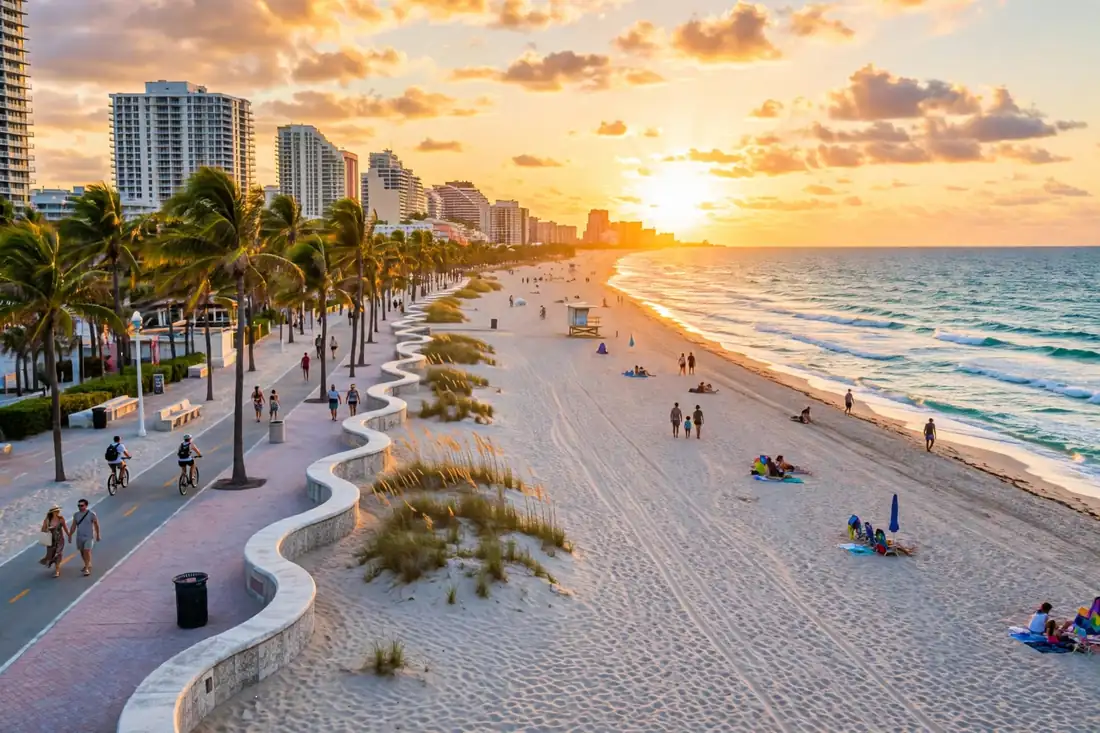
Fort Lauderdale is the Florida beach city that grew up: seven miles of white sand and a palm-lined promenade on the Atlantic, 165 miles of canals that earned it the name “Venice of America”, and a downtown riverfront, a historic artist’s estate and a museum row that most visitors never expect. It is the city 28 miles north of Miami where the cruise ships dock, the superyachts park and the locals eat stone crab on a dock — and it rewards the visitor who looks past the beach: the history at the Stranahan House, the art on Las Olas, the wild Everglades thirty minutes west, and a food scene — stone crab, grouper sandwiches, Key lime pie — that no other city in South Florida can match. This guide gives you the 20 best things to do in Fort Lauderdale in a sensible order, a ready-made 3-day itinerary, honest advice on when to go, where to stay and how to get around, and the three foods you have to try before you leave — plus the free sights that cost nothing at all. Prices and hours change, so every price in this guide is the 2026 price as published by the attraction itself — always check the official website before you visit.
One thing to know before you go: Fort Lauderdale in 2026 is not the city of the old guidebooks, and the old guides are wrong in expensive ways. The Water Taxi day pass is now $38, not the $32 the old guides quote, and Bonnet House is now $30, not $20. Pier Sixty-Six, which the old guides still describe as a shuttered construction site, reopened in January 2025 as the city’s flagship resort and marina. And the Museum of Discovery and Science now sells a Discovery Pass that costs more than the single ticket the old guides list. This guide tells you which traps to watch for, so you can plan with facts instead of outdated blog posts. Read about Fort Lauderdale on Wikipedia.
Fort Lauderdale at a glance
| Question | Short answer |
|---|---|
| Where is Fort Lauderdale? | On Florida’s Atlantic coast in Broward County, about 28 miles north of Miami and 45 miles south of West Palm Beach |
| What is it best for? | The beach and promenade, Las Olas Boulevard, the Water Taxi and the canals, Bonnet House, the Everglades and stone crab |
| How long should I stay? | 3 days for the essentials; 4 to 5 days if you add the Everglades, Butterfly World and a Miami day trip |
| How much does it cost? | Roughly $180 to $300 per person per day mid-range, before the resort fee and roughly 13% hotel tax |
| What is the one thing not to miss? | Fort Lauderdale Beach in the morning, then a Water Taxi ride past Millionaires’ Row at sunset |
| When is the best time to go? | December to April for dry, sunny weather; late April and October to early November for the best value |
| Is it good for families? | Yes — the beach, the Museum of Discovery and Science, Butterfly World, Flamingo Gardens and the Water Taxi make it one of Florida’s easiest family cities |
| Do I need a car? | No for the beach, Las Olas and downtown — the Water Taxi, the free Water Trolley and the bus cover the city; rent one only for the Everglades, Butterfly World and Flamingo Gardens |
The 20 best things to do in Fort Lauderdale
These are the 20 best things to do in Fort Lauderdale, ranked the way a first-time visitor should actually do them: the beach and Las Olas first, then the canals and the historic houses, then the museums, then the Everglades and the gardens, then the neighbourhood beaches and the day trips. Every price below is the 2026 price as published by the attraction itself, and every trap — the Water Taxi fare that went up, the Bonnet House ticket that went up, the resort that the old guides still call closed, the museum pass that replaced the old ticket — is called out where it matters.
1. Fort Lauderdale Beach and Promenade
Fort Lauderdale Beach is the reason most people come, and it is still the best beach in South Florida for a first visit. The seven-mile stretch of white sand runs along A1A from the 17th Street Causeway north past Las Olas Boulevard, with the famous wave-shaped wall and the wide, palm-lined promenade on one side and the turquoise Atlantic on the other. It is cleaner, calmer and more walkable than Miami Beach, with lifeguard towers, volleyball courts, beach showers and the beachfront bars that have served the strip since the spring break era — including the Elbo Room, pouring drinks since 1938. Read about Fort Lauderdale on Wikipedia.
The practical facts for 2026: the beach is free and open to the public around the clock, and it is best in the early morning, before the crowds, or at sunset, when the light turns the water gold. Swim near a lifeguard tower, rent a bike or a beach chair from one of the stands along the promenade, and walk the full stretch from Las Olas Boulevard north to Sunrise Boulevard — about an hour at a stroll — to see the whole beach. Metered parking on A1A and in the beach garages runs about $1.50 to $2.50 an hour, and it fills by mid-morning on weekends, so arrive early or take the Water Taxi to the beach stop. Allow half a day for the beach alone, and a full day if you add swimming, the promenade and lunch on Las Olas. One honest note: no alcohol or glass bottles are allowed on the sand, and the beach patrol enforces it — save the drinks for the bars across the street.
2. Las Olas Boulevard
Las Olas Boulevard is the most beautiful street in Fort Lauderdale, and it is the city’s social spine. The two-mile boulevard runs east from downtown to the beach, lined with more than 100 boutiques, art galleries, wine bars and restaurants under a canopy of banyan trees, and it is where the city dresses up: the sidewalk cafés fill at lunch, the galleries open late on art-walk evenings, and the street glows at dusk when the string lights come on. It is the one street in the city where you can spend a whole afternoon without a plan and still have a good day. Read about Las Olas Boulevard on Wikipedia.
The practical facts for 2026: walking Las Olas costs nothing, and it is best in the late afternoon, when the shops are open, the cafés fill and the light falls across the banyans, or on a weekend morning, when the street is quiet and the coffee shops are busiest. Start at the downtown end near the NSU Art Museum, walk east past the galleries and the restaurants, and finish at the beach end for the sunset — about an hour at a stroll, longer if you stop in the shops. The Water Taxi stops at Las Olas, and the free Water Trolley runs the boulevard, so you never need a car. Allow two to three hours, and eat dinner on the boulevard at least once — the restaurants here are the best in the city, and the most expensive, so pick one good meal rather than three average ones. One honest note: Las Olas is a shopping street first and a tourist sight second, so the prices in the boutiques are real — window-shop freely, and buy where the locals buy, a block off the boulevard.
3. The Water Taxi — the Intracoastal Waterway
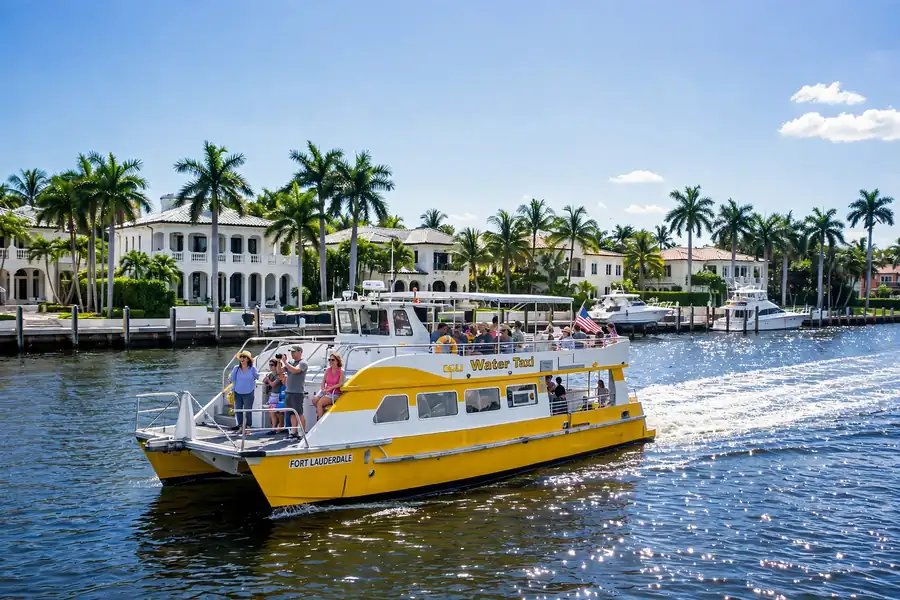
The Water Taxi is the best way to see Fort Lauderdale, and it is the most fun public transport in Florida. The fleet of small yellow-and-white ferries runs the Intracoastal Waterway and the New River, stopping at more than 30 waterfront hotels, restaurants and attractions — the beach, Las Olas, the Riverwalk, the Stranahan House, Shooters Waterfront and the marina at Pier Sixty-Six — with a captain’s narration of the mansions, the yachts and the history as you go. It is how you understand the “Venice of America”: 165 miles of canals, some 42,000 registered boats, and a city that lives on the water. Read about the Intracoastal Waterway on Wikipedia.
The practical facts for 2026: this is the trap most visitors fall into — the all-route adult day pass is now $38, not the $32 the old guides quote, with children aged 5 to 11 at $18 and children under 5 free. An evening pass after 5 p.m. costs $25, a 30-day pass costs $140 and an annual pass costs $349. Boats run daily from 10 a.m. to 10 p.m., arriving every 30 to 45 minutes, and the pass covers unlimited hop-on, hop-off boarding all day. Buy the pass online or onboard, download the live tracker before you go, and take the full loop once for the narration before using the boats as transport. Allow half a day for the loop and the stops, and go at sunset for the best light on Millionaires’ Row. One honest note: the Water Taxi is not fast — the boats stop often and the route is long, so use it for the experience and the views, and take a rideshare when you are in a hurry.
4. Bonnet House Museum and Gardens
Bonnet House is the most surprising place in Fort Lauderdale, and it is the best historic house in South Florida. The 35-acre estate, built in 1920 by artists Frederic and Evelyn Bartlett on the barrier island between the Atlantic and the Intracoastal, is a Caribbean-style house filled with the Bartletts’ art, furniture and personal treasures, set in five ecosystems of tropical gardens — orchids, palms, a lily pond and a desert garden — that the city grew around rather than over. It is the one place in Fort Lauderdale where the Florida of a hundred years ago survives intact, and the free parking is a rarity this close to the sand. Read about Bonnet House on Wikipedia.
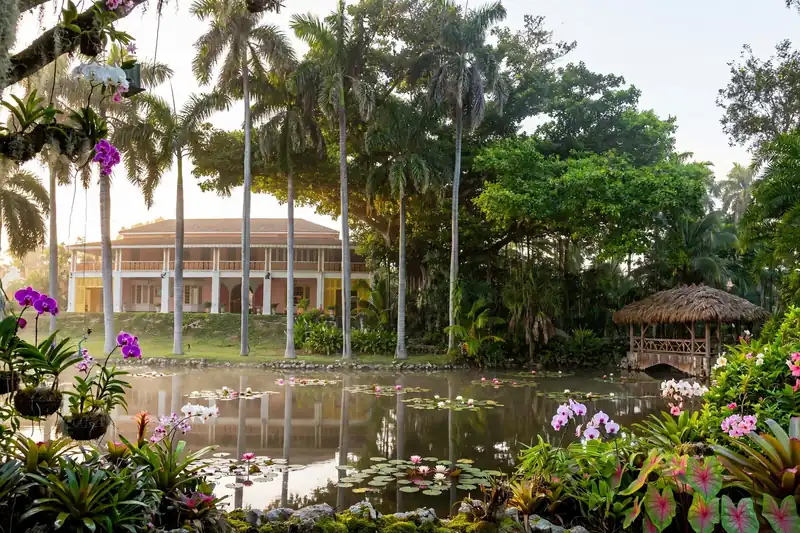
The practical facts for 2026: this is the trap most visitors fall into — self-guided admission is now $30 for adults, not the $20 or $25 the old guides quote, with ages 6 to 17 at $8, children 5 and under free, Broward County residents at $25 with ID and a gardens-only ticket at $15. Visits run Tuesday to Sunday from 11 a.m., with last admission at 4 p.m. and the grounds closing at 5 p.m., and the house is closed on Mondays. Guided downstairs tours cost $35 and run Tuesday, Thursday and Friday at 10 a.m. and 1 p.m., and the “Upstairs Downstairs” tour costs $40 on Wednesdays and Saturday mornings — book the guided tour if you can, because the guides are excellent and the groups are capped at 12. The house is at 900 North Birch Road, a five-minute walk from the beach. Allow two to three hours, and do not miss the courtyard fountain and the orchid garden. One honest note: the house is an artist’s home, not a mansion — go for the art, the gardens and the story, not for grandeur.
5. Hugh Taylor Birch State Park
Hugh Taylor Birch State Park is the wildest place in Fort Lauderdale, and it is the best free-feeling morning in the city. The 180-acre park, the last piece of the barrier island that was never built on, sits between the beach and the Intracoastal just north of Sunrise Boulevard, with a maritime hammock forest, a freshwater lagoon, nature trails, a beach tunnel under A1A and the gopher tortoises that wander the lawns. It is where the city goes to escape itself: to kayak the lagoon, to cycle the trails and to sit under the live oaks. Read about Hugh Taylor Birch State Park on Wikipedia.
The practical facts for 2026: entry costs $6 per vehicle, and the park is open daily from 8 a.m. to sunset. The beach is reached through the tunnel under A1A at the park’s eastern edge, and the lagoon has kayak and paddleboard rentals from the park’s outfitter. Allow two to three hours, and go in the morning, when the light falls through the hammock and the tortoises are out. The park is a ten-minute walk north from the main beach along A1A, and the Water Taxi does not stop here, so walk or take a rideshare. One honest note: the park is quiet on weekdays and packed on weekends, and the mosquitoes in the hammock are real after rain — bring repellent, and wear shoes with grip for the trails.
6. The Riverwalk and the New River
The Riverwalk is downtown Fort Lauderdale’s front porch, and it is the best free walk in the city. The 2.5-mile brick promenade runs along the New River from the Broward Center for the Performing Arts past the Museum of Discovery and Science, the Stranahan House and the downtown restaurants to the Las Olas bridge, with the river on one side and the parks, the sculptures and the café tables on the other. It is where the city gathers on a Saturday morning: the farmers market, the joggers, the dog walkers and the boats sliding past. Read about Fort Lauderdale on Wikipedia.
The practical facts for 2026: walking the Riverwalk costs nothing, and it is best in the morning, when the light is on the river and the market is on, or at dusk, when the restaurants fill and the river turns gold. The free LauderGO! Water Trolley runs the river daily from 10 a.m. to 10 p.m. — and this is the trap to know, because the free Water Trolley is a different boat from the paid Water Taxi, and the old guides mix them up. Start at Esplanade Park, walk east to the Las Olas bridge, and allow one to two hours, longer if you stop at the Stranahan House or the museum. One honest note: the Riverwalk is at its liveliest on weekends and quieter on weekday afternoons, and the downtown streets after dark are rougher than the beach — stay on the main promenade and the lit streets at night.
7. Historic Stranahan House Museum
The Stranahan House is the oldest surviving building in Fort Lauderdale, and it is the best small museum in the city. Built in 1901 by Frank Stranahan as a trading post on the New River, then the family home of the man who founded the city, the house is a time capsule of pioneer Florida: the original furniture, the family photographs, the trading post ledger and the veranda where the Seminole traders once tied up their canoes. It is the one place in the city where the story starts, and it takes an hour to see properly. Read about Stranahan House on Wikipedia.
The practical facts for 2026: adult tickets cost $13, and tours should be booked ahead — the house is small and the groups are capped. It sits at 335 SE 6th Avenue on the Riverwalk, a five-minute walk from the Broward Center, and the Water Taxi stops at the Stranahan House dock. Allow one hour, and pair it with the Riverwalk and the Museum of Discovery and Science, which are a short walk away. One honest note: the house is a pioneer home, not a mansion, and the visit is a guided tour, not a wander — listen to the guide, because the stories are the whole point, and the house is the oldest thing in a city that usually tears its history down.
8. NSU Art Museum Fort Lauderdale
The NSU Art Museum is the best art museum in Broward County, and it is the cultural anchor of Las Olas Boulevard. The museum, in a modernist building at One East Las Olas, holds more than 7,500 works — contemporary and modern art, a major collection of Haitian art, and the world’s largest collection of the American Impressionist William Glackens, more than 500 works — and its temporary exhibitions are the events the city’s art scene talks about. It is the museum for a slow afternoon, and the one place on Las Olas where the crowds disappear. Read about the NSU Art Museum Fort Lauderdale on Wikipedia.
The practical facts for 2026: adult tickets cost $16, seniors 65 and over pay $10, active-duty military pay $8, students aged 13 to 17 and college students with ID pay $5, and children 12 and under go free. The museum is open Tuesday to Saturday from 11 a.m. to 5 p.m. and Sunday from noon to 5 p.m., and it is closed on Mondays — the old guides that list it as open daily are out of date. Admission is free on the first Thursday of every month, with extended hours to 7 p.m. and a two-for-one happy hour. The long-running exhibition on Christo and Jeanne-Claude’s Surrounded Islands, the 1983 project that ringed Biscayne Bay’s islands in pink fabric, opened in February 2025 and runs into spring 2027. Allow two hours, and start with the Glackens collection, which no other museum in the world can match. One honest note: the museum is not big, and the contemporary wing is the one to skip if you are short on time — the Glackens collection and the Haitian art are the two that matter most.
9. Museum of Discovery and Science
The Museum of Discovery and Science is the best family stop in downtown Fort Lauderdale, and it is the most hands-on museum in South Florida. The museum on the Riverwalk holds two floors of interactive exhibits — the Everglades airboat simulator, the otter habitat, the aviation gallery — plus live science demonstrations, the HoloTheater and the AutoNation IMAX theater, where the documentaries play on a five-storey screen. It is the place to go when the beach is too hot or the rain arrives, and the best rainy-day plan in the city. Read about the Museum of Discovery and Science on Wikipedia.
The practical facts for 2026: this is the trap most visitors fall into — the museum now sells a Discovery Pass that includes the exhibitions, a HoloTheater experience and one IMAX documentary, and the old guides that quote a $22 single ticket are out of date. The non-member Discovery Pass costs $29.50 online or $31.50 at the box office for adults, with children aged 1 to 12 at $20 and seniors 65 and over at $24.50 online; South Florida residents pay $26.50 online. The museum is open Monday to Saturday from 10 a.m. to 5 p.m. and Sunday from noon to 6 p.m. Allow two to three hours, and book the IMAX show when you arrive, because the popular films sell out. One honest note: the museum is built for children, and the adults who expect a quiet science museum will find a noisy one — go for the kids, and let them run the exhibits.
10. Everglades airboat — Everglades Holiday Park
The Everglades airboat ride is the best half day out of Fort Lauderdale, and it is the wildest hour in South Florida. Everglades Holiday Park, on Griffin Road about 30 minutes west of downtown, runs 60-minute airboat tours across the sawgrass of the River of Grass — alligators, herons, egrets and the flat green horizon — followed by the Gator Boys live alligator show, where the rescue team handles the animals and tells the story of the Everglades. It is the closest real Everglades experience to the city, and the one day trip every first-timer should take. Read about the Everglades on Wikipedia.
The practical facts for 2026: the airboat tour, gator show and one free group photo cost $41.99 plus tax for adults aged 12 and over and $29.99 plus tax for children aged 3 to 11. Tours run every 20 minutes or less, and the park is open 365 days a year. Book online before you go, bring sunscreen and a hat — there is no shade on the boat — and wear shoes you do not mind getting wet. Allow half a day with the drive, and go in the morning, when the alligators are most active and the heat is down. One honest note: this is a private airboat park, not Everglades National Park itself — and if you do go to the national park, know that non-US residents now pay an extra $100 per person on top of the $35 vehicle entry from January 1, 2026, a change most 2026 guides still miss. The other well-priced option nearby is Sawgrass Recreation Park, where adults pay $30.95 and children aged 4 to 12 pay $20.95.
11. Flamingo Gardens
Flamingo Gardens is the most beautiful garden in Broward County, and it is the best half day for anyone who likes plants and animals. The 60-acre botanical garden and wildlife sanctuary in Davie, just west of Fort Lauderdale, holds more than 3,000 species of rare and native plants, the largest collection of rescued native Florida wildlife in the state — flamingos, alligators, panthers, otters, eagles and bears — and the historic Wray Home Museum, all reached by a free narrated tram tour. It is the place the city goes when the beach gets too loud. Read about Flamingo Gardens on Wikipedia.
The practical facts for 2026: adult tickets cost $24 for ages 12 and over, children aged 3 to 11 pay $17, and infants under 2 go free, with a 20% discount for seniors, veterans, military, college students and AAA or AARP members with ID. The gardens are open daily from 9:30 a.m. to 5 p.m., with last entry at 4 p.m., and closed on Thanksgiving and Christmas Day. The 2026 season brings David Rogers’ Big Bugs: The Pollinators, a large-scale outdoor installation of insect sculptures made from natural and reclaimed materials, installed throughout the gardens. Allow two to three hours, and take the tram first — it is the only way to see the whole park — then walk the butterfly garden and the rainforest. One honest note: the gardens are in Davie, not in Fort Lauderdale itself, and you need a car or a rideshare to get there — the bus does not go, and the old guides that call it a walk from downtown are wrong.
12. Butterfly World
Butterfly World is the most magical place in Broward County, and it is the best family stop outside the city. The park in Coconut Creek, inside Tradewinds Park about 25 minutes northwest of downtown, is the world’s largest butterfly park, with around 20,000 butterflies from up to 50 species flying free in screened aviaries, plus tropical bird aviaries, botanical gardens and the Lorikeet Encounter, where small bright parrots land on your arm to drink nectar from a cup. It is the one attraction in the area that children remember longest. Read about Butterfly World on Wikipedia.
The practical facts for 2026: day passes cost $32.50 plus tax for ages 12 and over, $22.50 plus tax for ages 3 to 11, and children 2 and under go free. The park is open Monday to Saturday from 9 a.m. to 5 p.m. and Sunday from 11 a.m. to 5 p.m., with last entry at 4 p.m., and it is closed on Easter Sunday, Thanksgiving and Christmas Day. Lorikeet nectar costs $2 a cup, cash only, and wheelchairs rent for $5 for up to two hours. Arrive by 3 p.m. to see the whole park, and note the Tradewinds Park gate fee, which applies on weekends and county holidays. Allow two to three hours, and go in the morning, when the butterflies are most active and the aviaries are quietest. One honest note: Butterfly World is a private attraction inside a county park, and you need a car to get there — and the South Florida Adventure Pass, at $45 for adults and $35 for children aged 3 to 12, bundles Butterfly World with Flamingo Gardens, the Museum of Discovery and Science and Sawgrass Recreation Park, so do the sums before you buy single tickets.
13. Hollywood Beach Broadwalk
Hollywood Beach Broadwalk is the best old Florida in Broward County, and it is the most relaxing beach walk south of Fort Lauderdale. The 2.5-mile brick-paved boardwalk — spelled Broadwalk, because it is broad, not a board walk — runs along Hollywood Beach from the Diplomat to the south, lined with cafés, ice cream shops and beach bars, with the sand on one side and the low-rise hotels on the other. It is the throwback the main beach is not: slower, cheaper and full of locals. Read about Hollywood, Florida on Wikipedia.
The practical facts for 2026: the Broadwalk is free to walk, open around the clock, and at its best in the late afternoon, when the cafés fill and the Bandshell concerts play on the beach, or on a weekend morning, when the cyclists and the joggers are out. It sits about 15 minutes south of downtown Fort Lauderdale by car or bus, and the beach is free. Allow two to three hours, and rent a bike from one of the stands to ride the full length — the Broadwalk is flat, wide and made for cycling. One honest note: Hollywood Beach is a different city, not a neighbourhood of Fort Lauderdale, and the old guides that list it as a Fort Lauderdale beach are wrong — but it is close enough to be the best half day south, and the Broadwalk is the reason to go.
14. Lauderdale-by-the-Sea
Lauderdale-by-the-Sea is the quietest beach town in Broward County, and it is the best place in the area to snorkel from shore. The small town just north of Fort Lauderdale, with its low-rise hotels, its village square and its fishing pier, sits over a living coral reef about 100 yards offshore — close enough that you can swim out from the beach and float over the coral, the tropical fish and the sea turtles without a boat. It is the Fort Lauderdale the locals keep for themselves: no high-rises, no crowds, just the reef and the town. Read about Lauderdale-by-the-Sea on Wikipedia.
The practical facts for 2026: the beach is free, the town is a ten-minute drive north from downtown Fort Lauderdale, and the reef is best in the morning, when the water is calmest and the visibility is best. Bring a snorkel and fins — there are rental shops in the village — and check the surf before you swim out, because the reef is in open water and the current runs. Allow half a day, and eat lunch in the village square, where the restaurants are the cheapest good seafood in the area. One honest note: the town is small and the parking is scarce, so arrive early or take a rideshare — and the reef is a living thing, so do not touch the coral or stand on it, and wear reef-safe sunscreen.
15. Pier Sixty-Six and the superyacht marina
Pier Sixty-Six is the most glamorous address in Fort Lauderdale, and it is the best example of the city’s new era. The 32-acre resort on the 17th Street Causeway, on the Intracoastal with the closest access to the Atlantic of any marina in the city, holds 325 guest rooms, 88 private residences, 12 restaurants and bars and a 164-slip superyacht marina for vessels up to 400 feet — and the Pier Top lounge, 17 floors up, turns slowly over the whole waterfront. It is the place to go for a drink at sunset, when the superyachts light up and the city shows off. Read about Fort Lauderdale on Wikipedia.
The practical facts for 2026: this is the trap most visitors fall into — Pier Sixty-Six reopened in January 2025 after a nearly eight-year closure, and the old guides that still describe it as a shuttered construction site are out of date. The resort is open, the marina is full, and the restaurants are the newest in the city — and Pelican Landing, the dockside bar and grill that was a fixture for decades before the closure, returns in late November 2026. The property is a ten-minute drive from downtown, and the Water Taxi stops at the marina. Allow an evening, and go for the sunset at Pier Top, where the 360-degree view is the best in the city. One honest note: Pier Sixty-Six is a luxury resort, and the prices match — go for a drink and the view, not for a cheap dinner, and dress as you would for a smart bar, not for the beach.
16. Secret Woods Nature Center
Secret Woods Nature Center is the best-kept secret in Broward County, and it is the most peaceful hour in Fort Lauderdale. The nature center in Dania Beach, just south of the airport, holds a boardwalk through a mangrove forest and a hardwood hammock, with herons, egrets, crabs and the occasional manatee in the tidal creek, and a small nature center with exhibits on the coastal ecosystems. It is the place the city goes to breathe, and the best free nature walk in the area. Read about Fort Lauderdale on Wikipedia.
The practical facts for 2026: the nature center is free to enter, open daily, and at its best in the morning, when the birds are loudest and the boardwalk is quietest. It sits in Dania Beach, a fifteen-minute drive south of downtown Fort Lauderdale, and you need a car or a rideshare to get there. Allow one to two hours, and wear shoes with grip — the boardwalk is slippery after rain — and bring mosquito repellent, because the mangroves are the wettest part of the county. One honest note: Secret Woods is small, and it is the stop to skip if you are short on time — Hugh Taylor Birch State Park and the Everglades are the two that matter most, and Secret Woods is the third, not the first.
17. Jungle Queen Riverboat — Millionaires’ Row
The Jungle Queen is the classic Fort Lauderdale cruise, and it is the best way to see Millionaires’ Row from the water. The riverboat runs the New River and the Intracoastal Waterway past the waterfront mansions and the superyachts, with a captain’s narration of the homes, the history and the celebrity gossip, and the afternoon sightseeing cruise is the one to take — the boat, the river and the light are the whole point. It is the cruise the city has taken for more than eighty years, and it still works. Read about the Intracoastal Waterway on Wikipedia.
The practical facts for 2026: the sightseeing cruise runs in the afternoon and lasts about 90 minutes, leaving from the dock on the New River near downtown. Book online before you go, arrive early for a good seat on the open deck, and bring a hat — there is little shade on the river. Allow two hours with boarding, and pair the cruise with the Riverwalk, which is a short walk from the dock. One honest note: take the afternoon sightseeing cruise, not the dinner cruise — the dinner is a long table and a buffet, and the regulars will tell you the food is not the reason to go. The Water Taxi covers the same water for less money, so take the Jungle Queen for the narration and the boat, not for the transport.
18. Sawgrass Mills
Sawgrass Mills is the biggest shopping in South Florida, and it is the best rainy-day plan in Broward County. The outlet mall in Sunrise, about 25 minutes west of downtown Fort Lauderdale, holds more than 350 stores — the outlet shops, the value retailers and the Colonnade Outlets luxury wing — in a single sprawling complex that is one of the largest outlet destinations in the United States. It is the place to go when the beach is too hot or the rain arrives, and the best shopping for anyone who likes a bargain. Read about Sawgrass Mills on Wikipedia.
The practical facts for 2026: the mall is free to enter and open daily, and it is best in the morning, before the crowds, or on a weekday, when the parking is easy and the shops are quiet. It sits in Sunrise, a 25-minute drive west from downtown, and you need a car or a rideshare to get there — the bus does not go, and the old guides that call it a walk from downtown are wrong. Allow half a day, and wear comfortable shoes — the mall is a mile long, and the walk between the wings is the workout. One honest note: Sawgrass Mills is a mall, and it is the stop to skip if you are short on time — the beach, Las Olas and the Water Taxi are the three that matter most, and the mall is the fourth, not the first.
19. Seminole Hard Rock Hotel & Casino — the Guitar Hotel
The Guitar Hotel is the most photographed building in South Florida, and it is the best evening out of Fort Lauderdale. The 450-foot guitar-shaped hotel tower at the Seminole Hard Rock Hotel & Casino in Hollywood, about 15 minutes south of downtown, lights up every night with a choreographed light show on its glass facade, and the resort around it holds the casino, the Hard Rock Live arena, the restaurants and the pools that make it the city’s biggest night out. It is the one building in the area that stops traffic, and the light show is free to watch. Read about the Seminole Hard Rock Hotel & Casino Hollywood on Wikipedia.
The practical facts for 2026: the light show runs nightly on the tower’s facade, and the best view is from the resort’s pool deck or the parking garage across the street. The casino is open around the clock, and Hard Rock Live hosts the touring acts — check the calendar before you go, because the big shows sell out. Allow an evening, and go for the light show and a drink, not for the gambling — the slots are the same as anywhere, and the building is the reason to come. One honest note: the Guitar Hotel is in Hollywood, not in Fort Lauderdale itself, and you need a car or a rideshare to get there — and the resort is 21 and over in the casino, so leave the children at the hotel for this one.
20. Dr. Von D. Mizell-Eula Johnson State Park
Dr. Von D. Mizell-Eula Johnson State Park is the most historic beach in Broward County, and it is the most natural beach day in the area. The park in Dania Beach, on the last undeveloped stretch of coast between Fort Lauderdale and Hollywood, holds a quiet beach, a fishing jetty, picnic lawns and a coastal hammock — and it is the beach that was set aside in the 1950s as Broward County’s first beach open to Black residents, when the rest of the coast was segregated. It is the place the city goes when the main beach gets too loud, and the best beach for a quiet day. Read about Fort Lauderdale on Wikipedia.
The practical facts for 2026: entry costs $6 per vehicle, the standard Florida state park fee, and the park is open daily from 8 a.m. to sunset. The beach is free once you are in, the jetty is the best fishing spot in the area, and the picnic pavilions are the cheapest good lunch spot on the coast — bring your own food, because there is no café. Allow half a day, and go in the morning, when the beach is empty and the light is best. One honest note: the park is quiet and undeveloped, and that is the point — there are no lifeguards on every stretch and no beach bars, so bring water, bring shade and swim near the jetty, where the water is calmest.
Fort Lauderdale in 3 days — a ready-made itinerary
Three days is the right amount of time for Fort Lauderdale: one day for the beach and Las Olas, one day for the canals and the museums, and one day for the Everglades and the gardens. The itinerary below assumes you are staying on the beach or Las Olas, and it uses the Water Taxi, the free Water Trolley and walking for everything inside the city. If you only have two days, do Day 1 and Day 2 and save the gardens for next time. If you have a fourth day, Miami is 30 minutes away by Brightline, and the Keys are the reward.
| Day | Theme | Highlights | Where you sleep |
|---|---|---|---|
| Day 1 | The beach and Las Olas | Fort Lauderdale Beach, Las Olas Boulevard, Bonnet House, Hugh Taylor Birch State Park | Central Beach or Las Olas |
| Day 2 | The canals and the museums | Water Taxi, Riverwalk, Stranahan House, NSU Art Museum and the Museum of Discovery and Science | Downtown or Las Olas |
| Day 3 | The Everglades and the gardens | Everglades airboat, Flamingo Gardens, Butterfly World, Pier Sixty-Six at sunset | Central Beach |
Day 1 — The beach and Las Olas
Start on the beach. Arrive at Fort Lauderdale Beach in the morning, swim and walk the promenade north to Sunrise Boulevard, then cross to Bonnet House for the late morning, when the gardens are at their best. Spend the afternoon on Las Olas Boulevard, walking east from downtown to the beach, and finish with dinner on the boulevard — pick one good restaurant rather than three average ones. If you booked a guided Bonnet House tour, take the 10 a.m. slot, and do the beach first.
Day 2 — The canals and the museums
Spend the morning on the Water Taxi: take the full loop once for the narration, then hop off at the Riverwalk for the Stranahan House and the Museum of Discovery and Science. In the afternoon, walk the Riverwalk east to Las Olas, visit the NSU Art Museum, and finish with a Jungle Queen cruise or a drink at Pier Sixty-Six at sunset. If it is the first Thursday of the month, the NSU Art Museum is free until 7 p.m., and the evening is yours.
Day 3 — The Everglades and the gardens
Spend the morning in the Everglades: take the first airboat out of Everglades Holiday Park, watch the Gator Boys show, and be back in the city by lunch. In the afternoon, drive to Flamingo Gardens for the tram and the butterfly garden, or to Butterfly World for the aviaries, and finish at Pier Sixty-Six for the sunset at Pier Top. End the day with stone crab on the waterfront — the season runs October 15 to May 1, and the claws are the right last meal in Fort Lauderdale.
Best time to visit Fort Lauderdale
The best time to visit Fort Lauderdale is December to April, when the days are dry and sunny, the humidity is down and the festivals run back to back. December to February is the winter season, with highs in the mid-70s, the Winterfest Boat Parade and the lowest humidity of the year. March and April are the festival months — Tortuga Music Festival in April, the Air Show in May — and the city is at its loudest and most alive. Late April and October to early November are the best value: warm enough for the beach, with the crowds gone and the hotel prices lower. June to August is the summer season, with highs in the low 90s, afternoon thunderstorms and the highest humidity, and September is the rainiest month. Hurricane season runs June 1 to November 30, and the city watches the forecasts from August to October.
| Season | Months | Weather | What’s on |
|---|---|---|---|
| Winter | December to February | Highs 75 to 79 degrees, dry and sunny | Winterfest Boat Parade, the driest season, the busiest hotels |
| Spring | March to May | Highs 79 to 86 degrees, warm | Tortuga Music Festival in April, the Air Show in May, the best weather |
| Summer | June to August | Highs 88 to 91 degrees, hot and humid | Afternoon thunderstorms, the quietest beaches, the lowest hotel prices |
| Autumn | September to November | Highs 84 to 88 degrees, cooling down | Fort Lauderdale Boat Show in late October, hurricane season, thin crowds |
Where to stay in Fort Lauderdale
Central Beach is the best base for a first visit: you are on the sand, within walking distance of the promenade, the restaurants and the Water Taxi, and the hotels range from the historic beachfront towers to the budget motels, though the prices are the highest in the city. Las Olas Boulevard is the best base for dining and galleries, with the hotels and the inns on the prettiest street, and the beach a short walk away. Downtown and the Riverwalk are the best base for the Brightline and the museums, with the cheapest rooms in the centre, and the river at your feet. Harbor Beach and 17th Street are the best base for quiet and luxury, with the marina and the superyachts outside your door. Lauderdale-by-the-Sea is the best base for a quieter stay, with the reef and the village square, and Hollywood Beach is the best base for families on a budget, with the Broadwalk and the beach bars. The rule for Fort Lauderdale is simple: check the total price before you book, because the resort fee — $25 to $45 a night at most beach hotels — and the roughly 13% hotel tax are added at checkout, and a $150 room becomes $200 before you have slept in it.
| Area | Best for | Price range |
|---|---|---|
| Central Beach | First-timers, the beach, walking everywhere | $200 to $450 a night |
| Las Olas Boulevard | Dining, galleries, couples | $180 to $350 a night |
| Downtown and Riverwalk | Brightline, the river, value | $130 to $250 a night |
| Harbor Beach and 17th Street | Quiet, the marina, luxury | $250 to $500 a night |
| Lauderdale-by-the-Sea | Quiet, the reef, budget | $120 to $250 a night |
| Hollywood Beach | Broadwalk, families, value | $110 to $220 a night |
Getting around Fort Lauderdale
Fort Lauderdale is a water city, and a car is not needed — on the beach it is a liability, where metered parking runs $1.50 to $2.50 an hour and the garages fill by mid-morning. The Water Taxi runs the Intracoastal Waterway and the New River from 10 a.m. to 10 p.m. daily, with an all-route day pass at $38 for adults, and the free LauderGO! Water Trolley runs the river and Las Olas daily from 10 a.m. to 10 p.m. — the free boat, not the paid one, and the old guides that mix them up will cost you $38. The Broward County Transit bus runs the city for $2 a ride, and the beach promenade is walkable end to end. Fly into Fort Lauderdale–Hollywood International Airport, about ten minutes from downtown, and take a rideshare, the BCT Route 1 bus for $2, or the free shuttle to the Tri-Rail station. Read about Fort Lauderdale–Hollywood International Airport on Wikipedia.
The practical facts for 2026: the fares changed on October 1, 2026, so the old guides are wrong. A Tri-Rail one-way ticket now costs $3 to $10 by zones, and Fort Lauderdale to MiamiCentral is three zones, so $6 one way, with a weekend and holiday day pass at $5. Brightline runs from the downtown station at 101 NW 2nd Avenue to Miami in about 38 minutes, with Smart fares from about $10 to $18 off-peak and higher at peak times — book early, because the fares are dynamic and the cheap seats go first. One trap to know: there is no train at the airport itself — the Brightline station is downtown, and the airport shuttle to the station runs from 7 a.m. to 8 p.m. with a flat fare per person. Once you are in the city, walk the beach and Las Olas, take the Water Taxi for the canals, and rent a car only for the Everglades, Butterfly World and Flamingo Gardens, where the bus does not go.
A few local words will take you a long way: the Strip is the beachfront along A1A, the Intracoastal is the waterway behind the beach, Millionaires’ Row is the stretch of waterfront mansions north of Las Olas, and the Broadwalk — with an “a” — is Hollywood’s boardwalk, not a board walk. Almost everyone speaks English, and the city is the easiest in South Florida to get around — but the water is half the reason to come, so take a boat at least once.
Fort Lauderdale food you have to try
Fort Lauderdale’s food is not fancy, and that is the point. The city’s best meals are a plate of stone crab claws on a dock, a grouper sandwich at a waterfront bar, and a slice of Key lime pie eaten with the Intracoastal in front of you — and the three together cost less than one resort dinner. Eat those three, and you have eaten Fort Lauderdale. For everything else, the Cuban sandwiches on Las Olas, the conch fritters at the marina restaurants and the food trucks at the farmers market will keep you fed — and the stone crab season, October 15 to May 1, is the city’s unofficial calendar.
1. Stone crab claws — Kelly’s Landing
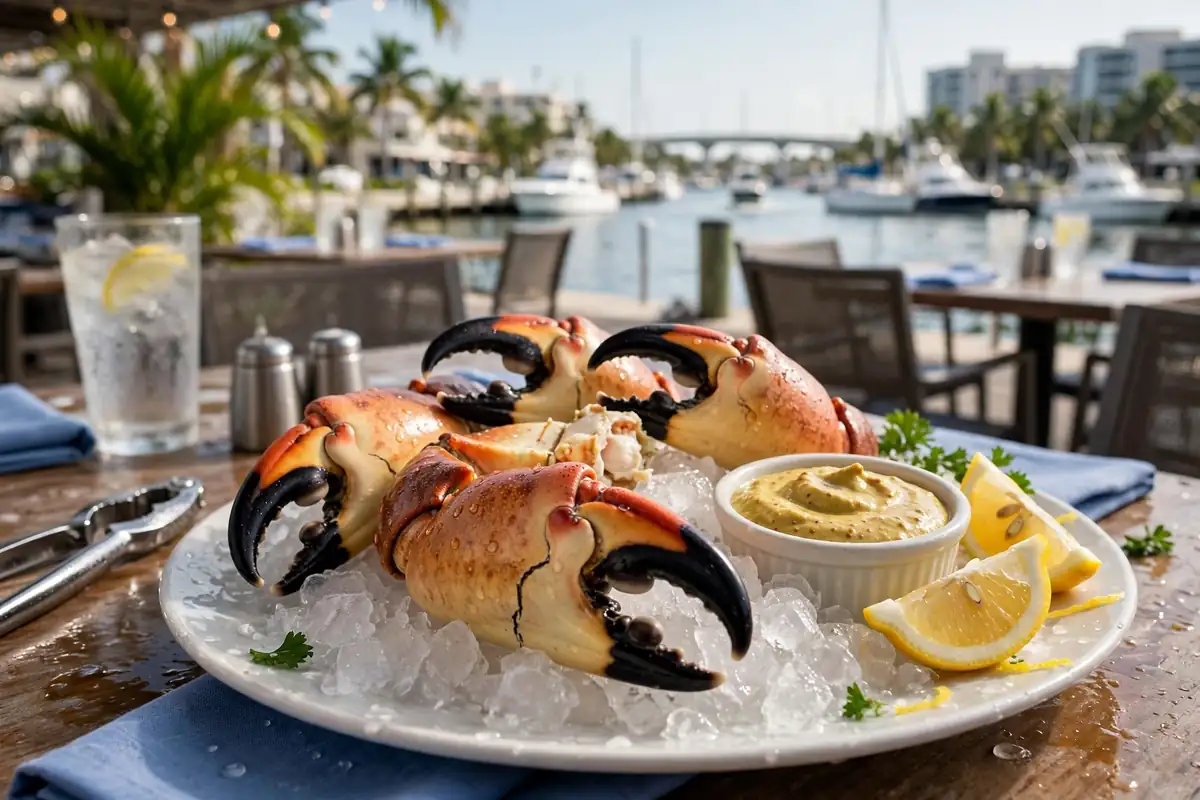
Stone crab claws are Fort Lauderdale’s signature meal, and Kelly’s Landing is where it lives. The New England-style seafood restaurant on 17th Street Causeway, a local institution since 1988, serves the claws the right way: cracked, chilled, on ice, with the yellow mustard sauce that Florida invented for them — no cooking, no fuss, just the sweet meat and the sauce. Order a half pound of medium claws, which is the right portion for one person, and eat them at the bar, where the regulars have eaten them for decades. Read about the Florida stone crab on Wikipedia.
2. The grouper sandwich — Southport Raw Bar
The grouper sandwich is Fort Lauderdale’s second signature, and it is nothing like a fish sandwich anywhere else. A thick fillet of fresh grouper, grilled or blackened, on a soft roll with lettuce, tomato and tartar sauce, eaten at a dockside table with the boats going past — that is the city’s lunch, and the best place to eat it is Southport Raw Bar, the waterfront bar on the 17th Street Causeway, where the fish comes off the boats and the sandwich costs about $20. The other great version is at Coconuts, the open-air restaurant on the Intracoastal, where the grouper sandwich is the house special. Read about grouper on Wikipedia.
3. Key lime pie — Coconuts
Key lime pie is Florida’s signature dessert, and Fort Lauderdale is where it is best. The pie is simple — a graham cracker crust, a filling of Key lime juice, egg yolks and condensed milk, and a topping of whipped cream, never meringue — and the best place to eat it is Coconuts, the waterfront restaurant on the Intracoastal, where the slice is generous and the view is the whole point. A slice runs about $10, and the right time to eat it is after a grouper sandwich, when the sun is going down and the boats are coming in. Read about Key lime pie on Wikipedia.
Free things to do in Fort Lauderdale
Fort Lauderdale is not a cheap city, but it has a good list of free things, and you can build a whole free day out of them. Fort Lauderdale Beach is free, with the promenade, the volleyball courts and the sunset. Las Olas Boulevard is free to walk, the Riverwalk is free, and the free LauderGO! Water Trolley runs the river daily from 10 a.m. to 10 p.m. The Hollywood Beach Broadwalk is free, Lauderdale-by-the-Sea is free, and the Winterfest Boat Parade is free to watch from the shore. The NSU Art Museum is free on the first Thursday of every month, the Flagler Village art walk is free, and the best free evening in the city is a walk along the beachfront at dusk, when the lights come on and the boats slide past on the Intracoastal.
Frequently asked questions
How many days do you need in Fort Lauderdale?
Three days is the right amount of time for a first visit: one day for the beach and Las Olas, one day for the canals and the museums, and one day for the Everglades and the gardens. Two days works if you skip the gardens and pick one museum instead of two, and four to five days is better if you want a Miami day trip or a full day at the beach. One day is enough for the highlights — the beach, Las Olas and a Water Taxi ride — but not for Fort Lauderdale.
Is Fort Lauderdale expensive?
Fort Lauderdale is a mid-priced American beach city, and it is cheaper than Miami Beach for the same sand — but the traps are the resort fee and the taxes. A mid-range trip runs roughly $180 to $300 per person per day, including a beach hotel, one paid attraction and meals — before the $25 to $45 nightly resort fee and the roughly 13% hotel tax. The best savings are the free sights — the beach, Las Olas, the Riverwalk, the free Water Trolley, the Winterfest parade — the grouper sandwiches and stone crab at the local bars instead of the resort restaurants, and staying downtown or in Lauderdale-by-the-Sea, where the hotels are cheaper than the beachfront’s.
Is Fort Lauderdale good for kids?
Yes — Fort Lauderdale is one of Florida’s easiest family cities. The beach is the safest surf beach in South Florida, the Museum of Discovery and Science is built for children, Butterfly World has the butterflies and the lorikeets, Flamingo Gardens has the tram and the wildlife, and the Water Taxi is an adventure in itself. The markets are free to browse, the ice cream on Las Olas is the bribe that keeps small children walking, and the Broadwalk is flat enough for a stroller. The only stops to think twice about are the long museum days for very small children, who will struggle with the quiet galleries, and the Guitar Hotel casino, which is 21 and over.
Do I need a car in Fort Lauderdale?
No. Fort Lauderdale is a water and walking city, and a car is a liability on the beach: the streets are crowded, the metered parking costs $1.50 to $2.50 an hour, and the garages fill by mid-morning. Walk the beach and Las Olas, take the Water Taxi for the canals, tap the free Water Trolley for the river, or take the $2 bus for everything else. Fly into Fort Lauderdale–Hollywood International Airport, take a rideshare or the Route 1 bus downtown, and use Brightline for Miami. The only reason to rent a car is the Everglades, Butterfly World and Flamingo Gardens, where the bus does not go — and even then, a rideshare is cheaper than a day’s parking.
What is the best time to visit Fort Lauderdale?
December to April is the best time to visit, for the dry, sunny weather, the festivals and the beach. March and April are the festival months, with Tortuga Music Festival in April and the Air Show in May, and December is the Winterfest season, with the boat parade on December 12, 2026. Late April and October to early November are the best value — warm enough for the beach, with the crowds gone and the hotel prices lower. June to August is the summer season, with the afternoon thunderstorms and the lowest hotel prices, and September is the rainiest month. If you can only pick one month, pick April: the weather is warm, the light is gold, the festivals are on, and the city is yours.
Is Fort Lauderdale better than Miami?
It depends on what you want. Fort Lauderdale is quieter, cheaper and more walkable than Miami, with a better beach for swimming, a calmer downtown and a food scene that costs less — and it is the better base for the Everglades, the boat show and a cruise from Port Everglades. Miami is better for nightlife, art and Latin culture, and the two cities are 30 minutes apart by Brightline, so you do not have to choose: stay in Fort Lauderdale, take the train to Miami for a day, and come back to the quiet beach at night. The old guides that call Fort Lauderdale a spring break town are out of date — the city grew up, and the beach, the canals and the museums are the proof.
Further reading — Wikipedia, Reddit and Quora
For more on Fort Lauderdale, read Fort Lauderdale on Wikipedia, join the Fort Lauderdale community on Reddit, and read the Quora thread on the best tourist attractions in Fort Lauderdale.
Your Fort Lauderdale trip, in one paragraph
Fort Lauderdale is the Florida beach city that grew up, and three days here give you the best of it: the beach in the morning, Las Olas Boulevard at dusk, a Water Taxi ride past Millionaires’ Row, Bonnet House, the Riverwalk and an Everglades airboat ride, with the museums, the gardens and the stone crab in between. Come in December to April for the dry, sunny weather, or in late April for the festivals and the best value, stay on the beach or Las Olas, take the Water Taxi everywhere, and eat the stone crab, the grouper sandwich and the Key lime pie. Fort Lauderdale is the 38th city in our series, and it sits alongside the other great trips we have written about — Chicago, Nashville, Los Angeles, Orlando, Miami, San Diego, Denver, Savannah, Dallas, Charleston, San Francisco, Myrtle Beach, Las Vegas, San Antonio, London, Portland, Pigeon Forge, Puerto Rico, Atlanta, Phoenix, Paris, Maui, Key West, Colorado Springs, Sedona, Chattanooga, Palm Springs, St Louis, Tokyo, Japan, Kansas City, Tennessee, Branson, Florida, Amsterdam, Montreal and Honolulu — and if you want a Florida trip with a different flavour, the theme parks of Orlando and the islands of Key West are the natural next trips.

About the Author