Things to Do in Honolulu
20 Best Attractions, a 3-Day Itinerary, Where to Stay, and the Food You Cannot Miss
Quick Info
Best for: First-time visitors to Hawaii, history lovers, snorkelers, surfers and anyone who wants a Pacific city with real culture behind the beach
Best time: April to early June and September to mid-December for the best weather-to-crowd balance; December to April for whale season
How long: 3 days covers the essentials; 4 to 5 days if you add a North Shore day
Budget: Roughly $200 to $350 per person per day for a mid-range trip, including a Waikiki hotel, a bus or rideshare, one paid attraction and meals — before the $25 to $45 nightly resort fee
Don’t miss: Pearl Harbor at opening, Diamond Head at sunrise, snorkelling at Hanauma Bay, a plate lunch on Kapahulu Avenue and the Friday fireworks over Waikiki
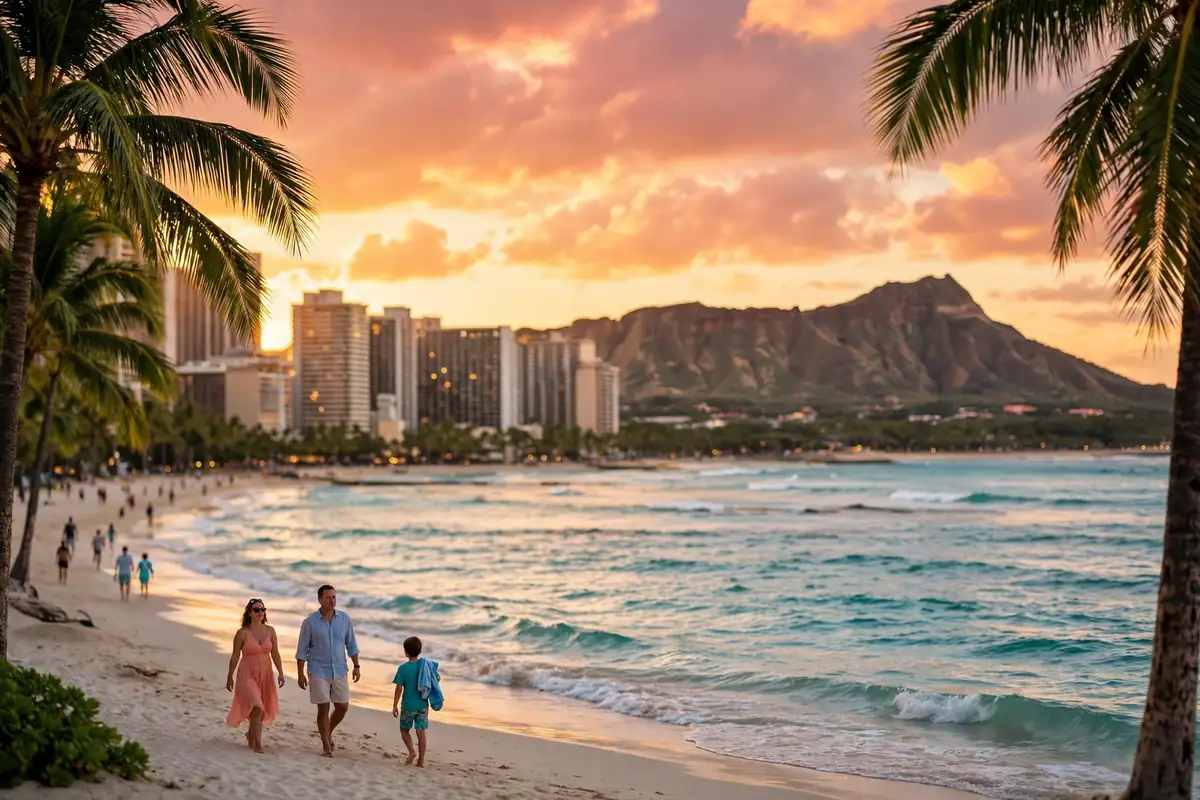
Honolulu is the city where Hawaii stops being a postcard and starts being a place: a real capital with a royal palace, a working harbour and a Chinatown older than the state itself, set against the most famous beach in the Pacific and a volcanic crater that watches over it all. It is the gateway to the Hawaiian islands, on the south shore of Oʻahu, and it rewards the visitor who looks past Waikiki: the history at Pearl Harbor, the Hawaiian monarchy downtown, the rainforest waterfall twenty minutes from the beach, and a food scene — plate lunch, poke, shave ice — that no other American city can match. This guide gives you the 20 best things to do in Honolulu in a sensible order, a ready-made 3-day itinerary, honest advice on when to go, where to stay and how to get around, and the three foods you have to try before you leave — plus the free sights that cost nothing at all. Prices and hours change, so every price in this guide is the 2026 price as published by the attraction itself — always check the official website before you visit.
One thing to know before you go: Honolulu in 2026 is not the city of the old guidebooks, and the old guides are wrong in expensive ways. Three of the island’s most popular places now run on timed reservations that sell out — Diamond Head, Hanauma Bay and the USS Arizona Memorial — and showing up without a booking is the fastest way to lose a morning. The bus and rail fares changed on July 1, 2026, the Skyline train finally reaches the airport, and the Nuʻuanu Pali Lookout has been closed since Hurricane Lowell in September 2026. This guide tells you which traps to watch for, so you can plan with facts instead of outdated blog posts. Read about Honolulu on Wikipedia.
Honolulu at a glance
| Question | Short answer |
|---|---|
| Where is Honolulu? | The capital of Hawaii, on the south shore of Oʻahu, about 2,500 miles southwest of Los Angeles and 3,800 miles from Tokyo |
| What is it best for? | Pearl Harbor, Diamond Head, Waikiki Beach, Hawaiian history and culture, snorkelling, surfing and plate lunch |
| How long should I stay? | 3 days for the essentials; 4 to 5 days if you add a North Shore day |
| How much does it cost? | Roughly $200 to $350 per person per day mid-range, before the $25 to $45 nightly resort fee and roughly 15% hotel tax |
| What is the one thing not to miss? | Pearl Harbor in the morning, then Diamond Head at sunrise and a swim at Waikiki at sunset |
| When is the best time to go? | April to early June and September to mid-December; December to April for whales |
| Is it good for families? | Yes — the beach, the zoo, the aquarium, the Bishop Museum and the free hula show make it one of America’s easiest family cities |
| Do I need a car? | No for Honolulu itself — TheBus, the Skyline train and walking cover the city; rent one only for a North Shore or windward-coast day |
The 20 best things to do in Honolulu
These are the 20 best things to do in Honolulu, ranked the way a first-time visitor should actually do them: Waikiki and Pearl Harbor first, then the crater hikes and the bay, then the palace and the museums, then the neighbourhoods and the lookouts. Every price below is the 2026 price as published by the attraction itself, and every trap — the reservations that sell out, the fares that changed in July, the lookout closed by the hurricane, the luau that no longer exists — is called out where it matters.
1. Waikiki Beach
Waikiki Beach is the most famous beach in the Pacific, and it is still the best place in Honolulu to start. The two-mile crescent of white sand, from Duke Kahanamoku Beach in the west to Sans Souci in the east, is where modern surfing was born — Duke Kahanamoku himself taught the world to ride here — and it is the one beach in Hawaii where the city and the ocean meet without a gap: high-rise hotels on one side, turquoise water and Diamond Head on the other. The sand is narrow in places and the beach is crowded, but the water is warm, the waves are gentle, and the sunset behind Diamond Head is the best free show in the city. Read about Waikiki on Wikipedia.
The practical facts for 2026: the beach is free and open to the public around the clock, and it is best in the early morning, before the crowds, or at sunset, when the light turns the water gold. Swim near a lifeguard tower — the Kūhiō Beach section, in the middle of the strip, is the calmest and best for beginners — and rent a board from one of the beach stands for a surf lesson, which runs about $95, or an outrigger canoe ride for about $48. The Duke Kahanamoku statue, on the beachfront at Kūhiō Beach, is the meeting point and the photo stop, and the free Kūhiō Beach Hula Show runs on Saturdays at 6:30 p.m. One warning: the Friday fireworks, set off by the Hilton Hawaiian Village every Friday at 7:45 p.m., draw a crowd to the whole beachfront, so arrive early for a spot. Allow half a day for the beach alone, and a full day if you add surfing and the beachfront walk.
2. Pearl Harbor National Memorial — the USS Arizona Memorial
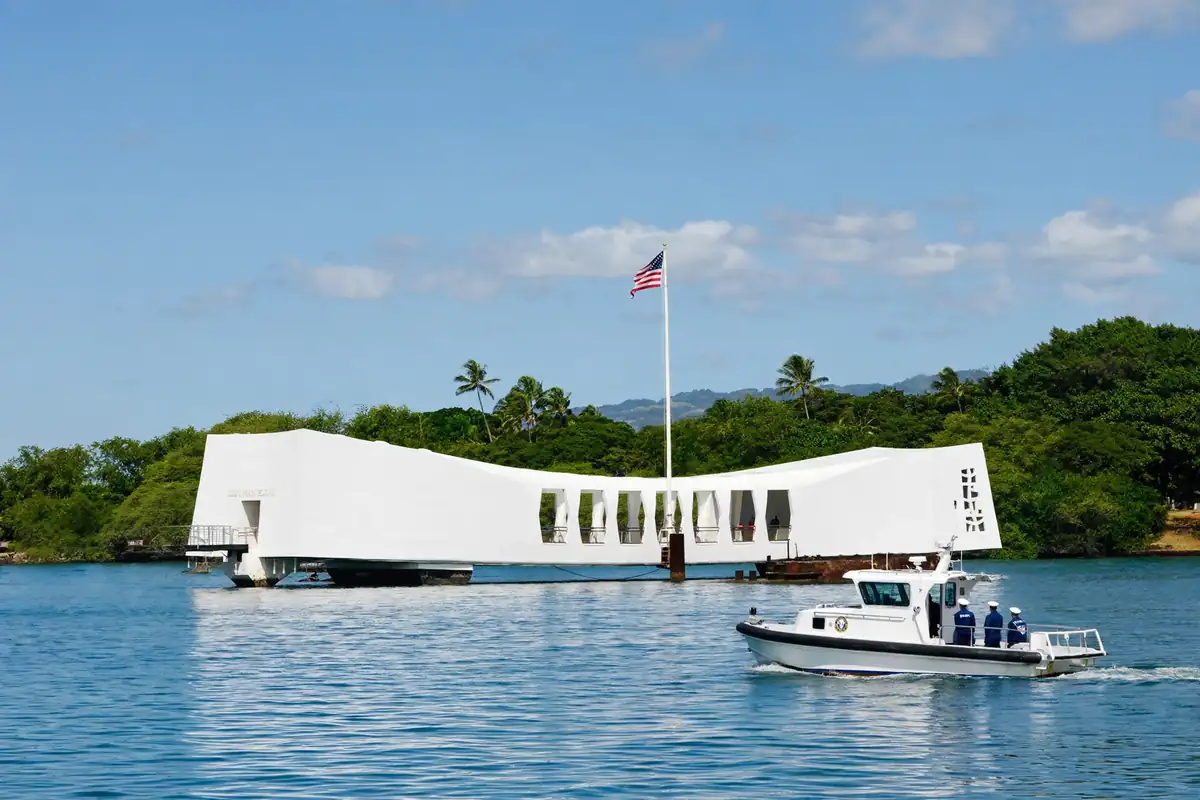
Pearl Harbor is the most important place in Honolulu, and the USS Arizona Memorial is the most moving memorial in America. On the morning of December 7, 1941, Japanese aircraft attacked the Pacific Fleet at anchor here, killing 2,403 Americans and pulling the United States into the Second World War. The white memorial spans the sunken battleship USS Arizona, where 1,177 crew members still rest, and the oil that rises from the hull more than eighty years later — the “black tears” — is the most powerful single sight in any American war memorial. The visitor centre museums, the boat ride out to the memorial and the quiet of the place make this the essential half day in Honolulu. Read about Pearl Harbor on Wikipedia.
The practical facts for 2026: the memorial and the visitor centre are free, but the USS Arizona Memorial boat program needs a timed reservation ticket through Recreation.gov, which costs a $1 booking fee per ticket. Tickets release 56 days ahead and again 24 hours ahead, both at 3 p.m. Hawaii time, and they sell out — book the moment your window opens, especially in summer. The visitor centre opens at 7 a.m. and closes at 5 p.m., and the memorial is closed on Thanksgiving, Christmas and New Year’s Day. Parking costs $7 a day, and bags are not allowed — leave them in the car or use the bag storage for a fee. Allow four to five hours for the whole site if you add the paid attractions: the Battleship Missouri, where the Japanese surrender was signed on September 2, 1945, costs $42.99 for adults, the USS Bowfin submarine museum costs $25.99, and the Pearl Harbor Aviation Museum costs $29.99. One honest note: this is a place of mourning, not a theme park — keep your voice down on the memorial, and do not take smiling selfies there.
3. Diamond Head State Monument (Lēʻahi)
Diamond Head is the crater that defines Honolulu’s skyline, and the hike to its summit is the best two hours in the city. The 760-foot tuff cone, formed about 300,000 years ago and called Lēʻahi by Hawaiians, rises at the eastern end of Waikiki, and the 0.8-mile trail from the crater floor climbs through tunnels and up 99 steps to a former military bunker with a 360-degree view over Waikiki, downtown Honolulu and the south shore. It is the most popular hike in Hawaii for a reason: the reward at the top is the whole city laid out below you. Read about Diamond Head, Hawaii on Wikipedia.
The practical facts for 2026: this is the trap most visitors fall into — non-residents must reserve entry and parking in advance at gostateparks.hawaii.gov, and walk-ups are not guaranteed entry. Entry costs $5 per out-of-state person plus $10 per vehicle, Hawaii residents enter free with ID, and reservations open up to 30 days ahead. The monument is open daily from 6 a.m. to 6 p.m., with last entry at 4 p.m., and the 6 a.m. slot is the best — cooler, quieter, and the light is at its best. Allow two hours, bring water and a hat, wear proper shoes, and pay by credit card only — cash is not accepted at the gate. TheBus routes 2 and 2L run to Kapiʻolani Community College, from where it is about twenty minutes uphill through the tunnel to the trailhead. One honest note: the trail is steep, narrow and crowded at midday, with 175 steps in total and no shade — if you have bad knees, the view from the crater floor is not worth the climb, and the lookout at the tunnel entrance is the easier alternative.
4. Hanauma Bay Nature Preserve
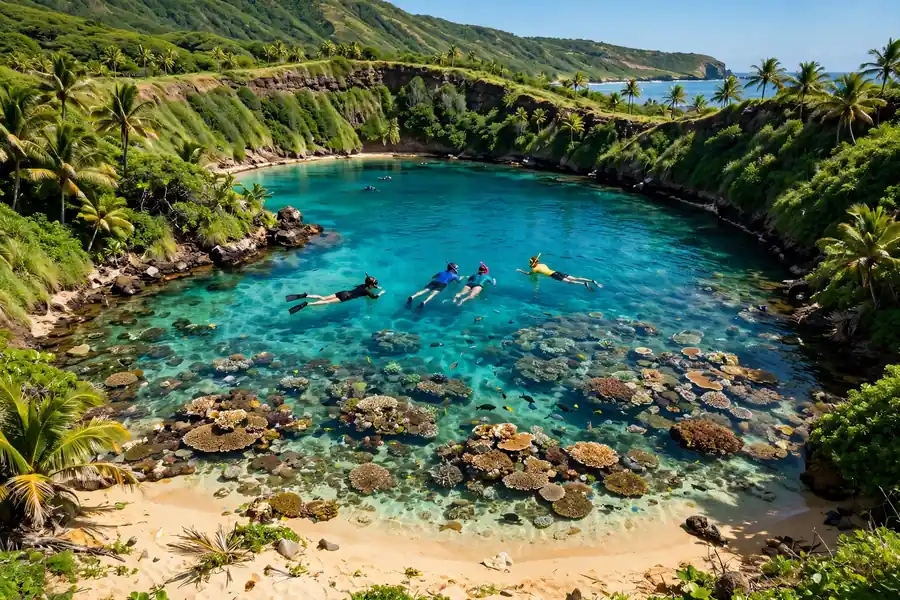
Hanauma Bay is the best snorkelling in Honolulu, and it is the most beautiful bay on Oʻahu. The curved crescent of clear turquoise water sits inside an ancient volcanic crater on the southeast shore, and the reef inside the bay holds green sea turtles, parrotfish, butterflyfish and more than 400 species of fish, all in water so calm that first-time snorkellers can float over the coral without a boat. It is a nature preserve, not a beach park, and the whole visit is designed around protecting the reef — which is exactly why it is still worth visiting. Read about Hanauma Bay on Wikipedia.
The practical facts for 2026: entry costs $25 for visitors aged 13 and over, children 12 and under go free, and parking costs $3. The bay is open Wednesday to Sunday from 6:45 a.m. to 4 p.m., and it is closed on Mondays and Tuesdays — the old guides that list it as open daily are out of date. Reservations open online only, two days in advance at 7 a.m. Hawaii time, and they go in minutes, so set an alarm. Every visitor watches a short conservation video before entering, and reef-safe sunscreen is mandatory under Hawaii law — ordinary sunscreen is banned in the bay. Allow three to four hours, arrive at opening for the calmest water and the fewest people, and do not touch the coral or the turtles: the fine for harassing a sea turtle is real, and the rangers enforce it. One honest note: if you miss the reservation window, the bay is not worth a wasted morning of trying — go to Shark’s Cove on the North Shore instead, or snorkel off Kūhiō Beach in Waikiki.
5. ʻIolani Palace
ʻIolani Palace is the only royal palace in the United States, and it is the most important building in Hawaii. Built in 1882 by King Kalākaua, the palace was the official residence of the Hawaiian monarchy until the overthrow of Queen Liliʻuokalani in 1893, and it is the place where Hawaiian history stops being a story and becomes a building you can walk through: the throne room, the king’s library, the queen’s bedroom, and the room where Liliʻuokalani was imprisoned for eight months after the failed counter-revolution of 1895. It is the one museum in Honolulu that changes how visitors understand Hawaii. Read about ʻIolani Palace on Wikipedia.
The practical facts for 2026: tours run Tuesday to Saturday from 9 a.m. to 4 p.m., and the palace is closed on Sundays and Mondays. Tickets are sold online only, with no same-day sales — book before you go. The self-led audio tour costs $28 for adults, and the docent-led guided tour costs $34. The palace grounds are free to walk, and the King Kamehameha I statue across the street, in front of Aliʻiōlani Hale, is free to visit and the best photo in downtown Honolulu. Allow one to one and a half hours, and pair the palace with the Hawaii State Capitol and the downtown historic district, which are a five-minute walk away. One honest note: the palace is a place of deep feeling for Native Hawaiians, and the guides tell the story of the overthrow plainly — listen to it, and do not treat the palace as a fairy-tale castle.
6. Bishop Museum
The Bishop Museum is the best museum in Hawaii, and it is the deepest overview of the Pacific anywhere in the world. Founded in 1889 to house the collection of Princess Bernice Pauahi Bishop, the museum holds the largest collection of Hawaiian and Pacific cultural treasures on earth — feather cloaks and helmets, the royal regalia, canoes, kapa cloth — in the great Hawaiian Hall, a four-storey Victorian building that is itself the most beautiful room in Honolulu. The science galleries, the planetarium and the living Hawaiian garden make it the museum to choose if you only visit one. Read about the Bishop Museum on Wikipedia.
The practical facts for 2026: adult tickets cost $33.95 to $38.95 depending on the day, youth tickets $25.95 to $30.95, and Hawaii residents pay from $19.95. The museum is open daily from 9 a.m. to 5 p.m., and it is closed on Thanksgiving, Christmas and New Year’s Day. It sits in Kalihi, a ten-minute drive from downtown, and TheBus routes 1, 2 and 13 stop outside. Allow two to three hours, and start in Hawaiian Hall — the feather cloak of Kamehameha I, on the top floor, is the single most important object in the museum. One honest note: the museum is big, and the science galleries are the part to skip if you are short on time — the Hawaiian and Pacific collections are the reason to come.
7. Honolulu Museum of Art
The Honolulu Museum of Art is the best art museum in Hawaii, and it is the calmest room in Honolulu. The museum, in a 1927 Spanish Mission-style building on South Beretania Street, holds more than 50,000 works — Asian art, European and American paintings, and the largest collection of Hawaiian art anywhere — arranged around open-air courtyards with ponds, palms and a café that is the best lunch spot in the city. It is the museum for a slow afternoon, and the one place in Honolulu where the crowds disappear. Read about the Honolulu Museum of Art on Wikipedia.
The practical facts for 2026: adult tickets cost $25, visitors aged 18 and under go free, and Hawaii residents pay $15. The museum is open Thursday to Sunday from 10 a.m. to 6 p.m., and it is closed on Mondays, Tuesdays and Wednesdays — the old guides that list it as open daily are out of date. It sits on South Beretania Street, a fifteen-minute walk from downtown or a short bus ride from Waikiki. Allow two hours, and do not miss the Asian wing, which is the strongest part of the collection, or the courtyard café. One honest note: the museum runs Shangri La, the Doris Duke house on the coast at Diamond Head, and the two are sold together — if you want the Shangri La tour, book it first, because the tickets release on the first Thursday of each month and sell out.
8. Mānoa Falls Trail
Mānoa Falls is the best easy hike in Honolulu, and it is the rainforest twenty minutes from Waikiki. The 1.6-mile round-trip trail climbs through the lush Mānoa Valley — bamboo groves, wild ginger, banyan trees and the sound of coqui frogs — to a 150-foot waterfall that pours down a cliff face covered in ferns. It is the hike that shows visitors the other Hawaii: green, wet and quiet, a world away from the beachfront towers. The trail was used as a filming location for Jurassic Park and Lost, and it looks it.
The practical facts for 2026: the trail is free, parking at the trailhead costs $7, and the trail is open daily from dawn to dusk. Allow one to two hours, and go on a dry morning — the trail is muddy after rain, and the waterfall is at its best the day after a shower, when the flow is strong. Wear shoes with grip, not flip-flops, and bring mosquito repellent: the valley is the wettest part of Honolulu, and the mosquitoes are the price of the rainforest. TheBus route 5 runs to Mānoa Valley from downtown. One honest note: do not swim in the pool at the base of the falls — the water carries leptospirosis, and the warning signs are there for a reason.
9. Koko Crater Railway Trail
The Koko Crater Railway Trail — the Koko Head stairs — is the hardest hike in Honolulu, and it is the best workout with a view in Hawaii. The trail climbs 1,048 railroad ties straight up the side of an old volcanic crater, gaining about 990 feet in less than a mile, on the rails of a Second World War-era railway that once hauled supplies to a lookout station. At the top, the view runs from Hanauma Bay to Makapuʻu and across the whole southeast coast, and the sunrise from the summit is the best in the city. Read about Koko Head on Wikipedia.
The practical facts for 2026: the trail is free and open daily, and it is best at sunrise, when the heat is down and the light is at its best — start by 6 a.m. in summer. Allow two hours up and down, bring at least a litre of water per person, and wear proper shoes: the ties are uneven, the gaps between them are wide, and there is no shade at all. The trailhead is at Koko Head District Park, a twenty-five-minute drive from Waikiki, and TheBus route 23 runs to Hawaii Kai, from where it is a fifteen-minute walk. One honest note: this is not a casual walk, and the rescue calls on this trail are regular — if you have bad knees, a heart condition or small children, do the Makapuʻu Lighthouse trail instead, which is paved and half the effort.
10. Makapuʻu Point Lighthouse Trail
Makapuʻu Point is the easternmost tip of Oʻahu, and the lighthouse trail is the best easy coastal walk in Honolulu. The paved two-mile round-trip trail climbs gently to the 1909 Makapuʻu Lighthouse, with views the whole way: the windward coast to the north, the blue water below, and, from December to April, humpback whales breaching offshore — this is the best whale-watching spot on Oʻahu that does not need a boat. On a clear day you can see Molokaʻi across the channel, and the sunrise here is the first in the city. Read about Makapuʻu Point on Wikipedia.
The practical facts for 2026: the trail is free, the parking lot fills by 9 a.m. on weekends, and the trail is open daily from dawn to dusk. Allow one to two hours, bring water and a hat — there is no shade and the trade winds are strong — and combine it with the Halona Blowhole, five minutes down the road, and the tide pools at the base of the point, which are only safe at low tide on calm days. TheBus route 23 runs to the trailhead from Hawaii Kai. One honest note: the wind at the point is the strongest in Honolulu, and hats, loose papers and small children need holding on to — and the tide pools have killed careless visitors, so check the surf before you climb down.
11. Chinatown
Chinatown is the oldest neighbourhood in Honolulu, and it is the best place in the city to eat. The historic district, between downtown and the harbour, holds the herbal shops, the lei stands, the art galleries and the restaurants that have fed Honolulu for 150 years — Chinese, Vietnamese, Filipino, Japanese and Hawaiian, side by side on streets that still look like the 1920s. The daytime markets, the evening art walk on the first Friday of the month, and the food — dim sum, pho, poke, manapua — make it the quarter where Honolulu feels most like itself. Read about Chinatown, Honolulu on Wikipedia.
The practical facts for 2026: Chinatown is free to walk, open daily, and at its best in the morning, when the markets are fullest, or on a first Friday evening, when the galleries open late and the streets fill. Start at the Maunakea Marketplace, walk Hotel Street and Nuʻuanu Avenue, and eat as you go — the dim sum, the banh mi and the shave ice are the best value in the city. Allow two to three hours, and take TheBus or the Skyline train to the Chinatown area — parking is scarce and expensive. One honest note: Chinatown is a working neighbourhood, not a tourist show, and the side streets after dark are rougher than Waikiki — go in the daytime, keep your wits about you, and do not photograph people without asking.
12. Kakaʻako — murals and the farmers market
Kakaʻako is the most changed neighbourhood in Honolulu, and it is the best place in the city for street art. The old warehouse district between downtown and Ala Moana has become the city’s creative quarter: the POW! WOW! murals cover whole buildings, the SALT at Our Kakaʻako complex holds the boutiques and the restaurants, and the Kakaʻako Farmers Market, on Saturdays from 8 a.m. to noon, is the best market morning in Honolulu — local produce, food trucks, flowers and live music under the towers. It is the Honolulu that the old guides do not know yet.
The practical facts for 2026: the murals are free to walk and photograph, the market is free to browse, and the neighbourhood is at its best on a Saturday morning, when the market is on and the streets are full. It sits a fifteen-minute walk west of Waikiki along Ala Moana Boulevard, or a short bus ride on any Ala Moana-bound route. Allow two hours, and eat at the market — the food trucks are the cheapest good lunch in the city. One honest note: Kakaʻako is also the most expensive new neighbourhood in Hawaii, and the towers going up around the murals are the story of the district — go now, while the warehouses and the art still outnumber the condos.
13. Ala Moana Center and Ala Moana Beach Park
Ala Moana Center is the largest open-air shopping centre in the world, and Ala Moana Beach Park, across the road, is the beach the locals actually use. The mall holds more than 350 shops — the luxury wing, the Japanese department stores, the food court that is the best cheap eating in Honolulu — and the park holds a half-mile of calm, reef-protected sand, picnic lawns and the Magic Island peninsula, where families swim and the Friday fireworks are watched from the grass. Together they are the local alternative to Waikiki: bigger, calmer and cheaper. Read about Ala Moana Center on Wikipedia.
The practical facts for 2026: the mall is free to enter and open daily from 10 a.m. to 8 p.m., the beach park is free and open from dawn to dusk, and the two together make the best half day for a rainy afternoon or a tired family. The mall is a ten-minute bus ride from Waikiki on routes 8, 19, 20 or 42, and the beach park is a five-minute walk from the mall. Allow two to three hours, and eat in the food court — the poke bowl combo for about $11 is the best value lunch in Honolulu. One honest note: the mall is a mall, and it is the stop to skip if you are short on time — the beach park is the one that matters, and the locals’ beach is the reason to come.
14. National Memorial Cemetery of the Pacific — Punchbowl
Punchbowl is the most beautiful cemetery in America, and it is the most peaceful place in Honolulu. The National Memorial Cemetery of the Pacific sits inside an extinct volcanic crater above the city, with more than 50,000 graves — the fallen of the Second World War, Korea and Vietnam — laid out on the crater floor beneath a white marble memorial, and a view from the rim that runs from Diamond Head to Pearl Harbor. It is the place Honolulu goes to remember, and the view alone is worth the drive. Read about the National Memorial Cemetery of the Pacific on Wikipedia.
The practical facts for 2026: the cemetery is free and open daily from 8 a.m. to 6 p.m., and it is best in the late afternoon, when the light falls across the crater and the city below. It sits off Puowaina Drive, a ten-minute drive from downtown, and TheBus route 15 runs to the gate. Allow one hour, and keep your voice down — this is a working cemetery, and funerals happen here most days. One honest note: the crater is also the best free viewpoint in Honolulu that most visitors never find, and the rim road is the quietest drive in the city — go for the view, and stay for the silence.
15. Shangri La Museum of Islamic Art, Culture and Design
Shangri La is the most surprising house in Honolulu, and it is the best small museum in Hawaii. The 1937 oceanfront home of the tobacco heiress Doris Duke, on a rocky point below Diamond Head, holds one of the finest collections of Islamic art in America — Syrian tiles, Moroccan ceilings, Persian carpets, a Mughal jali screen — set in a house that is itself the collection, with the Pacific on three sides. It is the one attraction in Honolulu that feels like nowhere else in the United States. Read about Shangri La (Doris Duke) on Wikipedia.
The practical facts for 2026: adult tickets cost $45, Hawaii residents pay $20 on Thursdays and Fridays with ID, and tickets release on the first Thursday of each month — book the day they open, because they sell out. Tours run from the Honolulu Museum of Art, where you check in before the shuttle to the house, and the visit lasts about two and a half hours. The house is on the coast at Diamond Head, and photography is allowed in the gardens but not inside. One honest note: Shangri La is not a walk-in attraction, and the visitors who arrive without a ticket are turned away — the monthly release is the whole system, and the old guides that call it a drop-in museum are wrong.
16. Honolulu Zoo
The Honolulu Zoo is the best family stop in Honolulu, and it is the easiest morning in Waikiki. The 42-acre zoo, at the eastern end of Waikiki next to Kapiʻolani Park, holds more than 900 animals — elephants, giraffes, orangutans, Komodo dragons and the Hawaiian nēnē goose — in open, leafy grounds that feel more like a botanical garden than a zoo. It is the place to go when the beach is too hot and the children need shade, and the keiki zoo, with its petting area, is the best hour in the city for small children.
The practical facts for 2026: adult tickets cost $21, children aged 3 to 12 pay $13, and children under 3 go free. The zoo opens at 10 a.m. and closes at 4:30 p.m., and it is closed on Christmas Day. It sits at 151 Kapahulu Avenue, at the Diamond Head end of Waikiki, and it is a ten-minute walk from the beach. Allow two to three hours, and go at opening, when the animals are most active and the heat is down. One honest note: the zoo is not a world-class zoo, and the visitors who expect San Diego will be disappointed — it is a good city zoo in a beautiful setting, and the location, not the collection, is the reason to go.
17. Foster Botanical Garden
Foster Botanical Garden is the oldest botanical garden in Hawaii, and it is the most peaceful garden in Honolulu. The 14-acre garden in downtown Honolulu, founded in 1853, holds one of the finest collections of tropical plants in the United States — the great kapok tree, the cannonball tree, the palm collection, the orchid garden — under a canopy so thick that the city disappears. It is the place Honolulu goes to breathe, and the best hour in the city for anyone who likes trees. Read about Foster Botanical Garden on Wikipedia.
The practical facts for 2026: adult tickets cost $5, Hawaii residents pay $3, children aged 6 to 12 pay $1, and children under 6 go free. The garden is open daily from 9 a.m. to 4 p.m., and it sits on Vineyard Boulevard, a ten-minute walk from Chinatown. Allow one to two hours, and go in the morning, when the light falls through the canopy and the birds are loudest. One honest note: the garden is small, and it is the stop to skip if you are short on time — the Manoa Falls trail and the Bishop Museum are the two that matter most, and Foster is the third, not the first.
18. Queen Emma Summer Palace
Queen Emma Summer Palace is the most personal museum in Honolulu, and it is the best window into the Hawaiian monarchy. The white New England-style house in Nuʻuanu Valley, built in 1848, was the summer retreat of Queen Emma and King Kamehameha IV, and it still holds their furniture, their portraits, their feather cloaks and the cradle of their son, Prince Albert, who died at four — the tragedy that ended the Kamehameha line. It is a small, quiet house, and it is the most moving hour in Honolulu after Pearl Harbor. Read about Queen Emma Summer Palace on Wikipedia.
The practical facts for 2026: the palace is open Wednesday to Saturday only, and it is closed Sunday to Tuesday — the old guides that list it as open daily are out of date. Tickets cost about $10 for adults, and the house is a ten-minute drive from downtown up Nuʻuanu Avenue. Allow one hour, and pair it with the Punchbowl crater, which is on the same side of town. One honest note: the palace is small and the collection is modest, and the visitors who expect ʻIolani Palace will be disappointed — it is a house, not a palace, and the story, not the scale, is the reason to go.
19. Tantalus Lookout — Puʻu ʻUalakaʻa
Tantalus Lookout is the best view in Honolulu, and it is the one the locals keep for themselves. The Puʻu ʻUalakaʻa State Wayside, on the ridge above the city, looks down on the whole of Honolulu — Waikiki, Diamond Head, the harbour, Pearl Harbor and the Waiʻanae mountains — from a picnic area in the rainforest, and at sunset the city lights come on below you while the clouds roll over the ridge. It is the view that makes the drive worth it, and the best free evening in the city.
The practical facts for 2026: the lookout is free and open daily from dawn to dusk, and it is best at sunset, when the light is gold and the city below is at its prettiest. It sits at the end of Puʻu ʻUalakaʻa State Wayside Road, a fifteen-minute drive from downtown up Tantalus Drive, and there is no bus — you need a car or a rideshare, which costs about $15 from Waikiki. Allow one hour, and bring a jacket: the ridge is cooler and wetter than the beach, and the rain arrives without warning. One honest note: the road is narrow, winding and unlit, and the drive down after dark is not for nervous drivers — go for the sunset, and leave before it is fully dark.
20. Halona Blowhole and Eternity Beach
Halona Blowhole is the most dramatic roadside stop in Honolulu, and Eternity Beach below it is the most famous cove on Oʻahu. The blowhole, on the southeast coast past Hanauma Bay, shoots seawater thirty feet into the air when the surf is up, through a lava tube in the rocks, and the small golden cove below — Halona Cove, the beach from the film From Here to Eternity — is the prettiest swimming spot on the island when the water is calm. It is the stop that makes the drive to Makapuʻu worth it, and the best photo on the southeast coast.
The practical facts for 2026: the lookout is free and open daily, the parking lot fills by mid-morning on weekends, and the blowhole is best at high tide with a south swell, when the spray is highest. The path down to the cove is steep, rocky and unofficial — wear shoes with grip, not flip-flops, and do not climb down in big surf, because the rocks are slippery and the waves are stronger than they look. Allow thirty minutes for the lookout, and combine it with the Makapuʻu Lighthouse trail, five minutes up the road. One honest note: the cove is beautiful and dangerous in equal measure, and the signs warning of the surf are there because people have died here — swim only on a calm day, and never turn your back on the ocean.
Honolulu in 3 days — a ready-made itinerary
Three days is the right amount of time for Honolulu: one day for Pearl Harbor and downtown, one day for Diamond Head and the east coast, and one day for Waikiki and the neighbourhoods. The itinerary below assumes you are staying in Waikiki, and it uses TheBus, the Skyline train and walking for everything inside the city. If you only have two days, do Day 1 and Day 2 and save the markets for next time. If you have a fourth day, the North Shore is an hour away by bus or car — the shrimp trucks, Waimea Bay and the surf towns are the reward.
| Day | Theme | Highlights | Where you sleep |
|---|---|---|---|
| Day 1 | Pearl Harbor and downtown | USS Arizona Memorial, Battleship Missouri, ʻIolani Palace, Chinatown | Waikiki |
| Day 2 | Craters and the east coast | Diamond Head at sunrise, Hanauma Bay, Halona Blowhole, Makapuʻu | Waikiki |
| Day 3 | Waikiki and the neighbourhoods | Waikiki Beach, Honolulu Museum of Art, Kakaʻako market, Ala Moana | Waikiki |
Day 1 — Pearl Harbor and downtown
Start at Pearl Harbor. Arrive at the visitor centre at 7 a.m., take the USS Arizona Memorial boat program first, then the Battleship Missouri and the Bowfin submarine, and allow four to five hours for the whole site. In the afternoon, take the bus downtown to ʻIolani Palace, walk the Capitol district and the King Kamehameha statue, then finish in Chinatown for dinner — the dim sum and the pho are the best value in the city. If you booked the guided palace tour, take it in the afternoon, when the morning crowds have gone.
Day 2 — Craters and the east coast
Spend the morning on Diamond Head: take the 6 a.m. slot, climb to the summit for the sunrise view, and be back in Waikiki by 9 a.m. for breakfast. In the late morning, take the bus to Hanauma Bay for snorkelling — your reservation is for the opening slot, so the water is at its calmest — then drive or ride along the coast to the Halona Blowhole and the Makapuʻu Lighthouse trail for the afternoon. End the day back in Waikiki for the Friday fireworks, if it is a Friday, or the sunset at Kūhiō Beach.
Day 3 — Waikiki and the neighbourhoods
Spend the morning on Waikiki Beach: swim, take a surf lesson, or ride an outrigger canoe, and walk the beachfront to the Duke Kahanamoku statue. In the afternoon, visit the Honolulu Museum of Art, then walk west to Kakaʻako for the murals and the Saturday farmers market, and finish at Ala Moana Beach Park for the sunset. End the day with a plate lunch on Kapahulu Avenue — the loco moco at Rainbow Drive-In is the right last meal in Honolulu.
Best time to visit Honolulu
The best time to visit Honolulu is April to early June and September to mid-December, when the weather is warm, the crowds are thinner and the hotel prices are lower. June to August is the busiest season — the summer holidays, the highest prices and the most crowded beaches — and December to March is the winter season, with the biggest surf on the North Shore, the whale season and the highest hotel rates of the year. Honolulu is warm all year, with highs of 27 to 32 degrees in every month, and the rain falls mostly at night and in the mountains, so there is no bad month — only busier and more expensive ones.
| Season | Months | Weather | What’s on |
|---|---|---|---|
| Spring | March to May | Highs 27 to 29 degrees, drier | Honolulu Festival in March, the best weather-to-crowd balance |
| Summer | June to August | Highs 30 to 32 degrees, warm and humid | King Kamehameha Day in June, the busiest season, the highest prices |
| Autumn | September to November | Highs 29 to 31 degrees, warm | Hawaii Food and Wine Festival in late October, thin crowds, good hotel rates |
| Winter | December to February | Highs 26 to 28 degrees, cooler | Whale season, the North Shore surf season, the Honolulu Marathon in December |
Where to stay in Honolulu
Waikiki is the best base for a first visit: you are on the beach, within walking distance of the restaurants, the shops and the bus, and the hotels range from the historic Royal Hawaiian to the budget hostels, though the prices are the highest in the city. The Diamond Head end of Waikiki is the quietest base, with the smaller hotels and the Kapiʻolani Park, and the Ala Moana area is the best base for a lower price, with the big mall and the locals’ beach a short bus ride away. Downtown is the best base for history and the cheapest rooms, and Kakaʻako is the best base for the new Honolulu, with the murals and the market outside your door. The rule for Honolulu is simple: check the total price before you book, because the resort fee — $25 to $45 a night at most Waikiki hotels — and the roughly 15% hotel tax are added at checkout, and a $150 room becomes $200 before you have slept in it.
| Area | Best for | Price range |
|---|---|---|
| Waikiki Beachfront | First-timers, the beach, walking everywhere | $250 to $600 a night |
| Waikiki — Diamond Head end | Quiet streets, families, the park | $180 to $350 a night |
| Ala Moana | Lower prices, the mall, the locals’ beach | $150 to $280 a night |
| Downtown and Chinatown | History, the cheapest rooms, the food | $120 to $220 a night |
| Kakaʻako | New Honolulu, the murals, the market | $180 to $320 a night |
| Kapahulu | Budget stays, the local food, the zoo | $100 to $200 a night |
Getting around Honolulu
Honolulu is a bus city, and a car is not needed — in Waikiki it is a liability, where parking costs $30 to $50 a night at the hotels. TheBus runs the whole island, the Skyline train runs from the airport to Kalihi, and Waikiki itself is walkable end to end in half an hour. Fly into Daniel K. Inouye International Airport, about twenty minutes from Waikiki, and take the Skyline train or the W Line bus into town. Read about Daniel K. Inouye International Airport on Wikipedia.
The practical facts for 2026: the fares changed on July 1, 2026, so the old guides are wrong. A HOLO card 2-hour pass costs $3 and covers unlimited rides on TheBus and the Skyline train for two hours, the day cap is $7.50, and a cash fare on the bus costs $3.25 with no transfer. The HOLO card itself costs $2, sold at the station machines and at ABC Stores in Waikiki. One trap to know: the Skyline train does not take cash at all — you need a HOLO card — and it does not reach Waikiki or downtown yet. The airport station, Lelepaua, opened on October 16, 2025, and the line runs from the airport to Kalihi, with the downtown extension not expected until 2031 — so from the airport, take the train to Āhua station and change to the W Line bus, or take the W Line direct. TheBus routes 2 and 2L run along Waikiki to downtown, route 23 runs to Hanauma Bay and Makapuʻu, and route 5 runs to Mānoa Valley. Once you are in Waikiki, walk — and in the evening, take the Waikiki Trolley, which loops the beachfront and the shopping streets.
A few Hawaiian words will take you a long way: aloha is hello and goodbye and love, mahalo is thank you, ʻono is delicious, keiki is a child, and mauka is toward the mountains and makai is toward the sea — the two directions Honolulu uses instead of north and south. Almost everyone speaks English, and the city will switch to it before you finish your first sentence — but trying a word or two is always welcome, and the Hawaiian is half the reason to come.
Honolulu food you have to try
Honolulu’s food is not fancy, and that is the point. The city’s best meals are a plate lunch from a drive-in, a poke bowl from a fish counter, and a shave ice eaten on a hot afternoon — and the three together cost less than one resort dinner. Eat those three, and you have eaten Honolulu. For everything else, the Chinatown markets, the Japanese restaurants of Waikiki and the food trucks of the North Shore will keep you fed — and the Spam musubi, sold at every 7-Eleven in Hawaii for $2 to $3, is the city’s unofficial snack.
1. The plate lunch — Rainbow Drive-In
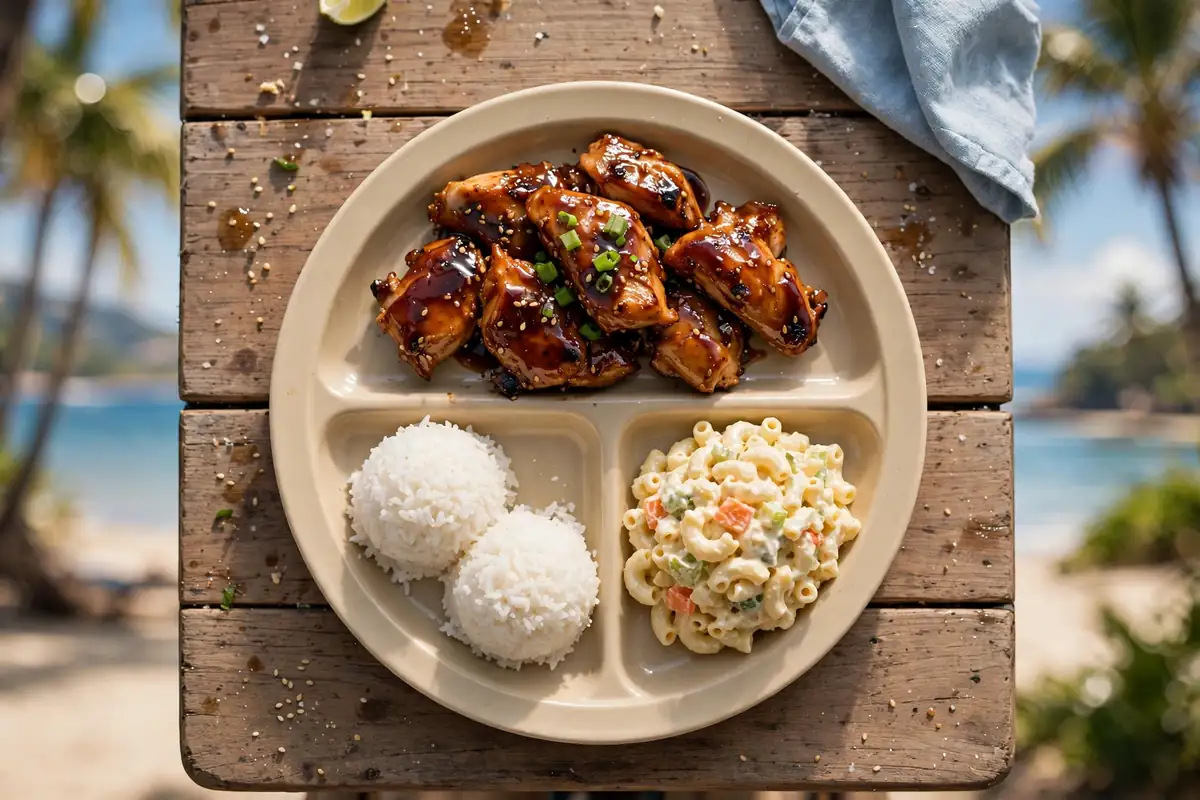
The plate lunch is Honolulu’s signature meal, and Rainbow Drive-In is where it lives. The drive-in at 3308 Kanaina Avenue, open since 1961 on Kapahulu Avenue, has been serving the same plate for more than sixty years: an entree — teriyaki chicken, kalua pork, or the loco moco, a hamburger patty on rice with gravy and a fried egg — with two scoops of white rice and a scoop of macaroni salad. Order the loco moco plate, which costs about $9.50, and eat it at the picnic tables outside, where the locals have eaten it for decades. Read about the plate lunch on Wikipedia.
2. Poke — Ono Seafood and the supermarket counters
Poke is Honolulu’s second signature, and it is nothing like the poke bowls on the mainland. Real Hawaiian poke is cubed raw ahi tuna, tossed with shoyu, sesame oil, seaweed and chili, and sold by the pound at fish counters — not assembled from a topping bar. The best place to eat it is Ono Seafood, the take-out counter on Kapahulu Avenue, where the shoyu ahi and spicy ahi bowls are made when you order, or the Foodland supermarket on Beretania Street, where the poke sells by the pound for $14 to $16 and a half-pound over rice costs about $9. A standard bowl runs $14 to $20, and the right way to eat it is on the beach, straight from the container. Read about poke on Wikipedia.
3. Shave ice and malasadas — Waiola and Leonard’s
Shave ice and malasadas are Honolulu’s sweet finish, and the two best stops are ten minutes apart on Kapahulu Avenue. Shave ice is finely shaved block ice with syrup — not a snow cone — and the best is at Waiola Shave Ice, where a regular with two or three syrups costs $6 to $9, and the local order is rainbow with condensed milk on top. Malasadas are Portuguese fried dough rolled in sugar, and the best are at Leonard’s Bakery, open since 1952, where a plain malasada costs about $2 to $3.50 and the filled ones — custard, haupia, dobash — cost a little more. Eat the malasada warm, straight from the bakery, and the shave ice in the shade, before it melts. Read about shave ice on Wikipedia and read about the malasada on Wikipedia.
Free things to do in Honolulu
Honolulu is not a cheap city, but it has a good list of free things, and you can build a whole free day out of them. Waikiki Beach is free, with the Duke Kahanamoku statue, the surf and the Friday fireworks at 7:45 p.m. Pearl Harbor’s visitor centre and museums are free, and the USS Arizona Memorial program costs only the $1 booking fee. The Kūhiō Beach Hula Show is free on Saturdays at 6:30 p.m. Punchbowl, Tantalus Lookout, the Halona Blowhole and the Makapuʻu Lighthouse trail are all free. Mānoa Falls is free, the Koko Crater trail is free, the Kakaʻako murals are free, and the best free evening in the city is a walk along the Waikiki beachfront at dusk, when the torches are lit and Diamond Head turns purple.
Frequently asked questions
How many days do you need in Honolulu?
Three days is the right amount of time for a first visit: one day for Pearl Harbor and downtown, one day for Diamond Head and the east coast, and one day for Waikiki and the neighbourhoods. Two days works if you skip the museums and pick one hike instead of two, and four to five days is better if you want a North Shore day or a full day at Hanauma Bay and Kailua. One day is enough for the highlights — Pearl Harbor, Diamond Head and Waikiki — but not for Honolulu.
Is Honolulu expensive?
Honolulu is one of the most expensive cities in the United States, and the traps are the resort fee and the taxes. A mid-range trip runs roughly $200 to $350 per person per day, including a Waikiki hotel, a bus or rideshare, one paid attraction and meals — before the $25 to $45 nightly resort fee and the roughly 15% hotel tax. The best savings are the free sights — Waikiki, Pearl Harbor, the hikes, the hula show, the Friday fireworks — the plate lunches and poke bowls instead of the resort restaurants, and staying in Ala Moana or Kapahulu, where the hotels are cheaper than Waikiki’s. A plate lunch at Rainbow Drive-In costs $8 to $12, a poke bowl at a supermarket counter costs about $9, and a shave ice costs $6 to $9 — the food is the cheapest part of Honolulu.
Do I need a car in Honolulu?
No. Honolulu is a bus city, and a car is a liability in Waikiki: the streets are crowded, the hotel parking costs $30 to $50 a night, and the traffic on the H-1 is the worst in Hawaii. Walk in Waikiki, take TheBus everywhere else, tap your HOLO card, or take the Skyline train from the airport. The only reason to rent a car is a North Shore day or a windward-coast drive, and even then the bus goes to Haleiwa in about two hours. One warning: the Skyline train does not reach Waikiki or downtown, and it takes no cash — get a HOLO card at the airport station before you board.
Do I need to book Diamond Head and Hanauma Bay in advance?
Yes — this is the most important booking advice in the whole guide. Diamond Head requires a reservation for non-residents, up to 30 days ahead at gostateparks.hawaii.gov, and walk-ups are not guaranteed entry. Hanauma Bay releases its reservations two days ahead at 7 a.m. Hawaii time, and they go in minutes. The USS Arizona Memorial releases its free tickets 56 days and 24 hours ahead at 3 p.m. Hawaii time on Recreation.gov. ʻIolani Palace sells tickets online only, with no same-day sales, and Shangri La releases its tickets on the first Thursday of each month. Book the big three — Diamond Head, Hanauma Bay and the Arizona Memorial — the moment your windows open, before you book anything else.
What is the best time to visit Honolulu?
April to early June and September to mid-December is the best time to visit, for the warm weather, the thinner crowds and the lower hotel prices. June to August is the busiest season, December to March is the whale season and the North Shore surf season, and the Honolulu Marathon runs on the second Sunday of December. If you can only pick one month, pick September: the weather is warm, the light is gold, the summer crowds are gone, and the city is yours.
Is Honolulu good for kids?
Yes — Honolulu is one of America’s easiest family cities. The Honolulu Zoo is built for children, Waikiki Beach is the safest surf beach in Hawaii, the Bishop Museum has the planetarium and the hands-on galleries, and the free hula show and the Friday fireworks are the best evenings in the city for a family. The markets are free to browse, the shave ice is the bribe that keeps small children walking, and TheBus is an adventure in itself. The only stops to think twice about are the long museum days for very small children, who will struggle with the quiet galleries, and the Koko Crater stairs, which are too steep and too hot for anyone under ten.
Further reading — Wikipedia and Reddit
For more on Honolulu, read Honolulu on Wikipedia and join the Honolulu community on Reddit. No Quora link is included here — we could not verify a Honolulu thread on Quora, so we have not invented one.
Your Honolulu trip, in one paragraph
Honolulu is the Pacific city where Hawaii stops being a postcard and starts being a place, and three days here give you the best of it: Pearl Harbor in the morning, Diamond Head at sunrise, a swim at Waikiki at sunset, a plate lunch on Kapahulu Avenue and the Friday fireworks over the beach, with the palace, the museums and the rainforest waterfall in between. Come in April to early June or September to mid-December for the best weather and the best prices, stay in Waikiki, take TheBus everywhere, and eat the plate lunch, the poke and the shave ice. Honolulu is the 37th city in our series, and it sits alongside the other great trips we have written about — Chicago, Nashville, Los Angeles, Orlando, Miami, San Diego, Denver, Savannah, Dallas, Charleston, San Francisco, Myrtle Beach, Las Vegas, San Antonio, London, Portland, Pigeon Forge, Puerto Rico, Atlanta, Phoenix, Paris, Maui, Key West, Colorado Springs, Sedona, Chattanooga, Palm Springs, St Louis, Tokyo, Japan, Kansas City, Tennessee, Branson, Florida, Amsterdam and Montreal — and if you want a Pacific trip with a different flavour, the beaches of Maui and the surf of the North Shore are the natural next trips.

About the Author