Things to Do in Denver
20 Best Attractions, a 3-Day Itinerary, Where to Stay, and the Food You Cannot Miss
Quick Info
Best for: Red Rocks concerts, museums, craft beer and mountain day trips — art, altitude and the Rockies in one sunny city
Best time: September–October for warm, dry days and golden aspens; May–June for wildflowers and smaller crowds
How long: 3 full days for the highlights; 5 days if you add Rocky Mountain National Park and a ski town
Budget: Roughly $170–$300 per person per day for a mid-range trip; Red Rocks in the daytime, the parks and 16th Street are free
Don’t miss: A concert or sunrise at Red Rocks, the Denver Art Museum, Union Station at dusk, a green chile burrito and the view from the Capitol steps
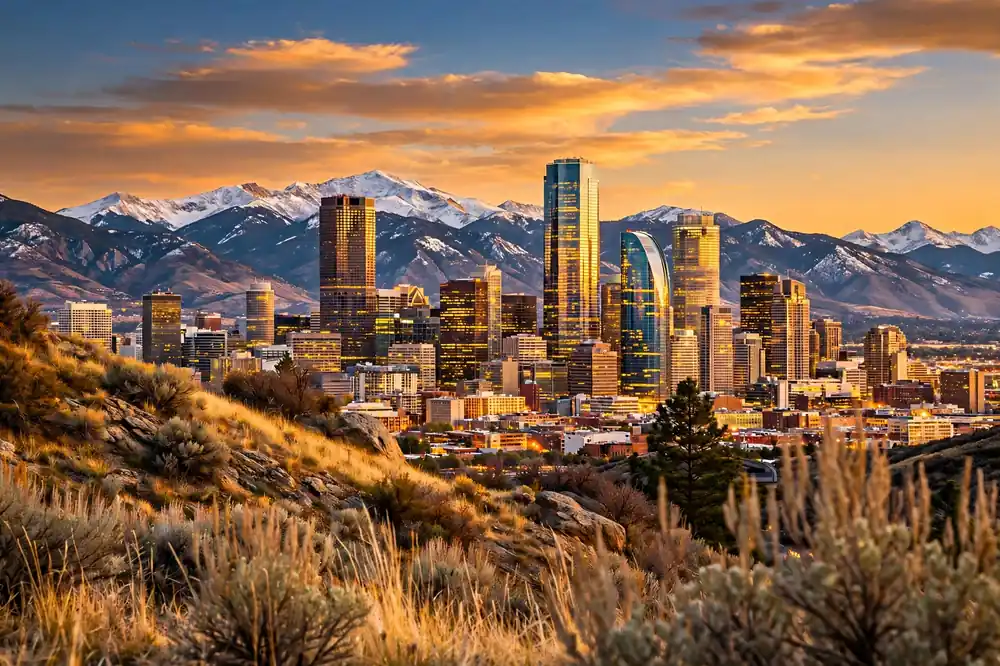
Denver is the Mile High City — and the nickname is literal. The capital of Colorado sits at exactly 5,280 feet, one mile above sea level, on the high plains at the foot of the Rocky Mountains, and it is the city the rest of the West envies: 300 days of sunshine a year, world-class museums, the best craft beer in America and the mountains on the horizon from almost every street. It began as a gold-rush camp in 1858, grew into a railroad city, and today it is a tech-heavy, outdoor-obsessed capital with a food scene that finally matches its views. And 2026 is its biggest year in a century: Colorado turned 150 on August 1, 2026, and the whole city is celebrating.
This guide gives you the 20 best things to do in Denver in a sensible order, a ready-made 3-day itinerary, honest advice on when to go, where to stay and how to get around, and the three foods you have to try before you leave. Prices and hours change, so every price in this guide is marked as approximate — always check the official website before you visit.
Denver at a glance
| Question | Short answer |
|---|---|
| How long do you need? | 3 full days for the highlights; 5 days is the balanced first trip; 7 days if you add Rocky Mountain National Park, Boulder and a ski town. |
| Best area for a first trip | LoDo and Union Station for walkable downtown, or RiNo for murals and breweries — the museums and 16th Street sit between them. |
| One thing to book early | Red Rocks concert tickets, Meow Wolf timed tickets, Rocky Mountain National Park timed entry and Mount Blue Sky reservations — all sell out. |
| One thing that is free | Red Rocks in the daytime, 16th Street and its free shuttle, City Park and Washington Park — the best views in the city cost nothing. |
| Do you need a car? | Not for the city itself — the A Line, light rail and free 16th Street shuttle cover downtown. A car is essential for the mountains. |
For background before you go, the Wikipedia entry on Denver covers the city’s history, its gold-rush roots and its neighbourhoods in depth — all three are linked in Further reading at the end of this guide.
The 20 best things to do in Denver
The list starts with the experiences that define Denver and that first-time visitors should protect time for, then moves into neighbourhoods, culture and the mountains beyond the city. If you only have two days, do numbers 1 to 10.
1. See a concert — or a sunrise — at Red Rocks
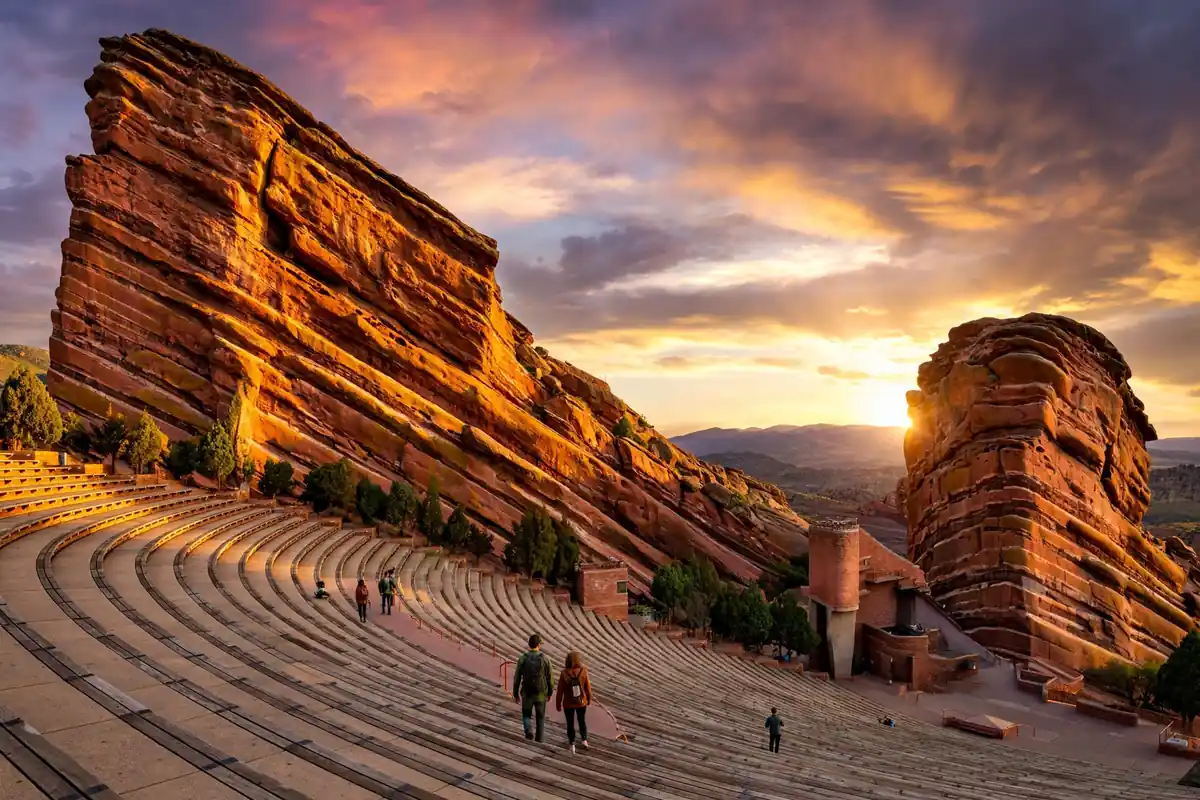
Red Rocks Amphitheatre is the single best reason to come to Denver. The open-air amphitheatre sits between two 300-foot sandstone monoliths — Ship Rock and Creation Rock — fifteen miles west of downtown in Morrison, at 6,450 feet above sea level, with the Denver skyline framed between the rocks on a clear day. The Civilian Conservation Corps built the 9,525-seat venue into the natural bowl and it was dedicated on June 15, 1941; since then everyone from the Beatles in 1964 to U2 in the rain in 1983 has played here, and Widespread Panic holds the record with 72 sold-out shows. Come for a concert under the stars, or come by day, when the park is free and the Trading Post Trail loops 1.4 miles through the formations.
Practical tip: The park and trails are free on non-event days — prices are approximate, so check before visiting. Concert tickets sell out months ahead, so book the moment a show is announced, and arrive early: the climb from the car park to the top row is a real workout at this altitude. The first show of each season is the Easter Sunrise Service.
2. Spend a day at the Denver Art Museum
Denver Art Museum is the one museum you cannot miss in Denver. It holds more than 70,000 works — one of the largest art collections in the western United States — in two buildings on Civic Center Park: the castle-like North Building and Daniel Libeskind’s sharp-angled Hamilton Building. The Indigenous arts of North America collection is one of the best in the country, and the Western art galleries tell the story of the region better than any other museum. The big news for 2026 is “DIVA”, the Victoria and Albert Museum exhibition about nearly 100 iconic performers from Josephine Baker to Taylor Swift, on show from October 4, 2026 to January 31, 2027 — Denver is its only US venue — and “Storytellers: The Blackfeet Nation and Charles M. Russell”, running through January 24, 2027.
Practical tip: General admission costs roughly $27–$30 for non-residents and $22–$25 for Colorado residents, and it is free for everyone aged 18 and under every day — prices are approximate, so check before visiting. The museum is closed on Wednesdays and open until 8pm on Tuesdays. “DIVA” is a separate timed ticket from roughly $29, so book ahead.
3. Meet the dinosaurs at the Denver Museum of Nature & Science
The Denver Museum of Nature & Science, in City Park, is the Rocky Mountain region’s biggest natural history museum — and the best rainy-day stop in the city. The dinosaur halls hold the fossils Colorado is famous for, the wildlife dioramas are the finest of their kind, and the gems and minerals gallery glitters with specimens from the state’s mines. The newest draw is “Mythic Creatures: Dragons, Unicorns & Mermaids”, on show through April 4, 2027, and a rare 23-foot adult T. rex trackway that went on display on October 30, 2026. The museum’s new Sturm Family Wing opened on September 1, 2026, with a free public plaza and the Sturm Infinity Theater for giant-screen films.
Practical tip: General admission costs roughly $26 for adults — prices are approximate, so check before visiting. The museum is open daily from 9am to 5pm, and until 9pm most Fridays. The first Tuesday of the month is a free day, and the planetarium and Infinity Theater cost extra.
4. Eat, drink and play at Union Station
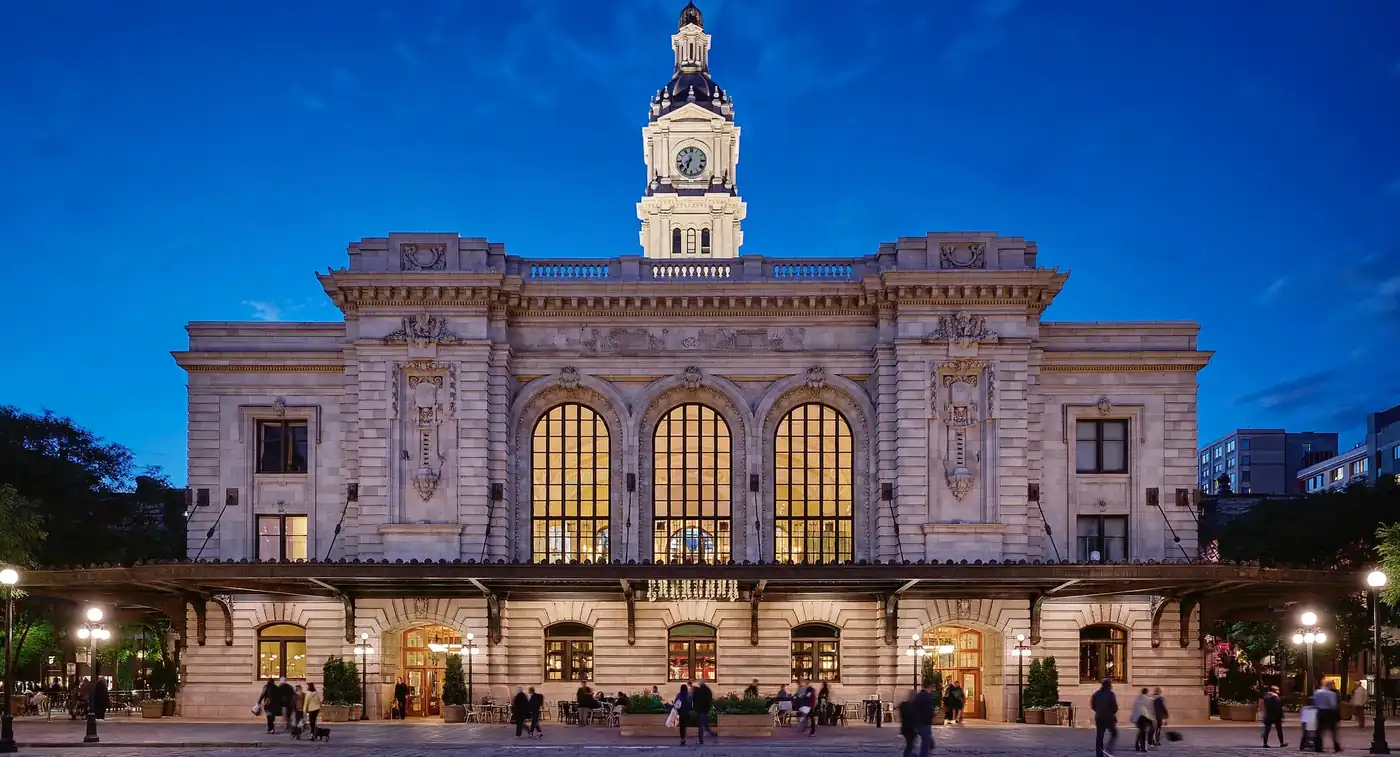
Union Station is Denver’s living room. The Beaux-Arts station opened in 1914, nearly died in the 1990s, and was restored in 2014 into the city’s great gathering place — and it is the first thing most visitors see, because the A Line train from the airport ends here. Inside, the Great Hall holds the Terminal Bar, the Mercantile restaurant and market, a bookshop and the Crawford Hotel upstairs, and outside, the plaza fills with food trucks, farmers markets and people watching the trains come in. It is the best place in the city to start a trip, end a day, or simply sit with a coffee and watch Denver go by.
Practical tip: The station is free to walk and liveliest in the late afternoon, when the commuters, the travellers and the dinner crowd mix. The A Line from Denver International Airport takes about 37 minutes and costs roughly $10.50 — prices are approximate, so check before visiting.
5. Walk the brand-new 16th Street
Denver’s main downtown street has just had its biggest change in forty years. The 16th Street Mall — the 1.25-mile pedestrian and transit corridor designed by I. M. Pei and opened in 1982 — closed for a $175 million rebuild in 2022 and reopened on October 4, 2025, renamed simply 16th Street, with new paving, more than 200 new trees and wider walkways. Walk it end to end from Union Station to Civic Center Park: shops, cafes, street performers and the free 16th Street FreeRide shuttle running the whole length. Halfway along, stop for a photo with the Big Blue Bear — the 40-foot sculpture of a bear peering into the Convention Center — the most photographed spot in downtown Denver.
Practical tip: The street and the shuttle are free, and the walk takes about 30 minutes end to end. Go in the late afternoon, when the patios fill and the light is best, and use the shuttle to save your legs for the museums. Older guides still call it the 16th Street Mall — the name changed in 2025.
6. Get lost inside Meow Wolf Convergence Station
Meow Wolf’s Convergence Station is the strangest and most fun two hours in Denver. The 90,000-square-foot immersive art experience, built by more than 300 artists around a fictional cosmic train station, holds four connected worlds — a cosmic train station, an alien cathedral, a swampy memory and a frozen city — joined by secret passages, crawl spaces and buttons that do things you do not expect. There is a story to follow if you want one, and none at all if you would rather just wander. It is the best thing in Denver for teenagers, and the most photographed indoor space in the city.
Practical tip: Tickets cost roughly $39–$55 depending on the day — prices are approximate, so check before visiting. Entry is by timed ticket only, with no re-entry, so book ahead and arrive on time. Allow two to three hours, and wear shoes you can crawl in. Parking costs roughly $15, and there is no parking at all on Broncos home game days.
7. Wander the Denver Botanic Gardens
The Denver Botanic Gardens, in Capitol Hill, is 24 acres of calm in the middle of the city — and the best slow afternoon in Denver. Fifty themed gardens wind through the grounds: the Japanese Garden with its koi ponds, the South African Plaza, the cactus and succulent houses, and the Mordecai Children’s Garden. In winter the gardens light up for Blossoms of Light, the holiday lights show, and in summer the concert series fills the amphitheatre. It is the prettiest place in Denver to sit with a book, and the best break from a day of museums.
Practical tip: Admission costs roughly $16 for adults — prices are approximate, so check before visiting. Every visit needs a timed-entry slot booked online, and the gardens are open 9am to 7pm through September. The gardens run eight SCFD free days in 2026, and Wednesday mornings are free for everyone.
8. Spend a morning at the Denver Zoo
The Denver Zoo, in City Park, is home to more than 3,000 animals across 84 acres — and the best family morning in the city. The highlights are the Amur tigers, the African lions, the elephants and the river otters, and the Toyota Elephant Passage, where the elephants, rhinos and gibbons share one big habitat. The zoo is also a conservation centre: it runs breeding programmes for endangered species and releases animals back into the wild. Pair it with the Museum of Nature & Science next door for a full City Park day.
Practical tip: Admission costs roughly $27 for adults and $19 for children — prices are approximate, so check before visiting. Entry is by online timed ticket only, and anyone under 16 must be with an adult. The zoo is open 9am to 4pm daily and closed on Thanksgiving. Free days run through the year but the tickets are online only, so book early.
9. Hunt murals and beer in the RiNo Art District
RiNo — the River North Art District — is Denver’s creative heart: a former warehouse and meatpacking district turned into the city’s biggest open-air gallery. The walls are covered in murals that change every year, the warehouses hold galleries, studios and food halls, and the breweries are the densest in the city — Great Divide, Ratio Beerworks, Our Mutual Friend and a dozen more within a few blocks. The Denver Central Market, in a converted warehouse, is the best lunch stop in the neighbourhood, with a dozen stalls under one roof. Come for the murals, stay for the beer, and take a graffiti tour to learn the stories behind the walls.
Practical tip: The district is free to walk and best in the late afternoon, when the breweries open and the light is good for the murals. Locals on r/Denver regularly point first-timers to RiNo for the best street art and the best beer in the city. The First Friday art walk, on the first Friday of the month, is the liveliest night to go.
10. Stroll Larimer Square
Larimer Square is Denver’s oldest block — and its prettiest street. The Victorian buildings on the city’s first commercial street date back to the 1858 gold rush, and they were saved from demolition in the 1960s by the city’s first historic preservation campaign. Today the block is strung with lights and packed with restaurants, wine bars and boutiques, and it is the best place in Denver for a long dinner. Come at dusk, when the lights come on and the street glows, and look up at the old facades above the shopfronts.
Practical tip: The square is free to walk and liveliest after 6pm, when the restaurants fill. It is a short walk from Union Station and 16th Street, so pair it with either. The restaurants are the priciest in the neighbourhood — book ahead on weekends.
11. Climb the Capitol and stand a mile high
The Colorado State Capitol, on Civic Center Park, is the building that gives Denver its nickname. Its dome is covered in real gold leaf, and the 13th step on the west staircase is marked as exactly one mile — 5,280 feet — above sea level. Climb to the top of the dome on a free tour for the best view in the city: downtown below, the Front Range to the west and the plains stretching east. The building is also the centre of Colorado’s 150th birthday in 2026 — the state turned 150 on August 1, 2026, and the new Colorado 150 Pedestrian Walkway, designed by Studio Gang, links the Capitol to Lincoln Veterans Park in time for the anniversary year.
Practical tip: The Capitol is free to visit and the dome tours are free — prices are approximate, so check before visiting. Tours run on weekdays and sell out on busy days, so arrive early. The gold dome is closed in bad weather, so check before you climb.
12. Catch a Rockies game at Coors Field
Coors Field is the best ballpark day in Denver — even if you do not follow baseball. The home of the Colorado Rockies, opened in 1995, sits in LoDo a short walk from Union Station, and the thin mountain air makes it the most hitter-friendly park in Major League Baseball: home runs fly further here than anywhere else. Find the purple row of seats in the upper deck — it marks exactly 5,280 feet above sea level — and the Rooftop, the open-air deck above right field with cheap tickets, food stalls and a view of the mountains. A summer evening game, with the sun setting over the Front Range, is the classic Denver night out.
Practical tip: Game tickets cost roughly $20–$80 depending on the seat — prices are approximate, so check before visiting. Ballpark tours run Monday to Saturday and cost roughly $36 for adults. No tours run on afternoon game days, so check the schedule before you go.
13. Slow down in City Park
City Park is Denver’s largest urban park — and the city’s backyard. The 330-acre park holds the Denver Zoo and the Museum of Nature & Science, the Ferril Lake boathouse, the pavilion and the city’s best skyline view from the lake’s edge. Locals come here to run, cycle, picnic and watch the sun set over downtown with the mountains behind it. It is the calmest afternoon in the city, and the best free hour between two museums.
Practical tip: The park is free and open from dawn to dusk. The best view is from the east side of Ferril Lake at sunset, and the Saturday farmers market in summer is the liveliest morning of the week. Parking fills up on weekends, so take the bus or ride a bike.
14. Drive the Mount Blue Sky Scenic Byway
Mount Blue Sky is the highest paved road in North America — and it has just reopened. The 28-mile road climbs more than 7,000 feet from Echo Lake to a parking area at 14,130 feet, past bristlecone pines, alpine lakes and mountain goats, to a short walk from the 14,264-foot summit. The road was closed for two years for repairs and reopened on May 22, 2026, with a new reservation system and smoother paving — most older guides still say it is closed, so check before you go. On a clear day the view from the top runs from the Front Range to the plains, and it is the closest a car can take you to the sky in America.
Practical tip: Reservations are required and cost roughly $20 per vehicle plus a $2 fee — prices are approximate, so check before visiting. Book on recreation.gov and choose an arrival time. The road is open from late May to early October and closed in winter, so it is a summer-only trip. Take a jacket: it is 30 degrees colder at the top than in the city.
15. Take a day trip to Rocky Mountain National Park
Rocky Mountain National Park is the single best day trip from Denver — 90 minutes northwest, and a different world. The park holds 77 peaks over 12,000 feet, elk herds in the meadows, alpine lakes and Trail Ridge Road, the highest continuous paved road in the United States, climbing to 12,183 feet. Drive the road in summer, hike to Bear Lake and Dream Lake, and watch for elk at dusk in Moraine Park. It is the most visited national park in the Rockies, and the one most Denver visitors remember best.
Practical tip: Entry costs roughly $35 per vehicle for a seven-day pass, and a timed-entry reservation is required from late May to mid-October — prices are approximate, so check before visiting. Book weeks ahead for summer weekends. Trail Ridge Road is closed by snow from mid-October to late May, so check before you drive.
16. Tour the Coors Brewery in Golden
The Coors Brewery in Golden, 30 minutes west of Denver, is the largest single-site brewery in the world — and the best half-day trip from the city. The classic tour walks you through the brewhouse, the packaging halls and the cellars, past the copper kettles and the mountain water that made Coors famous, and ends with tastings for over-21s. Golden itself is worth an afternoon: a small mountain town with a walkable main street, the Colorado School of Mines and the river running through it.
Practical tip: Book the tour ahead — it sells out on weekends. Tours run Thursday to Monday, 10am to 4pm, and cost roughly $20 for adults — prices are approximate, so check before visiting. Bring ID for the tasting, and allow half a day: the tour takes about 90 minutes, and Golden’s main street is worth an hour after.
17. Ride the coasters at Elitch Gardens
Elitch Gardens, downtown Denver’s theme park, is the best family day in the city — and it is celebrating in 2026. The park opened its 136th season on April 18, 2026, its longest season yet, with new festival weekends, drone shows and Dive-In Movies at the wave pool. The headline rides are the coasters — Twister II, the Mind Eraser and the Boomerang — and the water park, with slides and a lazy river, is the best way to beat a hot Denver afternoon. The park sits on the South Platte River, a short walk from Union Station, so it pairs easily with a downtown day.
Practical tip: A one-day ticket costs roughly $58 online — prices are approximate, so check before visiting. Book online for the best price, and go on a weekday if you can: weekends sell out in summer. The water park is open from late May to early September.
18. Tour the Denver Mint — for free
The Denver Mint is one of the most unusual free visits in America. One of only four United States Mints, it has struck coins since 1906, and the free weekday tour takes you behind the glass to watch the presses stamp out coins by the million — the Denver Mint makes more coins than any other mint in the world. The tour covers the history of the building, the gold rush that built Denver and the security that guards the vaults. It is the best free hour in downtown Denver, and the one most visitors never hear about.
Practical tip: The tour is free but must be reserved ahead — walk-ups are not accepted. Book on the Mint’s website as soon as you know your dates, and bring photo ID. No bags, cameras or phones are allowed inside, so travel light.
19. Live like a local in Washington Park
Washington Park — “Wash Park” to everyone in Denver — is the city’s favourite park, and the best place to see how Denver actually lives. The 165-acre park holds two lakes, the city’s biggest flower garden, tennis courts, a boathouse and miles of paths packed with runners, cyclists and dogs. Come on a Saturday morning, when the whole neighbourhood is out, and walk the loop around Smith Lake as the sun comes up over the mountains. It is the most relaxed morning in the city, and the best free hour in Denver.
Practical tip: The park is free and open from dawn to dusk. The flower garden is at its best from June to September, and the lakes are busiest on summer weekends. The park is two miles south of downtown — take the bus or ride a bike along the Cherry Creek Trail.
20. Take a day trip to Boulder
The best day trip from Denver is north, not west. Boulder, 30 minutes up the highway, is a university town at the foot of the Flatirons — the great tilted slabs of red rock that rise straight out of the plains. Walk Pearl Street, the pedestrian mall of cafes and bookshops, hike the Chautauqua Trail to the base of the Flatirons, and drive the Boulder Canyon for the mountain views. It is the easiest mountain town to reach from Denver, and the one most visitors wish they had given a full day.
Practical tip: The drive takes about 30 minutes each way, so leave in the morning and expect a full day — prices are approximate, so check before visiting. Parking in downtown Boulder is tight on weekends, so take the bus from Union Station. In summer the Flatirons trails are hot by midday, so hike early.
Denver in 3 days — a ready-made itinerary
This plan groups sights that sit near each other, so you are sightseeing instead of crossing the city. Denver is a spread-out city, so each day stays in one area. Timings are a guide, not a schedule to stress about — swap Day 2 and Day 3 if the weather demands it, and always do the mountains in the morning, when the light is best and the storms have not yet built.
| Day | Morning | Afternoon | Evening |
|---|---|---|---|
| Day 1 — Downtown | Union Station and the 16th Street walk | Denver Art Museum, then the Capitol and Civic Center Park | Dinner and drinks in Larimer Square |
| Day 2 — Museums and parks | Denver Museum of Nature & Science and City Park | Denver Zoo, then the Botanic Gardens | Murals, markets and breweries in RiNo |
| Day 3 — Red Rocks and the mountains | Sunrise at Red Rocks, then the Trading Post Trail | Mount Blue Sky Scenic Byway or Rocky Mountain National Park | Meow Wolf, then dinner in LoDo |
Day 1: Downtown — Union Station, 16th Street and the Art Museum
Start at Union Station in the morning, when the Great Hall is quiet — coffee at the Terminal Bar, then walk 16th Street end to end, past the Big Blue Bear to Civic Center Park. In the afternoon, spend two hours in the Denver Art Museum — the Indigenous arts galleries first, then “DIVA” if you have a ticket — and climb the Capitol dome for the view. Finish the day in Larimer Square for dinner, when the lights come on and the street glows.
Day 2: City Park, the Zoo and RiNo
Check the weather first: Day 2 is the park day. Start at the Denver Museum of Nature & Science at opening, then walk City Park to the Zoo for the morning — the animals are most active before noon. In the afternoon, wander the Botanic Gardens, then take the bus to RiNo for the murals and the Denver Central Market. End the day with a brewery crawl — Great Divide, Ratio and Our Mutual Friend are all within a few blocks.
Day 3: Red Rocks and the mountains
Leave at dawn for Red Rocks: watch the sun come up over the city from the top row, then hike the Trading Post Trail before the crowds arrive. In the afternoon, drive the Mount Blue Sky Scenic Byway — or Rocky Mountain National Park if you have the full day — and end the trip at Meow Wolf, arriving at your timed slot as the light fades, then dinner in LoDo.
Only have 2 days? Do Day 1 and Day 2, and add Red Rocks at sunrise on the morning of Day 2 if your flight is late. Only have 1 day? Do Union Station, 16th Street, the Art Museum and a green chile dinner in Larimer Square — that is Denver in miniature. With 5 days, add Rocky Mountain National Park and Boulder; with 7, add a ski town and a day in Golden.
Best time to visit Denver
Denver has a semi-arid climate, so there is no bad month — but the city feels very different by season. The honest summary is this: September to October gives you the best balance of warm, dry weather, golden aspens and smaller crowds, while summer is the busiest and most expensive stretch, and winter is the cheapest and quietest time downtown.
| Season | What it is like | Best for |
|---|---|---|
| Winter (December–February) | Cold and sunny, highs in the 40s°F, snow in the city and deep powder in the ski towns — and the fewest crowds downtown | First trips, skiing, the Stock Show in January |
| Spring (March–May) | Mild days in the 60s, wildflowers in the foothills, late snowstorms still possible — pack layers | First trips, the foothills, Red Rocks season opening |
| Summer (June–August) | Warm and dry, highs in the 80s–90s°F, afternoon thunderstorms, the busiest festivals and the highest hotel prices | Festivals, Red Rocks concerts, mountain hikes |
| Autumn (September–November) | The best weather of the year — warm, dry and golden, with aspens turning in the mountains and smaller crowds | First trips, the mountains, the best weather of the year |
Remember that Denver gets 300 days of sunshine a year, but the weather changes fast: a sunny morning can turn into a snowy afternoon in spring, and summer brings near-daily afternoon thunderstorms — plan the mountains for the morning and the museums for the afternoon. One more 2026 note: Colorado turned 150 on August 1, 2026, and the anniversary programming runs all year, from the Colorado 150 Walkway at the Capitol to drone shows at the big summer festivals. Whatever month you choose, pack layers and sunscreen: the altitude makes the sun stronger and the evenings cooler than you expect.
Where to stay in Denver
For a first trip, stay in LoDo or Union Station for walkable downtown, or in RiNo for murals and breweries. These are the areas to look at first:
| Area | Who it suits | Why stay there |
|---|---|---|
| LoDo / Union Station | First-timers, walkers, nightlife | Union Station, 16th Street and Coors Field on your doorstep |
| RiNo | Art lovers, craft beer, a younger crowd | Murals, Denver Central Market and the breweries on your doorstep |
| Cherry Creek | Shopping, couples, a polished base | Boutiques, cafes and the creek trail a short ride from downtown |
| Capitol Hill | Museums, a local feel, budget stays | The Art Museum, the Botanic Gardens and the Capitol a short walk away |
| Golden Triangle | Culture, quiet streets, walkers | The Art Museum, the Mint and Civic Center Park on your doorstep |
Wherever you choose, check how far the nearest light rail station is before you book — Denver is spread out, and a hotel that looks central can still be a 30-minute drive from the mountains you visit most. Hotel prices swing sharply with the Great American Beer Festival in October, the Stock Show in January and big weekends, so comparing dates can save real money.
Getting around Denver
Denver is a spread-out city, and the honest advice is to use the A Line, the light rail and the free 16th Street shuttle for the downtown days and a car or rideshare for everything else. The neighbourhoods are 20–30 minutes apart by road, and the mountains are further — but the core is well served.
- A Line train: The RTD A Line runs from Denver International Airport to Union Station in about 37 minutes, roughly every 15 minutes. A one-way airport fare costs roughly $10.50 — prices are approximate, so check before visiting.
- Light rail: RTD light rail lines link downtown with the suburbs, the airport corridor, Littleton and Golden. A day pass costs a few dollars and the trains beat the traffic on the highways.
- 16th Street FreeRide: The free shuttle runs the whole length of 16th Street, from Union Station to Civic Center Station, every few minutes. It is the easiest way around downtown, and it costs nothing.
- Bus: RTD buses cover the city, including routes to City Park, the Zoo, the Botanic Gardens and Washington Park. The buses go everywhere the light rail does not.
- Rideshare: Rideshare is the easiest way to move between neighbourhoods at night, and the simplest way to reach Red Rocks, where the bus does not go. Across Denver distances it adds up fast over several days, so use it for evenings, not everything.
- Driving: A car is the most flexible way to see Denver, and the only practical way to reach the mountains. Traffic is worst at rush hour on I-25 and I-70 and on ski weekends, so plan one area a day and drive once, not back and forth. Downtown hotel parking costs roughly $30–$50 a night.
- From the airport: Denver International Airport (DEN) is about 25 miles northeast of downtown, roughly 30–40 minutes by car depending on traffic. The A Line train links the airport to Union Station, and the airport is the largest in the United States by land area.
- Cycling: The Cherry Creek Trail and the South Platte River Trail are the best rides in the city, and the city’s bike-share bikes cover downtown. Elsewhere Denver is flat and easy to cycle, but the altitude will slow you down on the first day.
Denver food you have to try

You can eat very well in Denver at every budget, from taco trucks on Santa Fe Drive to tasting menus in Larimer Square. But three foods are Denver’s signatures, and a first trip is not complete until you have tried all three.
Green chile
Green chile is Denver’s signature dish — and the city argues about it the way other cities argue about pizza. The sauce is roasted Hatch green chiles, pork, onion and garlic, slow-cooked until it is thick enough to smother a burrito, and every restaurant in the city has its own version. Order it smothered over a burrito, with cheese melted on top, and you will understand why Denverites defend their green chile like a birthright.
Practical tip: A smothered burrito costs roughly $12–$16 — prices are approximate, so check before visiting. Order it “Christmas style” — half green, half red chile — to taste both sauces at once. The best green chile is in the old Mexican restaurants on Santa Fe Drive and in north Denver.
Rocky Mountain oysters
Rocky Mountain oysters are Denver’s famous dare food — and they are not oysters at all. They are bull testicles, sliced, breaded and deep-fried, and they have been on Denver menus since the cattle-driving days. The Buckhorn Exchange, Denver’s oldest restaurant, opened in 1893 and still serves them, in a dining room full of mounted animals and Old West history. Order a plate to share, with a cold beer, and you will have the best story of the trip.
Practical tip: A plate of Rocky Mountain oysters costs roughly $12–$18 — prices are approximate, so check before visiting. The Buckhorn Exchange is the classic place to try them, and it books up on weekends, so reserve ahead. If the idea puts you off, the bison steak is the safer local classic.
Craft beer
Denver is one of the great beer cities in America, with more than 150 breweries in the metro area. The West Coast IPA was perfected in California, but Denver made craft beer a civic identity: Wynkoop Brewing, Denver’s first brewpub, opened in 1988 in Union Station, and Great Divide, Ratio and Our Mutual Friend followed. Every October the Great American Beer Festival brings hundreds of breweries to the Convention Center for the biggest beer festival in the country. Start in RiNo for the tasting rooms, then finish on a brewery tour.
Practical tip: A tasting flight costs roughly $12–$18 — prices are approximate, so check before visiting. Start in RiNo for the big tasting rooms, then finish in LoDo, where a dozen breweries sit within walking distance. Take a rideshare between the two: the breweries are spread out, and the altitude makes the beer hit harder.
Beyond the big three, leave room for a bison burger, a plate of trout from a mountain stream, a green chile cheeseburger from a drive-in, and at least one neighbourhood meal in RiNo or on Tennyson Street.
Free things to do in Denver
Denver is unusually generous to budget travellers. Several of its very best experiences cost nothing at all:
- Red Rocks in the daytime: The park, the trails and the amphitheatre are free on non-event days — the best free view in Colorado.
- 16th Street and the FreeRide: Free to walk and free to ride — the whole downtown corridor, from Union Station to Civic Center Park.
- City Park: Free to walk, with the skyline view from Ferril Lake and the best free sunset in the city.
- Washington Park: Free to walk, with the lakes, the flower garden and the locals’ Saturday morning loop.
- Civic Center Park: Free to walk, with the Capitol, the gold dome and the Colorado 150 Walkway.
- The Denver Mint tour: Free to book, with the coin presses working behind glass — the most unusual free hour downtown.
- The Big Blue Bear: Free to photograph, with the 40-foot bear peering into the Convention Center.
- Confluence Park: Free to walk, where the South Platte River meets Cherry Creek — the spot where Denver began in 1858.
Build each day around one paid highlight and fill the rest with free sights. That rhythm — one big ticket, lots of walking, one great meal — is how you get the best Denver trip for the least money.
Frequently asked questions
How many days do you need in Denver?
Three full days is the minimum for a first trip: one day for downtown, one day for the museums and parks, and one day for Red Rocks and the mountains. Five days is the balanced first trip, with time for Rocky Mountain National Park and Boulder; seven days works best for families adding a ski town.
What is the best time to visit Denver?
September to October is the sweet spot: warm, dry days, golden aspens in the mountains and smaller crowds than summer. May to June is the second-best window, with wildflowers and mild weather. Winter is cold but sunny and the cheapest time downtown, and summer is warm, busy and full of festivals — with near-daily afternoon thunderstorms.
Do you need a car in Denver?
Not for the city itself — the A Line covers the airport to Union Station, the light rail covers the main corridors, and the free 16th Street shuttle covers downtown. A car is essential for Red Rocks, Mount Blue Sky, Rocky Mountain National Park and Boulder, and it is the only practical way to reach the ski towns. If you do rent one, remember that downtown hotel parking costs roughly $30–$50 a night.
Is Denver expensive?
Denver is pricey, but cheaper than Los Angeles or San Francisco: a mid-range trip runs roughly $170–$300 per person per day. The way to keep costs down is to eat in RiNo and on Santa Fe Drive, use the free shuttle and the A Line, and fill your days with the free parks, streets and Red Rocks in the daytime.
Is Denver safe for tourists?
The tourist areas are safe with normal city sense: stay aware late at night downtown and on 16th Street, do not leave valuables visible in parked cars at trailheads, and keep to the busy, well-lit streets after dark. The mountains are the bigger risk — the altitude, the weather and the wildlife deserve more respect than the city does.
Will the altitude affect me?
Yes — Denver sits at exactly 5,280 feet, one mile above sea level, and the air holds about 17 percent less oxygen than at sea level. Most visitors feel it on the first day: a headache, shortness of breath on stairs, and alcohol hitting harder than usual. Drink twice as much water as normal, go easy on alcohol on the first day, wear sunscreen — the sun is stronger up here — and give yourself a day to acclimatise before a big hike. The summit of Mount Blue Sky, at 14,264 feet, is a different world again: take it slow up there.
Further reading — Wikipedia, Reddit and Quora
Want to dig deeper or hear directly from locals and other travellers? These pages are the best next stops:
- Wikipedia — Denver — the city’s history, from the 1858 gold rush to the Mile High City, and how it became the capital of Colorado.
- Wikipedia — Red Rocks Amphitheatre — how a natural sandstone bowl became the most beautiful concert venue in America, from the Beatles in 1964 to today.
- Wikipedia — Denver Art Museum — the story of the museum’s 70,000 works, the Hamilton Building and the Indigenous arts collection.
- Reddit — r/Denver — the Denver community on Reddit, where locals answer first-time visitors’ questions and share current tips on Red Rocks, beer and the mountains.
- Quora — must-see places in Denver — travellers’ and locals’ answers to the must-see places in Denver, from Larimer Square to Red Rocks at sunrise.
Your Denver trip, in one paragraph
Start at Union Station in the morning, walk 16th Street at dusk, spend a day on the dinosaurs and the art of City Park and Civic Center, and finish with a sunrise at Red Rocks and a green chile burrito in Larimer Square. Do that, and you will leave Denver understanding exactly why people who visit once tend to come back. And if you liked this guide, read our guide to things to do in Chicago, our guide to things to do in Nashville, our guide to things to do in Los Angeles, our guide to things to do in Orlando, our guide to things to do in Miami and our guide to things to do in San Diego — the same format, the same honest prices, and six more great American cities.
Prices, hours and seasonal schedules in this guide are approximate and were given as a guide only. Please check the official website of each attraction before you visit.

About the Author