Things to Do in Maui
20 Best Attractions, a 3-Day Itinerary, Where to Stay, and the Food You Cannot Miss
Quick Info
Best for: First-time Hawaii visitors, beach lovers, snorkellers, whale watchers and road-trip fans — a volcano sunrise, a rainforest highway and some of the best beaches in the Pacific on one island
Best time: April–May and September–November for mild weather and thinner crowds; December–April for humpback whales
How long: 3 full days for the highlights; 5–7 days to do the island properly; add a night in Hāna for the east side
Budget: Roughly $200–$350 per person per day for a mid-range trip with a rental car and one big ticketed activity; a beach-and-food-truck day runs much cheaper
Don’t miss: Sunrise at Haleakalā, the Road to Hāna, snorkelling at Molokini, whale watching in winter and a shave ice in Pāʻia
Maui is the island most first-time Hawaii visitors choose, and it earns the choice. The Valley Isle packs a 10,023-foot volcano, a rainforest highway, a black sand beach, a crescent-shaped snorkelling crater and some of the best beaches in the Pacific into an island you can cross in about an hour — then adds whale watching, luaus, food trucks and a small town that is rebuilding itself after the worst fire in modern Hawaiian history. This guide gives you the 20 best things to do in Maui in a sensible order, a ready-made 3-day itinerary, honest advice on when to go, where to stay and how to get around, and the three foods you have to try before you leave — plus the free sights that cost nothing at all. Prices and hours change, so every price in this guide is marked as approximate — always check the official website before you visit.
One thing to know before you go: Maui in 2026 is not the Maui of the old guidebooks. Lahaina, the historic whaling town on the west side, was largely destroyed by the wildfire of August 8, 2023, which killed more than 100 people. Front Street reopened to traffic on August 1, 2026, and businesses are coming back — but much of the old town is still a construction zone, the banyan tree park is fenced off, and some landmarks are gone for good. This guide tells you exactly what is open and what is not, so you can visit Lahaina respectfully and support the town without being caught out. And Maui is a reservation island now: Haleakalā sunrise and the black sand beach at Waiʻānapanapa both need bookings made weeks ahead, and the best luaus sell out months in advance.
For background before you go, the Wikipedia entry on Maui covers the island’s volcanoes, history and the 2023 fire — it is linked in Further reading at the end of this guide.
Maui at a glance
| Question | Short answer |
| How long do you need? | 3 full days for the highlights; 5–7 days to do the island properly; add a night in Hāna for the east side. |
| Best area for a first trip | Kāʻanapali or Wailea for resorts and beaches; Kīhei for condos and value; Pāʻia for surf-town character. |
| One thing to book early | Haleakalā sunrise reservation (60 days ahead), Waiʻānapanapa black sand beach (30 days ahead) and the Old Lahaina Luau (months ahead). |
| One thing that is free | The beaches, Hoʻokipa turtles, the Kapalua Coastal Trail, the Nakalele Blowhole and Haleakalā sunset. |
| Do you need a car? | Yes — a rental car is essential. There is no useful tourist public transport, and the best sights are spread across the island. |
The 20 best things to do in Maui
Watch the sunrise above the clouds at Haleakalā
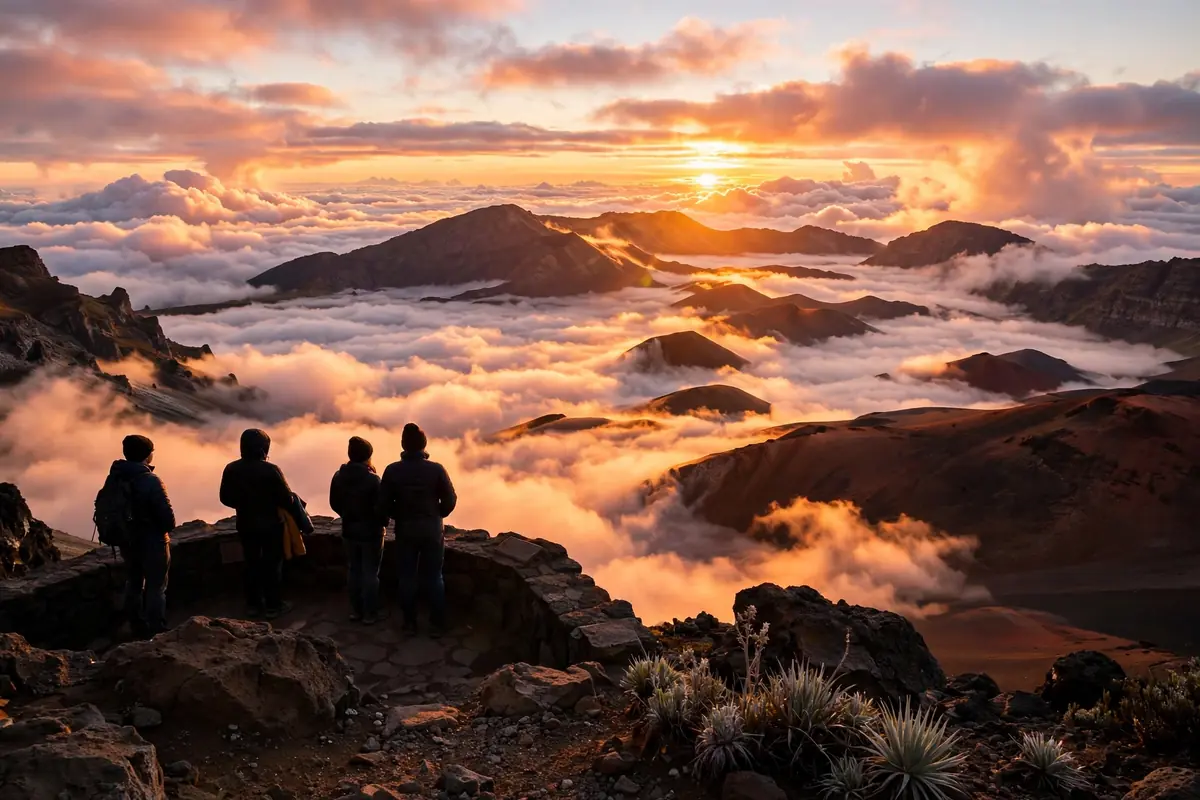
Haleakalā is a dormant volcano, and its summit, at 10,023 feet, is the highest point on Maui — and the place where the island’s best morning happens. You drive up through farmland and forest into a moonscape of red cinder cones, and at dawn the sun rises out of a sea of clouds below you. It is cold up there — near freezing at dawn, even when it is 80°F at the beach — so bring a jacket, a hat and gloves. The crater floor holds the rare silversword plant, which grows nowhere else on Earth. Read the full story in the Haleakalā National Park on Wikipedia entry.
Practical tip: Every vehicle entering the park between 3 a.m. and 7 a.m. needs a sunrise reservation from Recreation.gov — it costs about $1 per vehicle, on top of the park entrance fee of about $30 per private vehicle, valid for three days. Reservations open 60 days ahead at 7 a.m. Hawaii time, with a second small batch released two days before each date; summer dates sell out in minutes, and there is no refund if the summit is clouded in. The park is cashless, so pay by card. After 7 a.m. no reservation is needed, and sunset needs none at all — it is the quieter, warmer alternative.
Drive the Road to Hāna
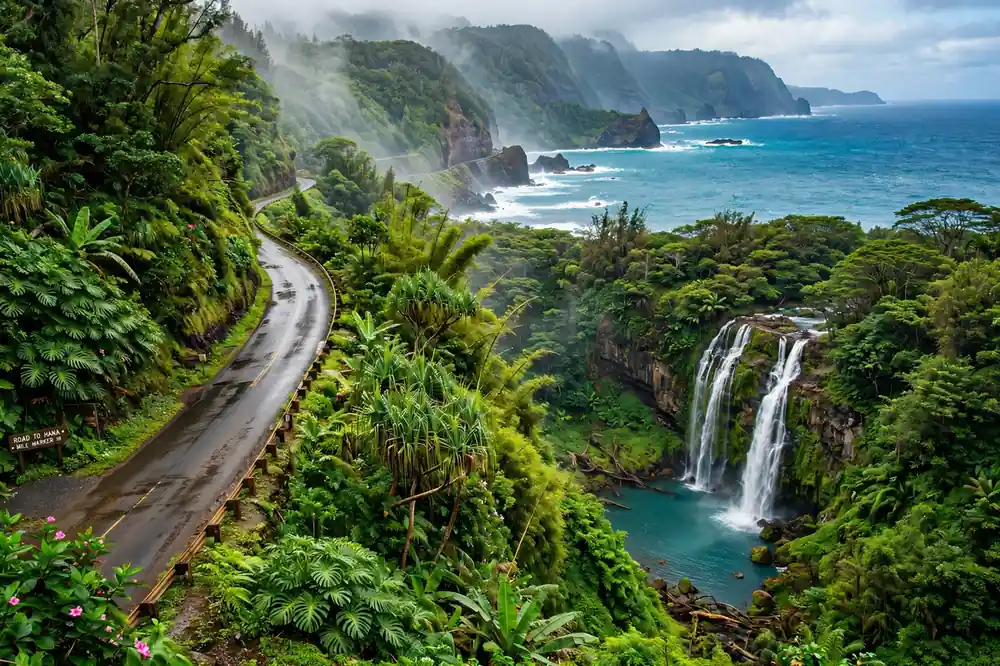
The Road to Hāna is the most famous drive in Hawaii: about 64 miles of Hāna Highway from Pāʻia to Hāna, with roughly 620 curves and 59 one-lane bridges along a rainforest coast of waterfalls, black sand beaches and sea cliffs. It is a full day, not a shortcut — leave at dawn, pick your stops before you go, and stay a night in Hāna if you can. The highlights are Twin Falls at mile marker 2, the Garden of Eden Arboretum, the black sand beach at Waiʻānapanapa and, past Hāna, the Pools of ʻOheʻo and the bamboo forest of the Pīpīwai Trail. The Road to Hāna on Wikipedia traces the highway and its history.
Practical tip: Fill your tank in Pāʻia — Hāna has one gas station. Book Waiʻānapanapa before you leave (see §3). Twin Falls charges about $10 per vehicle for parking and opens at 7:10 a.m. Most rental contracts forbid the rough back road from Hāna around the south side of the island, so check yours before you try it. Do not trespass on private land for waterfalls — several popular falls are on private property, and the locals’ patience for it is gone.
Walk the black sand beach at Waiʻānapanapa State Park
Waiʻānapanapa, on the coast just before Hāna, is the Road to Hāna’s most photographed stop: a beach of jet-black volcanic sand, framed by lava cliffs, sea stacks and a blowhole, with a freshwater cave and a coastal trail through a lava field. It is beautiful, and it is the one stop on the drive that needs a reservation — you cannot just turn up. The Waiʻānapanapa State Park on Wikipedia entry covers the park and its legends.
Practical tip: Non-residents must book an entry and parking reservation at gostateparks.hawaii.gov, up to 30 days ahead and never on the same day. It costs about $5 per person plus about $10 per vehicle, and the park is open daily from 7 a.m. to 6 p.m. You must arrive within the first 30 minutes of your time window and leave when it ends. Hawaii residents enter free with ID. Build the whole Hāna day around this booking — it is the one stop you cannot improvise.
Hike the Pīpīwai Trail to Waimoku Falls
Past Hāna, in the Kīpahulu District of Haleakalā National Park, the Pīpīwai Trail is the best hike on Maui: four miles round trip through a bamboo forest so dense it blocks the sunlight, past the 185-foot Makahiku Falls, to Waimoku Falls, a 400-foot cascade off a sheer black lava cliff. The trail starts at the Kīpahulu Visitor Center, and the Pools of ʻOheʻo — the Seven Sacred Pools — sit at the trailhead. The pools are closed to swimming, so admire them from the viewing area and save the swim for the beach. The Haleakalā National Park on Wikipedia entry covers both districts of the park.
Practical tip: The Kīpahulu entrance costs about $30 per vehicle, covered by the same three-day pass as the Haleakalā summit — keep your receipt. Allow three to four hours for the trail, wear waterproof shoes (the stream crossings are wet year-round), and start early: the parking lot fills by late morning, and afternoon rain is common on this side of the island.
Snorkel the crescent of Molokini Crater
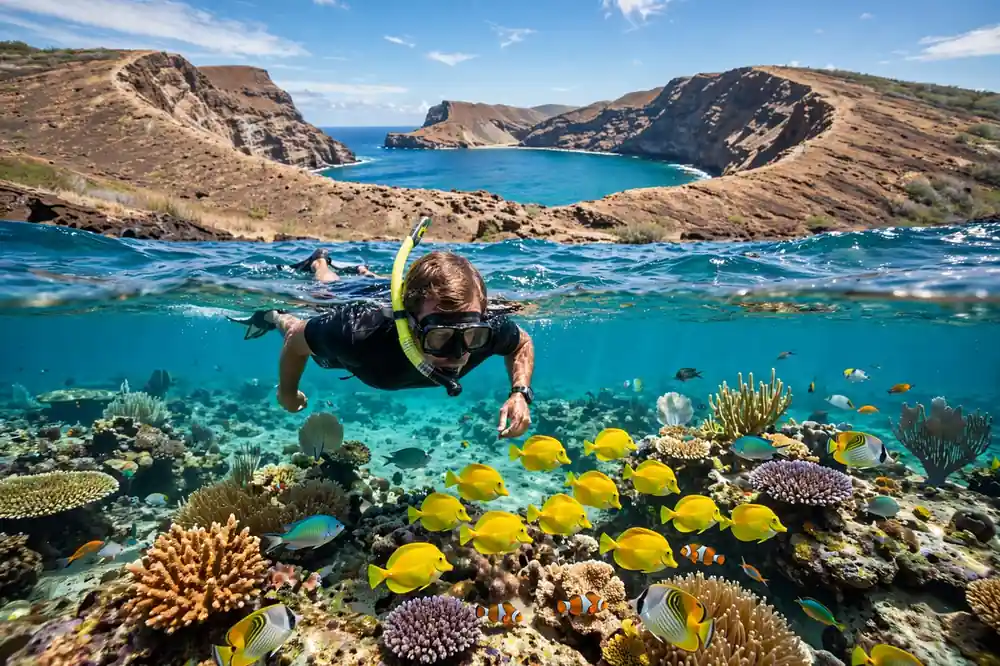
Molokini is a partially submerged volcanic crater about 2.5 miles off Maui’s south coast, and it is Hawaii’s most famous snorkelling spot: a crescent of rock sheltering water so clear you can see up to 150 feet, with more than 250 species of tropical fish, 38 kinds of coral and the occasional green sea turtle. It is a protected Marine Life Conservation District, so there is no fishing, no anchoring on the reef and no shore access — the only way in is a licensed boat tour from Māʻalaea Harbor or the Kīhei boat ramp. The Molokini on Wikipedia entry covers the crater’s geology.
Practical tip: Standard half-day catamaran tours cost roughly $130–$180 per adult, including gear, breakfast, lunch and usually a second stop at Turtle Town; express two-hour raft tours run roughly $99–$135. Book the earliest departure — the water is calmest and clearest before the afternoon trade winds pick up. From December to April the boat ride doubles as a whale watch, with humpbacks breaching in the channels on the way out.
Watch humpback whales — from a boat or the beach
Every winter, thousands of humpback whales migrate from Alaska to breed and calve in the warm channels around Maui, and the island is the best place in Hawaii to see them. The season runs roughly December to April, peaking in January to March, when mothers and calves are everywhere in the Auʻau Channel between Maui and Lānaʻi. Dedicated whale-watching boats leave from Māʻalaea and Kāʻanapali, and many operators guarantee a sighting or rebook you free. But you do not need a boat at all: spouts and breaches are visible from Kāʻanapali Beach, the Kapalua Coastal Trail and the west Maui shoreline on a calm morning. The Humpback whale on Wikipedia entry explains the migration.
Practical tip: Two-hour whale-watch tours cost roughly $100–$150 per adult in season — book one to two weeks ahead in February, the busiest month. Go in the morning, when the sea is calmest, and bring binoculars. Whales are protected by federal law: boats must stay 100 yards away, so a “close” encounter is still a distant one, and that is as it should be.
Spend a beach day at Kāʻanapali Beach and Black Rock
Kāʻanapali is Maui’s classic resort beach: three miles of golden sand in front of the big hotels, with calm water, sunset views and the cliff-diving ceremony at Black Rock (Pūʻu Kekaʻa) every evening at sunset, when a diver lights the torches and leaps from the cliff. Black Rock itself is one of the island’s best shore snorkelling spots — turtles, reef fish and clear water right off the sand, with no boat needed. The Kāʻanapali on Wikipedia entry covers the resort area.
Practical tip: The beach is public — you do not need to stay at a resort to use it. Park at the public lot at the north end near the Sheraton (Black Rock) or use the Whalers Village garage; both fill by mid-morning. Snorkel in the morning before the wind picks up, and stay for the sunset cliff dive, which happens daily at sunset, weather permitting.
Visit Lahaina — Front Street is back, with care
Lahaina was the royal capital of Hawaii and its great whaling port, and on August 8, 2023 a wildfire destroyed most of the historic town and killed more than 100 people. Three years on, the town is rebuilding — and visitors are welcome again, on different terms than before. Front Street reopened to vehicle traffic on August 1, 2026, between Pāpalaua and Shaw Streets, after debris removal, seawall and sidewalk repairs and repaving. More than a dozen businesses have reopened along that stretch, including Kimo’s, Māla Ocean Tavern, Star Noodle, Honu Oceanside and Coco Deck, the ʻUlu o Lele Marketplace is open, and Lahaina Cannery Mall is busy again with Safeway and Longs Drugs. Kāʻanapali, just north of town, was untouched by the fire. The Lahaina on Wikipedia entry covers the town’s history and the fire.
Practical tip: Go for a specific open business, spend money locally, and stay out of fenced lots and private property — do not photograph homes, rebuilding sites or residents. Market Street, Papelekane Street and Mokuhinia Place are still closed, and the harbour is only partly operating, with full operations expected by the end of 2027. The 150-year-old banyan tree is green again, but it is fenced off and Banyan Court Park is expected to stay closed for about two more years. The Baldwin House, damaged by a storm in March 2026, is closed while it is carefully taken down and rebuilt. Do not build a day around the old Lahaina — the galleries, boutiques and most of the restaurants people remember are still gone.
Feast at the Old Lahaina Luau
The Old Lahaina Luau is the most traditional luau on Maui: an oceanfront evening of hula, Hawaiian music, a four-course dinner and the imu ceremony, where the pig is uncovered from the underground oven. It sits on the Lahaina waterfront, and it is the one experience in town that survived the fire in working order — its offices were destroyed and it closed for months, but it reopened on March 12, 2024 and has been running strong since. Its sister show, the Feast at Lele, was destroyed in the fire and will not reopen — if a guide still lists it, the guide is out of date. The Lahaina on Wikipedia entry covers the town and its traditions.
Practical tip: Tickets cost about $230 per adult and about $140 per child aged 3 to 12 in 2026, tax and service included, with infants 2 and under free. There are no VIP tiers — that is the only price. Popular dates sell out months ahead, so book as soon as your travel dates are set. Hawaii residents get kamaʻaina rates by phone only.
Watch turtles at Hoʻokipa Beach Park
Hoʻokipa, on the north shore near Pāʻia, is where Maui’s two worlds meet: world-class windsurfers ride the waves on the east side, and Hawaiian green sea turtles (honu) haul out to rest on the sand on the west side, sometimes a dozen at a time. It is the most reliable turtle spot on the island, and it costs nothing. The beach is also the birthplace of modern windsurfing, and on a windy afternoon the sail colours over the surf are a show in themselves. The Hawaii on Wikipedia entry covers the islands and their wildlife.
Practical tip: Come in the late afternoon, when the turtles come ashore to rest — stay behind the rope line and never touch them (it is illegal, and the fine is real). The parking lot is small and fills fast; the overlook above the beach is the best vantage point. Do not swim here unless you are an experienced ocean swimmer — the surf is strong, and this is a windsurfing beach, not a swimming beach.
Walk the ʻĪao Valley and the Kūkaʻemoku Needle
The ʻĪao Valley, in the West Maui Mountains above Wailuku, is the greenest place on the island: a lush, misty valley where the Kūkaʻemoku (ʻĪao) Needle, a 1,200-foot lava remnant, rises above a stream. It is also one of the most important sites in Hawaiian history — the Battle of Kepaniwai was fought here in 1790, and the valley was a sacred burial place for Hawaiian chiefs. The ʻĪao Valley on Wikipedia entry covers the valley and the battle.
Practical tip: Non-residents must book a timed entry reservation ahead through the Hawaii State Parks site, and entry and parking fees apply — check the current fees on the booking page before you go. The paved trail to the viewing platform takes about 20 minutes. Come in the morning, before the clouds settle into the valley, and bring a rain jacket: this is one of the wettest places in Hawaii, and showers arrive fast.
Meet Hawaii’s sea life at Maui Ocean Center
The Maui Ocean Center, at Māʻalaea Harbor, is Hawaii’s largest aquarium — and the only one where every animal comes from Hawaiian waters. Its highlights are the 750,000-gallon Open Ocean tunnel, where sharks, rays and trevally swim overhead, the living reef with one of the world’s largest displays of live Pacific corals, and the Hawaiian monk seal and turtle exhibits. It is the best rainy-day plan on the island, and the one stop that makes the marine life you saw snorkelling make sense. The Hawaii on Wikipedia entry covers the islands’ marine life.
Practical tip: Advance online tickets cost about $49.95 for adults, about $39.95 for children aged 4 to 12 and about $44.95 for seniors, with under-3s free — buy at least a day ahead, as door prices are higher. It opens daily from 9 a.m. to 5 p.m., with last entry at 4 p.m. Parking at the harbour costs about $2–$3 per hour. Allow two to three hours.
Lounge on Wailea’s beaches — and Big Beach
Wailea, on the sunny south coast, is Maui’s luxury resort area, and its five connected beaches are the island’s prettiest: Wailea Beach itself, Ulua and Mokapu for snorkelling, and, just south, Makena Beach — Big Beach — a wide, wild stretch of golden sand with no buildings behind it. Big Beach is the local favourite: free parking, room to spread out, and shore break that demands respect. The Maui on Wikipedia entry covers the island’s coasts.
Practical tip: Wailea Beach and Ulua are calmest in the morning and best for snorkelling; Big Beach’s shore break is powerful, so swim only where lifeguards are posted and never turn your back on the waves. All beaches in Hawaii are public, so use the public beach access paths between the resorts. Wailea’s resort restaurants are the island’s most expensive — eat in Kīhei, ten minutes north, for half the price.
Walk the Kapalua Coastal Trail
The Kapalua Coastal Trail is the prettiest easy walk on Maui: about 2.5 miles of paved and dirt path along the northwest coast, from Kapalua Bay past the Dragon’s Teeth lava formations and Oneloa Bay to D.T. Fleming Beach Park. It passes three of the island’s best snorkelling bays, a blowhole at the point, and views across to Molokaʻi. It is flat, free and family-friendly — the walk to do on your first morning in West Maui. The Maui on Wikipedia entry covers the island’s coasts.
Practical tip: Start at Kapalua Bay in the morning, when the water is calmest for snorkelling — Kapalua Bay is a protected marine reserve with turtles and reef fish right off the sand. The trail is mostly in the open sun, so bring water and a hat. The Ritz-Carlton Kapalua sits at the trail’s midpoint, and its beach bar is the natural halfway stop.
Chase the spray at the Nakalele Blowhole
At the far northwest tip of Maui, past Kapalua, the coast turns wild: the Nakalele Blowhole, a lava tube in the shoreline that shoots seawater up to 100 feet into the air when the surf is right. It is a short walk down a rocky slope from the roadside pullout, and it is the rawest scenery on the island — black lava, crashing surf and views to Molokaʻi and, on a clear day, Oʻahu. The same drive, the Kahekili Highway, is the island’s most dramatic coastal road: narrow, winding and cliff-hugging. The Maui on Wikipedia entry covers the island’s geography.
Practical tip: Never stand on the blowhole itself — people have died here when a wave surge caught them, and the rocks are slick. Watch from the marked viewing area, go at high tide for the biggest spray, and keep a firm grip on children. Check your rental contract before driving the Kahekili Highway: many contracts forbid it, and the road is one lane in places with no guardrails.
Slow down in Upcountry — lavender, farms and Makawao
Upcountry Maui, on the cool green slopes of Haleakalā between 1,500 and 4,000 feet, is the island’s other world: rolling pastures, jacaranda trees, farm stands and the paniolo (Hawaiian cowboy) town of Makawao, with its galleries, boutiques and the rodeo every July 4. The Aliʻi Kula Lavender Farm, at 4,000 feet, grows 55,000 lavender plants across 13.5 acres, with walking tours, a gift shop and views down to the coast. Come up here on your Haleakalā day — it is on the way down — or for a slow morning away from the beach crowds. The Maui on Wikipedia entry covers the island’s regions.
Practical tip: The lavender farm charges a small admission fee and runs guided walking tours — book ahead in peak season, as the farm limits numbers. Makawao’s shops are best on a weekday morning, when the town is quiet. Upcountry is 10–15°F cooler than the coast, so bring a layer. The Kula Lodge restaurant, on the way up, is the classic stop for lunch with a view.
Wander Pāʻia, the surf town
Pāʻia, at the start of the Road to Hāna, is Maui’s surf town: a single main street of surf shops, health-food cafés, boutiques and the best shave ice on the island, with a hippie past and a present that runs on yoga, windsurfing and farm food. It is the last town before the Hāna Highway turns into rainforest, and the first stop on the way back for food. Come for breakfast before the drive, or for an afternoon of browsing after Hoʻokipa. The Pāʻia on Wikipedia entry covers the town.
Practical tip: Parking on Baldwin Avenue is tight — use the lot behind the shops. Ululani’s Hawaiian Shave Ice, on Baldwin Avenue, is the island’s most famous shave ice stand; expect a queue at midday. Pāʻia’s restaurants are the best value on the north shore — eat here before the drive, not at the tourist stops along the way.
Ride the tram at Maui Tropical Plantation
The Maui Tropical Plantation, in the central valley between Wailuku and Māʻalaea, is a working farm and the easiest introduction to Hawaiian agriculture: a 40-minute narrated tram ride through fields of pineapple, sugarcane, coffee, macadamia and tropical fruit, with tastings along the way. It is the stop that makes the rest of the island’s food make sense — and it is the most family-friendly hour on Maui. The Hawaii on Wikipedia entry covers the islands’ agriculture.
Practical tip: Book the tram tour ahead online — it sells out on cruise-ship days, when Māʻalaea is busy. The plantation’s restaurant and the Kumu Farms market are worth a stop even without the tram, and the zipline over the fields is the island’s gentlest one. Allow two hours for the tram, the market and lunch.
Snorkel Honolua Bay
Honolua Bay, just north of Kapalua, is the snorkelling spot locals name first: a marine reserve in a forested cove, with clear water, coral gardens and turtles, and no buildings anywhere near it. It is also one of Maui’s most famous surf breaks in winter, when the bay is for surfers only and snorkelling is not safe. In summer, when the surf drops, the bay belongs to snorkellers — and the short walk down through the forest is half the pleasure. The Maui on Wikipedia entry covers the island’s bays.
Practical tip: Go in summer, in the morning, and only when the surf is flat — check the surf report before you go, and do not enter the water on a big-swell day. There are no facilities and no lifeguard, so bring everything you need and take everything out. The parking is roadside and limited; arrive before 9 a.m.
See the island from a helicopter
Maui from the air is a different island: the West Maui Mountains’ knife-edge ridges and waterfalls, the crater of Haleakalā, the black sand coast of Hāna and the sea cliffs of Molokaʻi across the channel — most of it unreachable on foot or by road. A helicopter tour, usually 45–60 minutes from Kahului, is the island’s great splurge, and the one activity that makes photographers’ jaws drop. The Maui on Wikipedia entry covers the island’s geography.
Practical tip: Tours cost roughly $240–$315 per person, and doors-off flights cost more. Book the first flight of the morning, when the air is clearest and the trade-wind clouds have not yet built over the mountains. Weight limits apply and are enforced — be honest when you book. If you are prone to motion sickness, take medication beforehand: the mountain turbulence is real.
Maui in 3 days — a ready-made itinerary
Three full days covers the island’s highlights without rushing: one for Haleakalā and Upcountry, one for the south Maui beaches and Molokini, and one for the Road to Hāna. Five to seven days lets you add West Maui, the north shore and a slow day — and a night in Hāna turns the east side from a marathon into a pleasure.
| Day | Where | Highlights |
| Day 1 — Haleakalā and Upcountry | Summit, Upcountry, Pāʻia | Sunrise at Haleakalā, lavender farm, Makawao, shave ice in Pāʻia. |
| Day 2 — South Maui and the sea | Māʻalaea, Molokini, Wailea | Morning snorkel at Molokini, afternoon at Wailea Beach, sunset in Kīhei. |
| Day 3 — The Road to Hāna | Pāʻia, Hāna, Kīpahulu | Twin Falls, Waiʻānapanapa black sand beach, Pīpīwai Trail and Waimoku Falls. |
Day 1 — Haleakalā and Upcountry: the sunrise, the farm and the surf town
Set the alarm for 2:30 a.m. — the drive to the summit takes about 90 minutes from Kāʻanapali and an hour from Wailea, and you want to be at the summit 30 minutes before sunrise. Watch the dawn, walk the short crater overlook trail, then drive down through Upcountry: the Aliʻi Kula Lavender Farm for a morning tour, Makawao for coffee and browsing, and Pāʻia for lunch and shave ice. Finish at Hoʻokipa in the late afternoon, when the turtles come ashore and the windsurfers are out. Day one is the classic Maui, and it is the one to get right.
Day 2 — South Maui and the sea: the crater, the beach and the sunset
Be at Māʻalaea Harbor by 6:30 a.m. for the Molokini boat — the earliest departures get the calmest water and the best visibility. Back on land by late morning, spend the afternoon at Wailea Beach or Big Beach, snorkelling at Ulua in the morning calm, then drive north to Kīhei for a food-truck dinner and the sunset from the beach. If it is whale season (December to April), the boat ride out to Molokini doubles as a whale watch — and the sunset from Kāʻanapali is the alternative finish.
Day 3 — The Road to Hāna: the drive, the black sand and the bamboo forest
Leave Pāʻia at dawn with a full tank and your Waiʻānapanapa reservation already booked. Stop at Twin Falls first, then the Garden of Eden, then the black sand beach in your reserved window. Drive on to Hāna for lunch, then past it to Kīpahulu for the Pīpīwai Trail and Waimoku Falls — and turn around by mid-afternoon, because the drive back in the dark is no fun. If you have a fourth day, spend it in West Maui: the Kapalua Coastal Trail in the morning, Lahaina for lunch and the Old Lahaina Luau in the evening.
Best time to visit Maui
Maui is warm all year, so the question is rain, crowds, whales and price, not temperature. The shoulder seasons — April to May and September to November — are the sweet spot: mild weather, thinner crowds and lower prices. Winter (December to March) brings the humpback whales and the driest weather on the south and west coasts, but also the highest prices and the biggest crowds. Summer (June to August) is the busiest family season, with warm water and the calmest snorkelling, but the highest hotel rates after winter. The north and east sides are wettest in winter, when flash floods can close the Hāna Highway — always check the road before you drive it. Hurricane season runs June 1 to November 30, though direct hits on Maui are rare.
| Season | Months | Weather and crowds | Best for |
| Winter (peak) | December–March | Warm 75–85°F, drier south and west, busiest | Whale watching, dry beaches, holiday trips |
| Spring (shoulder) | April–May | Mild 75–85°F, thinner crowds, lower prices | Best value, snorkelling, the Road to Hāna |
| Summer (peak) | June–August | Hot 85–90°F, calm seas, family crowds | Snorkelling, Honolua Bay, family trips |
| Autumn (shoulder) | September–November | Warm 80–88°F, quietest, warm water | Best value, diving, slow travel |
Where to stay in Maui
Kāʻanapali suits first-timers who want a resort beach, restaurants and the sunset cliff dive on foot; Wailea suits a luxury stay on the sunniest coast; Kīhei suits a budget base of condos and food trucks; Lahaina town suits a stay close to the rebuilding community (check what is open before you book); Pāʻia suits a surf-town base near the Hāna Highway; Hāna suits one quiet night on the remote east side. Book early for whale season (December to April) and for the Christmas and New Year weeks, when the island is at its fullest.
| Area | Best for | Expect to pay (approx) |
| Kāʻanapali | First-timers, resort beach, sunset, restaurants | $350–$600 a night for a resort hotel |
| Wailea | Luxury, sunniest coast, best beaches | $450–$800 a night for a resort hotel |
| Kīhei | Budget base, condos, food trucks, central | $200–$350 a night for a condo |
| Lahaina town | Close to the rebuilding community, history | $200–$400 a night for a hotel or condo |
| Pāʻia | Surf town, Hāna Highway, character | $180–$320 a night for a boutique stay |
| Hāna | Remote east side, one quiet night | $250–$400 a night for a small hotel |
Getting around Maui
A rental car is the single most important decision on this trip. For almost everything on this list you want a car: the Haleakalā summit, the Road to Hāna, the north shore and the west side are not served by any useful public transport. The Maui Bus exists, but it runs limited routes on limited schedules and does not reach the trailheads, the summit or Hāna. Book your car the moment you book your flight — Maui’s rental fleet is small for the demand, and prices spike in whale season. Kahului Airport (OGG) is the island’s only major airport, and the drive from it takes about 45 minutes to Kāʻanapali, about 30 minutes to Wailea and about 20 minutes to Pāʻia. Fill the tank before the Road to Hāna, allow a third longer than the off-peak drive time at rush hour, and remember that gas in Hawaii runs about $5.60 a gallon — and that Maui County allows only mineral sunscreen, so bring reef-safe mineral sunscreen or buy it on the island.
Maui food you have to try
Maui’s food story starts in the ocean and the fields: fresh-caught fish, pineapples grown on the island’s slopes, and the plantation-era mix of Hawaiian, Japanese, Filipino and Portuguese cooking that became the plate lunch. Eat at the food trucks, the farmers markets and the small stands, not just the resort restaurants — that is where the food is best and cheapest. And book the famous tables early: Mama’s Fish House, the island’s most celebrated restaurant, needs reservations weeks ahead.
Poke and the plate lunch
Poke — cubes of raw ahi tuna tossed with soy, sesame and onion — is Hawaii’s signature dish, and Maui’s fish markets and food trucks serve the freshest version on the islands. The plate lunch is the other classic: two scoops of rice, macaroni salad and a main — kalua pork, chicken katsu or teriyaki beef — on a paper plate, for about $15–$20. It is plantation food, filling and cheap, and it is the lunch to eat on a beach day. Foodland Farms and the Tamura’s markets in Lahaina and Kīhei are the local sources for poke by the pound; the food trucks of Kīhei are the best place for a plate lunch.
Shave ice, the island’s ice cream
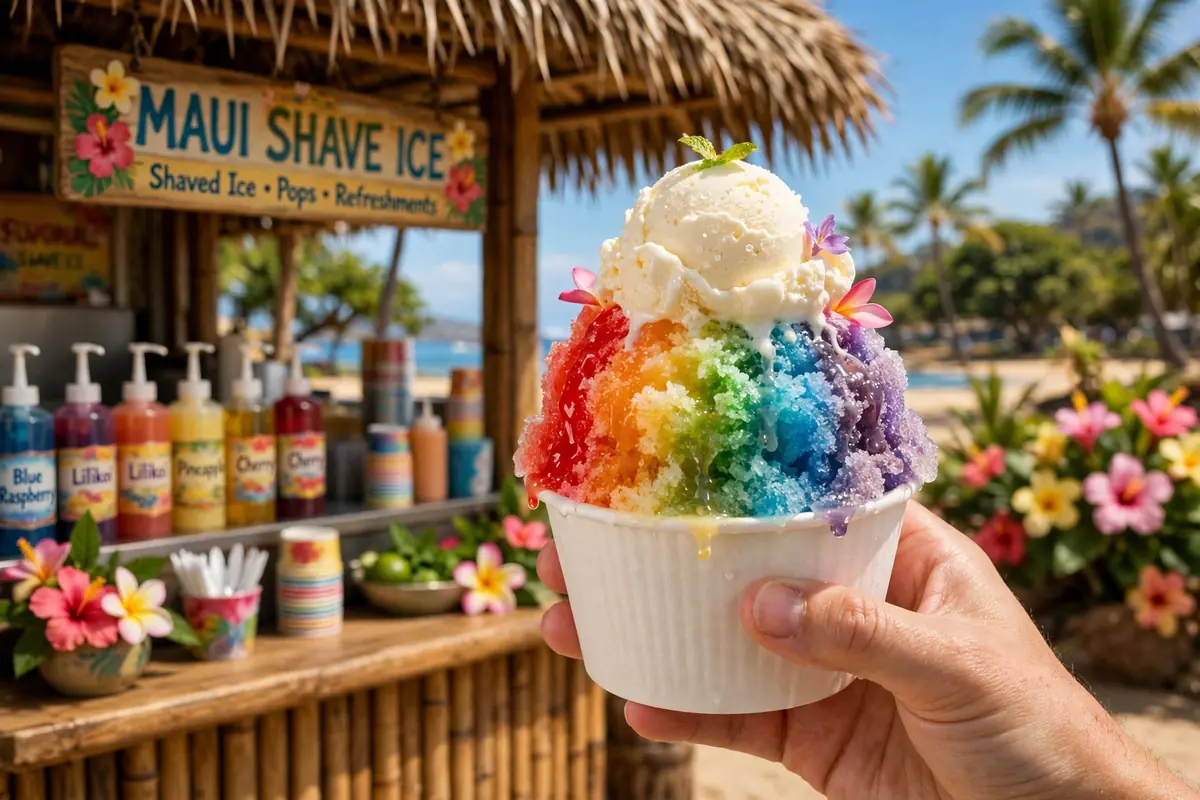
Shave ice is not a snow cone — it is ice shaved so fine it melts like snow, soaked in syrup and often served over a scoop of vanilla ice cream with sweet azuki beans at the bottom. A rainbow shave ice costs about $5–$8, and the best versions come from the small stands: Ululani’s in Pāʻia and Kīhei, with its house-made syrups, is the island’s most famous, and the stands of Lahaina and Wailuku are the local favourites. Eat it fast in the sun, with a spoon and a straw — it melts in minutes, and that is part of the pleasure.
Maui Gold pineapple and the farm stands
Maui Gold is the island’s own pineapple — sweeter and less acidic than the supermarket kind, grown on the slopes of Haleakalā and sold at farm stands across Upcountry and at the farmers markets in Wailuku and Kīhei. Buy one whole and eat it the same day, or buy a cup of cut fruit at a stand on the Road to Hāna, where the farm stands sell fresh tropical fruit, smoothies and banana bread. The Saturday farmers market in Wailuku is the best one-stop shop: local fruit, coffee, macadamia nuts and the island’s best banana bread, all from the people who grew it.
Free things to do in Maui
The island is generous to a tight budget. Every beach in Hawaii is public and free, and Maui’s best are free: Kāʻanapali, Wailea, Big Beach, Kapalua Bay and Napili Bay. Watching the turtles at Hoʻokipa is free, and so is the Kapalua Coastal Trail, the Nakalele Blowhole, the sunset from Haleakalā (no reservation needed after 7 a.m.) and the sunset cliff dive at Black Rock. The farmers markets are free to browse, the Pāʻia street is free to wander, and the best free thing of all costs nothing and needs no ticket: drive the coast at dusk, when the trade winds drop and the island turns gold. A day of the island’s best experiences — a beach morning, a turtle afternoon and a sunset — can cost less than a single snorkel tour.
Frequently asked questions
How many days do you need in Maui?
Three full days covers the highlights on this list: Haleakalā, the Road to Hāna and a beach-and-snorkel day. Five to seven days does the island properly, with West Maui, the north shore and a slow day in between. Add a night in Hāna if you want the east side without the marathon drive back. Do not try to do Maui in one day — you will see the sights and miss the island.
Is Lahaina open to visitors in 2026?
Partly, and respectfully. Front Street reopened to traffic on August 1, 2026, between Pāpalaua and Shaw Streets, and more than a dozen businesses are operating, including Kimo’s, Māla Ocean Tavern, Star Noodle and the ʻUlu o Lele Marketplace. But Market Street and the harbour area remain closed, the banyan tree park is fenced off, and the historic shopping and dining district that once lined Front Street is still mostly closed and under construction. Go for a specific open business, spend money locally, and stay out of fenced lots and private property.
Do you need reservations in Maui?
Yes — for the two most popular experiences. Haleakalā sunrise needs a $1 vehicle reservation from Recreation.gov, booked up to 60 days ahead, on top of the $30 park entry. Waiʻānapanapa black sand beach needs an entry and parking reservation from the Hawaii State Parks site, booked up to 30 days ahead, at about $5 per person plus $10 per vehicle. ʻĪao Valley needs a timed entry reservation for non-residents. The Old Lahaina Luau sells out months ahead. Book all of them the moment your travel dates are set — the sunrise and black sand reservations cannot be bought on the day.
When is whale season in Maui?
Humpback whales are in Maui’s waters roughly from December to April, with the peak in January to March, when mothers and calves fill the Auʻau Channel. Dedicated whale-watching boats run from Māʻalaea and Kāʻanapali, and many guarantee a sighting or rebook you free. Outside the season, the boats run as snorkel and sunset cruises instead. Whales can also be seen from shore — Kāʻanapali Beach and the Kapalua Coastal Trail are the best land viewpoints.
Do you need a car in Maui?
Yes, for almost everything on this list. The Haleakalā summit, the Road to Hāna, the north shore, the west side and the trailheads are not served by public transport, and rideshare to a trailhead is expensive and unreliable for the return. The Maui Bus runs limited routes and does not reach the sights that matter most. Book your rental car when you book your flight — the fleet is small, and prices spike in whale season.
Is Maui expensive?
Maui is expensive but manageable. A mid-range trip runs about $200–$350 per person per day, including a rental car, a hotel or condo, one big ticketed activity and restaurant meals. Save money by staying in a Kīhei condo with a kitchen, eating food-truck plate lunches and market picnics, and filling your days with the free beaches, trails and turtle watching. A beach-and-food-truck day can cost under $75 a person — and the island’s best experiences, the sunrise, the beaches and the whales from shore, are free.
Further reading — Wikipedia, Reddit and Quora
Haleakalā National Park on Wikipedia
Ask questions and read trip reports on r/Maui
Read this Quora thread on Hawaii’s popular attractions, with Maui answers on Molokini, the Road to Hāna and whale watching
Your Maui trip, in one paragraph
Maui gives you a volcano sunrise above the clouds, a rainforest highway of waterfalls and black sand, a crescent crater full of reef fish, humpback whales breaching off the beach, the best shave ice in Hawaii and a small town rebuilding itself with grace — all on one island, under more than 280 days of sunshine a year. Drive at dawn, snorkel in the morning calm, and be at a viewpoint for the last hour before sunset. If Maui has given you the travel bug, the same kind of guide is waiting for the other cities on this site: Chicago, Nashville, Los Angeles, Orlando, Miami, San Diego, Denver, Savannah, Dallas, Charleston, San Francisco, Myrtle Beach, Las Vegas, San Antonio, London, Portland, Pigeon Forge, Puerto Rico, Atlanta, Phoenix and Paris — twenty-one guides, one for every kind of trip.

About the Author