Things to Do in Dubai
20 Best Attractions, a 3-Day Itinerary, Where to Stay, and the Food You Cannot Miss
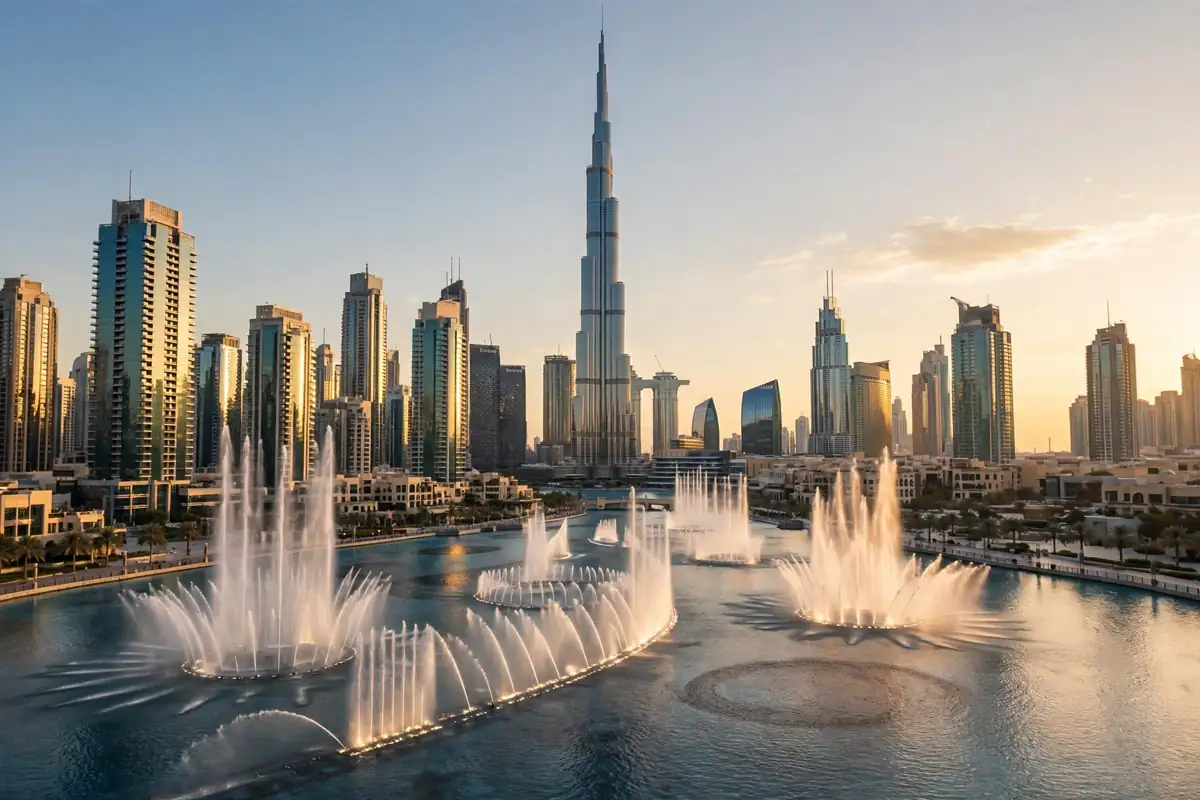
Quick Info
Best for: First-timers, skyline chasers, beach lovers and food lovers — and anyone who wants the desert, the sea and a futuristic city in one trip
Best time: November–March for warm days and cool evenings; December is the best single month; June–August is the cheapest, with hotel rates down 40–60%
How long: 3 days for Downtown, Old Dubai and the desert; 4–5 days if you add the Palm, the beaches and a slow food crawl
Budget: About AED 400–800 ($110–$220) per person per day with a mid-range hotel — many of the best sights are free
Don’t miss: The Burj Khalifa at sunset, a desert safari at golden hour, an AED 1 abra across the Creek, the Fountain show after dark and a shawarma eaten standing up
Dubai on Wikipedia is the city that was a fishing village and a pearl-diving port within living memory, and is now the tallest, biggest and most futuristic skyline on the planet — and the rare city where you can ski indoors in the morning, cross a creek on a wooden boat for a dirham at noon, and watch the sun set over the desert in the evening. This guide covers the 20 best things to do in Dubai, a 3-day itinerary that actually works, where to stay without overpaying, how to get around by metro, abra and taxi, the three foods you should not skip, and the free sights that make Dubai far cheaper than its reputation suggests. Everything below was checked against live sources in November 2026 — including the closures most guides still get wrong.
Dubai at a glance
| Topic | What to know |
|---|---|
| Full name | Dubai, United Arab Emirates — the largest city in the UAE, on the Persian Gulf coast |
| Founded | A fishing and pearl-diving village; the modern city grew after oil in the 1960s and trade in the 1980s |
| Population | About 3.8 million in the city; roughly 85% of residents are expatriates |
| Currency | UAE dirham (AED), pegged at about 3.67 to the US dollar |
| Language | Arabic (English is the working language of tourism, hotels and restaurants) |
| Airport | Dubai International (DXB), about 5 km from Deira and 15 km from Downtown; Al Maktoum (DWC) serves the south |
| Best base | Downtown for first-timers; Dubai Marina or JBR for the beach; Deira or Bur Dubai for budget stays |
| Getting around | Metro Red and Green lines, the AED 1 abra, taxis and Careem; a car is unnecessary in the centre |
| Famous for | Burj Khalifa, the Dubai Mall, the Fountain, the desert safaris, the souks and the Palm |
Dubai divides into three parts, and understanding them is the key to planning. Downtown Dubai is the new centre: the Burj Khalifa, the Dubai Mall, the Fountain and the Opera, all around Burj Lake. Old Dubai sits across the Creek to the north: Bur Dubai on the south bank and Deira on the north bank, where the souks, the wind-tower houses of Al Fahidi and the abras still run the way they did a century ago. The coast runs south-west from there: Jumeirah with its beaches and the mosque, then the Marina and JBR, then the Palm Jumeirah jutting into the Gulf — and beyond the towers, the desert begins within half an hour’s drive. Most visitors stay in Downtown or the Marina and use the metro for the long hops, the abra for the Creek, and a taxi for everything the metro does not reach. Come for the superlatives, stay for the old city — and plan your days around the heat, with the outdoors in the morning and evening and the malls in the middle of the day.
The 20 best things to do in Dubai
1. Burj Khalifa
Burj Khalifa on Wikipedia is the tallest building in the world, and it is the one sight no first visit to Dubai skips: 828 metres of glass and steel, 163 floors, with observation decks on levels 124 and 125 and the higher SKY deck on level 148. Tickets are tiered and timed in 2026: Silver, levels 124 and 125, costs from AED 189 outside prime hours and AED 250 in prime hours, roughly 3 p.m. to 9 p.m.; Gold, which adds level 148 and priority access, costs from AED 399; the Platinum package, with a lounge and a meal, costs from AED 769. Children aged 3 to 12 pay AED 129 non-prime and AED 175 prime, and children under 3 go free. The tower is open from 10 a.m. to midnight on weekdays and from 8 a.m. at weekends, with last entry 45 minutes before closing. Book online, because walk-up prices can run up to four times the online price, and book a sunset slot 60 to 90 minutes before sunset — those slots sell out days and sometimes weeks ahead. Allow 90 minutes, more at sunset.
2. Dubai Mall and the Dubai Fountain
Dubai Mall on Wikipedia is the largest mall in the world by total area, with more than 1,200 shops — and it is a sight in itself, not just a place to shop. Inside are the Dubai Aquarium and Underwater Zoo, with its 10-million-litre tank and a tunnel you can walk through (tickets from about AED 199), an ice rink, a cinema complex, the KidZania play city, and a waterfall with diving figures. The mall is open daily from 10 a.m. to midnight, later at weekends. Outside, on Burj Lake, is the Dubai Fountain on Wikipedia, the world’s largest choreographed fountain system, which shoots water 150 metres into the air to music and light. Here is the news most guides still miss: the fountain reopened on 1 October 2025 after a five-month renovation, and the full schedule is running again. Afternoon shows play at 1 p.m. and 1:30 p.m. from Saturday to Thursday, and at 2 p.m. and 2:30 p.m. on Fridays; evening shows run every 30 minutes from 6 p.m. to 11 p.m., and each one lasts about five minutes. The show is free from the Waterfront Promenade, reached from the mall’s lower ground floor near the Apple Store exit — The Lake Ride boats cost about AED 65, and a second phase of fountain upgrades was planned for 2026, so check the day’s schedule on the official Dubai Mall page before you go.
3. Museum of the Future — closed until early 2027
Museum of the Future on Wikipedia is the silver torus on Sheikh Zayed Road, covered in Arabic calligraphy, and it is the single most important thing to know before you plan a Dubai trip in late 2026: the museum is closed. It stopped admitting visitors on 1 September 2026 while every major exhibition inside is replaced, and the only reopening date it has announced is the first quarter of 2027, around its fifth anniversary in February 2027. Almost every competitor guide still lists it as a must-visit with tickets from AED 149 — that was the old price, for a timed-entry ticket that no longer exists. Do not buy a ticket from any reseller promising entry before the reopening; there are no interior tickets to sell. What you can still do is free: the exterior, the plaza and the viewpoint from Al Mustaqbal Street are open — come at dusk, when the calligraphy glows. One exception: Dubai Future Week runs from 18 to 21 November 2026, with public sessions in the museum’s auditorium that are free once you register online. Until the museum reopens, the direct swap is the Dubai Frame, a few minutes down the road, which covers the same past-to-future story for AED 50.
4. Dubai Frame
Dubai Frame on Wikipedia is a 150-metre gold-clad rectangle standing alone in Zabeel Park, and it is the cleverest viewpoint in Dubai: from the glass-floor sky bridge across the top, old Dubai stretches out on one side and new Dubai on the other, so the building is the frame for the view it sells. The visit runs through three galleries — Old Dubai, the Present on the bridge itself, and Future Dubai, a projection of what the city plans to become. Entry is AED 50 for adults and AED 20 for children aged 3 to 12, free for children under 3 and for people of determination with two companions, and the Frame is open daily from 8 a.m. to 9 p.m. No food, drinks, pets or large bags are allowed inside — strollers and big bags stay at the Gate 4 counter — and children under 12 must be with an adult. The Frame is open and operating normally in 2026; the building that closed for renovation is the Museum of the Future, not the Frame. Allow 90 minutes, and come in the late afternoon, when the light on both skylines is at its best.
5. Dubai Creek and the abra ride
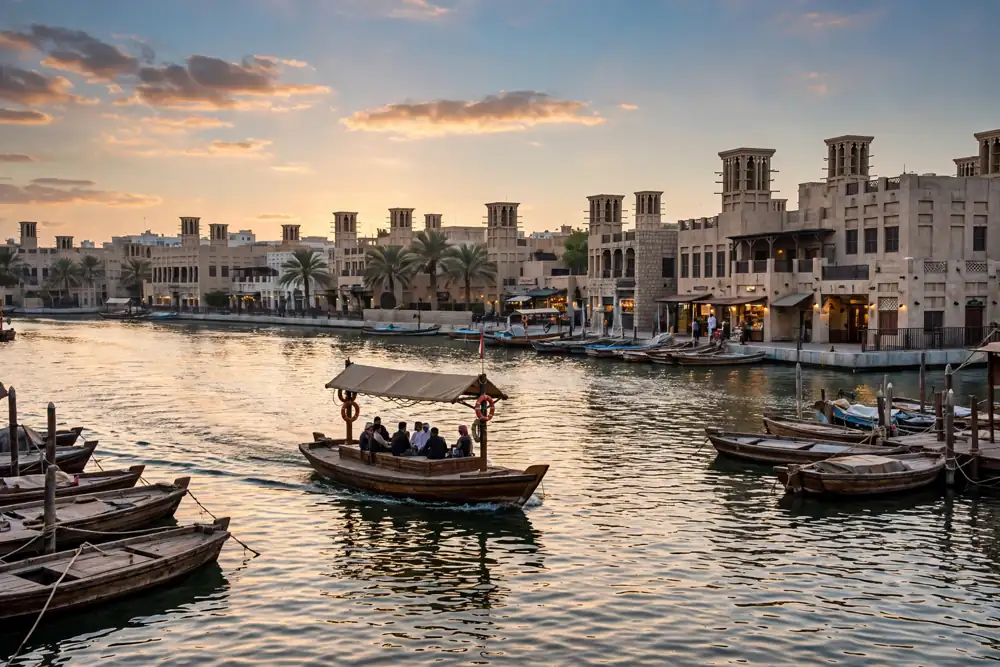
Dubai Creek on Wikipedia is the saltwater inlet the city grew around, and the cheapest great experience in Dubai is the crossing: a traditional wooden abra, an open boat with a bench and a driver, that carries you from Bur Dubai to Deira for AED 1, paid in cash to the driver. The ride takes about five minutes, and it is the best AED 1 in the city — dhows loaded with cargo, the minarets of the old mosques, the wind towers of the old town, and the contrast with the towers behind you. The abras run roughly from 5 a.m. to midnight and leave when they are full. Cross from the Bur Dubai station near the Textile Souk to the Deira side, where the Gold Souk and the Spice Souk are a short walk from the landing. The Al Seef promenade on the Bur Dubai bank is the place to walk afterwards — a rebuilt heritage waterfront of wind-tower houses, cafes and shops, free to wander, and at its best after dark. The Creek is also where Dubai’s history starts: the History of Dubai on Wikipedia covers the pearl divers, the traders and the creek that made the city.
6. Al Fahidi Historical Neighbourhood
Al Bastakiya on Wikipedia — the old name for the Al Fahidi Historical Neighbourhood — is the Dubai that existed before the towers: a maze of narrow lanes and sand-coloured wind-tower houses built in the late 19th century by Persian merchants from Bastak in Iran, who designed the wind towers to catch the breeze and cool the rooms below. The quarter was almost demolished in the 1980s and is now the quietest, most beautiful place to walk in Dubai. Inside the lanes are the Sheikh Mohammed Centre for Cultural Understanding, the XVA Art Hotel and gallery, the Arabian Tea House, the Coffee Museum, and small studios and cafes in the old houses. The Al Fahidi Fort on Wikipedia, built in 1787, is the oldest building in the city and stands at the quarter’s edge — check locally whether the museum inside has reopened, as it has been closed for renovation for years. Come in the morning, before 10 a.m., when the lanes are empty and the light is soft, and allow two hours to wander without a plan.
7. The souks — Gold, Spice and Textile
Dubai Gold Souk on Wikipedia is the most famous market in the city, and it is the place where Dubai’s trading history is still alive: hundreds of shopfronts in Deira glittering with gold necklaces, bangles and the world’s largest gold ring, under a wooden arcade roof. The souk is open from 10 a.m. to 10 p.m. from Saturday to Thursday and from 4 p.m. to 10 p.m. on Fridays, and it is busiest in the evening, when the lights come on and the bargaining starts. Haggle: the making charge is negotiable even when the gold price is not, and a polite walk-away usually brings the price down by a third. Next door is the Spice Souk, a covered lane of saffron, oud, frankincense, dried limes and rose petals — saffron is the test of a fair price, and the good stuff is never the cheapest bag. Across the Creek in Bur Dubai is the Textile Souk, quieter and prettier, with bolts of silk, pashmina and embroidered cloth, and the tailors who will make a suit or a dress in two days. The three souks are free to browse, and the walk between them — abra across the Creek for AED 1, then the lanes of Deira — is the best half-day in Old Dubai. Bring cash: the small stalls take cards less often than the malls do.
8. Palm Jumeirah and The View at The Palm
Palm Jumeirah on Wikipedia is the island shaped like a palm tree, built out into the Gulf from reclaimed sand, and it is the place to come for the view of Dubai from above rather than from the ground. The View at The Palm is the observation deck on level 52 of the Palm Tower, 240 metres up, with a 360-degree panorama over the fronds, the trunk, the Atlantis at the crescent, the Marina skyline and the open sea. Tickets start from about AED 100, with sunset prime slots costing more — book online, and come at sunset if you can get it, when the whole palm turns gold. The Palm Boardwalk along the crescent is free to walk, and the Atlantis, The Palm on Wikipedia anchors the crescent with its pink towers and its waterpark. If you are not staying on the Palm, the cheapest way in is the metro to Dubai Internet City or Sobha Realty, then a taxi across the bridge — the monorail does not connect to the metro, so do not plan a journey that depends on it.
9. Atlantis Aquaventure Waterpark
Atlantis Aquaventure is the biggest waterpark in Dubai, and it is the best full day for families: more than 100 slides and attractions spread around the Atlantis resort on the Palm crescent, including the Leap of Faith, a near-vertical drop through a shark-filled lagoon, the Shark Safari walk through an underwater tunnel, a lazy river, a private beach and the Lost Chambers Aquarium, a maze of tanks and ruins with 65,000 marine animals. Day passes start from about AED 200 when booked online, and often run to AED 300 or more at the gate, so book ahead — hotel guests at Atlantis get entry included, and the Go City pass includes it too. Arrive at opening and do the big slides before 11 a.m., when the queues peak. If you want the aquarium without the slides, the Lost Chambers has its own cheaper ticket. Allow a full day, and bring sunscreen — the sun off the water is stronger than it feels.
10. Desert safari
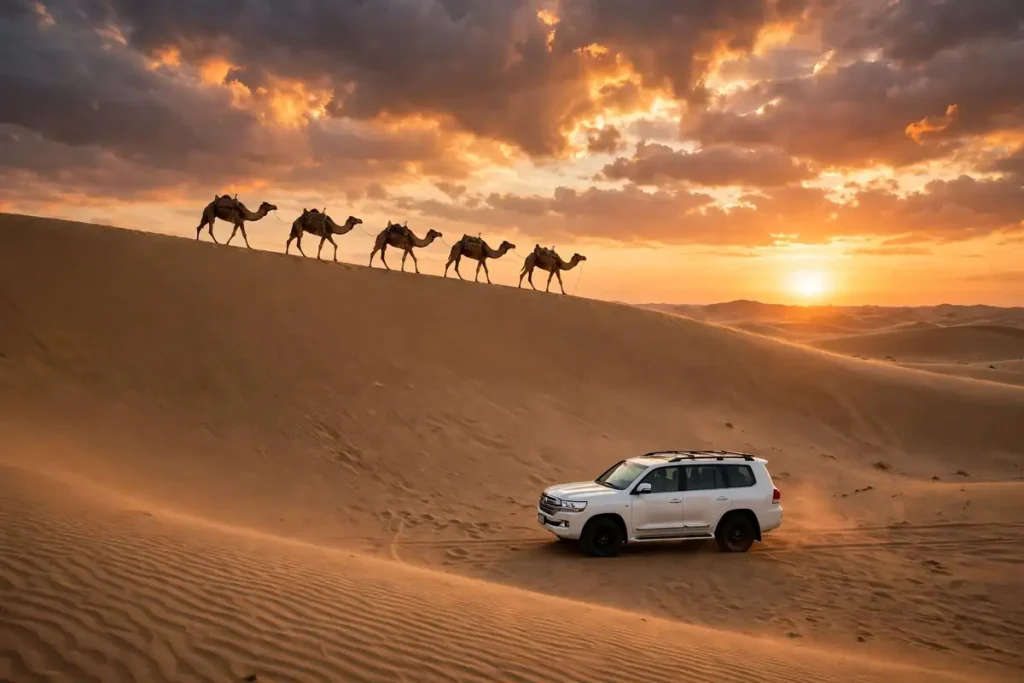
The desert safari is the experience most visitors remember best, and it is also the one where the price tells you almost everything about what you will get. A standard evening safari runs six to seven hours, with hotel pickup between 2 p.m. and 3 p.m., dune bashing in a 4×4, a sunset photo stop, a short camel ride, sandboarding, henna painting, live shows and a barbecue dinner at a desert camp. The advertised price starts from about AED 79, but that is the budget tier: a good standard shared safari costs AED 150 to AED 300, and the cheapest headline prices usually mean a one-to-two-minute camel ride, a long wait for dinner and a crowded camp. Private safaris run from about AED 800, and the conservation safaris in the Dubai Desert Conservation Reserve on Wikipedia — with a vintage Land Rover, a falconry display and a proper Emirati dinner — cost AED 600 to AED 900 per adult. Quad bikes and dune buggies are add-ons, usually AED 150 to AED 800. Dune bashing is not for everyone: skip it if you are pregnant, have a bad back, or are travelling with children under five. Book with a licensed operator, confirm that pickup, dinner and the shows are included, and bring a light jacket — the desert cools fast after sunset.
11. Global Village
Global Village on Wikipedia is Dubai’s seasonal open-air fair, and it is the best-value evening in the city: 29 country pavilions and more than 90 cultures, with food, crafts, clothes and performances from around the world, plus a funfair, a floating market and concerts on the main stage. Season 31 opened on 14 October 2026 and runs until May 2027, and the season matters — the Village closes every summer, so guides that list it as year-round are out of date. Entry is AED 25 from Monday to Thursday and AED 30 on Fridays, Saturdays and public holidays, and the Village is open from 4 p.m. to midnight from Sunday to Wednesday and from 4 p.m. to 1 a.m. on Thursdays to Saturdays. Rides and food are pay-as-you-go inside, so budget another AED 50 to AED 100 for food and a ride or two. Go on a weekday if you can — Friday and Saturday evenings are packed, and the queues for the popular pavilions can pass half an hour. The Village is a 30-minute taxi ride from Downtown, with no metro station nearby, so plan the return taxi in advance or use the RTA buses that run to the gate.
12. Dubai Miracle Garden
Dubai Miracle Garden on Wikipedia is the largest natural flower garden in the world, and it is the most improbable sight in a desert city: more than 200 million flowers arranged into castles, hearts, arches and a life-size Emirates A380, all kept alive by drip irrigation in the middle of the sand. Season 15 opened on 8 October 2026 and runs until 31 May 2027, and like Global Village it closes every summer for replanting — a summer visit finds a locked gate. The garden is open daily from 9 a.m. to 9 p.m., with last entry at 8:30 p.m., and tickets cost AED 105 for adults and AED 84 for children aged 3 to 12, including VAT, with children under 3 free; UAE residents with an Emirates ID pay AED 70 and AED 50. A combined ticket with the Butterfly Garden next door costs AED 140. Come in the morning, when the light is soft and the crowds are thin, and allow two hours — the garden is bigger than it looks, and the floral A380 is the photograph everyone takes. The garden sits in Al Barsha South, about 15 minutes by taxi from the Mall of the Emirates metro station, and there is no direct metro. Do not pick the flowers — the garden fines visitors for it.
13. Jumeirah Mosque
Jumeirah Mosque on Wikipedia is the most beautiful mosque in Dubai, and it is the only one that non-Muslims can enter — through the “Open Doors, Open Minds” tours run by the Sheikh Mohammed Centre for Cultural Understanding. The mosque, built in the Fatimid style with twin minarets and a great dome, sits on Jumeirah Beach Road, and the guided visit is the best cultural hour in the city: a talk about Islam and Emirati life, a walk through the prayer hall, and Arabic coffee, dates and pastries in the majlis afterwards. Tours run from Saturday to Thursday at 10 a.m. and 2 p.m., with registration 30 minutes before, and cost AED 45 per person including the refreshments; the mosque is closed to visitors on Fridays. Older guides list AED 25 or AED 35 — those prices are stale, and AED 45 is the current figure. Modest dress is required: shoulders and knees covered, and women should bring a headscarf, though one can be borrowed at the door. The tour lasts 75 minutes to two hours, and no booking is needed for the public visits. It is the one place in Dubai where a question about the call to prayer, the dress code or the fasting month gets a straight, friendly answer from the people who live it.
14. Dubai Marina and JBR
Dubai Marina on Wikipedia is the man-made canal city on the south-west coast, and it is the best place in Dubai to walk in the evening: a seven-kilometre promenade around the water, lined with towers, cafes, restaurants and yachts, free to wander at any hour. The Marina Walk is at its best after dark, when the towers light up and the restaurants fill. Next door is JBR — Jumeirah Beach Residence — with The Walk, a beachfront strip of shops and restaurants, and JBR Beach itself, a free public beach with the Ain Dubai wheel across the water and the Palm behind it. The two areas join into one long evening: walk the Marina, eat on The Walk, and finish on the beach. Shared yacht tours leave from the Marina from about AED 100 for an hour or two on the water, and the sunset sailings are the ones to book. The metro reaches both areas: Sobha Realty station for the Marina, and DMCC or Sobha Realty plus a short walk or taxi for JBR.
15. Kite Beach and Jumeirah Beach
Jumeirah Beach on Wikipedia is the long public beach that runs along the Jumeirah coast, and Kite Beach, at its south end, is the liveliest stretch of sand in Dubai: kitesurfers in the wind, food trucks along the promenade, a running track, a skate park, volleyball courts and a view of the Burj Al Arab that no hotel beach can match. The beach is free, and the water is warm enough to swim from October to May. The Burj Al Arab on Wikipedia, the sail-shaped hotel that has been Dubai’s postcard since 1999, stands on its own island just off the beach — you cannot walk in without a reservation, but the photograph from Kite Beach is free and it is the one everyone takes. Two things to know: beachwear stays on the beach, so cover up before you walk to the shops or the metro, and the beach is busiest on Friday and Saturday afternoons, when the families arrive. The beach clubs along JBR charge AED 100 to AED 300 a day for a lounger, a towel and a pool. Bring your own towel and water — the beach kiosks charge hotel prices.
16. Ain Dubai and Bluewaters
Ain Dubai on Wikipedia is the tallest observation wheel in the world, 250 metres high on Bluewaters Island, with a rotation of about 38 minutes and views over the Marina, JBR, the Palm and the whole coastline. It first opened in October 2021, closed in March 2022 for enhancement works, and reopened on 26 December 2024 — and its status in November 2026 is genuinely disputed, so read this section carefully. The official site sells tickets from AED 145 for a standard shared cabin and about AED 190 at prime time, lists hours of 10 a.m. to 9 p.m. daily with last admission at 8:15 p.m., and requires bookings at least 72 hours in advance. But TripAdvisor lists the wheel as “Temporarily closed”, and a guide checked in September 2026 reports it has been down for maintenance since at least June 2026, with no reopening date announced. Other guides say it is running. The honest advice is to check aindubai.com or call 800 2629464 in the week you travel, and not to pay for a non-refundable ticket until the wheel is confirmed to be turning. Even if the wheel is not running, Bluewaters Island is worth the visit: the waterfront promenade and the restaurants are all open, and the wheel itself is a spectacular photograph from JBR Beach across the water.
17. Ski Dubai
Ski Dubai on Wikipedia is the indoor ski resort inside the Mall of the Emirates, and it is the most Dubai thing in Dubai: real snow, five runs and a chairlift, inside a mall, in a desert city where it is 40 degrees outside. The resort opened in 2005 as the first indoor ski slope in the Middle East: 22,500 square metres of snow, with a 400-metre Black Diamond run, a beginner slope, a snow park with a bobsled run, a tubing run and a climbing wall, and a colony of king and gentoo penguins that march out twice a day. Tickets are priced by pass in 2026: a two-hour slope pass costs AED 240, a full-day slope pass AED 340, the Snow Classic park pass from about AED 225, the Snow Plus pass AED 325, and the Snow Premium pass with a Penguin Encounter AED 465. Every pass includes a jacket, trousers and snow boots; bring gloves and warm socks. The slope passes are for experienced skiers only — level 2 and above, with a signed waiver — and the snow park is the right choice if you have never skied. Ski Dubai is open from 10 a.m. to 11 p.m. from Monday to Thursday, from 10 a.m. to midnight on Fridays, and from 9 a.m. to midnight at weekends — reach it from the Mall of the Emirates metro station.
18. The Green Planet
The Green Planet is Dubai’s indoor rainforest, a sealed glass bio-dome at City Walk with more than 3,000 plants and animals living around a single great artificial tree, and it is the best rainy-day or hot-day sight for families. Inside are four levels of rainforest with sloths, toucans, tree frogs, piranhas and a giant anteater, and the whole dome is kept at rainforest temperature and humidity. Tickets cost AED 175 for adults aged 11 and over and AED 150 for juniors aged 2 to 10, with children under 2 free, and the dome is open daily from 10 a.m. to 6 p.m. Animal encounters are booked separately and start from about AED 290 per person, and they do not include admission. The Green Planet has no Wikipedia page of its own, so there is no link here — the dome and its animals are the reason to come, not the reading. Allow two hours, and come at opening, when the animals are most active and the school groups have not arrived.
19. Dhow dinner cruise
The dhow dinner cruise is the classic Dubai evening, and it is the one to choose by route, not by price alone. A traditional wooden dhow, lit up and converted into a floating restaurant, sails for about two hours after sunset with an international buffet, unlimited soft drinks and a Tanoura dance show, and the two routes are genuinely different experiences. The Creek cruise, from AED 50 to AED 99 per person, sails past the old city — the souks, the wind towers and the Al Seef waterfront — and it is the better value of the two. The Marina cruise, from AED 110 to AED 220, sails past the towers, the yachts and JBR, and it is the glossier, more modern night out. Departures are usually around 8 p.m. or 8:30 p.m., and the cruises run every day of the year, including during Ramadan, when dinner is served after Iftar. Book two to three days ahead in peak season, confirm whether hotel pickup is included — the cheapest tickets usually are not — and do not buy from the touts at the pier: walk-up prices are inflated and refunds are unclear. The upper open deck is worth the small upgrade on a cool evening.
20. Dubai Opera and Alserkal Avenue
Dubai Opera on Wikipedia is the dhow-shaped opera house in Downtown Dubai, opened in 2016, and it is the centre of the city’s performing arts: opera, ballet, classical concerts, musicals and comedy in a 2,000-seat hall that converts into a flat-floor venue, with a rooftop restaurant above it. Check the listings before you go — the best nights sell out, and the dress code is smart rather than formal. For the other half of Dubai’s arts scene, take the metro to Alserkal Avenue in Al Quoz, a former industrial quarter of warehouses that is now the city’s contemporary art district, with some 90 galleries, studios, cafes and creative spaces. Entry is free, and the district runs talks, film screenings and markets through the year — Cinema Akil, the independent cinema in the Avenue, is the best film night in Dubai. Do the Opera for an evening and Alserkal for a slow afternoon, and you will have seen a side of Dubai that the shopping lists never reach.
Dubai in 3 days — a ready-made itinerary
This three-day plan covers Downtown and the Burj, Old Dubai and the Creek, and the Palm, the beach and the desert. It assumes you are staying in Downtown or the Marina and have a Nol Silver card — if you do not, buy one at the airport metro station on arrival. Book the Burj Khalifa, the desert safari and any dhow cruise before you fly: all three sell out in peak season.
Day 1 — Downtown, the Burj and the Fountain
Start at the Burj Khalifa with a 10 a.m. non-prime ticket, booked online for AED 189, and spend 90 minutes on the decks before the midday heat. Walk straight into the Dubai Mall afterwards for the Aquarium and lunch, then rest in the mall through the hottest hours. At 5:30 p.m., take a place on the Waterfront Promenade for the 6 p.m. Fountain show, and stay for the 6:30 p.m. one if the first leaves you wanting more. Dinner in Souk Al Bahar, the mall’s souk-style annex across the bridge, or at one of the promenade restaurants with a lake view.
Day 2 — Old Dubai, the souks and the Creek
Start in Al Fahidi before 10 a.m., when the lanes are empty: wander the wind-tower houses, stop at the Arabian Tea House for breakfast, and visit the Coffee Museum. Cross the Creek on an abra for AED 1 to Deira, and spend the late morning in the Gold Souk and the Spice Souk — haggle, and do not buy the first saffron you are offered. Lunch in Deira, then the 2 p.m. guided tour at Jumeirah Mosque, with the 10 a.m. tour as the alternative if you started earlier. In the afternoon, take the metro to the Dubai Frame for the view across both Dubais, then return to the Creek for a dhow dinner cruise at 8 p.m. — the Creek route, for the old city by night.
Day 3 — The Palm, the beach and the desert
Take the metro and a taxi to The View at The Palm for a late-morning slot, then walk the Palm Boardwalk and have lunch on the Marina Walk. Spend the early afternoon on Kite Beach, with the Burj Al Arab behind you, or on JBR Beach if you want loungers and cafes. At 2 p.m. or 3 p.m., your desert safari pickup arrives: dune bashing, the sunset stop, the camel ride and the barbecue dinner at camp, back in town by about 9 p.m. If the desert is not your thing, swap it for Ski Dubai in the morning, the Miracle Garden in the afternoon if it is in season, and Global Village in the evening. And if you have a fourth day, take the morning for Ras Al Khor’s flamingos and the afternoon for the Atlantis waterpark.
Best time to visit Dubai
| Season | Weather | Crowds | Notes |
|---|---|---|---|
| Winter (November–March) | Highs 24–31°C, lows 14–21°C | High | Best season — warm days, cool evenings, almost no rain; Global Village and Miracle Garden open |
| Spring (April–May) | Highs 32–38°C, lows 20–25°C | Moderate | Last comfortable weeks; Ramadan in 2027 falls in February–March, so April is clear |
| Summer (June–September) | Highs 39–42°C, humid | Low | Cheapest hotels, 40–60% off; plan around malls, pools and indoor sights |
| Autumn (October) | Highs 36°C, cooling fast | Moderate | The season opens: Global Village from 14 October, Miracle Garden from 8 October |
The best time to visit Dubai is November to March, when daytime highs run from 24°C to 31°C, the evenings are cool enough for a jacket in the desert, and almost no day is too hot to walk around. December is the best single month: highs around 26°C, the Dubai Shopping Festival starting, and the New Year’s Eve fireworks over the Burj Khalifa. January is the coolest month, with highs of about 24°C. Summer, from June to September, is a different trip: highs of 39°C to 42°C with high humidity, and an itinerary built around pools, malls and indoor attractions — but the hotels are 40% to 60% cheaper and the crowds are gone. Ramadan in 2027 is expected from about 8 February to 8 or 9 March, with Eid al-Fitr around 9 or 10 March, subject to the moon sighting. Since a 2024 reform, eating and drinking in public during fasting hours is no longer an offence, and restaurants and cafes open normally — but courtesy is still expected, the daytime streets are quieter, the roads fill before Iftar, and the evenings come alive with Iftar tents and late-night shopping. During Ramadan the Fountain’s afternoon shows have been paused in past years, with evening shows starting after Iftar at about 7:30 p.m. The annual average high is about 29°C, and Dubai gets roughly 77 mm of rain a year, mostly between December and March — a rainy day here is usually two or three showery hours, not a wet week.
Where to stay in Dubai
| Area | Best for | Price range |
|---|---|---|
| Downtown Dubai | First-timers, the Burj and the Mall on your doorstep | AED 600–1,500 a night |
| Dubai Marina | Marina views, nightlife, the beach | AED 500–1,200 a night |
| JBR | Beachfront hotels, families | AED 700–1,800 a night |
| Jumeirah | Quiet beach hotels, the mosque and Kite Beach | AED 500–1,500 a night |
| Deira | Budget stays, the souks, the Creek | AED 250–500 a night |
| Bur Dubai | Budget to mid-range, Al Fahidi, the metro | AED 300–600 a night |
| Palm Jumeirah | Resort stays, Aquaventure access | AED 900–2,500 a night |
| Business Bay | Newer hotels, cheaper than Downtown | AED 400–900 a night |
| Al Barsha | Mall of the Emirates, budget to mid-range | AED 300–600 a night |
Stay in Downtown Dubai if this is your first visit — the Burj, the Mall and the Fountain are on your doorstep, the metro is underneath you, and you will walk to dinner every night without a taxi. Dubai Marina is the nightlife and beach pick, with towers full of restaurants and bars and the beach a short walk away, and JBR is the family pick, with beachfront hotels and the promenade. Jumeirah is the quiet pick, with low-rise beach hotels along the coast, and the Palm is the resort pick, with the big hotels that include waterpark access in the rate. Deira and Bur Dubai are the budget picks, with clean three-star hotels near the metro for AED 250 to AED 500 a night, and the souks and the Creek on the doorstep — the trade-off is a 20-minute metro ride to Downtown. Business Bay is the value pick for a first-timer: newer hotels a ten-minute walk or one metro stop from Downtown, at about two-thirds of the Downtown price. Wherever you stay, check the metro before you book: a hotel more than ten minutes from a station means a taxi every time you leave. And remember the tourist tax: Dubai charges a Tourism Dirham fee of AED 20 per room per night for a five-star hotel, AED 15 for four-star, and AED 10 for three-star and below, paid at checkout.
Getting around Dubai
| Way to travel | Cost | Best for |
|---|---|---|
| Metro (Red and Green lines) | AED 3–7.50 a ride | Airport, Downtown, the Marina, Mall of the Emirates; 53 stations |
| Nol Silver card | AED 25 (AED 19 credit) | Everyone — buy it at any metro station |
| Abra | AED 1, cash | Crossing the Creek, Bur Dubai to Deira |
| Taxi | From AED 5 flag fall (AED 12 at the airport) | Late nights, the Palm, the desert road |
| Careem or Uber | Similar to taxis | App-based rides, no haggling |
| Bus | AED 3–7.50 on Nol | Miracle Garden, Global Village, the Palm |
| Dhow cruise | AED 50–220 | Evening sightseeing, not transport |
Getting to Dubai is easy: Dubai International Airport is about 5 km from Deira and 15 km from Downtown, and the metro Red Line runs from Terminals 1 and 3 straight to the city — about AED 7.50 and 30 minutes to the Dubai Mall station. Buy a Nol Silver card at the airport station for AED 25, including AED 19 of credit: it works on the metro, the buses and the tram, and it is the one card you need for the whole trip. A single ride costs AED 3 for one zone, AED 5 for two and AED 7.50 for three or more, and a one-day pass costs AED 20, or AED 40 for Gold class. The metro has two lines — Red with 35 stations, Green with 20 — and runs roughly from 5 a.m. to midnight, later on Fridays; the Blue Line is under construction and is scheduled to open on 9 September 2029, so do not follow guides that list it as running. Once you are in town, the metro covers the long hops and your feet cover the rest. The taxi is for everything the metro does not reach — the Palm, the Miracle Garden, Global Village and the desert road. Taxis are metered and honest: flag fall is AED 5 on the street and AED 12 at the airport, and a ride across town costs about AED 30 to AED 50. Careem and Uber charge about the same. One trap to avoid: the old “Dubai Pass” sold by iVenture was discontinued years ago, so any guide still recommending it is out of date — the current pass is Go City, with an Explorer pass from about $189 for three attractions and an All-Inclusive pass from $339 for two days, covering the Burj Khalifa, Aquaventure, the desert safari and the Big Bus, among 48 or more attractions. It only saves money if you do three or more big-ticket sights in a few days, so do the maths before you buy. Dubai Metro on Wikipedia covers the lines, the stations and the fares.
Dubai food you have to try
Dubai’s food is the food of its people, and its people come from everywhere: Emiratis, Indians, Pakistanis, Filipinos, Iranians, Levantines and Europeans, all cooking in one city. The result is the most varied food scene in the Middle East — a shawarma for AED 12 on one street, a tasting menu for AED 600 on the next — and the rule is to eat where the locals queue, not where the menu is laminated in five languages.
Shawarma and street food
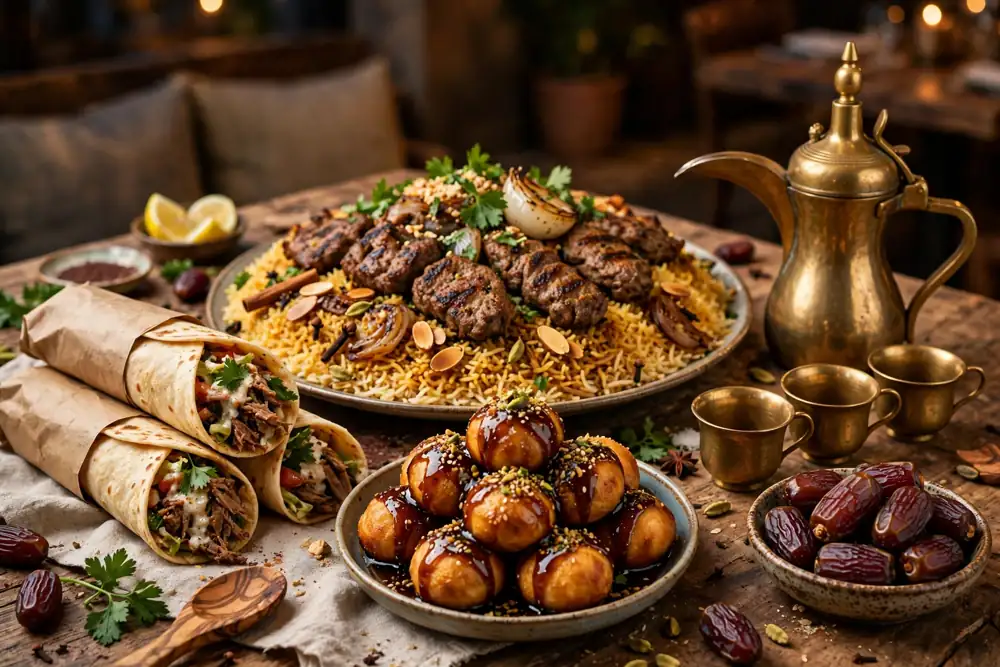
Shawarma on Wikipedia is the dish that defines Dubai street food, and it is a spit-roasted wrap of chicken or lamb, pickles, garlic sauce and fries, rolled tight and eaten standing up, for about AED 10 to AED 20. The best ones come from the small cafeterias in Satwa, Deira and Al Barsha rather than the mall food courts — look for the spit turning in the window and a queue of taxi drivers. The same streets hold the rest of Dubai’s cheap eating: manakish, the Levantine flatbread with za’atar or cheese, for a few dirhams; falafel wraps; and karak chai, the spiced milky tea sold from tiny shops for AED 1 to AED 2. For a proper sit-down cheap meal, Ravi Restaurant in Satwa is the institution — Pakistani curries and breads for about AED 30 to AED 50 a person, with no booking and no fuss — and Zaroob in JBR does Levantine street food in a courtyard setting. The rule is to carry cash: the small cafeterias take cards less often than the restaurants do, and the best ones are cash-only.
Emirati food
Emirati cuisine on Wikipedia is the food of the desert and the sea, and it is the meal most visitors miss because it hides behind the international restaurants. The dish to order first is machboos: spiced rice cooked with meat or fish, dried limes and saffron, served with salad and yoghurt. Then harees, wheat and meat pounded into a soft porridge and eaten at Ramadan; saloona, a slow-cooked stew; and luqaimat, golden dumplings drizzled with date syrup, which are the dessert of every Emirati table. With them comes gahwa, Arabic coffee flavoured with cardamom, poured from a dallah into tiny cups and always served with dates. The places to eat it are Al Fanar Restaurant and Cafe, which recreates a 1960s Emirati neighbourhood, and the Arabian Tea House in Al Fahidi, with its shaded courtyard and Emirati breakfast of balaleet, chebab pancakes and foul. The Sheikh Mohammed Centre for Cultural Understanding runs cultural breakfasts and lunches in Al Fahidi that pair the food with a talk about Emirati life, and they are the best introduction to the cuisine. A full Emirati meal costs about AED 80 to AED 150 per person, and it is worth every dirham.
Brunch, fine dining and the view restaurants
Dubai invented the Friday brunch, and it is still the city’s great institution: a long, lavish buffet with live cooking stations, free-flowing drinks and a party atmosphere, held on Fridays and Saturdays in the big hotels, since the UAE weekend moved to Saturday and Sunday in 2022. Prices start from about AED 200 for a soft-drinks package and rise past AED 500 with alcohol, and the best ones — at the Atlantis, the Waldorf Astoria on the Palm and the hotels of JBR — book out days ahead. For fine dining, the city holds more Michelin stars than any other in the Middle East: Zuma for Japanese and CÉ LA VI on the Address Sky View for the skyline. The view restaurant to book is At.mosphere on level 122 of the Burj Khalifa, the highest restaurant in the world, where afternoon tea and dinner both need a reservation and the bill runs to several hundred dirhams a person. And the rule that saves money everywhere in Dubai: alcohol is served only in licensed hotel restaurants and bars, never in standalone restaurants, and the price of a drink is where the bill grows — a beer costs about AED 35 to AED 50 in a hotel bar, and a glass of wine about the same. Eat the shawarma, save the fine dining for one night, and the food budget stays sane.
Free things to do in Dubai
Dubai is far cheaper than its reputation suggests, because many of the best sights cost nothing. The Dubai Fountain show is free from the promenade, and it is the best free show in the city. The Marina Walk is free, JBR Beach and Kite Beach are free, and the Al Fahidi lanes are free to wander. The souks are free to browse — the Gold Souk’s windows alone are worth the walk — and the Textile Souk is the prettiest free hour in Old Dubai. Ras Al Khor on Wikipedia is the free surprise: a wetland at the mouth of the Creek where thousands of flamingos feed, watched from free viewing hides, best from December to March and best in the morning, around the 9 a.m. feeding time. The Dubai Creek Harbour viewing point is free and holds the best skyline photograph in the city. The Alserkal Avenue galleries are free, the Dubai Mall’s aquarium tank is visible from the mall for free, and the Burj Khalifa is free to photograph from the lake. Do the free list on your first day, and you will have seen the city before you have spent a dirham on a ticket.
Frequently asked questions
Is Dubai expensive?
Dubai can be expensive, but it does not have to be. A mid-range day costs about AED 400 to AED 800 per person, including a hotel, the metro, a shawarma lunch and a mid-range dinner — and the free list in this guide covers the Fountain, the beaches, the Marina Walk, the souks and the flamingos without a ticket. What makes Dubai expensive is the big-ticket sights added together: the Burj Khalifa, the waterpark, the desert safari and the aquarium can pass AED 1,000 in a single day at gate prices. Book online, and eat the street food — the AED 12 shawarma is the best value in the city.
How many days do you need in Dubai?
Three days is the right amount for most visitors. Two days covers Downtown, the Burj, the Mall, the Fountain, Old Dubai, the souks and the Creek. Three days adds the Palm, the beach and the desert safari. Four or five days adds the waterpark, the Miracle Garden and Global Village in season, and Ski Dubai. One day is possible, but you will leave feeling rushed and miss the desert entirely.
Is Dubai safe for tourists?
Yes — Dubai is one of the safest cities in the world for tourists, with very low street crime and a heavy police presence. The safety rules are about the law, not the streets: alcohol is served only in licensed venues and never in public, drugs carry zero tolerance and some prescription medicines are restricted, so check your medication before you fly, and public displays of affection are best kept discreet. Photographing people without permission and photographing government buildings can cause trouble, so ask first. The emergency number is 999. Women travelling alone report feeling safe in Dubai, including at night in the busy districts, and the metro has a women-and-children carriage if you want it.
What should I wear in Dubai?
Light, loose clothes and comfortable shoes, with a cover-up for the air conditioning, which is fierce indoors. In the malls, the souks and the old town, cover your shoulders and knees out of respect — Dubai is cosmopolitan, but it is still an Islamic city, and the old town expects modesty. Swimwear stays on the beach and at the pool: do not walk through a mall or a metro station in it. At the Jumeirah Mosque, women must cover their hair, arms and legs, and men must wear long trousers; a headscarf can be borrowed at the door.
Is the Museum of the Future open?
No. The Museum of the Future closed to visitors on 1 September 2026 for a major exhibition overhaul, and it is set to reopen in the first quarter of 2027, around its fifth anniversary. The exterior, the plaza and the viewpoint are open and free to photograph, and Dubai Future Week from 18 to 21 November 2026 gives public access to the auditorium events. Do not buy a ticket from any reseller promising entry before the reopening — there are no interior tickets to sell. Until it reopens, the Dubai Frame is the direct swap, covering the same past-to-future story for AED 50.
Can I visit Dubai during Ramadan?
Yes, and it is a good time to see a different side of the city. Ramadan in 2027 is expected from about 8 February to 8 or 9 March, with Eid al-Fitr around 9 or 10 March, subject to the moon sighting. Since a 2024 reform, eating and drinking in public during fasting hours is no longer an offence, and restaurants and cafes open normally — but courtesy is still expected, the daytime streets are quieter, the roads fill before Iftar, and the evenings come alive with Iftar tents, late-night shopping and the Fountain shows after sunset. Some attractions shift their hours, so check the day’s schedule before you go.
Further reading
Start with Dubai on Wikipedia, which covers the founding, the pearl trade, the oil years and the modern city, and Burj Khalifa on Wikipedia for the tower’s full story. For what locals actually recommend, the r/Dubai subreddit is the community where residents answer visitor questions about transport, restaurants and the best viewpoint — it is the best place to check a plan against local knowledge before you go. Visit Dubai is the official tourism site, with current event listings, the seasonal opening dates and the transport fares. No Quora link is included in this guide, because no Dubai-specific Quora thread could be verified as a live, useful discussion — the Wikipedia and Reddit links above cover the history and the local advice.
Your Dubai trip, in one paragraph
Dubai is the city that built the tallest tower on Earth next to a creek where wooden boats still cross for a dirham, and that contrast is the trip. For more city guides in the same style, start with our Florida guide for the rest of the state, then see how Dubai compares with Chicago, Nashville, Los Angeles, Orlando, Miami, San Diego, Denver, Savannah, Dallas, Charleston, San Francisco, Myrtle Beach, Las Vegas, San Antonio, London, Portland, Pigeon Forge, Puerto Rico, Atlanta, Phoenix, Paris, Maui, Key West, Colorado Springs, Sedona, Chattanooga, Palm Springs, St Louis, Tokyo, Japan, Kansas City, Tennessee, Branson, Amsterdam, Montreal, Honolulu, Fort Lauderdale, Toronto, Aruba, Charlotte, Indianapolis, New Orleans, Destin, Santa Barbara, Mexico City, Arizona, Osaka, Minneapolis, Pittsburgh, California, Asheville, Costa Rica, Hawaii, Washington DC, Seattle, St Augustine and Lisbon.

About the Author