Things to Do in Nashville: 20 Best Attractions, Itinerary & Tips (2026 Guide)
20 Best Attractions, a 3-Day Itinerary, Where to Stay, and the Food You Cannot Miss
Quick Info
Best for: Music lovers and first-time visitors — country, gospel, blues, soul, rock and bluegrass in one compact, walkable downtown
Best time: Late spring (April–June) and early autumn (September–October) for comfortable weather and manageable crowds
How long: 3 full days for the highlights; 2 days works if you stay downtown and stick to the core
Budget: Good value if you mix one paid highlight a day with free sights — Lower Broadway honky-tonks have no cover charge, just tip the band
Don’t miss: Lower Broadway honky-tonks, a night at the Grand Ole Opry, a show at the Ryman Auditorium, and Nashville hot chicken
Nashville is a city that writes songs about itself and then lives up to them. It is the capital of Tennessee and the working headquarters of country music, but it is a far broader music town than its cowboy-boot image suggests: gospel, blues, soul, rock and bluegrass all share the same few blocks, and thousands of professional songwriters live here. The good news for a first-time visitor is that the biggest sights sit close together downtown, so you can walk from a museum to a honky-tonk to a songwriter round in a single afternoon.
This guide gives you the 20 best things to do in Nashville in a sensible order, a ready-made 3-day itinerary, honest advice on when to go, where to stay and how to get around, and the three foods you have to try before you leave. Prices and hours change, so every price in this guide is marked as approximate — always check the official website before you visit. Travellers also share their favourite picks in Quora answers from locals.
Nashville at a glance
| Question | Short answer |
|---|---|
| How long do you need? | 3 full days for the highlights; 2 days works if you stay downtown and stick to the core. |
| Best area for a first trip | Downtown or the Gulch — walkable, on the music, and close to Broadway. |
| One thing to book early | Grand Ole Opry tickets, Ryman shows and Bluebird Cafe seats — they sell out weeks ahead. |
| One thing that is free | Lower Broadway honky-tonks — live music all day, no cover charge, just tip the band. |
| Do you need a car downtown? | No. Downtown is walkable and rideshare covers the rest; a car only helps for the Opry, the Hermitage and day trips. |
For background before you go, the Wikipedia entry on Nashville covers the city’s history, its music industry and its neighbourhoods in depth, and its Ryman Auditorium and Grand Ole Opry pages explain how Music City earned its name — all three are linked in Further reading at the end of this guide.
The 20 best things to do in Nashville
The list starts with the experiences that define Nashville and that first-time visitors should protect time for, then moves into neighbourhoods, history and the outdoors. If you only have two days, do numbers 1 to 10. If you have three or more, work through the rest at a slower pace.
1. Walk Lower Broadway’s honky-tonks first
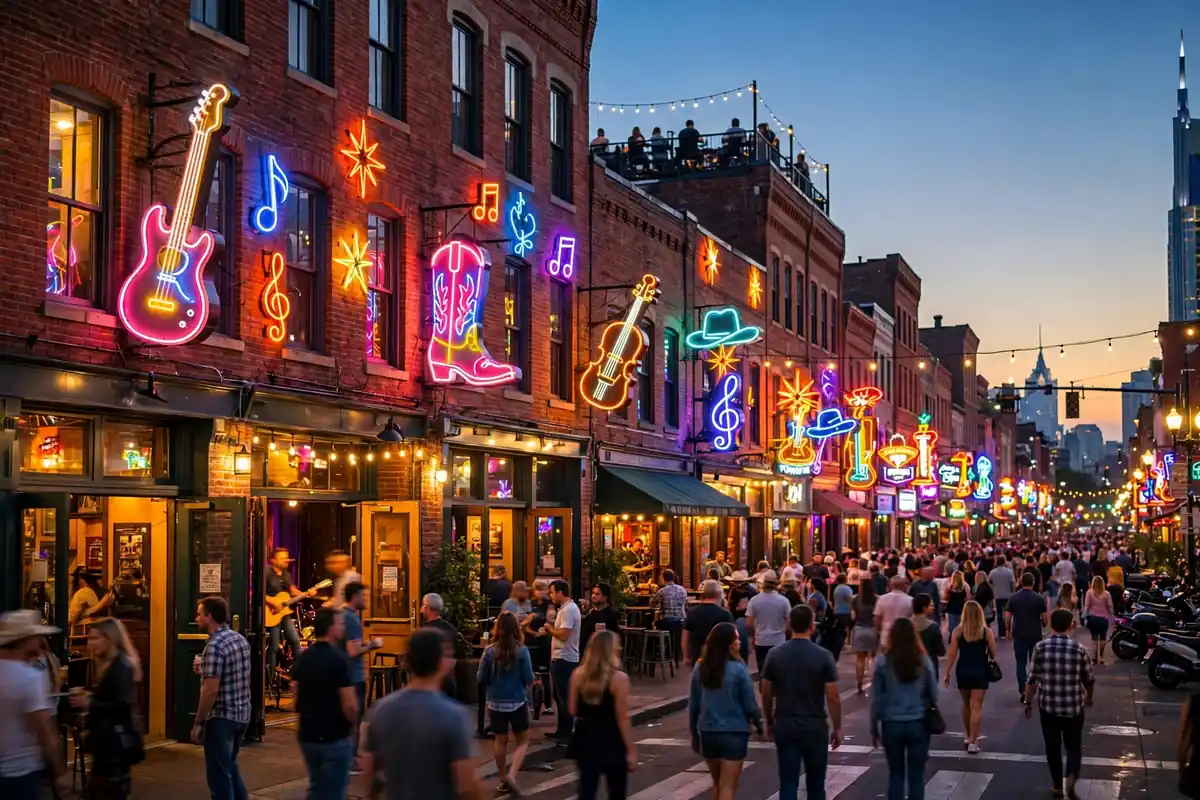
Start where almost every Nashville trip starts: Lower Broadway, the five blocks from Fifth Avenue down to the Cumberland River that locals call Honky Tonk Highway. Neon signs, boot shops and bar after bar with a live band on stage — most of them with no cover charge — from late morning until the early hours. Tootsie’s Orchid Lounge, the famous purple building behind the Ryman, Robert’s Western World, Layla’s and Legends Corner are the classic first stops, and the newer multi-storey celebrity bars add rooftops with skyline views.
Practical tip: Go in the late morning first, when the bands are playing and the crowds are thin, then come back after dark for the full noise. Bring cash for the tip jar — the musicians rely on it, and requests usually come with a tip.
2. See a show at the Ryman Auditorium
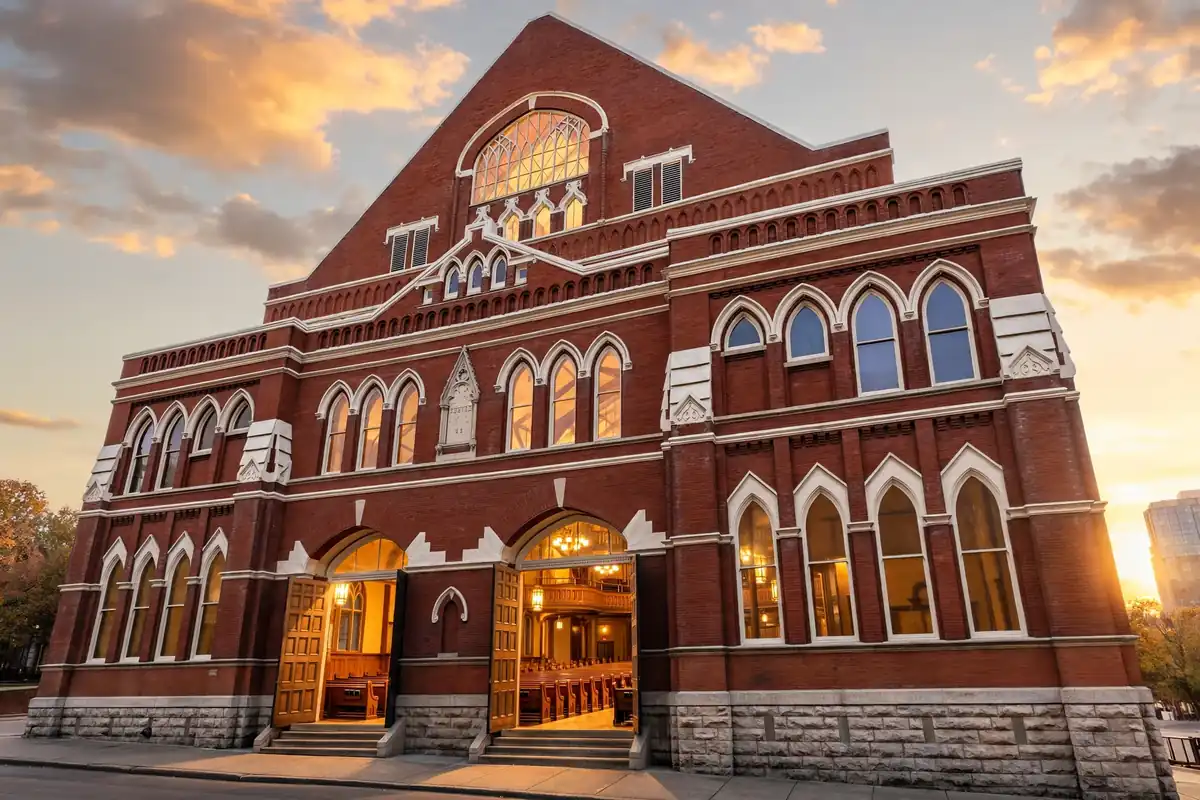
The Ryman Auditorium is the single best ticket in Nashville. Built in 1892 as a gospel tabernacle by riverboat captain Thomas Ryman, it was home to the Grand Ole Opry from 1943 to 1974, and its original oak pews and stained glass explain the nickname it still carries: the Mother Church of Country Music. A daytime self-guided tour lets you stand on the stage where Hank Williams, Patsy Cline and Johnny Cash performed; a night show in those pews is something else entirely.
Practical tip: The self-guided tour costs roughly $25 plus tax and takes about an hour — prices are approximate, so check before visiting. Shows cost roughly $40–$120 and sell out fast, so book as soon as your dates are fixed.
3. Spend a night at the Grand Ole Opry
The Grand Ole Opry is the show that made Nashville famous: a live country radio broadcast on WSM that began in 1925 and is the longest-running radio broadcast in American history. A night at the Opry House, out by Opryland, mixes legends with rising stars — six to eight acts, each doing a couple of songs — and no other show in the world works quite like it. A backstage tour beforehand shows you the dressing rooms and the circle of oak from the old Ryman stage.
Practical tip: Show tickets cost roughly $45–$100 or more depending on the seat and the night, and weekend shows sell out — prices are approximate, so check before visiting and book early. The Opry is not downtown, so allow time for the ride out and back.
4. Tour the Country Music Hall of Fame and Museum
The city’s best museum covers country music from fiddle bands to today’s stars, with instruments, stage costumes, handwritten lyrics, cars and more than 850 gold and platinum records on display. Its collection runs to over 2.5 million artefacts, and the building itself — with tall windows designed to look like piano keys — is worth a look before you even go in. Allow two to three hours; music fans could easily spend half a day.
Practical tip: Adult admission is roughly $32, and the museum is open daily from 9am to 5pm — prices and hours are approximate, so check before visiting. Book online in advance on busy weekends to skip the ticket line.
5. Step inside RCA Studio B on Music Row
RCA Studio B, known as the home of a thousand hits, is where Elvis Presley recorded more than 200 songs and where Dolly Parton, Roy Orbison and the Everly Brothers cut the records that defined the Nashville Sound. The guided tour leaves from the Country Music Hall of Fame and takes about an hour inside the working studio, with the original piano Elvis played and the stories of the sessions that happened in that small room.
Practical tip: Tours cost roughly $20–$30 on their own, or about $55 combined with Hall of Fame entry — prices are approximate, so check before visiting. Book ahead; tour groups are small and fill up.
6. Meet the Man in Black at the Johnny Cash Museum
A short walk from Broadway, the Johnny Cash Museum holds one of the world’s largest collections of memorabilia from the Man in Black — stage costumes, guitars, handwritten lyrics, gold records and the story of his life from Arkansas cotton fields to Folsom Prison and back. It is compact, well done, and ranked among the best music museums in the world; allow one to one and a half hours.
Practical tip: Admission is roughly $33 — prices are approximate, so check before visiting. Go early in the day, before the Broadway crowds spill over, and pair it with the Patsy Cline Museum next door if you have time.
7. Hear a songwriter round at the Bluebird Cafe
The Bluebird Cafe, a tiny listening room out in Green Hills, is where Nashville’s songs are born: four songwriters in a circle, taking turns playing the songs they wrote for the stars, in near silence, while the audience listens. It is the opposite of a Broadway honky-tonk — quiet, intimate and, for many visitors, the most memorable night of the trip. The Listening Room Cafe is a good alternative if Bluebird is sold out.
Practical tip: Seats are notoriously hard to get — reservations open about 30 days ahead and sell out fast, and even open-mic nights go quickly. Cover is roughly $0–$25 depending on the night; check before visiting, and plan this one before anything else.
8. See the Parthenon in Centennial Park
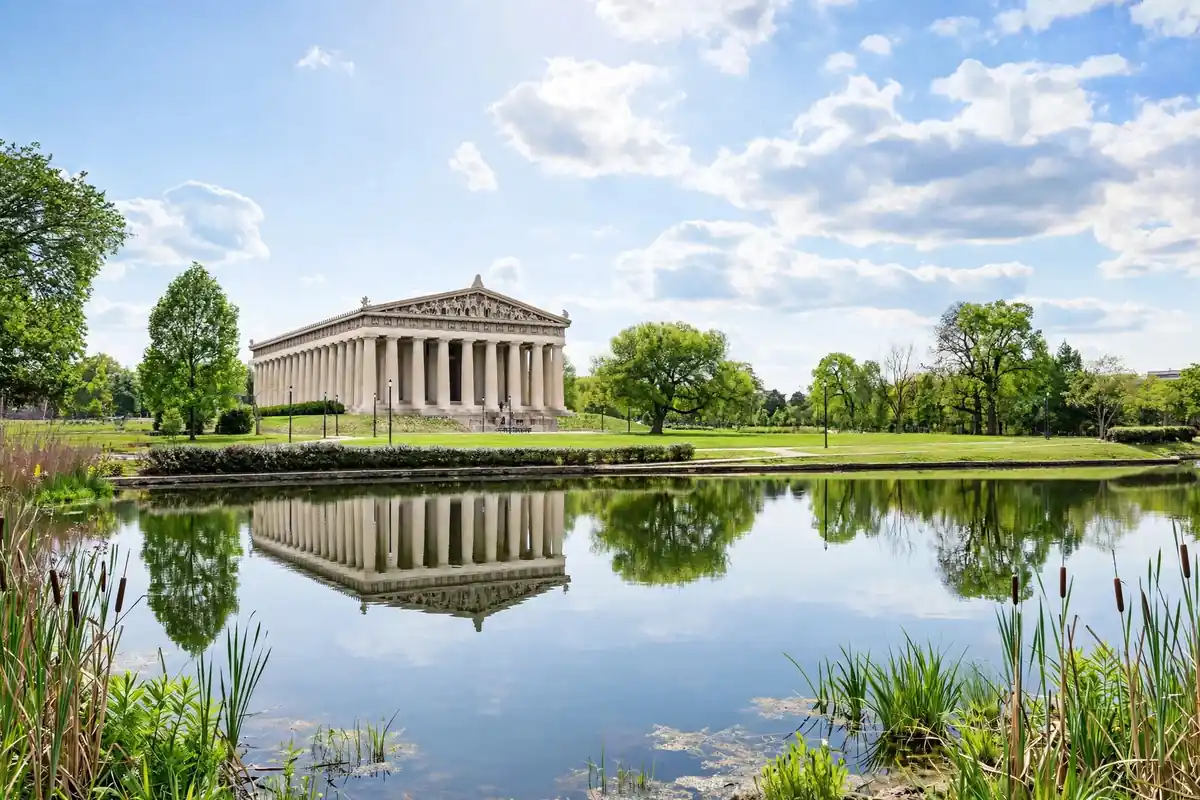
Nashville’s strangest landmark is also one of its best: a full-scale replica of the Parthenon in Athens, built for the 1897 Tennessee Centennial Exposition, standing in the middle of Centennial Park. It is the only full-scale replica in the world, and inside it houses a 42-foot gilded statue of Athena and an art museum. The park around it — 132 acres of lawns, a lake and walking paths — is the city’s favourite place to slow down.
Practical tip: Admission to the Parthenon itself is roughly $10–$15, sold only at the on-site ticket counter — prices are approximate, so check before visiting. The park and its grounds are free, and the lake is the best picnic spot in the city.
9. Walk the John Seigenthaler Pedestrian Bridge at sunset
The John Seigenthaler Pedestrian Bridge, closed to cars, crosses the Cumberland River from downtown to East Nashville — and at golden hour it gives you the best free view in the city: the river below, the skyline behind you, and the sun going down over the honky-tonks. It takes ten minutes to cross and costs nothing, which makes it the easiest great photo in Nashville.
Practical tip: Go for sunset, when the light is on the skyline and the bridge fills with photographers. It is also a pleasant, flat walk to East Nashville’s bars and restaurants on the other side.
10. Explore the National Museum of African American Music
Opened in 2021 at Fifth and Broadway, this is the only museum in the country devoted to the full sweep of music created or shaped by African Americans — from spirituals and the blues through jazz, gospel, R&B and hip-hop. Interactive exhibits let you mix tracks, trace the roots of the music you hear on Broadway, and understand how much of Nashville’s sound started here. It is one of the most thoughtful museums in the city.
Practical tip: Allow about two hours. General admission is free on the first Wednesday of each month; otherwise check the official site for current prices before visiting.
11. Tour the Tennessee State Capitol and Bicentennial Mall
Crowning the highest hill downtown, the Greek Revival Tennessee State Capitol was completed in 1859 and remains one of the oldest working state capitols in the country — its architect, William Strickland, is buried in its walls. It is free to walk through. Directly below it, the 11-acre Bicentennial Capitol Mall State Park tells the story of Tennessee in granite, fountains and 95 carillon bells, with the Nashville Farmers’ Market food hall beside it for a cheap local lunch.
Practical tip: Guided capitol tours are free but worth booking ahead. Combine the mall, the capitol and the farmers’ market into one easy morning, then walk downhill to Broadway.
12. Wander 12 South and its murals
A couple of miles south-west of downtown, 12 South is Nashville’s most photogenic neighbourhood: a walkable half-mile strip of boutiques, cafés, bakeries and ice-cream parlours along 12th Avenue South. It is home to the much-photographed “I Believe in Nashville” mural, the Draper James flower truck, and some of the best brunch in the city. Come for a slow morning, not a checklist.
Practical tip: Go on a weekday if you can — weekends are busy, and parking is tight. The murals are free, and the best photos are early, before the crowds arrive.
13. Spend an afternoon in East Nashville
Across the river, East Nashville is where the city’s musicians, artists and chefs actually live: record shops, coffee houses, vintage stores and some of the best restaurants in town, without a bachelorette party in sight. Five Points is the walkable heart of it, and the neighbourhood rewards wandering more than any single sight. Locals on r/nashville regularly point first-timers here when they ask where the real Nashville is.
Practical tip: Cross on the pedestrian bridge and spend the afternoon on foot — the best of East Nashville is found by walking. Evenings here are calmer than Broadway and better for dinner.
14. See art at the Frist Art Museum
The Frist Art Museum is the real thing in a city of music museums: a world-class art institution in a striking Art Deco building, Nashville’s original 1934 post office, with rotating exhibitions from major institutions around the world. There is no permanent collection, so every visit is different, and the Martin ArtQuest gallery — more than 30 hands-on stations for making art — keeps children happy for an hour on its own.
Practical tip: Check what is on before you go, since the exhibitions change completely. The building alone is worth the visit, and the café is a quiet lunch stop downtown.
15. Walk the gardens at Cheekwood Estate
Cheekwood is a 55-acre estate on the western edge of Nashville, built in the 1920s by the Maxwell House Coffee family: a historic mansion with an American art collection, one of the most carefully kept botanical gardens in the Southeast, and a sculpture trail through the trees. It is the calmest half-day in the city, and the seasonal blooms are genuinely worth timing a trip around.
Practical tip: Allow two to three hours and wear walking shoes — the gardens are large. Check the official site for current admission prices and hours before visiting, and visit on a weekday for the quietest paths.
16. Tour Belle Meade Historic Site
Belle Meade, seven miles west of downtown, was one of the most celebrated thoroughbred horse-breeding estates in America, and its 1807 mansion and grounds tell that story — along with the harder history of the people who were enslaved there. Guided tours are excellent, the wine tastings in the old carriage house are popular, and the grounds are lovely even on a short visit.
Practical tip: Allow two hours and book the guided tour rather than wandering on your own — the guides are the best part. Check the official site for current prices and hours before visiting.
17. Visit Andrew Jackson’s Hermitage
The Hermitage, ten miles east of downtown, was the home and is the final resting place of Andrew Jackson, the seventh President of the United States. The 1,000-acre property includes a 13-room Greek Revival mansion, original outbuildings, gardens and Jackson’s tomb — and an honest account of the enslaved people who lived and worked there, which the site does not shy away from.
Practical tip: Admission is roughly $28 and the grounds deserve two to three hours — prices are approximate, so check before visiting. You will need a car or a rideshare to get there; it is not on a bus route.
18. Hike Radnor Lake State Park
Radnor Lake is a 1,332-acre nature reserve entirely inside Nashville’s city limits, and it feels nothing like the city at all: a 2.4-mile trail loops the lake through dense hardwood woodland, with herons, otters and owls if you go quietly. It is free, it is the best walk in Nashville, and it is the perfect antidote to a loud night on Broadway.
Practical tip: Go in the morning, when the wildlife is out and the trails are quiet. The park is day-use only and closes at sunset; check locally for trail conditions before you go.
19. Catch a Predators game at Bridgestone Arena
Bridgestone Arena anchors the top of Lower Broadway, and on a game night it is the loudest room in the city: the NHL’s Nashville Predators, whose fans turned hockey in Tennessee into a full-throated singalong, complete with a catfish thrown on the ice. Even if you have never watched hockey, a Predators game is a great Nashville night out — and the arena also hosts the biggest touring concerts in town.
Practical tip: Buy tickets in advance for weekend games, which sell out, and arrive early — the plaza outside fills up before face-off. Check the official site for current prices before visiting.
20. Take the kids to the Nashville Zoo at Grassmere
Six miles south-east of downtown, the Nashville Zoo at Grassmere spreads across about 188 acres of wooded hills and meadows, with animals from around the world in leafy habitats, a train ride, and a newly remodelled jungle gym playground. It is an easy, unhurried family day, and a good answer to the question of what to do with children in a city built around bars. The Adventure Science Center, with hands-on exhibits and a planetarium, is the rainy-day alternative.
Practical tip: Allow most of a day and go in the morning, when the animals are most active. Check the official site for current prices and hours before visiting.
Nashville in 3 days — a ready-made itinerary
This plan groups sights that sit near each other, so you are sightseeing instead of crossing the city. Timings are a guide, not a schedule to stress about — swap Day 2 and Day 3 if the weather demands it, and always do the Opry and the Ryman on the nights you have booked.
| Day | Morning | Afternoon | Evening |
|---|---|---|---|
| Day 1 — Downtown icons | Country Music Hall of Fame, then the Ryman Auditorium tour | Lower Broadway honky-tonks, Johnny Cash Museum, National Museum of African American Music | Dinner in the Gulch, then a songwriter round or a show at the Ryman |
| Day 2 — Parks, neighbourhoods & the Opry | The Parthenon and Centennial Park, then the Tennessee State Capitol and Bicentennial Mall | 12 South murals and brunch, then East Nashville on foot | Grand Ole Opry show, or a Predators game at Bridgestone Arena |
| Day 3 — Music Row, mansions & food | RCA Studio B tour, then the Frist Art Museum | Belle Meade or the Hermitage, or Radnor Lake if you want green space | Hot chicken farewell dinner, then the Bluebird Cafe or the Station Inn |
Day 1: The classic Nashville introduction
Start downtown at the Country Music Hall of Fame and give it the morning it deserves, then walk three blocks to the Ryman and stand on its stage. After lunch, work your way down Lower Broadway — one honky-tonk per hour is a sensible pace — and fit in the Johnny Cash Museum and the National Museum of African American Music between bars. Keep the evening for a proper show: the Ryman if you can get tickets, or a songwriter round.
Day 2: High culture, low-key neighbourhoods
Check the weather first: Day 2 is the outdoor day. Start at the Parthenon and Centennial Park, then walk up to the Capitol and the Bicentennial Mall. After lunch in 12 South, cross to East Nashville for the afternoon — record shops, coffee and the neighbourhood Nashville actually lives in — then head out to the Opry House for the evening show.
Day 3: Go deeper — studios, mansions and the famous food
Spend the morning on Music Row with the RCA Studio B tour, then choose your afternoon by interest: Belle Meade or the Hermitage for history, Radnor Lake for a walk in the woods, or Cheekwood for gardens. End the trip properly in the evening with hot chicken — order a notch milder than your ego suggests — and a night of bluegrass at the Station Inn or a songwriter round at the Bluebird.
Only have 2 days? Do Day 1 and Day 2, and add RCA Studio B on the morning of Day 2 if your flight is late. Only have 1 day? Do the Hall of Fame, the Ryman, Lower Broadway and a hot chicken dinner — that is Nashville in miniature.
Best time to visit Nashville
Nashville has four real seasons, and the city feels completely different in each of them. The honest summary is this: late spring and early autumn give you the best balance of comfortable weather, open attractions and manageable crowds, while winter is cold and quiet but cheaper.
| Season | What it is like | Best for |
|---|---|---|
| Late spring (April–June) | Mild, green, patios open; CMA Fest in early June fills the city | First trips, walking, the full classic itinerary |
| Summer (July–August) | Hot and humid, highs regularly in the 90s, festivals and bachelorette crowds | Families, festivals, late nights — if you can take the heat |
| Early autumn (September–October) | Comfortable days, golden parks, AmericanaFest in September | Photography, food trips, relaxed sightseeing |
| Winter (November–March) | Cold and quiet, cheapest hotels, the music calendar keeps running | Budget trips, museums, theatre, the Opry at the Ryman in winter |
Remember that the Opry moves to the Ryman for part of the winter, which is worth timing a trip around, and that early June brings CMA Fest — four days of concerts that fill every hotel, so book early or avoid that weekend if you want calmer streets. Whatever month you choose, pack for humidity in summer and layers in winter: Nashville weather changes fast.
Where to stay in Nashville
For a first trip, stay downtown or in the Gulch. You will walk to most of the sights in this guide, you will be on the music, and you will not lose time commuting. These are the areas to look at first:
| Area | Who it suits | Why stay there |
|---|---|---|
| Downtown / Broadway | First-timers, short trips, nightlife | Honky-tonks, the Ryman, the Hall of Fame and the museums on your doorstep |
| The Gulch | Food lovers, couples, a modern feel | Restaurants and bars, a short walk from downtown, quieter at night |
| Midtown / Music Row | Music fans, longer stays | Studios, Vanderbilt and Belmont, easy rideshare to everywhere |
| 12 South | Repeat visitors, a local feel | Boutiques, cafés and murals; a short ride south of downtown |
| East Nashville / Germantown | Food lovers, a local feel | The best neighbourhood restaurants; a short ride across the river |
Wherever you choose, check how far the nearest bars and late-night noise are before you book — Broadway is loud until the early hours, so light sleepers should stay a few blocks back. Hotel prices in Nashville swing sharply with conventions, CMA Fest and big weekends, so comparing dates by even a day or two can save real money.
Getting around Nashville
Downtown Nashville is compact and walkable: Lower Broadway, the Ryman, the Country Music Hall of Fame, the Johnny Cash Museum and the museums all sit within about a mile of each other. Beyond downtown, you will need wheels.
- Walking: Downtown, the Gulch and 12 South are all walkable. Comfortable shoes are essential — Broadway involves a lot of standing.
- Rideshare: The most practical way to move between neighbourhoods. Nashville has no metro system, so rideshare is what most visitors use for the Opry, the Bluebird and the neighbourhoods.
- WeGo buses: The city bus system runs downtown and out to the neighbourhoods, and a bus links the airport (BNA) with downtown. Check the official WeGo site for current fares and routes before you travel.
- Trolley tours: The Old Town Trolley hop-on hop-off loop is a good first-day orientation — it covers the main sights and saves your feet.
- From the airport: Nashville International Airport (BNA) is about 15–20 minutes from downtown by rideshare or taxi, longer in rush hour.
- Driving: Avoid driving downtown if you can. Parking is expensive and scarce, especially on weekend nights and during events at Bridgestone Arena. Save a car for day trips — to Franklin, the Jack Daniel’s Distillery or the Natchez Trace — and use rideshare in the city.
Nashville food you have to try
You can eat very well in Nashville at every budget, from fine dining in the Gulch to neighbourhood counters. But three foods are Nashville’s signatures, and a first trip is not complete until you have tried all three.
Nashville hot chicken
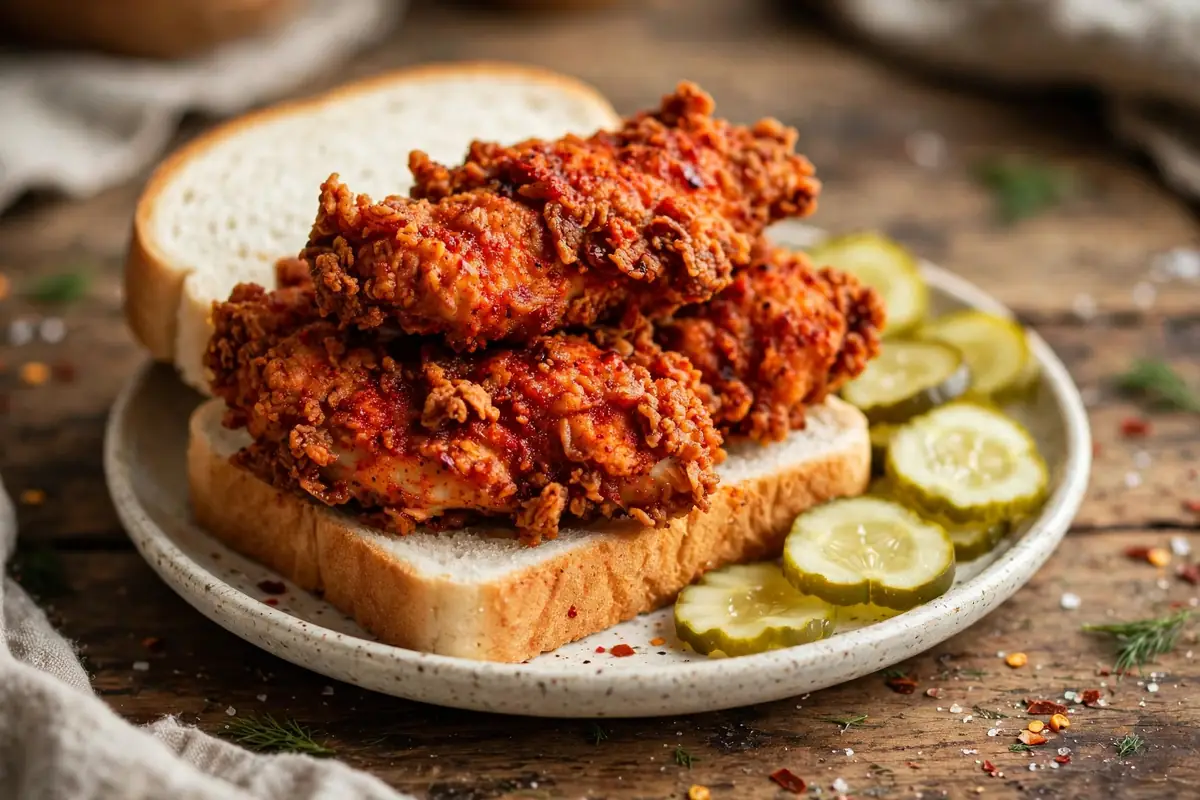
Nashville hot chicken is fried chicken doused in a cayenne pepper paste, served on white bread with pickle chips — and it is the dish the city is famous for. The legend says a scorned girlfriend spiced her man’s fried chicken as revenge and accidentally invented an obsession. Prince’s Hot Chicken is where it all began; Hattie B’s is the famous modern version with the line out the door.
Practical tip: Order a notch milder than your ego suggests — “hot” is genuinely hot, and the hottest levels are a challenge, not a meal. Go to Prince’s for the original or Hattie B’s for the classic first-timer experience.
Meat-and-three
A meat-and-three is the classic Nashville lunch: one meat and three sides, served cafeteria-style, and it is Southern cooking at its most honest — fried chicken or country ham with mashed potatoes, greens, mac and cheese and cornbread. Arnold’s Country Kitchen is the beloved downtown institution, and the Loveless Cafe, out on the western edge of the city, has been serving Southern cooking from a converted 1950s motel since 1951.
Practical tip: Go for lunch, go hungry, and go early — the best meat-and-three spots run out of the good stuff. Biscuits with breakfast are a Nashville institution in their own right.
Barbecue
Nashville barbecue is its own thing: slow-smoked pork and brisket, dry-rubbed and sauced on the side, with the city’s best spots spread from downtown to the neighbourhoods. Martin’s Bar-B-Que Joint and Peg Leg Porker are the names visitors hear first, but the best barbecue in Nashville is often found in a small, smoky room with a line out the door and no sign you would notice twice.
Practical tip: Order the pulled pork or the brisket, skip the fancy sides, and save room for banana pudding. Barbecue is a lunch food in Nashville — the good places sell out by evening.
Beyond the big three, leave room for biscuits and gravy, a Goo Goo Cluster — the chocolate, caramel, peanut and marshmallow treat invented in Nashville in 1912 — and at least one neighbourhood meal in East Nashville or Germantown.
Free things to do in Nashville
Nashville is unusually generous to budget travellers. Several of its very best experiences cost nothing at all, so mix these into every day of your trip:
- Lower Broadway honky-tonks: Free to walk in, live music from late morning to the early hours — the city’s number-one experience costs nothing, just tip the band.
- Centennial Park and the Parthenon grounds: Free to walk, picnic and photograph; only the Parthenon interior is ticketed.
- John Seigenthaler Pedestrian Bridge: Free, with the best skyline view in the city at sunset.
- Tennessee State Museum: Free to enter, rarely crowded, and one of the best history museums in the state.
- Bicentennial Capitol Mall State Park: Free, with fountains, granite history and 95 carillon bells.
- Music City Walk of Fame: Free, a quick stroll past the names that built this city’s sound, on Demonbreun Street downtown.
- Nashville Farmers’ Market: Free to browse, with local food stalls, crafts and street musicians.
- Neighbourhood murals: The “I Believe in Nashville” mural in 12 South and the “WhatLiftsYou” wings mural in the Gulch are free and among the most photographed spots in the city.
Build each day around one paid highlight and fill the rest with free sights. That rhythm — one big ticket, lots of walking, one great meal — is how you get the best Nashville trip for the least money.
Frequently asked questions
How many days do you need in Nashville?
Three full days is the sweet spot for a first trip: one day for downtown’s music landmarks, one day for the Parthenon, the Capitol and the neighbourhoods, and one day for Music Row, a mansion and the famous food. Two days works if you stay downtown and stick to the core; with four, add a day trip to Franklin or the Jack Daniel’s Distillery.
What is the best time to visit Nashville?
April to early June and September to October usually offer the best balance of pleasant weather, open attractions and smaller crowds than mid-summer. Summer is the most lively and best for festivals, but it is hot and humid, with highs regularly in the 90s. Winter is the cheapest and quietest, but it is genuinely cold, and the Opry moves to the Ryman for part of the season.
Is Nashville worth visiting if you don’t like country music?
Yes. Nashville is far more than country music: the food scene alone is worth the trip, and the city also offers world-class art at the Frist, the Parthenon, civil rights history, beautiful parks and gardens, and live music of every kind — gospel, blues, soul, rock and bluegrass — in small rooms all over town. Many visitors arrive for the country and leave talking about the food and the neighbourhoods.
Is Lower Broadway really free?
Yes — almost every honky-tonk on Lower Broadway has no cover charge, and live bands play from late morning until the early hours. You pay for drinks, and you should tip the band: a few dollars per set is the custom, and the musicians rely on the tip jar. The only costs on Broadway are the ones you choose.
Where should a first-time visitor stay in Nashville?
Stay downtown or in the Gulch. You will be able to walk to Lower Broadway, the Ryman, the Country Music Hall of Fame and most restaurants, and you will be a short rideshare from the neighbourhoods. Light sleepers should stay a few blocks back from Broadway itself, where the music runs until the early hours.
Do you need a car in Nashville?
Not downtown — downtown is walkable, and rideshare covers the neighbourhoods, the Opry and the Bluebird. A car helps for the Hermitage, Belle Meade and Cheekwood, and it is essential for day trips to Franklin or the Jack Daniel’s Distillery. If you do rent one, park it at the hotel and use rideshare downtown, where parking is expensive and scarce.
Further reading — Wikipedia, Reddit and Quora
Want to dig deeper or hear directly from locals and other travellers? These pages are the best next stops:
- Wikipedia — Nashville — the city’s history, geography and neighbourhoods, and how Music City grew from a river town into the capital of country music.
- Wikipedia — Ryman Auditorium — how a gospel tabernacle built in 1892 became the Mother Church of Country Music and the home of the Grand Ole Opry.
- Wikipedia — Grand Ole Opry — the story of the longest-running radio broadcast in American history, on air since 1925.
- Reddit — r/nashville — the Nashville community on Reddit, where locals answer first-time visitors’ questions and share current tips on shows, food and neighbourhoods.
- Quora — What are some fun things to do in Nashville, TN? — locals’ and travellers’ personal answers on fun things to do in Nashville, from the Country Music Hall of Fame and the Ryman to the Parthenon and the Loveless Cafe.
Your Nashville trip, in one paragraph
Start on Lower Broadway before noon, stand on the Ryman stage in the afternoon, hear a songwriter round in a quiet room at night, and spend one evening at the Grand Ole Opry — then add the Parthenon, one neighbourhood of your own choosing, and a plate of hot chicken ordered milder than your ego suggests. Do that, and you will leave Nashville understanding exactly why people who visit once tend to come back. And if you liked this guide, read our guide to things to do in Chicago — the same format, the same honest prices, and another great American music city.
Prices, hours and seasonal schedules in this guide are approximate and were given as a guide only. Please check the official website of each attraction before you visit.

About the Author