Things to Do in Paris
20 Best Attractions, a 3-Day Itinerary, Where to Stay, and the Food You Cannot Miss
Quick Info
Best for: First-time visitors, art lovers, food lovers and romantics — icons, museums, gardens and café culture in one walkable city
Best time: April–June and September–October for mild weather and thinner crowds; December for Christmas lights and markets
How long: 3 full days for the highlights; 2 days covers the essentials; add a 4th day for Versailles
Budget: Roughly €120–€220 per person per day for a mid-range trip with one big ticketed sight; a parks-and-cafés day runs much cheaper
Don’t miss: The Eiffel Tower sparkling at night, Notre-Dame reopened, the Louvre’s Denon Wing, sunset from Montmartre and a croissant from a real bakery
Paris is the most visited city on Earth, and it earns the title. The French capital packs the Eiffel Tower, the Louvre, Notre-Dame and Montmartre into a city you can cross on foot in an afternoon — then adds café terraces, food markets, gardens and a river that glitters at night. This guide gives you the 20 best things to do in Paris in a sensible order, a ready-made 3-day itinerary, honest advice on when to go, where to stay and how to get around, and the three foods you have to try before you leave — plus the free sights that cost nothing at all. Prices and hours change, so every price in this guide is marked as approximate — always check the official website before you visit.
One thing to know before you go: Paris is divided into 20 arrondissements that spiral out from the centre like a snail shell, and the numbers matter — the 1st to the 7th hold almost everything on this list, while Montmartre sits up in the 18th and the Catacombs are down in the 14th. Book the big sights ahead: the Eiffel Tower, the Louvre and the Catacombs all sell timed tickets now, and the popular slots go days in advance. And Paris in 2026 is not the Paris of the old guidebooks — Notre-Dame has reopened after the fire, the Louvre has raised its prices for non-European visitors, the Centre Pompidou is shut for a long renovation and you can now swim in the Seine in summer. This guide is built on the 2026 facts, so you will not be caught out by any of them.
For background before you go, the Wikipedia entry on Paris covers the city’s history, from its Roman roots as Lutetia to the Haussmann rebuilding that gave it the boulevards and stone facades you see today — it is linked in Further reading at the end of this guide.
Paris at a glance
| Question | Short answer |
| How long do you need? | 3 full days for the highlights; 2 days covers the essentials; 4 days if you add Versailles and a slower Left Bank day. |
| Best area for a first trip | The 1st–7th arrondissements — the Louvre, Île de la Cité, the Eiffel Tower and Saint-Germain are all within a short walk or one Metro ride. |
| One thing to book early | Eiffel Tower summit tickets, Louvre and Orsay timed entry, Catacombs slots (only a 7-day booking window) and Versailles on spring weekends. |
| One thing that is free | Notre-Dame’s nave, Sacré-Cœur basilica, the Luxembourg Gardens, the Galeries Lafayette rooftop terrace and swimming in the Seine in summer. |
| Do you need a car? | No — the Metro, buses and your feet cover everything in the city; a car is a liability in Paris. Rent one only for day trips beyond the RER. |
The 20 best things to do in Paris
Climb the Eiffel Tower — or just watch it sparkle
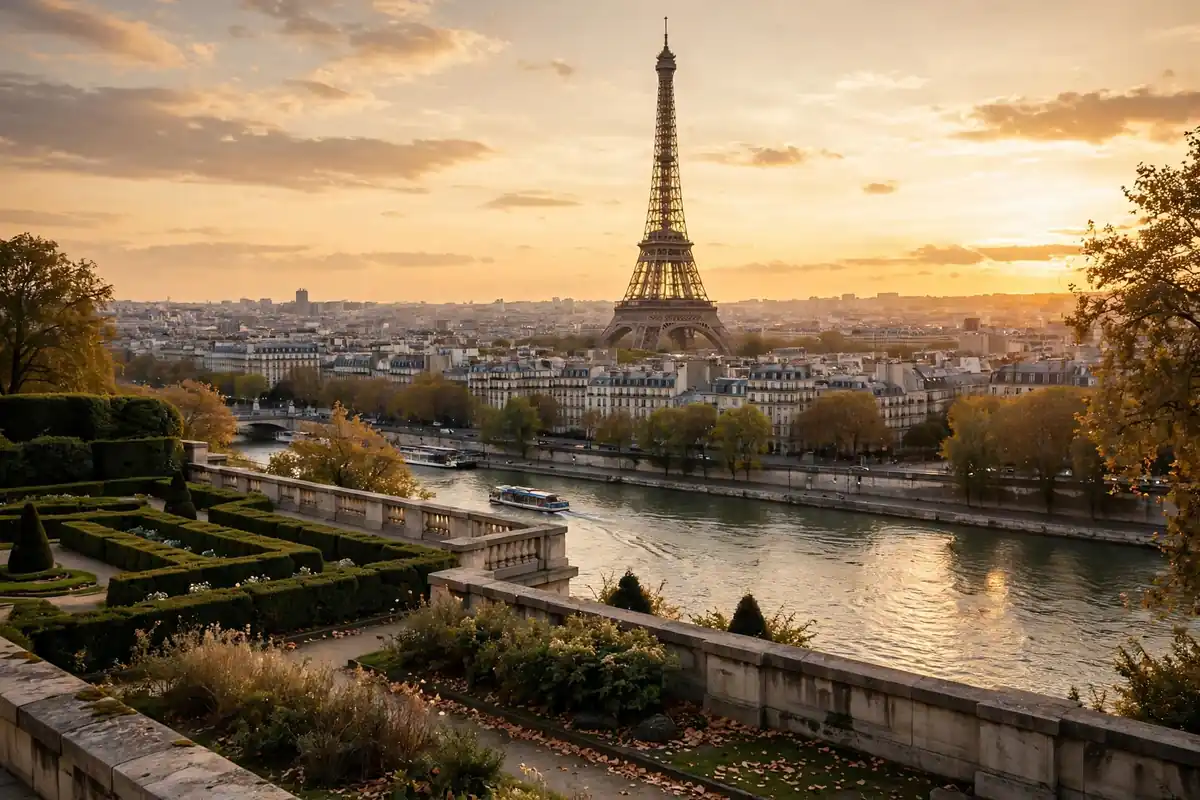
No first trip to Paris is complete without the Eiffel Tower. Built for the 1889 World’s Fair, the 330-metre iron lattice was meant to stand for just 20 years — instead it became the symbol of the city. Go up if you can: the stairs to the 2nd floor cost about €14.80, the lift to the 2nd floor about €23.50 and the lift to the summit about €36.70, with new fares from January 11, 2027. Since September 2026, stair tickets must be booked in advance — there is no walk-up sale for the stairs any more — so buy your ticket online before you go. The summit is worth it on a clear day: you can see for 40 miles, and the champagne bar at the top is a fine place for a toast.
If you do not go up, go and look at it instead. The best free views are from the Trocadéro across the river, from the Champ de Mars lawns at its feet and from the Pont Alexandre III at dusk. Every hour on the hour after dark, the tower sparkles for five minutes — time your evening walk for it. Read the full story of the tower in the Eiffel Tower on Wikipedia.
The Louvre — the Mona Lisa and the Denon Wing
The Louvre is the most visited museum on Earth, a former royal palace holding some 35,000 works — the Mona Lisa, the Winged Victory of Samothrace and the Venus de Milo among them. Since January 14, 2026, tickets cost €32 for visitors from outside the European Economic Area and €22 for EEA visitors, a rise of about 45%. The museum is closed on Tuesdays, timed entry is required, and under-18s go free along with EU citizens under 26. Entry is free on the first Friday evening of the month after 6pm (except July and August) and on July 14.
Do not try to see it all — that would take days. Head for the Denon Wing first for the Mona Lisa and the Italian paintings, then the Greek and Roman sculpture, and save the Egyptian wing for your second hour. Skip the Pyramid queue by entering through the Carrousel du Louvre shopping level or the Porte des Lions. The Louvre on Wikipedia gives the history of the palace and its collections.
Notre-Dame Cathedral, reopened after the fire
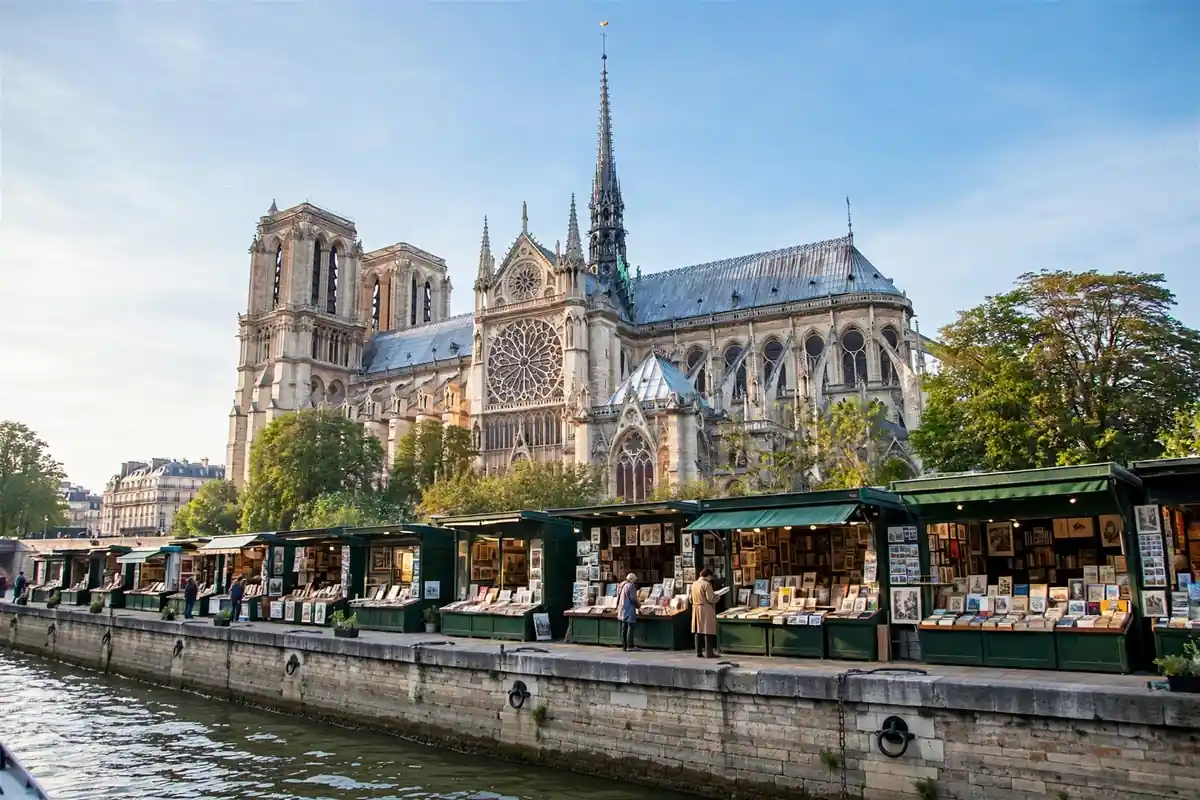
Notre-Dame reopened on December 7–8, 2024, five and a half years after the fire of April 15, 2019 destroyed its spire and roof. The restored nave glows again — the stone cleaned, the organ rebuilt, the spire remade exactly as it was — and entry to the nave is free. Book the free timed reservation online, especially from April to October, when walk-up queues run two to three hours at peak times. The towers reopened on September 20, 2025: €16, online booking only, 424 steps up and no lift, free for under-18s and EU citizens aged 18–25. The Treasury costs about €10–€12 and the Crypte Archéologique under the square in front costs €9.
Stand on the Pont Saint-Louis at dusk for the classic view of the cathedral across the water, then walk the flower market on the Île de la Cité. Notre-Dame de Paris on Wikipedia covers the fire, the restoration and the 850-year history.
Montmartre and Sacré-Cœur
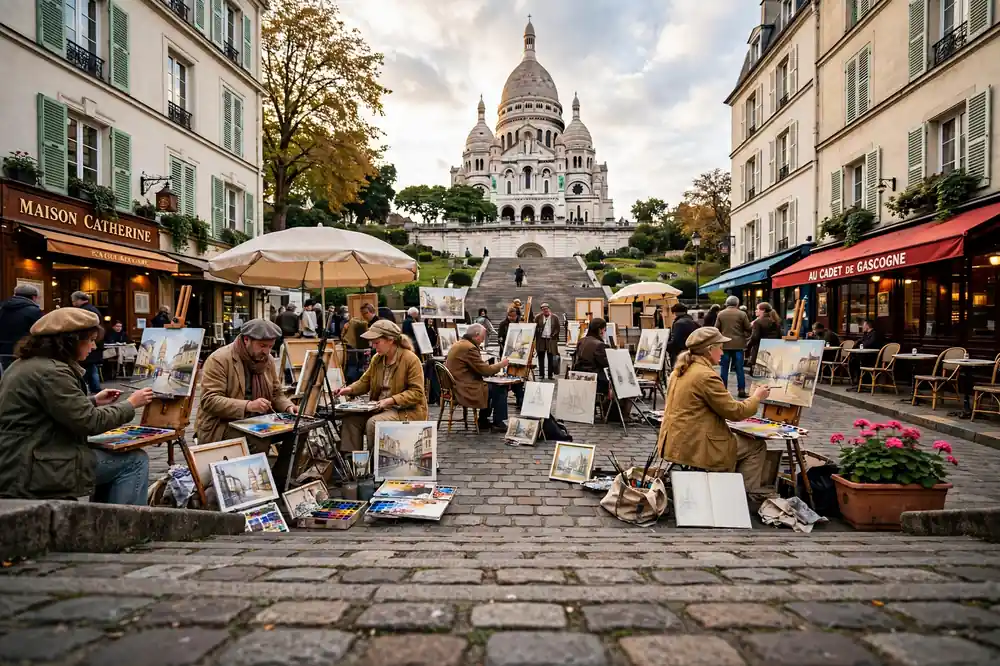
Montmartre is the Paris of the postcards: a village on a hill, with the white domes of Sacré-Cœur at its top, artists painting in the Place du Tertre and a vineyard — the Clos Montmartre — hidden behind the houses. The basilica is free and open daily from 6:30am to 10:30pm; the dome climb costs about €8 for adults and €5 for under-15s, 280 steps, tickets on site only with no online booking. The dome is one of the best viewpoints in Paris, and the steps in front of the basilica are the place to watch the sunset.
Walk up through the village streets rather than taking the funicular if your legs allow — past the pink La Maison Rose, the windmills of the Moulin de la Galette and the cafés of Rue des Abbesses. Come early in the morning or late in the evening; by midday the square is packed. The story of the basilica and the hill is told in the Sacré-Cœur, Paris on Wikipedia entry.
Musée d’Orsay — the Impressionists’ home
The Musée d’Orsay sits in a former railway station on the Left Bank, and it holds the world’s best Impressionist collection: Monet, Renoir, Degas, Cézanne, Van Gogh’s Starry Night Over the Rhône and the great clock window on the top floor. Tickets cost about €16 and the museum is closed on Mondays. One 2026 change to know: since March 10, 2026, Paris Museum Pass holders must book a time slot before visiting — the pass no longer means walk-in entry here. The entrance area is also under renovation until summer 2028, so follow the signs and allow extra time.
Go straight to the top floor for the Impressionists, then work your way down through the sculpture halls to the ground floor. It is smaller and calmer than the Louvre, and many visitors prefer it. The Musée d’Orsay on Wikipedia covers the building and the collection.
Sainte-Chapelle — a jewel box of stained glass
Sainte-Chapelle is small, easy to miss and unforgettable. Built in the 13th century to hold holy relics, its upper chapel is almost entirely glass — 1,113 stained-glass windows rising 15 metres, telling Bible stories in colour. Come at midday when the sun pours through the glass and the whole room glows. Tickets cost about €22 for non-EEA visitors and €16 for EEA visitors; a combined ticket with the Conciergerie next door costs about €30 (€23 EEA). Book ahead — the chapel is small and the queue is long.
It stands on the Île de la Cité, two minutes from Notre-Dame, so pair the two in one morning. The Sainte-Chapelle on Wikipedia entry explains the windows and the relics.
A Seine river cruise at sunset
The Seine is the thread that ties Paris together, and a river cruise is the easiest way to see the city in an hour. A one-hour sightseeing cruise costs from about €17 booked online or €20 at the pier, and dinner cruises run about €75–€100. Go at sunset: the bridges, the Eiffel Tower, Notre-Dame and the Louvre light up one after another, and the commentary points out the details you would miss on foot. Boats leave from the Eiffel Tower, Pont Neuf and Notre-Dame; the Vedettes du Pont Neuf boats from the tip of the Île de la Cité are the smallest and most relaxed.
For a cheaper version of the same views, ride the Batobus hop-on hop-off boat, or simply walk the riverbanks — the quays from the Pont Neuf to the Pont Alexandre III are a UNESCO World Heritage site. The Seine on Wikipedia traces the river through the city.
The Catacombs of Paris
Under the streets of Paris lies another city: 243 steps down, a 1.7-kilometre tunnel lined with the bones of some six million people, moved here from overflowing cemeteries in the 18th and 19th centuries. Tickets cost about €31, the Catacombs are closed on Mondays, and you can only book seven days ahead — the window opens at 10am Paris time and the popular slots go fast. Last entry is 7:30pm. It is 14°C underground all year, so bring a layer even in summer, and wear proper shoes: the tunnels are damp and uneven.
This is not for the claustrophobic or the faint-hearted, but it is one of the most unusual sights in Europe, and the orderly walls of skulls and femurs are strangely moving rather than gruesome. The Catacombs of Paris on Wikipedia tells how they came to be.
Luxembourg Gardens — Paris’s prettiest park
The Luxembourg Gardens are the city’s favourite park: 23 hectares of lawns, fountains, flowerbeds and the famous green metal chairs, created in 1612 for Marie de’ Medici. Entry is free. Come for a picnic, a game of chess by the central pond, the Medici Fountain tucked in the corner or the beehives and the orangerie. The Luxembourg Palace at the north end houses the French Senate and is only open on heritage days.
The gardens sit between Saint-Germain and the Latin Quarter, so they make a natural rest stop between the museums and the cafés. Early mornings are quiet; Sunday afternoons are full of Parisian families. The Jardin du Luxembourg on Wikipedia covers the garden’s history.
Le Marais — Place des Vosges and falafel row
Le Marais is the oldest part of Paris still standing — a maze of narrow streets, 17th-century mansions, boutiques and cafés across the 3rd and 4th arrondissements. Start at the Place des Vosges, the city’s oldest square (1605), with its red-brick arcades and the house where Victor Hugo lived. Then walk Rue des Rosiers for falafel — the lines at L’As du Fallafel are long for a reason — and browse the shops of Rue des Francs-Bourgeois. The Musée Picasso and the Musée Carnavalet, the museum of Paris history, are both here; Carnavalet is free.
Le Marais is also Paris’s historic Jewish quarter and its LGBTQ+ heart, and on Sundays its streets close to traffic and fill with strollers. Le Marais on Wikipedia traces the district from medieval marsh to fashionable quarter.
Versailles — the palace and gardens day trip
Versailles is the easiest and grandest day trip from Paris: the RER C train takes about 35 minutes from central Paris to Versailles Rive Gauche station, a short walk from the gates. The Passport ticket costs about €35 in high season and €25 in low season (November to March), and the palace alone costs about €21. The palace is closed on Mondays. The Hall of Mirrors, the King’s Apartments and Marie Antoinette’s estate at the Trianon are the highlights; the gardens are free except on Musical Fountains days, when the fountains dance to baroque music.
Go early and see the gardens first, when they are quiet, then the palace as the crowds thin in the afternoon. Allow a full day — the estate is enormous, and the Trianon alone deserves two hours. The Palace of Versailles on Wikipedia covers the palace and its history.
Arc de Triomphe and the Champs-Élysées
The Arc de Triomphe stands at the top of the Champs-Élysées, commissioned by Napoleon in 1806 and finished in 1836. The rooftop is one of the best viewpoints in Paris — the twelve avenues radiate out below you and the Eiffel Tower rises across the city. Rooftop tickets cost about €16, or €22 from April to September except on Wednesdays. One 2026 warning: the lift has been out of service since late July 2026 and is only expected back in 2027, so the only way up is 284 steps. Opening hours are 10am to 10:30pm (11am on Tuesdays, until 11pm from April to September). The flame at the Tomb of the Unknown Soldier is relit every evening at 6:30pm.
Walk down the Champs-Élysées afterwards — 1.9 kilometres of shops, cinemas and cafés to the Place de la Concorde — but never try to cross the traffic circle around the Arc on foot; use the pedestrian tunnel. The Arc de Triomphe on Wikipedia tells its story.
Saint-Germain-des-Prés — cafés and bookshops
Saint-Germain-des-Prés is the Left Bank at its most literary: the cafés where Sartre, de Beauvoir, Hemingway and Picasso argued — Café de Flore and Les Deux Magots still sit on the corner of Boulevard Saint-Germain — and the bookshops that line the streets. The church of Saint-Germain-des-Prés is the oldest in Paris, founded in the 6th century. Across the square, Shakespeare and Company is the famous English-language bookshop, its reading room upstairs one of the quietest spots in the city.
Order a coffee, sit for an hour and watch the street — that is the activity here, and it is worth doing properly. The district is at its best in the early evening, when the café terraces fill and the light turns gold. The Saint-Germain-des-Prés on Wikipedia entry covers the quarter and its history.
Père Lachaise Cemetery
Père Lachaise is the most visited cemetery in the world, and the most beautiful: 44 hectares of winding paths, old trees and sculpted tombs, opened in 1804. Entry is free. Jim Morrison, Oscar Wilde, Édith Piaf, Chopin and Proust are all buried here, along with thousands of Parisians whose tombs are works of art in themselves. Pick up a map at the entrance — the cemetery is a maze and the famous graves are spread across it.
Come in the morning, when the light falls through the trees and the crowds are thin. It is a peaceful walk, not a morbid one, and the views back over Paris from the upper paths are a bonus. The Père Lachaise Cemetery on Wikipedia lists the famous residents.
Canal Saint-Martin — the local’s Paris
Canal Saint-Martin is the Paris that Parisians keep for themselves: a 4.5-kilometre canal of locks, iron footbridges and tree-lined quays in the 10th arrondissement, where locals picnic on the banks on summer evenings. This is where Amélie was filmed, and the streets around it — Rue de la Grange-aux-Belles, Quai de Valmy — are full of the small bars, bakeries and vintage shops that the tourist quarters lost long ago.
Walk the canal from the Place de la République to the Bassin de la Villette, where the water widens into a basin with cinemas and cafés. It is at its best on a warm evening, when the locks open and the footbridges swing for the passing boats. The Canal Saint-Martin on Wikipedia covers the canal and its locks.
The Grand Palais, reopened
The Grand Palais, the great glass-and-steel exhibition hall on the Champs-Élysées, fully reopened in June 2025 after a four-year, €466 million renovation. Its 2026 programme is the strongest in years: Nan Goldin from March 18 to June 21 (about €17, €13 reduced), Matisse 1941–1954 from March 24 to July 26 (about €19, €16 reduced), Hilma af Klint from May 6 to August 30 (about €15, €12 reduced) and a Leandro Erlich retrospective from June 2 to September 6 (from about €19). The Palais de la Découverte children’s science gallery reopened in June 2025, with its permanent displays returning in winter 2026.
The reopening matters for another reason: the Centre Pompidou, Paris’s modern-art museum, closed on September 22, 2025 for renovation until about 2030, and parts of its collection are showing at the Grand Palais meanwhile. Do not go to the Pompidou expecting to walk in — check what is on at the Grand Palais instead. The Grand Palais on Wikipedia covers the building and its history.
Musée de l’Orangerie — Monet’s Water Lilies
The Musée de l’Orangerie, at the western end of the Tuileries Garden, holds one of the most peaceful rooms in Paris: two oval galleries built for Monet’s eight vast Water Lilies panels, painted as a monument to the dead of France after the First World War. Tickets cost about €12.50, and the museum also holds a fine smaller collection of Cézanne, Renoir, Picasso and Modigliani downstairs.
It is a small museum — an hour is enough — and it pairs perfectly with a walk through the Tuileries afterwards. If you are choosing between the Orangerie and the Rodin Museum (about €14, with its sculpture garden), pick the Orangerie for the Water Lilies alone. The Musée de l’Orangerie on Wikipedia describes the museum and the panels.
Rooftop views — the best free viewpoints
Paris is a low city, so its rooftops are the viewpoint — and the best ones are free. The terrace of the Galeries Lafayette department store on Boulevard Haussmann is free, open to anyone, and gives you the Eiffel Tower, the Opéra and the rooftops in one sweep. The Printemps rooftop, a few doors down, is just as good. For a local’s view, climb to the Parc de Belleville in the 20th arrondissement or the Buttes Chaumont in the 19th, both free parks with wide views over the city.
One outdated-guide trap: the Montparnasse Tower observation deck, long the highest viewpoint in Paris, closed on March 31, 2026 for a renovation expected to last at least five years. Do not plan your sunset around it. The Tour Montparnasse on Wikipedia records the closure.
Markets — Rue Mouffetard and the Enfants Rouges
Paris eats at its markets, and the two best for visitors are the Marché des Enfants Rouges in the Marais — the oldest covered market in Paris, founded in 1615, where you can eat Moroccan, Japanese, Italian and French food at shared tables — and the Rue Mouffetard, one of the oldest streets in the city, where the market stalls run downhill past cheese shops, bakeries and wine merchants. Come on a Sunday morning, when both are at their liveliest, and eat as you walk.
The Marché d’Aligre, near Bastille, is the third to know: a covered hall and an open-air market, cheaper and more local than the others. Bring cash for the small stalls and a bag for the cheese. The Rue Mouffetard on Wikipedia traces the street’s history.
Swim in the Seine — the 100-year ban is over
The newest thing to do in Paris is also the oldest: swim in the Seine. Banned since 1923, swimming returned on July 5, 2025 after a €1.4 billion clean-up for the 2024 Olympics, and the three free public swim spots ran their second season from July 4 to August 30, 2026. Bras Marie sits beneath the Pont Louis-Philippe near Notre-Dame, Grenelle offers swimming with direct views of the Eiffel Tower, and Bercy in eastern Paris is the largest, with a 67-metre pool across from the national library. About 100,000 people swam in the first season.
The spots are free, with lifeguards, changing rooms and showers, but they open only when the water quality allows — flags show the daily signal, and the sites usually close the day after rain. Check the City of Paris website before you go, and note the minimum ages (10 or 14 depending on the site). Paris Plages, the summer river beaches, ran from July 4 to August 30, 2026 alongside them. The Seine on Wikipedia traces the river and its clean-up.
Paris in 3 days — a ready-made itinerary
| Day | Focus | Don’t miss |
| Day 1 — Icons | Eiffel Tower, Trocadéro, Arc de Triomphe, Champs-Élysées, Seine cruise | The Eiffel Tower sparkling at night |
| Day 2 — Museums and the islands | Louvre, Tuileries, Notre-Dame, Sainte-Chapelle, Le Marais | Sainte-Chapelle’s stained glass at midday |
| Day 3 — Montmartre and the Left Bank | Sacré-Cœur, Montmartre, Musée d’Orsay, Luxembourg Gardens, Saint-Germain | Sunset from the Sacré-Cœur steps |
Day 1 — Icons and the river
Start at the Trocadéro for the classic Eiffel Tower view, then cross the river and go up the tower — book the first slot of the day for the shortest queues. Walk through the Champ de Mars to the École Militaire, then take the Metro to the Arc de Triomphe and walk down the Champs-Élysées to the Place de la Concorde. In the late afternoon, cross to the Tuileries for a rest, and end the day on a sunset Seine cruise, watching the tower sparkle as you pass under the bridges.
Day 2 — Museums, islands and the Marais
Start at the Louvre when it opens — go straight to the Denon Wing and the Mona Lisa before the crowds arrive. Walk through the Tuileries Garden to the Place de la Concorde, then cross to the Île de la Cité for Notre-Dame (booked timed entry) and Sainte-Chapelle at midday, when the glass glows. Cross into the Marais for a late falafel lunch on Rue des Rosiers, then spend the afternoon in the Place des Vosges and the shops of Rue des Francs-Bourgeois. End with dinner in the Marais.
Day 3 — Montmartre and the Left Bank
Take the Metro to Montmartre early and climb to Sacré-Cœur before the crowds — the dome first, then the village streets and the Place du Tertre. Walk down through Rue des Abbesses to the Metro and cross to the Left Bank for the Musée d’Orsay, arriving for the early afternoon. Then rest in the Luxembourg Gardens, and finish the day in Saint-Germain-des-Prés: a coffee at Café de Flore, a browse in Shakespeare and Company and dinner in a bistro on Rue Bonaparte.
Best time to visit Paris
| Season | Weather | Crowds and prices | Best for |
| Spring (March–May) | 10–20°C, changeable | Moderate, rising | Gardens in bloom, café terraces, fewer queues than summer |
| Summer (June–August) | 20–28°C, occasional heatwaves | Busiest, priciest | Long evenings, Paris Plages, swimming in the Seine |
| Autumn (September–November) | 10–20°C, golden light | Thinning after mid-September | Museums, food, comfortable walking |
| Winter (December–February) | 3–9°C, short days | Quietest, cheapest hotels | Christmas markets, museums without queues, festive lights |
The sweet spot is late April to early June, and September to mid-October: mild weather, daylight until late, and queues you can live with. July and August bring the longest days and the biggest crowds — book everything ahead. December is underrated: the Champs-Élysées and the department stores light up, the Christmas markets open, and hotel prices drop. January and February are the quietest months of all, and many national museums open free on the first Sunday of the month from October to March.
Where to stay in Paris
| Area | Best for | Price feel |
| Le Marais (3rd–4th) | First-timers who want to walk everywhere | Mid to high |
| Saint-Germain-des-Prés (6th) | Cafés, bookshops, Left Bank romance | High |
| Latin Quarter (5th) | Budget stays, students, lively streets | Budget to mid |
| Montmartre (18th) | Village feel, views, artists | Mid |
| Near the Eiffel Tower (7th) | Icon views, quiet streets | High |
| Bastille and Canal Saint-Martin (11th) | Nightlife, local feel, good value | Mid |
First-timers should stay in the Marais or Saint-Germain: both are central, safe at night, full of restaurants, and within walking distance of most of the list. The Latin Quarter is the best value near the centre, with plenty of small hotels and hostels. Montmartre is charming but hilly and further from the museums — stay there if you want the village feel and do not mind the Metro. Avoid staying near the big stations (Gare du Nord, Gare de l’Est) late at night, and be wary of very cheap apartments far out: the Metro runs until about 1am, but the last trains are crowded and the walk home can be long.
Getting around Paris
Paris is a walking city first and a Metro city second. The Metro has 16 lines and more than 300 stations, and no two sights on this list are more than a few stops apart. Since January 2026, a single Metro-Train-RER ticket costs €2.55 flat across all of Île-de-France. Paper t+ tickets were retired in November 2025 and stop being accepted on December 15, 2026 (they can be exchanged until January 14, 2027), so buy a Navigo Easy card for €2 once and load tickets onto it with your phone. A Navigo Day pass costs €12.30 for all zones (airports excluded), and a Navigo Week pass costs €32.40, Monday to Sunday, all zones, airports included.
From Charles de Gaulle airport, the RER B takes 35–40 minutes to central Paris and costs €14 one-way; from Orly, Metro Line 14 runs direct to the centre for €14. A taxi from the airport to central Paris runs on a flat fare of about €56 to the Right Bank and €65 to the Left Bank. The Paris Museum Pass costs €85 for two days, €105 for four days and €125 for six days, and covers more than 50 museums including the Louvre, Orsay, Sainte-Chapelle, Arc de Triomphe and Versailles — but it does not cover the Eiffel Tower or the Catacombs, and since 2026 you still need timed reservations at the Louvre and Orsay even with the pass. Do the maths before you buy: if you visit fewer than three big museums, single tickets are cheaper.
Paris food you have to try
Croissants, baguettes and the bakery rule
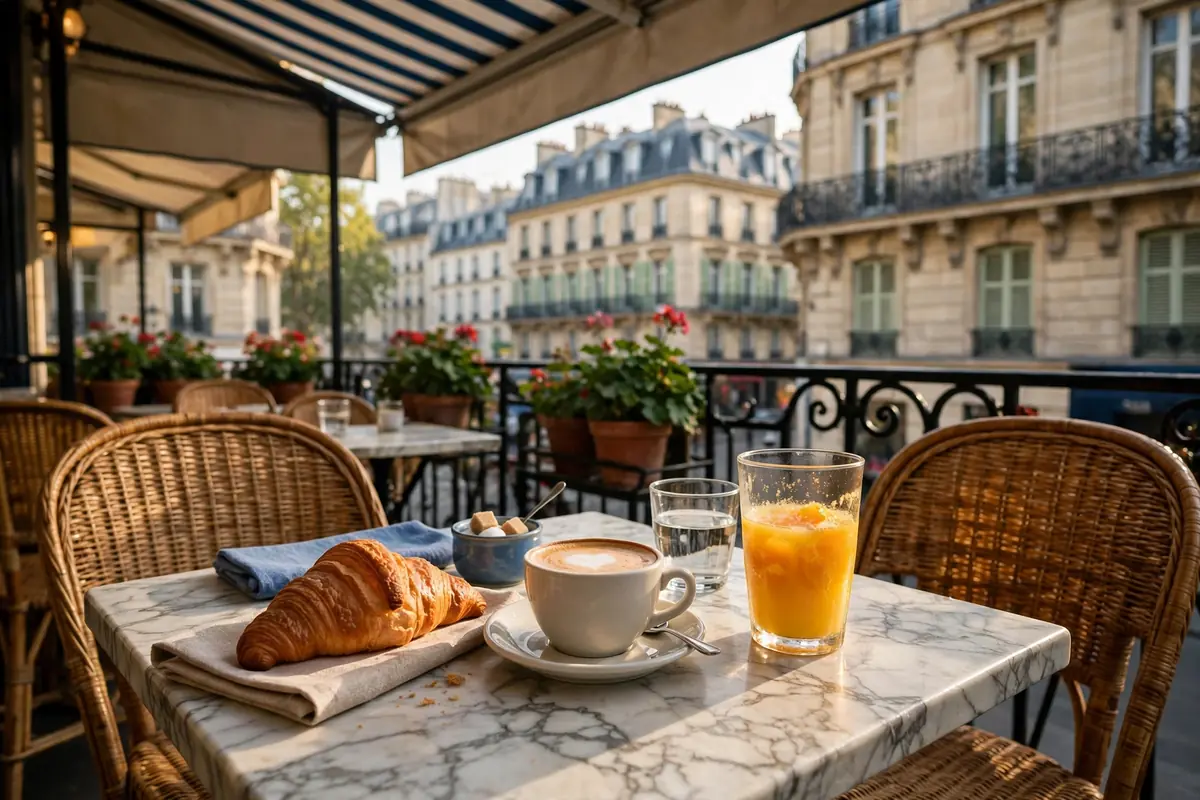
The croissant is the test of a Paris bakery, and the rule is simple: never buy one from a café terrace or a tourist street — buy it from a boulangerie, where it is baked on the premises, and eat it warm within minutes. A good croissant shatters when you bite it, smells of butter, and costs about €1.50–€2. The baguette is the other daily ritual: look for the sign “boulangerie artisanale” and the queue of locals at 7am. Poilâne in Saint-Germain and Du Pain et des Idées near Canal Saint-Martin are the famous names, but the best bakery in Paris is usually the one on your own street.
Steak frites, French onion soup and the classic bistro
The classic Paris bistro meal is steak frites — a steak, a pile of thin fries and a green salad — with French onion soup to start. Expect about €20–€28 for steak frites in a good bistro, and about €12–€15 for the soup. Eat where the menu is written on a chalkboard in French, the tables are close together and the room is full of locals: that is a bistro. Avoid the restaurants with picture menus and waiters calling you in on the streets around the Eiffel Tower and the Champs-Élysées. Lunch is the bargain: most bistros serve a two- or three-course formule at midday for about €18–€25, the same food for half the evening price.
Crêpes, falafel and the markets of the Marais
Paris street food is a meal in itself. A crêpe from a street stand — Nutella, salted caramel or ham and cheese — costs about €5–€8 and is best eaten walking along the Seine or in the Luxembourg Gardens. The falafel of Rue des Rosiers in the Marais is the other classic: a warm pita stuffed with falafel, aubergine and salad for about €10–€12, eaten standing on the street. And the markets — the Enfants Rouges, Rue Mouffetard, Aligre — are where you build a picnic: cheese, saucisson, a baguette and a bottle of wine, eaten on a bench in the Tuileries for less than a café lunch.
Free things to do in Paris
Paris is generous if you know where to look. Notre-Dame’s nave is free. Sacré-Cœur basilica is free. The Luxembourg Gardens, the Tuileries, the Champ de Mars and the banks of the Seine are free. The Galeries Lafayette rooftop terrace is free, and so is Père Lachaise Cemetery, the Canal Saint-Martin walk and the Place des Vosges. In summer, swimming in the Seine is free at the three public spots. Many national museums open free on the first Sunday of the month from October to March, and the Louvre is free on the first Friday evening of the month after 6pm (except July and August) and on July 14. Under-18s go free at most national museums, and EU citizens under 26 go free too. And the best free thing of all costs nothing and needs no ticket: walk the city at dusk, when the monuments light up and Paris turns gold.
Frequently asked questions
How many days do you need in Paris?
Three full days covers the highlights on this list: the icons, the big museums, Montmartre and the Left Bank. Two days covers the essentials if you skip Versailles and move fast. Four or five days lets you add Versailles, a day trip to the Loire or Champagne, and a slow day of cafés and markets. Do not try to do Paris in one day — you will see the sights and miss the city.
Is the Eiffel Tower worth going up?
Yes, once — the summit on a clear day is the best view in Paris, and the 2nd floor is the best value. But if the queues are long or the weather is poor, the free views from the Trocadéro and the Champ de Mars are nearly as good, and the tower is arguably prettier from the outside, sparkling at night. Book ahead either way: since September 2026, stair tickets must be booked in advance, and summit tickets sell out days ahead in summer.
Is Paris expensive?
Paris is expensive but manageable. A mid-range trip runs about €120–€220 per person per day, including a hotel, one big ticketed sight, Metro tickets and bistro meals. Save money by eating bakery breakfasts, bistro lunch formules, market picnics and free sights — a parks-and-cafés day can cost under €40. The Paris Museum Pass only saves money if you visit three or more big museums.
Is Paris safe for tourists?
Paris is generally safe, and violent crime against tourists is rare. The real risk is pickpockets: they work the Eiffel Tower, the Louvre, the Sacré-Cœur steps, the Champs-Élysées and Metro line 1. Keep your bag in front of you, your phone in a front pocket, and ignore the ring trick, the petition clipboard and the string bracelet sellers. At night, stick to busy streets and the central arrondissements.
Do you need to speak French in Paris?
No, but a little helps a lot. Start every interaction with “bonjour” — it is a social rule, not a nicety — and end with “merci, au revoir”. Staff in hotels, museums and restaurants in the centre speak English, and menus are usually in English in tourist areas. A few phrases open doors; none are required.
How do you get from the airport to central Paris?
From Charles de Gaulle, take the RER B train — 35–40 minutes to Châtelet-Les Halles, Gare du Nord or Saint-Michel, €14 one-way. From Orly, take Metro Line 14 direct to the centre, also €14. A taxi runs on a flat fare of about €56 to the Right Bank and €65 to the Left Bank. Avoid the unofficial drivers who approach you in the arrivals hall; use the official taxi rank or the train.
Further reading — Wikipedia, Reddit and Quora
Ask questions and read trip reports on r/ParisTravelGuide
Read this Quora thread on Paris museums and the best time of year to visit
Your Paris trip, in one paragraph
Paris rewards the traveller who slows down: the Eiffel Tower sparkling at night, Notre-Dame reopened after the fire, the Louvre’s Denon Wing, sunset from the Sacré-Cœur steps, a croissant from a real bakery and an evening on the Seine. Three days is enough for the icons and the museums, four days adds Versailles, and every extra day adds a market, a garden or a café you will remember longer than any ticket. If Paris has given you the travel bug, the same kind of guide is waiting for the other cities on this site: Chicago, Nashville, Los Angeles, Orlando, Miami, San Diego, Denver, Savannah, Dallas, Charleston, San Francisco, Myrtle Beach, Las Vegas, San Antonio, London, Portland, Pigeon Forge, Puerto Rico, Atlanta and Phoenix — twenty guides, one for every kind of trip.

About the Author