Things to Do in Seattle
20 Best Attractions, a 3-Day Itinerary, Where to Stay, and the Food You Cannot Miss
Quick Info
Best for: First-timers, coffee lovers, museum fans and families — and anyone who likes a city you can see by ferry, on foot and from a tower
Best time: July–September for dry, sunny days; late March–early April for cherry blossom
How long: 3–4 days for the highlights; 5 days if you add a ferry day trip and Mount Rainier
Budget: About $180–$300 per person per day with a mid-range hotel — the skyline views are mostly free
Don’t miss: The Space Needle at sunset, Pike Place Market in the morning, and the ferry to Bainbridge Island
Seattle on Wikipedia is the city where the mountains meet the sea, and it is the rare American city where the best day out costs $11.35 — the ferry across Puget Sound. The Space Needle towers over a compact downtown, Pike Place Market has sold fish and flowers since 1907, and you can walk from a glass garden to a salmon ladder in a single afternoon. This guide covers the 20 best things to do in Seattle, a 3-day itinerary that actually works, where to stay without overpaying, how to get around on light rail and ferries, the three foods you should not skip, and the free sights that make Seattle the best value city break in the Pacific Northwest. Everything below was checked against live sources in November 2026, including the ticket prices that trip up first-timers and the new waterfront that opened in 2025.
Seattle at a glance
| Topic | What to know |
|---|---|
| Full name | Seattle, Washington — the largest city in the Pacific Northwest |
| Founded | 1851 (Denny Party landing); incorporated 1869 |
| Population | About 780,000 in the city; about 4 million in the metro area |
| Currency | US dollar ($) |
| Language | English |
| Time zone | Pacific Time (PT) — UTC−8 in winter, UTC−7 in summer |
| Nearest airport | Seattle–Tacoma International Airport (SEA), about 14 miles south of downtown |
| Getting in | Link light rail 1 Line from the airport to downtown in about 38 minutes for $3 |
| Best for | Views, coffee, museums, ferries, food, live music, outdoor day trips |
| Famous for | The Space Needle, Pike Place Market, Starbucks, grunge music, rain, Mount Rainier |
The 20 best things to do in Seattle
1. Ride to the top of the Space Needle
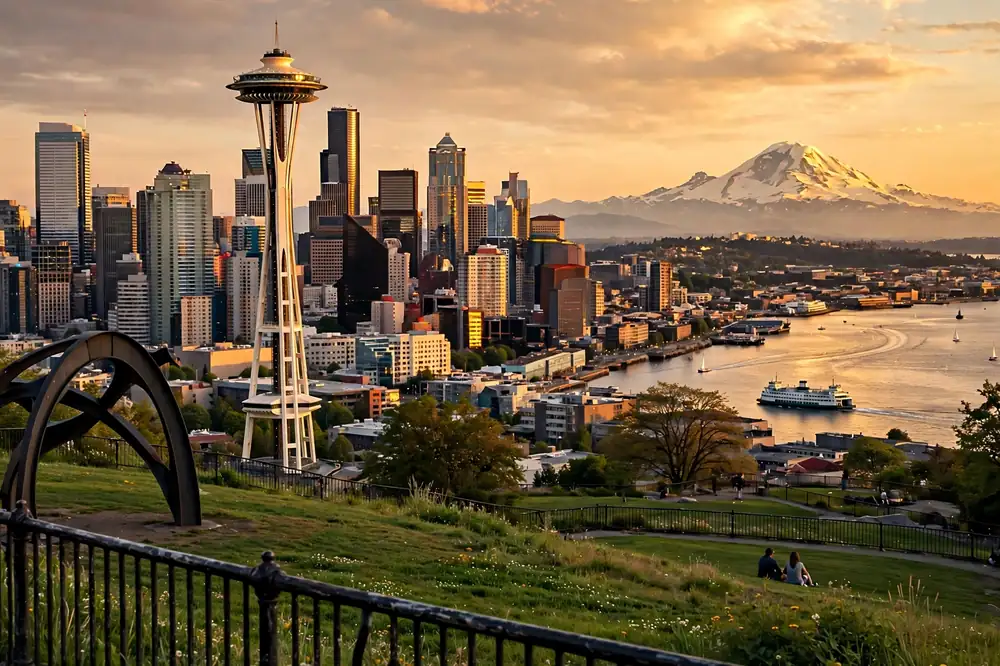
The Space Needle on Wikipedia is the symbol of Seattle, a 605-foot tower built for the 1962 World’s Fair, and the view from the top is the first thing you should do in the city — downtown, Elliott Bay, the Olympic Mountains, the Cascades and, on a clear day, Mount Rainier in one 360-degree sweep. The tower was rebuilt in 2018 with floor-to-ceiling glass and the Loupe, the world’s first rotating glass floor, so you can stand on glass 500 feet up and watch the city turn beneath you. The trap for first-timers is the price: tickets are dynamic, from about $35 to $55 for adults depending on the date and time, and you must book a timed entry in a 15-minute arrival window — the operator’s own FAQ example is $51.45 for an adult and $46.31 for a youth aged 5 to 12. Book the first slot of the day or a sunset slot, and allow about an hour. The tower opens at 9 a.m. on Saturdays and Sundays and at 10:30 a.m. on Tuesdays and Wednesdays, and it stays open late, so a clear evening is worth the wait. If the price stings, remember the view is the one thing in Seattle every guide agrees on — and the glass floor is the part you will talk about for years.
2. Eat your way through Pike Place Market
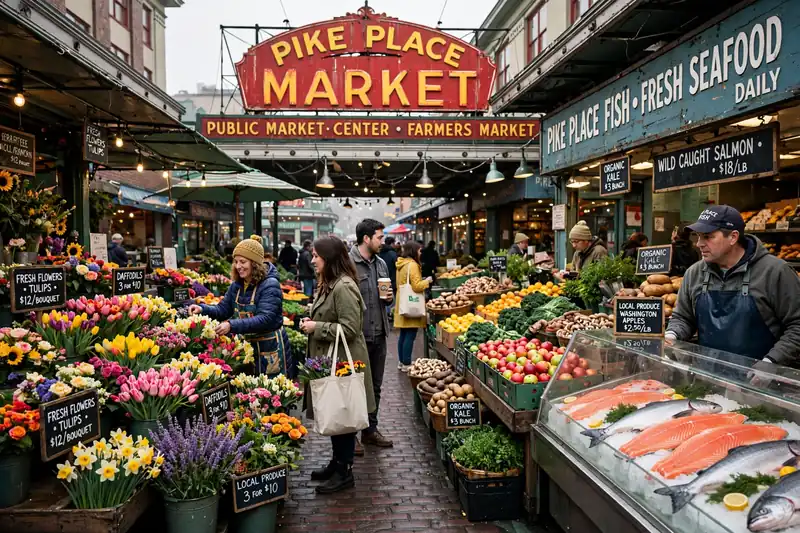
Pike Place Market on Wikipedia is the oldest continuously operating public market in the United States, open since 1907, and it is still a working market, not a tourist set — fishmongers throwing salmon, flower stalls selling huge bouquets for $10, bakers, cheesemongers and buskers on every level. The market is open daily from 9 a.m. to 6 p.m., closed only on Thanksgiving and Christmas, and the trick is to come at 9 a.m., before the cruise crowds arrive. Watch the fish throw at Pike Place Fish Market, eat Beecher’s Handmade Cheese mac and cheese, queue for a piroshky at Piroshky Piroshky, and walk down to the Gum Wall in Post Alley — a brick wall covered in chewed gum that is disgusting and unmissable in equal measure. Across the street at 1912 Pike Place is the first Starbucks, opened in 1971 — technically the original store stood a block away at 2000 Western Avenue from 1971 to 1976, so this is the oldest continuously operating Starbucks in the world, and the line outside proves it. It opens at 6 a.m. daily. From the market, the new Overlook Walk, opened in 2024, carries you straight down to the waterfront over the roof of the aquarium.
3. Walk through colour at Chihuly Garden and Glass
Chihuly Garden and Glass on Wikipedia is the most photographed museum in Seattle, and it earns it — a whole exhibition of Dale Chihuly’s glass, from the dark galleries of glowing chandeliers and sea forms to the Glasshouse, a 40-foot glass ceiling under which a huge red and yellow sculpture hangs like a frozen firework, to the garden outside, where glass flowers grow among real ones with the Space Needle rising behind them. It sits right next to the Space Needle at Seattle Center, so pair the two in one morning. Tickets start at about $35 for adults aged 13 to 64, and about $30 for seniors over 65 and children aged 5 to 12, with prices varying by date — book online, because the garden is at its best in the morning light and the timed slots go first. Allow an hour to 90 minutes. If you are buying several Seattle Center tickets, the Seattle CityPASS bundles the Space Needle, the Aquarium and three more attractions, including Chihuly, for $139 for an adult — usually the cheapest way to do the big three.
4. Lose an afternoon at the Museum of Pop Culture
The Museum of Pop Culture on Wikipedia — MoPOP, in the silver Frank Gehry building that looks like a smashed guitar — is the museum for anyone who grew up on music, movies, science fiction and video games. Inside are Nirvana’s smashed guitars and Kurt Cobain’s handwritten lyrics, the original Star Trek props, horror-movie artefacts, a fantasy wing with Game of Thrones and Lord of the Rings pieces, and a Sound Lab where you can play real instruments in a soundproof room. It is at 325 5th Avenue North at Seattle Center, next to the Space Needle. Admission is timed and priced by date: adults start at about $26.50 with plan-ahead pricing and typically run $28 to $36, youth aged 5 to 12 start near $17.50, seniors are around $24, and Washington residents get 15% off with ID. The museum is generally open from 10 a.m. to 5 or 6 p.m., opening at 8:30 a.m. on weekends. Allow two to three hours, and go in the morning — it fills up after 11 a.m. on weekends. The building alone is worth the ticket: Gehry designed it to look like a guitar being smashed, and it is the most argued-about building in Seattle.
5. Meet the sea otters at the Seattle Aquarium
The Seattle Aquarium on Wikipedia sits on Pier 59 on the downtown waterfront, and it got much bigger in 2024 — the new Ocean Pavilion opened on August 29, 2024, adding a huge tropical reef habitat with sharks, rays and a bowmouth guitarfish to the original Puget Sound exhibits. One ticket covers the whole campus: Pier 59, Pier 60 with its Underwater Dome, where salmon swim overhead, and the Ocean Pavilion across the plaza. The stars are the sea otters, the harbour seals, the giant Pacific octopus and the touch pools, where you can feel a sea star. The aquarium is open daily from 9:30 a.m. to 6 p.m., with last entry at 5 p.m., and it uses timed tickets with variable pricing: adults run about $48 to $53, children aged 4 to 12 about $36 to $40, and children 3 and under are free. Book a couple of weeks ahead for the cheaper end of the range, and allow two to three hours. It is also one of the best rainy-day picks in a city with plenty of grey afternoons, and it is fully indoors.
6. Ride the Seattle Great Wheel at dusk
The Seattle Great Wheel on Wikipedia is the tallest Ferris wheel on the West Coast, a 175-foot wheel at the end of Pier 57 on the waterfront that has turned since June 2012. The ride takes 12 to 20 minutes, usually three to five loops, in enclosed gondolas — and one of them has a glass floor, if your nerves are up to it. Tickets cost $23 for adults aged 12 to 64, $21 for seniors over 65, and $18 for children aged 3 to 11, with children 2 and under free; the glass-bottom VIP cabin is $50 per person. The wheel runs daily from about 11 a.m. to 10 p.m., staying open until 11 p.m. on Fridays and Saturdays, and no reservation is needed. Go at dusk, when the water turns gold and the city lights come on behind you — it is the best cheap thrill on the waterfront, and the view back across Elliott Bay to the skyline is the photo every visitor takes. Right beside it on the same pier is Wings Over Washington, an indoor flying theatre that is a good rainy-day backup.
7. Take the ferry to Bainbridge Island
Washington State Ferries on Wikipedia run the Seattle to Bainbridge Island ferry, and it is the best $11.35 you will spend in Seattle. The crossing takes about 35 minutes from Colman Dock, Pier 52, on the downtown waterfront, and the view back to the skyline — the Space Needle, the downtown towers, Mount Rainier behind them on a clear day — is the postcard shot. Here is the quirk most guides get wrong: walk-on passengers pay only in Seattle. An adult pays $11.35 at Colman Dock, and the ride back from Bainbridge to Seattle is free; seniors and riders with disabilities pay $5.65, and anyone 18 and under rides free. A car under 22 feet with its driver costs $20.25 each way. There are no reservations for walk-on passengers, and the boats run about 23 round trips on a weekday, roughly every 45 minutes to an hour. Winslow, the little town at the far terminal, is a five-minute walk — cafes, bookshops and a waterfront park — and two hours there is a perfect half-day trip. Check the live schedule the morning you go, because sailings sometimes cancel for crewing.
8. Go underground in Pioneer Square
The Seattle Underground on Wikipedia is the strangest tour in the city, and the funniest. After the Great Fire of 1889 burned Pioneer Square to the ground, the city rebuilt in brick and stone — and then raised the streets by a full storey to stop the flooding, leaving the original shopfronts buried below. Bill Speidel’s Underground Tour, starting at 614 First Avenue, takes you through those sunken passages for 75 minutes, past old storefronts, bank vaults and the city’s Victorian plumbing, with a guide who tells the whole story as comedy. Tours run from about $31 per person, and they are the best introduction to how Seattle became Seattle. Pioneer Square itself is the city’s oldest neighbourhood — Romanesque brick buildings, art galleries, the totem pole in the square, and the Smith Tower, the 1914 skyscraper that was the tallest building west of the Mississippi when it opened. Go in the morning, then walk to the waterfront for lunch. One warning: the tour involves stairs and uneven ground, and it is not suitable for anyone with limited mobility.
9. Watch the sunset from Kerry Park
Kerry Park on Wikipedia is a tiny park on Queen Anne Hill, and it holds the most famous view in Seattle: the whole downtown skyline across Elliott Bay, the Space Needle in the middle, and Mount Rainier rising behind it all on a clear day. It is free, it is open all day, and it is where every postcard and every Instagram shot of Seattle is taken. Go at sunset, when the light turns the glass towers gold and the mountain glows pink — but come early, because the small park fills up and the parking is tight. The honest catch is that Rainier only shows itself on clear days, and summer gives you by far the best odds; on a grey winter day you will see the skyline and the bay, which is still worth the trip. The park is a ten-minute drive or a steep walk from Seattle Center, and the 2 and 13 buses stop nearby. If you want the same view with a coffee in your hand, the cafes on Queen Anne Avenue are a five-minute walk away.
10. Watch the salmon climb at the Ballard Locks
The Hiram M. Chittenden Locks on Wikipedia — the Ballard Locks — are the most Seattle thing you can do for free. The locks join saltwater Puget Sound to freshwater Lake Union and Lake Washington, raising and lowering boats about 20 feet between the two, and you can stand on the walkway and watch yachts, fishing boats and kayaks go through. Beside them is the fish ladder, where salmon climb upstream to spawn — the best months are June to September, when the viewing windows let you watch them swim past underwater. The locks are free and open daily, the gardens around them are lovely, and the whole visit takes about an hour. Ballard itself is worth the rest of the afternoon: the Sunday farmers’ market is one of the best in the city, the old main street is full of breweries and boutiques, and the Nordic Museum tells the story of the Scandinavian fishermen who built the neighbourhood. Take the bus from downtown — the locks have a car park, but it fills up on summer weekends.
11. Escape to Discovery Park
Discovery Park on Wikipedia is Seattle’s largest park — 534 acres of forest, meadow and beach on the Magnolia Bluff — and it feels like leaving the city entirely. There are about 12 miles of trails through second-growth forest, a beach at the foot of the bluff, and the West Point Lighthouse, built in 1881, at the southern tip. The loop trail takes about two hours, and the beach trail down to the lighthouse is the best walk in the city on a clear day, with the Olympic Mountains across the water. The park is free and open from 4 a.m. to 11:30 p.m., and the visitor centre has maps and a small exhibit on the site’s history as Fort Lawton. Come in the morning, bring water and good shoes, and remember the walk back up from the beach is steep. It is also one of the best places in the city to see bald eagles, and in late summer the blackberries along the trails are free for the picking.
12. Meet the Fremont Troll
The Fremont Troll on Wikipedia is an 18-foot concrete troll clutching a real Volkswagen Beetle, crouching under the Aurora Bridge in the Fremont neighbourhood — and it is exactly as weird as it sounds. It was built in 1990, when the neighbourhood held a competition to clean up the space under the bridge, and it has been Seattle’s strangest landmark ever since. It is free, it is outdoors, and it takes five minutes — climb on it, take the photo, and move on. Fremont itself is worth an hour: the neighbourhood calls itself the “Center of the Universe”, and it has a Sunday market, a statue of Lenin, a rocket on top of a building, and some of the best cafes in the city. The troll is a short walk from the Fremont Sunday Market and from Gas Works Park across the water. It is the kind of stop that makes a trip memorable precisely because no other city has one.
13. See a Concorde at the Museum of Flight
The Museum of Flight on Wikipedia is one of the largest air and space museums in the world, and it is the best museum in Seattle that most first-timers skip. It sits at Boeing Field, south of downtown, and it holds more than 150 aircraft — a Concorde, the first Air Force One jet, a Boeing 747 you can walk through, and the Space Shuttle trainer — plus a tower with a view over the airfield where planes still land. Admission is $29 for adults, $25 for seniors aged 65 and over, and $21 for youth aged 5 to 17, with children 4 and under free, and the museum is open daily from 10 a.m. to 5 p.m., closed on Thanksgiving and Christmas Day. It is free on the first Thursday of the month from 5 to 9 p.m., one of Seattle’s Free First Thursdays. Allow two hours for the main halls and four if you love aviation. Get there on the Link light rail to the Rainier Beach station and a short bus ride, or by car — parking is free.
14. Walk under the cherry blossoms at the University of Washington
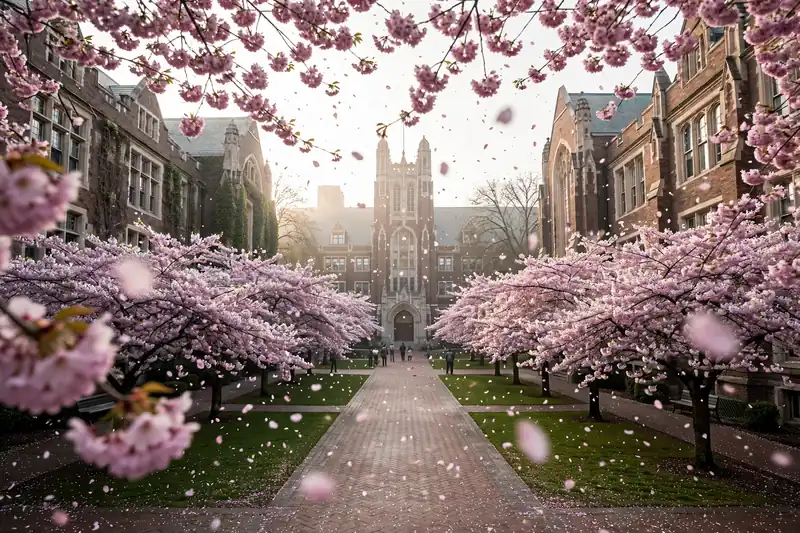
The University of Washington on Wikipedia has the most beautiful two weeks in Seattle. The Quad — the historic heart of the campus — is lined with Yoshino cherry trees, planted in 1939, that bloom for just a week or two in late March and early April, turning the whole square pink. It is free, it is open to everyone, and on a sunny bloom weekend it is the busiest place in the city, with thousands of people under the trees. Come on a weekday morning if you can, and check the university’s bloom tracker before you go — the peak moves by a week or two each year depending on the weather. The campus itself is worth a walk: the Suzzallo Library looks like a cathedral, the Drumheller Fountain frames Mount Rainier on a clear day, and the light rail stops right on campus at the University of Washington station. If you miss the Quad bloom, the cherry trees at the Washington Park Arboretum bloom a little later and are almost as pretty with a fraction of the crowds.
15. Spend a morning at Woodland Park Zoo
Woodland Park Zoo on Wikipedia is Seattle’s 92-acre zoo, and it is one of the best in America — not for the number of animals, but for how they live. The habitats are built to look like the real thing: a tropical rainforest, an African savanna, a penguin exhibit with underwater viewing, and a gorilla forest that won awards when it opened. There are more than 300 animal species, keeper talks through the day, and a Zoomazium indoor play space for children under eight. Admission is about $27 for adults in 2026, with a 10% discount if you buy at least four days ahead, and children 3 and under are free. The zoo is open daily from 9:30 a.m. to 4 p.m., with extended hours from May through Labor Day, and it is free on some community days — check the zoo’s site. Allow three hours, and go in the morning when the animals are most active. It sits in the Phinney Ridge neighbourhood, a short bus ride from downtown, and the Rose Garden next door is free and lovely in summer.
16. Walk the Olympic Sculpture Park for free
Olympic Sculpture Park on Wikipedia is the Seattle Art Museum’s outdoor park on the waterfront — nine acres of paths, lawns and huge sculptures, free and open every day. The stars are Alexander Calder’s red Eagle, Richard Serra’s rusted steel Wake, and Claes Oldenburg’s Typewriter Eraser, all set against the water and the Olympic Mountains. The park runs from the waterfront up to the city, and the walk through it is one of the best free half-hours in Seattle — especially at sunset, when the sculptures turn black against the sky. It is also the start of the waterfront walk south to Pike Place Market and the aquarium, or north to Myrtle Edwards Park and the grain terminal. The park is fully accessible, dogs are welcome on leads, and the PACCAR Pavilion has a small cafe and free Wi-Fi. If you like the park, the main Seattle Art Museum downtown is free on the first Thursday of the month.
17. Fly a kite at Gas Works Park
Gas Works Park on Wikipedia is the park that should not exist: a former coal gasification plant on the north shore of Lake Union, kept as ruins — rusted towers, pipes and boilers — and turned into a public park with the best skyline view in the city. The great lawn on the hill is the place to be on a summer evening, with kites in the air, picnics on the grass, and the downtown towers across the water turning gold. It is free, it is open daily, and it is the classic Seattle picnic spot — bring food from the Ballard farmers’ market or a bakery in Fremont, which is a short walk away. The park is also the finish line of the Burke-Gilman Trail, and on July 4 it is one of the best places in the city to watch the fireworks over Lake Union. The industrial ruins are fenced off in places, so keep to the paths, and the hill is steep — come by bus or bike rather than driving, because parking is limited.
18. See the skyline from the water on an Argosy cruise
Argosy Cruises has run sightseeing boats on Elliott Bay since 1949, and its one-hour Harbor Cruise is still the best way to see Seattle from the water. The boat loops around Elliott Bay from Pier 55 on the waterfront, with a live guide telling the story of the working harbour — the container terminals, the ferries, the grain ships — and the skyline from the water is the view most visitors never get. Tickets for the one-hour cruise run from about $37 to $43 for an adult, and the longer two-hour Locks Cruise, which goes through the Ballard Locks to Lake Union, costs about $55 to $70. Cruises run several times a day, more often in summer, and the sunset departures sell out first, so book a few days ahead in July and August. The boats have indoor seating and a snack bar, so it works in the rain too. If you are buying the Seattle CityPASS, the Harbor Cruise is one of the choices it includes. Dress warmer than you think — it is always colder on the water than on the pier.
19. See the Hammering Man at the Seattle Art Museum
The Seattle Art Museum on Wikipedia — SAM — is downtown’s big art museum, and it is the one to visit if you only visit one. The collection runs from Native American and Pacific Northwest art to European old masters and contemporary work, and the building itself is part of the show: the Hammering Man, a 48-foot steel worker, hammers away outside the front door, moving his arm up and down all day. The museum is free on the first Thursday of the month, one of Seattle’s Free First Thursdays, when several of the city’s best museums open their doors for nothing. SAM also runs the Olympic Sculpture Park on the waterfront and the Seattle Asian Art Museum in Volunteer Park, and your ticket covers all three on the same day. Allow two hours for the downtown building, and check what is on — the special exhibitions change, and some need a separate timed ticket. The museum sits at 1300 First Avenue, two blocks from Pike Place Market, so it pairs naturally with a market morning.
20. Feel the noise at Lumen Field
Lumen Field on Wikipedia is the loudest stadium in American sport, and the best night out in Seattle if you time it right. It is home to the Seahawks and the Sounders, and the crowd here was once measured at 137.6 decibels — louder than a jet engine — because the roof is designed to trap the noise and throw it back onto the field. In the summer of 2026 it hosted the biggest event in the city’s history: six FIFA World Cup matches at Lumen Field, from June 15 to July 6, including the United States beating Australia 2–0 on June 19, Juneteenth, and the Round of 16 tie on July 6, when Belgium beat the United States 4–1 in front of a sell-out crowd. About 401,000 fans came through the gates across the six match days, and during the tournament the stadium was called Seattle Stadium. Even without a match, the stadium tour is worth it for the view from the upper deck, and the stadium sits in the Stadium District, a short walk from Pioneer Square. Check the schedule before you go — a Seahawks or Sounders match is the single best evening in Seattle, and tickets sell fast.
Seattle in 3 days — a ready-made itinerary
Three days is the sweet spot for a first trip to Seattle: day one for the Market and the waterfront, day two for Seattle Center and the neighbourhoods, day three for the water and the parks. A fourth day buys you a ferry to Bainbridge Island and the Museum of Flight, or a day trip to Mount Rainier. This itinerary assumes you have booked your timed tickets a few days ahead — the Space Needle, Chihuly and the Aquarium all use timed entry, and the morning slots go first.
| Day | Morning | Afternoon | Evening |
|---|---|---|---|
| Day 1 — The Market and the waterfront | Pike Place Market at 9 a.m., Gum Wall, first Starbucks | Seattle Aquarium, then the Great Wheel | Argosy Harbor Cruise at sunset, dinner on the waterfront |
| Day 2 — Seattle Center and the neighbourhoods | Space Needle first slot, then Chihuly | MoPOP, then Kerry Park | Fremont Troll and dinner in Fremont |
| Day 3 — The water and the parks | Ferry to Bainbridge Island | Ballard Locks and Ballard | Discovery Park at golden hour, dinner in Ballard |
Day 1 — The Market and the waterfront
Start at Pike Place Market at 9 a.m., when the stalls are setting up and the crowds have not arrived — the fish throw, Beecher’s mac and cheese, a piroshky, and the Gum Wall, then the first Starbucks across the street. Walk down the Overlook Walk to the waterfront for the Seattle Aquarium, which needs two to three hours, and then the Great Wheel, which is best at dusk. In the evening, take the Argosy Harbor Cruise at sunset for the skyline from the water, and eat on the waterfront — the crab and the salmon are the point of being here. It is a long day on foot, about four miles, but almost all of it is flat along the waterfront. If it rains, the market and the aquarium are both indoors, so the day still works.
Day 2 — The museums and the neighbourhoods
Book the first timed slot at the Space Needle and give it an hour, then walk next door to Chihuly Garden and Glass for the morning light in the garden. After lunch, cross to MoPOP and give it two to three hours — the music and science-fiction wings deserve unhurried time. In the late afternoon, take the bus up Queen Anne Hill to Kerry Park for the sunset view over the skyline, then drop into Fremont for dinner — the neighbourhood’s restaurants and bars are the best in the city for an unplanned evening, and the Troll is on the way. If you still have energy, the Seattle Center Monorail runs back downtown in two minutes for $4. Swap in the Museum of Flight for MoPOP if you love aviation — it needs a half day of its own.
Day 3 — The water and the parks
Start early at Colman Dock for the ferry to Bainbridge Island — the 35-minute crossing is the best view of the skyline you will get, and Winslow is a perfect two-hour wander. Back in Seattle, take the bus to the Ballard Locks for the salmon ladder and the boats going through, then spend the afternoon in Ballard — the breweries, the boutiques, the Sunday market if it is Sunday. In the late afternoon, go to Discovery Park for the loop trail and the beach at golden hour, with the Olympics across the water. Finish with dinner in Ballard, which has the best casual restaurants in the city. If you have a fourth day, spend it at the Museum of Flight in the morning and the University of Washington campus in the afternoon, or take the ferry to Bremerton for a longer day on the water.
Best time to visit Seattle
| Season | Weather | Crowds | Best for |
|---|---|---|---|
| Spring (Mar–May) | 48–66°F, showers, clearing | Low–moderate | Cherry blossoms, fewer crowds, lower prices |
| Summer (Jun–Aug) | 70–77°F, dry and sunny | Peak | Best weather, long days, ferries, outdoor dining |
| Autumn (Sep–Nov) | 53–71°F, rain returns | Moderate, then low | September value, fall colour, salmon run |
| Winter (Dec–Feb) | 37–50°F, grey drizzle | Quiet, cheapest hotels | Museums, coffee culture, low prices, holiday lights |
July to September is the best time to visit Seattle, with dry, sunny days, highs around 75 to 77°F, daylight until nearly 10 p.m. and Mount Rainier visible most days. Seattle gets about 36.5 inches of rain a year, spread over about 153 rainy days — less total rain than New York or Miami, but far more grey days, and the rain is persistent light drizzle rather than heavy downpours. July is the driest month, with about 0.6 inches of rain and only around 3 rainy days; November is the wettest, with about 5.8 inches and 18 rainy days. September is the value pick: the summer weather holds, the crowds leave after Labor Day and hotel rates drop. Late March to early April brings the cherry blossom at the University of Washington Quad, the most beautiful fortnight in the city. Winter is the cheapest time to come, with cold drizzle and empty museums, and the coffee culture, bookshops and indoor markets carry the city. One thing to know: summer hotel rates can double, and the timed tickets for the Space Needle and the Aquarium sell out days ahead in July and August, so book early.
Where to stay in Seattle
| Neighbourhood | Best for | Budget per night |
|---|---|---|
| Downtown / Pike Place | First-timers, walking to the Market | $200–$400 |
| Capitol Hill | Restaurants, bars, nightlife | $150–$300 |
| Queen Anne | Quiet streets, Kerry Park, families | $180–$350 |
| Ballard | Breweries, Sunday market, local feel | $150–$300 |
| Fremont | Quirky, cafes, Gas Works Park | $150–$280 |
| University District | Budget, campus, cherry blossom | $120–$250 |
| West Seattle / Alki Beach | Beach, views, quieter pace | $140–$280 |
| Bellevue (Eastside) | Business, new hotels, light rail | $180–$350 |
Stay near a light rail station and you can get anywhere in the city in 20 minutes, so the neighbourhood matters more than the exact address. First-timers should stay downtown or near Pike Place Market, within walking distance of the waterfront — you will save an hour a day on transport. Capitol Hill has the best restaurants and bars and the liveliest evenings, and it is the centre of LGBTQ+ Seattle. Queen Anne is the best choice for families, with quiet streets and Kerry Park on the doorstep. Ballard and Fremont are the best places to stay if you want to feel like a local, with breweries, cafes and markets instead of hotels. If your budget is tight, stay in the University District — hotels are cheaper, the light rail reaches downtown in ten minutes, and the cherry blossom is on your doorstep in spring. Hotel prices in Seattle swing wildly with the seasons and with cruise ships and conventions: expect $200 to $400 a night for a mid-range room in July and August, and $120 to $250 in winter. Since the 2 Line opened across Lake Washington in March 2026, Bellevue is now a 26-minute light rail ride from downtown, and its new hotels are a genuine alternative.
Getting around Seattle
Seattle is one of the easiest American cities to get around without a car, and you should not rent one — parking downtown costs $30 to $50 a night, the hills are steep, and the light rail is faster. The backbone is the Link light rail: the 1 Line runs from the airport through downtown to Lynnwood, and the 2 Line, which opened across Lake Washington on March 28, 2026, now connects Seattle with Bellevue and Redmond. The fare is a flat $3 for adults, and anyone 18 and under rides free; seniors and riders with disabilities pay $1, and a regional day pass is $6. Pay with an ORCA card — the regional transit card, which costs $3 — or, since February 23, 2026, by tapping a contactless bank card or phone directly at the reader. The light rail runs on proof of payment, so tap before you board. From the airport, the 1 Line takes about 38 minutes to downtown Westlake station for $3, which beats any taxi. King County Metro buses are also $3 for adults, with free transfers within two hours. The Seattle Center Monorail runs from Westlake Center to Seattle Center in about two minutes for $4 for adults and $2 for youth aged 6 to 18, and it is the fastest way to the Space Needle. The ferries are part of the system too: the Bainbridge ferry is $11.35 for an adult walk-on, paid only in Seattle. The city is also very walkable downtown, but the hills are real — Queen Anne and Capitol Hill will test your legs — and the bus is your friend. One honest warning: the light rail is not 24 hours, and the last trains leave downtown around midnight, so plan your late nights around that.
Seattle food you have to try
Seattle is one of the best food cities in America, and it is also one of the most international — the city has the largest Ethiopian community outside Ethiopia, a big Vietnamese community, and Puget Sound on its doorstep. You can eat very well for $15 to $25 a person, and Pike Place Market is the best place to try several things at once.
Cedar-plank salmon on the waterfront
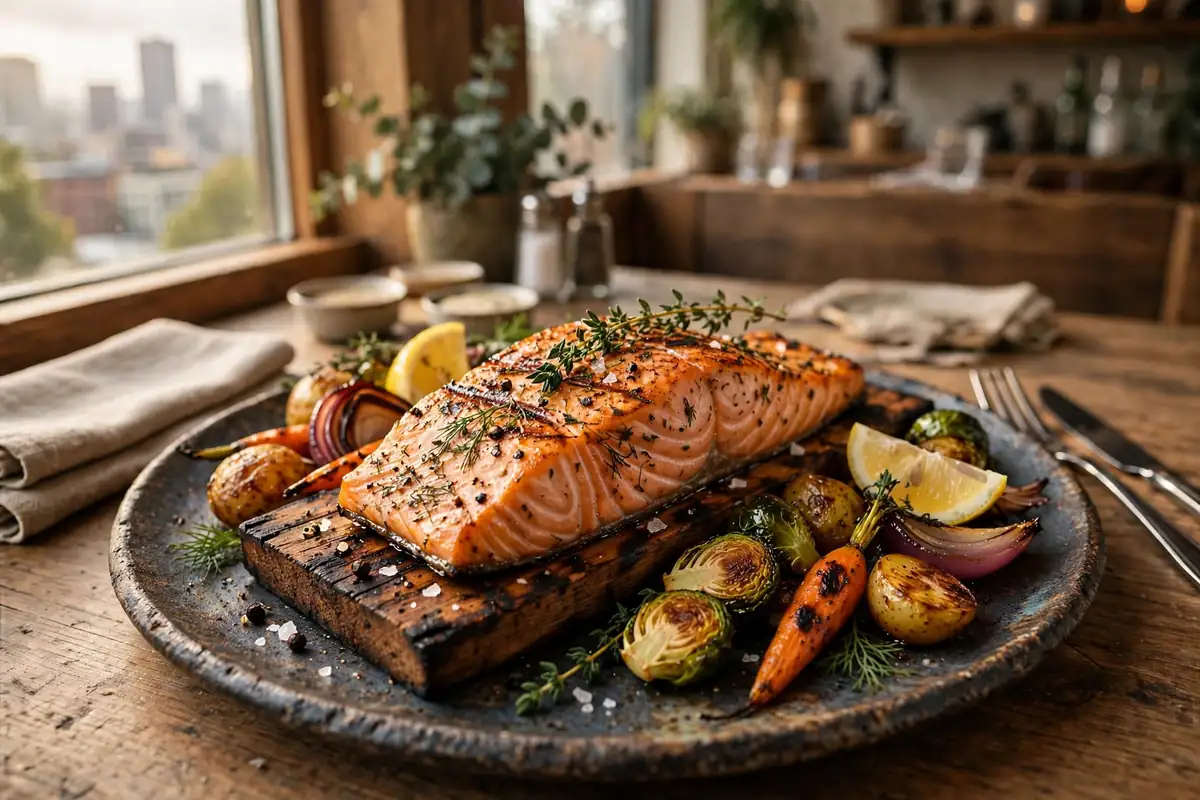
The dish Seattle is known for is cedar-plank salmon: a wild salmon fillet roasted on a cedar plank, which smokes the fish as it cooks and gives it a flavour you cannot get any other way. The place to eat it is on the waterfront, where the fish comes off the boats in the morning — the restaurants along Alaskan Way and at the Market all do it, and a good fillet costs about $28 to $38. Order it with local vegetables and a glass of Washington wine, and ask whether the salmon is wild or farmed — wild Copper River salmon, in season from May to September, is the one to pay for. The salmon run peaks in late summer, when the fish are coming up the rivers and the Ballard Locks fish ladder is full of them. If you want the full experience, buy a fillet at Pike Place Market in the morning and cook it yourself that evening — the fishmongers will tell you exactly how.
Clam chowder in a bread bowl at Pike Place Market
The second dish to try is the clam chowder, and the place to eat it is Pike Place Chowder in the market, which has won national awards for its New England-style chowder served in a sourdough bread bowl. It costs about $12 to $15, it is the best lunch in the market, and the line moves fast. The chowder is thick, creamy and full of clams, and the bread bowl is the point — eat the soup, then eat the bowl. If the line is too long, the other chowder stands in the market are nearly as good, and the seafood restaurants on the waterfront all serve their own version. Go at 11 a.m., before the lunch rush, and eat it standing at the market’s tables with the bay in front of you.
Seattle-style teriyaki
The third dish is the one most visitors never hear about: Seattle-style teriyaki. It arrived with Japanese immigrants and became the city’s fast food — grilled chicken or beef, glazed in a sweet-savoury sauce, served over rice with a small salad, for about $12 to $15 at hundreds of small shops across the city. It is not fancy, and that is the point: it is the lunch Seattle actually eats, and the best shops are the plain ones in the International District and the University District, where the grill has been running for decades. Order the chicken teriyaki with extra sauce, and eat it at the counter. It is the cheapest great meal in the city, and it is the dish that tells you Seattle is a Pacific city, not just an American one.
Free things to do in Seattle
Seattle is one of the best free cities in America, and you could spend three days here without paying a dollar for attractions. The Olympic Sculpture Park, Kerry Park, Gas Works Park, Discovery Park, the Ballard Locks and the Fremont Troll are all free, Pike Place Market is free to wander, and the ferry to Bainbridge Island is free for anyone 18 and under. The best free things are the sunset from Kerry Park, the salmon ladder at the Ballard Locks, the sculpture park at golden hour, the beach at Discovery Park, and the First Thursday of the month — when the Seattle Art Museum, the Seattle Asian Art Museum, the Burke Museum and the Museum of Flight all open for free. The Central Library downtown, a glass and steel building by Rem Koolhaas, is free to walk through and is one of the most photographed buildings in the city. The waterfront itself is free now that the new Waterfront Park has opened — about 20 acres of new public space along Elliott Bay, celebrated with a grand opening in September 2025, with Pier 62 and the best sunset benches in town. Even the views are free: the steps of the Space Needle’s grounds, the top of Queen Anne Hill, and the ferry deck all cost nothing. The only thing you pay for is the occasional timed ticket — and the coffee, which is worth it.
Frequently asked questions
How many days do I need in Seattle?
Three to four days is the sweet spot for a first trip. Three days covers the Market, the waterfront, Seattle Center and one ferry trip. A fourth day buys you the Museum of Flight and the University of Washington, or a day trip to Mount Rainier. Two days is possible if you skip the neighbourhoods and focus on downtown, but you will be rushing. Five days lets you add a second ferry day, a proper food crawl, and a hike in the Cascades.
Do I need tickets for the Space Needle?
Yes. The Space Needle uses timed entry in 15-minute arrival windows, and you must book a date and time in advance — tickets are dynamic, from about $35 to $55 for adults, and the morning and sunset slots sell out first in summer. Buy online a few days ahead, and arrive in your window. The same applies to Chihuly Garden and Glass, MoPOP and the Seattle Aquarium, which all use timed tickets. Pike Place Market, the parks and the ferries need no booking at all.
When is cherry blossom season in Seattle?
Peak bloom — when the Yoshino cherry trees on the University of Washington Quad are fully open — usually falls in late March or early April, and lasts one to two weeks. The trees were planted in 1939, and the Quad is free and open to everyone, but it is the busiest place in the city on a sunny bloom weekend, so go on a weekday morning if you can. Check the university’s bloom tracker before you go, because the peak moves by a week or two each year. If you miss the Quad, the cherry trees at the Washington Park Arboretum bloom a little later.
Is Seattle safe for tourists?
Downtown, Pike Place Market, the waterfront, Seattle Center, Capitol Hill, Ballard, Fremont and Queen Anne are all safe for tourists during the day and in the evening, with plenty of people around. Use the same common sense you would in any big city: keep valuables out of sight, avoid empty streets late at night, and be careful around Pioneer Square and parts of Third Avenue after dark. The light rail is safe at all hours it runs, and rideshares are cheap and plentiful after midnight, when the trains stop.
What is the best area to stay in Seattle?
For first-timers, downtown or near Pike Place Market, within walking distance of the waterfront. For restaurants and nightlife, Capitol Hill. For families, Queen Anne, with quiet streets and Kerry Park. For charm and a local feel, Ballard or Fremont. For the best value, the University District, where hotels are cheaper and the light rail reaches downtown in ten minutes. Wherever you stay, pick a hotel within five minutes of a light rail station.
Can I visit Seattle in the rain?
Yes — and you probably will, because Seattle has about 153 rainy days a year. The rain is usually light drizzle rather than heavy downpours, and the city is built for it: Pike Place Market, the Aquarium, MoPOP, Chihuly and the museums are all indoors, the light rail is covered, and the coffee is best when it is grey outside. Bring a waterproof jacket, not an umbrella — locals do not use them — and save the outdoor viewpoints for the clearest hours of the day. July and August are the driest months, with only about 3 or 4 rainy days each.
Further reading — Wikipedia and Reddit
Seattle on Wikipedia has the full history of the city, from its founding in 1851 to the present day. The Space Needle on Wikipedia covers the tower, the 1962 World’s Fair and the 2018 rebuild in detail. The r/Seattle subreddit is the city’s active local community, with daily threads on what to do, where to eat and what is happening this weekend — it is the best place to ask a specific question before you travel. No Quora link is included here because no Seattle-specific Quora thread could be verified as live.
Your Seattle trip, in one paragraph
Seattle is the rare city where the best day costs $11.35 — the ferry across Puget Sound — and three days is enough to see it properly if you book your timed tickets a few days ahead and stay near a light rail station. Come in July or September, walk the Market in the morning, watch the sunset from Kerry Park, eat cedar-plank salmon on the waterfront, and save a morning for the Ballard Locks. If this guide has whetted your appetite for American city breaks, our other guides cover the same ground in Chicago, Nashville, Los Angeles, Orlando, Miami, San Diego, Denver, Savannah, Dallas, Charleston, San Francisco, Myrtle Beach, Las Vegas, San Antonio, London, Portland, Pigeon Forge, Puerto Rico, Atlanta, Phoenix, Paris, Maui, Key West, Colorado Springs, Sedona, Chattanooga, Palm Springs, St Louis, Tokyo, Japan, Kansas City, Tennessee, Branson, Florida, Amsterdam, Montreal, Honolulu, Fort Lauderdale, Toronto, Aruba, Charlotte, Indianapolis, New Orleans, Destin, Santa Barbara, Mexico City, Arizona, Osaka, Minneapolis, Pittsburgh, California, Asheville, Costa Rica, Hawaii and Washington DC.

About the Author