Things to Do in Chicago: 20 Best Attractions, Itinerary & Tips (2026 Guide)
20 Best Attractions, a 3-Day Itinerary, Where to Stay, and the Food You Cannot Miss
Quick Info
Best for: First-time visitors, families, food lovers and architecture fans
Best time: May–June and September–October
How long: 3 full days (4–5 days for museums and neighbourhoods)
Budget: Many top sights are free; the architecture river cruise costs roughly $45–$57
Don’t miss: Cloud Gate (The Bean), the architecture river cruise, deep-dish pizza
Chicago is a city that rewards you for looking up. The architecture is world-famous, the lake looks like an ocean, the museums can fill a whole day each, and the food alone is worth the trip. The good news for a first-time visitor is that most of the famous sights sit close together downtown and along the river and lakefront, so you can see a lot without spending your trip in transit.
This guide gives you the 20 best things to do in Chicago in a sensible order, a ready-made 3-day itinerary, honest advice on when to go, where to stay and how to get around, and the three foods you have to try before you leave. Prices and hours change, so every price in this guide is marked as approximate — always check the official website before you visit. Travellers also share their favourite picks in Quora answers from locals.
Chicago at a glance
| Question | Short answer |
|---|---|
| How long do you need? | 3 full days for the highlights; 4–5 days if you want museums and neighbourhoods without rushing. |
| Best area for a first trip | The Loop, River North or the Magnificent Mile — walkable and on the train lines. |
| One thing to book early | The architecture river cruise and observation-deck tickets on weekends. |
| One thing that is free | Millennium Park and Cloud Gate — free, and open daily from 6am to 11pm. |
| Do you need a car downtown? | No. Walking plus the CTA ‘L’ trains cover the main sights. |
For background before you go, the Wikipedia entry on Chicago covers the city’s history, neighbourhoods and geography in depth, and its Cloud Gate page explains how The Bean was built — both are linked in Further reading at the end of this guide.
The 20 best things to do in Chicago
The list starts with the experiences that define Chicago and that first-time visitors should protect time for, then moves into neighbourhoods, culture and sport. If you only have two days, do numbers 1 to 10. If you have three or more, work through the rest at a slower pace.
1. See Cloud Gate and Millennium Park first
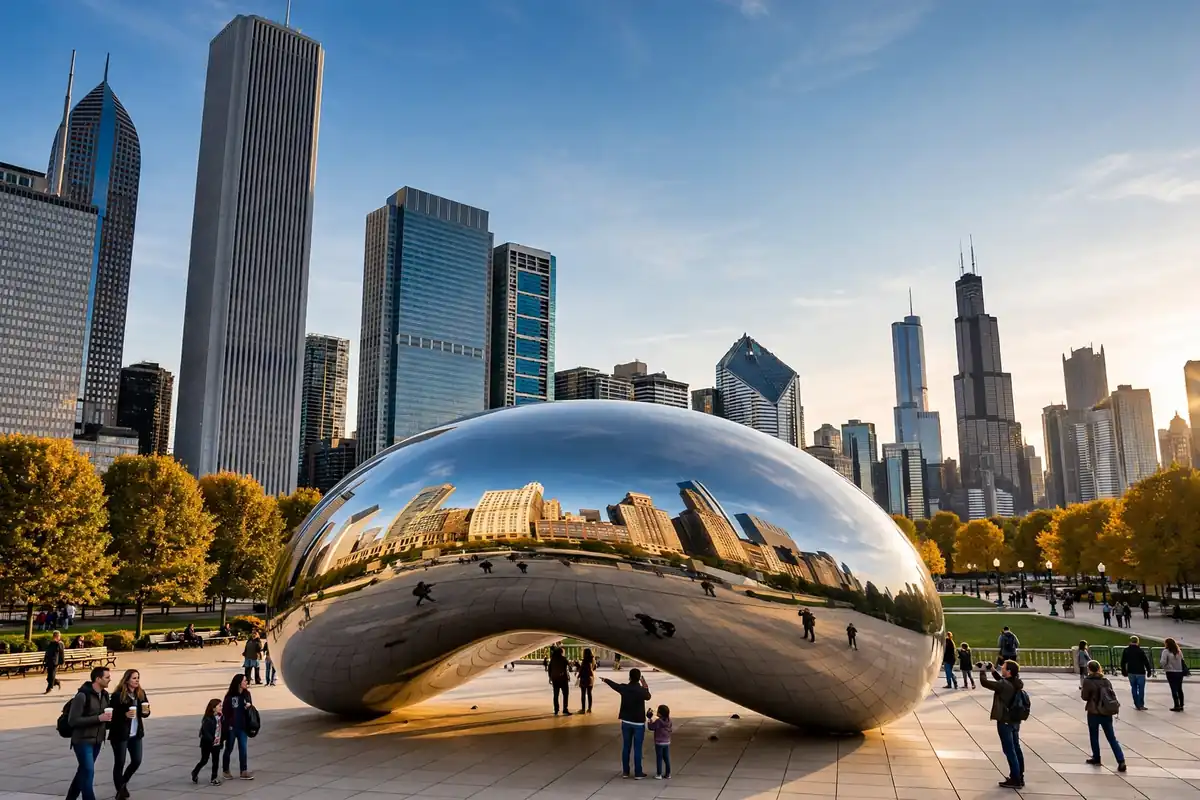
Start where almost every Chicago trip starts: Millennium Park in the Loop. Its centrepiece is Cloud Gate, the polished stainless-steel sculpture everyone calls The Bean. Walk around it, walk under it, and take the classic photo of the skyline reflected in its curved surface. The park is also home to the Crown Fountain, the Jay Pritzker Pavilion and the Lurie Garden, so give it more than a five-minute photo stop.
Practical tip: Millennium Park is free and open daily from 6am to 11pm (check before visiting). Go before 9am for photos without a crowd, then return in the evening when the skyline is lit.
2. Take an architecture river cruise — Chicago’s signature experience
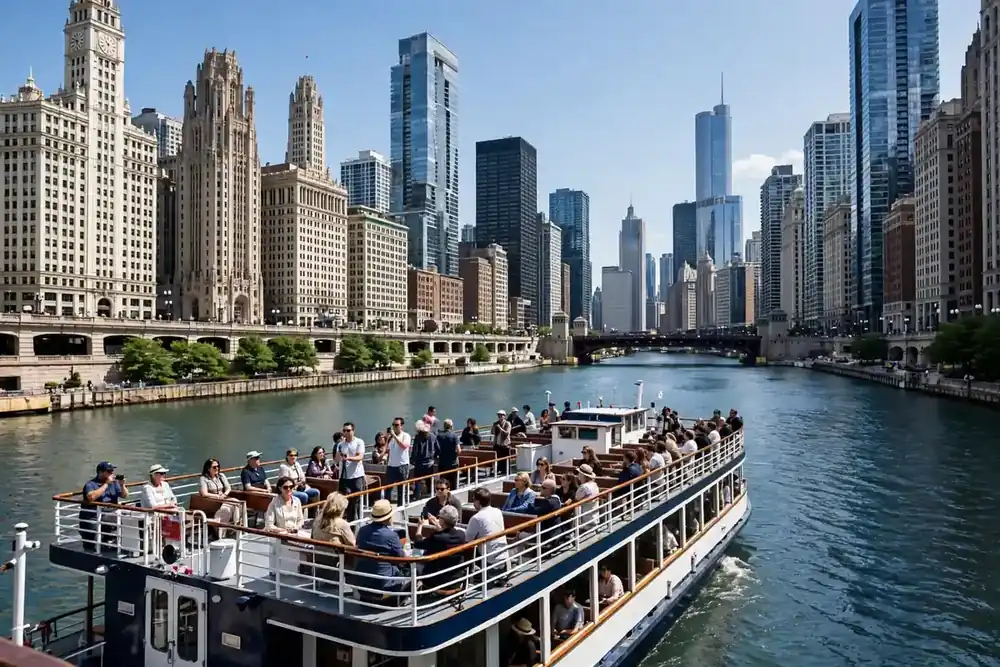
If you do only one paid tour in Chicago, make it this one. Chicago rebuilt itself after the Great Fire of 1871 and became the birthplace of the skyscraper, and the easiest way to understand that story is from the water. On a guided cruise along the Chicago River, a docent points out landmark towers, explains the different architectural styles, and tells the stories you would walk straight past on the street.
Practical tip: Cruises cost roughly $45–$57 per adult and run seasonally, roughly April to November — book online in advance, especially for weekends, and sit on the top deck. Prices are approximate; check before visiting.
3. Spend half a day at the Art Institute of Chicago
The Art Institute of Chicago, on Michigan Avenue next to Millennium Park, is one of the great art museums of the United States. Even visitors who do not normally enjoy museums recognise many of its most famous works, and the Impressionist collection alone is worth the ticket. Plan at least three hours, pick the galleries you care about most from the map at the entrance, and do not try to see everything in one visit.
Practical tip: Admission is about $32 for an adult, and children under 14 enter free — prices are approximate, so check before visiting. Go on a weekday morning for the quietest galleries.
4. Walk the Chicago Riverwalk
The Riverwalk turns the south bank of the Chicago River into one long, free, waterside promenade through downtown. You pass under the city’s famous bridges, watch the tour boats go by, and find cafés and wine bars where you can sit with the towers above you. It connects naturally with the cruise, the Loop and the Magnificent Mile, so it works as a route as much as a destination.
Practical tip: Walk it in the late afternoon and stay for dinner by the water. It is also the best free way to photograph Chicago architecture at street level.
5. Step out onto the Ledge at Skydeck Chicago, Willis Tower
Skydeck sits on the 103rd floor of Willis Tower — still known to many Chicagoans by its former name, Sears Tower. The view stretches across the city grid and Lake Michigan, but the moment everyone remembers is The Ledge: glass boxes that extend out from the side of the building, with the street far below your feet.
Practical tip: Tickets are roughly $33–$45 — approximate, so check before visiting, and book a timed slot online. Choose a clear day; in Chicago, visibility is everything.
6. Ride the Centennial Wheel at Navy Pier
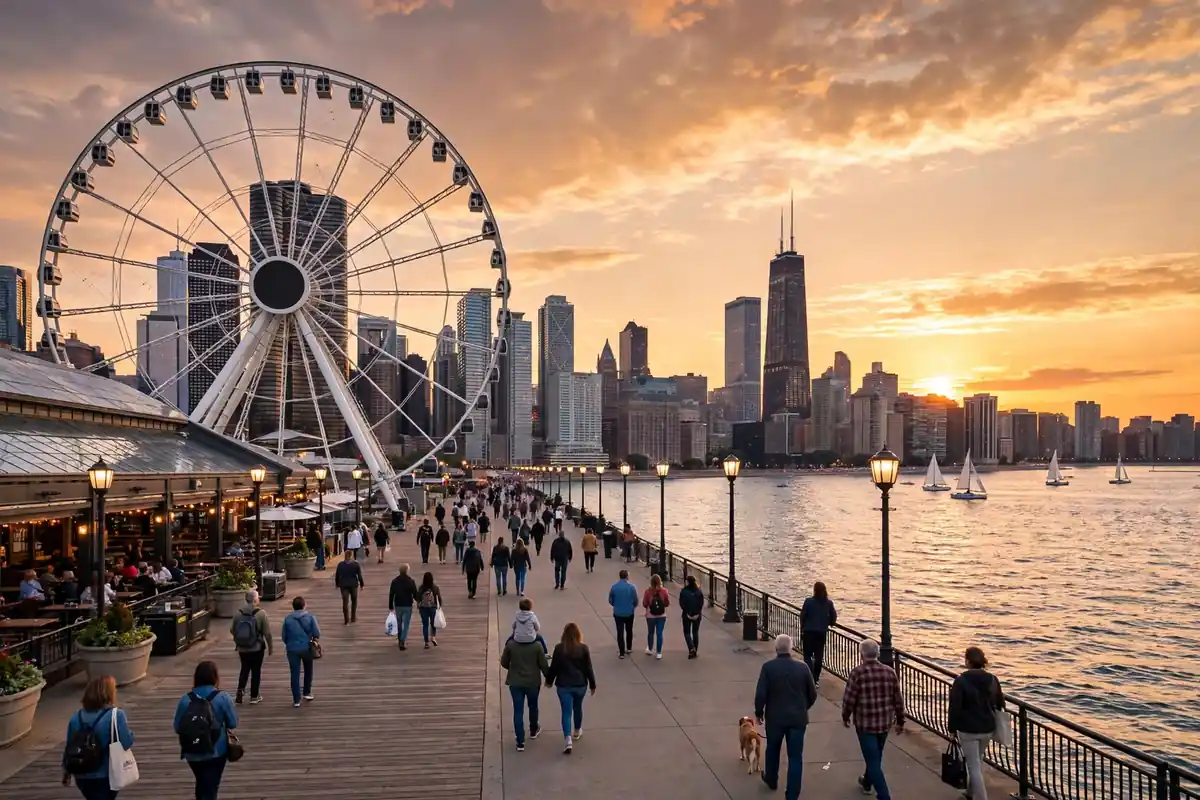
Navy Pier stretches out into Lake Michigan and has been Chicago’s lakefront playground for generations. Ride the Centennial Wheel for skyline-and-lake views, stroll the pier, catch a show at the Chicago Shakespeare Theater, or simply sit and watch the boats. Entry to the pier itself is open to walkers, while rides and attractions are ticketed separately.
Practical tip: Come in the evening for the best light over the skyline, and check the pier’s official calendar before you go — events and seasonal fireworks change the atmosphere completely.
7. Get the second great view from 360 CHICAGO
Chicago has two famous observation decks, and they give you two different cities. 360 CHICAGO sits on the 94th floor of the building formerly known as the John Hancock Center, on the Magnificent Mile. From here you look along the lakefront and over the beaches to the north — the view Skydeck, which faces more over the city grid, does not give you.
Practical tip: Online tickets are about $27 — approximate, so check before visiting. If your budget allows only one deck, pick Skydeck for the Ledge and 360 CHICAGO for the lake view.
8. Shop and stroll the Magnificent Mile
The Magnificent Mile is the stretch of Michigan Avenue north of the river lined with flagship stores, historic buildings and hotels. Even if you are not shopping, it is a worthwhile walk: look for the Wrigley Building, the Tribune Tower and the historic Water Tower, one of the few structures in the area to survive the Great Fire of 1871.
Practical tip: Walk it from the river northwards, then detour one block to the Riverwalk on your way back. It pairs easily with 360 CHICAGO in the same afternoon.
9. Meet the animals at Shedd Aquarium
On the Museum Campus, Shedd Aquarium looks out over Lake Michigan and is a favourite with families. Its oceanarium, with beluga whales and dolphins, and its large Caribbean reef exhibit are the highlights. Allow half a day, and combine it with the Field Museum or the planetarium next door rather than travelling out here twice.
Practical tip: Buy tickets online in advance — this is one of Chicago’s busiest family attractions. Check the official site for current prices, hours and timed entry before visiting.
10. Stand under a T. rex at the Field Museum
Also on the Museum Campus, the Field Museum is Chicago’s great natural history museum. Its star is SUE, its famous Tyrannosaurus rex, and its collections range from ancient Egypt to gems and evolving life on Earth. It is an excellent rainy-day or cold-day choice, and children who might resist an art museum rarely resist dinosaurs.
Practical tip: Give it at least three hours and start with the exhibits you care about most. Check the official site for current prices and hours before visiting.
11. Look at the stars at Adler Planetarium
At the end of the Museum Campus peninsula, Adler Planetarium has one of the best skyline views in Chicago even before you go inside — walk to the end of the point and look back at the city across the water. Inside, its space exhibits and sky shows make it an easy third stop on a Museum Campus day.
Practical tip: Even if you skip the shows, walk out here for the skyline photo. It is one of the classic Chicago viewpoints and costs nothing to enjoy from outside.
12. Walk, swim or cycle the Lakefront Trail and the beaches
Chicago’s greatest free asset is its lakefront: a long chain of parks, beaches and a trail for walking and cycling along Lake Michigan. North Avenue Beach is the lively, central choice with the famous skyline-behind-the-beach view; Oak Street Beach is closer to downtown. In summer, this is where Chicagoans spend their weekends.
Practical tip: Visit the lakefront in the morning, when the light is on the skyline. Swimming conditions and lifeguard hours are seasonal — check locally before you swim.
13. Wander Lincoln Park and its free zoo
North of downtown, Lincoln Park is both a huge green park and the neighbourhood around it. Inside the park, Lincoln Park Zoo is one of the oldest zoos in the United States and is well known for being free to enter. Add the Lincoln Park Conservatory next door, then explore the neighbourhood’s cafés and brownstone streets.
Practical tip: This is the easiest way to see residential Chicago beyond the downtown sights. Check the zoo’s official site for opening hours before visiting.
14. Explore a neighbourhood: Pilsen, Logan Square or Hyde Park
Downtown Chicago is impressive, but the city’s character lives in its neighbourhoods, each shaped by the communities that settled there. Pilsen is known for its Mexican-American culture, murals and the National Museum of Mexican Art. Logan Square offers boulevards, coffee shops and a strong food scene. Hyde Park, on the South Side, is home to the University of Chicago and the Griffin Museum of Science and Industry.
Practical tip: Pick one neighbourhood, not three, and give it half a day. Go for lunch, walk the main street, and use the ‘L’ train to get there and back.
15. See the dinosaurs of industry at the Griffin Museum of Science and Industry
Housed in a grand building in Hyde Park left over from the World’s Columbian Exposition of 1893, this is one of the largest science museums in the country. Its best-known exhibits include a captured German U-boat from the Second World War and a full-size coal mine experience. It deserves its own trip rather than being squeezed into a downtown day.
Practical tip: Allow most of a day if you go, and check the official site for current prices, hours and which exhibits need separate timed tickets.
16. Catch a game or a stadium moment — Wrigley Field or the United Center
Chicago takes its sport seriously. In baseball season, a Chicago Cubs game at Wrigley Field — one of America’s oldest and most loved ballparks, in the middle of a residential neighbourhood — is as much a Chicago experience as any museum. In winter, the Chicago Bulls (basketball) and Chicago Blackhawks (ice hockey) play at the United Center.
Practical tip: You do not need to be an expert fan. Buy official tickets in advance, arrive early, and enjoy the neighbourhood atmosphere around the ballpark before the game.
17. Laugh at a Chicago comedy show
Chicago is the home of modern improvisational comedy, and many of America’s best-known comedians learned their craft here, most famously at The Second City in Old Town. An evening improv or sketch show is the perfect way to end a sightseeing day, and it shows you a side of the city no observation deck can.
Practical tip: Book tickets online — popular weekend shows sell out. Check the venue’s official site for showtimes, age guidance and prices before visiting.
18. See a show in the Theatre District or hear Chicago blues
Downtown’s Theatre District hosts Broadway touring productions in grand historic theatres, while the city’s blues clubs keep alive the electric Chicago blues sound that changed popular music. Either makes a memorable night out, and both are easy to reach from Loop and River North hotels.
Practical tip: Decide before you travel: theatre tickets for popular shows should be booked ahead, while blues clubs are usually a more spontaneous, turn-up-and-listen evening.
19. Take the kids to Maggie Daley Park and Millennium Park’s Crown Fountain
Travelling with children? Maggie Daley Park, just east of Millennium Park, has one of the most imaginative playgrounds in any American city, with climbing structures, slides and, seasonally, skating. Back in Millennium Park, children splash in the shallow water of Crown Fountain in warm weather while two huge faces smile and spout water from the towers. Local parents share more ideas in this r/AskChicago discussion for visiting families.
Practical tip: Pack a change of clothes for small children in summer — nobody stays dry at Crown Fountain for long. Check park websites for seasonal features before visiting.
20. Day-trip feel without leaving the city: Garfield Park Conservatory or the Chicago Botanic Garden
Finish your list with green space. Garfield Park Conservatory, reachable on the ‘L’, is one of the largest conservatories in the United States, with whole landscapes under glass — a wonderful escape on a cold or rainy day. If you have a car and a spare half-day, the Chicago Botanic Garden in Glencoe, north of the city, is one of the finest gardens in the country.
Practical tip: Choose the conservatory if you are relying on public transport, and the Botanic Garden if you have a car and good weather. Check both official sites for hours and any admission or parking charges before visiting.
Chicago in 3 days — a ready-made itinerary
This plan groups sights that sit near each other, so you are sightseeing instead of crossing the city. Timings are a guide, not a schedule to stress about — swap Day 2 and Day 3 if the weather demands it, and always do the river cruise and the observation decks on your clearest day.
| Day | Morning | Afternoon | Evening |
|---|---|---|---|
| Day 1 — Icons | Millennium Park & Cloud Gate (arrive before 9am), then the Art Institute of Chicago | Chicago Riverwalk stroll, then the architecture river cruise | Dinner near the Riverwalk; skyline photos from a river bridge |
| Day 2 — Views & the lake | Skydeck Chicago at Willis Tower on the clearest morning | Magnificent Mile and 360 CHICAGO, then Navy Pier | Centennial Wheel at sunset; comedy show in Old Town |
| Day 3 — Museums, neighbourhood & food | Field Museum or Shedd Aquarium on the Museum Campus | Lincoln Park Zoo and neighbourhood, or Pilsen for murals and lunch | Deep-dish pizza farewell dinner; blues club or theatre show |
Day 1: The classic Chicago introduction
Start early at Millennium Park while Cloud Gate is still quiet, then walk straight into the Art Institute and give it the morning it deserves. After lunch, slow down on the Riverwalk and take an afternoon architecture cruise — by the end of Day 1 you will understand how Chicago is laid out, which makes everything else easier. Keep the evening free for a relaxed dinner by the river.
Day 2: High views and lake air
Check the sky before you commit: observation decks are only worth it on a clear day, so move this day around if you need to. Do Skydeck in the morning, then walk the Magnificent Mile up to 360 CHICAGO for the lake view. Finish at Navy Pier and time the Centennial Wheel for late afternoon or sunset, when the light on the skyline is at its best.
Day 3: Go deeper — museums, a neighbourhood and the famous food
Spend the morning on the Museum Campus with the Field Museum or Shedd Aquarium, then choose your afternoon by interest: Lincoln Park for the free zoo and an easy neighbourhood feel, or Pilsen for murals and Mexican food. End the trip properly in the evening with a deep-dish pizza — order it as soon as you sit down, because it takes a while to bake — and a night of blues, theatre or comedy.
Only have 2 days? Do Day 1 and Day 2, and add one Museum Campus visit on the morning of Day 2 if your flight is late. Only have 1 day? Do Millennium Park, the river cruise, one observation deck and a deep-dish dinner — that is Chicago in miniature.
Best time to visit Chicago
Chicago has four real seasons, and the city feels completely different in each of them. The honest summary is this: late spring and early autumn give you the best balance of comfortable weather, open attractions and manageable crowds, while winter is cold — famously so — but cheaper and quieter.
| Season | What it is like | Best for |
|---|---|---|
| Late spring (May–June) | Mild, green, lakefront coming alive; river cruises running | First trips, walking, the full classic itinerary |
| Summer (July–August) | Warm and lively, festivals and beach days, busiest and priciest | Families, beaches, festivals, evening events |
| Early autumn (September–October) | Comfortable days, golden parks, thinner crowds | Photography, food trips, relaxed sightseeing |
| Winter (November–March) | Cold, windy and often snowy; museums and food shine, some seasonal tours pause | Budget trips, museums, theatre, festive lights in December |
Remember that architecture river cruises run seasonally, roughly April to November, so a winter trip should lean on museums, food, theatre and sport instead. Whatever month you choose, pack layers: the wind off Lake Michigan can make a mild forecast feel much colder, especially on the water and on an observation deck.
Where to stay in Chicago
For a first trip, stay downtown. You will walk to most of the sights in this guide, you will be on several train lines, and you will not lose time commuting. These are the areas to look at first:
| Area | Who it suits | Why stay there |
|---|---|---|
| The Loop | First-timers, short trips, budget hunters | Millennium Park, the Art Institute, theatres and every train line on your doorstep |
| River North | Food lovers, nightlife, couples | Restaurants and galleries, a short walk from the Riverwalk and the Magnificent Mile |
| Magnificent Mile / Streeterville | Shoppers, families, lake views | Hotels with lake views, close to Navy Pier, 360 CHICAGO and Oak Street Beach |
| Lincoln Park / Old Town | Repeat visitors, a local feel | Quieter, leafy streets, the zoo and comedy clubs; a short train ride downtown |
| Hyde Park | University and museum visits | Best base for the Griffin Museum of Science and Industry and the University of Chicago |
Wherever you choose, check how far the nearest ‘L’ station is before you book, and in winter favour a hotel you can reach without a long walk from the station. Hotel prices in Chicago swing sharply with conventions and big events, so comparing dates by even a day or two can save real money.
Getting around Chicago
Downtown Chicago is one of the easiest big American cities to navigate without a car. The streets run on a grid, the river and the lake give you your bearings, and most sights in this guide are within walking distance of each other.
- The ‘L’ trains: Chicago Transit Authority (CTA) elevated and subway trains — the famous ‘L’ — loop around downtown and run out to the neighbourhoods and both airports. This will be your main transport.
- Buses and walking: CTA buses fill the gaps the trains leave, but for the Loop, River North and the Magnificent Mile, walking is usually faster and far more enjoyable.
- From the airports: Both O’Hare and Midway are connected to downtown by CTA trains, which avoids traffic entirely. Allow extra time for O’Hare, which is the farther airport.
- Water taxi and boats: Seasonal water services link downtown with Navy Pier and the Museum Campus — slower than the train, but part of the sightseeing.
- Driving: Avoid driving and parking downtown if you can. Traffic is slow and parking is expensive; save a car for day trips outside the city.
- Ventra: CTA uses the Ventra system for fares and passes. Check the official CTA website for current fares and pass options before you travel — do not rely on old prices in other guides.
Chicago food you have to try

You can eat very well in Chicago at every budget, from Michelin-starred dining rooms to neighbourhood counters. But three foods are Chicago’s signatures, and a first trip is not complete until you have tried all three.
Deep-dish pizza
Chicago deep-dish is not a thicker version of normal pizza — it is a different dish. It is baked in a deep round pan, with a thick, buttery crust, cheese layered over the crust, fillings in the middle, and chunky tomato sauce on top, eaten with a knife and fork. Famous names you will see everywhere include Lou Malnati’s, Giordano’s and Pequod’s, though every Chicagoan will tell you their own favourite is better.
Practical tip: Order as soon as you are seated — a deep-dish pizza typically takes a long time to bake — and order one size smaller than you think. It is far more filling than it looks.
Italian beef sandwich
Thin-sliced roast beef, simmered in its own seasoned juices, piled into an Italian roll and topped with sweet peppers or spicy giardiniera. Learn the local language before you order: “dipped” means the whole sandwich is dunked in the juices, and it is gloriously messy. Eat it standing at the counter, leaning forward — locals call it the Italian stance — so the juices drip away from your clothes.
The Chicago-style hot dog
A Chicago hot dog is “dragged through the garden”: an all-beef frank in a poppy-seed bun with yellow mustard, chopped onions, bright-green relish, tomato, a pickle spear, sport peppers and celery salt. One rule is absolute — no ketchup. Asking for it is the fastest way to reveal yourself as a visitor, and many stands will refuse with a smile.
Beyond the big three, leave room for a Chicago mix of cheese-and-caramel popcorn, a tavern-style thin-crust pizza — the pizza Chicagoans actually eat most weeks — and at least one neighbourhood meal in Pilsen, Chinatown or Little Italy.
Free things to do in Chicago
Chicago is unusually generous to budget travellers. Several of its very best experiences cost nothing at all, so mix these into every day of your trip:
- Millennium Park and Cloud Gate: Free, and open daily from 6am to 11pm — the city’s number-one sight costs nothing.
- The Chicago Riverwalk: Free to walk, with the best street-level architecture views in the city.
- Lincoln Park Zoo and Conservatory: The zoo is well known for free entry; check its official site for hours before visiting.
- The Lakefront Trail and beaches: Miles of parks, beaches and skyline views along Lake Michigan.
- Crown Fountain and Lurie Garden: Both inside Millennium Park and completely free to enjoy.
- Skyline views from Adler Planetarium point and North Avenue Beach: Two of the most photographed views in Chicago, both free.
- Neighbourhood murals and architecture walks: Pilsen’s murals and the Loop’s historic towers reward anyone willing to walk and look up.
Build each day around one paid highlight and fill the rest with free sights. That rhythm — one big ticket, lots of walking, one great meal — is how you get the best Chicago trip for the least money.
Frequently asked questions
How many days do you need in Chicago?
Three full days is the sweet spot for a first trip: one day for Millennium Park, the Art Institute and the river cruise, one day for the observation decks, the Magnificent Mile and Navy Pier, and one day for a museum and a neighbourhood. With only two days, drop the second museum; with four or five, add the Griffin Museum of Science and Industry, a sports game and a slower food day.
What is the best month to visit Chicago?
May, June, September and early October usually offer the best balance of pleasant weather, open seasonal attractions and smaller crowds than mid-summer. Summer is the most lively and best for beaches and festivals. Winter is the cheapest and quietest, but it is genuinely cold and windy, and seasonal tours such as the architecture river cruise (roughly April to November) are paused.
Is the architecture river cruise worth it?
Yes — for most visitors it is the single best tour in Chicago. It explains the buildings you will be looking at for the rest of your trip, it is relaxing, and it suits all ages. It costs roughly $45–$57 per adult and runs seasonally, roughly April to November. Prices are approximate, so check before visiting, and book ahead in peak season.
Skydeck or 360 CHICAGO — which should I choose?
Choose Skydeck Chicago at Willis Tower (103rd floor, roughly $33–$45) if you want the thrill of The Ledge’s glass boxes and a view over the whole city grid. Choose 360 CHICAGO (94th floor, about $27 online) if the lakefront and beaches matter more to you. If you have time and budget for both, do one in the morning and the other at sunset — they genuinely show you two different cities. All prices are approximate; check before visiting.
Where should a first-time visitor stay in Chicago?
Stay in the Loop, River North or along the Magnificent Mile. You will be able to walk to Millennium Park, the Riverwalk, the Art Institute, the theatres and most restaurants, and you will be on the main ‘L’ train lines for everything else. Check the distance to the nearest ‘L’ station before you book, especially for a winter trip.
Is Chicago good for families and for a budget trip?
Yes on both counts. Families get Shedd Aquarium, the Field Museum’s dinosaurs, Maggie Daley Park, Navy Pier and beaches all in one compact area — and at the Art Institute, children under 14 enter free (adult admission is about $32; check before visiting). Budget travellers are well served too, because Millennium Park, the Riverwalk, the lakefront, Lincoln Park Zoo and the best skyline views are free. Spend your money on one or two big highlights — the river cruise and one observation deck — and eat one signature meal a day.
Further reading — Wikipedia, Reddit and Quora
Want to dig deeper or hear directly from locals and other travellers? These pages are the best next stops:
- Wikipedia — Chicago — the city’s history, geography and neighbourhoods, and how Chicago rebuilt after the Great Fire of 1871.
- Wikipedia — Cloud Gate — how The Bean was designed and built, and why it reflects and distorts the skyline the way it does.
- Reddit — r/AskChicago — a real r/AskChicago discussion in which locals answer a visiting family’s questions — the subreddit is where Chicagoans give current, local tips to visitors.
- Quora — What are fun things to do in Chicago, IL? — locals’ and travellers’ personal answers on fun things to do in Chicago, from Skydeck and Lincoln Park Zoo to Garfield Park Conservatory.
Your Chicago trip, in one paragraph
See The Bean early in the morning, take the river cruise on your clearest day, give the Art Institute a proper half-day, go up one tower for the city and — if you can — the other for the lake, walk the Riverwalk at golden hour, and sit down once for a deep-dish pizza, an Italian beef and a hot dog with everything except ketchup. Do that, add one neighbourhood and one museum of your own choosing, and you will leave Chicago understanding exactly why people who visit once tend to come back.
Prices, hours and seasonal schedules in this guide are approximate and were given as a guide only. Please check the official website of each attraction before you visit.

About the Author