Things to Do in Raleigh
20 Best Attractions, a 3-Day Itinerary, Where to Stay, and the Food You Cannot Miss
Quick Info
Best for: First-timers, museum lovers, families, food lovers and beer drinkers — the capital of North Carolina, with the best free museums in the South, the oldest public park in the state, and the whole-hog barbecue the state is famous for
Best time: April–May and mid-September–October for the weather; October for the State Fair; mid-July for the Dix Park sunflowers
How long: 3 days for the museums, the parks and the food; 5 days with Durham, Chapel Hill and the Research Triangle
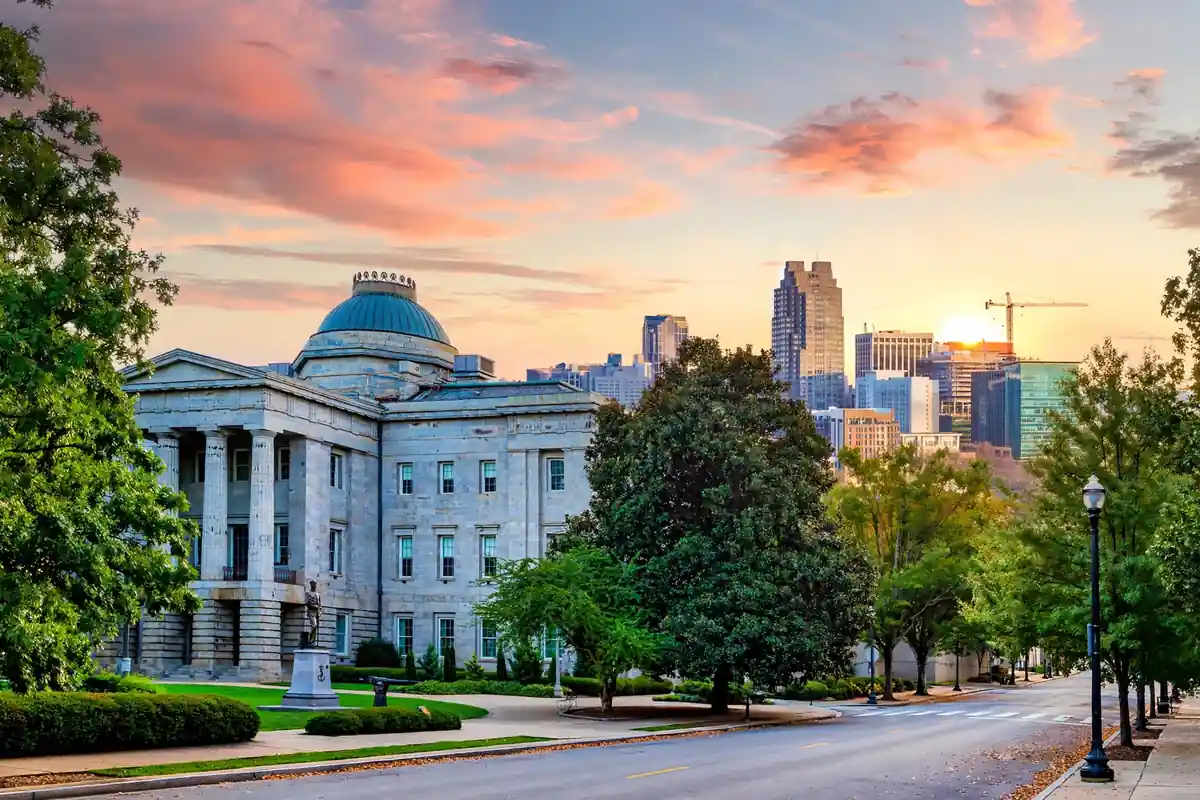
Budget: About $100–$200 per person per day mid-range — the hotels are the biggest cost, and many of the best sights are free
Don’t miss: The Museum of Natural Sciences, Pullen Park’s carousel, the NCMA park at sunset, a whole-hog barbecue plate at The Pit or Clyde Cooper’s, and the Dix Park sunflower field in July
Raleigh on Wikipedia is the capital most visitors underestimate — a city of oaks and free museums that most people drive through on the way to the mountains or the beach, and then wish they had stopped in. It is the capital of North Carolina, founded in 1792 and named for Sir Walter Raleigh, a university city in the Research Triangle on Wikipedia with about 480,000 people, and the home of the best free museum collection in the American South — the Smithsonian of the South, as the locals call it. This guide covers the 20 best things to do in Raleigh, a 3-day itinerary that actually works, where to stay without paying for a room you do not need, how to get around on the $1.25 bus and the greenways, the three foods you should not skip, and the free sights that cost nothing. Everything below was checked against live sources in November 2026 — including the Museum of History closure until 2028, the R-Line suspension, the Pullen Park pedal boat closure, the Marbles price rise, and the barbecue pitmaster who left The Pit fifteen years ago.
Raleigh at a glance
| Topic | What to know |
|---|---|
| Full name | Raleigh — the City of Oaks, the capital of North Carolina, in Wake County |
| Founded | 1792, named for Sir Walter Raleigh; the capital of North Carolina since then |
| Population | About 480,000 people in the city, about 1.5 million in the metro area — the second-largest city in North Carolina |
| Elevation | About 315 feet above sea level, in the Piedmont between the mountains and the coast |
| Airport | Raleigh-Durham International Airport (RDU), about 25 minutes northwest of downtown |
| Best base | Downtown and Fayetteville Street for first-timers; Glenwood South for the nightlife |
| Getting around | GoRaleigh bus at $1.25 a ride; a car for the parks and trails; downtown is walkable |
| Famous for | The free state museums, Pullen Park, North Carolina barbecue, the State Fair and the City of Oaks |
Raleigh divides into four ideas that most visitors only partly see. Downtown is the one the postcards show: Fayetteville Street, the State Capitol, the free museums and the Warehouse District, all within walking distance of each other, with the First Friday art walk on the first Friday of every month. The parks are the one that surprises people: Pullen Park, Dorothea Dix Park, the Rose Garden and the JC Raulston Arboretum, with 308 acres of open ground ten minutes from the centre and a greenway system that runs for miles. The university is the one that feeds the city: NC State, with about 36,000 students, the Belltower, the arboretum and the Hillsborough Street strip, and the Research Triangle around it, with Duke and UNC-Chapel Hill a short drive away. The food is the one that keeps you longer: the whole-hog barbecue, the State Farmers Market, the food halls and more than 30 breweries, with the Raleigh Beer Garden holding the world record for the most beers on tap. The trap is the one that catches almost every visitor: the city looks small on the map and the sights look close together, but the parks and the trails are spread across the county, the summer heat and humidity are real, and the older guides still list a museum that has been closed for two years and a free downtown bus that no longer runs. Plan by area, go early in summer, and check the museum hours before you go, and the city rewards you in every month of the year. For the wider state, our North Carolina guide covers the Blue Ridge Parkway, the Outer Banks and the rest of the state around Raleigh.
The 20 best things to do in Raleigh
1. North Carolina Museum of Natural Sciences
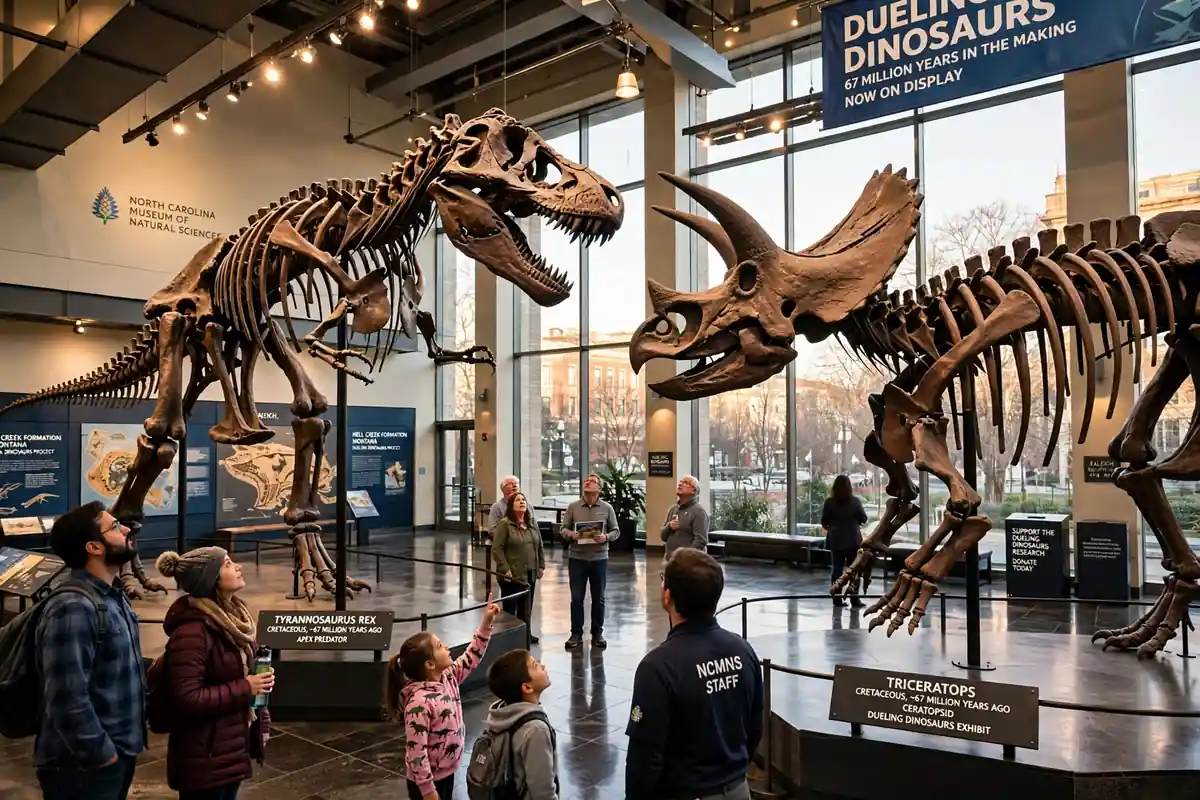
The North Carolina Museum of Natural Sciences on Wikipedia is the best free museum in the American South — the Southeast’s largest natural history museum, founded in 1879 as the oldest museum in North Carolina, with more than 1.7 million specimens across two downtown buildings at 11 West Jones Street, on Bicentennial Plaza. The collection is the reason to go: the Dueling Dinosaurs, two dinosaurs locked in combat in the same fossil block, the live animals, the four floors of the Nature Exploration Center, the Nature Research Center next door, and the Living Conservatory, the glasshouse full of butterflies and tropical plants. The museum is free, and it is open Tuesday to Sunday from 10 a.m. to 5 p.m., closed on Mondays, and closed on 26 November and 24–25 December 2026. The trap is the butterfly room, and this is where our guide beats the older ones: the Living Conservatory’s butterfly room is closed until summer 2027, so do not promise the children butterflies — the rest of the museum is open, and the dinosaurs, the live animals and the research centre are the visit. Two practical notes: the museum is a full morning, not an hour — allow three hours, because the two buildings together take that long — and the museum is busiest on weekends and school holidays, so go on a weekday morning for the quietest visit. Allow half a day, and pair it with the State Capitol and the City of Raleigh Museum, which are both a short walk away.
2. North Carolina Museum of Art and the Goodnight Museum Park
The North Carolina Museum of Art on Wikipedia is the museum with the park attached — the first state-sponsored art collection in the United States, with 4,353 objects spanning 5,000 years, at 2110 Blue Ridge Road, and the 164-acre Ann and Jim Goodnight Museum Park around it, the largest museum art park in the country. The permanent collection is free, and the galleries are open Wednesday to Sunday from 10 a.m. to 5 p.m., closed on Monday and Tuesday — and the East Building stays open until 9 p.m. on Fridays during ticketed special exhibitions. The park is the part most visitors remember: the trails, the sculptures, the ponds and the amphitheatre, open from dawn to dusk with free parking, and the best free sunset in Raleigh. The trap is the calendar, and this is where our guide beats the older ones: the buildings and the park are undergoing renovations until 2028, but the museum is open during the construction, with some areas closing periodically — and the galleries were closed on Wednesday 11 November 2026 for Veterans Day, so check the day before you go. Art in Bloom runs each March, with more than 50 floral interpretations of the collection, and it is the busiest week of the year. Two practical notes: the park is the visit as much as the galleries — allow two hours for the trails and the sculptures alone — and the museum is on Blue Ridge Road, a ten-minute drive from downtown, so take the bus or a rideshare rather than walking. Allow half a day, and go in the late afternoon, when the light is on the sculptures and the park is at its best.
3. Pullen Park
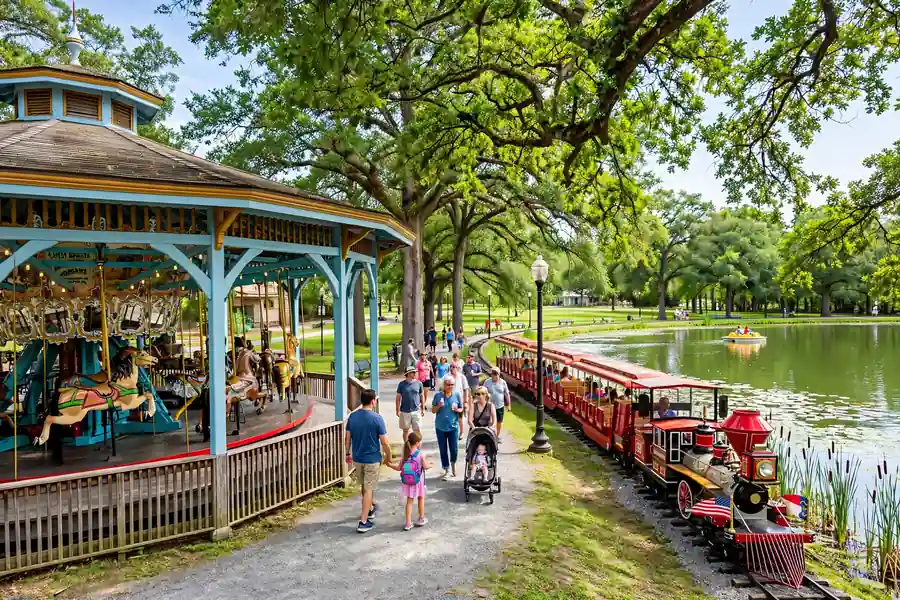
Pullen Park on Wikipedia is the oldest public park in North Carolina and the fifth oldest operating amusement park in the United States — established in 1887 at 520 Ashe Avenue, a ten-minute walk from NC State, with the carousel, the miniature train, the kiddie boats and the lake. Entry is free, and the grounds are open daily from 7 a.m. to 9 p.m., with the rides at $2 each — the carousel, the train and the kiddie boats — and children under 1 ride free with a paying adult, with 42 inches the height to ride alone. The carousel is the reason to go: the 1911 Gustave A. Dentzel Carousel, on the National Register of Historic Places and a Raleigh Historic Landmark, with the hand-carved horses and the original organ. The miniature train is the other classic: a one-third-size replica of a C.P. Huntington locomotive, running a loop through the park. The trap is the boats and the rides, and this is where our guide beats the older ones: the pedal boats are closed until spring 2027 while Lake Howell is renovated, so do not plan a boat ride — and the rides vary by season and close early for darkness and weather, so call the ride information line on (919) 996-6472, which is updated at about 10:30 a.m., before you go. The Holiday Express runs for 17 nights from 1 to 17 December 2026, with the train, the carousel and the lights, at $21 plus tax and fees, with tickets on sale from 15 October 2026 at 9 a.m. through Ticketmaster — and it sells out. Two practical notes: the park is a two-hour visit, not a day — allow two hours, and go in the morning, when the rides are running and the families are out — and the parking lot fills on weekends, so walk from NC State or take the bus. Allow half a day, and pair it with the Rose Garden and the JC Raulston Arboretum, which are both a short drive away.
4. Dorothea Dix Park and the sunflower field
Dorothea Dix Park on Wikipedia is Raleigh’s largest park — 308 acres of open ground at 1700 Umstead Drive, ten minutes from downtown, free and open from dawn to dusk, with the skyline views, the playgrounds, the trails and the sunflower field that stops the city every July. The sunflower field is the reason to time a summer trip: the blooms last about two weeks in mid-July, with more than 125,000 seeds planted over five acres, and in 2026 the field was in bloom on 11 July and drew about 100,000 visitors — no picking, and the flowers are harvested for biofuel after the bloom. The daffodils follow in late February to March, and the Gipson Play Plaza, which opened in June 2025, is the new centre of the park: 18.5 acres, the largest play park in the Southeast, with the climbing structures, the water play and the picnic lawns. The history is the hospital: the grounds were the Dorothea Dix Hospital, which closed in 2012, and the city bought the land in 2015 to make the park. The free two-hour walking tours run on the second Saturday of the month from April to July, with registration opening two weeks ahead, and the troll trek, the trail of giant wooden trolls added in 2026, is the newest thing in the park. Two practical notes: the sunflower parking is at 75 Hunt Drive, not the main address — and the field is busiest on weekends, so go on a weekday morning for the quietest visit — and there is almost no shade in the field, so bring water and a hat in July. Allow two to three hours, and go at sunset, when the skyline is behind the flowers and the park is at its best.
5. The North Carolina Museum of History — closed until 2028
The North Carolina Museum of History on Wikipedia is the trap, and this is where our guide beats the older ones: it is the state’s history museum, with more than 150,000 artifacts, on Bicentennial Plaza next to the Museum of Natural Sciences — but the building has been closed since 2024, and it will not reopen until fall 2028. The North Carolina Department of Natural and Cultural Resources closed the building for a full renovation, the General Assembly authorised $180 million for the work, with private donations taking the total higher, and construction started on 27 August 2025. The new building will add 40,000 square feet, 25 percent more gallery space and an 8,000-square-foot glass atrium, and the artifacts have been moved out while the work goes on — and the department’s press release of 24 August 2026, with the new renderings, confirms the reopening remains on track for 2028. The museum is not dead: it still runs exhibitions and programmes around the state and online while the building is closed. Do not plan a visit around it, and do not trust any guide that still lists it as an open attraction — the older guides that tell you to walk in are wrong, and the building is a construction site. The visit for now is the Museum of Natural Sciences next door, which is free and open, and the State Capitol two blocks away. If you are in Raleigh after the reopening, the History Museum will be one of the best stops in the city — but until then, it is a date in the diary, not a stop on the trip.
6. North Carolina State Capitol
The North Carolina State Capitol on Wikipedia is the free history stop in the middle of downtown — the Greek Revival capitol at 1 East Edenton Street, completed in 1840 on the site of the original building that burned in 1831, a National Historic Landmark and the seat of state government since June 1840. The building is free, and it is open Monday to Friday from 9 a.m. to 5 p.m. and Saturday from 10 a.m. to 5 p.m., closed on Sundays and state holidays, with free guided tours on Saturdays at 11 a.m., 1 p.m. and 3 p.m. The visit is the building itself: the rotunda, the legislative chambers, the statues and the grounds, with the oak trees and the monuments outside. The building is now used for special events only, so the chambers are quiet and the tour is the way to see them properly. Two practical notes: there is a security checkpoint at the door, so allow a few minutes — and the free visitor parking across Edenton Street is open on weekends, with on-street meters at $1.50 an hour on weekdays, so the weekend is the cheaper visit. Allow one to two hours, and pair it with the Museum of Natural Sciences and the City of Raleigh Museum, which are both a short walk away.
7. Mordecai Historic Park
Mordecai Historic Park on Wikipedia is the oldest house in Raleigh on its original foundation — the Mordecai House at 1 Mimosa Street, in the oldest residential neighbourhood in the city, with the grounds, the chapel and the birthplace of the 17th President of the United States. The grounds are free, and the guided tours run Tuesday to Sunday, hourly from 10 a.m. to 3 p.m., for about 60 minutes, with tickets at the Visitor Center — and the buildings are only enterable on a guided tour, so do not arrive expecting to walk in on your own. The history is the house: built around 1785, the home of the Mordecai family, and the birthplace of Andrew Johnson on Wikipedia, who was born in a kitchen house on the site in 1808 and became President after the assassination of Abraham Lincoln. St. Mark’s Chapel stands on the grounds, and the historic trolley tours run on Saturdays from March to December, taking in the park and the neighbourhood. Two practical notes: the tours are small and the tickets are sold at the Visitor Center, so arrive before the hour — and the park is a quiet stop, not a day out, so allow one to two hours and pair it with Historic Oakwood, which is a short walk away. Allow two hours, and go in the morning, when the tours are running and the neighbourhood is quiet.
8. Historic Oakwood
Historic Oakwood is the neighbourhood to walk — a 20-block Victorian district on the National Register of Historic Places, just east of downtown, with the late Greek Revival, Second Empire and Queen Anne houses that Raleigh’s business and political leaders built after the Civil War. The Heck Houses are the ones to find: a trio of Second Empire houses with turrets, built from 1872 to 1875, and among the first eleven houses in the neighbourhood, which was settled in the years after the war. Oakwood Cemetery is the other stop: one of the largest collections of 19th-century funerary art in North Carolina, with the monuments, the ironwork and the old trees, and the burial place of many of the city’s founders. The neighbourhood is free to walk, and it is best seen on foot, with the sidewalks, the porches and the gardens, and the Christmas candlelight tour in December, when the houses open their doors. Two practical notes: the houses are private homes, so look from the street and do not knock — and the cemetery is open in daylight hours, with the gates closing at dusk. Allow one to two hours, and walk from Mordecai Historic Park through Oakwood to the Capitol, which is the best historic walk in the city.
9. NC State University and the Memorial Belltower
North Carolina State University on Wikipedia is the university that built Raleigh — founded in 1887, with about 36,000 students, the red-brick halls, the long green quads and the Hillsborough Street strip at the edge of the campus. The campus is free to walk, and it is worth an hour: the Court of North Carolina, the Free Expression Tunnel, the Talley Student Union and the Brickyard, the big brick plaza at the centre of the campus. The Memorial Belltower is the landmark: the 115-foot tower on the northeast corner of the main campus, honouring the 34 alumni killed in the First World War, with the cornerstone laid in 1921 and the dedication in 1949, built from 1,400 tons of granite on a 700-ton concrete base. The tower stood bell-less for nearly a century, and it was finally completed with 54 real bells after the Henry gift in 2017 — and the tower is lit red on veterans’ holidays, and the senior class rings spend a night in the shrine room before graduation. Two practical notes: the campus is busiest on weekdays during term, so go on a weekend or in the summer for a quiet walk — and the parking is the trap, because the campus garages charge by the hour, so walk from Pullen Park or take the bus instead. Allow two hours, and walk the Brickyard in the morning, see the Belltower, and eat on Hillsborough Street at lunch.
10. Marbles Kids Museum
The Marbles Kids Museum on Wikipedia is the best stop in Raleigh for children under ten — a hands-on museum at 201 East Hargett Street, on Moore Square in the middle of downtown, opened in 2007, with the water play, the pirate ship, the money room and the IMAX theatre. The trap is the tickets, and this is where our guide beats the older ones: the museum has raised its prices, and it now runs timed-entry tickets that must be booked online in advance — tickets cost $9.50 in advance and $12.50 on the day, plus tax, with children under 1 free, military at $8.50 in advance and $11.50 on the day, and members free — and the tickets go on sale three weeks ahead, they frequently sell out, and day-of tickets may not be available at all. The hours are Monday to Sunday from 10 a.m. to 5 p.m., with Thursday until 7 p.m. and members’ early entry at 9 a.m. Play Late for Less runs Monday to Thursday after 3 p.m., at $4.75 in advance and $6.25 on the day. The IMAX is separate: documentaries at $7 for adults and $5 for children, features at $12 and $9. The news is the expansion: the largest expansion in the museum’s history is opening in winter 2026. Two practical notes: book the tickets the moment your dates are fixed, because the museum sells out on weekends — and the museum is a half-day visit, not an hour, so allow three hours and eat at Moore Square afterwards. Allow half a day, and book online before you fly.
11. JC Raulston Arboretum
The JC Raulston Arboretum on Wikipedia is the free garden on the NC State campus — 10.5 acres of plants at 4415 Beryl Road, with the conifers, the magnolias, the perennial borders and the Japanese garden, and the quietest green space in the city. Admission is free, and so is the parking, and the arboretum is open Monday to Friday from 9 a.m. to 4:30 p.m. and Saturday to Sunday from 9 a.m. to 5 p.m. — though one event page lists the weekend opening at 10 a.m., so the main official page’s 9 a.m. is the time to trust. The garden was founded in 1976 by Dr J.C. Raulston, and it was renamed after his death in 1996, and it is now a living collection of the university, with the plants labelled and the trials that test which ones survive a North Carolina summer. The trap is the pets and the events: no pets are allowed, service animals only, and the Moonlight in the Garden events close the arboretum early, at 2 p.m., on the event dates, so check the calendar before you go. Two practical notes: the arboretum is a one-hour visit, not a day — allow one to two hours, and go in the morning, when the light is on the borders and the garden is empty — and the parking is free, which is rare in Raleigh, so drive rather than taking the bus. Allow two hours, and pair it with Pullen Park and the Rose Garden, which are both a short drive away.
12. Raleigh Rose Garden
The Raleigh Rose Garden is the free garden behind the theatre — 1,200 roses in 60 varieties across 60 beds, at 301 Pogue Street, behind the Raleigh Little Theatre, free and open from dawn to dusk, 365 days a year. The garden was dedicated in 1951, with the landscaping going back to about 1939, when the theatre campus was built in the WPA era, and it is one of only three accredited rose gardens in North Carolina. The bloom is the reason to time a visit: the roses flower from Mother’s Day to the first hard freeze, usually around mid-November, with the peak in May and June, and the garden is at its best in the early morning, when the dew is on the petals and the light is low. The trap is the facilities: there are no restrooms and almost no parking, so use the theatre lot and the facilities before you walk in — and the garden is small, so it is a thirty-minute stop, not a morning. Two practical notes: the garden is free, so it is the cheapest half-hour in Raleigh — and the Little Theatre next door is the oldest community theatre in the city, with the outdoor amphitheatre and the summer shows. Allow one hour, and go in May, when the roses are at their peak and the garden is full.
13. Historic Yates Mill County Park
Historic Yates Mill County Park on Wikipedia is the mill in the woods — 174 acres of parkland at 4620 Lake Wheeler Road, south of the city, with the last operating water-powered gristmill in Wake County, restored and reopened in 2006, and the lake, the trails and the wildlife refuge around it. The park is free, and it is open from 8 a.m. to sunset, with the A.E. Finley Center open from 8:30 a.m. to 5 p.m. The mill tours run from March to November only, on weekends, free but capped at 20 people, with up to 10 places reservable online — and the Open House runs Saturday to Sunday from 1 to 4 p.m., and from 10 a.m. to 1 p.m. in July and August, when the heat closes the mill early. The Mill Heritage Tours run on Fridays at 1 p.m. and 2:30 p.m. The trap is the corn-grinding weekends, and this is where our guide beats the older ones: the corn-grinding weekends, on the third weekend of the month, are postponed until further notice, so do not drive out for the grinding — call (919) 856-6675 before you go, and check the park’s calendar. Two practical notes: no pets are allowed, because the park is a wildlife refuge — and the trails close 30 minutes before sunset, so finish the walk before the light goes. Allow two to three hours, and go on a weekend, when the mill is open and the tours are running.
14. North Carolina State Farmers Market
The North Carolina State Farmers Market is the market to eat at — 75 acres of stalls at 1201 Agriculture Street, off Interstate 40 at Exit 297, free to enter and free to park, with the dogs welcome outdoors, and open Monday to Saturday from 5 a.m. to 7 p.m. and Sunday from 8 a.m. to 5 p.m., 365 days a year. The market is the place for the produce: the sweet potatoes, the tomatoes, the peaches and the cut flowers, with North Carolina the leading sweet potato grower in the United States, and the stalls run by the farmers themselves. The State Farmers Market Restaurant is the reason most visitors come: at 1240 Farmers Market Drive, open Monday to Saturday from 6 a.m. to 3 p.m. and Sunday from 8 a.m. to 3 p.m., with the giant biscuits, the country ham and the chicken and waffles — and the weekend waits run to an hour, so go on a weekday or arrive at opening. The NC Seafood Restaurant is the other stop, with the fried seafood and the hush puppies, and Logan’s Garden Shop is the plant nursery at the far end. Two practical notes: the market is a morning visit — the stalls are fullest before noon, and the best produce sells out — and the market is a drive from downtown, so take the car and buy the sweet potatoes, because they are the souvenir that keeps. Allow two hours, and go on a Saturday morning, when the market is at its busiest and the restaurant is at its best.
15. Neuse River Trail
The Neuse River on Wikipedia is the river that gives Raleigh its longest walk — the Neuse River Trail, 27.5 miles of paved greenway from the Falls Lake Dam to the Wake-Johnston county line, part of the Mountains-to-Sea Trail that runs from the Smokies to the Outer Banks. The trail is free, and it is open from dawn to dusk, with the river, the boardwalks, the suspension bridges and the wildlife, and the parking at 1721 Riverview Road. The stops are the reason to walk it: Anderson Point Park, with the river views and the picnic lawns, Milburnie Dam, with the falls and the fishing, and the junctions with the Crabtree Creek Trail at mile 17.3 and the Walnut Creek Trail at mile 19. The trap is the closures: the greenway floods after heavy rain, and sections close for repairs, so check the Greenway alerts before you go, and do not trust a route planned a week ahead. Two practical notes: the trail is 27.5 miles, so nobody walks it all — pick a section, walk two or three miles, and turn back — and the trail is shared with bikes, so keep to the right and listen for the bells. Allow two to three hours, and go in the morning, when the river is cool and the birds are out.
16. William B. Umstead State Park
William B. Umstead State Park on Wikipedia is the forest inside the city — about 5,600 acres of woods at 8801 Glenwood Avenue, fifteen minutes from downtown, free for day use, with 34.5 miles of hiking trails, 13 miles of bike and horse trails, three lakes and the campgrounds. The Company Mill Trail is the walk to do: a 5.7-mile loop through the forest to the old mill site, with the creek, the bridges and the quiet — and the Loblolly Trail is the shorter loop for a first visit. The park is the escape from the city: the camping, the canoe rentals on Big Lake, the picnic shelters and the trails that feel a hundred miles from anywhere, with Interstate 40 and US-70 at the gates. The trap is the size: the park is big enough to get lost in, so take the map from the visitor centre, and do not start a long loop in the afternoon in summer, because the heat and the humidity are real in the woods. Two practical notes: the park is free, so it is the cheapest half-day in Raleigh — and the parking lots fill on weekends, so arrive at opening or go on a weekday. Allow half a day, and go in the morning, when the trails are empty and the forest is cool.
17. City of Raleigh Museum
The City of Raleigh Museum on Wikipedia is the small museum that tells the city’s story — free, with a suggested $5 donation, at 220 Fayetteville Street, Suite 100, in the 1874 Briggs Building, the pressed-tin-ceilinged building the city calls Raleigh’s first skyscraper. The museum is open Tuesday to Saturday from 9 a.m. to 4 p.m. and Sunday from 1 to 4 p.m., closed on Mondays, and open for First Fridays from 6 to 9 p.m. The collection is about 5,000 artifacts, with the first exhibit in 1993, and the city took over the operations in July 2012. The rotating exhibits are the reason to go: the civil rights history, the Second World War, the Dwayne Powell cartoons and the neighbourhood stories, with the permanent display on the city itself. The trap is the size: the museum is one floor, so it is a one-hour visit, not a morning — and the Monday closure catches people who plan a Monday museum day, because the Natural Sciences museum is also closed on Mondays. Two practical notes: the museum is on Fayetteville Street, so it is the stop between the Capitol and the Warehouse District — and the First Friday opening is the best time to go, because the street is full and the museum is free. Allow one hour, and pair it with the Capitol and the Museum of Natural Sciences, which are both a short walk away.
18. Fayetteville Street and downtown Raleigh
Fayetteville Street is the main street of Raleigh — the wide, tree-lined street that runs from the Capitol down to the convention centre, with the restaurants, the bars, the shops and the plazas, and the best place to feel the city. The street is the centre of the First Friday art walk, on the first Friday of every month, when the galleries, the studios and the shops stay open late and the street fills with people, for free. The city is the capital, and the downtown is the place where the history sits: the Capitol, the museums, the Briggs Building and the old storefronts, with the new towers behind them. The Carolina Hurricanes on Wikipedia are the city’s team, playing at the Lenovo Center, formerly the PNC Arena, west of downtown, and the games are the loudest nights in the city. The North Carolina State Fair on Wikipedia is the event of the year: the 11-day fair at the fairgrounds on Blue Ridge Road, founded in 1853, with the rides, the livestock, the competitions and the deep-fried food — the 2026 fair ran from 15 to 25 October and drew 910,584 visitors, and the 2027 fair is set for 14 to 24 October. Two practical notes: downtown is quiet on weekday afternoons and comes alive in the evening, so plan the museums for the day and Fayetteville Street for the night — and the parking is the trap, because the garages fill on event nights and the street meters run at $1.50 an hour on weekdays, so take the bus or a rideshare instead. Allow half a day, and walk from the Capitol down Fayetteville Street to the Warehouse District, then eat on the street in the evening.
19. The Warehouse District and Glenwood South
The Warehouse District is the neighbourhood that feeds Raleigh — the old warehouses west of downtown, around West Morgan Street and West Davie Street, now full of restaurants, breweries, galleries and the food hall, with the brick, the murals and the patios. The Morgan Street Food Hall is the centre of it: opened in 2018 at 411 West Morgan Street, 22,000 square feet with more than 15 stalls — Gym Tacos, Cowbar, Aunt Betty’s Gin and Absinthe Bar — run by Niall Hanley and Hibernian Hospitality. The Transfer Co. Food Hall is the other one: 43,000 square feet in the Olde East and Person Street district, with the stalls, the brewery and the market hall. CAM Raleigh, the Contemporary Art Museum of Raleigh, is the gallery in the district, with the rotating exhibitions and the free entry. Glenwood South is the nightlife strip: the bars, the clubs and the restaurants on Glenwood Avenue, with the Raleigh Beer Garden at the far end, and the crowds on Friday and Saturday nights. The Raleigh Beer Trail runs through the city, with 21 breweries on the trail and more than 30 breweries in the city. Two practical notes: the Warehouse District is the dinner stop, and Glenwood South is the after-dinner stop, so plan them in that order — and the parking is the trap, because the lots fill on weekend nights, so take a rideshare instead. Allow one evening, and eat at the food hall, drink in the district, and finish on Glenwood South.
20. Raleigh Beer Garden
The Raleigh Beer Garden is the record holder — the beer garden at 614 Glenwood Avenue, in Glenwood South, opened in July 2015, with the Guinness World Record from 2015 for the most beers on tap: 369 different beers from 203 breweries, and now more than 386 taps. The garden is spread over three levels and 8,500 square feet: the first floor is the North Carolina bar, with 144 taps, the second floor is the International bar, with 222 taps, and the rooftop has 12 rotating taps, with a 24-tap event field beside it. The garden was voted the third-best beer garden in the United States by USA Today 10Best in 2023, and the fourth-best in 2024. The trap is the choice: with 386 taps, the menu is a book, so ask the staff, because they know the local pours — and the garden is the busiest bar in the city on Friday and Saturday nights, so go on a weekday or arrive early. Two practical notes: the garden is 21 and over after a certain hour on weekends, so check before you bring children — and the food is the barbecue and the bar snacks, so eat before you drink, because the taps are strong. Allow one evening, and go at sunset, when the rooftop is full and the city is below.
Raleigh in 3 days — a ready-made itinerary
This three-day plan uses downtown as the base for the museums, the parks as the escape, and the food halls as the evenings — it needs a bus pass for the centre and a car for the parks, because the trails and the mill are spread across the county, and it leaves Durham, Chapel Hill and the Research Triangle for a fourth and fifth day. Book the Marbles tickets and the Pullen Park Holiday Express before you fly, put the museums in the morning, and keep the evenings for Fayetteville Street and Glenwood South.
Day 1 — Downtown and the free museums: the Natural Sciences museum, the Capitol and Fayetteville Street
Start at the North Carolina Museum of Natural Sciences at 10 a.m., and give it three hours, with the Dueling Dinosaurs and the Nature Research Center. Walk two blocks to the State Capitol for the free tour at 11 a.m., 1 p.m. or 3 p.m. on a Saturday, then stop at the City of Raleigh Museum on Fayetteville Street. Walk through Historic Oakwood and Mordecai Historic Park in the afternoon, with the guided tour if it is running, then eat dinner at The Pit on West Davie Street and finish with a drink on Fayetteville Street. If it is the first Friday of the month, the First Friday art walk is the evening.
Day 2 — The parks: Pullen Park, the NCMA and Dix Park at sunset
Start at Pullen Park at opening, and give it two hours, with the 1911 carousel and the miniature train. Drive to the JC Raulston Arboretum and the Raleigh Rose Garden for the late morning, then spend the afternoon at the North Carolina Museum of Art and the Goodnight Museum Park, with the trails and the sculptures. Drive to Dorothea Dix Park for the sunset, with the skyline behind the Gipson Play Plaza and the sunflower field if it is July, then eat at the Morgan Street Food Hall and finish the evening on Glenwood South, with the Raleigh Beer Garden at the far end.
Day 3 — The green side and the food: Umstead, Yates Mill and the Farmers Market
Drive to William B. Umstead State Park in the morning, and walk the Company Mill Trail or the Loblolly Trail for two to three hours. Drive south to Historic Yates Mill County Park for the mill tour if it is a weekend, then eat lunch at the State Farmers Market Restaurant, with the giant biscuits and the country ham. Spend the afternoon on the Neuse River Trail, with a two- or three-mile section from Anderson Point Park, or at Marbles Kids Museum if you have children — with the timed tickets booked ahead. Finish with dinner at Clyde Cooper’s Barbeque or Sam Jones BBQ, and a final drink in the Warehouse District.
Best time to visit Raleigh
| Season | Weather | Crowds | Notes |
|---|---|---|---|
| Winter (December–February) | Highs about 51–55°F (11–13°C), lows about 30–35°F (−1–2°C) | Low | Cool days, bare trees, cheapest hotels; Pullen Park Holiday Express in December |
| Spring (March–May) | Highs in the 60s–70s°F (15–25°C), lows in the 40s–50s°F (4–15°C) | Moderate–high | Best weather; azaleas, Art in Bloom at the NCMA in March, Cherry Blossom Festival in April |
| Summer (June–August) | Highs about 88–90°F (31–32°C), lows about 68–72°F (20–22°C) | Moderate | Hot and humid, humidity 70–90%, afternoon thunderstorms; Dix Park sunflowers in mid-July |
| Autumn (September–November) | Highs in the 60s–70s°F (15–25°C), lows in the 40s–50s°F (4–15°C) | High | State Fair in October, fall colour, best festivals; Hopscotch Music Festival in September |
The best time to visit Raleigh is April to May and mid-September to October, and if you want one answer, pick October: the days are in the 60s and 70s, the humidity is gone, the fall colour is out, and the State Fair runs for 11 days at the fairgrounds — the 2026 fair ran from 15 to 25 October and drew 910,584 visitors, and the 2027 fair is set for 14 to 24 October. Spring is the second-best pick, for the azaleas, the Art in Bloom at the NCMA in March and the Cherry Blossom Festival in April, with the days in the 60s and 70s and the evenings cool. Summer is the hardest season: July averages a high of 90 degrees, with humidity at 70 to 90 percent and afternoon thunderstorms, and the downtown wind-tunnel effect can make winter feel ten degrees cooler than the forecast. The city gets about 49 inches of rain a year and about 4 inches of snow, with the wettest months from July to September, and the hurricane season runs from 1 June to 30 November. January is the coldest month, with an average high of 51 to 52 degrees, and the cheapest hotels of the year. The events are worth timing a trip around: the Hopscotch Music Festival in September, with 25,000 fans and more than 120 bands, the NCMA Art in Bloom in March, the Raleigh Cherry Blossom Festival in April, and the First Friday art walk on the first Friday of every month.
Where to stay in Raleigh
| Area | Best for | Price range |
|---|---|---|
| Downtown / Fayetteville Street | First-timers, walkers, First Friday | $120–$250 a night |
| Warehouse District / Glenwood South | Food, beer, nightlife | $150–$300 a night |
| North Raleigh / Crabtree | Families, shopping, quiet | $100–$200 a night |
| Near NC State / Hillsborough Street | Budget, university, the Belltower | $80–$150 a night |
| Near the airport (RDU) | Early flights, Research Triangle | $90–$180 a night |
| Brier Creek / RTP | Business, the Research Triangle | $100–$200 a night |
Stay downtown or on Fayetteville Street if this is your first visit — the Capitol, the museums, the Warehouse District and the First Friday art walk are all within reach, and the hotels are the most central in the city — and the Guest House Raleigh, the boutique hotel downtown, is the stay that is an attraction in itself, at about $182 to $253 a night. Stay in the Warehouse District or Glenwood South if you want the food and the nightlife — the food hall, the breweries and the bars are outside the door, and the prices to match. Stay near NC State or on Hillsborough Street if you want the budget and the university — the Belltower, the arboretum and Pullen Park are a short walk away, and the hotels are the cheapest in the centre. Stay near the airport or in Brier Creek if you want the Research Triangle — the offices, the hotels and the early flights, with the prices lower than downtown. Two warnings: do not book a room in October without checking the price first — the State Fair week books out months ahead, and the rates spike — and do not book a room in May or July expecting a deal, because those are the most expensive months, with January the cheapest.
Getting around Raleigh
| Way to travel | Cost | Best for |
|---|---|---|
| GoRaleigh bus | $1.25 a ride (free for 65+ and 18 and under; discount $0.60) | Across the city; high-frequency network about every 15 minutes |
| R-Line downtown circulator | Free when running | Downtown — suspended in 2026, check GoRaleigh before relying on it |
| Rental car | About $40–$70 a day | Umstead, Yates Mill, the Neuse River Trail, day trips |
| Taxi / rideshare | About $12–$25 in town | Late nights, the airport with luggage |
| Bike / greenways | Varies | The Neuse River Trail, the Capital Area Greenway |
| Walking | Free | Downtown, Fayetteville Street, the Warehouse District, the NC State campus |
Raleigh is a bus city downtown and a car city outside it: the centre is walkable and the buses run every 15 minutes on the high-frequency network, but the parks, the trails and the mill are spread across the county, and the bus does not go to all of them — so take the bus for the days you stay in the centre, and rent a car for the days you leave it. The GoRaleigh bus costs $1.25 a ride, free for riders 65 and over and 18 and under, with a $0.60 discount fare, paid on the Umo app or card or with exact cash, and GoTriangle serves the airport, about 25 minutes away by car. The trap is the R-Line, and this is where our guide beats the older ones: the free downtown circulator was suspended in 2026, according to a September 2026 report, while another October 2026 report says GoRaleigh still lists it as the free downtown circulator — so do not rely on it, and check GoRaleigh before you plan a day around it. The car is the way to the parks: Interstate 40 runs west to the airport and east to the coast, and US-70 runs to Umstead State Park. Raleigh-Durham International Airport is about 25 minutes northwest of downtown, and the rideshare from the airport costs about $20. Two warnings: do not drive downtown without checking the parking, because the garages fill on event nights and the street meters run at $1.50 an hour on weekdays — and do not trust the phone signal on the trails, because the Neuse River Trail and Umstead both have dead zones, so download the map before you go. Charlotte is about three hours west by car — our Charlotte guide covers the drive and the city at the other end — and Durham and Chapel Hill are about 30 minutes away, with the Research Triangle between them.
Raleigh food you have to try
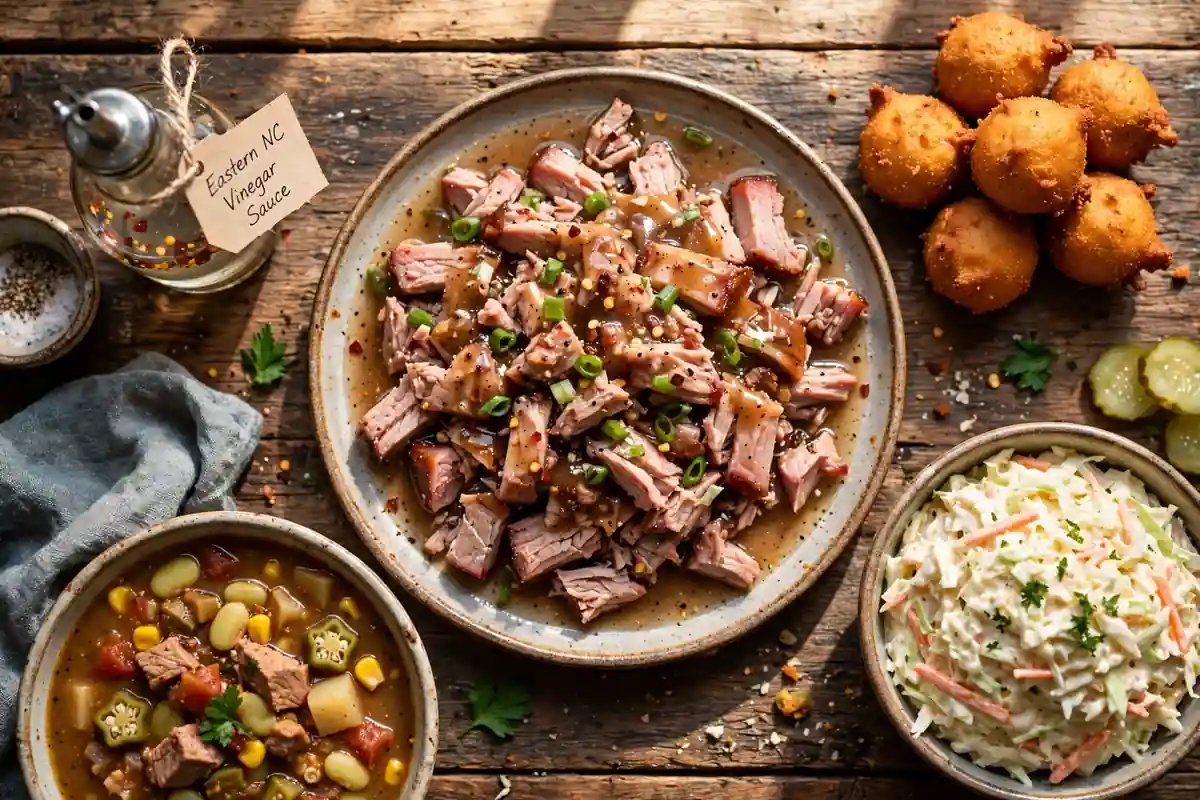
Raleigh eats with the whole of North Carolina behind every plate. The state has two barbecue styles, and Raleigh sits on the line between them: the Eastern whole-hog style, with the vinegar sauce, and the Western Lexington style, with the tomato sauce — and the city is the place to taste the Eastern one properly, with the chopped pork, the hush puppies and the Brunswick stew. The food is the reason many visitors come back: the barbecue, the Southern breakfast, the food halls and the beer, and the trap is the opposite of most cities — the restaurants on the tourist streets are fine, but the best food is on West Davie Street, South Wilmington Street and at the Farmers Market, where the locals queue, and the most Raleigh meal of all is the one eaten standing up with a barbecue plate in one hand and a local beer in the other.
North Carolina barbecue — whole hog, vinegar sauce
Barbecue in North Carolina on Wikipedia is the food the state is famous for — the whole-hog Eastern style, with the vinegar and pepper sauce, and the Western Lexington style, with the tomato sauce and the pork shoulder only. Raleigh is Eastern country, and the plate is the chopped pork, the hush puppies, the coleslaw and the Brunswick stew. The place to eat it is The Pit Authentic Barbecue, at 328 West Davie Street in the Warehouse District, in a restored 1930s meatpacking warehouse, with the whole hog cooked over wood and the vinegar sauce. The trap is the pitmaster, and this is where our guide beats the older ones: The Pit was opened in 2007 by the pitmaster Ed Mitchell, but Ed Mitchell left in May 2011, and the executive chef is now Carlos Andrade — so any guide that still credits Mitchell is fifteen years out of date. Clyde Cooper’s Barbeque is the other classic: since 1938, at 327 South Wilmington Street, moved in 2014 after 75 years at the original spot, with the Eastern whole hog, the chopped pork, the hush puppies and the Brunswick stew — and the beef brisket is the pilgrimage item, with the Mr. Cooper sandwich the order. Sam Jones BBQ is the new one: the Raleigh location opened in 2021 on West Lenoir Street, the fourth generation of a family cooking since 1947 in Ayden, with the whole hog over wood and the vinegar sauce, a Bib Gourmand and a place in the MICHELIN Guide to the American South — and a new Sam Jones BBQ Pit Stop is opening at the Morgan Street Food Hall at the end of 2026. Two practical notes: the barbecue is cheap, so eat two plates and compare, because the taste test is the Raleigh tradition — and the vinegar sauce is the point, so do not ask for tomato sauce in an Eastern restaurant, because that is the Western style. Eat the whole-hog plate once, eat it with the hush puppies, and eat it where the locals eat — that is the Raleigh barbecue plan.
The State Farmers Market Restaurant and Southern breakfast
The State Farmers Market Restaurant is the breakfast to plan a morning around — at 1240 Farmers Market Drive, inside the State Farmers Market, open Monday to Saturday from 6 a.m. to 3 p.m. and Sunday from 8 a.m. to 3 p.m., with the giant biscuits, the country ham and the chicken and waffles. The restaurant is the market’s own, and the food is the Southern breakfast at its best: the biscuits, the gravy, the country ham, the eggs and the grits, with the portions big enough to share. The weekend waits run to an hour, so go on a weekday or arrive at opening, and the market itself is the walk afterwards, with the sweet potatoes, the tomatoes and the cut flowers. Big Ed’s City Market is the other breakfast: the Southern breakfast spot on East Martin Street, serving since 1958, with the biscuits, the country ham and the grits, and the locals at the counter. The Mecca Restaurant is the oldest restaurant in Raleigh: founded in 1930 by Greek immigrants, on Fayetteville Street, with the diner counter, the breakfasts and the lunches, and the history on the walls. Two practical notes: the breakfast is the meal to eat early, because the best places close by 3 p.m. — and the biscuits are the order, so do not skip them, because they are the reason the restaurant is famous. Eat the biscuits once, eat the country ham once, and eat both where the locals eat — that is the Raleigh breakfast plan.
The food halls: Morgan Street and Transfer Co.
The food halls are the way to taste Raleigh in one stop — the stalls, the breweries and the bars under one roof, with the food from a dozen kitchens and the beer from the local breweries. The Morgan Street Food Hall is the first: opened in 2018 at 411 West Morgan Street in the Warehouse District, 22,000 square feet with more than 15 stalls, including Gym Tacos, Cowbar and Aunt Betty’s Gin and Absinthe Bar, run by Niall Hanley and Hibernian Hospitality. The Transfer Co. Food Hall is the second: 43,000 square feet in the Olde East and Person Street district, with the stalls, the brewery and the market hall, and the live music on the weekends. The food does not stop at the halls: Bida Manda, the Laotian restaurant on West Davie Street, is the best Asian food in Raleigh by local reckoning, with the noodles and the small plates, and Stanbury and Wye Hill Kitchen and Brewing are the other names the locals give. The city has more than 30 breweries, with the Raleigh Beer Trail covering 21 of them, and the Raleigh Beer Garden holding the world record for the most beers on tap. Two practical notes: the food halls are the lunch and the dinner, with the stalls closing at different times, so check the hours before you go — and the beer is the point, so ask the staff, because they know the local pours. Eat at the food hall once, drink the local beer once, and take the trail home — that is the Raleigh food hall plan.
Free things to do in Raleigh
Raleigh is cheaper than its reputation suggests, because the best sights cost nothing. The North Carolina Museum of Natural Sciences is free, and so are the dinosaurs, the live animals and the research centre. The North Carolina Museum of Art is free, and so is the permanent collection and the 164-acre Goodnight Museum Park. Dorothea Dix Park is free, and so are the sunflower field, the Gipson Play Plaza and the skyline views. The Raleigh Rose Garden is free, and so are the 1,200 roses and the 60 varieties. The JC Raulston Arboretum is free, and so are the gardens and the parking. William B. Umstead State Park is free, and so are the trails, the lakes and the forest. The Neuse River Trail is free, and so are the 27.5 miles of greenway. Historic Yates Mill County Park is free, and so are the park, the lake and the mill tours. The State Farmers Market is free, and so are the stalls and the parking. The State Capitol is free, and so are the building and the Saturday tours. The City of Raleigh Museum is free, and so are the exhibits and the First Friday opening. Mordecai Historic Park is free, and so are the grounds and the chapel. Pullen Park is free, and so are the grounds and the lake. The First Friday art walk is free, and so are the galleries and the studios. Do the free list on your first day, and you will have seen the museums, the parks, the gardens and the history before you have spent a dollar on a ticket.
Frequently asked questions
How many days do you need in Raleigh?
Three days is the minimum: one day for downtown and the free museums, one day for the parks, and one day for the green side and the food. Five days is the right amount for a real trip, with Durham, Chapel Hill and the Research Triangle, and the Neuse River Trail and Umstead State Park done properly. Two days works if you plan well — the Museum of Natural Sciences, Pullen Park and a barbecue plate — but you will leave having seen a third of the city, and you will have missed the parks and the food halls, which is the reason to come back.
Is Raleigh safe?
Raleigh is safe in the way a Southern capital is safe, and unsafe in one specific way that every visitor needs to know. Violent crime is rare in the tourist areas — downtown, Fayetteville Street, the Warehouse District, the museums and the parks — which are busy with visitors at all hours. The problem is the petty crime in the crowds and late at night: keep your bag zipped and in front of you, your phone in a front pocket and never on a bar or a table, and do not leave valuables visible in a parked car at a trailhead, because the trailhead break-ins are the local crime. The real danger is the heat, not the people: the summer days reach 90 degrees with humidity at 70 to 90 percent, and the rescue calls in Umstead State Park are for heat, not crime. Use the same sense you would in any American city, and the only thing you will lose is money at the resort restaurants.
When is the best time to visit Raleigh?
April to May and mid-September to October, when the days are in the 60s and 70s, the humidity is gone and the parks are at their best. October is the single best pick, with the State Fair running for 11 days and the fall colour out. Spring is the second-best, for the azaleas, the Art in Bloom at the NCMA in March and the Cherry Blossom Festival in April. Summer is the hardest season, with July averaging a high of 90 degrees, humidity at 70 to 90 percent and afternoon thunderstorms — and the Dix Park sunflowers in mid-July are the reason to come anyway. January is the coldest and cheapest month, with an average high of 51 to 52 degrees. The city gets about 49 inches of rain a year and about 4 inches of snow, with the wettest months from July to September, and the hurricane season runs from 1 June to 30 November.
Is Raleigh expensive?
Cheaper than Charlotte and far cheaper than Washington DC, and the cheapest capital city in the Southeast for a weekend. A downtown hotel costs $120 to $250 a night, a museum ticket $0 to $13, a barbecue plate about $15, a beer about $6, and the bus $1.25. The costs most visitors underestimate are the car, which is $40 to $70 a day and useful for the parks, and the tickets, which add up — Marbles, the Pullen Park rides and the State Fair together are more than $40 a person — and the October hotel prices, which spike for the State Fair week. A careful three days can be done for about $100 to $200 a person a day, and the museums, the parks, the gardens and the greenways are free.
Do you need a car in Raleigh?
Yes, for the parks and the trails. William B. Umstead State Park, Historic Yates Mill County Park, the Neuse River Trail and the State Farmers Market all need a car or a rideshare, and the bus does not go to all of them. No, for downtown: the GoRaleigh bus costs $1.25 a ride, the centre is walkable, and Fayetteville Street, the Warehouse District, the museums and the Capitol are all within reach on foot. Rent the car only for the days you leave the city, and take the bus for the days you do not — the downtown parking costs more than the rental on a show night. The only reason to rent for the whole trip is a road trip to Durham, Chapel Hill or the Outer Banks, where the car is the trip.
What should I skip in Raleigh?
Six things, and all six are traps older guides still get wrong. First, do not plan a trip around the North Carolina Museum of History: the building has been closed since 2024 and will not reopen until fall 2028, so check the date before you go. Second, do not rely on the R-Line: the free downtown circulator was suspended in 2026, and the reports conflict about whether it is running, so check GoRaleigh before you plan a day around it. Third, do not drive to Pullen Park for the pedal boats: they are closed until spring 2027 while Lake Howell is renovated. Fourth, do not arrive at Marbles Kids Museum without a ticket: the timed-entry tickets sell out, and day-of tickets may not be available. Fifth, do not visit the NCMA on a Monday or Tuesday: the galleries are closed, and the park is the only part open. And sixth, do not promise the children the butterfly room at the Museum of Natural Sciences: it is closed until summer 2027, and the dinosaurs are the visit instead.
Further reading
Start with Raleigh on Wikipedia, which covers the history and the geography, and the North Carolina Museum of Natural Sciences on Wikipedia for the museums and the dinosaurs. For the fair, the North Carolina State Fair on Wikipedia covers the 11 days in October, and for the food, Barbecue in North Carolina on Wikipedia covers the Eastern whole-hog style and the Western Lexington style. No Reddit link is included here: no live r/Raleigh thread turned up in search, so none is listed rather than linking to an unverified one. No Quora link is included either: no live on-topic Quora thread about visiting Raleigh turned up in search, so none is listed rather than linking to an unverified one.
Your Raleigh trip, in one paragraph
Raleigh is the city that rewards slowing down: the dinosaurs at the Museum of Natural Sciences in the morning, the carousel at Pullen Park at noon, the sculptures in the NCMA park at sunset, a whole-hog barbecue plate in the Warehouse District in the evening, and the sunflowers at Dix Park before you leave. For more guides in the same style, start with our Hawaii guide for the whole-state trip — this guide is only about Raleigh — then see how Raleigh compares with Maui, Honolulu, Chicago, Nashville, Los Angeles, Orlando, Miami, San Diego, Denver, Savannah, Dallas, Charleston, San Francisco, Myrtle Beach, Las Vegas, San Antonio, London, Portland, Pigeon Forge, Puerto Rico, Atlanta, Phoenix, Paris, Key West, Colorado Springs, Sedona, Chattanooga, Palm Springs, St Louis, Tokyo, Japan, Kansas City, Tennessee, Branson, Florida, Amsterdam, Montreal, Fort Lauderdale, Toronto, Aruba, Charlotte, Indianapolis, New Orleans, Destin, Santa Barbara, Mexico City, Arizona, Osaka, Minneapolis, Pittsburgh, California, Asheville, Costa Rica, Washington DC, Seattle, St Augustine, Lisbon, Dubai, Santa Fe, Galveston, Maine, Sacramento, Kauai, Boston, Cancun, Madrid, Salt Lake City, Baltimore, Barcelona, Reno, Milwaukee, North Carolina, New York and Tucson.

About the Author