Things to Do in San Jose
20 Best Attractions, a 3-Day Itinerary, Where to Stay, and the Food You Cannot Miss
Quick Info
Best for: Tech fans, families, garden lovers and anyone who wants the real Silicon Valley — not just the office parks — with museums, markets and mountain trails in one city
Best time: April to June and September to October — warm, dry and sunny, with the roses at their peak in May
How long: 3 days for downtown, the gardens and a mountain day; add a fourth day for a Silicon Valley or Santa Cruz day trip
Budget: About $150–$250 per person per day mid-range — the big museums are $20–$40 each, but the gardens, parks and markets are free or nearly free
Don’t miss: The Winchester Mystery House, The Tech Interactive, the Municipal Rose Garden in May, a Sharks game at the SAP Center and pho in Japantown
San Jose on Wikipedia is the city most visitors drive straight through on the way to San Francisco, and that is the mistake. Founded in 1777 as the first civilian settlement in California and the state’s first capital, San Jose is now the largest city in Silicon Valley — about 970,000 people, 50 miles south of San Francisco — and it has quietly become one of the most interesting cities in California: a Victorian mansion full of staircases to nowhere, the most hands-on science museum in the Bay Area, an Egyptian museum that is only open three days a week, a rose garden the whole country knows by name, and a Japantown that is one of only three left in the United States. This guide covers the 20 best things to do in San Jose, a 3-day itinerary that pairs downtown with the gardens and the mountains, where to stay without paying San Francisco prices, getting around on the light rail and the free downtown trolley, the food you have to try, and the free things to do that cost nothing. Everything below was checked against live sources in November 2026 — including the details most guides still get wrong: the San Jose Museum of Art is not free, the Rosicrucian Egyptian Museum is closed four days a week, the Lick Observatory’s main building is shut for repairs, and California’s Great America is closing for good after the 2027 season.
San Jose at a glance
| Topic | What to know |
|---|---|
| Full name | San Jose, California — the largest city in Silicon Valley, in Santa Clara County at the south end of San Francisco Bay |
| Founded | 1777, as El Pueblo de San José de Guadalupe — the first civilian settlement in California; the state’s first capital in 1850 |
| Population | About 970,000 — the third-largest city in California after Los Angeles and San Diego, and the tenth-largest in the United States |
| Location | 50 miles southeast of San Francisco, 30 miles northeast of Santa Cruz, at the southern tip of San Francisco Bay |
| Getting there | Norman Y. Mineta San Jose International Airport (SJC), about 3 miles from downtown; Caltrain and BART both serve the city |
| Best base | Downtown San Jose for first-timers — the museums, the market and the arena are all walkable; Santana Row for shopping and nightlife |
| Getting around | VTA light rail and buses ($2.50 a ride), the free DASH trolley downtown, and a car for the parks and the mountain day |
| Famous for | The Winchester Mystery House, the Tech Interactive, the San Jose Sharks, Silicon Valley, Japantown, the Municipal Rose Garden and Christmas in the Park |
San Jose rewards visitors who treat it as a city with layers, not a suburb with an airport. Downtown is the museum layer — the Tech Interactive, the art museum, the cathedral and the arena within a few blocks of each other. The gardens are the quiet layer — a rose garden, a Japanese garden and a park full of 27 mineral springs, all inside the city limits. And the mountains are the wild layer — mercury mines, oak hills and an observatory on a 4,200-foot peak, all a short drive from downtown. The mistake most visitors make is staying in one layer and missing the others, and the trap most guides fall into is the outdated detail: the art museum has charged admission for years, the Egyptian museum is not a daily stop, the observatory’s main building is closed, and the amusement park everyone lists is about to close for good. This guide gets those right, because we checked them in November 2026. One more thing before you pack: San Jose is one of the sunniest cities in the Bay Area, with about 300 days of sunshine a year — but the mornings can be cool and the fog can roll in from the bay, so bring a layer even in summer.
The 20 best things to do in San Jose
San Jose’s 20 best sights split neatly into four groups: the museums, the gardens, the history and the outdoors. Do the museums first, because they run on a schedule — the Egyptian museum is only open Friday to Sunday, the art museum is closed on Mondays, and the children’s museum closes early on weekdays. Then the gardens, which are free and open almost every day, then the history, which rewards a slow afternoon, then the outdoors, which is best in the morning before the heat.
1. Winchester Mystery House
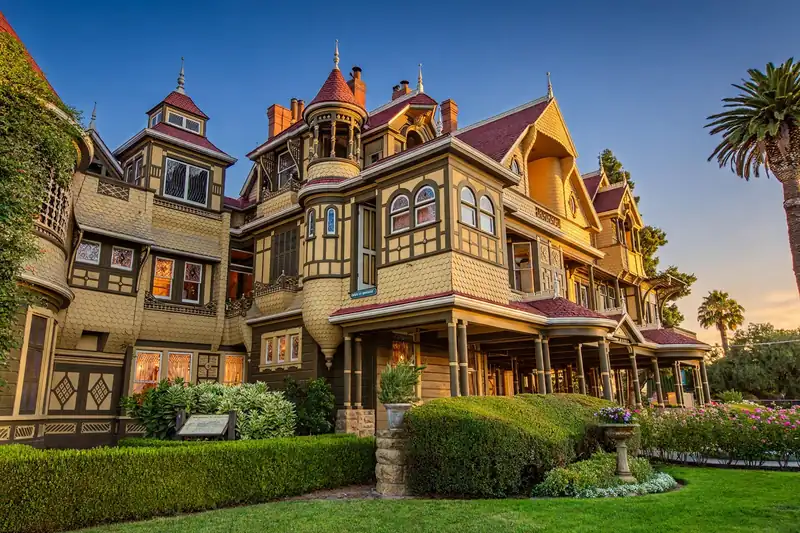
The Winchester Mystery House on Wikipedia is the most famous building in San Jose, and the strangest house in America. Sarah Winchester, heiress to the Winchester rifle fortune, bought an eight-room farmhouse in 1886 and kept building for 38 years, until her death in 1922 — the result is a 24,000-square-foot Victorian mansion with 160 rooms, 2,000 doors, 10,000 windows, 47 staircases and 13 bathrooms, built around a maze of staircases that lead to ceilings, doors that open onto walls, and a window set into the floor. The legend says she built to confuse the spirits of everyone killed by a Winchester rifle; the truth is more ordinary and more interesting — she was a wealthy, eccentric woman with an architect’s eye and no reason to stop. The Mansion Tour is the way in: a 65-minute guided walk through 110 of the 160 rooms, including the grand ballroom, the séance room and the famous staircase to nowhere. In 2026 the tour costs about $39 to $46 for adults, about $18 for children aged 5 to 12, and children under 5 are not allowed on the mansion tours at all — book online, because the popular times sell out. Hours run September to April Monday to Friday 10 a.m. to 4 p.m. and Saturday and Sunday 10 a.m. to 5 p.m., and May to August 10 a.m. to 5 p.m. on weekdays and 10 a.m. to 7 p.m. on weekends; the house is closed on Thanksgiving and Christmas Day. The Basement and Attic add-on costs about $19 more and takes you into the parts of the house the standard tour skips, and the Garden Tour is included with the Mansion Tour. Come in October for the Halloween events, when the house leans into its haunted reputation, or come on a weekday morning, when the groups are small and the guide has time for the good stories.
2. The Tech Interactive
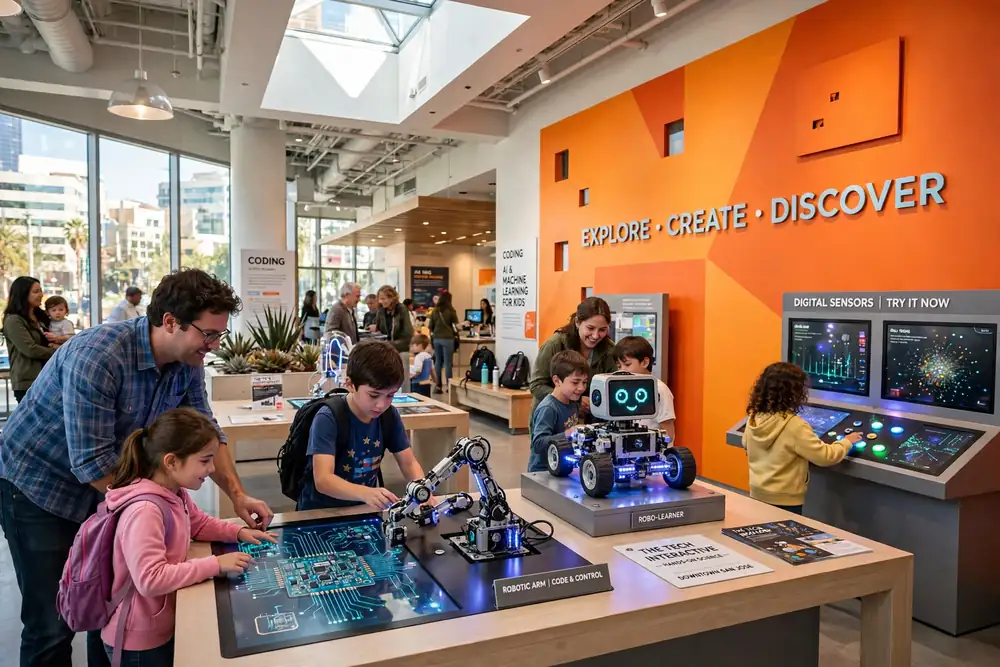
The Tech Interactive on Wikipedia is the museum that explains why San Jose matters — and it is the most fun museum in the city. On the corner of Market Street and Park Avenue in downtown, in a bright orange building that opened on October 31, 1998, it is a hands-on science and technology centre where almost everything is meant to be touched: build a robot, design a roller coaster, try a virtual-reality flight, solve engineering challenges, and walk through the AI Dream Garden, a new exhibit about how machines learn. The IMAX Dome here is the only one in the Bay Area, and one educational IMAX film is included in the ticket. In 2026 admission is $38 for adults and $28 for children aged 3 to 17, students and seniors aged 65 and over — and this is the timing trap: the museum is not open every day. In the school year it opens Wednesday to Friday 10 a.m. to 3 p.m., Saturday 10 a.m. to 5 p.m. and Sunday 11 a.m. to 5 p.m., and it is closed on Mondays, with some Tuesdays closed too in October 2026 — always check the daily schedule on the museum’s site before you go. Summer hours are longer. Allow three hours, more with children, and go on a weekday morning if you can: the school groups arrive after 10, and the exhibits are best when you do not have to queue for them.
3. San Jose Museum of Art
The San Jose Museum of Art on Wikipedia is the city’s best small art museum, and the one most guides describe wrong — it is not free. The museum sits in a handsome 1892 Romanesque Revival building on Market Street, right across from the Plaza de César Chávez, with a modern glass wing added in 1991, and it shows modern and contemporary art with a West Coast focus: painting, sculpture, photography and new media, with a strong collection of California artists and rotating exhibitions that change several times a year. In 2026 general admission is $20 for adults and $15 for seniors aged 65 and over, and it is free for visitors aged 17 and under, college students and teachers — and free for everyone on the first Friday of the month after 6 p.m. Hours are Tuesday to Thursday 11 a.m. to 6 p.m., Friday 11 a.m. to 9 p.m., Saturday and Sunday 11 a.m. to 6 p.m., and the museum is closed on Mondays. The Friday evening opening is the smart visit: the galleries are quiet, the plaza outside is lively, and you can walk straight from the museum to dinner at San Pedro Square Market. Allow 90 minutes, and check what is on before you go — the rotating shows are the reason to return.
4. Children’s Discovery Museum
The Children’s Discovery Museum of San Jose on Wikipedia is the purple building on Woz Way that every local family knows, and the best thing in the city for children under 10. Opened in 1990, the 52,000-square-foot museum is built around play that teaches: WaterWays, where children dam and divert real water; Bill’s Backyard, an outdoor nature space; a mammoth replica you can climb on; and hands-on exhibits about science, art and the cultures of the Bay Area. More than 9 million visitors have come through since it opened. In 2026 admission is $22 for adults and children aged 1 to 17, $20 for seniors aged 60 and over, free for children under 1, and $5 for EBT and SNAP cardholders for up to four people. Hours are the detail to check: in the school year the museum opens Tuesday to Friday 9:30 a.m. to 1 p.m. and Saturday and Sunday 9:30 a.m. to 4:30 p.m., and it is closed on Mondays — with special hours on some school holidays, so check the day you plan to go. Plan two to three hours, bring a change of clothes if your children find the water exhibits, and pair it with the Guadalupe River Park next door, which is free and makes a good picnic stop afterwards.
5. Rosicrucian Egyptian Museum
The Rosicrucian Egyptian Museum on Wikipedia holds the largest collection of Egyptian artefacts in the western United States — more than 4,000 objects, including mummies, a full-scale replica of an ancient tomb, and a planetarium — in a building that looks like an Egyptian temple on Park Avenue, a ten-minute walk from the Rose Garden. The collection is genuinely impressive: artefacts from the Old Kingdom to the Roman period, a rock-cut tomb you can walk through, and the Rosicrucian Planetarium next door. But this is the museum most visitors get wrong, because it is not open every day. In 2026 the museum opens Friday to Sunday only — Friday 9 or 10 a.m. to 4 or 5 p.m., Saturday and Sunday 11 a.m. to 6 p.m. — and it is closed Monday to Thursday, every week. Admission is $15 for adults, $12 for seniors and students, $10 for children aged 7 to 17, and free for children under 6, and the museum is cashless, so bring a card. Plan your weekend around it: pair it with the Rose Garden on a Friday or Saturday morning, when both are at their best, and allow two hours inside.
6. San Jose Municipal Rose Garden
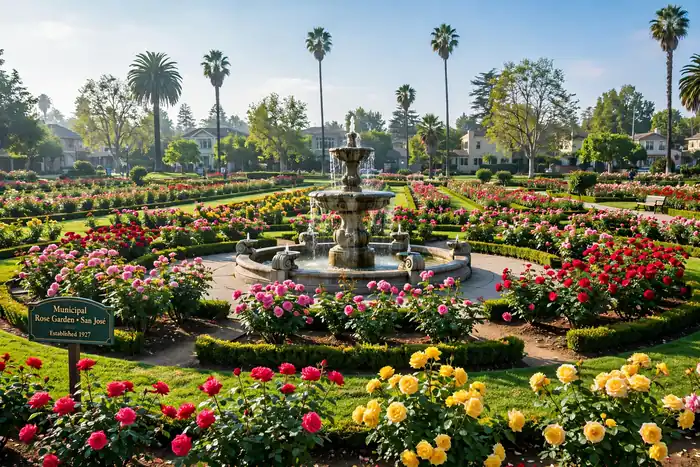
The San Jose Municipal Rose Garden on Wikipedia is the most beautiful free thing in the city, and the reason to visit San Jose in May. Five and a half acres on Naglee Avenue, planted in 1927, with more than 3,500 rose bushes in about 200 varieties, arranged in neat beds around a two-tiered stone fountain, with lawns, palm trees and benches in between — it was once voted “America’s Best Rose Garden”, and on a May morning, when the whole garden is in bloom and the air smells of roses, you will believe it. It is free, and it is open every day from 8 a.m. to an hour after sunset, with roses blooming from April to November and the peak in May. Come early in the morning, when the light is soft and the garden is empty, bring a picnic, and do not rush: the pleasure of the place is wandering the beds and reading the variety labels. The garden sits in a quiet residential neighbourhood, so pair it with the Rosicrucian Egyptian Museum, a five-minute walk away, and with the Japanese Friendship Garden at Kelley Park, which is a short drive south.
7. Japanese Friendship Garden
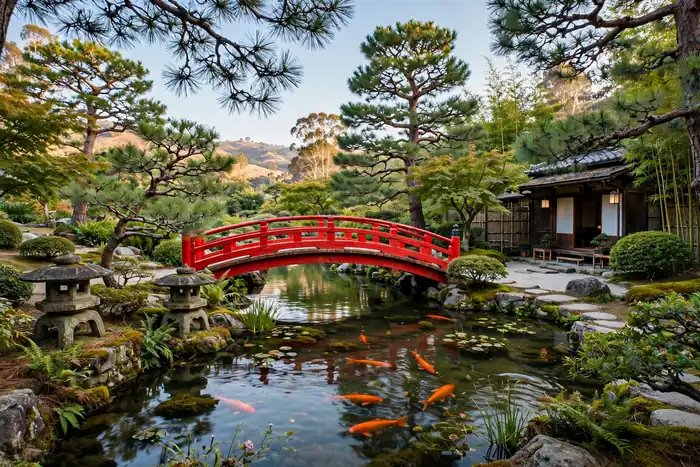
The Japanese Friendship Garden on Wikipedia is six acres of calm in the middle of Kelley Park, and the prettiest garden in San Jose after the Rose Garden. Modelled on the Korakuen Garden in Okayama — San Jose’s sister city since 1957 — it has koi ponds full of orange fish, a red arched bridge, stone lanterns, pine trees and a small tea house, all laid out in the traditional Japanese style. Admission is free, and the garden is open daily from 10 a.m. to 4 p.m. (Google lists 10 a.m. to 7 p.m., but the park’s own hours are 10 to 4). The garden was under renovation in 2025, when the ponds were drained and the red bridge was closed for repairs, and 2026 reviews say it has been restored, with the koi back in the ponds — though some September 2026 reviews still report the red bridge closed, so do not plan your visit around crossing it. Kelley Park parking costs about $10 now, up from $6. Come in the late afternoon, when the light is low and the garden is at its quietest, and pair it with History Park, which shares the same park and is a five-minute walk away.
8. History Park at Kelley Park
History Park on Wikipedia is San Jose before the silicon chips — 14 acres of the city’s past, preserved as an outdoor museum in Kelley Park. The park holds 27 historic buildings moved here from around the city: an 1880s hotel, a print shop, a blacksmith’s forge, a fire station, a post office and the old O’Brien’s candy store, all arranged along a street that feels like a small town from 1900. The grounds are free to wander, and the buildings open on a limited schedule — check the day’s hours on the History San Jose site before you go, because they are not all open every day. The park’s trolleys run on weekends, and the park hosts festivals through the year, including a Fourth of July celebration and a holiday event in December. The best way to see it is slowly: read the signs, step into the buildings that are open, and imagine the city when it was a farming town of a few thousand people. Pair it with the Japanese Friendship Garden next door and with Happy Hollow Park and Zoo, which shares the same park entrance.
9. Cathedral Basilica of St. Joseph
The Cathedral Basilica of St. Joseph on Wikipedia is the most beautiful building in downtown San Jose, and it is free to walk into. The current church, built in 1877, is the fifth church on this spot — the first was an adobe mission church from 1803 — and it is a grand Romanesque Revival basilica with a domed ceiling, stained-glass windows, marble columns and a 165-foot tower that anchors the downtown skyline. Pope John Paul II raised it to the rank of a minor basilica in 1997, and it is still the working cathedral of the Diocese of San Jose, with Mass every day. Step inside during the day, when the doors are open to visitors, and look up at the dome and the stained glass — the interior is far grander than the plain exterior suggests. It sits on Market Street, directly across from the Plaza de César Chávez and a two-minute walk from the San Jose Museum of Art, so it fits naturally into any downtown walk. Be quiet and respectful inside: it is a working church, not a museum, and Mass and weddings take priority over sightseeing.
10. SAP Center and a San Jose Sharks game
The SAP Center on Wikipedia is the loudest building in San Jose, and the best night out in the city. Home to the San Jose Sharks on Wikipedia since it opened in 1993, the arena — locals still call it the Shark Tank — holds more than 17,000 fans, and a Sharks game is the closest thing San Jose has to a civic ritual: the shark head that hangs from the ceiling, the crowd chanting, and the team skating out through the shark’s mouth. The 2026–27 season opened on October 1, 2026 against Florida, and the regular season runs through about April 10 or 11, 2027, with home games most weeks — tickets start at about $24 to $52 on resale, and the young star to watch is Macklin Celebrini. The arena also hosts concerts, family shows and the San Jose Barracuda, the Sharks’ minor-league team. Book in advance for weekend games, arrive early for the plaza outside, and eat at San Pedro Square Market before the game — it is a ten-minute walk away. Even if you have never watched ice hockey, go: the atmosphere carries the night.
11. San Pedro Square Market
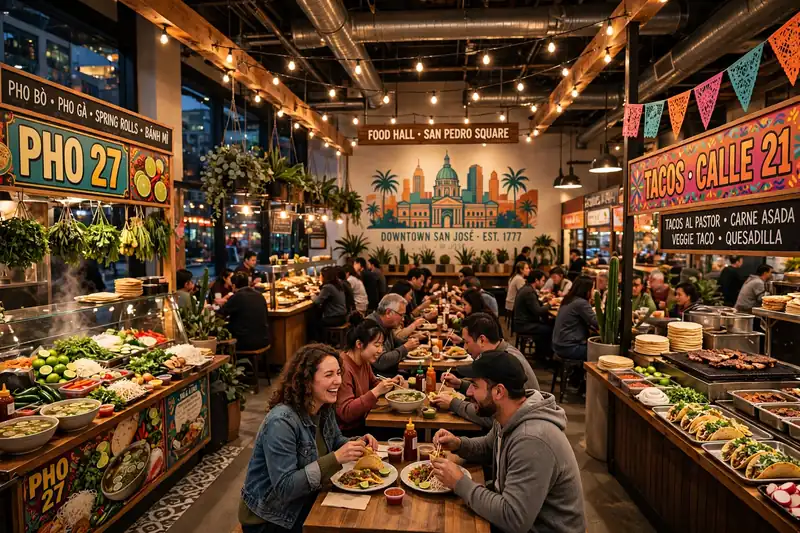
San Pedro Square Market is the place San Jose goes to eat, and the best single stop for a first-time visitor who wants to taste the city. A food hall and market in the historic Peralta Adobe district, at 87 North San Pedro Street, it gathers about 20 local vendors under one roof — tacos, pho, pizza, oysters, craft beer, coffee and ice cream — around communal tables, with live music on many evenings and a lively outdoor patio. It is open daily from 11 a.m. to 10 p.m., and Friday and Saturday until midnight. The smart way to do it is to graze: order a small plate from two or three stalls instead of one big meal, and save room for dessert. The market sits next to the oldest buildings in the city, so pair it with the Peralta Adobe and the Fallon House across the square, and come back on a Friday evening, when the market is at its liveliest and the downtown crowd is out.
12. Plaza de César Chávez
Plaza de César Chávez on Wikipedia is the front lawn of downtown San Jose — the city’s main square, a two-block park of lawns, fountains and palm trees on Market Street, between the Fairmont hotel and the art museum. It is where San Jose gathers: lunchtime crowds on weekdays, families on weekends, and the city’s biggest events through the year. The square is named for the farmworker leader César Chávez, and a statue of him stands at the park’s edge. From late November to New Year’s Day the plaza hosts Christmas in the Park, the city’s biggest free event — more than 40 animated displays and 600 decorated trees, with free photos with Santa — and in summer it hosts concerts and festivals, including the San Jose Jazz Summer Fest in August. The plaza is free and open all day, every day. Use it as the centre of your downtown walk: the art museum is across the street, the cathedral is a block away, the Tech Interactive is two blocks south, and San Pedro Square Market is a five-minute walk north.
13. Peralta Adobe
The Peralta Adobe on Wikipedia is the oldest building in San Jose, and the oldest building in the whole of northern California that is still standing on its original site. Built in 1797 as the home of Luis María Peralta, the commissioner of the pueblo, it is a simple adobe house with thick mud-brick walls, a tiled roof and a small garden, and it is the last surviving building from the city’s founding days. The house stands on St. John Street, next to the Fallon House — a grand 1855 Victorian mansion built by the city’s fifth mayor — and together the two buildings are the Peralta Adobe–Fallon House Historic Site, run by History San Jose. The houses open on a limited schedule, so check the day’s hours before you go, and the garden between them is a quiet place to sit. The visit is short — 30 minutes is enough — but it is the most direct connection to the San Jose of 1797, and it pairs naturally with San Pedro Square Market, which is across the street, and with the Cathedral Basilica, a five-minute walk away.
14. Almaden Quicksilver County Park
Almaden Quicksilver County Park on Wikipedia is the wildest place inside San Jose’s city limits — 4,152 acres of oak hills, grassland and old mercury mines, with more than 34 miles of trails, in the hills south of the city. From 1845 to 1975 this was one of the richest mercury mines in the world: the New Almaden mines produced the quicksilver that the California gold rush needed to extract gold, and at their peak they employed more than 1,800 men. Today the mines are closed and the park is a hiker’s and mountain biker’s playground, with trails to hilltop views over the whole Santa Clara Valley, wildflowers in spring, and the old mining buildings and the San Cristobal mine — visible behind a locked gate — as reminders of what was here. Entry is free, the park is open from 8 a.m. to sunset, and the main trailheads are at the Hacienda entrance and the Mockingbird Hill entrance. The best walk is the Mine Hill Trail to the hilltop, about 4 miles return, with the valley spread out below. Bring water, wear a hat, and go in the morning: there is almost no shade, and the hills are hot by midday.
15. Alum Rock Park
Alum Rock Park on Wikipedia is San Jose’s oldest park, and its most surprising one. Founded in 1872, it is one of the oldest municipal parks in California — 720 acres of canyon, creek and oak woodland in the foothills of the Diablo Range, on the city’s east side, with about 13 miles of trails, picnic areas and a nature centre. From 1890 to 1932 the park was a nationally known health spa, built around 27 mineral springs that visitors came to bathe in and drink from — the grottos and stone bridges from the spa days are still there, visible from the Penitencia Creek Trail. The park is open from 8 a.m. to half an hour after sunset, parking beyond the Eagle Rock lot costs $6, and dogs are not allowed. Two closures to know about in 2026: the Penitencia Creek Trail is closed at the Trestle Bridge, with a detour along the park road, and the Mineral Springs Trail is closed because of erosion — though the grottos are still visible from the Penitencia Creek Trail. Some sources also list the park as closed on Mondays, so check before a Monday visit. The best walk is the Penitencia Creek Trail along the water, about 2 miles return, with the canyon walls closing in around you — it feels a world away from the city, and it is a 20-minute drive from downtown.
16. Mount Hamilton and Lick Observatory
Mount Hamilton and the Lick Observatory on Wikipedia are the best day trip from San Jose — and the one that needs a warning. The observatory, built in 1888 on the 4,200-foot summit of Mount Hamilton, was the world’s first permanently occupied mountain observatory, and the drive up is half the experience: 19 miles of winding road from Alum Rock Avenue, climbing through oak woodland and grassland, with views over the whole valley. At the top the white domes of the telescopes stand against the sky, and on a clear day you can see from San Francisco Bay to the Sierra Nevada. But in 2026 the observatory’s main building is closed for repairs, and only the Shane Telescope Gallery and the grounds are open — free, daily from 9 a.m. to 5 p.m. — with the gift shop moved to the Historic Diner, open weekends 11 a.m. to 4 p.m. The road itself is the other warning: Mount Hamilton Road (Highway 130) is narrow and winding, there is no petrol on the mountain, and winter snow can close the road — check the conditions before you go, and do not attempt it in fog or after rain. Allow a half day, drive slowly, and go on a clear morning for the best views. The observatory is closed on Thanksgiving Day.
17. Santana Row and Valley Fair
Santana Row on Wikipedia is San Jose’s answer to Rodeo Drive — a Mediterranean-style outdoor shopping and dining district on Stevens Creek Boulevard, with palm-lined streets, fountains, boutiques, restaurants and bars, and apartments above the shops. It is the place to go for an evening out: dinner at one of the row’s restaurants, a drink on a patio, and a stroll past the shop windows. Across the street is Westfield Valley Fair, one of the largest malls in the Bay Area, with more than 200 shops including the luxury wing that opened in 2020. The two together are the biggest shopping destination in Silicon Valley, and the area around them — the Winchester Mystery House is a five-minute walk away — makes a good half-day: the mansion in the morning, lunch on the row, and the mall in the afternoon. Parking at Santana Row is free for the first two hours in the garages, and the area is at its best on a Friday or Saturday evening, when the patios are full and the string lights are on.
18. Happy Hollow Park & Zoo
Happy Hollow Park & Zoo on Wikipedia is the small zoo and amusement park that San Jose families have loved since 1961 — 16 acres in Kelley Park, with a zoo, rides and playgrounds, all in one ticket. The zoo is accredited by the Association of Zoos and Aquariums and holds red pandas, lemurs, jaguars and meerkats, and the park has the Danny the Dragon train, a carousel, a puppet theatre and storybook rides for small children. In 2026 admission is $22 for visitors aged 2 to 59, $19 for seniors and military, and free for children under 2, and parking costs $10 a day. The hours are the detail to check: in November and December 2026 the park is open on weekends only — Saturday and Sunday 10 a.m. to 4 p.m., plus Friday November 27 and December 21 to 23 and 28 to 31 — so a weekday visit in winter will find the gates shut. In summer the park opens more days. Allow two to three hours with children, and pair it with History Park and the Japanese Friendship Garden, which share the same park — Kelley Park is the best family day in the city.
19. San Jose Flea Market
The San Jose Flea Market on Wikipedia is the biggest open-air market in California, and the most San Jose thing you can do on a weekend. On 120 acres in Berryessa, at 1590 Berryessa Road, it has been running since 1960, with hundreds of vendors selling everything from fresh produce and piñatas to vintage clothes, tools and electronics, plus food stalls, live music on two stages and rides for children. The market is open Friday, Saturday and Sunday from 8 a.m. to 5 p.m., and closed Monday to Thursday — Friday has fewer sellers than the weekend, but entry is free on Fridays, about $3 on Saturdays and about $5 on Sundays, and parking is about $10 on Fridays and up to $20 at weekends. The food is the reason to go hungry: tacos, birria ramen, carne asada, raspados and corn dogs, with live bands playing on the stages all weekend. The market is a short walk from the Berryessa–North San José BART station, which makes it easy without a car. Allow two to three hours, bring cash for the small stalls, and go early — the produce row is best in the morning, and the market gets crowded by midday.
20. Japantown
Japantown, San Jose on Wikipedia is one of only three Japantowns left in the United States — the others are in San Francisco and Los Angeles — and it is the most authentic neighbourhood in San Jose. Centred on Jackson Avenue, just north of downtown, Nihonmachi has been a Japanese community since the 1890s, and it still feels like one: Japanese markets, tofu shops, noodle houses and bakeries, the Buddhist church, and the Japanese American Museum of San Jose at 535 North Fifth Street, which tells the story of the community — including the internment of Japanese Americans during the Second World War — and is open Thursday to Sunday from noon to 4 p.m., at $12 for adults and $8 for seniors, students and educators. Walk Jackson Avenue, eat ramen or sushi at one of the small restaurants, buy Japanese snacks at the market, and visit the museum — it is small, an hour is enough, and it is the most moving hour in the city. The Japantown Farmers’ Market ran on Sundays from May to October 25, 2026, and is now finished for the year. Japantown is also where to eat in San Jose: the ramen here is among the best in the Bay Area, and the sushi is the real thing, not the California-roll version.
San Jose in 3 days — a ready-made itinerary
Three days is the right amount of time for San Jose: one day downtown, one day in the gardens and the parks, and one day in the mountains or out on a day trip. This itinerary assumes a weekend, because the Rosicrucian Egyptian Museum is only open Friday to Sunday — if you are here on weekdays, swap it for the Winchester Mystery House or an extra hour at the Tech Interactive.
Day 1 — Downtown museums and the market
Start at The Tech Interactive when it opens at 10 a.m., and give it three hours — the hands-on exhibits are best before the school groups arrive. Walk two blocks to the San Jose Museum of Art for 90 minutes, then cross the street to the Cathedral Basilica of St. Joseph for a quiet half hour inside. Lunch is at San Pedro Square Market, grazing across two or three stalls. In the afternoon, walk to the Peralta Adobe and the Fallon House, then spend an hour in Japantown — the museum, a ramen shop, and a wander down Jackson Avenue. In the evening, dinner on Santana Row, or a Sharks game at the SAP Center if they are playing at home. If you are here on a Friday, the art museum stays open until 9 p.m. and is free after 6 p.m.
Day 2 — Gardens, parks and the mansion
Start at the Municipal Rose Garden at 8 a.m., when the light is soft and the garden is empty — in May, this is the best hour in San Jose. Walk five minutes to the Rosicrucian Egyptian Museum when it opens, and give it two hours. Drive to Kelley Park for the afternoon: the Japanese Friendship Garden, History Park and Happy Hollow Park and Zoo are all in the same park, and together they fill the afternoon. If you have children, Happy Hollow comes first; if you do not, the Friendship Garden and History Park are the quieter choice. In the late afternoon, drive to the Winchester Mystery House for the last tour of the day — the house is at its most atmospheric as the light fades — and finish with dinner on Santana Row, five minutes away.
Day 3 — Mountains, mines or the coast
Choose one of three days. The mountain day: drive up Mount Hamilton to the Lick Observatory in the morning, when the air is clearest, then come down and spend the afternoon hiking in Alum Rock Park or Almaden Quicksilver County Park. The Silicon Valley day: drive 20 minutes north to the Computer History Museum in Mountain View — the best computing museum in the world — and the Intel Museum in Santa Clara, with lunch in between. The coast day: drive 45 minutes to Santa Cruz, walk the Boardwalk, eat on the wharf, and drive back over the Santa Cruz Mountains at sunset. San Francisco is also possible in a day — Caltrain from Diridon Station takes about 90 minutes — but it deserves its own trip, and our San Francisco guide covers it properly.
Best time to visit San Jose
| Season | Weather | What it is like |
|---|---|---|
| Spring (March to May) | 65–75°F, dry and sunny | The best season: the Rose Garden peaks in May, the hills are green, and the crowds are small |
| Summer (June to August) | 75–85°F, warm and dry | Hot and sunny, with the longest days; the gardens are full, the Sharks are off-season, and the parks are busy at weekends |
| Autumn (September to November) | 70–80°F, warm and clear | The second-best season: warm days, cool nights, the Flea Market at its liveliest, and Christmas in the Park opens in late November |
| Winter (December to February) | 55–65°F, cool with rain | The quietest season: rain is possible, the mornings are foggy, but Christmas in the Park runs through January 1 and hotel prices drop |
April to June and September to October are the best months to visit San Jose: warm, dry and sunny, with the roses at their peak in May and the hills still green in spring. Summer is hot and dry, with highs in the low 80s, and the city is at its busiest — book the Winchester Mystery House and the Sharks games in advance. Winter is the quiet season, with highs in the high 50s and low 60s and rain from November to March, but it is also the cheapest time to stay, and Christmas in the Park — November 27, 2026 to January 1, 2027 — is the city’s best free event. San Jose gets about 300 days of sunshine a year, more than San Francisco, and the fog that covers the bay in summer rarely reaches downtown. The worst time to visit is a rainy weekend in January, when the parks are muddy and the gardens are bare — but even then, the museums are open and the food is good.
Where to stay in San Jose
| Area | Best for | What to expect |
|---|---|---|
| Downtown San Jose | First-timers, museum lovers, Sharks fans | The Fairmont, the Signia by Hilton and the Hyatt Place are all within walking distance of the museums and the arena; about $180–$300 a night |
| Santana Row | Shopping, nightlife, couples | The Hotel Valencia on the Row itself, with boutiques and restaurants downstairs; about $250–$400 a night |
| Near the airport (SJC) | Short stays, early flights | Chain hotels along North First Street, about $120–$200 a night, with free shuttles to the airport |
| Los Gatos | A quieter base, walkers | A small town 10 minutes southwest of downtown, with a charming main street and the Los Gatos Creek Trail; about $200–$350 a night |
Downtown San Jose is the best base for a first visit: the museums, the market, the arena and the plaza are all within walking distance, and the light rail and the free downtown trolley cover the rest. The Fairmont San Jose and the Signia by Hilton are the two big downtown hotels, both on the Plaza de César Chávez, and the Hyatt Place San Jose Downtown is a good mid-range choice. Santana Row is the better base if shopping and nightlife matter more than museums — the Hotel Valencia sits on the Row itself, and the Winchester Mystery House is a five-minute walk away. The airport hotels on North First Street are the cheapest option, and fine for a one-night stay, but they are a drive from everything. Los Gatos, ten minutes southwest, is the prettiest base — a small town with a main street, good restaurants and the Los Gatos Creek Trail — if you have a car and do not mind driving into the city. Book early for Sharks weekends and for Christmas in the Park, when downtown hotels fill up.
Getting around San Jose
| Option | Cost | Best for |
|---|---|---|
| VTA light rail | $2.50 a ride with Clipper, 2-hour transfers | Downtown to Santana Row, the airport area and the Flea Market |
| VTA bus | $2.50 a ride with Clipper | The neighbourhoods the light rail does not reach |
| DASH trolley | Free | Downtown — the museums, the market and the arena |
| Caltrain | About $4–$10 depending on distance | San Francisco and the Peninsula, from Diridon Station |
| BART | About $3–$6 | The Berryessa Flea Market and the East Bay, from Berryessa–North San José station |
| Rideshare and taxi | About $10–$25 across town | Late nights and the parks, where buses are thin |
| Rental car | About $50–$80 a day | The mountain day, the parks and the day trips — essential for Mount Hamilton and Almaden Quicksilver |
Downtown San Jose is walkable, and the free DASH trolley loops around the museums, the market and the arena, so you do not need a car for the first day. The VTA light rail covers the rest of the city — Santana Row, the airport area and the Flea Market are all on the light rail — and a single fare is $2.50 with a Clipper card, with two-hour transfers. Caltrain runs from Diridon Station up the Peninsula to San Francisco in about 90 minutes, and BART runs from the Berryessa–North San José station to the East Bay and the Flea Market. But the parks and the mountain day need a car: Alum Rock Park, Almaden Quicksilver and Mount Hamilton are not served by useful buses, and rideshares to the trailheads are unreliable. Rent a car for Day 3, or for the whole trip if you are staying outside downtown. Parking downtown costs about $10 to $20 a day in the garages, and Santana Row parking is free for the first two hours. San Jose International Airport (SJC) is about 3 miles from downtown — a 10-minute drive, or a bus and light-rail connection.
San Jose food you have to try
San Jose is one of the most diverse food cities in America — more than a third of its residents were born outside the United States — and the food is the best reason to leave downtown. The city has the largest Vietnamese community in the country outside Orange County, a Japanese community that dates to the 1890s, and a Mexican community that shapes the whole city, and the best meals in San Jose are in the neighbourhoods, not the hotels.
Vietnamese pho and banh mi
San Jose’s Vietnamese food is the best in the Bay Area, and the pho is the dish to start with. The Little Saigon neighbourhood on Story Road, east of downtown, is lined with Vietnamese restaurants, bakeries and markets, and a bowl of pho — beef noodle soup with herbs, bean sprouts and lime — costs about $12 to $16 at most of them. The banh mi is the other essential: a crusty baguette with pâté, cold cuts, pickled vegetables and jalapeño, for about $6 to $9. Go for lunch, when the restaurants are full of local families, and order the way they do — pho with a side of banh mi to share.
Ramen and sushi in Japantown
Japantown is where San Jose eats Japanese food, and the ramen here is among the best in the Bay Area. The small ramen shops on Jackson Avenue serve rich tonkotsu broth, firm noodles and chashu pork, for about $15 to $19 a bowl, and the sushi restaurants serve the real thing — fresh fish, proper rice, and omakase if you ask. The Japanese markets on the same street sell snacks, mochi and tea to take away. Come for dinner, when the restaurants are at their liveliest, and do not skip the dessert: the bakeries sell melon pan and matcha soft serve.
Mexican tacos and the Flea Market
San Jose’s Mexican food is everywhere, and the best of it is in the neighbourhoods and at the Flea Market. The taco trucks on East Santa Clara Street and the taquerias in the east side serve carne asada, al pastor and carnitas tacos for about $3 to $5 each, with handmade tortillas and salsa made that morning. At the San Jose Flea Market, the food stalls serve birria ramen, quesabirria tacos, carne asada and raspados — Mexican shaved ice — and the live music on the stages makes it a meal and a show at once. The Flea Market is open Friday to Sunday, so plan a weekend lunch there, and bring cash for the small stalls.
Free things to do in San Jose
San Jose is generous with free things. The Municipal Rose Garden is free every day, and the Japanese Friendship Garden is free every day too — two of the best gardens in California, for nothing. The Cathedral Basilica of St. Joseph is free to enter, the Plaza de César Chávez is free to sit in, and Christmas in the Park is free from late November to New Year’s Day. The Guadalupe River Park and the Los Gatos Creek Trail are free to walk or cycle, the Lick Observatory grounds and the Shane Telescope Gallery are free, Almaden Quicksilver County Park and Alum Rock Park are free to hike (parking is $6 at Alum Rock beyond the Eagle Rock lot), and History Park’s grounds are free to wander. The San Jose Museum of Art is free on the first Friday of the month after 6 p.m., and free all the time for visitors aged 17 and under. The free DASH trolley loops around downtown, and the downtown murals — painted on buildings, streets and crosswalks all over the centre — are a free walking tour in themselves. In total, you could spend two full days in San Jose and pay for nothing but food — and eat very well doing it.
Frequently asked questions
How many days do you need in San Jose?
Three days is the right amount: one day downtown for the museums and the market, one day for the gardens and Kelley Park, and one day for the mountains or a day trip. Two days works if you skip the mountain day and focus on downtown and the gardens. One day is enough for the Winchester Mystery House, the Tech Interactive and San Pedro Square Market, but you will miss the gardens, which are the best part of the city. Add a fourth day if you want a Silicon Valley day trip to the Computer History Museum and the Intel Museum, or a Santa Cruz day trip to the beach and the Boardwalk.
Is San Jose worth visiting?
Yes — if you come for the right reasons. San Jose is not a postcard city like San Francisco, and it does not try to be. It is a city of museums, gardens, markets and mountain trails, with some of the best food in California and the most interesting tech history in the world, and it is far less crowded and far cheaper than San Francisco. The Winchester Mystery House alone is worth the trip, and the Rose Garden, the Egyptian museum and a Sharks game make a weekend that most visitors do not expect. Come for three days, not one, and come with a plan — the city’s best sights are spread out, and the ones with the strangest hours reward a little planning.
Do you need a car in San Jose?
Not for downtown — the museums, the market, the arena and the plaza are all walkable, the free DASH trolley loops around them, and the VTA light rail covers Santana Row and the Flea Market. But you do need a car for the parks and the mountain day: Alum Rock Park, Almaden Quicksilver County Park and Mount Hamilton are not served by useful buses. The practical answer is to stay downtown without a car for the first two days, and rent a car for Day 3, or for the whole trip if you are staying outside downtown. Rideshares work across town for about $10 to $25, but they are unreliable at the trailheads.
What is the best time to visit San Jose?
April to June and September to October, when the weather is warm, dry and sunny and the crowds are small. The Rose Garden peaks in May, which is the single best month to visit. Summer is hot and busy, with the longest days and the most events, but the Sharks are off-season. Winter is the quietest and cheapest time, with rain possible from November to March, but Christmas in the Park — November 27, 2026 to January 1, 2027 — is the city’s best free event and runs through the holidays. Avoid a rainy weekend in January, when the parks are muddy and the gardens are bare.
Is California’s Great America open?
No — not for much longer. California’s Great America, the amusement park in Santa Clara next to San Jose, is set to close for good after the 2027 season, and its Halloween Haunt event already ended after 2021. Many older guides still list it as a normal attraction, and some still list its rides as a reason to visit San Jose — do not plan a trip around it. If you are visiting in 2027, check whether it is still operating before you go. For family fun in San Jose itself, go to Happy Hollow Park and Zoo, the Children’s Discovery Museum and the San Jose Flea Market instead.
What should I skip in San Jose?
Skip the idea that San Jose is just an airport on the way to San Francisco — that is the mistake most visitors make, and it costs them the best weekend in the Bay Area. Skip a weekday visit to the Rosicrucian Egyptian Museum, which is closed Monday to Thursday, and a Monday visit to the San Jose Museum of Art or the Children’s Discovery Museum, which are both closed on Mondays. Skip driving up Mount Hamilton in fog or after rain, and skip the Winchester Mystery House without a booking — the popular times sell out. And skip the Flea Market on a Monday to Thursday, when it is closed: it only opens Friday to Sunday.
Further reading
San Jose, California on Wikipedia
Silicon Valley on Wikipedia
Winchester Mystery House on Wikipedia
The Tech Interactive on Wikipedia
San Jose Museum of Art on Wikipedia
Children’s Discovery Museum of San Jose on Wikipedia
Rosicrucian Egyptian Museum on Wikipedia
San Jose Municipal Rose Garden on Wikipedia
Japanese Friendship Garden (San Jose) on Wikipedia
History Park on Wikipedia
Cathedral Basilica of St. Joseph on Wikipedia
SAP Center on Wikipedia
San Jose Sharks on Wikipedia
San Pedro Square on Wikipedia
Plaza de César Chávez on Wikipedia
Peralta Adobe on Wikipedia
Almaden Quicksilver County Park on Wikipedia
Alum Rock Park on Wikipedia
Lick Observatory on Wikipedia
Mount Hamilton (California) on Wikipedia
Santana Row on Wikipedia
Happy Hollow Park & Zoo on Wikipedia
San Jose Flea Market on Wikipedia
Japantown, San Jose on Wikipedia
California Theatre (San Jose) on Wikipedia
San Jose Center for the Performing Arts on Wikipedia
Computer History Museum on Wikipedia
Intel Museum on Wikipedia
San Jose Giants on Wikipedia
Christmas in the Park (San Jose) on Wikipedia
Guadalupe River (California) on Wikipedia
Los Gatos Creek on Wikipedia
For local tips and first-hand reports from people who live in the city, the r/SanJose community on Reddit is the place to ask — it is where locals swap restaurant recommendations, day-trip ideas and photos of the city. No Quora link is included, because no live, on-topic Quora thread about visiting San Jose could be verified.
Your San Jose trip, in one paragraph
San Jose is the place where the whole idea of this site — one honest, complete guide per place — feels most at home: a Victorian mansion full of staircases to nowhere, the most hands-on science museum in the Bay Area, a rose garden the whole country knows by name, and a Japantown that is one of only three left in America, all in the city that built Silicon Valley. Start with the islands and the coasts: our Hawaii guide, our Maui guide, and our Honolulu guide. Then the American cities, in the order we wrote them: our Chicago guide, our Nashville guide, our Los Angeles guide, our Orlando guide, our Miami guide, our San Diego guide, our Denver guide, our Savannah guide, our Dallas guide, our Charleston guide, our San Francisco guide, our Myrtle Beach guide, our Las Vegas guide, and our San Antonio guide. Further afield: our London guide, our Portland guide, our Pigeon Forge guide, our Puerto Rico guide, our Atlanta guide, our Phoenix guide, our Paris guide, our Key West guide, our Colorado Springs guide, our Sedona guide, our Chattanooga guide, our Palm Springs guide, our St Louis guide, and our Tokyo guide. Then the middle of the map: our Japan guide, our Kansas City guide, our Tennessee guide, our Branson guide, our Florida guide, our Amsterdam guide, our Montreal guide, our Fort Lauderdale guide, our Toronto guide, our Aruba guide, our Charlotte guide, our Indianapolis guide, our New Orleans guide, our Destin guide, our Santa Barbara guide, our Mexico City guide, our Arizona guide, our Osaka guide, our Minneapolis guide, our Pittsburgh guide, our California guide, our Asheville guide, our Costa Rica guide, our Washington DC guide, our Seattle guide, our St Augustine guide, our Lisbon guide, our Dubai guide, and our Santa Fe guide. And the most recent: our Galveston guide, our Maine guide, our Sacramento guide, our Kauai guide, our Boston guide, our Cancun guide, our Madrid guide, our Salt Lake City guide, our Baltimore guide, our Barcelona guide, our Reno guide, our Milwaukee guide, our North Carolina guide, our New York guide, our Tucson guide, our Raleigh guide, our Corpus Christi guide, our Milan guide, our Salem guide, our Wilmington guide, our Memphis guide, our Flagstaff guide, our Austin guide, our Oahu guide, our Iceland guide, our Cincinnati guide, our Fort Worth guide, our Panama City Beach guide, our Monterey guide, our Nassau Bahamas guide, our Lexington guide, and our Lake Tahoe guide. San Jose belongs on that list because it is the one city in America where you can tour a haunted mansion in the morning, eat the best pho in the Bay Area at lunch, and watch an NHL game at night — and after three days here, with the roses, the gardens and a drive up Mount Hamilton behind you, you will understand why the city that built Silicon Valley is worth a trip of its own.

About the Author