Things to Do in Cancun
20 Best Attractions, a 3-Day Itinerary, Where to Stay, and the Food You Cannot Miss
Quick Info
Best for: First-timers, beach lovers, snorkellers, history lovers and families — the Caribbean with the Maya world next door
Best time: Mid-November–April for dry days and clean beaches; June–September for whale sharks (and the sargassum)
How long: 3 days for the beaches, Isla Mujeres and Chichén Itzá; 5 to 7 days adds Tulum, Cobá, the cenotes and the eco-parks
Budget: About $100–$250 per person per day with a mid-range hotel — the beaches, the parks and downtown are free
Don’t miss: Playa Delfines at sunrise, a day on Isla Mujeres, Chichén Itzá at opening time, a cenote swim and tacos downtown
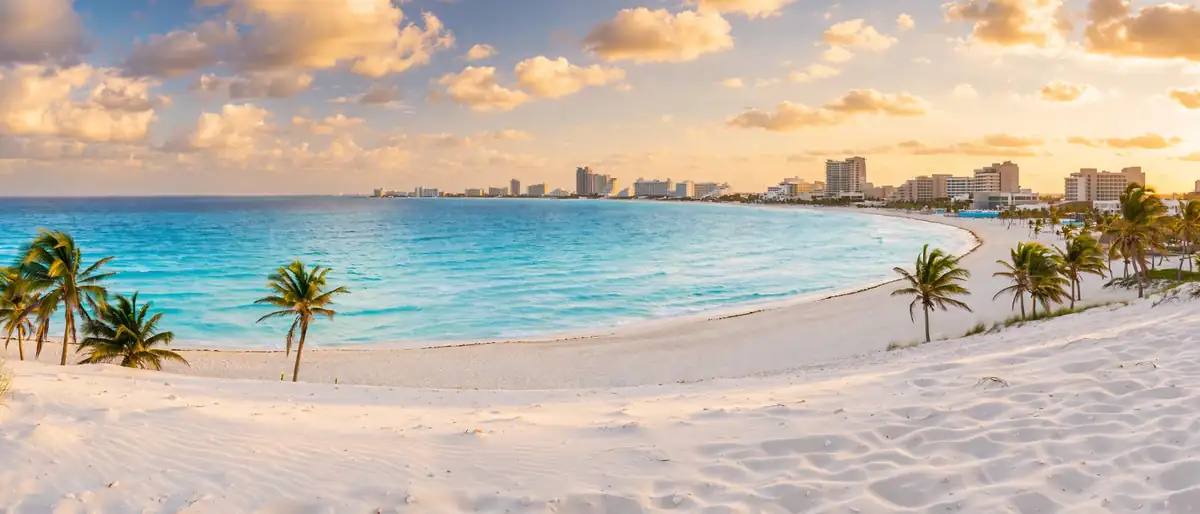
Cancun on Wikipedia is the resort city Mexico built from nothing on empty sand — a 22-kilometre strip of white beach and turquoise water between the Caribbean and the Nichupté Lagoon, with a real Mexican city behind it and the Maya world a day trip away. This guide covers the 20 best things to do in Cancun, a 3-day itinerary that actually works, where to stay without overpaying, how to get around on buses and ferries, the three foods you should not skip, and the free sights that cost nothing. Everything below was checked against live sources in November 2026 — including the 2026 ruin prices, the record sargassum season, and the pyramid you can climb again.
Cancun at a glance
| Topic | What to know |
|---|---|
| Full name | Cancun — a planned resort city on Mexico’s Yucatán Peninsula, built from 1970 |
| Founded | 1970, as a government-planned tourist resort on empty sand |
| Population | About 900,000 people in the metro area |
| Language | Spanish; English is widely spoken in the Hotel Zone |
| Airport | Cancun International Airport (CUN), about 20 km southwest of the Hotel Zone |
| Best base | The Hotel Zone for the beach; downtown for food and prices; Isla Mujeres for quiet |
| Getting around | The R-1 bus (about 12 MXN) and your feet in the Hotel Zone; ferries to the islands; ADO buses south |
| Famous for | White-sand beaches, Chichén Itzá, cenotes, Isla Mujeres and the Mesoamerican Reef |
Cancun divides into two halves, and most visitors only ever see one of them. The Hotel Zone, the Zona Hotelera, is the long, 7-shaped sandbar of resorts along Boulevard Kukulcán, with the Caribbean on one side and the Nichupté Lagoon on the other. Downtown, El Centro, is the working city on the mainland: markets, taquerías, evening plazas and prices in pesos rather than dollars. The trap is the calendar: the sargassum seaweed that fouls the Caribbean-facing beaches in summer was at record levels in 2026, and the big events of the year are over. Check the seaweed report for your beach before you book, and again before you leave — the conditions change beach by beach and week by week.
The 20 best things to do in Cancun
1. Playa Delfines and the Cancún sign
Playa Delfines is the postcard beach of Cancun, and the one every visitor should see first: the widest stretch of white sand in the Hotel Zone, at kilometre 18, with no hotels in front of it, a low bluff above it, and the colourful Cancún sign on the lookout where everyone takes the photograph. It is a free public beach, with free parking, lifeguards, restrooms and palapas for shade. The honest warning is the water: Delfines faces the open Caribbean, and the surf is stronger here than on the sheltered northern beaches. Respect the flag system — a red or black flag means no swimming, and the current can be strong even on a calm-looking day. Come at sunrise, when the light hits the water and the beach is nearly empty, or at sunset for the sign photograph. Allow an hour, or a morning if you are settling in with a towel.
2. Isla Mujeres and Playa Norte
Isla Mujeres on Wikipedia is the day trip that makes a Cancun holiday: a 7-kilometre island twenty minutes across the water, with the calmest beach in the region at its northern tip. The Ultramar ferry from Puerto Juárez, just north of downtown Cancun, runs about every 30 minutes from roughly 5 a.m. to 8:30 p.m., then hourly until about 11:30 p.m., and the crossing takes 15 to 20 minutes. An adult round trip costs 540 to 580 MXN (about $28 to $31) — 540 MXN at the window in September 2026, 580 MXN on Ultramar’s online fare table in November — so pay in pesos at the window and do not buy a resold package for the same ticket. Ferries also leave from Playa Tortugas and Playa Caracol in the Hotel Zone, at the same fare but with fewer departures and earlier last boats. Playa Norte is a five-to-ten-minute walk from the pier: shallow, turquoise, no waves, free to enter, with loungers at the beach clubs running roughly 200 to 500 MXN, almost always with a minimum consumption attached. Rent a golf cart only if you want the rest of the island — about $65 to $100 a day for a daytime four-seater — and drive south to Punta Sur, the cliff and sculpture park at the island’s tip, where entry is about 150 MXN. The turtle farm, Tortugranja, costs about 50 MXN, and Hacienda Mundaca, the old pirate’s estate, is free and reopened on March 31, 2026 after eleven years abandoned. Go before 9 a.m. for empty sand, and take the last boat back after sunset.
3. Chichén Itzá
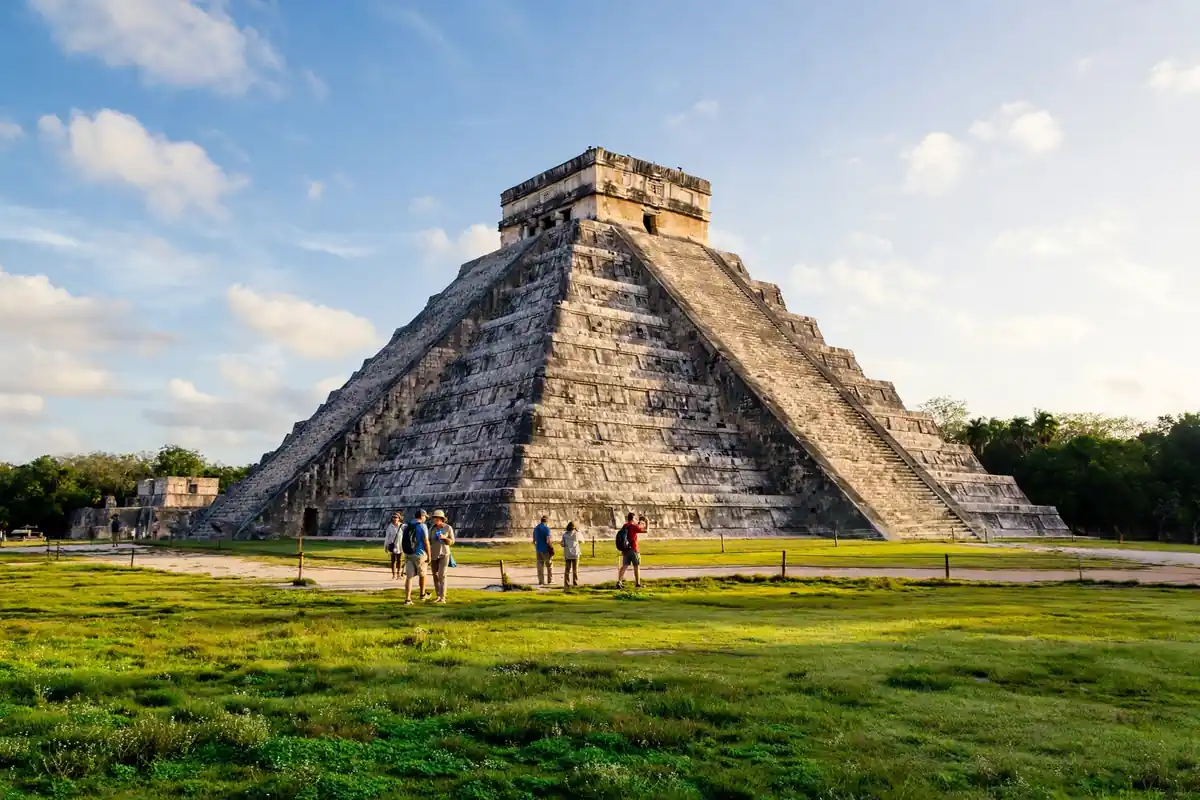
Chichen Itza on Wikipedia is the day trip no Cancun visit is complete without: the great Maya city, a UNESCO World Heritage Site and one of the New Seven Wonders of the World, about 200 kilometres and two and a half to three hours west of Cancun. El Castillo, Chichen Itza on Wikipedia, the stepped pyramid of Kukulcán, is the centrepiece — 30 metres tall, with 365 steps for the days of the solar year — and the Great Ball Court beside it is the largest in Mesoamerica. The 2026 price is the first thing older guides get wrong: since March 27, 2026, Chichén Itzá sells a single ticket at one window, 697 MXN (about $37) for foreign adults — 105 MXN to INAH, the federal archaeology institute, plus 592 MXN to the state of Yucatán — and 310 MXN for Mexicans and residents, who enter free on Sundays. The site is open daily from 8 a.m. to 5 p.m., with last entry at 4 p.m., and climbing is banned on every structure. Go at the 8 a.m. opening, before the heat and the tour buses: by midday the plaza is crowded and the shade is gone. A shared bus tour from Cancun costs about $70 to $110 per person all-in; the $30 to $50 base prices on many listings leave out the 697 MXN entrance ticket, so confirm what is included before you compare. Driving yourself costs about 530 MXN each way in tolls on Highway 180D, plus 124 MXN for parking since May 1, 2026, and the Maya Train stops at Pisté, two kilometres from the site, with a 55 MXN shuttle. Two warnings from 2026: the site closed for 13 days from May 18 over a dispute about relocating vendors, reopening on June 1, and the entrance has moved to the new visitor centre, so the walk to the main plaza now runs nearly a mile past the Sacred Cenote — and maps apps have led drivers to the wrong place, where people in official-looking vests try to flag cars down. The night show, Noches de Kukulcán, is a separate evening ticket. Allow a full day, 12 to 14 hours with the drive, and pair it with a cenote and Valladolid.
4. A cenote day on the Ruta de los Cenotes
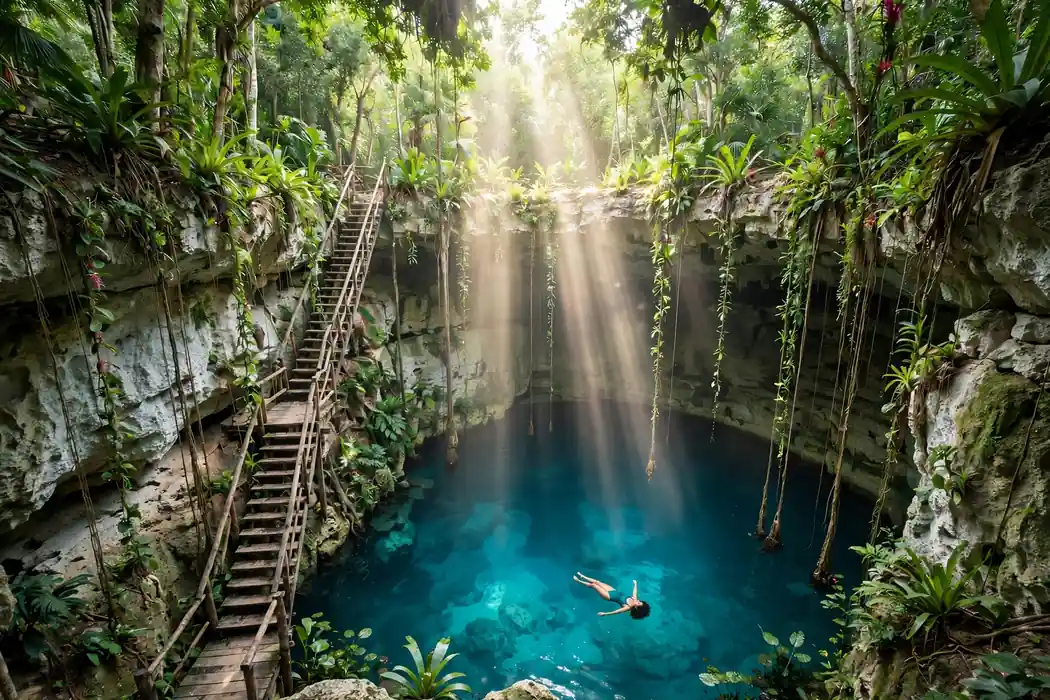
A cenote on Wikipedia is a natural limestone sinkhole filled with clear freshwater, and the Yucatán has more than 6,000 of them — sacred to the Maya, who called them portals to the underworld. The closest cluster to Cancun is the Ruta de los Cenotes, the cenote road inland from Puerto Morelos, where a rental car turns a half day into a swim in three different sinkholes. The famous one is Ik Kil on Wikipedia, three kilometres from Chichén Itzá: an open, round sinkhole with the water about 26 metres below ground level, reached by a carved stairway, with general access at 240 MXN for adults and 150 MXN for children, or 530 MXN and 280 MXN with the buffet. It is open from 9 a.m. to 5 p.m., with last entry at 4 p.m., and it is at its most crowded at midday, when the tour buses arrive. Suytun, near Valladolid, is the photograph: a beam of light falling through the hole in the roof onto a stone platform in the water, strongest around midday. Dos Ojos on Wikipedia near Tulum charges 400 MXN, and Nicte-Ha 300 MXN. The small village cenotes around Valladolid charge 100 to 250 MXN, and a life jacket is often compulsory, with lockers and snorkel gear on top. Bring reef-safe sunscreen — most cenotes ban ordinary sunscreen — and cash, because the village gates do not take cards. Río Secreto on Wikipedia is the guided alternative: a walk and swim through an underground river system, with wetsuit and helmet included, for visitors who want the cave without the driving.
5. MUSA, the underwater museum
The Museo Subacuático de Arte on Wikipedia — MUSA — is the strangest sight in Cancun: more than 500 life-size concrete sculptures lying on the sea floor between Cancun and Isla Mujeres, placed there to grow coral and to draw visitors away from the natural reefs. The snorkel-accessible gallery is Punta Nizuc, off the southern tip of the Hotel Zone, at 4 to 8 metres deep, where about 23 works sit in clear water, including pieces by Jason deCaires Taylor, who created the museum in 2010. MUSA’s own Punta Nizuc snorkel trip costs $58 per person as of November 2026, lasts at least two and a half hours, and includes gear, a mandatory life vest, a guide, lockers and drinks — plus a marine park and dock fee paid at reception, which MUSA’s own page lists at both $15 and $22, so confirm when you book. The deeper Manchones gallery near Isla Mujeres is diver territory, with scuba dives from about $115 from Cancun. Manage expectations: the sculptures are now heavily encrusted with coral and algae, which is the entire ecological point of the project and not what the marketing photographs show, and visibility in the Nizuc channel is inconsistent. Trips from the Hotel Zone run $60 to $90. Worth it if you want something unusual without leaving town; not worth it if you came to see a reef.
6. Snorkelling the Puerto Morelos reef
Puerto Morelos on Wikipedia is the small fishing town 30 minutes south of Cancun, and its reef is the best snorkelling near the city: part of the Mesoamerican Barrier Reef System on Wikipedia, the second-largest coral reef in the world, protected inside a national park where the boats are small and the reef is healthier than the patches off the Hotel Zone. A half-day trip costs about $45 to $70, including gear, a guide and the marine park fee, with a short boat ride out to the reef and usually two stops. The town itself is worth the other half of the day: a leaning lighthouse, a quiet main square, and lunch on the beach, where the fish comes off the boats in the morning. December to April is the best season, when the water is clearest. The honest comparison is with the Hotel Zone boats: the mass-market trips anchor 40 people over a bleached patch and call it a reef tour, while Puerto Morelos runs small groups over living coral. Book the morning departure, when the water is calmest, and confirm the marine park fee is included — it is roughly $5 to $15 and is sometimes left out of the headline price.
7. Swimming with whale sharks
The whale shark on Wikipedia is the world’s largest fish, and one of the largest known aggregations of them gathers in the waters between Cancun and Holbox every summer. The season runs from mid-May to mid-September, with the exact dates set by Mexican authorities each year, and July and August are the strongest months. Licensed boats only: the tours leave early in the morning, run about two hours out to the feeding grounds, and let you swim beside the sharks in pairs, with sightings near-guaranteed in season. Shared tours cost roughly $120 to $185 per person in 2026 — some operators list $140 to $155 — including dock and marine fees, and private boats run about $1,850. Book a few days ahead in July and August, when the licensed operators cap group sizes and the boats fill. Two warnings: this is snorkelling only, not diving, and you need to be a strong swimmer, because the sharks move and the sea is open; and any operator offering whale sharks outside mid-May to mid-September is selling something that does not exist. If your trip is in winter, the whale sharks are gone — the reef and the cenotes are the water days instead.
8. Tulum ruins and Parque del Jaguar
Tulum on Wikipedia is the Maya city on the cliff: the only Maya site built on the Caribbean coast, with El Castillo standing on a 12-metre cliff above a white-sand cove, and the Sian Ka’an on Wikipedia Biosphere Reserve beginning just to the south. It is about 130 kilometres and two hours south of Cancun, and it draws more than two million visitors a year. The 2026 price is the trap older guides get wrong: a federal decree in force since July 20, 2026 set a unified fee of 265 MXN (about $14) for foreign visitors — 100 MXN for Parque del Jaguar plus 165 MXN covering the national park and the archaeological zone — and 80 MXN for Mexicans, with the zone free on Sundays for Mexicans and residents. Guides written before July 2026 quote combined prices in the 600-peso range, and they are out of date. The site is open daily from 8 a.m. to 5 p.m., with last entry at 3:30 p.m., and the park stays open until 7 p.m. One honest warning: some visitors in October 2026 reported extra charges at the gate on top of the official fee, bringing the total above 400 MXN, so bring cash, insist on receipts for every payment, and know the official figure before you arrive. Go at opening time for the light on the cliff and the site before the tour buses, and wear a hat — there is almost no shade over most of the grounds. The beach below the ruins is inside the park, and the museum inside Parque del Jaguar is free at its own door, though you still pay the park gate to reach it.
9. Cobá — the pyramid you can climb again
Cobá on Wikipedia is the jungle city the tour buses mostly skip, and it holds the one thing Chichén Itzá no longer offers: a pyramid you can climb. Nohoch Mul, at 42 metres, is the tallest pyramid on the Yucatán Peninsula, and climbing it reopened on December 7, 2025, after six years closed — which means most guides online still say it is shut. The climb is the kinder one of the two climbable pyramids, with purpose-built stairs and a handrail, and the view from the top is jungle in every direction. The 2026 fees are two tickets, not one: 209 MXN to INAH, the federal heritage institute — doubled from 2025 — plus about 120 MXN to the Cobá ejido, the farming community that owns the land, for a total of about 330 MXN (about $18), best paid in cash. The site is open daily from 8 a.m. to 5 p.m., and Nohoch Mul sits about two kilometres from the gate, so rent a bike for about 60 to 80 MXN or take a tricycle taxi for about 150 to 180 MXN for two. It is about 170 kilometres and more than two hours from Cancun, so pair it with Tulum and a cave cenote on the same day, as the small-group tours do. The jungle causeways, the sacbeob, run between the groups of temples, and the site is at its best in the early morning, before the heat builds under the trees.
10. Ek Balam and Cenote X’Canché
Ek Balam on Wikipedia is the quiet Maya city that rewards the drive: about 30 minutes north of Valladolid and two hours from Cancun, much smaller than Chichén Itzá, with one of the best-preserved stucco facades in the Maya world — winged figures and a gaping jaguar mouth guarding the entrance to a tomb. Its Acropolis is 43 metres tall and still open to climb, taller than both Nohoch Mul at Cobá (42 metres) and El Castillo at Chichén Itzá (30 metres), and the climb is the raw version, on the original stonework, without a handrail. The 2026 price is the surprise: 691 MXN (about $37) for a foreign adult — 210 MXN federal INAH plus 481 MXN Yucatán state fee, collected as two separate payments at the gate — which is essentially the same as Chichén Itzá and more than double Cobá. It is quiet, not budget. The site is open daily from 8 a.m. to 5 p.m., with last entry at 4 p.m., and parking is 100 MXN. Cenote X’Canché sits 1.5 kilometres away for a separate 90 MXN: an open-air sinkhole about 25 metres deep, with vines hanging down to the water. There is no direct bus to the gate — from Cancun, take the ADO to Valladolid, then a colectivo or taxi for the last 17 kilometres. If you only climb one pyramid, climb this one; if you climb with children or anyone uneasy on steps, climb Cobá instead.
11. Xcaret Park
Xcaret Park on Wikipedia is the flagship eco-park of the Riviera Maya, about 75 kilometres south of Cancun and an hour to an hour and a half from the Hotel Zone: underground rivers you swim through, a beach inlet, a butterfly pavilion, an aquarium, wildlife, and the Xcaret México Espectacular night show at 7 p.m., which finishes around 9 p.m. The 2026 prices are about $143 to $159 for the Basic ticket, about $170 to $190 for Plus, and about $107 to $119 for the evening-only ticket — Basic covers the park, one river swim and the show, while Plus adds a buffet lunch, the Plus-area lockers and snorkel gear. The park is open daily from 8:30 a.m. to 10 p.m. Book on the official site at least seven days ahead for 10% off, and 20% off combinations of two or more parks or tours. Day-trip buses leave Cancun between about 6:30 and 8 a.m. and get back around 11 p.m., so plan a slow morning after. The honest warning is the extras: one October 2026 reviewer paid $215 per person on a tour price with a bus and still paid extra for photos and the show dinner, and a taxi from the park late at night can cost double — book the ride home before you go.
12. Xel-Há and Xplor
Xel-Há and Xplor are the other two parks in the Xcaret group, and they split the choice cleanly. Xel-Há is the relaxed one: a natural inlet for snorkelling, with an all-inclusive ticket at about $116 to $155, covering the buffet, the open bar, snorkel gear, inner tubes and river activities, open 8:30 a.m. to 6 p.m. and closed on Tuesdays. Xplor is the adventure one: zip-lines, caves, amphibious vehicles and underground rivers, from about $149 all-inclusive, open 9 a.m. to 5 p.m. Monday to Saturday and closed on Sundays, with a night version, Xplor Fuego, for a little less. Both sit just south of Playa del Carmen, so budget one to one and a half hours each way from Cancun. The closed days are the trap: Xplor is closed Sundays and Xel-Há is closed Tuesdays, and Google has shown the wrong day for both, so confirm the day when you book. One park the old guides still list is gone: Xavage, the whitewater and monster-truck park near Cancun airport that was sold as the one closest to the Hotel Zone, closed on November 12, 2024 for remodelling and has not reopened.
13. Museo Maya de Cancún and San Miguelito
The Museo Maya de Cancún on Wikipedia is the best museum in Cancun, and the easiest culture in the city: a modern archaeology museum on Boulevard Kukulcán at kilometre 16.5, run by INAH, with Maya finds from across Quintana Roo — carved stone, jade, ceramics, and human remains found in flooded caves. One ticket covers the museum and the San Miguelito ruins behind it, a 12th-to-15th-century fishing village and trading post reached by a shaded jungle trail, where the mosquitoes bite — bring bug spray. The 2026 price is 210 MXN (about $11) for foreign visitors and 105 MXN for Mexicans, free for children under 13 and visitors over 60, and free on Sundays for Mexican citizens and residents. The museum is open Tuesday to Sunday from 9 a.m. to 5 p.m., with last entry at 4:30 p.m., and closed on Mondays. Older guides quote 100 MXN, which was the old price — the INAH Category I fee is now 210 MXN for foreigners. Allow one to two hours, and go on a rainy day, when the beach is not calling.
14. El Rey ruins
El Rey is the Maya site most visitors to Cancun actually see, and the easiest ruin in the city: a settlement strung along a low ridge between the lagoon and the sea near the southern end of the Hotel Zone, at kilometre 18, at its height between about 1200 and 1559 CE. It is a flat, easy site to walk, and it is famous for its resident iguanas, which sun themselves on the stones. The site reopened in July 2025 after work on its entrance, restrooms and parking, and it is open daily from 8 a.m. to 5 p.m. Entry is about 145 MXN (about $8) for foreign visitors and 80 MXN for Mexicans and residents, free on Sundays for Mexican citizens only. The R-1 bus stops right outside, so it is a half-hour detour from any beach day — go in the morning, when the iguanas are out and the light is good, and pair it with Playa Delfines, which is five minutes away. There is no Wikipedia page for El Rey, so this section carries no Wikipedia link — the museum, a short bus ride north, is the place for the background.
15. Parque de las Palapas and downtown Cancún
Parque de las Palapas is the heart of downtown Cancun and the best free evening in the city: the main square where families gather around the bandstand, children play, and food stalls sell marquesitas — crisp rolled crêpes filled with Edam cheese and sweet fillings — along with elotes and tacos. Come after sunset, when it is cooler and the square is at its liveliest, especially at weekends. Downtown is the part most Hotel Zone guests never reach, and it is where Cancun becomes a real city: the municipal palace, the malecón at Tajamar for a sunset walk, and the taquerías where a taco costs about 40 MXN. The areas near Plaza Las Américas and Parque de las Palapas are considered safe for day and night exploration, and the R-1 bus runs between the Hotel Zone and downtown 24 hours a day for about 12 MXN. The US State Department lists Quintana Roo at Level 2 — exercise increased caution — the same level it assigns to many popular destinations around the world. Drink bottled water everywhere: the tap water is not drinkable.
16. Mercado 28 — and the locals’ Mercado 23
Mercado 28 is the busiest market in Cancun and the easiest way to see the city that exists behind the resorts: a sprawling market of souvenir stalls selling hammocks, embroidered blouses, silver and ceramics, with a courtyard of inexpensive restaurants serving Yucatecan food at its heart. It is open roughly 9 a.m. to 6 p.m. daily, and it is the tourist market — the vendors are pushy, and the first price is never the price. Walk in knowing what you want, keep walking, and bargain: the vendors back off if you keep moving. The Reddit tip that first-timers keep repeating is to skip it for the locals’ market instead: Mercado 23 serves locals, with food stalls and everyday prices, and no one is selling you a hammock. Buy souvenirs at the downtown Walmart for better prices, and look for items made in Mexico. Allow two to three hours for Mercado 28, less for Mercado 23, and go in the morning, when the food stalls are freshest.
17. Coco Bongo and the Party Center
Coco Bongo is the single venue most associated with Cancun nightlife worldwide, and it is less a nightclub than a variety show that happens to serve drinks: a three-hour acrobatic, movie-themed show with flying performers, impersonators and confetti, in the Party Center at the heart of the Hotel Zone. Regular open-bar tickets run about $67 to $90 as of November 2026. The Reddit verdict is consistent: tacky, crowded and a little expensive, but still fun — go for the show, not for the dancing, and book ahead for Friday and Saturday, when it sells out. The Party Center around it holds the rest of the Hotel Zone nightlife: the clubs, the bars and the late-night tacos. The R-1 bus runs until late, then take a rideshare home — the T stops do not exist here, and the taxi fares after midnight are the ones to agree before you get in. If the show is not your style, the better night out is downtown: the bars around Parque de las Palapas, where the drinks cost a third of the Hotel Zone price.
18. The SkyWheel, La Isla and the Hotel Zone beaches
The SkyWheel is the giant observation wheel at El Embarcadero, nearly 60 metres tall, and it solves a problem Cancun otherwise has: the Hotel Zone is flat and built up, so there are very few places to get above it. Ride it at sunset, when the lagoon turns gold on one side and the Caribbean turns blue on the other. La Isla, the open-air shopping complex at kilometre 12.5, sits beside it, with the Interactive Aquarium inside — one of the easiest attractions in the Hotel Zone to combine with something else. The beaches between them are the other half of the day: every beach in Mexico is public, so you can walk onto any stretch of sand, whether or not you are staying at the hotel behind it. Playa Tortugas, on the calm, bay-facing northern arm, has gentle water, a lively local feel at weekends, and the pier where ferries leave for Isla Mujeres. Playa Langosta faces the sheltered north side and is the most family-friendly beach in Cancun. Playa Marlin is one of the longest open stretches of public sand in the Hotel Zone, and it is where you go when the small northern bays feel too crowded. Watch the flags everywhere: red or black means no swimming.
19. Nichupté Lagoon — sunset cruise and Jungle Tour
The Nichupté Lagoon on Wikipedia is the calm water on the other side of the Hotel Zone, and it is the best sunset in Cancun: a wide, shallow lagoon of mangroves and birds, with the resort towers on one side and the city on the other. The sunset cruise is the gentle version — a slow boat with drinks as the light goes down over the water. The Jungle Tour is the active one: you drive your own two-person speedboat through the mangrove channels, then stop to snorkel on the reef at Punta Nizuc. The newest chapter is the Nichupté Bridge, which opened in May 2026 and links the city to the middle of the Hotel Zone across the lagoon for free — the first new crossing in decades, and the reason the drive into the Zone is easier than the old guides describe. The lagoon is also the place for kayaking and paddleboarding at dawn, when the water is flat and the birds are out. Book the sunset cruise for the last evening of the trip, and the Jungle Tour for a morning, when the channels are quiet.
20. Valladolid, the colonial town
Valladolid, Yucatán on Wikipedia is the colonial town the day trips pass through and almost never stop in — and it is the best stop on the inland road. Founded in 1543, it is a grid of pastel houses, the cathedral of San Servacio on the main square, the Calzada de los Frailes, a quiet street of coloured facades leading to the convent of San Bernardino de Siena, and the cenotes inside the town itself, including Cenote Zací, where you can swim a few minutes from the square. It is about 160 kilometres and two hours from Cancun, and it is the base the smart travellers use: from Valladolid, Chichén Itzá is 40 minutes by colectivo, Ek Balam 25 minutes, and Cobá just over an hour, so you can be at the gate when it opens instead of arriving with the buses. Stay a night if you can — the town is at its best in the evening, when the square fills and the restaurants open — and eat the cochinita pibil here, where it was invented. The ADO bus runs from Cancun to Valladolid, and the colectivos leave from Calle 39 and Calle 37 for the ruins.
Cancun in 3 days — a ready-made itinerary
This three-day plan covers the beaches, Isla Mujeres, Chichén Itzá and downtown, and it uses the bus, the ferry and one long day by road. Book the Chichén Itzá tour and any whale shark trip before you fly, and put the ruins on a weekday morning, when the site opens at 8 a.m. and the buses have not yet arrived.
Day 1 — The Hotel Zone: Playa Delfines, the museum and the SkyWheel
Start before 9 a.m. at Playa Delfines for the sunrise and the Cancún sign photograph, then walk the beach south to El Rey for the iguanas. Spend the late morning at the Museo Maya de Cancún and San Miguelito, and have lunch in the market courtyard at Mercado 28. In the afternoon, take the SkyWheel at sunset from El Embarcadero, walk La Isla, and finish the night at Coco Bongo — or, if the show is not your style, at the bars around Parque de las Palapas downtown.
Day 2 — Isla Mujeres: Playa Norte, the golf cart loop and Punta Sur
Take the first Ultramar ferry from Puerto Juárez, walk straight to Playa Norte before the tour boats arrive, and spend the morning on the free sand. Rent a golf cart around 11 a.m. for the south loop: the turtle farm, Hacienda Mundaca, the quieter west beaches and Punta Sur at the island’s tip. Have lunch on Avenida Hidalgo, swim again at Playa Norte in the late afternoon, and take the last boat back after sunset.
Day 3 — Inland: Chichén Itzá at opening, a cenote and Valladolid
Leave before 7 a.m. for Chichén Itzá, arrive at the 8 a.m. opening, and see El Castillo and the Great Ball Court before the heat and the crowds. Swim at Cenote Ik Kil, three kilometres away, then drive on to Valladolid for lunch and the colonial centre — the cathedral, the Calzada de los Frailes and Cenote Zací. If you would rather stay on the coast, swap this day for Tulum at opening, Cobá and its climbable pyramid, and a cave cenote on the way back.
Best time to visit Cancun
| Season | Weather | Crowds | Notes |
|---|---|---|---|
| Spring (March–May) | Highs about 29–33°C (84–91°F), lows about 22–25°C (72–77°F) | High | Warm and dry; sargassum starts arriving in April |
| Summer (June–August) | Highs about 32–34°C (90–93°F), lows about 25–26°C (77–79°F) | High | Hottest and wettest; whale sharks; heaviest sargassum |
| Autumn (September–November) | Highs about 29–32°C (84–90°F), lows about 23–25°C (73–77°F) | Moderate | Wettest months, hurricane peak; sargassum eases from mid-August |
| Winter (December–February) | Highs about 27–29°C (81–84°F), lows about 20–22°C (68–72°F) | High | Best all-round season — dry, mild, almost no sargassum |
The best time to visit Cancun is mid-November through April, and if you want one answer, pick late January or February: the air is warm without being punishing, the rain is at its lowest, hurricane season is over, and the sargassum seaweed that fouls Caribbean-facing beaches in summer is at or near its yearly low. November is the value month: rainfall drops to about 113 mm, down from 242 mm in October, highs sit near 30°C (86°F), and the seaweed levels are usually at or near their lowest. The sargassum season usually runs from April to September, peaking from May to August, and 2026 was the heaviest year on record: the Mexican Navy collected more than 123,400 tonnes along the Quintana Roo coast by early September, above the roughly 93,000 tonnes removed in all of 2025, and one count put the total at 138,000 tonnes by October 1. Conditions eased from mid-August, with about 75% of northern beaches showing low presence by September, and minimal sargassum expected in November and December — but the coast from Playa del Carmen south to Tulum was the last to fully recover, and Playa Norte on Isla Mujeres recovered its Blue Flag status in 2026 after the municipality collected about 1,500 tonnes from January to April. Check the Red de Monitoreo del Sargazo, the state monitoring network, which publishes a daily traffic-light report beach by beach, and the University of South Florida’s satellite outlook. The Atlantic hurricane season runs from June 1 to November 30, with the statistical peak around September 10 and most activity between mid-August and mid-October; a November storm affecting Cancun is the exception in any year. The events are small and local for most of the year: Carnival in February, the Day of the Dead in early November, and the whale shark season from mid-May to mid-September.
Where to stay in Cancun
| Area | Best for | Price range |
|---|---|---|
| Hotel Zone (north, km 0–9) | Calm beaches, ferries, families | $150–$400 a night |
| Hotel Zone (south, km 10–22) | Big resorts, nightlife, the sign beach | $200–$600 a night |
| Downtown Cancun | Food, prices, local life | $50–$150 a night |
| Isla Mujeres | Quiet, beaches, slow days | $80–$250 a night |
| Puerto Morelos | Reef, small town, slow pace | $60–$180 a night |
Stay in the north Hotel Zone if this is your first visit — the beaches are calmer, the ferries leave from Playa Tortugas, and the R-1 bus stops everywhere. Stay in the south Hotel Zone if you want the big resorts and the nightlife, with Playa Delfines and El Rey at your door. Stay downtown if food and prices are the reason you came — the taquerías, the markets and the rooms at a third of the Hotel Zone price, with the R-1 bus taking you to the beach in 20 minutes. Stay on Isla Mujeres if you want quiet: the island is slow, the beach is calm, and the ferry is the commute. Stay in Puerto Morelos if the reef is the trip — the town is small, the boats are small, and the beach is the locals’ beach. Book early for Christmas, New Year and Easter, when the city fills first and the prices rise fastest. One cost to know: every foreign visitor to Quintana Roo must pay the Visitax, the state tourist tax, online on the official visitax.gob.mx site before flying home — pay it only there, never to a tout at the airport.
Getting around Cancun
| Way to travel | Cost | Best for |
|---|---|---|
| R-1 / R-2 bus | About 12 MXN a ride | The Hotel Zone and downtown, 24 hours a day |
| ADO bus (airport) | About 110–170 MXN | Airport to downtown or the Hotel Zone |
| ADO bus (south) | About 270 MXN to Playa del Carmen | Day trips south, Tulum, Valladolid |
| Taxi | $10–$25 a ride in town | Late nights; agree the fare first |
| Uber / DiDi | Varies | The Hotel Zone and downtown — not airport pickup |
| Rental car | $30–$80 a day plus fuel and tolls | Cenotes, ruins, three or more people |
| Ferry to Isla Mujeres | 540–580 MXN round trip | The island, 15–20 minutes |
Cancun International Airport (CUN) is about 20 kilometres southwest of the Hotel Zone, and the first decision of the trip is how to leave it. The ADO bus is the cheapest way in: about 110 to 145 MXN to downtown, and 140 to 170 MXN to the Hotel Zone, from Terminals 2, 3 and 4 — but the Hotel Zone run has only about five departures a day, and there is no return ADO bus from the Hotel Zone to the airport. A pre-booked private shuttle costs about $30 to $50, and a shared shuttle about $18 to $25 per person. The official airport taxi is the worst deal on the corridor: the fixed, zone-based fares run $30 to $46 to the Hotel Zone, and one traveller on r/Cancun in October 2025 was quoted $50 for a five-minute hop from Terminal 4 to a hotel next door. Uber and DiDi operate in Cancun city and the Hotel Zone, but airport pickups are unreliable — the taxi union has blocked rideshare from the terminal zones, and drivers cancel. Walk past everyone in the arrivals corridor offering a free gift, a discount or a shuttle in exchange for hearing about a timeshare presentation: they are commission-paid touts, not airport staff, and the free offer always comes with a hard sell. Once you are in town, do not rent a car for the Hotel Zone alone: the R-1 and R-2 buses run 24 hours a day for about 12 MXN, and the whole strip is walkable. Rent a car only for the cenotes and the ruins, where three or more people make it cheaper than the tours — and remember the tolls on Highway 180D run about 530 MXN each way to Chichén Itzá.
Cancun food you have to try
Cancun’s food is the food of two cities: the Yucatecan cooking of downtown, with cochinita pibil and marquesitas, and the Caribbean seafood of the coast, with ceviche and fish tacos. The Hotel Zone restaurants charge resort prices in dollars, and the downtown taquerías charge pesos — eat downtown, and eat where the locals queue.
Tacos al pastor and the taco trail
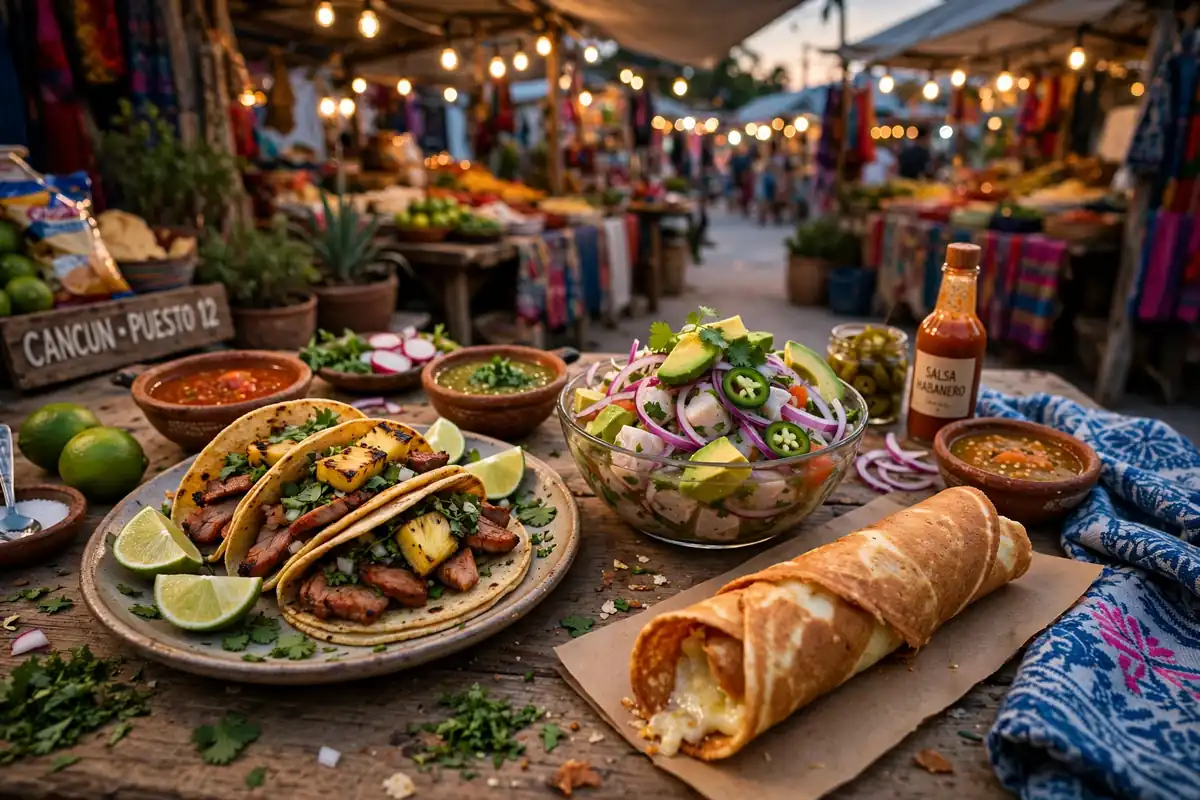
The taco is the meal Cancun runs on, and the downtown taquerías are where it is best. Tacos al pastor — pork cooked on a vertical spit, sliced onto a tortilla with pineapple, onion and cilantro — cost about 40 MXN each at a street cart, and the taco trail is the cheapest good evening in the city: start at Parque de las Palapas, where the stalls sell tacos, elotes and marquesitas, and walk the streets around it, following the queues. The rule is the same as at the fish markets: the good stuff sells out, the stalls close early, and the queue is the review. Pay in pesos — the dollar prices at the Hotel Zone stalls use a bad exchange rate — and bring cash for the carts and the smaller markets, because not all of them take cards.
Ceviche, fish tacos and the Caribbean catch
The ceviche is the dish the coast is known for, and the fish comes off the boats in the morning. A bowl of ceviche — raw fish cured in lime juice with red onion, tomato and avocado — costs about 150 to 250 MXN at the beach restaurants in Puerto Morelos and Playa Tortugas, and half that at the downtown stalls. The fish taco is the second signature: battered fish in a tortilla with cabbage and crema, for about 60 to 100 MXN. The third is tikin xic, the Yucatecan grilled fish in achiote, served whole at the lagoon restaurants. The rule is the same as in every harbour city: eat the seafood where the boats are, and eat it at lunch, when the price is lower and the line is shorter. The oyster is not the play here — the raw bars are a northern idea, and the ceviche is the local one.
Cochinita pibil, marquesitas and the Yucatecan table
Cochinita pibil is the dish of the Yucatán: pork marinated in achiote and sour orange, wrapped in banana leaves and slow-cooked underground, served in tacos or on a plate with pickled red onion. It costs about 100 to 150 MXN at the market courtyard in Mercado 28 and at the food stalls of Mercado 23, where the locals eat. The marquesita is the sweet ending: a crisp rolled crêpe filled with Edam cheese and sweet fillings, sold from carts at Parque de las Palapas for about 40 to 60 MXN. The sopa de lima, a lime soup with shredded chicken and tortilla strips, is the starter to order in Valladolid, where the cochinita was invented. The other Cancun food fact is the elote: corn on the cob with mayonnaise, cheese and chilli, sold from carts all over downtown for about 30 to 40 MXN. Start the day with coffee and panuchos at the market, eat ceviche for lunch, and save the cochinita for dinner.
Free things to do in Cancun
Cancun is cheaper than its reputation suggests, because the best sights cost nothing. Every beach in Mexico is public, so Playa Delfines, Playa Tortugas, Playa Langosta and Playa Marlin are all free — walk onto any stretch of sand, whether or not you are staying at the hotel behind it. The Cancún sign at Playa Delfines is free, and so is the photograph. Parque de las Palapas is free, with the bandstand, the food stalls and the evening crowds. The Malecón Tajamar is free, and so is the sunset walk along it. Mercado 28 is free to wander, and so is the Nichupté Bridge viewpoint. The Hotel Zone beaches are free, and so is the walk along Boulevard Kukulcán from one end to the other. And the paid museums have free windows: the Museo Maya is free on Sundays for Mexicans and residents, and the Tulum ruins are free on Sundays for Mexicans and residents too. Do the free list on your first day, and you will have seen the beach, the sign, the square and the lagoon before you have spent a dollar on a ticket.
Frequently asked questions
How many days do you need in Cancun?
Three days is the minimum for the highlights: one day for the Hotel Zone beaches and downtown, one day for Isla Mujeres, and one day for Chichén Itzá and a cenote. Five to seven days is the right amount for a real trip, with Tulum, Cobá, Ek Balam, the eco-parks and a whale shark swim in season. One day is possible, but you will leave having seen a third of the region.
Is Cancun safe?
Cancun is safe for visitors who use the same sense they would in any big tourist city. The US State Department lists Quintana Roo at Level 2 — exercise increased caution — the same level it assigns to many popular destinations around the world. The Hotel Zone and downtown areas near Plaza Las Américas and Parque de las Palapas are considered safe for day and night exploration. The risks are the ordinary ones: the airport taxi and timeshare touts, the unlicensed drivers who approach you in the terminal, and the strong surf on the Caribbean-facing beaches. Do not drink the tap water, do not swim under a red or black flag, and do not accept transport from anyone who approaches you inside the airport.
When is the best time to visit Cancun?
Mid-November through April, when the days are dry, the humidity is down and the sargassum is at or near its yearly low. Late January or February is the single best pick. June to September is the whale shark season and the cheapest time for hotels, but it is also the sargassum season and the hurricane season: the Atlantic season runs from June 1 to November 30, peaking around September 10, and the seaweed usually arrives from April to September, peaking from May to August. In 2026, the sargassum was the heaviest on record, with more than 123,400 tonnes collected by early September, easing from mid-August and minimal by November and December.
Is Cancun expensive?
Mid-range, and cheaper than its reputation suggests if you leave the Hotel Zone. A mid-range hotel costs $150 to $400 a night in the Hotel Zone and $50 to $150 downtown; a taco costs about 40 MXN, a ceviche about 150 to 250 MXN, and a lobster dinner in the Hotel Zone $40 to $70. The R-1 bus costs about 12 MXN, the Isla Mujeres ferry 540 to 580 MXN round trip, and Chichén Itzá 697 MXN. The eco-parks are the expensive days — Xcaret from about $143, Xplor from about $149 — and the beaches, the parks and downtown are free. A careful three days can be done for about $100 to $250 a person a day.
Do you need a car in Cancun?
No. A rental car is a liability in the Hotel Zone, and it is the first thing not to book for a beach trip. The R-1 and R-2 buses run 24 hours a day for about 12 MXN, the whole strip is walkable, and the ferry to Isla Mujeres costs 540 to 580 MXN round trip. The only reason to rent a car is the cenotes and the ruins — the Ruta de los Cenotes, Cobá and Ek Balam — where three or more people make it cheaper than the tours. For Chichén Itzá, Tulum and the eco-parks, the ADO bus and the tours are cheaper and simpler.
What should I skip in Cancun?
Six things, and all six are traps older guides still get wrong. First, do not plan on Xavage: the whitewater and monster-truck park near the airport closed on November 12, 2024 for remodelling and has not reopened, and old guides still list it. Second, do not take an airport taxi without pre-booking, and do not accept a free gift in the arrivals corridor: the taxi fares are the worst deal in Cancun, and the free offer is always a timeshare pitch. Third, do not pay in dollars at the Hotel Zone stalls and restaurants: the exchange rate is bad, and pesos are cheaper everywhere. Fourth, do not plan on the whale sharks outside mid-May to mid-September: any operator offering them in winter is selling something that does not exist. Fifth, do not go to Chichén Itzá on a Sunday expecting a quiet day: entry is free for Mexicans and residents, and the site is at its busiest. And sixth, do not swim at Playa Delfines under a red or black flag: the surf on the open Caribbean side is stronger than it looks, and the current is the risk.
Further reading
Start with Cancun on Wikipedia, which covers the history and the geography, and the Yucatán Peninsula on Wikipedia for the region and the Maya world. For what locals and regular visitors actually recommend, the r/Cancun subreddit is where travellers answer questions about the ferries, the prices, the taxis and the sargassum. No Quora link is included here: no live Quora thread on visiting Cancun could be verified, so none is listed rather than linking to an unverified one.
Your Cancun trip, in one paragraph
Cancun is the resort city Mexico built on empty sand, and that is the trip: Playa Delfines at sunrise with the sign photograph, a day on Isla Mujeres with a golf cart and a sunset boat back, Chichén Itzá at opening time with a cenote swim to cool off, tacos downtown for dinner and a marquesita for the walk home. For more guides in the same style, start with our Hawaii guide for the whole-state trip — this guide is only about Cancun — then see how Cancun compares with Maui, Honolulu, Chicago, Nashville, Los Angeles, Orlando, Miami, San Diego, Denver, Savannah, Dallas, Charleston, San Francisco, Myrtle Beach, Las Vegas, San Antonio, London, Portland, Pigeon Forge, Puerto Rico, Atlanta, Phoenix, Paris, Key West, Colorado Springs, Sedona, Chattanooga, Palm Springs, St Louis, Tokyo, Japan, Kansas City, Tennessee, Branson, Florida, Amsterdam, Montreal, Fort Lauderdale, Toronto, Aruba, Charlotte, Indianapolis, New Orleans, Destin, Santa Barbara, Mexico City, Arizona, Osaka, Minneapolis, Pittsburgh, California, Asheville, Costa Rica, Washington DC, Seattle, St Augustine, Lisbon, Dubai, Santa Fe, Galveston, Maine, Sacramento, Kauai and Boston.

About the Author