Things to Do in Sacramento
20 Best Attractions, a 3-Day Itinerary, Where to Stay, and the Food You Cannot Miss
Quick Info
Best for: First-timers, history lovers, food lovers, cyclists and families — and anyone who wants California’s capital without the crowds of San Francisco or Los Angeles
Best time: April–May and September–October for mild days; September for the farm-to-fork season; June–August is hot, with many days over 100°F
How long: 2 days for Old Sacramento, the Capitol and the museums; 3 days adds the American River trail, Land Park and a day trip to Napa or Lake Tahoe
Budget: About $120–$250 per person per day with a mid-range hotel — the Capitol, the parks, the bridge and the markets are free, and the museums are mostly $10–$15
Don’t miss: The free Capitol tour, the Railroad Museum, the Tower Bridge at sunset, a bike ride on the American River trail, the Sunday market under the freeway, and a Kings game at Golden 1 Center
Sacramento on Wikipedia is the capital of California — a Gold Rush river town where the American River meets the Sacramento River, a working seat of government, and the self-declared farm-to-fork capital of America, all in one compact downtown. This guide covers the 20 best things to do in Sacramento, a 3-day itinerary that actually works, where to stay without overpaying, how to get around by light rail, bus, bike and train, the three foods you should not skip, and the free sights that let you enjoy the City of Trees without a ticket. Everything below was checked against live sources in November 2026 — including the Capitol Annex construction, the Railroad Museum’s Polar Express dates, the 2026 farm-to-fork season, and the Kings’ 2026–27 home schedule.
Sacramento at a glance
| Topic | What to know |
|---|---|
| Full name | Sacramento — the capital of California, the “City of Trees” and “America’s Farm-to-Fork Capital”, at the meeting of the Sacramento River and the American River |
| Founded | 1848, as a Gold Rush supply town founded by John Sutter Jr.; California’s permanent capital since 1854 |
| Population | About 526,000 people in the city, about 2.4 million in the metro area — the sixth-largest city in California |
| Language | English; Spanish is widely spoken, and the city is one of the most diverse in the United States |
| Airport | Sacramento International Airport (SMF), about 10 miles northwest of downtown, a 20–30 minute drive or a $2.50 express bus ride |
| Best base | Downtown and the DOCO district for the Capitol and the Kings; Old Sacramento for the riverfront; Midtown for food and nightlife |
| Getting around | SacRT light rail and buses downtown; a car for the parks, the zoo and day trips; Amtrak from Sacramento Valley Station for the Bay Area |
| Famous for | The Gold Rush, the transcontinental railroad, the State Capitol, farm-to-fork food, the Sacramento Kings, and the Tower Bridge |
Sacramento divides into three parts. Downtown is the government and entertainment core: the Capitol and Capitol Park, the Golden 1 Center and the DOCO district, and Sacramento Valley Station. Old Sacramento is the riverfront historic district to the west, where the city began. Midtown and East Sacramento are the neighbourhoods to the east: the restaurants, the farmers markets, Sutter’s Fort, McKinley Park and the Rose Garden, and William Land Park to the south. The pleasant surprise is the distance: downtown, Old Sacramento and Midtown are all within a mile or two of each other, and you can walk or ride the light rail between them. The trap is the calendar, not the map: the Capitol is closed on weekends, the Crocker is closed on Mondays and Tuesdays, and the summer heat is real. Plan by day of the week, not just by wish list.
The 20 best things to do in Sacramento
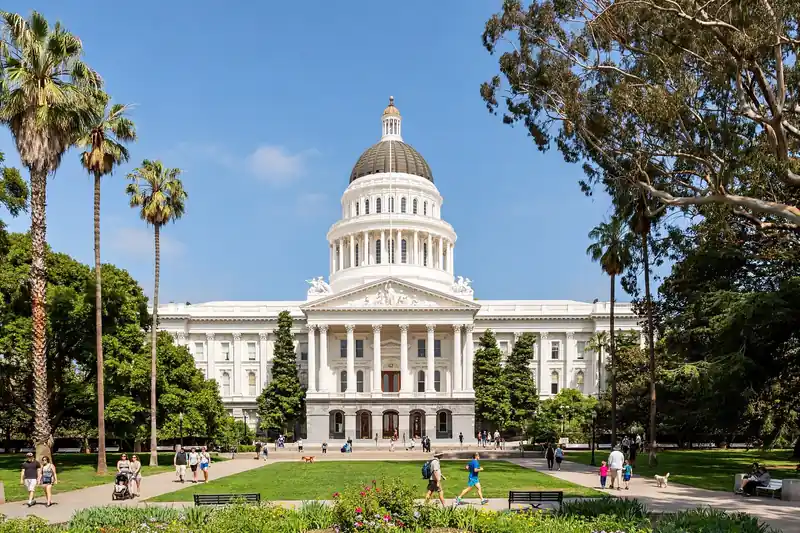
1. The California State Capitol and Capitol Park
The California State Capitol on Wikipedia is the reason Sacramento exists as a capital, and it is the one sight no visitor should skip — a white Neoclassical building with a domed roof, completed in 1874, where the California Legislature has met since 1869. The museum inside is free, and so are the guided tours: the California State Capitol Museum on Wikipedia is open Monday to Friday, 9 a.m. to 5 p.m., and closed on weekends and most holidays. Free public tours run on the hour from 10 a.m. to 4 p.m. on weekdays, limited to 35 people, first come, first served — sign up at the information desk in the first-floor rotunda. The tour covers the rotunda, the legislative chambers and the restored historic offices of the governor, the secretary of state and the treasurer. The trap is the weekend: if you are only in town on a Saturday and Sunday, you will see the outside of the building and nothing more, so put the Capitol on a weekday. The second trap is the construction. The old 1950s East Annex behind the historic building was demolished in 2022, and a new six-storey Annex of about 525,000 square feet is rising in its place at a budget of about $1.2 billion — about 55 per cent complete in May 2026, with completion expected in October 2027. The east side of the building is a construction site, parts of Capitol Park are torn up and some paths are closed, and the planned visitor centre at the West Steps has been paused. The historic building and the museum are open as normal, but do not expect a pristine postcard from the east side. Capitol Park itself is worth an hour on its own: 40 acres of trees from around the world, monuments and memorials, and the World Peace Rose Garden. Guided park tours run seasonally from 13th Street and Capitol Avenue. Allow two hours for the building and the park, and go on a weekday morning.
2. Old Sacramento Waterfront
Old Sacramento State Historic Park on Wikipedia is the riverfront district where the city began, and it is the best-preserved Gold Rush streetscape in California — a 28-acre National Historic Landmark of brick buildings, wooden boardwalks and iron balconies, squeezed between the Sacramento River and Interstate 5. The streets here were raised after the floods of the 1850s, which is why the boardwalks sit above the original ground floor, and the district holds about 125 shops, restaurants, bars and cafes. Start at the B.F. Hastings Building, the western terminus of the Pony Express on Wikipedia in 1860, and the Eagle Theatre, the first theatre built in California in 1849. Then walk the boardwalks past the candy shops, the old-time saloons and the Wells Fargo history, and end at the riverfront, where the Delta King on Wikipedia is moored — a 1927 paddlewheel riverboat that is now a hotel, a restaurant and a theatre, and the best photograph on the waterfront. Old Sacramento is free to wander, and it is at its best in the morning before the tour groups arrive and at sunset. The museums here charge admission, so arrive before 10 a.m. for parking on summer weekends. Allow half a day for the district and its museums.
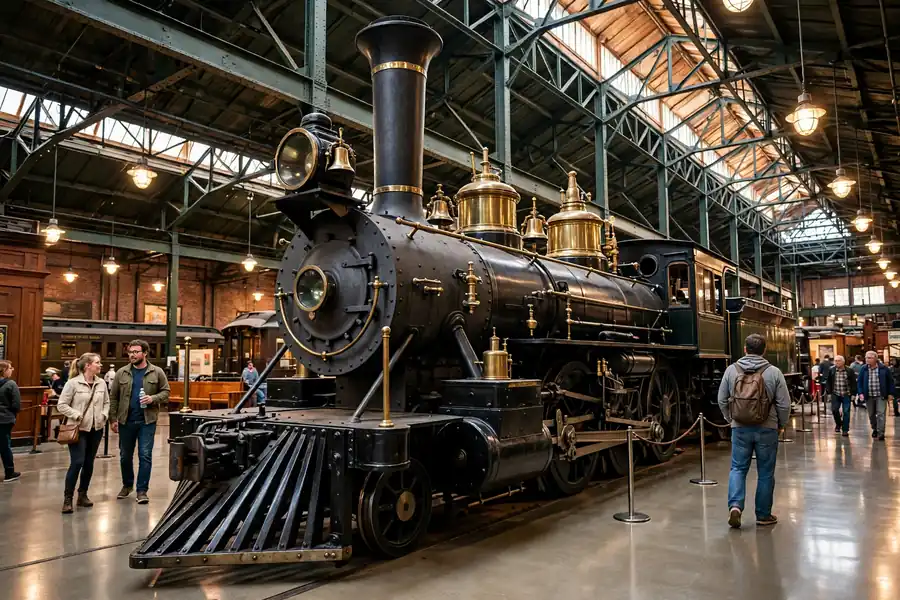
3. The California State Railroad Museum
The California State Railroad Museum on Wikipedia is the best museum in Sacramento, and one of the great railway museums in the world — a 225,000-square-foot hall at the north end of Old Sacramento, in the city where construction of the first transcontinental railroad began in 1863. Inside are 21 restored locomotives and cars you can walk through, including the Central Pacific’s Governor Stanford and the exhibits on the Chinese railroad workers who built the line over the Sierra Nevada. The museum is open daily from 10 a.m. to 5 p.m., with last admission at 4:30 p.m., and closed on Thanksgiving, Christmas and New Year’s Day. Admission is $12 for adults, $6 for youth aged 6 to 17, and free for children five and under. The excursion train is the part most guides get wrong: the Sacramento Southern Railroad runs 45-minute, six-mile round trips along the Sacramento River from the Central Pacific Railroad Passenger Station, and the ticket is separate from museum admission — coach is $18 for adults and $10 for youth aged 6 to 17, first class is $25 for adults and $15 for youth on weekends. The regular 2026 season ran on Fridays through Labor Day and weekends through October 11, so by November the regular excursions are over for the year. What takes over is THE POLAR EXPRESS Train Ride, on selected dates from November 13 to December 21, 2026, with coach from about $80 and first class from about $100 per passenger — book it online, because it sells out. Allow two to three hours for the museum, and a half day if you add the train.
4. The Crocker Art Museum
The Crocker Art Museum on Wikipedia is the oldest art museum in the Western United States, founded in 1885, and it is the most beautiful building in Sacramento after the Capitol — the original Victorian mansion of Judge Edwin Crocker joined to a modern glass wing, at 216 O Street, a short walk from the Capitol. The collection holds more than 25,000 objects, with the best public display of California art anywhere, European master drawings and international ceramics. The hours are the trap: the museum is open Wednesday, Friday, Saturday and Sunday from 10 a.m. to 5 p.m., and Thursday from 10 a.m. to 9 p.m., and it is closed on Mondays and Tuesdays. Admission is $15 for adults, $10 for seniors, college students and military, $8 for youth aged 6 to 17, and free for children five and under. The third Sunday of every month is Pay What You Wish day, and the Thursday evening opening is the quietest time to visit. Two new exhibitions opened on November 1, 2026 and run through May 9, 2027: “Between Earth and Sky” and “A Fine Feast”. It is the natural second stop after the Capitol on a weekday. Allow two hours, and go on a Thursday evening if you can.
5. Sutter’s Fort State Historic Park
Sutter’s Fort on Wikipedia is the adobe outpost where Sacramento began, and it is the most important historic site in the city after the Capitol. John Sutter on Wikipedia built the fort in 1839 at the heart of New Helvetia, his Mexican land-grant colony, and it was from his sawmill at Coloma, 40 miles to the northeast, that gold was discovered in January 1848 — the discovery that started the California Gold Rush on Wikipedia and changed the state forever. The fort at 2701 L Street in Midtown is open daily from 10 a.m. to 5 p.m., and closed on Thanksgiving, Christmas and New Year’s Day. Admission is $5 for adults, $3 for youth aged 6 to 17, and free for children five and under. The visit is self-guided: the adobe walls, the workshops, the trade store and the exhibits on Sutter, the Native peoples of the valley and the Gold Rush settlers. State Parks held workshops in March 2026 on a Draft Concept Plan for the fort’s future, so expect changes ahead — for now it is the quiet, uncrowded counterpoint to Old Sacramento. The California State Indian Museum sits next door and is the natural pairing. Allow an hour, and pair it with the Midtown restaurants for lunch.
6. The Sacramento Zoo
The Sacramento Zoo on Wikipedia is the family anchor of William Land Park, and it has been on the same leafy site since 1927, when it opened with 40 animals gathered from local parks. Today it holds around 400 animals on about 14 acres: the giraffes, the red pandas, the snow leopards and the reptile house, with the hand-carved carousel as the children’s favourite. The zoo uses plan-ahead pricing, and the price changes by day. Tickets typically range from $16 to $29, with adults usually about $22 to $28 and children aged 2 to 11 about $17 to $23, and children under two are free. Weekends cost more than weekdays, and booking early is the only way to pay less. The zoo is open daily, with entry from 9 a.m. to 4 p.m. and the grounds open until 5 p.m. The Dinosaur Safari, a walk-through of life-size dinosaurs, runs through January 3, 2027 after an extension from its original October end date. Two honest warnings: the orangutans are temporarily off-habitat because of construction, and the zoo runs $10 Community Days several times a year, which are the best-value days to visit. Allow two hours, and go in the morning when the animals are active and the park is quiet.
7. Golden 1 Center and the Sacramento Kings
The Golden 1 Center on Wikipedia is the downtown home of the Sacramento Kings on Wikipedia, and a Kings game is the loudest night out in Sacramento. The arena opened in 2016 in the Downtown Commons, or DOCO, district, replacing ARCO Arena, and it is the centrepiece of the downtown revival. The 2026–27 season is under way: the home opener was October 23, 2026 against the Portland Trail Blazers, and the November home dates include Orlando on November 10, Portland on November 13, Oklahoma City on November 15 and San Antonio on November 23, with the Lakers coming to town on January 19, 2027. The regular season runs for 82 games through April, so there is a home game in most weeks from October to April. The tradition to know is the beam: after every Kings win, a purple beam of light shoots into the sky from the top of the arena, and the whole city watches for it. Tickets are sold through Ticketmaster, and the upper bowl is the best value. Even without a game, the DOCO district is worth an evening: the restaurants, the bars and the plaza are the busiest nightlife in the city. Allow a full evening for a game, and book the ticket before you fly, because the big games sell out.
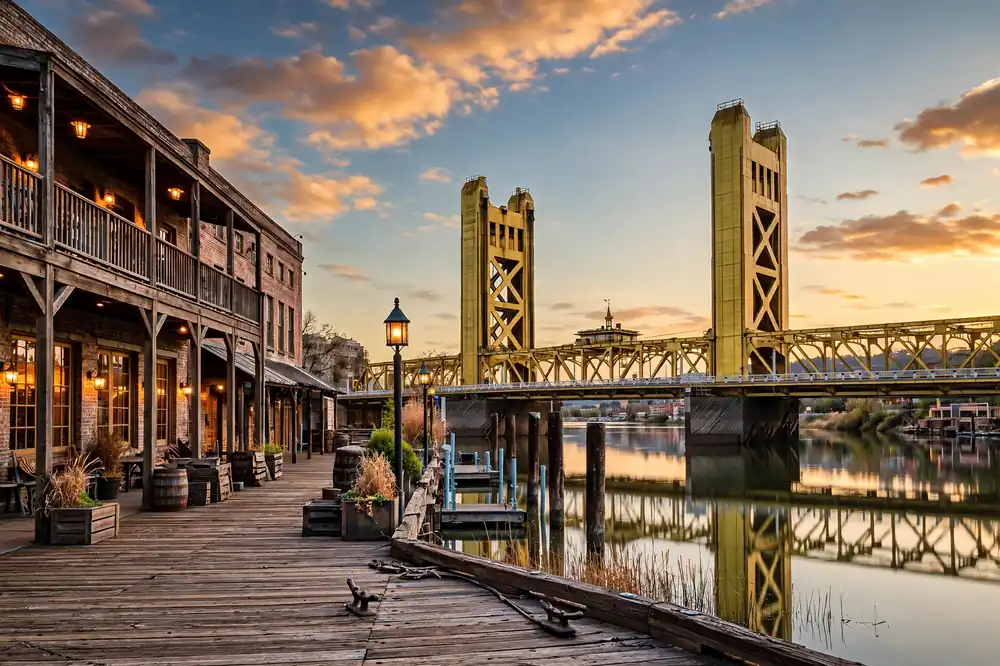
8. Tower Bridge
Tower Bridge (California) on Wikipedia is the symbol of Sacramento, and it is the one sight that costs nothing at all — a gold vertical lift bridge with two 160-foot towers, spanning 737 feet across the Sacramento River, connecting Capitol Mall in downtown Sacramento with West Sacramento. The bridge opened in 1935, was designed by Alfred Eichler in the Streamline Moderne style, and was listed on the National Register of Historic Places in 1982. The gold paint is the city’s signature, and the bridge still lifts for tall boats. The walk is the thing to do: pedestrian walkways run on both sides, it is open 24 hours a day, and the crossing takes a few minutes, with the river below, the Old Sacramento waterfront behind you and the downtown skyline ahead. Go at sunset, when the gold paint glows, or at night, when the bridge is lit. The bridge also hosts the city’s most exclusive dinner: the Tower Bridge Dinner, held each September since 2013, when the bridge closes to traffic and hundreds of guests eat a farm-to-fork meal on long tables down the middle of the span. The 2026 dinner was held on September 6, and tickets are allocated by a random drawing that closed on July 24. Allow half an hour for the walk, and pair it with Old Sacramento, which is a ten-minute stroll away.
9. The American River Parkway and the Jedediah Smith Memorial Trail
The Jedediah Smith Memorial Trail on Wikipedia is the best outdoor day in Sacramento, and it is the reason locals call the city a bike town — a 32-mile paved trail along the American River on Wikipedia, from Discovery Park in downtown Sacramento to Beal’s Point at Folsom Lake. The trail runs through the American River Parkway, a green corridor of parks, beaches and picnic areas, and it is flat, smooth and mostly shaded. The rules matter: the speed limit on the trail is 15 miles per hour, Class 3 e-bikes are not permitted anywhere in the Sacramento County Regional Parks, and California law requires riders under 18 to wear a helmet. Discovery Park charges an entry fee for vehicles, and the trail is busiest on summer weekend mornings. Rent a bike at Practical Cycle, at 114 J Street in Sacramento and in Folsom at the trail’s far end, at Mike’s Bikes at 1411 I Street downtown, or from Peak Adventures at Sacramento State. A two-hour rental runs about $30. The classic ride is the first ten miles from Discovery Park to the Guy West Bridge at Sacramento State and back, with a stop at the Effie Yeaw Nature Center on Wikipedia on the way — a nature centre with trails, wildlife and a river overlook. In summer, ride early: the trail is exposed in places, and the afternoon heat is the real hazard. Allow half a day for a ride, and carry water.
10. The Sacramento History Museum and the Old Sacramento Underground
The Sacramento History Museum on Wikipedia is the small museum that explains the city better than any other, and it sits in the heart of Old Sacramento at 101 I Street. The museum covers the Gold Rush, the printing press, the river trade and the city’s floods and fires. It is open Monday to Sunday from 10 a.m. to 5 p.m., with last admission at 4:30 p.m., and closed on Thanksgiving, Christmas and New Year’s Day. Admission is $12 for adults, $6 for youth aged 6 to 17, and free for children five and under. The museum also runs the Old Sacramento Underground tours, which take you into the hollowed-out ground floors of the original 1850s buildings — the streets were raised after the floods, so the original storefronts are buried below the boardwalks you walk on. The underground tour is the most atmospheric hour in Old Sacramento, and it sells out on weekends, so book it with the museum in advance. Do it before the Railroad Museum, and the Gold Rush story falls into place. Allow an hour for the museum, and another hour for the underground tour.
11. Leland Stanford Mansion State Historic Park
The Leland Stanford Mansion State Historic Park on Wikipedia is the grandest house in Sacramento, and it is free — a 19,000-square-foot Victorian mansion at 800 N Street, a few blocks from the Capitol, that was the home of Leland Stanford, the eighth governor of California and the founder of Stanford University. Built in 1856, it was Stanford’s governor’s office from 1862, and after a 14-year, $22 million restoration it reopened in 2005 as a museum and the state’s official reception centre. Access is by guided tour only: tours run every hour on the hour from 10 a.m. to 4 p.m., the park is open from 10 a.m. to 5 p.m., and admission is free. Two warnings: tours can be cancelled at short notice when the mansion is needed for official functions, so call (916) 324-9266 before you go, and photography is strictly prohibited inside the mansion — take your pictures in the gardens. The tour covers the 17-foot ceilings, the gilded mirrors and the period furnishings, and it takes about an hour. It is the best free hour in downtown Sacramento after the Capitol tour, and it is the one most visitors miss. Allow an hour and a half, and pair it with the Capitol.
12. The California Museum
The California Museum on Wikipedia is the museum of California itself — the home of the California Hall of Fame, at 1020 O Street, two blocks from the Capitol. The exhibits cover California Indians, the Gold Rush, immigration and women’s history, and the Hall of Fame inducts the Californians who shaped the state. The museum is open Tuesday to Saturday from 10 a.m. to 5 p.m. and Sunday from 12 p.m. to 5 p.m., and closed on Mondays. Last admission is 4 p.m., and advance timed tickets are recommended. Admission is $10 for adults, $8 for students, seniors, military and youth aged 6 to 17, and free for children five and under. It is a natural third stop on a Capitol-area day, and the best place in the city to understand California beyond the Gold Rush. Check the calendar before you go: the museum closes for special events, including its Día de los Muertos Fiesta, which closed the museum on Saturday, October 10, 2026. Allow an hour and a half.
13. A Sacramento River cruise and the Delta King
A river cruise is the best way to see Sacramento from the water, and the operator to book is City Cruises Sacramento, the former Hornblower, which sails from the L Street Dock at 1206 Front Street in Old Sacramento. The Historic River Cruise is a one-hour narrated sail past the Delta King, the I Street Bridge and the Tower Bridge, from about $30 per person. The Sights and Sips Cruise is a 90-minute cocktail cruise with a DJ, from about $35 to $39 per person, and the Rock the Yacht cruise runs from about $44. All sales are final, with no refunds, so book for a day you are sure about. The cruises run year-round, with more departures in summer. Before or after the cruise, step aboard the Delta King itself: the 1927 paddlewheeler moored at the dock is a hotel, a restaurant and a theatre, and its Pilothouse Restaurant is the most atmospheric table on the river. It is the only way to see the Tower Bridge from below. Allow an hour and a half for the cruise, and book online in advance on summer weekends.
14. William Land Park, Fairytale Town and Funderland
William Land Park on Wikipedia is Sacramento’s big family park, and it is the best half-day in the city with children — a leafy park in south Sacramento, named for William Land, a pioneer Sacramento hotelier, that holds the zoo, Fairytale Town, Funderland and the golf course. Fairytale Town is the park’s storybook playground, opened in 1959, with three-dimensional play sets based on nursery rhymes and fairy tales, miniature farm animals and two performing arts stages. The hours are seasonal: March to October it is open daily from 9 a.m. to 4 p.m., and November to February it is open Thursday to Sunday from 10 a.m. to 4 p.m., weather permitting. Admission is $10 per person for adults and children aged 2 to 12, and free for children one and under. The rule to know is that adults must be accompanied by a child, and children must be accompanied by an adult — do not turn up without a child in your party. The Winter Wonderland runs on December 5, 6, 12 and 13, when the park opens from 1 p.m. to 6 p.m. Next door, Funderland is the small amusement park that opened in 1946 and celebrated its 80th anniversary season in 2026, running from February 6 to November 29. The zoo, Fairytale Town and Funderland sit within a few minutes’ walk of each other. Allow half a day for the park, and a full day with the zoo.
15. McKinley Park and the Rose Garden
McKinley Park on Wikipedia is the park East Sacramento loves most, and its rose garden is the prettiest free sight in the city. The park at 601 Alhambra Boulevard is free and open from dawn to dusk, with a playground, a pond, tennis courts, a seasonal swimming pool, the Clunie Community Center and the Shepard Garden and Arts Center. The rose garden is the reason to come: planted in 1928, it covers about 1.5 acres and holds about 1,200 roses, including tree roses and old-fashioned climbers on the arches around the edge. The garden is at its best from April to June and again in September and October, and it is a favourite spot for weddings, quinceañeras and photographs — it can be rented for $150 an hour from April to September, in three-hour blocks. The tree-lined streets of East Sacramento around the park, with their Craftsman houses and front gardens, are the “City of Trees” at its leafiest. The park is a 10-minute drive from downtown, or a 30-minute walk from Midtown. Allow an hour, and go in the morning when the roses are fresh and the light is soft.
16. The Sacramento Children’s Museum
The Sacramento Children’s Museum on Wikipedia is the hands-on museum for children aged eight and under, and it is worth the drive to Rancho Cordova — about 20 minutes east of downtown on Highway 50. The museum at 2701 Prospect Park Drive is open Tuesday to Friday from 10 a.m. to 3 p.m. and Saturday and Sunday from 10 a.m. to 4 p.m., and closed on Mondays. General admission is $10 per person for ages one to 59, $8 for visitors aged 60 and over and for military, and free for children 24 months and under. Members get an exclusive hour from 9 a.m. to 10 a.m. every day it is open. The exhibits are built for play: a pretend grocery store, a water play area, a building zone and Leo’s Learning Lab. It is the best rainy-day option in the city. Check the calendar before you go: the museum closes for exhibit installations, as it did from September 14 to 18, 2026. Allow two hours, and go on a weekday morning for the quietest visit.
17. Midtown, K Street and the farmers markets
Midtown is the neighbourhood where Sacramento eats, drinks and shops, and it is the best evening walk in the city — the grid of streets east of downtown, around J Street and 21st Street, with restaurants, bars, coffee shops, murals and boutiques. The Saturday Midtown Farmers Market is the flagship: every Saturday from 8 a.m. to 1 p.m. along 20th Street, with more than 200 vendors, live music and prepared food, voted the best farmers market in California and the third best in the United States by the American Farmland Trust. The Sunday market is the serious one: the Sacramento Central Farmers Market sets up every Sunday from 8 a.m. to noon in the state parking lot under the Highway 50 overpass at 8th and W Streets, across from Southside Park. It has run since 1980, it is the city’s oldest and largest certified market, and it is where the local chefs shop — about 100 farmers, the biggest selection and the best prices in the city, under 70,000 square feet of shade. Walk the whole market before you buy, and leave the dog at home: no dogs are allowed at certified markets. The Asian Farmers Market at 5th and Broadway opens before dawn on Sundays, from 5:30 a.m., with produce you will not find anywhere else in town. Farm to fork on Wikipedia is not a slogan here — it is the way the city eats, and the markets are where you see it. Allow a morning for a market, and an evening for Midtown.
18. The California State Indian Museum and the California Automobile Museum
Two smaller museums round out a Sacramento history day, and both sit within a short walk of the big ones. The California State Indian Museum on Wikipedia is next door to Sutter’s Fort, and it tells the story the fort does not: the Native peoples of California, with basketry, beadwork, tools and exhibits on the cultures that lived in the valley for thousands of years before Sutter arrived. It is the essential companion to the fort, and it is the museum most visitors skip. The California Automobile Museum on Wikipedia is on Front Street in Old Sacramento, and it holds more than 150 cars, from the earliest horseless carriages to the muscle cars and the concept cars, with rotating exhibitions and a garage where you can watch restorations in progress. Neither museum needs more than an hour: they are the two best one-hour stops in the city, and they fit into the gaps between the Capitol, the fort and Old Sacramento. Check the hours before you go, because both keep shorter hours than the big museums. Allow an hour for each.
19. The Cathedral of the Blessed Sacrament and the R Street Corridor
The Cathedral of the Blessed Sacrament on Wikipedia is the most beautiful church interior in Sacramento, and it is free to visit — a Renaissance Revival cathedral on 11th Street, completed in 1889, with a painted dome, marble altars and stained glass that make it the quietest half-hour in downtown. It anchors the block between the Capitol and K Street. From the cathedral, walk south to the R Street Corridor, the old warehouse district that has become Sacramento’s craft beer and mural neighbourhood. Alaro Craft Brewery pairs its beers with a farm-to-fork menu, Urban Roots pairs its beers with barbecue, and the murals along R Street are the best street art in the city. West Sacramento, across the Tower Bridge, adds Drake’s: The Barn, the beer garden that anchors the riverfront on the other side. The cathedral and the R Street Corridor make a natural afternoon: the quiet of the cathedral, then the noise of the breweries. Allow two hours, and go on a Friday or Saturday evening when the corridor is at its liveliest.
20. Day trips: Napa, Lake Tahoe and San Francisco
Sacramento is the best base in Northern California for day trips, and the three classics are all within two hours. Napa, California on Wikipedia is about an hour west, 61 miles via Interstate 80, and the famous wine valley — book the tasting rooms in advance, because walk-ins are rare now, and budget for tasting fees that have risen steeply in recent years. San Francisco on Wikipedia is about an hour and a half by car, 88 miles, and the smart move is the train: the Capitol Corridor runs from Sacramento Valley Station to Oakland and Emeryville, with a bus connection across the Bay Bridge into the city, so you can skip the parking entirely. Lake Tahoe on Wikipedia is about two hours northeast, 103 miles via Highway 50, and the summer weekends on Interstate 80 and Highway 50 back up hard — leave before 7 a.m. or expect an extra hour. Closer options fill a half day: Auburn is 30 minutes up Interstate 80, and Folsom, California on Wikipedia is 25 minutes east on Highway 50, with the historic Sutter Street district and the lake. Yosemite Valley is about three and a half hours, and Yosemite dropped its reservation requirement for 2026. The coast, the mountains and the wine country are all a morning’s drive away, and Sacramento is the cheapest place to sleep while you see them.
Sacramento in 3 days — a ready-made itinerary
This three-day plan covers Old Sacramento, the Capitol, the museums, the American River and the food, and it uses a car for one day and light rail and bikes for the other two. Put the Capitol and the Crocker on weekdays, and the markets and the trail on the weekend.
Day 1 — Old Sacramento, the Capitol and the river
Start before 9 a.m. in Old Sacramento, and take the first tour of the day at the Sacramento History Museum, then the Underground tour. Cross to the California State Railroad Museum for the late morning, and take the one-hour Historic River Cruise from the L Street Dock after lunch. In the afternoon, walk across the Tower Bridge to West Sacramento and back, then take the light rail to the Capitol for the free guided tour — remember the Capitol is closed on weekends, so this day must be a weekday. Finish the day with dinner in Midtown, and a drink on K Street.
Day 2 — Museums, Midtown and a Kings game
Start at the Capitol if you missed it on Day 1, then walk to the Leland Stanford Mansion for the 10 a.m. tour and the California Museum after it. Spend the afternoon at the Crocker Art Museum — Thursday to 9 p.m. is the quietest slot — and walk through Midtown for coffee and the murals. If it is a Saturday, start the day at the Midtown Farmers Market instead, from 8 a.m. to 1 p.m. In the evening, go to a Kings game at Golden 1 Center, and watch for the beam after a win. If there is no game, spend the evening in the R Street Corridor, with dinner at Canon or Ella and a beer at Alaro.
Day 3 — The American River, Land Park and the Rose Garden
Rent a bike and ride the Jedediah Smith Memorial Trail from Discovery Park to the Guy West Bridge and back, with a stop at the Effie Yeaw Nature Center. In the afternoon, drive to William Land Park: the zoo in the morning, Fairytale Town and Funderland after lunch, and the Sacramento Children’s Museum if you have children under eight. Finish the day at McKinley Park and the Rose Garden, then dinner at The Kitchen or Localis if you booked ahead, or at Mulvaney’s B&L for the farm-to-fork meal without the wait. And if you have a fourth day, take the train to San Francisco or drive to Napa for the wine country.
Best time to visit Sacramento
| Season | Weather | Crowds | Notes |
|---|---|---|---|
| Spring (March–May) | Highs 66–81°F, lows 47–52°F | Low to moderate | Best season — mild days, wildflowers, the roses starting; rain tapers off by May |
| Summer (June–August) | Highs 88–93°F, lows 57–60°F | High | Hot and dry — about 76 days a year reach 90°F and 14 reach 100°F; the State Fair runs in July |
| Autumn (September–November) | Highs 64–89°F, lows 50–57°F | Moderate | Second-best season — farm-to-fork in September, Aftershock in October, warm days into November |
| Winter (December–February) | Highs 55–61°F, lows 39–42°F | Low | Mild and rainy — about 18 to 20 inches of rain a year, almost all of it November to March; foggy mornings |
The best time to visit Sacramento is April to May and September to October, when the daytime highs run from the low 70s to the high 80s and the city is at its most comfortable. July is the hottest month, with an average high of 93°F and an average low of 60°F, and the heat is dry — the humidity is low, but the sun is relentless, and heat spikes of 105°F or more run for three or four days at a time. The record is 115°F, set on June 15, 1961. The saving grace is the Delta Breeze, the cool air that comes up the Sacramento River from San Francisco Bay in the evening and can drop the temperature by 30 degrees in a couple of hours. September is the food month: the Tower Bridge Dinner and the California Grand Tasting anchor the farm-to-fork season, and the crowds are thinner than in summer. October brings Aftershock, the rock festival at Discovery Park, and the fall colours on the river. Winter is the quiet season: mild, rainy and foggy, with highs in the mid-50s, and the cheapest hotels of the year. Wildfire smoke can affect the air in late summer and early fall, so check the air quality before a trail day. In summer, do the trail and the parks before 10 a.m., and save the museums for the afternoon.
Where to stay in Sacramento
| Area | Best for | Price range |
|---|---|---|
| Downtown and DOCO | The Capitol, the Kings, first-timers, no-car days | $150–$300 a night |
| Old Sacramento | The riverfront, the museums, the Delta King | $150–$280 a night |
| Midtown | Food, nightlife, the farmers market, walkers | $120–$250 a night |
| East Sacramento | Quiet streets, McKinley Park, families | $130–$220 a night |
| Natomas and the airport | Early flights, budget rooms, free parking | $90–$160 a night |
Stay downtown if this is your first visit — the Capitol, Golden 1 Center, the DOCO restaurants and the light rail are all on your doorstep, and the Kimpton Sawyer Hotel sits right beside the arena. Old Sacramento is the pick for the riverfront: the Delta King is a hotel as well as a riverboat, and the Embassy Suites puts you on the boardwalks. Midtown is the pick for food and nightlife, with the Fort Sutter Hotel and the boutique hotels on J Street, and the Saturday market a short walk away. East Sacramento is the quiet pick, with the streets around McKinley Park and the Rose Garden, and the best choice for families who want a neighbourhood rather than a hotel district. Natomas and the airport hotels are the budget pick, with free parking and easy freeway access, but you will drive everywhere. Book early for September, when the farm-to-fork season fills the downtown hotels, and for October, when Aftershock fills the whole city. Check the parking before you book downtown and in Old Sacramento, where the hotels charge for it.
Getting around Sacramento
| Way to travel | Cost | Best for |
|---|---|---|
| SacRT light rail | $2.50 a ride, $7 a day | Downtown, Old Sacramento, Midtown, the arena, the station |
| SacRT bus and Route 142 | $2.50 a ride | The airport express, the neighbourhoods, the zoo |
| Rental car | $40–$70 a day | Land Park, the trail, Rancho Cordova, day trips to Napa and Tahoe |
| Amtrak Capitol Corridor | From about $30 to the Bay Area | San Francisco without driving, Davis, Oakland, San Jose |
| Bike rental | About $30 for two hours | The American River trail, the riverfront, Midtown |
| Walking | Free | Downtown, Old Sacramento, Midtown — the core is flat and compact |
| Rideshare and taxi | $30–$35 airport to downtown | Late nights, the airport, the suburbs |
Sacramento International Airport (SMF) is about 10 miles northwest of downtown, and the drive takes 20 to 30 minutes. The cheapest way in is the SacRT Route 142 airport express bus, every 20 to 30 minutes for the standard $2.50 fare — or the Yolobus 42A and 42B, hourly for $2.25. A taxi or rideshare costs about $30 to $35. Once you are downtown, the SacRT light rail is the way to move: three lines — Gold, Blue and Green — run from early morning to late evening, with 15-minute daytime headways on the core segments. A single ride costs $2.50, a day pass costs $7, and the discounted fare is $1.25. Tap2Ride contactless caps your daily spending at $7, and the old ZipPass app was retired on July 1, 2026, replaced by Transit Connect. Young riders ride free on the RydeFreeRT programme, valid from June 1, 2026 through June 30, 2027. There is no light rail to the airport yet — the Green Line extension has been proposed for years and has not been approved. Sacramento Valley Station on Wikipedia is the rail hub: the 1926 station at 401 I Street is the 13th busiest Amtrak station in the country and the second busiest in the Western United States, with 764,100 passengers in fiscal year 2025. The Capitol Corridor on Wikipedia runs 14 round trips on weekdays and 11 on weekends to the Bay Area, the Coast Starlight runs daily to Seattle and Los Angeles, the California Zephyr runs daily to Chicago, and the Gold Runner runs a daily round trip to Bakersfield. The station is also the western terminus of the Gold Line light rail. For the parks, the zoo and the day trips, rent a car — the bus network is thin outside the centre.
Sacramento food you have to try
Sacramento’s food is the food of the Central Valley: the farms that surround the city grow more than half of the fruits, vegetables and nuts in the United States, and the city’s restaurants buy from them the same day. The title “America’s Farm-to-Fork Capital” was proclaimed by the mayor in 2012, and it is not marketing — it is the supply chain.
The farm-to-fork dinner — The Kitchen, Localis, Canon and Ella
The farm-to-fork dinner is the meal Sacramento is known for, and the city has two Michelin-starred restaurants and a dozen more Michelin-rated ones. The Kitchen Restaurant is the original: opened by the Selland family in 1991, it became Sacramento’s first Michelin-starred restaurant, and dinner there is a performance — one seating a night, the chefs cooking in front of you, guests free to wander between the workstations, ask for seconds and watch the five-course seasonal menu come together. Localis is the second star, a small dining room with an American menu that is famously vegetarian-friendly. Canon, in an East Sacramento warehouse, has held a Michelin Bib Gourmand since 2019 for its small plates and global flavours, and Ella Dining Room and Bar, a few blocks from the Capitol, has been the city’s dining headquarters since the Selland family opened it in 2007. Mulvaney’s B&L is the farm-to-fork philosophy in practice: chef Patrick Mulvaney writes the menu according to what arrives from the farms that morning, and it changes daily. Book The Kitchen and Localis weeks ahead — they are the hardest tables in the city — and Canon and Ella days ahead. A farm-to-fork dinner costs about $60 to $150 per person.
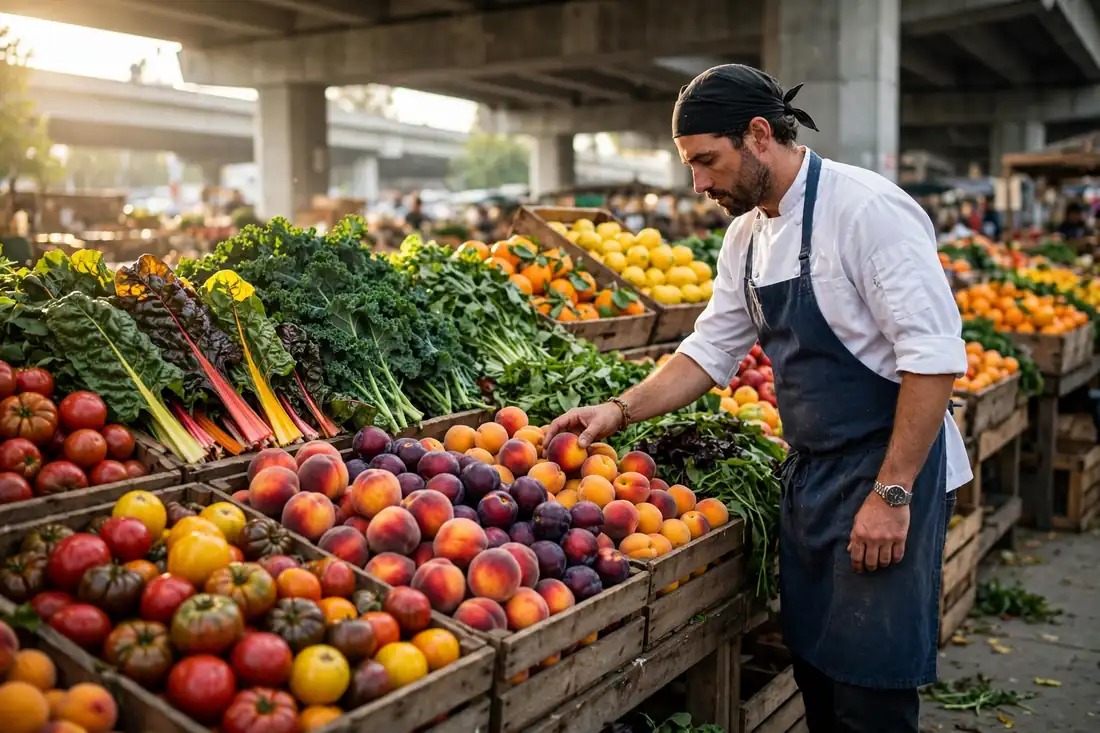
The Sunday market under the freeway and the Midtown market
The Sunday market under the freeway is the most Sacramento experience in this guide, and it is where the city’s food begins. The Sacramento Central Farmers Market sets up every Sunday from 8 a.m. to noon in the state parking lot under the Highway 50 overpass at 8th and W Streets, across from Southside Park. It has run since 1980, it is the city’s oldest and largest certified market, and it is where the chefs of The Kitchen, Canon and Mulvaney’s shop — about 100 farmers, the biggest selection and the best prices in the city, under 70,000 square feet of shade. Come hungry and come early: the heirloom tomatoes in summer, the citrus in winter, the herbs for pennies, and the pastries and coffee to start the morning. The Midtown Farmers Market is the polished version: every Saturday from 8 a.m. to 1 p.m. along 20th Street, with more than 200 vendors, live music and prepared food, voted the best farmers market in California. The two markets are different trips — Sunday is for the produce, Saturday is for the scene — and both are free to wander. Bring cash, bring a bag, and walk the whole market before you buy.
Breakfast, beer and the rest of the Sacramento table
Sacramento’s table goes beyond the fine dining rooms. Bacon and Butter is the breakfast to queue for, where everything from the biscuits to the pancakes is made from scratch with locally sourced ingredients. Tower Cafe, in Land Park, is the beloved brunch spot with a globally inspired menu and a tropical garden patio. Frank Fat’s, the Chinese-American restaurant that has fed legislators since 1921, holds a Michelin Bib Gourmand and is the most Sacramento lunch in the city. The beer scene is the other half of the table: Alaro Craft Brewery pairs its beers with a farm-to-fork menu, Urban Roots pairs its beers with barbecue, and Drake’s: The Barn in West Sacramento is the beer garden that anchors the riverfront across the bridge. Start the day with Temple Coffee Roasters, and end it with a cocktail at Bottle and Barlow. A casual meal in Sacramento costs about $15 to $30 per person, and a food truck lunch about $10 to $15 — and the farmers markets will feed you for less.
Free things to do in Sacramento
Sacramento is cheaper than its reputation suggests, because many of the best sights cost nothing. The California State Capitol Museum is free, with free guided tours on weekdays. The Leland Stanford Mansion is free, with free guided tours every hour. The Tower Bridge is free to walk, 24 hours a day. Capitol Park is free, with 40 acres of trees and monuments. The Old Sacramento Waterfront is free to wander, and the Delta King is free to photograph from the dock. McKinley Park and the Rose Garden are free, open from dawn to dusk. The Midtown and Sunday farmers markets are free to wander, and the First Friday Art Walk in Midtown is free. The American River Parkway is free to walk and run, apart from the vehicle entry fee at Discovery Park. The Crocker Art Museum is free on the third Sunday of every month, on Pay What You Wish day. Do the free list on your first day, and you will have seen the Capitol, the bridge and the riverfront before you have spent a dollar on a ticket.
Frequently asked questions
How many days do you need in Sacramento?
Two days is the right amount for the city itself: one day for Old Sacramento, the Capitol and the river, and one day for the museums, Midtown and the American River trail. Three days adds Land Park, the zoo and the Rose Garden, and a fourth day is a day trip to Napa or Lake Tahoe. One day is possible, but you will leave having seen a third of the city. Plan two days at least, and three if you want the food.
Do you need a car in Sacramento?
Not downtown, but yes for the rest. The SacRT light rail and buses cover downtown, Old Sacramento, Midtown and the arena, and the core is flat and walkable. But William Land Park, the zoo, Fairytale Town, the Sacramento Children’s Museum in Rancho Cordova and the American River trailheads are car trips, and so are Napa, Lake Tahoe and San Francisco. Rent the car for the days you need it, and use the light rail for the downtown days.
Is the Capitol really closed on weekends?
Yes. The California State Capitol Museum is open Monday to Friday from 9 a.m. to 5 p.m., and closed on weekends and most holidays. The free guided tours run on weekdays only, on the hour from 10 a.m. to 4 p.m. Capitol Park is open daily, so you can walk the grounds and see the outside of the building on a Saturday or Sunday, but you cannot go inside. If you are only in town on a weekend, do not build your trip around the Capitol — do Old Sacramento, the Railroad Museum, the river cruise and the markets instead, and save the Capitol for a weekday trip.
When is the best time to visit Sacramento?
April to May and September to October, when the daytime highs run from the low 70s to the high 80s. September is the food month, with the Tower Bridge Dinner and the California Grand Tasting. June to August is hot, with about 76 days a year reaching 90°F and 14 reaching 100°F, so do the trail and the parks before 10 a.m. and save the museums for the afternoon. Winter is mild, rainy and quiet, with the cheapest hotels of the year. The record high is 115°F, set on June 15, 1961, and the Delta Breeze cools the evenings even after the hottest days.
Is Sacramento expensive?
Mid-range, and cheaper than San Francisco or Los Angeles. A mid-range hotel costs $120 to $300 a night depending on the area and the season, the museums cost $5 to $15, a farm-to-fork dinner costs $60 to $150, and a casual meal costs $15 to $30. The Capitol, the Stanford Mansion, the Tower Bridge, the parks and the markets are free. The expensive mistakes are avoidable: booking late in September and October, paying the weekend price at the zoo instead of booking ahead, and paying for a Napa tasting without a reservation.
What should I skip in Sacramento?
Four things, and all four are traps that older guides still get wrong. First, do not plan a weekend around the Capitol: it is closed on Saturdays and Sundays, and the museum and the tours run on weekdays only. Second, do not go to the Crocker on a Monday or Tuesday, when it is closed — and do not expect the free street festival at the Farm-to-Fork Festival in 2026, because the full festival is now biennial and returns in 2027; the 2026 season was the Tower Bridge Dinner on September 6 and the California Grand Tasting on September 11. Third, do not go to the Railroad Museum expecting a train ride in November: the regular excursion season ended on October 11, 2026, and the Polar Express takes over from November 13 to December 21. And fourth, do not turn up at Fairytale Town without a child in your party — adults must be accompanied by a child.
Further reading
Start with Sacramento on Wikipedia, which covers the history, the geography and the Gold Rush, and the California State Railroad Museum on Wikipedia for the railroad story. For what locals actually recommend, the r/Sacramento subreddit is where Sacramentans answer visitor questions about the markets, the trail, the restaurants and the Kings. Visit Sacramento is the official tourism site, with current event listings, the farmers market calendar and the Kings schedule. No Quora link is included here: no live Quora thread on visiting Sacramento could be verified, so none is listed rather than linking to an unverified one.
Your Sacramento trip, in one paragraph
Sacramento is the capital of California, and that is the trip: the free tour of the Capitol, the Railroad Museum in Old Sacramento, the Tower Bridge at sunset, a bike ride on the American River trail, the Sunday market under the freeway, and a farm-to-fork dinner that no other city in America can match. For more guides in the same style, start with our California guide for the whole-state road trip, then see how Sacramento compares with Destin, Arizona, Chicago, Nashville, Los Angeles, Orlando, Miami, San Diego, Denver, Savannah, Dallas, Charleston, San Francisco, Myrtle Beach, Las Vegas, San Antonio, London, Portland, Pigeon Forge, Puerto Rico, Atlanta, Phoenix, Paris, Maui, Key West, Colorado Springs, Sedona, Chattanooga, Palm Springs, St Louis, Tokyo, Japan, Kansas City, Tennessee, Branson, Florida, Amsterdam, Montreal, Honolulu, Fort Lauderdale, Toronto, Aruba, Charlotte, Indianapolis, New Orleans, Santa Barbara, Mexico City, Osaka, Minneapolis, Pittsburgh, Asheville, Costa Rica, Hawaii, Washington DC, Seattle, St Augustine, Lisbon, Dubai, Santa Fe, Galveston and Maine.

About the Author