Things to Do in Chattanooga
20 Best Attractions, a 3-Day Itinerary, Where to Stay, and the Food You Cannot Miss
Quick Info
Best for: First-time Tennessee visitors, families, Civil War history lovers, hikers, cave explorers and riverfront strollers — a walkable river city with a mountain full of attractions
Best time: April–May and September–October for mild weather and fall colour; summer for river activities and festivals; winter for the lowest prices and the holiday lights
How long: 3 full days for the highlights; 2 days covers the aquarium, the bridge and Lookout Mountain; add a 4th day for the Ocoee River and Cloudland Canyon
Budget: Roughly $150–$300 per person per day for a mid-range trip with a hotel and one big ticketed activity; a day of free sights and riverfront walks runs much cheaper
Don’t miss: The Tennessee Aquarium, the Walnut Street Bridge at sunset, the seven-state view from Rock City, Ruby Falls underground and a MoonPie from the general store
Chattanooga sits in southeast Tennessee where the Tennessee River bends between the ridge-and-valley Appalachians and the Cumberland Plateau, about 115 miles northwest of Atlanta and 135 miles southeast of Nashville — and it is the rare American city where the scenery, the history and the food are all within walking distance of each other. A world-class aquarium stands on the riverfront, a pedestrian bridge longer than two thousand feet crosses the river, and a mountain just south of town holds a cave waterfall, a rock garden with a seven-state view and the steepest passenger railway in the world. This guide gives you the 20 best things to do in Chattanooga in a sensible order, a ready-made 3-day itinerary, honest advice on when to go, where to stay and how to get around, and the three foods you have to try before you leave — plus the free sights that cost nothing at all. Prices and hours change, so every price in this guide is marked as approximate — always check the official website before you visit.
One thing to know before you go: Chattanooga in 2026 is not the city of the old guidebooks. The Walnut Street Bridge — the city’s most famous landmark — was closed for 18 months and only reopened on October 3, 2026, after a $47 million restoration, so any guide that still calls it closed is out of date. The Incline Railway was shut for months after a forest fire damaged it in the winter of 2024–25 and only reopened in June 2025, and its ticket price has nearly doubled since the old $15 days. The Tennessee Aquarium replaced its Boneless Beauties gallery with a new Scuttlebutt Reef in March 2026. And the Chattanooga Choo Choo is not the place it was: the real locomotive is gone, replaced by a wooden prop, and most of the little shops have closed. This guide tells you which of those traps to watch for, and which prices changed in 2026, so you can plan with facts instead of outdated blog posts.
Chattanooga at a glance
| Question | Short answer |
|---|---|
| Where is Chattanooga? | In southeast Tennessee on the Tennessee River, about 115 miles northwest of Atlanta and 135 miles southeast of Nashville, on Eastern Time |
| What is it best for? | A world-class aquarium, a mountain of caves and views, Civil War battlefields and a walkable riverfront |
| How long should I stay? | 3 full days for the highlights; 2 days for the essentials; add a day for the Ocoee River and Cloudland Canyon |
| How much does it cost? | Roughly $150–$300 per person per day mid-range; many of the best sights — the bridge, the Riverwalk, the battlefields — are free |
| Do I need a car? | Not downtown — the free electric shuttle covers the riverfront — but a car is the easiest way to reach Lookout Mountain and the day trips |
| What is the one thing not to miss? | The Tennessee Aquarium in the morning and the Walnut Street Bridge at sunset |
| When is the best time to go? | April–May and September–October for mild weather; October for fall colour on Lookout Mountain |
| Is it good for families? | Yes — the aquarium, the children’s museum, the zoo, the train rides and the carousel are all built for kids |
The 20 best things to do in Chattanooga
These are the 20 best things to do in Chattanooga, ranked the way a first-time visitor should actually do them: the riverfront first, then the mountain, then the history, the museums and the day trips. Every price below is the 2026 price as published by the attraction itself, and every trap — the bridge that was closed, the railway that burned, the train that is now a wooden prop, the ticket prices that jumped — is called out where it matters.
1. Tennessee Aquarium
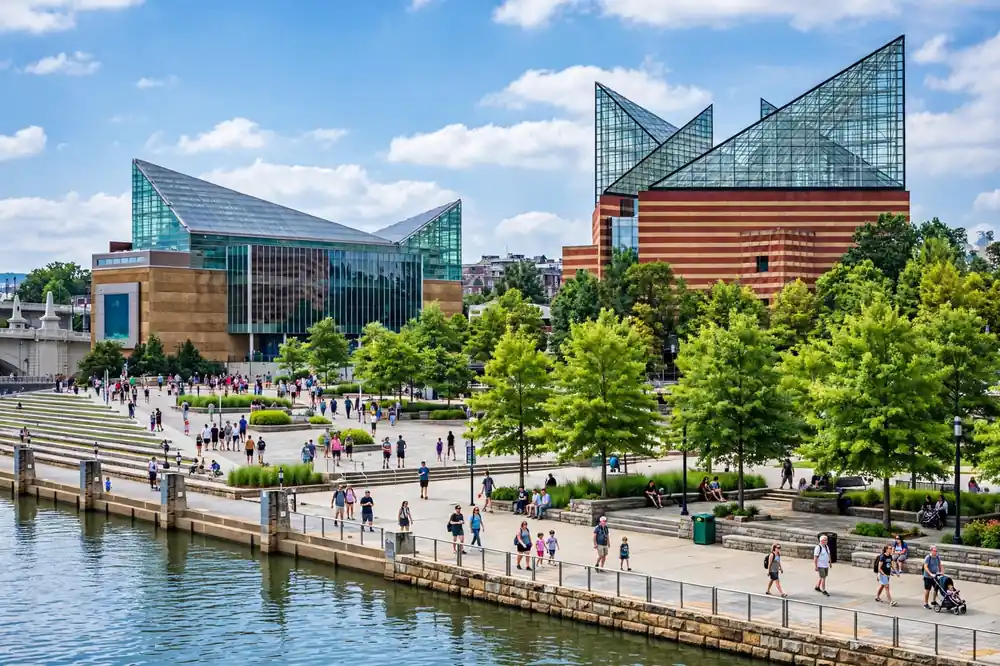
The Tennessee Aquarium is the single best reason to come to Chattanooga, and one of the best aquariums in the whole country — Newsweek named it the best aquarium in the United States for 2024. It is two buildings on the riverfront: River Journey, which follows the Tennessee River from its mountain source down to the sea, and Ocean Journey, with sharks, stingrays, penguins and a butterfly garden. The river otters are the stars, the seahorses and the jellyfish are the quiet favourites, and the whole visit takes two to three hours if you do it properly. Read about the Tennessee Aquarium on Wikipedia.
The practical facts for 2026: admission is $39.95 for adults and $29.95 for young people aged 4 to 17, children 3 and under go free, and an IMAX documentary film is $9.95 extra. The aquarium is open daily from 10 a.m. to 7 p.m. Eastern time, with last entry at 5 p.m., and it is closed on Thanksgiving Day and Christmas Day. Tickets are timed entry, so book online in advance — weekend slots sell out. The 2026 change to know: the Boneless Beauties gallery was replaced in March 2026 by Scuttlebutt Reef, a new reef exhibit. If you are short on time, go straight to the River Journey building first; it is the one no other aquarium in America does as well.
2. Walnut Street Bridge
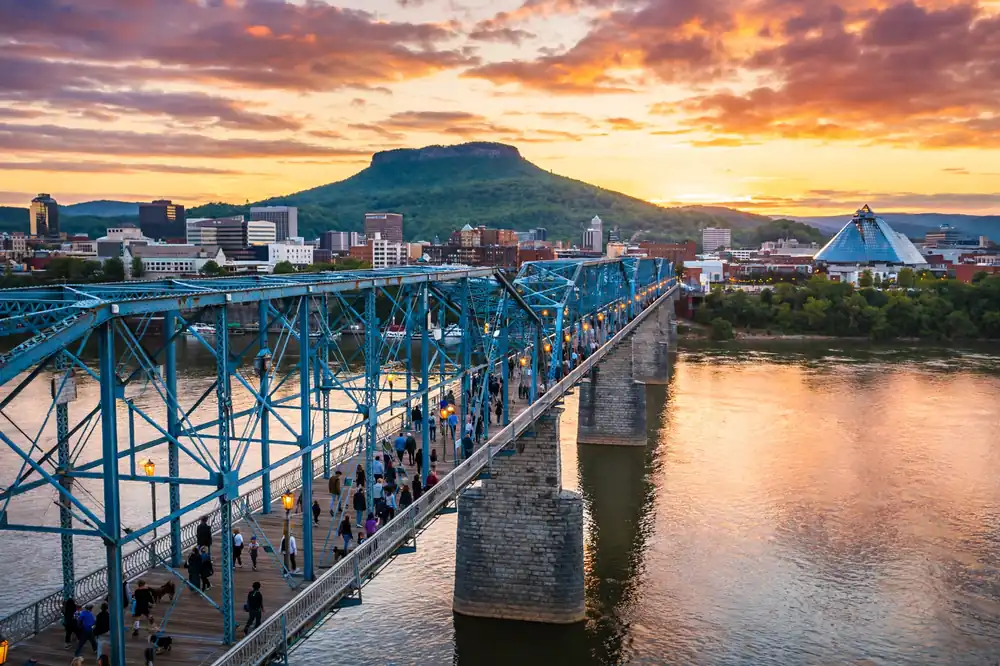
The Walnut Street Bridge is Chattanooga’s postcard, and the walk every visitor takes. Built in 1891 as the city’s first permanent bridge across the Tennessee River, its blue steel trusses stretch 2,376 feet from downtown to the North Shore, and since 1993 it has been one of the longest pedestrian-only bridges in the world. The view from the middle — the river below, the downtown skyline behind you, Lookout Mountain ahead — is the best free view in the city, and at sunset it is the best view full stop. Learn about the Walnut Street Bridge on Wikipedia.
Here is the 2026 freshness that most guides still get wrong. The bridge was closed in March 2025 for a major renovation and only reopened on October 3, 2026, after 18 months of work and roughly $47 million — new Alaskan yellow cedar decking, more than 200,000 pounds of new steel, repainted blue trusses and a new coloured light system for special events. Any guide that still says the bridge is closed is out of date: it is open, it is crowded again, and it is the first thing to do on your first evening. Walk it at sunset, then cross to the North Shore for dinner on Frazier Avenue.
3. Rock City
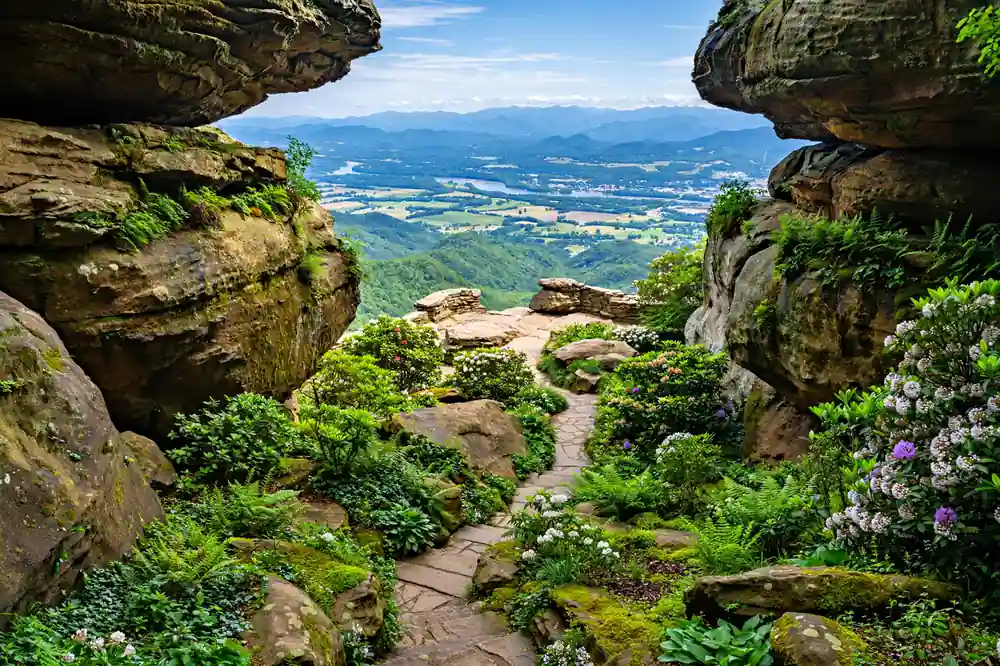
Rock City is the classic roadside attraction that actually lives up to its reputation. On top of Lookout Mountain, just over the Georgia state line about six miles from downtown, a 4,100-foot Enchanted Trail winds through massive ancient rock formations, narrow passages like Fat Man’s Squeeze, the Swing-A-Long Bridge, fairy-tale gardens and Fairyland Caverns — and ends at Lover’s Leap, where on a clear day you can supposedly see seven states: Tennessee, Georgia, Alabama, Kentucky, North Carolina, South Carolina and Virginia. It was built by Garnet Carter in 1932, and the “See Rock City” barns painted across the Southeast made it famous long before the internet did. Read about Rock City on Wikipedia.
The 2026 price trap is real, so read this carefully. Rock City uses dynamic, timed-entry pricing: at the ticket window, adults pay $43 on weekdays and $45 at weekends, and children 3 to 12 pay $10 less — but buying online at least a day ahead can cost up to $22 less per ticket, with daytime adult tickets starting around $23. Hours change with the season and last entry is 45 minutes before closing. From November 13 to December 31, 2026, the Enchanted Garden of Lights takes over at night, with tickets sold online only. Allow two to three hours, go late in the day for the sunset light, and remember the whole attraction is in Georgia, on Eastern Time — the same time zone as Chattanooga, so no clock change to worry about.
4. Ruby Falls
Ruby Falls is the tallest underground waterfall open to the public in the United States, and the most surprising thing in Chattanooga: a 145-foot waterfall deep inside Lookout Mountain, more than 1,100 feet below the surface. You ride a glass-front elevator 260 feet down, then follow a guided walk through the cavern — past stalactites, stalagmites and flowstone — to the falls themselves, lit up in colour at the end of the cave. The falls were discovered in 1928 by cave explorer Leo Lambert, who named them for his wife, Ruby. Learn about Ruby Falls on Wikipedia.
The practical facts for 2026: the standard Cave Walk is $29.95 for adults, $19.95 for children 3 to 12 and $28.95 for seniors 65 and over, and tickets are timed entry and sold online — walk-up tickets are not sold, so book ahead or you will not get in. The cave stays a constant 60 degrees year-round, so bring a light jacket even in summer, and allow about 90 minutes to two hours for the whole visit. Specialty tours run on select days: the Lantern Tour at $42.95, the Gentle Walking Tour and the Geology Tour at $40.95, all with more time at the falls. The High Point ZIP Adventure — ziplines and a 40-foot climbing tower — runs seasonally from March through November and is ticketed separately at $21.95.
5. Lookout Mountain Incline Railway
The Lookout Mountain Incline Railway is the steepest passenger railway in the world, and the most fun ten minutes in Chattanooga. Its trolley-style cars climb “America’s Most Amazing Mile” from the St. Elmo station at the foot of the mountain to the Upper Station near Point Park, reaching a 72.7% grade near the top — so steep that the seats are stepped like a staircase. The railway opened in 1895, and the view over the city and the river from the top is the payoff. Read about the Incline Railway on Wikipedia.
The freshness that matters: the railway was damaged in a forest fire in the winter of 2024–25 and was closed for months, reopening in June 2025 — so any guide that still says it is closed is out of date, and any guide that still quotes the old $15 fare is out of date too. In 2026 a round trip costs $24.99 for adults and $12.99 for children 3 to 12, sold at either station or online, with cars leaving about every 20 minutes and the ride taking roughly 10 minutes each way. Two honest warnings: buy a round trip, because one-way tickets can leave you stranded at the top, and expect a queue — even with an online ticket, go to the ticket booth for a paper ticket and arrive early, because visitors report waits of 45 to 90 minutes on busy days. Parking at the lower station is $3 for three hours or $5 for longer. At the lower station, the old Clumpies ice cream shop has closed and Jeni’s Splendid Ice Creams is in its place.
6. Point Park and the Lookout Mountain Battlefield
Point Park sits at the very top of Lookout Mountain, on the ground where the Battle of Lookout Mountain was fought on November 24, 1863 — the “Battle Above the Clouds” — and it is the best-preserved piece of the whole Chickamauga and Chattanooga battlefield. From the point, the view drops a thousand feet to the Tennessee River bending below, and the park’s monuments, cannon and trails tell the story of the fighting in a way no museum can. It is part of Chickamauga and Chattanooga National Military Park, the first national military park in the United States, established in 1890. Learn about the battlefield on Wikipedia.
The price changed in 2026, and older guides quote the old figure. Point Park now charges $10 per person for visitors aged 16 and over, valid for seven days, and children 15 and under enter free; the fee is payable by credit card only at the entrance gate, and an America the Beautiful pass gets you in free. Every other unit of the park — Chickamauga Battlefield, Cravens House, Missionary Ridge, Orchard Knob and Signal Point — is free. The visitor centres are open daily from 8:30 a.m. to 5 p.m. except Christmas Day and New Year’s Day. Walk the short trail from Point Park to the Upper Station of the Incline Railway, and do not miss the view from the point itself at sunset.
7. Chattanooga Choo Choo and the Hotel Chalet
The Chattanooga Choo Choo is the city’s most famous name — the 1941 Glenn Miller song made it world-famous — and the 1909 Terminal Station is still one of the grandest buildings in the South, a Beaux-Arts railway palace with a domed ceiling and a two-acre garden built over the old platforms. The last passenger train left in 1970, and the station was saved from demolition and turned into a hotel and entertainment complex. In 2023, after a $19 million restoration, the hotel reopened as the Hotel Chalet at The Choo Choo, and it won a MICHELIN Key in 2025 and kept it in 2026. Read about Terminal Station on Wikipedia.
Now the honest 2026 warning, because most guides still describe the old Choo Choo. The real locomotive is gone — replaced by a wooden prop you can photograph but not climb on — and most of the little shops have closed: the candy shop is gone, the old-time photography shop is gone, and the bookshop is going. What remains is still worth a visit, and it is free to walk around: the gardens, the restored Pullman sleeper cars you can sleep in, the restaurants and bars — Elsie’s Daughter for dinner, the Caboose bar, the Coin-Op Arcade — and the live music and comedy clubs on the 24-acre campus. Come for the building and the gardens and a drink, not for the shopping that used to be here.
8. Tennessee Valley Railroad Museum
The Tennessee Valley Railroad Museum is the real train ride in Chattanooga, and the one to choose if you only ride one. From Grand Junction Depot at 4119 Cromwell Road — not the downtown Choo Choo, which is a different place — restored vintage trains run the Missionary Ridge Local, a 65-minute round trip through the Missionary Ridge Tunnel, past the National Cemetery and a working turntable demonstration. The museum itself is a working rail yard, with locomotives to climb on and restoration in progress. Learn about the Tennessee Valley Railroad on Wikipedia.
The practical facts for 2026: the Missionary Ridge Local costs $26 for adults 13 and over and $17 for children 2 to 12, with under-2s free on a lap, and a family ticket for two adults and two children is $76. About 30 of the 65 minutes are actually on the moving train. Longer trips run from the same depot: the Hiwassee Loop day trips through the gorge start at about $60, and the Christmas season is the museum’s busiest time — the North Pole Limited runs November 13 to December 23, 2026, at $38 for daytime rides and $45 in the evening, and the Christmas Lunch Train runs select Saturdays from November 14. Book ahead for every seasonal ride; they sell out, and sales are final.
9. Hunter Museum of American Art
The Hunter Museum of American Art sits on an 80-foot bluff above the Tennessee River in the Bluff View Art District, and it is one of the strongest American art collections in the South — nearly 3,000 paintings, sculptures and works on paper, from colonial portraits to contemporary mixed media, in a building that mixes a 1904 mansion with a modern glass addition. Even if you are not a museum person, the view from the terrace and the outdoor sculpture garden are worth the stop. Read about the Hunter Museum on Wikipedia.
Admission in 2026 is $20 for adults, and free for everyone under 18. The best deal is the free evening: admission is free on the first Thursday of every month from 4 to 8 p.m., and the outdoor sculpture garden and river overlook are free to wander even without a ticket. The museum is closed on Tuesdays. Combine it with the Bluff View Art District below — the River Gallery, the bakery and Rembrandt’s Coffee House — and with the glass pedestrian bridge that crosses the road between the museum and the district, which the locals will point you to.
10. Coolidge Park and the North Shore
Coolidge Park is the North Shore’s front lawn, and the most relaxed place in Chattanooga. Across the Walnut Street Bridge from downtown, the park has a restored 1894 Dentzel carousel, an interactive water fountain that children run through in summer, wide lawns, picnic tables and one of the best views back across the river to the downtown skyline. It is the park the locals actually use, and the place to end a day that started at the aquarium. Read about Chattanooga on Wikipedia.
The North Shore around the park is the city’s best neighbourhood for an afternoon: Frazier Avenue is lined with independent shops, galleries, coffee houses and restaurants, and the area has its own free shuttle stop. The carousel is the centrepiece — a hand-carved, 130-year-old ride that still runs — and the fountain is free, so bring a change of clothes for the children in summer. Come here at sunset, when the bridge lights come on and the skyline reflects in the river, and you will understand why Chattanoogans call this the Scenic City.
11. Tennessee Riverwalk
The Tennessee Riverwalk is the thread that ties the whole riverfront together: about 13 miles of paved trail from downtown Chattanooga out to the Chickamauga Dam, following the Tennessee River past the aquarium, the parks, the bridges and the boathouses. It is the city’s best walk, best run and best bike ride, and the easiest way to see how much of Chattanooga is built around its river. Learn about the Tennessee River on Wikipedia.
You do not need to walk all of it. The best stretch is the downtown section, from the aquarium and Ross’s Landing to the Walnut Street Bridge and across to Coolidge Park — about two miles, flat, and full of benches, public art and river views. Rent a bike from one of the downtown bike-share stations and ride further out to the dam, or just walk the downtown stretch in the morning before the heat. The Riverwalk is also the route of the Riverbend Festival in June and the Head of the Hooch rowing regatta in November, when more than 1,200 boats race on the river.
12. Chickamauga Battlefield
Chickamauga Battlefield, about 15 minutes south of downtown across the Georgia line, is where the bloodiest battle in the western theatre of the Civil War was fought — September 19–20, 1863, with more than 34,000 casualties — and it is one of the most accessible major Civil War sites in America, because it is free. The battlefield is a quiet, wooded park of fields, monuments and cannon, with a driving tour that follows the lines of the battle and the Wilder Tower, a 113-foot stone tower with a view over the whole field. Read about the battlefield on Wikipedia.
Start at the Chickamauga Battlefield Visitor Center, open daily from 8:30 a.m. to 5 p.m. except Christmas Day and New Year’s Day, where the exhibits and the film explain a battle that most visitors arrive knowing nothing about. Then drive the tour route — the monuments mark where each regiment stood — and climb the Wilder Tower, open seasonally from March 16 through November 30. Pair it with Lookout Mountain and Missionary Ridge on the same day and you have the full story of the Battles for Chattanooga; the three sites together are the reason this is America’s first national military park.
13. Creative Discovery Museum
The Creative Discovery Museum is Chattanooga’s children’s museum, and one of the best in the country — a hands-on, climb-on, make-something museum two blocks from the aquarium, built for children from toddlers to twelve-year-olds. There is a rooftop science playground, a water-play area, a music zone, an art studio and a climbing structure, and it is the single best rainy-day plan in the city for families with young children. It opened on May 26, 1995, and it has been the family anchor of the riverfront ever since. Read about Chattanooga on Wikipedia.
Admission in 2026 is $19.95 per person, with discounts for military families, educators and first responders, and the museum takes part in the Museums for All programme — EBT cardholders get free admission for their household in November. It is a full morning or afternoon on its own, so do not try to squeeze it in between the aquarium and Lookout Mountain on the same day. Book online on weekends and school holidays, when it fills up, and pair it with the aquarium and the Coolidge Park carousel for a complete family day downtown.
14. Chattanooga Zoo
The Chattanooga Zoo is small, cheap and genuinely charming — the opposite of the big-city zoo, and better for it. About 150 species live in eight themed areas, and the zoo’s strength is how close you get: you can feed the giraffes, brush the giant tortoises, and step inside some of the habitats on keeper-led encounters. The Cape of Africa area, opened in 2024, is the newest part of the zoo, and the red pandas are the animals everyone photographs. Read about Chattanooga on Wikipedia.
Admission in 2026 is $15 for adults and $12 for children, and buying online saves $3 a ticket. The zoo is open daily from 9 a.m. to 5 p.m., with last admission at 4:30 p.m. The extras are cheap too: the Zoo Choo train is $5 a ride and the carousel is $3. Two hours is enough for the whole zoo, which makes it a good half-day stop paired with the aquarium or the children’s museum. In October, the Boo in the Zoo Halloween evenings run on select nights and need their own ticket.
15. Raccoon Mountain Caverns
Raccoon Mountain Caverns is the cave for people who think Ruby Falls is too polished. Ten minutes from downtown off Interstate 24, this is a cave in its natural state — no coloured lights, no smooth walkways — with a 45-minute Crystal Palace Walking Tour past thousands of formations: stalactites, stalagmites, delicate soda straws, flowstone, rimstone pools and a rare shield formation. The cave system runs about six miles underground, and the wild cave expeditions go further: a two-hour Canyon Crawl and a 3.5-hour expedition into the Waterfall Dome, where the cave’s tallest natural underground waterfall flows. Read about Chattanooga on Wikipedia.
The walking tour is one of the best values in Chattanooga: about $13.95 for adults 13 and over and $6.50 for children 5 to 12, with under-5s free with a paying adult, and the wild cave trips cost more. The cave stays about 60 degrees year-round, so bring a jacket, and wear shoes with grip — the paths are natural rock. The caverns are open daily from 9 a.m. to 5 p.m., and the site also has a campground, gem panning and go-karts, so it works as a half-day outing with children.
16. Bluff View Art District
The Bluff View Art District is Chattanooga’s prettiest neighbourhood, and the one most visitors walk through without realising it is a destination. On the bluff above the river next to the Hunter Museum, a cluster of historic houses holds the River Gallery, the Bluff View Bakery, Rembrandt’s Coffee House and a sculpture garden, all connected by a glass pedestrian bridge and stone walkways with river views. It is small — an hour is enough — but it is the most photogenic hour in the city. Read about Chattanooga on Wikipedia.
Come here for the slow things: coffee and a pastry at Rembrandt’s, a walk through the gallery, and the view from the bluff at golden hour. The district is free to wander, and it connects directly to the Hunter Museum above and the Riverwalk below, so it fits naturally between the aquarium and the museum. If you are staying downtown, this is the neighbourhood to come back to for a quiet morning.
17. Southern Belle Riverboat
The Southern Belle is Chattanooga’s riverboat, and the best way to see the city from the water. The Chattanooga Riverboat Company has run sightseeing cruises from Pier 2 at 151 Riverfront Parkway since 1985, and the standard Sights Cruise runs about 1.5 hours up the Tennessee River with roughly 45 minutes of live narration — the bridges, the bluffs, Lookout Mountain and the river gorge, all from the open-air top deck. There are also sunset cruises, dinner cruises and longer fall foliage cruises up the Tennessee River Gorge. Read about the Tennessee River on Wikipedia.
The 2026 price: the Sights Cruise starts at $35.99 for adults 13 and over, $25.99 for children 3 to 12 and $5.99 for infants under 2. Book online in advance — the boat sells out on weekends — and take the open-air top deck if the weather allows, because the view of the city from the river is the one photograph you cannot get from land. The honest note: recent visitors say the dinner cruises are expensive for what you get, so the daytime sightseeing cruise is the better value.
18. Chattanooga Whiskey Experimental Distillery
Chattanooga Whiskey is the city’s most famous drink, and the Experimental Distillery on Market Street is where it is made. Opened in March 2015, it was the first distillery to craft whiskey in Chattanooga in more than 100 years, after a century of Prohibition-era law kept the stills silent. The one-hour guided tour walks you through the copper stills, the fermentation tanks and the barrel room — more than 100 barrels maturing in the aging cellar — and ends with a guided tasting of the latest experimental batches, whiskies you cannot buy anywhere else. Learn about Tennessee whiskey on Wikipedia.
Tours cost $18 per person and are strictly 21 and over, with a valid photo ID required; the tasting room is open daily from noon to 7:30 p.m. for walk-in flights and cocktails, and the bottle shop is open to all ages. Book the tour online in advance, because weekend slots sell out. There is a second, larger Riverfront Distillery at 890 Riverfront Parkway, where the Full Proof Tour runs by reservation only. This is the tasting to do if you drink whiskey at all — and the bottle of an experimental batch is the best souvenir in Chattanooga.
19. Cloudland Canyon State Park
Cloudland Canyon is the day trip that makes Chattanooga’s mountain setting real. About 40 minutes south in Rising Fawn, Georgia, this 3,485-acre state park drops into a gorge more than 1,000 feet deep, with two waterfalls — Cherokee Falls and Hemlock Falls — at the bottom of a staircase of about 600 steps. The rim trails are easy and the views are enormous; the Waterfalls Trail down to the falls is the workout, and the Sitton’s Cave wild-cave trips, led by rangers, are the adventure. Read about Cloudland Canyon on Wikipedia.
The practical facts: Georgia state parks charge a $5 parking fee, and the park is on Eastern Time, the same as Chattanooga. The waterfalls are best in spring and after rain; in a dry summer they can be a trickle, so check conditions before you drive. The ranger-led Sitton’s Cave Adventures run on select dates in autumn and cost $45 a person plus parking, for ages 10 and over, and you must register ahead by phone. Pair Cloudland Canyon with Rock City and Ruby Falls for a full Lookout Mountain day, or with a drive through the Georgia countryside for the quieter side of the mountain.
20. Ocoee River Whitewater
The Ocoee River is America’s most popular whitewater river, and the best adventure day trip from Chattanooga. About an hour east in the Cherokee National Forest, the Middle Ocoee runs Class III and IV rapids — more than 20 of them, including the big waves at Double Trouble — through a forested gorge below the 1996 Olympic Whitewater Course. The trip is a half day: about three to three and a half hours door to door, with roughly 90 minutes on the river, and no experience is needed. Learn about the Ocoee River on Wikipedia.
The practical facts for 2026: the Middle Ocoee trip costs from about $53 to $57 per person with outfitters like the Nantahala Outdoor Center, meeting at the Ocoee Outpost in Benton, Tennessee, and it is for ages 12 and over. The full Ocoee — ten miles of river with a catered shore lunch — costs from about $110 and takes about five hours. The river runs on scheduled water releases, so the season is roughly spring through autumn; book about two to three weeks ahead in summer. Bring dry clothes and shoes that stay on your feet — you will get soaked — and do not wear cotton in cool weather. It is the one Chattanooga day trip that feels like a different holiday entirely.
Chattanooga in 3 days — a ready-made itinerary
| Day | Theme | What you do |
|---|---|---|
| Day 1 | Downtown and the river | Tennessee Aquarium, Walnut Street Bridge, Coolidge Park, Hunter Museum and Bluff View |
| Day 2 | Lookout Mountain | Incline Railway, Point Park, Rock City and Ruby Falls, then the Choo Choo at night |
| Day 3 | History, trains and the wild | Chickamauga Battlefield, Tennessee Valley Railroad, Raccoon Mountain Caverns and a riverboat cruise |
Day 1 — Downtown and the river
Start at the Tennessee Aquarium when it opens at 10 a.m. — book the first timed slot, because it is quieter — and give it two to three hours. Walk out to Ross’s Landing and along the Riverwalk to the Walnut Street Bridge, cross it to the North Shore, and spend the afternoon in Coolidge Park and on Frazier Avenue, with the carousel and the shops. Cross back over the bridge in the late afternoon for the Hunter Museum and the Bluff View Art District, and stay for the sunset from the bridge itself. Dinner downtown: fried chicken at Champy’s or a table on Market Street, and a MoonPie from the general store for the walk home.
Day 2 — Lookout Mountain
Drive to St. Elmo in the morning and ride the Incline Railway up the mountain — go early, before the queues build. Walk from the Upper Station to Point Park for the view and the battlefield, then drive the short distance to Rock City for the Enchanted Trail and the seven-state view from Lover’s Leap. After lunch, take the Ruby Falls cave tour in the afternoon, when the light show at the falls is at its best. Come down the mountain for dinner at the Choo Choo — Elsie’s Daughter, the Caboose bar and the gardens — and if it is a weekend, stay for the live music.
Day 3 — History, trains and the wild
Drive south to Chickamauga Battlefield in the morning, start at the visitor centre, and drive the tour route with a climb up the Wilder Tower. Come back to town for the Missionary Ridge Local at the Tennessee Valley Railroad Museum — book the midday departure — and then spend the afternoon at Raccoon Mountain Caverns, or at Cloudland Canyon if you want the waterfalls instead. Finish with a Southern Belle sunset cruise from Pier 2, and a last dinner in the Southside, where the restaurants and breweries are the best in the city. If you have a fourth day, take it to the Ocoee River for the whitewater, or to Cloudland Canyon for the gorge.
Best time to visit Chattanooga
| Season | Weather | What it is like |
|---|---|---|
| Spring (March–May) | 60–75°F, rain showers | Wildflowers, mild hiking weather, the best time for the mountain trails |
| Summer (June–August) | 85–90°F, hot and humid | River activities, Riverbend Festival in June, busy weekends, afternoon storms |
| Autumn (September–November) | 70–81°F, driest months | Fall colour on Lookout Mountain, the Head of the Hooch regatta, the best overall season |
| Winter (December–February) | 45–55°F, mild | Quietest season, lowest prices, Rock City’s Enchanted Garden of Lights and the Christmas trains |
The best time to visit Chattanooga is April to May or September to October, when the weather is mild and the mountain trails are at their best. October is the single best month: highs around 70°F, the driest month of the year, and the fall colour on Lookout Mountain at its peak. Summer is hot and humid, with highs in the high 80s°F and afternoon thunderstorms, but it is the season for the river — kayaking, paddleboarding and the Riverbend Festival in June. Winter is mild by northern standards, with January highs around 45°F, and it is the cheapest time to visit, with Rock City’s Enchanted Garden of Lights from November 13 to December 31 and the Tennessee Valley Railroad’s Christmas trains. Rain falls fairly evenly all year — about nine to eleven rainy days a month — so pack a light rain jacket whatever the season.
Where to stay in Chattanooga
| Area | Best for | Price per night |
|---|---|---|
| Downtown Riverfront | First-timers, the aquarium and the bridge on foot | $150–$300 per night |
| North Shore | Coolidge Park, Frazier Avenue shops, quieter nights | $130–$250 per night |
| Southside and the Choo Choo | Restaurants, breweries, the Hotel Chalet | $150–$280 per night |
| Lookout Mountain and St. Elmo | The mountain attractions, the Incline Railway | $120–$220 per night |
| East Brainerd and the suburbs | Budget, driving trips, chain hotels | $90–$180 per night |
First-time visitors should stay downtown on the riverfront, within walking distance of the aquarium, the Walnut Street Bridge and the free shuttle — the Read House, the Edwin and the Westin are the best-known choices, and the riverfront hotels are the most expensive in the city. The North Shore is the quieter choice: cheaper, calmer, and a bridge walk from downtown, with the park and Frazier Avenue outside your door. The Southside suits travellers who are here for the food and the nightlife — the Hotel Chalet at the Choo Choo is the most characterful stay in the city, with rooms in restored Pullman sleeper cars, a heated pool and the Glenn Miller Gardens. Lookout Mountain and St. Elmo suit travellers who are here for the mountain, and the suburbs east of town suit drivers on a budget. Book early for spring and autumn weekends, the Riverbend Festival in June and the Christmas season.
Getting around Chattanooga
A car is not needed downtown, and that is one of Chattanooga’s best features. The CARTA free electric shuttle runs a loop through the downtown core from the Chattanooga Choo Choo to the Tennessee Aquarium, with stops at the major attractions, every 10 to 15 minutes — and there are free North Shore and St. Elmo/Incline shuttles too, so you can reach the foot of the Incline Railway without a car. Downtown itself is flat and walkable, and the Riverwalk connects the riverfront attractions on foot. Parking in the CARTA garages is reasonable, with the first hour free at several garages and a $25 weekend pass covering Friday 6 p.m. to Monday 6 a.m.
For everything else, a car is the easiest way. Lookout Mountain, Rock City, Ruby Falls, Chickamauga Battlefield, Cloudland Canyon and the Ocoee River are all drives, and ride-hailing cars are available downtown but thin on the mountain. Chattanooga Metropolitan Airport (CHA) is about 15 minutes from downtown, with flights to the major hubs, and there is no Amtrak service to Chattanooga — most visitors drive or fly. Two warnings: Chattanooga is on Eastern Time, an hour ahead of Nashville and the Central Time Zone, so check your clocks if you are driving in from the west; and the mountain roads are steep and winding, so take your time on the drive up Lookout Mountain.
Chattanooga food you have to try
Chattanooga is a serious food town, and it is the one thing most guides underplay. The city invented the MoonPie, it brews its own whiskey, and its Southern cooking — fried chicken, barbecue, biscuits — is the equal of anywhere in Tennessee. Three things define eating here — the MoonPie, the fried chicken and barbecue, and the whiskey — and the Southside and the North Shore are where the best of it is. Eat breakfast early, eat lunch after the morning’s sightseeing, and save the best table for the evening.
MoonPie — the snack Chattanooga invented
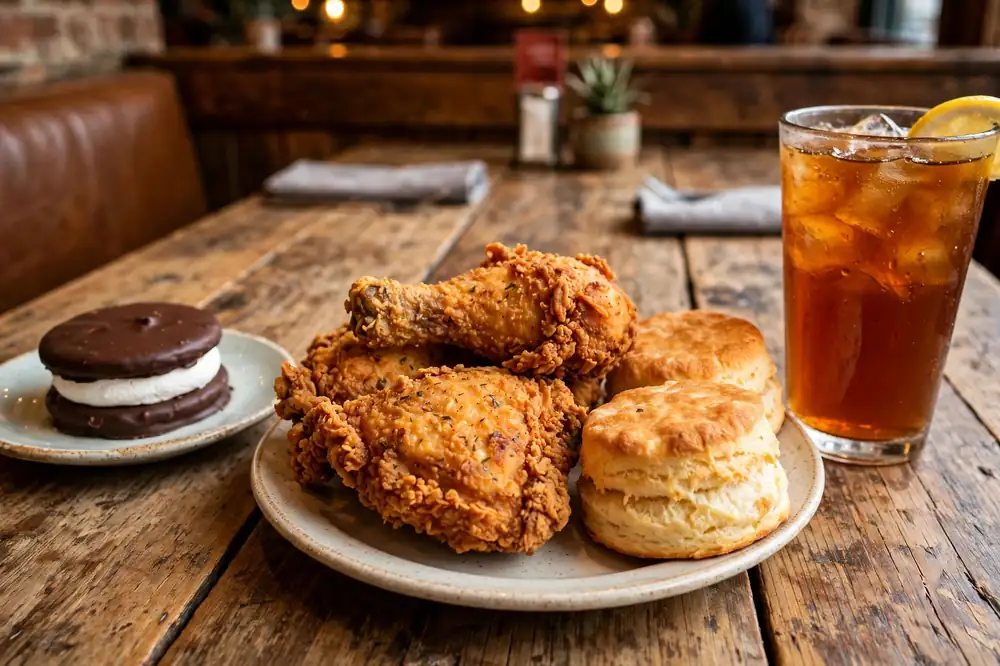
The MoonPie was invented in Chattanooga in 1917, when a travelling salesman for the Chattanooga Bakery asked coal miners what they wanted for a snack and was told: something with graham cracker, marshmallow and chocolate, “as big as the moon”. The bakery has made them in the city ever since, and the MoonPie General Store in the Southside is the place to buy them — every flavour, from the original chocolate to banana, vanilla, salted caramel and the seasonal specials, plus MoonPie merchandise and old-fashioned candy. Read about the MoonPie on Wikipedia.
The classic order is the original chocolate MoonPie with an RC Cola, the pairing the miners drank it with. The store also sells the smaller MoonPie Minis, which are the ones to take home as gifts. Chattanooga is also the home of Little Debbie — the snack cakes are made just outside the city in Collegedale — so the MoonPie is not the only famous sweet to come out of this town. It is the one that tastes of Chattanooga and nowhere else.
Fried chicken and barbecue — the Southern plates
Chattanooga’s Southern cooking is the real deal, and the two places to start are Champy’s and Sugar’s Ribs. Champy’s, on Martin Luther King Boulevard, is the local favourite for fried chicken — crispy, juicy, served with tamales and cold beer in a room that feels like a roadhouse — and it is the restaurant the Quora answers and the locals name first. Sugar’s Ribs, on the North Shore, is the barbecue stop: slow-smoked ribs, pulled pork and the house sauce, with a deck over the river. Read about Chattanooga on Wikipedia.
For the rest of the Southern table, try the biscuits and gravy at the Bluegrass Grill for breakfast, the shrimp and grits at the Boathouse on the river, and the hot chicken that Tennessee does better than anywhere else. The Chattanooga Market, on Sundays year-round at the First Horizon Pavilion, is the place to taste the local food scene in one place — farm stalls, food trucks, bakers and brewers, all in a former foundry building. Come hungry, and come early, because the best stalls sell out.
Chattanooga Whiskey and the craft-beer scene
Chattanooga Whiskey is the drink of the city, and the Experimental Distillery tour is the tasting to book — but the drinking does not stop there. Chattanooga has one of the best craft-beer scenes in the South: Hutton and Smith Brewing in the Southside, OddStory Brewing, Naked River Brewing in the old foundry, and the Terminal BrewHouse at the Choo Choo, all pouring local beer within a few blocks of each other. The Southside is the neighbourhood to do it in, with the breweries, the restaurants and the live music all on the same streets. Learn about Tennessee whiskey on Wikipedia.
The honest rule for a night out: the distillery and the breweries are all within walking distance of each other downtown, so leave the car at the hotel and take the free shuttle or walk. The distillery tours are 21 and over, the breweries are all-ages with food, and the best plan is a distillery tour in the afternoon, a brewery crawl in the evening, and a MoonPie on the way home.
Free things to do in Chattanooga
Chattanooga is one of the best-value cities in the South, because its best sights are free. The Walnut Street Bridge is free. The Tennessee Riverwalk is free. Coolidge Park is free. The Bluff View Art District is free to wander, and the Hunter Museum’s sculpture garden and river overlook are free without a ticket. Chickamauga Battlefield is free, and every unit of the national military park except Point Park is free. The Sculpture Fields at Montague Park — a 33-acre outdoor sculpture park — is free. The CARTA free electric shuttle is free. Watching the sunset from the bridge, stargazing from the mountain, and walking the riverfront at dawn cost nothing at all.
A full day of the bridge, the Riverwalk, the parks, the battlefield and the sculpture fields can cost nothing — which is why the budget in this guide starts low. The paid attractions that are worth it are the aquarium, Rock City and Ruby Falls; everything else on a first visit can be free. The other free secret: the first Thursday of the month, when the Hunter Museum is free from 4 to 8 p.m., and the Chattanooga Market on Sundays, where browsing the stalls costs nothing and the samples are generous.
Frequently asked questions
How many days do you need in Chattanooga?
Three full days is the right amount for the highlights: one day downtown and on the river, one day on Lookout Mountain, and one day for the battlefields, the trains and the caves. Two days covers the essentials if you skip the day trips — the aquarium and the bridge on day one, Lookout Mountain on day two. Add a fourth day for the Ocoee River whitewater or for Cloudland Canyon, both of which deserve a full day of their own.
Is the Walnut Street Bridge open?
Yes — and this is the question that catches the most visitors out. The bridge was closed for 18 months for a major renovation and reopened on October 3, 2026, after roughly $47 million of work: new decking, new steel, repainted blue trusses and a new coloured light system. It is open to pedestrians and cyclists again, and it is crowded at sunset. Any guide, map or blog post that still says the bridge is closed was written before October 2026 and is out of date.
Do you need a car in Chattanooga?
Not downtown. The free CARTA electric shuttle covers the riverfront from the Choo Choo to the aquarium, the downtown core is flat and walkable, and the North Shore and St. Elmo shuttles reach the bridge and the foot of the Incline Railway. But a car is the easiest way to reach Lookout Mountain, Rock City, Ruby Falls, Chickamauga Battlefield, Cloudland Canyon and the Ocoee River, and ride-hailing is thin on the mountain. If you are staying downtown and only doing the riverfront, skip the car; if you are doing the mountain and the day trips, rent one.
Is Chattanooga good for families?
Yes — it is one of the best family cities in the South. The Tennessee Aquarium, the Creative Discovery Museum, the Chattanooga Zoo, the Coolidge Park carousel, the train rides at the Tennessee Valley Railroad Museum and the Incline Railway are all built for children, and the riverfront is flat, safe and full of parks. The aquarium and the children’s museum are the two anchors of a family trip, and the zoo and the carousel are the easy half-day stops. The caves are the one thing to check: Ruby Falls involves a guided walk underground, which suits children over five, and the wild cave trips at Raccoon Mountain are for older children and teenagers.
What is Chattanooga known for?
Chattanooga is known for four things: the Tennessee Aquarium, one of the best aquariums in America; Lookout Mountain, with Rock City, Ruby Falls and the Incline Railway; the Civil War battlefields, America’s first national military park; and the food — the MoonPie, invented here in 1917, and Chattanooga Whiskey, the first whiskey distilled in the city in more than a century. It is also known as the Scenic City, for the river and the mountains, and as Gig City, because it was the first city in the United States with a citywide gigabit fibre internet network. The 1941 song “Chattanooga Choo Choo” made its name world-famous, and the city has been living up to it ever since.
When is the best time to visit Chattanooga?
April to May and September to October, when the weather is mild and the mountain trails are at their best. October is the single best month: highs around 70°F, the driest month of the year, and the fall colour on Lookout Mountain. Summer is hot and humid but it is the season for the river and the festivals, and winter is the cheapest time to visit, with the holiday lights at Rock City and the Christmas trains. Avoid the hottest weeks of July and August if you plan to hike, and bring a light rain jacket in any season — rain falls fairly evenly all year.
Further reading — Wikipedia, Reddit and Quora
Wikipedia: Chattanooga on Wikipedia — the city’s history, geography and neighbourhoods.
Reddit: for local tips, trip reports and current conditions, see the Chattanooga community on Reddit — the live community where locals answer visitor questions. We link to the community home rather than a single thread, because threads move and close.
Quora: read this Quora thread about the best hidden attractions in or near Chattanooga — it covers the aquarium, Ruby Falls, Rock City, the Hunter Museum, the pedestrian bridge and Coolidge Park, with answers from visitors and locals.
Your Chattanooga trip, in one paragraph
Chattanooga is the small river city that gives you the most for the least: a world-class aquarium in the morning, a 2,376-foot bridge at sunset, a cave waterfall and a seven-state view on the same mountain, the battlefields where America was decided, and a MoonPie at the end of the day — all in three days, much of it free. Start with the riverfront, ride the steepest railway in the world, walk the bridge that just reopened after 18 months, taste the whiskey that came back after a century, and finish with a day trip to the Ocoee or the gorge. And when you are ready for the next city, the same 20-attraction format covers Chicago, Nashville, Los Angeles, Orlando, Miami, San Diego, Denver, Savannah, Dallas, Charleston, San Francisco, Myrtle Beach, Las Vegas, San Antonio, London, Portland, Pigeon Forge, Puerto Rico, Atlanta, Phoenix, Paris, Maui, Key West, Colorado Springs and Sedona — twenty-five guides, one for every kind of trip.

About the Author