Things to Do in Indianapolis
20 Best Attractions, a 3-Day Itinerary, Where to Stay, and the Food You Cannot Miss
Quick Info
Best for: First-time visitors, racing fans, families, sports lovers and anyone who wants a big Midwestern city that is easy to explore in a weekend
Best time: May to June and September to October for warm days and the biggest events; late November to December for the holiday lights
How long: 3 days covers the essentials; add a fourth day for Conner Prairie, Eagle Creek Park or a Colts or Pacers game
Budget: Roughly $120 to $200 per person per day, mid-range, before your hotel
Don’t miss: The Indianapolis Motor Speedway Museum, the Children’s Museum, Monument Circle, the Canal Walk, and a breaded pork tenderloin sandwich
Indianapolis is the Circle City, and the name tells you how to read it: a city laid out on a grid that radiates from Monument Circle, with a racing heritage no other American city can match, the world’s largest children’s museum, more monuments than any American city except Washington, D.C., and a food scene built on one very large sandwich. This guide covers the 20 best things to do in Indianapolis, with honest 2026 prices and the traps outdated guides still fall into. Use the 3-day itinerary to plan your days, the where to stay section to pick a base, and the how to get around notes to ride the bus like a local — then finish with the three foods every visitor should taste and the free sights that cost nothing at all.
Indianapolis sits in the middle of Indiana, about halfway between Chicago and Cincinnati, and it is the capital of the state and its largest city, with around 880,000 residents in the city itself and more than 2 million across the metro area. The city was founded in 1821 as a planned capital, built on the White River, and it grew up on racing, manufacturing and conventions. Today it is the home of the Indianapolis 500, the largest single-day sporting event in the world, and a city where you can walk from a world-class art museum to a minor league ballpark in twenty minutes. Read about Indianapolis on Wikipedia before you go, then plan on three days: one for downtown, one for racing and the family museums, and one for the neighbourhoods.
Indianapolis at a glance
| Attraction | What it is | Adult price in 2026 | Where |
|---|---|---|---|
| Indianapolis Motor Speedway Museum | Racing museum inside the 2.5-mile oval | $25 | Speedway, 4750 W 16th St |
| Children’s Museum of Indianapolis | World’s largest children’s museum | $29 to $37 by date | North side, 3000 N Meridian St |
| Monument Circle | Soldiers and Sailors Monument, city centre | $10 inside, plaza free | Downtown, 1 Monument Cir |
| Newfields | Indianapolis Museum of Art, 152-acre campus | $23 | North side, 4000 Michigan Rd |
| Indianapolis Zoo | Zoo and gardens in White River State Park | About $26 to $36 by date | Downtown, White River State Park |
| Eiteljorg Museum | Native American and Western art | $20 | Downtown, White River State Park |
| Indiana State Museum | Indiana history, three floors, IMAX | $23 | Downtown, White River State Park |
| Canal Walk | Scenic canal path through downtown | Free | Downtown, White River State Park |
| Lucas Oil Stadium | Colts stadium, retractable roof | Game tickets vary | Downtown, 500 S Capitol Ave |
| Victory Field | Indianapolis Indians minor league baseball | From $13 | Downtown, 501 W Maryland St |
The 20 best things to do in Indianapolis
1. Indianapolis Motor Speedway and Museum
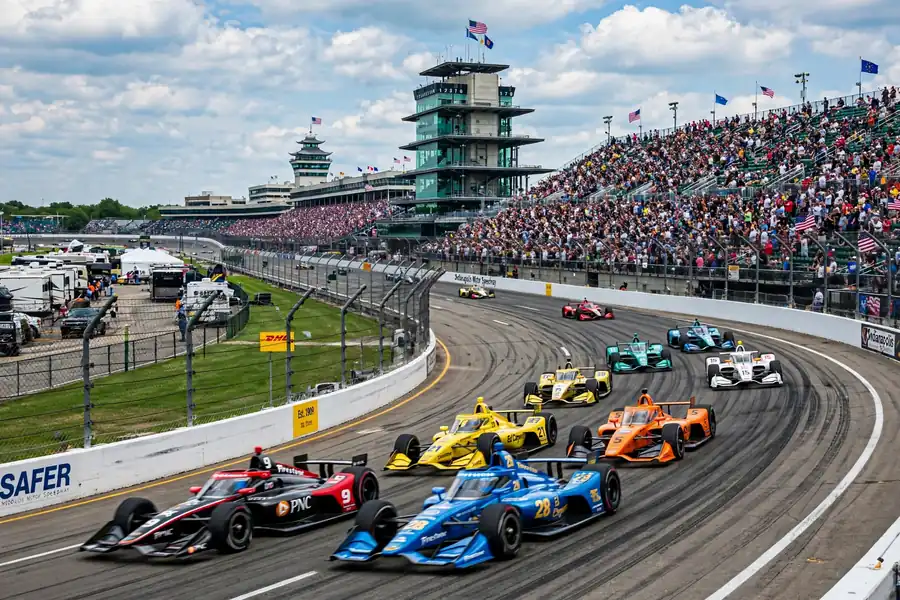
The Indianapolis Motor Speedway is the single most Indianapolis attraction in the city, and it belongs at the top of any visit. The 2.5-mile oval, on 559 acres in the town of Speedway, is the largest spectator sporting facility in the world, with room for more than 250,000 people, and it has hosted the Indianapolis 500 every Memorial Day weekend since 1911. The museum inside the oval was completely reimagined and reopened in April 2025, with 40,000 square feet of new space, and TIME magazine named it one of the World’s Greatest Places for 2026. Inside you will find the world’s largest collection of Indy cars, including the winning car from every Indianapolis 500, a pit stop challenge, driving simulators and the Starting Line Experience, a seven-minute film on an 80-by-20-foot LED screen. Read about the Indianapolis Motor Speedway on Wikipedia before you go, and allow at least two hours, because the simulators and the interactive exhibits eat time fast.
The practical facts for 2026: the 110th Indianapolis 500 ran on Sunday, May 24, 2026, and it was one for the history books — Felix Rosenqvist won by 0.0233 seconds over David Malukas, the closest finish in the race’s history, after a record 70 lead changes in front of a sellout crowd of 350,000. The next race, the 111th Indianapolis 500, is set for Sunday, May 30, 2027, and tickets sell months ahead. Museum admission is $25 for adults, $23 for seniors 55 and over, $18 for military and youth ages 6 to 16, and free for children under 5. The Kiss the Bricks track tour, a 30-minute bus lap with a stop at the Yard of Bricks, adds $15 for adults and $10 for ages 6 to 16. The museum is open daily from 9 a.m. to 5 p.m., with winter hours of 10 a.m. to 4 p.m. from November 2, 2026 to February 28, 2027, and it is closed on Thanksgiving and Christmas. One honest note: the museum is cashless and bans backpacks and coolers, and during race weekends you need an event ticket as well as museum admission to get in.
2. Children’s Museum of Indianapolis
The Children’s Museum of Indianapolis is the largest children’s museum in the world — 485,000 square feet across five floors — and it is the best family attraction in the Midwest, full stop. Founded in 1925, it holds Dinosphere, where children watch scientists prepare real dinosaur bones, a replica of the International Space Station, a 1917 carousel, and the Riley Children’s Health Sports Legends Experience, 7.5 acres of outdoor sports fields that run from mid-March to early November. A ticket covers every exhibit, the planetarium and the Lilly Theater shows, and it is the one attraction in this guide that adults without children should still consider, because the scale of the place is genuinely impressive. Read about the Children’s Museum of Indianapolis on Wikipedia before you go, and plan on a full day if you have children under ten.
The practical facts for 2026: admission is date-based, $29 to $37 for adults and $25 to $33 for youth, with Indiana residents saving $3 a ticket and children under 2 free. Tuesday through Thursday is usually cheapest, and weekends and holiday weeks cost the most, so buy online for your exact date. The museum is open Tuesday to Sunday from 10 a.m. to 5 p.m., and daily in summer. The smart move is the first Thursday of the month, when admission is $6 a person from 4 to 8 p.m., and the free days are Martin Luther King Jr. Day on January 19, Presidents’ Day on February 16, the Juneteenth Jamboree and Christmas Eve on December 24, 2026. WinterFaire runs November 21, 2026 to February 15, 2027, and the whole museum closes January 11 to 15, 2027. One honest note: the museum is enormous, and families who try to see it all in one visit end up exhausted — pick two or three galleries, take a lunch break, and save the outdoor sports area for last.
3. Monument Circle and the Soldiers and Sailors Monument
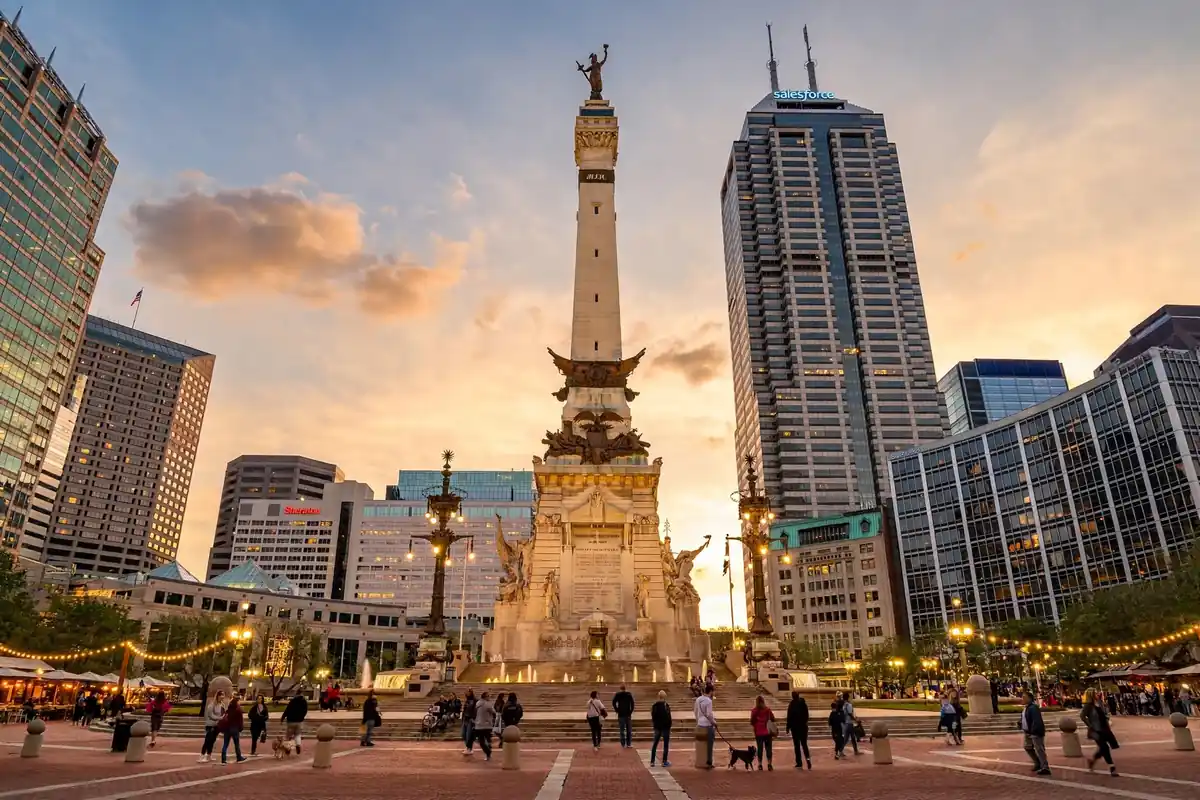
Monument Circle is the geographic centre of Indianapolis, and the Soldiers and Sailors Monument in the middle of it is the city’s defining landmark: a 284-foot obelisk dedicated on May 15, 1902, the first major American monument built to honour the common soldier, with a 360-degree observation deck 275 feet up that looks out over the whole downtown. Climb the 331 steps, or take the elevator most of the way and climb the last 31, and you can see the State Capitol dome, Lucas Oil Stadium and Gainbridge Fieldhouse from one spot. The plaza itself is free and open from dawn to dusk, and it is where the city gathers — for the Circle of Lights at Christmas, for farmers’ markets in summer, and for everything in between. Read about the Soldiers and Sailors Monument on Wikipedia before you go, and come at sunset, when the light on the limestone is at its best.
The practical facts for 2026: here is the biggest trap in this guide. Older guides still say the monument is free and open daily, but neither is true any more. Admission inside is now $10 for adults, $5 for seniors 60 and over and children ages 5 to 18, free for children under 5 and for military and veterans, and the interior is open on Fridays only, from 10 a.m. to 4 p.m. Worse, the monument has faced repair closures during 2026, with one guide updated in July 2026 reporting it closed for repairs until further notice. Check the Indiana War Memorials website before you go, because the observation deck is the best view in the city and the worst thing in this guide is arriving to find it shut. The plaza outside is always free, and the Circle of Lights lighting ceremony, the 64th annual, takes place on Friday, November 27, 2026, from 5 to 8 p.m., with more than 4,700 lights strung across the monument.
4. Newfields — the Indianapolis Museum of Art
Newfields is the Indianapolis Museum of Art and its 152-acre campus, and it is one of the finest regional art museums in America, with more than 54,000 works spanning 5,000 years, including one of the largest collections of J.M.W. Turner works outside the United Kingdom. The campus is the real draw: the IMA galleries, the historic Lilly House and its gardens, The Garden with its fountains and greenhouse, and the free 100-acre Virginia B. Fairbanks Art & Nature Park, a sculpture park and nature reserve that costs nothing to enter. It is the best half-day in Indianapolis for anyone who likes art, gardens or simply a beautiful place to walk, and it is about fifteen minutes by car from downtown. Read about Newfields on Wikipedia before you go, and allow three to five hours for the galleries and the grounds together.
The practical facts for 2026: general admission is $23 for adults, $20 for seniors 65 and over, $15 for youth ages 6 to 17, and free for children 5 and under. The galleries are open Tuesday to Sunday from 10 a.m. to 5 p.m., with Thursday hours until 8 p.m. The smart move is the first Thursday of the month, when admission is pay what you wish, including $0, from 10 a.m. to 5 p.m. Winterlights, the holiday light show in The Garden, runs November 20, 2026 to January 3, 2027 for its tenth season, with adult tickets from $25, and it needs a separate timed ticket — book early. The Giants exhibition, Alicia Keys and Swizz Beatz’s art collection, runs through February 28, 2027 on a $29 ticket that includes general admission. One honest note: special exhibitions and Winterlights are not included in general admission, so check what your ticket covers before you go.
5. The Canal Walk and White River State Park
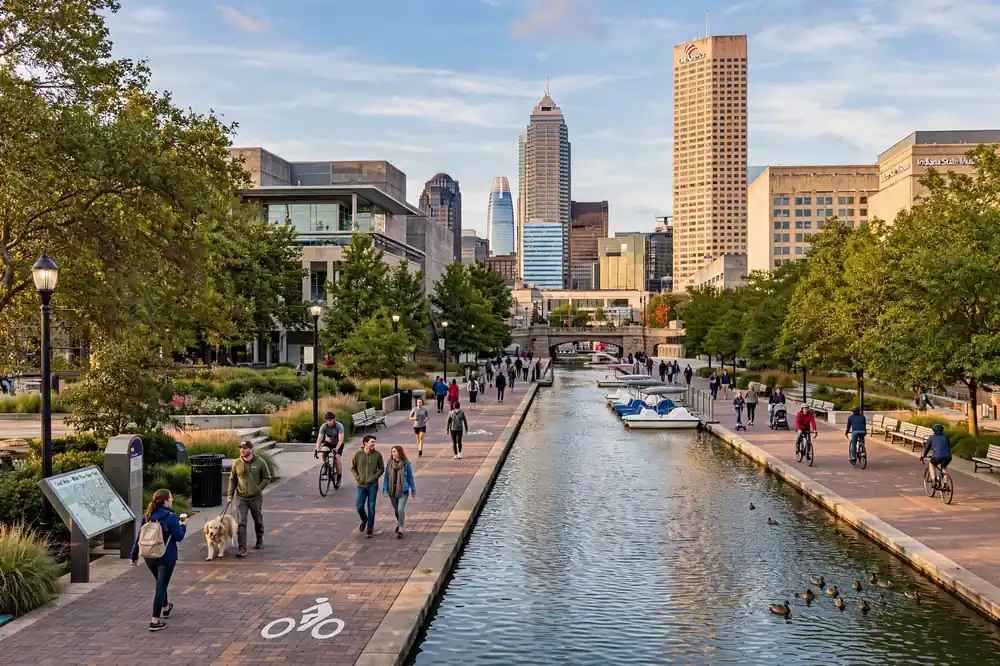
The Canal Walk is the best free walk in Indianapolis: a 3-mile loop along the Indiana Central Canal through the heart of downtown, past the museums of White River State Park, under bridges strung with lights, and along a path that connects the Indiana State Museum, the Eiteljorg, the NCAA Hall of Champions and the Indianapolis Zoo. White River State Park is a 250-acre urban state park, eight blocks of green space on the river, and it is the reason downtown Indianapolis feels so walkable — the zoo, three museums and a ballpark all sit within a few minutes of each other. Rent a gondola, take a pedal boat, or simply walk the canal at dusk, when the lights come on and the skyline reflects in the water. Read about the Indianapolis Cultural Trail on Wikipedia before you go, and pair the canal with the 8-mile Cultural Trail, which loops through Mass Ave, Fountain Square and the canal in about an hour by bike.
The practical facts for 2026: the Canal Walk and the park are free and open daily, and the best time to walk is early morning or late afternoon, when the path is quiet and the light is soft. Gondola rides run in season from the canal, and bike rentals are available through Pacers Bikeshare, with stations all along the Cultural Trail. The Everwise Amphitheater in the park hosts concerts through the summer, and the park’s lawn is the city’s favourite picnic spot. One honest note: the canal is a working waterway, not a swimming spot, and the path can be slippery after rain — wear proper shoes, and save the canal for a dry day if you can.
6. Indianapolis Zoo
The Indianapolis Zoo, in White River State Park, is the first zoo in America to be accredited as a zoo, an aquarium and a botanical garden, and it is one of only a handful of American zoos with a Pacific walrus. More than 1,200 animals from 230 species live here, from the plains of Africa to the deserts of the American Southwest, and the dolphin show, the orangutan centre and the butterfly garden are the highlights. White River Gardens, a 3.3-acre botanical garden inside the zoo, is included in admission and is worth an hour on its own. Read about the Indianapolis Zoo on Wikipedia before you go, and plan on three to four hours, because the zoo is larger than it looks from the gate.
The practical facts for 2026: admission is date-based and dynamic, running about $25.75 to $35.75 for adults and $22.75 to $32.75 for children ages 2 to 12, with children under 2 free, so weekdays and off-season dates are the cheapest. Parking is about $10. Christmas at the Zoo, the holiday light show, runs November 21, 2026 to January 3, 2027 and is included with admission. One honest note: the zoo is a private, nonprofit institution, and its prices have risen faster than the city’s other attractions, so buy online for your exact date and check the price before you commit — walk-up tickets on a Saturday can cost $10 more than a weekday ticket bought in advance.
7. Eiteljorg Museum of American Indians and Western Art
The Eiteljorg Museum is one of only two museums in the country dedicated to the art, history and cultures of Native peoples and the American West, and it is the museum in Indianapolis most visitors underestimate. Its 10,000-plus works include contemporary Native American art, Western painting and sculpture, and the largest collection of Western art in the eastern United States. Jingle Rails, the annual holiday model train show with more than 30 scenes of Indianapolis landmarks, is a city tradition. Read about the Eiteljorg Museum on Wikipedia before you go, and allow two hours, because the galleries are dense and the storytelling is excellent.
The practical facts for 2026: admission is $20 for adults, $16 for seniors, $12 for ages 5 to 17, and free for children 4 and under. The museum is open Monday to Saturday from 10 a.m. to 5 p.m. and Sunday from noon to 5 p.m. Jingle Rails runs November 21, 2026 to January 18, 2027. The smart move is a free day: admission is free on Martin Luther King Jr. Day, Juneteenth, and the first Fridays of July, August and September 2026. One honest note: the Eiteljorg sits on the Canal Walk next to the Indiana State Museum, so pair the two — buy one ticket for the morning and the other for the afternoon, and you have a full day of museums without moving your car.
8. Indiana State Museum
The Indiana State Museum, on the Canal Walk in White River State Park, tells the story of Indiana from the Ice Age to the present, across three floors of galleries that cover the state’s glaciers, its native peoples, its industrial age and its sports. The museum is at its best in the permanent galleries — the mastodon skeletons, the re-created 19th-century canal town and the Indianapolis Motor Speedway section — and the IMAX theatre shows documentaries and feature films on a six-storey screen. Read about the Indiana State Museum on Wikipedia before you go, and allow two to three hours for the galleries alone.
The practical facts for 2026: admission is $23 for adults, $21 for seniors 60 and over, $17 for ages 3 to 17, and free for children under 3, with $1 off every ticket bought online. IMAX documentaries cost $10 for adults and $7 for children 12 and under. Celebration Crossing, the museum’s holiday exhibition, runs November 27, 2026 to January 3, 2027, with Santa arriving by helicopter on November 27. The smart move is a free day: admission is free on Martin Luther King Jr. Day on January 19, Presidents’ Day on February 16 and Juneteenth. One honest note: the museum’s temporary exhibitions are not always included in general admission, so check what is on and what your ticket covers before you go.
9. Indiana War Memorial Plaza
Indiana War Memorial Plaza is a five-block Beaux Arts complex in the heart of downtown, and it is the reason Indianapolis has more monuments than any American city except Washington, D.C. The centrepiece is the Indiana War Memorial itself, a 210-foot memorial modelled on the Mausoleum of Halicarnassus, one of the Seven Wonders of the Ancient World, with a free museum inside and a 500-seat auditorium. Around it stand the World War II, Vietnam, Korean and 9/11 memorials, and the American Legion National Headquarters. Read about the Indiana War Memorial Plaza on Wikipedia before you go, and walk the whole plaza at dusk, when the memorials are lit and the fountains are running.
The practical facts for 2026: the Indiana War Memorial Museum is free to enter, and the plaza is free and open daily. The museum’s hours vary, so check before you go, and allow an hour for the museum and another hour to walk the plaza. One honest note: the memorial’s observation deck, at the top of the 210-foot memorial, is open only on select days, and the plaza is a working memorial, not a park — keep voices low around the shrine room and the eternal flame.
10. Massachusetts Avenue (Mass Ave)
Massachusetts Avenue, or Mass Ave, is Indianapolis’s most walkable neighbourhood: a diagonal street of historic brick buildings, independent shops, galleries, restaurants and bars, running from Delaware Street to College Avenue. It is the city’s arts and culture corridor, home to the Kurt Vonnegut Museum and Library, the Bottleworks District with its food hall and hotel, and the Garage Food Hall, where more than 30 local vendors serve everything from ramen to tacos. Mass Ave is at its best in the evening, when the patios fill up and the street comes alive, and it is the best place in Indianapolis to eat, drink and shop without a car. Read about the Indianapolis Cultural Trail on Wikipedia before you go, because the trail runs straight down Mass Ave and connects it to the canal, Fountain Square and Broad Ripple.
The practical facts for 2026: Mass Ave is free to walk, and most shops are open from 10 a.m. to 6 p.m., with restaurants and bars open later. The Bottleworks Hotel, in the former Coca-Cola bottling plant, is one of the city’s most distinctive places to stay. One honest note: Mass Ave is popular, and the restaurants fill up on Friday and Saturday nights, so book ahead or come for lunch instead.
11. Lucas Oil Stadium
Lucas Oil Stadium is the home of the Indianapolis Colts, a 67,000-seat stadium with a retractable roof and a movable window wall that opens onto the downtown skyline, and it is one of the most impressive NFL stadiums in America. It opened in 2008 and has hosted the Super Bowl, the NCAA Final Four, the College Football Playoff National Championship and the NFL Scouting Combine, which comes to Indianapolis every March. Even if you are not a football fan, the stadium is worth seeing — it is a cathedral of American sport, and the roof opens on fair-weather days so you can watch a game under the open sky. Read about Lucas Oil Stadium on Wikipedia before you go, and if you want a tour, check the stadium’s website for dates, because tours run only on select days.
The practical facts for 2026: the Colts’ 2026–27 season runs from September 13, 2026 to January 10, 2027, with eight home games, and tickets start at around $40 for the cheapest seats and rise steeply for prime games. The NFL Scouting Combine, the league’s annual draft showcase, returns to Indianapolis in March 2027. One honest note: the stadium is cashless, bags are limited to clear bags and small clutches, and the neighbourhood around the stadium is quiet on non-event days, so come on a game day or a concert night if you want the atmosphere.
12. Victory Field — Indianapolis Indians baseball
Victory Field is the home of the Indianapolis Indians, the Triple-A affiliate of the Pittsburgh Pirates, and it is one of the best minor league ballparks in America, with a view of the downtown skyline from the outfield and a reputation for the best atmosphere in the minors. The Indians have played here since 1996, and 2026 was the ballpark’s 30th season, celebrated on July 11, 2026, with the Indians drawing more than 9,000 fans a game, the top draw in all of minor league baseball. A night at Victory Field is the most Indianapolis evening you can have: cheap tickets, local beer, fireworks on Friday nights and a game that matters to the city. Read about Victory Field on Wikipedia before you go, and buy tickets in advance for Friday and Saturday games, because they sell out.
The practical facts for 2026: single-game tickets are $13 for the lawn, $16 for reserved seats and $19 for box seats, with $2 more on the day of the game. Dollar Tuesdays offer $1 hot dogs, Thirsty Thursdays offer $3 beer and soda, and Half-Off Wednesdays cut ticket prices in half. The season runs from late March to early September, and the ballpark is cashless. One honest note: the Indians are a Triple-A team, so the roster changes constantly as players are called up to Pittsburgh — check who is playing before you go, because the best players are often gone by August.
13. Fountain Square
Fountain Square is Indianapolis’s bohemian neighbourhood, a few blocks southeast of downtown, with a fountain in the middle, a theatre on the corner and some of the city’s best restaurants and bars. The Fountain Square Theatre building houses a rooftop bar and the city’s only duckpin bowling alley, Atomic Bowl, where you bowl with small balls and no finger holes. Milktooth, one of the best brunch spots in the Midwest, anchors the neighbourhood, and Rook, a Southeast Asian restaurant, is one of the city’s most celebrated tables. Fountain Square is at its best on a Friday or Saturday night, when the patios are full and the street is alive, and it is the best place in Indianapolis to spend an evening without a plan.
The practical facts for 2026: Fountain Square is free to walk, and most restaurants are open from 11 a.m. to 10 p.m., with bars open later. The neighbourhood is walkable from downtown in about 25 minutes, or a short ride on the Cultural Trail, which runs through Fountain Square. One honest note: parking is tight on weekend nights, so walk, bike or rideshare, and book a table at Milktooth or Rook in advance, because both fill up days ahead.
14. Broad Ripple Village
Broad Ripple Village is Indianapolis’s canal-side neighbourhood, six miles north of downtown, with the Monon Trail running through it, the Broad Ripple Park on the White River, and a main street of bars, restaurants and shops. The Vogue Theatre, a 1938 movie palace turned music venue, hosts live shows most weekends, and the Jazz Kitchen, open since 1994, is the city’s best jazz club. Brugge Brasserie, a Belgian beer hall on the canal, is the place to sit on a summer afternoon. Broad Ripple is at its best on a Saturday, when the farmers market runs and the patios fill up, and it is the best place in Indianapolis to spend a lazy afternoon.
The practical facts for 2026: Broad Ripple is free to walk, and the Monon Trail connects it to downtown in about an hour by bike. The Broad Ripple Farmers Market runs on Saturday mornings from May to October. One honest note: Broad Ripple is a nightlife neighbourhood, and it gets loud on Friday and Saturday nights, so come for the day if you want quiet, and come for the evening if you want the scene.
15. Benjamin Harrison Presidential Site
The Benjamin Harrison Presidential Site is the 1874 Italianate home of the 23rd president of the United States, a 16-room house on Delaware Street that is one of the best-preserved presidential homes in America. Harrison lived here before and after his presidency, and the house still holds his furniture, his books and his personal effects, including the desk where he wrote his inaugural address. The guided tour, about 75 minutes, is the best way to see it, because the docents tell the story of a president who is mostly forgotten and a house that is mostly unchanged. Read about the Benjamin Harrison Presidential Site on Wikipedia before you go, and allow two hours for the tour and the grounds.
The practical facts for 2026: the house is open Tuesday to Sunday, with guided tours running throughout the day, and the house closes for a winter break in January, so check dates before you go. Admission is about $15 for adults, with discounts for seniors, students and children. One honest note: the house is a historic home, not a museum, so the tour is guided and you cannot wander freely — book your tour in advance, because the small groups fill up on weekends.
16. Garfield Park Conservatory
Garfield Park Conservatory is Indianapolis’s free tropical garden, a year-round greenhouse in Garfield Park, the city’s first public park, established in 1887. The conservatory holds palms, orchids, ferns and a waterfall in a glasshouse that is warm even in January, and the 128-acre park around it holds a sunken garden, a 1910 carousel and miles of paths. It is the best free indoor attraction in Indianapolis, and it is at its best in winter, when the conservatory is a warm green refuge from the cold. Read about Garfield Park on Wikipedia before you go, and pair it with the Contemporary Art Museum of Indianapolis, which opened on May 1, 2026 in a renovated dairy factory in Garfield Park, with 40,000 square feet of galleries.
The practical facts for 2026: the conservatory is free, and it is open Tuesday to Saturday from 10 a.m. to 5 p.m. and Sunday from 1 to 5 p.m., closed on Mondays. Conservatory Crossing, the holiday light show, runs November 27 to December 27, 2026. One honest note: the conservatory is small, and a visit takes about an hour, so pair it with the park, the art museum or a drive through the neighbourhood, and come on a weekday if you want it quiet.
17. Crown Hill Cemetery
Crown Hill Cemetery is 555 acres of rolling hills, monuments and history, the third-largest non-government cemetery in the United States, and one of the most beautiful places in Indianapolis. President Benjamin Harrison is buried here, along with the poet James Whitcomb Riley, three vice presidents and more than 200,000 others, and the cemetery’s highest point, Crown Hill itself, is the highest point in the city, with a view over the downtown skyline. The cemetery is free to visit, and it is at its best in autumn, when the trees turn and the hills are covered in colour. Read about Crown Hill Cemetery on Wikipedia before you go, and allow an hour or two, because the cemetery is large and the best graves are spread across the grounds.
The practical facts for 2026: the cemetery is free and open from dawn to dusk, and the grounds are open to walkers, runners and cyclists. Guided tours run on select days, and the cemetery’s office can provide a map of the most famous graves. One honest note: Crown Hill is a working cemetery, not a park, so keep voices low, stay on the paths, and do not climb on the monuments.
18. Conner Prairie
Conner Prairie, in Fishers, about 25 minutes north of downtown, is a 1,046-acre living history museum that re-creates Indiana in 1836, with costumed interpreters, a prairie town, a four-storey treehouse and a tethered balloon that rises 350 feet over the fields. It is the best day trip from Indianapolis, and it is at its best in spring and autumn, when the prairie is green and the weather is kind. The new Museum Experience Center, which opened on April 3, 2026, adds a year-round indoor museum with a science lab, a climbable sycamore tree and a foam quarry, so Conner Prairie is now worth visiting in winter too. Read about Conner Prairie on Wikipedia before you go, and allow a full day, because the grounds are large and the activities are spread out.
The practical facts for 2026: spring to autumn admission is $26 for adults 13 and over, $24 for seniors 65 and over, $20 for youth, and free for children under 2. A Merry Prairie Holiday, the Christmas event, runs November 27 to December 28, 2026 on 17 evenings from 5:30 to 9:30 p.m., with tickets at $26. One honest note: the outdoor trails were closed until further notice after the August 2026 flooding, so check what is open before you go, and come on a weekday if you want the prairie to yourself.
19. Eagle Creek Park
Eagle Creek Park is 5,300 acres of forest, reservoir and trails on the northwest side of Indianapolis, one of the largest city parks in the United States, and the best place in the city to escape the city. The park holds a 1,400-acre reservoir for kayaking and sailing, more than 10 miles of hiking trails, a birding centre and a marina, and it is at its best in autumn, when the trees turn and the trails are quiet. Read about Eagle Creek Park on Wikipedia before you go, and allow half a day, because the park is large and the trails are spread out.
The practical facts for 2026: the park is open daily from dawn to dusk, with a small entrance fee for cars, and the trails are free to walk. Kayak and paddleboard rentals are available in season, and the park’s birding centre is free. One honest note: Eagle Creek is a big park, and the trails are not all well marked, so bring water, wear proper shoes, and check the trail map at the entrance before you set out.
20. Gainbridge Fieldhouse
Gainbridge Fieldhouse is the home of the Indiana Pacers and the Indiana Fever, a 17,000-seat arena in the heart of downtown, and it is one of the best places in America to watch basketball. The Pacers’ 2026–27 season runs from October 23, 2026 to April 9, 2027, and the Fever, with the biggest star in women’s basketball, draw sellout crowds. The fieldhouse is also one of the city’s main concert venues, hosting the biggest touring acts in the country. Read about Gainbridge Fieldhouse on Wikipedia before you go, and buy tickets in advance, because the best games sell out.
The practical facts for 2026: Pacers tickets start at around $20 for the cheapest seats and rise steeply for prime games, and Fever tickets start at around $25. The fieldhouse is cashless, bags are limited to clear bags and small clutches, and the arena is in the heart of downtown, a short walk from Mass Ave and the Canal Walk. One honest note: the fieldhouse is loud, and the cheapest seats are high up, so bring binoculars if you want to see the players’ faces.
Indianapolis in 3 days — a ready-made itinerary
| Day | Morning | Afternoon | Evening |
|---|---|---|---|
| Day 1 — Downtown | Monument Circle and the Indiana War Memorial Plaza | Canal Walk, Indiana State Museum and Eiteljorg | Mass Ave dinner and drinks |
| Day 2 — Racing and families | Indianapolis Motor Speedway Museum | Children’s Museum | Victory Field baseball game |
| Day 3 — Neighbourhoods and nature | Newfields and the Fairbanks Art & Nature Park | Fountain Square and Broad Ripple Village | Gainbridge Fieldhouse game or a show at the Vogue Theatre |
Day 1: Downtown Indianapolis
Start at Monument Circle, climb the Soldiers and Sailors Monument if it is open, then walk the Indiana War Memorial Plaza and the Canal Walk to White River State Park. Spend the afternoon in the Indiana State Museum and the Eiteljorg, then walk the canal at dusk and finish with dinner on Mass Ave. This is the easiest day in the guide, because everything is within walking distance, and it gives you the best sense of what Indianapolis is.
Day 2: Racing and families
Drive to the Indianapolis Motor Speedway in the morning, tour the museum and take the Kiss the Bricks track tour, then head to the Children’s Museum for the afternoon. In the evening, catch a game at Victory Field, where the Indianapolis Indians play under the downtown skyline. This is the most Indianapolis day in the guide, and it is the one your children will remember.
Day 3: Neighbourhoods and nature
Spend the morning at Newfields, walking the galleries and the Fairbanks Art & Nature Park, then head to Fountain Square for lunch and Broad Ripple Village for the afternoon. In the evening, catch a Pacers or Fever game at Gainbridge Fieldhouse, or a show at the Vogue Theatre in Broad Ripple. This is the most relaxed day in the guide, and it shows you the Indianapolis that locals love.
Best time to visit Indianapolis
| Season | Months | Weather | What is on |
|---|---|---|---|
| Spring | March to May | Cool to mild, 50s to 70s F, dogwoods and redbuds in bloom | Indy 500 in May, spring festivals |
| Summer | June to August | Warm and humid, highs in the mid-80s F, afternoon thunderstorms | Gen Con, Indiana State Fair, Victory Field baseball |
| Fall | September to November | Mild and dry, 50s to 70s F, autumn colour in October | Colts football, Circle of Lights from late November |
| Winter | December to February | Cold, highs around 36 F, snow possible | Winterlights, WinterFaire, holiday markets |
The best time to visit Indianapolis is May to June and September to October, when the weather is warm and dry and the city’s biggest events are on. May is the biggest month in the city, because the Indianapolis 500 takes over the whole month, with practice, qualifying and the race itself on the last Sunday in May. September and October are the most pleasant months, with mild days, cool evenings and autumn colour in the parks. Summer is warm and humid, with highs in the mid-80s and afternoon thunderstorms, but it is also the season for Gen Con, the Indiana State Fair and baseball at Victory Field. Winter is cold, with highs around 36 degrees, but the holiday lights, Winterlights at Newfields and the Circle of Lights make December worth a visit.
The biggest events in Indianapolis in 2026: Gen Con, the world’s largest tabletop gaming convention, runs July 30 to August 2, 2026 at the Indiana Convention Center and Lucas Oil Stadium, with more than 70,000 attendees, and it fills every hotel in the city, so book months ahead if you are coming for it. The Indiana State Fair runs August 7 to 23, 2026, closed on Mondays, with children under 5 free, and it is the best place in Indiana to eat a pork tenderloin, a corn dog and a sugar cream pie in one afternoon. The Circle of Lights, the 64th annual, lights up Monument Circle on November 27, 2026. One honest note: hotel prices triple during the Indianapolis 500 and Gen Con, so if you are coming for either, book your hotel the day you buy your tickets.
Where to stay in Indianapolis
| Area | Best for | Price per night in 2026 | Getting around |
|---|---|---|---|
| Downtown | First-time visitors, walkers, event-goers | $180 to $350 | Walk everywhere, IndyGo bus |
| Mass Ave | Food lovers, nightlife, boutique hotels | $160 to $300 | Walk, Cultural Trail, rideshare |
| Broad Ripple Village | Nightlife, Monon Trail, younger travellers | $120 to $200 | Monon Trail, Red Line bus, rideshare |
| Airport area | Early flights, budget travellers | $90 to $160 | Route 8 bus, rideshare |
| North side (Carmel and Fishers) | Families, Conner Prairie, quieter stays | $130 to $250 | Car needed |
Downtown is the best place to stay in Indianapolis for a first visit, because everything in the guide’s first day is within walking distance, and the Canal Walk, Mass Ave and Gainbridge Fieldhouse are all a short walk from your hotel. The JW Marriott, the largest hotel in Indiana, sits on the Canal Walk, and the Alexander, a boutique hotel with a contemporary art collection, is a short walk from Mass Ave. Mass Ave is the best place to stay if you want restaurants and bars on your doorstep, and the Bottleworks Hotel, in the former Coca-Cola bottling plant, is one of the city’s most distinctive stays. Broad Ripple Village is the best place to stay if you want nightlife and the Monon Trail, and the north side, around Carmel and Fishers, is the best place to stay if you are visiting Conner Prairie or travelling with children. One honest note: hotel prices in Indianapolis are reasonable most of the year, but they triple during the Indianapolis 500 and Gen Con, so book early if you are coming for either.
Getting around Indianapolis
Indianapolis is one of the easiest big American cities to get around, because downtown is compact and walkable, the Cultural Trail connects the neighbourhoods by bike, and the bus system covers the rest. Downtown is flat and walkable, and you can walk from Monument Circle to the Canal Walk in ten minutes, to Mass Ave in fifteen and to Lucas Oil Stadium in twenty. The Indianapolis Cultural Trail, an 8-mile protected loop, connects six cultural districts — downtown, Mass Ave, Fountain Square, the canal, White River State Park and Broad Ripple — in about an hour by bike and three hours on foot, and it is the best way to see the city. Pacers Bikeshare, with stations all along the trail, costs about $9 for a day pass.
The bus system, IndyGo, is the way to get beyond downtown. The base fare rose from $1.75 to $2.75 on January 1, 2026, the first fare rise since 2009, with a daily fare cap of $6 and a weekly cap of $24.75, so you never pay more than $6 a day no matter how many buses you take. The Red Line, a bus rapid transit line, runs from Broad Ripple through downtown to the University of Indianapolis, and the Purple Line runs from downtown to Lawrence. Route 8 serves the airport every 30 minutes, and there is no rail to the airport, so the bus or a rideshare is the way to get there. One honest note: IndyGo’s payment system changed in 2026, with the old MyKey card replaced by MyKey+ on July 1, 2026, and tap-to-pay with credit cards and digital wallets arriving in late 2026, so bring a card and check the IndyGo website for the latest payment options before you go. For the Speedway, Conner Prairie and Eagle Creek Park, you need a car or a rideshare, because the bus does not go there.
Indianapolis food you have to try
Indianapolis food is Midwestern comfort food at its best: a giant pork tenderloin sandwich, a shrimp cocktail with a kick, and a sugar cream pie for dessert. The city’s food scene has grown up in the last few years, with Bluebeard named a USA TODAY Restaurant of the Year for 2026, Tinker Street’s owner a 2026 James Beard Award semifinalist, and Shapiro’s Delicatessen, open for more than 115 years, named one of the best restaurants in the country by USA TODAY in 2025. Come hungry, because the portions are large and the prices are fair.
1. The breaded pork tenderloin sandwich
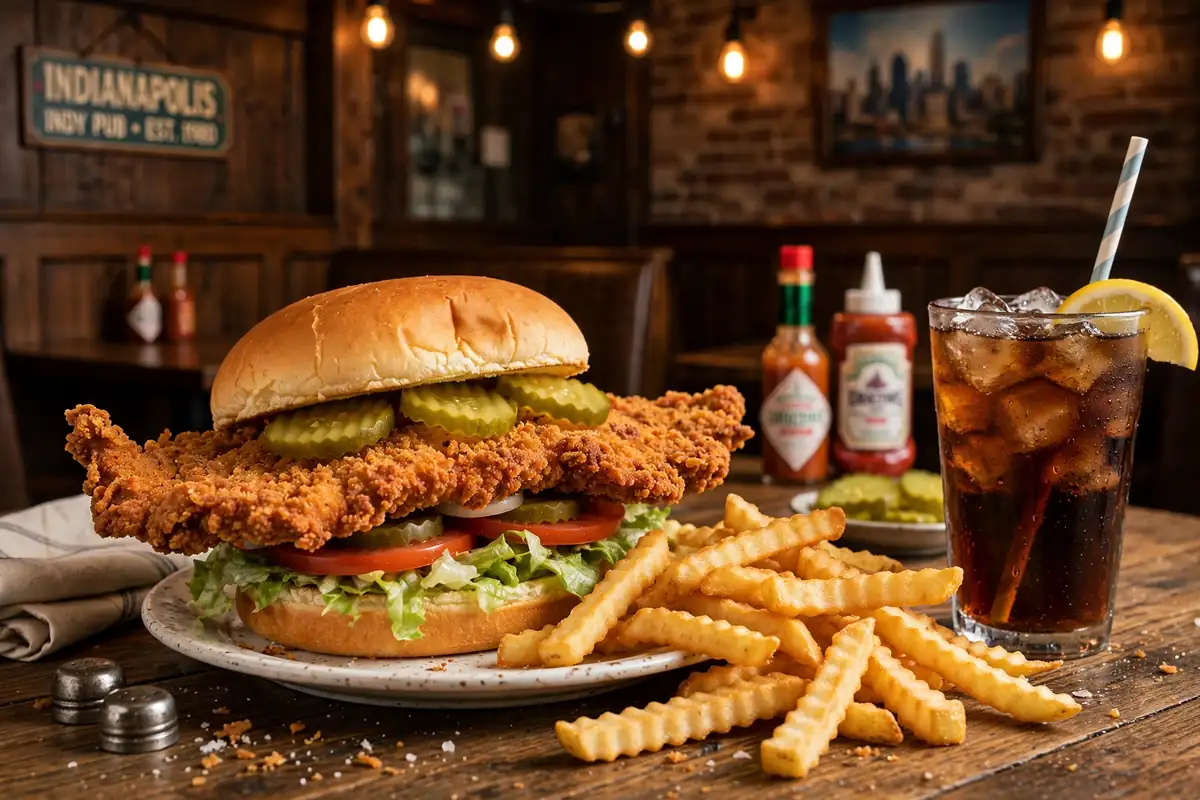
The breaded pork tenderloin sandwich is Indiana’s signature dish, a thin slice of pork, pounded flat, breaded and fried, served on a bun so small that the pork hangs over the edges by inches. It is said to have been invented at Nick’s Kitchen in Huntington, Indiana, and in Indianapolis the best versions are at Plump’s Last Shot in Broad Ripple, the Rathskeller in the Athenaeum, Chatham Tap and the Aristocrat Pub. A tenderloin costs about $12 to $16, and it comes with lettuce, tomato, onion and pickles, with mustard and mayonnaise on the side. Read about the pork tenderloin sandwich on Wikipedia before you go, and order it with a side of fries and a cold beer, because that is how it is meant to be eaten.
2. St. Elmo shrimp cocktail
St. Elmo Steak House, open since 1902 on Illinois Street, is the most famous restaurant in Indianapolis, and its shrimp cocktail is the most famous dish in the city. The shrimp are large and cold, the cocktail sauce is spiked with horseradish, and the heat builds with every bite — it is the dish that every visitor is told to try, and it lives up to the hype. A shrimp cocktail costs about $24, steaks run $42 to $89, and a full dinner runs $85 to $175 a person, so it is a special-occasion meal, not an everyday one. Read about St. Elmo Steak House on Wikipedia before you go, and book a table in advance, because the restaurant fills up every night, especially on game days and race weekends.
3. Sugar cream pie
Sugar cream pie is Indiana’s official state pie, a simple custard pie made with sugar, cream, butter and vanilla, dusted with cinnamon, and it is the sweetest way to end a meal in Indianapolis. The best place to try it is Pots & Pans Pie Co., a small bakery that sells the pie by the slice and whole, and the Indiana State Fair, where the pie is sold by the slice in August. A slice costs a few dollars, and a whole pie is the best souvenir you can take home. Read about sugar cream pie on Wikipedia before you go, and try it warm, with a cup of coffee, because that is how Hoosiers eat it.
Free things to do in Indianapolis
Indianapolis is generous with free things to do, and you can fill a whole day without spending a dollar. The Canal Walk and White River State Park are free, and so is the 8-mile Indianapolis Cultural Trail. Monument Circle’s plaza is free, and so is the Indiana War Memorial Museum, the Fairbanks Art & Nature Park at Newfields, Garfield Park Conservatory and Crown Hill Cemetery. The Children’s Museum is free on Martin Luther King Jr. Day, Presidents’ Day, Juneteenth and Christmas Eve, and Newfields is pay what you wish on the first Thursday of the month. The best free thing in Indianapolis is the Circle of Lights, the holiday light show on Monument Circle, which runs from late November to early January and costs nothing to see.
Frequently asked questions
How many days do you need in Indianapolis?
Three days is the right amount of time for a first visit to Indianapolis. One day covers downtown, Monument Circle, the Canal Walk and Mass Ave. One day covers the Indianapolis Motor Speedway and the Children’s Museum. One day covers Newfields, Fountain Square and Broad Ripple. Add a fourth day if you want to visit Conner Prairie, Eagle Creek Park or a Colts or Pacers game, and add a fifth if you are coming for the Indianapolis 500, because race week fills the whole city.
Is Indianapolis worth visiting?
Yes, Indianapolis is worth visiting, and it surprises most people who come. It is a big Midwestern city with a world-class racing heritage, the world’s largest children’s museum, more monuments than any American city except Washington, D.C., and a food scene that is better than its reputation. It is also one of the most affordable big cities in America, with hotel rooms, meals and attractions that cost half what they cost in Chicago or New York. Come for the racing, stay for the museums, the food and the neighbourhoods.
What is Indianapolis most famous for?
Indianapolis is most famous for the Indianapolis 500, the largest single-day sporting event in the world, held every Memorial Day weekend at the Indianapolis Motor Speedway. The city is also famous for the Children’s Museum, the largest children’s museum in the world, for its monuments, for the Colts and the Pacers, and for the breaded pork tenderloin sandwich. The nickname is the Circle City, after Monument Circle, and the racing nickname is the Racing Capital of the World.
Do you need a car in Indianapolis?
You do not need a car in downtown Indianapolis, because the centre is compact and walkable, the Cultural Trail connects the neighbourhoods by bike, and the IndyGo bus covers the rest of the city. You do need a car, or a rideshare, for the Indianapolis Motor Speedway, Conner Prairie and Eagle Creek Park, because the bus does not go there, and for the airport, because there is no rail to the airport. If you are staying downtown and visiting the museums, the zoo and Mass Ave, you can do the whole trip without a car.
What is the best time of year to visit Indianapolis?
The best time of year to visit Indianapolis is May to June and September to October, when the weather is warm and dry and the city’s biggest events are on. May is the biggest month, because the Indianapolis 500 takes over the whole month. September and October are the most pleasant months, with mild days and autumn colour. Summer is warm and humid, but it is also the season for Gen Con, the Indiana State Fair and baseball. Winter is cold, but the holiday lights make December worth a visit.
Is Indianapolis safe for visitors?
Indianapolis is safe for visitors who take the same precautions they would take in any big American city. Downtown, Mass Ave, Fountain Square and Broad Ripple are well lit and busy, and they are safe to walk in the evening. Avoid walking alone late at night in unfamiliar neighbourhoods, keep your valuables out of sight, and use rideshares after dark if you are going somewhere you do not know. The city centre is well policed, and the tourist areas are among the safest parts of the city.
Further reading — Wikipedia and Reddit
- Indianapolis on Wikipedia
- The Indianapolis Motor Speedway on Wikipedia
- The Indianapolis 500 on Wikipedia
- The Indianapolis community on Reddit
No Quora link is included here — we could not verify a live Indianapolis-specific thread on Quora, so we have not invented one.
Your Indianapolis trip, in one paragraph
Indianapolis is a city that rewards a long weekend: the Indianapolis Motor Speedway and its museum, the world’s largest children’s museum, Monument Circle and the Canal Walk, Newfields and the Fairbanks Art & Nature Park, a ballgame at Victory Field and a pork tenderloin sandwich at the end of it. If you liked this guide, read our other city guides — Chicago, Nashville, Los Angeles, Orlando, Miami, San Diego, Denver, Savannah, Dallas, Charleston, San Francisco, Myrtle Beach, Las Vegas, San Antonio, London, Portland, Pigeon Forge, Puerto Rico, Atlanta, Phoenix, Paris, Maui, Key West, Colorado Springs, Sedona, Chattanooga, Palm Springs, St Louis, Tokyo, Japan, Kansas City, Tennessee, Branson, Florida, Amsterdam, Montreal, Honolulu, Fort Lauderdale, Toronto, Aruba, and Charlotte — and start planning your next trip.

About the Author