Things to Do in Boston
20 Best Attractions, a 3-Day Itinerary, Where to Stay, and the Food You Cannot Miss
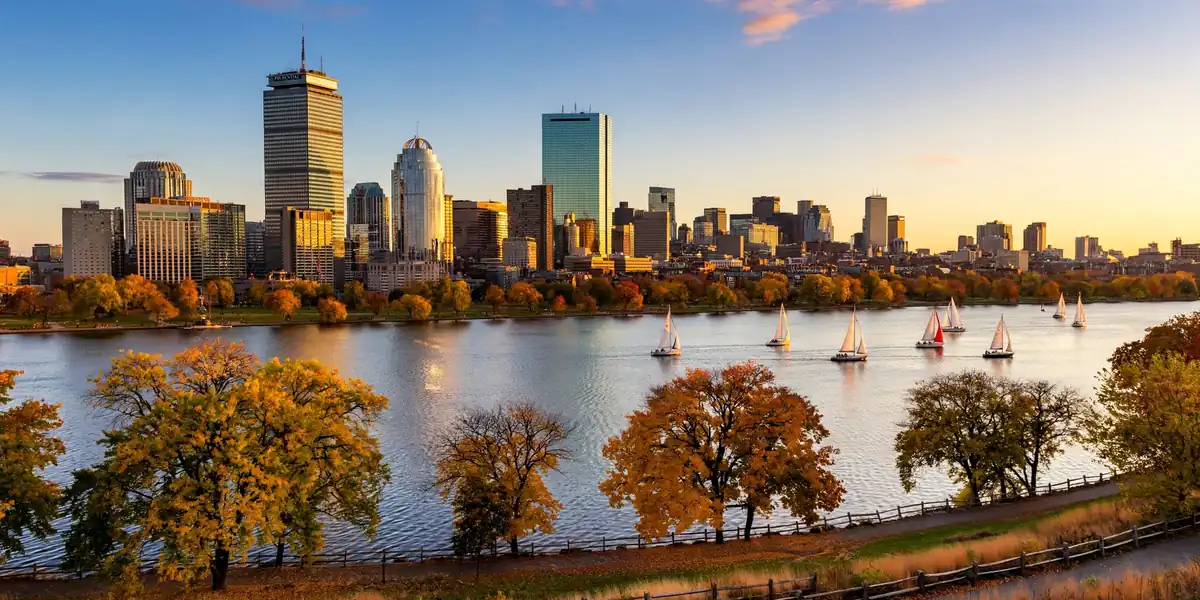
Quick Info
Best for: First-timers, history lovers, food lovers, sports fans and families — America’s most walkable big city
Best time: Late May–June and September–October for mild days and fall foliage; October for the Head of the Charles Regatta
How long: 3 days for the Freedom Trail, the museums, Fenway Park and the North End; 4 to 5 days adds Cambridge, the Harbor Islands and a day trip to Salem
Budget: About $150–$300 per person per day with a mid-range hotel — the Freedom Trail, the parks and the USS Constitution are free
Don’t miss: The Freedom Trail walk, the Old North Church, a Fenway Park tour, a lobster roll in the North End and the Public Garden at sunset
Boston on Wikipedia is where the United States began — a compact, brick-built city where the Revolution was argued in meeting houses, fought on a hill in Charlestown and celebrated with tea in the harbour. It is also one of the most walkable cities in America: the whole centre fits inside about two miles, and the subway, the T, covers the rest. This guide covers the 20 best things to do in Boston, a 3-day itinerary that actually works, where to stay without overpaying, how to get around on the T, the three foods you should not skip, and the free sights that cost nothing. Everything below was checked against live sources in November 2026 — including the 2026 ticket prices, the Swan Boats and Harbor Islands seasons, and the new Sloomoo Institute that opened in November.
Boston at a glance
| Topic | What to know |
|---|---|
| Full name | Boston — the capital of Massachusetts, founded in 1630, about 675,000 people in the city and about 4.9 million in the metro area |
| Founded | 1630 by Puritan settlers; the American Revolution began here |
| Population | About 675,000 in the city; about 4.9 million in Greater Boston |
| Language | English; “wicked” means very, and a “tonic” is a soda |
| Airport | Logan International Airport (BOS), about 3 miles east of downtown |
| Best base | Back Bay or Downtown for first-timers; the North End for food; Cambridge for Harvard and MIT |
| Getting around | The T (subway) and your feet — no car is needed in central Boston |
| Famous for | The Freedom Trail, Fenway Park, Harvard, the Boston Marathon and clam chowder |
Boston divides into a handful of neighbourhoods, and each one is a different trip. Downtown holds the Freedom Trail, Faneuil Hall and the Old State House. Beacon Hill is the gas-lit hill of brick townhouses above the Common. The North End is Boston’s Little Italy, all narrow streets and pastry shops. Back Bay is the grand nineteenth-century grid of brownstones, Newbury Street and Copley Square. Charlestown, across the bridge, holds the USS Constitution and Bunker Hill. Cambridge, across the Charles River, holds Harvard and MIT. And the Seaport is the new waterfront of glass towers and restaurants. The trap is the calendar: the big 2026 events are over — the America 250 celebrations on July 4, the World Cup matches at Gillette Stadium in Foxborough (the last on July 9) and the Sail Boston tall ships’ visit on July 11 to 16. Guides written before July 2026 still list them as coming up. The landmarks behind them are still the heart of any visit, and they are all in this guide.
The 20 best things to do in Boston
1. Walk the Freedom Trail
The Freedom Trail on Wikipedia is the walk every Boston trip starts with: a 2.5-mile red-brick line in the pavement linking 16 historic sites, from Boston Common to the Bunker Hill Monument in Charlestown. Walking it yourself is free, and it takes two to three hours for the exteriors, or a full day if you go inside the museums along the way. The honest catch is that the trail is free but several doors along it are not: the Old State House and Old South Meeting House sell a joint ticket for $18, the Paul Revere House charges $6, the Old North Church sells a Discovery Pass for $10, and King’s Chapel charges $5. The federally owned sites — Boston Common, the Granary Burying Ground, Faneuil Hall, the USS Constitution and Bunker Hill — are free. Start at the Boston Common Visitor Information Center on Tremont Street for a map, and walk the trail in order, south to north, so the story runs the right way: the meeting houses and the massacre site first, the North End and the church lanterns second, and the ship and the monument last. The Freedom Trail Foundation runs a 90-minute guided walk with costumed guides for $17, and it is the best money you will spend if you want the story told rather than read.
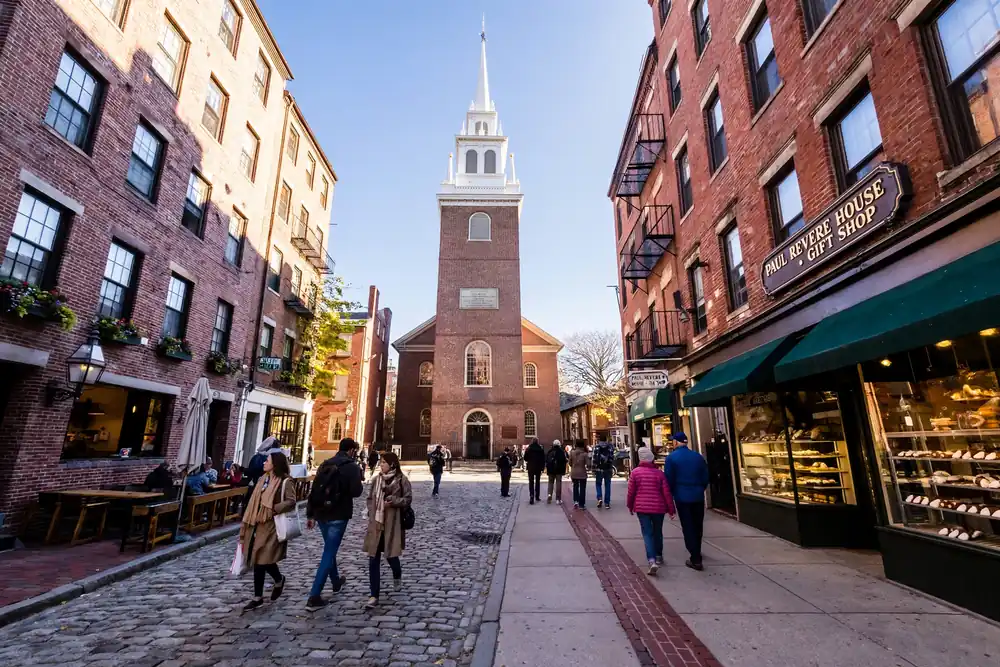
2. Boston Common and the Public Garden
Boston Common on Wikipedia was set aside in 1634 and is the oldest public park in the United States — once a cow pasture and a British army camp, now the city’s lawn, with the Frog Pond (a paddling pool in summer, a skating rink in winter) and the official starting point of the Freedom Trail. Cross Charles Street and you are in the Boston Public Garden on Wikipedia, laid out from 1837 as the first public botanical garden in the United States, with formal flowerbeds, weeping willows and a little lagoon crossed by a footbridge. The Swan Boats have crossed that lagoon since 1877, pedalled by their drivers, at $3.25 to $4.75 a ride — but they are a seasonal extra, not a year-round attraction: the 2026 season has ended and the boats return in April 2027, so do not promise children a ride in winter. The bronze Make Way for Ducklings statues near the lagoon are the most photographed spot in the garden, and the garden is at its best at sunset, when the light hits the willows and the skyline behind them. Both parks are free, and together they take 45 to 90 minutes — longer if you sit down, which is the point.
3. Beacon Hill and Acorn Street
Beacon Hill on Wikipedia is Boston’s prettiest neighbourhood: gas-lit brick lanes, black shutters, wrought-iron fences and the gold dome of the Massachusetts State House on Wikipedia crowning the hill. The State House, completed in 1798, is still the seat of the state government, and free weekday tours run inside — bring photo ID. Acorn Street, one steep cobbled lane of brick row houses, is called the most photographed street in America, and it is at its best in the early morning before the crowds arrive. The Black Heritage Trail runs through the same streets: the Museum of African American History and the African Meeting House tell the story of Boston’s free Black community in the nineteenth century, and the trail is the part of Beacon Hill most visitors walk straight past. Beacon Hill is free to wander, and the walk from the Common up Mount Vernon Street to Louisburg Square takes about half an hour — go slowly, because the whole point is the looking.
4. Faneuil Hall and Quincy Market
Faneuil Hall on Wikipedia was built in 1742 and earned the nickname the Cradle of Liberty for the protest meetings held in its upstairs Great Hall — which is free to visit and still hosts debates and citizenship ceremonies. The marketplace around it, Quincy Market on Wikipedia, is the city’s noisiest food hall: stalls selling chowder, lobster rolls and cannoli under a long granite roof, with street performers outside and the pushcarts of Downtown Crossing a short walk away. It is the most touristy part of town, and it is worth an hour anyway — eat here once, then eat in the North End for the rest of the trip. The new attraction on the block is the Sloomoo Institute, a 17,000-square-foot hands-on slime exhibit that opened on November 6, 2026 at 22–24 Clinton Street, in the former Hard Rock Cafe space (the cafe closed in June 2022), with tickets from $35.99 and a grand opening on November 14. Faneuil Hall and the market are free to enter; allow an hour, more if you eat.
5. The Old State House and the Boston Massacre site
The Old State House (Boston) on Wikipedia is the oldest surviving public building in Boston, built in 1713, and the place where the Revolution turned from argument into blood. On March 5, 1770, British soldiers fired on a crowd outside its doors in the Boston Massacre, killing five people; the spot is marked by a circle of cobblestones in the pavement, and the trial that followed was defended by John Adams. On July 18, 1776, the Declaration of Independence was first read to Bostonians from its balcony. Inside is a museum of the Revolution, run by Revolutionary Spaces, and the joint ticket with the Old South Meeting House costs $18 for adults ($16 for seniors, $10 for ages 6 to 17, free for ages 5 and under). The Old South Meeting House on Wikipedia, built in 1729, is where the men who would dump the tea gathered on December 16, 1773 — and where the “No Taxation Without Representation” argument was made. The two buildings are five minutes apart on foot, and the joint ticket is the honest way to see both: allow 90 minutes for the pair, and read the massacre circle first, then go inside.
6. The Old North Church and the Paul Revere House
The Old North Church on Wikipedia is the oldest surviving church building in Boston, built in 1723, and the steeple where the lanterns hung on the night of April 18, 1775 — “one if by land, and two if by sea” — to warn Paul Revere on Wikipedia that the British were coming by water. The church still holds Sunday worship, and the Discovery Pass costs $10 for adults and $5 for youth; the bell chamber tour, which climbs into the tower, costs $15. Two minutes away, the Paul Revere House on Wikipedia is the oldest remaining house in downtown Boston, built around 1680, where Revere lived with his family when he made his midnight ride. It charges $6 for adults ($5.50 for seniors and students, $1 for ages 5 to 17) and takes about 30 minutes. Both sit in the North End, so pair them with dinner on Hanover Street — the church, the house and the cannoli are the North End in one evening.
7. USS Constitution and the Charlestown Navy Yard
The USS Constitution on Wikipedia is the world’s oldest commissioned warship still afloat, launched in 1797 and nicknamed Old Ironsides for the way cannonballs bounced off her oak hull in the War of 1812. Boarding her is free, and she is still crewed by active-duty US Navy sailors, who give the tours. She is open Wednesday to Sunday, 10 a.m. to 4 p.m., first come, first served, with no tickets — but visitors aged 18 and over must show a physical federal or state photo ID or passport (digital IDs are not accepted) and pass a security screening, and she can close at short notice for weather or Navy operations, so check on the morning you go. Her 2026 season ends on November 11. Across the pier, the USS Constitution Museum runs on a pay-what-you-can donation model, with suggested tiers of $15 standard, $25 pay-it-forward and free to $10 reduced, open daily from 9:30 a.m. to 5 p.m. — it is the fallback when the ship closes unexpectedly. The best way to arrive is the MBTA Charlestown Ferry (F4) from Long Wharf, which crosses in 10 minutes for $3.70 one way. Allow 90 minutes for the ship and the museum, and half a day if you add Bunker Hill.
8. Bunker Hill Monument
The Bunker Hill Monument on Wikipedia is a 221-foot grey granite obelisk on a lawn in Charlestown, marking the Battle of Bunker Hill on Wikipedia of June 17, 1775 — fought mostly on Breed’s Hill, not Bunker Hill, which is the first thing the free museum across the street will tell you. The cornerstone was laid in 1825 with the Marquis de Lafayette present, and the monument was dedicated in 1843. Climbing it is free: 294 steps up a tight stone spiral, with no lift, and only 25 people allowed inside at a time, so a group waits its turn in shifts at the lodge. The small arched windows at the top look over Charlestown rooftops to the harbour and the Zakim Bridge. The monument can close for weather, and the last climb is well before closing time — climb it before the ship if the forecast is poor. It is 15 minutes uphill from the Navy Yard, and the museum, which covers the battle, is free and step-free. Allow an hour for the climb and the museum together.
9. The Boston Tea Party Ships & Museum
The Boston Tea Party on Wikipedia happened on December 16, 1773, when colonists dumped 342 chests of tea into the harbour, and the Boston Tea Party Ships & Museum, on the Congress Street Bridge, recreates it as a guided tour rather than a walk-through: costumed actors, full-scale replica ships, and a moment where you throw the tea into the water yourself. Adult tickets start at $35 and rise to $39 on peak days; child tickets are $26. Tours run daily year-round (except Thanksgiving and Christmas), every 15 minutes from 10 a.m. to 5 p.m. in the peak months of April to October, and the whole visit takes about an hour. The museum holds the Robinson Tea Chest, one of only two surviving tea chests from the protest, and Abigail’s Tea Room, where you can sit with a cup afterwards without a ticket. Book ahead — the tours sell out on summer weekends, and you can only enter on a guided tour.
10. Fenway Park — tour and a game
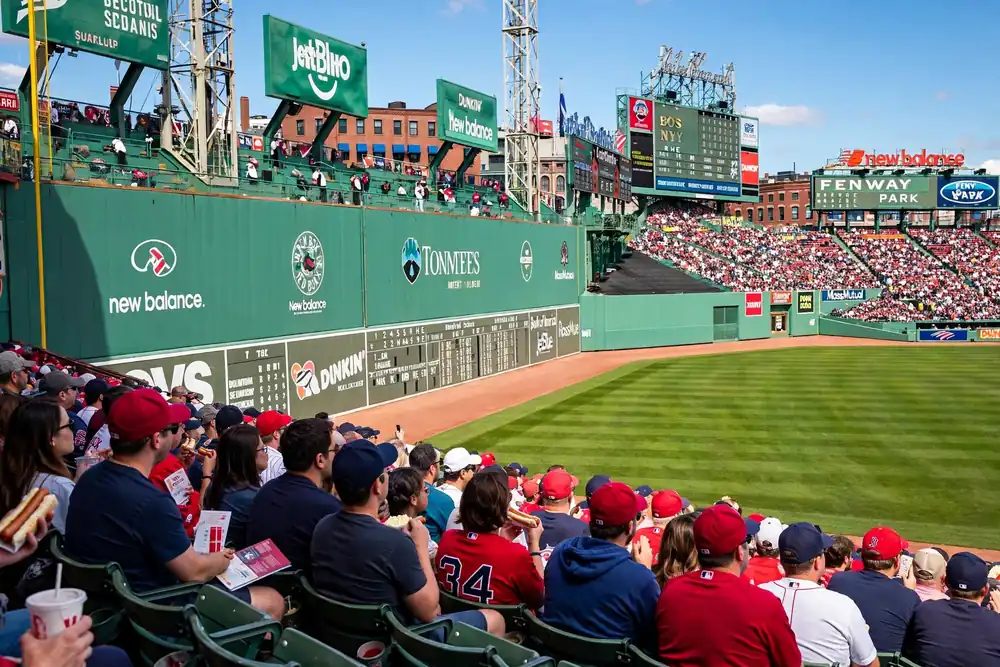
Fenway Park on Wikipedia opened on April 20, 1912, and is the oldest ballpark in Major League Baseball — a brick bowl of quirks, famous for the Green Monster, the 37-foot wall in left field, and for the Red Sox, who play here from April to October. The guided tour runs year-round and costs $30 for adults and $21 for children: it takes you onto the field, up to the Monster seats and into the press box, and it is worth doing even if you never watch a game. For a game, book at least a month ahead in summer — the best seats go first, and the cheapest seats are the ones with the obstructed views the ballpark is honest about. The ballpark sits in the Fenway-Kenmore neighbourhood, a ten-minute walk from the Kenmore T stop, and the streets around it fill with fans two hours before first pitch. If you only do one sports thing in Boston, this is it — no other ballpark feels like this one.
11. The Museum of Fine Arts
The Museum of Fine Arts, Boston on Wikipedia is one of the largest art museums in the United States, with nearly 500,000 objects from ancient Egypt to contemporary American painting, including the finest collection of Japanese art outside Japan and the Impressionists in the Art of Europe wing. Adult admission is $30, youth aged 7 to 17 pay $14, and children aged 6 and under enter free. The museum is closed on Tuesdays. The budget move is the $5 Third Thursday: pay-what-you-wish admission (minimum $5) on every third Thursday of the month after 5 p.m. — the next one is Thursday, November 19, 2026. Massachusetts residents get in free on MLK Jr. Day, Memorial Day, Juneteenth and Indigenous Peoples’ Day, and Bank of America cardholders get free admission on the first full weekend of every month. The MFA is at 465 Huntington Avenue in the Fenway, a ten-minute walk from Fenway Park, and it deserves half a day — pick one wing and see it properly rather than trying to cover the whole building.
12. The Isabella Stewart Gardner Museum
The Isabella Stewart Gardner Museum on Wikipedia is the strangest museum in Boston: a Venetian-style palazzo built around a glass-roofed courtyard garden, filled with the art one woman collected and arranged herself, and left in her will with the rule that nothing may ever be moved. The empty frames are the story: in 1990, thieves stole 13 works, including Vermeer’s The Concert, and the frames still hang where the paintings were, waiting for their return. Adult admission is $25, seniors pay $22, and everyone aged 17 and under enters free — as does anyone who can show ID with the first name Isabella, a standing tribute to the founder. The museum is closed on Tuesdays, and it is free on the first Thursday of every month from 3 to 9 p.m. — but reserve a timed ticket online, because the free evenings fill up. It is at 25 Evans Way, two minutes from the MFA, and the two museums make a natural pair: the MFA for scale, the Gardner for atmosphere.
13. The New England Aquarium
The New England Aquarium on Wikipedia sits on Central Wharf, ten minutes from Faneuil Hall, and its centrepiece is the four-story Giant Ocean Tank, a 200,000-gallon reef with sharks, sea turtles and rays circling a coral column, with penguins on the ground floor and sea lions outside. Admission starts at about $40 for adults, about $31 for children aged 3 to 11 and about $38 for seniors; residents of and college students in the New England states get $5 off, and children under 3 enter free. The aquarium uses timed entry, so book online — walk-up tickets are not guaranteed on weekends and school holidays, and the last entry is 80 minutes before closing. The Simons Theatre (IMAX) costs about $10 extra. The honest warning is the crowd: the aquarium is the first place every family in Boston goes on a rainy summer weekend, so go on a weekday morning if you can. Boston school-age children get in free with up to two guests on Boston Family Days, the first and second Sundays of each month through December 2026.
14. The Museum of Science
The Museum of Science, Boston on Wikipedia sits on the Charles River dam, straddling Boston and Cambridge, and it is the best family museum in the city: live animals, a lightning show, hands-on engineering halls and the Mugar Omni Theater. General admission is $33 for adults, $29 for seniors aged 60 and over and $28 for children aged 3 to 11. Planetarium shows, Omni films and 4D films cost an extra $6 each with museum admission, or $10 for adults if you only come for the show. The museum is the one to pick if you have children under 12; teenagers and adults will get more from the MFA or the Gardner. It is at the Science Park T stop on the Green Line, and the roof terrace gives you one of the best free views in Boston — the river, the skyline and the Zakim Bridge in one frame. Allow three to four hours.
15. Boston Public Library and Copley Square
The Boston Public Library on Wikipedia is the first large free municipal library in the United States, and its McKim Building of 1895 is the most beautiful public room in Boston: Bates Hall, a long reading room under a barrel-vaulted ceiling, the courtyard modelled on a Renaissance cloister, and murals by John Singer Sargent and Puvis de Chavannes. It is free to enter, and the free one-hour art and architecture tours are the best free hour in the city. Across the square, Trinity Church (Boston) on Wikipedia, built in 1877, is the red-stone Richardson Romanesque church that anchors Copley Square — tours cost $5, and children under 12 go free with a paying adult. Copley Square itself is the city’s grandest open space, with the Boston Marathon finish line painted on Boylston Street and Newbury Street, the mile of brownstone shops and cafes, starting a block away. Allow an hour for the library, and go in the morning when Bates Hall is quiet.
16. Harvard and MIT in Cambridge
Harvard University on Wikipedia, founded in 1636, is the oldest university in the United States, and its yard in Cambridge is free to walk — the John Harvard statue (rubbed shiny by a century of tourists), the Widener Library steps and the red-brick dormitories. The Harvard Art Museums are free to everyone, and the Harvard Museum of Natural History, with its glass flowers, raised its admission rates on July 1, 2026, so check the current price before you go. The Massachusetts Institute of Technology on Wikipedia, founded in 1861, is two stops down the Red Line at Kendall/MIT: the Great Dome, the Stata Center and a campus that feels like the future. Harvard Square is the better place to eat and wander — bookshops, cafes and street musicians — while Kendall Square is the better place to see what MIT actually builds. Take the Red Line from Park Street: 15 minutes to Harvard Square, and the whole Cambridge half-day costs nothing but the $2.40 fare.
17. The Boston Harbor Islands
The Boston Harbor Islands National Recreation Area on Wikipedia is 34 islands in the harbour, and the best day trip that never leaves the city: Georges Island holds Fort Warren, a Civil War-era fort you can walk through, and Spectacle Island has the harbour’s best swimming beach and skyline views. The park itself charges no entrance fee — the ferry is the only cost: $24.95 round trip for adults, $17.95 for children, $22.95 for seniors, students and military, and free for children under 3. The catch is the season: the public ferries from Long Wharf North run only from mid-May to mid-October, and the 2026 season ended on October 12 — so this is a warm-weather plan, returning in mid-May 2027. Camping runs on Peddocks Island in summer, from about $8 a night for a tent site. In season, take the earliest ferry and the last one back, and bring food and water: only Georges and Spectacle have places to buy either.
18. A Duck Tour and the Charles River Esplanade
The Boston Duck Tours on Wikipedia are the city’s most famous ride: a WWII amphibious vehicle that tours the streets for an hour and then splashes into the Charles River for the skyline view. Adult tickets are $57, children aged 3 to 11 pay $42, and children aged 2 and under pay $11, plus a 5 per cent convention fee and an online booking fee — an 80-minute tour plus check-in, departing from the Museum of Science, the Prudential Center or the Aquarium. The cheaper version of the same view is the Charles River Esplanade on Wikipedia, the three-mile riverside path from the Museum of Science to the Boston University bridge, with the Hatch Shell, where the Boston Pops play the July 4 fireworks concert, and the new Charlesbank pavilion, the Smith Family Pavilion, which opened in 2026 on two acres of the Esplanade that had been closed to the public since the 1990s. Walk it at sunset, or rent a Bluebike and ride it — the river, the sailboats and the skyline are free either way.
19. The North End — dinner and cannoli
The North End, Boston on Wikipedia is Boston’s Little Italy, and the best neighbourhood in the city to eat in: Hanover Street and its side streets hold the trattorias, the pastry shops and the oldest restaurant in the United States. The Union Oyster House on Wikipedia has served oysters since 1826, and it is the oldest continuously operating restaurant in the country — sit at the raw bar, where the oysters run $2 to $3 each at happy hour. The cannoli war is the neighbourhood’s great debate: Mike’s Pastry, with its line out the door and its boxes tied with string, against Modern Pastry, the locals’ quieter pick — a cannoli costs $5 to $7, and you should try both and decide for yourself. Neptune Oyster, on Salem Street, does the lobster roll the food writers argue about. The rules of the North End are simple: many restaurants do not take reservations and some are cash-only, so go early, bring cash, and do not plan a Saturday night dinner without a backup. The North End is free to wander, and the food is the price of admission.
20. The Seaport District and the Institute of Contemporary Art
The Institute of Contemporary Art, Boston on Wikipedia sits at the end of Fan Pier in the Seaport District, a glass building over the water with the best harbour views of any museum in Boston. Adult admission is $20, everyone aged 18 and under enters free, and Thursday nights are free for all. The Seaport itself is Boston’s newest neighbourhood: the restaurants and hotels that opened here in 2026 — Maple & Ash in April, Daily Provisions in May, Salt & Straw’s first Boston location in July — sit beside the older waterfront, and the dining scene keeps changing (Chickadee, the neighbourhood’s fried-chicken spot, closed on July 18, 2026). The Harborwalk runs through it, from Charlestown to Dorchester, and the downtown-to-Seaport stretch is the highlight: Rowes Wharf’s arch, the Aquarium’s wharves and Fan Pier’s lawn for skyline photos. Come for the ICA, stay for the sunset over the harbour, and eat in the Seaport if the North End lines are too long.
Boston in 3 days — a ready-made itinerary
This three-day plan covers the Freedom Trail, Beacon Hill, the museums, Fenway Park, Cambridge and the North End, and it uses the T and your feet — no car at any point. Book the Tea Party museum and any Fenway game before you fly, and put the Harbor Islands on a summer trip only, when the ferries run.
Day 1 — The Freedom Trail and the North End
Start before 9 a.m. at Boston Common, walk the Freedom Trail in order — the Old State House and the massacre site, Faneuil Hall, the Paul Revere House and the Old North Church — and finish in Charlestown at the USS Constitution and Bunker Hill, taking the F4 ferry back from Long Wharf. Spend the evening in the North End: dinner on Hanover Street, cannoli from Mike’s or Modern, and a walk back through the Public Garden at sunset.
Day 2 — Back Bay, the museums and Fenway
Start at the Boston Public Library in Copley Square, walk Newbury Street, and spend the morning in one museum — the MFA or the Gardner, not both. In the afternoon, take the Fenway Park tour, then walk the Esplanade to the Hatch Shell as the light goes. If it is a game night, stay for the Red Sox; if it is a Thursday, the Gardner is free from 3 to 9 p.m. and the ICA is free all evening.
Day 3 — Cambridge, the harbour and the Seaport
Take the Red Line to Harvard Square for the morning — Harvard Yard, the Harvard Art Museums and the bookshops — then cross to MIT at Kendall Square. In the afternoon, choose one: the New England Aquarium and the Museum of Science, or a Duck Tour from the Museum of Science. Finish in the Seaport at the ICA, with the harbour sunset and dinner on Fan Pier.
Best time to visit Boston
| Season | Weather | Crowds | Notes |
|---|---|---|---|
| Spring (March–May) | Highs about 50–66°F, lows about 35–48°F | Moderate | Best for flowers and graduations; pack layers, the weather changes fast |
| Summer (June–August) | Highs about 76–82°F, lows about 60–66°F | High | Warmest and busiest; the harbour boats and the islands run; July 4 fireworks |
| Autumn (September–November) | Highs about 62–73°F, lows about 48–58°F | High in October | Best all-round season — foliage peaks early to mid October, Head of the Charles |
| Winter (December–February) | Highs about 37–40°F, lows about 23–27°F | Low | Cheapest hotels, the museums shine; snow averages about 49 inches a season |
The best time to visit Boston is late May to June and September to October, when the days are mild, the humidity is down and the crowds are thinner. Fall foliage in Boston itself generally peaks in early to mid October, and the Arnold Arboretum in Jamaica Plain and the Emerald Necklace park system are where the locals go to see it. July averages a high of 82°F and a low of 66°F; January averages a high of 37°F and a low of 23°F. Boston has no wet season and no dry season — every month averages between 3.2 and 4.3 inches of rain, so the choice between the seasons is about temperature and crowds, not dryness. Winter is the budget season: hotel rates drop, the museums are just as good in January as in July, and Beacon Hill in snow is the prettiest sight in the city — but pack a real coat, a hat and gloves, and expect a nor’easter to dump a foot of snow with little warning. The events are small and local for most of the year, then enormous for three dates: the Boston Marathon on Patriots’ Day, the third Monday in April (the 130th running was April 20, 2026), the Fourth of July fireworks at the Hatch Shell, and the Head of the Charles Regatta in mid-October, one of the world’s largest rowing events, drawing more than 300,000 spectators to the river.
Where to stay in Boston
| Area | Best for | Price range |
|---|---|---|
| Back Bay | First-timers, shopping, the T | $250–$500 a night |
| Downtown / Financial District | The Freedom Trail at your door | $220–$450 a night |
| North End | Food, atmosphere, small hotels | $250–$450 a night |
| Beacon Hill | Quiet, historic, romantic | $300–$550 a night |
| Cambridge (Harvard Square / Kendall) | Universities, quieter nights | $200–$400 a night |
| Seaport | New hotels, harbour views | $300–$600 a night |
Stay in Back Bay if this is your first visit — it is central, handsome and on the Green Line, with Copley Square, Newbury Street and the Public Garden at your door. Stay Downtown if you want the Freedom Trail at your feet and the cheapest mid-range rooms. Stay in the North End if food is the reason you came — the trattorias are downstairs, and the streets are quieter than they look after the dinner rush. Stay in Cambridge if you want quieter nights and cheaper rooms, with the Red Line taking you downtown in 15 minutes. Book early for Marathon weekend in April, graduation in May and October foliage, when the city fills first and the prices rise fastest. One cost to know: Boston adds about 15 per cent in taxes on top of the room rate, and many hotels charge $40 to $60 a night for parking — which is one more reason not to bring a car.
Getting around Boston
| Way to travel | Cost | Best for |
|---|---|---|
| The T (subway) | $2.40 a ride | Everywhere central — Red, Orange, Blue, Green and Silver lines |
| 7-day LinkPass | $22.50 | Best for a 3-day trip |
| Walking | Free | The whole centre is walkable — most sights within 2 miles |
| Charlestown ferry (F4) | $3.70 one way | Long Wharf to the Navy Yard, 10 minutes |
| Taxi / rideshare | $10–$25 a ride in town | Late nights; the T stops about 12:30 a.m. |
| Bluebikes | About $10 a day | The Esplanade, the Harborwalk, Cambridge |
| Rental car | $60–$100 a day plus parking | Don’t — parking is scarce and expensive |
Logan International Airport (BOS) is about 3 miles east of downtown, and the cheapest way in is the Silver Line SL1 bus, which is free from the airport to South Station. The Blue Line’s Airport station, reached by a free Massport shuttle bus, is the faster route to Downtown and Back Bay. A taxi to downtown costs about $25 to $35, and a rideshare about the same. Once you are in town, do not rent a car: Boston’s streets are a tangle of one-ways laid out before the car was invented, the drivers are famously impatient, and a parking garage charges $40 to $60 a day. The T costs $2.40 a ride with a CharlieCard, a paper CharlieTicket or a contactless bank card, children under 11 ride free, and the 7-day LinkPass at $22.50 pays for itself after about nine rides. The T stops running at about 12:30 a.m., so plan a taxi or a rideshare for late nights. The five lines are colour-coded and simple: the Red Line to Cambridge, the Green Line to Fenway and Back Bay, the Orange Line to the North End, the Blue Line to the airport, and the Silver Line to the Seaport.
Boston food you have to try
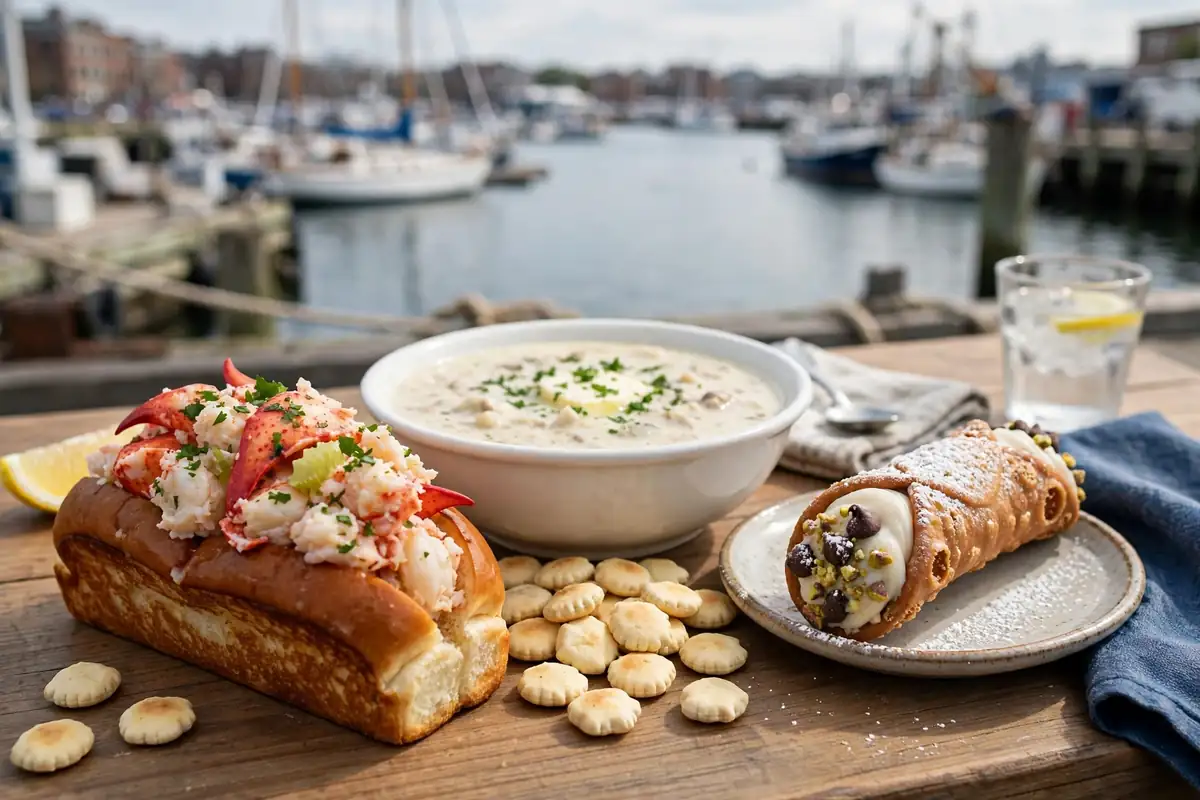
Boston’s food is the food of a harbour city with an Italian neighbourhood and a sweet tooth: clam chowder from a cup, a lobster roll from a shack, oysters from a raw bar, and a cannoli from a bakery that has argued about its recipe for a century. The North End is where it all comes together, and the Seaport is where the new restaurants are.
Clam chowder and the lobster roll
New England clam chowder is Boston’s signature dish — thick, creamy, made with clams, potatoes and cream — and a cup costs $8 to $12 at the Union Oyster House, Legal Sea Foods and the Quincy Market stalls. The lobster roll is the second signature: cold lobster meat with a little mayonnaise in a toasted, buttered bun, for $25 to $35 at Neptune Oyster in the North End, James Hook & Co. on the waterfront and the Legal Sea Foods in the Seaport. The oyster is the third: Boston’s raw bars serve them at $2 to $3 each at happy hour, and the Union Oyster House, open since 1826, is the place to eat them — the oldest continuously operating restaurant in the United States. The rule is the same as in every harbour city: eat the seafood where the boats are, and eat it at lunch, when the price is lower and the line is shorter.
The North End and the cannoli war
The North End is Boston’s Little Italy, and the cannoli is its great debate. Mike’s Pastry on Hanover Street, with its line out the door and its boxes tied with string, is the famous one; Modern Pastry, a few doors down, is the locals’ quieter pick — and Bova’s Bakery, open 24 hours, is the third candidate the locals mention when nobody is listening. A cannoli costs $5 to $7, and you should try both Mike’s and Modern and decide for yourself, because the city has never agreed. Hanover Street is the spine of the neighbourhood: the trattorias, the cafes, the pastry shops and the fruit stands, with St. Leonard’s Church and the Paul Revere Mall at its heart. Many North End restaurants do not take reservations and some are cash-only, so go early and bring cash — and save the cannoli for last, because it does not travel well.
Dinner, from oyster bars to the Seaport
Dinner in Boston is a choice between the oyster bar and the trattoria. The North End trattorias charge $25 to $40 for a pasta main, and they are the place for a long evening — book ahead if the restaurant takes bookings, and go early if it does not. The Seaport is the newer choice: the restaurants that opened in 2026 sit beside the harbour, and the dining rooms charge $40 to $70 for an entree, with the best sunset tables in the city. The sweet ending is the Boston cream pie, invented at the Parker House hotel in 1856 — a sponge cake with custard and chocolate glaze, and the official dessert of Massachusetts. The other Boston food fact is Dunkin’: the coffee chain Bostonians call Dunkies was founded in Quincy in 1950, and there is one on nearly every block — the coffee is cheap, the lines are fast, and the locals run on it.
Free things to do in Boston
Boston is cheaper than its reputation suggests, because the best sights cost nothing. The Freedom Trail walk is free, from Boston Common to Bunker Hill. Boston Common and the Public Garden are free, with the Frog Pond and the Make Way for Ducklings statues. Faneuil Hall’s Great Hall is free. The USS Constitution is free, and so is Bunker Hill Monument and its museum. The Boston Public Library is free, and so is Harvard Yard and the Harvard Art Museums across the river. The Arnold Arboretum in Jamaica Plain is free, and so is Castle Island in South Boston, with its fort and its harbour views. The Charles River Esplanade is free, and so is the Harborwalk from Charlestown to the Seaport. And the paid museums have free windows: the MFA is $5 on Third Thursdays after 5 p.m., the Gardner is free on the first Thursday of the month from 3 to 9 p.m., the Children’s Museum is $1 on Sunday afternoons from 1 to 4 p.m., and the ICA is free on Thursday nights. Do the free list on your first day, and you will have seen the Common, the Trail, the ship and the library before you have spent a dollar on a ticket.
Frequently asked questions
How many days do you need in Boston?
Three days is the minimum for the highlights: one day for the Freedom Trail and the North End, one day for Back Bay, the museums and Fenway Park, and one day for Cambridge and the harbour. Four to five days is the right amount for a real trip, with the Harbor Islands in summer and a day trip to Salem or to Lexington and Concord. One day is possible, but you will leave having seen a third of the city.
Do you need a car in Boston?
No. A rental car is a liability in central Boston, and it is the first thing not to book. The T costs $2.40 a ride and the 7-day LinkPass is $22.50, the whole centre is walkable, and the Charlestown ferry costs $3.70. The streets are a tangle of one-ways, parking costs $40 to $60 a day, and the drivers are famously impatient. The only reason to rent a car is a day trip to Cape Cod or the Berkshires — and for Salem, Lexington and Concord, the commuter rail is faster.
When is the best time to visit Boston?
Late May to June and September to October, when the days are mild, the humidity is down and the crowds are thinner. Fall foliage in Boston itself generally peaks in early to mid October. June to August is the warmest and busiest time, and the only time the Harbor Islands ferries run. November to March is the cheapest time, with the museums just as good and Beacon Hill in snow — but pack a real coat, because January averages a high of 37°F and a low of 23°F, and a nor’easter can dump a foot of snow with little warning.
Is Boston expensive?
Mid-range to expensive, and more expensive than most American cities. A mid-range hotel costs $200 to $500 a night, plus about 15 per cent in taxes; a museum costs $25 to $40; a lobster roll costs $25 to $35; a Fenway tour costs $30; and a Duck Tour costs $57. But the best sights are free — the Freedom Trail, the Common, the Public Garden, the USS Constitution, Bunker Hill and the Boston Public Library — and the T costs $2.40 a ride, so a careful three days can be done for about $150 to $300 a person a day.
Is Boston walkable?
Yes — Boston is one of the most walkable cities in the United States, and the whole centre fits inside about two miles. The Freedom Trail is 2.5 miles from Boston Common to Bunker Hill, and most of the sights in this guide are within a 20-minute walk of each other. The cobblestones and brick sidewalks are the catch: wear comfortable shoes, because the pretty streets are uneven, and Acorn Street in the rain is slippery.
What should I skip in Boston?
Six things, and all six are traps older guides still get wrong. First, do not plan on the Swan Boats in winter: the 2026 season has ended and the boats return in April 2027. Second, do not plan on the Harbor Islands after mid-October: the 2026 ferry season ended on October 12, and the islands have no services until mid-May 2027. Third, do not rent a car for central Boston — the T and your feet are faster and far cheaper. Fourth, do not pay for a Freedom Trail tour thinking the trail itself costs money: the walk is free, and only five interiors charge. Fifth, do not try to see all 16 Freedom Trail sites in depth in one day — pick the interiors that matter to you and walk past the rest. And sixth, do not go to the North End on a Saturday night without a plan: the popular restaurants do not take reservations, the lines are long, and some are cash-only.
Further reading
Start with Boston on Wikipedia, which covers the history and the geography, and the Freedom Trail on Wikipedia for the route and the 16 sites. For what locals actually recommend, the r/Boston subreddit is where Bostonians answer questions about the T, the restaurants, the tickets and the weather. No Quora link is included here: no live Quora thread on visiting Boston could be verified, so none is listed rather than linking to an unverified one.
Your Boston trip, in one paragraph
Boston is the city where the United States began, and that is the trip: the Freedom Trail at dawn with a map in hand, the Old North Church at noon, the USS Constitution in the afternoon, Fenway Park under the lights, a lobster roll in the North End and a cannoli for the walk home. For more guides in the same style, start with our Hawaii guide for the whole-state trip — this guide is only about Boston — then see how Boston compares with Maui, Honolulu, Chicago, Nashville, Los Angeles, Orlando, Miami, San Diego, Denver, Savannah, Dallas, Charleston, San Francisco, Myrtle Beach, Las Vegas, San Antonio, London, Portland, Pigeon Forge, Puerto Rico, Atlanta, Phoenix, Paris, Key West, Colorado Springs, Sedona, Chattanooga, Palm Springs, St Louis, Tokyo, Japan, Kansas City, Tennessee, Branson, Florida, Amsterdam, Montreal, Fort Lauderdale, Toronto, Aruba, Charlotte, Indianapolis, New Orleans, Destin, Santa Barbara, Mexico City, Arizona, Osaka, Minneapolis, Pittsburgh, California, Asheville, Costa Rica, Washington DC, Seattle, St Augustine, Lisbon, Dubai, Santa Fe, Galveston, Maine, Sacramento and Kauai.

About the Author