Things to Do in Nassau Bahamas
20 Best Attractions, a 3-Day Itinerary, Where to Stay, and the Food You Cannot Miss
Quick Info
Best for: Beach lovers, history buffs, cruise passengers on a port day, families and food lovers — pastel forts, white sand and conch salad in one small walkable city
Best time: December to April, when the air is dry, the sea is calm and the crowds are at their peak; come 26 December or 1 January for Junkanoo
How long: 2 days for downtown, the forts, the Fish Fry and one beach; 3 days adding Atlantis, Blue Lagoon Island or the swimming pigs day trip
Budget: About $120–$220 per person per day mid-range — downtown is cheap, but Atlantis day passes start near $195 and the Exuma pigs trip runs $400–$500
Don’t miss: The Queen’s Staircase, Fort Charlotte, the Straw Market, the Fish Fry at Arawak Cay, Cabbage Beach and a swim with the pigs
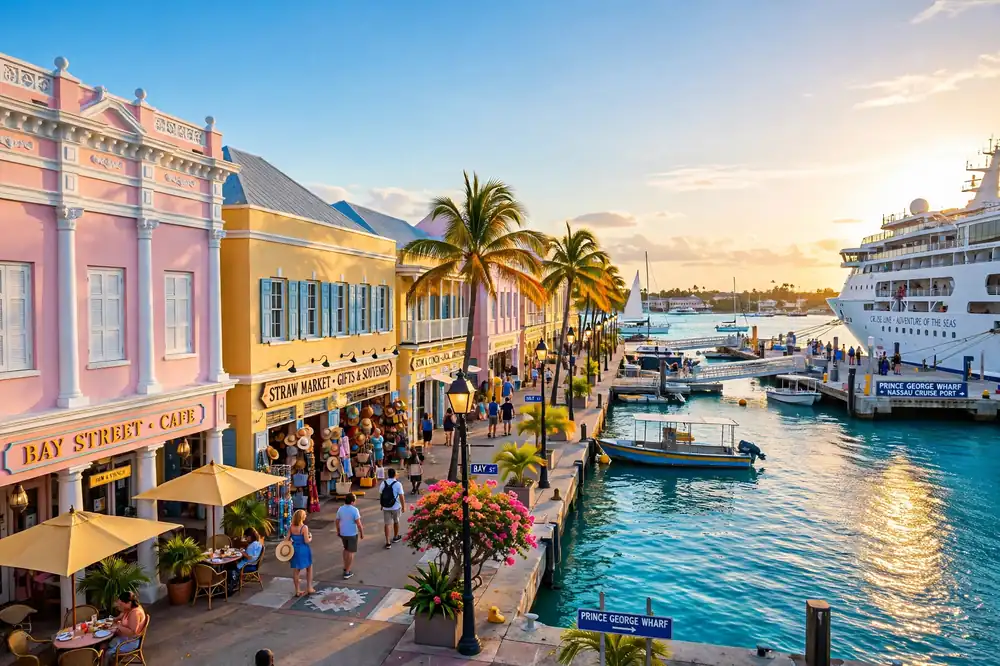
Nassau, Bahamas on Wikipedia is the capital of The Bahamas and the city where most Bahamians live — about 280,000 people on the island of New Providence, roughly 70% of the whole country, packed into a pastel downtown of forts, markets and rum distilleries, with some of the clearest water in the Caribbean a ten-minute walk away. It is a city that runs on two clocks: the cruise ships that dock at Prince George Wharf by the thousand, and the slow Bahamian afternoon of conch salad, Kalik beer and shade. This guide covers the 20 best things to do in Nassau Bahamas, a 3-day itinerary that pairs the forts with the beaches and the pigs, where to stay without paying Atlantis prices for a room you only sleep in, how to get around on jitneys, water taxis and your own feet, the three foods you should not skip, and the free sights that cost nothing. Everything below was checked against live sources in November 2026 — including the details most guides still get wrong: Fort Fincastle is closed for renovation while the Queen’s Staircase below it is open, the Atlantis day pass starts near $195 and sells out, the famous swimming pigs live on Big Major Cay and not every “pig tour” goes there, and Clifton Heritage National Park now charges $40 just to walk in.
Nassau Bahamas at a glance
| Topic | What to know |
|---|---|
| Full name | Nassau, the capital of The Bahamas, on the north shore of New Providence Island in the northern Caribbean, about 180 miles southeast of Miami |
| Founded | Settled in 1670 as Charles Town, renamed Nassau in 1695 for William III of Orange-Nassau; the Bahamas became independent on 10 July 1973 |
| Population | About 280,000 in Nassau — roughly 70% of the whole country’s population lives on New Providence |
| Size | New Providence is about 21 miles long and 7 miles wide; downtown Nassau is walkable end to end in about 30 minutes |
| Language | English, with Bahamian dialect; the currency is the Bahamian dollar, pegged 1:1 to the US dollar, and US cash is accepted everywhere |
| Best base | Downtown Nassau for walkers and cruise passengers; Paradise Island for Atlantis; Cable Beach for resorts and quiet sand |
| Getting around | Walkable downtown; jitney minibuses about $1.25 a ride; water taxi to Paradise Island; taxis unmetered, so agree the fare first; cars drive on the left |
| Famous for | The Queen’s Staircase, the forts, Junkanoo, the swimming pigs, Atlantis, conch salad and the clearest water in the Caribbean |
Nassau rewards visitors who split the day in two: the morning for the forts and the museums, the afternoon for the beach. The town is small — you can walk from the cruise port to the Queen’s Staircase in about 20 minutes, and from Bay Street to the Fish Fry in about 30 — and almost everything worth doing is either downtown or a short boat ride away: the forts on the hills above the harbour, the Straw Market on Bay Street, the beaches of Paradise Island across the bridge, and the pigs of the Exumas a full day away by boat. The mistake most visitors make is never leaving the cruise port area, when the best of Nassau — the forts, the Fish Fry, the flamingos and the sculpture garden — is a short walk or a short ride away. The trap most guides fall into is the outdated detail: Fort Fincastle has been closed since March 2025, the Atlantis day pass is no longer $150, and the park at Clifton now charges $40 at the gate. This guide gets those right, because we checked them in November 2026. One more thing before you pack: bring cash in small notes. The Bahamian dollar equals the US dollar and US cash is taken everywhere, but small vendors, jitneys and market stalls run on cash, and the 10% VAT plus the 15% gratuity that most restaurants add will surprise you if you only look at the menu price.
The 20 best things to do in Nassau Bahamas
1. Aquaventure Water Park, Atlantis Paradise Island
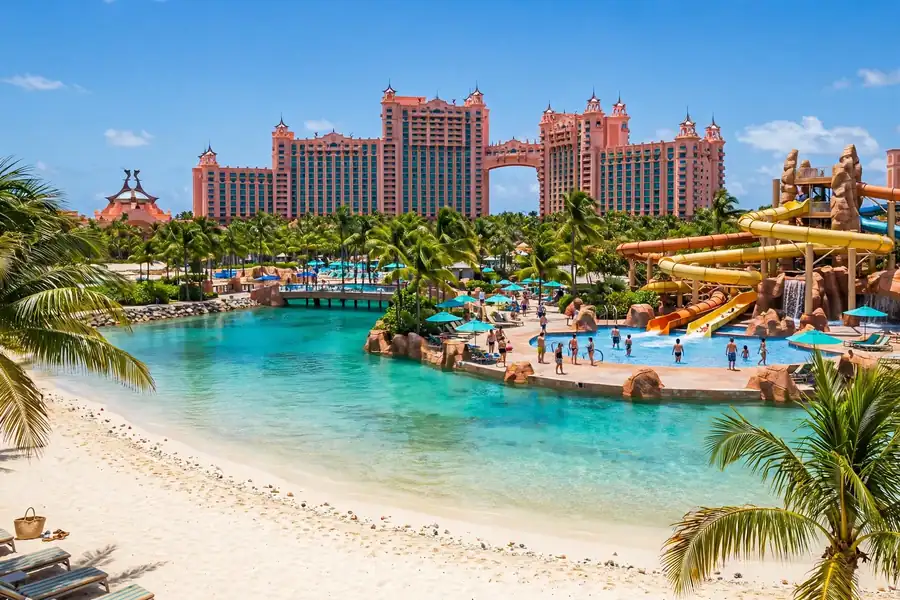
Aquaventure at Atlantis Paradise Island is the big-ticket day in Nassau, and the one every cruise passenger asks about first. It is a 141-acre water park on Paradise Island with 20 million gallons of water, 14 pools and 20 swimming areas: the Mayan Temple’s Leap of Faith, a near-vertical slide that drops you through a clear tube inside a shark lagoon; the lazy river and the rapids river; and the beaches and the marine habitats, including The Dig, an underground aquarium route through the ruins of Atlantis, and the Predator Tunnel. The price is the part most guides get wrong. As of November 2026, the Aquaventure day pass for non-guests starts at about $195 per adult (ages 13 and over) and about $95 per child (ages 4–12), with children under 3 free — and that is the floor, not the price: it is dynamic pricing, and on peak dates it climbs past $250 per adult. Passes must be bought in advance on the Atlantis website or app, quantities are limited each day, and they sell out when cruise ships are in port. The pass covers the water park, the pools, five miles of beach, The Dig and the casino, but food and drink inside carry a 15% gratuity plus 10% VAT on top of already high prices. The cheaper way in is a night at the Comfort Suites Paradise Island, which includes Aquaventure wristbands for up to four guests — but you must book at least 24 hours ahead, because same-day stays no longer qualify. Overnight Atlantis guests get the water park included. Atlantis Paradise Island on Wikipedia covers the resort and its history.
2. Cabbage Beach, Paradise Island
Cabbage Beach is the best free beach in Nassau, and the one to pick if you only have one beach day. It is a two-mile stretch of white sand on the north side of Paradise Island, with the clearest water near the port and room to walk away from the crowds at the Atlantis end. It is free and public, reached by water taxi from the cruise port to Paradise Island and then a walk of about 20 minutes, or by taxi straight to the beach access. There are no lifeguards here and the currents can be strong, so swim with care and keep children close to shore. Vendors rent chairs and umbrellas, and jet skis and parasailing operate from the sand. Come in the morning, when the water is calmest and the light is best, and leave before the afternoon wind picks up. Paradise Island on Wikipedia covers the island and its beaches.
3. The Queen’s Staircase — and the closed Fort Fincastle
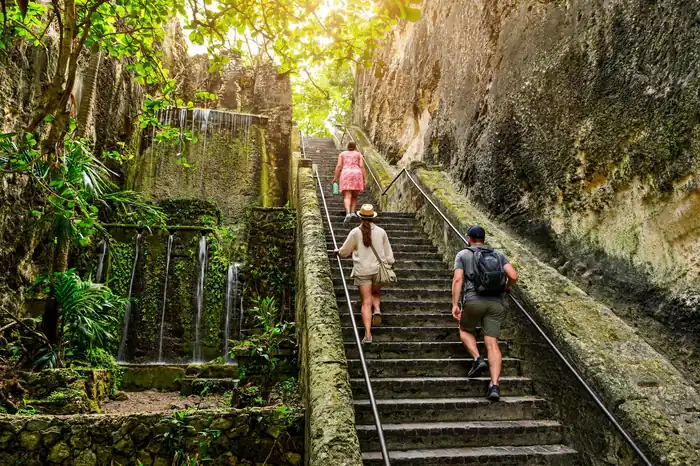
The Queen’s Staircase is the most photographed spot in Nassau, and the one where the freshest fact matters most. The 66 steps were carved out of solid limestone by enslaved people in 1793–94 to give soldiers a direct route from the town up to Fort Fincastle, and were later named for Queen Victoria after slavery was abolished. The climb itself is free, open and beautiful — shaded by trees, with a small waterfall trickling down the rock face — and a November 2026 visitor called it a “beautiful, easy 66 step climb”. But the fort at the top is not open. Fort Fincastle, built in 1793 in the shape of a ship’s bow on Bennett’s Hill, the highest point in Nassau, has been closed since March 2025 for renovation of the fort and the 1928 Water Tower beside it. The work was meant to finish in January 2026, but as of November 2026 the fort is still fenced off and there is no confirmed reopening date — the site is being rebuilt as the Fort Fincastle Heritage Park, with an elevator for the Water Tower and new signage. Do not plan your day around getting inside the fort, and do not believe the guides that still list it as open. Climb the staircase, enjoy the view from the top of the steps, and save your fort visit for Fort Charlotte. The Queen’s Staircase on Wikipedia covers the steps and their history.
4. Fort Charlotte
Fort Charlotte is the fort to visit while Fort Fincastle is closed, and the best of the three Nassau forts. It is the largest fort on New Providence, built between 1787 and 1796 under Lord Dunmore and named for Queen Charlotte, the wife of George III, on a hill above the west end of the harbour about a mile from downtown. It has a waterless moat and a drawbridge, dungeons, underground passages and 42 cannons that were never fired in anger. Entry is about $5 for adults, $3 for seniors and $2 for children under 12, and the fort is open daily from about 8 a.m. to 4 p.m. Guides work for tips and are worth taking, because the dungeons and passages are easy to miss on your own. Time your visit for a Wednesday or a Friday: the living-history re-enactment starts at 11:30 a.m. with costumed characters, basket weaving and colonial cooking, and finishes with the noon cannon firing. The Route 10 jitney passes the gate, or it is a 20-minute walk west along West Bay Street from downtown. Fort Charlotte (Nassau) on Wikipedia covers the fort and its history.
5. The Straw Market
The Straw Market is the loudest, friendliest hour in Nassau, and the place to buy the one souvenir that is actually Bahamian. Straw plaiting is one of the country’s oldest industries, and the market on Bay Street sells handwoven straw bags and hats, wood carvings, shell jewellery and T-shirts from dozens of stalls inside a big air-conditioned warehouse, a few minutes’ walk from the cruise port. It is open daily from about 7:30 a.m. to 5 p.m., though hours vary with the cruise schedule, and entry is free — you only pay for what you buy. Bargaining is normal and expected: start at about half the asking price and meet in the middle, and do it with a smile. The market burned down in a fire in 2001 and has been in its current building ever since. Go early, before the cruise crowds arrive, and carry small US notes. Nassau, Bahamas on Wikipedia covers the city and its markets.
6. Arawak Cay Fish Fry
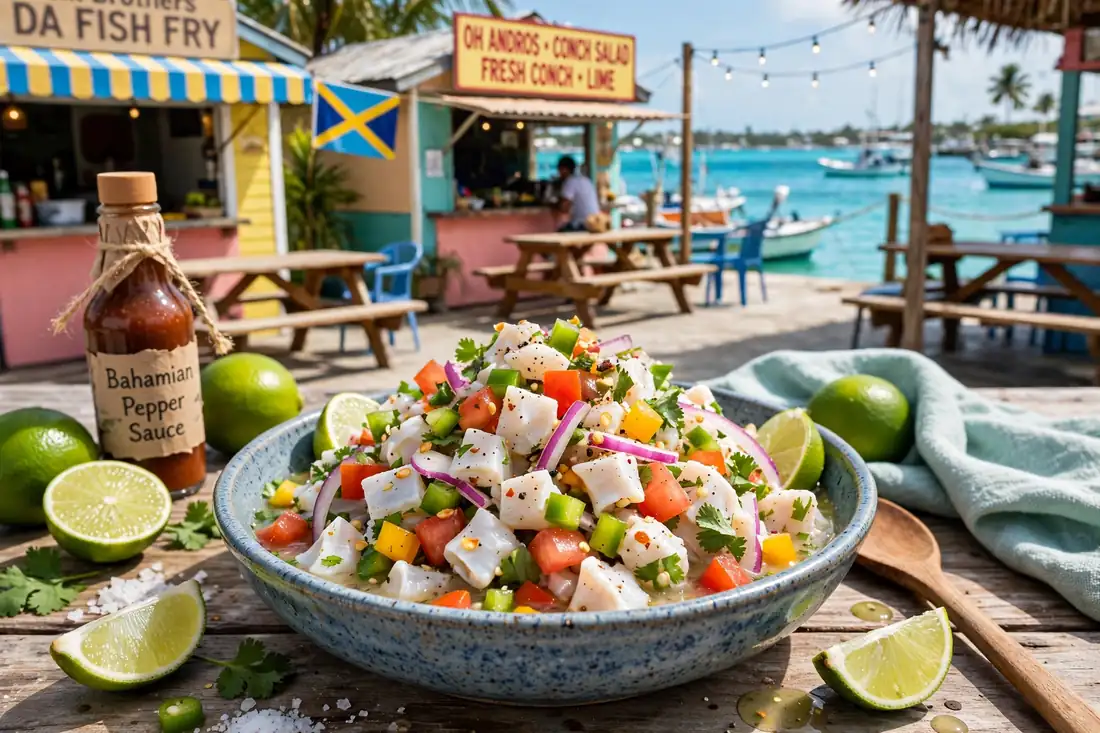
Arawak Cay Fish Fry is where Nassau eats, and the single best food stop in the city. Arawak Cay is a purpose-built cluster of colourful open-air restaurants on the waterfront west of downtown, where locals go on Friday and Saturday nights for conch salad, cracked conch, fried fish, peas ‘n’ rice and Sky Juice — gin, coconut water and condensed milk, served ice cold. Order the conch salad first: diced raw conch with tomato, onion, pepper and lime, made to order at the counter while you watch. Then cracked conch, the fried version, with a Kalik beer. The restaurants are all similar and all good; pick the one with the most locals, not the one with the loudest tout. It is a 30-minute walk from the cruise port along West Bay Street, or a short taxi ride, and it is at its best after dark, when the music starts and the tables fill. Arawak Cay on Wikipedia covers the cay and its food.
7. Pirates of Nassau Museum
The Pirates of Nassau Museum is the rainy-day stop and the one to judge honestly before you pay. It is a small, self-guided museum on George Street in downtown Nassau, built around the years when Nassau was the Pirate Republic — roughly 1706 to 1718, when Blackbeard, Calico Jack, Anne Bonny and Mary Read used the harbour as a base, until Woodes Rogers arrived in 1718 and ended it. Inside are wax figures, a replica pirate ship you can board, and displays on pirate life, treasure and punishment. It takes 45 to 60 minutes, and as of 2026 it costs about $14 per adult, with hours of 9 a.m. to 5 p.m. Tuesday to Friday and 9 a.m. to 3 p.m. on Monday, Saturday and Sunday. The honest verdict from 2026 visitors is split: children love it, and adults often call it a gimmick that is thin for the price. Go if you have children, or if it is raining, and skip it if you are choosing between this and another fort. Nassau, Bahamas on Wikipedia covers the city and its pirate past.
8. National Art Gallery of The Bahamas
The National Art Gallery of The Bahamas is the quiet hour that explains the country, and the best indoor stop in downtown Nassau. It sits in Villa Doyle, a 19th-century colonial mansion on West Hill Street, and holds the national collection of Bahamian art from the 19th century to today — paintings, sculpture and photography, with rotating shows every few months. It is open Tuesday to Sunday from 10 a.m. to 5 p.m., closed on Mondays and public holidays, with last entry at 4:30 p.m. Admission is $10 for non-resident adults, $7 for residents, $5 for seniors and students, and free for children under 12; Bahamian residents get in free on Sundays. No reservations are needed, and one to two hours is enough. Note that the elevator is under maintenance, which may limit access for some visitors. The National Art Gallery of The Bahamas on Wikipedia covers the gallery and its collection.
9. John Watling’s Distillery
John Watling’s Distillery is the best free stop in Nassau, and the one most cruise passengers walk straight past. It sits in the Buena Vista Estate, a colonial mansion built in 1789 on a hill above the harbour, and it is the home of the rum of The Bahamas — named for John Watling, a 17th-century pirate who settled in the islands. The guided tour is free, running every 10 to 15 minutes, and includes a complimentary taste of the almost-famous piña colada. It is open daily from 10 a.m. to 6 p.m., except national holidays. The free tour lasts about 10 to 15 minutes and covers the barrel room and the grounds; the deeper experiences cost more, with Rum Academy tastings at about $80 and a bottle-your-own session at about $20. Stay for a drink on the porch at the Red Turtle Tavern, and be there at noon for the daily cannon firing. John Watling on Wikipedia covers the pirate the distillery is named for.
10. Ardastra Gardens and Zoo
Ardastra Gardens and Zoo is the flamingo stop, and the only zoo in The Bahamas. It is a four-acre botanical garden and wildlife conservation centre off West Bay Street, about eight minutes by taxi from the cruise port, founded in 1937. The main event is the marching flamingos: a flock of Caribbean flamingos — the national bird of The Bahamas — trained to march in formation to a keeper’s commands, in shows at 11 a.m., 1:30 p.m. and 3 p.m. As of September 2026, non-resident adults pay $35 and children aged 4 to 12 pay $25, with children 3 and under free; Bahamian residents pay less. It is open daily from 9:30 a.m. to 4 p.m., with last entry at 3 p.m., and closed on Christmas Day, Boxing Day and New Year’s Day. Tickets are sold at the gate and no advance booking is needed. Time your visit around a show — the gardens alone are pleasant but small, and the march is the reason to go. The Caribbean flamingo on Wikipedia covers the bird and its behaviour.
11. Blue Lagoon Island and the dolphin encounters
Blue Lagoon Island is the private-island day trip, three miles northeast of Paradise Island, and the place to swim with dolphins if that is on your list. The Dolphin Encounters facility is American Humane-certified and runs three programmes: the Dolphin Encounter, a waist-deep platform experience from $165 per person plus 10% VAT (ages 4 and over); the Dolphin Swim, a deep-water swim from $235 plus VAT (ages 6 and over); and the Royal Dolphin Swim from $299 plus VAT. A beach-only day costs $109 per adult and $85 per child, and all prices include the round-trip ferry from Paradise Island and lunch. The honest part most sellers skip: direct dolphin contact is only about five to ten minutes inside a 15 to 30 minute group session with 15 to 20 people, and the return boat runs on a strict schedule, so some guests get only about three hours on the island. Book direct, not through the cruise line, and go for the beach day unless the dolphin swim is the point of your trip. Blue Lagoon Island on Wikipedia covers the island and its facility.
12. Swimming with the pigs on Big Major Cay
Swimming with the pigs is the most famous day trip in The Bahamas, and the one where the geography matters more than the price. The original pigs live on Big Major Cay — Pig Beach — an uninhabited cay near Staniel Cay in the Exumas, about 55 to 90 miles from Nassau, where 15 to 25 adult pigs plus piglets swim out to the boats. A full-day powerboat tour from Nassau runs about $400 to $500 per person, takes 8 to 10 hours with about two and a half hours of open water each way, and stops at Allen’s Cay for the iguanas, Compass Cay for the nurse sharks and Thunderball Grotto — with only about 30 to 40 minutes actually on Pig Beach. A fly-and-boat combination via Staniel Cay runs about $650 to $750 and saves hours of boat time. The trap is the cheaper tour: many Nassau “swimming pigs” trips visit a closer pig colony on Rose Island or a nearby cay for about $130 to $150 for a half day — a much shorter boat ride, but not the original Pig Beach. If the Exuma pigs are the point, book a tour that names Big Major Cay in its description, check the weather the morning of the trip, and go between December and April, when the sea is calmest. Exuma on Wikipedia covers the island chain and its cays.
13. Clifton Heritage National Park and Ocean Atlas
Clifton Heritage National Park is the wild end of New Providence, and the place to snorkel a statue. The park protects about 208 acres of coastal coppice, wetlands and rocky shoreline at the far west end of the island, about 25 kilometres from downtown, with trails through the ruins of a plantation and the oldest slave village on the island. Offshore sits the Sir Nicholas Nuttall Coral Reef Sculpture Garden, and in it Ocean Atlas — a 60-ton, five-metre statue of a Bahamian girl holding the oceans on her shoulders, created by artist Jason deCaires Taylor and installed in 2014, sitting in about five metres of water. The price is the part older guides get wrong: as of October 2026, general admission for non-residents is $40, a guided heritage tour is $60, and a guided snorkel with gear is $75 — and the snorkel ticket does not replace the entry fee, so budget for both. Jaws Beach and Flipper Beach, named for the films shot there, are the quiet swimming spots on the park’s shore. There is no useful bus out here: come by taxi, which runs about $80 to $100 one way for two people, or by rental car, and bring your own water. Jason deCaires Taylor on Wikipedia covers the artist and his underwater sculptures.
14. Cable Beach
Cable Beach is the resort beach, and the one to pick if you want a long, calm stretch of sand with services. It runs for about three miles west of downtown, lined with the big resorts — Baha Mar, with its three hotels and casino, dominates the strip — and the water is usually calm and good for swimming. The public beach access is free, and you can walk the sand past the resorts, but chairs, umbrellas and food belong to the hotels unless you buy a day pass. Come in the morning for the calmest water, and stay for sunset, when the beach faces west and the light turns the whole bay gold. It is about 15 minutes by taxi from downtown, or a ride on a westbound jitney along West Bay Street. Cable Beach, Bahamas on Wikipedia covers the beach and its resorts.
15. Junkanoo Beach
Junkanoo Beach is the closest beach to the cruise port, and the best one for a short port day. It is a free public beach about half a mile west of the port — roughly a ten-minute walk — also known as Long Wharf Beach, with white sand, clear water and vendors renting chairs and umbrellas and selling food and drinks. It is the beach the cruise crowds use, so it is busiest on the days when several ships are in, and quietest late in the afternoon after the ships’ passengers have gone back aboard. Swim close to shore, keep an eye on your belongings, and walk back along the waterfront rather than through the quieter streets behind the beach. Nassau, Bahamas on Wikipedia covers the city and its beaches.
16. Bay Street and Parliament Square
Bay Street and Parliament Square are the walk that ties downtown Nassau together. Bay Street is the main shopping street, running from the cruise port past the Straw Market, the duty-free shops and the colonial storefronts to the eastern end of downtown. A few steps south is Parliament Square, a cluster of flamingo-pink colonial buildings — the House of Assembly, the Senate and the Supreme Court — around a statue of Queen Victoria unveiled in 1905. It is free to walk, it takes about an hour at a strolling pace with stops, and it is best in the morning, before the heat and the cruise crowds. Look for the Nassau Public Library on the square, an octagonal building built in 1797 as a jail and turned into a library in 1873, and for the changing of the guard at Government House on the second Saturday of each month. The Bahamas on Wikipedia covers the country and its government.
17. Pompey Museum of Slavery and Emancipation
The Pompey Museum of Slavery and Emancipation is the small museum that tells the hardest part of Nassau’s story, and the one most visitors walk past without noticing. It sits in the Vendue House on Bay Street, built in 1769, where enslaved people were once sold at auction, and it is named for Pompey, who led a slave revolt on Exuma in 1830. Inside are exhibits on slavery, emancipation and Bahamian identity, in a building that is itself part of the story. It is a short, sombre stop — about 30 minutes — and it pairs naturally with the Queen’s Staircase, which was carved by enslaved people, and with the Clifton Heritage trails, which run through the old slave village. Note that the museum adds 7.5% VAT on top of its admission price. The Bahamas on Wikipedia covers the country’s history.
18. Fort Montagu
Fort Montagu is the smallest and oldest of the Nassau forts, and the quiet one. Built in 1741 on the eastern entrance to the harbour, it is the oldest fort still standing on New Providence, a small limestone fort with four cannons that once guarded the harbour mouth against Spanish attack. It is free to walk around from the outside, it takes about 15 minutes, and it is worth combining with a drive or a walk along the eastern waterfront, past the Royal Bahamas Defence Force base and the fish fry at Potter’s Cay, where the conch stands sit under the Paradise Island bridge. Do not expect a museum or a guide — there is almost nothing here but the fort, the sea and the view back across the harbour to downtown. Fort Montagu on Wikipedia covers the fort and its history.
19. Versailles Gardens and the French Cloister
Versailles Gardens and the French Cloister are the surprise on Paradise Island — a piece of medieval France in the middle of the Caribbean. The gardens sit on the hill above the Paradise Island bridge, with lawns, statues and views across the harbour to Nassau. At their centre is the French Cloister, a 12th-century Augustinian cloister that was dismantled stone by stone in France, shipped to the Bahamas in the 1960s by the developer Huntington Hartford, and rebuilt here as the centrepiece of the gardens. It is free to wander the gardens, it takes about 30 to 45 minutes, and it is at its best in the late afternoon, when the light falls across the cloister arches and the harbour below. Pair it with Cabbage Beach in the morning and the Atlantis Marina Village in the evening. Paradise Island on Wikipedia covers the island and its gardens.
20. Government House and the Changing of the Guard
Government House is the pink palace on the hill, and the Changing of the Guard is the ceremony to catch if your dates line up. The house was built between 1801 and 1806 as the residence of the Governor of the Bahamas, and it is still the official residence of the Governor-General, the King’s representative in The Bahamas. The house itself is not open to the public, but the grounds and the statue of Christopher Columbus out front are free to see, and on the second Saturday of each month at 11 a.m. the Royal Bahamas Police Force Band performs the Changing of the Guard ceremony on the lawn. It is a 15-minute walk uphill from Bay Street, and it pairs with the National Art Gallery and John Watling’s Distillery, which are on the same hill. Government House, The Bahamas on Wikipedia covers the house and its history.
Nassau Bahamas in 3 days — a ready-made itinerary
Day 1 — Downtown Nassau: forts, markets and the Fish Fry
Start at the cruise port and walk Bay Street to the Straw Market, bargaining for a straw bag before the crowds arrive. Climb the Queen’s Staircase in the morning light — remember the fort at the top is closed, so enjoy the steps and the view and come back down. Walk to Fort Charlotte for the 11:30 a.m. living-history re-enactment and the noon cannon, then take the Route 10 jitney back downtown for the Pirates of Nassau Museum and the National Art Gallery. In the afternoon, walk up the hill to John Watling’s Distillery for the free tour and a piña colada, then finish at Arawak Cay Fish Fry for conch salad, cracked conch and Sky Juice as the music starts.
Day 2 — Paradise Island and the beaches
Take the water taxi to Paradise Island in the morning and walk to Cabbage Beach for a swim before the wind picks up. Spend the middle of the day at Aquaventure if you booked a day pass — arrive at opening, because the pass is a full day and the slides are quietest in the first hour — or skip the water park and wander the Versailles Gardens and the French Cloister instead, then walk the Marina Village. In the afternoon, cross back to Nassau for Ardastra Gardens and the 3 p.m. flamingo march, and end the day at Cable Beach for sunset and dinner at one of the resort restaurants.
Day 3 — The water: pigs, sculptures or a private island
Choose one big water day. The full-day Exuma powerboat trip leaves early in the morning for the swimming pigs on Big Major Cay, with stops at Allen’s Cay and Compass Cay — book the day before, check the sea conditions in the morning, and expect a long day with only about 30 to 40 minutes on Pig Beach itself. Or take the cheaper, calmer option: the ferry to Blue Lagoon Island for the beach day and the dolphin encounter, or the Rose Island half-day trip for the closer pigs and a snorkel stop. If you would rather stay on land, drive west to Clifton Heritage National Park for the trails and the Ocean Atlas snorkel, then stop at Potter’s Cay under the Paradise Island bridge for conch salad on the way back. End the trip with dinner on Bay Street and a walk through Parliament Square after dark.
Best time to visit Nassau Bahamas
| Season | Months | Weather | What to expect |
|---|---|---|---|
| Winter | December to February | 75–82°F, dry and sunny | The best season: dry air, calm seas, and the Junkanoo parades on 26 December and 1 January. The busiest and priciest season, so book hotels early. |
| Spring | March to May | 78–85°F, warm and dry | Warm and dry with fewer crowds than winter, and the best sea conditions for the Exuma pigs trip. The sweet spot for most visitors. |
| Summer | June to August | 85–90°F, hot and humid | The hottest season, with afternoon showers and the start of hurricane season. Hotel prices drop, but the heat and humidity are real. |
| Autumn | September to November | 82–88°F, warm and wet | The cheapest season and the quietest — and the riskiest: the peak of hurricane season, with the highest storm risk in September and October. |
The honest answer is December to April. The air is dry, the sea is calm, the rain stays away, and the two Junkanoo parades — Boxing Day, Saturday 26 December 2026, and New Year’s Day, Friday 1 January 2027 — are the biggest nights of the year in Nassau. March to May is the sweet spot: warm, dry, calmer seas for the pigs trip, and fewer crowds than the winter peak. Summer is hot and humid with afternoon showers, and the prices drop, but so does the comfort. September and October are the cheapest months and the quietest, but they are also the peak of hurricane season, which runs from 1 June to 30 November. Nassau itself rarely takes a direct hit — the last storm to come within 150 nautical miles was Hurricane Matthew in 2016 — but rough seas can cancel boat trips and cruise ships can skip the port, so buy travel insurance and keep your plans flexible in the autumn. If you can only pick one month, pick March: warm, dry, calm seas, and the winter crowds have gone home.
Where to stay in Nassau Bahamas
| Area | Best for | What to expect |
|---|---|---|
| Paradise Island | First-timers, families | Atlantis and the other Paradise Island resorts, steps from Cabbage Beach and Aquaventure. The most expensive area, about $300–$700 a night in season, plus resort fees. |
| Cable Beach | Couples, resort lovers | Baha Mar and the Cable Beach resorts, with the longest beach and the best sunset. About $250–$500 a night in season, plus resort fees. |
| Downtown Nassau | Walkers, cruise-style stays | The British Colonial and smaller hotels near Bay Street, walkable to the forts, the market and the Fish Fry. About $150–$300 a night. |
| West Bay Street | Budget travellers, families | Guesthouses and smaller inns west of downtown towards Cable Beach, a short jitney ride from the port. About $80–$180 a night. |
| Out Islands | Slow travellers, repeat visitors | Harbour Island, Eleuthera and the Exumas are separate trips, not day-trip bases — stay there only if you are leaving Nassau behind for a few days. |
The first decision is Paradise Island or not. A room at Atlantis costs the most, but the water park is included, the beach is at your door, and you do not pay the $195 day pass on top. A room downtown costs half as much and puts you within walking distance of the forts, the market and the Fish Fry, but you will pay for every beach day and every Atlantis visit separately. Couples who want a resort without the Atlantis crowds should look at Cable Beach, where Baha Mar has the longest beach and the best sunset. Budget travellers should look at the guesthouses along West Bay Street, where the prices drop by half and the jitney runs past the door. Book early for December to April, for the Junkanoo parades and for spring break — the island fills up months ahead for those weeks — and check whether your hotel adds a resort fee and 10% VAT on top of the room rate, because most of them do.
Getting around Nassau Bahamas
| Way to get there | How it works | What to know |
|---|---|---|
| Walking | Downtown and the waterfront | Downtown Nassau is flat and walkable: the cruise port to the Queen’s Staircase is about 20 minutes, and Bay Street end to end is about 30 minutes. |
| Jitney | Public minibus across the island | The jitney is the local bus — about $1.25 a ride, exact change in cash. Route 10 runs west along West Bay Street past Fort Charlotte; other routes run east and south. |
| Taxi | Everywhere, unmetered | Taxis are unmetered, so agree the fare before you get in. A ride from the airport to downtown runs about $25–$35, and downtown to Cable Beach about $15–$20. |
| Water taxi | To Paradise Island | The water taxi runs from the cruise port area to Paradise Island, a few dollars each way, and is the cheapest way across the harbour. |
| Rental car | The whole island | Cars drive on the left, and the roads are narrow and busy downtown. You only need a car for Clifton Heritage Park and the west end of the island. |
| Ferry and mail boat | To the Out Islands | The mail boats leave from Potter’s Cay Dock for the Out Islands overnight — slow, basic and cheap. There is no fast passenger ferry from Nassau to Exuma. |
| Airport | Lynden Pindling International Airport (NAS) | About 25 minutes west of downtown by taxi. US citizens flying in need a valid passport; cruise passengers on closed-loop sailings can travel with a passport card or a birth certificate plus photo ID. |
You do not need a car for Nassau itself, but you will want one for everything outside it. The town is small and the waterfront is flat: the cruise port to the Queen’s Staircase is a 20-minute walk, and Bay Street runs the length of downtown in about 30 minutes. The jitney is the local bus, about $1.25 a ride in exact-change cash, and Route 10 runs west along West Bay Street past Fort Charlotte. Taxis are unmetered, so agree the fare before you get in — a ride from the airport to downtown runs about $25 to $35, and downtown to Cable Beach about $15 to $20. The water taxi is the cheapest way to Paradise Island, a few dollars each way from the port area. The car matters for Clifton Heritage National Park and the west end of the island — none of it is reachable by bus — and remember that Bahamians drive on the left. Fly into Lynden Pindling International Airport on Wikipedia, about 25 minutes west of downtown, or arrive by cruise ship at Prince George Wharf, right in the middle of downtown.
Nassau Bahamas food you have to try
Conch three ways at Arawak Cay
Conch is the food to order first in Nassau, and the one the whole island is built around. The queen conch is the big sea snail of the Caribbean shallows, and Bahamians eat it three ways: raw as conch salad, diced with tomato, onion, pepper and lime and made to order at the counter; fried as cracked conch, battered and golden with a dipping sauce; and in fritters, little fried balls of conch and batter sold from the stands at Potter’s Cay. The classic place to eat it is Arawak Cay Fish Fry, where the restaurants all do their own version and the locals will tell you which one is best that week. Order the conch salad as a starter and the cracked conch as the main, and eat it with a Kalik beer and the harbour in front of you. Conch on Wikipedia covers the shellfish and its cooking.
Peas ‘n’ rice, Bahamian macaroni and guava duff
Peas ‘n’ rice is the dish that comes with everything in Nassau, and the one to learn by name. It is rice cooked with pigeon peas, salt pork and thyme — the peas are the point, not the rice — and it arrives on the plate next to every piece of fish and chicken on the island. Next to it comes Bahamian macaroni, a baked macaroni and cheese made with a firm, sliceable texture that is nothing like the boxed kind. For dessert, order guava duff: a steamed dough rolled around guava, sliced and served warm with a rum butter sauce. It is the national dessert, and the Fish Fry restaurants and the downtown bakeries all make their own. Guava duff on Wikipedia covers the dessert and its history.
Sky Juice, Kalik and John Watling’s rum
Sky Juice, Kalik and John Watling’s rum are the drinks to try in Nassau, and the three of them tell the story of the island. Sky Juice is the local cocktail — gin, coconut water and condensed milk, served ice cold in a plastic cup at the Fish Fry, sweet and stronger than it tastes. Kalik is the beer of The Bahamas, a light lager brewed in Nassau since 1988, and the one to order with cracked conch. John Watling’s is the rum, distilled at the Buena Vista Estate since the distillery opened, and the free tour ends with a taste of the piña colada. The best plan is a Sky Juice at the Fish Fry, a Kalik with lunch, and a rum tasting at the distillery before dinner. Kalik on Wikipedia covers the beer and its brewery.
Free things to do in Nassau Bahamas
The beaches are free, and they are the best free thing in Nassau — Cabbage Beach on Paradise Island and Junkanoo Beach by the port cost nothing, and the sunset from Cable Beach costs nothing at all. The historic walk is free too: the Queen’s Staircase, Bay Street, Parliament Square, the Nassau Public Library and the grounds of Government House cost nothing, and the Changing of the Guard is free to watch on the second Saturday of the month. The Retreat Garden, an 11-acre garden of rare palms run by the Bahamas National Trust, is free to wander, and the John Watling’s Distillery tour is free, with a complimentary piña colada taste. The Straw Market is free to browse, with bargaining as the entertainment, and the sea lions on the pilings at the harbour are free to watch. The cheapest day in Nassau is a good one: the staircase in the morning, the market at noon, Junkanoo Beach in the afternoon, and dinner from a conch stand at Potter’s Cay.
Frequently asked questions
How many days do you need in Nassau Bahamas?
Two days covers downtown, the forts, the Fish Fry and one beach. Three days is the right amount: it adds Atlantis or Blue Lagoon Island on the second day, and the swimming pigs or Clifton Heritage Park on the third. Four or five days lets you slow down — a day for the Out Islands, a day for the museums and the distillery, and a day trip to Rose Island or Pearl Island. A week is the classic Bahamas trip, and it is the one the island expects: most visitors split it between Nassau, Paradise Island and one Out Island, with a day in the Exumas if the pigs are on the list.
Is Nassau Bahamas safe for tourists?
Mostly yes, with the usual big-city care. The US State Department lists The Bahamas at Level 2, “exercise increased caution”, updated in July 2026, and notes that most crime occurs in Nassau and Freeport. Stay in the tourist areas — downtown, Bay Street, Paradise Island and Cable Beach — do not walk alone at night in the quieter streets behind Bay Street or in the Over-the-Hill neighbourhood, do not flash cash or jewellery, and take a taxi after dark rather than walking. The beaches and the forts are safe in daylight, and the cruise port area is heavily policed. If you are sensible about where you go after dark, Nassau is no more worrying than any other Caribbean port city.
Do you need a passport to visit Nassau Bahamas?
Yes, if you are flying in. US citizens arriving by air need a valid passport to enter The Bahamas. Cruise passengers on closed-loop sailings — cruises that start and end at the same US port — can travel with a passport card or a birth certificate plus a photo ID, but a passport book is still the safest option, and it is required if you need to fly home in an emergency. Other nationalities should check the entry rules before travelling, because visa requirements vary. Everyone should check the current rules close to the trip, because entry requirements change.
Is Nassau Bahamas expensive?
Yes — it is one of the pricier Caribbean destinations. A mid-range day runs about $120 to $220 per person: downtown is cheap, with a $5 fort and a $14 museum, but the big-ticket days are not. The Atlantis day pass starts near $195, the Exuma pigs trip runs $400 to $500, the Blue Lagoon dolphin swim is $235 plus tax, and Clifton charges $40 just to walk in. Add 10% VAT on most purchases and the 15% gratuity that restaurants usually add to the bill, and a $20 meal becomes $25 before you notice. The ways to save are real, though: the beaches are free, the staircase is free, the distillery tour is free, the jitney costs $1.25, and the Fish Fry feeds you well for the price of a fast-food meal at home.
What is the best time to visit Nassau Bahamas?
December to April. The air is dry, the sea is calm, the rain stays away, and the two Junkanoo parades — Boxing Day, Saturday 26 December 2026, and New Year’s Day, Friday 1 January 2027 — are the biggest nights of the year. March to May is the sweet spot, with warm, dry weather, calm seas for the pigs trip and fewer crowds. Summer is hot and humid with afternoon showers, and the prices drop. September and October are the cheapest months and the quietest, but they are also the peak of hurricane season, which runs from 1 June to 30 November, so buy travel insurance and keep your plans flexible. If you can only pick one month, pick March: warm, dry, calm seas, and the winter crowds have gone home.
What should I skip in Nassau Bahamas?
Skip Fort Fincastle until it reopens — it has been closed since March 2025 and there is no confirmed reopening date, so do not build your day around getting inside. Skip the Atlantis day pass without booking in advance — it sells out when cruise ships are in port, and showing up without a booking wastes a morning. Skip the “swimming pigs” tour that does not name Big Major Cay, because it visits the closer Rose Island pigs instead of the original Pig Beach. Skip the beach as a swimming beach when the wind is up and the currents are strong at Cabbage Beach, because there are no lifeguards. Skip the Pirates of Nassau Museum if you are choosing between it and another fort and you have no children with you, because adults often find it thin for the $14. And skip downtown after dark on foot — take a taxi instead. What you should not skip is in the list above — the Queen’s Staircase, Fort Charlotte, the Straw Market, the Fish Fry and the pigs.
Further reading
Atlantis Paradise Island on Wikipedia
Queen’s Staircase on Wikipedia
Fort Charlotte (Nassau) on Wikipedia
Blue Lagoon Island on Wikipedia
Clifton Heritage National Park on Wikipedia
Jason deCaires Taylor on Wikipedia
Cable Beach, Bahamas on Wikipedia
Government House, The Bahamas on Wikipedia
National Art Gallery of The Bahamas on Wikipedia
Lynden Pindling International Airport on Wikipedia
Rose Island, Bahamas on Wikipedia
William III of England on Wikipedia
Caribbean flamingo on Wikipedia
No Reddit link is included here: no live r/Nassau or r/Bahamas thread turned up in search, so none is listed rather than linking to an unverified one. No Quora link is included either: no live on-topic Quora thread about visiting Nassau turned up in search, so none is listed rather than linking to an unverified one.
Your Nassau Bahamas trip, in one paragraph
Nassau Bahamas is the small capital on the edge of the Caribbean where the Bahamas began — the old pirate port, the pastel forts and the straw market, and the home of some of the clearest water on the planet. Start with the islands and the coasts: our Hawaii guide covers the whole state, our Maui guide covers the Valley Isle, and our Honolulu guide covers the capital city. Then the American cities, in the order we wrote them: our Chicago guide, our Nashville guide, our Los Angeles guide, our Orlando guide, our Miami guide, our San Diego guide, our Denver guide, our Savannah guide, our Dallas guide, our Charleston guide, our San Francisco guide, our Myrtle Beach guide, our Las Vegas guide and our San Antonio guide. Further afield: our London guide, our Portland guide, our Pigeon Forge guide, our Puerto Rico guide, our Atlanta guide, our Phoenix guide, our Paris guide, our Key West guide, our Colorado Springs guide, our Sedona guide, our Chattanooga guide, our Palm Springs guide, our St Louis guide, our Tokyo guide and our Japan guide. Then the middle of the map: our Kansas City guide, our Tennessee guide, our Branson guide, our Florida guide, our Amsterdam guide, our Montreal guide, our Fort Lauderdale guide, our Toronto guide, our Aruba guide, our Charlotte guide, our Indianapolis guide, our New Orleans guide, our Destin guide, our Santa Barbara guide, our Mexico City guide, our Arizona guide, our Osaka guide, our Minneapolis guide, our Pittsburgh guide, our California guide, our Asheville guide, our Costa Rica guide, our Washington DC guide and our Seattle guide. And the most recent: our St Augustine guide, our Lisbon guide, our Dubai guide, our Santa Fe guide, our Galveston guide, our Maine guide, our Sacramento guide, our Kauai guide, our Boston guide, our Cancun guide, our Madrid guide, our Salt Lake City guide, our Baltimore guide, our Barcelona guide, our Reno guide, our Milwaukee guide, our North Carolina guide, our New York guide, our Tucson guide, our Raleigh guide, our Corpus Christi guide, our Milan guide, our Salem guide, our Wilmington guide, our Memphis guide, our Flagstaff guide, our Austin guide, our Oahu guide, our Iceland guide, our Cincinnati guide, our Fort Worth guide, our Panama City Beach guide, and our Monterey guide.

About the Author