
Things to Do in Panama City Beach
20 Best Attractions, a 3-Day Itinerary, Where to Stay, and the Food You Cannot Miss
Quick Info
Best for: Beach lovers, families, snorkellers, anglers and first-timers on the Florida Panhandle — 27 miles of white sand, two state parks and a boat-only island
Best time: April to May and September to October for warm water without the crowds; March is spring break, with strict rules on the sand
How long: 2 days for the beach, Pier Park and the piers; 3 days adding St. Andrews State Park and Shell Island
Budget: About $150–$250 per person per day mid-range — beachfront condos run about $150–$300 a night, most attractions $17–$50, and the beach, the trails and the piers’ views are free or a few dollars
Don’t miss: The St. Andrews jetties at low tide, the Shell Island ferry, a sunset from Russell-Fields Pier, the SkyWheel at dusk, and fresh grouper at Captain Anderson’s
Panama City Beach on Wikipedia is the Florida Panhandle’s beach town — 27 miles of sugar-white sand on the Emerald Coast, a place whose official motto is “The World’s Most Beautiful Beaches” and which lives up to it on a clear May morning, when the Gulf turns the colour of a swimming pool. It is a resort city of about 18,000 people that hosts millions of visitors a year, and it works on two speeds at once: the family beach town of state parks, fishing piers and dolphin cruises, and the spring-break town that the city now polices hard in March. This guide covers the 20 best things to do in Panama City Beach, a 3-day itinerary that pairs the beach with St. Andrews State Park and Shell Island, where to stay without paying beachfront prices for a room you only sleep in, how to get around on the three parallel beach roads, the three foods you should not skip, and the free sights that cost nothing. Everything below was checked against live sources in November 2026 — including the big one most guides still get wrong: Gulf World Marine Park closed permanently on 27 May 2025, so it is not in this list at all; the double-red-flag rule that can cost you $500 for swimming when the water is closed; the March alcohol ban on the sand; and the seasonal waterpark that is shut for winter.
Panama City Beach at a glance
| Topic | What to know |
| Full name | Panama City Beach, Florida — a resort city in Bay County on the Emerald Coast of the Florida Panhandle, on the Gulf of Mexico |
| Founded | Incorporated as a city in 1970, when several beach communities merged; the first resort opened in the 1930s on Thomas Drive |
| Population | 18,094 at the 2020 census — but millions of visitors a year |
| Nickname | PCB — also “Capital of Redneck Riviera” and “Spring Break Capital of the World”; motto “The World’s Most Beautiful Beaches” |
| Best base | Front Beach Road for first-timers; Pier Park for shopping and nightlife; the east end near St. Andrews for quiet; Thomas Drive for families |
| Getting around | A car or rideshare is easiest; Front Beach Road is the slow strip, Middle Beach Road (Hutchison Boulevard) and Back Beach Road (US 98) are the fast routes; Bayway bus runs hourly Monday to Saturday |
| Famous for | Sugar-white sand, St. Andrews State Park, Shell Island, the SkyWheel, fishing piers, dolphin cruises and Gulf grouper |
Panama City Beach rewards visitors who plan by the water, not by the strip. The beach itself is the attraction — 27 miles of it — and everything else hangs off it: the state park at the east end, the island you can only reach by boat, the two long piers, and the shopping district built around a 200-foot wheel. The mistake most visitors make is spending the whole trip on Front Beach Road, the slow coastal strip, when Middle Beach Road and Back Beach Road run parallel a few blocks inland and save you half an hour on every crossing. The trap most guides fall into is the outdated detail: Gulf World Marine Park closed permanently in May 2025 after its owner filed for bankruptcy, Club La Vela has been abandoned since Hurricane Michael in 2018, and the waterpark is seasonal — older guides still list all three as if nothing changed. This guide gets those right, because we checked them in November 2026. One more thing before you pack: this is the Gulf, not a swimming pool. Check the beach flag at every access before you swim — double red means the water is closed, and swimming under it can cost you $500.
The 20 best things to do in Panama City Beach
1. Panama City Beach itself
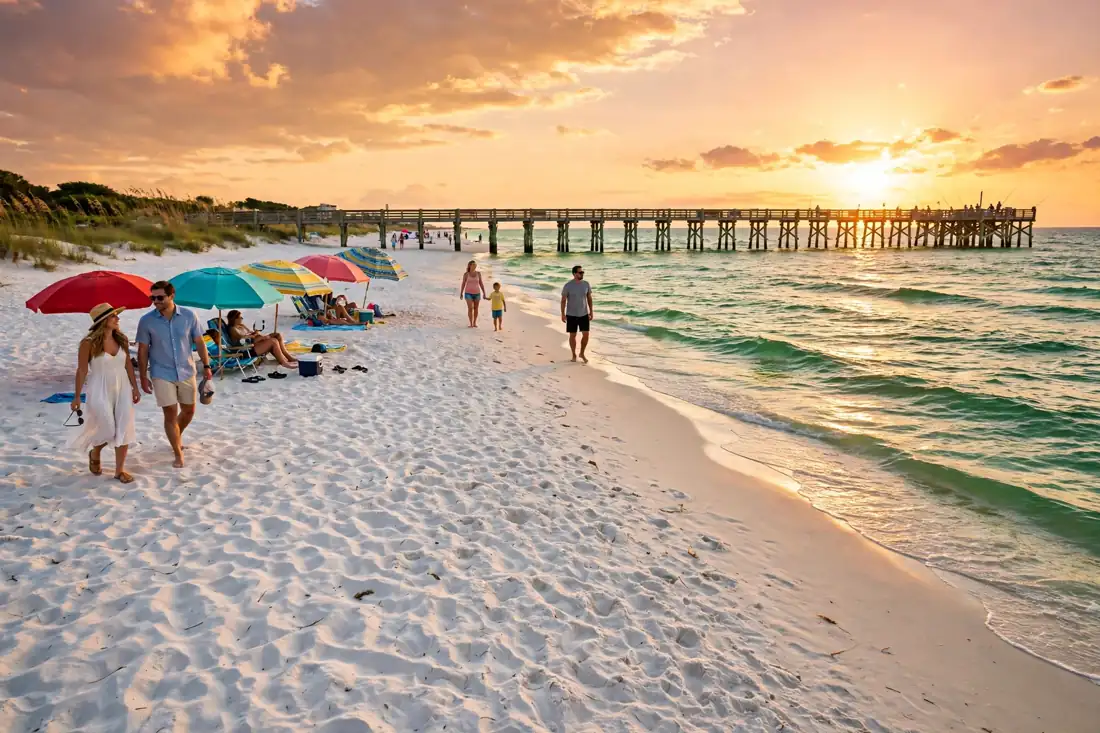
Panama City Beach itself is the first attraction and the reason for all the others: 27 miles of sugar-white sand on the Emerald Coast on Wikipedia, so fine it squeaks underfoot, washed by water that turns emerald green in the sun. The sand is quartz, carried down from the Appalachian Mountains over thousands of years, which is why it stays cool even in the August heat and why the city can honestly call itself “The World’s Most Beautiful Beaches”. The beach is free, open 24 hours a day, and there are dozens of public access points along Front Beach Road — the numbered accesses from 1 to 95, with the best parking at Rick Seltzer Park, Russell-Fields Pier and the county piers. Come early for a spot in summer, bring your own umbrella and chairs, and know the Leave No Trace rule: anything left on the sand overnight is removed, and glass bottles are banned year-round. Dogs are only allowed on the designated Dog Beach west of Russell-Fields Pier, on a leash. The water is warmest from May to October, when it runs from about 78°F to about 86°F, and coolest in January and February, at about 62°F. Before you swim, look at the flag on the lifeguard stand — yellow means swim with caution, red means hazardous, and double red means the water is closed. Panama City Beach on Wikipedia covers the city and its beaches.
2. St. Andrews State Park
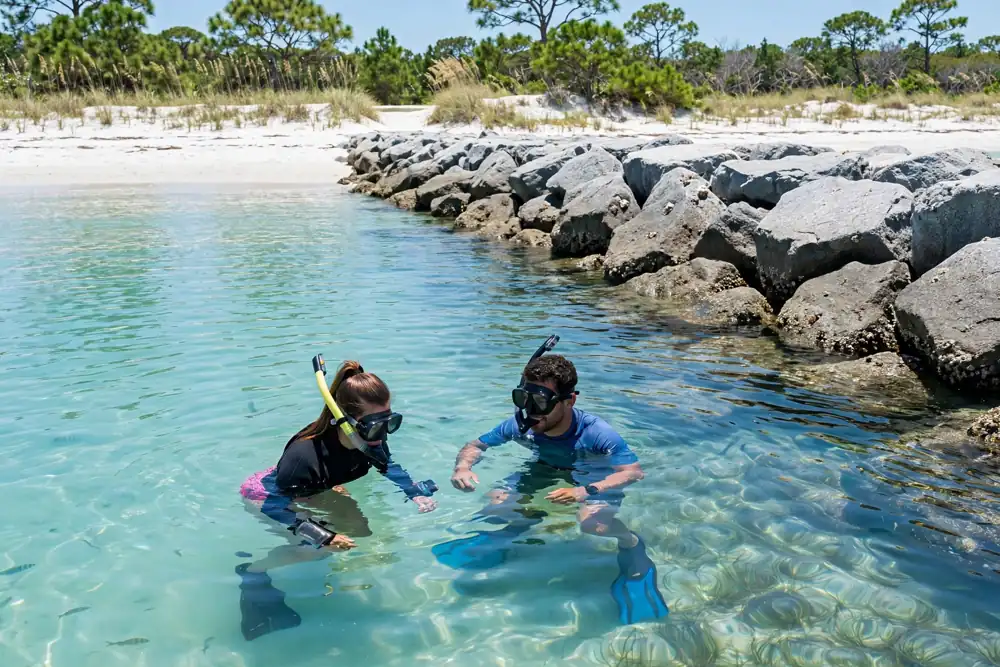
St. Andrews State Park is the best half-day in Panama City Beach, and the one place locals tell visitors not to skip. This is 1,200 acres of undeveloped coast at the east end of the beach, where St. Andrew Bay on Wikipedia meets the Gulf: about 1.5 miles of white-sand beach, a lagoon, nature trails, a campground and a boat launch. The star is the rock jetties at the pass, which shelter a calm, shallow pool locals call the “kiddie pool” — the best beginner snorkelling on the Gulf Coast, where you can see fish, crabs and sometimes a sea turtle on Wikipedia in waist-deep water at low tide. Entry is $8 per vehicle (2–8 people), $4 for a single occupant, and $2 for pedestrians and cyclists; the park is open from 8 a.m. to sundown, 365 days a year. It reaches capacity on summer weekends, so arrive before 10 a.m. or come on a weekday. Beyond the jetties there are two more trails — the Gator Lake trail and the Heron Pond trail — and the campground has full hookups, so you can sleep a few steps from the sand. The Shell Island Ferry leaves from the park marina, which makes this the base for the island trip too. The ferry is a separate ticket on top of park entry, so budget for both. St. Andrews State Park on Wikipedia covers the park and its history.
3. Shell Island
Shell Island is the wild half of Panama City Beach — a 7-mile undeveloped barrier island across St. Andrew Bay, reachable only by boat, with no buildings, no shade, no restrooms and no drinking water. That is the point. The official Shell Island Ferry leaves from the St. Andrews State Park marina and takes about 15 to 25 minutes each way; a round trip runs about $24–$28 for adults and about $14–$18 for children, and the boats run roughly hourly in peak season, about 9 a.m. to 3 p.m., from March to October. Service is reduced or paused from late October to mid-February, so do not plan a winter visit without checking. Bring everything you need: water, sunscreen, an umbrella for shade, and a bag for the shells — the island is famous for them, and the best hunting is along the Gulf side at low tide. Bottlenose dolphins on Wikipedia are resident in the bay, so the crossing itself is often a dolphin-spotting trip, and the snorkelling on the Gulf side is good when the water is calm. The ferry ticket does not include park entry, so pay the $8 at the St. Andrews gate first. Go in the morning, when the water is calmest and the island is emptiest, and leave before the last boat — there is no other way home. St. Andrew Bay on Wikipedia covers the bay the island sits in.
4. Russell-Fields City Pier
Russell-Fields City Pier is the long walk into the Gulf that every visitor should take at least once: 1,500 feet of pier stretching out from the beach across from Pier Park, open 24 hours a day, 365 days a year. It costs $4 a day to walk on as a spectator and $7 a day to fish, and rod rentals and bait are available on the pier, so you can show up with nothing and still catch something. The pier is the best cheap seat in town — from the end you can watch the sunrise over the Gulf, spot dolphins and sea turtles in the water below, and look back at the whole sweep of the beach and the SkyWheel. Fishermen catch pompano, Spanish mackerel, redfish and the occasional king mackerel, and the pier has cleaning stations and a small tackle shop. It is also the meeting point for the Dog Beach, the only stretch of sand where dogs are allowed, just west of the pier. Come at dusk for the sunset, when the sky turns orange behind the wheel and the fishing slows to a murmur, and bring a light jacket — the wind picks up at the end of the pier even on a warm day. The Gulf of Mexico on Wikipedia covers the water the pier reaches into.
5. Pier Park
Pier Park is Panama City Beach’s outdoor shopping and entertainment district, and the place to go when you want a break from the sand: an open-air lifestyle centre at 15701 LC Hilton Jr Drive, anchored by Dillard’s, J. C. Penney and Target, with more than 100 shops, restaurants and attractions spread across the street from Russell-Fields Pier. It is where the SkyWheel stands, where the Pirates Voyage dinner show opened in 2025, and where the restaurants and bars fill up after sunset — Sharky’s, Harpoon Harry’s, Tootsie’s Orchid Lounge and the rest of the Front Beach Road strip are all within walking distance. The centre hosts free concerts and events on the green in season, and the parking is free, which is not true of much of Front Beach Road. Come in the late afternoon, when the shops are open and the beach crowd drifts in for dinner, and plan on two to three hours if you are shopping properly. The best move is to pair Pier Park with the pier across the street: walk the pier at golden hour, then cross over for dinner and the wheel after dark. Pier Park (Florida) on Wikipedia covers the centre and its opening in 2008.
6. SkyWheel
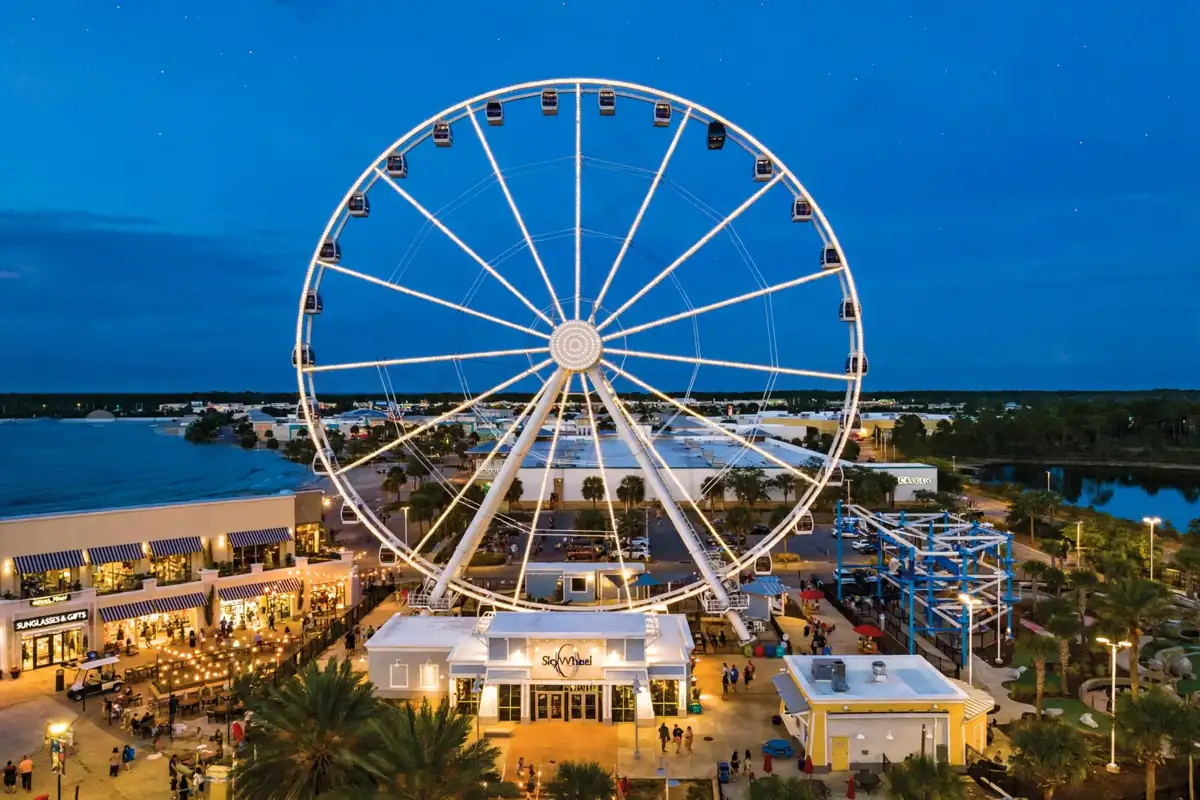
The SkyWheel is the landmark you can see from half the beach: a roughly 200-foot observation wheel at Pier Park, and the single best view in Panama City Beach. The ride lasts about 15 to 20 minutes over four revolutions, and from the top you can see the whole curve of the beach, the emerald water, St. Andrew Bay and, on a clear day, the high-rises running east along Thomas Drive. Tickets run from about $17 for adults, with children 4 and under free; some resellers list them for about $23, so buy at the gate or on the SkyWheel’s own site. The wheel is open daily, typically 11 a.m. to 10 p.m. in season, and the best time to ride is the last hour before sunset, when the light turns gold and the beach below goes quiet. Next to the wheel there is a ropes course (SkyTrail, about $16), a mini golf course (about $15) and a small kids’ ride (SkyTyke, about $6), so the whole stop can fill an hour or two with children. The wheel is fully enclosed and air-conditioned, which matters more than you think on a humid August afternoon. The Florida Panhandle on Wikipedia covers the region the wheel looks out over.
7. WonderWorks
WonderWorks is the upside-down building on Front Beach Road, and the best rainy-day plan in Panama City Beach. The white building sits on its roof, palm trees growing upside down out of the ground, and inside are more than 100 hands-on exhibits across 35,000 square feet: a hurricane simulator, an earthquake simulator, a bed of nails, a bubble lab, a space zone and a three-storey indoor ropes course with a zip line. There is also laser tag, a 6D motion ride and an arcade, so it works for a wide age range — younger children love the bubble lab and the physical challenges, teenagers love the ropes course and the laser tag. Admission runs about $35 for adults and about $29 for children, with online and after-5 p.m. deals that cut the price; the building is open daily from 10 a.m., until 8 p.m. Sunday to Thursday and 9 p.m. Friday and Saturday in season. Plan on two to three hours, and go on a rainy afternoon when everyone else has the same idea — or go early, when the ropes course has no queue. WonderWorks on Wikipedia covers the attraction and its other locations.
8. Ripley’s Believe It or Not!
Ripley’s Believe It or Not! is the other big indoor attraction on Front Beach Road, and the one that has been here the longest: an Odditorium of strange objects, a Marvelous Mirror Maze and a 7D Moving Theater, all under one roof at 9907 Front Beach Road. Inside you will find shrunken heads, a 12-foot-tall Transformer made from car parts, a portrait of the Mona Lisa made from toast, and a gallery of the world’s oddest records — it is kitsch, and it knows it, and children love it precisely for that reason. The combo ticket, which covers the Odditorium, the mirror maze and the 7D theater, runs about $37–$38 per adult, and the building is open from 9:30 a.m. to 10 p.m., with last admission an hour before closing. Allow one to two hours, and pair it with WonderWorks next door if you are doing the indoor circuit — the two are a short walk apart, and together they cover a rainy day completely. Ripley’s Believe It or Not! on Wikipedia covers the franchise and its history.
9. Shipwreck Island Waterpark
Shipwreck Island Waterpark is the summer-only waterpark on Hutchison Boulevard, and the place to go when the beach feels too quiet for the children: 20 acres of slides, a wave pool, a lazy river, a children’s play area and the Tree Top Drop, a 65-foot free-fall slide. It is a seasonal park — open roughly late April through Labor Day, weekends at first and then daily from Memorial Day to mid-August — and it is CLOSED in winter, so do not plan a November trip around it. When it is open, admission runs about $50 for guests 50 inches and over, about $40 for children 35 to 50 inches, free for children under 35 inches, and about $37 for seniors, with season passes and twilight discounts on offer. The park is compact enough to cover in half a day, and the wave pool and lazy river are the best parts on a hot afternoon. Check the park’s own calendar before you go, because opening dates and hours change with the season, and the park has been known to close early for private events. The Emerald Coast on Wikipedia covers the coast the waterpark sits on.
10. Dolphin cruises and snorkelling trips
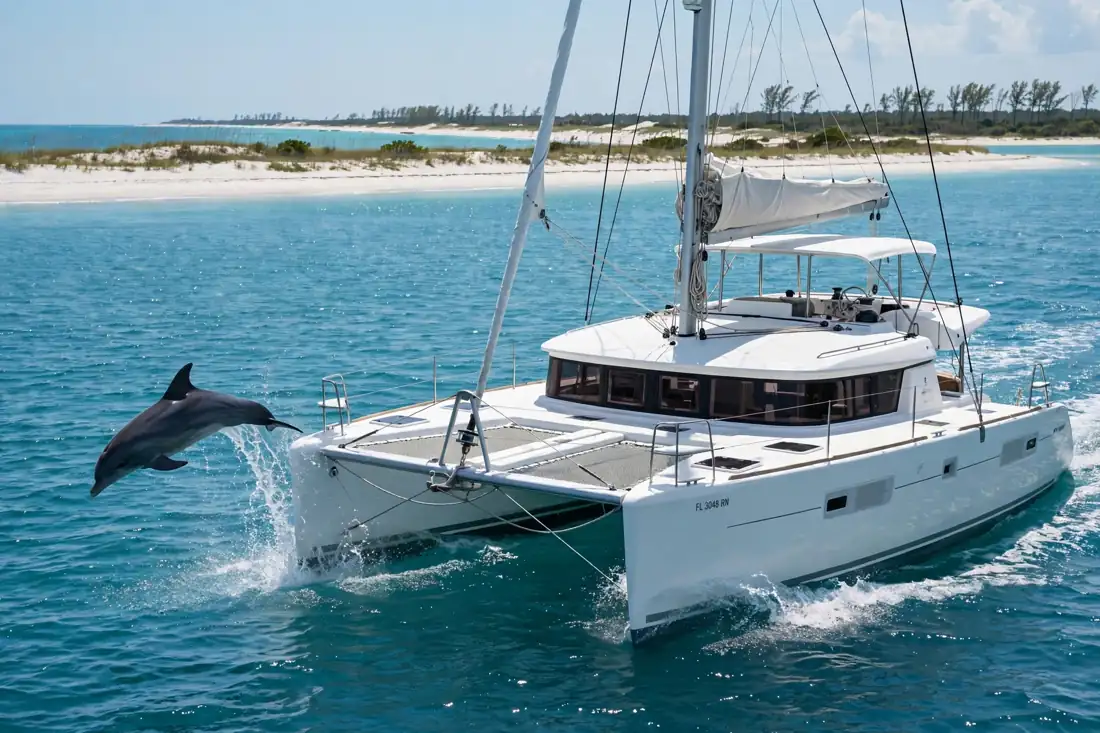
The dolphin cruise is the boat trip that makes the trip, because the dolphins in St. Andrew Bay are resident, not passing through — a three-hour catamaran trip has very good odds of finding a pod. The best trips combine the two things: a cruise out to Shell Island, time to snorkel the grass flats and the jetties, and dolphin watching on the way home. Guided three-hour snorkel and dolphin cruises run about $49–$57 per person, with snorkel gear, paddleboards and a cooler of ice included, and dolphin-only cruises run from about $28–$34. The boats run in the bay rather than the open Gulf, so a red flag on the beach does not stop them, and the water is calm enough for small children. The best time to go is the morning, when the water is flat and the dolphins are feeding, and the best months are April to October, when the water is warm enough to stay in for an hour. Book ahead in summer — the small catamarans fill up — and bring a towel, a dry bag for your phone and a change of clothes for the ride back. Bottlenose dolphins on Wikipedia covers the animals you will be watching.
11. M.B. Miller County Pier
M.B. Miller County Pier is the quieter of the two long piers, and the one the fishermen prefer: 1,500 feet into the Gulf at 12213 Front Beach Road, with a fishing pass of $6 a day, rod rentals for $12 and bait boxes for under $5. It is less crowded than Russell-Fields, the parking is close by at about $8 for four hours through the Passport app, and the fishing is the same — pompano and Spanish mackerel in spring, redfish and flounder in autumn, and the occasional king mackerel in summer. You do not need a Florida fishing licence to fish from the pier, because the pier’s licence covers you, and the pier has fish-cleaning stations at the end. Non-fishermen can walk it for the view: from the end you get the same sweep of the beach as Russell-Fields, but with fewer people and a better look at the condos running west along the shore. Come at sunrise, when the fishermen are already out and the beach is empty, or at sunset for the same golden light without the Pier Park crowds. Grand Lagoon on Wikipedia covers the lagoon just inland from the pier.
12. Camp Helen State Park
Camp Helen State Park is the quiet corner of Panama City Beach, and the one most visitors never find: 180 acres between the Gulf and Lake Powell, one of Florida’s largest coastal dune lakes, at the far west end of the beach near the Walton County line. It is a day-use park only — no camping — with a $4 per vehicle entry paid at an honour box, $2 for pedestrians and cyclists, open from 8 a.m. to sunset, 365 days a year. The Oak Canopy Trail runs through a tunnel of live oaks draped in Spanish moss to a half-mile of quiet Gulf shoreline, and the North Trail crosses the dunes to Lake Powell, where you can launch your own kayak or paddleboard — the park stopped renting kayaks in May 2026, so bring your own or rent one in town. Dogs are allowed on a leash on the trails but not on the beach, and the park is one of the best birdwatching spots on the coast, with herons, egrets and ospreys working the lake at dawn. It is the place to go when Front Beach Road feels like too much. Camp Helen State Park on Wikipedia covers the park and its history.
13. Conservation Park
Conservation Park is the free wilderness on the edge of town: 2,900 acres of pine flatwoods, wetlands and cypress domes at 100 Conservation Drive, with more than 24 miles of trails and over a mile of boardwalk, open from dawn to dusk and free to enter. There are 12 trails ranging from 0.6 to 11 miles, so you can do a 45-minute loop or a full-day hike, and the boardwalk through the cypress domes is the best short walk in the park — a raised path over black water, with herons and turtles below and ospreys overhead. Dogs are welcome on a leash, mountain bikes are allowed on the trails, and the park connects to Gayle’s Trails, the paved path that runs to Frank Brown Park and on to Pier Park, so you can cycle the whole way without touching Front Beach Road. Bring water and bug spray in summer, and go in the morning, when the trails are cool and the birds are active. The park is also a good bad-weather backup in reverse: it is at its best in the cooler months, when the mosquitoes are gone and the light is low. The Bay County, Florida on Wikipedia page covers the county the park protects.
14. ZooWorld
ZooWorld is the small, hands-on zoo on Front Beach Road, and the best half-day for younger children: a compact park at 9008 Front Beach Road, open daily from 9:30 a.m. to 5 p.m., with more than 200 animals and a focus on encounters rather than exhibits. Admission runs from $24.95 for adults, and the encounters are the reason to go — giraffe feeding, lemur encounters, sloth encounters and capybara encounters, from about $70 each, all bookable in advance. The park is small enough to cover in two hours, which is the point: it is a morning stop, not a full day, and it pairs well with the beach or with Pier Park in the afternoon. The animal shows run through the day, and the petting zoo is free with admission. Book the encounters ahead in summer, because the slots are limited and the giraffe feeding sells out. The Florida Panhandle on Wikipedia covers the region the zoo sits in.
15. Pirates Voyage Dinner & Show
Pirates Voyage Dinner & Show is the newest big night out in Panama City Beach: Dolly Parton’s pirate dinner show, which opened at Pier Park in 2025, with two full-size pirate ships in an indoor lagoon, acrobatics, live animals and a four-course meal served while the Crimson and Sapphire crews battle it out. It is a full evening — the show runs about two hours, the food is part of the ticket, and the whole thing is aimed squarely at families with children, who get to pick a side and cheer for their crew. It sits inside Pier Park, so you can walk the shops or ride the SkyWheel first and then cross over for the show, and the seating is assigned, so book ahead in summer and on weekends. It is the loudest, most theatrical night in town, and the one children talk about for the rest of the trip. Pier Park (Florida) on Wikipedia covers the centre where the show sits.
16. Deep-sea fishing from Grand Lagoon
Deep-sea fishing is the other side of Panama City Beach — the side that has nothing to do with the sand. The boats leave from the marinas around Grand Lagoon on Wikipedia, the sheltered waterway behind the beach, and the choice is between a headboat, where you buy a single seat on a shared boat for a half-day or full-day trip, and a private charter, where the boat is yours and the captain works your list. Headboats are the cheap way in, and they run to the nearshore reefs for snapper, grouper on Wikipedia, amberjack and king mackerel; charters run further out, to the deeper wrecks and the artificial reefs on Wikipedia, for bigger fish and a longer day. The season runs year-round, with the best fishing in spring and autumn, and the marinas will clean and fillet your catch for a small fee — several restaurants on the lagoon will cook it for you the same evening. Book ahead in summer, bring sunscreen and motion-sickness tablets if you need them, and check the current regulations before you go, because seasons and limits for snapper and grouper change every year. The Gulf of Mexico on Wikipedia covers the water you will be fishing in.
17. Scuba diving the reefs and wrecks
Scuba diving is the reason serious divers come to Panama City Beach, and it is better here than most visitors expect: the city sits on a long string of artificial reefs on Wikipedia and shipwrecks in the Gulf, in water that runs from about 60 to 100 feet deep. The most famous wreck is the Empire Mica, a British tanker sunk by a U-boat in 1942, sitting in about 90 feet of water with its hull still largely intact, and the artificial reefs — bridge spans, concrete modules and decommissioned vessels — are covered in coral and sponges and full of snapper, grouper and the occasional sea turtle on Wikipedia. Dive shops on the lagoon run two-tank trips in the morning and afternoon, with gear rental and guides, and the best diving is from April to October, when the water is warm and the visibility is at its best. You need to be certified to dive the wrecks, but snorkellers can join the same boats and swim the shallow reefs. Book ahead in summer, and check the conditions the morning of the trip — a rough Gulf cancels boats even when the beach looks fine. The Gulf of Mexico on Wikipedia covers the water the wrecks sit in.
18. Frank Brown Park
Frank Brown Park is the town’s backyard: a 100-acre complex at 16200 Panama City Beach Parkway, with ball fields, playgrounds, three dog parks, a youth fishing pond and a 20-acre festival site, open from 5 a.m. to 11 p.m. The Aquatic Center inside the park has an outdoor Olympic-sized pool and a children’s splash pool, and it is the cheapest way to swim on a day when the flags are red — a fact most guides never mention. The park is also where the big events happen: the Gulf Coast Jam takes over the festival site in June, and the Seabreeze Jazz Festival takes over Aaron Bessant Park in April, but Frank Brown hosts the sports tournaments and the community events all year. It is free to enter, the parking is free, and the dog parks are the best in town — three separate enclosures, so small dogs and large dogs do not mix. Come for a morning run on the trails, a swim in the Aquatic Center, or just to let the children run off the beach energy. Frank Brown Park on Wikipedia covers the park and its facilities.
19. Kayaking and paddleboarding
Kayaking and paddleboarding is the quiet way to see Panama City Beach, away from the boats and the beach crowds: the sheltered water of Grand Lagoon on Wikipedia and St. Andrew Bay on Wikipedia is calm, warm and full of wildlife, and you can paddle for an hour without seeing a road. Rental shops along the lagoon and on Thomas Drive rent single and tandem kayaks, paddleboards and clear-bottom kayaks by the hour or the day, with life jackets and dry bags included, and guided eco-tours run in the morning, when the water is flat and the dolphins are feeding. The best routes are the lagoon itself, the backwaters behind Shell Island, and the channels around St. Andrews State Park, where the water is shallow enough to see fish and crabs below. Lake Powell, the coastal dune lake at Camp Helen, is another option if you bring your own boat, because the park stopped renting kayaks in May 2026. Go early, wear a hat, and take water — there is no shade on the lagoon, and the sun reflects off the water twice. The Gulf of Mexico on Wikipedia covers the water the lagoon opens into.
20. Schooners and the sunset cannon
Schooners Last Local Beach Club is the sunset spot in Panama City Beach, and the one the locals claim as their own: a beachfront restaurant and bar at the far east end of the beach, past St. Andrews State Park, with tables in the sand and a sunset cannon fired at dusk. The cannon is the ritual — every evening, as the sun drops into the Gulf, the staff fire a cannon on the beach, and the whole patio stops to watch. The food is beach food done well: grouper sandwiches, peel-and-eat shrimp, oysters and the crab cakes, and the prices are lower than the Front Beach Road restaurants because you are out of the strip. It is the best place to end a day: swim at St. Andrews in the afternoon, walk the beach east as the light goes gold, and be at Schooners in time for the cannon. Get there before sunset in summer, because the tables fill up, and bring cash for the cannon-side bar if the line is long. The Gulf of Mexico on Wikipedia covers the water the sun sets into.
Panama City Beach in 3 days — a ready-made itinerary
Day 1 — The beach, the pier and Pier Park
Start at the beach itself: swim and set up for the morning at the access nearest your hotel, then walk east along the sand to Russell-Fields Pier and walk the 1,500 feet out into the Gulf. Come back along Front Beach Road for lunch — Sharky’s for a grouper sandwich — then spend the afternoon at Pier Park, shopping and riding the SkyWheel in the last hour before sunset. End the day with dinner at Harpoon Harry’s and a drink at Tootsie’s Orchid Lounge, the new bar on the old Spinnaker site.
Day 2 — St. Andrews State Park and Shell Island
Be at St. Andrews State Park before 10 a.m., while there is still parking, and spend the morning snorkelling the jetties at low tide in the “kiddie pool”. Take the Shell Island Ferry from the park marina around midday, bring water and an umbrella, and spend two or three hours shelling and swimming on the island. Back on the mainland, drive east to Schooners for the sunset cannon, and eat there — the grouper sandwich and the peel-and-eat shrimp are the right order.
Day 3 — The water, the lagoon and the quiet end
Take the morning dolphin and snorkel cruise from Grand Lagoon, then spend the afternoon on the water yourself — a kayak or paddleboard on the lagoon, or a half-day fishing trip from the marina. If you would rather stay dry, do the indoor circuit instead: WonderWorks in the morning and Ripley’s after lunch, then finish at Camp Helen State Park for a quiet walk through the oak canopy to the lake. End the trip with dinner at Captain Anderson’s on the lagoon, the oldest restaurant in town, and order the grouper.
Best time to visit Panama City Beach
| Season | Months | Weather | What to expect |
| Spring | March to May | 70–82°F, warming water | April and early May have the best weather of the year. March is spring break: alcohol is banned on the sandy beach all month, sales stop at 2 a.m., and the beach closes overnight in places. The Seabreeze Jazz Festival runs in April. |
| Summer | June to August | 85–92°F, water 84–86°F | Peak season, peak prices, peak crowds. Hurricane season runs 1 June to 30 November. The Gulf Coast Jam runs in early June. Book hotels and cruises weeks ahead. |
| Autumn | September to November | 75–85°F, water still warm | September and October are the sweet spot: warm water, thinner crowds, lower prices. The Thunder Beach rally runs in autumn, and the Pirates of the High Seas Fest in October. |
| Winter | December to February | 60–70°F, water about 62°F | The quietest season, the cheapest hotels, and the emptiest beach. Shipwreck Island is closed, the Shell Island Ferry is reduced or paused, and the water is too cold for most swimmers. |
The honest answer is April to May and September to October. The water is warm, the crowds are thin, the prices are lower than summer, and the beach flags are yellow more often than red. May and September are the two sweet spots — warm enough to swim all day, cool enough to walk the beach at noon. March is the month to be careful about: the city bans alcohol on the sandy beach for the whole month, and the spring-break crowds fill the hotels and the strip. Summer is the busiest and the most expensive, and it is also hurricane season, which runs from 1 June to 30 November — the last major hit was Category 5 Hurricane Michael on Wikipedia in October 2018, which destroyed much of nearby Mexico Beach and Panama City. Winter is the bargain season: the beach is empty, the hotels are cheap, and the sunsets are the best of the year, but the water is cold and several attractions are closed or on reduced hours.
Where to stay in Panama City Beach
| Area | Best for | What to expect |
| Front Beach Road beachfront | First-timers, families | High-rise condos and hotels right on the sand, with pools, beach access and the strip at your door. The busiest and the most expensive, about $150–$300 a night in season. |
| Pier Park area | Shoppers, nightlife, families | Hotels and condos within walking distance of the shops, the wheel and the restaurants, with free parking. The liveliest area after dark. |
| Thomas Drive and the east end | Families, quiet seekers | Older, lower-rise hotels and condos near St. Andrews State Park and Schooners, with a quieter beach and lower prices. The best base if you want to sleep. |
| West end and Laguna Beach | Couples, quiet seekers | The far west end, near Camp Helen State Park, with smaller condos and houses, a quieter beach and the easiest parking. A drive to Pier Park. |
| Panama City, across the bridge | Budget travellers | Hotels in Panama City, ten minutes east across the Hathaway Bridge, are noticeably cheaper than beachfront, and the historic St. Andrews district has its own restaurants and bars. |
The first decision is beachfront or not. A beachfront condo on Front Beach Road costs more, but you walk out of your room and onto the sand, and you do not pay for parking or carry chairs across a road. A condo a block inland, on Middle Beach Road or Thomas Drive, costs less and is a five-minute walk to the same sand. Families should look at the east end, near St. Andrews State Park, where the beach is quieter and the hotels are lower-rise; first-timers who want the full strip should stay near Pier Park, where the shops and the wheel are at your door; and couples who want quiet should look at the far west end, near Camp Helen, where the beach is empty and the parking is easy. Book early for March, April and June — spring break and the summer weekends fill up months ahead — and check whether your condo charges a resort fee or a cleaning fee on top of the nightly rate, because both are common. If you are coming for the fishing or the diving, look at the lagoon side, near Grand Lagoon, where the marinas are.
Getting around Panama City Beach
| Way to get there | How it works | What to know |
| Car | The main way to get around | Three parallel east–west roads: Front Beach Road (the slow strip), Middle Beach Road or Hutchison Boulevard (faster), and Back Beach Road or US 98 (fastest). Use Middle and Back Beach to cross town, then cut down to the beach. |
| Rideshare or taxi | Uber and Lyft run throughout | The easy option at night, and the best way to get to Pier Park and the restaurants without worrying about parking. Surge pricing applies on spring-break weekends. |
| Bayway bus | Public bus, hourly, Monday to Saturday | Runs throughout the county, including the beach, Panama City and the airport area. The cheapest way to move around if you do not have a car. |
| Walking | Along the beach and the strip | The beach itself is the best walking route — 27 miles of flat sand. Front Beach Road is walkable in the Pier Park area, but the distances between attractions are long. |
| Biking | Gayle’s Trails and the beach | A paved trail system runs from Conservation Park to Frank Brown Park and on to Pier Park. Bike rentals are available along the strip. |
| Parking | Metered in places, free in others | Pier Park parking is free. Beach access parking is free at most accesses, but the M.B. Miller Pier lot is about $8 for four hours through the Passport app. Arrive early in summer. |
| Airport | Northwest Florida Beaches International Airport (ECP) | About 20 minutes north of the beach, with flights to Atlanta, Dallas, Houston, Nashville and Charlotte. Rental cars are at the terminal. |
You do not need a car for the beach itself, but you will want one for everything else. The three parallel roads are the key to the whole town: Front Beach Road is the strip, slow and crowded, with the hotels, the restaurants and the attractions on it; Middle Beach Road (Hutchison Boulevard) runs a few blocks inland and is the fast way across town; and Back Beach Road (US 98, the Panama City Beach Parkway) is the fastest of all, and the one the locals use. The trick is to use Middle or Back Beach to cross town, then cut down to the beach on one of the numbered access roads. Parking is free at Pier Park and at most beach accesses, but the lots fill up by late morning in summer, and the M.B. Miller Pier lot charges about $8 for four hours. The Bayway bus runs hourly Monday to Saturday and is the cheapest option if you do not have a car, and rideshare is the easy option at night. There is no rail link to Panama City Beach, and the nearest Amtrak station is hours away — fly into Northwest Florida Beaches International Airport on Wikipedia, about 20 minutes north, and pick up a rental car there.
Panama City Beach food you have to try
Fresh Gulf grouper
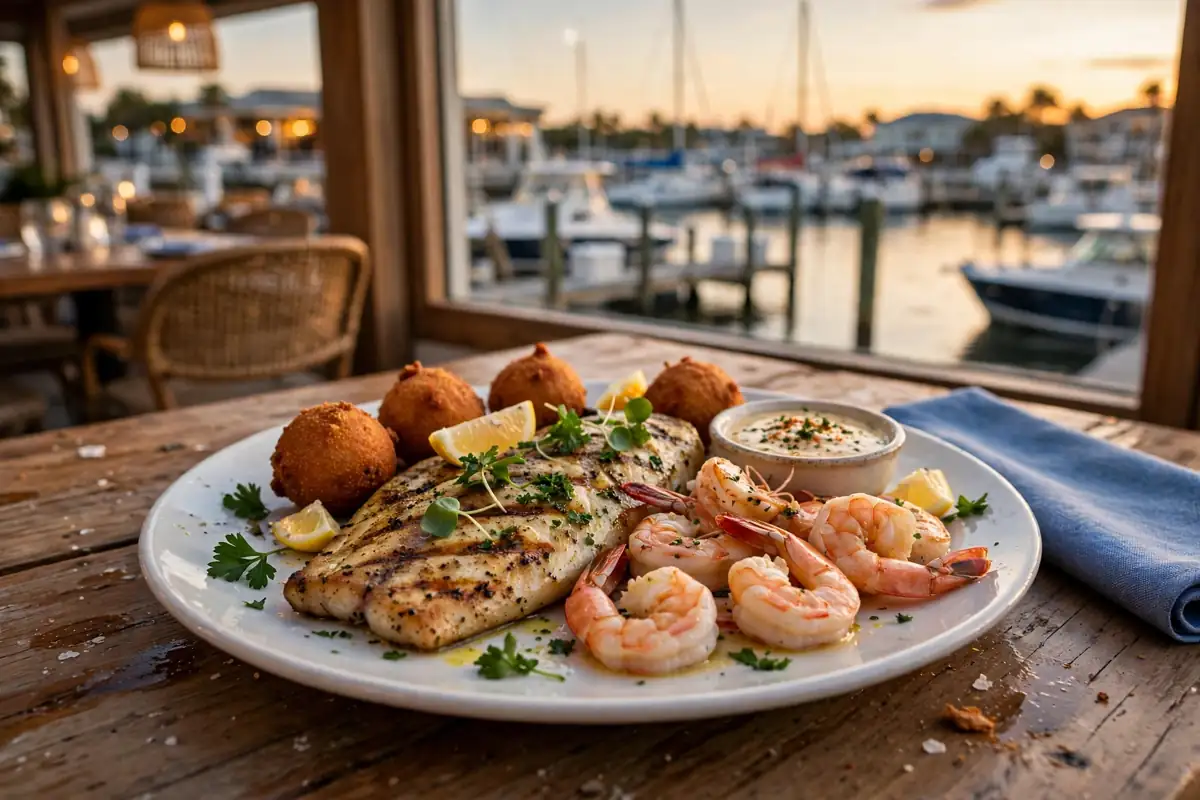
Fresh Gulf grouper is the fish to order in Panama City Beach, and the one the town is known for: a firm, mild white fish caught in the Gulf off the coast, served grilled, blackened or fried, in a sandwich or as a fillet. The classic order is the grouper sandwich, and the classic place to eat it is Captain Anderson’s Restaurant, on the water at 5551 North Lagoon Drive since 1967, where the filet of grouper runs about $36 and the Grouper Imperial about $46, and the seafood platter about $37. The other end of the spectrum is Sharky’s Beachfront Restaurant, at 15201 Front Beach Road, where the grouper sandwich is the thing to order with a view of the beach, and the prices are lower than the lagoon restaurants. Grouper on Wikipedia covers the fish and its species. Order it blackened if you like spice, grilled if you want to taste the fish, and fried if you want the beach version — and ask what the catch of the day is, because the boats come in every morning and the menu changes with them.
Peel-and-eat shrimp and oysters
Peel-and-eat shrimp and oysters are the other half of the Panama City Beach table, and the food that tastes best with sand still on your feet. The shrimp come from the Gulf, served by the pound with cocktail sauce and drawn butter, and the oysters come raw on the half shell or chargrilled, from the beds in St. Andrew Bay and the Apalachicola Bay to the east. Harpoon Harry’s, at 12627 Front Beach Road, is the place for the seafood bucket — shrimp, crab legs, corn and potatoes in a bucket on the table — and for the live music that runs most nights. Schooners, at the east end, does the peel-and-eat shrimp and the oysters with the sunset as the backdrop, and the prices are lower than the strip. The rule is simple: if the restaurant is on the water, order the shrimp; if it is on the lagoon, order the oysters; and if you are at a raw bar, ask where the oysters came from that day. The Gulf of Mexico on Wikipedia covers the water the shrimp come from.
Key lime pie
Key lime pie is the dessert to end a Panama City Beach meal with, and the one the Florida Panhandle does properly: a tart, creamy pie made with Key lime juice, in a graham cracker crust, topped with whipped cream or meringue. It is on the menu at almost every seafood restaurant in town, and the best versions are the ones made in-house, with a proper tartness that cuts through the richness of the fish and the shrimp. Captain Anderson’s does a good one, and the smaller family restaurants on Thomas Drive do better ones still — ask your server if the pie is made in-house, because the bought-in versions are noticeably sweeter and softer. Eat it with a coffee on the patio as the sun goes down, and you have had the full Panama City Beach meal: grouper, shrimp, and a slice of pie. The Florida Panhandle on Wikipedia covers the region the pie comes from.
Free things to do in Panama City Beach
The beach itself is free, and it is the best free thing in town — 27 miles of it, open 24 hours a day, with no entry fee and no closing time. The two piers cost a few dollars to walk, but the views from the sand beside them are free, and the sunset from the beach at Russell-Fields Pier costs nothing at all. Conservation Park is free, with 24 miles of trails and a mile of boardwalk through the cypress domes, and Frank Brown Park is free, with playgrounds, three dog parks and the trails. The Dog Beach, west of Russell-Fields Pier, is free for leashed dogs, and the sunset cannon at Schooners is free to watch from the sand. Pier Park is free to walk around, with free concerts on the green in season, and the window-shopping is free too. The St. Andrews State Park entry is $8 a vehicle, but the beach outside the park — the same sand, a few hundred yards west — is free. The cheapest day in Panama City Beach is a good one: beach in the morning, Conservation Park in the afternoon, sunset at Schooners, and dinner from a grocery store on Thomas Drive.
Frequently asked questions
How many days do you need in Panama City Beach?
Two days covers the beach, Pier Park, the SkyWheel and the piers. Three days is the right amount: it adds St. Andrews State Park and Shell Island on the second day, and the lagoon, the fishing or the indoor attractions on the third. Four or five days lets you slow down — a day for the diving or the deep-sea fishing, a day for Camp Helen and Conservation Park, and a day trip to Panama City, across the bridge, or to Destin, about 50 miles west. A week is the classic Panama City Beach trip, and it is the one the condo owners expect: most rentals run Saturday to Saturday in summer, and the town is built around it.
Is Panama City Beach worth visiting?
Yes, if you want a beach holiday rather than a city break. The sand is genuinely some of the best in the United States — sugar-white quartz, cool underfoot, washed by emerald water — and the state park, the island and the piers give you more than just a beach to sit on. It is at its best in April, May, September and October, when the water is warm and the crowds are thin. It is at its worst in March, when the spring-break crowds fill the strip and the city bans alcohol on the sand, and in the deep winter, when the water is cold and several attractions are closed. If you want nightlife, museums and a walkable downtown, go to a city instead. If you want a beach, a pier and a plate of grouper, come here.
Is Gulf World Marine Park open?
No. Gulf World Marine Park closed permanently on 27 May 2025, after its owner, The Dolphin Company, filed for bankruptcy in March 2025, following the deaths of five bottlenose dolphins between October 2024 and May 2025 and repeated animal-welfare violations. The dolphins were moved to other facilities in June 2025, the park’s website has been deleted, and TripAdvisor lists it as permanently closed. Do not plan a trip around it, and do not trust any guide that still lists it as a top attraction — that guide is out of date. The rescue and rehabilitation arm, the Gulf World Marine Institute, is a separate nonprofit and broke ground on a new facility in downtown Panama City in October 2026, but it is not a visitor attraction. Gulf World Marine Park on Wikipedia covers the park and its closure.
Is it safe to swim in Panama City Beach?
Yes, with the flag system in mind. Panama City Beach and Bay County use a flag system at every beach access: yellow means swim with caution, red means hazardous conditions, and double red means the water is closed to the public. Swimming under a double red flag brings a $500 fine for a first offence and $1,000 for a repeat, with possible jail time, and the rule is enforced. Three people drowned in the Gulf off Panama City Beach in 2026, and seven in 2024 — almost all of them in rip currents on red-flag days. Bay County and Panama City Beach never fly green flags, so there is no “all clear” day. Check the flag at your access before you swim, and stay near a lifeguard during lifeguard season (1 March to 1 December), and if you are caught in a rip current, swim parallel to the shore until you are out of it, then swim back in. Rip currents on Wikipedia explain how they work and how to escape one.
What is the best time to visit Panama City Beach?
April to May and September to October. The water is warm, the crowds are thin, the prices are lower than summer, and the beach flags are yellow more often than red. May and September are the two sweet spots. March is spring break, with an alcohol ban on the sandy beach all month and heavy crowds. Summer is the busiest and the most expensive, and it is hurricane season, which runs from 1 June to 30 November. Winter is the cheapest and the quietest, but the water is about 62°F and several attractions — Shipwreck Island, the Shell Island Ferry — are closed or on reduced hours. If you can only pick one month, pick May: warm water, good weather, and the spring-break crowds are gone.
What should I skip in Panama City Beach?
Skip Gulf World Marine Park — it is closed permanently, and any guide that still lists it is out of date. Skip Club La Vela, the old nightclub that has been closed and abandoned since Hurricane Michael in 2018. Skip the beach on a double-red-flag day, when the water is closed and swimming can cost you $500. Skip Front Beach Road at 5 p.m. in July, when the traffic crawls — use Middle Beach Road or Back Beach Road instead. Skip the waterpark in winter, when it is closed, and skip the Shell Island Ferry in winter, when the service is reduced or paused. And skip the spring-break week in March if you are travelling with children, when the strip is at its loudest and the alcohol ban is in force. What you should not skip is in the list above — the state park, the island, the piers, the wheel and the grouper.
Further reading
Panama City Beach, Florida on Wikipedia
St. Andrews State Park on Wikipedia
Gulf World Marine Park on Wikipedia
Hurricane Michael on Wikipedia
Ripley’s Believe It or Not! on Wikipedia
Camp Helen State Park on Wikipedia
Northwest Florida Beaches International Airport on Wikipedia
Pier Park (Florida) on Wikipedia
Panama City, Florida on Wikipedia
Florida Panhandle on Wikipedia
Bay County, Florida on Wikipedia
Bottlenose dolphin on Wikipedia
Emerald Coast Science Center on Wikipedia
Man in the Sea Museum on Wikipedia
No Reddit link is included here: no live r/PanamaCityBeach thread turned up in search, so none is listed rather than linking to an unverified one. No Quora link is included either: no live on-topic Quora thread about visiting Panama City Beach turned up in search, so none is listed rather than linking to an unverified one.
Your Panama City Beach trip, in one paragraph
Panama City Beach is the Florida Panhandle’s beach town — 27 miles of sugar-white sand, a state park with the best snorkelling on the Gulf Coast, a boat-only island, two long piers, a 200-foot wheel over Pier Park, and a plate of grouper at the end of the day. Start with the islands and the coasts: our Hawaii guide covers the whole state, our Maui guide covers the Valley Isle, and our Honolulu guide covers the capital city. Then the American cities, in the order we wrote them: our Chicago guide, our Nashville guide, our Los Angeles guide, our Orlando guide, our Miami guide, our San Diego guide, our Denver guide, our Savannah guide, our Dallas guide, our Charleston guide, our San Francisco guide, our Myrtle Beach guide, our Las Vegas guide and our San Antonio guide. Further afield: our London guide, our Portland guide, our Pigeon Forge guide, our Puerto Rico guide, our Atlanta guide, our Phoenix guide, our Paris guide, our Key West guide, our Colorado Springs guide, our Sedona guide, our Chattanooga guide, our Palm Springs guide, our St Louis guide, our Tokyo guide and our Japan guide. Then the middle of the map: our Kansas City guide, our Tennessee guide, our Branson guide, our Florida guide, our Amsterdam guide, our Montreal guide, our Fort Lauderdale guide, our Toronto guide, our Aruba guide, our Charlotte guide, our Indianapolis guide, our New Orleans guide, our Destin guide, our Santa Barbara guide, our Mexico City guide, our Arizona guide, our Osaka guide, our Minneapolis guide, our Pittsburgh guide, our California guide, our Asheville guide, our Costa Rica guide, our Washington DC guide and our Seattle guide. And the most recent: our St Augustine guide, our Lisbon guide, our Dubai guide, our Santa Fe guide, our Galveston guide, our Maine guide, our Sacramento guide, our Kauai guide, our Boston guide, our Cancun guide, our Madrid guide, our Salt Lake City guide, our Baltimore guide, our Barcelona guide, our Reno guide, our Milwaukee guide, our North Carolina guide, our New York guide, our Tucson guide, our Raleigh guide, our Corpus Christi guide, our Milan guide, our Salem guide, our Wilmington guide, our Memphis guide, our Flagstaff guide, our Austin guide, our Oahu guide, our Iceland guide, our Cincinnati guide, and our Fort Worth guide.

About the Author