Things to Do in Fort Worth
20 Best Attractions, a 3-Day Itinerary, Where to Stay, and the Food You Cannot Miss
Quick Info
Best for: First-timers, cowboy-culture lovers, museum lovers, families and food lovers — a walkable downtown, a working stockyards and three world-class art museums within a few blocks of each other
Best time: March to May and October to November for the weather; January to February for the Stock Show & Rodeo; April for the arts festival, Mayfest and the food and wine festival
How long: 1 day for the Stockyards and downtown; 2 days adding the Cultural District; 3 days for the full trip, including the zoo and the Botanic Garden
Budget: About $150–$250 per person per day mid-range — downtown hotels run about $150–$300 a night, the zoo $22 and the big museums $10–$16 each, and the cattle drive, the Water Gardens and two art museums cost nothing
Don’t miss: The Stockyards cattle drive at 11:30 a.m., Billy Bob’s on a Friday night, the Kimbell, the Fort Worth Zoo, the Water Gardens at golden hour, and brisket at Goldee’s
Fort Worth on Wikipedia is the city where the West begins — an 1849 army outpost on the Trinity River that became a cattle-shipping town on the Chisholm Trail, and never quite stopped being Cowtown. It is a city of two halves that fit together surprisingly well: the Stockyards, where longhorns still walk down a brick street twice a day, and the Cultural District, where three of the finest art museums in America sit within a few hundred yards of each other. This guide covers the 20 best things to do in Fort Worth, a 3-day itinerary that groups the city by district so you are not criss-crossing it, where to stay without paying Stockyards prices for a room you only sleep in, how to get around on the free downtown trolley and the train from the airport, the three foods you should not skip, and the free sights that cost nothing. Everything below was checked against live sources in November 2026 — including the Stockyards Hotel that closed in April 2026 for a $30 million renovation, the Cowgirl Museum that reopened on 7 November after its expansion, the Modern’s galleries that reopened after their October installation closure, and the zoo’s Wednesday half-price deal that most guides bury.
Fort Worth at a glance
| Topic | What to know |
| Full name | Fort Worth, Texas — Cowtown, “Where the West Begins”, on the Trinity River in north central Texas, about 30 miles west of Dallas |
| Founded | 1849, as an army outpost on the Trinity River; named for Major General William Jenkins Worth |
| Population | About 980,000 in the city, about 8 million in the Dallas–Fort Worth metroplex |
| Nickname | Cowtown — the city was a major cattle-shipping point on the Chisholm Trail |
| Best base | Downtown and Sundance Square for first-timers; the Stockyards for cowboy culture; the Cultural District for museums |
| Getting around | Walk downtown and Sundance Square; Molly the Trolley is free downtown; TEXRail runs from DFW Airport to downtown; a car or rideshare for the zoo, the Nature Center and the Stockyards |
| Famous for | The Stockyards cattle drive, Billy Bob’s Texas, the Kimbell, the Stock Show & Rodeo, Texas barbecue and the Van Cliburn piano competition |
Fort Worth rewards visitors who plan by district, not by list. Downtown, the Stockyards and the Cultural District are three separate worlds, each compact on its own, and the mistake most visitors make is trying to hop between them all day. The Stockyards sit about three miles north of downtown; the Cultural District sits about two miles west; the zoo and the Botanic Garden sit just south of the Cultural District. Pick one district per half-day and the city opens up. The trap most guides fall into is the outdated detail: the Stockyards Hotel has been closed since April 2026 and does not reopen until early 2027, the Cowgirl Museum was closed for most of October and November 2026 for its expansion, the Modern’s galleries were closed through 30 October 2026, and the Botanic Garden’s Japanese Garden is now included in general admission — older guides still list a separate fee for it. This guide gets those right, because we checked them in November 2026.
The 20 best things to do in Fort Worth
1. Fort Worth Stockyards National Historic District
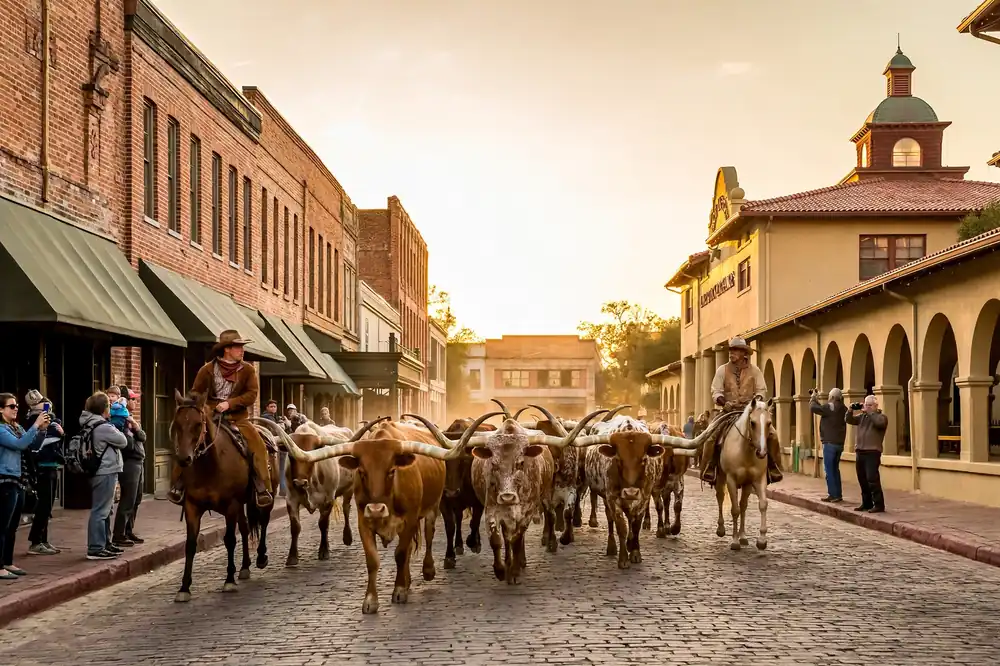
The Fort Worth Stockyards National Historic District is the single best reason to come to Fort Worth, and the most complete piece of the Old West left in any American city. This was the cattle-shipping heart of Texas: from the 1870s, herds driven up the Chisholm Trail on Wikipedia were loaded onto trains here, and at its peak the Stockyards processed millions of head of cattle a year. Today the red-brick streets and boardwalks of East Exchange Avenue hold saloons, boot shops, steak houses and museums, and the whole district still feels like a working place rather than a theme park. The centrepiece is the Fort Worth Herd cattle drive, the world’s only twice-daily cattle drive: every day at 11:30 a.m. and 4 p.m., drovers in period dress walk a herd of Texas longhorns on Wikipedia down Exchange Avenue, free to watch, lasting about eight minutes. Be in place by 11:25 a.m. or 3:55 p.m. — the street closes five minutes before each drive — and stand in front of the Livestock Exchange Building at 131 East Exchange Avenue for the best view. There is no drive on Easter Sunday, Thanksgiving Day or Christmas Day, and severe weather can cancel it, so check the Fort Worth Herd’s social media that morning. The free Fort Worth Herd Experience runs Friday to Sunday from 1:30 to 2:30 p.m., when you can meet the drovers and ask questions up close. The Texas Cowboy Hall of Fame on Wikipedia sits in the district too, with the Sterquell Wagon Collection and the hall of fame’s inductees, and the Cowtown Cattlepen Maze, an open-air wooden maze, costs $8 with half-price admission on Tuesdays. Come hungry, stay for the rodeo or the honky-tonk, and allow half a day. The Fort Worth Stockyards on Wikipedia covers the district and its history.
2. Billy Bob’s Texas
Billy Bob’s Texas is the world’s largest honky-tonk, and the loudest good night in Fort Worth. The 100,000-square-foot building at 2520 Rodeo Plaza in the Stockyards holds a concert hall that seats 6,000, a dance floor the size of a basketball court, an indoor bull-riding arena, a casino arcade, pool tables and the Honky Tonk Kitchen — and on a Friday or Saturday night it fills with boots, hats and two-steppers from all over Texas. Top-name country acts play every Friday and Saturday night, with live professional bull riding at 8:30 and 9:30 p.m. and the concert at 10 p.m., and regional house bands play through the week. The cover is the thing to know before you go: daytime entry runs about $4 to $8, concert nights cost more depending on the act, and a Stockyards Championship Rodeo ticket stub gets you in free afterwards. Free line-dance lessons run on Wednesdays at 7 p.m. and Fridays at noon, which is the best way in if you have never two-stepped. The hours are Monday 11 a.m. to 6 p.m., Tuesday 11 a.m. to 9 p.m., Wednesday and Thursday 11 a.m. to midnight, Friday and Saturday 11 a.m. to 5 p.m. and then 6 p.m. to 2 a.m., and Sunday noon to 6 p.m. Parking is free Sunday to Thursday and Friday daytime, and $5 on Friday night and Saturday. Arrive before 9 p.m. on a big concert night or expect a long line outside. Billy Bob’s Texas on Wikipedia covers the honky-tonk and its history.
3. Cowtown Coliseum
Cowtown Coliseum is where the rodeo was born indoors, and it still runs one every single weekend. The brick arena on Exchange Avenue was built in 1908 and staged the world’s first indoor rodeo in 1918, and today it hosts the Stockyards Championship Rodeo every Friday and Saturday at 7:30 p.m. — the only rodeo in the world that runs year-round. The show runs about two hours: bull riding, bronc riding, barrel racing, team roping and steer wrestling, with the crowd close enough to feel the dust. Tickets are sold at the Coliseum box office and online, and a regular weekend rodeo can usually be booked same-day, though the big special events sell out. The Coliseum also hosts the PBR Stockyards Showcase on Thursday nights at 7:30 p.m., and the ticketed Legacy of the Longhorn show, produced with the Fort Worth Herd, runs Monday to Thursday at 12:30 p.m. If you only have one evening in the Stockyards, this is it — go to the rodeo, then walk across to Billy Bob’s with your ticket stub for free entry. Cowtown Coliseum on Wikipedia covers the arena and its history.
4. Kimbell Art Museum
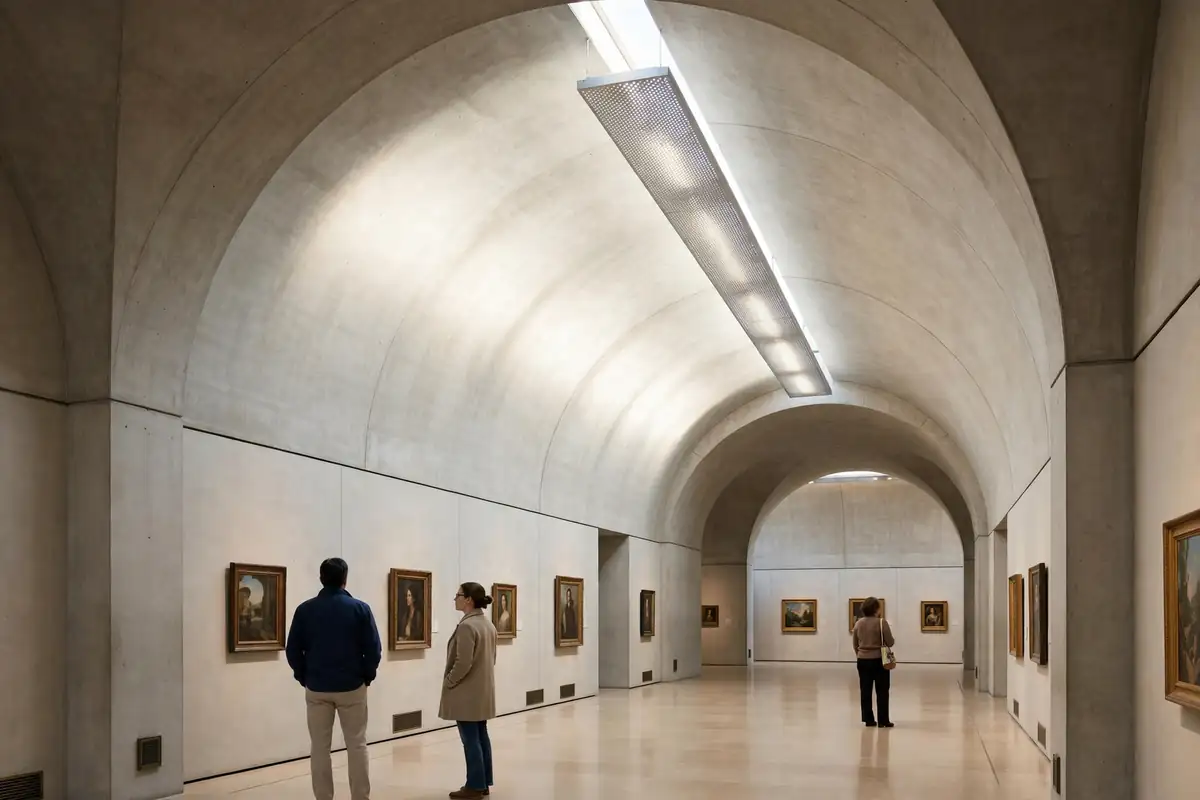
The Kimbell Art Museum is the best free museum in Texas, and one of the finest small museums in the world. Its 1972 building, designed by Louis Kahn on Wikipedia, is itself the draw for many visitors: a row of concrete barrel vaults lit by narrow skylights that wash the ceilings in soft daylight, widely regarded as one of the great museum buildings of the modern era. A second building by Renzo Piano opened in 2013 for special exhibitions. The collection is deliberately small and almost flawless — European masters from Fra Angelico to Picasso, Egyptian and classical antiquities, and the art of Asia, Africa and the ancient Americas — and it holds the only Michelangelo on Wikipedia painting in the Americas, The Torment of Saint Anthony, his first known work. The permanent collection is always free; special exhibitions are ticketed separately, currently $18 for adults. The museum is at 3333 Camp Bowie Boulevard in the Cultural District, open Tuesday to Thursday 10 a.m. to 5 p.m., Friday noon to 8 p.m., Saturday 10 a.m. to 5 p.m. and Sunday noon to 5 p.m., and closed on Mondays. Parking is free in the museum’s underground garage. Allow two hours, and go in the late afternoon on a Friday, when the light in the Kahn galleries is at its best. The Kimbell Art Museum on Wikipedia covers the museum and its collection.
5. Modern Art Museum of Fort Worth
The Modern Art Museum of Fort Worth is the Kimbell’s great contrast, and the other half of the Cultural District’s one-two punch. Its building, designed by Tadao Ando on Wikipedia, is five concrete pavilions standing in a reflecting pond, all glass and still water, and the galleries inside hold more than 3,000 works of postwar and contemporary art — Picasso, Pollock, Rothko, Warhol, Rauschenberg and the contemporary artists who followed them. Admission is $16 for adults, $12 for seniors 60 and over, active and retired military and first responders, $10 for students, and free for anyone under 18. Sundays are half-price and Fridays are free, which makes Friday evening the best deal in the Cultural District. The museum is at 3200 Darnell Street, open Tuesday to Thursday, Saturday and Sunday 10 a.m. to 5 p.m. and Friday 10 a.m. to 8 p.m., and closed on Mondays. Parking is free. One thing to know before you go: the galleries were closed from 29 September to 30 October 2026 for a full reinstallation, and they have reopened with new hangs — check the museum’s site for the current exhibitions, and have lunch at Café Modern, which looks straight out over the reflecting pond. The Modern Art Museum of Fort Worth on Wikipedia covers the museum and its collection.
6. Amon Carter Museum of American Art
The Amon Carter Museum of American Art is the free one, and the most quietly rewarding of the three Cultural District museums. It sits on a hilltop at 3501 Camp Bowie Boulevard, a short walk from the Kimbell and the Modern, and it holds the finest collection of American art in Texas — Frederic Remington on Wikipedia and Charles Marion Russell on Wikipedia above all, plus a deep photography collection and American paintings, sculpture and works on paper from the 19th century to today. Admission is free, full stop — including the special exhibitions — and parking is free in the museum’s own lot on Camp Bowie Boulevard. The museum is open Tuesday, Wednesday, Friday and Saturday 10 a.m. to 5 p.m., Thursday 10 a.m. to 8 p.m. and Sunday noon to 5 p.m., and closed on Mondays. The current exhibitions are worth timing a visit around: Georgia O’Keeffe on Wikipedia and the Carter runs through September 2027, The Statue of Liberty from Bartholdi to Warhol runs through 3 January 2027, and Re/Framed, a museum-wide rotation of the collection, runs from October 2026 to April 2027. Thursday evening, when the museum stays open until 8 p.m., is the best time to go — the galleries are quiet and the hilltop light is good. The Amon Carter Museum of American Art on Wikipedia covers the museum and its collection.
7. Fort Worth Zoo
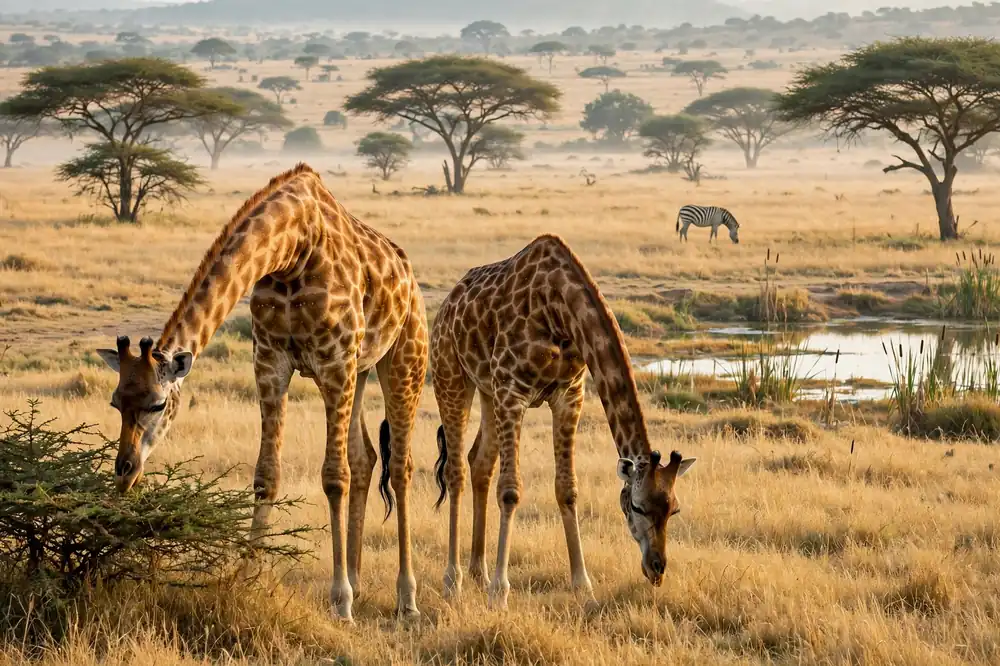
The Fort Worth Zoo is the best zoo in North America, by the readers who vote on it — USA Today readers voted it the No. 1 zoo in North America — and it is the single best family day in Fort Worth. The 64-acre zoo in Forest Park holds more than 7,000 animals from over 500 species, and the newer habitats are the reason it wins awards: the 10-acre African Savanna, opened in 2018, where giraffes, springbok and ostriches share one landscape, and Elephant Springs, opened in 2021, with its Asian elephants and the river that runs through it. The Museum of Living Art, the herpetarium, is one of the best reptile houses in the country, and the giraffe feeding platform, $6 a person, is the moment most children remember. Admission is $22 for adults aged 13 to 64, $18 for children aged 3 to 12 and seniors 65 and over, and free for children 2 and under. Every Wednesday is half-price for everyone — $11 for adults and $9 for children — which is the best deal at any major American zoo, though the lots fill fast by 10:30 a.m. on a sunny spring Wednesday. Parking is $5 a car. The zoo is open 365 days a year at 1989 Colonial Parkway; hours shift with the season, usually 10 a.m. to 5 p.m. with an earlier close in winter, and noon to 4 p.m. on Thanksgiving and Christmas Day. Go in the morning, before the Texas heat builds, and allow four to five hours. The Fort Worth Zoo on Wikipedia covers the zoo and its history.
8. Fort Worth Botanic Garden
The Fort Worth Botanic Garden is the oldest botanic garden in Texas, and the most peaceful half-day in the city. The 120-acre garden at 3220 Botanic Garden Boulevard holds 23 specialty gardens — the 1933 Rose Garden in Palo Pinto sandstone, the native Texas collections, the tropical Rainforest Conservatory — and one garden that outshines them all: the 7.5-acre Japanese Garden, built in 1973 to a design by Ken Nakajima, with moon bridges, koi ponds, stone lanterns, waterfalls and Japanese maples that actually colour in November. It is one of the most authentic Japanese strolling gardens in North America. Admission is $14 online or $15 in person for adults, $12 or $13 for seniors, $8 or $9 for children aged 3 to 15, and free for children under 3. The hours are 8 a.m. to 6 p.m. from March to September and 8 a.m. to 5 p.m. from October to February, with the last entry an hour before closing. The detail older guides get wrong: the Japanese Garden is now included in general admission — the old separate fee is gone, so do not pay twice. The Spring Japanese Festival runs each April, and the December holiday light display keeps the garden open until 9 p.m. Allow two to three hours for the whole garden, or ninety minutes for the Japanese Garden alone. The Fort Worth Botanic Garden on Wikipedia covers the garden and its history.
9. Sundance Square
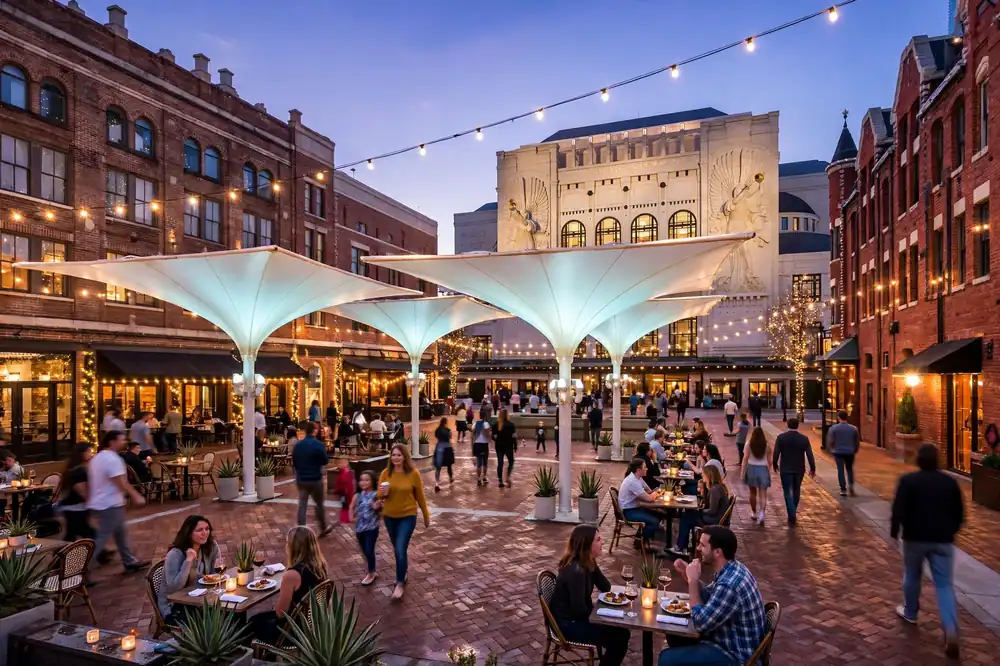
Sundance Square is the heart of downtown Fort Worth, and the best place in the city to simply be. The 35-block district of restored brick buildings and brick streets is named for the Sundance Kid on Wikipedia, who drank and gambled here with Butch Cassidy on Wikipedia and the Wild Bunch around 1900, when this stretch of Main Street was Hell’s Half Acre — the saloon and gambling district. Today the square is restaurants, shops, patios and people-watching around a 55,000-square-foot plaza with splash fountains that run from 11 a.m. to 5 p.m. and four giant umbrellas that glow with LED light at night. The plaza is open daily from 6 a.m. to 11 p.m., Friday and Saturday to midnight. Free live music by local artists plays in the square from 7 to 10 p.m., Wednesday to Sunday. At Christmas the square holds an 82-foot live Norway spruce from Michigan — the tallest live Christmas tree in Texas, eight feet taller than the Rockefeller Center tree in New York — decorated with ornaments made by local art students. Come at dusk, when the umbrellas light up and the patios fill, and use it as your base for dinner: Reata, on the square, is the classic Fort Worth restaurant, and the streets around it hold most of downtown’s best tables. Sundance Square on Wikipedia covers the district and its history.
10. Bass Performance Hall
Bass Performance Hall is the building every Fort Worth postcard shows, and the sound inside is as good as the facade. The 2,042-seat hall at 525 Commerce Street, on the edge of Sundance Square, is marked by its pair of 48-foot limestone angels blowing trumpets over the entrance, and it is home to the Fort Worth Symphony Orchestra on Wikipedia, the Texas Ballet Theater on Wikipedia, the Fort Worth Opera and the Van Cliburn Foundation — the organisation behind the Van Cliburn International Piano Competition on Wikipedia, one of the great piano competitions in the world. The Broadway at the Bass series brings touring productions through the year, and the hall’s acoustics are among the best of any American concert hall. Even if you do not catch a show, the building is worth a look from the plaza: the angels, the limestone and the dome are free to admire, and the box office is open Monday to Friday 9 a.m. to 5 p.m. and Saturday 10 a.m. to 4 p.m. Tickets are premium-priced, so book ahead for the popular shows, and check the hall’s calendar before you plan your evenings — a symphony or ballet night is the best reason to dress up in Fort Worth. Bass Performance Hall on Wikipedia covers the hall and its resident companies.
11. Fort Worth Water Gardens
The Fort Worth Water Gardens is the most surprising place in downtown Fort Worth — a 4.3-acre concrete canyon of falling water, sunk into the ground beside the Convention Center, that feels like stepping into another world. Designed by Philip Johnson on Wikipedia and John Burgee and opened in 1974, a gift of the Amon G. Carter Foundation, the park has three pools: the Active Pool, where water rushes down steep terraced steps into a basin 38 feet below street level and you can walk down into the waterfall itself; the Aerated Pool, where 40 nozzles send misty sprays into the air; and the Quiet Pool, a still, tree-shaded basin for sitting. Admission is free and the gardens are open daily from 6 a.m. to 10 p.m. at 1502 Commerce Street. Film fans will recognise the Active Pool from Logan’s Run on Wikipedia, the 1976 film shot here. Two practical notes: the water is not for swimming or wading, and the terraced steps around the Active Pool are steep and wet — hold the rail, wear shoes with grip, and keep small children close. Go at golden hour, when the low light turns the water amber and the plaza is at its calmest. The Fort Worth Water Gardens on Wikipedia covers the park and its design.
12. Fort Worth Museum of Science and History
The Fort Worth Museum of Science and History is the one to pick if you have children with you, and the best rainy-day stop in the Cultural District. The museum at 1600 Gendy Street holds DinoLabs, where children dig for fossils, hands-on science galleries, the Noble Planetarium, and the Cattle Raisers Museum, which tells the story of cattle ranching in Texas — all included in general admission. The star is the Jane and John Justin Foundation Omni Theater, a 120-foot dome rebuilt with a digitised 8K LED screen, which needs a separate ticket with a reserved showtime. Admission is $16 for adults aged 12 to 64, $14 for seniors 65 and over, $12 for children aged 3 to 11, and free for children under 3. The museum is open Tuesday to Saturday 10 a.m. to 5 p.m. and Sunday noon to 5 p.m., and closed on Mondays. One change to know: the public entrance moved on 11 August 2026 — general visitors now enter through the Omni Theater lobby on Lansford Lane, and the old Gendy Street entrance is for school groups only. The nearest parking is the paid Western Heritage Garage, reached through Gate 19 on Gendy. Allow two to three hours, more with children. The Fort Worth Museum of Science and History on Wikipedia covers the museum and its history.
13. National Cowgirl Museum and Hall of Fame
The National Cowgirl Museum and Hall of Fame is the only museum anywhere devoted to the women of the West, and one of the most distinctive museums in Texas. It sits at 1720 Gendy Street in the Cultural District, next door to the science museum, and it honours the women whose courage and independence shaped the West — Annie Oakley, Sacagawea, Georgia O’Keeffe, Sandra Day O’Connor and more than 250 others — through costumes, saddles, photographs and film. The interactive galleries are the fun part: design a boot in the Western Design Room, test your balance on the Bucking Bronc ride, and look for the saddle made by Nudie Cohn, covered in 8,077 rhinestones. Admission is $10 for adults, $7 for seniors and $4 for children aged 4 to 12, with children 3 and under free. The museum is open Tuesday to Saturday 10 a.m. to 5 p.m. and Sunday noon to 5 p.m., and closed on Mondays. The date that matters: the museum closed to the public from 19 October to 6 November 2026 for a major expansion, and reopened on 7 November 2026 with new galleries — if you are reading a guide written before that, its description of the building is out of date. Allow one to two hours, and pair it with the science museum next door. The National Cowgirl Museum and Hall of Fame on Wikipedia covers the museum and its honorees.
14. Sid Richardson Museum
The Sid Richardson Museum is the smallest museum on this list, and one of the best reasons to walk downtown. It sits at 309 Main Street in Sundance Square, in a single restored building, and it holds one of the finest collections of Western art anywhere: Frederic Remington and Charles M. Russell above all, the two painters who defined how America pictures the West, in a collection put together by oilman Sid Richardson. Admission is always free, and the museum is open Monday to Saturday 10 a.m. to 5 p.m., Friday until 8 p.m., and Sunday noon to 5 p.m. — one of the few Fort Worth museums open on Mondays. Guided tours run 45 to 60 minutes, and parking is free with validation. The current exhibitions change regularly; recent shows have included The Cinematic West, on the Western art that shaped Hollywood, and Night and Day: Frederic Remington’s Final Decade. Allow under an hour — it is a one-room museum, and that is its charm. The Sid Richardson Museum on Wikipedia covers the museum and its collection.
15. JFK Tribute
The JFK Tribute is the quietest stop in downtown Fort Worth, and the most moving. It stands at 916 Main Street in General Worth Square, a block from Sundance Square, on the spot where President John F. Kennedy on Wikipedia gave his last public speech on the morning of 22 November 1963. Kennedy had spent the night at the Hotel Texas across the street — now the Hilton Fort Worth — and spoke to a crowd in the square before flying to Dallas, where he was assassinated that afternoon. The tribute is an open-air granite plaza with a heroic bronze sculpture by Lawrence Ludtke, archival photographs and engraved excerpts from Kennedy’s speeches, and a free audio guide that tells the story of that morning. It is free, outdoors and open all day, and it takes about twenty minutes. Most guides skip it entirely, which is a mistake: it is the one place in Fort Worth where American history feels present rather than displayed. Pair it with a walk through Sundance Square, which starts a block away.
16. Bureau of Engraving and Printing
The Bureau of Engraving and Printing is the most unusual free tour in Fort Worth — a working factory where American paper money is printed. The Western Currency Facility at 9000 Blue Mound Road is one of only two places in the United States where paper currency is produced, the other being Washington, D.C., and the free 45-minute tour runs along an enclosed walkway above the production floor, where you can watch blank sheets become banknotes. The tour and visitor centre is open Tuesday to Friday from 8:30 a.m. to 3:30 p.m., and closed on weekends, federal holidays and the week between Christmas and New Year’s Day. Admission and parking are free, and no reservation is needed for individuals and small parties — groups of 10 or more should call ahead. Two rules to know before you go: no phones, cameras or smartwatches are allowed inside, and you should allow 30 minutes to clear security. The 750,000-square-foot facility sits on 100 acres along the historic Chisholm Trail, about 20 minutes north of downtown by car. The Bureau of Engraving and Printing on Wikipedia covers the bureau and its history.
17. Trinity Trails & Trinity Park
The Trinity Trails are the best free thing to do outdoors in Fort Worth, and the easiest way to see the city at its most relaxed. The trail system runs more than 100 miles along the Trinity River on Wikipedia, connecting 31 neighbourhoods and 21 parks, and the most popular stretch runs through Trinity Park at 2401 University Drive — a broad green park with a duck pond, picnic areas and the river on its doorstep, and the site of Mayfest each spring. Rent a bike from Trinity Metro Bikes, walk out for twenty minutes and turn back, or ride the whole riverfront from the Stockyards to the Clearfork. The trails are paved, flat and well used by runners, cyclists and families, and the riverfront is at its best in the early morning before the heat. Panther Island on Wikipedia, the riverfront district just north of downtown, hosts seasonal events and is the launching point for kayaks and paddleboards on the river. If you want a wilder version of the same river, the Trinity River Audubon Center on Wikipedia, on the east side of the city, has 10 miles of trails through bottomland forest and wetlands.
18. Log Cabin Village
Log Cabin Village is Fort Worth’s living-history museum, and the best place in the city to show children what Texas looked like before it had cities. The village at 2100 Log Cabin Village Lane holds a dozen log structures moved here from across the state — cabins, a schoolhouse, a blacksmith’s shop, a gristmill — set in a wooded hollow where costumed interpreters demonstrate spinning, blacksmithing, cooking and farming as it was done in the 19th century. Every building stays open during normal hours, and the interpreters are on site all day to answer questions, which makes it feel like a village rather than a display. The village is open Tuesday to Saturday from 9:30 a.m. to 4 p.m., with the last admission sold at 3 p.m., and parking is free. Allow one to two hours, and go in the morning, when the interpreters are at work and the light comes through the trees. Log Cabin Village on Wikipedia covers the village and its history.
19. Fort Worth Nature Center & Refuge
The Fort Worth Nature Center & Refuge is the wildest place in the city limits, and the best antidote to a weekend of museums and crowds. The 3,621-acre refuge at 9601 Fossil Ridge Road, about 20 minutes north-west of downtown, is one of the largest city-owned nature centres in the United States, with more than 20 miles of hiking trails through forest, prairie and wetlands along the West Fork of the Trinity River. The draws are the wildlife: a bison herd that has grazed the prairie for more than 50 years, two prairie dog colonies, alligators in the wetlands, deer, armadillos and more than 200 bird species. The Marty Leonard Lotus Marsh Boardwalk is the gentle walk — short, flat and peaceful — and the Canyon Ridge Trail is the challenging one, about six miles out and back with real elevation. Admission is $6 for adults aged 13 to 64, $3 for seniors and $2 for children aged 3 to 12, with dogs $1. The hours are 8 a.m. to 5 p.m. from October to April and 7 a.m. to 5 p.m. from May to September, with no entry after 4 p.m. One rule surprises visitors: no jogging, and no bicycles or horses on the trails — this is a refuge, not a park. Check trail conditions before you go, because trails close after flooding. The Fort Worth Nature Center and Refuge on Wikipedia covers the refuge and its trails.
20. Mule Alley & Hotel Drover
Mule Alley is the new Stockyards, and the best place in the district to eat, drink and shop after the cattle drive. The restored mule barns on Mule Alley — the historic barns where the mules that pulled the wagons were kept — now hold Western shops, restaurants, bars and the Hotel Drover on Wikipedia, the rustic-luxe hotel at the heart of the development, with 97 West Kitchen & Bar and a courtyard that fills at sunset. It is the polished side of the Stockyards: the same brick and timber, but with better coffee, better cocktails and shops that sell things you might actually wear. Come in the late afternoon, after the 4 p.m. cattle drive, when the Alley is at its liveliest, and stay for dinner — the restaurants here are the best in the Stockyards, and the live music starts early. One warning that belongs here, not in the hotel section: the historic Stockyards Hotel, across the district at 109 East Exchange Avenue, closed on 6 April 2026 for a comprehensive renovation of more than $30 million, and it does not reopen until early 2027. Its restaurant, H3 Ranch, is expected back in late 2026. Do not book a room there, or plan a dinner at H3 Ranch, until the reopening is confirmed — most older guides still list both as open.
Fort Worth in 3 days — a ready-made itinerary
Day 1: The Stockyards and downtown
Start at the Stockyards for the 11:30 a.m. cattle drive — be in front of the Livestock Exchange Building by 11:25 a.m. — then spend the late morning walking Exchange Avenue, the Texas Cowboy Hall of Fame and the shops, and lunch in the Stockyards. In the afternoon, drive downtown to Sundance Square, walk the plaza, visit the Sid Richardson Museum and the JFK Tribute, and cool off at the Water Gardens at golden hour. End the day at Billy Bob’s Texas: the free line-dance lesson at noon if you are there early, or the Friday night show with bull riding at 8:30 p.m. and the concert at 10 p.m.
Day 2: The Cultural District and the gardens
Spend the morning in the Cultural District — the Kimbell first, then the Modern across the street, then the Amon Carter up the hill — and lunch at Café Modern, looking out over the reflecting pond. In the afternoon, walk to the Fort Worth Botanic Garden and spend two hours there, ending in the Japanese Garden. If you have children, swap the afternoon for the Fort Worth Museum of Science and History and the National Cowgirl Museum next door. In the evening, come back downtown for dinner in Sundance Square and a show at Bass Performance Hall if one is running.
Day 3: The zoo, the river and the wild side
Spend the morning at the Fort Worth Zoo — arrive at opening, see the African Savanna first, and give it four hours. In the afternoon, ride or walk the Trinity Trails through Trinity Park, or drive out to the Fort Worth Nature Center & Refuge for the bison herd and the Marsh Boardwalk. End the day with barbecue: Goldee’s if it is Thursday to Sunday and you are willing to queue, Heim Barbecue if you want the same quality without the wait, and a final drink in Mule Alley as the Stockyards lights come on.
Best time to visit Fort Worth
| Season | What it is like | What to do |
| Spring (March–May) | Mild, 60s to 80s°F, wildflowers, rain possible | MAIN ST. Fort Worth Arts Festival in April, Mayfest, the Food + Wine Festival, the Botanic Garden in bloom, the Japanese Garden at its best |
| Summer (June–August) | Hot and humid, 90s°F, heat index regularly over 100°F | Morning zoo visits, afternoon museums, the Water Gardens at golden hour, Stockyards rodeo nights |
| Autumn (September–November) | The best weather, 60s to 80s°F, crisp and dry | Fall colour in the Botanic Garden, comfortable cattle-drive weather, the GM Financial Parade of Lights in November, Stock Show tickets on sale in September |
| Winter (December–February) | Mild, 40s to 60s°F, occasional cold snaps | The Stock Show & Rodeo from 15 January to 6 February 2027, the Sundance Square Christmas tree, fewer crowds and lower hotel prices |
The best time to visit Fort Worth is March to May and October to November, when the weather is warm without the summer heat and the event calendar is full. April is the most eventful month: the Fort Worth Food + Wine Festival runs 1 to 4 April 2027 at the Heart of the Ranch at Clearfork, the MAIN ST. Fort Worth Arts Festival runs 15 to 18 April 2027 for its 40th anniversary, and the 55th annual Mayfest runs 29 April to 2 May 2027 in Trinity Park. Winter is the quiet season with one huge exception: the Fort Worth Stock Show & Rodeo runs 15 January to 6 February 2027 for its 130th anniversary at Dickies Arena and the Will Rogers Memorial Center, and the city fills with cowboys, livestock and rodeo crowds — book hotels early if you come then. Summer is the season to be careful about: the heat index regularly passes 100°F from June to August, so do the zoo and the trails in the morning and the museums in the afternoon. And remember that most of the Cultural District museums close on Mondays — the Kimbell, the Modern, the Amon Carter, the Cowgirl Museum and the science museum are all closed on Mondays — so plan your Monday around the Stockyards, the zoo, the Botanic Garden and the Water Gardens.
Where to stay in Fort Worth
| Area | Best for | What to expect |
| Downtown and Sundance Square | First-timers, walkers, nightlife | The most hotels, the square and Bass Hall on foot, $150–$300 a night mid-range |
| The Stockyards | Cowboy culture, rodeo nights, live music | Hotel Drover at Mule Alley, $250–$450 a night; the Stockyards Hotel is closed for renovation until early 2027 |
| Cultural District | Museums, quiet evenings, couples | Bowie House and boutique stays near the museums, $200–$350 a night |
| Magnolia Avenue and Near Southside | Food, coffee, neighbourhood feel | Boutique hotels and short-term rentals along the avenue, $120–$250 a night |
| Clearfork and the west side | Shopping, dining, driving trips | Modern hotels near the Shops at Clearfork from $150–$250 a night, 15 minutes from downtown |
Stay downtown or in Sundance Square if this is your first visit. Downtown puts the square, Bass Hall, the Water Gardens and the JFK Tribute within walking distance, and the free Molly the Trolley loops around the district. The Stockyards is the romantic choice — Hotel Drover at Mule Alley is the best hotel in the city for atmosphere — but it is a $10 to $15 rideshare from downtown, and the district is quiet in the mornings. The Cultural District suits a museum-led trip: Bowie House sits between the museums and the Botanic Garden. Magnolia Avenue, in the Near Southside, is the value play for food lovers: the avenue’s coffee shops, bars and restaurants are the best in the city after dark, and the Paris Coffee Shop is a five-minute walk away. Hotel prices below are approximate ranges, not live quotes — check before you book, because prices rise sharply during the Stock Show & Rodeo in January and February, and during the April festivals.
Getting around Fort Worth
| Way to get around | Cost | Best for |
| Walking | Free | Downtown, Sundance Square, the Water Gardens — the core is compact |
| Molly the Trolley | Free | The Blue Line loop around downtown, 7 a.m. to 7 p.m. daily, every 7 minutes |
| TEXRail | $2 a ride, $4 day pass | DFW Airport Terminal B to downtown Fort Worth Central Station and T&P Station, every 30–60 minutes |
| Trinity Metro bus | $2 a ride | The zoo, the Cultural District, the Stockyards, the suburbs |
| Rideshare or taxi | $10–$25 in town | The zoo, the Nature Center, the BEP, late nights, the airport |
| Rental car | About $50–$80 a day | The Nature Center, the BEP, Texas Motor Speedway, day trips, families with children |
| Parking downtown | $10–$25 a day | Garages at Sundance Square and the Convention Center; street meters are free after 6 p.m. and on weekends |
Fort Worth is a driving city with a walkable core, and the trick is to use both. Downtown, Sundance Square and the Water Gardens are compact enough to walk, and Molly the Trolley is free — the Blue Line runs a downtown loop seven days a week from 7 a.m. to 7 p.m., departing every seven minutes. The airport is the easy part: TEXRail runs from Terminal B at DFW Airport, lower level at gate B43, straight to Fort Worth Central Station and T&P Station downtown, every 30 to 60 minutes from about 5:10 a.m. to 12:30 a.m., for $2 a ride or $4 for a day pass. For the zoo, the Stockyards, the Nature Center and the Bureau of Engraving and Printing, take a rideshare or a rental car — the bus runs to most of them, but slowly. The Stockyards sit about three miles north of downtown and the Cultural District about two miles west, so cluster your days by district and you will barely need a car. Do not try to fit Texas Motor Speedway into a downtown weekend without a plan — it is a separate day trip, about 25 miles north of the city, and it needs a car and a race-day ticket.
Fort Worth food you have to try
Texas barbecue
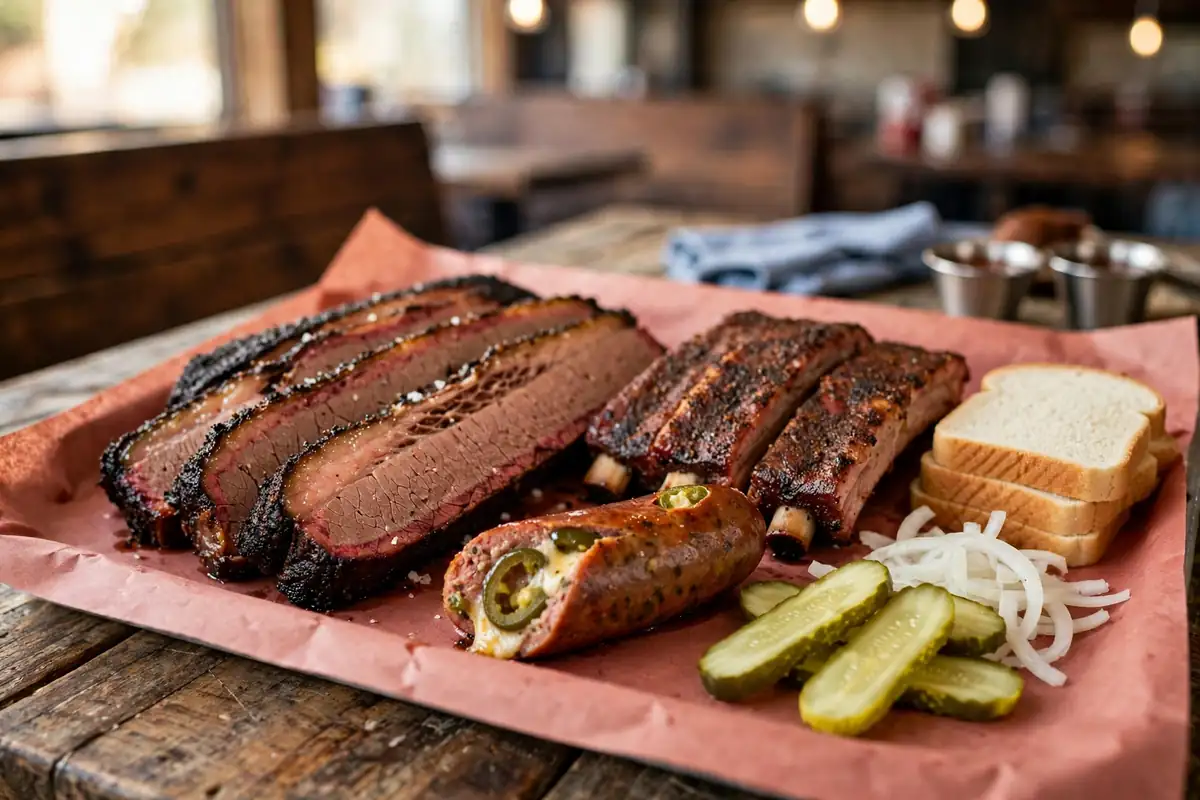
Texas barbecue is the dish that defines Fort Worth, and Fort Worth now has the best barbecue in Texas. Goldee’s Barbecue on Wikipedia is the reason: founded in 2020 by five friends from Arlington, it was named the best barbecue in Texas by Texas Monthly in 2021 and awarded one Michelin star in 2026, and its brisket — buttery, with a dark bark and a pink smoke ring — is the best in the state. The catch is the hours: Goldee’s is open Thursday to Sunday only, from 11 a.m. to 3 p.m. or until it sells out, at 4645 Dick Price Road in south Fort Worth, and the line can run three hours on a Saturday. Order the brisket, the pork ribs and the Laotian sausage, a house speciality served with a spicy-sour dipping sauce, and get there before noon. If the queue puts you off, Heim Barbecue at 5333 White Settlement Road is the same quality without the wait: open daily from 11 a.m. to 9 p.m., Friday and Saturday to 10 p.m., and famous for its bacon burnt ends. Texas barbecue on Wikipedia covers the style and its history.
Tex-Mex at Joe T. Garcia’s
Joe T. Garcia’s on Wikipedia is the restaurant Fort Worth is proudest of, and the strangest. It has operated without a printed menu since it opened in 1935, when Jovita and Joe T. Garcia began serving Mexican food out of their home on Commerce Street: you sit down, and a fixed plate of enchiladas, tacos, rice and beans arrives, with guacamole and the house margaritas. There are no choices to make, and that is the point. The restaurant at 2201 North Commerce Street, in the North Side near the Stockyards, is cash only, so bring cash — cards are not accepted. The patio, under the trees, is as much the reason to go as the food, and it fills fast on Friday and Saturday evenings and weekend lunches in spring and fall. The hours are Monday to Thursday 11 a.m. to 2:30 p.m. and 5 to 10 p.m., Friday and Saturday 11 a.m. to 11 p.m., and Sunday 11 a.m. to 10 p.m. Go for lunch on a weekday, when the wait is shortest, and order a margarita. Tex-Mex on Wikipedia covers the cuisine and its history.
Chicken-fried steak
Chicken-fried steak is the dish Texas argues about, and Fort Worth has been frying the benchmark version since 1947. Cattlemen’s Steak House, at 2458 North Main Street in the Stockyards, opened in 1947 and has served its chicken-fried steak — a tenderised steak, battered, fried crisp and covered in cream gravy — ever since. The restaurant was bought in 2023 by Taylor Sheridan, the rancher and writer behind Yellowstone, and his partners, who gave it a multimillion-dollar renovation and reopened it in August 2026 with beef from Sheridan’s Four Sixes Ranch. It opens at 11 a.m. Monday to Saturday and at noon on Sunday. The other place to try it is the Paris Coffee Shop, at 704 West Magnolia Avenue, a diner that has served the Near Southside since 1926: it closed in 2021 for a top-to-bottom renovation and reopened in 2022 with its blue-plate specials, chicken and dumplings and chicken-fried steak intact, and for the first time in its history it now serves alcohol. Paris is open daily from 7 a.m. to 3 p.m. for breakfast and lunch. Order the chicken-fried steak with mashed potatoes and cream gravy, and save room for pie. Chicken-fried steak on Wikipedia covers the dish and its history.
Free things to do in Fort Worth
Fort Worth is one of the most generous free cities in Texas, and a whole day here can cost nothing. The Stockyards cattle drive is free, twice a day, and so is walking Exchange Avenue and Mule Alley. The Fort Worth Water Gardens are free, and so are the Kimbell Art Museum’s permanent collection, the Amon Carter Museum of American Art and the Sid Richardson Museum — three world-class collections for nothing. The JFK Tribute is free, the Trinity Trails are free, and Molly the Trolley is free, so you can ride the whole downtown loop for nothing. The Bureau of Engraving and Printing tour is free, the Fort Worth Herd Experience is free on Friday to Sunday afternoons, and Sundance Square hosts free live music from 7 to 10 p.m., Wednesday to Sunday. Trinity Park is free, with its duck pond and river views, and the Foundry District’s Inspiration Alley, five acres of murals and outdoor art, is free to wander. The best free day in Fort Worth: the cattle drive at 11:30 a.m., the Kimbell and the Amon Carter in the afternoon, the Water Gardens at golden hour, and Sundance Square at dusk.
Frequently asked questions
How many days do you need in Fort Worth?
Three days is the right amount. One day covers the Stockyards and downtown; two days add the Cultural District; three days add the zoo and the Botanic Garden, or the Nature Center, at a slower pace. Two days works if you skip the zoo. One day is enough for the highlights — the cattle drive, Billy Bob’s, the Kimbell and Sundance Square — but you will be moving fast.
Is Fort Worth worth visiting?
Yes. It is the half of the Dallas–Fort Worth metroplex that most visitors skip, and the half that rewards a visit more: a working stockyards with a twice-daily cattle drive, three world-class art museums within walking distance of each other, a zoo voted the best in North America, and barbecue that won a Michelin star. It is cheaper and calmer than Dallas, and it has a character Dallas does not — Cowtown is a real place, not a slogan.
Do you need a car in Fort Worth?
Not for downtown and Sundance Square — walk, and ride the free Molly the Trolley. TEXRail runs from DFW Airport straight to downtown for $2, so you can arrive without a car at all. You will want a car or a rideshare for the zoo, the Stockyards, the Nature Center and the Bureau of Engraving and Printing, and the airport is about 30 minutes away by train. If you are staying downtown for two or three days and not going to the Nature Center or the BEP, skip the rental car and use rideshares.
Is the Stockyards free?
Yes, to walk around and to watch the cattle drive — the drive is free, twice a day, with no tickets or reservations. You pay for the things you choose: the rodeo at Cowtown Coliseum, the museums, the cover at Billy Bob’s, meals and drinks, and parking. The district itself never closes, though most shops open around 10 a.m. and close around 7 p.m.
What is the best time to visit Fort Worth?
March to May and October to November, when the weather is warm without the summer heat. April is the biggest month, with the Food + Wine Festival, the MAIN ST. Arts Festival and Mayfest. January to February brings the Stock Show & Rodeo, the city’s biggest event. Avoid the hottest weeks of July and August if you dislike heat, and remember that most museums close on Mondays.
What should I skip in Fort Worth?
Skip booking the Stockyards Hotel — it has been closed since April 2026 for a $30 million renovation and does not reopen until early 2027. Skip a Monday museum day, because the Kimbell, the Modern, the Amon Carter, the Cowgirl Museum and the science museum are all closed on Mondays. Skip a big Billy Bob’s concert night without tickets, because the line outside can run over an hour. Skip trying to fit Texas Motor Speedway into a downtown weekend — it is a separate day trip 25 miles north. And skip paying twice at the Botanic Garden: the Japanese Garden is included in general admission now, so do not buy a separate ticket for it.
Further reading
Fort Worth, Texas on Wikipedia
The Fort Worth Stockyards on Wikipedia
Billy Bob’s Texas on Wikipedia
Cowtown Coliseum on Wikipedia
The Kimbell Art Museum on Wikipedia
The Modern Art Museum of Fort Worth on Wikipedia
The Amon Carter Museum of American Art on Wikipedia
The Fort Worth Zoo on Wikipedia
The Fort Worth Botanic Garden on Wikipedia
Sundance Square on Wikipedia
Bass Performance Hall on Wikipedia
The Fort Worth Water Gardens on Wikipedia
The Fort Worth Museum of Science and History on Wikipedia
The National Cowgirl Museum and Hall of Fame on Wikipedia
The Sid Richardson Museum on Wikipedia
John F. Kennedy on Wikipedia
The Bureau of Engraving and Printing on Wikipedia
The Trinity River (Texas) on Wikipedia
Log Cabin Village on Wikipedia
The Fort Worth Nature Center and Refuge on Wikipedia
The Texas Cowboy Hall of Fame on Wikipedia
The Hotel Drover on Wikipedia
Goldee’s Barbecue on Wikipedia
Joe T. Garcia’s on Wikipedia
Texas barbecue on Wikipedia
Tex-Mex on Wikipedia
Chicken-fried steak on Wikipedia
Louis Kahn on Wikipedia
Tadao Ando on Wikipedia
Philip Johnson on Wikipedia
Frederic Remington on Wikipedia
Charles Marion Russell on Wikipedia
Georgia O’Keeffe on Wikipedia
The Chisholm Trail on Wikipedia
The Texas Longhorn on Wikipedia
The Fort Worth Stock Show and Rodeo on Wikipedia
Dickies Arena on Wikipedia
The Will Rogers Memorial Center on Wikipedia
The Fort Worth Symphony Orchestra on Wikipedia
The Texas Ballet Theater on Wikipedia
The Van Cliburn International Piano Competition on Wikipedia
The Sundance Kid on Wikipedia
Butch Cassidy on Wikipedia
Dallas/Fort Worth International Airport on Wikipedia
Michelangelo on Wikipedia
Texas Christian University on Wikipedia
Panther Island on Wikipedia
Logan’s Run (film) on Wikipedia
The cattle drive on Wikipedia
The Trinity River Audubon Center on Wikipedia
No Reddit link is included here: no live r/FortWorth thread turned up in search, so none is listed rather than linking to an unverified one.
No Quora link is included either: no live on-topic Quora thread about visiting Fort Worth turned up in search, so none is listed rather than linking to an unverified one.
Your Fort Worth trip, in one paragraph
Fort Worth is the city where the West begins — a working stockyards with the world’s only twice-daily cattle drive, three world-class art museums within walking distance of each other, a zoo voted the best in North America, and barbecue worth planning a trip around. Start with the islands and the coasts: our Hawaii guide covers the whole state, our Maui guide covers the Valley Isle, and our Honolulu guide covers the capital city. Then the American cities, in the order we wrote them: our Chicago guide, our Nashville guide, our Los Angeles guide, our Orlando guide, our Miami guide, our San Diego guide, our Denver guide, our Savannah guide, our Dallas guide, our Charleston guide, our San Francisco guide, our Myrtle Beach guide, our Las Vegas guide and our San Antonio guide. Further afield: our London guide, our Portland guide, our Pigeon Forge guide, our Puerto Rico guide, our Atlanta guide, our Phoenix guide, our Paris guide, our Key West guide, our Colorado Springs guide, our Sedona guide, our Chattanooga guide, our Palm Springs guide, our St Louis guide, our Tokyo guide and our Japan guide. Then the middle of the map: our Kansas City guide, our Tennessee guide, our Branson guide, our Florida guide, our Amsterdam guide, our Montreal guide, our Fort Lauderdale guide, our Toronto guide, our Aruba guide, our Charlotte guide, our Indianapolis guide, our New Orleans guide, our Destin guide, our Santa Barbara guide, our Mexico City guide, our Arizona guide, our Osaka guide, our Minneapolis guide, our Pittsburgh guide, our California guide, our Asheville guide, our Costa Rica guide, our Washington DC guide and our Seattle guide. And the most recent: our St Augustine guide, our Lisbon guide, our Dubai guide, our Santa Fe guide, our Galveston guide, our Maine guide, our Sacramento guide, our Kauai guide, our Boston guide, our Cancun guide, our Madrid guide, our Salt Lake City guide, our Baltimore guide, our Barcelona guide, our Reno guide, our Milwaukee guide, our North Carolina guide, our New York guide, our Tucson guide, our Raleigh guide, our Corpus Christi guide, our Milan guide, our Salem guide, our Wilmington guide, our Memphis guide, our Flagstaff guide, our Austin guide, our Oahu guide and our Iceland guide, and our Cincinnati guide.

About the Author