
Things to Do in Austin
20 Best Attractions, a 3-Day Itinerary, Where to Stay, and the Food You Cannot Miss
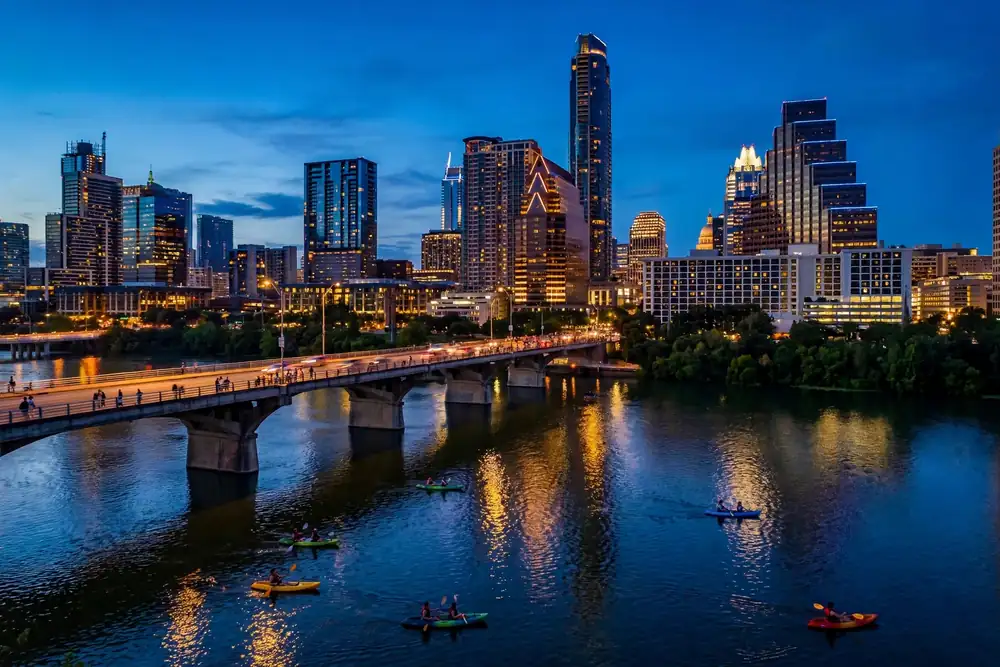
Quick Info
Best for: First-timers, music lovers, barbecue pilgrims, swimmers, families and food lovers — a capital city where the pink-granite Capitol, the spring-fed pools, the bats and the live music are all within a few miles
Best time: March to May and October to November for the weather; October for the bats’ last flights and the ACL festival; March for SXSW and the wildflowers
How long: 1 day for downtown, the Capitol and Barton Springs; 2 days with South Congress, the museums and the Greenbelt; 3 days with the swimming holes and the Hill Country
Budget: About $150–$250 per person per day mid-range — the museums are $15–$22, Franklin Barbecue is $35–$50 a person, and the Capitol, the bats and Mount Bonnell are free
Don’t miss: The Texas State Capitol, Barton Springs Pool, the Congress Avenue Bridge bats at dusk, South Congress Avenue, and Franklin Barbecue
Austin, Texas on Wikipedia is the Texas almost nobody expects — a liberal capital city of about a million people on the edge of the Hill Country, with a pink-granite Capitol taller than the one in Washington, a spring-fed pool in the middle of town, 1.5 million bats under a downtown bridge, and more live music venues per person than anywhere else in America. It is the city of three ideas that most visitors only partly see: the capital city, with the Capitol, the Bullock Museum and the LBJ Library; the water city, with Barton Springs, Lady Bird Lake, the Greenbelt and the swimming holes; and the music city, with Sixth Street, the Continental Club, ACL Live and a festival calendar that never really stops. This guide covers the 20 best things to do in Austin, Texas, a 3-day itinerary that actually works, where to stay without paying downtown prices for a room you only sleep in, how to get around without a car downtown and with one everywhere else, the three foods you should not skip, and the free sights that cost nothing. Everything below was checked against live sources in November 2026 — including the Barton Springs Thursday closure, the bats that leave for Mexico in November, the Paramount Theatre that closed in June 2026, the Hamilton Pool swimming ban, and the Bullock Museum price that older guides still list at $13 or $17.
Austin at a glance
| Topic | What to know |
| Full name | Austin, Texas — the capital of Texas, in Travis County, on the Colorado River where the flat prairie meets the Hill Country |
| Founded | Founded in 1839 as the capital of the Republic of Texas, named for Stephen F. Austin; the Capitol was completed in 1888 |
| Population | About 1 million people in the city, about 2.5 million in the metro area, plus about 50,000 students at the University of Texas at Austin |
| Elevation | About 490 feet above sea level — low, hot and humid in summer, with the Hill Country rising to the west |
| Distance from San Antonio | About 80 miles north — about 1.5 hours by car on I-35; Dallas is about 200 miles north, Houston about 165 miles east |
| Best base | Downtown and South Congress for first-timers; East Austin for the food and the music; Zilker and South Lamar for the parks |
| Getting around | On foot downtown, the CapMetro bus, rideshare, and a car for the swimming holes, the parks and the Hill Country |
| Famous for | Live music, Texas barbecue, breakfast tacos, spring-fed swimming holes, the Congress Avenue Bridge bats, and the “Keep Austin Weird” spirit |
Austin divides into three ideas that most visitors only partly see. The capital city is the one that made it the seat of Texas government: the pink-granite Capitol at the top of Congress Avenue, the Bullock Museum across the street, and the LBJ Library on the university campus, with the free tours and the free Sundays that make the history cheap to see. The water city is the one that surprises people: the spring-fed pool that stays 68 degrees all year, the lake you can paddle under the skyline, the Greenbelt swimming holes, and the Hill Country pools that need a reservation and a cash entry fee. The music city is the one you hear after dark: the Sixth Street bars, the honky-tonks, the ACL tapings and the festivals, in a city that calls itself the Live Music Capital of the World and has the venues to prove it. The trap is the heat and the distances, and this is where our guide beats the older ones: Austin is hot from May to September, the sights that look close on the map — the swimming holes, the parks, the Hill Country — are each a drive, not a walk, and the famous experiences have catches the older guides skip, from the Thursday pool closure to the bats that leave in November and the theatre that closed in June 2026, so plan by day, check the hours before you go, and do not trust a guide that still lists the old Bullock price, the open Paramount or the November bats. For the wider Texas trip, our San Antonio guide covers the River Walk and the Alamo 80 miles south, our Dallas guide covers the city 200 miles north, and our Galveston guide covers the Gulf Coast three hours south-east.
The 20 best things to do in Austin
1. Texas State Capitol
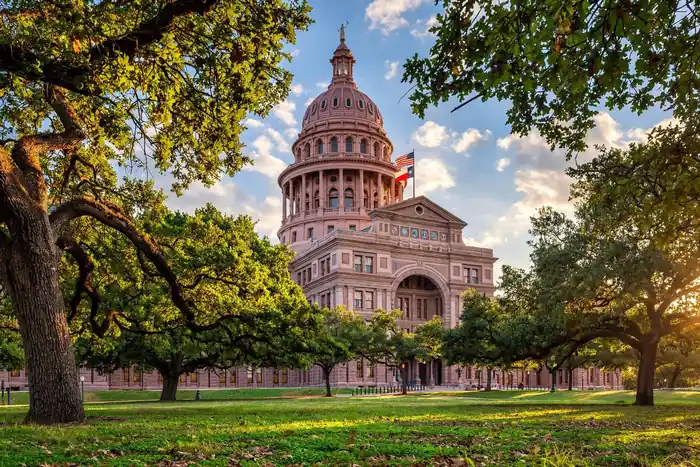
The Texas State Capitol is the sight that defines Austin — and the best free thing in the city. The building at 1100 Congress Avenue, completed in 1888 from pink Texas granite, is famously a little taller than the United States Capitol in Washington, and it is free to enter, with free guided tours every day, which is what makes it different from a museum: the legislature still meets here, so the rotunda, the Senate and House chambers and the portraits of every Texas governor are a working government, not a display. The free 30-to-40-minute guided tours leave from the South Foyer every 15 to 30 minutes, Monday to Saturday from 9 a.m. to 4:15 p.m. and Sunday from noon to 4:15 p.m., and the building is open for self-guided visits Monday to Friday from 7 a.m. to 8 p.m. and Saturday and Sunday from 9 a.m. to 8 p.m., with security screening at the doors and the grounds open daily. The trap is the session and the holidays, and this is where our guide beats the older ones: the Texas Legislature meets in regular session in odd-numbered years from January to late May, so the next session opens in January 2027 and the building is at its busiest and most alive then, while in the quiet months the chambers are empty — and the Capitol is closed on Easter Sunday, Thanksgiving, Christmas Eve, Christmas Day and New Year’s Day, so do not plan a holiday visit. Two practical notes: the Capitol Visitors Parking Garage at 1201 San Jacinto Boulevard gives two hours free, and the grounds, with their 22 acres of monuments and old oak trees, are worth the walk even if you skip the tour. Allow two hours, and go in the morning, when the tours are quietest and the light is on the pink granite. The Texas State Capitol on Wikipedia covers the building and its history.
2. Barton Springs Pool
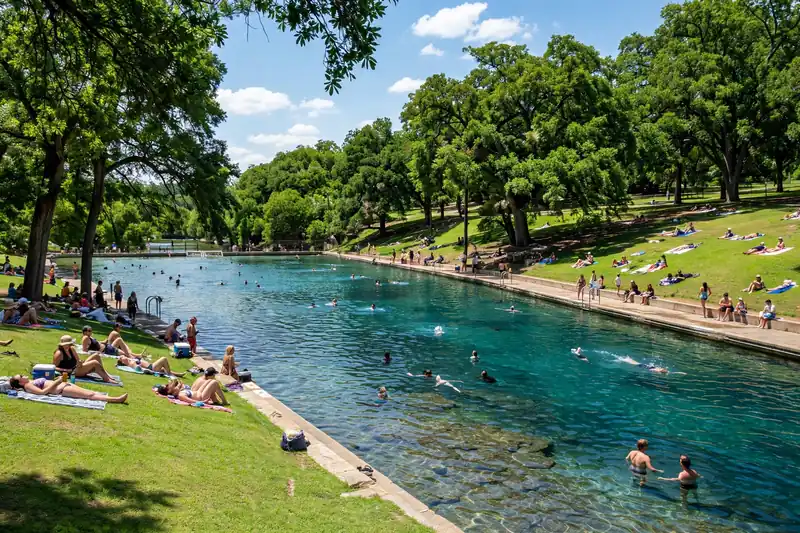
Barton Springs Pool is the swim that defines Austin — and the one every local will send you to first. The three-acre, spring-fed pool in Zilker Park at 2201 William Barton Drive is fed by the Edwards Aquifer and stays 68 to 70 degrees all year round, which is why it is the escape from the Texas heat: a thousand feet long, up to 18 feet deep, with a diving board, a grassy hillside for sunbathing, and the free “Barking Springs” side below the dam where dogs are allowed. The pool is open daily from 5 a.m. to 10 p.m., with guarded swimming from 8 a.m. to 10 p.m. and a swim-at-your-own-risk window from 5 to 8 a.m., and admission is charged only from Austin ISD Spring Break through the end of October: $5 for resident adults and $9 for non-residents, $2 or $4 for children aged 1 to 11, $3 or $5 for juniors aged 12 to 17, and $2 or $5 for seniors aged 62 and over, with infants under one and honorably discharged veterans free — and in the winter months the gate is simply open and free. The trap is the Thursday and the fee season, and this is where our guide beats the older ones: the pool closes every Thursday from 9 a.m. to 7 p.m. for its weekly cleaning, with only the 5 to 9 a.m. early swim before it, so a Thursday plan is a wasted trip — and the fee is charged only from spring break to the end of October, so a November visit is free while the older guides still quote $9. Two practical notes: heavy rain can close the pool outright — creek flooding shut it in June 2026 — so check the city’s park closures page before a special trip, and the bathhouse was partly reopened in late October 2025, with cash entry currently at the Zilker Cafe building. Allow two hours, and go at sunrise or after 7 p.m., when the crowds are gone and the water is at its best. Barton Springs Pool on Wikipedia covers the pool and the springs, and Barton Springs on Wikipedia covers the springs themselves.
3. Congress Avenue Bridge bats
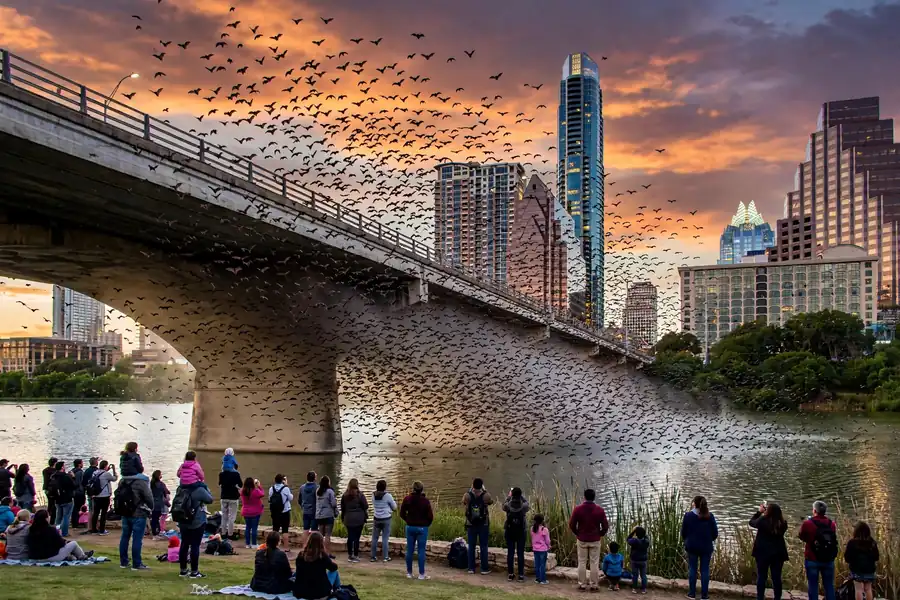
The Congress Avenue Bridge bats are the evening that defines Austin — and the most famous wildlife show in any American city. The Ann W. Richards Congress Avenue Bridge over Lady Bird Lake is home to North America’s largest urban bat colony, about 1.5 million Mexican free-tailed bats, which emerge at dusk in a thick black cloud to feed on moths and beetles, and the show is free to watch from the bridge, the Statesman Bat Observation Center lawn on the south bank, or a sunset kayak or boat cruise on the lake. The bats are in residence from about mid-March to early November, with the biggest flights in late summer, when the year’s pups join the colony, and the prime windows are late March to early May and late July to mid-September, with the emergence happening 15 to 45 minutes after sunset depending on the evening temperature. The trap is the season, and this is where our guide beats the older ones: most of the colony leaves for Mexico in early November, and anything past mid-November is a gamble, so a winter trip built around the bats will find an empty bridge — and the bats do not keep a predictable schedule, emerging after dark in cool or humid weather and sometimes not at all on weekends or federal holidays, so check the Austin Bat Refuge emergence forecast before you go. Two practical notes: the best view is from the bridge itself near the middle or south end looking east, or from the water on a bat cruise, and the bridge was rebuilt in 1980 with narrow crevices underneath that accidentally created the perfect bat maternity ward, which is why the colony is all females and their pups. Allow one evening, and go in August or September, when the pups are flying and the emergence is at its biggest. The Congress Avenue Bridge on Wikipedia covers the bridge and the colony.
4. Lady Bird Lake — paddle the skyline
Lady Bird Lake is the paddle that defines Austin — and the best way to see the skyline. The 416-acre reservoir on the Colorado River runs right through downtown, and it is a no-motorboat lake, so the water is calm and the only traffic is kayaks, paddleboards, canoes and rowing shells, with the downtown towers reflecting in the water and the Ann and Roy Butler Hike-and-Bike Trail looping 10 miles around the shore. Rent from the Rowing Dock on the south shore near Zilker Park, at about $22 an hour for a single kayak and $28 for a tandem, or the Texas Rowing Center on the north shore at Lake Austin Boulevard, at about $25 an hour for a single and $30 for a tandem, with life jackets included and required, and paddleboards at about the same price — and the boardwalk on the south shore is the walk to take if you would rather stay dry. The trap is the swimming and the sun, and this is where our guide beats the older ones: swimming in Lady Bird Lake is prohibited by city code, so do not plan to jump in after the paddle, and the Texas sun is fierce on the water even when the air feels mild, so take water, sunscreen and a hat, and go early, when the light is on the skyline and the rental docks are quiet. Two practical notes: the lake is at its best at sunrise, when the water is glass and the bats’ bridge is behind you, and the 10-mile Butler Trail is the free alternative, with the boardwalk stretch the most photographed mile in the city. Allow two hours on the water, and go in the morning, before the heat and the weekend crowds. Lady Bird Lake on Wikipedia covers the lake, the Ann and Roy Butler Hike-and-Bike Trail on Wikipedia covers the trail, and the Colorado River (Texas) on Wikipedia covers the river.
5. South Congress Avenue
South Congress Avenue is the walk that defines Austin — and the one that most visitors photograph. SoCo, the stretch of Congress Avenue south of Lady Bird Lake, is the city’s most famous street: vintage shops, food trucks, taco stands, bookshops, boots, murals and live music, with the Jo’s Coffee “I love you so much” mural the most photographed wall in Texas and the Hotel San José courtyard the quiet place to sit with a coffee. Start at the bridge and walk south past the shops and the food trucks, stop for a taco, and keep going to the Continental Club, the legendary music room that has hosted Austin acts since 1955, and the old motels and neon signs that make the street feel like the Austin of the postcards. The trap is the parking and the weekend, and this is where our guide beats the older ones: South Congress is a car street with tight parking and weekend crowds, so park once and walk, or take the bus down Congress Avenue, and do not try to drive the strip looking for a space at noon on a Saturday. Two practical notes: the street is at its best in the late afternoon, when the light is on the murals and the patios fill up, and the “I love you so much” mural has a line for photos on weekends, so go early if you want the shot without the queue. Allow two hours, and go on foot, in the morning for the shops and in the evening for the music. South Congress on Wikipedia covers the district.
6. Mount Bonnell
Mount Bonnell is the sunset that defines Austin — and the cheapest view in the city. The limestone overlook in Covert Park at 3800 Mount Bonnell Road, about 15 minutes north-west of downtown, rises about 780 feet above sea level, and the climb is 102 uneven stone steps to a pavilion and a picnic area with the panorama of Lake Austin, the Colorado River and the downtown skyline in the distance, free to enter and free to park, open daily from 5 a.m. to 10 p.m. Mount Bonnell has been Austin’s favourite sunset perch since the 1850s, was designated a Recorded Texas Historic Landmark in 1969, and is the place for proposals, picnics and the first evening of a trip. The trap is the top and the car, and this is where our guide beats the older ones: there are no restrooms and no drinking water at the top, so bring your own, and the car park is known for break-ins, so do not leave valuables in the car — and the steps are uneven handmade stone, so wear proper shoes and do not plan it for a wheelchair or a stroller. Two practical notes: the sunset is the show, so arrive 45 minutes early to claim a spot, and the 0.4-mile loop at the top is the walk to take after the climb, with the views both ways. Allow one hour, and go at sunset, when the light drops over the water and the city comes on. Mount Bonnell on Wikipedia covers the overlook and its history.
7. Zilker Park
Zilker Park is the backyard that defines Austin — and the park the whole city shares. The 351-acre park on Barton Springs Road is the city’s central green: Barton Springs Pool, the Zilker Botanical Garden, the Austin Nature and Science Center, the Hillside Theater with its free summer plays, and the fields where the Austin City Limits Music Festival takes over two October weekends and the Trail of Lights turns the park into a holiday display every December. The park is free to enter, with parking at $3 an hour on weekends and holidays from spring break through Labor Day, and the Botanical Garden is the quiet corner, with its Japanese garden, rose garden and cactus garden, while the Nature and Science Center is the free hands-on stop for children. The trap is the festival calendar, and this is where our guide beats the older ones: the park is not the same park during ACL — the festival fences off much of it for two October weekends and the weeks around them — so check the calendar before you plan a quiet picnic, and the Trail of Lights needs a timed ticket in December, so do not just turn up. Two practical notes: the park is the hub for the Butler Trail and the Barton Creek Greenbelt, so pair it with a walk or a paddle, and the Zilker Zephyr miniature train is the ride for children. Allow two hours, and go in the morning, when the light is soft and the festival crowds are gone. Zilker Park on Wikipedia covers the park, and the Zilker Botanical Garden on Wikipedia covers the garden.
8. Franklin Barbecue
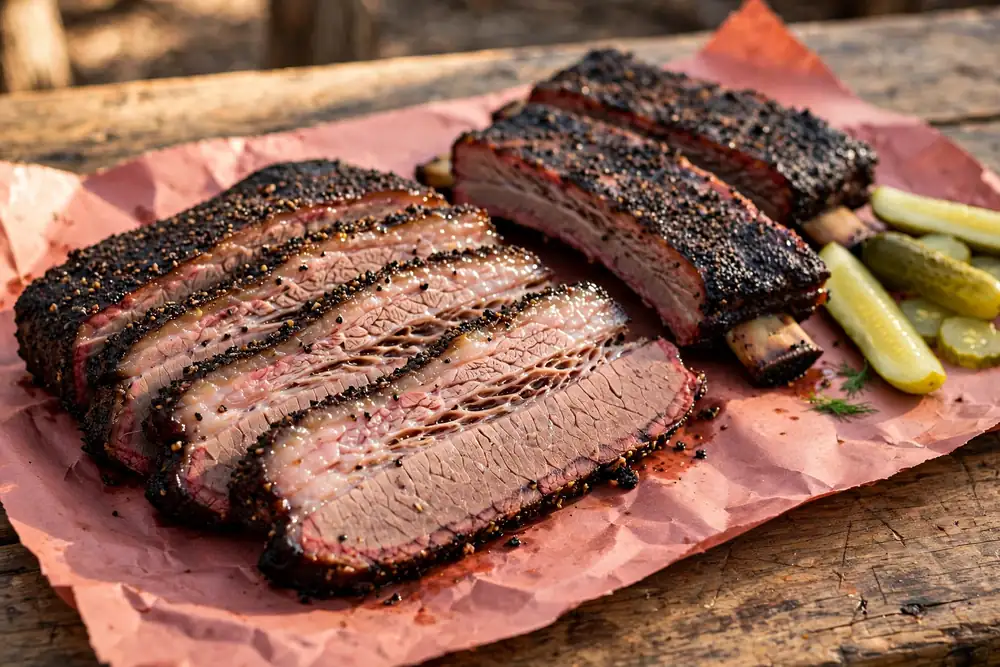
Franklin Barbecue is the brisket that defines Austin — and the most famous barbecue line in America. The restaurant at 900 East 11th Street, run by Aaron Franklin, is the place Texas Monthly once called the best barbecue in the known universe, and the brisket, cooked 12 to 18 hours over post oak with a peppery black bark, is the benchmark every other pit in town is measured against, with the beef ribs on Friday to Sunday the other thing to order. The restaurant is open Tuesday to Sunday from 11 a.m. until sold out, usually around 2 or 3 p.m., and it is closed on Mondays, and the walk-up line runs two to five hours — three to four on weekdays, four to six on weekends — with the line starting before 8 a.m. and the brisket often the first thing to sell out. Brisket runs about $34 a pound and ribs about $30 a pound, so plan on $35 to $50 a person for a generous meal, and the online pre-order, for 5 to 30 pounds of meat booked 2 to 56 days ahead with pickup from 10:30 a.m. to 2 p.m., is the way most locals skip the line now. The trap is the line and the holidays, and this is where our guide beats the older ones: the line is not a rumour and the meat does sell out, so arriving at noon means a long wait and possibly no brisket — and the restaurant is closed on November 26 and 27 and December 25 to 28, 2026, and open on New Year’s Eve and New Year’s Day, so check the holiday calendar before a festive trip. Two practical notes: bring a chair or borrow one of theirs and treat the wait like a tailgate, and if the line is too much, Terry Black’s Barbecue and La Barbecue are the shorter-wait alternatives with the same Texas style. Allow a full morning, and go on a weekday, arriving by 8 or 9 a.m., when the line is shortest. Franklin Barbecue on Wikipedia covers the restaurant, and Texas barbecue on Wikipedia covers the style.
9. Blanton Museum of Art
The Blanton Museum of Art is the museum that defines Austin — and the one to visit on a Tuesday. The museum at 200 East Martin Luther King Jr. Boulevard, on the University of Texas campus, is one of the largest university art museums in America, with more than 22,000 works spanning Italian Renaissance and Baroque paintings, modern and contemporary American art, and one of the strongest Latin American collections in the country, plus the freestanding stone building “Austin” by Ellsworth Kelly, a chapel of coloured glass that is the most photographed room in the city. The museum is open Tuesday to Friday and Sunday from 10 a.m. to 5 p.m. and Saturday from 10 a.m. to 8 p.m., closed on Mondays, and admission is $15 for adults, $12 for seniors aged 65 and over, $8 for young people aged 6 to 17 and non-UT college students, and free for children aged 5 and under, UT ID holders and K–12 teachers — and every Tuesday is free for everyone, courtesy of the Moody Family Free Day Endowment. The trap is the Monday and the café, and this is where our guide beats the older ones: the museum is closed every Monday, so a Monday plan is a wasted trip, and the new café in partnership with Justine’s Brasserie was still under construction in 2026 with an opening planned for late in the year, so do not count on it yet — and the exhibition “The European Avant-Garde: From Impressionism to Cubism” runs from September 27, 2026 to August 5, 2029, which is the reason to go now. Two practical notes: the Ellsworth Kelly “Austin” is included in the ticket, including on free Tuesdays, and the museum is a two-hour visit, so pair it with the Bullock Museum across the street. Allow two hours, and go on a Tuesday, when the admission is free and the galleries are quietest. The Blanton Museum of Art on Wikipedia covers the museum.
10. Bullock Texas State History Museum
The Bullock Texas State History Museum is the museum that tells the whole Texas story — and the one most visitors underrate. The museum at 1800 North Congress Avenue, across the street from the Capitol, takes three floors of galleries from the 17th-century La Belle shipwreck through Indigenous cultures, Mexican independence, the Republic and the modern state, with the hull of La Belle itself the centrepiece, plus the IMAX theatre and the Texas Spirit Theater for films and shows. The museum is open daily from 10 a.m. to 5 p.m., and admission is $22 for adults, $18 for seniors and $16 for young people, free for children aged 5 and under, with the IMAX documentary films at $10, $9 and $8, and exhibition admission free on the first Sunday of every month for H-E-B Free First Sunday and every year on the second Sunday in July for Bob Bullock’s birthday. The trap is the price, and this is where our guide beats the older ones: older guides still list the Bullock at $13 or $17, and the official price is now $22 for adults, so budget for it — and the museum is closed on Thanksgiving, Christmas Day, New Year’s Day and Easter, so do not plan a holiday visit. Two practical notes: the museum takes about one to two hours to explore, and it is busiest on weekend afternoons, so go in the morning, and pair it with the Capitol across the street for the full history day. Allow two hours, and go on the first Sunday of the month, when the exhibition admission is free. The Bullock Texas State History Museum on Wikipedia covers the museum.
11. LBJ Presidential Library
The LBJ Presidential Library is the library that explains modern America — and the one that changed most in 2026. The library at 2313 Red River Street, on the University of Texas campus, is the presidential library and museum of Lyndon Baines Johnson, the 36th President, with the Oval Office replica, the civil rights archives, the Vietnam War exhibits and the 10-storey great hall of documents, and after a months-long renovation the permanent exhibit reopened on March 7, 2026 with a new multi-million-dollar presentation. The library is open daily from 9 a.m. to 5 p.m., with the last admission at 4 p.m., and admission is $16 for adults, $12 for seniors aged 62 and over, $6 for young people aged 13 to 18 and college students, and free for children under 12, with half price every Tuesday, free admission for anyone named Lyndon or Claudia, and free parking in visitor lot 38. The trap is the Tuesday and the holidays, and this is where our guide beats the older ones: the Tuesday half-price day is the cheapest way in, and the free-admission days — including Martin Luther King Jr. Day, Memorial Day, Juneteenth, July 4th and Veterans Day — are the days to plan around, while the library is closed on Thanksgiving, Christmas Day and New Year’s Day. Two practical notes: the library takes one to two hours, and the current temporary exhibition runs through January 10, 2027, so check what is on before you go. Allow two hours, and go on a Tuesday, when the admission is half price. The LBJ Presidential Library on Wikipedia covers the library.
12. Sixth Street and the live music
Sixth Street is the night that defines Austin — and the reason the city calls itself the Live Music Capital of the World. The entertainment district runs from Congress Avenue east, with the bars, clubs and music rooms that have made Austin famous, and the city has more than 250 live music venues, with a band playing somewhere every night of the week. Start on Dirty Sixth for the neon and the crowds, then go east for the grittier rooms, and end at the Continental Club on South Congress, the legendary venue that has hosted Austin acts since 1955, or at ACL Live at the Moody Theater, the home of the Austin City Limits television show, the longest-running music TV show in America. The trap is the weekend and the noise, and this is where our guide beats the older ones: Sixth Street is at its most crowded and its least local on Friday and Saturday nights, so go on a weeknight for the music and the locals, and the venues are loud and late, so plan the morning after accordingly — and the Broken Spoke, the honky-tonk dance hall since 1964, is the place for two-stepping, while Ginny’s Little Longhorn hosts Chicken Shit Bingo on Sundays, the weirdest afternoon in town. Two practical notes: check the Austin Chronicle listings or the venue sites before you go, because the line-ups change nightly, and the free shows are everywhere — the hotel courtyards, the bars and the patios all have music with no cover. Allow one evening, and go on a Thursday, when the rooms are full and the crowds are still local. Austin City Limits on Wikipedia covers the television show, and the Austin City Limits Music Festival on Wikipedia covers the festival.
13. Barton Creek Greenbelt
The Barton Creek Greenbelt is the trail that defines Austin — and the city’s urban oasis. The Greenbelt runs more than 12 miles from Zilker Park to MoPac along Barton Creek, with limestone cliffs, swimming holes at Campbell’s Hole, Gus Fruh and Twin Falls, and the trails for hiking, mountain biking and rock climbing, all free to enter and all within minutes of downtown. The water is the point: after rain the creek runs and the swimming holes fill, and in a dry summer the creek can be low or dry, so the Greenbelt is a different place in July than in March, and the locals check the creek levels before they go. The trap is the water and the heat, and this is where our guide beats the older ones: the swimming holes are not guaranteed, and the creek can be dry in late summer, so do not plan a swim without checking the current conditions — and the afternoon thunderstorms in the monsoon season, from July to September, are dangerous in the canyon, so hike in the morning and check the forecast. Two practical notes: the Sculpture Falls access is the most popular entry, so go early on weekends, and the trail is dog-friendly on a leash, so it is the walk to take with a dog. Allow two to four hours, and go in the morning, with water, layers and a weather check. The Barton Creek Greenbelt on Wikipedia covers the trail, and Barton Creek on Wikipedia covers the creek.
14. Hamilton Pool Preserve
Hamilton Pool Preserve is the swimming hole that defines the Hill Country — and the most logistics-heavy sight in this guide. The preserve at 24300 Hamilton Pool Road, near Dripping Springs about 23 miles west of Austin, is a collapsed grotto with a 50-foot waterfall spilling into an emerald-green pool, and it is the most photographed natural swimming hole in Texas, which is why it runs on timed reservations and not on walk-ups. Every visit needs a reservation, booked online before leaving home, at $12 per vehicle for up to eight people, plus an entry fee in cash at the gate of $8 for adults and $3 for seniors aged 62 and over, with children aged 12 and under free, and two daily windows: 9 a.m. to 12:30 p.m. and 2 to 5:30 p.m., with everyone out by the end of the slot. The trap is the swimming, and this is where our guide beats the older ones: a reservation is not a swim permit — swimming is often closed for high bacteria or low water, and as of November 2026 the water was not open for swimming at all after recent rain, with the earliest date swimming might be allowed November 14, and the trail underneath the overhanging cliff is closed — so check the county’s recorded information line at (512) 854-2581, updated by 8:30 a.m. daily, before you drive out, and do not expect to swim. Two practical notes: the preserve closed the water from about May to late June 2026 for high bacteria, and again after rain in September and early October 2026, so the closure is the normal state of things, not the exception, and the quarter-mile hike to the pool is over rough terrain. Allow half a day with the drive, and go in the morning slot, when the light is in the grotto. Hamilton Pool Preserve on Wikipedia covers the preserve.
15. McKinney Falls State Park
McKinney Falls State Park is the waterfall that defines Austin — and the easiest escape from the city. The park at 5808 McKinney Falls Parkway, about 20 minutes south-east of downtown, protects 744 acres of limestone ledges, pecan groves and spring-fed water on Onion Creek, with the Upper Falls and the Lower Falls, nearly nine miles of hiking and biking trails, the 500-year-old bald cypress known as Old Baldy, and 81 electric campsites. The park is open daily from 8 a.m. to 10 p.m., with the office open from 8 a.m. to 4:15 p.m., and admission is $6 per person aged 13 and over, with children aged 12 and under free, and the Texas State Parks Pass covers entry. The trap is the capacity and the water, and this is where our guide beats the older ones: the park frequently reaches day-use capacity on weekends, school breaks and holidays and closes to walk-ins, so reserve a day pass online before you go — and swimming in the Lower Falls was not recommended in summer 2026 due to water conditions, so check the park’s alerts page before you plan a swim, and the burn ban since August 11, 2026 prohibits wood fires, though charcoal and propane are allowed. Two practical notes: the trails across Onion Creek can be blocked when the creek is high after rain, so check the conditions, and the park is free on Texas State Parks Day, November 1, 2026. Allow half a day, and go on a weekday, when the day passes do not sell out and the falls are quiet. McKinney Falls State Park on Wikipedia covers the park, and Onion Creek on Wikipedia covers the creek.
16. Deep Eddy Pool
Deep Eddy Pool is the pool that defines old Austin — and the oldest swimming pool in Texas. The pool at 401 Deep Eddy Avenue, on the north bank of Lady Bird Lake, began as a swimming hole in the Colorado River, became a resort in the 1920s, and opened as a public park in July 1936, with the Depression-era bathhouse built by the Works Progress Administration and the 600,000-gallon pool divided into a lap section and a wading section, filled every other day with fresh well water and never chlorinated. The water is spring-fed and stays about 68 to 70 degrees, and the pool runs a seasonal schedule from March 14 to October 31, with lap swimming from 8 a.m. and recreational swimming from 10 a.m. to 8 p.m., and admission at about $5 for resident adults, $3 for young people aged 12 to 17, $2 for children aged 1 to 11 and seniors aged 65 and over, with veterans and children under one free, and non-residents paying a little more. The trap is the Tuesday and the season, and this is where our guide beats the older ones: beginning April 21, 2026, Deep Eddy is closed every Tuesday for cleaning and maintenance, so a Tuesday plan is a wasted trip — and the pool is a seasonal pool, so the winter hours are shorter and the recreational side is the summer side, so check the city’s schedule before you go. Two practical notes: the pool was closed June 22 to 28, 2026 for valve repairs, so the city does shut it for maintenance, and the mosaic mural on the ramp, 1,200 square feet of handmade tiles telling the pool’s history, is worth the look on the way in. Allow two hours, and go in the morning, when the lap lanes are quiet and the water is freshest. Deep Eddy Pool on Wikipedia covers the pool and its history.
17. Rainey Street
Rainey Street is the night that defines new Austin — and the strangest street in the city. The historic district of small houses and bungalows south of Lady Bird Lake has become the city’s bar district, with the old houses turned into bars and food trucks, the string lights, the patios and the crowds, and the food truck parks that make it the place to eat after dark. Start at the bridge end and walk the street, stop for a taco from a truck, and end at the bars that spill onto the lawns, with the downtown skyline behind you and the music from three patios at once. The trap is the weekend and the change, and this is where our guide beats the older ones: Rainey Street is at its most crowded on Friday and Saturday nights, when the street is a party and the bars are full, so go on a weeknight for the patios and the locals — and the street is changing fast, with the old houses giving way to towers, so the Rainey Street of the postcards is the one to see now, while it is still there. Two practical notes: the street is a short walk from downtown across the lake, so do not drive it, and the food trucks are the dinner, so eat before you drink. Allow one evening, and go on a Thursday, when the patios are full and the crowds are still local.
18. Mayfield Park and Nature Preserve
Mayfield Park and Nature Preserve is the garden that defines quiet Austin — and the place with the peacocks. The park at 3505 West 35th Street, in West Austin, is a historic cottage and garden on 23 acres, with the peacocks that roam the grounds free, the ponds, the trails and the wildflower meadows, and the 1870s Mayfield-Gutsch cottage that is the centrepiece. The park is free to enter, open daily, and the peacocks are the reason most visitors come — the males display their tails in the spring, and the birds are everywhere, on the lawns, in the trees and on the cottage roof. The trap is the peacocks and the cottage, and this is where our guide beats the older ones: the peacocks are wild animals and they are not always on display, so do not plan the whole visit around a photo of a fanned tail — and the cottage is open only for events and tours, so check the calendar before you plan to go inside. Two practical notes: the park is the quiet morning to pair with Mount Bonnell, which is a short drive away, and the trails connect to the nature preserve, so take the walk into the woods for the wildflowers. Allow one hour, and go in the morning, when the peacocks are out and the light is in the garden. Mayfield Park on Wikipedia covers the park.
19. Umlauf Sculpture Garden
The Umlauf Sculpture Garden is the garden that defines Austin’s art — and the quietest museum in the city. The garden at 605 Azie Morton Road, next to Zilker Park and Barton Springs Pool, is dedicated to the work of 20th-century American sculptor Charles Umlauf, with more than 40 sculptures in six acres of gardens, plus rotating exhibitions of contemporary artists in the gallery, and the museum celebrated its 35th anniversary in 2026. The garden is open Tuesday to Friday from 10 a.m. to 4 p.m. and Saturday and Sunday from 11 a.m. to 4 p.m., closed on Mondays, and admission is $8 for adults, $6 for seniors aged 60 and over, $4 for active military, veterans, K–12 teachers and college students, $2 for young people in K–12, and free for children under 5, with free admission for families presenting an EBT card. The trap is the Monday and the hours, and this is where our guide beats the older ones: the garden is closed every Monday, and the weekend hours start later than the weekday hours, so do not plan a 10 a.m. Saturday visit — and the garden is closed on Independence Day, Thanksgiving, the day after Thanksgiving and December 24 and 25, so check the calendar before a holiday visit. Two practical notes: the garden is the quiet hour to pair with Barton Springs Pool, which is next door, and the children’s activities and workshops are the reason to bring a family. Allow one hour, and go in the morning, when the light is in the garden and the sculptures are at their best. The Umlauf Sculpture Garden and Museum on Wikipedia covers the garden.
20. Cathedral of Junk
The Cathedral of Junk is the weird that defines Austin — and the most Austin sight in this guide. The structure at 4422 Lareina Drive, in a South Austin backyard, is a three-storey maze of license plates, bicycles, car parts, signs, toys, hubcaps and tens of thousands of pounds of discarded objects, built by artist Vince Hannemann since 1988 and still growing, and it is the “Keep Austin Weird” motto made into a building. There are no set hours and no tickets: visits are by appointment only, arranged by phone with Vince directly at (512) 299-7413, and entry is free with a suggested donation of $5 for adults and $10 for groups, in cash or by Venmo, because the city would treat it as a formal business if it charged admission. The trap is the appointment, and this is where our guide beats the older ones: you cannot just show up — the Cathedral is on private residential property, Vince is not always available, and the property has been closed for stretches, so call ahead, and call the morning of your visit for the best luck with a same-day slot, and do not plan it for a Sunday, when it is often closed. Two practical notes: the visit takes about 30 to 45 minutes, and the structure is a maze of stairs and narrow passages, so wear proper shoes and do not bring a stroller. Allow one hour, and go on a weekday morning, when Vince is most likely to be there. The Cathedral of Junk on Wikipedia covers the structure.
Austin in 3 days — a ready-made itinerary
Day 1 — Downtown, the Capitol and the bats
Start the morning at the Texas State Capitol, with the free guided tour from the South Foyer, then walk across the street to the Bullock Texas State History Museum for the Texas story, and have lunch on Congress Avenue. Spend the afternoon at the Blanton Museum of Art on the university campus, with the Ellsworth Kelly “Austin” as the highlight, then walk the Butler Trail along Lady Bird Lake for the skyline views. In the evening, eat on South Congress Avenue, walk the shops and the murals, and finish at the Congress Avenue Bridge, where the bats emerge at dusk — check the emergence forecast first, because the bats do not keep a predictable schedule, and in winter they are gone.
Day 2 — The water and the parks
Start early at Barton Springs Pool, when the water is at its best and the crowds are gone, then walk Zilker Park and the Botanical Garden, and rent a kayak on Lady Bird Lake from the Rowing Dock for the skyline paddle. Spend the afternoon at the Barton Creek Greenbelt, with the swimming holes at Campbell’s Hole and Gus Fruh if the creek is running, then climb Mount Bonnell for the sunset over Lake Austin. In the evening, eat barbecue — Franklin Barbecue if you lined up in the morning, or Terry Black’s if you did not — and finish on Sixth Street, where the live music runs every night of the week.
Day 3 — The Hill Country, or the museums
Day 3 is the choice, and the choice is the season. In the warmer months, drive to Hamilton Pool Preserve for the grotto and the waterfall — but only with a reservation, and only if the swimming is open — then continue to McKinney Falls State Park for the Upper and Lower Falls, with a day pass reserved in advance. In the cooler months, stay in town and do the museums: the LBJ Presidential Library in the morning, the Umlauf Sculpture Garden in the afternoon, and the Cathedral of Junk by appointment, with lunch at Veracruz All Natural. In the evening, finish on Rainey Street, with the food trucks and the patios, and the last walk across the bridge.
Best time to visit Austin
| Season | What it is like |
| Winter (Dec–Feb) | Highs in the 60s°F, lows in the 40s°F; the quietest and cheapest months; the bats are gone; the Trail of Lights in December; the pools are free but the water is cold |
| Spring (Mar–May) | Highs in the 70s and 80s°F; SXSW in March; the wildflowers; the bats return in mid-March; the best season for the swimming holes |
| Summer (Jun–Aug) | Highs in the mid-90s to 100°F; the busiest season; the pools and the lake are the escape; monsoon thunderstorms in the afternoon; ACL is not in summer |
| Autumn (Sep–Nov) | Highs in the 70s and 80s°F falling to the 60s; ACL Festival in October; the bats leave in early November; crisp, clear evenings for the patios |
The best time to visit Austin is March to May and October to November, when the days are warm, the nights are cool and the outdoor life is at its best. The single best pick is October, when the highs are in the 70s and 80s°F, the ACL Festival takes over Zilker Park, the bats are still flying in the first weeks of the month, and the evenings are crisp and clear for the patios — but March is the festival pick, with SXSW from March 15 to 21, 2027, the wildflowers, and the bats returning in mid-March. The summer is the season most visitors come, with the highs in the mid-90s to 100°F and the pools and the lake the only escape, and the winter is the cheapest season, with the highs in the 60s°F and the pools free, but the bats gone and the swimming holes cold. The two dates to plan around are SXSW, March 15 to 21, 2027, which fills the downtown hotels, and the ACL Festival, two October weekends in Zilker Park, which fences off much of the park.
Where to stay in Austin
| Area | What it is like | About |
| Downtown and Sixth Street | First-timers; the Driskill and the historic hotels; walk to the Capitol, the bars and the music | $180–$350 a night |
| South Congress | The SoCo strip; the Hotel San José and the boutique hotels; walk to the shops, the murals and the food trucks | $200–$400 a night |
| East Austin | The food and the music; the boutique hotels and the guesthouses; a short ride from downtown | $150–$300 a night |
| Zilker and South Lamar | The parks; the hotels near Barton Springs; walk to Zilker Park and the lake | $150–$280 a night |
| The Domain and North Austin | The shopping and the offices; the chain hotels; a drive from downtown | $120–$220 a night |
| Lake Travis and Westlake | The lake; the resorts and the cabins; best for the water and the Hill Country | $150–$350 a night |
Stay downtown for your first visit, around Congress Avenue and Sixth Street, where the Capitol, the bars, the restaurants and the music are all within walking distance — and The Driskill, at 604 Brazos Street, is the historic hotel to stay in if you can, because the building is part of the Austin story and the location is the best in the city. South Congress is the other pick, with the Hotel San José and the boutique hotels on the strip, and East Austin is the pick for the food and the music, with the guesthouses and the boutique hotels a short ride from downtown. Stay in Zilker and South Lamar only for the parks, because the hotels near Barton Springs are the ones to walk to the pool from, and stay in The Domain and North Austin only for the shopping and the offices, because there is little to walk to and the drive downtown is the trip. Do not stay at the airport, where there is nothing to walk to, and book months ahead for SXSW, for the ACL Festival and for the summer, when the downtown hotels sell out and the prices rise.
Getting around Austin
| Way to get around | What to know | About |
| On foot downtown | The Capitol, Congress Avenue, Sixth Street and the bars | Free |
| CapMetro bus | Frequent downtown routes; less useful for the parks and the swimming holes | About $1.25 a ride |
| Car | Essential for Hamilton Pool, McKinney Falls, Lake Travis and the Hill Country | Rental from about $50 a day |
| Rideshare and taxi | Downtown, South Congress and the airport; scarce late at night | About $10–$20 in town |
| Amtrak Texas Eagle | Daily stops at the downtown station, to San Antonio, Dallas and Chicago | From about $30 |
| Airport | Austin-Bergstrom International Airport, about 15 minutes from downtown | About $20–$30 by rideshare |
Downtown Austin is a walking town, and the Capitol, Congress Avenue, Sixth Street and the bars are all within a few blocks of each other — but the Austin that matters, the swimming holes, the parks, the Hill Country and the lake, is a driving town, and you need a car for all of it. The CapMetro bus runs frequent routes downtown and to the university, and the fares are about $1.25 for a single ride, but the bus does not go to Hamilton Pool, McKinney Falls or the Greenbelt trailheads, so it is the way to get around the centre and not the way to get out of it. The Amtrak Texas Eagle stops daily at the downtown station on its way between San Antonio, Dallas and Chicago, and Austin-Bergstrom International Airport is about 15 minutes from downtown, with the rideshare the easiest way in. The trap is the traffic, and this is where our guide beats the older ones: the traffic on I-35 is legendary, and the drive to the swimming holes can double on a weekend, so leave before 8 a.m. or after 10 a.m., and do not park or stop along the highways to improvise a swimming spot. Take the bus and your feet for the days you stay downtown, and the car for the days you leave it — and the only reason to rent a car is the swimming holes, the parks and the Hill Country, where the car is the trip.
Austin food you have to try
Veracruz All Natural and the Austin breakfast taco
Veracruz All Natural is the breakfast taco — and the Austin institution that every local will send you to first. The food truck, with its flagship on East Cesar Chavez Street and its other locations around town, does the breakfast taco the Austin way: the migas poblanas, the eggs, the potatoes and the cheese in a handmade corn or flour tortilla, with the salsas on the side and the agua fresca to wash it down, and the line is the proof — the truck is busy from the moment it opens, and the tacos are worth the wait. The trap is the line and the cash, and this is where our guide beats the older ones: the truck is small and the line is real, so arrive before 9 a.m. if you want a table, and the salsas are the real thing, so order them mild if you are not sure. Two practical notes: the taco is a breakfast, not a day — allow one hour, and go hungry — and the truck is the breakfast to have before the downtown walk. Allow one hour, and go in the morning, when the tortillas are freshest. Veracruz All Natural on Wikipedia covers the truck.
Juan in a Million and the Don Juan
Juan in a Million is the other breakfast taco — and the one with the challenge. The restaurant on East 11th Street, in East Austin, does the Don Juan, the plate-sized breakfast taco stuffed with eggs, potatoes, bacon and cheese, and the challenge is to eat it: the regulars do it in one sitting, and the wall of fame is the proof. The restaurant is a local institution, with the prices low, the portions big and the room full of regulars, and the breakfast is served all day. The trap is the wait and the size, and this is where our guide beats the older ones: Juan in a Million is small and the weekend line is real, so arrive early, and the Don Juan is a plate, not a taco, so do not order it as a snack. Two practical notes: the restaurant is a short walk from Franklin Barbecue, so it is the breakfast to have before the line, and the coffee is strong and the room is loud, so go in the morning, when the regulars are there. Allow one hour, and go in the morning, when the tacos are freshest.
The food trucks of East Austin
The food trucks of East Austin are the dinner — and the reason Austin is called the original food truck city. The trucks cluster on East 6th Street, East 7th Street and the food truck parks around town, with the tacos, the barbecue, the Thai, the Vietnamese and the vegan food all within a few blocks, and the picnic tables and the string lights that make the meal a night out. The trap is the hours and the cash, and this is where our guide beats the older ones: the trucks keep their own hours, and the best ones sell out, so check the truck’s social media before you go, and bring a card and a little cash, because some trucks are cash-only. Two practical notes: the food truck parks are the dinner to have after the music, and the trucks are the cheapest way to eat well in Austin, so save the restaurant budget for the barbecue. Allow two hours, and go in the evening, when the trucks are all open and the patios are full.
Free things to do in Austin
Austin is one of the cheapest capital cities in America for the free sights — and the free list is the best in this guide. The Texas State Capitol is free, with free guided tours every day. The Congress Avenue Bridge bats are free, from the bridge or the lawn. Mount Bonnell is free, with the 102 steps and the sunset. The Butler Hike-and-Bike Trail is free, with the 10-mile loop and the boardwalk. South Congress Avenue is free to walk, with the murals, the shops and the neon. Zilker Park is free to enter, with the fields, the trails and the skyline. The Austin Central Library, the six-storey library on Cesar Chavez Street with the rooftop garden, is free to enter, with the views over the lake and the downtown. Waterloo Park, the 11-acre green space downtown, is free, with the Moody Amphitheater and the trails. Mayfield Park is free, with the peacocks and the gardens. The Cathedral of Junk is free with a donation, by appointment. The Capitol, the bats, the mountain and the lake are free — and they are the best of Austin.
Frequently asked questions
How many days do you need in Austin?
Three days is the standard answer, and the right one for most visitors. One day is enough for the highlights: the Capitol in the morning, Barton Springs at noon, South Congress in the afternoon, and the bats at dusk. Two days is the right amount for a real trip, with the museums, the Greenbelt and Mount Bonnell done properly. Three days is the full trip, with the swimming holes and the Hill Country. Four days is too many for Austin alone — use the extra day for San Antonio, 80 miles south, which is the River Walk and the Alamo, or for the Hill Country towns of Fredericksburg and Dripping Springs, which are the wine and the swimming holes.
Can you see the bats in winter?
No — and this is the question most visitors get wrong. The Congress Avenue Bridge bats are in residence from about mid-March to early November, and most of the colony leaves for Mexico in early November, so a winter trip will find an empty bridge. The best time to see them is late March to early May and late July to mid-September, with the biggest flights in August, when the year’s pups join the colony. In winter, take a sunset cruise on Lady Bird Lake instead, which is the skyline show without the bats, and plan the bat trip for the summer, when the emergence is at its biggest.
Do you need a car in Austin?
No, for downtown. The walking, the CapMetro bus and the rideshare cover the centre, and the centre is walkable, with the Capitol, Congress Avenue, Sixth Street and the bars all within reach on foot. Yes, for everything else. Hamilton Pool, McKinney Falls, Lake Travis, the Greenbelt trailheads and the Hill Country are all drives, and the bus does not go to any of them — and the car is a liability downtown at night, with the parking and the traffic, so park once and walk. Take the bus and your feet for the days you stay downtown, and the car for the days you leave it — and the only reason to rent a car is the swimming holes, the parks and the Hill Country, where the car is the trip.
What is the best time to visit Austin?
March to May and October to November for the weather, when the days are warm, the nights are cool and the outdoor life is at its best. October is the single best pick, with the highs in the 70s and 80s°F, the ACL Festival in Zilker Park, the bats still flying in the first weeks of the month, and the crisp, clear evenings for the patios. March is the festival pick, with SXSW from March 15 to 21, 2027, the wildflowers, and the bats returning in mid-March. November to February is the cheapest season, with the highs in the 60s°F and the pools free, but the bats gone and the swimming holes cold. July and August are the summer season, with the highs in the mid-90s to 100°F, the pools and the lake the only escape, and the monsoon thunderstorms in the afternoon.
Is Franklin Barbecue worth the wait?
Yes — once, and with a plan. The brisket is the benchmark every other pit in town is measured against, and the line is part of the experience, with the tailgate atmosphere and the regulars who have done it a dozen times. The wait is two to five hours, three to four on weekdays and four to six on weekends, and the meat sells out, so the plan is to arrive by 8 or 9 a.m. on a weekday, bring a chair, and treat the morning as the event. If the line is too much, the pre-order, for 5 to 30 pounds booked 2 to 56 days ahead, is the way to skip it, and Terry Black’s Barbecue and La Barbecue are the shorter-wait alternatives with the same Texas style. Do not go at noon and expect brisket — the line will be long and the meat may be gone.
What should I skip in Austin?
Six things, and all six are traps older guides still get wrong. First, do not plan a bat trip in winter: the colony leaves for Mexico in early November, and the bridge is empty until mid-March. Second, do not plan a Barton Springs visit on a Thursday: the pool closes from 9 a.m. to 7 p.m. for cleaning, and only the 5 to 9 a.m. early swim runs before it. Third, do not plan a Hamilton Pool swim without checking: the swimming is often closed for high bacteria, and as of November 2026 it was not open at all. Fourth, do not plan a Paramount Theatre show: the theatre closed on June 15, 2026 for an 11-month restoration, and it does not reopen until about April 2027, with the SXSW Film & TV premieres moved to ACL Live at the Moody Theater for 2027. Fifth, do not plan a Deep Eddy visit on a Tuesday: the pool is closed every Tuesday for cleaning and maintenance. And sixth, do not drive to McKinney Falls on a summer weekend without a day pass: the park reaches capacity and closes to walk-ins, and the Lower Falls swimming was not recommended in summer 2026.
Further reading
Start with Austin, Texas on Wikipedia, which covers the history and the geography, and the Texas State Capitol on Wikipedia for the Capitol. For the water, Barton Springs Pool on Wikipedia covers the pool, Lady Bird Lake on Wikipedia covers the lake, and the Barton Creek Greenbelt on Wikipedia covers the trail. For the bats, the Congress Avenue Bridge on Wikipedia covers the bridge and the colony. For the streets, South Congress on Wikipedia covers SoCo, and Sixth Street (Austin, Texas) on Wikipedia covers the entertainment district. For the parks, Zilker Park on Wikipedia covers the park, Mount Bonnell on Wikipedia covers the overlook, McKinney Falls State Park on Wikipedia covers the falls, Hamilton Pool Preserve on Wikipedia covers the grotto, and Deep Eddy Pool on Wikipedia covers the oldest pool in Texas. For the food, Franklin Barbecue on Wikipedia covers the restaurant. For the museums, the Blanton Museum of Art on Wikipedia covers the Blanton, the Bullock Texas State History Museum on Wikipedia covers the Bullock, and the LBJ Presidential Library on Wikipedia covers the library. For the weird, Mayfield Park on Wikipedia covers the peacocks, the Umlauf Sculpture Garden and Museum on Wikipedia covers the garden, and the Cathedral of Junk on Wikipedia covers the junk cathedral. No Reddit link is included here: no live r/Austin thread turned up in search, so none is listed rather than linking to an unverified one. No Quora link is included either: no live on-topic Quora thread about visiting Austin turned up in search, so none is listed rather than linking to an unverified one.
Your Austin trip, in one paragraph
Austin is the city that rewards slowing down: the Capitol in the morning, Barton Springs at noon, South Congress in the afternoon, the bats at dusk, the barbecue line at dawn, and the live music after dark. For more guides in the same style, start with our Hawaii guide, then see how Austin compares with Maui, Honolulu, Chicago, Nashville, Los Angeles, Orlando, Miami, San Diego, Denver, Savannah, Dallas, Charleston, San Francisco, Myrtle Beach, Las Vegas, San Antonio, London, Portland, Pigeon Forge, Puerto Rico, Atlanta, Phoenix, Paris, Key West, Colorado Springs, Sedona, Chattanooga, Palm Springs, St Louis, Tokyo, Japan, Kansas City, Tennessee, Branson, Florida, Amsterdam, Montreal, Fort Lauderdale, Toronto, Aruba, Charlotte, Indianapolis, New Orleans, Destin, Santa Barbara, Mexico City, Arizona, Osaka, Minneapolis, Pittsburgh, California, Asheville, Costa Rica, Washington DC, Seattle, St Augustine, Lisbon, Dubai, Santa Fe, Galveston, Maine, Sacramento, Kauai, Boston, Cancun, Madrid, Salt Lake City, Baltimore, Barcelona, Reno, Milwaukee, North Carolina, New York, Tucson, Raleigh, Corpus Christi, Milan, Salem, Wilmington, Memphis and Flagstaff.

About the Author