
Things to Do in Flagstaff
20 Best Attractions, a 3-Day Itinerary, Where to Stay, and the Food You Cannot Miss
Quick Info
Best for: First-timers, stargazers, hikers, skiers, Route 66 fans and families — a mountain town where the observatory, the volcanoes, the cliff dwellings and the Grand Canyon are all within an hour
Best time: Late May to June and September to October for the weather; October for the aspens and the dark-sky anniversary; November to April for the skiing at Arizona Snowbowl
How long: 1 day for downtown, Lowell Observatory and one monument; 2 days with Walnut Canyon and the Sunset Crater loop; 3 days with the Grand Canyon and a mountain hike
Budget: About $120–$220 per person per day mid-range — the national monuments are $25 a car, Lowell is $35, and the Grand Canyon is the biggest single day out
Don’t miss: Lowell Observatory at night, Walnut Canyon’s Island Trail, the Sunset Crater and Wupatki loop, the Route 66 centennial walk downtown, and a breakfast burrito smothered in green chile
Flagstaff, Arizona on Wikipedia is the Arizona almost nobody expects — a pine-forest mountain town at about 7,000 feet, with four real seasons, a hundred inches of snow a year, and the world’s first dark-sky city, two hours north of the Phoenix desert. It is a city of about 75,000 people at the foot of the San Francisco Peaks, Arizona’s tallest mountains, that holds three trips inside one visit: the astronomy city, with Lowell Observatory, where Pluto was discovered in 1930; the ancient city, with the Sinagua cliff dwellings of Walnut Canyon and the pueblos of Wupatki, built in the shadow of a volcano that erupted about a thousand years ago; and the Route 66 city, with a historic downtown that turned 100 years old on the very day this guide was written. This guide covers the 20 best things to do in Flagstaff, a 3-day itinerary that actually works, where to stay without paying downtown prices for a room you only sleep in, how to get around at 7,000 feet, the three foods you should not skip, and the free sights that cost nothing. Everything below was checked against live sources in November 2026 — including the Lowell Observatory price that older guides still list at $29, the Grand Falls that has been closed to visitors since 2023, the Wupatki visitor center that shuts three days a week in winter, the Snowbowl season that opens on 20 November 2026, and the Grand Canyon surcharge that started on 1 January 2026.
Flagstaff at a glance
| Topic | What to know |
| Full name | Flagstaff, Arizona — the county seat of Coconino County, in the largest contiguous ponderosa pine forest in the world |
| Founded | Settled in 1876 as a railroad and lumber town, named for a flagpole raised by a survey party; incorporated as a city in 1894 |
| Population | About 75,000 people, plus about 20,000 students at Northern Arizona University |
| Elevation | About 7,000 feet (2,130 metres) — the highest city of its size in Arizona, and the reason the air is thin and the nights are cold |
| Distance from Phoenix | About 140 miles north — about 2 hours by car on I-17; the Grand Canyon South Rim is about 80 miles north |
| Best base | Downtown around Route 66 and Heritage Square for first-timers; east Flagstaff near I-40 for the cheapest rooms |
| Getting around | On foot downtown, the Mountain Line bus, rideshare, and a car for the monuments, the Snowbowl and the Grand Canyon |
| Famous for | Lowell Observatory and the discovery of Pluto, the world’s first International Dark Sky City, Route 66, the San Francisco Peaks, and the gateway to the Grand Canyon |
Flagstaff divides into three ideas that most visitors only partly see. The astronomy city is the one that made it famous: the observatory on Mars Hill where Clyde Tombaugh found Pluto in 1930, the dark-sky lighting rules that date back to 1958, and the title of the world’s first International Dark Sky City, awarded in 2001 and celebrated for its 25th anniversary in October 2026. The ancient city is the one that surprises people: the cliff dwellings tucked into the limestone of Walnut Canyon, the pueblos of Wupatki built after a volcano erupted around 1085, the lava tube under the forest floor, and the 12,633-foot peak that is the highest point in Arizona and sacred ground to the Hopi, the Navajo and other Native peoples. The Route 66 city is the one you walk through: the brick storefronts, the neon, the train depot, the breweries and the breakfast burritos, on a stretch of the Mother Road that turned 100 years old on 11 November 2026. The trap is the altitude and the distances, and this is where our guide beats the older ones: Flagstaff sits at 7,000 feet, so the first day should be easy, the sun is fierce even when the air is cool, and the sights that look close on the map — the monuments, the Snowbowl, the Grand Canyon — are each a drive, not a walk, so plan by day, check the hours before you go, and do not trust a guide that still lists the old Lowell price, the open Grand Falls or the Tuesday observatory visit. For the wider Arizona trip, our Arizona guide covers the whole state, our Sedona guide covers the red rocks two hours south, and our Phoenix guide covers the desert city two hours south.
The 20 best things to do in Flagstaff
1. Lowell Observatory
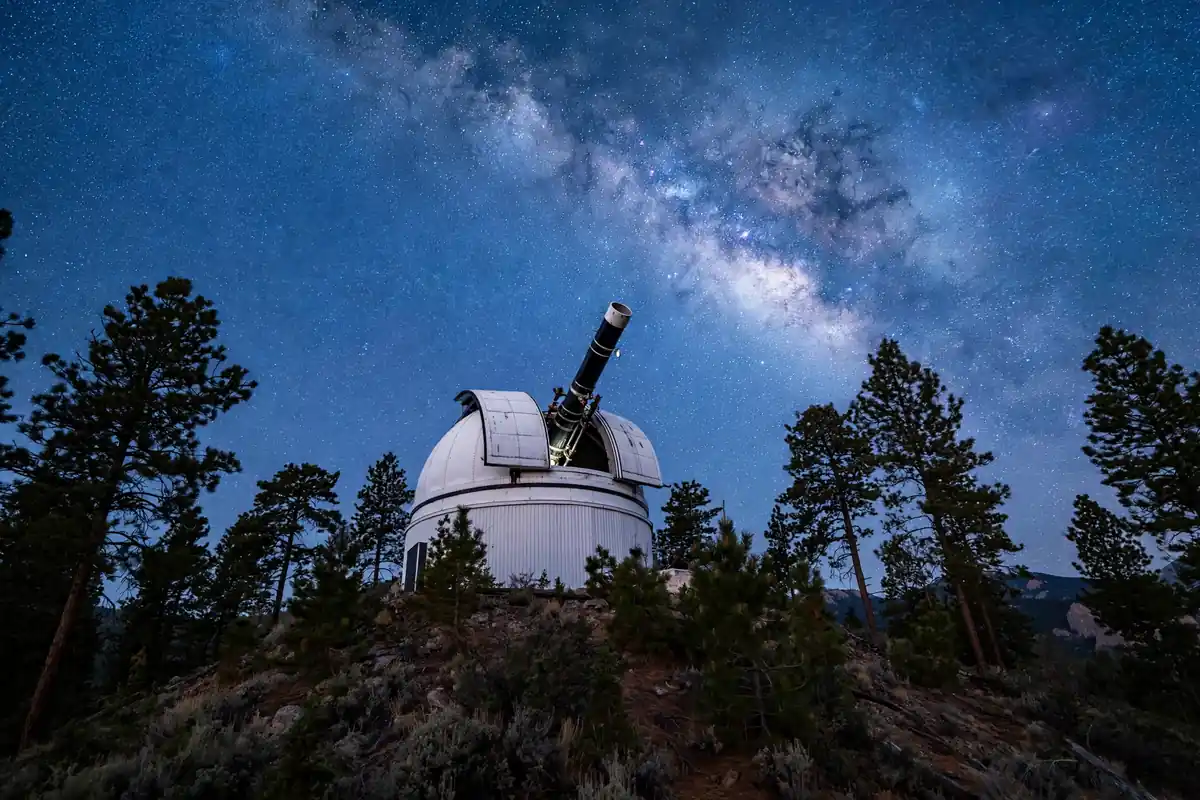
Lowell Observatory is the sight that defines Flagstaff — and the one to do at night, not in the daytime. The observatory on Mars Hill at 1400 West Mars Hill Road was founded in 1894 by the astronomer Percival Lowell, and it is still a working research observatory today, which is what makes it different from a museum: the telescopes you look through are the ones the astronomers use. This is where Clyde Tombaugh discovered Pluto in 1930, and the Pluto discovery telescope and the historic Clark refractor are both still there, along with the Marley Foundation Astronomy Discovery Center, which opened in 2024 with interactive exhibits and a planetarium, and the Giovale Open Deck Observatory, where you can look through the telescopes on clear evenings without a separate booking. Admission is $35 for adults, $30 for seniors aged 55 and over, $20 for children aged 6 to 17, and free for children under 5, with $8 extra for the Dark Sky Planetarium, and the observatory is open from noon to 10 p.m. on Mondays and Wednesdays to Sundays — closed on Tuesdays — and closed on Thanksgiving, Christmas Eve, Christmas Day and New Year’s Day, with ticket sales ending at 9 p.m. The trap is the price and the Tuesday, and this is where our guide beats the older ones: most rival guides still list the old $29 admission, and the observatory is closed every Tuesday, so a Tuesday night is the one night you cannot stargaze here — book the evening slot, arrive before dark, dress warmly even in summer, and do not expect the daytime visit to match the night one, because the night viewing is the reason to come. Two practical notes: Flagstaff became the world’s first International Dark Sky City in 2001, after passing the world’s first outdoor lighting ordinance back in 1958, and the city celebrated the 25th anniversary of that designation in October 2026 — and the observatory was named one of Time’s World’s Greatest Places in 2025. Allow three hours, and go in the evening, when the telescopes open and the sky goes dark. Lowell Observatory on Wikipedia covers the observatory and the Pluto discovery, and Pluto on Wikipedia covers the dwarf planet itself.
2. Historic Downtown Flagstaff and Route 66
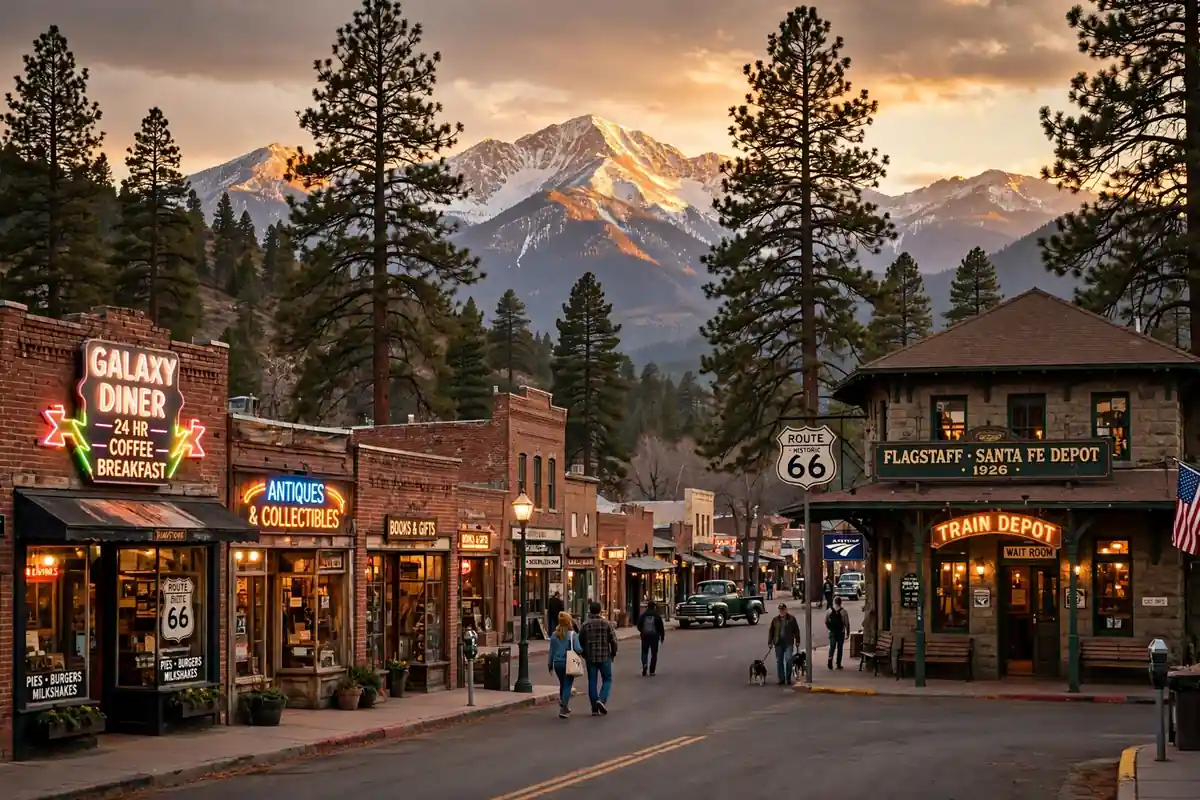
Historic downtown Flagstaff is the walk that costs nothing and the one every visitor should do first — and in 2026 it is a centenary walk. Route 66 was established on 11 November 1926, so the Mother Road turned 100 years old on 11 November 2026, the day this guide was written, with a Birthday Bash from 10 a.m. to 2 p.m. at the Flagstaff Visitor Center and a big centennial event already held on 6 June 2026 — and Flagstaff’s stretch of the road runs 14.2 miles through the city. Start at the Flagstaff Visitor Center at 1 East Route 66, inside the historic train depot, where the Amtrak Southwest Chief still stops and the BNSF freight trains still roll through the middle of town several times a day, then walk Heritage Square, the brick storefronts of Aspen Avenue and San Francisco Street, the murals, the bookshops and the neon signs, and take the Route 66 Centennial Walking Tour, a 90-minute, 1.3-mile guided walk from Heritage Square that runs through the centennial year. The trap is the traffic, and this is where our guide beats the older ones: the city centre has had recent road changes, with new blocks that stop turns and make driving downtown slower and more confusing, and parking is tight and expensive in the middle of the day — so park once, walk everywhere, and do not try to drive the downtown loop. Two practical notes: downtown is at its best in the early evening, when the neon comes on and the breweries fill up, and the depot is still a working station, so check the Amtrak times if you want to watch the Southwest Chief come through. Allow two hours, and go on foot, in the morning for the shops and in the evening for the neon. U.S. Route 66 on Wikipedia covers the highway and its history, and Flagstaff, Arizona on Wikipedia covers the city and the downtown.
3. Walnut Canyon National Monument
Walnut Canyon is the cliff-dwelling walk — and the most rewarding hour in Flagstaff for the effort it takes. The monument about 10 miles east of downtown protects 25 cliff dwellings built into the limestone walls of a 400-foot-deep canyon by the Sinagua people, who lived here from about 1100 to 1250, and the Island Trail is the one to take: a 0.8-mile loop that drops 185 feet down 273 steps into the canyon and passes right by the dwellings, with the rooms, the doorways and the soot-blackened ceilings close enough to touch the rock beside them. The visitor center is open daily from 9 a.m. to 5 p.m., closed on Christmas Day and New Year’s Day, and admission is $25 per vehicle — a separate pass from the Sunset Crater and Wupatki pass, so do not expect one ticket to cover all three — with $15 for walk-ins and cyclists aged 16 and over, and the America the Beautiful pass accepted. The trap is the steps and the separate ticket, and this is where our guide beats the older ones: the Island Trail is 0.8 miles but it is a real descent and a real climb back out at 7,000 feet, so take water, take your time, and do not plan it for your first hour in town before you have acclimatised — and the $25 Walnut Canyon pass does not cover Sunset Crater or Wupatki, which share a different $25 pass. Two practical notes: the Rim Trail is the easier alternative, a flat 0.7-mile walk along the canyon edge with the views and none of the steps, and the canyon is at its best in the morning light, when the dwellings catch the sun. Allow two hours, and go in the morning, before the heat and the altitude catch up with you. Walnut Canyon National Monument on Wikipedia covers the monument and the Sinagua people.
4. Sunset Crater Volcano National Monument
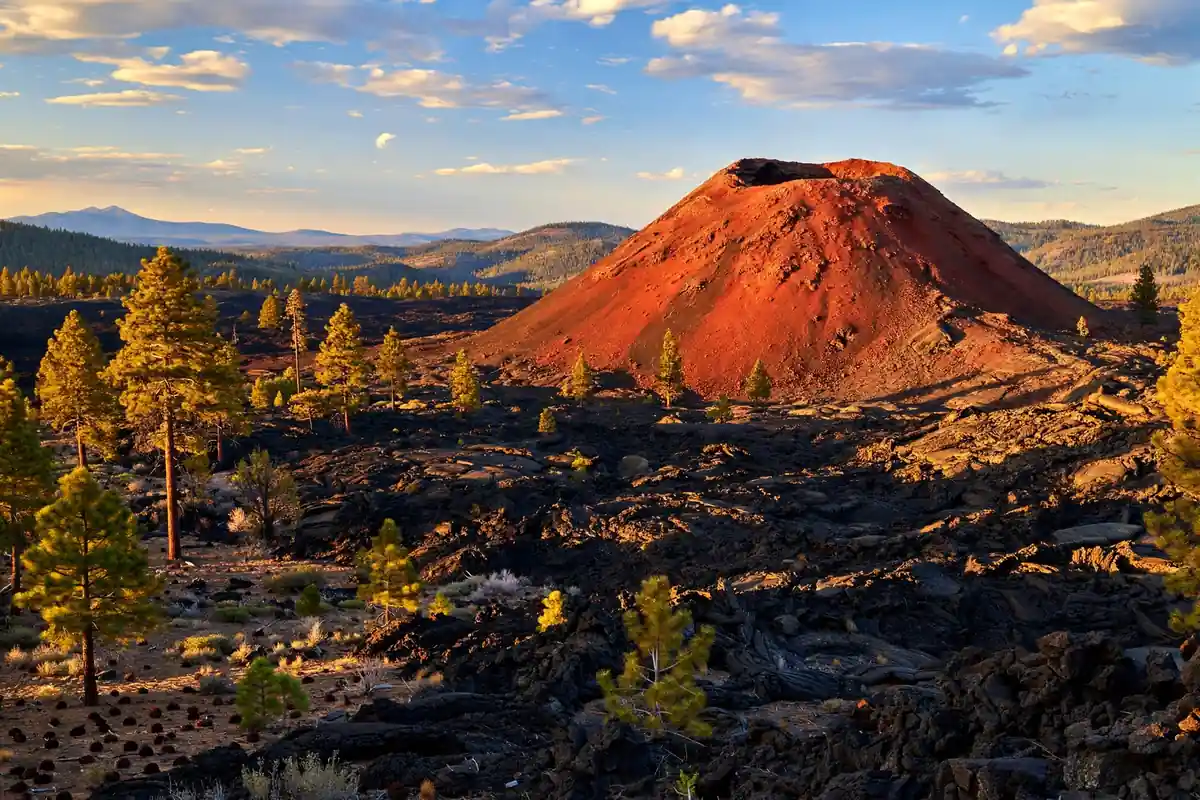
Sunset Crater is the volcano you can walk through — and the youngest volcano in the San Francisco volcanic field. The crater about 15 miles north of Flagstaff erupted around 1085, about a thousand years ago, and the eruption buried the land in ash and cinder, which is what made the soil at Wupatki fertile enough to farm — so the volcano and the pueblos are one story, not two. The Lava Flow Trail is the walk to take: a 1-mile loop across the black, jagged lava at the base of the rust-red cone, with the cinder, the pressure ridges and the first pines pushing back through the rock, and the Lenox Crater Trail climbs a smaller cinder cone for the view across the field. The visitor center is open daily from 9 a.m. to 5 p.m., closed on Christmas Day and New Year’s Day, and admission is $25 per vehicle, shared with Wupatki National Monument on one 7-day pass — so one ticket covers both monuments, and the $45 Flagstaff Area annual pass covers all three monuments for a year. The trap is the summit, and this is where our guide beats the older ones: climbing the Sunset Crater cone itself has been forbidden since 1973, because foot traffic was destroying the fragile cinder, so do not plan to stand on the rim — the Lava Flow Trail and the Lenox Crater Trail are the walks, and the scenic drive is the way to see the cone. Two practical notes: the scenic drive between Sunset Crater and Wupatki is one of the best short drives in Arizona, and the monument is open year-round, day and night, on the road, so a sunset visit is possible even after the visitor center closes. Allow two hours, and go in the afternoon, when the low sun turns the cone red. Sunset Crater on Wikipedia covers the volcano and the eruption.
5. Wupatki National Monument
Wupatki is the pueblo city in the desert — and the other half of the Sunset Crater story. The monument about 35 miles north of Flagstaff, between the Painted Desert and the ponderosa forest, protects the remains of pueblos built in the 1100s by the ancestors of today’s Pueblo peoples, after the Sunset Crater eruption left the land covered in moisture-holding ash that made farming possible. The Wupatki Pueblo is the one to see first: a 100-room, three-storey red-rock pueblo with a ball court — the northernmost ball court in the Southwest — and a blowhole, a crack in the rock that breathes cold air in summer and warm air in winter, and the Citadel, Wukoki and Lomaki pueblos are the others on the loop road, each a short walk from its pull-out. The visitor center is open daily from 9 a.m. to 4:30 p.m., but it is closed on Tuesdays, Wednesdays and Thursdays from 2 November to 7 March in the winter season, with a further mid-November closure, so check the days before you drive out — and admission is the same $25 per vehicle shared with Sunset Crater on one 7-day pass, with the park road open 24 hours a day. The trap is the winter closure, and this is where our guide beats the older ones: most guides list Wupatki as open daily, but the visitor center shuts three days a week all winter, so a Tuesday-to-Thursday winter visit means the pueblos are there but the center is locked, the rangers are gone and the water is off — plan it for a Friday to Monday, and carry your own water. Two practical notes: the loop road between Wupatki and Sunset Crater is the scenic drive to take, with the Painted Desert views at the far end, and the pueblos are fragile, so stay on the trails and do not climb the walls. Allow three hours with the drive, and go in the morning, when the light is on the red rock. Wupatki National Monument on Wikipedia covers the monument and the pueblos.
6. Arizona Snowbowl
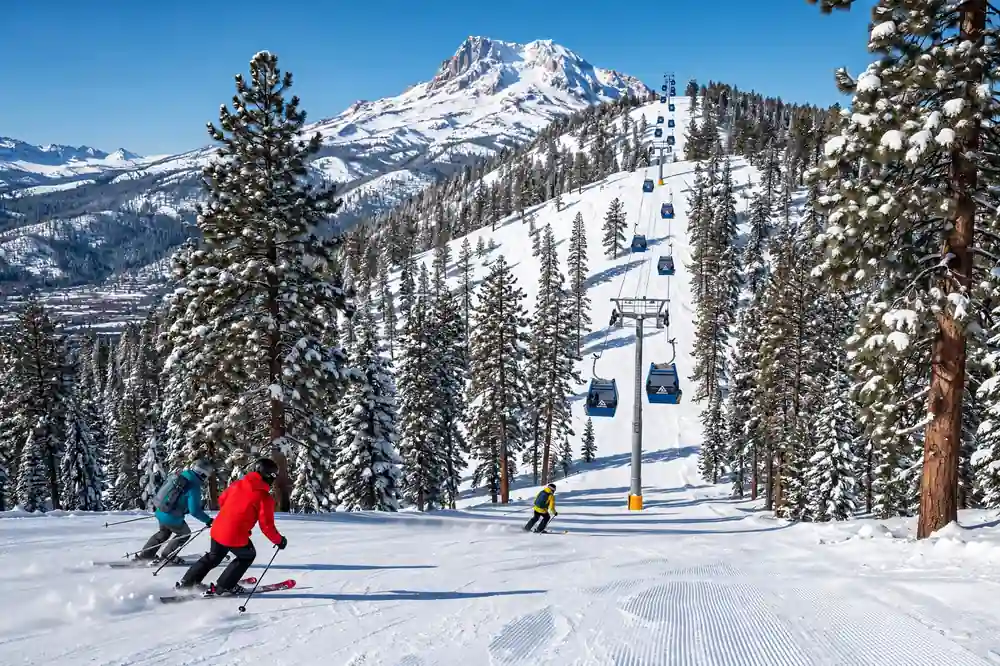
Arizona Snowbowl is the ski resort in the desert state — and the reason Flagstaff is a winter town. The resort on the western slope of the San Francisco Peaks, about 14 miles north-west of downtown on the Snowbowl Road, has 777 acres of terrain, 2,300 feet of vertical and 8 lifts including a gondola, and the 2026–27 season opens on 20 November 2026 and runs to 18 April 2027 — the previous season ran from 7 November 2025 to 10 May 2026, one of the longest in the resort’s history — with snowmaking already under way from 13 October 2026 and more than $1 million of improvements, including a new Sunshine conveyor lift. Tickets are $9 on select advance-purchase dates, with eight $1 dates in the season, and children aged 12 and under ski free, which makes it one of the cheapest ski days in America if you book ahead — and in summer the gondola runs as a scenic ride to 11,500 feet, with the views across the peaks and the desert. The trap is the booking and the road, and this is where our guide beats the older ones: the $9 and $1 tickets are advance-purchase only and sell out, so a walk-up ticket costs far more, and the Snowbowl Road is a mountain road that needs chains or four-wheel drive in a storm, so check the conditions and the resort’s snow report before you drive up. Two practical notes: the Humphreys Peak trailhead is in the Snowbowl parking lot, so the resort is the summer hiking base too, and the gondola is the easy way to 11,500 feet for anyone who does not want to hike there. Allow a full day in winter and half a day in summer, and go early, when the snow is best and the road is clear. Arizona Snowbowl on Wikipedia covers the resort and the mountain.
7. Museum of Northern Arizona
The Museum of Northern Arizona is the museum that explains everything else you see in Flagstaff — and the one to visit before the monuments, not after. The museum at 3101 North Fort Valley Road, in its stone buildings among the pines north-west of downtown, was founded in 1928 and covers the geology, the archaeology and the living Native cultures of the Colorado Plateau, with the katsina dolls, the pottery, the geology hall and the gardens, and the exhibitions in 2026 include Wagon Road to Mother Road, which runs through October 2026, Katsintithu — Katsina Dolls, which opened on 10 January 2026, and Call of the Colorado Plateau, which opened on 25 January 2026. The museum is open daily from 10 a.m. to 5 p.m., with last admission at 4 p.m. and Thursdays open to 7 p.m., and admission is $18 for adults, $16 for seniors aged 65 and over, $13 for Native American visitors and for young people aged 10 to 17, and free for children under 10, with $10 Sunday admission for locals in 2026 — and it is closed on New Year’s Day, Thanksgiving, 24 December and 25 December. The trap is the Sunday and the Thursday, and this is where our guide beats the older ones: the $10 Sunday is for locals only, so visitors pay the full $18, and the Thursday late opening to 7 p.m. is the quietest time to go, when the school groups have left. Two practical notes: the museum shop is one of the best places in Flagstaff to buy authentic Native-made jewellery and crafts, and the garden trails outside are free with admission and worth the extra half hour. Allow two hours, and go in the morning, before the monuments, so the pueblos make sense. The Museum of Northern Arizona on Wikipedia covers the museum and its history.
8. Riordan Mansion State Historic Park
Riordan Mansion is the lumber-baron house — and the best-preserved piece of Flagstaff’s timber past. The mansion at 409 West Riordan Road is a 1904 Arts and Crafts-style double mansion built for the families of two lumber-baron brothers, Timothy and Michael Riordan, with the original furnishings, the handcrafted woodwork and the two mirror-image wings still as the families left them, and the interior is seen only on a guided tour, which is the point: the guides tell the story of the family, the timber company and the town the brothers built. Park entry is $5 for adults aged 14 and over, $3 for young people aged 7 to 13, and free for children under 7, and the guided tour is $18 for adults and $12 for young people, with reservations recommended — and the hours vary by season, with summer hours daily from 9:30 a.m. to 5 p.m. and winter hours from Thursday to Monday, 10:30 a.m. to 5 p.m., so check the schedule before you go, because the winter days are shorter and the Mondays to Wednesdays are closed. The trap is the tour and the season, and this is where our guide beats the older ones: you cannot walk the interior on your own, and the winter closure days catch visitors who assume a state park is open daily — book the tour ahead, arrive on time, and do not plan it for a winter Monday. Two practical notes: the grounds and the gardens are worth a walk even without the tour, and the mansion is a short drive from downtown, on the way to the Museum of Northern Arizona, so pair them. Allow two hours, and go in the morning, when the tours are quietest. Riordan Mansion State Historic Park on Wikipedia covers the mansion and the Riordan family.
9. Hike Humphreys Peak
Humphreys Peak is the hike — and the highest point in Arizona. The summit at 12,633 feet is the tallest of the San Francisco Peaks and the highest ground in the state, and the Humphreys Peak Trail, number 151, is the only trail to a summit in the range: about 10 miles round trip from the Arizona Snowbowl parking lot, with 3,300 to 3,400 feet of elevation gain, rated very strenuous by the Forest Service, and taking 6 to 8 hours for most hikers, with a 5 or 6 a.m. start the smart choice, because the afternoon thunderstorms above the treeline are frequent and dangerous, and lightning is the real risk on this mountain. The trail climbs through aspen and pine to the treeline at about 11,400 feet, then follows a rocky ridge across a boulder field to the summit, with the views across the desert, the canyon country and, on a clear day, the Grand Canyon — and the side trail to the B-24 bomber crash site is the optional detour, a reminder that a wartime plane went down on this mountain in 1944. The trap is the altitude and the weather, and this is where our guide beats the older ones: the trail starts at about 9,300 feet, so you need to sleep at altitude for two nights and do a warm-up hike the day before, and the best window is late June to early October, with snow and extra miles outside it — and the other peaks have no summit trails, because the peaks are sacred ground to the Hopi, the Navajo and other Native peoples, so stay on the Humphreys trail and do not try to climb the rest. Two practical notes: there is no permit and no fee for the day hike, and the trailhead is in the Snowbowl’s lower parking lot, 14 miles north-west of downtown. Allow a full day, and start at dawn, with water, layers and a weather check. Humphreys Peak on Wikipedia covers the peak and the trail, and the San Francisco Peaks on Wikipedia cover the range.
10. Lava River Cave
Lava River Cave is the underground walk — and the strangest hour in Flagstaff. The cave about 14 miles north-west of downtown is a lava tube, a mile-long tunnel left when the surface of a lava flow cooled and the molten rock inside drained away, about 700,000 years ago, and the walk is about 1.5 miles out and back through the dark, over the broken lava floor, with the ceiling dripping in the wet season and the temperature at about 42°F all year round, so a headlamp is essential, sturdy shoes are essential, and a jacket is essential even in August. There is a $5 a day fee as of 2026, or $15 for a week, with the America the Beautiful pass accepted, and no pets are allowed in the cave — and the forest roads to the trailhead close in winter when they are snowed in or muddy, which adds about a 4-mile walk each way, so the cave is a summer and autumn trip, not a winter one. The trap is the road and the dark, and this is where our guide beats the older ones: most guides call the cave free and easy, but the $5 fee started in 2026 and the winter road closure turns a 1.5-mile walk into a 9-mile day, so check the road status with the Forest Service before you drive out, and do not go in with only a phone torch. Two practical notes: the cave is unlit and undeveloped, with no handrails and no lights, which is the point — and the entrance is a scramble down into the ground, so it is not for anyone unsteady on their feet. Allow two hours, and go in the morning, with a real headlamp and a spare. Lava River Cave on Wikipedia covers the cave and the lava tube.
11. Flagstaff Extreme Adventure Course
Flagstaff Extreme is the treetop course — and the best family day in Flagstaff that is not a museum. The course at Fort Tuthill County Park, 2446 Fort Tuthill Loop, south of downtown, has 5 courses with more than 80 obstacles and ziplines from 15 to 80 feet long, strung through the ponderosa pines, with the adult course at $60 and the kids’ course, for ages 7 to 11, at $30, and a new disc golf course added in 2026 for the ground-level players. The course is open daily from 9 a.m. to 5 p.m., and it closes for lightning within 6 miles or in extreme cold below 25°F, which is a real rule in a mountain town, not a formality — so check the weather before you book, and do not plan it for a stormy afternoon. The trap is the weather and the age, and this is where our guide beats the older ones: the course closes for lightning, and the adult course is not for small children, so book the right course for the right ages and go in the morning, when the storms have not built yet. Two practical notes: Fort Tuthill is also the county fairgrounds and the home of the Flagstaff festivals, so check the events calendar before you go, and the course is a 15-minute drive south of downtown, on the way to the airport. Allow three hours, and go in the morning, with closed-toe shoes and gloves if you have them.
12. Meteor Crater
Meteor Crater is the hole in the desert — and the best-preserved meteorite impact site on Earth. The crater about 37 miles east of Flagstaff, near Winslow on I-40, is about 0.75 miles across and 550 feet deep, formed about 50,000 years ago when a meteorite struck the desert, and it is privately operated, which is why it costs more than a national park: $29 for adults aged 13 to 59, $25 for juniors aged 6 to 12, and free for children under 6, open daily from 8 a.m. to 5 p.m., closed on Christmas Day and with reduced hours on Thanksgiving. The rim trail, the viewpoints, the museum and the 4D experience are the visit, with the guided rim tour the one to take if it is running, because the guides explain the geology and the Apollo astronaut training that happened here — the crater was where the Apollo astronauts trained for the Moon, because it was the closest thing to a lunar crater on Earth. The trap is the price and the wind, and this is where our guide beats the older ones: the crater is not a national park and the $29 ticket surprises visitors who expect the $25 monument price, and the rim is exposed and windy, so take a jacket even in summer. Two practical notes: the crater is a 45-minute drive east on I-40, so pair it with Winslow and the Standing on the Corner Park, and the visitor center is the place to start, because the crater looks small from the rim until the guide tells you what you are looking at. Allow three hours with the drive, and go in the morning, when the light is in the crater. Meteor Crater on Wikipedia covers the crater and the impact.
13. Grand Canyon South Rim — the day trip
The Grand Canyon is the day trip — and the reason most people come to Flagstaff in the first place. The South Rim is about 80 miles north of Flagstaff, about 1.5 hours by car via US-180 to Arizona 64, and it is open year-round, with the rim viewpoints, the Bright Angel Trail, the historic lodges and the sunset at Hopi Point or Mather Point, and the $35 per vehicle entrance fee covers 7 days. The trap is the 2026 surcharge and the North Rim, and this is where our guide beats the older ones: from 1 January 2026, non-US residents aged 16 and over pay a $100 per person surcharge on top of the vehicle fee, so an international family pays far more than the $35 the older guides quote — and the North Rim, which lost its historic Grand Canyon Lodge to the Dragon Bravo Fire in 2025, reopened on 15 May 2026 but only through 30 November 2026 or the first major snow, with very limited services, no lodging and no potable water, so do not plan a North Rim trip without checking the current conditions. Two practical notes: the Groome Transportation shuttle runs from Flagstaff to the South Rim for about $44 to $49 a person, which is the option if you do not want to drive, and the South Rim is a full day, so leave Flagstaff by 8 a.m., park at the visitor center and use the free shuttle buses along the rim. Allow a full day, and go early, because the canyon is at its best in the morning light and the parking fills by midday. The Grand Canyon on Wikipedia covers the canyon and the park.
14. The Arboretum at Flagstaff
The Arboretum at Flagstaff is the garden at 7,150 feet — and one of the highest research gardens in the United States. The Arboretum on 200 acres at the edge of a meadow surrounded by ponderosa pine forest is a research garden and a wildflower garden, with the native plants of the Colorado Plateau, the penstemons, the columbines and the sunflowers, and the guided tours that explain what grows at altitude and what does not. The Arboretum is open only in the warmer months, from late April to late October in 2026, Wednesday to Sunday, and it is closed in winter, from November to April, so it is a summer and autumn visit, not a winter one — and the meadow is at its best in July and August, when the wildflowers are out. The trap is the season and the Grand Falls confusion, and this is where our guide beats the older ones: the Arboretum is closed for half the year, so a winter visit finds locked gates, and the Grand Falls, the chocolate-coloured waterfall that older guides list as a Flagstaff highlight, has been closed to visitors since 2023, so do not drive out to the falls expecting to see them. Two practical notes: the Arboretum is a quiet, slow visit, not a thrill, so pair it with the Museum of Northern Arizona on the same morning, and the garden is at 7,150 feet, so the sun is strong and the shade is thin. Allow two hours, and go in the morning, in July or August, when the flowers are at their peak. The Arboretum at Flagstaff on Wikipedia covers the garden and its research.
15. Buffalo Park
Buffalo Park is the free walk — and the best easy morning in Flagstaff. The park at the base of Mount Elden, on the north side of town, is 215 acres of open meadow with a flat 2-mile loop trail, free to enter, open from dawn to dusk, dog-friendly on a leash, and with the views of the San Francisco Peaks that make it the postcard shot of the city. The loop is the walk to take: flat, easy, about an hour at a stroll, with the wildflowers in summer, the golden grasses in autumn, and the peaks in front of you the whole way — and at night it is one of the best free stargazing spots in town, because the city lights are behind you and the sky is dark. The trap is the altitude and the sun, and this is where our guide beats the older ones: the loop looks flat and easy, but it is at 7,000 feet, so the first walk of the trip should be this one, not Humphreys Peak, and there is no shade on the meadow, so take water and sun protection even on a cool morning. Two practical notes: the park is the acclimatisation walk, the one to do on the morning you arrive, and the trail connects to the Flagstaff Urban Trails System, so you can keep walking into town if you want. Allow one hour, and go in the morning, when the light is on the peaks.
16. Hike in Coconino National Forest
Coconino National Forest is the forest around Flagstaff — and the largest contiguous ponderosa pine forest in the world. The forest surrounds the city on all sides, from the red rocks of Sedona to the alpine tundra of the peaks, and the hikes to take are the Fatman’s Loop, a 2.4-mile moderate loop with the views over town and the rock formations that give it its name, and the Aspen Corner, the aspen grove on the Snowbowl Road that turns gold in October and is the fall-colour walk in Flagstaff. The Elden Lookout Trail is the longer one, climbing Mount Elden for the views across the city and the peaks, and the forest is free to enter, with the trails open year-round, though the higher trails are snowed in from November to May. The trap is the winter and the weather, and this is where our guide beats the older ones: the forest roads close in winter when they are snowed in or muddy, and the afternoon thunderstorms in the monsoon season, from July to September, are dangerous above the treeline, so check the conditions with the Forest Service before you go, and do not park or stop along Highway 180 to improvise a snow-play area in winter. Two practical notes: the forest is the reason Flagstaff feels like a mountain town and not a desert town, and the trails are the free alternative to the paid attractions, so a morning here costs nothing. Allow two to four hours, and go in the morning, with water, layers and a weather check. Coconino National Forest on Wikipedia covers the forest and its trails.
17. Bearizona Wildlife Park
Bearizona is the drive-through wildlife park — and the best family day trip from Flagstaff. The park in Williams, about 35 minutes west of Flagstaff on I-40 and Route 66, at 1500 East Route 66, is a drive-through and walk-through wildlife park with North American animals in natural habitats: the bison, the wolves, the bears, the bighorn sheep and the mountain lions on the 3-mile drive-through loop, which takes about 45 minutes, and the walk-through Fort Bearizona with the otters, the jaguars, the birds of prey and the animal shows, all included in the one ticket. Admission is per person, not per vehicle: on weekdays, $30 for adults aged 13 to 61, $20 for children aged 4 to 12, $27 for seniors aged 62 and over, and free for children aged 3 and under — and on weekends, $35 for adults, $25 for children and $32 for seniors — and the park is open daily from 9 a.m. to 5:30 p.m., with the last cars admitted at 4 p.m., and closed on Christmas Day. The trap is the per-person price and the timing, and this is where our guide beats the older ones: the ticket is per person, so a family of four pays four tickets, not one carload, and the animals are most active at the 9 a.m. opening, when the wolves are fed, so arrive early and do not expect the afternoon to match the morning. Two practical notes: you can drive the loop as many times as you like without leaving the park, and the walk-through section adds another hour or two, so allow a full morning. Allow three hours, and go in the morning, when the animals are moving. Bearizona on Wikipedia covers the park and its animals.
18. Ride the Grand Canyon Railway from Williams
The Grand Canyon Railway is the train to the canyon — and the most relaxing way to see it. The heritage line runs 65 miles each way between Williams, Arizona, about 30 minutes west of Flagstaff on I-40 and Route 66, and the South Rim of the Grand Canyon, in 2 hours and 15 minutes each way, through the ponderosa pine forest, the high desert plains and the climb back to the rim. The daily excursion leaves Williams Depot at 9:30 a.m. in the standard season, from 1 January to 31 October, arrives at the South Rim at 11:45 a.m., gives you about 3 hours and 45 minutes at the rim, and leaves the canyon at 3:30 p.m. for a 5:45 p.m. return — and in the Polar Express season, from 1 November to 31 December, the train leaves at 8:30 a.m. and returns at 4:45 p.m. Round-trip Coach fares start at about $90 for adults, with First Class, Observation Dome and Luxury classes above that, and children under 2 travel free on most classes. The trap is the time and the season, and this is where our guide beats the older ones: the train gives you less than four hours at the rim, which is enough for the viewpoints but not for a long hike, and the November and December trains are the Polar Express, a different trip with different times, so book the right train for the right month. Two practical notes: the train is the option if you do not want to drive the canyon road, and the depot in Williams is on Route 66, so pair the train with a morning in Williams. Allow a full day, and book ahead, because the train sells out in the summer and at Christmas. The Grand Canyon Railway on Wikipedia covers the railway and its history.
19. Flagstaff’s craft brewery scene
Flagstaff’s craft brewery scene is the evening — and the reward after the mountain. The downtown has a cluster of breweries and taprooms within walking distance of each other, and the one to start with is Beaver Street Brewery, at 11 South Beaver Street, brewing since 1994, with the wood-fired pizzas and the house beers in the old lumber building — and Mother Road Brewing, Dark Sky Brewing, Historic Brewing Company and the Lumberyard Brewing Company are the others on the downtown crawl, each with its own tap list and its own room. The trap is the altitude and the evening, and this is where our guide beats the older ones: the beer hits harder at 7,000 feet, so drink water between rounds and do not plan a big night before a Humphreys Peak morning, and the taprooms fill up on Friday and Saturday nights, so go early or go on a weeknight. Two practical notes: the breweries are the reason downtown is at its best in the evening, when the neon comes on and the patios fill up, and the Dark Sky Brewing name is the clue to the city’s astronomy identity — the beer and the stars are the same story here. Allow one evening, and go after dinner, on foot, with water between rounds.
20. Picture Canyon Natural and Cultural Preserve
Picture Canyon is the free canyon — and the Flagstaff sight most visitors never hear about. The preserve on the north-east edge of town is 478 acres of canyon, meadow and petroglyphs, free to enter, with the Tom Moody Trail along the canyon rim, the petroglyph panels left by the Sinagua people, and the seasonal waterfall that runs after the rain and the snowmelt, and the canyon is the quiet alternative to the paid monuments, with the birds, the wildflowers and the rock art. The trap is the waterfall and the access, and this is where our guide beats the older ones: the waterfall is seasonal, so a dry summer visit finds a dry fall, and the preserve is on the edge of town, not in the centre, so you need a car or a bike to get there — do not expect to walk it from downtown. Two practical notes: the petroglyphs are the reason to go, so take the trail that passes the panels and do not touch the rock, and the preserve is the free morning to pair with the Arboretum or the Museum of Northern Arizona. Allow two hours, and go in the morning, after rain, when the waterfall is running.
Flagstaff in 3 days — a ready-made itinerary
Day 1 — Downtown, Route 66 and the stars
Start the morning with the acclimatisation walk at Buffalo Park, the flat 2-mile loop with the peaks in front of you, then walk historic downtown Flagstaff and Route 66, from the Visitor Center in the train depot through Heritage Square and the brick storefronts, with lunch at MartAnne’s Burrito Palace on Route 66. Spend the afternoon at the Museum of Northern Arizona, which explains the geology and the cultures you will see for the next two days, then walk the Riordan Mansion grounds and take the guided tour of the lumber-baron house. In the evening, eat downtown, walk the brewery crawl, and finish at Lowell Observatory, where the night viewing is the reason to come — book the evening slot, arrive before dark, and dress warmly, because the observatory is on a hill and the night is cold even in summer.
Day 2 — Walnut Canyon and the volcano loop
Start early at Walnut Canyon National Monument, 10 miles east of downtown, and take the Island Trail down into the canyon to the cliff dwellings, with the Rim Trail as the easier alternative if the steps are too much. Drive north to Sunset Crater Volcano National Monument and walk the Lava Flow Trail across the black lava at the base of the rust-red cone, then continue on the scenic loop road to Wupatki National Monument, where the 100-room pueblo and the ball court are the afternoon stop — and remember that one $25 vehicle pass covers both Sunset Crater and Wupatki for 7 days, while Walnut Canyon needs its own $25 pass. In the evening, eat at Brix on North San Francisco Street, and if the sky is clear, walk back to Buffalo Park for the free stargazing, with the city lights behind you and the Milky Way above.
Day 3 — The Grand Canyon, or the mountain
Day 3 is the choice, and the choice is the season. In the warmer months, drive to the Grand Canyon South Rim, 80 miles north via US-180 and Arizona 64, leave Flagstaff by 8 a.m., park at the visitor center, take the free shuttle buses along the rim, walk a stretch of the Bright Angel Trail, and watch the sunset at Hopi Point before the drive back — or take the Grand Canyon Railway from Williams instead, if you do not want to drive. In the winter months, go to Arizona Snowbowl instead, where the 2026–27 season opens on 20 November 2026, with the $9 advance tickets and the free skiing for children aged 12 and under, or hike the Humphreys Peak Trail from the Snowbowl parking lot if the season is right and the weather is clear, with a 5 or 6 a.m. start. In the evening, finish downtown with the Tourist Home breakfast-for-dinner, the T-Home Benedict with green-chile hollandaise, and the last walk down Route 66.
Best time to visit Flagstaff
| Season | What it is like |
| Winter (Dec–Feb) | Highs about 45°F, lows about 17°F; the snowiest season, with about 100 inches of snow a year; the Snowbowl season, from 20 November 2026 to 18 April 2027; the quietest and cheapest months in town |
| Spring (Mar–May) | Highs in the 50s and 60s°F; windy, with snow lingering on the peaks; the quietest season for the trails; the Arboretum reopens in late April |
| Summer (Jun–Aug) | Highs in the low 80s°F, lows about 50°F; the best season for hiking and the monuments; monsoon thunderstorms from July to September, usually in the afternoon |
| Autumn (Sep–Nov) | Highs in the 60s and 70s°F falling to the 50s; the aspens turn gold in October, especially at Aspen Corner; crisp, clear nights for stargazing; the Route 66 centennial in November 2026 |
The best time to visit Flagstaff is late May to June and September to October, when the days are warm, the nights are cool and the trails are clear. The single best pick is October, when the aspens turn gold at Aspen Corner, the crowds are down, the nights are crisp and clear for stargazing, and the city celebrated the 25th anniversary of its dark-sky designation — but the summer is the season most visitors come, with the July high in the low 80s°F and the low at about 50°F, and the monsoon thunderstorms from July to September, usually in the afternoon, so hike in the morning and plan the afternoons indoors. The winter is the ski season, with the Snowbowl open from 20 November 2026 to 18 April 2027, the January high at about 45°F and the low at about 17°F, and the cheapest hotel rooms in town — and the spring is the quietest season, with the highs in the 50s and 60s°F, the wind, and the snow still on the peaks, so check the trail conditions before you go. The two dates to plan around are the Route 66 centenary on 11 November 2026, which fills the downtown hotels, and the Snowbowl opening on 20 November 2026, which fills the mountain road on the first powder weekend.
Where to stay in Flagstaff
| Area | What it is like | About |
| Downtown and Route 66 | First-timers; the Hotel Monte Vista and The Weatherford Hotel; walk to the depot, Heritage Square and the breweries | $130–$280 a night |
| East Flagstaff near I-40 | The cheapest rooms; the Little America Hotel and the chain hotels; a drive from downtown | $100–$200 a night |
| Near NAU and Southside | Students and families; the Drury Inn and Suites Flagstaff and the Courtyard Flagstaff; south of downtown | $120–$220 a night |
| Williams | For the Grand Canyon Railway and Bearizona; Route 66 motels; 30 minutes west | $90–$180 a night |
| Near the Snowbowl road | Fort Valley; cabins and lodges; best for skiers and Humphreys Peak hikers | $120–$250 a night |
Stay downtown for your first visit, around Route 66 and Heritage Square, where the depot, the shops, the restaurants and the breweries are all within walking distance — and the Hotel Monte Vista, at 100 North San Francisco Street, and The Weatherford Hotel, at 23 North Leroux Street, are the historic hotels to stay in if you can, because the location is the best in the city and the buildings are part of the Route 66 story. The Little America Hotel, at 2515 East Butler Avenue in east Flagstaff, is the other pick, with the pine forest around it and the cheapest rooms in the city, and the Drury Inn and Suites Flagstaff and the Courtyard Flagstaff, south of downtown near the university, are the quieter choices, with the Mountain Line bus to downtown. Stay in Williams, 30 minutes west, only for the Grand Canyon Railway and Bearizona, because the Route 66 motels there are cheaper and the train leaves at 9:30 a.m. — and stay near the Snowbowl road, in Fort Valley, only for the ski days and the Humphreys Peak hike, because there is little else nearby and the road is a mountain road in winter. Do not stay at the airport, where there is nothing to walk to, and book months ahead for the Route 66 centenary, for the Snowbowl opening weekend and for the summer, when the downtown hotels sell out and the prices rise.
Getting around Flagstaff
| Way to get around | What to know | About |
| On foot downtown | The historic centre, Heritage Square, the depot and the breweries | Free |
| Mountain Line bus | 9 routes across town; $1.25 single, $2.50 day pass, $0.60 for young people and seniors | $1.25 a ride |
| Car | Essential for the monuments, the Snowbowl, the Grand Canyon and Meteor Crater | Rental from about $50 a day |
| Rideshare and taxi | Downtown and the airport; scarce late at night | About $10–$20 in town |
| Amtrak Southwest Chief | Daily stops at 1 East Route 66, downtown, to Los Angeles and Chicago | From about $50 |
| Airport and Phoenix shuttle | Flagstaff Pulliam Airport 4.3 miles from downtown; Groome Transportation to Phoenix $56 | $56 to Phoenix |
Downtown Flagstaff is a walking town, and the historic centre, Heritage Square, the depot and the breweries are all within a few blocks of each other — but the Flagstaff that matters, the monuments, the Snowbowl, the Grand Canyon and Meteor Crater, is a driving town, and you need a car for all of it. The Mountain Line bus runs 9 routes across town, with the Downtown Connection Center across from the Amtrak station, and the fares are $1.25 for a single ride, $2.50 for a day pass, and $0.60 for young people and seniors — and the bus is the way to get to the university, the shopping and the east side, but not to the monuments, which have no bus service. The Amtrak Southwest Chief stops daily at 1 East Route 66, downtown, on its way between Los Angeles and Chicago, and Flagstaff Pulliam Airport is 4.3 miles from downtown, with American Airlines flights to Phoenix and Dallas/Fort Worth, and Groome Transportation runs the shuttle to Phoenix for $56. The trap is the winter road, and this is where our guide beats the older ones: the Snowbowl Road and the forest roads close or need chains in a storm, and the road to the Grand Canyon, US-180, is a mountain road that ices over, so check the Arizona 511 road conditions before you drive in winter, and do not park or stop along Highway 180 to improvise a snow-play area. Take the bus and your feet for the days you stay downtown, and the car for the days you leave it — and the only reason to rent a car is the monuments, the mountain and the canyon, where the car is the trip.
Flagstaff food you have to try
MartAnne’s Burrito Palace and the Flagstaff breakfast burrito
MartAnne’s Burrito Palace is the breakfast — and the Flagstaff institution that every local will send you to first. The cafe at 112 East Route 66, on the Mother Road itself, does the breakfast burrito the Flagstaff way: the eggs, the potatoes, the cheese and the meat wrapped in a flour tortilla and smothered in green chile sauce, with the chilaquiles and the JB’s Volcano, the house special, on the same menu, and the coffee is strong and the room is small, so go early or expect a wait on a weekend morning. The trap is the wait and the heat, and this is where our guide beats the older ones: the cafe is small and the weekend line is real, so arrive before 8 a.m. if you want a table, and the green chile is the real thing, so order it mild if you are not sure. Two practical notes: the burrito is a breakfast, not a day — allow one hour, and go hungry — and the cafe is on Route 66, so it is the breakfast to have before the downtown walk. Allow one hour, and go in the morning, when the burritos are freshest.

Tourist Home and the Basque breakfast
Tourist Home is the other breakfast — and the one with the history. The cafe at 52 South San Francisco Street is in a 1920s Basque boarding house, with the wood, the light and the old building still there, and the dish to order is the T-Home Benedict, the eggs Benedict with green-chile hollandaise, with the breakfast served all day and the coffee roasted in-house. The trap is the name, and this is where our guide beats the older ones: Tourist Home is not a tourist trap, it is a local cafe in a historic building, and the Basque boarding house is the story — the Basque sheepherders who came to northern Arizona a century ago, and the boarding houses that fed them. Two practical notes: the cafe is a short walk from the depot, so it is the breakfast to have before the train or the downtown walk, and the all-day breakfast means it is also the lunch when the morning is gone. Allow one hour, and go in the morning, when the light is in the windows.
Brix and the Flagstaff dinner table
Brix is the dinner — and the Flagstaff restaurant that the food writers send you to. The restaurant at 413 North San Francisco Street does seasonal contemporary American food, with the menu changing with the seasons and the local farms, and the wine list and the room are the reason to dress up a little, after three days of hiking boots and trail dust. The trap is the booking, and this is where our guide beats the older ones: Brix is small and popular, so book ahead, especially on a Friday or Saturday night, and do not expect to walk in at 7 p.m. in the summer. Two practical notes: Diablo Burger, on North Leroux Street, is the other dinner, with the local beef and the green chile, and Atria, with its James Beard semifinalist chef, is the tasting-menu option — and Forêt, the bakery, is the morning stop for the orange rolls and the canelés, so save room. Allow two hours, and go in the evening, with a booking, after the mountain.
Free things to do in Flagstaff
Flagstaff is one of the cheapest mountain towns in America for the free sights — and the free list is the best in this guide. Buffalo Park is free, open from dawn to dusk, with the flat 2-mile loop and the views of the San Francisco Peaks. Picture Canyon is free, with the petroglyphs, the canyon trail and the seasonal waterfall. Historic downtown Flagstaff and Route 66 are free to walk, with the depot, Heritage Square, the murals and the neon. The Flagstaff Urban Trails System is free, with miles of paved trails through town and into the forest. Stargazing is free at Buffalo Park, where the city lights are behind you and the sky is dark — and the Flagstaff Visitor Center, inside the historic train depot at 1 East Route 66, is free to enter, with the maps, the Route 66 information and the Amtrak station. The San Francisco Peaks viewpoints from town are free, and the Northern Arizona University campus is free to walk, with the pines and the old buildings. The Museum of Northern Arizona is not free, Lowell Observatory is not free, and the monuments are not free — but the walk, the park, the canyon and the sky are, and they are the best of Flagstaff.
Frequently asked questions
How many days do you need in Flagstaff?
Three days is the standard answer, and the right one for most visitors. One day is enough for the highlights: downtown and Route 66 in the morning, the Museum of Northern Arizona in the afternoon, and Lowell Observatory at night. Two days is the right amount for a real trip, with Walnut Canyon and the Sunset Crater and Wupatki loop done properly. Three days is the full trip, with the Grand Canyon or the Snowbowl and a mountain hike. Four days is too many for Flagstaff alone — use the extra day for Sedona, two hours south, which is the red-rock town on the other side of the forest, or for the Grand Canyon North Rim in the summer, when it is open.
Is Flagstaff worth visiting without going to the Grand Canyon?
Yes — and this is the question most visitors get wrong. Flagstaff is not just a Grand Canyon base: Lowell Observatory is the sight that defines the city, Walnut Canyon is the cliff-dwelling walk, Sunset Crater and Wupatki are the volcano and the pueblos, the Snowbowl is the ski resort, and the downtown is the Route 66 walk, and none of them needs the canyon. The canyon is the day trip, and it is a great one, but a two-day Flagstaff trip without the canyon is a full trip on its own, with the observatory, the monuments and the mountain — and the visitors who skip Flagstaff for the canyon miss the town that makes the canyon trip work.
Do you need a car in Flagstaff?
No, for downtown. The walking, the Mountain Line bus and the rideshare cover the centre, and the centre is walkable, with the depot, Heritage Square, the shops and the breweries all within reach on foot. Yes, for everything else. The monuments, the Snowbowl, the Grand Canyon, Meteor Crater, Bearizona and the Grand Canyon Railway are all drives, and the bus does not go to any of them — and the car is a liability downtown at night, with the parking and the road changes, so park once and walk. Take the bus and your feet for the days you stay downtown, and the car for the days you leave it — and the only reason to rent a car is the monuments, the mountain and the canyon, where the car is the trip.
What is the best time to visit Flagstaff?
Late May to June and September to October for the weather, when the days are warm, the nights are cool and the trails are clear. October is the single best pick, with the aspens turning gold at Aspen Corner, the crowds down, and the crisp, clear nights for stargazing. November to April is the ski season, with the Snowbowl open from 20 November 2026 to 18 April 2027. July and August are the summer season, with the highs in the low 80s°F, the monsoon thunderstorms in the afternoon, and the wildflowers at the Arboretum. November 2026 is the Route 66 centenary, with the Birthday Bash on 11 November 2026 at the Visitor Center.
Will the altitude affect me in Flagstaff?
Probably, a little, and the honest answer is to plan for it. Flagstaff sits at about 7,000 feet, and the Humphreys Peak trailhead is at about 9,300 feet, so most visitors notice the shortness of breath, the headache, the fatigue or the dehydration on the first day, especially on the stairs at Walnut Canyon or the climb to Humphreys Peak. Slow down, hydrate, drink water before you feel thirsty, eat, and reduce the strenuous plans if you feel unwell — and sleep at altitude for two nights before the Humphreys Peak hike, with a warm-up hike the day before. The sun is fierce at altitude even when the air is cool, so use sun protection, and the nights are cold even in summer, so take a layer. Travellers with heart, lung or altitude concerns should choose their effort conservatively and ask a medical professional for personal guidance.
What should I skip in Flagstaff?
Six things, and all six are traps older guides still get wrong. First, do not drive out to Grand Falls: it has been closed to visitors since 2023, and any guide that still lists it as a highlight is out of date. Second, do not plan a Lowell Observatory visit on a Tuesday: the observatory is closed every Tuesday, and the night viewing is the reason to go. Third, do not plan a Wupatki visit on a Tuesday, Wednesday or Thursday in winter: the visitor center is closed from 2 November to 7 March, and the rangers are gone. Fourth, do not plan to climb Sunset Crater: climbing the cone has been forbidden since 1973, and the Lava Flow Trail is the walk. Fifth, do not plan a North Rim trip without checking the conditions: the North Rim reopened on 15 May 2026 after the Dragon Bravo Fire, but only through 30 November 2026 or the first major snow, with very limited services, no lodging and no potable water. And sixth, do not drive to Lava River Cave in winter: the forest roads close when they are snowed in or muddy, which adds about a 4-mile walk each way.
Further reading
Start with Flagstaff, Arizona on Wikipedia, which covers the history and the geography, and the San Francisco Peaks on Wikipedia for the mountains. For the astronomy, Lowell Observatory on Wikipedia covers the observatory and the Pluto discovery, and Pluto on Wikipedia covers the dwarf planet. For the ancient sites, Walnut Canyon National Monument on Wikipedia covers the cliff dwellings, Sunset Crater on Wikipedia covers the volcano and the eruption, Wupatki National Monument on Wikipedia covers the pueblos, and Lava River Cave on Wikipedia covers the lava tube. For the mountain and the forest, Humphreys Peak on Wikipedia covers the highest point in Arizona, Arizona Snowbowl on Wikipedia covers the ski resort, and Coconino National Forest on Wikipedia covers the forest. For the museums and the town, the Museum of Northern Arizona on Wikipedia covers the museum, Riordan Mansion State Historic Park on Wikipedia covers the mansion, the Arboretum at Flagstaff on Wikipedia covers the garden, and Northern Arizona University on Wikipedia covers the university. For the day trips, the Grand Canyon on Wikipedia covers the canyon, Meteor Crater on Wikipedia covers the impact site, the Grand Canyon Railway on Wikipedia covers the train, Bearizona on Wikipedia covers the wildlife park, and U.S. Route 66 on Wikipedia covers the highway. No Reddit link is included here: no live r/Flagstaff thread turned up in search, so none is listed rather than linking to an unverified one. No Quora link is included either: no live on-topic Quora thread about visiting Flagstaff turned up in search, so none is listed rather than linking to an unverified one.
Your Flagstaff trip, in one paragraph
Flagstaff is the mountain town that rewards slowing down: Lowell Observatory at night, Walnut Canyon in the morning, the Sunset Crater and Wupatki loop in the afternoon, the Route 66 walk at dusk, the breakfast burrito smothered in green chile, and the Grand Canyon at sunrise before you leave. For more guides in the same style, start with our Hawaii guide, then see how Flagstaff compares with Maui, Honolulu, Chicago, Nashville, Los Angeles, Orlando, Miami, San Diego, Denver, Savannah, Dallas, Charleston, San Francisco, Myrtle Beach, Las Vegas, San Antonio, London, Portland, Pigeon Forge, Puerto Rico, Atlanta, Phoenix, Paris, Key West, Colorado Springs, Sedona, Chattanooga, Palm Springs, St Louis, Tokyo, Japan, Kansas City, Tennessee, Branson, Florida, Amsterdam, Montreal, Fort Lauderdale, Toronto, Aruba, Charlotte, Indianapolis, New Orleans, Destin, Santa Barbara, Mexico City, Arizona, Osaka, Minneapolis, Pittsburgh, California, Asheville, Costa Rica, Washington DC, Seattle, St Augustine, Lisbon, Dubai, Santa Fe, Galveston, Maine, Sacramento, Kauai, Boston, Cancun, Madrid, Salt Lake City, Baltimore, Barcelona, Reno, Milwaukee, North Carolina, New York, Tucson, Raleigh, Corpus Christi, Milan, Salem, Wilmington and Memphis.

About the Author