
Things to Do in Memphis
20 Best Attractions, a 3-Day Itinerary, Where to Stay, and the Food You Cannot Miss
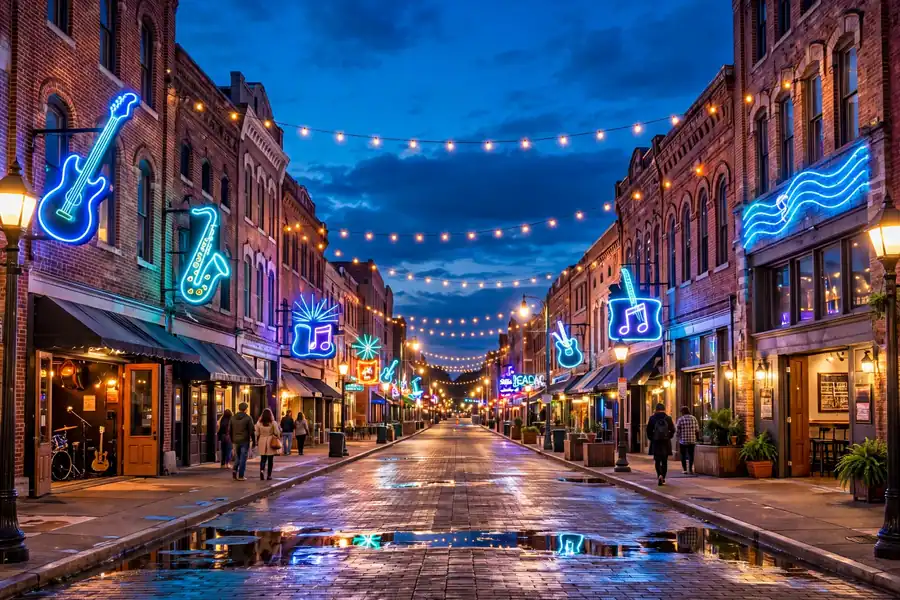
Quick Info
Best for: First-timers, music lovers, history lovers, barbecue fans and families — a river city where Elvis, the blues, soul and the civil rights story all happened on the same few streets
Best time: April to May and mid-September to October for the weather; May for Memphis in May; August for Elvis Week
How long: 1 day for Graceland, Beale Street and the Civil Rights Museum; 2 days with Sun Studio, Stax and the river; 3 days with the zoo, the parks and the neighbourhoods
Budget: About $130–$230 per person per day mid-range — Graceland is the biggest single ticket, and many of the best sights are free
Don’t miss: Graceland, the National Civil Rights Museum, Sun Studio, Beale Street at night, the Peabody ducks, and dry-rub ribs
Memphis, Tennessee on Wikipedia is the American city that recorded the soundtrack of the twentieth century — and the one where the music and the history are still on the same streets. It is a city of about 610,000 people on the Mississippi River in south-west Tennessee that holds three trips inside one visit: the music city, with Graceland, Sun Studio, Stax and Beale Street; the history city, with the Lorraine Motel, the Victorian houses and the riverfront that made Memphis a port; and the food city, with the barbecue, the fried chicken and the donuts that the locals argue about. This guide covers the 20 best things to do in Memphis, a 3-day itinerary that actually works, where to stay without paying downtown prices for a room you only sleep in, how to get around now that the buses are free and the trolleys are not running, the three foods you should not skip, and the free sights that cost nothing. Everything below was checked against live sources in November 2026 — including the art museum that closed in Overton Park and reopens downtown in December, the trolley that has not run since 2024, the Sun Studio price that rose in January 2026, and the river museum that closed in 2019 and reopened as something entirely different in May 2026.
Memphis at a glance
| Topic | What to know |
|---|---|
| Full name | Memphis, Tennessee — the Bluff City, the Home of the Blues, the Birthplace of Rock ‘n’ Roll, on the Mississippi River |
| Founded | 1819, on the bluffs above the Mississippi River, named for the ancient Egyptian capital of Memphis |
| Population | About 610,000 people |
| Distance from Nashville | About 210 miles west — about 3 hours by car on I-40; Amtrak serves Memphis at Central Station |
| Best base | Downtown around Beale Street and South Main for first-timers; Midtown and Cooper-Young for the local scene |
| Getting around | On foot downtown, free MATA buses, rideshare, and a car for Graceland, the zoo and Shelby Farms |
| Famous for | Elvis and Graceland, the blues of Beale Street, Stax soul, Sun Studio, the Lorraine Motel, and the barbecue |
Memphis divides into three ideas that most visitors only partly see. The music city is the one the world knows: the mansion on Elvis Presley Boulevard, the little studio on Union Avenue where rock ‘n’ roll was born, the soul label on McLemore Avenue, and the three blocks of Beale Street where the blues never stops. The history city is the one that stops you in your tracks: the Lorraine Motel, preserved as it was on 4 April 1968, the Victorian houses on Adams Avenue, the cemetery where 75,000 Memphians are buried, and the riverfront that made the city a cotton port. The food city is the one that fills the evenings: the dry-rub ribs, the pulled pork, the fried chicken and the donuts, in rooms that have barely changed in fifty years. The trap is the one that catches almost every visitor: the city looks compact on the map and the sights look close together, but Graceland is nine miles south of downtown, the zoo and the gardens are across town, the trolley that every older guide tells you to ride has not run since August 2024, and the art museum that every older guide lists in Overton Park closed in September 2026 — so plan by day, check the hours before you go, and do not trust a guide that still lists the old museum, the old trolley or the old Sun Studio price. For the wider Tennessee trip, our Tennessee guide covers the whole state, and our Nashville guide covers the capital three hours east.
The 20 best things to do in Memphis
1. Graceland
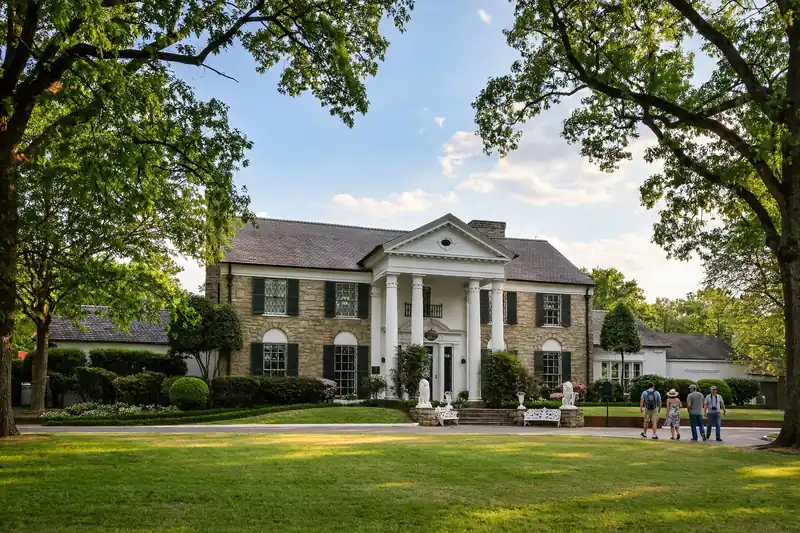
Graceland is the sight that defines Memphis — and the most visited attraction in the city. The mansion at 3764 Elvis Presley Boulevard, about nine miles south of downtown, is the home Elvis Presley bought in 1957 and lived in until his death on 16 August 1977, and it is often described as the second most visited house in America, after the White House. The mansion tour takes you through the living room, the Jungle Room, the kitchen and the Trophy Building, with the Meditation Garden where Elvis is buried, and the Elvis Experience ticket adds the exhibits across the street — the cars, the jumpsuits, the gold records and the two aeroplanes — so allow three to four hours for the full visit and one to one and a half hours for the mansion alone. The mansion is open year-round from 9 a.m. to 4 p.m., and the Elvis Experience costs $85 for adults and $49 for children aged 5 to 10, with the Entourage VIP at $148 and the Ultimate VIP at $240 before 1:30 p.m. and $215 after, and the Archives VIP at $260 before 1:30 p.m. and $235 after. The trap is the ticket and the timing, and this is where our guide beats the older ones: the mansion is timed-entry, the afternoon slots sell out on weekends and in Elvis Week, and the cheapest way in is the free walk-up to the Meditation Garden, which is open daily from 7:30 to 8:30 a.m. — enter by 8:30, no walk-ups on Thanksgiving Day or Christmas Day — so book the morning slot, arrive early, and do not expect to walk in at noon in August. Two practical notes: the parking costs $10, and the Christmas at Graceland season runs from 19 November to 23 December 2026, with the mansion dressed for the holidays — and Elvis Week 2027, from 8 to 16 August 2027, marks the 50th anniversary of Elvis’s death, with the candlelight vigil on 15 August, so book months ahead if that is your week. Allow four hours, and go in the morning, before the heat and the crowds build. Graceland on Wikipedia covers the mansion and the estate, and Elvis Presley on Wikipedia covers the life.
2. The National Civil Rights Museum at the Lorraine Motel
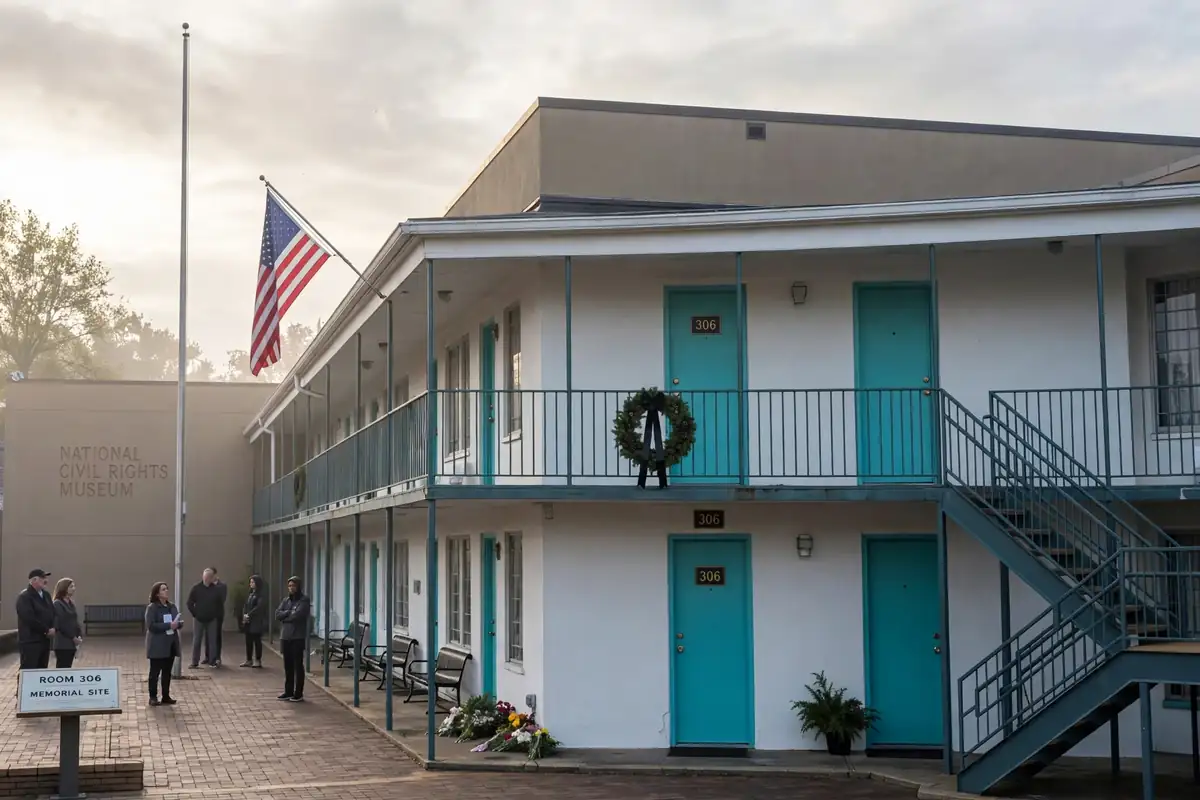
The National Civil Rights Museum is the most powerful place in Memphis — and the one that stays with you longest. The museum is built around the Lorraine Motel at 450 Mulberry Street, where Dr Martin Luther King Jr. was assassinated on 4 April 1968, and Room 306 is preserved as it was that day, with the wreath on the balcony railing and the white Cadillac below. Inside, the exhibits trace the civil rights movement from the 17th century to the present day, through the bus boycott, the sit-ins, the marches and the voting rights struggle, and the reimagined Legacy Experience, which reopened on 16 May 2026, carries the story forward to the present — so allow two to three hours, and do not rush the last rooms. The museum is open from 9 a.m. to 5 p.m. and is closed on Tuesdays, and admission is $25 for adults, $23 for seniors aged 65 and over and for college students, $22 for children aged 5 to 17, and free for children under 5, with timed tickets bought online only. The trap is the Tuesday closure and the Monday free hours, and this is where our guide beats the older ones: the museum is closed every Tuesday, which is the day most visitors assume is a quiet museum day, and Tennessee residents get in free on Mondays from 3 p.m. to close — but not on holidays, including Martin Luther King Jr. Day, Presidents Day, Memorial Day, Labor Day and Columbus Day — so plan the museum for a Wednesday to Monday visit, and book the timed ticket before you go. Two practical notes: the museum is directly across the street from the Blues Hall of Fame, so pair them, and the Canipe’s Amusement Store building across the street, part of the museum, is where the shot was fired from. Allow three hours, and go in the morning, when the rooms are quiet. The National Civil Rights Museum on Wikipedia covers the museum and the movement, Martin Luther King Jr. on Wikipedia covers his life, and the Lorraine Motel on Wikipedia covers the motel and the assassination.
3. Sun Studio
Sun Studio is the smallest room with the biggest story in American music — and the tour is the best 45 minutes in Memphis. The studio at 706 Union Avenue is where Sam Phillips opened the Memphis Recording Service in 1950, where “Rocket 88” was cut in 1951, where Elvis Presley recorded “That’s All Right” in July 1954, and where the Million Dollar Quartet — Elvis, Carl Perkins, Jerry Lee Lewis and Johnny Cash — gathered on 4 December 1956. The tour takes you into the original recording room, where you can stand at the microphone Elvis used, hear the outtakes, and see the piano that Jerry Lee Lewis played, and the studio is still a working studio, with U2 and Justin Timberlake among the artists who have recorded there since. The studio is open seven days a week from 10 a.m. to 5:15 p.m., and tours run on the bottom of the hour — 10:30, 11:30, 12:30, 1:30, 2:30, 3:30 and 4:30 — last 45 minutes, and are first-come, first-served, with no reservations. The trap is the price, and this is where our guide beats the older ones: the official price rose on 1 January 2026 to $20 for adults and $15 for children aged 5 to 11, and almost every older guide still lists the old $15 adult price — so budget $20, arrive early for the first tour, and do not expect to book ahead. Two practical notes: the tour is 45 minutes, not a day — allow an hour, and go at 10:30 a.m., when the room is empty and the guide has time to talk — and the studio shop sells the vinyl that the museum cannot. Allow one hour, and go in the morning. Sun Studio on Wikipedia covers the studio and the sessions.
4. Beale Street
Beale Street is the street that made Memphis famous — and the best night out in the city. The three blocks of Beale Street, a National Historic Landmark district, are where W. C. Handy, the “Father of the Blues”, wrote “Memphis Blues” in 1912, where B. B. King played his first Memphis gigs, and where the blues clubs still run live music from about 5 p.m. every night. The street is free to walk, the clubs are shoulder to shoulder — B. B. King’s Blues Club, Blues City Cafe, Rum Boogie Cafe, Silky O’Sullivan’s and People’s on Beale — and the music spills out of every doorway, with the W. C. Handy statue at Handy Park and the A. Schwab General Store, open since 1876 and still operating, at the top of the street. The trap is the cover charge and the age rule, and this is where our guide beats the older ones: on busy Friday and Saturday nights and on holidays, the Beale Street Bucks cover is $5 after 9 p.m., with ID checks, bag checks and metal detectors at the gates, and after 11 p.m. you must be 21 with ID to be on the street — and the clubs charge their own covers on top, with B. B. King’s Blues Club at $10 when the bands play and Rum Boogie Cafe at $5 after 6 or 7 p.m. — so carry ID, carry cash, and do not plan a family evening on Beale after 9 p.m. Two practical notes: the street is a two- to three-hour evening, not a day — allow three hours, and go at 5 p.m., when the music starts and the covers have not — and the food on Beale is good but not the best in the city, so eat first and drink on Beale. Allow three hours, and go in the early evening. Beale Street on Wikipedia covers the street and the history, W. C. Handy on Wikipedia covers the composer, and B.B. King on Wikipedia covers the bluesman.
5. Stax Museum of American Soul Music
The Stax Museum is the soul of Memphis — and the museum that most visitors underrate until they are inside it. The museum at 926 East McLemore Avenue, in Soulsville, stands on the original site of Stax Records, the label that recorded Otis Redding, Booker T. & the M.G.’s, Sam & Dave, Isaac Hayes and the Staple Singers, and the building is a faithful recreation of the old Capitol Theatre that Stax called home. Inside are the gold records, the stage costumes, the recording equipment, and Isaac Hayes’ gold-trimmed Cadillac — the car from the “Shaft” era, with the fur interior and the television in the back — and the museum tells the story of a label that was, for a decade, the sound of Black America. The museum is open Tuesday to Sunday from 10 a.m. to 5 p.m. and is closed on Mondays, and admission is $20 for adults aged 13 and over, $16 for children up to 12, and free for children under 6. The trap is the Monday closure, and this is where our guide beats the older ones: the museum is closed every Monday, which is the day most visitors use for the museums they missed on the weekend, and the Stax Music Academy and the Soulsville Charter School next door are working schools, not attractions — so plan Stax for a Tuesday to Sunday visit, and allow two hours. Two practical notes: the museum is about ten minutes by car from downtown, so pair it with Graceland, which is on the same side of town — and the record shop sells the vinyl that the streaming services cannot. Allow two hours, and go in the late morning. The Stax Museum of American Soul Music on Wikipedia covers the museum, and Stax Records on Wikipedia covers the label.
6. Memphis Rock ‘n’ Soul Museum and the Music Hall of Fame
The Memphis Rock ‘n’ Soul Museum is the best introduction to Memphis music — and the one to do before the other music museums. The museum at 191 Beale Street, at FedExForum, was developed with the Smithsonian, and it tells the whole Memphis story in one building: the blues of Beale Street, the country of Sun Studio, the soul of Stax, and the rock ‘n’ roll that came out of all three, with a 100-song audio guide that lets you hear the records as you walk. The museum is open daily from 10 a.m. to 5 p.m., and admission is $16 for adults, $12 for children aged 5 to 17, and free for children under 4, with a combo ticket with the Memphis Music Hall of Fame at $21. The trap is the Tuesday free day, and this is where our guide beats the older ones: Shelby County residents get in free every Tuesday, which is the day the Civil Rights Museum is closed — so a Tuesday in Memphis is Rock ‘n’ Soul day, not a museum day, and the Hall of Fame, at 126 South 2nd Street, is the smaller sibling, worth the combo if you are already on Beale. Two practical notes: the museum is a one- to two-hour visit, not a day — allow two hours, and do it on your first morning downtown, before Sun Studio and Stax, because it makes both of them make sense. Allow two hours, and go first. The Memphis Rock ‘n’ Soul Museum on Wikipedia covers the museum, and the Memphis Music Hall of Fame on Wikipedia covers the hall.
7. The Peabody Ducks
The Peabody Ducks are the most charming free show in America — and the one that fills the lobby twice a day. The Peabody Hotel at 149 Union Avenue has kept five North American mallards on its roof, in the Royal Duck Palace, since 1933, when the general manager, Frank Schutt, put live decoy ducks in the fountain as a joke — and the tradition was formalised in 1940 by the bellman Edward Pembroke, who was the Duckmaster for 50 years. Every day at 11 a.m. and 5 p.m., the Duckmaster leads the five ducks down from the roof in the lift, along the red carpet, and into the lobby fountain, to the “King Cotton March” by John Philip Sousa, while the crowd watches from the mezzanine. The march is free, the hotel is open to everyone, and the ducks are the most photographed animals in Memphis. The trap is the crowd, and this is where our guide beats the older ones: the lobby fills 30 minutes before the march, the best view is from the mezzanine, and the 5 p.m. march is the one to catch if you are already downtown for the evening — so arrive 30 minutes early, go to the mezzanine, and do not expect to walk in at 11 a.m. and see anything. Two practical notes: the march is five minutes, not a day — allow 30 minutes, and pair it with lunch or dinner in the hotel — and the Peabody itself, in its current building since 1925, is worth a look for the lobby alone. Allow 30 minutes, and go at 5 p.m. The Peabody Hotel on Wikipedia covers the hotel and the ducks.
8. Bass Pro Shops at the Pyramid and The Lookout
The Pyramid is the strangest building in Memphis — and the best view in the city. The 321-foot pyramid at 1 Bass Pro Drive, on the riverfront north of downtown, opened as a sports arena in 1991 and reopened in 2015 as a Bass Pro Shops megastore, with a hotel, a bowling alley, restaurants and an indoor cypress swamp inside. The store is free to enter, open Monday to Saturday from 9 a.m. to 9 p.m. and Sunday from 10 a.m. to 7 p.m., and the reason to go is The Lookout: the 28-storey freestanding glass elevator that rises through the middle of the store to the observation deck at the top, with the view over the Mississippi River, the downtown skyline and the Arkansas farmland. The Lookout elevator costs $8 for adults and $5 for children aged 5 to 12, and the deck is open from 11 a.m. to 8:30 p.m. Monday to Saturday and from 11 a.m. to 6:30 p.m. on Sunday. The trap is the parking and the time, and this is where our guide beats the older ones: the parking costs $10 a vehicle, but it is free if you spend $20 or more inside, and the deck is a 30-minute stop, not a day — so go at sunset, when the river turns gold and the city lights come on, and do not plan a morning around it. Two practical notes: the Big Cypress Lodge inside the Pyramid has 103 rooms, so you can sleep in the pyramid if you want to — and the 13-lane bowling alley and the restaurants make it a family evening, not just a shop. Allow one hour, and go at sunset. The Memphis Pyramid on Wikipedia covers the building, and Bass Pro Shops on Wikipedia covers the company.
9. Memphis Zoo
The Memphis Zoo is the best family day in the city — and the one with the best free day in Memphis. The zoo at 2000 Prentiss Place, in Overton Park, has more than 3,500 animals from over 500 species, in habitats that are among the best in the country, from the African savanna to the Northwest Passage, with the polar bears and the big cats. The zoo is open from 9 a.m. to 5 p.m. — the gates open at 9, the last entry is at 5, and the zoo closes at about 5:30 — and admission is about $26 for adults and $21 for children aged 2 to 11. The trap is the free day and the pandas, and this is where our guide beats the older ones: Tennessee residents get in free on Tennessee Tuesdays, from 2 p.m. to close, with ID and an online reservation — but not in March, and the parking is $10 — and the giant pandas left in April 2023, when Ya Ya returned to China, so any guide that still promises pandas is out of date. Two practical notes: the Lantern Festival runs from 13 November 2026 to 14 February 2027, from 5 to 9:30 p.m. with the last entry at 8:30, at $25 for non-members and $23 for members — and the Animals of the Night building closed in January 2026, so do not plan around it. Allow three to four hours, and go in the morning, before the heat. The Memphis Zoo on Wikipedia covers the zoo and the animals.
10. Tom Lee Park and the Mississippi Riverfront
Tom Lee Park is the best free afternoon in Memphis — and the riverfront the city finally got right. The 31-acre park on the Mississippi River, redesigned for $61 million and reopened in September 2023, is a long green lawn above the river, with the Sunset Canopy, the walking paths, the playgrounds and the views across the water to Arkansas, open daily from 6 a.m. to 30 minutes after sunset, free, with one hour of free parking. The park is named for Tom Lee, who rescued 32 people from a sinking steamboat in the river in 1925, and the riverfront walk runs north from the park past the Pyramid and the cobblestone landing, where the riverboats leave. The trap is the festival closure, and this is where our guide beats the older ones: the park closes for a few weeks before Memphis in May, when the festival takes over the riverfront, and the summer sun has almost no shade — so go in the morning or at sunset, when the light is on the river and the city cools down, and do not plan a May visit around the park. Two practical notes: the park is a two-hour walk, not a day — allow two hours, and go at sunset, when the Sunset Canopy earns its name — and the riverfront is the best place in the city to understand why Memphis exists at all, as a port on the Mississippi. Allow two hours, and go at sunset. Tom Lee Park on Wikipedia covers the park, and the Mississippi River on Wikipedia covers the river.
11. Big River Crossing
Big River Crossing is the walk that takes you out of Tennessee — and the best free view of the Mississippi. The crossing is the pedestrian and cycle deck on the 1916 Harahan Bridge, the longest public pedestrian and cycle bridge across the Mississippi River, about a mile across the water from Memphis to Arkansas, with the downtown skyline behind you and the river below you. The crossing is free, open daily from 6 a.m. to 10 p.m., with free parking on both sides, and the Big River Trail continues into Arkansas for more than ten miles of flat riverside trail. The trap is the wind and the heat, and this is where our guide beats the older ones: the bridge has no shade and the wind off the river is strong, so go in the morning or at sunset, wear a hat, and do not plan a midday walk in July — and the crossing is a walk, not a day, so pair it with Tom Lee Park, which is at the Memphis end. Two practical notes: the crossing is a one- to two-hour walk, not a day — allow two hours, and go at sunset, when the skyline lights up behind you — and the Arkansas side is the best place for the photograph of downtown Memphis. Allow two hours, and go at sunset. The Harahan Bridge on Wikipedia covers the bridge and the crossing.
12. The Memphis Art Museum
The Memphis Art Museum is the biggest freshness story in this guide — and the museum that every older guide gets wrong. The Memphis Brooks Museum of Art closed its Overton Park home on 27 September 2026, after a century in the park, and it reopens downtown as the Memphis Art Museum on 6 December 2026, at 55 South Front Street, at Union Avenue and Front Street, in a new 123,500-square-foot building designed by Herzog & de Meuron with archimania, at a cost of $180 million, with a rooftop sculpture garden and a 10,000-square-foot Hyde Square courtyard. The admission is $25 for adults, $23 for visitors aged 55 and over and for college students, and $22 for children aged 5 to 17, the hours are Thursday from 10 a.m. to 8 p.m. and Friday to Monday from 10 a.m. to 5 p.m., closed Tuesday and Wednesday, and the admission is free for Shelby County residents in perpetuity — and the Grand Opening Day on 6 December 2026 is free for everyone, with the restaurant Libro opening in January 2027. The trap is the date, and this is where our guide beats the older ones: until 6 December 2026 there is no art museum to visit in Memphis at all, and every older guide that still lists the Brooks in Overton Park is sending you to a closed building — so if you visit before 6 December, skip the museum and spend the time at the Dixon instead, and if you visit after, go on a Thursday evening, when the museum is open late. Two practical notes: the museum is a two- to three-hour visit, not a day — allow three hours, and go on the Grand Opening Day if you can, when it is free. Allow three hours, and go after 6 December 2026. The Memphis Brooks Museum of Art on Wikipedia covers the institution and its history.
13. Memphis Museum of Science & History — the Pink Palace
The Pink Palace is the museum that Memphis children grow up in — and the one with the best replica in the city. The Memphis Museum of Science & History, known as MoSH, at 3050 Central Avenue, is the pink marble mansion built in 1923 for Clarence Saunders, the founder of Piggly Wiggly, with the museum that opened in 1930, the planetarium, the giant-screen theatre, and the replica of the first Piggly Wiggly store, the self-service grocery that changed how America shops. The museum is open Wednesday to Sunday from 10:30 a.m. to 5 p.m. and is closed on Mondays and Tuesdays, and admission is $18 for adults, with the planetarium and the theatre as extras. The trap is the Monday and Tuesday closure and the free day, and this is where our guide beats the older ones: the museum is closed two days a week, which is the most of any museum in this guide, and the general admission is free on the third Thursday of every month, with the planetarium and the theatre at a $5 add-on — so plan MoSH for a Wednesday to Sunday visit, and go on the third Thursday if you can. Two practical notes: the museum is a two- to three-hour visit, not a day — allow three hours, and go in the morning, when the school groups have not arrived — and the AutoZone Sharpe Planetarium and the CTI 3D Giant Theater are worth the extra ticket. Allow three hours, and go on the third Thursday. The Pink Palace Museum and Planetarium on Wikipedia covers the museum and the mansion.
14. Mud Island River Park and BVO
Mud Island is the island that Memphis forgot — and the one that came back as something entirely different in 2026. The island in the Mississippi River, reached by the pedestrian bridge from downtown, was for decades the home of the Mississippi River Museum, which closed in 2019, and the River Walk, the scale model of the river that runs the length of the island. In May 2026 the museum building reopened as “BVO — Baron Von Opperbean and the River of Time”, an immersive experience at 101 Island Drive, open Monday, Wednesday and Thursday from noon to 8 p.m. and Friday to Sunday from 10 a.m. to 8 p.m., closed on Tuesdays, with timed entry every 30 minutes and 60 to 90 minutes inside. The trap is the River Walk and the monorail, and this is where our guide beats the older ones: the monorail has not run in eight years, so you walk across the bridge, which is typically open from 7 a.m. to 7 p.m. — do not get stuck on the island after dark — and the River Walk scale model is often dry, with Memphis Tourism warning that it is dry and one June 2026 report saying it was pressure-washed and returned to operation, so check on the day and do not plan around it. Two practical notes: the park itself is free and the South Tip beach is open through Labor Day, but the island feels run-down, with the July and August 2026 reviews saying so plainly — and the BVO experience is the reason to go now, not the old river museum, which is gone. Allow two hours, and go in the morning. Mud Island, Memphis on Wikipedia covers the island and the park.
15. Shelby Farms Park and the Greenline
Shelby Farms Park is the biggest park in Memphis — and one of the biggest urban parks in America. The 4,500-acre park in East Memphis, free, open from sunrise to sunset, has 20 lakes, miles of trails, a bison herd, horseback riding, a zipline, disc golf and Hyde Lake, and the 10.65-mile Greenline runs from the park all the way to Midtown and Overton Park, so you can cycle from the park to the zoo without a car. The park is the place to go when the city gets too much: the trails are quiet, the lakes are empty on a weekday morning, and the bison are the surprise — a real herd, in a city park, in Tennessee. The trap is the size, and this is where our guide beats the older ones: the park is too big to walk, so rent a bike, take the Greenline, or drive to the lake you want — and the summer heat is worse here than downtown, with no shade on the trails, so go in the morning or at sunset, and carry water. Two practical notes: the park is a half-day, not a day — allow four hours, and go in the morning, when the trails are empty and the bison are out — and the Greenline is the best way to see the city without a car, from the park to Midtown. Allow four hours, and go in the morning. Shelby Farms on Wikipedia covers the park and the Greenline.
16. Blues Hall of Fame and the South Main Arts District
The Blues Hall of Fame and South Main are the two stops that belong together — and the best afternoon in downtown Memphis. The Blues Hall of Fame at 421 South Main Street, directly across from the National Civil Rights Museum, honours more than 400 inductees, from the bluesmen of Beale Street to the soul singers of Stax, with the exhibits, the instruments and the recordings, and the admission is $15 for adults, free for children aged 12 and under, closed Sunday and Monday. The South Main Arts District around it is the walkable neighbourhood of galleries, shops, cafes and murals, with Trolley Night on the last Friday of every month, when the street becomes a free festival with live music and late shop hours, and the South Main Farmers Market on Saturdays from April to October. The trap is the Sunday and Monday closure, and this is where our guide beats the older ones: the Hall of Fame is closed two days a week, and Trolley Night is the last Friday, not every Friday — so plan the Hall of Fame for a Tuesday to Saturday visit, and plan South Main for the last Friday if you can. Two practical notes: the Arcade Restaurant at 540 South Main Street, the oldest restaurant in Memphis, open since 1919, with the Elvis booth and the films — Great Balls of Fire, The Firm and Walk the Line — shot there, is the breakfast to have before the museums — and the Central BBQ downtown, at 147 East Butler Avenue, is the lunch to have after them. Allow two hours, and go on the last Friday. The Blues Hall of Fame on Wikipedia covers the hall.
17. Victorian Village
Victorian Village is the street that shows you the Memphis that was rich before the music — and the one with the most honest warning in this guide. The village on Adams Avenue, a short walk from downtown, is a row of 19th-century mansions, with the Mallory-Neely House at 652 Adams Avenue, built in 1852, the Woodruff-Fontaine House, built in 1870, and the Magevney House, built in 1835 and the oldest surviving house in the city. The houses are museums of Victorian life, with the furniture, the paintings and the gardens, and the street is the best-preserved piece of old Memphis. The trap is the hours, and this is where our guide beats the older ones: the Mallory-Neely House hours genuinely conflict — the Google listing says Friday and Saturday from 10:30 a.m. to 5 p.m. only, while older sources say Tuesday to Saturday from 10 a.m. to 4 p.m. — so check before you go, and do not plan a visit around a house that may be closed. Two practical notes: the village is a one- to two-hour walk, not a day — allow two hours, and go in the morning, when the light is on the houses — and the houses are small museums, so pair them with the Civil Rights Museum, which is ten minutes away. Allow two hours, and check the hours first. Victorian Village, Memphis on Wikipedia covers the district and the houses.
18. Elmwood Cemetery
Elmwood Cemetery is the most beautiful quiet place in Memphis — and the one that tells the city’s whole story in stone. The cemetery at 824 South Dudley Street, founded in 1852 and the oldest active cemetery in Memphis, holds more than 75,000 burials, from the yellow-fever victims of the 1870s to the writer Shelby Foote, in Victorian monuments, marble angels and oak-lined paths that feel a world away from downtown. The grounds are free and open daily from 8 a.m. to 4:30 p.m., with the office open on weekdays from 9 a.m. to 4 p.m. and on Saturdays from 9 a.m. to noon, and the self-guided walking tour is the way to do it. The trap is the time, and this is where our guide beats the older ones: the cemetery is a two-hour walk, not a day, and the summer heat is worse here than downtown, with no shade on the paths — so go in the morning, carry water, and do not plan a midday visit in July. Two practical notes: the cemetery is free, which makes it the best free history in the city — and the yellow-fever monuments are the story most guides skip, because the epidemics of the 1870s shaped Memphis more than any single event. Allow two hours, and go in the morning. Elmwood Cemetery (Memphis, Tennessee) on Wikipedia covers the cemetery and the burials.
19. Slave Haven Underground Railroad Museum
Slave Haven is the smallest museum in this guide — and the one that hits hardest. The museum at 826 North 2nd Street is the Burkle Estate, built in 1849, the home of Jacob Burkle, a German immigrant whose house was a stop on the Underground Railroad, with the cellar, the trap doors and the secret passages that hid enslaved people on their way to freedom. The museum is small — a house, not a hall — and the story is told in the rooms themselves, with the exhibits on the trade, the escape and the families who passed through. The museum is open Tuesday to Saturday from 10 a.m. to 4 p.m., closed on Sundays and Mondays, and the admission is about $12 for adults and $11 for children. The trap is the hours, and this is where our guide beats the older ones: the hours have changed over the years, with some sources still listing Monday to Saturday, so check before you go — and the museum is a one-hour visit, not a day, so pair it with the Civil Rights Museum, which is ten minutes away and tells the other half of the story. Two practical notes: the museum is a one-hour visit — allow one hour, and go in the morning, when the house is quiet — and the Burkle Estate is the only Underground Railroad house in Memphis that you can walk through. Allow one hour, and go in the morning. The Slave Haven Underground Railroad Museum on Wikipedia covers the museum and the estate.
20. Memphis Botanic Garden and the Dixon Gallery and Gardens
The Memphis Botanic Garden and the Dixon are the two gardens that belong together — and the best quiet afternoon in East Memphis. The Memphis Botanic Garden at 750 Cherry Road, 96 acres, free, has the Japanese garden, the rose garden, the children’s garden and the walking paths, and the Dixon Gallery and Gardens at 4339 Park Avenue, 17 acres, has the gardens and the museum, with the paintings and the sculpture in the grounds. The two are ten minutes apart, in the same part of town, and together they are the greenest afternoon in Memphis. The trap is the Dixon admission, and this is where our guide beats the older ones: the Botanic Garden is free, but the Dixon charges for the museum, so check the current admission before you go — and the gardens are a spring and autumn visit, with the roses in May and the maples in October, so do not plan a January visit around the flowers. Two practical notes: the gardens are a two- to three-hour visit, not a day — allow three hours, and go in the morning, when the light is on the gardens — and the children’s garden makes the Botanic Garden the best family stop in East Memphis. Allow three hours, and go in spring or autumn. The Memphis Botanic Garden on Wikipedia covers the garden, and the Dixon Gallery and Gardens on Wikipedia covers the Dixon.
Memphis in 3 days — a ready-made itinerary
Day 1 — Downtown music and the river
Start at 9 a.m. at the National Civil Rights Museum, when the rooms are quiet, and allow three hours — the museum is the heaviest stop in the city, and it deserves the morning. Walk across the street to the Blues Hall of Fame for an hour, then walk to Sun Studio for the 12:30 p.m. tour, which is 45 minutes and first-come, first-served. Have lunch at Central BBQ downtown, at 147 East Butler Avenue, then spend the afternoon at the Memphis Rock ‘n’ Soul Museum, which is two hours and makes the rest of the music make sense. At 5 p.m., be at the Peabody Hotel for the duck march, then walk to Beale Street for the evening, when the music starts at about 5 p.m. and the covers have not — eat first, drink on Beale, and be back at your hotel by 11 p.m., when the street becomes 21 and over.
Day 2 — Elvis day
Start at 9 a.m. at Graceland, with the morning slot booked ahead, and allow four hours — the mansion and the exhibits across the street are a full morning, and the afternoon slots sell out. Have lunch on Elvis Presley Boulevard, then drive to the Stax Museum for the afternoon, which is two hours and on the same side of town. If you are visiting after 6 December 2026, spend the late afternoon at the new Memphis Art Museum downtown, which is three hours and open late on Thursdays. In the evening, go to Cooper-Young, the neighbourhood of bars, restaurants and shops in Midtown, for dinner — it is the local evening, not the tourist one, and the food is better for it. End the night with the Rendezvous, if it is not a Sunday or a Monday, for the dry-rub ribs.
Day 3 — The river and the parks
Start in the morning at Big River Crossing, when the wind is low and the light is on the skyline, and allow two hours for the walk across the river and back. Walk south to Tom Lee Park for the riverfront, which is two hours and free, then take the Memphis Riverboats sightseeing cruise from Cobblestone Landing, which is 90 minutes and $25 for adults, with the dinner and music cruise at 7:30 p.m. for $50 if you want the evening on the river. In the afternoon, choose one park: the Memphis Zoo, which is three to four hours, or Shelby Farms Park, which is four hours and best by bike on the Greenline. End the trip with the BVO experience on Mud Island, if you have the energy, or with the Botanic Garden and the Dixon, if you want the quiet afternoon — and book the riverboat for the last night, because the Mississippi at sunset is the last thing you should see in Memphis.
Best time to visit Memphis
| Season | What it is like |
|---|---|
| Winter (Dec–Feb) | Highs about 50°F, lows about 34°F; the quietest and cheapest months; Christmas at Graceland from 19 Nov to 23 Dec 2026; the Zoo Lantern Festival runs to 14 Feb 2027 |
| Spring (Mar–May) | The best season: highs in the 60s and 70s°F; Memphis in May, with the Barbecue Contest 12–15 May 2027; spring storms and a tornado risk in March to May |
| Summer (Jun–Aug) | Highs about 91°F, lows about 74°F; muggy from 9 May to 2 Oct, with July muggy 86% of the time; Elvis Week 8–16 Aug 2027 |
| Autumn (Sep–Nov) | Mid-September to October is the other best season, peaking in the third week of September; warm days, low humidity; the Zoo Lantern Festival opens 13 Nov 2026 |
The best time to visit Memphis is April to May and mid-September to October, when the days are warm, the humidity is low and the hotels are cheaper. The single best pick is the third week of September, when the summer heat breaks, the crowds are down and the city is at its best — but the summer is the season most visitors come, with the July high at about 91°F and the low at about 74°F, and the muggy season running from 9 May to 2 October, with July muggy 86% of the time, so carry water and plan the mornings. The winter is the cheapest and quietest season, with the January high at about 50°F and the low at about 34°F, and the Christmas at Graceland season from 19 November to 23 December 2026 — and the spring is the festival season, with Memphis in May and the World Championship Barbecue Cooking Contest from 12 to 15 May 2027, the 50th anniversary of the festival, and the spring storms and the tornado risk from March to May, so watch the forecast. The two dates to plan around are Memphis in May, which fills the hotels and closes Tom Lee Park for a few weeks, and Elvis Week, from 8 to 16 August 2027, the 50th anniversary of Elvis’s death, with the candlelight vigil on 15 August, which fills Graceland months ahead.
Where to stay in Memphis
| Area | What it is like | About |
|---|---|---|
| Downtown and Beale Street | First-timers; the Peabody, the Hyatt Centric Beale Street and the Hu Hotel; walk to Beale, the riverfront and the museums | $150–$350 a night |
| South Main | The arts district; the Central Station hotel; quieter than Beale, still walkable | $150–$300 a night |
| Midtown and Cooper-Young | The local scene; bars, restaurants and shops; 10 minutes from downtown | $120–$250 a night |
| Near Graceland | The Guest House at Graceland; convenient for Elvis day, little else nearby | $100–$180 a night |
| East Memphis | The Botanic Garden and the Dixon; chain hotels, quieter, a drive from downtown | $100–$200 a night |
Stay downtown for your first visit, around Beale Street and South Main, where the museums, the riverfront and the music are all within walking distance — and the Peabody, at 149 Union Avenue, is the hotel to stay in if you can, because the ducks march through the lobby twice a day and the location is the best in the city. The Hyatt Centric Beale Street and the Hu Hotel are the other downtown picks, with the riverfront and the Pyramid a short walk away, and the Central Station hotel in South Main is the quieter choice, in the arts district, with the Civil Rights Museum across the street. Stay in Midtown and Cooper-Young for the local scene, where the bars, the restaurants and the shops are the ones the locals use, ten minutes from downtown by car or bus — and stay near Graceland, at the Guest House at Graceland, only for Elvis day, because there is little else nearby and the area is quiet at night. Do not stay at the airport, where there is nothing to walk to, and book months ahead for Memphis in May and for Elvis Week, when the downtown hotels sell out and the prices double.
Getting around Memphis
| Way | What to know |
|---|---|
| On foot | Downtown, Beale Street and South Main are walkable; the riverfront too |
| MATA buses | FREE under the Zero Fare pilot, since 16 Nov 2025 and extended — the old $1 fare is out of date; check before you go in case fares return |
| Trolley | NOT running: rail trolleys suspended since 18 Aug 2024; rubber-tired trolleys since Jun 2025; rail return targeted 15 Dec 2026, Main Street Line only |
| Rideshare | Uber and Lyft everywhere; about $8–$20 for most trips in town |
| Car | Needed for Graceland (9 miles south), the zoo, Shelby Farms and the gardens; a liability downtown at night — use a garage |
| Riverboat | Memphis Riverboats from Cobblestone Landing; sightseeing 90 min $25, dinner cruise 2 hrs $50 |
| Airport | Memphis International (MEM), about 10 miles from downtown; MATA Route 28 runs to downtown; a rideshare from the airport is usually $20–$30 |
The best way to get around Memphis is on foot downtown, on the free bus everywhere else, and by car or rideshare for the sights that are not downtown. The MATA buses are free under the Zero Fare pilot, which began on 16 November 2025 and has been extended, so the $1 fare that every older guide lists is out of date — and the pilot covers all MATA services, including the buses and the trolleys, so check before you go in case the fares return. The trolley is the trap: the rail trolleys have been suspended since 18 August 2024, over brake issues, and the Riverfront Loop and the Madison Avenue lines have been suspended since June 2014, after fires — and the rubber-tired trolleys have run since June 2025, with the rail trolleys targeted to return on 15 December 2026, on the Main Street Line only, so do not plan a trip around the trolley. The car is needed for Graceland, nine miles south of downtown, for the zoo, for Shelby Farms Park and for the gardens, and it is a liability downtown at night, when the real risk in Memphis is the car break-in — the Memphis Police campaign is “Stow It, Don’t Show It”, so use a garage over a lot or street parking at night, and do not leave anything visible in the car. The Memphis Hop bus, a hop-on-hop-off service at about $40 for adults and $28 for children, stops at Graceland, the Stax Museum and Beale Street, and the MATA Route 28 bus runs from the airport to downtown.
Memphis food you have to try
Memphis barbecue — the dry rub, the pulled pork and the great debate
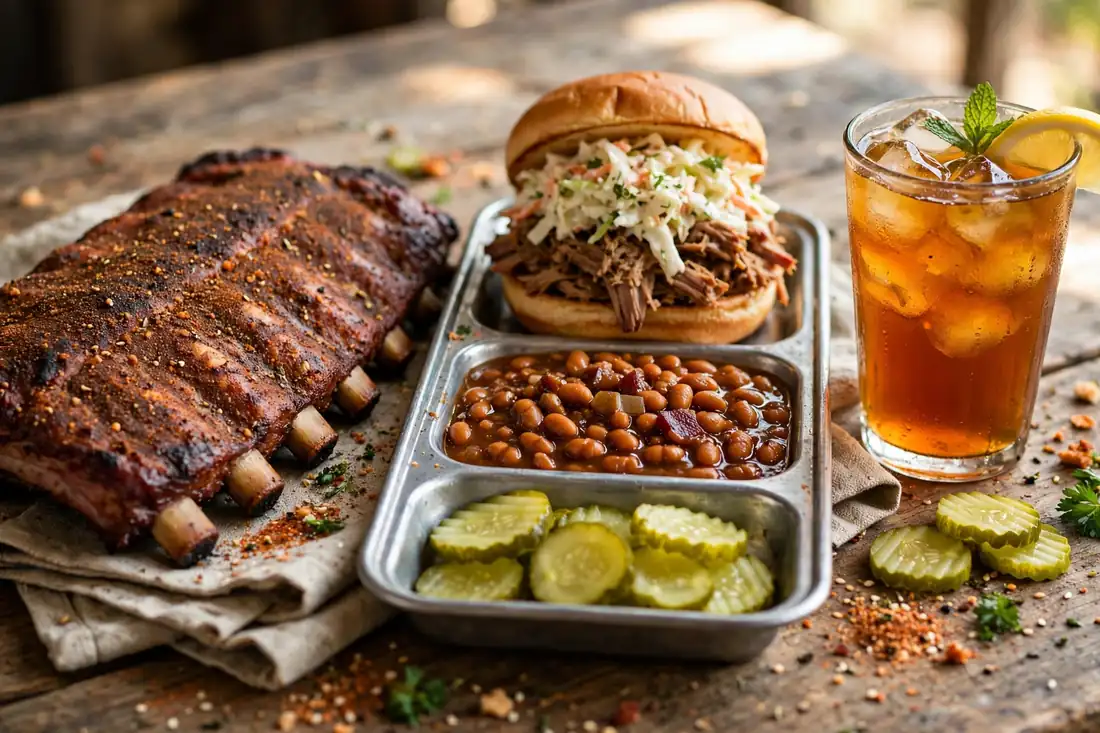
Memphis barbecue is the dry rub, the pulled pork and the great debate — and the debate is the point. The Memphis style is the dry-rub rib, rubbed with spices and cooked over charcoal, with the sauce on the side, not on the meat, and the pulled pork sandwich, with the slaw on top, and the argument in Memphis is not whether the barbecue is good but which place does it best. The Rendezvous, at 52 South 2nd Street, across from the Peabody, has served charcoal dry-rub ribs from its basement alley since 1948, closed on Sundays and Mondays, open Tuesday to Thursday from 11 a.m. to 9 p.m. and Friday to Saturday from 11 a.m. to 10 p.m., at $20 to $30 a person, walk-in only, with reservations for eight or more — and the ribs are the ones to order. Central BBQ, at 147 East Butler Avenue downtown and at 2249 Central Avenue in Midtown and Cooper-Young, open daily from 11 a.m. to 9 p.m., does the pulled pork, the dry-rub ribs and the hot wings, with the banana pudding for dessert. Cozy Corner, at 735 North Parkway, open since August 1977, Tuesday to Saturday from 11 a.m. to 8 p.m., closed on Sundays and Mondays, does the whole smoked Cornish hen, the signature dish that no other barbecue place in America serves. The trap is the barbecue contest, and this is where our guide beats the older ones: the World Championship Barbecue Cooking Contest, from 12 to 15 May 2027 at Liberty Park, the 50th anniversary of Memphis in May, has more than 200 teams from 27 states and 7 countries and more than $190,000 in prize money — but the teams do not hand out samples to the general public, so a plain admission expecting to eat is the classic disappointment, and the 2026 edition, from 13 to 16 May, was the 48th. Two practical notes: the dry rub is the Memphis style, and the wet rib, with the sauce cooked on, is the Kansas City style — our Kansas City guide covers the other side of the argument — and the Rendezvous is closed on Sundays and Mondays, so do not plan a Sunday barbecue there. Allow one meal, and go hungry. Memphis barbecue on Wikipedia covers the style and the history.
Gus’s fried chicken and the soul-food plate
Gus’s fried chicken is the other Memphis meal — and the one that is not Nashville hot chicken. Gus’s World Famous Fried Chicken, downtown at 310 South Front Street, was founded in 1953 in Mason, Tennessee, by Napoleon “Na” and Maggie Vanderbilt, and the chicken is spicy, crisp and brined, with the heat in the batter, not on top — and the downtown shop is the one to go to, with the white bread, the beans and the slaw on the side. The soul-food plate is the other half of the meal: the fried chicken, the greens, the mac and cheese and the cornbread, at the Four Way, the soul-food institution on Mississippi Boulevard, and at the restaurants on Beale Street and in South Main. The trap is the Nashville confusion, and this is where our guide beats the older ones: Gus’s is Memphis fried chicken, not Nashville hot chicken, and the two are different — the Nashville style is the cayenne paste on top, the Memphis style is the spice in the batter — so do not ask for Nashville hot in Memphis, and do not expect the chicken to be mild. Two practical notes: the chicken is a lunch, not a day — allow one hour, and go at noon, when the chicken is freshest — and the Four Way is the soul-food dinner, with the plate that feeds two. Allow one hour, and go hungry.
Gibson’s Donuts and the sweet finish
Gibson’s Donuts is the sweet finish — and the Memphis institution that has been open since 1967. The shop on Mt Moriah Road, in East Memphis, does the cake donuts, the apple fritters and the glazed donuts, with the coffee, and the locals argue about which donut is the best the way they argue about the barbecue. The Arcade Restaurant, at 540 South Main Street, the oldest restaurant in Memphis, open since 1919, with the Elvis booth and the films shot there, is the breakfast to have before the museums, with the pancakes, the eggs and the sweet tea. The trap is the sweet tea, and this is where our guide beats the older ones: the sweet tea in Memphis is sweet, and the unsweet tea is the exception — so order the sweet tea if you want the Memphis drink, and the unsweet if you do not. Two practical notes: the donuts are a morning stop, not a day — allow 30 minutes, and go in the morning, when the fritters are fresh — and the Arcade is the breakfast, with the Elvis booth the table to ask for. Allow 30 minutes, and go in the morning.
Free things to do in Memphis
Memphis is one of the cheapest cities in America for the free sights — and the free list is the best in this guide. The Peabody ducks are free, twice a day, at 11 a.m. and 5 p.m., and the lobby is free to enter. Beale Street is free to walk, with the music spilling out of the clubs from about 5 p.m. Tom Lee Park is free, open daily from 6 a.m. to 30 minutes after sunset, with the riverfront walk. Big River Crossing is free, open daily from 6 a.m. to 10 p.m., with the mile across the Mississippi. Elmwood Cemetery is free, open daily from 8 a.m. to 4:30 p.m., with the self-guided walking tour. The Memphis Botanic Garden is free, with 96 acres of gardens. The Levitt Shell in Overton Park runs more than 50 free concerts a year, in the open-air amphitheatre where Elvis played his first paid concert. The South Main Trolley Night, on the last Friday of every month, is a free street festival. The MATA buses are free under the Zero Fare pilot. The Meditation Garden at Graceland is free from 7:30 to 8:30 a.m., with entry by 8:30. Tennessee residents get into the National Civil Rights Museum free on Mondays from 3 p.m. to close, Shelby County residents get into the Rock ‘n’ Soul Museum free every Tuesday, the Memphis Museum of Science & History is free on the third Thursday of every month, and the Memphis Art Museum is free for Shelby County residents in perpetuity from 6 December 2026. The Levitt Shell on Wikipedia covers the amphitheatre, and Overton Park on Wikipedia covers the park.
Frequently asked questions
How many days do you need in Memphis?
Three days is the standard answer, and the right one for most visitors. One day is enough for the highlights: Graceland in the morning, the Civil Rights Museum in the afternoon, and Beale Street at night. Two days is the right amount for a real trip, with Sun Studio, Stax and the river done properly. Three days is the full trip, with the zoo, the parks and the neighbourhoods. Four days is too many for Memphis alone — use the extra day for Tupelo, the birthplace of Elvis, about an hour and a half away, or for Nashville, three hours east, which is the other music city in Tennessee.
Is Memphis safe for tourists?
Honestly: the crime rate in Memphis is above the United States average, and the city has a reputation that the locals are tired of — but the crime is concentrated outside the tourist areas, and the tourist zones of Downtown, Beale Street, South Main, Midtown, Harbor Town and East Memphis are considered tourist-safe. The realistic risk is the car break-in, not the street robbery, and the Memphis Police campaign is “Stow It, Don’t Show It” — use a garage over a lot or street parking at night, do not leave anything visible in the car, and do not walk alone late at night, especially near Graceland after dark. The 2026 tracking is the lowest violent-crime half-year on record, down about 31.5% year over year, and the city is working on it — but the advice is the same as in any big American city: stay in the busy, well-lit streets, use a rideshare at night, and keep your car empty.
Is the Memphis trolley running?
No — and this is the most important transport fact in this guide. The rail trolleys have been suspended since 18 August 2024, over brake issues and a transport department investigation, and the Riverfront Loop and the Madison Avenue lines have been suspended since June 2014, after fires. The rubber-tired trolleys have run since June 2025, and the rail trolleys are targeted to return on 15 December 2026, with four trolleys on the Main Street Line only. Do not plan a trip around the trolley, and do not trust a guide that tells you to ride it — use the free MATA buses, the rideshare and your feet instead.
When is the best time to visit Memphis?
April to May and mid-September to October for the weather, when the days are warm, the humidity is low and the hotels are cheaper. May is the festival month, with Memphis in May and the World Championship Barbecue Cooking Contest from 12 to 15 May 2027, the 50th anniversary of the festival. August is Elvis Week, from 8 to 16 August 2027, the 50th anniversary of Elvis’s death, with the candlelight vigil on 15 August. September is the single best pick, with the third week of September the peak, and the summer is the season most visitors come, with the July high at about 91°F and the muggy season from 9 May to 2 October.
Do you need a car in Memphis?
No, for downtown. The walking, the free buses and the rideshare cover the centre, and the centre is walkable, with Beale Street, South Main, the riverfront and the museums all within reach on foot. Yes, for Graceland, nine miles south of downtown, for the zoo, for Shelby Farms Park and for the gardens, which are spread across the city and not on the bus routes that a visitor would use — and the car is a liability downtown at night, with the break-ins and the parking, so use a garage. Take the bus and the rideshare for the days you stay downtown, and the car for the days you leave it — and the only reason to rent a car is Graceland, the zoo and the parks, where the car is the trip.
What should I skip in Memphis?
Six things, and all six are traps older guides still get wrong. First, do not plan a trip around the Brooks Museum in Overton Park: it closed on 27 September 2026, and the new Memphis Art Museum does not open downtown until 6 December 2026, so there is no art museum to visit before then. Second, do not plan a trip around the trolley: the rail trolleys have not run since August 2024, and the return is targeted for 15 December 2026. Third, do not plan a museum day on a Tuesday or a Monday: the Civil Rights Museum is closed on Tuesdays, Stax is closed on Mondays, and the Pink Palace is closed on Mondays and Tuesdays. Fourth, do not go to the Rendezvous on a Sunday or a Monday: it is closed, and the ribs are the reason to go. Fifth, do not pay for the Barbecue Contest expecting to eat: the teams do not hand out samples to the general public, so a plain admission is the classic disappointment. And sixth, do not go to the zoo expecting pandas: the giant pandas left in April 2023, and any guide that still promises them is out of date.
Further reading
Start with Memphis, Tennessee on Wikipedia, which covers the history and the geography, and the Mississippi River on Wikipedia for the river and the port. For Elvis, Graceland on Wikipedia covers the mansion and the estate, and Elvis Presley on Wikipedia covers the life. For the civil rights story, the National Civil Rights Museum on Wikipedia covers the museum, Martin Luther King Jr. on Wikipedia covers his life, and the Lorraine Motel on Wikipedia covers the motel and the assassination. For the music, Sun Studio on Wikipedia covers the studio, Beale Street on Wikipedia covers the street, Stax Records on Wikipedia covers the label, the Stax Museum of American Soul Music on Wikipedia covers the museum, and the Memphis Rock ‘n’ Soul Museum on Wikipedia covers the Smithsonian museum. For the city, the Peabody Hotel on Wikipedia covers the hotel and the ducks, the Memphis Pyramid on Wikipedia covers the pyramid, the Memphis Zoo on Wikipedia covers the zoo, Tom Lee Park on Wikipedia covers the riverfront park, and the Harahan Bridge on Wikipedia covers the bridge and the crossing. For the museums and the gardens, the Memphis Brooks Museum of Art on Wikipedia covers the art museum, the Pink Palace Museum and Planetarium on Wikipedia covers the Pink Palace, Mud Island, Memphis on Wikipedia covers the island, Shelby Farms on Wikipedia covers the park, the Blues Hall of Fame on Wikipedia covers the hall, Elmwood Cemetery (Memphis, Tennessee) on Wikipedia covers the cemetery, the Slave Haven Underground Railroad Museum on Wikipedia covers the Burkle Estate, the Memphis Botanic Garden on Wikipedia covers the garden, and the Dixon Gallery and Gardens on Wikipedia covers the Dixon. For the festival and the food, Memphis in May on Wikipedia covers the festival, and Memphis barbecue on Wikipedia covers the style. No Reddit link is included here: no live r/memphis thread turned up in search, so none is listed rather than linking to an unverified one. No Quora link is included either: no live on-topic Quora thread about visiting Memphis turned up in search, so none is listed rather than linking to an unverified one.
Your Memphis trip, in one paragraph
Memphis is the city that rewards slowing down: Graceland in the morning, the Civil Rights Museum in the afternoon, Sun Studio at noon, the Peabody ducks at five, Beale Street at night, the dry-rub ribs for dinner, and the Mississippi at sunset before you leave. For more guides in the same style, start with our Hawaii guide, then see how Memphis compares with Maui, Honolulu, Chicago, Nashville, Los Angeles, Orlando, Miami, San Diego, Denver, Savannah, Dallas, Charleston, San Francisco, Myrtle Beach, Las Vegas, San Antonio, London, Portland, Pigeon Forge, Puerto Rico, Atlanta, Phoenix, Paris, Key West, Colorado Springs, Sedona, Chattanooga, Palm Springs, St Louis, Tokyo, Japan, Kansas City, Tennessee, Branson, Florida, Amsterdam, Montreal, Fort Lauderdale, Toronto, Aruba, Charlotte, Indianapolis, New Orleans, Destin, Santa Barbara, Mexico City, Arizona, Osaka, Minneapolis, Pittsburgh, California, Asheville, Costa Rica, Washington DC, Seattle, St Augustine, Lisbon, Dubai, Santa Fe, Galveston, Maine, Sacramento, Kauai, Boston, Cancun, Madrid, Salt Lake City, Baltimore, Barcelona, Reno, Milwaukee, North Carolina, New York, Tucson, Raleigh, Corpus Christi, Milan, Salem and Wilmington.

About the Author