Things to Do in New York
20 Best Attractions, a 3-Day Itinerary, Where to Stay, and the Food You Cannot Miss
Quick Info
Best for: First-timers, city lovers, museum goers, food lovers and walkers — the biggest, loudest, most walkable city in America, with five boroughs in one trip
Best time: Late April–early June and September–early November for mild weather; December for the Christmas lights and the Rockefeller tree; January–February for the lowest hotel prices
How long: 3 days for the icons; 5 days for the icons plus Brooklyn and a museum day; a week if you want the neighbourhoods too
Budget: About $200–$350 per person per day mid-range — hotels and tickets are the biggest costs, and many of the best sights are free
Don’t miss: The Statue of Liberty ferry at 9 a.m., Top of the Rock at sunset, a Broadway show from TKTS, the Brooklyn Bridge at dawn, and a slice of pizza folded in half
New York City is the city most visitors get wrong — they try to see all of it and end up seeing none of it properly. It is five boroughs and 8.3 million people, with the icons in Manhattan, the views in Brooklyn, the food in Queens and the space in the Bronx, and the best trip plans by neighbourhood, not by attraction. This guide covers the 20 best things to do in New York, a 3-day itinerary that actually works, where to stay without paying December prices by accident, how to get around on the $3 subway, the three foods you should not skip, and the free sights that cost nothing. Everything below was checked against live sources in November 2026 — including the subway fare rise, the congestion-pricing toll, the Statue of Liberty crown sell-out, the Vessel reopening, and the prices older guides underplay.
New York at a glance
| Topic | What to know |
|---|---|
| Full name | New York City — the Big Apple, the City That Never Sleeps, the five boroughs |
| Founded | 1624 as New Amsterdam; renamed New York in 1664; the first capital of the United States |
| Population | About 8.3 million people in the city, about 20 million in the metro area — the largest city in the United States |
| Boroughs | Manhattan, Brooklyn, Queens, the Bronx and Staten Island — each one a city in itself |
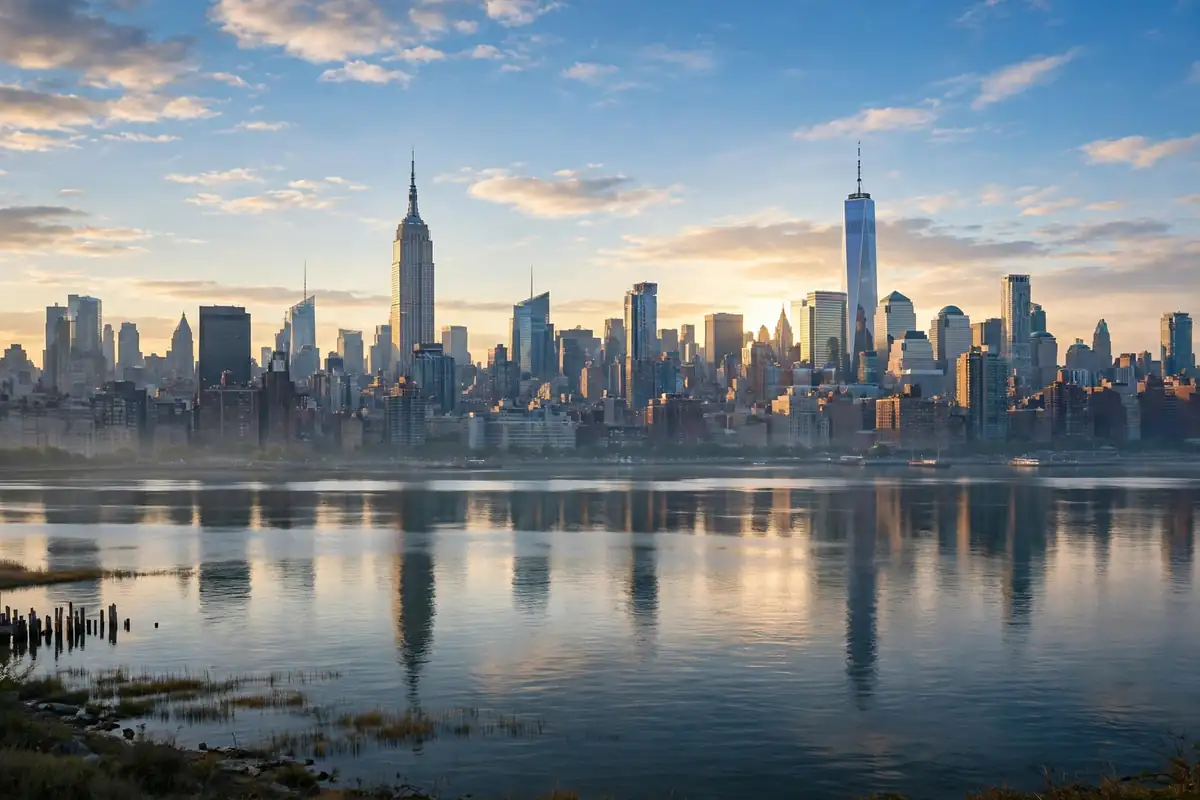
| Highest point | One World Trade Center, 1,776 feet — the tallest building in the Western Hemisphere |
| Airports | John F. Kennedy International (JFK), LaGuardia (LGA) and Newark Liberty (EWR) in New Jersey |
| Best base | Midtown Manhattan for first-timers; the Upper West Side for museums and quiet; Brooklyn for local life |
| Getting around | The subway — $3 a ride, $35 weekly cap, 24 hours a day; walking is the other half of the trip |
| Famous for | The Statue of Liberty, Times Square, Central Park, Broadway, the skyline and the pizza slice |
New York divides into five ideas that most visitors only partly see. Manhattan is the one the postcards show: Times Square, Central Park, the museums on Fifth Avenue, the skyscrapers and Broadway. Brooklyn is the one that surprises people: the Bridge walk, DUMBO, the brownstones, the food and the skyline views back across the river. Queens is the one that feeds you: the most diverse food in America, from Jackson Heights to Flushing. The Bronx is the one with the space: the zoo, the Botanical Garden and Yankee Stadium. Staten Island is the one with the free ferry and the free view of the Statue. The trap is the distance and the small print: the subway fare rose to $3 in January 2026, driving into Manhattan below 60th Street costs $9 in congestion pricing, the Statue of Liberty crown sells out three months ahead, and the summer of 2026 brought record crowds for the World Cup and the 250th anniversary of the United States — so the city rewards the visitor who books the timed tickets first and walks the neighbourhoods second. Plan by neighbourhood, ride the subway, and book the decks and the ferry before you fly, and the city rewards you in every month of the year.
The 20 best things to do in New York
1. The Statue of Liberty & Ellis Island
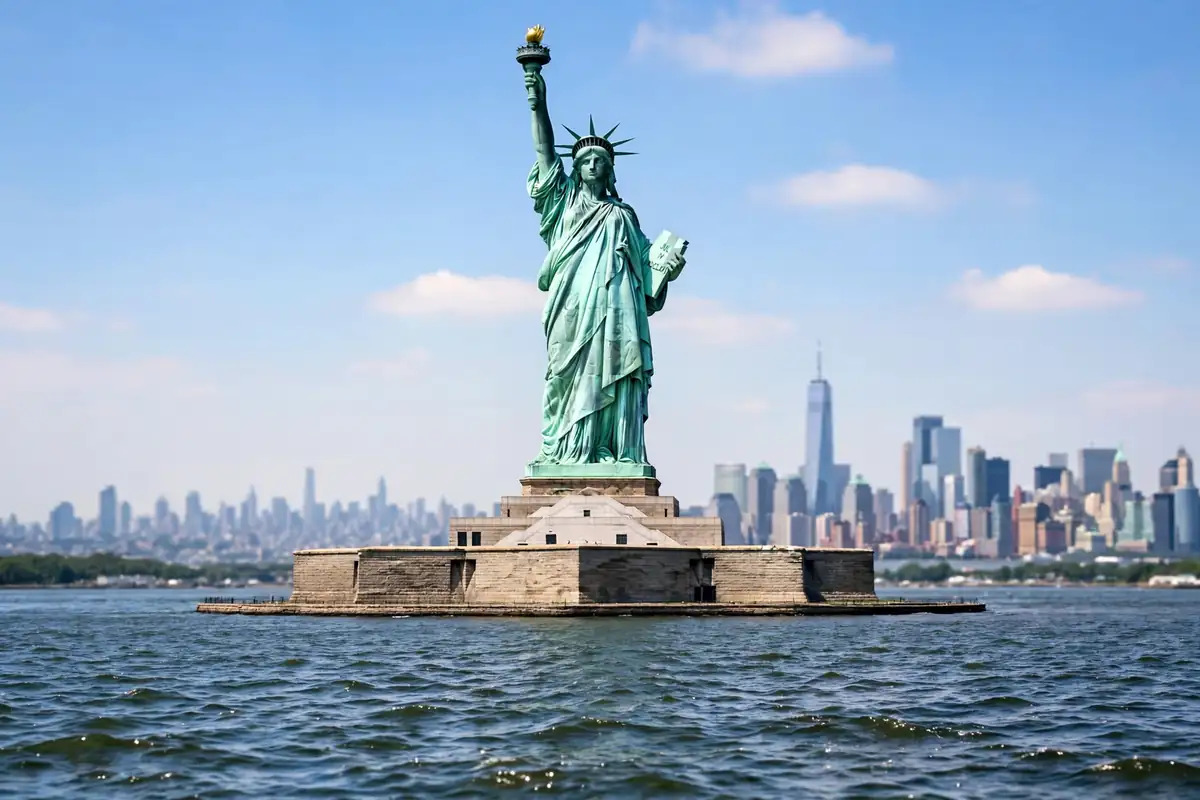
The Statue of Liberty is the symbol of the city and the first thing to book — a 151-foot copper statue on Liberty Island, a gift from France in 1886, with the torch, the crown and the view back across the harbour to Manhattan. The trap is the ticket, and this is where our guide beats the older ones: the only ferry that lands on the islands is Statue City Cruises, from Battery Park in Manhattan or Liberty State Park in New Jersey, and the crown sells out about 90 days ahead. As of November 2026, the ferry costs $26 for adults 13 and over, $23 for seniors 62 and over and $17 for children 4 to 12, with under-4s free — and the pedestal and the crown cost only $0.30 more, at $26.30, so the price is never the problem, the availability is. Book the Pedestal Reserve a few weeks ahead and the Crown Reserve three to four months ahead, and do not buy from the touts around Battery Park, who sell harbour cruises that never land. The crown climb is 162 narrow steps from the pedestal with no elevator, a 42-inch minimum height, and a limit of four tickets per card every six months, with photo ID matching the ticket. The first ferry leaves at 9 a.m. and the last at about 3:30 p.m., and the boats do not run on Thanksgiving or Christmas Day. Ellis Island is included in every ticket — the immigration museum in the old Great Hall, where 12 million people arrived between 1892 and 1954 — and the Statue of Liberty Museum on the island is free with the ferry. The statue turned 140 on 28 October 2026. Allow half a day, and take the first ferry in the morning, when the light is best and the security line is shortest.
2. Central Park
Central Park is the park that makes the city breathable — 843 acres of lawns, lakes, woods and paths in the middle of Manhattan, entirely man-made, designed by Frederick Law Olmsted and Calvert Vaux and opened in the 1850s and 1860s. The park is free and open daily from 6 a.m. to 1 a.m., and the walk is the visit: the Mall with its elm trees, Bethesda Terrace and Fountain, the Lake and the Bow Bridge, Strawberry Fields and the Imagine mosaic, the Reservoir with the skyline behind it, and the Conservatory Garden at the north end. The seasons are the reason to come back: the cherry blossoms along the Reservoir in late March to mid-April, the green lawns and the long evenings in June, the foliage that peaks in mid-to-late October, and the quiet snow in January. Two practical notes: the park is bigger than it looks on the map, so do not try to walk the whole thing in one go — pick the southern half for a first visit, from the Pond to the Reservoir — and the bikes are the way to see the rest, with rentals by the hour at the south end. Allow two to three hours, and go in the morning, when the runners are out, the light is low, and the park is at its calmest.
3. Times Square
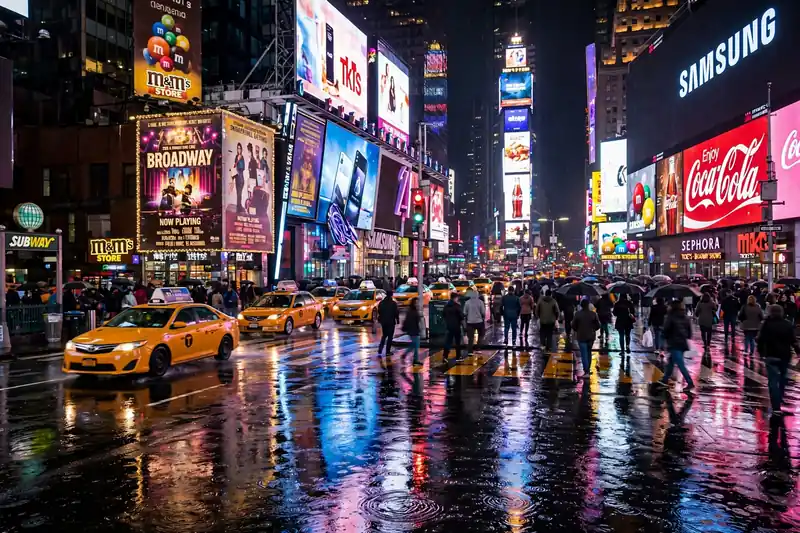
Times Square is the crossroads of the world and the one sight to see once, at night — the canyon of neon and giant screens at Broadway and Seventh Avenue, where the crowds, the noise and the light are the attraction. The square is free, and the best time is after dark, when the screens are brightest and the energy is highest. Two warnings: the costumed characters on the pedestrian plazas will pose for a photo and then demand a tip, so agree the price first or walk past them, and the restaurants on the square itself are the most expensive in the city for the worst food — eat a block or two away. The TKTS booth under the red steps at Duffy Square, at 47th and Broadway, is the reason to come in the afternoon — same-day Broadway tickets at up to 50 percent off, with the board showing what is on sale that day. The square is also where the New Year’s Eve ball drops, and where the crowds are at their worst on that night — do not plan a first visit for 31 December unless you have a ticketed viewing area. Allow 30 minutes, and go at night, then leave for a quieter street — Times Square is a sight, not a place to spend the evening.
4. The Empire State Building — and how to pick a deck
The Empire State Building is the icon itself — the 102-storey Art Deco tower from 1931, with the open-air deck on the 86th floor at 1,050 feet and the enclosed 102nd floor at 1,250 feet. The trap is choosing the wrong deck, and this is where our guide beats the older ones: there are five decks in the city now, all with timed tickets and dynamic pricing, and the right one depends on what you want to photograph. As of November 2026, the Empire State Building costs from about $44 to $46 for the 86th floor, with the 86th plus 102nd combo from about $81, and it is open until 10 p.m. through late November — go early or late, because the queues at midday are the longest in the city. Top of the Rock is the best all-round view: from $42, on floors 67, 69 and 70 at 850 feet, with the top level open-air and glass-free, so the photo has the Empire State Building and Central Park in the same frame. One World Observatory is the highest deck in the city at 1,268 feet, from $39, with 50 percent off after 8 p.m. — but it is fully enclosed, behind glass, and the view is the harbour and the Statue. The Edge at Hudson Yards is the highest outdoor deck in the Western Hemisphere at 1,100 feet, from about $34 if you book two weeks ahead, with a glass floor and a triangular platform that hangs over the street. SUMMIT One Vanderbilt is the strangest: from about $48, with mirrored rooms, glass boxes and a view of the Chrysler Building. The rule is simple: one deck is enough, two is a luxury, and five is a waste of a day — pick Top of the Rock for the photo, the Empire State Building for the icon, or One World for the height. Allow two hours, and book the sunset slot days ahead, because it sells out first at every deck.
5. Top of the Rock
Top of the Rock is the observation deck at 30 Rockefeller Plaza, spread across levels 67, 69 and 70, with the top level 850 feet above Midtown — and the deck our guide picks first, because it is the only one that puts the Empire State Building and Central Park in the same photograph. The top terrace is open-air with no glass, so the pictures are clean, and the three levels give you the north view over Central Park, the south view down Fifth Avenue to the Empire State Building, and the west view over the Hudson. As of November 2026, tickets start at $42, with timed entry, and the deck is open daily from 8 a.m. to midnight, with last entry at 11:10 p.m. The Beam, a recreation of the famous 1932 photograph of workers eating lunch on a steel girder, costs extra, and the SKYLIFT ride on the roof costs extra too — skip both unless you want the photo, because the view is the point. Two practical notes: the sunset slot is the most expensive and the first to sell out, so book it days ahead, and the morning slot is the quietest and the cheapest. The deck sits above Rockefeller Center, so pair it with the Channel Gardens, the skating rink in winter, and the Christmas tree, which arrives on 7 November 2026 and is lit on 2 December. Allow 90 minutes, and go at sunset if you can get the ticket, or at 8 a.m. if you cannot.
6. The Met
The Metropolitan Museum of Art is the largest and most encyclopedic art museum in the Americas — more than 2 million works spanning 5,000 years, on Fifth Avenue at 82nd Street, facing Central Park. The trap is the ticket, and this is where our guide beats the older ones: the famous pay-what-you-wish admission is only for New York State residents and students from New York, New Jersey and Connecticut — everyone else pays the fixed price. As of November 2026, admission is $30 for adults, $22 for seniors and $17 for students, with children under 12 free, and the ticket is valid for three days and includes the Cloisters, the medieval branch in Fort Tryon Park. The museum is closed on Wednesdays. The highlights for a first visit are the Temple of Dendur in the Egyptian wing, the European paintings, the American Wing with its period rooms, and the roof garden in summer, with the skyline behind the sculptures. Two practical notes: the museum is too big for one day, so pick two wings and stop — the American Wing and the Egyptian wing are the best pair — and the cloakroom is free, so leave the coat and the bag. Allow three hours, and go on a weekday morning, when the school groups are thinnest and the galleries are quietest.
7. MoMA
The Museum of Modern Art is the modern art museum — Van Gogh’s The Starry Night, Picasso’s Les Demoiselles d’Avignon, Monet’s Water Lilies, Warhol’s soup cans and the design collection, in the building on 53rd Street between Fifth and Sixth Avenues. As of November 2026, admission is $30 on site and $28 online, with children 16 and under always free, and the museum is open daily. The free Friday evening, from 5:30 to 8:30 p.m., is only for New York State residents — visitors pay full price, and older guides that call it a general free night are wrong. The Starry Night is the painting everyone comes for, and it is on the fifth floor, so go there first and then work down — the fifth floor is the permanent collection, and the lower floors are the temporary exhibitions. Two practical notes: the museum is smaller than the Met, so two to three hours is enough, and the sculpture garden is free to look into from the street but needs a ticket to enter. Allow two to three hours, and go in the late afternoon, when the crowds thin and the light in the atrium is best.
8. The American Museum of Natural History
The American Museum of Natural History is the city’s best museum for families and anyone who loved dinosaurs as a kid — the fossil halls, the blue whale hanging over the Hall of Ocean Life, the dioramas, the Rose Center planetarium, and the Gilder Center, the stone building that opened in 2023 with its canyon-like atrium. As of November 2026, general admission is $37 for non-residents, and pay-what-you-wish is only for New York State residents with ID — visitors pay the full price, and older guides that call it a free museum are wrong. The museum is open daily, and the ticket is timed, so book online. The highlights for a first visit are the dinosaur halls on the fourth floor, the Hall of Ocean Life with the 94-foot blue whale, the Gilder Center atrium, and the planetarium show, which costs extra. Two practical notes: the museum is vast, so pick the dinosaurs and the ocean hall and stop — the rest is a second visit — and the entrance on Central Park West is the quietest, because the tour groups use the 81st Street entrance. Allow half a day, and go in the morning, when the school groups have not yet arrived and the halls are quietest.
9. The 9/11 Memorial & Museum
The National September 11 Memorial & Museum is the most moving place in the city — the two reflecting pools in the footprints of the Twin Towers, with the names of the 2,977 victims cut into the bronze, and the museum beneath them, telling the story of the day and the people. The memorial pools are free and open daily, with no ticket and no charge, ever. The museum is a separate ticketed building: as of November 2026, admission is $33 for adults, with free entry on Monday evenings from 5:30 p.m. to close on a first-come basis, with the free tickets released at 7 a.m. that day — and free on Sunday afternoons from 4 to 7 p.m. for New Yorkers with ID. The museum is heavy, and it is meant to be: the slurry wall, the last column, the recorded voices, and the memorial exhibition are the reason to go slowly. Two practical notes: allow two to three hours and do not rush it, and the Oculus, the white transport hub next door by Santiago Calatrava, is free to walk through and is the place to sit afterwards. Allow two to three hours, and go in the morning, when the pools are quietest and the museum is at its calmest.
10. Broadway — how to actually get a ticket
Broadway theatre is the home of American theatre — more than 40 stages in the Theatre District, with the musicals, the plays and the stars, and the ticket is the puzzle. The trap is the resale market, and this is where our guide beats the older ones: buy only from the show’s official seller or the theatre’s own box office, because the resale sites charge double and the tickets are not always real. As of November 2026, the average Broadway ticket across the 2025–26 season cost $131.09, with peak weeks reaching $165.98, and premium orchestra seats at the hit musicals running $400 or more. The cheap doors are real, and they are three: TKTS, the discount booth run by the nonprofit TDF under the red steps at Duffy Square, at 47th and Broadway, sells same-day tickets at up to 50 percent off, with an $8 service charge per ticket — the Times Square booth is open Monday to Saturday 3 to 8 p.m. for evening shows, Wednesday and Saturday 10 a.m. to 2 p.m. for matinees, and Sunday 11 a.m. to 3 p.m., and the Lincoln Center booth at 61 West 62nd Street, Tuesday to Saturday 11 a.m. to 6 p.m., sells the same inventory with a fraction of the line. The digital lotteries, mostly $35 to $55 if you win — and $10 for Hamilton — and the rush tickets, mostly $40 to $49 at the box office when it opens or in the show’s app. Twice a year, Broadway Week takes 50 percent off each ticket when you buy two. Two practical notes: the megahits are almost never on the TKTS board, so if Hamilton or Wicked is the point, buy months ahead at face value — and check the TKTS app before you queue, because the board changes through the day. Allow one evening, and book the show before you fly if it is the reason for the trip.
11. The High Line
The High Line is the park in the sky — a 1.45-mile elevated linear park on a disused freight railway through Chelsea, planted like a wild meadow, threaded between the buildings, from Gansevoort Street in the Meatpacking District to 34th Street at Hudson Yards. The park is free, and the hours are 7 a.m. to 10 p.m. daily from April through November, and 7 a.m. to 8 p.m. from December through March. The walk is the visit: the wild grasses, the public art, the views down the avenues, the 10th Avenue Square with its window over the street, and the northern end at Hudson Yards, where the Vessel and the Edge stand. Two practical notes: the weekend afternoons are a slow-moving human traffic jam, so go before 10 a.m. or in the last hour before close, and the elevators are at Gansevoort, 14th, 23rd and 30th Streets, so the whole park is step-free. The southern entrance at Gansevoort Street is by the Whitney Museum, and the park pairs with Chelsea Market for lunch and Little Island for sunset. Allow 90 minutes, and go on a weekday morning, when the park is yours and the light is best.
12. The Brooklyn Bridge & DUMBO
The Brooklyn Bridge is the best free walk in the city — the 1.1-mile crossing from City Hall Park in Manhattan to DUMBO in Brooklyn, over the East River, on the bridge that opened in 1883 with its Gothic stone towers and spider-web cables. The pedestrian walkway is free and open 24 hours a day, and the walk is the visit: the skyline growing behind you as you walk toward Brooklyn, the cables above, and the view of the Statue of Liberty from the middle of the span. The trap is the crowd, and this is where our guide beats the older ones: the walkway is at its quietest between 5:30 and 7 a.m. on weekdays and before 8:30 a.m. on weekends, and after 8:30 p.m. most nights — at midday it is a slow shuffle behind the selfie sticks. As of spring 2026, the Manhattan entrance on Centre Street was redesigned to separate cyclists from pedestrians for the first time, so follow the signs and do not walk in the bike lane. DUMBO, Brooklyn is the neighbourhood at the Brooklyn end — Down Under the Manhattan Bridge Overpass — with the Washington Street photograph, the Empire State Building framed under the Manhattan Bridge, the waterfront at Brooklyn Bridge Park, and Jane’s Carousel in its glass box. Allow 45 minutes for the walk and an hour in DUMBO, and walk from Manhattan to Brooklyn in the morning, so the sun is behind you and the skyline is in front of you.
13. The Vessel, Hudson Yards & the Edge
The Vessel is the honeycomb staircase at Hudson Yards — 154 flights of stairs and almost 2,500 steps in a 150-foot beehive of copper-coloured steel, designed by Thomas Heatherwick and opened in 2019. The trap is the closure, and this is where our guide beats the older ones: the Vessel was closed in January 2021 after four deaths, and it reopened on 21 October 2024 with floor-to-ceiling steel mesh barriers on the walkable sections — and the top level stays permanently closed. As of November 2026, timed tickets start at $10, with free admission for New York City residents on Thursdays, and the Vessel is open daily from 10 a.m. to 9 p.m., with bag checks and a security scan at the entrance. The Edge, the observation deck at 30 Hudson Yards, is the reason to come to the neighbourhood: the highest outdoor sky deck in the Western Hemisphere at 1,100 feet, from about $34 if you book two weeks ahead, with a triangular glass-floor platform that hangs over the street and the city below. Hudson Yards itself is the newest neighbourhood in the city — the Shops, the restaurants, the Shed arts centre and the High Line’s northern end, all built over the rail yards. Allow two hours, and book the Vessel and the Edge together in the late afternoon, when the light is low and the city is at its best.
14. Little Island
Little Island at Pier 55 is the park on stilts — a free public park floating over the Hudson River at Pier 55, between West 13th and West 14th Streets, on 132 concrete tulip-shaped supports, opened in May 2021. The park is free, with no ticket and no timed entry, and the hours are 6 a.m. to midnight from late May to early September, 6 a.m. to 11 p.m. through October, and 6 a.m. to 9 p.m. from November through December. The visit is the walk: the winding paths up through the planted hills, the overlooks over the river and the skyline, the lawns, and the Amph, the outdoor performance space where shows are ticketed separately. Two practical notes: the main lawns are closed on Mondays and Tuesdays from mid-May through September for maintenance, so do not plan a picnic for a Monday in July — and the park is small, so pair it with the High Line and Chelsea Market, which are a ten-minute walk away. The closest subway is 14th Street, on the A, C, E, L, 1, 2, 3, F and M lines, and the walk west down 14th Street to the river takes about ten minutes. Allow one hour, and go at sunset, when the park is at its best and the river turns gold.
15. Grand Central Terminal & the New York Public Library
Grand Central Terminal is the cathedral of the city — the 1913 Beaux-Arts station on 42nd Street, with the Main Concourse, the celestial ceiling, the four-faced clock, and the whispering gallery, where two people can whisper across the arched ceiling and hear each other. The terminal is free to walk through, and the visit is the building: the Main Concourse, Vanderbilt Hall, the Oyster Bar downstairs, and the shops and the food hall in the lower level. The New York Public Library Main Branch is the other free icon on the same street — the marble library on Fifth Avenue at 42nd Street, guarded by the lions Patience and Fortitude, with the Rose Main Reading Room, one of the great rooms in America, free to enter and free to sit in. Two practical notes: the terminal is busiest at rush hour, so go mid-morning, and the library’s reading room closes earlier than the building, so check the hours before you go. The two buildings are a five-minute walk apart, and together they are the best free hour in Midtown. Allow one hour, and go in the morning, when the light comes through the terminal’s windows and the reading room is quietest.
16. The Whitney Museum
The Whitney Museum is the museum of American art — Edward Hopper, Andy Warhol, Georgia O’Keeffe, and the living artists of the moment, in the Renzo Piano building at the southern end of the High Line, at Gansevoort Street. As of November 2026, admission is $30 for adults, with free admission for everyone aged 25 and under, and free for everyone on Friday evenings from 5 to 10 p.m. — and free on the second Sunday of the month. The museum is the one to pair with the High Line: the terraces on the upper floors look out over the Hudson and the Meatpacking District, and the collection is the story of American art from the early 20th century to now. Two practical notes: the museum is smaller than the Met, so two hours is enough, and the Friday evening is the best value in the city for art — but it is also the busiest, so arrive at 5 p.m. when it opens. Allow two hours, and go on a Friday evening, or on a weekday morning, when the galleries are quietest.
17. The Guggenheim
The Solomon R. Guggenheim Museum is the museum where the building competes with the art — Frank Lloyd Wright’s spiral ramp on Fifth Avenue at 89th Street, with the galleries winding up six floors around the open atrium. As of November 2026, admission is $30 for adults, $19 for seniors and students, with children under 12 free, and the museum is open daily from 10:30 a.m. to 5:30 p.m. The pay-what-you-wish window is Tuesday and Sunday from 4 to 5:30 p.m., with a $10 suggestion and a $1 minimum — and almost every third-party site still lists the old Saturday slot, so check the museum’s own page. The current exhibition, Taryn Simon’s installation filling the whole spiral, runs from 18 September 2026 to 14 March 2027. Two practical notes: the ramp is the visit, so walk up it slowly and look down as well as up — and the bag rules are stricter than most New York museums, with a weapons scanner at the entrance and no large bags admitted. Allow two hours, and go on a Tuesday or Sunday afternoon, when the ticket costs a dollar and the ramp is at its quietest.
18. Greenwich Village & SoHo
Greenwich Village is the village inside the city — the low brownstones, the crooked streets, Washington Square Park with its arch, the jazz clubs, the comedy cellars and the cafés, where the city slows down and feels like a neighbourhood. SoHo, Manhattan is the cast-iron district next door — the 19th-century warehouses with their iron facades, the galleries, the boutiques and the cobbled streets, where the shopping is the best in the city and the architecture is the reason to look up. The walk is the visit: start at Washington Square Park, walk down Bleecker Street for the cafés and the music history, cross into SoHo on Prince Street for the galleries and the shops, and end at the Hudson for the sunset. Two practical notes: the Village is best on foot, so do not take the subway between the two — the walk is 20 minutes and it is the point — and the comedy clubs and the jazz clubs need tickets, so book the evening before you go. Allow half a day, and go in the afternoon, when the shops are open, the light is low, and the cafés are full.
19. Chinatown & Little Italy
Chinatown, Manhattan is the oldest Chinatown in the United States — the crowded streets around Mott Street and Canal Street, with the dumpling houses, the bakeries, the markets and the signs in Chinese, where the food is the cheapest and the best in the city. Little Italy, Manhattan is the street next door — Mulberry Street, with the red-sauce restaurants, the cannoli shops and the cafés, and the Feast of San Gennaro every September, when the street becomes a festival. The walk is the visit: start at Doyers Street, the crooked alley with the barbershops and the restaurants, eat dumplings on Mott Street, cross to Mulberry Street for a cannoli, and end at the Tenement Museum on Orchard Street, which tells the story of the immigrants who built both neighbourhoods. Two practical notes: the dumpling houses are cash-only in some cases, so carry small bills, and the restaurants on Mulberry Street with the touts outside are the ones to skip — the good ones have no one shouting at the door. Allow half a day, and go at lunchtime, when the dumpling houses are full and the food is freshest.
20. Coney Island
Coney Island is the beach at the end of the subway — the boardwalk, the sand, the Cyclone roller coaster from 1927, the Wonder Wheel, and Nathan’s Famous hot dogs, the stand that opened in 1916 and runs the hot dog eating contest every 4 July. The beach is free, and the boardwalk is free, and the rides are paid separately, so the day costs what you want it to cost. The season is the summer: the rides, the aquarium and the boardwalk are at their best from late May to early September, and the winter is a walk on an empty beach with the wind off the Atlantic. Two practical notes: take the D, F, N or Q train to Coney Island–Stillwell Avenue, the last stop, and do not drive — the parking is the worst in the city — and the Polar Bear Club’s New Year’s Day plunge on 1 January is the winter tradition, free to watch. Allow half a day, and go on a summer weekday, when the rides are open, the beach is warm, and the crowds are thinnest.
New York in 3 days — a ready-made itinerary
This three-day plan covers Manhattan, because three days cannot cover five boroughs — it uses Midtown as the base, with the subway, and it leaves Brooklyn and Queens for a fourth and fifth day. Book the Statue of Liberty ferry, the observation deck and the Broadway show before you fly, put the museums on a weekday, and keep the evenings for the neighbourhoods — the city eats late by American standards, with dinner from 7 p.m. and the bars open past midnight.
Day 1 — Midtown icons: Times Square, Top of the Rock and Broadway
Start at Grand Central Terminal at 9 a.m., and walk to the New York Public Library, then up Fifth Avenue to Rockefeller Center for Top of the Rock in the late morning. Walk to Times Square for lunch and the TKTS booth, then spend the afternoon in Central Park, from the Pond to Bethesda Terrace. Finish with dinner in the Theatre District and a Broadway show in the evening — the show is the reason to book ahead, and the TKTS booth is the backup if you did not.
Day 2 — Downtown: the Statue, the 9/11 Memorial and the Brooklyn Bridge
Take the first ferry to the Statue of Liberty at 9 a.m., and give the islands three hours, with Ellis Island and the museum. Walk to the 9/11 Memorial pools and the museum in the afternoon, then through the Oculus to the river. Walk the Brooklyn Bridge to DUMBO in the late afternoon, when the light is low and the skyline is behind you, and finish with dinner in Brooklyn — the pizza in DUMBO is the reason to cross the river.
Day 3 — Museums and the West Side: the Met, the High Line and the Village
Start at the Met at 10 a.m., and give it three hours, then walk across Central Park to the American Museum of Natural History for the dinosaurs. Take the subway downtown to the High Line in the afternoon, walk it south to the Whitney and Little Island, and finish in Greenwich Village for dinner — the cafés on Bleecker Street and the comedy clubs are the reason the evening runs late.
Best time to visit New York
| Season | Weather | Crowds | Notes |
|---|---|---|---|
| Spring (March–May) | Highs about 50–72°F (10–22°C), lows about 35–55°F (2–13°C) | Moderate | Best all-round season; cherry blossoms in Central Park, the parks in bloom, the city waking up |
| Summer (June–August) | Highs about 80–85°F (27–29°C), lows about 65–70°F (18–21°C) | High | Long days, outdoor events, the beach at Coney Island; hot, humid, and the most expensive |
| Autumn (September–November) | Highs about 46–77°F (8–25°C), lows about 34–63°F (1–17°C) | High in October | Fall colour in Central Park peaks mid-to-late October; the Rockefeller tree arrives 7 November |
| Winter (December–February) | Highs about 39–44°F (4–7°C), lows about 27–33°F (−3–1°C) | High in December, low in January | Christmas lights and the tree in December; the cheapest hotels in January and February |
The best time to visit New York is late April to early June, and if you want one answer, pick May: the days are warm without being punishing, the cherry blossoms are out in Central Park, the outdoor dining is back, and the hotel prices have not yet spiked for the summer. September is the second-best pick, with the heat gone and the evenings still warm. October is the leaf season, and the colour in Central Park peaks in mid-to-late October — come then for the leaves, and book the hotel a month ahead, because the rooms sell out and the prices double. December is the Christmas month, and the most expensive: the Rockefeller tree is lit on 2 December 2026, the Fifth Avenue windows are at their best, and the average hotel night runs about $541 — the highest of the year. January is the cheapest month, with the average hotel night about $196, and the museums at their quietest. July and August are the hottest and most humid, with highs around 85°F and the subway platforms feeling like saunas, and the summer of 2026 brought record crowds for the World Cup and the 250th anniversary of the United States. The seasonal traps are specific: the Statue of Liberty crown sells out three months ahead in every season; the observation deck sunset slots sell out days ahead; and the Christmas week is the most expensive week of the year, so a January trip to the same city costs half as much as a December one.
Where to stay in New York
| Area | Best for | Price range |
|---|---|---|
| Midtown Manhattan | First-timers, Broadway, the decks, the subway | $250–$500 a night |
| Upper West Side | Museums, Central Park, quiet evenings | $200–$400 a night |
| Lower East Side / East Village | Food, nightlife, the Village, the delis | $180–$350 a night |
| Financial District | Weekend deals, the Statue ferry, quiet nights | $180–$350 a night |
| Williamsburg, Brooklyn | Local life, the skyline views, the food | $150–$300 a night |
| Long Island City, Queens | Value, the skyline views, the subway | $130–$250 a night |
Stay in Midtown if this is your first visit — Times Square, Broadway, the decks and the subway are all within reach, and the hotels are the most central in the city — and the Plaza Hotel, the grand hotel on Fifth Avenue at Central Park, is the stay that is an attraction in itself, with its lobby and its view. Stay on the Upper West Side if you want museums and quiet — the Met, the Natural History Museum and Central Park are a walk away, and the streets are calmer at night. Stay in the Lower East Side or the East Village if you want food and nightlife — the delis, the bars and the cafés, with the subway into Midtown in ten minutes. Stay in the Financial District if you are here on a weekend — the hotels drop their prices when the offices empty, and the Statue ferry is a walk away. Stay in Williamsburg if you want local life — the cafés, the shops and the skyline views, with the ferry and the L train into Manhattan. Stay in Long Island City if you want value — the hotels are the cheapest in the city with a skyline view, and the subway into Midtown takes ten minutes. Two warnings: do not book a room in December without checking the price first — the Christmas rates are the highest of the year, and the rooms sell out — and do not book a room in Midtown on a summer weekend without checking the price, because the rates double, and the rooms sell out.
Getting around New York
| Way to travel | Cost | Best for |
|---|---|---|
| Subway (OMNY tap) | $3 a ride, $35 weekly cap | Everywhere in the city, 24 hours a day |
| Local bus | $3 a ride | Crosstown, the outer boroughs, the airport bus |
| Staten Island Ferry | Free | The Statue of Liberty views from the water |
| Taxi / rideshare | About $15–$40 in Manhattan | Late nights, the airport with luggage |
| Citi Bike | Varies | Central Park, the Hudson riverfront, Brooklyn |
| Walking | Free | Midtown, the Village, SoHo, the High Line, the Bridge |
| AirTrain + subway | AirTrain fare + $3 | JFK to Manhattan; LGA has the free Q70 bus |
New York is a subway city: the trains run 24 hours a day, the stations are everywhere in Manhattan, and the car is the slowest way to move. As of November 2026, a single ride costs $3, paid by tapping a contactless card or phone through OMNY — the MetroCard is gone, with cards no longer sold or refilled since January 2026 — and the weekly cap is $35, so after 12 rides in a Monday-to-Sunday week the rest are free. The fare includes one free transfer to a bus within two hours. The subway is the way between the boroughs: the 4, 5 and 6 run up the East Side, the A, C and E run up the West Side, and the L runs across 14th Street to Brooklyn. The bus is the way across town, because the subway runs north to south and the bus runs east to west. The Staten Island Ferry is the free way to see the Statue from the water — it runs every 30 minutes from Whitehall Terminal, and the view from the deck is free. Two warnings: do not drive into Manhattan below 60th Street without knowing the congestion-pricing toll — $9 at peak with E-ZPass, $13.50 by mail, $2.25 overnight, charged once a day, in force since January 2025 and upheld in court in March 2026 — and do not take a taxi from the airport without checking the flat fare, because the meter runs fast in traffic. The only reason to take a car is a day trip outside the city, where the train is the way — and even then, the subway is the way to the station.
New York food you have to try
New York’s food is the food of a city that argues about pizza and agrees about everything else — the slice, the bagel, the pastrami, the halal cart and the cheesecake, and the tourist-trap problem here is the opposite of most cities: the restaurants on Times Square are the worst in the city for the highest prices, but the best food is in the slice shops, the delis and the carts, where the locals queue, and the most New York meal of all is the one eaten standing up with a slice folded in half.
Pizza, bagels and the slice
New York–style pizza is the slice — a wide wedge from an 18-inch pie, thin, crisp-bottomed, folded in half lengthways and eaten on the sidewalk. The price is the part older guides get wrong: the old Pizza Principle, that a slice costs the same as a subway ride, is dead — in 2026 the subway costs $3 and the average slice costs about $3.50, from $3.25 to $4.50 at a good shop, with Joe’s Pizza on Carmine Street in Greenwich Village, since 1975, at about $4 a slice. The dollar slice is not quite dead: 2 Bros. Pizza, which made the $1 slice famous, now charges $1.50, and the slice is thinner and sweeter, but it is a real New York experience at 2 a.m. A bagel is the other breakfast: boiled, then baked, so the crust is shiny and chewy, with a schmear of cream cheese for $4 to $6 at a neighbourhood shop, or the full classic with lox, cream cheese, capers, tomato and red onion for $15 to $24 — Russ & Daughters on Orchard Street charges $24 for the bagel and lox at its café. Eat the slice once, eat the bagel once, and eat both standing up — that is the New York breakfast plan.

Pastrami, delis and the Lower East Side
Pastrami is the sandwich that defines the Lower East Side — hand-carved, piled high on rye, with mustard and a pickle, and the place to eat it is Katz’s Delicatessen, at 205 East Houston Street, slicing pastrami by hand since 1888. The price is the part older guides get wrong: as of November 2026, the pastrami sandwich costs $30.95, with a half sandwich and a bowl of matzo ball soup at $27.95 — and the sandwich feeds two, so share it. Two practical notes: when you walk in, you get a paper ticket, and you pay on the way out based on what is written on it — do not lose it, because a lost ticket comes with a fee — and the line at 1 p.m. on a Saturday is the longest in the city, so go at 11 a.m. on a weekday. The deli is the stop to make, and the Lower East Side is the neighbourhood to walk after it — the appetizing shops, the pickles, the bakeries, and the Tenement Museum. Eat the pastrami once, share it with a friend, and take the leftovers home — that is the New York deli plan.
Halal carts, dumplings and cheesecake
The halal cart is the lunch New York runs on — the chicken-over-rice from the carts on 53rd and Sixth Avenue, about $10, with the white sauce and the hot sauce, eaten standing on the sidewalk. Chinatown is the dumpling stop: the dumpling houses on Mott Street, where a plate of pork and chive dumplings costs a few dollars and the line moves fast. Cheesecake is the dessert: Junior’s in Brooklyn, since 1950, and Eileen’s Special Cheesecake in SoHo, with the dense, creamy slice that New York invented. The sweet side does not stop there: the black-and-white cookie, the egg cream, and the rainbow cookie from the Italian bakeries. Drink the egg cream with the pastrami, eat the dumplings for lunch, and take the cheesecake home — that is the New York street-food plan.
Free things to do in New York
New York is cheaper than its reputation suggests, because the best sights cost nothing. The Staten Island Ferry is free, and so are the Statue of Liberty views from the deck. Central Park is free, and so are the 843 acres, the lawns, the lakes and the views. The High Line is free, and so is the walk from Gansevoort Street to Hudson Yards. The Brooklyn Bridge is free, and so is the walk across the river. The 9/11 Memorial pools are free, and so is the walk around them. Grand Central Terminal is free, and so is the Main Concourse and the whispering gallery. The New York Public Library is free, and so is the Rose Main Reading Room. Times Square is free, and so is the walk through the neon at night. Washington Square Park is free, and so is the arch and the fountain. Little Island is free, and so is the park on stilts over the Hudson. The Oculus is free, and so is the walk through the white hall. Centre 360, the new free observation deck at the top of the Municipal Building near City Hall, opened in June 2026 — free with a weekday reservation, which opens on the 1st of the month and sells out fast. MoMA PS1 in Queens is free for everyone since 1 January 2026. The Whitney is free on Friday evenings, the Guggenheim is pay-what-you-wish on Tuesday and Sunday afternoons, and the Bronx Zoo is free on Wednesdays with a reserved ticket. Do the free list on your first day, and you will have seen the skyline, the river, the parks and the museums before you have spent a dollar on a ticket.
Frequently asked questions
How many days do you need in New York?
Three days is the minimum for the icons: one day for Midtown, one day for downtown and the Statue, and one day for the museums and the West Side. Five days is the right amount for a real trip, with Brooklyn, Queens and a second museum day, and a week if you want the neighbourhoods too — the Village, SoHo, Harlem and the Bronx. Two days works if you plan well — the Statue, the Bridge, Central Park and a deck — but you will leave having seen a third of the city, and you will have missed the other four boroughs, which is the reason to come back.
Is New York safe?
New York is safe in the way a big American city is safe, and unsafe in one specific way that every visitor needs to know. Violent crime is rare in the tourist areas — Midtown, the Upper West and East Sides, the Village, SoHo and the Brooklyn waterfront — which are busy with visitors at all hours. The problem is the petty crime in the crowds and late at night: keep your bag zipped and in front of you, your phone in a front pocket and never on a bar or a table, and do not leave valuables visible in a parked car. The subway is safe, but the platforms are hot in summer and the elevators are often out of service, so check the MTA’s outage page before you go if you need a lift. Use the same sense you would in any big city, and the only thing you will lose is money at the Times Square restaurants.
When is the best time to visit New York?
Late April to early June, when the days are warm, the cherry blossoms are out in Central Park and the outdoor dining is back. May is the single best pick. September is the second-best, with the heat gone and the evenings still warm. October is the leaf season, with the colour in Central Park peaking in mid-to-late October — come then for the leaves, and book a month ahead. December is the Christmas month, with the Rockefeller tree lit on 2 December 2026 and the Fifth Avenue windows at their best — and the most expensive month, with the average hotel night about $541. January is the cheapest, with the average hotel night about $196, and the museums at their quietest. July and August are the hottest and most humid, with highs around 85°F and the subway platforms feeling like saunas.
Is New York expensive?
More expensive than any other city in this guide, and the most expensive city in America for a weekend. A Midtown hotel costs $250 to $500 a night, a museum ticket $30 to $37, an observation deck $39 to $46, a Broadway ticket $131 on average, a subway ride $3, and a pizza slice about $3.50. The costs most visitors underestimate are the hotel, which is the biggest cost of the trip, and the tickets, which add up — the Met, MoMA, the Natural History Museum and a deck together are more than $150 a person — and the December hotel prices, which are the highest of the year. A careful three days can be done for about $200 to $350 a person a day, and the parks, the Bridge, the High Line, the ferry and the libraries are free. The passes help: New York CityPASS is from $149 for five attractions, and the Go City Explorer Pass is from $89 for two — but check the maths first, because the Sightseeing Pass shut down in June 2025 and the old guides still list it.
Do you need a car in New York?
No, for the city itself. Manhattan, Brooklyn and Queens are subway cities, and the car is the slowest way to move — the traffic, the parking and the $9 congestion-pricing toll below 60th Street make it a burden, not a help. Yes, for everything outside the city: the Hudson Valley, the Hamptons and the Catskills all need a car or a train, and the rental is $50 to $90 a day. Rent the car only for the days you leave the city, and take the subway for the days you do not — the downtown parking costs more than the rental on a game night. The only reason to rent for the whole trip is a road trip upstate, where the car is the trip.
What should I skip in New York?
Six things, and all six are traps older guides still get wrong. First, do not plan a trip around the Statue of Liberty crown without booking three to four months ahead: the crown sells out about 90 days out, and there are no same-day crown tickets. Second, do not budget $2.90 for the subway: the fare rose to $3 on 4 January 2026, and the MetroCard is gone — tap to pay with OMNY. Third, do not pay the pay-what-you-wish price at the Met or the Natural History Museum: it is only for New York State residents, and visitors pay the full $30 or $37. Fourth, do not buy Broadway tickets from the touts or the resale sites: buy from the official seller or the box office, or use TKTS, the lotteries or the rush tickets. Fifth, do not eat on Times Square: the restaurants there are the most expensive in the city for the worst food — walk two blocks and eat where the locals eat. And sixth, do not drive into Manhattan below 60th Street without knowing the congestion-pricing toll: $9 at peak with E-ZPass, $13.50 by mail, charged once a day, and the old guides do not mention it at all.
Further reading
Start with New York City on Wikipedia, which covers the history and the geography, and the Statue of Liberty on Wikipedia for the icon and its history. For what locals and regular visitors actually recommend, the r/AskNYC subreddit is where travellers ask about the subway, the decks, the Broadway tickets and the pizza argument — the Bridge walk, the High Line, the ferry and the slice are the answers that come up again and again. No Quora link is included here: no live on-topic Quora thread on visiting New York turned up, so none is listed rather than linking to an off-topic one.
Your New York trip, in one paragraph
New York is the city that rewards getting up early: the Brooklyn Bridge at dawn with the skyline behind you, the Statue of Liberty ferry at 9 a.m., the Met in the morning before the crowds, Top of the Rock at sunset, a Broadway show in the evening, and a slice of pizza folded in half before you leave. For more guides in the same style, start with our Hawaii guide for the whole-state trip — this guide is only about New York — then see how New York compares with Maui, Honolulu, Chicago, Nashville, Los Angeles, Orlando, Miami, San Diego, Denver, Savannah, Dallas, Charleston, San Francisco, Myrtle Beach, Las Vegas, San Antonio, London, Portland, Pigeon Forge, Puerto Rico, Atlanta, Phoenix, Paris, Key West, Colorado Springs, Sedona, Chattanooga, Palm Springs, St Louis, Tokyo, Japan, Kansas City, Tennessee, Branson, Florida, Amsterdam, Montreal, Fort Lauderdale, Toronto, Aruba, Charlotte, Indianapolis, New Orleans, Destin, Santa Barbara, Mexico City, Arizona, Osaka, Minneapolis, Pittsburgh, California, Asheville, Costa Rica, Washington DC, Seattle, St Augustine, Lisbon, Dubai, Santa Fe, Galveston, Maine, Sacramento, Kauai, Boston, Cancun, Madrid, Salt Lake City, Baltimore, Barcelona, Reno, Milwaukee and North Carolina.

About the Author