Things to Do in Madrid
20 Best Attractions, a 3-Day Itinerary, Where to Stay, and the Food You Cannot Miss
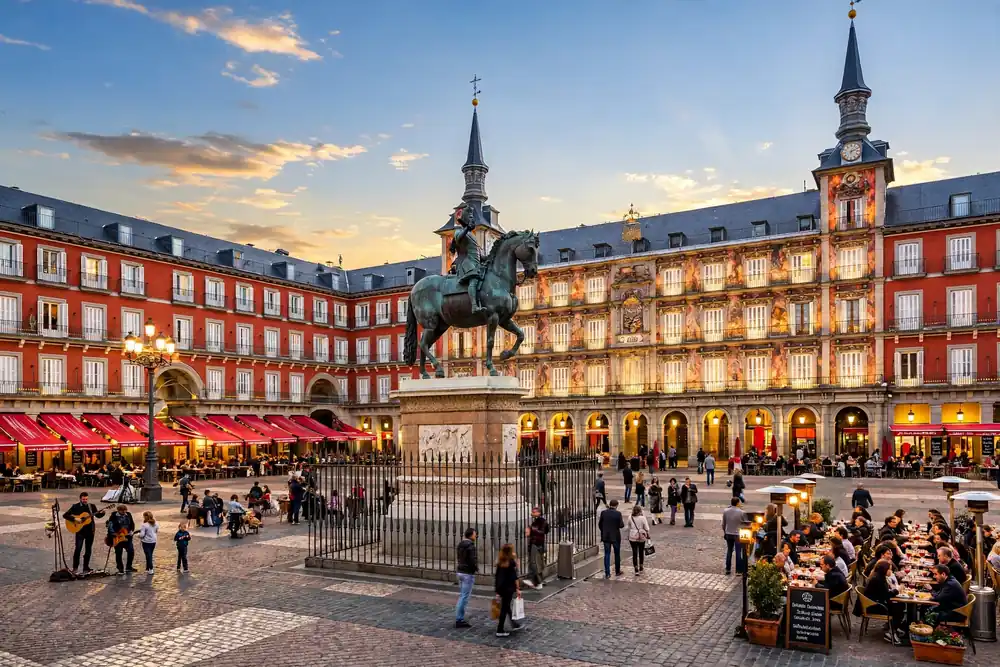
Quick Info
Best for: First-timers, art lovers, food lovers and football fans — Spain’s grandest capital, made for walking
Best time: April–June and September–October for mild days and long evenings; avoid the July–August heat
How long: 3 days for the museums, the palace and the neighbourhoods; 4 to 5 days adds Toledo and Segovia
Budget: About €120–€180 per person per day mid-range — the museums, the park and the squares are free at the right hour
Don’t miss: The Prado at opening time, Guernica at the Reina Sofía, sunset at the Temple of Debod, a tapas crawl in La Latina and churros at San Ginés
Madrid on Wikipedia is the capital of Spain and the highest capital in Europe — a city of 3.3 million people at 667 metres above sea level, with three of the world’s great art museums within a ten-minute walk, a palace with 3,418 rooms, and tapas bars that fill up at 10 p.m. This guide covers the 20 best things to do in Madrid, a 3-day itinerary that actually works, where to stay without overpaying, how to get around on the Metro and on foot, the three foods you should not skip, and the free sights that cost nothing. Everything below was checked against live sources in November 2026 — including the 2026 museum prices, the Metro fare discount, and the sights that are closed for renovation.
Madrid at a glance
| Topic | What to know |
|---|---|
| Full name | Madrid — the capital of Spain and the highest capital city in Europe |
| Founded | Settled since the 9th century; capital of Spain since 1561 |
| Population | About 3.3 million people in the city, 6.7 million in the metro area |
| Language | Spanish (Castilian); English is spoken in hotels and the main museums |
| Airport | Adolfo Suárez Madrid-Barajas Airport (MAD), about 13 km northeast of the centre |
| Best base | Sol, La Latina or Malasaña for a first visit — everything is walkable |
| Getting around | The Metro (6 a.m.–1:30 a.m.), city buses and your feet; the centre is flat |
| Famous for | The Prado, the Royal Palace, Retiro Park, tapas and the Golden Triangle of Art |
Madrid divides into two ideas that most visitors only partly see. The grand Madrid is the one on the postcards: the Prado, the Royal Palace, the wide boulevards and the squares that were built to impress a whole empire. The other Madrid is the one that makes people come back: the neighbourhoods of La Latina and Malasaña, where the bars fill at 10 p.m., the Sunday flea market spills across the streets, and lunch is still the main meal of the day, eaten between 2 and 4 p.m. The trap is the calendar: the city is at its best in spring and autumn, punishing in July and August, and half-empty in the second half of August, when many family-run restaurants and shops close for two to four weeks. The big museums, the palace and the plazas stay open all year — but the Madrid of the neighbourhoods does not, so check the opening dates of the places you care about before you book.
The 20 best things to do in Madrid
1. The Prado Museum
The Prado Museum on Wikipedia is the reason most people come to Madrid, and it is the one museum in the city you cannot rush: the greatest collection of Spanish painting in the world, with Velázquez’s Las Meninas, Goya’s Black Paintings, Bosch’s Garden of Earthly Delights, El Greco, Rubens and Titian, in a building that opened in 1819. A general ticket costs €15, with €7.50 for visitors over 65 and European Youth Card holders, and free entry for under-18s and students aged 18 to 25 with ID. The free window is the best deal in the city: the collection is free for the last two hours before closing every day, 6 to 8 p.m. Monday to Saturday and 5 to 7 p.m. on Sundays and public holidays — but expect a queue, and arrive 30 to 45 minutes early. The museum is open Monday to Saturday from 10 a.m. to 8 p.m. and on Sundays and public holidays from 10 a.m. to 7 p.m., closed on January 1, May 1 and December 25, with short hours on January 6, December 24 and 31, when it closes at 2 p.m. Last entry is 30 minutes before closing. Book a timed ticket online at least three to five days ahead in peak season, because the popular morning slots sell out. One fact older guides get wrong: the 2025 expansion added 3,000 square metres of Italian Renaissance galleries, so the Prado is bigger than the version most guides describe. Allow two to three hours at a minimum, and if you want all three museums, buy the Paseo del Arte card for €32.80, which covers one visit each to the Prado, the Reina Sofía and the Thyssen and is valid for a year.
2. The Royal Palace of Madrid
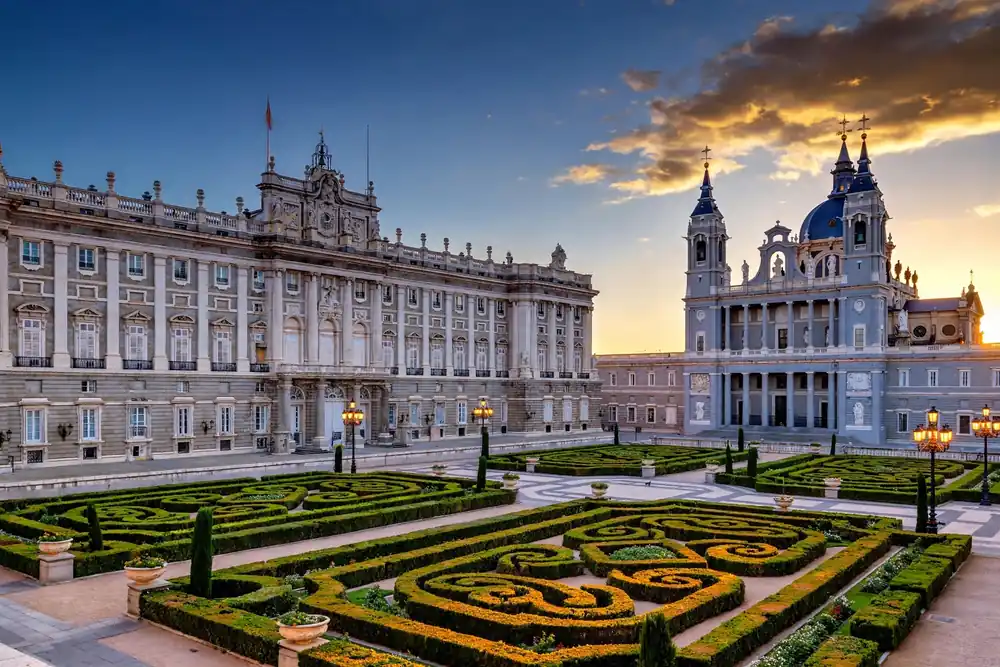
The Royal Palace of Madrid on Wikipedia is the largest royal palace in Western Europe by floor area — 135,000 square metres and 3,418 rooms, of which around 50 are open to visitors — and it is still the Spanish royal family’s official residence, though the King and his family actually live at the Zarzuela Palace outside the city, so the palace is used for state ceremonies and official receptions. A self-guided ticket costs €18 and includes the Royal Armoury; the reduced ticket is €9 for ages 5 to 16, over-65s and students up to 25; a combined ticket with the Royal Collections Gallery costs €24; and a guided tour costs €26. From April to September the palace is open Monday to Saturday from 10 a.m. to 7 p.m. and on Sundays from 10 a.m. to 4 p.m.; from October to March it closes at 6 p.m. Monday to Saturday, with Sundays still 10 a.m. to 4 p.m. The ticket office and last entry close one hour before the palace itself. It is closed on January 1, January 6, May 1 and December 25. The free window is Monday to Thursday in the last two hours of the day — 4 to 6 p.m. in winter, 5 to 7 p.m. in summer — for citizens of the EU and Ibero-America and residents, with tickets only from the box office and ID required. Two warnings: the palace can close at short notice for state events, so check the Patrimonio Nacional site the morning of your visit; and in 2026 there are building works, so no large backpacks or suitcases are allowed in. The Changing of the Guard happens on Wednesdays and Saturdays from 11 a.m. to 2 p.m. (10 a.m. to noon in July and August) in the Plaza de la Armería. Allow two hours, and pair it with the Almudena Cathedral across the square.
3. Retiro Park
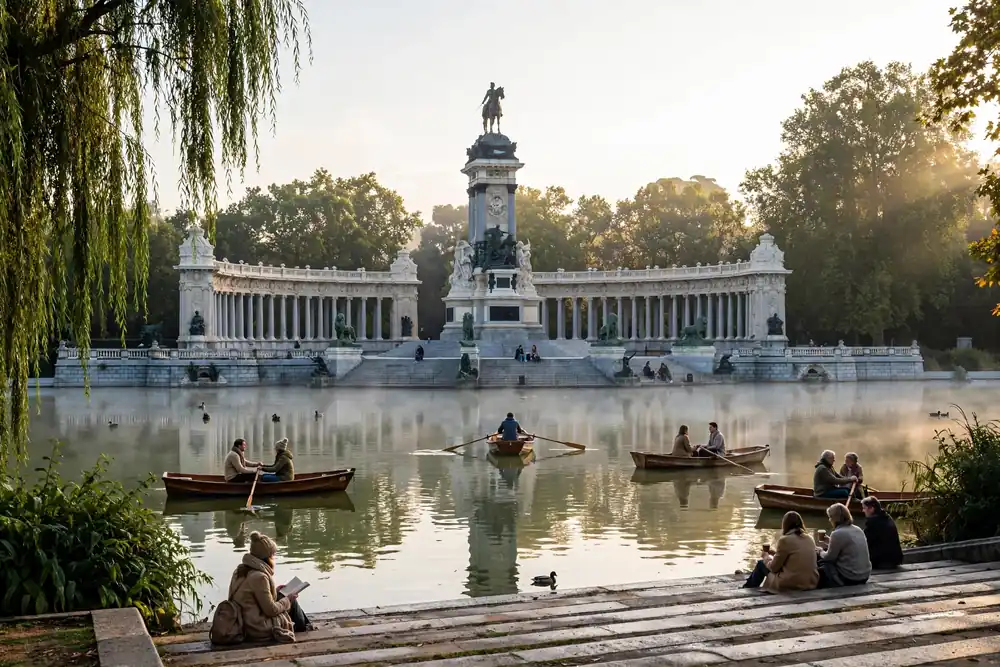
Retiro Park on Wikipedia is Madrid’s great green lung — 125 hectares of formal gardens, rose beds, fountains and tree-lined avenues just east of the Prado, free to enter, and together with the Paseo del Prado it was added to UNESCO’s World Heritage List in 2021 as the “Landscape of Light”. The park is open from 6 a.m. to midnight from April to September and from 6 a.m. to 10 p.m. from October to March. The centrepiece is the Estanque Grande, the great lake, where you can rent a rowing boat for €6 for 45 minutes, with the Monument to Alfonso XII reflected in the water. Look for the Palacio de Cristal, the 1887 glass pavilion — but know before you go that its interior is closed for restoration works until 2027, so you can admire the glass and iron from outside and no further; the same closure affects the Palacio de Velázquez nearby, and older guides still describe both as open. The other sight most guides skip is the Fountain of the Fallen Angel, one of the very few public statues of Lucifer anywhere in the world. Go on a weekday morning for the quiet version, or on a Sunday, when the park fills with families, street musicians and puppet shows — and arrive before 10 a.m. on weekends to beat the crowds at the lake.
4. The Reina Sofía and Guernica
The Museo Reina Sofía on Wikipedia is the national museum of modern and contemporary art, housed in a converted 18th-century hospital, and it holds the single most famous painting in Spain: Picasso’s Guernica, in Room 205.10 on floor 2 of the Sabatini Building, with Miró and Dalí close behind. A general ticket costs €12, free for under-18s, over-65s and students up to 25. The free windows are Monday and Wednesday to Saturday from 7 to 9 p.m., and Sundays from 12:30 to 2:30 p.m. — but you still need a free ticket, so book it online. The museum is open Monday and Wednesday to Saturday from 10 a.m. to 9 p.m. and on Sundays from 10 a.m. to 2:30 p.m. The mistake almost every first-timer makes is the Tuesday: the Reina Sofía is closed on Tuesdays, and it is the most common itinerary error in Madrid, so never put it on a Tuesday. It is also closed on January 1, January 6, May 1, May 15, November 9, December 24, 25 and 31. Photography is banned in the Guernica room, and the collections are being rearranged until 2028, so some works may be in different rooms than the guidebooks say. Allow two to three hours, and go in the evening free slot if you only want Guernica and the modern wing.
5. The Thyssen-Bornemisza Museum
The Thyssen-Bornemisza Museum on Wikipedia is the third corner of the Golden Triangle of Art, in the Villahermosa Palace on the Paseo del Prado, a block from the Prado and the Reina Sofía — and it is the most relaxed of the three, with more than 1,000 works running from the Old Masters to the moderns, filling the gaps the other two leave. A general ticket costs €14, the reduced ticket €10 for over-65s, pensioners and students, and under-18s enter free. The free windows are Mondays from noon to 4 p.m. for the permanent collection, and Saturdays from 9 to 11 p.m. for the temporary exhibitions on the ground floor and floor minus one. The hours are Mondays noon to 4 p.m., Tuesday to Friday and Sundays 10 a.m. to 7 p.m., and Saturdays 10 a.m. to 11 p.m., with Tuesday to Friday open until 9 p.m. in July and August. It is closed on January 1, May 1 and December 25. Monday is the day to know: the museum opens only for the free entry that day, so the galleries are packed — arrive at noon, or pay €14 on another day for a quieter visit. The Paseo del Arte card (€32.80) covers it together with the Prado and the Reina Sofía.
6. Plaza Mayor
Plaza Mayor, Madrid on Wikipedia is Madrid’s great arcaded square, completed in 1619 under Philip III, whose equestrian statue still stands in the middle of a rectangle 129 by 94 metres, ringed by three-storey brick buildings with balconies and the painted Casa de la Panadería. It is the city’s living room: Christmas markets in December, concerts and festivals through the year, and café terraces under the arches in every season. The honest warning is the food: the restaurants with tables directly on the square charge well above average prices for mediocre food, so eat on the side streets instead — the bocadillo de calamares, the fried squid sandwich, is the square’s signature, and the best ones are in the bars on the streets around it, not on the square itself. The square is free, open all day, and at its best early in the morning, before the terraces fill, or at dusk, when the brickwork turns gold. The tourist office on the square runs free walking tours, which are the best introduction to the old town if this is your first morning in the city.
7. Puerta del Sol
Puerta del Sol on Wikipedia is Madrid’s busiest square and its beating heart — the point from which all Spanish roads are measured, marked by the Kilometre Zero plaque in the pavement, and the meeting point every madrileño names first. Ten walking streets radiate from it, lined with shops and tapas bars, and the square holds the city’s two symbols: the Bear and the Strawberry Tree statue, and the clock on the Casa de Correos, which rings in the New Year while the whole country eats twelve grapes, one per chime. It is free, open all day, and at its best in the evening, when the square fills and the city starts its late night. Two practical notes: Sol is the pickpocket hotspot of the city, especially on the Metro and in the crowds around the clock, so keep your bag in front of you; and do not stay in a hotel right on the square — it is the noisiest spot in the centre, and the bars below go on until dawn.
8. Gran Vía
Gran Vía, Madrid on Wikipedia is Madrid’s great boulevard — about three kilometres of shops, cinemas, hotels and Art Deco theatres running from Alcalá to Plaza de España, built in the early 20th century when the old city was cut open to make a modern avenue. The buildings are the sight: the Edificio Metrópolis with its winged statue at the Alcalá end, the Capitol building with its neon Schweppes sign, and the theatre facades that light up at night. Walk it at the blue hour, when the neon comes on and the facades glow, and go up to one of the rooftop bars — the view down the avenue at dusk is the photograph of Madrid. By day it is the shopping street: the big Spanish chains, the flagship stores and the cinemas, with the musicals in the theatres on the upper stretch. It is free to walk, it is crowded at every hour, and it is the fastest way to feel the scale of the city after the quiet of the old town.
9. Mercado de San Miguel
Mercado de San Miguel on Wikipedia is the iron-and-glass market hall on the western edge of Plaza Mayor, opened in 1916 as a produce market and running since 2009 as a gourmet food hall, with more than 20 stalls selling tapas, jamón ibérico carved to order, oysters, salt cod, paella and vermouth. Entry is free and you pay per item at the counters. The hours are Sunday to Thursday from 10 a.m. to midnight, and Fridays, Saturdays and the eves of public holidays from 10 a.m. to 1 a.m. Come in the first hour after the 10 a.m. opening if you want to see the counters rather than the backs of other people’s heads, and book an evening table through the market’s own site for the 8 to 10 p.m. or 10 p.m. to midnight slots if you want to sit down. The honest warning is the one the locals give: San Miguel is not an authentic market — Madrid has 46 real municipal markets, and this one is a curated hall for visitors, with prices to match. For the real thing, walk to the Mercado de Antón Martín or the Mercado de San Antón, where the stalls sell to the neighbourhood. One more fact for 2026: the market closed on January 7, 2026 to reinforce the foundations and reopened on February 26, so any guide that still lists it as closed is out of date.
10. The Temple of Debod
The Temple of Debod on Wikipedia is the strangest sight in Madrid: an authentic Egyptian temple from the 2nd century BC, a gift from Egypt in 1968 and reassembled stone by stone in the Parque del Oeste, complete with a reflecting pool in front of it. Entry is free, always — do not buy a ticket from anyone. The interior is open Tuesday to Sunday from 10 a.m. to 8 p.m., and from June 15 to September 15 from 10 a.m. to 7 p.m., with last entry 30 minutes before closing; it is closed every Monday, including public holidays that fall on a Monday, and on January 1 and 6, May 1, and December 24, 25 and 31. To see inside, reserve a free place on the city council website (madrid.es/debodreservas), because the interior is very small and access is strictly limited. The sunset is the reason to come, and it is watched from the park outside, not from inside: in summer the interior closes at 7 p.m., well before the sun goes down, so visit the interior first and come back to the viewpoint afterwards. Arrive 45 to 60 minutes before sunset for a spot, and stay for the street musicians and the picnic atmosphere that makes this feel like a local ritual rather than a tourist stop.
11. Almudena Cathedral
Almudena Cathedral on Wikipedia stands directly opposite the Royal Palace, and it is the odd one out among Europe’s great cathedrals: building began in 1883 and it was not finished until 1993, when it was consecrated by Pope John Paul II, so the interior is bright, modern and painted in a way no medieval cathedral is. The main cathedral is free to enter, with a suggested donation of €1, and it cannot be visited during religious services. The museum and the dome cost €7, or €5 reduced, and they are worth it: the dome gives the best view of the palace and the rooftops of the old town. The museum is open Monday to Saturday from 10 a.m. to 2:30 p.m. only, so go in the morning — it is the short-hours trap of this visit. The cathedral itself is open every day from 10 a.m. to 8:30 p.m. from September to June, and until 9 p.m. in July and August. The crypt underneath, open every day from 10 a.m. to 2 p.m. and from 4:30 to 8 p.m., is a separate, darker, older-feeling space with its own entrance, and it is free with a €1 suggested donation. Allow an hour, and pair it with the palace across the square.
12. Santiago Bernabéu Stadium
Santiago Bernabéu Stadium on Wikipedia is the home of Real Madrid and the pilgrimage site for football fans — a stadium that holds about 80,000 people, rebuilt with a retractable roof and a wraparound video screen, and the tour is one of the most popular paid attractions in the city. The Classic tour costs €37 online or €40 at the ticket office, the Flexible ticket €44, the Guided tour €56, and the Madridista Premium from €29. The stadium is open Monday to Saturday from 9 a.m. to 7 p.m. and on Sundays and public holidays from 9:30 a.m. to 6:30 p.m., closed on December 25 and January 1, and it closes five and a half hours before kick-off on matchdays, so never plan a tour on a match day. The 2026 warning is the Metro: line 10 between Nuevos Ministerios and Cuzco is closed for works until the end of 2026, the Bernabéu station itself is being rebuilt and reopens in early 2027, so walk from Cuzco or Nuevos Ministerios instead of expecting the station to be open. Book online — the online price is cheaper than the door price — and if you want a match, buy from the club’s official channels only, because the resale market around the stadium is full of fakes.
13. El Rastro flea market
El Rastro is Madrid’s famous flea market and one of the largest in Europe, running every Sunday and public holiday from 9 a.m. to 3 p.m. along Calle de la Ribera de Curtidores and the streets around it in La Latina, with more than 1,000 stalls selling antiques, clothes, books, vinyl and everything else. It has run for more than 400 years, and it is as much a social ritual as a market: the stalls wind down around 3 p.m. and the crowds move to the bars of Cava Baja for vermouth and tapas, which is the correct way to end the morning. Arrive before 10 a.m. for the best finds and fewer crowds, bring cash — most vendors do not take cards — and keep your bag in front of you, because the Rastro is the second pickpocket hotspot in the city after Sol. The mistake is the weekday: El Rastro does not happen on weekdays, and visitors who show up on a Tuesday find only the permanent antique shops. There is no Wikipedia page for El Rastro, so this section carries no Wikipedia link — the market is best understood on the ground, on a Sunday morning.
14. La Latina and the tapas crawl
La Latina is one of Madrid’s oldest neighbourhoods, a maze of cobbled lanes south of Plaza Mayor, densely packed with tapas bars that are mostly frequented by locals rather than visitors — and it is the soul of the city after dark. The ritual is the tapas crawl along Cava Baja and Cava Alta: stand at the bar, order a caña (a small beer) or a vermouth, eat a tapa or two, and move on to the next bar, because the point is the crawl, not the meal. Sunday is the day: the vermouth hour after El Rastro, when the whole neighbourhood is out, is the most Madrid afternoon there is. The Plaza de la Paja is the quiet square to find when the crowds get too much, and the Basilica of San Francisco el Grande, with its great dome, is the neighbourhood’s hidden monument. There is no Wikipedia page for La Latina, so this section carries no Wikipedia link — the neighbourhood is a place to walk, not a page to read. Eat where the locals queue, and do not sit down at a table with a laminated menu in five languages.
15. Malasaña
Malasaña on Wikipedia is Madrid’s bohemian neighbourhood, north of Gran Vía, and it is where the city goes out: cocktail bars, live music venues, vintage shops and cafés that keep going until dawn, in the streets around the Plaza del Dos de Mayo, named for the uprising against Napoleon’s troops on May 2, 1808. By day it is the vintage and record-shopping quarter, with small galleries and coffee shops; by night it is the liveliest square in the centre after Sol. It is the best neighbourhood to stay in if nightlife is the reason you came, and the worst if you want an early night — the bars below the apartments go on until 3 a.m. and later at weekends. Walk it in the evening, after the shops close and the terraces fill, and pair it with Chueca next door, the LGBTQ+ quarter, for the fullest night out in the city.
16. Plaza de Cibeles and Puerta de Alcalá
Plaza de Cibeles on Wikipedia is the grand junction where the Paseo del Prado meets Alcalá, and it holds two of the city’s great set pieces: the Fuente de Cibeles, the fountain where Real Madrid’s fans gather to celebrate every title, and the Palacio de Cibeles, the white wedding-cake of a building that is now the city hall, with the Mirador Madrid viewpoint on its top floor for a few euros — the cheapest high view in the city. A short walk up Alcalá stands the Puerta de Alcalá on Wikipedia, the neoclassical triumphal gate built in 1778 under Carlos III, floodlit at night and the backdrop of the city’s most famous song. Both are free to see from the street, and both are at their best at dusk, when the lights come on and the traffic circles the fountain. The Retiro’s main gates are a ten-minute walk east, so this is the natural stop between the museums and the park.
17. The Royal Collections Gallery
The Royal Collections Gallery on Wikipedia is the museum most older guides miss entirely: it opened in 2023 in a new building cut into the hillside below the Royal Palace, and it holds the best of the Spanish crown’s collections — tapestries, royal carriages, armour, paintings and a Stradivarius quartet — in a space that was built for them. A combined ticket with the palace costs €24. One warning for 2026: the gallery was closed from October 24 to November 9, 2026 for the Ibero-American Summit, and the palace itself can close at short notice for state events, so check the Patrimonio Nacional site before you go. It is the quietest of the big museums, which is part of the appeal: no queues, no crowds, and an hour and a half of the best objects in the city, ten minutes from the palace. If you buy the combined ticket, do the gallery first and the palace second, because the palace closes earlier in winter.
18. Toledo — the day trip
Toledo, Spain on Wikipedia is the day trip from Madrid, and it is the one to take if you only take one: a walled city on a hill above the Tagus, an hour from the capital, where Christian, Jewish and Muslim history sit in the same streets, and where El Greco painted his greatest works. The AVANT train from Atocha takes about 33 minutes and costs about €13 to €16 one way, about €24 to €32 return; the first train leaves at about 6:45 a.m. and the last return is about 9:30 to 10 p.m. on weekdays. Book three to seven days ahead in peak season, because the cheap advance fares sell out and the walk-up price is higher. The cathedral costs €12, and the tourist bracelet, which covers the main churches and synagogues, costs €14 — buy it if you plan to see more than two. The trap is the double day trip: do not try to combine Toledo and Segovia on the same day on your own, because they leave from different stations on opposite sides of Madrid, and you will spend the day on trains instead of in the cities. Allow a full day, and be back in Madrid by 9 p.m. for dinner.
19. Segovia — the day trip
Segovia on Wikipedia is the second great day trip, and it is the prettier one: a Roman aqueduct two thousand years old marching through the centre of town, a fairytale Alcázar on a rock, and a Gothic cathedral, all in a city small enough to walk in a day. The AVE train from Chamartín takes about 28 minutes and costs about €9 to €15 — but the station is the trap: Segovia-Guiomar is about four kilometres outside the old town, and you cannot walk it. Take bus 11 for €2.25, or a taxi for about €8, from the station to the aqueduct. The cochinillo, the roast suckling pig, is the dish to order for lunch, in one of the old restaurants by the Plaza Mayor. The aqueduct and the old town are a UNESCO World Heritage Site, and the Alcázar is the one paid sight worth the ticket. Allow a full day, and do not pair it with Toledo — the two cities are in opposite directions, and each one deserves its own day.
20. Atocha Station and its tropical garden
Atocha Station is the free sight most visitors walk straight past: inside the old departure hall of Madrid’s main railway station, under a Victorian red-brick glass roof, sits a tropical garden of more than 7,000 plants of over 260 species, with Cuban palms, African coffee plants, a Polynesian fig tree and turtles in the pond. Entry is free during opening hours, and the station is steps from the Reina Sofía, so it is the easiest ten minutes in the city — go in on your way to or from the museum, when the trains are arriving and the garden is at its liveliest. It is also the practical heart of the trip: Atocha is where the AVANT trains to Toledo leave, where the Cercanías trains run, and where the Airport Express bus stops. The garden is the reminder that Madrid rewards looking up and looking around, not just ticking off the famous names — and it costs nothing.
Madrid in 3 days — a ready-made itinerary
This three-day plan covers the museums, the palace, the neighbourhoods and one day trip, and it uses the Metro and your feet. Book the Prado and the Royal Palace timed tickets before you fly, put the Reina Sofía on any day except Tuesday, and keep the evenings for tapas — Madrid starts dinner at 9 p.m., and the city is at its best after dark.
Day 1 — Old Madrid: Sol, Plaza Mayor, the palace and Debod at sunset
Start at Puerta del Sol for Kilometre Zero and the Bear and the Strawberry Tree, then walk to Plaza Mayor for the morning light and a bocadillo de calamares on a side street. Cross to the Mercado de San Miguel for a mid-morning tasting, then spend the afternoon at the Royal Palace and the Almudena Cathedral across the square, with the dome for the view. Walk through the Plaza de Oriente and the Sabatini Gardens, and finish at the Temple of Debod for sunset — visit the interior first, then take your place in the park for the light. Dinner is a tapas crawl in La Latina, on Cava Baja.
Day 2 — The art triangle and Retiro: the Prado, the Reina Sofía and the lake
Start at the Prado at the 10 a.m. opening, before the free-evening crowds, and give it two to three hours — Las Meninas, the Black Paintings and the Garden of Earthly Delights first. Walk the Paseo del Prado to the Thyssen for the late morning, or save it for the free Monday window and go straight to the Reina Sofía for Guernica in the afternoon. Spend the late afternoon in Retiro Park: the lake, the boats, the Palacio de Cristal from outside and the Fallen Angel. In the evening, walk the Gran Vía at the blue hour, go up to a rooftop bar, and eat in Malasaña, where the night starts late and runs long.
Day 3 — Neighbourhoods and a day trip: El Rastro, or Toledo and Segovia
If it is a Sunday, start at El Rastro at 9 a.m., then follow the crowds to La Latina for the vermouth hour and a long lunch. If it is any other day, take the morning train to Toledo or Segovia — Toledo for the cathedral and El Greco, Segovia for the aqueduct and the Alcázar — and be back in Madrid by the early evening. Spend the last evening in Chueca and Malasaña, or back at the Mercado de San Miguel for a final tasting, and finish with churros con chocolate at San Ginés, which is open 24 hours.
Best time to visit Madrid
| Season | Weather | Crowds | Notes |
|---|---|---|---|
| Spring (March–May) | Highs about 16–24°C (61–75°F), lows about 6–12°C (43–54°F) | High | Best all-round season; long days, festivals, mild evenings |
| Summer (June–August) | Highs about 29–33°C (84–91°F), lows about 17–20°C (63–68°F) | High | Hottest and driest; August closures; museums and plazas stay open |
| Autumn (September–November) | Highs about 14–27°C (57–81°F), lows about 6–16°C (43–61°F) | Moderate | Second-best season; late September is the value window |
| Winter (December–February) | Highs about 10–13°C (50–55°F), lows about 3–4°C (37–39°F) | Low | Cold, sunny, cheapest; Christmas lights and markets |
The best time to visit Madrid is April to June and September to October, and if you want one answer, pick May or late September: the days are warm without being punishing, the evenings are long, and the city is full without being crowded. July is the hottest month, with an average high of 33°C (91°F), and August averages 32°C (90°F) — and heatwaves regularly push both past 38°C (100°F) for days at a time. The August trap is not the weather alone: many madrileños leave the city for the coast, and many family-run restaurants, bars and shops close for two to four weeks, especially in the second half of the month, so the neighbourhoods feel quieter and less rewarding even while the big sights stay open and uncrowded. When the meteorological agency issues a Level 3 or Level 4 heat alert, the city opens free air-conditioned cooling centres in community centres, libraries and sports facilities, open to anyone including tourists, with no registration. January is the coldest month, with an average high of 10°C (50°F) and nights near freezing, but the winter sun is strong and the Christmas lights and markets make December the prettiest month of the year. There is no wet season — October is the wettest month and July the driest, with about 12 mm of rain — and the city gets about 320 days of sun a year.
Where to stay in Madrid
| Area | Best for | Price range |
|---|---|---|
| Sol and Centro | First-timers, walking everywhere | €100–€250 a night |
| La Latina | Tapas, Sunday market, old streets | €90–€200 a night |
| Malasaña and Chueca | Nightlife, boutique hotels, cafés | €90–€220 a night |
| Salamanca (Barrio de Salamanca) | Quiet, upscale, shopping | €150–€350 a night |
| Retiro and Atocha | Parks, museums, quieter nights | €110–€250 a night |
Stay in Sol or Centro if this is your first visit — everything is walkable, the Metro is under your feet, and the squares are the meeting point. Stay in La Latina if food is the reason you came — the tapas bars, the Sunday market and the old streets, with the palace a ten-minute walk away. Stay in Malasaña or Chueca if nightlife is the trip — the cocktail bars, the live music and the cafés — but do not expect an early night. Stay in Salamanca if you want quiet and upscale: the grid of elegant streets northeast of Retiro, with the best shopping in the city and the calmest nights. Stay near Retiro or Atocha if you want the museums and the park on your doorstep and a quieter sleep. Two warnings: do not book a room right on Puerta del Sol or Plaza Mayor — it is the Times Square of Madrid, noisy until dawn — and book early for Christmas and New Year, Easter, and Madrid Pride in late June, when the city fills first and the prices rise fastest. There is no tourist tax in Madrid, so the price you see is the price you pay.
Getting around Madrid
| Way to travel | Cost | Best for |
|---|---|---|
| Metro single (Zone A) | €1.50–€2.00 | Short hops; runs 6 a.m.–1:30 a.m. |
| 10-trip Metrobús | €7.30 | Best value — shareable, metro + bus |
| Tourist Travel Pass (Zone A) | €10.30 (1 day) to €43.20 (7 days) | Heavy daily use; includes the airport |
| Airport Express bus 203 | €5 | Airport to Atocha or Cibeles, 24 hours |
| Taxi (airport to centre) | €33 flat within the M-30 | Groups, luggage, late nights |
| Cercanías C1 (from Terminal 4) | €2.60 | Atocha or Chamartín in 25 minutes |
Madrid’s Metro is one of the best in Europe, and it is the way to move: 12 lines, trains from 6 a.m. to 1:30 a.m., and every sight in this guide within a short walk of a station. Buy a Tarjeta Multi, the red contactless card, from any station machine for €2.50 — it is not refundable, but it lasts ten years and can be shared between several people travelling together. Load it with a 10-trip Metrobús ticket for €7.30, which covers ten journeys on the Metro and the city buses at about €0.73 a ride: that is the 2026 price under the 40 percent fare discount in force through the end of the year, and some guides still quote the old undiscounted price of €12.20. A single ticket costs €1.50 to €2.00 in Zone A, depending on the number of stations, and the Tourist Travel Pass costs €10.30 for one day, €23.10 for three days and €43.20 for seven days in Zone A, with unlimited Metro, bus and Cercanías — it pays off only if you ride a lot every day or take day trips. From the airport, the Metro’s Line 8 costs €4.50 to €5, including the €3 airport supplement, and takes 25 to 30 minutes to the centre; the yellow Airport Express bus 203 costs €5, runs 24 hours a day to Atocha and Cibeles, and is the best choice with luggage or a late landing; and official taxis charge a flat €33 to anywhere inside the M-30 ring road in 2026 — older guides still say €30, so check the fare chart on the taxi’s rear window before you get in. The Cercanías C1 train from Terminal 4 costs €2.60 and reaches Atocha or Chamartín in 25 minutes. The centre is flat and walkable, and most days you will walk more than you ride — but keep your bag in front of you on the Metro and at Sol, where the pickpockets work.
Madrid food you have to try
Madrid’s food is the food of the whole of Spain in one city: the tapas bars of La Latina, the cocido of the old taverns, the churros of San Ginés, and the markets that feed the neighbourhoods. The Hotel Zone problem does not exist here — but the tourist-trap problem does: the restaurants on Plaza Mayor and around Puerta del Sol charge the most and serve the least, so eat on the side streets, eat where the locals queue, and eat late, because lunch is 2 to 4 p.m. and dinner starts at 9 p.m.
Tapas, patatas bravas and the vermouth hour
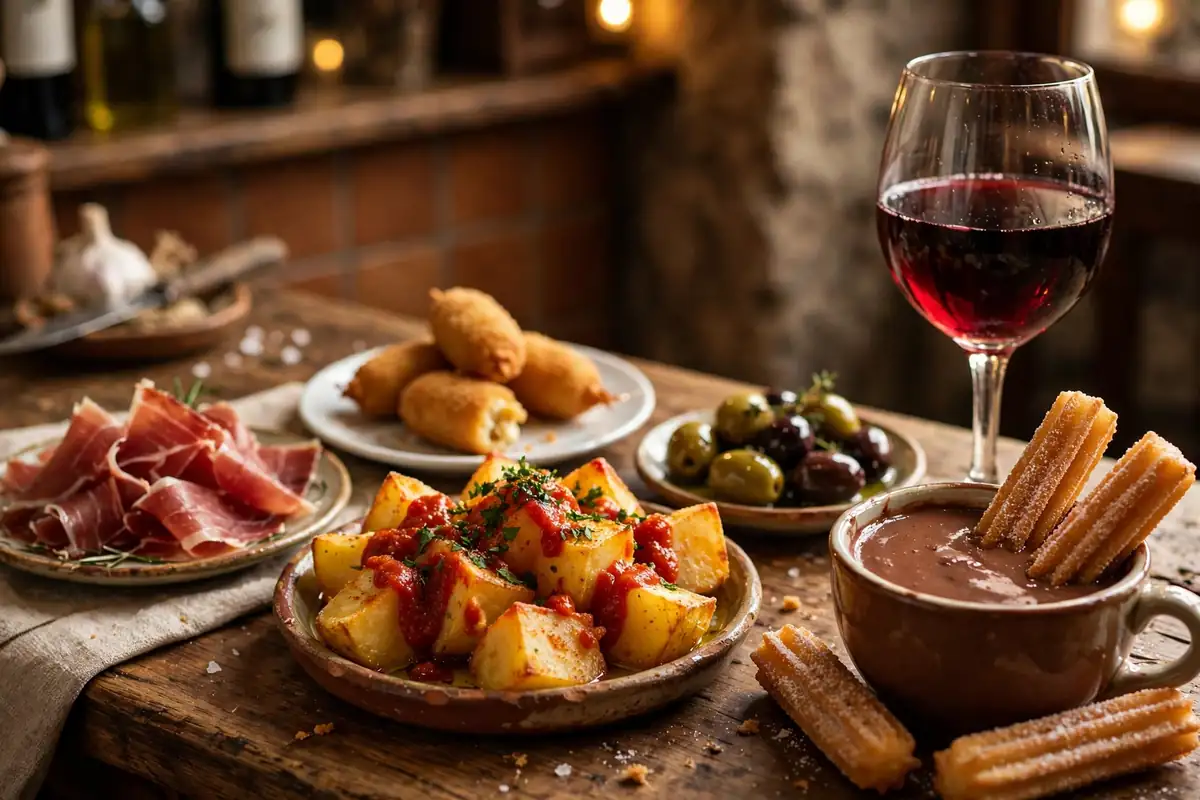
The tapas crawl is the meal Madrid runs on, and La Latina is where it is best. The classics are patatas bravas — fried potatoes with a spicy tomato sauce and aioli — croquetas, jamón ibérico de bellota, tortilla española, and gambas al ajillo, garlic prawns sizzling in oil. Order a caña, a small beer, or a vermouth, and eat a tapa or two standing at the bar before moving on to the next one — the crawl is the point, not the meal. Sunday is the ritual: after El Rastro, the whole neighbourhood drinks vermouth, and the bars of Cava Baja are the place to be. One rule the locals repeat: do not order sangría. It is rarely made by the glass, and nine times out of ten you will just be given a tinto de verano, the red wine and lemonade the locals actually drink. And do not expect spicy food — spicy paprika is as hot as it gets, and Spanish cooking is about simple, high-quality ingredients.
Cocido madrileño and the menú del día
Cocido madrileño is the dish of the city: a chickpea stew with meat and vegetables, served in three courses — first the broth with noodles, then the chickpeas and vegetables, then the meats — in the old taverns that have served it for a century. It is a winter dish, heavy and slow, and it is the lunch to order when the temperature drops. The other Madrid food fact is the menú del día: the weekday lunch menu, usually €12 to €16, with a starter, a main, a drink, bread and a dessert or coffee, served from about 1:30 p.m. It is the best value meal in the city, and the reason lunch is still the main meal of the day. The bocadillo de calamares, the fried squid sandwich, is the quick lunch of Plaza Mayor — buy it in the bars on the side streets, not on the square itself, and eat it standing up, like everyone else.
Churros con chocolate at San Ginés
Chocolatería San Ginés, at Pasadizo de San Ginés 5, is the most famous chocolate shop in Spain: founded in 1894, open 24 hours a day, serving thick hot chocolate with six churros for about €5. The ritual is the same at 4 a.m. after a night out as it is at 8 a.m. before the museums — dip the churro, drink the chocolate, and go back for more. It is a five-minute walk from Puerta del Sol, and the queue at weekends is the review. The other sweet stop is La Mallorquina, the classic pastry bakery on the west end of Puerta del Sol at Calle Mayor 2, for napolitanas and palmeras. Both are cheap, both are old, and both are the reason to save room after dinner.
Free things to do in Madrid
Madrid is cheaper than its reputation suggests, because the best sights cost nothing. Retiro Park is free, and so is the walk around the lake, the Palacio de Cristal from outside, and the Fallen Angel. Plaza Mayor, Puerta del Sol, Gran Vía, Plaza de Cibeles and the Puerta de Alcalá are all free, and so is the sunset at the Temple of Debod and the tropical garden at Atocha Station. El Rastro is free to wander on a Sunday morning, and so are the neighbourhoods of La Latina and Malasaña. And the paid museums have free windows: the Prado is free for the last two hours every day, the Reina Sofía is free on Monday and Wednesday to Saturday evenings and Sunday lunchtimes, the Thyssen is free on Monday afternoons and Saturday nights, and the Royal Palace is free on Monday to Thursday evenings for EU and Ibero-American citizens and residents. The Almudena Cathedral is free with a €1 suggested donation. Do the free list on your first day, and you will have seen the park, the squares, the sunset and the art before you have spent a euro on a ticket.
Frequently asked questions
How many days do you need in Madrid?
Three days is the minimum for the highlights: one day for old Madrid and the palace, one day for the art triangle and Retiro, and one day for the neighbourhoods or a day trip. Four to five days is the right amount for a real trip, with Toledo and Segovia both done properly, and a week if you love museums. Two days works if you plan well — the palace, Plaza Mayor, Puerta del Sol and one museum — but you will leave having seen a third of the city.
Is Madrid safe?
Madrid is one of the safest capital cities in Europe, and the risk is pickpocketing, not violence. The hotspots are Puerta del Sol, Plaza Mayor, the Metro, El Rastro and the Gran Vía crowds — keep your bag in front of you, do not hang it on a chair in a bar, and do not put your phone on a café table. The neighbourhoods are safe to walk at night, including Malasaña and Chueca, and the city stays out late — the streets are busy until 2 a.m. and later at weekends. Use the same sense you would in any big European capital, and the only thing you will lose is sleep.
When is the best time to visit Madrid?
April to June and September to October, when the days are warm, the evenings are long and the city is full without being crowded. May and late September are the single best picks. July and August are the hottest months, with average highs of 33°C and 32°C and heatwaves past 38°C, and August is the month when many family-run restaurants and shops close for two to four weeks. January is the coldest month, with an average high of 10°C, but the winter sun is strong and December brings the Christmas lights and markets. There is no wet season, and the city gets about 320 days of sun a year.
Is Madrid expensive?
Mid-range, and one of the most affordable capitals in Western Europe. A mid-range hotel costs €100 to €250 a night in the centre, a menú del día lunch €12 to €16, a tapas crawl €15 to €25 a person, and churros con chocolate about €5. The Metro’s 10-trip ticket is €7.30, the Prado €15, the Royal Palace €18, and the Reina Sofía €12 — and all three museums have free windows. A careful three days can be done for about €120 to €180 a person a day, and the parks, the squares and the sunset are free. There is no tourist tax, so the price you see is the price you pay.
Do you need a car in Madrid?
No. A rental car is a liability in the centre, and it is the first thing not to book for a city trip. The Metro runs from 6 a.m. to 1:30 a.m., the buses cover everything else, the centre is flat and walkable, and the day trips to Toledo and Segovia are faster by train than by car — 33 minutes and 28 minutes against more than an hour on the road, with no parking to find at the other end. The only reason to rent a car is the villages and the mountains outside the city, and even then the Cercanías trains and the buses are simpler.
What should I skip in Madrid?
Six things, and all six are traps older guides still get wrong. First, do not plan on the Museo Sorolla: as of September 2026 it is temporarily closed for expansion and restoration work, with no reopening date confirmed, and old guides still list it as open. Second, do not plan on going inside the Palacio de Cristal in Retiro: the interior is closed for restoration until 2027, and only the exterior is visible. Third, do not put the Reina Sofía on a Tuesday: it is closed, and it is the most common itinerary mistake in the city. Fourth, do not combine Toledo and Segovia on the same day on your own: they leave from different stations on opposite sides of Madrid. Fifth, do not eat on Plaza Mayor or around Puerta del Sol: the restaurants there charge the most and serve the least. And sixth, do not order sangría: it is rarely made by the glass, and what you get is a tinto de verano.
Further reading
Start with Madrid on Wikipedia, which covers the history and the geography, and Spain on Wikipedia for the country and its regions. For what locals and regular visitors actually recommend, the r/Madrid subreddit is where travellers answer questions about the Metro, the prices, the day trips and the August closures. No Quora link is included here: no live Quora thread on visiting Madrid could be verified, so none is listed rather than linking to an unverified one.
Your Madrid trip, in one paragraph
Madrid is the capital that rewards staying up late: the Prado at opening time with Las Meninas to yourself, the Royal Palace and the Almudena across the square, an afternoon in Retiro Park with a boat on the lake, Guernica at the Reina Sofía in the free evening slot, sunset at the Temple of Debod, and a tapas crawl in La Latina that ends with churros con chocolate at San Ginés at 2 a.m. For more guides in the same style, start with our Hawaii guide for the whole-state trip — this guide is only about Madrid — then see how Madrid compares with Maui, Honolulu, Chicago, Nashville, Los Angeles, Orlando, Miami, San Diego, Denver, Savannah, Dallas, Charleston, San Francisco, Myrtle Beach, Las Vegas, San Antonio, London, Portland, Pigeon Forge, Puerto Rico, Atlanta, Phoenix, Paris, Key West, Colorado Springs, Sedona, Chattanooga, Palm Springs, St Louis, Tokyo, Japan, Kansas City, Tennessee, Branson, Florida, Amsterdam, Montreal, Fort Lauderdale, Toronto, Aruba, Charlotte, Indianapolis, New Orleans, Destin, Santa Barbara, Mexico City, Arizona, Osaka, Minneapolis, Pittsburgh, California, Asheville, Costa Rica, Washington DC, Seattle, St Augustine, Lisbon, Dubai, Santa Fe, Galveston, Maine, Sacramento, Kauai, Boston and Cancun.

About the Author