Things to Do in Hawaii
20 Best Attractions, a 3-Day Itinerary, Where to Stay, and the Food You Cannot Miss
Quick Info
Best for: Beaches, volcanoes, snorkelling, surfing, whale watching and Hawaiian culture — across six islands
Best time: April to June and September to November, for good weather, smaller crowds and lower prices
How long: 7 to 10 days for two islands; 3 days for a first taste of one island
Budget: About $200 to $300 per person per day, including a mid-range hotel, meals, a rental car and one paid activity
Don’t miss: A Waikiki sunset, sunrise on Haleakalā, Kilauea volcano, the Nā Pali Coast and a manta ray night snorkel
Hawaii is the only American state made entirely of islands, the only one in the tropics, and the only one that was once a kingdom — and it shows. Six islands are open to visitors, and they could hardly be more different: Oʻahu has the city, the history and the famous beach; Maui has the sunrise volcano and the road to Hāna; the Big Island has live volcanoes and the tallest mountain on Earth from its base; Kauaʻi has the greenest cliffs in the Pacific; and Lānaʻi and Molokaʻi are the quiet ones most visitors never reach. This guide covers the 20 best things to do in Hawaii, with 2026 prices, opening hours, and the reservation traps that catch first-timers. It also includes a 3-day itinerary for a short trip, honest advice on where to stay, how to get around between islands without wasting a day, three foods you have to try, and the best free sights in the islands.
A word of warning before you plan: a surprising number of popular Hawaii guides are out of date. Diamond Head, Hanauma Bay, Haleakalā sunrise, the black sand beach and the USS Arizona Memorial all run on timed reservations now, and showing up without one is the fastest way to lose a morning. Lahaina is rebuilding after the 2023 wildfire, Kilauea is erupting in episodes rather than continuously, and Hawaii added a new climate fee to hotel bills on January 1, 2026. Every price and rule below was checked against the National Park Service, Hawaii State Parks and current operator listings in November 2026, and the outdated-guide traps are called out where they matter. For the bigger picture, start with the Hawaii page on Wikipedia — it is a useful overview of the islands, their history, and the Native Hawaiian culture that makes all of this possible.
Hawaii at a glance
| Topic | What to know |
|---|---|
| State | Hawaii, the 50th state (admitted 1959), in the central Pacific Ocean, about 2,400 miles from California |
| Capital | Honolulu, on Oʻahu, the state’s largest city |
| Islands | Eight main islands; six are open to visitors — Oʻahu, Maui, Hawaiʻi (the Big Island), Kauaʻi, Molokaʻi and Lānaʻi |
| Language | English and Hawaiian are both official; you will hear “aloha” and “mahalo” everywhere |
| Currency | US dollars; Hawaii has no sales tax, but hotel rooms carry about 18.7% in taxes |
| Time zone | Hawaii Standard Time (UTC−10), no daylight saving — 5 hours behind Eastern Time in winter, 6 in summer |
| Visa | US state — no visa for US citizens; international visitors follow normal US entry rules |
| Best for | Beaches, volcanoes, snorkelling, surfing, whale watching, stargazing and Hawaiian culture |
| Getting there | Fly into Honolulu (HNL) for Oʻahu, Kahului (OGG) for Maui, Kona (KOA) or Hilo (ITO) for the Big Island, Līhuʻe (LIH) for Kauaʻi |
| Don’t miss | Waikiki Beach, Haleakalā sunrise, Kilauea, the Nā Pali Coast and a manta ray night snorkel |
The 20 best things to do in Hawaii
1. Swim and learn to surf at Waikiki Beach, Oʻahu
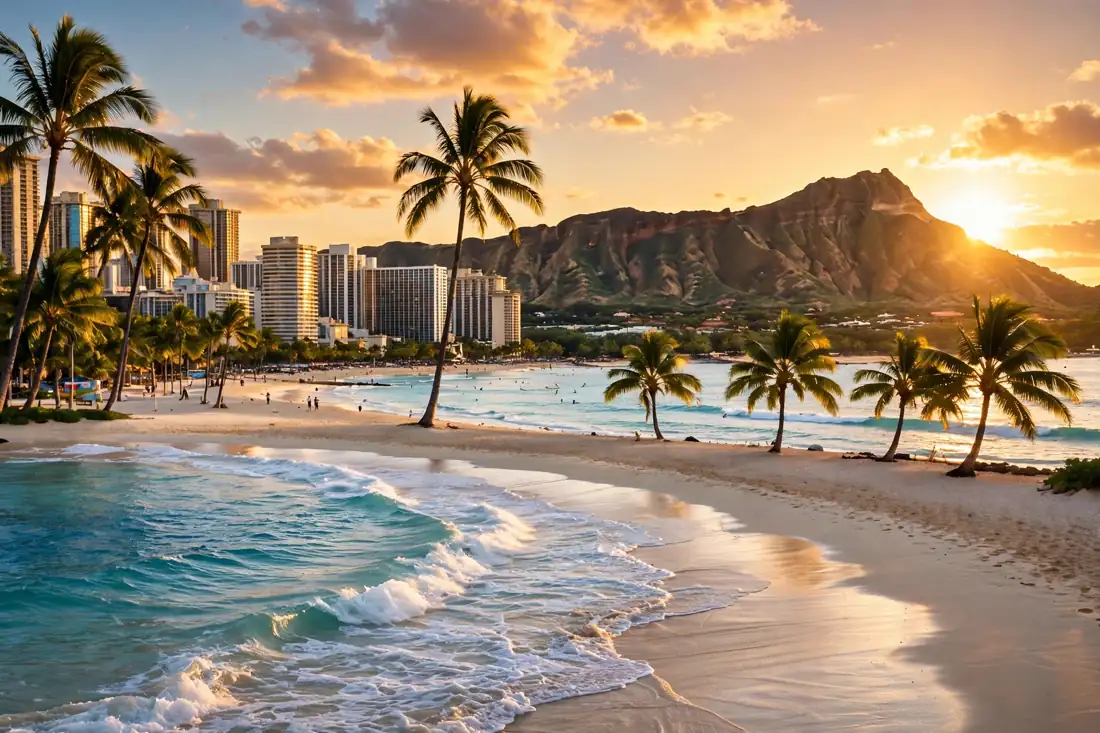
Waikiki Beach is the most famous beach in the Pacific, and it is still the best place in Hawaii to start. The two-mile crescent of white sand, from Duke Kahanamoku Beach in the west to Sans Souci in the east, is where modern surfing was born — Duke Kahanamoku himself taught the world to ride here — and it is the one beach in Hawaii where the city and the ocean meet without a gap: high-rise hotels on one side, turquoise water and Diamond Head on the other. The waves are gentle enough for a first lesson, the water is warm all year, and the sunset behind Diamond Head is the best free show in the city. Read about Waikiki on Wikipedia.
Surf schools line the beach and the lessons are the classic first-day activity: a group lesson with a board included is the cheapest way to stand up, and the long, slow Waikiki break is forgiving for beginners. Come back in the evening for the Friday-night fireworks over the water, and walk the beach at dawn before the crowds arrive. Our Honolulu guide covers Waikiki in full, with the best swimming spots, the hotels and the beachfront restaurants.
2. Pay respects at Pearl Harbor and the USS Arizona Memorial, Oʻahu
Pearl Harbor is the most visited historic site in Hawaii, and the most important. The attack of December 7, 1941 brought the United States into the Second World War, and the USS Arizona Memorial — a white structure straddling the sunken battleship, where more than 1,100 sailors remain entombed — is one of the most moving places in America. The visitor centre, its two museum galleries and the boat ride out to the memorial are free, and the whole visit takes about two hours. December 7, 2026 is the 85th anniversary of the attack, and the week around it will be the memorial’s busiest in a decade. Read about Pearl Harbor on Wikipedia.
The trap is the ticket. The Arizona programme is free, but every visitor needs a timed reservation booked on Recreation.gov, with a $1 non-refundable fee per ticket. Reservations are released 56 days ahead at 3 p.m. Hawaii time, with a smaller batch released the day before at the same time, and the good slots go in minutes. Without a reservation, your only hope is the free Standby Callback list at the visitor centre, which is not guaranteed and is not offered at all on the busiest days. The visitor centre is open daily from 7 a.m. to 5 p.m., the first programme starts at 8 a.m. and the last boat leaves at 3:30 p.m. Bags are not allowed inside — bring only a small clear bag or use the paid bag storage. The Battleship Missouri, the Pearl Harbor Aviation Museum and the USS Bowfin are separate paid attractions, and the Passport that bundles them (about $100 for adults) does not include the Arizona reservation, which you must still book yourself. Our Honolulu guide has the full Pearl Harbor plan, including the bus from Waikiki.
3. Hike Diamond Head at sunrise, Oʻahu
Diamond Head is the crater that defines Honolulu’s skyline, and the hike to its summit is the best two hours in the city. The 760-foot tuff cone, formed about 300,000 years ago and called Lēʻahi by Hawaiians, rises at the eastern end of Waikiki, and the 0.8-mile trail from the crater floor climbs through tunnels and up 99 steps to a former military bunker with a 360-degree view over Waikiki, downtown Honolulu and the south shore. It is the most popular hike in Hawaii for a reason: the reward at the top is the whole city laid out below you. Read about Diamond Head, Hawaii on Wikipedia.
The rule that catches everyone: since May 2022, every non-resident needs an advance reservation, and there are no walk-ups and no ticket window. Book on the state parks site, gostateparks.hawaii.gov, up to 30 days ahead: entry is $5 per person and parking inside the crater is $10 per vehicle, paid by card only, and children aged 3 and under are free. Hawaii residents enter free with a state ID and do not need a reservation. The park is open daily from 6 a.m. to 6 p.m., with the last entry slot at 4 p.m., and you must arrive within the first 30 minutes of your two-hour window. Go at the first slot: the light is best, the heat is lowest, and the trail is quietest. Note that the monument closed for about three weeks in August and September 2026 when Tropical Storm Lala passed — check the state parks page if a storm is forecast. Our Honolulu guide covers the hike in detail, including the bus and trolley options.
4. Snorkel Hanauma Bay, Oʻahu
Hanauma Bay is the best snorkelling in Honolulu, and the most beautiful bay on Oʻahu. The curved crescent of clear turquoise water sits inside an ancient volcanic crater on the southeast shore, and the reef inside the bay holds green sea turtles, parrotfish, butterflyfish and more than 400 species of fish, all in water so calm that first-time snorkellers can float over the coral without a boat. It is a nature preserve, not a beach park, and the whole visit is designed around protecting the reef — which is exactly why it is still worth visiting. Read about Hanauma Bay on Wikipedia.
The booking is the hard part. Non-residents aged 13 and over pay $25 per person, plus a small online service fee, and children 12 and under, Hawaii residents and active-duty military enter free with ID. Reservations open online exactly two days ahead at 7 a.m. Hawaii time through the city’s PROS system, and the popular slots go in minutes — set an alarm for Monday at 7 a.m. if you want a Wednesday visit. The bay is open Wednesday to Sunday only and closed every Monday and Tuesday so the reef can rest; entry runs from 6:45 a.m. to 1:30 p.m. and everyone must be out by 4 p.m. Parking is $3 per vehicle, cash only. Every visitor watches a short conservation video before reaching the beach, and reef-safe sunscreen is the rule, not a suggestion. Our Honolulu guide has the full Hanauma Bay plan, including the bus and the snorkel rental options.
5. Watch sunrise from Haleakalā, Maui
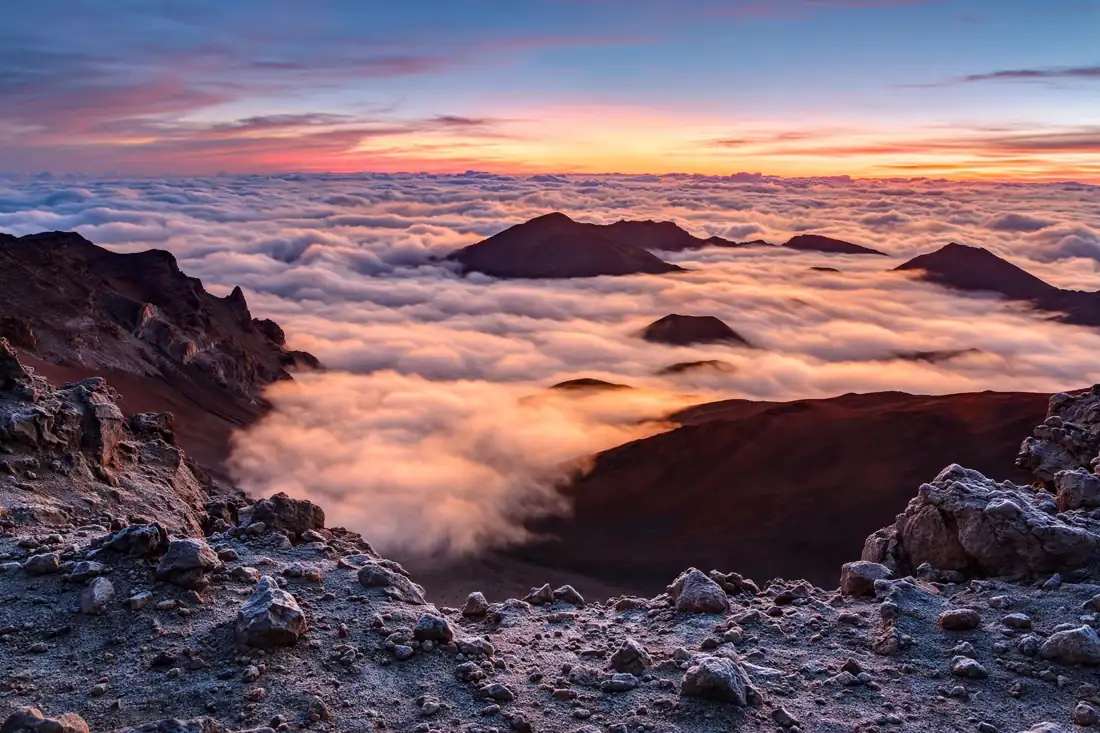
Haleakalā is the volcano that owns Maui’s skyline, and watching the sun rise from its 10,023-foot summit is the single most famous experience in Hawaii. You drive up through the dark, park above a sea of clouds, and watch the light spill across a crater the size of Manhattan, with cinder cones rising out of the mist like islands. It is cold, it is early, and it is worth every minute of the 3 a.m. alarm. Read about Haleakalā on Wikipedia.
The reservation is the whole game. Every private vehicle entering the Summit District between 3 a.m. and 7 a.m. needs a sunrise reservation from Recreation.gov: $1 per vehicle, released 60 days ahead at 7 a.m. Hawaii time, with a smaller batch released 48 hours ahead at the same time. The first batch often sells out within fifteen minutes, and the America the Beautiful pass does not cover the reservation. The park entrance fee is separate — $30 per vehicle, valid for three days and covering both the Summit and Kīpahulu districts — and the entrance stations are card only. Dress for winter: the summit can be near freezing before dawn, and the wind cuts through a T-shirt. If you miss the reservation, sunset from the same summit needs no booking and is nearly as good. Our Maui guide covers Haleakalā in full, including the crater hikes and the bike descent.
6. Drive the Road to Hāna, Maui
The Road to Hāna is the most famous drive in Hawaii: 64 miles of rainforest, waterfalls and coastline from Pāʻia to the remote town of Hāna, with about 620 curves and 59 one-lane bridges. The stops are the point — Twin Falls, the Three Bears waterfalls, the Keʻanae Arboretum, the black sand beach at Waiʻānapanapa, and finally the ʻOheʻo Pools in the Kīpahulu District of Haleakalā National Park. Leave Pāʻia at dawn with a full tank, because Hāna has one gas station, and there is no mobile signal past Keʻanae. Read about the Hana Highway on Wikipedia.
Two traps catch almost everyone. First, the black sand beach at Waiʻānapanapa State Park needs an advance reservation for non-residents: $5 per person plus $10 per vehicle for a fixed three-hour window, booked up to 30 days ahead at midnight Hawaii time on the state parks site, with no walk-ups and no same-day slots. Second, illegal parking on the Hāna Highway is expensive — a $35 citation plus a $200 state-highway surcharge, $235 in total — so use the signed lots only. The Hana Lava Tube is closed, so do not plan around it, and the ʻOheʻo Pools charge the $30 Haleakalā entrance fee at the gate, card only. Our Maui guide has the full mile-by-mile Road to Hāna plan.
7. Visit Lahaina — Front Street is back, with care, Maui
Lahaina was the royal capital of Hawaii and its great whaling port, and on August 8, 2023 a wildfire destroyed most of the historic town and killed more than 100 people. Three years on, the town is rebuilding — and visitors are welcome again, on different terms than before. Front Street reopened to vehicle traffic on August 1, 2026, between Pāpalaua and Shaw Streets, after debris removal, seawall and sidewalk repairs and repaving. More than a dozen businesses have reopened along that stretch, including Kimo’s, Māla Ocean Tavern, Star Noodle, Honu Oceanside and Coco Deck, the ʻUlu o Lele Marketplace is open, and Lahaina Cannery Mall is busy again with Safeway and Longs Drugs. Kāʻanapali, just north of town, was untouched by the fire. Read about Lahaina, Hawaii on Wikipedia.
Go for a specific open business, spend money locally, and stay out of fenced lots and private property — do not photograph homes, rebuilding sites or residents. Market Street, Papelekane Street and Mokuhinia Place are still closed, and the harbour is only partly operating, with full operations expected by the end of 2027. The 150-year-old banyan tree is green again, but it is fenced off and Banyan Court Park is expected to stay closed for about two more years. The Baldwin House, damaged by a storm in March 2026, is closed while it is carefully taken down and rebuilt. Do not build a day around the old Lahaina — the galleries, boutiques and most of the restaurants people remember are still gone. The Old Lahaina Luau, the most traditional luau on Maui, is operating nightly and sells out months ahead. Our Maui guide has the full Lahaina update, with what is open and what is not.
8. Snorkel Molokini Crater, Maui
Molokini is a crescent-shaped, partly submerged volcanic crater off Maui’s south coast, and the snorkelling inside it is the clearest in Hawaii — visibility often reaches 150 feet, and about 250 species of fish live on the reef. Boats leave from Māʻalaea Harbour and Kīhei in the morning, when the water is calmest, and most trips combine Molokini with a second stop at Turtle Town, where green sea turtles graze on the reef. Expect to pay from about $100 per person for a half-day trip, including gear. Read about Molokini on Wikipedia.
The crater itself is a protected marine reserve, so nobody lands on it — you snorkel from the boat, and the boats moor inside the crescent where the water is sheltered. Morning trips are best: the wind picks up in the afternoon and the water gets choppy, and the early boats get the calmest water and the fewest crowds. If you are prone to seasickness, take precautions before you board — the crossing is short but it can be rough. Whale watching is the bonus in winter: from December to April the same boats often stop for humpbacks on the way back.
9. Stand on the edge of Kilauea, Hawaiʻi Volcanoes National Park
Kilauea is one of the most active volcanoes on Earth, and Hawaiʻi Volcanoes National Park is the place to see it. The park holds two volcanoes — Kilauea and Mauna Loa, which last erupted in 2022 — plus steam vents, lava tubes, rainforest and the Chain of Craters Road, which drops from the summit to the sea. The summit sits at about 4,000 feet, so it is cooler and wetter than the coast, and the weather changes fast. Read about Hawaii Volcanoes National Park on Wikipedia.
The eruption is episodic, and that is the trap. Since December 23, 2024, Kilauea has been erupting in short fountaining episodes inside Halemaʻumaʻu crater at the summit — more than 50 of them by November 2026 — with long quiet pauses in between. Episode 56 ended on November 5, 2026, with a fountain about 660 feet high, and the volcano is now paused at ADVISORY/YELLOW, with the next episode likely several weeks away. Do not plan a trip around seeing lava: check the USGS Hawaiian Volcano Observatory daily update within 24 hours of your visit, and if an episode is under way, go at once — the fountains last hours, sometimes a day, and then they stop. The park is open 24 hours a day with no reservation and no timed entry; the entrance fee is $30 per private vehicle, valid for seven days, card only. The Kilauea Visitor Center has been closed for renovation since February 2025 and is expected to reopen by the end of 2026 — use the temporary welcome centre instead. The Hōlei Sea Arch on the coast collapsed in September 2026 during the storm that became Hurricane Nolo, so do not expect to see it. Stay behind every barrier: crater rims collapse and volcanic gas is dangerous even when nothing is erupting.
10. Sunset and stargazing on Mauna Kea, Big Island
Mauna Kea is the tallest mountain on Earth measured from its base on the ocean floor — about 33,000 feet from seabed to summit, 13,803 feet above sea level — and its summit holds some of the best stargazing on the planet. The visitor information station sits at about 9,200 feet, free and open to any vehicle daily from 9 a.m. to 9 p.m., and it is the place most visitors stop: the sunset from the station is spectacular, and on a clear night the Milky Way is bright enough to read by. Read about Mauna Kea on Wikipedia.
The summit road above the station is the catch. It needs a four-wheel-drive vehicle with low range, and it is off-limits under most Hawaii rental car contracts — if you want the summit, book a guided tour rather than driving a rental up. The altitude is real even at the station: take it slow, drink water, and skip the drive entirely if anyone in your group is pregnant, under 16, or has heart or respiratory problems. The volunteer-led evening stargazing programme at the station has been paused, so if you want a guided telescope session, book a tour in advance rather than counting on a walk-up programme. Dress for winter at the top: it is cold, windy, and the summit can be below freezing after dark.
11. Night snorkel with manta rays off Kona, Big Island
The manta ray night snorkel is the most extraordinary wildlife experience in Hawaii. After dark, boats anchor off the Kona coast and hang lights in the water; the lights draw plankton, and the plankton draw manta rays — gentle giants with wingspans up to 18 feet — that barrel-roll through the light inches from your mask for an hour. It is the only place in the world where this happens reliably, and it works on most nights of the year. Expect to pay from about $100 per person for a two- to three-hour trip, including gear and a guide.
The two sites are Manta Village off Keauhou and Manta Heaven off the Kona airport, and the boats choose on the night based on conditions. Book ahead — the small boats fill up, especially in summer — and take seasickness precautions if you need them, because you float at the surface in the dark. Wear reef-safe sunscreen, listen to the guide about staying flat and still, and never touch a ray: the oils on your hands damage the mucus layer that protects them. If you would rather stay dry, some operators run glass-bottom viewing trips from the boat.
12. Look over Waipiʻo Valley — and ride down on the shuttle, Big Island
Waipiʻo Valley is the most beautiful valley on the Big Island: a mile-wide amphitheatre of green cliffs, taro fields, wild horses and the 1,450-foot Hiʻilawe Falls, opening onto a black-sand beach. The lookout at the top of the road is free and open to everyone, and the view alone is worth the drive up the Hāmākua Coast from Hilo. Read about Waipiʻo Valley on Wikipedia.
The valley floor is another matter, and this is the trap. Waipiʻo Valley Road has been closed to visitors since February 2022, after rockfall and landslide risk on the steep grade, and Hawaiʻi County has renewed the closure roughly every 60 days since — the emergency zone runs to February 25, 2027, so expect another renewal, not a reopening. No one may walk down, and no ATV tour rides into the valley. The only way in for a visitor is the permitted Waipiʻo Valley Shuttle, a guided 4WD van ride of about 105 minutes from Kukuihaele: $67 per adult booked online ($72 regular price) and $36.50 for children aged 3 to 11, running Monday to Saturday. The lookout stays open and free either way — go for the view, and only book the shuttle if the valley floor matters to you.
13. Chase waterfalls at ʻAkaka Falls and the Hāmākua Coast, Big Island
ʻAkaka Falls is the Big Island’s most famous waterfall: a 442-foot ribbon of water dropping into a fern-filled gorge, reached by a short 0.4-mile paved loop through rainforest that also passes the 100-foot Kahuna Falls. It is an easy stop on the Hāmākua Coast drive from Hilo, and the morning light in the gorge is the best time to see it. Non-residents pay $5 per person plus $10 per vehicle, card only, and Hawaii residents are free with ID. Read about Akaka Falls State Park on Wikipedia.
The Hāmākua Coast itself is the reward for slowing down: the old sugar towns of Honomū and Honokaʻa, roadside fruit stands, the botanical gardens at the Hawaii Tropical Bioreserve, and the Laupāhoehoe Point lookout, where a 1946 tsunami memorial stands. It is the wet side of the island, so carry a rain jacket and expect a shower — the rain is what makes the waterfalls run. Combine it with Waipiʻo Valley in the same day: the lookout is twenty minutes north, and the whole coast is a half-day loop from Hilo.
14. See the Nā Pali Coast — by boat, air or trail, Kauaʻi
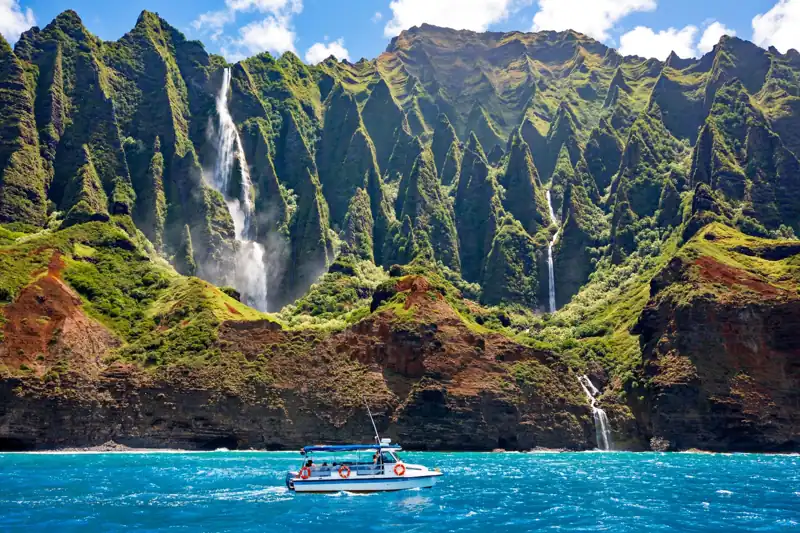
The Nā Pali Coast is the most dramatic coastline in Hawaii: 17 miles of green sea cliffs, hanging valleys and sea caves on Kauaʻi’s northwest shore, with no road in or out. The classic way to see it is by boat from Port Allen or Hanalei — a half-day catamaran that runs the length of the cliffs, stops to snorkel, and in winter (December to April) often finds humpback whales on the way. Helicopter tours fly the same cliffs from above, and the Kalalau Trail walks them on foot. Read about the Nā Pali Coast on Wikipedia.
The trail is the one with the permit trap. The only road access is through Hāʻena State Park, at the end of the road on the north shore, and every non-resident needs an advance reservation booked on gohaena.com, up to 30 days ahead at midnight Hawaii time: $5 per person for entry, $10 per vehicle for parking, or the North Shore shuttle at $40 for ages 16 and over and $25 for ages 4 to 15. The daily cap is 900 visitors and parking sells out fast. A Hāʻena reservation buys access to Kēʻē Beach and the first two miles of the Kalalau Trail, as far as Hanakāpīʻai Valley — that is the legal limit for day hikers. Anyone going further, toward Hanakoa or the 11-mile trail’s end at Kalalau Beach, must hold a valid overnight camping permit, even for a single-day out-and-back with no intention of camping. Camping permits cost $35 per person per night for non-residents, are released 90 days ahead through the state’s Explore Outdoor Hawaiʻi system, and are capped at five consecutive nights. Since 2026, overnight hikers may no longer leave a vehicle at Hāʻena — take the shuttle. And check the status before you go: Hurricane Lowell closed all Kauaʻi state parks in September 2026; Hāʻena reopened on October 15 and the Kalalau Trail reopened to permitted overnight hikers in early November, but Waimea Canyon and Kōkeʻe were still closed in mid-October.
15. Stand over Waimea Canyon, the Grand Canyon of the Pacific, Kauaʻi
Waimea Canyon is ten miles long and up to 3,000 feet deep, a gorge of red rock, green forest and waterfalls that Mark Twain supposedly called the Grand Canyon of the Pacific. The drive up Waimea Canyon Drive from the town of Waimea climbs through dry ranchland into cloud forest, and the lookouts — Waimea Canyon Lookout, Puʻu Hinahina and the Kalalau Lookout at the end of the road — give you the whole canyon and, on a clear day, the Nā Pali Coast beyond it. Non-residents pay $5 per person plus $10 per vehicle, card only, and Hawaii residents are free with ID. Read about Waimea Canyon on Wikipedia.
Go in the morning: the clouds roll in by midday and the canyon disappears, and the afternoon rain is a daily event in the mountains. The road continues past the canyon into Kōkeʻe State Park, where the trails lead to the Kalalau and Honopū lookouts and the native forest is at its best. One warning: after Hurricane Lowell in September 2026, Kōkeʻe Road and the canyon parks were closed, and they were still closed in mid-October — check the DLNR notices before you drive up, because a tour listing does not confirm the road is open.
16. Slow down at Hanalei Bay and Kauaʻi’s North Shore, Kauaʻi
Hanalei Bay is the prettiest bay in Hawaii: a two-mile crescent of white sand backed by taro fields and the green peaks of the Nā Pali Coast, with the old Hanalei Pier reaching into the water. The town of Hanalei is small — a handful of shops, food trucks and galleries — and that is the point. In summer the bay is calm and perfect for swimming and paddleboarding; in winter the surf comes up and the bay belongs to the surfers. Read about Hanalei, Hawaii on Wikipedia.
The North Shore is the slowest, greenest part of Kauaʻi, and the drive there from Līhuʻe is half the experience: the one-lane bridges over the Hanalei River, the taro fields of the Hanalei Valley, the sea cliffs at Kēʻē. Stop at the Hanalei Valley Lookout on the way in, eat at a food truck in town, and walk the pier at sunset. In winter, check the surf before you swim — the North Shore’s winter waves are serious, and the lifeguards post the conditions at every beach.
17. Day trip to Lānaʻi — Hulopoʻi Bay and Shipwreck Beach
Lānaʻi is the quietest island in Hawaii: no traffic lights, one small town, and some of the best beaches in the state with almost nobody on them. The ferry from Lahaina on Maui takes about an hour and ten minutes each way, and it is the only regular passenger ferry between Hawaii’s major islands — every other island hop is a flight. From the harbour at Mānele, Hulopoʻi Bay is a short walk: a marine preserve with clear water, good snorkelling and spinner dolphins offshore, backed by the Four Seasons resort. Read about Lanai on Wikipedia.
Shipwreck Beach, on the north shore, is the island’s other face: eight miles of empty sand with a rusted Second World War liberty ship sitting offshore, and the view across the channel to Molokaʻi. Rent a four-wheel-drive vehicle if you want to see it and the Garden of the Gods, the red-rock desert in the island’s interior — the roads are rough and a regular car will not do. Lānaʻi works as a day trip from Maui, but it is better overnight: the island is at its best at dawn and dusk, when the day-trippers are gone.
18. Molokaʻi — Hālawa Valley and the Kalaupapa story
Molokaʻi is the least developed of Hawaii’s visitable islands, and it is proud of it. There are no resorts, no traffic lights and no crowds — just red-dirt roads, taro fields, fishing villages and the longest white-sand beach in Hawaii at Papohaku. The Hālawa Valley, at the island’s eastern end, is the highlight: a hike with a local guide down to a waterfall in a valley that has been farmed for a thousand years, where the guide’s family still lives. Read about Molokai on Wikipedia.
The Kalaupapa Peninsula, on the north shore, is the other side of Molokaʻi’s story: the remote settlement where people with Hansen’s disease (leprosy) were exiled from 1866, and where Father Damien and Mother Marianne Cope spent their lives caring for them. It is a place of deep history and real grief, not a sightseeing stop — access is restricted, the residents’ privacy comes first, and you should only visit through official channels and with respect. Molokaʻi is not for everyone: come if you want quiet, local Hawaii and no tourist infrastructure, and skip it if you want restaurants, tours and nightlife.
19. ʻIolani Palace and downtown Honolulu, Oʻahu
ʻIolani Palace is the only official royal residence in the United States, and it is the best place in Hawaii to understand the kingdom that came before the state. King Kalākaua built it in 1882, with electric lights and indoor plumbing before the White House had either, and the palace was the seat of the Hawaiian monarchy until the overthrow of Queen Liliʻuokalani in 1893. The self-led audio tour costs $28 for adults aged 18 and over, $23 for ages 13 to 17 and $13 for ages 5 to 12, and it takes about an hour through the throne room, the state dining room and the king’s library. Read about Iolani Palace on Wikipedia.
Downtown Honolulu rewards the rest of the morning: the King Kamehameha statue across the street, the Kawaiahaʻo Church — the Westminster Abbey of Hawaii — and the Hawaii State Art Museum, which is free. The Bishop Museum, a short drive away in Kalihi, is the state’s great museum of Hawaiian culture and natural history, and it is worth a half day on its own. Our Honolulu guide covers downtown in full, including the Chinatown food walk.
20. Big waves and shrimp trucks on Oʻahu’s North Shore
Oʻahu’s North Shore is the surfing capital of the world. In winter, from December to February, the swell arrives from the North Pacific and the famous breaks — Banzai Pipeline, Sunset Beach, Waimea Bay — throw waves 30 feet high, and the world’s best surfers gather for the competitions. In summer the same beaches are calm, and Waimea Bay becomes one of the best swimming beaches on the island. Read about the North Shore of Oahu on Wikipedia.
The North Shore is also the best food day on Oʻahu: the shrimp trucks of Kahuku, where Giovanni’s is the original, and the shave ice stands of Haleʻiwa, where Matsumoto’s has been serving since 1951. The Polynesian Cultural Center, on the North Shore at Lāʻie, is the big cultural stop: six island villages on 42 acres, with daytime admission from about $95 for adults and packages with the evening Hā show and a luau dinner from about $124 and $198. It is closed on Sundays and on most Wednesdays, so check the days before you drive up. Winter is the season to watch the surf and summer is the season to swim in it — never swim at a North Shore beach in winter unless the lifeguards say it is safe.
Hawaii in 3 days — a ready-made itinerary
Three days is not enough for Hawaii — the state deserves a week at least, and one island deserves five days — but if three days is what you have, this route gives you the city, the volcano and the coast in one tight loop. It starts in Honolulu, uses one inter-island flight, and finishes on Maui. Book the flight early: the Honolulu to Kahului hop takes about 40 minutes in the air, but allow half a day for the airport, the rental car and the drive.
| Day | Base | Highlights |
|---|---|---|
| Day 1 | Honolulu, Oʻahu | Pearl Harbor in the morning, Diamond Head at midday, Waikiki Beach and fireworks in the evening |
| Day 2 | Kahului, Maui | Haleakalā sunrise, Road to Hāna in the afternoon, Lahaina for dinner |
| Day 3 | Lahaina, Maui | Molokini snorkel in the morning, Kāʻanapali Beach in the afternoon, Old Lahaina Luau in the evening |
Day 1 — Honolulu and Waikiki
Start at Pearl Harbor when it opens — your Arizona Memorial reservation is the day’s anchor, so build everything around its time. After the memorial, drive to Diamond Head for your reserved hiking slot, then come back to Waikiki for the afternoon: swim, take a surf lesson, and walk the beach at sunset. Stay in Waikiki, where the hotels, restaurants and the Friday fireworks are all within walking distance.
Day 2 — Haleakalā sunrise and the Road to Hāna
Fly to Kahului on the evening of Day 1 and sleep in Upcountry, so you can drive up Haleakalā in the dark with your $1 sunrise reservation. After sunrise, drive the Road to Hāna from Pāʻia, stopping at Twin Falls and the black sand beach in your reserved window, and come back to Lahaina for dinner at one of the reopened Front Street restaurants.
Day 3 — Molokini and Lahaina
Take the morning boat from Māʻalaea Harbour to Molokini Crater for the clearest snorkelling in Hawaii, with a second stop at Turtle Town on the way back. Spend the afternoon on Kāʻanapali Beach, north of Lahaina, and finish with the Old Lahaina Luau in the evening — book it months ahead, because it sells out. If you have a fourth day, spend it on the Big Island: fly to Kona in the morning and drive to Hawaiʻi Volcanoes National Park for the afternoon.
Best time to visit Hawaii
Hawaii has no real winter — temperatures sit between 75°F and 85°F all year — but the seasons still matter. The shoulder months, April to June and September to November, bring good weather, smaller crowds and lower prices. Winter, from December to April, is whale season and big-wave season, but also the busiest and most expensive time. Summer is busier with families and calmer north-shore water. Hurricane season runs from June to November, and the islands were reminded of it in 2026: Tropical Storm Lala closed Diamond Head in August, and Hurricane Lowell closed Kauaʻi’s state parks in September.
| Season | Months | Weather | Best for |
|---|---|---|---|
| Spring | March to May | Warm, light rain, flowers blooming | Hiking, waterfalls, fewer crowds |
| Summer | June to August | Hot, dry on leeward coasts, busy | Family trips, calm north shores, snorkelling |
| Autumn | September to November | Warm, quietest months, some rain | Lower prices, calm water, good deals |
| Winter | December to February | Cooler, more rain, big surf | Whale watching, big waves, festive season |
| Whale season | December to April | Humpbacks on all islands | Whale watching, best January to March |
| Hurricane season | June to November | Mostly calm, occasional storms | Check forecasts; 2026 saw Lala and Lowell |
Wildlife timing matters as much as weather. Humpback whales arrive in December and stay until April, with the best sightings from January to March, and they are visible from every island — the whale-watching boats out of Lahaina and Kona are the best way to see them. Green sea turtles are year-round, and the monk seals that haul out on the beaches are protected: stay at least 50 feet away and never touch one. If a specific animal is the reason for your trip, plan the dates around it rather than around the weather.
Where to stay in Hawaii
Base yourself on one island for a first trip — Oʻahu for the easiest logistics, Maui for the classic beach-and-scenery mix, the Big Island for volcanoes and variety, Kauaʻi for lush and laid-back. Trying to see all four in a week means spending the trip in airports and rental car queues. Staying in one place and day-tripping everywhere wastes hours on mountain roads — Hawaii looks small on the map, but a 100-mile drive on the Big Island can take three hours.
| Area | Best for | Stay here if you want |
|---|---|---|
| Waikiki, Oʻahu | First-timers, city and beach | Hotels, restaurants, fireworks, walkable everything |
| Kāʻanapali, Maui | Resort beach, families | Beachfront resorts, sunset cliff dive, restaurants |
| Wailea, Maui | Luxury, sunny coast | High-end resorts, golf, calm beaches |
| Kīhei, Maui | Budget base, condos | Condos, food trucks, central location |
| Kona and Kohala, Big Island | Volcanoes, manta rays, sun | Sunny west coast, resorts, snorkelling |
| Hilo, Big Island | Waterfalls, rainforest | Rainy east side, cheaper hotels, volcano access |
| Poʻipū, Kauaʻi | Sunny south shore, families | Beaches, resorts, calm water in summer |
| Hanalei, Kauaʻi | North Shore, slow travel | Small lodges, taro fields, quiet beaches |
| Lānaʻi | Quiet luxury, day trip | Four Seasons resorts, empty beaches |
| Molokaʻi | Local Hawaii, no crowds | Small inns, fishing villages, slow pace |
Book early for whale season (December to April) and for the Christmas and New Year weeks, when the islands are at their fullest. In the shoulder months you can book a few weeks out and save 20 to 30 percent. Watch the total, not the room rate: Hawaii added a climate fee to hotel bills on January 1, 2026, when the state lodging tax rose from 10.25% to 11% — with the county tax and the general excise tax, a room now carries about 18.7% in taxes, so a $300 room costs about $356 before the resort fee. Resort fees run $40 to $75 a night at Waikiki hotels, and parking is often another $50 a night. Vacation rentals carry the same taxes.
Getting around Hawaii
There is no ferry between Hawaii’s major islands — the old Superferry shut down years ago and was never replaced — so island hopping means flying. Hawaiian Airlines runs about 170 inter-island flights a day, and Southwest flies the same main routes on a smaller schedule. Typical one-way fares run $79 to $149 when booked two to four weeks ahead, with sale fares from about $49 and last-minute fares over $200. Hawaiian charges about $30 for a first checked bag; Southwest ended its free-bags policy in May 2025, so checked bags now cost about $35 for the first and $45 for the second. Flights take 35 to 55 minutes in the air, but allow half a day for each hop once you count the airport, the rental car and the drive. The only regular passenger ferry is between Maui and Lānaʻi, about an hour and ten minutes each way. Small-plane carrier Mokulele serves the airports the jets skip, including Molokaʻi, Lānaʻi, Hāna and Kapalua.
A rental car is essential on every island except Oʻahu. On Oʻahu, TheBus covers Honolulu and the circle-island routes for $3 a ride, and the Skyline train reaches the airport — but a car is still easier for the North Shore and the windward coast. On Maui, the Big Island and Kauaʻi, public transport is thin and the sights are spread out: book the car with the flight, because the cheapest cars sell out first and walk-up prices are punishing. Driving is on the right, speed limits are in miles per hour, and the roads are narrow and winding — allow more time than the map suggests. Parking in Waikiki costs about $50 a night at hotels, and street parking is scarce. On the Big Island, check your rental contract before driving the Mauna Kea summit road or the Saddle Road — both are commonly excluded.
Hawaii food you have to try
Hawaiian food is plantation food, Japanese food, Filipino food and Native Hawaiian food on the same plate — and the best meals are not in the resort restaurants. They are in the food trucks, the farmers markets and the small local spots where the line is mostly residents. Look for the plate lunch, the poke counter and the shave ice stand, and you have found the right place.
1. Poke by the pound
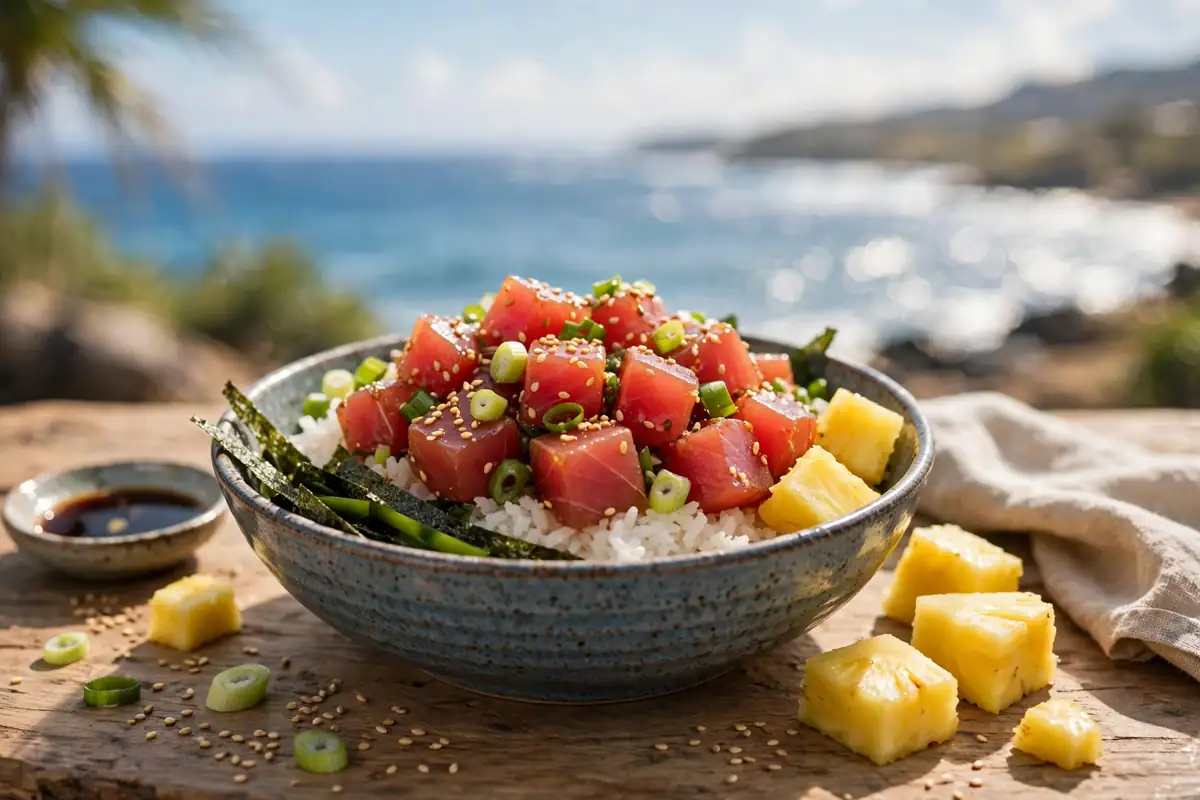
Poke — cubes of raw ahi tuna tossed with soy sauce, sesame oil and onion — is Hawaii’s signature dish, and the freshest version comes from the fish markets and food trucks, sold by the pound. A poke bowl with rice, seaweed and pineapple costs about $15 to $20, and the best counters are the ones with a line of locals: Foodland Farms and Tamura’s on Maui, Ono Seafood in Honolulu, and the fish markets of Hilo. Eat it the same day you buy it, with chopsticks, sitting somewhere you can see the ocean.
2. The plate lunch
The plate lunch is plantation food: two scoops of white rice, a scoop of macaroni salad and a main — kalua pork, chicken katsu or teriyaki beef — on a paper plate, for about $15 to $20. It is filling, cheap, and the lunch to eat on a beach day. The best versions come from the food trucks and the small local diners, not the hotels: the trucks of Kīhei on Maui, the lunch wagons of Honolulu’s Kapahulu Avenue, and the roadside stands of the North Shore. A spam musubi — a block of rice and grilled Spam wrapped in seaweed, for a few dollars — is the snack version, and it is sold everywhere from gas stations to grocery stores.
3. Shave ice, not a snow cone
Shave ice is not a snow cone — it is ice shaved so fine it melts like snow, soaked in syrup and often served over a scoop of vanilla ice cream with sweet azuki beans at the bottom. A rainbow shave ice costs about $5 to $8, and the best versions come from the small stands: Matsumoto’s in Haleʻiwa, on the North Shore, has been serving since 1951, and Ululani’s on Maui is famous for its house-made syrups. Eat it fast in the sun, with a spoon and a straw — it melts in minutes, and that is part of the pleasure.
Free things to do in Hawaii
Hawaii is not a cheap destination, but its best experiences are often free. Every beach in Hawaii is public by law — no matter how expensive the hotel behind it — and the sunsets are the best free show in the Pacific: Waikiki at dusk, the Friday-night fireworks over Honolulu, and the sunset from the beach at Hanalei Bay. In Honolulu, the Friday fireworks, the walk along the Waikiki beachfront and the street art of Kakaʻako cost nothing. Elsewhere, the Mānoa Falls trail, the Makapuʻu Lighthouse trail and the snorkelling from shore at Kapalua Bay are free, the sea turtles at Hoʻokipa Beach on Maui are free to watch from the sand, and the stargazing from the Mauna Kea visitor station is free on a clear night. Hike the free trails, swim at the public beaches, and watch the sun set from the sand with a cold drink from a supermarket — it will be one of the best evenings of your trip, and it will cost almost nothing.
Frequently asked questions
How many days do you need in Hawaii?
Seven to ten days is the sweet spot: it covers two islands without rushing, and it leaves room for a bad-weather day. Three days gives you a first taste of one island — Oʻahu is the best choice for three days, because everything is close together. Two weeks lets you add a third island and slow down. Whatever you do, do not try to see four islands in a week; the flights and rental cars will eat your trip.
Which Hawaiian island is best for a first visit?
Oʻahu has the most to do and the easiest logistics, so it is the best first island. Maui has the classic beach-and-scenery mix and is the best second island. The Big Island has the volcanoes and the most variety, and Kauaʻi is the most lush and laid-back. Many first-timers combine Oʻahu with one neighbour island. Pick the island that matches what you want — beaches and city, volcanoes, or quiet — rather than trying to see them all.
Do you need a car in Hawaii?
Yes, on every island except Oʻahu. On Oʻahu, TheBus and the Skyline train cover Honolulu and the airport, and Waikiki is walkable — but a car is still easier for the North Shore and the windward coast. On Maui, the Big Island and Kauaʻi, public transport is thin and the sights are spread out, so book a rental car with your flight. On Molokaʻi and Lānaʻi, a car — four-wheel-drive on Lānaʻi — is essential.
Is Hawaii expensive?
Hawaii is the most expensive state in America for visitors. Budget about $200 to $300 per person per day for a mid-range trip, including a hotel, meals, a rental car and one paid activity. Hotel rooms carry about 18.7% in taxes, resort fees run $40 to $75 a night, and parking in Waikiki is about $50 a night. Eat plate lunches and poke from food trucks, travel in the shoulder months, and book flights and cars early, and the same trip costs a third less.
Do you need reservations in Hawaii?
Yes — for the six most popular experiences. Diamond Head needs a reservation for non-residents, Hanauma Bay needs one two days ahead, Haleakalā sunrise needs one 60 days ahead, Waiʻānapanapa black sand beach needs one 30 days ahead, the USS Arizona Memorial needs one 56 days ahead, and Hāʻena State Park on Kauaʻi needs one 30 days ahead. The Old Lahaina Luau sells out months ahead. Book all of them the moment your travel dates are set — none of them can be bought on the day.
Is Hawaii safe for tourists?
Hawaii is one of the safest states in America, and most visits are trouble-free. The real risk is the ocean: drowning is the leading cause of visitor deaths in Hawaii, and the surf, currents and shorebreak are stronger than they look. Swim only at lifeguarded beaches, never turn your back on the waves, and never swim alone. Do not leave valuables visible in a parked rental car, do not hike alone on remote trails, and respect the closures — crater rims, closed trails and fenced lots are closed for a reason. Use the same common sense you would anywhere unfamiliar, and the islands will look after you.
Further reading — Wikipedia and Reddit
For the background, start with the Hawaii page on Wikipedia, which covers the islands’ geography, history, and the Native Hawaiian culture behind everything in this guide. For current, on-the-ground advice, the r/Hawaii subreddit is the statewide community where locals and travellers share recent prices, road conditions and booking tips — it is the best place to check whether a park rule has changed since this guide was written, and the r/MauiVisitors community is the equivalent for Maui-specific questions. No Quora link is included here — we could not verify a Hawaii-specific thread on Quora, so we have not invented one. As always, check the official park and reservation sites before you travel — rules and prices change, and the official site is the only source that matters on the day.
Your Hawaii trip, in one paragraph
Hawaii is the rare destination that delivers on its reputation: the beaches are real, the volcanoes are alive, and the aloha spirit is not a slogan but a way of life. If this guide has you thinking about where to go next, the same series covers the best of the United States and beyond — from Chicago and Nashville to Los Angeles, Orlando, Miami, San Diego, Denver, Savannah, Dallas, Charleston, San Francisco, Myrtle Beach, Las Vegas, San Antonio, London, Portland, Pigeon Forge, Puerto Rico, Atlanta, Phoenix, Paris, Maui, Key West, Colorado Springs, Sedona, Chattanooga, Palm Springs, St Louis, Tokyo, Japan, Kansas City, Tennessee, Branson, Florida, Amsterdam, Montreal, Honolulu, Fort Lauderdale, Toronto, Aruba, Charlotte, Indianapolis, New Orleans, Destin, Santa Barbara, Mexico City, Arizona, Osaka, Minneapolis, Pittsburgh, California, Asheville, and Costa Rica. Start with the sunrise above the clouds, end with a sunset on the sand, and let the aloha pace do the rest — Hawaii rewards the traveller who slows down.

About the Author