Things to Do in Costa Rica
20 Best Attractions, a 3-Day Itinerary, Where to Stay, and the Food You Cannot Miss
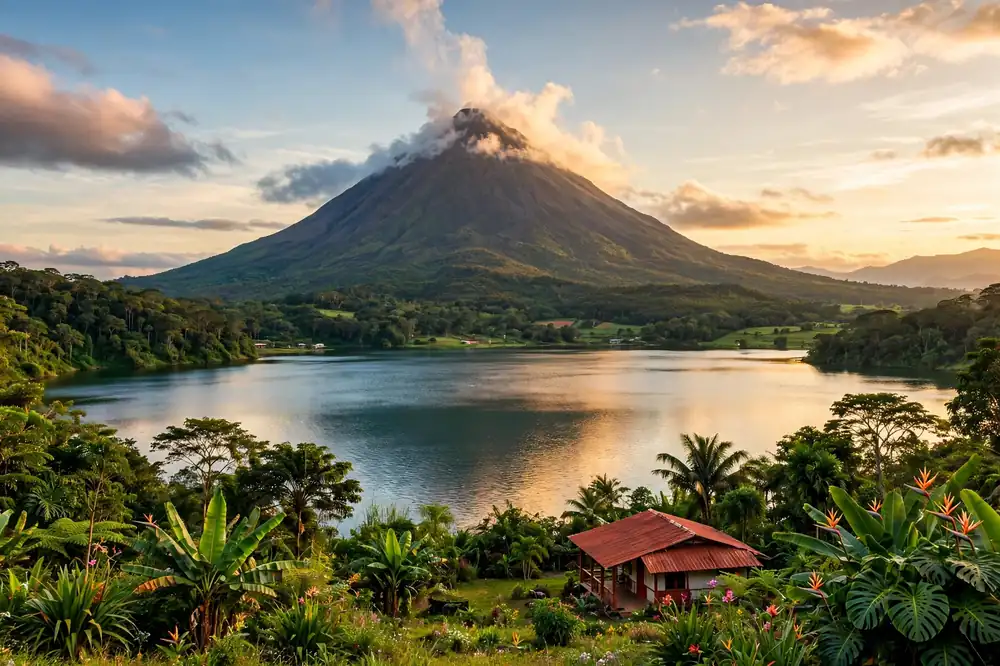
Quick Info
Best for: Volcanoes, cloud forests, wildlife, surfing, and hot springs — all in one small country
Best time: December to April for dry weather; July to November for whales and green-season prices
How long: 7 to 10 days to see the highlights properly; 3 days for a first taste
Budget: About $80 to $150 per person per day, including a mid-range hotel, meals, and one paid activity
Don’t miss: Arenal Volcano at sunset, a dawn walk in Monteverde, and a boat ride through Tortuguero
Costa Rica packs an astonishing amount into a country smaller than West Virginia. It holds about 5% of the world’s biodiversity on 0.03% of the planet’s land, a quarter of its territory is protected as national parks and reserves, and it has had no army since 1948 — the money goes to schools, health care, and conservation instead. The result is a place where you can watch the sunrise over a volcano, soak in a jungle hot spring by lunch, and fall asleep to howler monkeys the same night. This guide covers the 20 best things to do in Costa Rica, with 2026 prices, opening hours, and the booking traps that catch first-timers. It also includes a 3-day itinerary for a short trip, honest advice on where to stay, how to get around without the rental-car insurance surprise, three foods you have to try, and the best free sights in the country.
A word of warning before you plan: a surprising number of popular Costa Rica guides are out of date. Manuel Antonio no longer closes on Mondays, Corcovado cannot be hiked without a certified guide, Poás Volcano now runs on timed tickets with helmets after its August 2026 eruption, and Monteverde’s reserve no longer sells a day pass. Every price and rule below was checked against Costa Rica’s national parks service, SINAC, and current operator listings in Novem/ber 2026, and the outdated-guide traps are called out where they matter. For the bigger picture, start with the Costa Rica page on Wikipedia — it is a useful overview of the country’s geography, history, and the conservation model that makes all of this possible.
Costa Rica at a glance
| Topic | What to know |
|---|---|
| Country | Costa Rica, Central America — bordered by Nicaragua to the north and Panama to the south, with Pacific and Caribbean coasts |
| Capital | San José, in the Central Valley, about 1,150 metres above sea level |
| Language | Spanish; English is widely spoken in tourist areas |
| Currency | Costa Rican colón (CRC), roughly 500 colones to $1; US dollars are accepted almost everywhere tourists go |
| Time zone | Central Standard Time (UTC−6), no daylight saving — it is 2 hours behind Eastern Time |
| Visa | US, Canadian, UK, EU, and Australian passport holders enter visa-free for up to 180 days; you must show an onward ticket and proof of funds |
| Best for | Volcanoes, cloud forests, wildlife, surfing, hot springs, and coffee |
| Getting there | Fly into San José (SJO) for the Central Valley, Arenal, and Monteverde; fly into Liberia (LIR) for Guanacaste beaches |
| Don’t miss | Arenal Volcano, Monteverde cloud forest, Manuel Antonio, Tortuguero canals, and Corcovado |
The 20 best things to do in Costa Rica
1. Hike the lava fields of Arenal Volcano National Park
Arenal is the postcard volcano of Costa Rica: a near-perfect cone rising 1,657 metres above the plains of the northern lowlands, wrapped in rainforest at its base and usually wearing a cap of cloud by mid-morning. It erupted violently in 1968 and then rumbled on for decades, but the lava shows ended with its last eruption in 2010 — so ignore any guide that still promises glowing lava flows at night. What you get instead is one of the best easy hikes in the country: the 1968 lava-flow trail crosses a field of black rock with Arenal looming ahead and Lake Arenal glittering behind you, and on a clear morning the view is the single most photographed scene in Costa Rica. Read the Arenal Volcano page on Wikipedia before you go; it explains the 1968 eruption that buried three villages and reshaped the whole region.
Entry costs $16.95 for foreign adults and $5.65 for children, tax included, and the park is open daily from 8 a.m. to 4 p.m. There is no online sale — you pay by card at the gate, so bring a card rather than cash. You cannot climb Arenal itself, and the neighbouring Cerro Chato crater hike has been closed since 2017, so do not plan your day around either. Go early: the summit is clearest before 9 a.m., and the cloud usually rolls in by late morning. The park’s trails are short — two to three hours covers the lava fields and the old-growth forest loop — which leaves the afternoon free for the hot springs below.
2. Soak in La Fortuna’s hot springs
Arenal’s geothermal heat feeds a string of hot-spring resorts at the foot of the volcano, and soaking in a jungle pool while the volcano steams in the background is the classic Costa Rica evening. Tabacón is the grandest, with natural river pools threaded through landscaped gardens; its day pass starts at about $115 for visitors aged 12 and over, and it sells out in high season, so book ahead. Baldi is the big, family-friendly option with 25 pools, waterslides, and swim-up bars; a pools-only day pass costs $51. Ecotermales is the quiet, adults-oriented choice, capped at about 100 day visitors, at $49 for entry or $78 with a meal included. Los Lagos, just outside town, is the budget pick at about 16,500 colones (roughly $33).
The secret most guides bury is that you can soak for free. Across the road from Tabacón, the Río Chollín — locals call it the free hot springs — runs warm through a public riverbed, and the water is genuinely hot. Go early in the morning before the crowds arrive, wear water shoes for the rocky riverbed, and expect informal parking attendants to ask about $10 to watch your car. It is the same volcanic water, the same view, and it costs nothing.
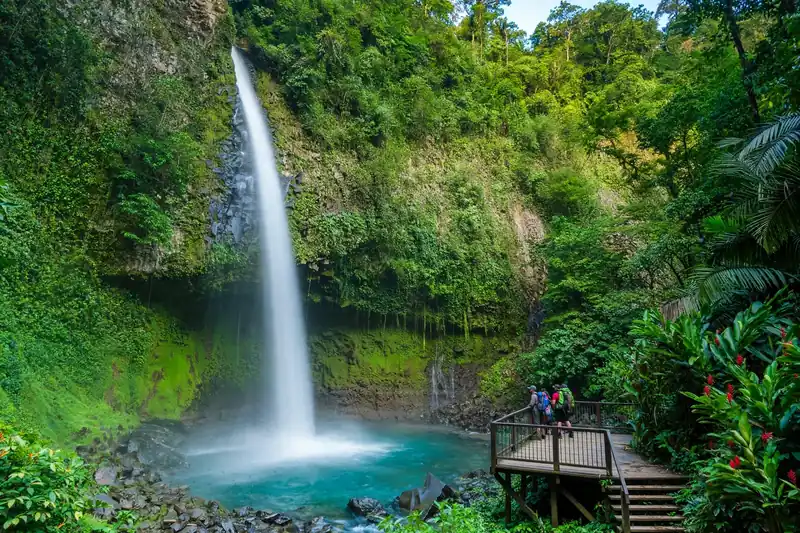
3. Swim below La Fortuna Waterfall
A ten-minute drive from La Fortuna town, a 70-metre waterfall drops off a jungle cliff into a turquoise pool that you can actually swim in. The hike down is the catch: about 500 concrete steps descend through the forest, and you have to climb every one of them back up, so take your time and carry water. The reward is one of the most refreshing swims in Costa Rica, in a pool framed by ferns and orchids, with the roar of the falls drowning out everything else.
Entry costs $20 for foreign adults, and the last entry is 4 p.m. — the gates close before sunset because the steps are not lit. Mornings are best, both for the light on the falls and for the smaller crowds; tour buses arrive in force after 10 a.m. Bring a dry bag for your phone, because the spray reaches the viewing platform, and skip the swim after heavy rain, when the river runs brown and the current strengthens. The waterfall is the reason the La Fortuna Waterfall page is one of the most visited in the region’s guides, and it earns the attention.
4. Walk the cloud forest in Monteverde
Monteverde is the place that made Costa Rica famous with biologists: a misty mountain forest where the trees are draped in moss and orchids, the air smells of wet earth, and the resplendent quetzal — a bird so beautiful the Aztecs considered it sacred — flashes green and red through the canopy. The Monteverde Cloud Forest Reserve protects 10,500 hectares of it, with hanging bridges, a waterfall trail, and some of the best birdwatching in the Americas. The Monteverde Cloud Forest Reserve page on Wikipedia gives the background on how a group of Quaker farmers founded the reserve in the 1970s, which is worth knowing before you walk it.
The booking system changed and many guides have not caught up. The reserve now sells timed tickets for a single trail circuit — $29 per circuit, no day pass — with circuits ranging from 1.4 to 4.1 kilometres, and the gates open at 7:30 a.m. You cannot wander all day on one ticket, so pick your circuit when you book and go at dawn, when the birds are active and the mist is still hanging in the trees. A naturalist guide is worth every colón here: Monteverde’s wildlife hides well, and a guide with a spotting scope will find quetzals, sloths, and toucans you would walk straight past. Book the guide through the reserve or your lodge, and ask for the earliest slot.
5. Zipline and cross hanging bridges in Monteverde
Monteverde is where the modern zipline was born. The Original Canopy Tour ran the world’s first commercial canopy zipline here in 1994, and the idea spread from this one mountainside to adventure parks across the planet. Riding a cable through the cloud forest canopy — 100 metres up, with the forest floor far below and the Gulf of Nicoya glinting on the horizon — is still the definitive Costa Rica adrenaline rush, and it is worth doing in the place that invented it. Tours start at about $80, and the longest lines run over a kilometre.
If heights at speed are not your thing, the hanging bridges are the gentler way to get into the canopy. Selvatura Park runs eight suspension bridges over three kilometres of trail, the longest spanning 157 metres, for $49 plus tax, and you walk at your own pace with the treetops at eye level. Treetopia, formerly Sky Adventures, combines bridges, a tram, and a zipline course in one ticket at $125 plus tax. Book the first morning slot for either: the cloud usually burns off by 10 a.m., and the afternoon rain arrives like clockwork in green season.
6. Spot wildlife in Manuel Antonio National Park
Manuel Antonio is Costa Rica’s smallest national park and its most visited, for good reason. White-sand beaches back onto rainforest so dense that white-faced capuchin monkeys, iguanas, and sloths are part of the scenery, and the trail from the entrance to Playa Manuel Antonio is one of the best wildlife walks in the country — three-toed sloths hang in the cecropia trees, toucans cross overhead, and the beach at the end is genuinely beautiful. The Manuel Antonio National Park page on Wikipedia covers the park’s history, including the local campaign that saved it from development in the 1970s.
Two traps catch almost everyone. First, the park is closed on Tuesdays, not Mondays — a huge number of guides still say Monday, and people show up to a locked gate. Second, tickets are online-only through SINAC: there are no gate sales, no exceptions, and the daily cap of about 600 visitors means tickets sell out roughly two months ahead in dry season. Entry costs $18.08 for foreign adults and $5.65 for children, tax included, and your ticket is linked to your passport, so bring the same document you booked with. Note that the Punta Catedral trail was temporarily closed in October 2026, so check the current trail status when you book. Go at opening time, hire a guide at the entrance if you want to actually see the wildlife, and guard your bags on the beach — the monkeys are expert thieves.
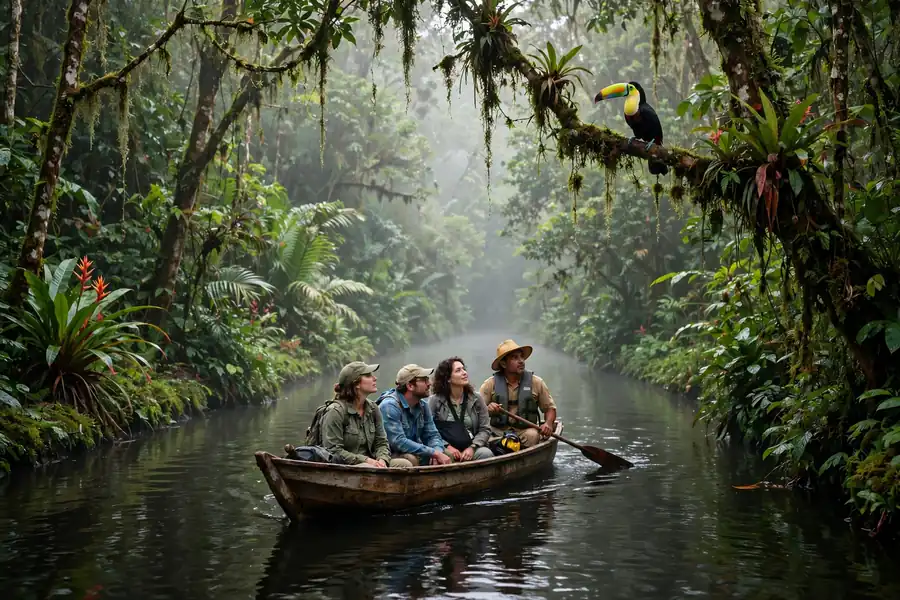
7. Cruise the canals of Tortuguero National Park
Tortuguero is the most remote-feeling place in Costa Rica, and it earns it: there are no roads in. You reach this Caribbean-coast maze of black-water canals, flooded forest, and black-sand beach by boat or by small plane, and the journey is half the experience. The canals are Costa Rica’s Amazon in miniature — caimans slide off the banks, toucans and tiger herons work the overhanging branches, and howler monkeys roar from the canopy at dawn. The Tortuguero National Park page on Wikipedia explains why this beach is one of the most important green turtle nesting sites in the Western Hemisphere.
Entry costs $16.95 for foreign adults and $5.65 for children, tax included, booked online through SINAC, and the park is open 6 a.m. to noon and 1 to 4 p.m. The boat from La Pavona takes about an hour and costs around $8 to $9 one way; Sansa flies from San José in about 30 minutes from around $154 one way. Green turtles nest from July to October, peaking in August and September, with hatchlings from September to November, and leatherbacks nest from March to May; night turtle tours are guided only and cost about $35 to $45. Two practical warnings: there are no ATMs in Tortuguero village, so bring cash, and the river water is not for swimming — the canals are caiman territory. Plan at least two nights; a single day barely scratches it.
8. Trek Corcovado National Park in the Osa Peninsula
National Geographic once called Corcovado “the most biologically intense place on Earth”, and it is not hype. This is the largest remaining patch of Pacific lowland rainforest in Central America, home to scarlet macaws, tapirs, all four of Costa Rica’s monkey species, and the country’s densest population of jaguars — though you would be lucky to see one. The trails from the Sirena ranger station, reached by boat from Drake Bay, are the best wildlife hiking in the country: tapirs wallow in the river, peccaries crash through the undergrowth, and the beach walk at low tide passes caves and waterfalls. Read the Corcovado National Park page on Wikipedia for the full picture of the park’s ecosystems.
The rule that matters: a certified guide is mandatory. Solo entry has been banned since 2014, and rangers check — any guide that tells you to hike Corcovado alone is years out of date. Entry costs $15 per day plus tax (about $16.95 all-in) for foreign adults, the park is open 7 a.m. to 4 p.m., and reservations open up to six months ahead. The Sirena sector closes every October for maintenance and heavy rain, and daily numbers at Sirena are capped at 366 visitors. Day tours from Drake Bay cost $110 to $165 including the boat, guide, park fee, and lunch; if you stay overnight, bunks at Sirena cost about $30 a night and camping runs about $4 to $6. Corcovado is not a casual stop — it is a two- or three-day commitment, and it rewards it.
9. Peer into the crater of Poás Volcano
Poás is one of the world’s most accessible active volcanoes: a road climbs to a visitor centre at 2,700 metres, and a short paved path leads to a viewpoint over a crater lake of milky turquoise acid water, with steam vents hissing on the far wall. It is a short drive from San José and an easy half-day trip, but the rules changed sharply in 2026. After an eruption on August 27, 2026 threw rock and ash 600 metres into the air, the park reopened with capacity halved to 1,064 visitors a day, a maximum of 56 people at the viewpoint, a strict 20-minute limit, and mandatory helmets, which the park provides. Entry is $16.95 for foreign adults, tax included, and tickets are online-only, timed, non-refundable, and linked to your passport number.
Book the earliest slot you can. The cloud rolls in around 10 to 10:30 a.m. on most days, and once it does the crater disappears entirely — a late ticket is often a ticket to a wall of fog. The last entry is 2 p.m., and the Laguna Botos trail was unconfirmed for 2026, so check its status on the day. And take the off-trail rules seriously: a 2026 law sets fines of up to 1,386,600 colones for leaving marked paths in national parks. Poás rewards the early riser and punishes the casual planner, which is exactly why it belongs on this list.
10. Chase the blue river at Río Celeste
Río Celeste, in Tenorio Volcano National Park, is the bluest river you will ever see — a milky turquoise that looks photoshopped until you are standing in front of it. The colour comes from a chemical reaction where two clear streams meet at a spot called Los Teñideros, scattering sunlight in a way that turns the whole river electric blue. The trail runs about 3.5 kilometres through rainforest to the waterfall, with the river glowing beside the path for much of the way.
Book online and book early. Entry is $13.56 for foreign adults and $5.65 for children, tax included, with six timed slots from 8 a.m. to 2 p.m.; you must enter within 40 minutes of your slot and leave by 4 p.m. The trap that ruins trips: after rain, the river turns brown, and there are no refunds. Go in dry season (December to April) and on a clear morning for the best colour. The waterfall viewpoint stairs were only partly open through 2026, so you may not reach the base of the falls — check the current status before you go — and parking at the trailhead costs 3,000 colones in cash. Even with the stairs limited, the river itself is worth the drive.
11. Learn to surf in Tamarindo
Tamarindo, on Guanacaste’s Gold Coast, is Costa Rica’s surf capital and its most famous beach town. The main break is a long, forgiving beach break — the kind beginners dream about — and a dozen surf schools line the sand offering lessons and board rental. The town itself is built for visitors: beachfront restaurants, sunset bars, and a main street where you can buy a board, book a fishing charter, and eat ceviche within a hundred metres. Tamarindo’s surf scene is so established that the town has its own Tamarindo page on Wikipedia — worth a read for the town’s history as a fishing village turned surf hub.
Surf in the morning, when the wind is calm and the waves are cleanest; the afternoon onshore wind chops the surf up. If Tamarindo’s crowds put you off, drive twenty minutes north to Playa Grande, a quieter beach inside Las Baulas National Marine Park, where leatherback turtles nest from October to March — the beach is closed to night access in nesting season to protect them. Tamarindo is also the base for day trips to the dry forests and waterfalls of Rincón de la Vieja, an hour inland. Stay at least two nights: one for the surf, one for the sunset, which is the best free show on the Pacific coast.
12. Watch humpback whales in Uvita and Marino Ballena
Uvita is one of the only places on Earth where two separate humpback whale populations breed in the same waters. Northern humpbacks arrive from December to April, southern humpbacks from July to November, which gives Uvita two whale seasons a year and makes it one of the best whale-watching spots in the world. The whales come to Marino Ballena National Park, named for the humpbacks and for the Whale’s Tail — a sandbar at Punta Uvita that, seen from above at low tide, is shaped exactly like a whale’s fluke. Entry to the park costs $6.78 for foreign adults, tax included, payable by card only, and one ticket covers all four sectors for the day. Whale-watching boat tours cost $75 to $120 per person for a half day, and most include the park fee — check before you book, because some quote it separately. The Whale’s Tail is walkable only for 60 to 90 minutes either side of low tide, so check the tide tables before you go; show up at high tide and you will be staring at open water. The strongest sightings are in August and September for the southern season and January and February for the northern one, and the nearby Nauyaca Waterfalls make a good second stop on the same day.
13. Slow down in Santa Teresa and Montezuma
The southern Nicoya Peninsula is Costa Rica at its most laid-back: dirt roads, jungle-backed beaches, surf shacks, and a crowd that came for a week and stayed for a year. Santa Teresa is the surf town, with a long beach break, yoga studios, and some of the best food on the Pacific coast — from beachfront sushi to wood-fired pizza. Montezuma, an hour south, is the boho original: a village of waterfalls, tide pools, and hammocks, where the main attractions are the Montezuma Waterfalls, a twenty-minute walk up the river, and the sunset from the beach. The Nicoya Peninsula page on Wikipedia explains why this peninsula is one of the world’s five “Blue Zones”, where people routinely live past 100.
Getting here is part of the adventure. The road from Paquera is unpaved and rough, and a 4×4 is strongly recommended, especially in green season when the river crossings rise. The payoff is a Costa Rica without tour buses: empty beaches, howler monkeys in the garden, and a pace that resets your nervous system. Stay three nights minimum — the peninsula punishes rushed visits and rewards slow ones.
14. Go Caribbean in Puerto Viejo and Cahuita
Costa Rica’s Caribbean coast is a different country from the Pacific side: Afro-Caribbean culture, reggae on the radio, jerk chicken and rice-and-beans on the menu, and a slower, saltier rhythm. Puerto Viejo de Talamanca is the hub — a beach town where you can rent a bike and ride the coastal road past jungle, beach, and roadside fruit stands, stopping to snorkel the reef at Punta Uva or watch sloths in the trees overhead. Cahuita National Park, twenty minutes north, protects a coral reef and a white-sand beach trail where monkeys, toucans, and sloths are regulars; entry works on a voluntary donation, which makes it one of the best-value wildlife walks in the country. The Cahuita National Park page on Wikipedia covers the reef and the park’s history.
The Caribbean side has its own weather: it is the wettest part of the country, but its driest months are September and October — the opposite of the Pacific, which is at its wettest then. That makes the Caribbean coast the smartest place in Costa Rica in early autumn, when the Pacific is drowning and Puerto Viejo is sunny. Eat at a local soda, try the Caribbean-style rice and beans cooked in coconut milk, and do not confuse it with the gallo pinto of the Central Valley — the locals will tell you the difference.
15. Spend a day in San José
Most visitors treat San José as a transit stop, and that is a mistake. The capital is the best place in the country to understand Costa Rica: the National Theatre, opened in 1897 and built with coffee money, is one of the most beautiful buildings in Central America, and its gilded interior is worth the guided tour. The Pre-Columbian Gold Museum, under the Plaza de la Cultura, holds a dazzling collection of gold artefacts, and the Jade Museum has the largest collection of American jade in the world. The Central Market, a warren of stalls selling everything from fresh cheese to leather goods, is the best lunch spot in the city — find a soda inside and order a casado for a few dollars. The San José page on Wikipedia gives the city’s history, from its founding in 1738 to its role as the capital of a country that abolished its army.
San José is also the practical hub of the country: the best museums, the best restaurants, and the starting point for day trips to Poás, the coffee farms of the Central Valley, and the Pacuare River. Stay in Barrio Amón or Barrio Escalante, the two walkable neighbourhoods with the best cafés and street art, and take the first day of your trip here rather than the last — it sets up everything else.
16. Tour a coffee farm in the Central Valley
Coffee built modern Costa Rica. The bean arrived in the late 1700s, the government gave free land to anyone who would grow it, and the export wealth paid for the National Theatre, the railways, and the schools. A coffee tour in the Central Valley is the best way to understand that story: you walk the rows of arabica plants on volcanic soil, watch the cherries being picked and processed, and finish with a tasting that will ruin supermarket coffee for you. The Coffee production in Costa Rica page on Wikipedia tells the story of how a single crop shaped a nation.
Doka Estate, on the slopes of Poás Volcano, is the classic tour and pairs well with a morning at the crater; in Monteverde, the Don Juan coffee and chocolate tour costs about $45 and covers both of the region’s famous crops in one visit. Go in harvest season, from November to February, when the cherries are red on the branch and the picking is in full swing. Buy beans at the farm — they are fresher and cheaper than the airport shops, and the bag is the best souvenir in Costa Rica.
17. Raft the Pacuare River
The Pacuare is consistently ranked among the top five rafting rivers in the world, and it earns the ranking. The river drops through a jungle gorge east of San José, with Class III and IV rapids, waterfalls pouring in from the canyon walls, and stretches of calm water where toucans cross overhead and the only sound is the river. Multi-day trips sleep in jungle lodges on the riverbank; day trips run from San José or Turrialba, with an early start and a riverside lunch included. The Pacuare River page on Wikipedia covers the river’s course and the conservation fight that kept it free-flowing.
This is a full-day commitment and a wet one — you will be soaked by the second rapid, so leave the phone behind or bring a proper dry bag. No experience is needed for the standard run, and reputable operators provide helmets, life jackets, and safety kayakers; check that your operator is certified by the Costa Rican Tourism Institute before you book. In green season the river runs higher and wilder, which is more fun for experienced rafters and more intimidating for first-timers.
18. Take a guided night walk
Costa Rica changes completely after dark. The forest that seemed quiet by day fills with sound: red-eyed tree frogs call from the leaves, kinkajous move through the canopy, tarantulas emerge from their burrows, and the eyes of sleeping birds catch the guide’s torchlight. A guided night walk — two hours on a forest trail with a naturalist and a flashlight — is the cheapest wildlife experience in the country and one of the most memorable. Monteverde is the classic spot, with several reserves running nightly walks, but La Fortuna and Manuel Antonio offer them too, and the frogs are often better in the lowlands.
Book with a reputable operator or your lodge, wear long sleeves and closed shoes, and bring a torch with a red filter if you have one — white light disturbs the animals. Do not wander the forest at night alone: the trails are unmarked in the dark, and Costa Rica’s venomous snakes are most active after sunset. A guide is not optional here; it is the difference between a magical evening and a dangerous one.
19. Explore Rincón de la Vieja’s volcanoes and waterfalls
Rincón de la Vieja, an hour inland from Liberia, is the volcano park most visitors skip — and that is exactly why it is worth going. The park packs a remarkable variety into one place: steaming fumaroles and bubbling mud pots, a waterfall you can swim under, dry forest full of monkeys, and a volcanic crater you can hike to on a clear day. The Las Pailas trail loops past the geothermal features in about two hours, and the Oropendola Waterfall, a short drive from the entrance, drops into a turquoise pool that is one of the best swimming holes in Guanacaste. The Rincón de la Vieja page on Wikipedia covers the volcano’s active crater and the park’s ecosystems.
Check access before you go: the park is closed on Mondays, and parts of it were affected by volcanic activity in 2026, so trail availability changes. Entry is $16.95 for foreign adults, the standard SINAC rate, and the park is at its best in dry season, when the trails are firm and the mud pots are at their most active. Combine it with a stay in Liberia or a beach base in Tamarindo, and allow a full day — the drive in is slow, and the park deserves unhurried time.
20. Snorkel Caño Island from Drake Bay
Caño Island is a biological reserve twelve kilometres off the Osa Peninsula, and the snorkelling there is the best in Costa Rica. The water is clear, the reef is alive with parrotfish, angelfish, and moray eels, and the island’s deeper waters draw white-tip reef sharks, rays, and sea turtles — plus dolphins on the boat ride out, most days of the year. The island was a pre-Columbian burial ground, and stone spheres found there are still a mystery. Day trips run by boat from Drake Bay, about an hour each way, with snorkelling gear, lunch, and a guide included, and most operators combine the island with a dolphin search on the way back.
Book at least a day ahead, and go in dry season for the clearest water. The crossing can be rough, so take seasickness precautions if you need them, and bring reef-safe sunscreen — regular sunscreen is banned in the reserve. Caño is the quiet reward at the end of the Osa Peninsula: after the jungle hikes of Corcovado, an afternoon floating over a reef with a turtle is the perfect final day.
Costa Rica in 3 days — a ready-made itinerary
Three days is not enough for Costa Rica — the country deserves a week at least — but if three days is what you have, this route gives you the volcano, the cloud forest, and the coast in one tight loop. It starts and ends in San José, uses La Fortuna as the first base, and finishes on the Pacific coast.
| Day | Base | Highlights |
|---|---|---|
| Day 1 | La Fortuna | Arenal Volcano National Park in the morning, La Fortuna Waterfall at midday, hot springs in the evening |
| Day 2 | Monteverde | Drive to Monteverde, cloud forest reserve walk, zipline or hanging bridges, guided night walk |
| Day 3 | Manuel Antonio | Drive to the coast, wildlife walk and beach in Manuel Antonio, sunset, return to San José |
Day 1 — Arenal and La Fortuna
Fly into San José and drive straight to La Fortuna, about three hours on good roads. Start at Arenal Volcano National Park as early as you can — the summit is clearest before 9 a.m. — and walk the 1968 lava-flow trail. After lunch in town, hike down to La Fortuna Waterfall for a swim, then spend the evening in the hot springs: Tabacón for the full experience, or the free Río Chollín across the road if you would rather save the money. Sleep in La Fortuna, where the volcano is visible from most hotel gardens on a clear night.
Day 2 — Monteverde cloud forest
Drive from La Fortuna to Monteverde in the morning — three to three and a half hours via Lake Arenal, and do not take the rough shortcut road, Ruta 605. Book the earliest timed circuit at the Monteverde Cloud Forest Reserve and go with a naturalist guide, who will find the quetzals and sloths for you. In the afternoon, ride the zipline that was invented here or walk the Selvatura hanging bridges, then take a guided night walk after dinner — the forest after dark is a different world, and it is the best wildlife experience of the trip.
Day 3 — Manuel Antonio and the coast
Drive south to Manuel Antonio, about four hours from Monteverde, and arrive at the park as it opens. Remember that tickets are online-only through SINAC and sell out weeks ahead, so book before you leave home. Walk the wildlife trails with a guide, swim at Playa Manuel Antonio, and have lunch in Quepos before the drive back to San José. If your flight is the next morning, spend the night in San José and visit the National Theatre and the Central Market before you leave.
Best time to visit Costa Rica
Costa Rica has two seasons, and the right one depends on what you want. The dry season, from December to April, brings blue skies, firm roads, and the best wildlife viewing — but also the highest prices and the biggest crowds, and you must book parks and hotels months ahead. The green season, from May to November, brings afternoon rain, lower prices, fewer visitors, and lusher landscapes; mornings are usually dry, so plan your activities early and your afternoons indoors. The rains peak in September and October on the Pacific side, when some rural roads flood and lodges in the Osa Peninsula close.
| Season | Months | Weather | Best for |
|---|---|---|---|
| Dry season | December to April | Sunny, little rain, hot on the coasts | First trips, hiking, wildlife, beach days |
| Green season | May to November | Afternoon rain, lush, fewer crowds | Lower prices, surfing, white-water rafting |
| Whale season (north) | December to April | Dry on the Pacific | Humpbacks in Uvita |
| Whale season (south) | July to November | Green season rains | Humpbacks in Uvita, best in August and September |
| Turtle season | July to October | Green season, Caribbean side wettest | Green turtles in Tortuguero, peak August to September |
| Caribbean dry | September to October | Sunny on the Caribbean coast | Puerto Viejo and Cahuita while the Pacific is wet |
Wildlife timing matters as much as weather. Green turtles nest in Tortuguero from July to October, leatherbacks from March to May, and humpback whales pass Uvita in two separate seasons. If a specific animal is the reason for your trip, plan the dates around it rather than around the weather — and remember that the Caribbean coast is driest in September and October, exactly when the Pacific is at its wettest.
Where to stay in Costa Rica
Base yourself in three places for a first trip: La Fortuna for Arenal and the hot springs, Monteverde for the cloud forest, and Manuel Antonio or Uvita for the Pacific coast. San José works for the first or last night, and Liberia is the gateway for Guanacaste beaches. Staying in one place and day-tripping everywhere wastes hours on mountain roads — Costa Rica looks small on the map, but a 100-kilometre drive can take four hours.
| Area | Best for | Stay here if you want |
|---|---|---|
| La Fortuna | Arenal Volcano, hot springs, waterfalls | Volcano views, adventure activities, family-friendly lodges |
| Monteverde | Cloud forest, ziplines, night walks | Misty mountain lodges, birdwatching, cooler air |
| Manuel Antonio and Quepos | Wildlife, beaches, national park | Beach hotels, wildlife at your door, restaurants |
| Uvita and Dominical | Whales, waterfalls, quiet beaches | Small lodges, surf towns, fewer crowds |
| Tamarindo | Surfing, Guanacaste beaches | Beach town energy, surf schools, nightlife |
| Santa Teresa | Surf, yoga, slow travel | Boutique hotels, remote beaches, long stays |
| Puerto Viejo | Caribbean culture, snorkelling, cycling | Afro-Caribbean food, reef, laid-back vibe |
| San José | Museums, coffee tours, first or last night | City hotels, Central Market, day-trip base |
| Drake Bay | Corcovado, Caño Island | Remote jungle lodges, wildlife, boat access only |
Book early for dry season, especially in Manuel Antonio and Monteverde, where the best lodges sell out months ahead. In green season you can book a few days out and save 30 to 40 percent. Eco-lodges are the norm rather than the exception here — many run on solar power, grow their own food, and employ local guides — and staying in one is part of the experience, not just a place to sleep.
Getting around Costa Rica
Renting a car gives you the most freedom, but the rental-car insurance trap catches almost every first-timer. Third-party liability insurance, known as SLI or TPL, is mandatory by law, costs about $13 to $20 a day, cannot be declined, and is never covered by your credit card — no matter what your card company tells you. Collision cover is optional, but if you decline it the deposit can reach $5,000, and you will need a letter from your card issuer to use the card’s cover. The price you see online is never the price you pay at the counter; budget an extra $15 to $25 a day for the mandatory insurance and read the contract before you sign.
A 4×4 is worth it for Monteverde, the Osa Peninsula, and the Nicoya Peninsula, where the roads are unpaved and the river crossings rise in the rain. For the main routes — San José to La Fortuna to the Pacific coast — a regular car is fine. Driving is on the right, speed limits are in kilometres per hour, and it gets dark around 6 p.m. all year, so avoid night driving: the roads are narrow, unlit, and shared with pedestrians and wildlife. Gas costs about 730 to 750 colones a litre, roughly $1.60, and most stations are full-service.
If you would rather not drive, shared shuttles run between all the main destinations, public buses are cheap and reliable on the main routes, and Sansa flies from San José to Tortuguero, Drake Bay, and the Nicoya Peninsula. The public bus from San José to La Fortuna costs a few dollars and takes about four hours — slower than driving, but the cheapest way to cross the country.
Costa Rica food you have to try
Costa Rican food is simple, fresh, and built around rice, beans, and whatever came off the boat or out of the garden that morning. The best meals are not in the tourist restaurants on the main street — they are in the sodas, the small family-run diners where locals eat, where a full lunch costs a few dollars and the food tastes like someone’s grandmother made it. Look for the word “soda” on the sign and the plastic chairs on the pavement, and you have found the right place.
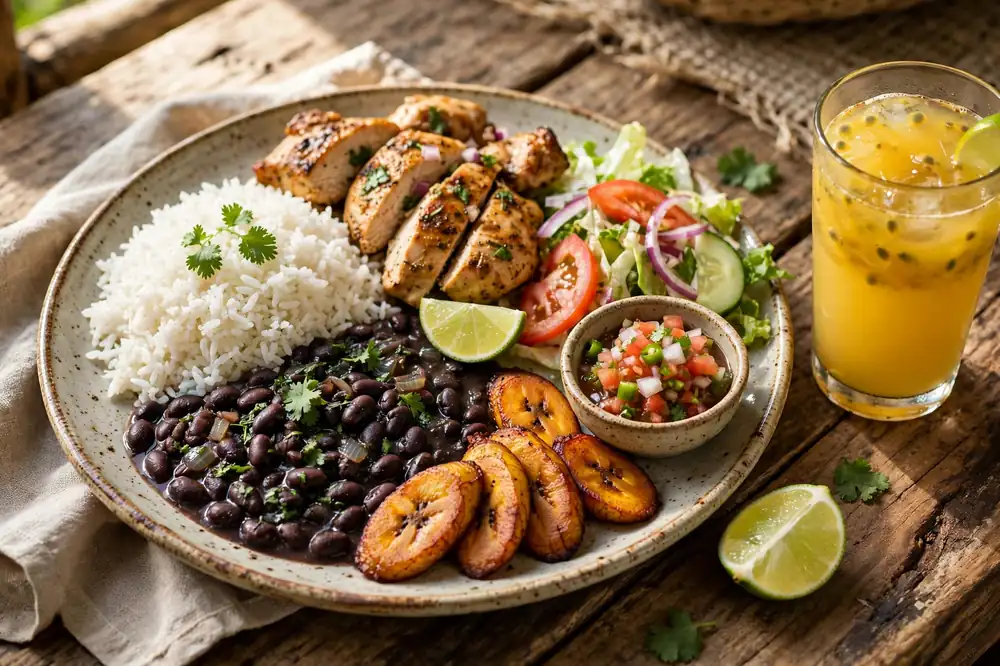
1. Casado at a soda
The casado is the Costa Rican plate lunch: white rice, black beans, a salad, fried plantains, and a protein — chicken, fish, beef, or pork — with a small bowl of salsa on the side. The name means “married man”, supposedly because it is the meal a wife would pack for her husband, and every soda makes its own version. It is the most honest meal in the country: filling, fresh, and usually under $8, including a natural fruit juice. Order it at a soda, not a hotel restaurant, and ask for the house salsa — it is always better than the bottle on the table.
2. Gallo pinto for breakfast
Gallo pinto — literally “spotted rooster” — is rice and beans fried together with onion, sweet pepper, and Lizano sauce, the tangy brown sauce that sits on every Costa Rican table. It is the national breakfast, served with eggs, cheese, and plantains, and it is the first thing you should eat in the country. The Caribbean version, cooked in coconut milk and called rice and beans, is a different dish entirely — try both and decide for yourself which side of the country cooks it better. Gallo pinto costs a few dollars at any soda and keeps you full until lunch.
3. Ceviche on the coast
Costa Rican ceviche is raw fish — usually sea bass or mahi-mahi — cured in lime juice with onion, sweet pepper, and cilantro, served cold with soda crackers or patacones, the twice-fried plantain discs. It is the food of the coast, best eaten at a beachfront soda in Tamarindo, Puerto Viejo, or Puntarenas, where the fish was swimming that morning. On the Caribbean side, try it with a side of patacones and a cold Imperial beer; on the Pacific side, the fish is often served with a squeeze of lime and a dash of Lizano. It costs $5 to $10 and tastes like the ocean.
Free things to do in Costa Rica
Costa Rica is not a cheap destination, but its best experiences are often free. The Río Chollín hot springs across from Tabacón cost nothing, the beaches are all public by law — every beach in the country is open to everyone, no matter how expensive the hotel behind it — and the sunsets on the Pacific coast are the best free show in Central America. In San José, the Central Market is free to wander, the street art in Barrio Escalante costs nothing to admire, and the parks fill with locals on Sunday afternoons.
Elsewhere, Cahuita National Park runs on a voluntary donation, the Montezuma Waterfalls are a free walk up the river, and the whale’s tail sandbar at Uvita is free to walk at low tide once you have paid the park entry. Hike the free trails around La Fortuna, swim at the public beaches of Tamarindo and Santa Teresa, and watch the sun set from the beach with a cold drink from a supermarket — it will be one of the best evenings of your trip, and it will cost almost nothing.
Frequently asked questions
How many days do you need in Costa Rica?
Seven to ten days is the sweet spot: it covers Arenal, Monteverde, and one coast without rushing, and it leaves room for a bad-weather day. Three days gives you a first taste — Arenal, Monteverde, and Manuel Antonio in a tight loop — but you will spend a third of it in the car. Two weeks lets you add Tortuguero, Corcovado, and the Caribbean coast. Whatever you do, do not try to see the whole country in five days; the mountain roads will eat your trip.
Is Costa Rica safe for tourists?
Costa Rica is one of the safest countries in Central America, and most visits are trouble-free. The risks are the ordinary ones: petty theft in tourist areas, break-ins of rental cars left with luggage visible, and strong currents at unsupervised beaches. Do not leave valuables in a parked car, do not walk alone on empty beaches at night, and swim only where locals swim. San José’s centre is fine by day but quiet and best avoided on foot late at night. Use the same common sense you would in any unfamiliar city, and the country will look after you.
Do you need a 4×4 in Costa Rica?
For Monteverde, the Osa Peninsula, and the Nicoya Peninsula, yes — the roads are unpaved, steep, and crossed by rivers that rise in the rain. For the main tourist circuit — San José, La Fortuna, Arenal, Manuel Antonio, and the central Pacific coast — a regular car is fine, and the roads are paved and well maintained. If you are only visiting one region, match the car to it rather than paying for a 4×4 you will not need.
What is the best month to visit Costa Rica?
December to April is the best all-round weather: dry, sunny, and good for hiking and wildlife. January and February are the driest and busiest months. July and August are the sweet spot of green season, with morning sun, afternoon rain, and the southern whale season in full swing. September and October are the wettest months on the Pacific side but the driest on the Caribbean coast, which makes them the best months for Puerto Viejo and Cahuita. There is no bad month — only the wrong coast for that month.
Is Costa Rica expensive?
Costa Rica is mid-range by international standards — more expensive than its Central American neighbours, cheaper than the United States. Budget about $80 to $150 per person per day for a mid-range trip, including a hotel, meals, and one paid activity. Park entry fees add up fast at $16.95 per person per park, and the mandatory rental-car insurance is the hidden cost most visitors miss. Eat at sodas, travel in green season, and book parks online early, and the same trip costs a third less.
Do you need cash in Costa Rica?
Cards are accepted almost everywhere tourists go, including national park entrances, which are card-only at the gate. But carry colones for sodas, market stalls, parking attendants, and rural areas, and carry cash in Tortuguero, which has no ATMs at all. US dollars are widely accepted, though you will get change in colones. ATMs are common in towns; withdraw in colones and decline the ATM’s conversion offer, which is always a bad rate.
Further reading — Wikipedia, Reddit and Quora
For the background, start with the Costa Rica page on Wikipedia, which covers the country’s geography, history, and the conservation model behind its national parks. For current, on-the-ground advice, the r/CostaRicaTravel subreddit is the most active English-language community for the country, with monthly megathreads where travellers and locals share recent prices, road conditions, and booking tips — it is the best place to check whether a park rule has changed since this guide was written. For a traveller’s-eye view of a week-long nature trip, the Quora thread on a week-long Costa Rica nature trip has practical, off-the-beaten-path suggestions from people who have done it. As always, check the official SINAC booking site before you travel — park rules and prices change, and the official site is the only source that matters on the day.
Your Costa Rica trip, in one paragraph
Costa Rica is the rare destination that delivers on its reputation: the volcanoes are real, the wildlife is everywhere, and the “pura vida” attitude is not a slogan but a way of life. If this guide has you thinking about where to go next, the same series covers the best of the United States and beyond — from Chicago and Nashville to Los Angeles, Orlando, Miami, San Diego, Denver, Savannah, Dallas, Charleston, San Francisco, Myrtle Beach, Las Vegas, San Antonio, London, Portland, Pigeon Forge, Puerto Rico, Atlanta, Phoenix, Paris, Maui, Key West, Colorado Springs, Sedona, Chattanooga, Palm Springs, St Louis, Tokyo, Japan, Kansas City, Tennessee, Branson, Florida, Amsterdam, Montreal, Honolulu, Fort Lauderdale, Toronto, Aruba, Charlotte, Indianapolis, New Orleans, Destin, Santa Barbara, Mexico City, Arizona, Osaka, Minneapolis, Pittsburgh, California, and Asheville. Start with the volcano at dawn, soak in the hot springs at dusk, and let the pura vida pace do the rest — Costa Rica rewards the traveller who slows down.

About the Author