Things to Do in California
20 Best Attractions, a 3-Day Itinerary, Where to Stay, and the Food You Cannot Miss
Quick Info
Best for: First-time visitors, road trippers, national park lovers, food lovers and families who want beaches, mountains and desert in one trip
Best time: April to June and September to October; spring wildflowers and autumn light are the sweet spot
How long: 3 days for a taster; 7 to 10 days to do the state properly
Budget: Roughly $200–$300 per person per day, mid-range, before hotel
Don’t miss: Yosemite Valley, the Big Sur coast road, Disneyland, Death Valley at sunrise and a fish taco in San Diego
California is the only American state where you can surf in the morning, walk among the tallest trees on Earth in the afternoon and sleep in the desert under the stars — and this guide covers all of it. From Yosemite’s granite walls to the neon of the Sunset Strip, from Napa’s vineyards to the wildflower deserts of Anza-Borrego, here are the 20 best things to do in California, with honest 2026 prices and the traps older guides still get wrong. Use our 3-day itinerary to plan the trip, check where to stay for the best bases, read how to get around on California’s highways and trains, taste the three foods every visitor should try, and finish with the free sights that cost nothing at all.
California is the most populous state in America, with about 39 million people, and the third largest by area — bigger than the United Kingdom. It holds the highest point in the contiguous United States, Mount Whitney at 14,505 feet, and the lowest, Badwater Basin in Death Valley at 282 feet below sea level, and it has nine national parks, more than any other state. The catch is that the state is huge: Los Angeles to San Francisco is about 380 miles, and the drive from San Diego to the redwoods is more than 800 miles, so do not try to see it all in one trip. Pick a region, drive it slowly, and come back for the rest. The state splits naturally into two trips: the north, with San Francisco, the redwoods, Napa Valley and Yosemite, and the south, with Los Angeles, San Diego, Disneyland and the deserts. The nine national parks alone could fill a month, and the coast road between them is half the pleasure. Read the California page on Wikipedia for the state’s full story, from the Gold Rush to Hollywood to Silicon Valley.
California at a glance
| Topic | What to know |
|---|---|
| Best for | First-time visitors, road trippers, national park lovers, food lovers and families |
| Best time to visit | April to June and September to October; spring wildflowers, autumn light |
| How long | 3 days for a taster; 7 to 10 days to do the state properly |
| Budget | Roughly $200–$300 per person per day, mid-range, before hotel |
| Getting around | A car is essential outside the big cities; trains link San Diego, Los Angeles and San Francisco |
| Don’t miss | Yosemite Valley, the Big Sur coast road, Disneyland, Death Valley at sunrise, a fish taco in San Diego |
| Airports | Los Angeles (LAX), San Francisco (SFO), San Diego (SAN), Sacramento (SMF), San Jose (SJC) |
| Famous for | Hollywood, the Golden Gate Bridge, Yosemite, Big Sur, Disneyland, Napa wine and the redwoods |
The 20 best things to do in California
1. Stand under the granite walls of Yosemite National Park
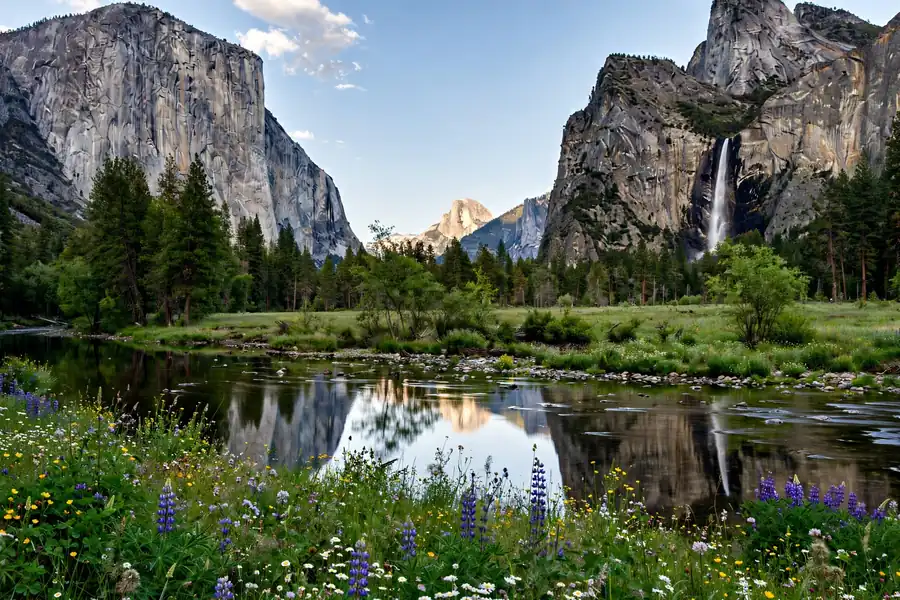
Yosemite is the single greatest thing to do in California, and it is not close. The valley is a seven-mile granite amphitheatre walled by El Capitan, a 3,000-foot cliff that climbers spend days ascending, and Half Dome, the 8,839-foot icon that appears on the state quarter. Yosemite Falls, at 2,425 feet, is one of the tallest waterfalls in North America and at its best in May and June, when the snowmelt is running. Start at Tunnel View for the classic first look, then walk the valley floor to Bridalveil Fall and the meadows, and drive up to Glacier Point for the view from 3,200 feet above the valley floor. The Mariposa Grove, near the south entrance, holds about 500 giant sequoias, including the Grizzly Giant, one of the oldest living trees on Earth.
The 2026 rules are the big story, and most older guides get them wrong. There is no entrance reservation in 2026 — the timed-entry system was dropped in February 2026 — so you can drive in, but you still pay $35 per vehicle for a seven-day pass. The trap is the new nonresident fee: since January 1, 2026, visitors from outside the United States pay an extra $100 per person aged 16 and over at Yosemite and ten other parks, unless they hold an America the Beautiful pass, which now costs $250 for nonresidents and $80 for residents. Tioga Road, the high crossing to the east side, opened on May 15, 2026, the earliest opening in 16 years, and Glacier Point Road opened on May 9, 2026; both closed temporarily on October 29 and reopened on November 5, 2026, with no season closing date set yet. The Half Dome cables still need a permit when they are up, and the El Capitan Bridge stabilization project runs through December 2026, with 15-minute delays on weekdays. Book valley lodging up to a year ahead — Yosemite Valley Lodge and the Ahwahnee sell out months in advance. Read about Yosemite National Park on Wikipedia.
2. Los Angeles — Hollywood, Griffith and the beaches
Los Angeles gets one slot here because it already has its own full guide — and because LA deserves a whole trip, not a paragraph. The essentials: the Hollywood Walk of Fame and the TCL Chinese Theatre, the Hollywood Sign viewed from the Lake Hollywood Park trail, and Griffith Observatory, which is free to enter and has the best sunset view in the city. The Getty Center is free too (reserve a timed ticket), and the Santa Monica Pier and Venice Beach are the classic end to a day. Our Los Angeles guide covers all of it in detail, including the 2026 news: the Lucas Museum opened in September 2026, and the Getty Center is closed from March 2027 to 2028, so go before then. The beaches are the other half of LA: Santa Monica for the pier and the sunset, Venice for the boardwalk and the skate park, and Malibu for the surf and the celebrity houses along the Pacific Coast Highway. Traffic is the city’s famous flaw — allow twice the time Google Maps suggests, and plan your day by neighbourhood rather than by distance. Read about Los Angeles on Wikipedia.
3. Spend a day at Disneyland Resort in Anaheim
Disneyland is the original Disney park — it opened on July 17, 1955 — and it is still the most visited theme park in California. Disneyland Park has the classics: Sleeping Beauty Castle, Pirates of the Caribbean, Space Mountain and Star Wars: Galaxy’s Edge, where the Millennium Falcon ride is the best thing in the park. Next door, Disney California Adventure has Cars Land, the Pixar Pier and the Avengers Campus, and a Park Hopper ticket covers both in one day. Prices are the trap here: a one-day, one-park ticket costs $104 to $224 depending on the date, a Park Hopper adds $70 to $90, and a five-day ticket is $520. And unlike Walt Disney World, Disneyland still requires a park reservation on top of your ticket — a ticket alone does not guarantee entry, and the most popular dates sell out. Book the ticket and the reservation together, arrive before opening, and use the single-rider lines on the big coasters. Read about Disneyland on Wikipedia.
4. Drive the Big Sur coast on Highway 1
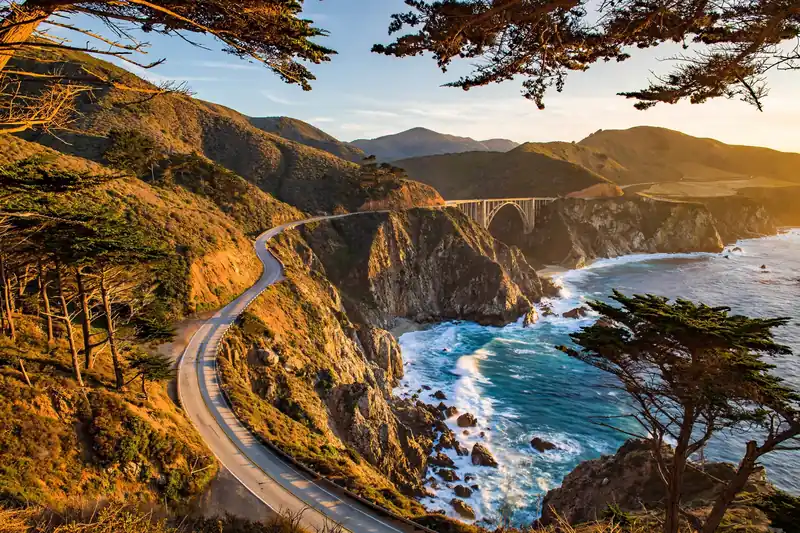
Highway 1 through Big Sur is the most beautiful drive in America: 90 miles of two-lane road between Carmel and San Simeon, with the Santa Lucia Mountains on one side and the Pacific 1,000 feet below on the other. The stops that matter are Bixby Creek Bridge, the graceful 1932 concrete arch that is the most photographed bridge in California; Pfeiffer Beach, with its purple sand and the Keyhole Rock arch; and McWay Falls in Julia Pfeiffer Burns State Park, an 80-foot waterfall that drops straight onto the beach — one of only two waterfalls in California that fall directly into the ocean. The park costs $10 per vehicle.
Big Sur spent three years as two dead ends after landslides, and the 2026 news is mostly good. Regent’s Slide reopened on January 14, 2026, about 90 days ahead of schedule, reconnecting Carmel and Cambria for the first time since February 2024. Then wildfires closed about 40 miles of the highway from August 27 to September 13, 2026, and it fully reopened on September 14. Pfeiffer Big Sur State Park closed after the fires and reopened on October 16, 2026. The remaining traps: one-way traffic at Rocky Creek Bridge runs 24 hours a day through November 30, 2026, Los Padres National Forest is closed by forest order until January 31, 2027, so the backcountry trails east of the highway are shut, and the highway closes completely near Torre Canyon on November 18 and 19, 2026 for slope work. Check the Caltrans quick map before you set off, fill up in Carmel or Cambria, and drive it in daylight. Read about Big Sur on Wikipedia.
5. San Francisco — the Golden Gate Bridge and the bay
San Francisco is the most walkable big city in California and the most photogenic, and its one slot here covers the bay itself. Walk or cycle the Golden Gate Bridge — free on foot and by bike, both directions — and go at sunrise before the fog rolls in. Then take the ferry from Pier 33 to Alcatraz, the former federal prison on its island in the bay. Day tours cost $47.95 for adults, night tours $59.65, and the Behind the Scenes tour is $104.65 for visitors aged 12 and over; Alcatraz City Cruises is the only authorized operator, and tickets are released 90 days ahead and sell out weeks in advance. The 2026 trap: Alcatraz was closed from October 26 to November 18, 2026 for ferry dock repairs, with tours resuming on November 19, so any guide that lists it as open all year is out of date. The bridge toll is another 2026 change: driving south across the Golden Gate now costs $10.25 with FasTrak, $10.50 by pay-by-plate or $11.25 by invoice, effective July 1, 2026, while northbound is free and the other Bay Area bridges are $8.50 since January 1, 2026. Cable cars cost $9 a ride in 2026 and rise to $12 in January 2027. Our San Francisco guide covers Fisherman’s Wharf, the Painted Ladies, the Presidio and the rest. Read about San Francisco on Wikipedia.
6. Watch the sun rise over Death Valley National Park
Death Valley is the hottest, driest and lowest national park in America, and it is best at dawn. Badwater Basin, at 282 feet below sea level, is the lowest point in North America — a white salt flat that stretches to the horizon, with a sign on the cliff above marking sea level. Zabriskie Point at sunrise turns the badlands gold, Dante’s View looks down on the whole valley from 5,475 feet, and the Mesquite Flat sand dunes near Stovepipe Wells are the classic sunset walk. Entry is $30 per vehicle, and there is no reservation and no $100 nonresident surcharge here — Death Valley is one of the parks the new fee does not apply to, which older 2026 guides often get wrong.
The heat is the real planning problem. Summer temperatures pass 120 degrees Fahrenheit most days, and the record of 134 degrees was set here in 1913. Visit from October to April, carry a gallon of water per person, and never rely on your phone — there is almost no signal in the park. One more 2026 change: the Geology Tour Road has been closed by flood damage since late October 2026, so do not plan a route through it. The fee-free days are now for United States residents only. Read about Death Valley National Park on Wikipedia.
7. Climb among the boulders of Joshua Tree National Park
Joshua Tree is where the Mojave and Colorado deserts meet, and it looks like nowhere else on Earth: spiky Joshua trees, round granite boulders piled into impossible stacks, and some of the darkest night skies in Southern California. The classic day is the Hidden Valley nature trail through the boulder maze, Skull Rock on the main park road, the Cholla Cactus Garden at golden hour, and Keys View at sunset, where on a clear day you can see the San Andreas Fault, Palm Springs and the snow on San Jacinto Peak. Entry is $30 per vehicle, there is no reservation and no $100 nonresident surcharge here either. Campgrounds book out on spring weekends, so reserve ahead or stay in Twentynine Palms or Joshua Tree village. Come in spring for the wildflowers, or in autumn for the climbing season — summer is brutally hot, and the park has almost no shade. Read about Joshua Tree National Park on Wikipedia.
8. Walk among giants in Sequoia and Kings Canyon National Parks
Sequoia and Kings Canyon are two parks run as one, and they hold the largest trees on Earth. The General Sherman Tree is 274.9 feet tall and about 52,500 cubic feet in volume — the largest living tree by volume anywhere — and the Congress Trail through the Giant Forest is a walk among trees that were seedlings when Rome fell. Kings Canyon is the wilder half: a glacier-carved canyon deeper than the Grand Canyon in places, with the Kings River running through it and the Zumwalt Meadow trail at the end of the road. One $35 vehicle ticket covers both parks for seven days, and there is no reservation. The 2026 trap is the nonresident fee: unlike Death Valley and Joshua Tree, these two parks do charge the extra $100 per person for visitors from outside the United States. Crystal Cave runs from May 22 to November 1, 2026, at $22 for adults and $11 for children, the free shuttle runs from May 22 to September 7, 2026, the Generals Highway between the parks is unplowed and closed from early January to mid-March, vehicles over 22 feet are banned on Crystal Cave Road, and the entrance stations are card-only — bring a card, not cash. Read about Sequoia and Kings Canyon National Parks on Wikipedia.
9. Swim in the clear blue water of Lake Tahoe
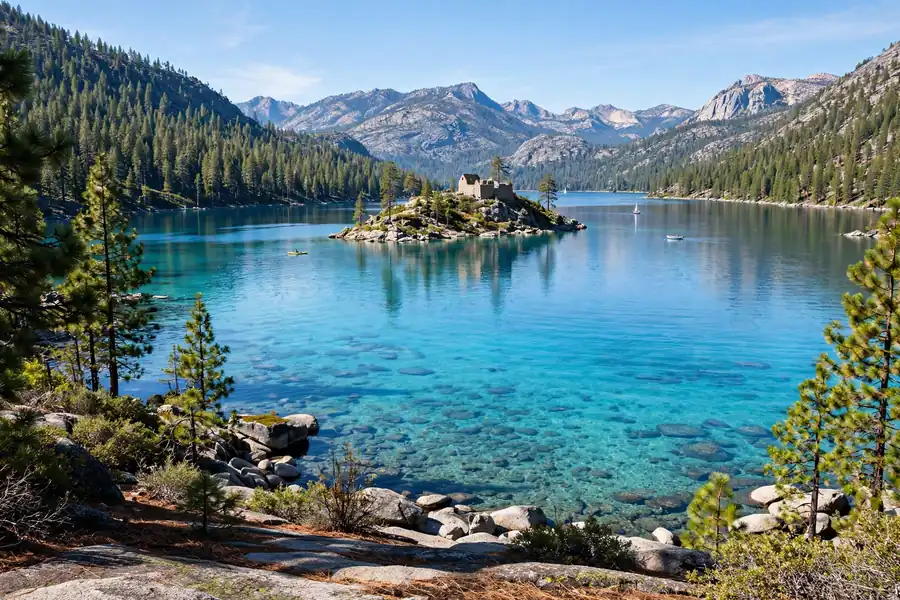
Lake Tahoe is 22 miles long, with 72 miles of shoreline, and at 1,645 feet deep it is the second deepest lake in the United States. The water is so clear you can see 70 feet down, and the colour shifts from turquoise at the shore to deep blue in the middle. Emerald Bay is the postcard: a narrow inlet with Fannette Island, the lake’s only island, and Vikingsholm, a 1929 Scandinavian castle on the shore. Get there early — the Emerald Bay parking lots fill by mid-morning in summer — and take the one-mile trail down to the castle. In winter Tahoe is California’s best skiing, with Palisades Tahoe and Heavenly on either side of the lake, and in summer the beaches at Kings Beach and Sand Harbor are the place to swim. The lake straddles the California-Nevada line, so the casinos sit on the Nevada side in Stateline while the California side stays quiet. Read about Lake Tahoe on Wikipedia.
10. Taste wine in Napa Valley
Napa Valley is only 30 miles long and five miles wide, but it has about 400 wineries and some of the most famous Cabernet Sauvignon on Earth. The ritual is simple: book tastings in advance, visit three wineries a day at most, and let someone else drive. Tastings typically cost $40 to $100 per person, and most wineries now require reservations — Napa County requires tasting by appointment, so the old walk-in days are gone. Start at a big name like Robert Mondavi or Stag’s Leap for the history, add a small family winery in St Helena or Calistoga for the personal touch, and finish at the Oxbow Public Market in downtown Napa for dinner. The Napa Valley Wine Train is the slow luxury option, and the hot-air balloons over the valley at dawn are the splurge. If you want a cheaper day, drive 20 minutes north to Sonoma, where the tastings cost less and the crowds are thinner. Read about Napa Valley on Wikipedia.
11. Meet the otters at the Monterey Bay Aquarium
Monterey is the prettiest town on the central coast, and the aquarium is its star. The Monterey Bay Aquarium sits on Cannery Row, in the old sardine canneries that John Steinbeck made famous, and it is one of the best aquariums in the world: a million-gallon Open Sea tank with tuna and sharks, sea otters that are the crowd favourite, and a kelp forest that rises three storeys. Admission is $65 for adults aged 18 to 69, $50 for young people aged 5 to 17 and seniors aged 70 and over, and free for children under 4; tickets are online only, with no door sales, so book before you go. The new gallery, Ocean in Motion, opened on November 7, 2026, replacing the old Splash Zone. Outside the aquarium, Cannery Row is worth an hour, the 17-Mile Drive through Pebble Beach costs about $12 per vehicle — refunded if you spend $35 or more at a Pebble Beach resort — and the wharf is the place for clam chowder. Read about Monterey Bay Aquarium on Wikipedia.
12. San Diego — Balboa Park and the coast
San Diego is California’s most relaxed big city, and its one slot here is the coast and Balboa Park. Balboa Park is 1,200 acres of Spanish Revival buildings and 17 museums, including the San Diego Museum of Art and the Museum of Us, and the San Diego Zoo sits inside it. La Jolla Cove is the place to watch sea lions and snorkel in the clear water, Coronado Beach has the widest sand in the county and the 1888 Hotel del Coronado, and Old Town is where California began. Our San Diego guide covers the zoo, the Safari Park’s Elephant Valley that opened in March 2026, Torrey Pines and the rest in full. The Gaslamp Quarter downtown is the place for dinner and nightlife, the USS Midway Museum is a floating aircraft carrier you can walk through, and the coastal drive up to La Jolla passes some of the prettiest coves in California. San Diego is also the sunniest big city in the state, with about 260 sunny days a year, which is why the outdoor life here never really stops. Read about San Diego on Wikipedia.
13. Tour the impossible luxury of Hearst Castle
Hearst Castle is the most over-the-top house in America: a 165-room hilltop estate built by newspaper magnate William Randolph Hearst and architect Julia Morgan, with 123 acres of gardens, terraces and pools. The Grand Rooms Tour takes you through the Assembly Room, the Refectory with its 500-year-old choir stalls, and the two famous pools — the Neptune Pool outdoors, lined with marble, and the indoor Roman Pool, tiled in gold and blue. The Grand Rooms Tour costs from $35 for adults and $18 for children, and the evening Art Under the Moonlight tour costs $50 for adults and ran on selected Fridays and Saturdays from October 4 to November 15, 2026. Reservations open up to 60 days ahead and are essential in summer, and the castle is closed on Thanksgiving, Christmas and New Year’s Day. One older source still quotes $30 for the Grand Rooms Tour — that price is out of date, so use $35. Read about Hearst Castle on Wikipedia.
14. Walk beneath the tallest trees on Earth in Redwood National and State Parks
The redwoods are the tallest trees on Earth — the tallest known, Hyperion, is about 380 feet — and walking among them is a quiet, cathedral-like experience that no photograph prepares you for. The parks are free to enter, which is rare for a national park, and the best of them is spread across four parks run together: Redwood National Park and the Jedediah Smith, Del Norte Coast and Prairie Creek state parks. The Avenue of the Giants is the classic drive, Fern Canyon is a 50-foot-deep gorge with walls covered in ferns, and the Stout Grove in Jedediah Smith is the most beautiful single grove in the parks. The permit trap catches people out: Fern Canyon needs a free permit from May 15 to September 15, and the Tall Trees Trail needs one all year round — both are free, but you must reserve them online before you go. The parks are a nine-hour drive from San Francisco, so stay in Crescent City or Eureka and give them two days. Read about Redwood National and State Parks on Wikipedia.
15. Take a boat to Channel Islands National Park
The Channel Islands are California’s least-visited national park, and that is exactly the point. Five islands sit off the coast near Ventura and Santa Barbara, and they feel like California before people: sea caves, foxes found nowhere else on Earth, and snorkelling in kelp forests. Island Packers runs the ferries from Ventura and Oxnard; a round trip costs $72 for adults to Santa Cruz or Anacapa, $99 to Santa Rosa and $127 to San Miguel, and there is no park entrance fee. Santa Cruz is the best first island, with the sea caves at Painted Cave and the hike to Potato Harbor. The 2026 news: a wildfire burned about 40 percent of Santa Rosa Island from May 15 to June 4, 2026, and the island reopened to day visitors on July 1, 2026, while trips to Santa Barbara Island are unavailable because of landing damage. Campsites on the islands cost $15 a night and are booked on Recreation.gov. Book the ferry weeks ahead in summer, and take sea-sickness tablets — the crossing can be rough. Read about Channel Islands National Park on Wikipedia.
16. Santa Barbara — the American Riviera
Santa Barbara is the prettiest city on the Southern California coast, and its one slot here is the Riviera itself. State Street runs from the harbour to the hills, and its 500 to 1100 blocks are permanently car-free after the 2026 council vote, so it is a long pedestrian promenade of shops and restaurants. The Old Mission, founded in 1786, costs $17 to tour, Stearns Wharf is the oldest working wooden wharf in California, and the Funk Zone is the wine-tasting district in the old industrial quarter. Our Santa Barbara guide covers Lotusland, the zoo, the Botanic Garden and the rest, including the 2026 news that Lotusland’s public season sold out and ended on October 31, 2026, with tours resuming on February 17, 2027. Read about Santa Barbara, California on Wikipedia.
17. Ride the tram up San Jacinto Peak from Palm Springs
Palm Springs is California’s desert playground, and the Palm Springs Aerial Tramway is its signature ride: the world’s largest rotating tram car climbs 2.5 miles from the desert floor to 8,516 feet on Mount San Jacinto in about ten minutes, and the temperature at the top is typically 30 degrees cooler than at the bottom. The tramway costs $36.95, it closed from September 8 to October 4, 2026 for annual maintenance and reopened on October 5, 2026, and at the top there are 54 miles of hiking trails and a restaurant with a view across the whole Coachella Valley. Down in town, Palm Springs is the capital of mid-century modern architecture — the Alexander homes, the Elvis Honeymoon Hideaway and the weekly architecture tours — and Indian Canyons, the palm oasis of the Agua Caliente people, costs $12. Our Palm Springs guide covers the Living Desert, Joshua Tree day trips and the rest. Read about Palm Springs, California on Wikipedia.
18. Watch elephant seals at Point Reyes National Seashore
Point Reyes is the wildest coast within a day of San Francisco, and it is worth the drive. The lighthouse, built in 1870, sits at the end of 308 steps on a headland that is the windiest and foggiest place on the Pacific coast — on a clear day you can see whales from the observation deck. Chimney Rock and Drakes Beach are the places to watch elephant seals, with the pups born in winter and the big bulls fighting in spring, and Tomales Point is home to the tule elk, a subspecies found only in California. Alamere Falls, at the southern end of the park, is the other waterfall in California that falls directly onto the beach, and Tomales Bay is famous for its oysters — the farm stands along the bay sell them by the dozen. The park is free, but the lighthouse road closes on the busiest weekends, when a shuttle runs from Drakes Beach instead. Read about Point Reyes National Seashore on Wikipedia.
19. Ride the Giant Dipper on the Santa Cruz Beach Boardwalk
Santa Cruz is California’s classic beach town, and the Boardwalk is its heart: a 1907 seaside amusement park with the Giant Dipper, a wooden roller coaster from 1924 that is one of the oldest in America, and the Looff Carousel from 1911, both National Historic Landmarks. The beach itself is free, the rides are pay-per-ride or by wristband, and the whole place feels like a time capsule in the best way. Steamer Lane, at the west end of town, is one of the most famous surf breaks in California — watch the surfers from the cliff, and do not try it unless you know what you are doing. Inland, Henry Cowell Redwoods State Park has old-growth redwoods ten minutes from downtown, and the Mystery Spot is the town’s beloved tourist trap. Read about Santa Cruz, California on Wikipedia.
20. Chase the wildflower superbloom in Anza-Borrego Desert State Park
Anza-Borrego is California’s largest state park — about 600,000 acres of desert in San Diego County — and in a good rain year it produces one of the great natural spectacles in America: the wildflower superbloom, when the desert floor turns purple, yellow and white with millions of desert lilies, sand verbena and desert sunflowers. The last big blooms were in 2019 and 2023, and the flowers peak from late February to early April, so check the park’s wildflower reports before you go and never pick the flowers — it is illegal and it kills the bloom. Even without flowers, the park is worth a day: the metal sculptures at Galleta Meadows, 130 life-size steel animals and dinosaurs by Ricardo Breceda scattered across the desert, the slot canyons, and Fonts Point, the classic sunset viewpoint over the badlands. Borrego Springs, the town inside the park, is California’s first International Dark Sky Community, so stay for the stars. Read about Anza-Borrego Desert State Park on Wikipedia.
California in 3 days — a ready-made itinerary
Three days is a taster, not a full California trip — the state is too big for that — so this itinerary sticks to the north, where San Francisco, Monterey, Big Sur and Yosemite fit into one loop. The southern version is just as good: one day in Los Angeles, one day at Disneyland and the Orange County coast, and one day in San Diego. Either way, start early, book everything ahead, and do not try to add a fourth city.
| Day | Where | Highlights |
|---|---|---|
| Day 1 | San Francisco | Golden Gate Bridge at sunrise, Alcatraz, Fisherman’s Wharf, cable car ride |
| Day 2 | Monterey and Big Sur | Monterey Bay Aquarium, 17-Mile Drive, Bixby Creek Bridge, McWay Falls, overnight in Carmel |
| Day 3 | Yosemite Valley | Tunnel View, Yosemite Falls, Bridalveil Fall, Glacier Point, drive back to San Francisco |
Day 1 — San Francisco
Start before sunrise on the Golden Gate Bridge, when the fog is low and the light is gold, then take the first Alcatraz ferry from Pier 33 — book the day tour at least a month ahead. Spend the afternoon at Fisherman’s Wharf and Pier 39, ride a cable car up Powell Street, and finish with dinner in the Mission District, where the burritos are the best in California. Stay in Union Square or near Fisherman’s Wharf so you can walk to the ferry in the morning.
Day 2 — Monterey and Big Sur
Drive two hours south to Monterey and spend the morning at the aquarium — arrive at opening, when the otters are fed. Drive the 17-Mile Drive through Pebble Beach, then turn south onto Highway 1 for the Big Sur coast: Bixby Creek Bridge, Pfeiffer Beach and McWay Falls, with the ocean on your left the whole way. Stay overnight in Carmel-by-the-Sea, the storybook village at the north end of Big Sur, and check the Caltrans quick map before you set off — the highway can still close at short notice after storms.
Day 3 — Yosemite Valley
Leave Carmel early — it is about four hours to Yosemite Valley — and spend the day on the valley floor: Tunnel View first, then Yosemite Falls, Bridalveil Fall and the meadows, and Glacier Point in the late afternoon for the view from above. If you have the energy, the Mist Trail to Vernal Fall is the best half-day hike in the park. Drive back to San Francisco in the evening, or stay overnight in the valley if you booked ahead — the valley lodges sell out months in advance.
Best time to visit California
California has no single best season — the state has deserts, mountains and 840 miles of coast, and they peak at different times. Spring and autumn are the best overall: the wildflowers bloom from March to May, the autumn light is the best of the year, and the crowds are thinner than in summer. Summer is the busiest season everywhere, and it is also the hottest in the deserts — Death Valley and Joshua Tree pass 120 degrees — while the coast is foggy, the famous June Gloom that keeps San Francisco and the beaches grey until noon. Winter is ski season at Lake Tahoe and the best time for the deserts, but it brings rain to San Francisco and the north, and the high mountain roads close. Fire season runs roughly from August to October, and it can close parks and highways at short notice — check conditions before you travel.
| Season | Weather | Crowds | Best for |
|---|---|---|---|
| Spring (Mar–May) | Mild, wildflowers blooming | Moderate | Yosemite waterfalls, Anza-Borrego superbloom, the coast |
| Summer (Jun–Aug) | Hot inland, foggy on the coast | Busiest | Lake Tahoe, the beaches, Disneyland |
| Autumn (Sep–Oct) | Warm, clear, best light | Moderate | Big Sur, Napa harvest, Yosemite, the deserts |
| Winter (Nov–Feb) | Rain in the north, snow in the mountains | Quietest | Skiing at Tahoe, Death Valley, Joshua Tree, Palm Springs |
Where to stay in California
California is expensive, and the base you choose shapes the trip. San Francisco and Los Angeles are the obvious first bases, with the most hotels and the best transport links. For the national parks, stay inside the park if you can — Yosemite Valley Lodge and the Ahwahnee book up to a year ahead — and otherwise stay in the gateway towns: Mariposa or Groveland for Yosemite, Twentynine Palms for Joshua Tree, Furnace Creek for Death Valley. Monterey and Carmel are the bases for Big Sur, Napa and Sonoma are the bases for wine country, and Palm Springs is the base for the desert. Book early everywhere in summer, and expect resort fees on top of the room rate in Los Angeles, San Francisco and Las Vegas-style resorts.
| Base | Best for | Budget per night |
|---|---|---|
| San Francisco | First-timers, the bay, Alcatraz | $180–$350 |
| Los Angeles | Hollywood, the beaches, Disneyland | $150–$300 |
| San Diego | Families, the coast, the zoo | $150–$280 |
| Yosemite Valley | The park itself, sunrise in the valley | $250–$600 |
| Monterey and Carmel | Big Sur, the aquarium, the coast | $180–$350 |
| Napa Valley | Wine country, fine dining | $250–$450 |
| Palm Springs | The desert, mid-century modern | $150–$300 |
Getting around California
A car is essential for almost everything in this guide. California is built for driving: Interstate 5 runs the length of the state from San Diego to the Oregon border, Highway 101 runs up the coast through Los Angeles and San Francisco, and Highway 1 is the slow scenic coast road. Los Angeles to San Francisco is about 380 miles and six hours by road, San Francisco to Yosemite Valley is about 170 miles and three hours, and Los Angeles to San Diego is about 120 miles and two hours without traffic — with traffic, double it. Gas is among the most expensive in the United States, and the toll roads around the Bay Area and Orange County are electronic, with no cash booths.
Trains work for the coast corridor: Amtrak’s Pacific Surfliner runs from San Diego through Los Angeles to San Luis Obispo, and the Capitol Corridor links San Jose and Sacramento, but there is no train to Yosemite, Death Valley or Joshua Tree. Inside San Francisco, the cable cars, buses and BART cover the city; inside Los Angeles, the Metro is improving but slow; everywhere else, you need a car. Rent one at the airport, book an electric car only if you are comfortable planning charging stops — California has the best charging network in America, but the desert parks have none. If you are short on time, the one-hour flights between Los Angeles, San Francisco and San Diego are cheap and frequent, but the drive is the point of a California trip, so fly only when you must. And a warning for international visitors: California drives on the right, the speed limits are in miles per hour, and the car parks at the national parks fill by mid-morning in summer, so arrive early.
California food you have to try
1. Fish tacos in San Diego
The fish taco is California’s signature dish, and it was born across the border in Baja California, Mexico. A piece of battered white fish, shredded cabbage, a squeeze of lime and a drizzle of crema, folded into a warm corn tortilla — simple, cheap and perfect. San Diego is the capital: the fish taco arrived here with the Baja fishermen and the surfers, and the best ones are still sold from taco stands and food trucks near the beach, not from white-tablecloth restaurants. Order two, eat them standing up, and wash them down with a Mexican lager. Read about fish taco on Wikipedia.
2. A Double-Double at In-N-Out Burger
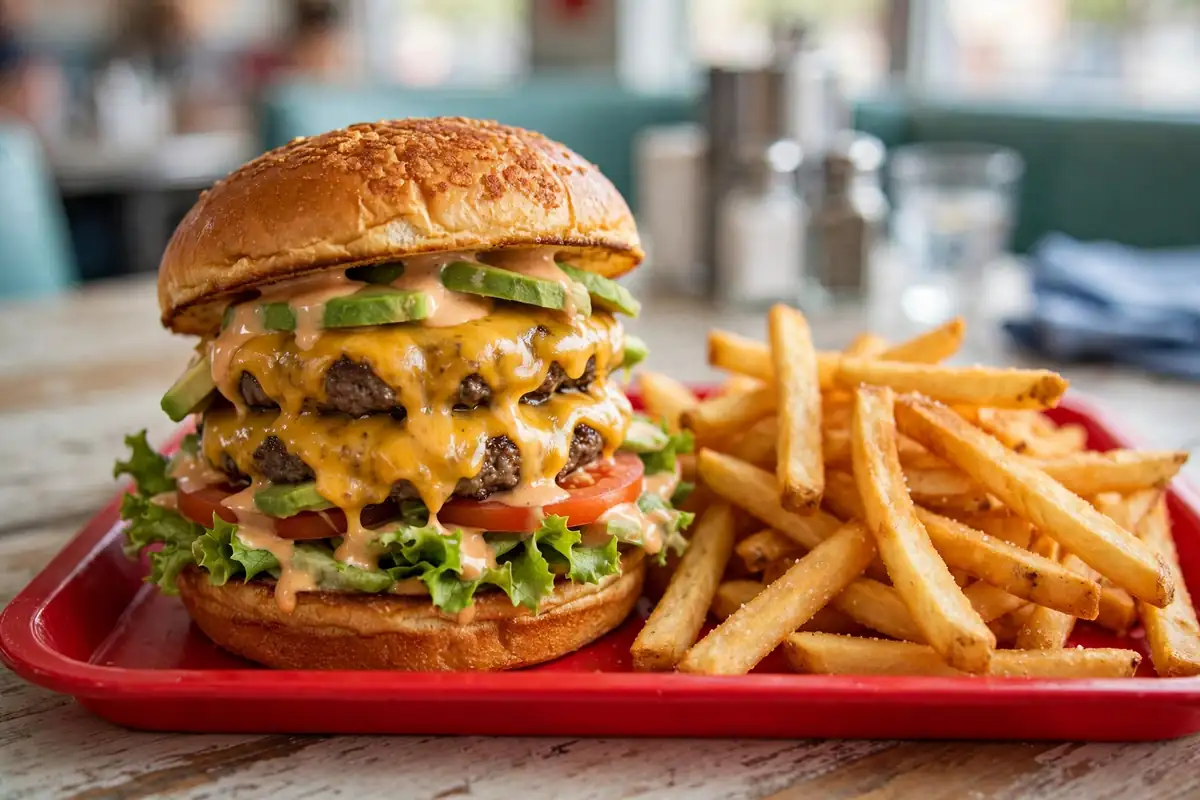
In-N-Out is California’s cult burger chain, and the Double-Double — two patties, two slices of cheese, lettuce, tomato and spread — is the order. The chain was founded in 1948 in Baldwin Park, and it still does things its own way: no freezers, no microwaves, no heat lamps, and the potatoes are cut in the store every day. The secret menu is the real menu: order it Animal Style, with the patty fried in mustard, extra spread, pickles and grilled onions, and add a Neapolitan shake. A Double-Double meal costs about $10, which is half the price of a sit-down burger in Los Angeles, and the queues move fast. There are now hundreds of locations across California and the western United States, and the one on Sepulveda Boulevard near LAX is the most famous, with a view of the planes landing. Read about In-N-Out Burger on Wikipedia.
3. Sourdough bread in San Francisco
San Francisco sourdough is the oldest food tradition in California. Gold Rush miners in 1849 kept their starter dough alive in their bedrolls, and the Boudin Bakery, founded the same year, still bakes with the same mother dough today — a living culture more than 175 years old. The bread is tangy, chewy and unmistakable, and the classic way to eat it is as a bread bowl filled with clam chowder at Fisherman’s Wharf, or simply torn apart and eaten warm from the bakery on Jefferson Street. Boudin still bakes its loaves in the shapes of crabs, turtles and bears, and the bakery tour shows the dough being folded by hand. Read about sourdough on Wikipedia.
Free things to do in California
California is expensive, but some of its best experiences cost nothing. The Golden Gate Bridge is free to walk or cycle, Griffith Observatory in Los Angeles is free to enter, and the redwood parks charge no entrance fee at all. The beaches are free — California law guarantees public access to the coast — from Santa Monica to Big Sur to the coves of La Jolla. The Getty Center in Los Angeles is free, the San Francisco cable car museum is free, and the sunset from the Santa Monica Pier costs nothing. In the national parks, the $100 nonresident surcharge does not apply at Death Valley or Joshua Tree, and the fee-free days are still free for United States residents. The best free thing of all is the driving: Highway 1 through Big Sur, the Avenue of the Giants through the redwoods, and the Tioga Road across Yosemite are free to drive once you have paid the park entry, and they are three of the great drives on Earth.
Frequently asked questions
How many days do you need in California?
Three days is enough for a taster of one region — San Francisco, Monterey and Yosemite, or Los Angeles, Disneyland and San Diego — but the state needs seven to ten days to do properly, and two weeks to cover the north and the south together. Do not try to see it all in one trip: the drive from San Diego to the redwoods is more than 800 miles.
Do you need a car in California?
Yes, for almost everything in this guide. San Francisco is walkable and has good public transport, and the trains link San Diego, Los Angeles and San Francisco, but there is no public transport to Yosemite, Death Valley, Joshua Tree, Big Sur or the redwoods. Rent a car at the airport and plan your charging stops if you rent an electric car.
When is the best time to visit California?
April to June and September to October are the best overall, with wildflowers in spring and the best light in autumn. Summer is the busiest and the hottest in the deserts, winter is ski season at Lake Tahoe and the best time for Death Valley and Joshua Tree, and the coast is foggy in June and July.
How much does a California trip cost?
Budget roughly $200 to $300 per person per day, mid-range, before hotel, and $150 to $350 a night for a hotel, depending on the city. National park entry is $30 to $35 per vehicle, Disneyland is $104 to $224 a day, and the new $100 nonresident surcharge applies at Yosemite and Sequoia and Kings Canyon for visitors from outside the United States.
Do you need reservations for California’s national parks in 2026?
Yosemite dropped its timed-entry reservation system in February 2026, so no reservation is needed to enter — but you do need a permit for the Half Dome cables, and valley lodging books up to a year ahead. Disneyland still requires a park reservation on top of your ticket. Redwood National Park needs free permits for Fern Canyon from May 15 to September 15 and for the Tall Trees Trail all year round.
Is California expensive?
Yes — it is one of the most expensive states in America, with the highest gas prices in the country and hotel rates to match. The good news is that the best things are cheap or free: the beaches, the redwoods, the Golden Gate Bridge and the drives themselves cost nothing, and a fish taco or an In-N-Out burger is one of the best-value meals in the United States.
Further reading — Wikipedia, Reddit and Quora
For more background, read the California page on Wikipedia, join the conversation on the California subreddit, and read the Quora thread on what to see in California — it is a summer-focused thread with good advice on splitting a trip between Northern and Southern California.
Your California trip, in one paragraph
California is the state that has everything: granite walls in Yosemite, the coast road through Big Sur, the original Disneyland, the lowest point in North America at Badwater Basin and the tallest trees on Earth in the redwoods — and if you plan around the 2026 prices and the new reservation rules, it is easier to enjoy than the older guides make it sound. If California has whetted your appetite for American travel, our guides to Chicago, Nashville, Los Angeles, Orlando, Miami, San Diego, Denver, Savannah, Dallas, Charleston, San Francisco, Myrtle Beach, Las Vegas, San Antonio, London, Portland, Pigeon Forge, Puerto Rico, Atlanta, Phoenix, Paris, Maui, Key West, Colorado Springs, Sedona, Chattanooga, Palm Springs, St Louis, Tokyo, Japan, Kansas City, Tennessee, Branson, Florida, Amsterdam, Montreal, Honolulu, Fort Lauderdale, Toronto, Aruba, Charlotte, Indianapolis, New Orleans, Destin, Santa Barbara, Mexico City, Arizona, Osaka, Minneapolis and Pittsburgh cover the rest of the map — pick your next place and go.

About the Author