Things to Do in Santa Barbara
Santa Barbara is California’s prettiest small city — white stucco and red tile roofs against the Santa Ynez Mountains, palm-lined beaches a ten-minute walk from downtown, and wine country just over the hill. It is small enough to explore on foot and rich enough to fill three days without repeating yourself.
Quick Info
Best for: Spanish Colonial architecture, beaches, wine tasting, whale watching and slow coastal days
Best time: April to June and September to October for warm days and thinner crowds; summer for festivals
How long: 2–3 days for the city itself; add a day for wine country or the Channel Islands
Budget: Roughly $180–$300 per person per day mid-range, before hotel
Don’t miss: The Mission at golden hour, the Courthouse clock tower at sunset, Stearns Wharf, Butterfly Beach and a plate of tri-tip
Santa Barbara calls itself the American Riviera, and for once the nickname is not hype. The city sits between the Santa Ynez Mountains and the Pacific, so you can hike a ridge in the morning, taste Pinot Noir in the afternoon and watch the sun drop into the ocean from a wooden wharf at dusk. This guide covers the 20 best things to do in Santa Barbara, a 3-day itinerary that strings them together, where to stay for every budget, how to get around without a car, three foods you have to try, and the best free sights in town. Every price and opening time below was checked against live sources in November 2026, and where older guides get it wrong, we say so.
Santa Barbara at a glance
| Topic | What to know |
|---|---|
| Where | On California’s Central Coast, about 95 miles northwest of Los Angeles |
| Getting there | Santa Barbara Airport (SBA), 7 miles west of downtown; Amtrak Pacific Surfliner from Los Angeles, San Diego and San Luis Obispo |
| Best time | April–June and September–October; summer is festival season |
| How long | 2–3 days for the city; 4–5 days with wine country and the Channel Islands |
| Budget | $180–$300 per person per day mid-range, before hotel |
| Getting around | Walkable downtown and waterfront; MTD buses $2.50 a ride; bikes on the Cabrillo path |
| Don’t miss | The Mission, the Courthouse clock tower, Stearns Wharf, Butterfly Beach, tri-tip |
| Nearest big city | Los Angeles, about 2 hours by car or train |
The 20 best things to do in Santa Barbara
1. Old Mission Santa Barbara
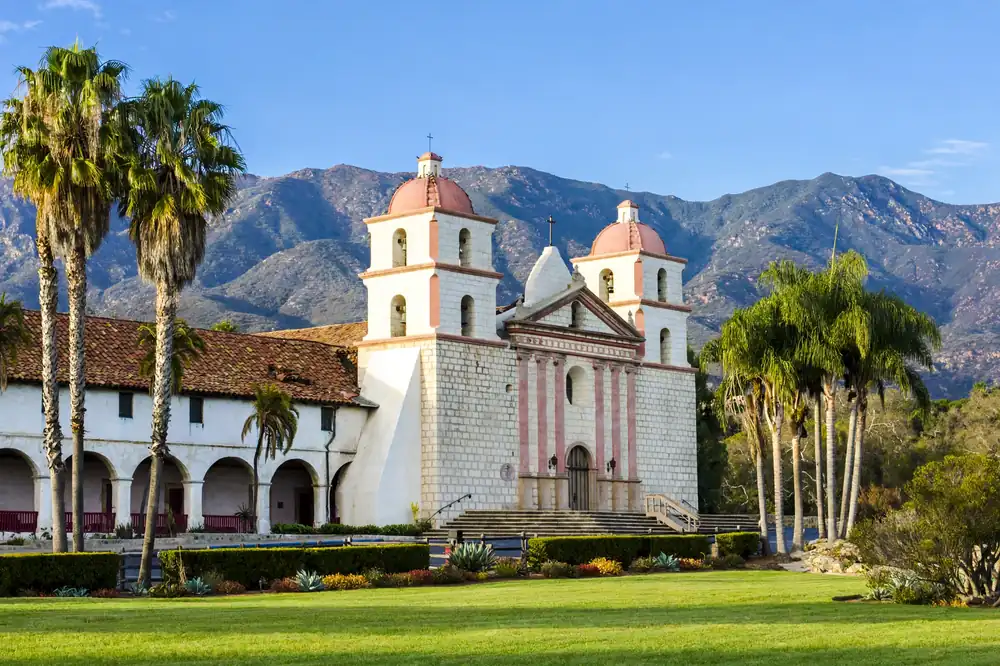
Start where Santa Barbara started. Old Mission Santa Barbara, founded in 1786 as the tenth of California’s 21 missions, is known as the “Queen of the Missions” — and it earns the title. Its twin bell towers, white stucco walls and red tile roof are the image on half the postcards in town, and the mission is still an active parish, so visit with the respect a working church deserves. Self-guided visits run Monday to Saturday, 9:30 a.m. to 5 p.m., and Sunday, 12:30 to 5 p.m., with the last ticket sold at 4 p.m. Admission is $17 for adults 18 to 64, $15 for seniors 65 and over and active military, and $12 for youth aged 5 to 17; children under 4 go free. Docent-led tours run Friday and Sunday at noon and Saturday at 10:30 a.m. The church and cemetery close after 3:15 p.m. on Saturdays and from 9:30 a.m. to 12:30 p.m. on Sundays for Mass, and the mission is closed on Easter Sunday, Thanksgiving and Christmas. Here is the trap most older guides fall into: they still quote $10 or $15 admission, prices that have not been current for years. The rose garden across the street is free and makes a fine picnic stop, and the mission’s hilltop position gives you one of the best first views of the city, the harbour and the Channel Islands beyond. Read about Old Mission Santa Barbara on Wikipedia.
2. Santa Barbara County Courthouse
The single best free thing in Santa Barbara is also its most beautiful building. The County Courthouse, finished in 1929 after the 1925 earthquake levelled much of downtown, is a Spanish Colonial Revival masterpiece: hand-painted murals in the Mural Room, tiled staircases, wrought-iron details and a sunken garden where locals eat lunch under the palms. Take the elevator — or climb the stairs — to El Mirador, the 85-foot clock tower, for a free 360-degree view over the red tile roofs to the mountains on one side and the ocean on the other. Come at sunset, when the white stone turns gold. The courthouse is open daily except December 25, weekdays 8 a.m. to 5 p.m., and free docent tours explain the murals and the building’s history. It is a working courthouse, so keep voices down in the corridors, but visitors are welcome throughout the public areas. Read about the Santa Barbara County Courthouse on Wikipedia.
3. Stearns Wharf
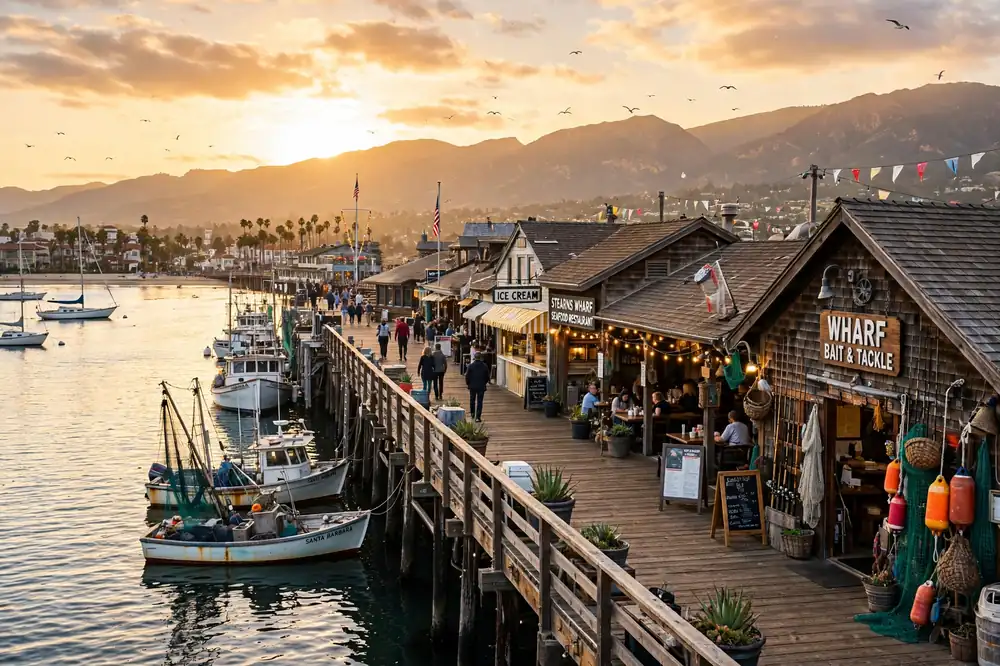
Stearns Wharf is the postcard shot and the working waterfront in one place. Built in 1872, it is the oldest working wooden wharf in California, stretching 2,300 feet into the Pacific from the foot of State Street. Walk to the end for the harbour view back toward the city, watch fishermen pull up crab and mackerel, and stop at the Sea Center, the natural history museum’s aquarium outpost at the wharf’s far end. The wharf’s restaurants and shops are the classic Santa Barbara lunch stop — fish and chips with your feet almost in the ocean. Two things older guides get wrong here. First, two of the wharf’s large restaurant spaces have stood empty through 2026; the Harbour Commission only approved negotiating a new ten-year lease with Moby Dick’s, the wharf’s long-time restaurant tenant, in January 2026, so do not expect the full row of eateries the old guides describe. Second, the wharf is not a theme park — it is free to walk, and the best of it costs nothing. Read about Stearns Wharf on Wikipedia.
4. State Street
State Street is Santa Barbara’s main drag, running from the waterfront up to the Mission, and in 2026 it changed for good: the city council voted to keep the 500 to 1100 blocks closed to vehicles permanently, so the heart of downtown is now a pedestrian promenade shared with e-bikes, outdoor tables, street performers and farmers market stalls. The change has come with churn that older guides miss entirely. Pascucci, a State Street fixture for 33 years, closed on September 19, 2026. Satellite closed on September 13, 2026 and is moving to The Factory at 616 East Haley Street. Roy is closing by the end of 2026, and Bibi Ji closed in late August 2026. Vacancy in the 400 to 1300 blocks stood at 12.45 percent in the second quarter of 2026, so expect some empty storefronts between the survivors. The street is far from dead, though: the State Street Trading Post, a 10,000-square-foot multi-vendor collective, opened on October 1, 2026 at 1105 State Street; the Music Academy of the West broke ground on October 15, 2026 on The Muse, its new downtown venue in the former Forever 21 at 901 State Street, opening in 2028; Milio’s Pizza opened on August 14 at 801 State; and Sweetaly Gelato opened on August 1 at 401 Paseo Nuevo. Walk it end to end, then duck into the Paseo Nuevo and El Paseo courtyards — the tiled passages and fountains are the prettiest corners of downtown. Read about Santa Barbara, California on Wikipedia.
5. The Funk Zone
Between the beachfront and Highway 101 sits the Funk Zone, Santa Barbara’s walkable arts and wine neighbourhood, and the best place in town to spend a lazy afternoon. Converted warehouses hold tasting rooms, galleries, breweries and mural-covered walls, and the whole district is compact enough to wander without a plan. The Urban Wine Trail links 28 tasting rooms within walking distance of downtown, most of them pouring Santa Barbara County Pinot Noir, Chardonnay and Syrah, and the Funk Zone is its epicentre. Start at the beach end near the harbour, work your way through the tasting rooms, and finish with a slice at Lucky Penny, the neighbourhood’s much-loved pizza spot. The Funk Zone is also where Santa Barbara feels least like a postcard and most like a place people actually live: working artists’ studios sit next to wine bars, and the crowds thin out fast once you leave State Street. The Funk Zone grew out of the old warehouse district beside the rail yards, and the industrial bones are still visible: corrugated iron, loading docks turned into patios, murals covering whole walls. Tasting rooms typically pour flights of four or five wines, and many waive the fee with a bottle purchase. Between tastings, the galleries are free to browse, and the street art changes regularly — new murals appear every few months, so even repeat visitors find something different. If you only have one evening for wine, spend it here rather than driving up to the valley.
6. Santa Barbara Harbor
Santa Barbara Harbor is where the city earns its keep as a seaside town. From the breakwater you can watch the fishing fleet come in, sailboats tack across the bay and sea lions haul out on the rocks. Rent a kayak or a stand-up paddleboard and paddle the calm harbour waters, join a sailing trip, or take the Lil’ Toot water taxi between the wharf and the harbour for the cheapest harbour cruise in town. Fishing charters and jet ski rentals run from the marina, and the harbourfront restaurants — Brophy Brothers is the local institution — serve the day’s catch with a view of the boats. The breakwater walk is the harbour’s quiet pleasure: a paved path out along the rocks with the boats on one side and the open ocean on the other, ending at the harbour entrance lighthouse. It is free, flat and best at sunset. Back at the marina, Brophy Brothers has been serving clam chowder and the catch of the day since 1979, and the harbourfront benches are the best free seats in town for watching the fishing boats unload. On Sundays, the Santa Barbara Arts and Crafts Show lines Cabrillo Boulevard from Stearns Wharf to East Beach, a long-running open-air market of local makers that is worth timing your weekend around. The harbour is also the departure point for whale watching boats, which brings us to the next stop.
7. Whale watching with Condor Express
Santa Barbara sits on one of the busiest whale migration routes on the Pacific coast, and a whale watching trip is the one experience no other Southern California city matches. Condor Express, the 75-foot jet catamaran sailing from 301 West Cabrillo Boulevard, runs three seasons: spring grey whale trips of two and a half hours at $80 for adults and $60 for children; summer and fall trips of four and a half hours out to Santa Cruz Island at $125 for adults and $75 for children, running May 1 to October 31; and early January to mid-February grey whale trips of two and a half hours at $125 for adults and $75 for children. Children under 5 go free. Around 28,000 grey whales migrate past Santa Barbara between mid-February and mid-May, while humpback and blue whales are common from May to November, and the channel holds more than 27 whale and dolphin species in total. In October 2023 the Santa Barbara Channel was named a Whale Heritage Area, one of only a handful in the world. Book ahead in spring, when the grey whale season sells out, and bring a windproof layer — it is always colder on the water than on the wharf. Read about the grey whale on Wikipedia.
8. Santa Barbara Botanic Garden
The Santa Barbara Botanic Garden is the oldest garden in the United States devoted entirely to native plants, and it is one of the most peaceful places in the city. Seventy-eight acres of hillside above the Mission hold more than 1,000 native species, five-plus miles of trails, a redwood grove, a desert section and a meadow that turns gold in summer. Leashed dogs are welcome free, which makes it a favourite with locals. Admission is $23 for adults, $18 for seniors 60 and over, military and students, and $14 for youth aged 3 to 12; children under 3 are free. In peak season, March 1 to May 31, prices rise to $25, $21, $21 and $17. Reservations are required and can be booked up to three months ahead — do not just turn up, especially in spring. The garden is open daily from 10 a.m. to 5 p.m., with early access from 9 a.m. for members. The trap here is the price: older guides still quote $12 to $16, figures that have not been current for years. Go in the morning, when the light is best and the trails are quiet. Read about the Santa Barbara Botanic Garden on Wikipedia.
9. Ganna Walska Lotusland
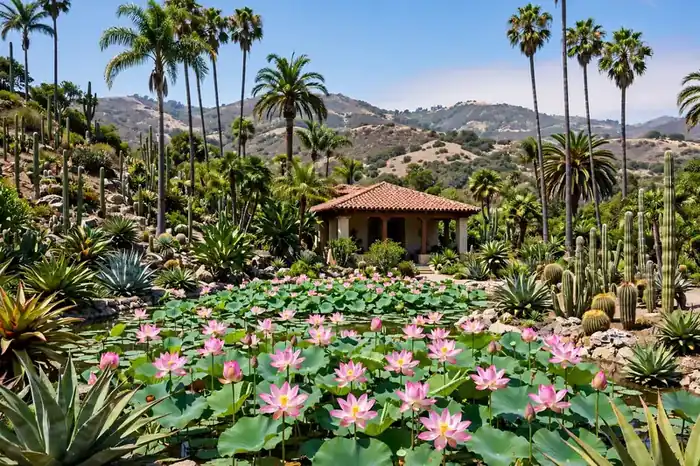
Lotusland is the strangest and most beautiful garden in California — 37 acres of exotic plants in Montecito, created over four decades by the opera singer Ganna Walska as her personal fantasy landscape. There is a lotus pond, a cactus garden with plants taller than houses, a topiary garden, a Japanese garden and a theatre garden, all arranged with a showman’s sense of drama. Admission for 2026 is $70 for adults and $35 for youth, with docent-led tours adding $15, and visits run in two-hour slots at 9:30 a.m. and 1:30 p.m. Now the important warning, because nearly every guide published before November 2026 gets this wrong: the 2026 public season sold out and ended on October 31, 2026, and public tours do not resume until February 17, 2027. There are no walk-ins, no same-day reservations and no waitlist, and extra cars cost $25. Community Access Days at half price, $35, for county residents sold out for September and October 2026, and the Tropical Garden is closed. Older guides also quote a $60 admission that is now stale. If you are visiting before February 2027, admire Lotusland from the outside and plan the Botanic Garden instead. Read about Ganna Walska Lotusland on Wikipedia.
10. Santa Barbara Zoo
The Santa Barbara Zoo is small, hilly and genuinely charming — 30 acres on a hilltop above the harbour, with more than 500 animals and some of the best views of any zoo in the country. The giraffes look out over the ocean, the elephants have a hillside enclosure, and the train ride loops past the whole park. Admission is $39.95 for adults 13 and over and $29.95 for children aged 2 to 12; children under 2 are free, parking is $11, and buying online saves $2. The zoo is open daily from 9:30 a.m. to 5 p.m. From November 11, 2026 to January 10, 2027, the zoo hosts IllumaNature, an after-dark lantern and light experience from 5 to 9 p.m.; the zoo closes at 4 p.m. and reopens at 5 p.m. for it, and the Ultimate IllumaNature ticket, $46.95 for adults and $35.95 for children, includes the train. The price is the trap here: older guides quote $22 or $25, which has not been the adult price for years. Arrive at opening, when the animals are most active and the light is best. Read about the Santa Barbara Zoo on Wikipedia.
11. Santa Barbara Museum of Natural History and the Sea Center
The Museum of Natural History, founded in 1916, holds more than 3.5 million specimens — a 72-foot blue whale skeleton, Chumash history, a planetarium and a butterfly pavilion — in a wooded canyon setting a short drive up Mission Creek from downtown. Admission is $20 for adults. Its waterfront outpost, the Sea Center on Stearns Wharf, is a small, hands-on aquarium where children can touch sea stars and watch the harbour life below the wharf; admission there is $17 for adults. Both are open daily from 10 a.m. to 5 p.m. Together they make the best family pairing in the city: the museum in the morning, the Sea Center at the end of the wharf in the afternoon, with lunch on the wharf in between. The museum’s Chumash galleries are worth your time even if you skip the rest — Santa Barbara sits on Chumash land, and the exhibits explain the deep history behind the Spanish missions and the modern city. Read about the Santa Barbara Museum of Natural History on Wikipedia.
12. Santa Barbara Museum of Art
The Santa Barbara Museum of Art, on State Street in the heart of downtown, punches well above its size: more than 27,000 works, with strong holdings in Asian art, American art and photography, plus a rotating programme of exhibitions that regularly brings in shows far bigger than the city would suggest. Admission is $15 for adults and $10 for seniors 65 and over. The museum is open Tuesday to Sunday, 11 a.m. to 5 p.m., and closed on Mondays. Admission is free on the first Thursday of each month from 5 to 8 p.m., which is the best deal in town if your trip lines up. The museum shop is one of the better places downtown for a souvenir that is not a T-shirt, and the building’s location makes it an easy stop between the Courthouse and the Funk Zone. Read about the Santa Barbara Museum of Art on Wikipedia.
13. El Presidio de Santa Bárbara and Casa de la Guerra
Before the Mission and before the city, there was the Presidio. El Presidio de Santa Bárbara, founded in 1782, was the last of the four Spanish military outposts built along the California coast, and its adobe walls and chapel are the oldest surviving structures in the city. Admission is $5 for adults, $4 for seniors 62 and over, and free for visitors under 16, and the ticket includes Casa de la Guerra, the 1828 home of the Presidio’s commandant, a few blocks away. The park is open daily from 10:30 a.m. to 4:30 p.m. The Presidio is at its liveliest on November 1, 2026, when its free Día de los Muertos celebration runs from 10 a.m. to 4 p.m., with altars, music and food. Most visitors walk straight past the Presidio on their way to State Street — do not be one of them, because this is where Santa Barbara’s story actually begins, a decade before the Mission was built. Read about the city’s Spanish colonial history on Wikipedia.
14. Butterfly Beach
Butterfly Beach in Montecito is the beach locals keep for themselves, and it has a trick no other beach in Santa Barbara can match: it faces both east and west, so you can watch the sunrise and the sunset from the same stretch of sand. It is quieter than the downtown beaches, with a wide sweep of sand, gentle surf and regular dolphin sightings offshore — whales pass by in season, too. There are no crowds, no boardwalk and no vendors, just a few palm trees, the Biltmore’s old stone wall at one end and the Santa Ynez Mountains rising behind you. Come at dawn with coffee, or at dusk when the sky turns pink over the Channel Islands. Parking is street-side and limited, so arrive early on weekends or walk over from the Montecito bus stop.
15. East Beach and the Cabrillo bike path
East Beach is Santa Barbara’s main city beach: wide sand, volleyball courts, palm trees and the Cabrillo Bike Path running along its edge. The path itself is one of the best free rides in California — 4.6 flat, paved miles from Leadbetter Beach in the west to Butterfly Beach in Montecito, with the ocean on one side the whole way. Rent a cruiser or an e-bike from one of the outfitters along Cabrillo Boulevard and ride it at sunset, when the path fills with joggers, dog walkers and families. East Beach is also home to the Sunday Arts and Crafts Show, which lines Cabrillo Boulevard from Stearns Wharf to the beach every weekend, and to the volleyball courts where the city’s famously competitive beach volleyball scene plays out. The water is calm enough for a swim in summer, though it stays cool year-round — wetsuits are common even in August.
16. MOXI, The Wolf Museum of Exploration + Innovation
MOXI is Santa Barbara’s hands-on science museum, and it is the best rainy-day stop in the city for families — though with Santa Barbara’s weather, you may have to invent the rain. Three floors of interactive exhibits cover sound, light, speed and engineering, with a rooftop Sky Garden that has one of the best views in town. Admission is $25 for adults 13 and over and $20 for children aged 2 to 12; children under 2 are free. The museum is open daily from 10 a.m. to 5 p.m., closed on Thanksgiving, Christmas Eve and Christmas. From November 21, 2026 to January 31, 2027, MOXI runs Seaside Sock Skating, a sock-only skating rink that is exactly as silly and fun as it sounds. Adults will enjoy the exhibits as much as children — the interactive sound lab and the giant guitar are hard to walk past without stopping.
17. Shoreline Park and Leadbetter Beach
Shoreline Park is the bluff-top park where Santa Barbara comes to watch the ocean. Lawns and picnic tables sit on the cliffs above the water, with views across the harbour to the Channel Islands, and it is one of the best dolphin-spotting points in the city — look for fins just beyond the surf, especially in the morning. Below the park sits Leadbetter Beach, a wide, sandy beach with tall palm trees, volleyball nets, picnic tables, grills and public restrooms, and the western end of the Cabrillo Bike Path. The park and the beach are both free, and together they make the best low-effort afternoon in Santa Barbara: a picnic on the bluff, a walk down to the sand, and a sunset that needs no ticket. The bluff path connects west toward the harbour and east toward the wharf, so it slots neatly into a waterfront walk.
18. The Moreton Bay Fig Tree and the Red Tile Walking Tour
Next to the Amtrak station stands one of the largest Moreton Bay fig trees in the United States, planted in 1876 as a seedling and now spreading over a canopy wider than a city block. It is free, it is enormous, and it is the kind of sight that makes you stop and stare — the trunk alone is several metres across. From the fig tree, pick up the Red Tile Walking Tour, a free self-guided route of 17 stops and 22 adobes through the historic heart of downtown, past the Presidio, the Courthouse, the Santa Barbara Historical Museum and the old adobe houses that survived the 1925 earthquake. The tour map is available from the visitor centre and online, and the full loop takes about two hours at a stroll. It is the best way to understand why Santa Barbara looks the way it does: after the earthquake, the city rebuilt itself deliberately in the Spanish Colonial Revival style, and the red tile roofs you see everywhere are the result of that decision. Read about the Moreton Bay fig on Wikipedia.
19. A Channel Islands day trip
The Channel Islands are California’s wildest national park, and Santa Barbara is the closest city to them — but here is the trap that catches first-time planners: there are no ferries to the islands from Santa Barbara itself. Island Packers, the park’s concessionaire, sails from Ventura Harbor and Oxnard, about an hour’s drive south on Highway 101. Santa Cruz Island, the largest and closest, is the best day trip: sea caves you can kayak through, hiking trails with island foxes, snorkelling in kelp forests and, in spring, wildflowers across the hills. Book the ferry and any kayaking in advance, especially on weekends, and pack food and water — there are no shops on the islands. If a full day trip is too much, the Condor Express summer whale watching trips sail around the northern side of Santa Cruz Island and give you a taste of the islands from the water. Read about the Channel Islands on Wikipedia.
20. Santa Ynez Valley wine country and Solvang
Santa Barbara’s best day trip is over the hill. The Santa Ynez Valley, about 45 minutes north over San Marcos Pass, is one of California’s great wine regions: Los Olivos, Santa Ynez and Los Alamos hold dozens of tasting rooms pouring Pinot Noir, Chardonnay and Syrah, and the valley’s small towns are built for slow afternoons — tasting, lunch, an olive oil farm, a lavender field. On the way, stop in Solvang, the Danish village founded in 1911, about an hour from Santa Barbara: half-timbered houses, windmills, Danish bakeries and wine tasting rooms on every corner. It is unashamedly touristy and entirely charming. If you do not want to drive, several companies run wine tours from Santa Barbara with a designated driver included, and the Santa Ynez Valley is also reachable by bus from the downtown transit centre, though a car makes the day far easier. Read about the Santa Ynez Valley on Wikipedia and Solvang, California on Wikipedia.
Santa Barbara in 3 days — a ready-made itinerary
| Day | Morning | Afternoon | Evening |
|---|---|---|---|
| Day 1 — Downtown and the Mission | Courthouse clock tower and Mural Room, then the Red Tile Walking Tour | State Street and the Funk Zone tasting rooms | Old Mission Santa Barbara at golden hour, dinner on State Street |
| Day 2 — The waterfront | Stearns Wharf and the Sea Center | Harbor kayak or whale watching; East Beach and the Cabrillo bike path | Sunset at Butterfly Beach, seafood dinner at the harbour |
| Day 3 — Gardens and wine | Santa Barbara Botanic Garden, then the Zoo or MOXI | Santa Ynez Valley wine tasting or Solvang | Funk Zone dinner and a final walk along the wharf |
Day 1 — Downtown and the Mission
Start at the Courthouse before the crowds — the clock tower is quietest in the morning, and the light on the murals is best then. Walk the Red Tile route through the Presidio and the historic adobes, then spend the late morning on State Street, ducking into the Paseo Nuevo and El Paseo courtyards. After lunch, work your way through the Funk Zone’s tasting rooms, then drive or take the bus up to the Mission for golden hour, when the white stucco glows and the rose garden is at its best. Dinner on State Street, where the pedestrian blocks make for the city’s liveliest evening.
Day 2 — The waterfront
Begin on Stearns Wharf, walk to the end, and visit the Sea Center before the midday crowds. Then get on the water: a morning kayak from the harbour, or a whale watching trip if the season is right. After lunch at the harbour, ride the Cabrillo Bike Path east along East Beach, stopping for the Sunday Arts and Crafts Show if it is the weekend. Finish the day at Butterfly Beach in Montecito for sunset — the beach faces west, so the sun drops straight into the ocean — then dinner at one of the harbour restaurants.
Day 3 — Gardens, museums and wine
Spend the morning at the Botanic Garden, which is at its best before noon, then choose between the Zoo, MOXI and the Museum of Art depending on who you are travelling with. In the afternoon, head over San Marcos Pass to the Santa Ynez Valley for wine tasting in Los Olivos, or to Solvang for Danish pastries and more tasting rooms. If Lotusland is in season — public tours resume on February 17, 2027 — book a morning slot instead of the Botanic Garden and shift the gardens to the afternoon. Back in town, finish with dinner in the Funk Zone and one last walk along the wharf.
Best time to visit Santa Barbara
Santa Barbara is a year-round destination, but the seasons are not equal. Spring and autumn are the sweet spot: warm days, thin crowds and clear skies. Summer brings the festivals and the fog — mornings in June and July are often grey until noon, a local pattern called June Gloom. Winter is the quietest season, with the best hotel prices and the start of whale season.
| Season | Weather | Crowds | Notes |
|---|---|---|---|
| Winter (December–February) | Highs in the 60s°F, some rain | Low | Grey whale season begins; Santa Barbara International Film Festival, February 3–13, 2027 |
| Spring (March–May) | Highs in the 60s–70s°F | Moderate | Wildflowers; grey whales through mid-May; peak garden prices March 1–May 31 |
| Summer (June–August) | Highs in the 70s°F, foggy mornings | High | Summer Solstice, June 19–21, 2026; Old Spanish Days Fiesta, August 5–9, 2026; shuttle runs to September 7 |
| Fall (September–November) | Highs in the 70s–80s°F, warmest | Moderate | Best weather of the year; Harbor and Seafood Festival, October 17, 2026; IllumaNature from November 11 |
Two dates to plan around: the Summer Solstice Celebration, June 19 to 21, 2026, with its parade at noon on Saturday, June 20, draws more than 100,000 spectators to Alameda Park and downtown — book hotels months ahead. The Old Spanish Days Fiesta, August 5 to 9, 2026, fills the city with parades, dancing and music, including the historic equestrian parade along Cabrillo Boulevard on Friday, August 7. Both are worth attending and both make the city far busier than usual. If you want Santa Barbara at its most relaxed, come in late September or October, when the fog has lifted, the water is warmest and the summer crowds have gone.
Where to stay in Santa Barbara
Santa Barbara is compact, so the choice is less about distance and more about atmosphere — and price. Downtown and the waterfront are the most convenient bases, Montecito is the most luxurious, and Goleta is the budget play.
| Area | Best for | Notes |
|---|---|---|
| Waterfront and East Beach | First-timers, beach lovers | Walk to the wharf, the harbour and State Street; the priciest rooms in town |
| Downtown and State Street | Walkers, foodies | Pedestrian blocks, hotels and inns; book early for Fiesta and Solstice |
| The Funk Zone | Wine lovers, couples | Boutique hotels and lofts steps from the tasting rooms |
| Montecito | Luxury, quiet | Rosewood Miramar Beach and San Ysidro Ranch; the Four Seasons Biltmore has been closed since 2020, with reopening expected in early 2027 — do not book it yet |
| Goleta, near the airport | Budget travellers | Cheaper stays about 15 minutes by car or bus from downtown |
Book early for the big weekends — Fiesta in August, Solstice in June and the film festival in February fill the city, and prices rise sharply. If you are visiting in summer, a hotel with parking included is worth real money, because downtown parking fills up by mid-morning. For a first visit, stay between the waterfront and the upper end of State Street: everything on this list is walkable from there, and you will only need a car for the wine country day trip.
Getting around Santa Barbara
Downtown Santa Barbara is one of the most walkable cities in California. State Street’s car-free blocks, the waterfront and the harbour all connect on foot, and the flat Cabrillo Bike Path covers the coast. For anything further, Santa Barbara MTD runs the local buses: the regular one-way fare is $2.50, with a reduced fare of $1.25 for seniors and people with disabilities, after a fare rise on August 17, 2026. That same date brought a 3.6 percent service reduction, so check the current schedule before you rely on a specific route. The Downtown-Waterfront Shuttle, a 50-cent electric circulator linking downtown, the Amtrak station, the waterfront and the Zoo, runs in summer only — May 29 to September 7, 2026, Friday to Sunday, 10 a.m. to 6 p.m., with a $1 day pass and free rides for Amtrak ticket holders. It has now ended its 2026 season, so do not plan around it after September 7. MTD’s on-demand microtransit service, The Wave, costs $3 a ride from November 1, 2026. Bikes are easy to rent along the waterfront, and the 4.6-mile Cabrillo path runs from Leadbetter Beach to Butterfly Beach. The Amtrak station sits at the foot of State Street, with Pacific Surfliner trains running direct to Los Angeles, San Diego and San Luis Obispo several times a day. Santa Barbara Airport (SBA) is 7 miles west of downtown, with nonstop flights to Los Angeles, San Francisco, Phoenix and Denver. You do not need a car for the city itself, but you will want one — or a tour — for the Santa Ynez Valley and the Channel Islands ferries in Ventura. Read about the Santa Barbara Airport on Wikipedia.
Santa Barbara food you have to try
Santa Barbara eats as well as it looks. The city sits between the ocean and some of California’s best farmland and wine country, so the seafood is same-day fresh, the produce comes from the farmers market down the street, and the wine on the table was probably made twenty miles away.
Santa Barbara-style tri-tip barbecue
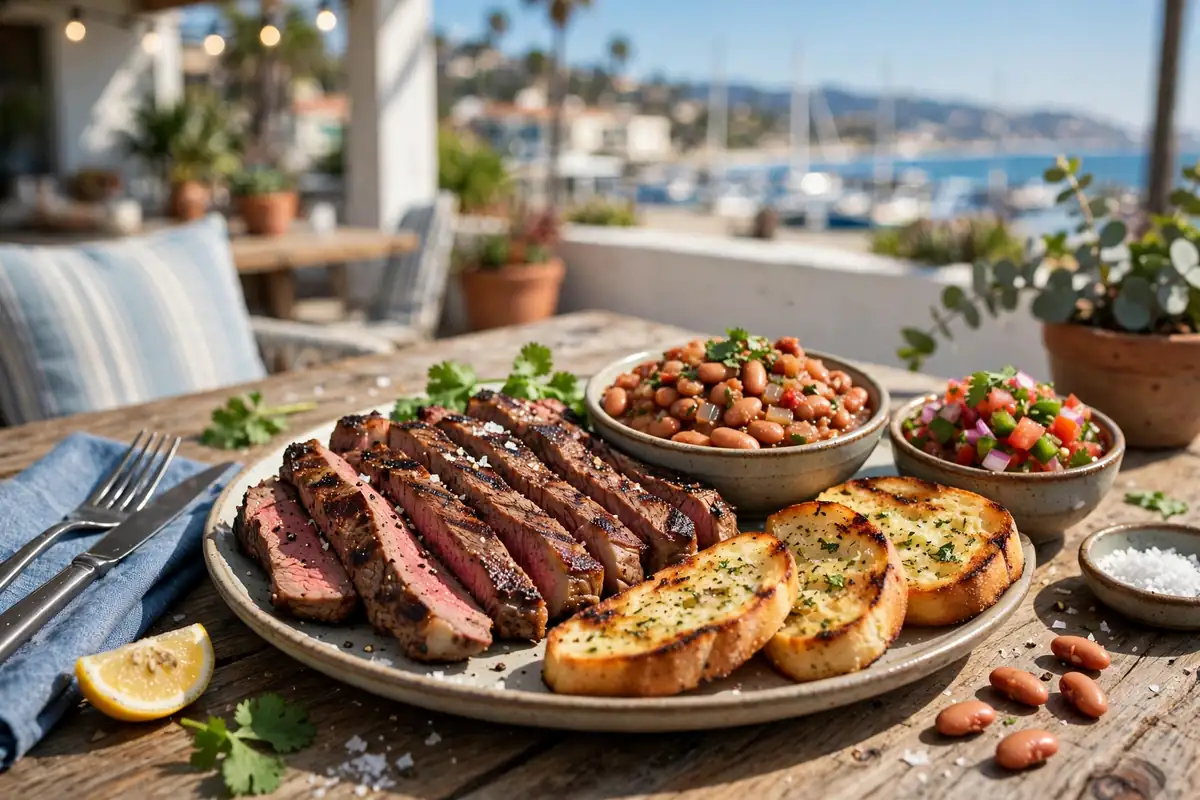
Tri-tip is Santa Barbara’s signature dish, and it is not the same as the barbecue you know from Texas or Kansas City. A triangular cut of beef is seasoned simply, grilled over red oak coals, sliced thin and served with pinquito beans, fresh salsa and grilled garlic bread — the Santa Maria-style barbecue tradition that Santa Barbara shares with its neighbours up the coast. Order it at a local barbecue joint rather than a chain, ask for it medium-rare, and do not skip the beans: pinquitos are a small pink bean grown in the Santa Maria Valley, and they are the dish’s quiet star. It is the most Santa Barbara plate there is — smoky, simple and best eaten outdoors.
Uni and the day’s catch
Santa Barbara is famous among chefs for one ingredient above all others: uni, the golden roe of the sea urchin, harvested from the cold water of the Santa Barbara Channel. Local uni is prized in Japan and served at sushi counters across the country, but here you can eat it hours out of the water — on toast, in pasta, or straight from the shell at the harbour. If raw sea urchin is a step too far, the harbour restaurants serve the day’s catch simply grilled, and the fish tacos at the waterfront shacks are the best cheap lunch in town. Time your visit for the Harbor and Seafood Festival on October 17, 2026, when the harbour fills with tastings, cooking demonstrations and the freshest seafood of the year. Read about the sea urchin on Wikipedia.
Tacos at La Super-Rica and McConnell’s ice cream
For the city’s most famous cheap eat, join the queue at La Super-Rica Taqueria, the tiny taco stand that Julia Child called one of her favourite restaurants in California. The menu is short — tacos, tamales and tortillas made to order — and the line moves fast. Afterwards, walk it off at the farmers market: the downtown market runs on Tuesdays and the Saturday market is one of the best in California, with the same farms that supply the city’s restaurants selling direct. Finish with McConnell’s Fine Ice Creams, a Santa Barbara institution since 1949, whose small-batch flavours — the salted caramel and the Eureka lemon with marionberries are the classics — are made in town and sold across California. The Santa Barbara Public Market, a food hall on the edge of downtown, is the fallback for a rainy day: a dozen stalls under one roof, from ramen to oysters.
Free things to do in Santa Barbara
Santa Barbara is an expensive city, but its best experiences are mostly free. The Courthouse clock tower costs nothing and has the best view in town. State Street’s pedestrian blocks, the Funk Zone’s murals and tasting-room windows, the beaches, Shoreline Park and the Moreton Bay Fig Tree are all free. The Red Tile Walking Tour is a free self-guided route through the historic centre. The Santa Barbara Historical Museum is free, the rose garden across from the Mission is free, and the Sunday Arts and Crafts Show along Cabrillo Boulevard costs nothing to browse. The Museum of Art is free on the first Thursday of each month from 5 to 8 p.m., and the Mission’s rose garden and the Courthouse sunken garden are free every day. The farmers markets are free to browse, and the samples alone make a decent snack. The Santa Barbara Bowl, the open-air amphitheatre above the Mission, is free to walk around outside show hours, and the views from its upper rim are worth the climb. Even the sunset — from Butterfly Beach, Shoreline Park or the end of Stearns Wharf — is free, and it is the best show in town.
Frequently asked questions
Is Santa Barbara worth visiting?
Yes. Santa Barbara is one of the most complete small-city trips in the United States: Spanish Colonial architecture, a working waterfront, whale watching, wine country, mountain trails and beaches, all within a few miles of each other. It is more relaxed than Los Angeles and more varied than a beach town, and it works equally well for a romantic weekend, a family trip or a solo food and wine break. The only reason to skip it is if you want a big-city trip — Santa Barbara is deliberately small, and that is the point.
How many days do you need in Santa Barbara?
Two to three days covers the city itself: one day for downtown, the Mission and the Funk Zone, one day for the waterfront and the beaches, and a third for the gardens and museums. Add a fourth day for a Santa Ynez Valley wine trip or a Channel Islands day trip, and a fifth if you want both. A single day is possible from Los Angeles — it is about two hours each way — but you will only scratch the surface, and an overnight stay is worth it.
Can you visit Santa Barbara without a car?
Yes, for the city itself. Downtown, the waterfront, the harbour, the beaches and the Mission are all walkable or a short bus ride apart, and the Amtrak station sits at the foot of State Street. You will need a car, a tour or a rideshare for the Santa Ynez Valley wine country, the Botanic Garden and the Channel Islands ferries in Ventura, which are about an hour south. If you fly into SBA, the MTD Route 11 bus connects the airport to the downtown transit centre.
What is the best time to visit Santa Barbara?
April to June and September to October are the best months: warm days, clear skies and thinner crowds. September and October are the warmest months of the year, with the fog gone and the water at its warmest. Summer brings the festivals — Solstice in June and Fiesta in August — but also the crowds and the morning fog. Winter is the quietest and cheapest season, with grey whale season starting in January.
Is Santa Barbara expensive?
Yes, Santa Barbara is one of California’s pricier small cities. Hotels on the waterfront and downtown are expensive, especially on festival weekends, and restaurant prices match the setting. You can keep costs down by staying in Goleta, eating at the farmers market and the taco stands, using the free sights — the Courthouse tower, the beaches, the walking tour — and taking the $2.50 MTD bus instead of paying for parking downtown. Budget roughly $180 to $300 per person per day mid-range, before hotel.
Can you visit the Channel Islands from Santa Barbara?
Not directly. There are no ferries from Santa Barbara to the Channel Islands — Island Packers sails from Ventura Harbor and Oxnard, about an hour’s drive south on Highway 101. Santa Cruz Island is the best day trip, with sea caves, island foxes and kelp-forest snorkelling, but you must book the ferry in advance and bring your own food and water. The Condor Express summer whale watching trips sail around the northern side of Santa Cruz Island, which is the closest you can get to the islands from Santa Barbara itself.
Further reading — Wikipedia and Reddit
For more background on the city, read about Santa Barbara, California on Wikipedia, Old Mission Santa Barbara on Wikipedia and Stearns Wharf on Wikipedia. For local tips and current conditions, the Santa Barbara subreddit is the city’s active community forum. No Quora link is included here — we could not verify a Santa Barbara-specific thread on Quora, so we have not invented one.
Your Santa Barbara trip, in one paragraph
Santa Barbara is the rare California city that does everything well: a mission and a courthouse worth a morning each, a wharf and a harbour worth an afternoon, beaches that face both sunrise and sunset, wine country over the hill and whales off the shore — and it does it all on foot, in three days, without ever feeling rushed. If this trip has whetted your appetite for more American cities, our guides to Chicago, Nashville, Los Angeles, Orlando, Miami, San Diego, Denver, Savannah, Dallas, Charleston, San Francisco, Myrtle Beach, Las Vegas, San Antonio, London, Portland, Pigeon Forge, Puerto Rico, Atlanta, Phoenix, Paris, Maui, Key West, Colorado Springs, Sedona, Chattanooga, Palm Springs, St Louis, Tokyo, Japan, Kansas City, Tennessee, Branson, Florida, Amsterdam, Montreal, Honolulu, Fort Lauderdale, Toronto, Aruba, Charlotte, Indianapolis, New Orleans and Destin cover the rest of the country and beyond — pick your next city and start planning.

About the Author