Things to Do in Montreal
20 Best Attractions, a 3-Day Itinerary, Where to Stay, and the Food You Cannot Miss
Quick Info
Best for: First-time visitors to Canada, food lovers, festival goers, cyclists and anyone who wants a European-feeling city without the transatlantic flight
Best time: Late May to early October for festivals, terraces and cycling; late September to mid-October for fall colours; December to February for winter festivals and skating
How long: 3 days covers the essentials; 2 days works if you skip the museums and the day trips
Budget: Roughly C$180 to C$300 per person per day for a mid-range trip, including a hotel, a transit pass, one paid attraction and meals — before the 14.975% sales tax and 15 to 20% tip
Don’t miss: Old Montreal at dusk, the Notre-Dame Basilica, the view from Mount Royal, a smoked meat sandwich at Schwartz’s and a warm bagel from St-Viateur
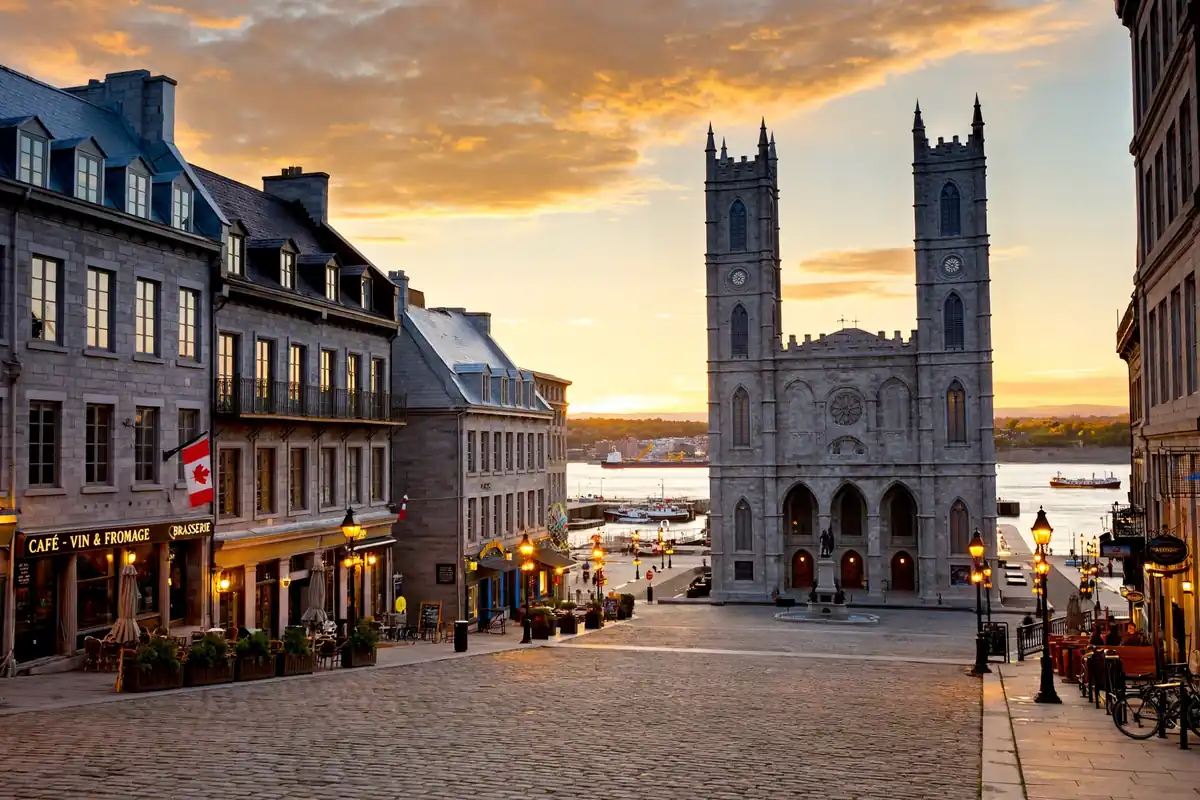
Montreal is the French-speaking city that feels like Europe without the transatlantic flight: cobblestone streets and a Gothic basilica in Old Montreal, a mountain park in the middle of the city, the biggest jazz festival in the world, and a food scene — smoked meat, wood-fired bagels, poutine — that no other city in North America can match. It is Canada’s second-largest city, an island in the St. Lawrence River where French is the first language and English is never far away, and it rewards the visitor who slows down: the neighbourhoods change character street by street, the markets are the best in the country, and the festivals run from January to August. This guide gives you the 20 best things to do in Montreal in a sensible order, a ready-made 3-day itinerary, honest advice on when to go, where to stay and how to get around, and the three foods you have to try before you leave — plus the free sights that cost nothing at all. Prices and hours change, so every price in this guide is the 2026 price as published by the attraction itself — always check the official website before you visit.
One thing to know before you go: Montreal in 2026 is not the city of the old guidebooks, and the old guides are wrong in expensive ways. The REM light-rail line still does not reach the airport — the airport branch opens in 2027, so the bus is still the way in. The Musée d’art contemporain, the MAC, is closed for a major renovation and does not reopen until 2028, and the Olympic Stadium tower is closed too, until spring 2027. And the transit fares changed on July 1, 2026, so the prices the old guides quote are out of date. This guide tells you which traps to watch for, so you can plan with facts instead of outdated blog posts. Read about Montreal on Wikipedia.
Montreal at a glance
| Question | Short answer |
|---|---|
| Where is Montreal? | An island city in the St. Lawrence River in Quebec, Canada, about 250 km east of Ottawa and 550 km north of New York |
| What is it best for? | Old Montreal, Mount Royal, festivals, food — smoked meat, bagels and poutine — and a French-speaking culture unlike anywhere else in North America |
| How long should I stay? | 3 days for the essentials; 2 days if you skip the museums and the day trips |
| How much does it cost? | Roughly C$180 to C$300 per person per day mid-range, before the 14.975% sales tax and the 15 to 20% tip |
| What is the one thing not to miss? | Old Montreal and the Notre-Dame Basilica, then the view from Mount Royal at sunset |
| When is the best time to go? | Late May to early October for festivals and terraces; late September to mid-October for fall colours |
| Is it good for families? | Yes — the Biodôme, the Botanical Garden, the parks and the markets make it one of Canada’s easiest family cities |
| Do I need a car? | No — the metro, buses and bikes cover the city, and a car is a liability downtown; the REM does not yet reach the airport |
The 20 best things to do in Montreal
These are the 20 best things to do in Montreal, ranked the way a first-time visitor should actually do them: Old Montreal and the basilica first, then the mountain and the museums, then the markets and the neighbourhoods, then the river, the underground city and the day trips. Every price below is the 2026 price as published by the attraction itself, and every trap — the museum that is closed until 2028, the tower that is closed until 2027, the airport train that does not exist yet, the fares that changed in July — is called out where it matters.
1. Old Montreal — Vieux-Montréal
Old Montreal is the historic heart of the city, and it is the most beautiful quarter in Canada. Founded in 1642 as Ville-Marie, the old town is a maze of cobblestone lanes and grey stone buildings from the 17th and 18th centuries, gathered around Place d’Armes, Place Jacques-Cartier and the Old Port on the St. Lawrence River. Rue Saint-Paul, the oldest street in the city, is lined with galleries, cafés and boutiques, and the squares fill with street performers, horse-drawn calèches and market stalls in summer. It is the one place in Montreal where the city feels like the Europe it came from. Read about Old Montreal on Wikipedia.
The practical facts for 2026: walking Old Montreal costs nothing, and it is best in the morning, before the crowds build, or at dusk, when the stone glows and the basilica lights up. Start at Place d’Armes, walk down Rue Saint-Paul to Place Jacques-Cartier, then to the Old Port promenade, and allow two to three hours for the quarter alone — longer if you stop in the museums and cafés along the way. The nearest metro stops are Place-d’Armes, Champ-de-Mars and Square-Victoria–OACI, all within a few minutes’ walk. One honest note: the cobblestones are hard on the feet and worse in heels, so wear proper shoes, and the quarter is at its most crowded on summer Saturday afternoons, when the tour groups arrive.
2. Notre-Dame Basilica
The Notre-Dame Basilica is the single best reason to visit Old Montreal, and it is the most beautiful church in Canada. Completed in 1829 in the Gothic Revival style, the basilica hides its surprise inside: a deep cobalt-blue vault scattered with golden stars, intricate wood carving, stained glass and the great Casavant organ, all lit by candles and coloured light. It is the church where Celine Dion married René Angélil, and where the city gathers for its grandest occasions, and the interior is so unlike the plain stone facade that first-timers gasp when they walk in. Read about Notre-Dame Basilica on Wikipedia.
The practical facts for 2026: a daytime visit costs C$16 for adults plus tax, C$15 for seniors, C$14 for students aged 17 to 22, C$10 for ages 6 to 16, and children under 5 go free. The AURA light show, the 45-minute evening sound-and-light experience inside the basilica, starts at C$37, and it is the best version of the visit — book it in advance, because the evening shows sell out, especially on weekends. The basilica is on Place d’Armes, at the top of Old Montreal, and it is open daily. Allow an hour for the daytime visit and two hours with AURA, and do not miss the Chapel of the Sacred Heart behind the main altar, rebuilt after the 1978 fire, which is the quietest room in the building.
3. Mount Royal Park — the Kondiaronk Belvedere
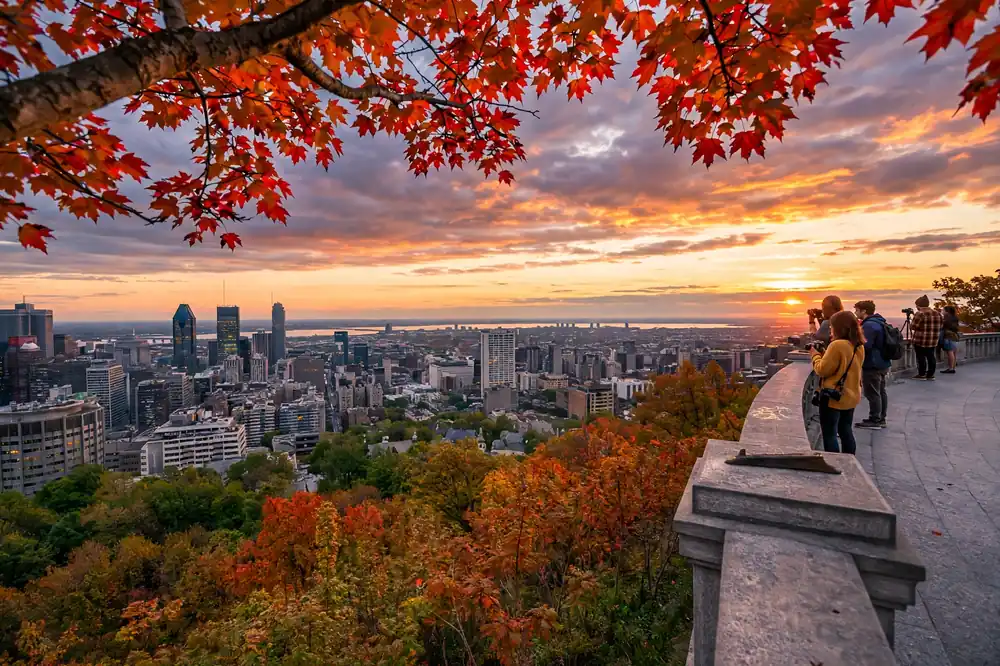
Mount Royal is the mountain that gives the city its name, and the park on top of it is the best free thing in Montreal. Designed by Frederick Law Olmsted, the landscape architect behind New York’s Central Park, the park covers the 233-metre mountain in the middle of the island, with forest trails, Beaver Lake, the Smith House and the Kondiaronk Belvedere — the grand lookout beside the Chalet du Mont-Royal, with the classic postcard view over downtown and the St. Lawrence River. On Sunday afternoons from late May through October, the Tam-Tams drum circle gathers at the George-Étienne Cartier monument, and the whole city seems to be there. Read about Mount Royal on Wikipedia.
The practical facts for 2026: the park is free and open all year, and the lookout is best at sunset, when the light falls across the downtown towers, or in October, when the maple forest turns red and gold. The walk up from the Peel Street entrance takes about 30 to 40 minutes, and the 11 bus runs up to the top from Mont-Royal metro station if you would rather ride. In winter the park turns to cross-country skiing, snowshoeing and skating on Beaver Lake, and the trails are groomed. Allow two to three hours, bring water in summer, and wear proper shoes — the trails are dirt and stone, and the climb is steeper than it looks from the bottom.
4. Pointe-à-Callière Museum
Pointe-à-Callière is the museum that tells the story of Montreal itself, and it is built on the very ground where the story happened. The museum of archaeology and history stands on the point where the city was founded in 1642, and its lower levels are the real archaeological ruins — the foundations of the first settlement, a 19th-century sewer you can walk through, and the remains of the old fortifications, brought to life with multimedia shows. The building’s tower gives you a view over the Old Port, and the temporary exhibitions change through the year. Read about Pointe-à-Callière Museum on Wikipedia.
The practical facts for 2026: adult tickets cost C$30 for ages 31 to 64, with tax included, C$20 for young adults aged 18 to 30, C$15 for teenagers aged 13 to 17, C$10 for children aged 5 to 12, and a family ticket for C$60. The museum is open Tuesday to Friday from 10 a.m. to 5 p.m. and Saturday and Sunday from 11 a.m. to 5 p.m., and it is closed on Mondays — the old guides that list it as open seven days a week are out of date. One warning: the adult price rose in 2026, and the old guides that quote C$24 are wrong. Allow two to three hours, and start underground in the ruins before going up to the tower. The museum is at 350 Place Royale, two minutes from Place-d’Armes metro.
5. The Old Port and La Grande Roue
The Old Port is Montreal’s waterfront, and it is the best place in the city on a summer evening. The promenade along the St. Lawrence River runs from the Old Port’s Clock Tower to the Habitat 67 housing complex, with the river on one side and the old town on the other, and it fills with cyclists, rollerbladers, food trucks and festival crowds from May to October. In winter the same promenade holds the Old Port skating rink, and the river freezes into a white plain. La Grande Roue, the 60-metre observation wheel at the eastern end of the port, is the tallest in Canada, with climate-controlled gondolas and a 20-minute ride over the river and the skyline. Read about the Old Port of Montreal on Wikipedia.
The practical facts for 2026: walking the Old Port costs nothing, and La Grande Roue costs C$29.50 plus tax for adults, C$24 for students and teenagers aged 13 to 17, C$16.50 for children aged 5 to 12, and C$84 for a family of four. The wheel runs daily from 10 a.m. to 11 p.m., and the best time is sunset, when the river turns gold and the city lights come on. The Old Port is a ten-minute walk from Champ-de-Mars metro. Allow an hour for the wheel and two hours for the promenade, and in summer add the river cruise boats, which leave from the same quay and run 90-minute sightseeing trips for about C$28.
6. Saint Joseph’s Oratory
Saint Joseph’s Oratory is the largest church in Canada, and it is the most peaceful place in Montreal. The great domed basilica on the northwestern slope of Mount Royal, completed in 1967, draws millions of visitors a year — pilgrims to the shrine of Saint Brother André, whose heart is kept in the votive chapel, and sightseers to the dome, one of the highest points in the city, with a view across the whole island. The gardens, the carillon and the 283 steps of the grand staircase, climbed on their knees by the devout, are the other half of the visit. Read about Saint Joseph’s Oratory on Wikipedia.
The practical facts for 2026: entry to the oratory is free for individuals, and it is open daily from 6:30 a.m. to 9 p.m. The Oratory Museum costs C$3 for adults and C$1 for ages 7 to 17, and it is open daily from 10 a.m. to 4:30 p.m. Guided tours cost C$5 from June through September. The oratory is at 3800 Queen Mary Road, a ten-minute walk from Côte-des-Neiges metro, or a short bus ride from Snowdon. Allow one to two hours, and do not miss the gardens behind the basilica, which are the quietest green space on the mountain. One honest note: this is a working place of worship, not only a tourist sight — keep your voice down in the chapels, and dress as you would for any church.
7. Montreal Museum of Fine Arts
The Montreal Museum of Fine Arts is the largest art museum in Canada by collection size, and it is the best museum in the city for a rainy day. The museum, spread across five pavilions on Sherbrooke Street West, holds Canadian and Inuit art, European Old Masters, decorative arts and contemporary work, and its temporary exhibitions — the blockbusters that fill the Hornstein Pavilion — are the events the city talks about. The building itself, with its marble hall and its glass pavilion across the street, is half the attraction. Read about the Montreal Museum of Fine Arts on Wikipedia.
The practical facts for 2026: admission to the permanent collection is free, and the temporary exhibitions cost around C$20 to C$25 — which is the trap to know, because the free entry does not cover the big show, and the old guides that call the whole museum free are wrong. The museum is open Tuesday to Sunday, and it is closed on Mondays. Allow two to three hours, and start with the Canadian and Inuit art, which is the collection no other museum in the world can match. The museum is a five-minute walk from Guy-Concordia metro. One honest note: if modern art is not your thing, the contemporary pavilion is the one to skip — the Canadian collection and the Old Masters are the two that matter most.
8. Biodôme
The Biodôme is the most fun museum in Montreal, and it is the best family stop in the city. Housed in the former velodrome built for the 1976 Summer Olympics, the Biodôme recreates five ecosystems of the Americas under one roof — the Tropical Rainforest, the Laurentian Maple Forest, the Gulf of St. Lawrence, the Labrador Coast and the Sub-Antarctic Islands — with more than 2,500 animals from about 150 species, including capybaras, lynx, penguins and Atlantic puffins, living in climate-controlled habitats you walk through. It is the one museum in Montreal where children run ahead of their parents. Read about the Montreal Biodome on Wikipedia.
The practical facts for 2026: adult tickets cost C$23.75, children aged 5 to 17 pay C$12.25, and children under 5 go free. The Biodôme is open Tuesday to Sunday from 9 a.m. to 5 p.m., and it is closed on Mondays — the old guides that list it as open seven days a week are out of date. It sits at Olympic Park, at 4777 Avenue Pierre-de-Coubertin, a short walk from Viau metro on the green line. Allow two to three hours, and go in the morning, when the animals are most active and the rainforest is quietest. One honest note: the Biodôme is part of the Espace pour la vie group with the Botanical Garden, the Insectarium, the Planetarium and the Biosphère, and the annual passport covers all five — if you plan to visit three or more, do the sums before you buy single tickets.
9. Montreal Botanical Garden
The Montreal Botanical Garden is one of the largest botanical gardens in the world, and it is the most beautiful place in the city in spring and autumn. The 75-hectare garden near Olympic Park holds some twenty thematic gardens and an arboretum, with three exceptional cultural gardens — the Chinese Garden, the Japanese Garden and the First Nations Garden — plus ten exhibition greenhouses, the rose garden and the Frédéric-Back Tree House. It is the place Montrealers go when the city gets too loud. Read about the Montreal Botanical Garden on Wikipedia.
The practical facts for 2026: adult tickets cost about C$24, with discounts for seniors, students and children, and the garden is open daily. Allow two to three hours for the outdoor gardens alone, and a full half day if you add the greenhouses. The garden is a short uphill walk from Pie-IX metro on the green line, and it pairs naturally with the Biodôme next door — the two are a twelve-minute walk apart, and together they make the best full day at Olympic Park. Go in May for the tulips and the lilacs, in June for the roses, and in October for the Gardens of Light, the lantern festival that lights the Chinese and Japanese gardens after dark. One honest note: the garden is huge, and the far corners are a long walk from the entrance — pick two or three gardens and do them properly rather than trying to see all twenty.
10. Jean-Talon Market
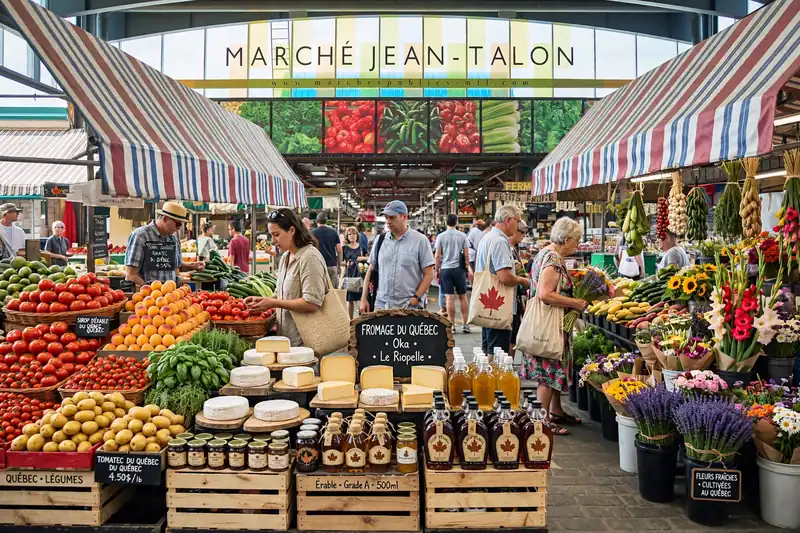
Jean-Talon Market is the best market in Canada, and it is the most delicious place in Montreal. One of North America’s largest open-air markets, in the heart of Little Italy, the market piles Quebec produce, cheeses, charcuterie, maple products, flowers and street food onto more than 200 stalls, and on Saturdays it is the busiest and best market morning in the country. The surrounding streets hold the Italian grocers, the cafés and the bakeries that make Little Italy the best neighbourhood in the city for eating. Read about Jean-Talon Market on Wikipedia.
The practical facts for 2026: the market is free to walk, open daily, and at its best on Saturday mornings, when the farmers are all in and the stalls are fullest. It sits at 7070 Avenue Henri-Julien, a five-minute walk from Jean-Talon metro on the blue and orange lines. Go hungry and go in the morning, and eat as you walk — the maple taffy, the cheese curds, the fresh berries in summer and the cider doughnuts in autumn. Allow two hours, and bring cash for the smaller stalls, though most take cards. One honest note: the market is an all-season market, and the winter version, under cover, is quieter and just as good — the root vegetables, the cheeses and the maple products are the winter stars.
11. Plateau Mont-Royal and Mile End
The Plateau is the most Montreal neighbourhood in Montreal, and Mile End, next door, is its creative twin. The Plateau Mont-Royal is a grid of colourful walk-up apartments with outdoor staircases, cafés, murals and independent shops, centred on Rue Saint-Denis, Boulevard Saint-Laurent and Avenue du Mont-Royal, and it is the quarter where the city’s French-speaking creative class lives. Mile End, to the northwest, holds the bagel bakeries, the design studios, the record shops and the cafés that make it the city’s most talked-about neighbourhood. Read about Le Plateau-Mont-Royal on Wikipedia.
The practical facts for 2026: walking the Plateau costs nothing, and it is best in the late afternoon, when the cafés fill and the light falls across the painted staircases, or on a Sunday, when the streets are quiet and the bagel shops are busiest. Start at Mont-Royal metro, walk east along Avenue du Mont-Royal, then north into Mile End for the bagels, and allow half a day for the two together. The two great bagel rivals are here: Fairmount Bagel, open since 1919, and St-Viateur Bagel, open since 1957, both in Mile End — try both, and pick your side. One honest note: the Plateau is a residential neighbourhood first and a tourist sight second, so keep the noise down on the side streets, and do not photograph people on their balconies.
12. Lachine Canal
The Lachine Canal is the best bike ride in Montreal, and it is the city’s industrial history turned into a park. The 14.5-kilometre canal, dug in the 1820s to bypass the Lachine Rapids, runs from the Old Port southwest to Lake Saint-Louis, past the old factories, the locks and the Atwater Market, and its towpath is now the busiest cycling and walking trail in the city. The canal is where Montrealers go on a summer evening: to cycle, to picnic, to watch the kayaks and the tour boats, and to eat at the food trucks by the locks. Read about the Lachine Canal on Wikipedia.
The practical facts for 2026: the towpath is free and open from May to October, and bike rentals run from the Old Port and from the BIXI bike-share stations along the route — a day pass costs about C$13. The canal is flat and paved, so anyone can ride it, and the full ride from the Old Port to the end takes about an hour each way. Start at the Old Port, stop at Atwater Market for lunch, and turn back at the René-Lévesque Park if you want the shorter ride. One honest note: the canal is at its best in the morning, before the crowds, and the path is shared with walkers, runners and dogs — ring your bell early and often, and stay on your side of the path.
13. Quartier des Spectacles — the festival district
The Quartier des Spectacles is the cultural heart of Montreal, and in summer it is the loudest square kilometre in Canada. The district around Place des Arts and Place des Festivals, downtown, is where the city’s great festivals happen: the Montreal International Jazz Festival, the largest jazz festival in the world, with more than 350 concerts over ten days, two thirds of them free; Just for Laughs, the world’s largest comedy festival; and the outdoor stages, the light installations and the street parties that run from June to September. In winter the same squares host the light shows and the Christmas markets. Read about the Quartier des Spectacles on Wikipedia.
The practical facts for 2026: the 46th edition of the Montreal International Jazz Festival ran from June 25 to July 4, 2026, with headline names from Lionel Richie and Earth, Wind and Fire to Diana Krall, and the 2027 festival runs on the same dates. Just for Laughs ran from July 15 to 26, 2026 — the world’s largest comedy festival, back to a full programme after its well-publicised financial trouble in 2024 — and Osheaga, the three-day music festival on Parc Jean-Drapeau, ran from July 31 to August 2, 2026. The outdoor shows in the Quartier des Spectacles are free, and the district is a five-minute walk from Place-des-Arts metro. Allow an evening, and come hungry — the food trucks and the terraces are half the festival. One honest note: the festival crowds are real, and the hotels around the district sell out months ahead for Jazz Festival week, so book early or stay a few metro stops away.
14. Parc Jean-Drapeau and the Biosphère
Parc Jean-Drapeau is Montreal’s island park, and it is the best half-day escape from the city. The park covers the two islands in the St. Lawrence River — Île Sainte-Hélène and Île Notre-Dame — built for Expo 67, and it holds the Biosphère, the great geodesic dome that is now an environment museum, the La Ronde amusement park, the Montreal Casino, the Olympic Basin and the beaches, the picnic lawns and the cycling paths that make it the city’s summer playground. The Biosphère, designed by Buckminster Fuller for the 1967 World’s Fair, is the most photographed building in Montreal after the basilica. Read about Parc Jean-Drapeau on Wikipedia.
The practical facts for 2026: the park is free to enter, and the Biosphère costs about C$24 for adults, the same Espace pour la vie rate as the Biodôme. The park is a five-minute metro ride from downtown on the yellow line to Jean-Drapeau station, and it is at its best in summer, when the festivals — Osheaga in late July, the electronic music weekends — fill the islands. Allow half a day, and rent a bike at the park entrance, because the islands are bigger than they look. One honest note: the park is quiet on weekdays and packed on festival weekends, so check the events calendar before you go — on an Osheaga weekend, the islands belong to the festival, not to the picnic.
15. The Underground City — RÉSO
The Underground City, the RÉSO, is Montreal’s answer to winter, and it is the largest underground network in the world. More than 33 kilometres of climate-controlled passages link the metro stations, the office towers, the hotels, the museums and the shopping centres of downtown, with more than 120 access points, so you can cross the whole centre — from the Old Port to the Bell Centre — without ever going outside. In January, when the temperature drops to minus twenty, the underground city is where Montreal lives. Read about the Underground City, Montreal on Wikipedia.
The practical facts for 2026: the passages are free to walk, open during shopping hours, and at their best on a winter day, when the contrast between the snow outside and the warm shops inside is the whole point. Enter at any downtown metro station — McGill, Peel, Bonaventure and Square-Victoria–OACI are the main ones — and follow the signs, which are in French and English. Allow an hour to explore, and do not try to navigate it without a map on your first visit: the passages turn, split and change level, and even locals get lost. One honest note: the Underground City is a shopping mall network, not a tourist attraction in itself — go for the warmth and the people-watching in winter, and for the rain shelter in summer, not for the sights.
16. Bota Bota — the floating spa
Bota Bota is the most relaxing hour in Montreal, and it is the strangest spa in Canada. The floating spa sits in a converted 1950s river ferry moored in the Old Port, with five decks of saunas, steam rooms, hot baths, cold plunges and a garden on the water, and the top deck gives you a view of the Old Port and the downtown skyline while you soak. It is the place Montrealers go after a long walk, and it is the best way to end a day in the city. Read about the Old Port of Montreal on Wikipedia.
The practical facts for 2026: Bota Bota is at the Old Port, a ten-minute walk from Champ-de-Mars metro, and it is open daily. Book a time slot online in advance, because the spa limits the number of guests and the popular evening slots sell out — and note that the spa is 18 and over only, with no children allowed, which is the trap that catches families who book it as a group activity. Bring a swimsuit, and allow two to three hours: the circuit runs hot bath, cold plunge, rest, and repeat, and rushing it misses the point. One honest note: Bota Bota is not cheap, and the food and the massages add up — come for the water and the view, and eat afterwards in Old Montreal, where the restaurants are better and cheaper.
17. Atwater Market and Saint-Henri
Atwater Market is the Plateau’s rival and the Westmount side’s favourite, and Saint-Henri, the neighbourhood around it, is the most interesting quarter in the city right now. The Art Deco market hall, open since 1933 on Boulevard Atwater, holds the butchers, the cheesemongers, the florists and the food stalls that feed the city’s southwest, and the streets of Saint-Henri around it — Rue Notre-Dame Ouest, Rue Saint-Jacques — hold the cafés, the bakeries, the breweries and the design shops that have made the neighbourhood the city’s new creative centre. It is the Montreal that the guidebooks are only now catching up with.
The practical facts for 2026: the market is free to walk, open daily, and at its best on Saturday mornings, when the farmers are in and the flower stalls are fullest. It sits at 138 Avenue Atwater, a five-minute walk from Atwater metro on the green line, and it pairs naturally with the Lachine Canal, which runs behind it. Allow two hours for the market and the neighbourhood, and eat lunch at one of the Rue Notre-Dame cafés — the food in Saint-Henri is the best value in the city, because the rents are still lower than the Plateau’s. One honest note: Saint-Henri is changing fast, and the old industrial streets are now full of new condos — go now, while the neighbourhood still feels like itself.
18. McGill University and the McCord Stewart Museum
McGill University is the most beautiful campus in Canada, and the McCord Stewart Museum across the street is the best small museum in Montreal. McGill, founded in 1821, sits on the slope of Mount Royal in the heart of downtown, with its green lawns, its sandstone buildings and the Roddick Gates on Sherbrooke Street, and the walk up through the campus to the mountain is the prettiest ten minutes in the city. The McCord Stewart Museum, on Sherbrooke Street West, holds the largest collection of Canadian social history in the country — photographs, textiles, Indigenous objects and the famous Notman photographic archive — and its temporary exhibitions are the most thoughtful in the city. Read about McGill University on Wikipedia.
The practical facts for 2026: the McGill campus is free to walk, open daily, and at its best in autumn, when the trees turn, or in spring, when the students are out on the lawns. The McCord Stewart Museum is open Tuesday to Sunday, and it is closed on Mondays. Allow an hour for the campus and two hours for the museum, and pair them with the Montreal Museum of Fine Arts, which is a five-minute walk away on the same street. One honest note: McGill is a working university, not a tourist sight — keep your voice down in the libraries, do not walk through the exam halls, and remember that the students you see are studying, not performing.
19. Insectarium
The Insectarium is the most surprising museum in Montreal, and it is the one children remember longest. Rebuilt and reopened in 2022 after a major redesign, the Insectarium holds the largest insect collection in North America, with live colonies — leafcutter ants carrying leaves across a bridge, stick insects, tarantulas, butterflies and beetles — in a building designed to make you feel like an insect yourself, with a great domed hall that mimics the inside of a hive. It is small, strange and wonderful, and it is the best hour in the city for anyone who likes the natural world. Read about the Montreal Insectarium on Wikipedia.
The practical facts for 2026: adult tickets cost C$23.75, the same Espace pour la vie rate as the Biodôme, with discounts for children and seniors. The Insectarium sits at Olympic Park, next to the Botanical Garden, a short walk from Pie-IX metro on the green line, and it pairs naturally with the garden and the Biodôme — the three are a twelve-minute walk apart, and together they make the best full day at Olympic Park. Allow an hour and a half, and go in the morning, when the live insects are most active. One honest note: the Insectarium is not a big museum, and it is the one to skip if you are short on time — the Biodôme and the Botanical Garden are the two that matter most, and the Insectarium is the third, not the first.
20. Quartier Latin and Rue Saint-Denis
The Quartier Latin is the student heart of Montreal, and Rue Saint-Denis is its main street. The quarter around the Université du Québec à Montréal, between Berri-UQAM and Sherbrooke metro stations, holds the theatres, the cinemas, the bookshops, the cafés and the bars where the city’s students and artists have gathered for fifty years, and Rue Saint-Denis, running north from the quarter into the Plateau, is the longest shopping and eating street in the city. It is the Montreal that locals actually live in, and it is the best place in the city for a cheap, late dinner.
The practical facts for 2026: walking the Quartier Latin costs nothing, and it is best in the evening, when the theatres let out and the terraces fill, or on a weekday afternoon, when the bookshops and the cafés are quiet. Start at Berri-UQAM metro, walk east along Rue Sainte-Catherine, then north up Rue Saint-Denis, and allow half a day for the quarter and the street together. The Grande Bibliothèque, the great public library on Boulevard de Maisonneuve, is the quietest room in the quarter, and it is free to enter. One honest note: the Quartier Latin is at its liveliest during the school year, from September to April, and quieter in summer, when the students leave — if you want the full version, come in October, when the terraces are still open and the students are back.
Montreal in 3 days — a ready-made itinerary
Three days is the right amount of time for Montreal: one day for Old Montreal and the basilica, one day for the mountain and the museums, and one day for the markets and the neighbourhoods. The itinerary below assumes you are staying downtown or in the Plateau, and it uses the metro and walking for everything inside the city. If you only have two days, do Day 1 and Day 2 and save the markets for next time. If you have a fourth day, Québec City is three hours away by bus or train, and the Montmorency Falls — taller than Niagara — are the reward.
| Day | Theme | Highlights | Where you sleep |
|---|---|---|---|
| Day 1 | Old Montreal and the basilica | Old Montreal, Notre-Dame Basilica, Pointe-à-Callière, Old Port and La Grande Roue | Old Montreal or downtown |
| Day 2 | The mountain and the museums | Mount Royal, Saint Joseph’s Oratory, Museum of Fine Arts, Quartier des Spectacles | Downtown or the Plateau |
| Day 3 | Markets and neighbourhoods | Jean-Talon Market, Plateau and Mile End, Lachine Canal, Quartier Latin | The Plateau or Mile End |
Day 1 — Old Montreal and the basilica
Start in Old Montreal. Arrive at Place d’Armes in the morning, walk Rue Saint-Paul to Place Jacques-Cartier, then take the basilica in the late morning, when the light falls through the stained glass. Spend the afternoon at Pointe-à-Callière, walking the underground ruins, then cross to the Old Port for the promenade and La Grande Roue at sunset. Eat dinner in Old Montreal, where the restaurants are the best in the city — and the most expensive, so pick one good meal rather than three average ones. If you booked AURA, take the evening show instead of the daytime visit, and do the basilica last.
Day 2 — The mountain and the museums
Spend the morning on Mount Royal: walk up from the Peel Street entrance, or take the 11 bus from Mont-Royal metro, and stand at the Kondiaronk Belvedere for the view. In the afternoon, take the bus to Saint Joseph’s Oratory, then back down to the Museum of Fine Arts on Sherbrooke Street, and finish in the Quartier des Spectacles, where the outdoor stages and the terraces fill in the evening. If it is a Sunday from late May to October, swap the afternoon for the Tam-Tams drum circle at the Cartier monument, and let the mountain decide your day.
Day 3 — Markets and neighbourhoods
Spend the morning at Jean-Talon Market, eating as you walk, then cross to the Plateau and Mile End for the bagels, the boutiques and the murals. In the afternoon, rent a BIXI bike and ride the Lachine Canal from the Old Port to Atwater Market, or walk the Quartier Latin and Rue Saint-Denis for the bookshops and the cafés. End the day with a smoked meat sandwich at Schwartz’s — the queue is shortest in the late afternoon — and a poutine at La Banquise on the way home.
Best time to visit Montreal
The best time to visit Montreal is late May to early October, when the days are long, the terraces are open and the festivals run back to back. June and July are the festival months — the Jazz Festival at the end of June, Just for Laughs in mid-July, Osheaga at the end of July — and the city is at its loudest and most alive. September and October are the best-kept secret: warm enough for cycling and sitting outside, with the summer crowds gone, the hotel prices lower and the maple forest on Mount Royal turning red and gold. December to February is the winter season, with the coldest weather, the skating rinks, Igloofest and the Underground City, and the lowest hotel prices. April is the month to avoid: the snow is gone, the terraces are not yet open, and the city is muddy and grey.
| Season | Months | Weather | What’s on |
|---|---|---|---|
| Spring | March to May | Highs 5 to 18 degrees, changeable | Maple season, tulips in May, the city waking up |
| Summer | June to August | Highs 24 to 27 degrees, warm and humid | Jazz Festival, Just for Laughs, Osheaga, terraces, the busiest season |
| Autumn | September to November | Highs 6 to 20 degrees, cooling down | Fall colours on Mount Royal, harvest markets, thin crowds |
| Winter | December to February | Highs minus 5 to minus 1 degrees, cold and snowy | Igloofest, skating, the Underground City, the lowest hotel prices |
Where to stay in Montreal
Old Montreal is the best base for a first visit: you are within walking distance of the basilica, the Old Port and the museums, and the hotels range from boutique stone houses to the big chains, though the prices are the highest in the city. Downtown is the best base for the metro and the festivals, with the hotels around Place des Arts and the Quartier des Spectacles, and the Underground City at your feet in winter. The Plateau is the best base for local life, with the apartments and the small hotels on the prettiest streets, and the bagel shops outside your door. Mile End is the best base for a quieter stay, with the cafés and the design shops, and the market a short walk away. The rule for Montreal is simple: stay near a metro station, because the city is built around the metro, and check whether the quoted price includes the taxes — the 14.975% sales tax and the lodging tax are added at checkout, and the surprise is real.
| Area | Best for | Price range |
|---|---|---|
| Old Montreal | First-timers, the basilica, walking everywhere | C$200 to C$400 a night |
| Downtown and Quartier des Spectacles | Festivals, the metro, winter | C$150 to C$300 a night |
| Plateau Mont-Royal | Local life, cafés, couples | C$130 to C$250 a night |
| Mile End | Quiet streets, bagels, design shops | C$120 to C$220 a night |
| Griffintown | Modern hotels, the canal, the Old Port | C$150 to C$280 a night |
| Saint-Henri | Budget stays, the market, the canal | C$100 to C$200 a night |
Getting around Montreal
Montreal is a metro city, and a car is not optional — it is a liability. The STM metro has four lines and 68 stations, the buses cover the rest, and the BIXI bike-share has more than 10,000 bikes at 900 stations across the city. Fly into Montréal–Trudeau International Airport, about 20 minutes by bus from downtown, and take the 747 airport bus, which costs C$11.25 and doubles as a 24-hour transit pass. Read about Montréal–Trudeau International Airport on Wikipedia.
The practical facts for 2026: the fares changed on July 1, 2026, so the old guides are wrong. A single trip costs C$3.75, a 24-hour pass costs C$11.25, a 3-day pass costs C$21.75, a weekend pass costs C$17, and an evening pass, valid from 6 p.m. to 5 a.m., costs C$6.75. Children aged 11 and under ride free with an adult. The easiest way to pay is the OPUS card or the Chrono app on your phone. One trap to know: the REM light-rail line does not yet reach the airport — the airport branch opens in 2027, and the old guides that say to take the REM from the airport are wrong. The REM does run from downtown to Brossard on the South Shore and northwest to Deux-Montagnes and Anse-à-l’Orme, which opened on May 18, 2026. Once you are in the city, walk, take the metro or rent a BIXI — and in winter, use the Underground City to cross downtown without going outside.
A few French words will take you a long way: bonjour is hello, merci is thank you, s’il vous plaît is please, au revoir is goodbye, and l’addition, s’il vous plaît is the bill, please. Almost everyone in the tourist areas speaks English, and the city will switch to it before you finish your first sentence — but trying a word or two is always welcome, and the French is half the reason to come.
Montreal food you have to try
Montreal’s food is not fancy, and that is the point. The city’s best meals are a smoked meat sandwich from a deli counter, a warm bagel from a wood-fired oven, and a plate of fries, curds and gravy eaten at 2 a.m. Eat those three, and you have eaten Montreal. For everything else, the markets, the French bistros of the Plateau and the Italian restaurants of Little Italy will keep you fed — and the maple syrup, poured over snow in winter and over everything in summer, is the city’s unofficial condiment.
1. The smoked meat sandwich — Schwartz’s
The smoked meat sandwich is Montreal’s signature meal, and Schwartz’s is where it lives. The delicatessen at 3895 Boulevard Saint-Laurent, open since 1928, has been serving the same sandwich for nearly a century: brisket cured for ten days, smoked, steamed and piled high on rye bread with yellow mustard — no lettuce, no tomato, no mayonnaise. Order it medium fat, which is the house recommendation, and eat it at the counter, where the carvers work in front of you. Read about Schwartz’s on Wikipedia.
2. The Montreal bagel — St-Viateur and Fairmount
The Montreal bagel is the city’s second signature, and it is nothing like a New York bagel. Smaller, denser, sweeter and wood-fired, the Montreal bagel is boiled in honey water and baked in a wood oven, and it comes in two flavours that matter: sesame and poppy. The two great rivals are St-Viateur Bagel, open since 1957, and Fairmount Bagel, open since 1919, both in Mile End, and the city has been arguing about which is better for seventy years. A single bagel costs about C$1.50 to C$2.50, and the right way to eat it is warm, straight from the oven, with cream cheese. Read about the Montreal-style bagel on Wikipedia.
3. Poutine — La Banquise
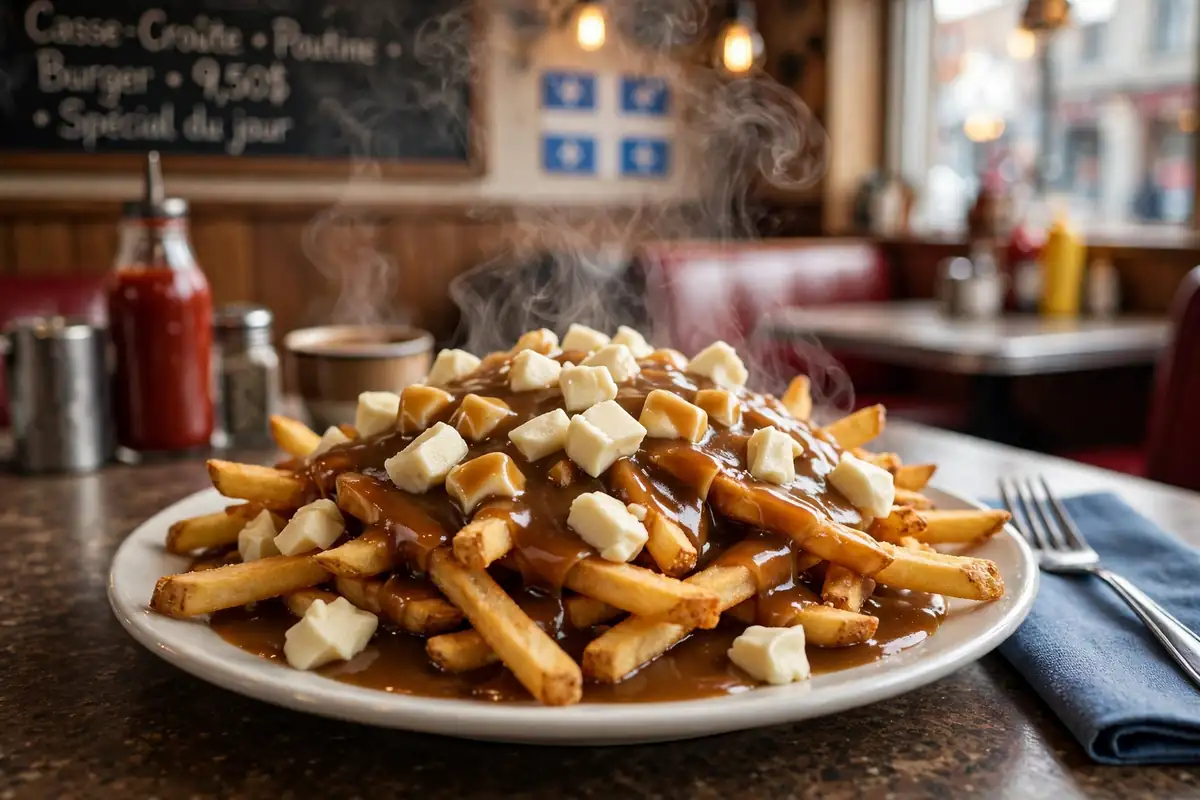
Poutine is Quebec’s gift to the world, and Montreal is where it is best. The dish is simple — french fries, fresh cheese curds and hot brown gravy, the curds melting just enough to squeak — and the best place to eat it is La Banquise, the 24-hour diner on Rue Rachel in the Plateau, which serves more than thirty varieties, from the classic to the smoked meat poutine. A classic poutine runs from about C$12, and the right time to eat it is late, after a night out, when the diner is full and the gravy is hottest. Read about poutine on Wikipedia.
Free things to do in Montreal
Montreal is not a cheap city, but it has a good list of free things, and you can build a whole free day out of them. Mount Royal Park is free, with the Kondiaronk Belvedere and the Tam-Tams drum circle on Sundays. Old Montreal, the Plateau, Mile End and the Quartier Latin are free to walk. The Montreal Museum of Fine Arts permanent collection is free. The Underground City is free to walk, and the best free view in the city is from the mountain. The Jean-Talon and Atwater markets are free to browse, the Lachine Canal towpath is free to cycle, and the outdoor shows at the Jazz Festival — two thirds of the 350 concerts — are free. The Oratory is free to enter, the McGill campus is free to walk, and the best free evening in the city is a walk along the Old Port at dusk, when the river turns gold and the wheel lights up.
Frequently asked questions
How many days do you need in Montreal?
Three days is the right amount of time for a first visit: one day for Old Montreal and the basilica, one day for the mountain and the museums, and one day for the markets and the neighbourhoods. Two days works if you skip the museums and pick one market instead of two, and four days is better if you want a day trip to Québec City or a full day at Olympic Park. One day is enough for the highlights — Old Montreal, the basilica and Mount Royal — but not for Montreal.
Is Montreal expensive?
Montreal is a mid-priced North American city, and it is cheaper than Toronto, Vancouver or New York — but the taxes are the trap. Restaurant meals carry 14.975% in combined sales tax, and a customary 15 to 20% tip is not included in the bill, so a meal costs 30 to 35% more than the menu price. A mid-range trip runs roughly C$180 to C$300 per person per day, including a hotel, a transit pass, one paid attraction and meals. The best savings are the free sights — Mount Royal, the markets, the Fine Arts permanent collection, the Jazz Festival outdoor shows — the 3-day transit pass at C$21.75, and staying in the Plateau or Saint-Henri, where the hotels are cheaper than Old Montreal’s.
Do I need to speak French in Montreal?
No — but a few words help. French is the official language of Quebec, and the street signs, the menus and the metro announcements are in French, but almost everyone in the tourist areas speaks English, and the city switches to it without being asked. Learn bonjour, merci and s’il vous plaît, and you will be welcomed everywhere. The one place French matters is outside the centre: in the suburbs and the small towns, English is thinner, and a phrasebook earns you real goodwill. Do not worry about it — the bilingual city is half the reason to come, and nobody will mind your accent.
What is the best time to visit Montreal?
Late May to early October is the best time to visit, for the festivals, the terraces and the cycling. June and July are the festival months, September and October are the best value — warm enough for the terraces, with the crowds gone and the fall colours on Mount Royal — and December to February is the winter season, with the skating rinks, Igloofest and the lowest hotel prices. April is the month to avoid, when the snow is gone and the terraces are not yet open. If you can only pick one month, pick September: the weather is warm, the light is gold, and the city is yours.
Do I need a car in Montreal?
No. Montreal is a metro city, and a car is a liability downtown: the streets are narrow, the parking is expensive, and the winter driving is not for visitors. Walk, take the metro, tap your OPUS card or the Chrono app, or rent a BIXI bike if you can already ride confidently. Fly into Montréal–Trudeau, take the 747 bus for C$11.25, and use the metro for everything inside the city. The only reason to rent a car is a day trip beyond the train network, and even then the bus to Québec City takes three hours. One warning: the REM does not reach the airport until 2027, so do not plan your arrival around it.
Is Montreal good for kids?
Yes — Montreal is one of Canada’s easiest family cities. The Biodôme is built for children, the Botanical Garden has the greenhouses and the Tree House, the Insectarium has the live ants and the butterflies, Mount Royal has the trails and the Tam-Tams, and the Old Port has the wheel, the skating rink and the river cruises. The markets are free to browse, the bagel shops are the bribe that keeps small children walking, and the metro is an adventure in itself. The only stops to think twice about are the long museum days for very small children, who will struggle with the quiet galleries, and Bota Bota, which is 18 and over only.
Further reading — Wikipedia, Reddit and Quora
For more on Montreal, read Montreal on Wikipedia, join the Montreal community on Reddit, and read the Quora thread on Montreal or Quebec City.
Your Montreal trip, in one paragraph
Montreal is the French-speaking city that feels like Europe without the transatlantic flight, and three days here give you the best of it: Old Montreal at dusk, the Notre-Dame Basilica, the view from Mount Royal, a smoked meat sandwich at Schwartz’s and a warm bagel from St-Viateur, with the Jazz Festival, the markets and the Underground City in between. Come in late May to early October for the festivals and the terraces, or in September for the fall colours and the best value, stay in Old Montreal or the Plateau, take the metro everywhere, and eat the smoked meat, the bagels and the poutine. Montreal is the 36th city in our series, and it sits alongside the other great trips we have written about — Chicago, Nashville, Los Angeles, Orlando, Miami, San Diego, Denver, Savannah, Dallas, Charleston, San Francisco, Myrtle Beach, Las Vegas, San Antonio, London, Portland, Pigeon Forge, Puerto Rico, Atlanta, Phoenix, Paris, Maui, Key West, Colorado Springs, Sedona, Chattanooga, Palm Springs, St Louis, Tokyo, Japan, Kansas City, Tennessee, Branson, Florida and Amsterdam — and if you want a North American trip with a different flavour, the live music of Nashville and the canals of Amsterdam are the natural next trips.

About the Author