Things to Do in Amsterdam
20 Best Attractions, a 3-Day Itinerary, Where to Stay, and the Food You Cannot Miss
Quick Info
Best for: First-time visitors to Europe, art lovers, canal cruisers, cyclists and anyone who wants a compact, walkable city with world-class museums
Best time: Late April to early June for tulips and long days; September to October for mild weather and thinner crowds
How long: 3 days covers the essentials; 2 days works if you skip the day trips
Budget: Roughly €150 to €250 per person per day for a mid-range trip, including a hotel, a tram pass or bike rental, one paid attraction and meals — before the 12.5% tourist tax and 21% VAT on hotels
Don’t miss: The Rijksmuseum, the Anne Frank House, a canal cruise at dusk, the Jordaan at golden hour and a warm stroopwafel from a market stall
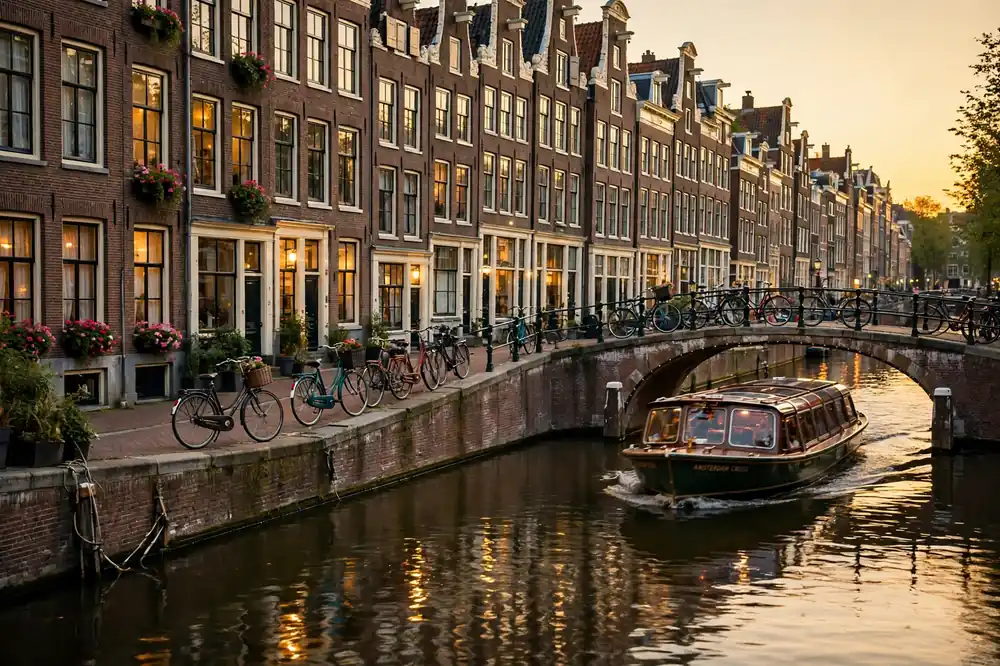
Amsterdam is the European city that does everything in miniature: 165 canals crossed by more than 1,200 bridges, world-class museums standing shoulder to shoulder on one square, neighbourhoods that change character street by street, and a cycling culture so complete that there are more bikes than people. It is small enough to cross on foot in half an hour, yet it holds the largest Van Gogh collection in the world, the house where Anne Frank wrote her diary, the oldest stock exchange in the world and a flower market that floats. This guide gives you the 20 best things to do in Amsterdam in a sensible order, a ready-made 3-day itinerary, honest advice on when to go, where to stay and how to get around, and the three foods you have to try before you leave — plus the free sights that cost nothing at all. Prices and hours change, so every price in this guide is the 2026 price as published by the attraction itself — always check the official website before you visit.
One thing to know before you go: Amsterdam in 2026 is not the city of the old guidebooks, and the old guides are wrong in expensive ways. On January 1, 2026, the Netherlands raised VAT on hotel rooms from 9% to 21%, and on top of that Amsterdam charges a 12.5% tourist tax plus €3 per person per night — together, roughly a third on top of the room rate, so a €200 room night actually costs about €267. The Anne Frank House still sells no tickets at the door at all, and the Rijksmuseum and Van Gogh Museum now sell out days ahead in peak season, so the walk-up museum day the old guides describe no longer exists. And the city is actively pushing back against crowds: no new hotels unless another one closes, short-term rentals in the centre cut from 30 nights a year to 15, and cruise ships capped at 100 calls a year. This guide tells you which traps to watch for, so you can plan with facts instead of outdated blog posts. Read about Amsterdam on Wikipedia.
Amsterdam at a glance
| Question | Short answer |
|---|---|
| Where is Amsterdam? | The capital of the Netherlands, on the Amstel river near the IJsselmeer, about 20 minutes by train from Schiphol Airport |
| What is it best for? | Canals, Golden Age art, cycling, historic neighbourhoods and a compact old centre you can walk in a day |
| How long should I stay? | 3 days for the essentials; 2 days if you skip the day trips |
| How much does it cost? | Roughly €150 to €250 per person per day mid-range, before the 12.5% tourist tax and 21% hotel VAT |
| What is the one thing not to miss? | The Rijksmuseum, then the Anne Frank House and a canal cruise at dusk |
| When is the best time to go? | Late April to early June for tulips and long days; September to October for mild weather and fewer crowds |
| Is it good for families? | Yes — NEMO, ARTIS Zoo, canal cruises, Vondelpark and pancakes make it one of Europe’s easiest family cities |
| Do I need a car? | No — walk, cycle or take the tram; a car is a liability in the centre, and parking costs more than €7 an hour |
The 20 best things to do in Amsterdam
These are the 20 best things to do in Amsterdam, ranked the way a first-time visitor should actually do them: the big museums and the Anne Frank House first, then the canals and the neighbourhoods, then the markets, the beer and the science, then the north bank and the day trips. Every price below is the 2026 price as published by the attraction itself, and every trap — the museum tickets that sell out, the hotel tax that adds a third to your bill, the Red Light District rules, the spring-only tulip gardens — is called out where it matters.
1. Rijksmuseum
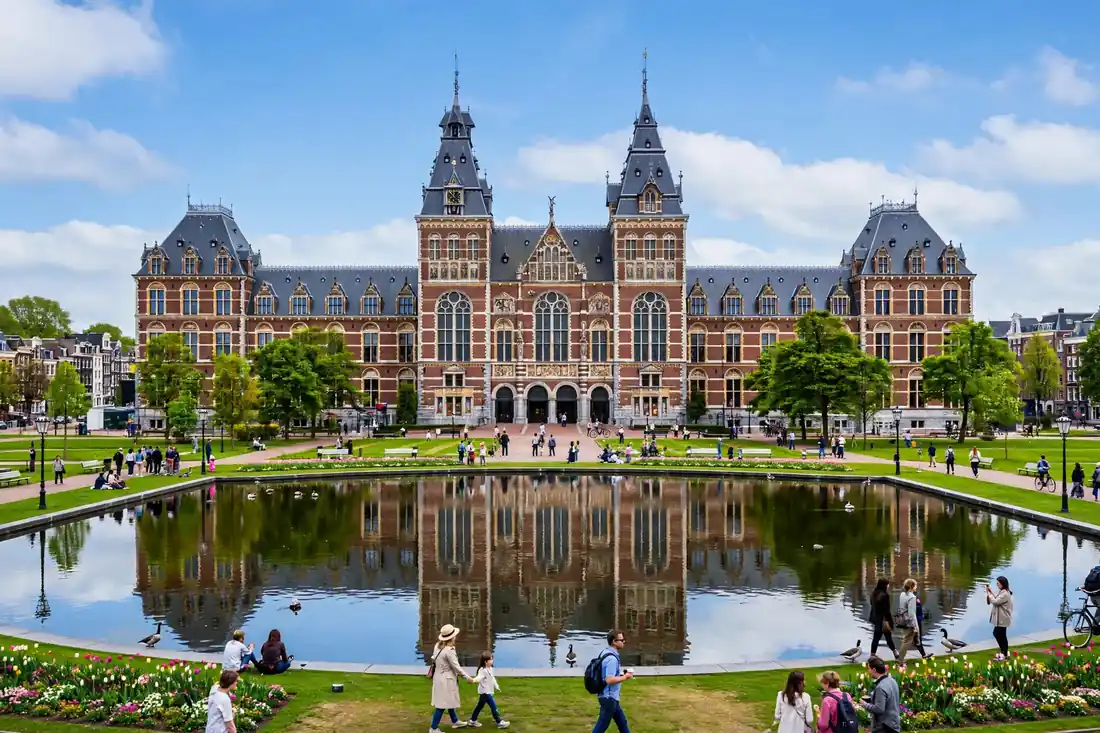
The Rijksmuseum is the single best reason to visit Amsterdam, and it is the finest museum in the Netherlands. The national museum on Museumplein covers 800 years of Dutch history, with the Golden Age at its centre: Rembrandt’s Night Watch has its own room at the end of the Gallery of Honour, and the same gallery holds Vermeer’s Milkmaid and three more Vermeers, along with the ship models, dolls’ houses and silver that tell the story of the country that built an empire on trade. The building itself, a red-brick neo-Gothic palace with a grand passageway running through its middle, is half the attraction, and the gardens behind it are free. Read about the Rijksmuseum on Wikipedia.
The practical facts for 2026: adult tickets cost from about €25, and under-18s go in free but still need a ticket. The museum is open daily from 9 a.m. to 5 p.m. Book the 9 a.m. slot and go straight to the Gallery of Honour before the crowds build, then pick one or two wings — the 17th century, or the ship models and dolls’ houses — rather than trying to see all 8,000 objects. Two traps the old guides miss: the big museums now sell out days ahead in peak season, so book online before you travel, and the I amsterdam City Card covers the Rijksmuseum but does not cover the Van Gogh Museum or the Anne Frank House, so do the sums before you buy a pass. Allow two to three hours, and do not miss the library, the most beautiful room in the building.
2. Anne Frank House
The Anne Frank House is the most moving museum in Amsterdam, and it is the one you must plan first. The canal house at Prinsengracht 263 is where Anne Frank, her family and four others hid from 1942 to 1944 in the rooms behind a moving bookcase, and where Anne wrote the diary that became one of the most read books in the world. The visit is quiet, small and unflinching: the narrow stairs, the blacked-out windows, the pencil marks on the wall where Otto Frank measured his daughters’ height, and the diary itself in its glass case. Read about Anne Frank on Wikipedia.
The practical facts for 2026: adult tickets cost €16.50 including the booking fee, and ages 10 to 17 pay €7. Tickets go on sale every Tuesday at 10 a.m. Amsterdam time for visits six weeks later, on the museum’s website only, and nothing is sold at the door — not a single ticket. This is the trap that catches more visitors than any other in Amsterdam: if you have not booked six weeks ahead, you will not get in. Set an alarm for the Tuesday six weeks before your visit, and book the moment sales open. The visit takes about an hour, the house is not suitable for very small children, and photography is not allowed inside. Book it before you book anything else in this guide.
3. Van Gogh Museum
The Van Gogh Museum, next door to the Rijksmuseum on Museumplein, holds the largest collection of Van Gogh’s work in the world — more than 200 paintings, 500 drawings and 700 letters — hung in the order of his life, from the dark peasant scenes of Nuenen, through the colour of Paris and Arles, to the last months at Auvers. It is the museum that surprises people most: the Sunflowers, the Bedroom, the Almond Blossom and the self-portraits are here, and seeing them in sequence, with the letters that explain them, turns a famous name into a real person. Read about the Van Gogh Museum on Wikipedia.
The practical facts for 2026: adult tickets cost from about €25, and under-18s go free but need a ticket. Tickets are sold online only, with a start time, and they sell out two to three weeks ahead in peak season, so book as soon as your dates are fixed. The museum is not part of the I amsterdam City Card, which is the pass trap most visitors fall into — the card covers the Rijksmuseum but not this one. Allow two hours, and go in the morning if you can, when the galleries are quietest. One honest note: if you only have time for one art museum, pick the Rijksmuseum for breadth — but if Van Gogh is the reason you came, this museum will not disappoint.
4. A canal cruise
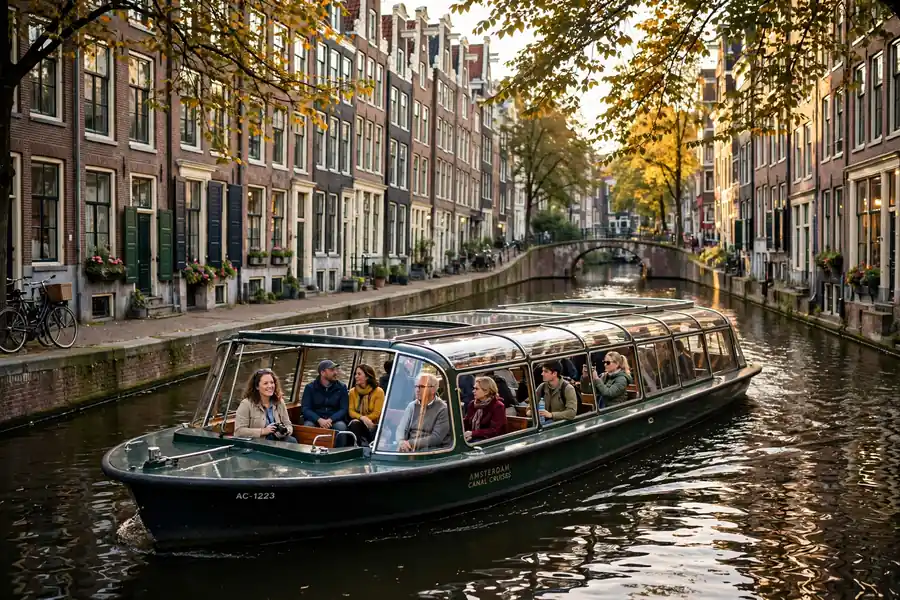
A canal cruise is the best introduction to Amsterdam, and it is the one thing every first-timer should do on day one. Amsterdam has more canals than Venice — 165 of them, forming concentric rings around the old centre — and the Canal Ring, built during the Dutch Golden Age in the 17th century, is a UNESCO World Heritage Site. From the water the city makes sense: the gabled houses lean over the canals, the houseboats line the banks, the bridges arch overhead, and the guide explains the history that the streets hide. Read about the canals of Amsterdam on Wikipedia.
The practical facts for 2026: a standard cruise takes 60 to 75 minutes and costs about €15 to €18, departing every 15 to 30 minutes from Centraal Station, the Rijksmuseum and the Anne Frank House. The evening cruises, when the bridges light up, are the best of the day, and the small open boats are better than the big glass-topped ones — you hear the guide, you feel the city, and you can take photographs without glass in the way. The I amsterdam City Card includes one cruise. One honest warning: the cheapest boats are the most crowded, and the commentary on the big boats is a recording — pay a few euros more for a small boat with a live guide. Allow an hour and a half with boarding, and take it on your first evening, when the light is best.
5. The Jordaan and De Negen Straatjes
The Jordaan is the prettiest neighbourhood in Amsterdam, and De Negen Straatjes — the Nine Streets — is its prettiest corner. The Jordaan was a working-class district of canals, courtyards and small houses, and it is now the city’s most loved quarter: narrow streets, brown cafés, art galleries, cheese shops and the Noordermarkt, where the Saturday organic farmers’ market and the Monday flea market fill the square. The Nine Streets, nine narrow shopping streets between the canals just west of Dam Square, hold the independent boutiques, vintage shops and cafés that the big shopping streets do not. Read about the Jordaan on Wikipedia.
The practical facts for 2026: walking the Jordaan costs nothing, and it is best in the morning, when the streets are quiet, or at golden hour, when the canals catch the light. Start at the Noordermarkt, walk south through the side streets rather than along the main canals, and look for the hofjes — the hidden almshouse courtyards behind unmarked doors, which are the Jordaan’s secret. The Nine Streets are busiest on Saturday afternoons, so go on a weekday if you can. Allow half a day for the two together, and stop for coffee in a brown café — the dark wood, the low light and the locals at the bar are the Jordaan in one room.
6. Begijnhof
The Begijnhof is the quietest place in Amsterdam, and it is free. Behind an unmarked wooden door on the Spui, a few steps from the crowds, sits a hidden courtyard of gabled houses around a green, where the Beguines — a community of unmarried religious women — have lived since the 14th century. The courtyard holds the oldest house in Amsterdam, No. 34, built around 1425 and one of only two wooden houses left in the city, the English Reformed Church, and the Begijnhof Chapel, where Catholic Mass was held in secret when the city banned it. Read about the Begijnhof, Amsterdam on Wikipedia.
The practical facts for 2026: entry is free, and the courtyard is open daily, but it is still a residential community, so keep your voice down, do not photograph the residents, and do not sit on the benches by the houses. It takes ten minutes to see and an hour to forget, and it is the best antidote to a crowded day in the centre. Go in the morning, when the light falls across the green and the courtyard is empty, and pair it with the Spui, the book market square outside the door, where second-hand booksellers set up on Fridays.
7. Vondelpark
Vondelpark is Amsterdam’s backyard, and it is the best free afternoon in the city. The 47-hectare park, a ten-minute walk from Museumplein, is where the whole city goes when the sun comes out: cyclists on the paths, families on the lawns, open-air theatre in summer, and the ponds, the rose garden and the Picasso sculpture, Figure découpée, by the entrance. It is named after Joost van den Vondel, the 17th-century poet, and it has been the city’s park since 1865. Read about Vondelpark on Wikipedia.
The practical facts for 2026: the park is free and open 24 hours a day, and it is at its best on a sunny afternoon, when the lawns fill with picnics and the cafés — the Blauwe Theehuis, the blue tea house on the pond, and the Vondelpark3 restaurant — do their briskest trade. The open-air theatre runs free performances on summer weekends. Bring food from a supermarket for a picnic, rent a bike and ride the loop, or just sit and watch the city go by. Allow two hours, and go on a weekday if you want the quiet version — on a sunny Sunday the park is the busiest place in Amsterdam.
8. Dam Square and the Royal Palace
Dam Square is the historic heart of Amsterdam, and the Royal Palace is its grandest building. The square sits on the dam across the Amstel that gave the city its name, and it holds the National Monument, the white obelisk that commemorates the Dutch war dead, the Nieuwe Kerk, the 15th-century church where Dutch monarchs are crowned, and the Royal Palace itself, built as the Town Hall in the Golden Age and still used by King Willem-Alexander for official receptions. Read about the Royal Palace of Amsterdam on Wikipedia.
The practical facts for 2026: adult tickets to the palace cost €13.50, under-18s go free, and the audio tour is included. The palace opens on more than 230 days in 2026 but closes for royal events, so check its calendar before you go — the old guides that list it as always open are out of date. The square itself is free and always open, and it is at its best early in the morning, before the crowds and the street performers arrive. Allow an hour for the palace and the square together, and do not miss the Nieuwe Kerk next door, which hosts exhibitions through the year.
9. The Red Light District — De Wallen
The Red Light District, De Wallen, is the oldest part of Amsterdam, and it is the one most visitors misunderstand. The narrow streets around the Oude Kerk — the Old Church, the oldest building in the city, dating from around 1306 — hold the famous red-lit windows, the coffeeshops, the bars and the crowds, but they also hold the city’s oldest canal, its prettiest gabled houses and a neighbourhood where people live, work and go to school. It is worth one walk-through, in the early evening, to see it properly. Read about De Wallen on Wikipedia.
The practical facts for 2026: the rules are the point, and the old guides get them wrong. Do not photograph the sex workers in the windows — it is banned, it is enforced, and it will get your camera taken. Guided tours of the windows were banned in 2020, and tour groups anywhere in the district are capped at 15 people, with no loudspeakers, and must finish by 10 p.m., with fines of up to €950 for breaking the rules. Smoking cannabis on the streets of De Wallen has been banned since May 2023, though the coffeeshops themselves are still open. The Oude Kerk, at the centre of the district, is open as a church and exhibition space, and it is the quietest spot in the quarter. Go once, in the early evening, keep your camera in your pocket, and do not treat the neighbourhood as a theme park — it is not one.
10. Albert Cuyp Market and De Pijp
The Albert Cuyp Market is the biggest street market in the Netherlands, and De Pijp, the neighbourhood around it, is the most local-feeling quarter in Amsterdam. The market runs six days a week along the Albert Cuypstraat, with more than 260 stalls selling stroopwafels hot from the iron, raw herring, Dutch cheese, flowers, clothes and everything in between, and the streets around it hold the city’s best Surinamese, Turkish and Indonesian restaurants, the brown cafés and the Sarphatipark, the neighbourhood’s green. Read about the Albert Cuyp Market on Wikipedia.
The practical facts for 2026: the market is free to walk, open Monday to Saturday from about 9 a.m. to 5 p.m., and closed on Sundays — the old guides that send you there on a Sunday are wrong. Go hungry and go in the morning, when the stalls are full and the crowds are thin, and eat a stroopwafel from a stall that makes them fresh rather than buying a packaged one. De Pijp is a 15-minute walk south of the centre, or two tram stops from Leidseplein, and it is the best neighbourhood in the city for dinner — the restaurants here are cheaper and better than the ones in the centre. Allow half a day for the market and the quarter.
11. Stedelijk Museum
The Stedelijk Museum, on Museumplein next to the Van Gogh Museum, is the Netherlands’ museum of modern and contemporary art, and its collection runs from Mondrian and Malevich through De Stijl and Bauhaus to the present day. The building is two museums in one: the 19th-century brick original and the white bathtub-shaped extension, added in 2012, that the locals either love or hate. The collection holds the largest Mondrian collection anywhere, including Victory Boogie Woogie, his last, unfinished work. Read about the Stedelijk Museum Amsterdam on Wikipedia.
The practical facts for 2026: adult tickets cost €22.50, and the I amsterdam City Card covers it. One exhibition dominates 2026: the Yayoi Kusama retrospective, on show until January 17, 2027, with a special ticket from €32.50 — book it separately, because the standard ticket does not include it. Allow two hours, and go in the morning, when the galleries are quietest. One honest note: if modern art is not your thing, this is the museum to skip — the Rijksmuseum and the Van Gogh Museum are the two that matter most, and the Stedelijk is the third, not the first.
12. Heineken Experience
The Heineken Experience is Amsterdam’s most popular brewery tour, and it is the one beer lovers should not skip. The tour runs through the original Heineken brewery, built in 1867 on the Stadhouderskade, with the old brew rooms, the stables where the Shire horses lived, the interactive brewing exhibits and the rooftop bar, where the ticket’s two free beers come with a view over the city. Heineken is the most famous Dutch export after the tulip, and the brewery is where the story started. Read about Heineken on Wikipedia.
The practical facts for 2026: standard tickets cost from €24.95, including two beers, and the version with the rooftop and a second drink costs €29.95, with a VIP tour at €65. The Experience is 18 and over only — children are not allowed in at all, which is the trap that catches families who book it as a group activity. Book a timed slot online a day ahead, and allow an hour and a half to two hours. It sits on the edge of De Pijp, so pair it with the Albert Cuyp Market in the morning and the brewery in the afternoon. One honest note: this is a marketing experience as much as a brewery tour, and the beer is the same Heineken you can buy anywhere — come for the building and the rooftop, not for a rare tasting.
13. NEMO Science Museum
NEMO Science Museum is the best family museum in Amsterdam, and its roof is the best free viewpoint in the city. The museum, in Renzo Piano’s green copper ship rearing out of the Oosterdok near Centraal Station, holds five floors of hands-on science — chain reactions, water, light, chemistry and the human body — where everything is meant to be touched, pulled and switched on. The rooftop terrace, with its café and its view across the IJ and the old centre, is free to visit without a ticket. Read about the NEMO Science Museum on Wikipedia.
The practical facts for 2026: tickets cost €21.50 for everyone aged four and over, and under-4s go free. The museum is at its best on a rainy day, when every family in Amsterdam has the same idea — arrive at opening, and do the top floor first, because the chain reaction demonstration draws the biggest crowds. Allow three hours with children, and an hour and a half without. Do not miss the rooftop: it is free, it is open in summer, and the view across the water to the north bank is the best free view in the city.
14. Amsterdam Noord and the A’DAM Lookout
Amsterdam Noord, across the IJ river from Centraal Station, is the other Amsterdam — the one the old guides skip — and it is the best half-day in the city. The free ferry behind Centraal Station, which runs 24 hours a day, takes you across in five minutes to a neighbourhood of former shipyards, street art, waterfront restaurants and the A’DAM Lookout, the observation deck on top of the A’DAM Tower with a 360-degree view over the whole city. The NDSM Wharf, the old shipyard further west, holds artists’ studios, a flea market and Pllek, the beach bar built from shipping containers. Read about Amsterdam-Noord on Wikipedia.
The practical facts for 2026: the ferry is free, and the Lookout costs €16.50 online, €2 more at the desk, with the Over The Edge swing — billed as Europe’s highest swing — costing €7.50 extra. The Lookout is open daily from 10 a.m. to 10 p.m., and the best time is an hour before sunset, when the light falls across the canals and the crowds thin. Allow half a day for Noord: the ferry, the Lookout, the NDSM Wharf and a drink at Pllek. One honest note: Noord is still a work in progress, with building sites between the attractions, and it is not the prettiest part of the city — go for the view and the space, not for the postcard.
15. Bloemenmarkt — the floating flower market
The Bloemenmarkt is the only floating flower market in the world, and it is the most photographed market in Amsterdam. The stalls sit on barges moored along the Singel canal, selling tulip bulbs, cut flowers, seeds and souvenirs, and the colours — the tulips, the daffodils, the hyacinths — are the brightest in the city. It has been here since 1862, when the flower sellers brought their stock in by boat, and it is still the place to buy bulbs to take home. Read about the Bloemenmarkt on Wikipedia.
The practical facts for 2026: the market is free to walk, open daily, and at its best in spring, when the tulips are in season. One honest warning: the bulbs sold to tourists are often the wrong thing — the cheap packets are not always the variety on the label, and many countries, including the United States and Australia, will confiscate them at customs, so check your country’s import rules before you buy. Pick up the cut flowers instead, and take the photographs. Allow half an hour, and pair it with the Begijnhof, which is two minutes away, and the Spui book market on Fridays.
16. Rembrandt House Museum
The Rembrandt House Museum is the most personal museum in Amsterdam, and it is the one art lovers remember longest. The house on the Jodenbreestraat is where Rembrandt van Rijn lived and worked from 1639 to 1658, and it has been restored to the way it was in his lifetime: the studio with its north light, the cabinet of curiosities with its shells and weapons, the kitchen and the bedroom, and the etching room where demonstrations show how he made his prints. It is a small museum, and that is the point — you stand in the rooms where the Night Watch was painted. Read about the Rembrandt House Museum on Wikipedia.
The practical facts for 2026: adult tickets cost from €19.50, and the I amsterdam City Card covers it. The house is a ten-minute walk from Dam Square, in the old Jewish quarter, and it pairs naturally with the Portuguese Synagogue next door and the Jewish Historical Museum across the street. Allow an hour and a half, and go in the morning, when the etching demonstrations run and the house is quiet. One honest note: the house holds almost no original Rembrandts — the paintings are in the Rijksmuseum — so come for the rooms and the craft, not for the pictures.
17. Our Lord in the Attic
Our Lord in the Attic is the strangest museum in Amsterdam, and it is the one most visitors never hear about. Behind the plain canal-house facade at Oudezijds Voorburgwal 40, up three flights of narrow stairs, sits a complete Catholic church, built in the attic in 1663, when the Dutch Republic banned public Catholic worship and the city’s Catholics built their churches in secret. The church is still there in full: the altar, the organ, the pews and the paintings, hidden in the roof of an ordinary merchant’s house. Read about Museum Ons’ Lieve Heer op Solder on Wikipedia.
The practical facts for 2026: adult tickets cost €18, and the I amsterdam City Card covers it. The museum is in the Red Light District, two minutes from the Oude Kerk, and it is the quietest stop in the quarter — the contrast between the street outside and the church upstairs is the whole point. Allow an hour, and watch your head on the stairs: the house is 17th century, the steps are steep and narrow, and it is not suitable for anyone who struggles with stairs. One honest note: this is a small museum with a big idea, and it is the best hour in Amsterdam for anyone who likes hidden history.
18. Zaanse Schans
Zaanse Schans is the windmill village, and it is the best half-day trip from Amsterdam. The open-air museum on the Zaan river, 15 minutes by train from Centraal Station, holds working windmills — the sawmill, the oil mill, the paint mill — along with green wooden houses, a cheese farm, a clog workshop and a bakery, all in the landscape the Dutch Golden Age was built on. The windmills still work, and on a windy day you can watch the sails turn and the saws cut. Read about the Zaanse Schans on Wikipedia.
The practical facts for 2026: walking the village is free, and the windmills, the cheese farm and the clog workshop charge a few euros each, or are covered by the Zaanse Schans Card. The train from Centraal Station to Zaandijk Zaanse Schans takes 15 minutes, and the village is a ten-minute walk from the station. Go in the morning, when the tour buses have not arrived, and allow half a day. One honest note: Zaanse Schans is a museum village, not a real one — the houses were moved here in the 1960s — and the centre of Amsterdam has the better canals. Go for the windmills and the cheese, not for the history.
19. ARTIS Royal Zoo
ARTIS Royal Zoo is the oldest zoo in the Netherlands, founded in 1838, and it is the best family day in Amsterdam. The zoo sits in the Plantage, the green quarter east of the centre, with elephants, giraffes, jaguars and penguins in 19th-century buildings and gardens, plus Micropia, the museum of microbes next door, the planetarium and the aquarium, the oldest in Europe. It is a zoo that feels like a park, with lawns, ponds and old trees between the enclosures. Read about Natura Artis Magistra on Wikipedia.
The practical facts for 2026: tickets cost €29.50 for visitors aged 13 and over, and the zoo is open daily. Allow half a day for the zoo alone, and a full day if you add Micropia and the aquarium. The zoo is a 15-minute tram ride from Dam Square, and it pairs well with the Hortus Botanicus, the botanical garden across the street, one of the oldest in the world. One honest note: ARTIS is not cheap, and the big cats and the elephants are the draw — if you have seen a big-city zoo before, the Micropia microbe museum is the more unusual stop.
20. Keukenhof and the tulip fields
Keukenhof is the tulip garden, and it is the best spring day in the Netherlands. The 32-hectare garden near Lisse, 40 minutes south of Amsterdam, plants 7 million bulbs every year — tulips, daffodils, hyacinths and crocuses — in displays that run from the pavilions to the windmill and the lake, and the fields around it turn in stripes of red, yellow and pink. It is open for eight weeks only, and it is the reason half of Amsterdam’s spring visitors come. Read about Keukenhof on Wikipedia.
The practical facts for 2026: Keukenhof is open from mid-March to mid-May only, and entry costs €21.50 for the 2026 season. Book the bus-and-entry combination ticket from Schiphol or Amsterdam, because the garden is not on a train line and the car parks fill by mid-morning. Go in mid-April, when the most bulbs are in flower, and go on a weekday, when the crowds are half the size. One honest warning: Keukenhof is not the tulip fields — the garden is a show garden, and the real fields are the ones you see from the bus on the way there, which are free to look at and fenced off to walk in. Do not climb into a farmer’s field for a photograph; it is private land, and the farmers fine trespassers.
Amsterdam in 3 days — a ready-made itinerary
Three days is the right amount of time for Amsterdam: one day for the museums and the Anne Frank House, one day for the canals and the neighbourhoods, and one day for the markets, the north bank and a day trip. The itinerary below assumes you are staying in the centre, and it uses walking, the tram and the free ferry for everything inside the city. If you only have two days, do Day 1 and Day 2 and save Noord and the windmills for next time.
| Day | Theme | Highlights | Where you sleep |
|---|---|---|---|
| Day 1 | Museums and the Anne Frank House | Rijksmuseum, Van Gogh Museum, Anne Frank House, canal cruise at dusk | Canal Ring or Jordaan |
| Day 2 | Canals and neighbourhoods | Jordaan, Nine Streets, Begijnhof, Dam Square, Red Light District, De Pijp | Canal Ring or Jordaan |
| Day 3 | Markets, Noord and a day trip | Albert Cuyp Market, ferry to Noord, A’DAM Lookout, Zaanse Schans or Keukenhof | Canal Ring or Amsterdam Noord |
Day 1 — Museums and the Anne Frank House
Start at the Rijksmuseum. Book the 9 a.m. slot, go straight to the Gallery of Honour, then pick one wing and leave by noon. Walk across Museumplein to the Van Gogh Museum for the early afternoon, and take your Anne Frank House slot in the late afternoon — the house is quietest then, and the walk from Museumplein to Prinsengracht takes you through the Jordaan. In the evening, take a canal cruise at dusk, when the bridges light up, and eat in the Jordaan, where the brown cafés are the best in the city.
Day 2 — Canals and neighbourhoods
Spend the morning in the Jordaan: the Noordermarkt, the side streets, the hofjes and the Nine Streets, with coffee in a brown café. Walk to the Begijnhof at midday, then to Dam Square and the Royal Palace, and in the afternoon cross to De Pijp for the Albert Cuyp Market and the neighbourhood’s restaurants. In the early evening, walk through the Red Light District once — camera in your pocket, no photographs of the windows — and end the day at the Oude Kerk, the oldest building in the city, which is at its quietest after dark.
Day 3 — Markets, Noord and a day trip
Spend the morning at the Albert Cuyp Market if you missed it, or at Vondelpark with a picnic from a supermarket. Take the free ferry behind Centraal Station to Amsterdam Noord, ride the A’DAM Lookout an hour before sunset, and have a drink at Pllek on the NDSM Wharf. If it is spring, swap Noord for Keukenhof instead — take the bus from Schiphol, spend the morning in the gardens, and come back through the tulip fields. If it is any other season, take the train to Zaanse Schans for the windmills, and be back in the city for dinner in De Pijp.
Best time to visit Amsterdam
The best time to visit Amsterdam is late April to early June and September to October. April and May bring the tulips, the longest days and the mildest weather, with highs of 12 to 18 degrees, and the city feels alive after winter. September and October are the best-kept secret: warm enough for cycling and sitting outside, with the summer crowds gone and the hotel prices lower. July is the warmest month, with highs around 22 degrees, and January is the coldest, with highs near 6 degrees and lows around 1 degree, so the city swings hard between the seasons. Rain falls all year, so bring a waterproof jacket whatever the month. Read about Koningsdag on Wikipedia.
| Season | Months | Weather | What’s on |
|---|---|---|---|
| Spring | March to May | Highs 12 to 18 degrees, changeable | Keukenhof and the tulip fields, King’s Day on April 27, the city waking up |
| Summer | June to August | Highs 19 to 22 degrees, warmest in July | Vondelpark and the terraces, outdoor festivals, the busiest season |
| Autumn | September to November | Highs 10 to 17 degrees, cooling down | Mild weather, thin crowds, the Amsterdam Light Festival from late November |
| Winter | December to February | Highs 4 to 6 degrees, cold and damp | Amsterdam Light Festival until January 17, Christmas markets, the lowest hotel prices |
Where to stay in Amsterdam
The Canal Ring is the best base for a first visit: you are within walking distance of the Anne Frank House, the Jordaan, Dam Square and the Nine Streets, and the hotels range from boutique canal houses to the big chains, though the prices are the highest in the city. The Jordaan is the best base for a quieter stay, with boutique hotels and apartments on the prettiest streets. De Pijp is the best base for food and local life, with the market outside your door and the restaurants cheaper than the centre. Amsterdam Noord is the best base for a budget stay, with modern hotels a free ferry ride from Centraal Station. The rule for Amsterdam is simple: stay inside the ring road, the A10, because everything outside it is a tram ride away, and check whether the quoted price includes the 12.5% tourist tax and the 21% VAT — many booking sites show the room rate without the tax, and the surprise at checkout is real.
| Area | Best for | Price range |
|---|---|---|
| Canal Ring | First-timers, the Anne Frank House, walking everywhere | €180 to €350 a night |
| Jordaan | Quiet streets, boutique hotels, couples | €150 to €300 a night |
| De Pijp | Food, markets, local life | €120 to €250 a night |
| Museum Quarter | Museums, families, Vondelpark | €150 to €300 a night |
| Amsterdam Noord | Budget stays, modern hotels, the free ferry | €90 to €180 a night |
| Eastern Docklands | Modern apartments, quiet mornings | €110 to €220 a night |
Getting around Amsterdam
Amsterdam is a walking and cycling city, and a car is not optional — it is a liability. The centre is small enough to cross on foot in half an hour, the trams run every few minutes, and the bikes outnumber the people. Fly into Schiphol Airport, about 20 minutes by train from Centraal Station, with trains every 10 to 15 minutes and a ticket costing about €6. From Centraal, walk, take the tram or take the free ferry to the north bank. Read about Amsterdam Airport Schiphol on Wikipedia.
The tram, metro and bus network is run by GVB, and the easiest way to pay is OVpay — just tap your bank card or phone on the reader when you board and tap out when you leave. A 24-hour GVB ticket costs about €9.50, and the I amsterdam City Card, from €67 for 24 hours, €94 for 48 hours and €115 for 72 hours, adds museum entry and a canal cruise to unlimited transport. Renting a bike costs about €12 to €15 a day, and it is the best way to see the city — but only if you can already ride confidently. Amsterdam’s cyclists are fast, the bike lanes are busy, and the locals have no patience for wobbling tourists: stay in the bike lane, signal with your hand, never ride on the pavement, and lock your bike properly, because bike theft is the city’s most common crime. The free ferries behind Centraal Station run 24 hours a day to Amsterdam Noord, and they are the best free ride in the city.
A few Dutch words will take you a long way: hallo is hello, dank u wel is thank you, alstublieft is please, and tot ziens is goodbye. Almost everyone speaks English, and the Dutch will switch to it before you finish your first sentence — but trying a word or two is always welcome.
Amsterdam food you have to try
Amsterdam’s food is not fancy, and that is the point. The city’s best meals are a warm waffle from a market stall, a piece of raw fish from a herring cart, and a feast from the other side of the world, eaten at a long table in a colonial-era dining room. Eat those three, and you have eaten Amsterdam. For everything else, the brown cafés, the Indonesian restaurants of De Pijp and the cheese shops of the Jordaan will keep you fed — and the apple pie, Dutch appeltaart, is the city’s unofficial dessert.
1. Stroopwafels and poffertjes — the sweet Dutch classics
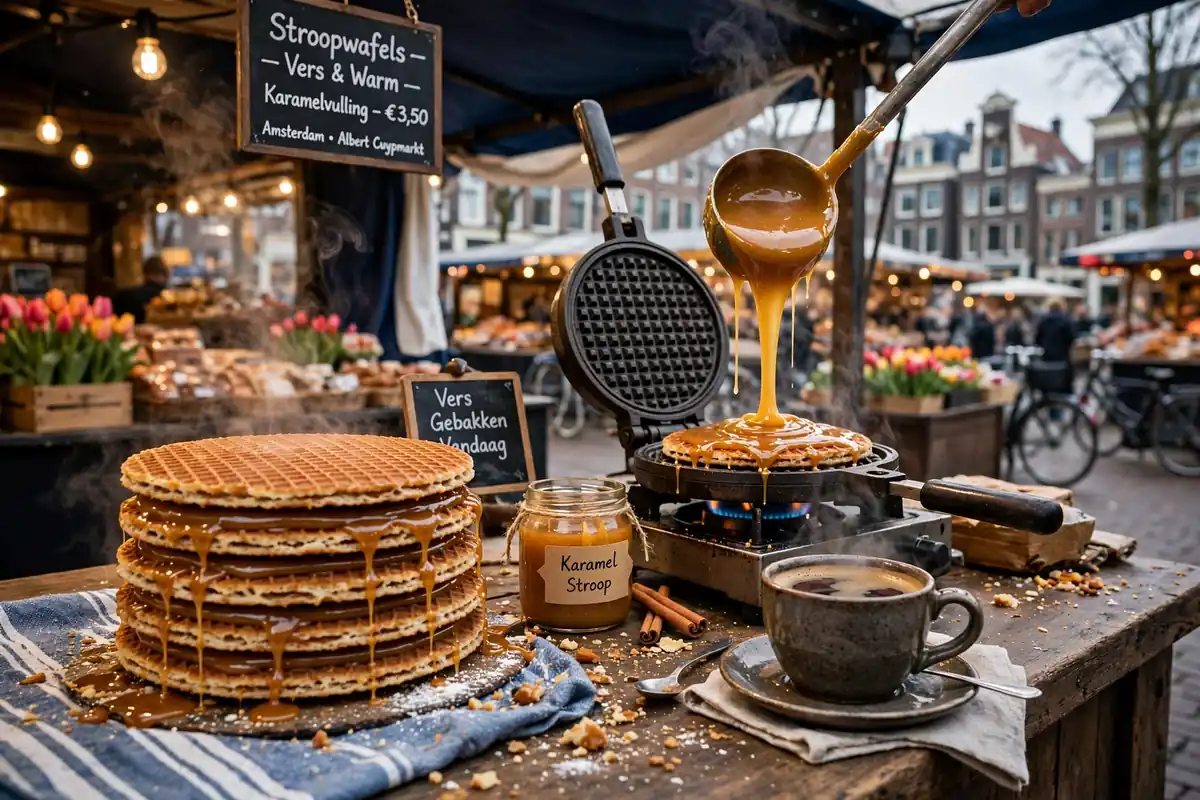
The stroopwafel is Amsterdam’s signature sweet, and it is best eaten warm from the iron. The thin waffle cookie, pressed with caramel syrup in the middle, was invented in Gouda in the 18th century, and the market stalls in Amsterdam make them fresh while you wait — crisp on the outside, soft and sticky in the middle, best eaten with a coffee, with the waffle balanced on top of the cup so the steam melts the caramel. Poffertjes, the small fluffy pancakes served in a paper tray with butter and icing sugar, are the second sweet to try, and the pancake houses and market stalls make them to order. Read about the stroopwafel on Wikipedia.
2. Raw herring, bitterballen and fries — the savoury classics
Raw herring is the most Dutch food in Amsterdam, and it is the one most visitors are afraid to try. Hollandse Nieuwe, the new herring of the season, arrives in June, and it is eaten the Dutch way: held by the tail, lowered into the mouth, with chopped onion and pickles on the side. The herring carts on the Albert Cuyp Market and near Centraal Station sell it for a few euros, and it is the best cheap lunch in the city. Bitterballen, the deep-fried beef-ragout balls served with mustard, are the bar snack of the brown cafés, and the fries — Vlaamse frites, thick-cut and served in a paper cone with mayonnaise — are the late-night staple. Read about bitterballen on Wikipedia.
3. Indonesian rijsttafel — Amsterdam’s adopted feast
The rijsttafel, the rice table, is Amsterdam’s great adopted meal, and it is the best dinner in the city. The Dutch brought it back from Indonesia, their former colony, and it is a feast: a mountain of rice surrounded by dozens of small dishes — satay, rendang, gado gado, sambal, pickles and prawn crackers — served all at once, to be shared. The Indonesian restaurants of De Pijp and the centre serve it for two or more, and it is the meal that explains Amsterdam’s history better than any museum. Read about rijsttafel on Wikipedia.
Free things to do in Amsterdam
Amsterdam is not a cheap city, but it has a good list of free things, and you can build a whole free day out of them. The Jordaan, the Nine Streets, the Begijnhof, Vondelpark, the Rijksmuseum gardens, the Albert Cuyp Market and the Bloemenmarkt all cost nothing to walk. The ferries to Amsterdam Noord run free, 24 hours a day, and the view from the NEMO rooftop terrace is free too. The Central Library, the OBA on the Oosterdok, has a free rooftop with one of the best views in the city, and the canals themselves — the best sight in Amsterdam — are free to walk along at any hour. The Amsterdam Light Festival, from late November to mid-January, turns the canals into a free open-air exhibition, and the Saturday organic market on the Noordermarkt is free to browse. And the best free evening in the city is a walk along the canals at dusk, when the bridges light up and the gabled houses reflect in the water.
Frequently asked questions
How many days do you need in Amsterdam?
Three days is the right amount of time for a first visit: one day for the museums and the Anne Frank House, one day for the canals and the neighbourhoods, and one day for the markets, the north bank and a day trip. Two days works if you skip the day trips and pick one museum instead of two, and four days is better if you want Keukenhof or Zaanse Schans without rushing. One day is enough for the highlights — the Rijksmuseum, a canal cruise and the Jordaan — but not for Amsterdam.
Is Amsterdam expensive?
Yes — Amsterdam is one of the most expensive cities in Europe, and the trap is the tax. On January 1, 2026, the Netherlands raised VAT on hotel rooms from 9% to 21%, and Amsterdam charges a 12.5% tourist tax plus €3 per person per night on top, so a €200 room night actually costs about €267. A mid-range trip runs roughly €150 to €250 per person per day, including a hotel, a tram pass or bike rental, one paid attraction and meals. The best savings are the free sights — the Jordaan, the Begijnhof, Vondelpark, the markets and the ferries — the I amsterdam City Card if you will visit three or more covered museums, and staying in Amsterdam Noord, where the hotels are cheaper and the ferry is free.
Do I need to book the Anne Frank House in advance?
Yes — and six weeks in advance, not six days. Tickets go on sale every Tuesday at 10 a.m. Amsterdam time for visits six weeks later, on the museum’s website only, and nothing is sold at the door. If you have not booked six weeks ahead, you will not get in. The Rijksmuseum and the Van Gogh Museum are the same story in peak season: book online before you travel, because the walk-up museum day the old guides describe no longer exists. Book the Anne Frank House before you book anything else in this guide.
What are the rules in the Red Light District?
Do not photograph the sex workers in the windows — it is banned and enforced. Guided tours of the windows were banned in 2020, tour groups are capped at 15 people with no loudspeakers, and tours must finish by 10 p.m., with fines of up to €950. Smoking cannabis on the streets of De Wallen has been banned since May 2023, though the coffeeshops themselves are still open. The district is a residential neighbourhood as well as a tourist sight, so keep your voice down, keep your camera in your pocket, and do not treat it as a theme park.
Do I need a car in Amsterdam?
No. Amsterdam is a walking and cycling city, and a car is a liability in the centre: the streets are narrow, the bike lanes are everywhere, and parking costs more than €7 an hour. Walk, take the tram, tap your bank card with OVpay, or rent a bike if you can already ride confidently. Fly into Schiphol, take the train to Centraal Station for about €6, and take the free ferry to the north bank. The only reason to rent a car is a day trip beyond the train network, and even then the train to Zaanse Schans takes 15 minutes.
Is Amsterdam good for kids?
Yes — Amsterdam is one of Europe’s easiest family cities. NEMO Science Museum is built for children, ARTIS Zoo has the animals and the planetarium, Vondelpark has the lawns and the playgrounds, the canal cruises are an hour of sitting still with a view, and the pancake houses serve poffertjes all day. The free ferries are an adventure in themselves, and the stroopwafel stalls are the bribe that keeps small children walking. The only stops to think twice about are the Anne Frank House for very small children, who will not understand it, and the Red Light District after dark.
Further reading — Wikipedia, Reddit and Quora
For more on Amsterdam, read Amsterdam on Wikipedia, join the Amsterdam community on Reddit, and read the Quora thread on what to visit in Amsterdam.
Your Amsterdam trip, in one paragraph
Amsterdam is the European city that does everything in miniature, and three days here give you the best of it: the Rijksmuseum and the Anne Frank House, a canal cruise at dusk, the Jordaan at golden hour and a warm stroopwafel from a market stall, with windmills, tulips and a free ferry across the IJ in between. Come in late April to early June for the tulips and the long days, or in September to October for the mild weather and the thin crowds, stay in the Canal Ring or the Jordaan, walk and cycle everywhere, and eat the stroopwafels, the raw herring and the Indonesian rijsttafel. Amsterdam is the 35th city in our series, and it sits alongside the other great trips we have written about — Chicago, Nashville, Los Angeles, Orlando, Miami, San Diego, Denver, Savannah, Dallas, Charleston, San Francisco, Myrtle Beach, Las Vegas, San Antonio, London, Portland, Pigeon Forge, Puerto Rico, Atlanta, Phoenix, Paris, Maui, Key West, Colorado Springs, Sedona, Chattanooga, Palm Springs, St Louis, Tokyo, Japan, Kansas City, Tennessee, Branson and Florida — and if you want a European trip with a different flavour, the art and history of Paris and the museums of London are the natural next trips.

About the Author