Things to Do in Florida
20 Best Attractions, a 3-Day Itinerary, Where to Stay, and the Food You Cannot Miss
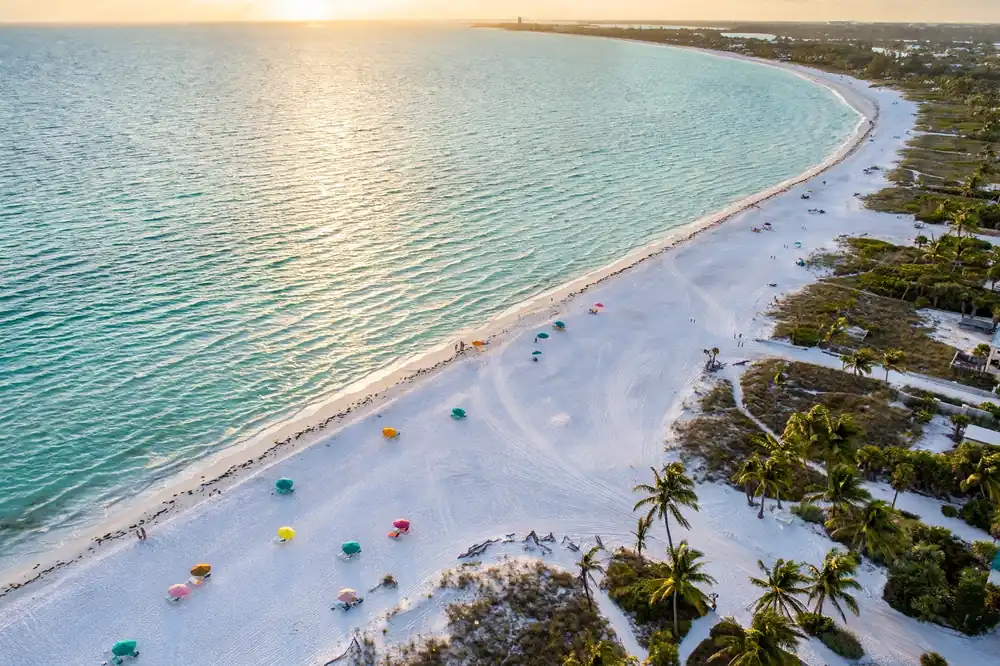
Quick Info
Best for: Families, beach lovers, theme-park fans, wildlife watchers and anyone who wants sun, sea and space rockets in one trip
Best time: December to April for dry, sunny weather; June to September for the lowest prices and the glowing water of bioluminescence season
How long: 3 days covers one region well; 7 to 10 days for the whole state, because Florida is 500 miles long
Budget: Roughly $180 to $300 per person per day for a mid-range trip, including a hotel, a rental car, one paid attraction and meals; a day of free beaches, free museums and free sunsets costs almost nothing
Don’t miss: An Orlando theme park, an Everglades airboat ride, the Castillo in St. Augustine, swimming with manatees in Crystal River and a slice of Key lime pie in Key West
Florida is the American state that has everything in one place: the biggest theme parks on Earth, the oldest city in the country, a river of grass full of alligators, coral reefs, white-sand beaches, natural springs you can swim in all year and a spaceport where rockets still lift off. It stretches about 500 miles from the Panhandle to Key West, so no single day covers it — this guide gives you the 20 best things to do in Florida in a sensible order, a ready-made 3-day itinerary, honest advice on when to go, where to stay and how to get around, and the three foods you have to try before you leave — plus the free sights that cost nothing at all. Prices and hours change, so every price in this guide is the 2026 price as published by the attraction itself — always check the official website before you visit.
One thing to know before you go: Florida in 2026 is not the state of the old guidebooks, and the old guides are wrong in expensive ways. Universal’s Epic Universe, the first new theme park in Orlando in more than 25 years, opened in May 2025, and the ticket rules changed again in 2026 — a one-day ticket still does not get you in, and most guides still describe the old system. Everglades National Park now charges visitors from outside the United States an extra $100 per person on top of the $35 vehicle fee, a change that took effect on January 1, 2026. And Sanibel Island, devastated by Hurricane Ian in 2022, is properly back: the causeway rebuild finished in mid-2025 and the last beach park reopened in April 2025, so the island the old guides call ruined is welcoming visitors again. This guide tells you which traps to watch for, so you can plan with facts instead of outdated blog posts. Read about Florida on Wikipedia.
Florida at a glance
| Question | Short answer |
|---|---|
| Where is Florida? | The south-easternmost state of the United States, a peninsula between the Atlantic Ocean and the Gulf of Mexico, about 500 miles from Pensacola to Key West |
| What is it best for? | Theme parks, beaches, wildlife, springs, history and space — the most varied single-state trip in America |
| How long should I stay? | 3 days for one region; 7 to 10 days for the whole state |
| How much does it cost? | Roughly $180 to $300 per person per day mid-range; a day of free beaches, free museums and free sunsets costs almost nothing |
| What is the one thing not to miss? | An Orlando theme park, then the Everglades and St. Augustine |
| When is the best time to go? | December to April for dry, sunny weather; June to September for low prices and bioluminescence |
| Is it good for families? | Yes — it is the most family-friendly state in America, with theme parks, beaches, springs and free attractions everywhere |
| Do I need a car? | Yes — Florida is 500 miles long, the regions are hours apart and there is no statewide train except Brightline between Miami and Orlando |
The 20 best things to do in Florida
These are the 20 best things to do in Florida, ranked the way a first-time visitor should actually do them: the theme parks first, then the wildlife and the history, then the beaches and the springs, then the Panhandle. Orlando, Miami and Key West each get one stop here because they already have full guides of their own on this site — the links are in each section — and the other 17 stops cover the rest of the state. Every price below is the 2026 price as published by the attraction itself, and every trap — the theme park that changed its ticket rules, the national park surcharge, the manatee rules, the springs that now need reservations — is called out where it matters.
1. Orlando’s theme parks — Walt Disney World, Universal and Epic Universe
Orlando is the theme park capital of the world, and it is the single biggest reason most people visit Florida. Walt Disney World covers about 25,000 acres with four theme parks — Magic Kingdom, EPCOT, Hollywood Studios and Animal Kingdom — plus two water parks and Disney Springs, and a one-day ticket runs from about $119, varying by date and park, up to about $189 on the busiest days. Universal Orlando has Universal Studios Florida and Islands of Adventure, with one-day tickets from about $125, and the Wizarding World of Harry Potter spread across both parks. The practical facts for 2026 start with the new park: Universal’s Epic Universe, the first new theme park in Orlando in more than 25 years, opened on May 22, 2025, with five worlds — Celestial Park, Super Nintendo World, How to Train Your Dragon: Isle of Berk, Dark Universe and the Wizarding World of Harry Potter: Ministry of Magic — and a one-day ticket starts at about $135 to $140, varying by date. Read about Walt Disney World on Wikipedia.
Two things changed in 2026 that most guides still get wrong. First, the ticket rules: in 2025 a multi-day Universal ticket allowed only one day at Epic Universe, but from 2026, tickets of three days or longer now include Epic Universe on any or all days, so the three-day Park-to-Park ticket is the sensible buy if you want more than a day there. Second, Volcano Bay, Universal’s water park, is closed for maintenance from October 26, 2026, to March 31, 2027, so do not plan a winter water-park day around it. A one-day ticket for the older parks still does not include Epic Universe at all, which is the trap that catches first-timers: read the ticket name before you buy. Allow at least two full days for Disney and one full day for Universal, and a separate day for Epic Universe. Our Orlando guide covers Disney, Universal and the rest of the city in detail.
2. Miami and Miami Beach — South Beach, Little Havana and the Art Deco District
Miami is Florida’s most international city, and it is the one place in the state where the trip feels like another country. South Beach has the largest collection of Art Deco buildings in the world — more than 800 pastel hotels and lifeguard stands along Ocean Drive — and the beach itself is free, wide and warm all year. Little Havana, along Calle Ocho, is the heart of Cuban Miami: domino games in Máximo Gómez Park, Cuban coffee windows, cigar rollers and the smell of roast pork from every doorway. Wynwood Walls, the open-air street art museum, and Vizcaya Museum and Gardens, the 1916 waterfront villa with its formal gardens, are the two cultural stops that balance the beach. Read about Miami on Wikipedia.
The practical facts for 2026: the beach costs nothing, Wynwood Walls runs from about $10 to $12, and Vizcaya is about $25 for adults. South Beach is at its best in the morning, before the Ocean Drive crowds build, and Little Havana is best in the late afternoon, when the domino tables fill and the coffee windows do their briskest trade. Miami is also the gateway to the Everglades and the Keys, so most visitors use it as the first or last stop of a Florida trip rather than the whole trip. Allow two days: one for South Beach and the Art Deco District, one for Little Havana, Wynwood and Vizcaya. Our Miami guide covers the city, the beaches and the food in detail.
3. Key West — the Southernmost Point, Duval Street and the Dry Tortugas
Key West is the end of the road — literally, since US-1 ends here, 160 miles down the Overseas Highway from Miami — and it is the most laid-back town in Florida. The Southernmost Point buoy, the striped concrete marker at the corner of South and Whitehead Streets, is the most photographed spot in the Keys. Duval Street is the town’s main drag, with bars, galleries and the sunset crowd, and Mallory Square, at the end of Duval, hosts the nightly Sunset Celebration, with street performers and food stalls as the sun drops into the Gulf. The Dry Tortugas, a day trip by ferry or seaplane to a Civil War fort on a coral island 70 miles west, is the best excursion in the Keys. Read about Key West on Wikipedia.
The practical facts for 2026: the buoy and the sunset are free, the Dry Tortugas ferry departs at 8 a.m. daily with day trips from about $260 per adult, and you should book three to six months ahead. One freshness note from our Key West guide: the Duval Loop bus has been suspended since January 2, 2026, replaced by the $2 Key West Rides shuttle, and the Southernmost Point buoy itself is boxed up for restoration, with a replica standing at 1400 Duval Street — the old guides that show the buoy in place are out of date. Key West is a two-day stop at most, and it works best as the finale of a Keys drive rather than a standalone trip. Our Key West guide covers the island, the ferry and the food in detail.
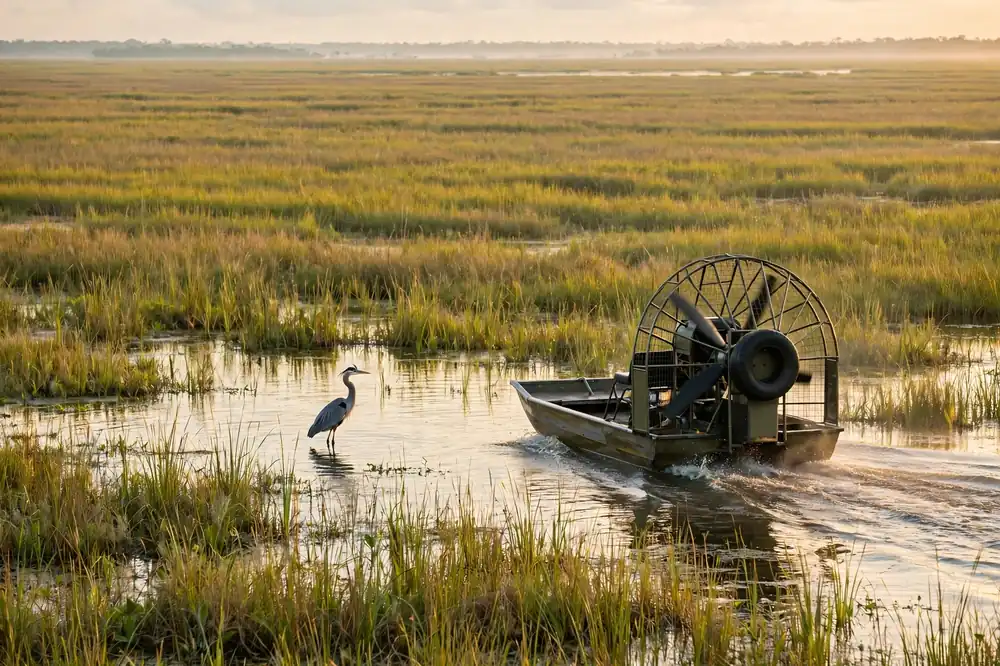
4. Everglades National Park — airboats, alligators and the river of grass
The Everglades is the wildest place in Florida, and it is the one most visitors underestimate. The park covers about 1.5 million acres of sawgrass marsh, mangrove forest and hardwood hammocks — a slow-moving river of grass, 60 miles wide and only inches deep — and it is the largest subtropical wilderness in the United States, home to alligators, crocodiles, manatees, roseate spoonbills and the Florida panther. Shark Valley, the entrance on the Tamiami Trail about 45 minutes west of Miami, is the easiest half-day: a 15-mile paved loop you can walk, cycle or ride on the two-hour narrated tram tour, ending at a 65-foot observation tower with a view across the whole expanse. The Anhinga Trail, near the main Homestead entrance, is a short boardwalk where alligators sunbathe a few feet from your shoes. Read about Everglades National Park on Wikipedia.
The practical facts for 2026: entry is $35 per vehicle for seven days, valid at all entrances, and the park is cashless. The Shark Valley tram costs $36 for adults, $19 for children aged 3 to 12 and $27 for seniors, with prices rising on October 1, 2026, and the park fee is charged separately. Airboat rides are not run inside the park — the authorised operators sit on the Tamiami Trail outside it, with tours from about $25 to $45 for 30 to 60 minutes. Two traps to know: the three entrances do not connect to each other, so pick one and drive to it, and from January 1, 2026, visitors from outside the United States pay an extra $100 per person aged 16 and over on top of the vehicle fee, unless they hold an annual pass — most guides still quote the old $35 alone. Go in the dry season, December to April, when the mosquitoes are bearable and the wildlife concentrates around the remaining water; in the wet season the mosquitoes are, as one local guide puts it, experience-ruining.
5. Kennedy Space Center Visitor Complex — rockets, Atlantis and the launch pads
Kennedy Space Center is the only place in Florida where you can stand under a Saturn V rocket, touch a Moon rock and watch a launch pad that is still in use. The Visitor Complex on Merritt Island, about 45 minutes east of Orlando, holds the Space Shuttle Atlantis on display, the Apollo/Saturn V Center reached by the included bus tour, the Rocket Garden, the Heroes and Legends hall and the astronaut encounter shows, and on launch days you can sometimes watch a rocket lift off from the complex grounds. Read about Kennedy Space Center on Wikipedia.
The practical facts for 2026: one-day admission is $77 for adults aged 12 and over and $67 for children aged 3 to 11, with children under 3 free, and a two-day ticket is $91 for adults and $81 for children, valid for two visits within six months — the $14 upgrade is the best value in Florida if you will come back. An “Adults at Kids Rate” promotion runs from March 9 to December 18, 2026, letting adults in at the $67 child rate. Parking is charged separately, at about $15 per car. One freshness note: Artemis II, the crewed mission around the Moon, flew from Launch Pad 39B here in April 2026, so the Apollo-era pads are working pads again, not museum pieces. The complex can close at short notice on launch days, and tickets bought for a launch day are not automatically valid that day, so check the official site before you drive. Allow a full day, and take the bus tour first — it is included, and the last bus leaves two and a half hours before closing.
6. St. Augustine — the Castillo and America’s oldest city
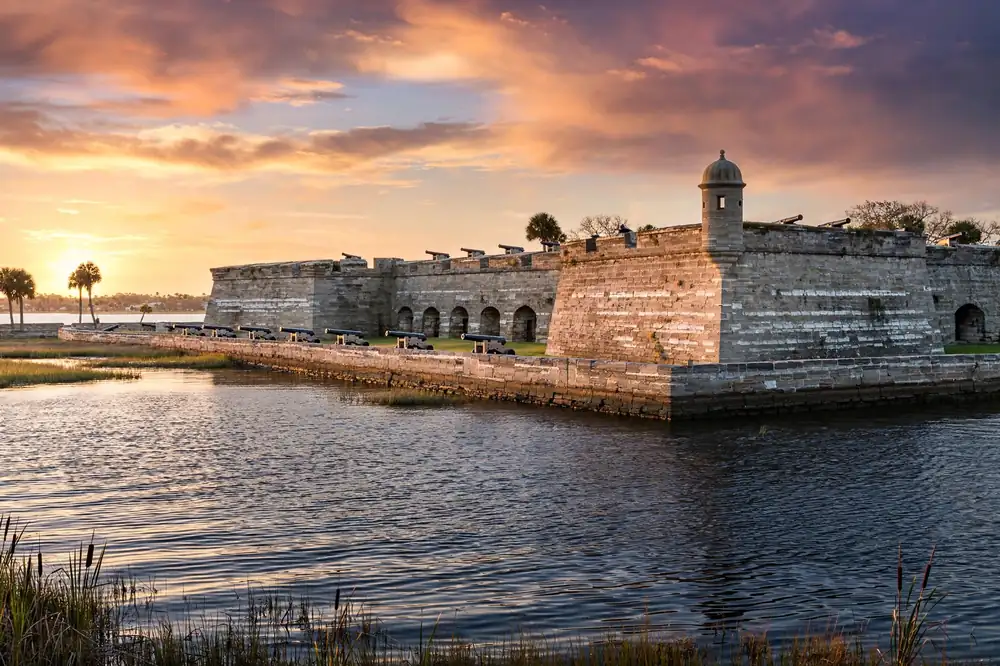
St. Augustine is the oldest continuously inhabited European-established settlement in the continental United States, founded by the Spanish in 1565 — 55 years before the Pilgrims landed at Plymouth — and it is the most walkable historic city in Florida. The Castillo de San Marcos, the coquina stone fort on the bayfront, is the oldest masonry fort in the country, built between 1672 and 1695, and its walls still show the cannonball dents from two centuries of sieges. The historic district around St. George Street is a grid of narrow lanes, Spanish colonial houses, the Flagler College campus in the old Ponce de León Hotel, and the St. Augustine Lighthouse, a 165-foot tower with 219 steps and the best view in town. Read about St. Augustine, Florida on Wikipedia.
The practical facts for 2026: the Castillo costs $15 for adults aged 16 and over, free for children 15 and under, with the ticket valid for seven consecutive days, and the park is cashless — bring a card. The fort is open daily from 9 a.m. to 5:15 p.m., closed on Thanksgiving and Christmas Day. The lighthouse is $16.95 for adults. One trap the old guides miss: the ranger-led cannon firings were cut back in 2026 because of staffing, and they now run only on specific dates rather than every weekend, so check the schedule before you plan your morning around one. The grounds around the fort are free to walk from 5:30 a.m. to midnight, so come at sunrise for the photos and pay the $15 later for the interior. Nights of Lights, the town’s Christmas light display, runs from mid-November to the end of January and turns the whole historic district white. Allow a full day, and stay overnight if you can — the town is best after the day-trippers leave.
7. Crystal River — swim with the manatees
Crystal River is the only place in the United States where you can legally get in the water with wild manatees, and it is the most magical wildlife experience in Florida. Kings Bay, fed by dozens of warm springs that stay about 72 degrees all year, draws hundreds of manatees every winter when the Gulf cools, and the town calls itself the Manatee Capital of the World. Guided swim tours take you out in small groups with a wetsuit, mask and snorkel, and the rule is passive observation: you float quietly, and the manatees decide how close to come. Three Sisters Springs, the prettiest of the springs, is the centrepiece — and also the place where the rules matter most. Read about the Florida manatee on Wikipedia.
The practical facts for 2026: manatee season runs from mid-November through March, and guided swim tours start at about $71 to $85 per person with gear included. From November 15 to March 31 the marked manatee sanctuaries, including Three Sisters Springs, are closed to watercraft, and in-water access to the springs themselves can close entirely on the coldest days, when the manatees crowd in — the boardwalk, reached by trolley from the Three Sisters Springs Center, stays open daily from 8:30 a.m. to 3:30 p.m., with land admission at $12.50 per adult. The rules are federal law, not suggestions: no chasing, touching, feeding or separating a mother and calf, with fines of up to $500 under state law and up to $50,000 under federal law. Book with a permitted operator only, and go on a weekday morning, when the water is calmest and the crowds are thinnest. One related change: Blue Spring State Park, the other great manatee viewing spot near Orlando, has required a day-use reservation since July 2026, so do not just turn up.
8. Siesta Key Beach, Sarasota — the whitest sand in America
Siesta Key Beach is the best beach in Florida, and the sand is the reason. The sand here is 99 per cent pure quartz, washed down from the Appalachian Mountains over thousands of years, and it is so fine it squeaks underfoot and stays cool even in the July sun — you can walk barefoot across it at noon without hopping. The beach is wide, flat and shallow, with calm Gulf water that is warm enough to swim in from April to November, and it has been voted the best beach in the United States more than once. The village behind it, Siesta Key Village, is a low-key strip of ice cream shops, beach bars and seafood shacks, and the drum circle that gathers on the beach every Sunday an hour before sunset is the island’s weekly party. Read about Siesta Key, Florida on Wikipedia.
The practical facts for 2026: the beach is free, with free parking in the public lot — though the lot fills by late morning on weekends, so arrive before 10 a.m. or come on a weekday. There are lifeguards, restrooms, a playground and a concession stand, and the beach is patrolled and family-friendly. Siesta Key is about an hour south of Tampa and 20 minutes from downtown Sarasota, which makes it an easy day trip from the Gulf Coast or a good base for a beach week. Allow a full day, and stay for the sunset — the Gulf sunsets here are the best in Florida, and the Sunday drum circle is worth timing your visit around.
9. John Pennekamp Coral Reef State Park, Key Largo — snorkel the living reef
John Pennekamp Coral Reef State Park, in Key Largo, is America’s first undersea park, established in 1963, and it protects the only living coral barrier reef in the continental United States. The reef sits about six miles offshore, and the park’s glass-bottom boats and snorkel tours are the easiest way for a non-diver to see it: parrotfish, angelfish, sea turtles and the famous Christ of the Abyss, a nine-foot bronze statue standing in 25 feet of water since 1965. The park also has mangrove trails, a small aquarium and kayaks for the shallow lagoon, and the water here is the clearest in the Keys. Read about John Pennekamp Coral Reef State Park on Wikipedia.
The practical facts for 2026: state park entry is about $8 per vehicle, and snorkel tours run from about $35 to $65 per person, with the glass-bottom boat a similar price. Book the snorkel tour in advance in summer and on weekends, because the boats sell out, and go in the morning, when the water is calmest and the visibility is best. The reef is a living thing and it is under stress — do not touch the coral, wear reef-safe sunscreen, and listen to the guides. Key Largo is the first town in the Keys, about an hour south of Miami, so this is the natural first stop on a Keys drive and the best snorkelling you will get without going all the way to Key West. Allow half a day for the boat and the park, and a full day if you add a dive.
10. Busch Gardens Tampa Bay — coasters and a safari in one park
Busch Gardens Tampa Bay is Florida’s best thrill park after Orlando, and it is the one the coaster fans rate highest. The park has some of the tallest and fastest coasters in the country — Iron Gwazi, the hybrid wooden-and-steel coaster with a 91-degree drop, and SheiKra, the floorless dive coaster — alongside a 65-acre Serengeti Plain where giraffes, zebras and rhinos roam free and the Serengeti Safari takes you out among them in an open truck. It is a full-day park, and it is the best reason to visit Tampa. Read about Busch Gardens Tampa Bay on Wikipedia.
The practical facts for 2026: one-day tickets run from about $85 to $120, varying by date, with discounts for buying online in advance. The park is about 90 minutes from Orlando, so it works as a day trip, though Tampa itself deserves a day — the Riverwalk, Ybor City and the Florida Aquarium are the other stops. Ride the coasters in the morning, when the queues are shortest, and save the safari and the animal exhibits for the hot afternoon, when the shade and the air-conditioned shows are the point. One honest note: this is a big, hot, spread-out park in summer, with a lot of walking and very little shade on the midway, so bring water, wear a hat and plan a midday break.
11. The Dalí Museum, St. Petersburg — the strangest building on the Gulf Coast
The Dalí Museum, on the downtown St. Petersburg waterfront, is the most surprising museum in Florida, and its building is half the attraction. The glass bubble that rises out of the concrete box — 900 triangular glass panels forming a geodesic dome the architect called the “enigma” — holds the largest collection of Salvador Dalí’s work outside Spain, including the melting clocks, the lobster telephone and the monumental canvases that need a whole wall each. The spiral staircase inside is a sculpture in itself, and the Avant-garden behind the building, with its maze and wishing tree, is the quietest spot on the waterfront. Read about the Salvador Dalí Museum on Wikipedia.
The practical facts for 2026: adult admission is about $29, with discounts for seniors, students and children, and the museum is open daily. Allow two to three hours, and take the free guided tour if one is running — the docents explain the symbolism that makes the paintings make sense, and Dalí without an explanation is just strange. St. Petersburg itself is worth a day: the downtown waterfront, the Saturday Morning Market, the Museum of Fine Arts and the Chihuly Collection are all within walking distance, and the city has become Florida’s most interesting small city in the last few years. Pair the museum with the beach at Fort De Soto or Pass-a-Grille for a full Gulf Coast day.
12. Clearwater Beach — the classic Florida beach town
Clearwater Beach is the classic Florida beach town, and it is the one the travel awards keep naming America’s best beach. The sand is wide and white, the water is shallow and warm, and Pier 60, the fishing pier at the centre of the beach, hosts a nightly sunset festival with street performers, craft stalls and live music — the best free evening on the Gulf Coast. The beach is backed by a compact strip of hotels, restaurants and ice cream shops, and the water is calm enough for small children, with lifeguards on duty. Read about Clearwater Beach on Wikipedia.
The practical facts for 2026: the beach is free, with public parking garages and lots behind the beach — arrive early on weekends, because the lots fill by mid-morning. The Jolley Trolley runs up and down the beach and into downtown Clearwater for a few dollars, and it is the easiest way to get around without moving the car. Clearwater Marine Aquarium, home of the rescued dolphins, is the family stop behind the beach, and the sunset cruise boats leave from the marina every evening. Allow a full day, and stay for the Pier 60 sunset — it is the ritual that makes Clearwater feel like a holiday rather than just a beach. One honest warning: Clearwater is the busiest beach in the Tampa Bay area on a summer Saturday, and the traffic on the causeway can add half an hour to the drive, so come on a weekday if you can.
13. Sanibel Island — shelling and the great comeback
Sanibel Island is Florida’s shelling capital, and it is also the state’s best comeback story. The island’s beaches are covered in shells — the curve of the island catches them like a net, and the “Sanibel stoop”, the bent-over walk of the shell collector, is a local institution. The J.N. “Ding” Darling National Wildlife Refuge, which covers more than half the island, is the best birdwatching in Florida, with roseate spoonbills, white pelicans and herons along the Wildlife Drive. The Bailey-Matthews National Shell Museum, the only museum in America devoted entirely to shells, is the rainy-day stop. Read about Sanibel, Florida on Wikipedia.
The practical facts for 2026: this is the section where the old guides are most wrong. Hurricane Ian devastated Sanibel in September 2022, washing away parts of the causeway and closing nearly every business, and for two years the guides called the island ruined. The comeback is real: the $328 million causeway rebuild was completed in mid-2025, the last of the major beach parks reopened on April 25, 2025, and about 80 per cent of the island’s resorts are open again in some form, with the Lighthouse Café, Doc Ford’s and the Sundial Beach Resort all welcoming visitors. Some condos and amenities are still being finished, and construction is visible, so the island is not quite the place it was in 2019 — but the shells, the refuge and the beaches are all back. Go for the shelling at low tide, bring a mesh bag, and check the tide tables before you come. Allow a full day, and rent a bike — the island’s 25 miles of shared-use paths are the best way to see it.
14. Weeki Wachee Springs State Park — the mermaids
Weeki Wachee Springs is the strangest and most charming attraction in Florida, and it has been running since 1947. The mermaid show, performed in a 400-seat theatre built into the side of a natural spring, has women in fishtails swimming, eating, drinking and dancing underwater in front of a glass wall, breathing through air hoses hidden in the scenery — it is pure 1950s Florida, and it is still delightful. The spring itself pumps out 117 million gallons of crystal-clear 72-degree water a day, and the park includes Buccaneer Bay, a small water park, and kayaks down the Weeki Wachee River, one of the prettiest paddles in the state. Read about Weeki Wachee Springs on Wikipedia.
The practical facts for 2026: state park entry is $13 for adults and $8 for children aged 6 to 12, and the mermaid shows are included. The park is about an hour north of Tampa, and it fills up on summer weekends — arrive at opening, because the park closes the gates when it reaches capacity, and the mermaid theatre fills early. The river kayak trip, from the park to Rogers Park downstream, is the best part of the visit after the show, and the water is so clear you can watch turtles and manatees from the boat. One honest note: this is a small, old-fashioned park, not a theme park, and the water park is modest — come for the mermaids and the spring, not for the slides.
15. Fort Lauderdale — the Venice of America
Fort Lauderdale is Florida’s most underrated city, and it is the one most visitors drive past on the way to Miami. The city calls itself the Venice of America, with more than 300 miles of navigable waterways, and the best way to see it is from the water: the Water Taxi runs a hop-on, hop-off route along the Intracoastal Waterway and the New River, past the mansions, the yachts and the downtown skyline. Las Olas Boulevard, the city’s main street, is a mile of galleries, boutiques and restaurants, and the beach itself is wide, free and far less crowded than South Beach. Hugh Taylor Birch State Park, a pocket of old Florida hammock between the beach and the Intracoastal, is the quietest green space in the city. Read about Fort Lauderdale, Florida on Wikipedia.
The practical facts for 2026: the beach is free, the Water Taxi day pass is the best value for a first visit, and the city is 30 minutes north of Miami and 45 minutes from Palm Beach, so it works as a base for the whole of South Florida. Fort Lauderdale is also the cruise capital of America — Port Everglades sends out more cruise ships than any other port — so the hotels and restaurants are built for travellers, and the prices are lower than Miami’s. Allow a full day: the Water Taxi in the morning, Las Olas for lunch, the beach in the afternoon and the Riverwalk at sunset. One honest note: the city is spread out and the waterways make walking impractical, so rent a car or use the Water Taxi and the free Sun Trolley rather than trying to walk between districts.
16. Destin and the Emerald Coast — the whitest sand in America
Destin, on Florida’s Panhandle, has the whitest sand in America — pure quartz, washed down from the Appalachians, so fine it feels like powdered sugar — and the water is the clearest emerald green in the Gulf, which is how the coast got its name. The town calls itself the World’s Luckiest Fishing Village, and the harbour is full of charter boats that go out for snapper, grouper and amberjack, while Crab Island, the sandbar at the mouth of the harbour, fills with anchored boats, floating food vendors and families on summer weekends. Henderson Beach State Park, at the eastern end of town, is the quietest stretch of sand, with boardwalks over the dunes and 30-foot white dunes behind the beach. Read about Destin, Florida on Wikipedia.
The practical facts for 2026: the beaches are free, with public access points and paid parking lots along the coast, and the state park charges a small vehicle fee. Destin is a five-hour drive from Orlando and about an hour east of Pensacola, so it is a Panhandle trip, not a day trip from the theme parks — pair it with Pensacola and the 30A coast for a Gulf week. The best time is May and October, when the water is warm and the summer crowds are gone, and the fishing is best from April to October. One honest warning: Destin in July is the most crowded beach town in Florida, with traffic on US-98 that can turn a ten-minute drive into an hour, so book a condo near the beach and walk.
17. Pensacola — the National Naval Aviation Museum and the Gulf Islands
Pensacola is the oldest city in Florida’s Panhandle, and it holds the best free museum in the state. The National Naval Aviation Museum, on Naval Air Station Pensacola, displays more than 150 restored aircraft — from the first naval aircraft to the Blue Angels’ jets — in a hangar so big you can walk under a Blue Angels F/A-18, and admission is completely free. The Blue Angels, the Navy’s flight demonstration team, are based here, and their practice flights on Tuesday and Wednesday mornings from March to November are the best free show in Florida. Gulf Islands National Seashore, the barrier islands that protect the coast, has the white-sand beaches of Pensacola Beach and the Civil War brickwork of Fort Pickens, at the western tip of Santa Rosa Island. Read about Pensacola, Florida on Wikipedia.
The practical facts for 2026: the museum is free and open daily, but it sits on an active military base, so bring photo ID and check the base access rules before you go — access has been restricted since a 2019 security incident, and civilians enter through the museum gate with ID. Fort Pickens charges about $25 per vehicle for seven days. Pensacola Beach, across the bridge from the city, is free, with a fishing pier, a boardwalk and the calmest water on the Panhandle. Allow a full day for the museum and the fort, and a second day for the beach. One honest note: the Blue Angels practice schedule changes with the team’s travel, so check it the week you visit rather than trusting a guide written months ago.
18. Florida’s natural springs — Ichetucknee, Ginnie Springs, Devil’s Den and Blue Spring
Florida has more than 1,000 natural springs, and they are the state’s best-kept secret. The water comes out of the ground at a constant 72 degrees Fahrenheit all year, so clear you can see 100 feet down, and the springs are the reason Florida feels like a different place once you leave the coast. Ichetucknee Springs, near Gainesville, is the classic: a six-mile tubing run down a spring-fed river through old Florida hammock, with the water so clear the fish look like they are flying. Ginnie Springs, on the Santa Fe River, is the prettiest, with seven springs on one property and a famous cave dive. Devil’s Den, near Williston, is the strangest — a collapsed cave with a pool at the bottom, lit by a shaft of sunlight through the roof. Blue Spring, near Orlando, is the manatee refuge, where hundreds of manatees gather in winter. Read about Ichetucknee Springs State Park on Wikipedia.
The practical facts for 2026: state park entry is about $6 per vehicle, and tubing at Ichetucknee runs in summer only, with the river closed to tubing when the water is low. Ginnie Springs charges a day-use fee and fills up on summer weekends, so arrive at opening. Devil’s Den requires a reservation and sells out — book ahead, and bring a wetsuit, because 72 degrees feels cold after twenty minutes. Blue Spring has required a day-use reservation since July 2026, a new rule the old guides do not mention, so do not just turn up in manatee season. The springs are the best antidote to a theme park week: quiet, cheap and impossibly clear, and they are the Florida the locals actually go to.
19. Bioluminescent kayaking on the Space Coast — the glowing water
Bioluminescence is the most magical thing you can do in Florida, and most visitors have never heard of it. On summer nights, the water of the Indian River Lagoon and Mosquito Lagoon, near Titusville and Cocoa Beach on the Space Coast, glows blue-green with every paddle stroke — the light comes from dinoflagellates, tiny plankton that flash when disturbed, so your kayak leaves a trail of light and the fish darting under you light up like comets. It is one of the only places in the continental United States where you can paddle through naturally glowing water, and it happens on dark nights from roughly June to September, peaking in July and August. Read about bioluminescence on Wikipedia.
The practical facts for 2026: guided kayak tours run from about $65 per person, with most operators based in Titusville and Cocoa Beach, about an hour east of Orlando. Book on the darkest nights — the week around the new moon — because a full moon washes the glow out, and check the operator’s forecast before you book, since the glow varies with the plankton bloom. The tours run in summer only, and they sell out on weekends, so book a week ahead. Bring a change of clothes and leave the phone in a dry bag — the glow does not photograph well, and the memory is better than the picture. One honest note: the glow is not guaranteed every night, and the best operators will tell you honestly whether it is worth going that week.
20. Islamorada and Bahia Honda — the Keys without the crowds
Islamorada, the Village of Islands in the middle Keys, is the Florida Keys without the Key West crowds, and it is the best place in the state to do nothing. The village calls itself the Sportfishing Capital of the World, and the charter boats go out for sailfish, tarpon and bonefish, but the real pleasure is slower: a sunset at a tiki bar, a slice of Key lime pie, a swim at Anne’s Beach, and the view from the old railroad bridge at Bahia Honda State Park, where the water is two shades of blue at once. Bahia Honda, at mile marker 37, has the best beach in the Keys — a rarity in itself, since the Keys are mostly rock and mangrove — and the old Flagler railroad bridge, abandoned after the 1935 hurricane, makes the best photo in the islands. Read about Islamorada, Florida on Wikipedia.
The practical facts for 2026: Bahia Honda State Park entry is about $8 per vehicle, and the park fills up on weekends, so arrive before 10 a.m. Islamorada is about 90 minutes south of Miami and an hour north of Key West, so it is the natural overnight stop on the Overseas Highway — and a better base than Key West for the fishing and the snorkelling, with Looe Key reef a short boat ride away. Read about the Florida Keys on Wikipedia. The Overseas Highway itself is the attraction: 113 miles of bridges over open water, with the Seven Mile Bridge as the centrepiece, and the drive is the best road trip in Florida. Read about the Overseas Highway on Wikipedia. Allow a full day for Islamorada and Bahia Honda, and drive the highway slowly — the pull-offs are the point.
Florida in 3 days — a ready-made itinerary
Three days is the right amount of time for one region of Florida, and the honest truth is that the whole state needs seven to ten days. The itinerary below is built around Orlando, because it is the easiest base, with the theme parks, the Space Coast and St. Augustine all within a day trip. If you want the Gulf Coast or the Keys instead, swap Day 2 and Day 3 for Sarasota and Sanibel, or for Islamorada and Key West — the structure is the same, and the driving times are in the getting-around section below.
| Day | Theme | Highlights | Where you sleep |
|---|---|---|---|
| Day 1 | Orlando theme parks | Walt Disney World or Universal, Disney Springs in the evening | Orlando, near International Drive |
| Day 2 | Space Coast | Kennedy Space Center all day, Cocoa Beach and bioluminescence at night | Cocoa Beach or Titusville |
| Day 3 | Old Florida | St. Augustine, the Castillo and St. George Street | St. Augustine historic district |
Day 1 — Orlando theme parks
Start at the theme parks. Pick one park and do it properly rather than trying to hop between two: Magic Kingdom for the classic Disney day, EPCOT for the food and the World Showcase, or Universal’s Islands of Adventure for the coasters and Harry Potter. Arrive at opening, ride the big attractions first, and use the parks’ paid line-skipping systems for the two or three rides that matter most to you — the queues for the headliners run two hours by midday. Eat lunch in the park, and in the evening go to Disney Springs, which is free to enter, for dinner and the shops. If you are here for Epic Universe, give it its own day instead — it is a full-day park, and it deserves one.
Day 2 — Space Coast
Spend the day at Kennedy Space Center, which opens at 9 a.m. Take the included bus tour to the Apollo/Saturn V Center first, then the Atlantis exhibit and the Rocket Garden, and allow a full day — the complex is bigger than it looks. In the late afternoon, drive to Cocoa Beach for the pier and the surf, and if it is summer and the moon is dark, book a bioluminescence kayak tour in Titusville for the evening, when the lagoon glows with every paddle stroke. Sleep on the Space Coast, where the hotels are half the price of Orlando’s.
Day 3 — Old Florida
Drive north to St. Augustine, about two hours from Orlando. Start at the Castillo de San Marcos, which opens at 9 a.m., and walk the fort before the crowds build, then spend the afternoon on St. George Street, in the shops and the colonial houses, with a stop at Flagler College and the lighthouse if you have the energy. Eat dinner in the historic district, where the restaurants are the best in the city, and stay overnight if you can — the town after dark, with the lights on the bayfront, is the best part of the trip.
Best time to visit Florida
The best time to visit Florida is December to April, when the days are warm and dry, the humidity is low and the manatees are in the springs — which is also why it is the most expensive season, with the highest hotel prices and the biggest crowds. May is the sweet spot: warm water, fewer crowds and lower prices before the summer storms. Summer, June to August, is hot and humid, with afternoon thunderstorms almost every day and the start of hurricane season on June 1, but it is also the cheapest season, the best time for the springs and the only season for bioluminescence. September is the quietest and the riskiest month, at the peak of hurricane season, and October brings the first cool fronts and the best fishing. November is the second sweet spot, with the Christmas season starting and the crowds still thin.
| Season | Months | Weather | What’s on |
|---|---|---|---|
| Winter | December to February | Highs 70 to 78 degrees, dry and sunny | Manatee season, best beach weather, highest prices |
| Spring | March to May | Highs 78 to 86 degrees, warming up | Spring break crowds in March, best value in May |
| Summer | June to August | Highs 88 to 92 degrees, hot, humid, afternoon storms | Springs, bioluminescence, cheapest hotels, hurricane season |
| Autumn | September to November | Highs 76 to 88 degrees, cooling down | Hurricane peak in September, Christmas season from mid-November |
Where to stay in Florida
Orlando is the best base for a first visit: you are within an hour of the theme parks, the Space Coast and the springs, and the hotels range from budget motels on International Drive to the Disney and Universal resorts themselves, which include early park entry. Miami Beach is the best base for the city and the culture, with the Art Deco hotels on Ocean Drive and the apartments of South Beach, though the prices are the highest in the state. St. Augustine is the best base for history, with the bed and breakfasts of the historic district. The Gulf Coast — Sarasota, Clearwater and St. Petersburg — is the best base for the beaches, with condos and beachfront hotels. The Keys are the best base for the water, with Islamorada for the fishing and Key West for the nightlife. The rule for Florida is simple: stay where you will spend your days, because the drives between the regions are two to five hours each way.
| Area | Best for | Price range |
|---|---|---|
| Orlando and International Drive | First-timers, theme parks, families | $100 to $250 a night |
| Miami Beach and South Beach | City, culture, nightlife | $180 to $400 a night |
| St. Augustine historic district | History, walkable old town | $120 to $250 a night |
| Sarasota and Clearwater | Beaches, Gulf Coast | $130 to $300 a night |
| Islamorada and the Keys | Fishing, snorkelling, island time | $150 to $350 a night |
| Destin and Pensacola | Panhandle beaches, families | $110 to $250 a night |
Getting around Florida
Florida is a driving state, and a rental car is not optional — it is the trip. The state is 500 miles long, the regions are two to five hours apart, and there is no statewide train. The main roads are I-95 down the Atlantic coast, I-75 down the Gulf Coast and across the Everglades on Alligator Alley, and Florida’s Turnpike from Orlando to Miami, which is tolled and cashless, so use a rental car with a toll transponder or the Toll-by-Plate system. The Overseas Highway, US-1 from Miami to Key West, is 113 miles of bridges over open water and the best road trip in the state. Read about Florida on Wikipedia.
The one exception is Brightline, the high-speed train that runs between Miami and Orlando, with stops in Fort Lauderdale, West Palm Beach and Cocoa, and fares from about $79 one way — it is the best way to get between South Florida and Orlando without driving, and the stations are in the city centres. The main airports are Orlando (MCO), Miami (MIA), Fort Lauderdale (FLL), Tampa (TPA), Jacksonville (JAX), Southwest Florida (RSW) and Pensacola (PNS), and the cheapest flights are usually into Orlando or Fort Lauderdale. Rental cars run from about $45 to $95 a day depending on the season, and you should book early for the winter holidays. Once you are in a city, the free trolleys and the Water Taxi in Fort Lauderdale cover the downtowns, but for everything else, drive — and allow extra time in summer, when the afternoon storms slow the highways to a crawl.
Florida food you have to try
Florida’s food is not fancy, and that is the point. The state’s best meals are a pressed sandwich from a Cuban bakery, a slice of tart pie in a Key West cafe and a plate of cold crab claws with mustard sauce on a Miami patio. Eat those three dishes, and you have eaten Florida. For everything else, the Gulf Coast’s grouper sandwiches, the Keys’ conch fritters and the Panhandle’s oysters will keep you fed — and the orange juice, squeezed from the groves around Orlando, is the state’s unofficial drink.
1. The Cuban sandwich — Tampa and Miami
The Cuban sandwich is Florida’s signature meal, and it comes in two versions that the two cities argue about. The Tampa version, from Ybor City, is the original: Cuban bread, roast pork, ham, Swiss cheese, pickles and mustard, pressed flat on a plancha, with Genoa salami added — the salami is the Tampa tell, a nod to the Italian immigrants who worked the cigar factories alongside the Cubans. The Miami version leaves the salami out and adds more pork. Both are correct, and the only wrong choice is the version made on the wrong bread. Read about the Cuban sandwich on Wikipedia.
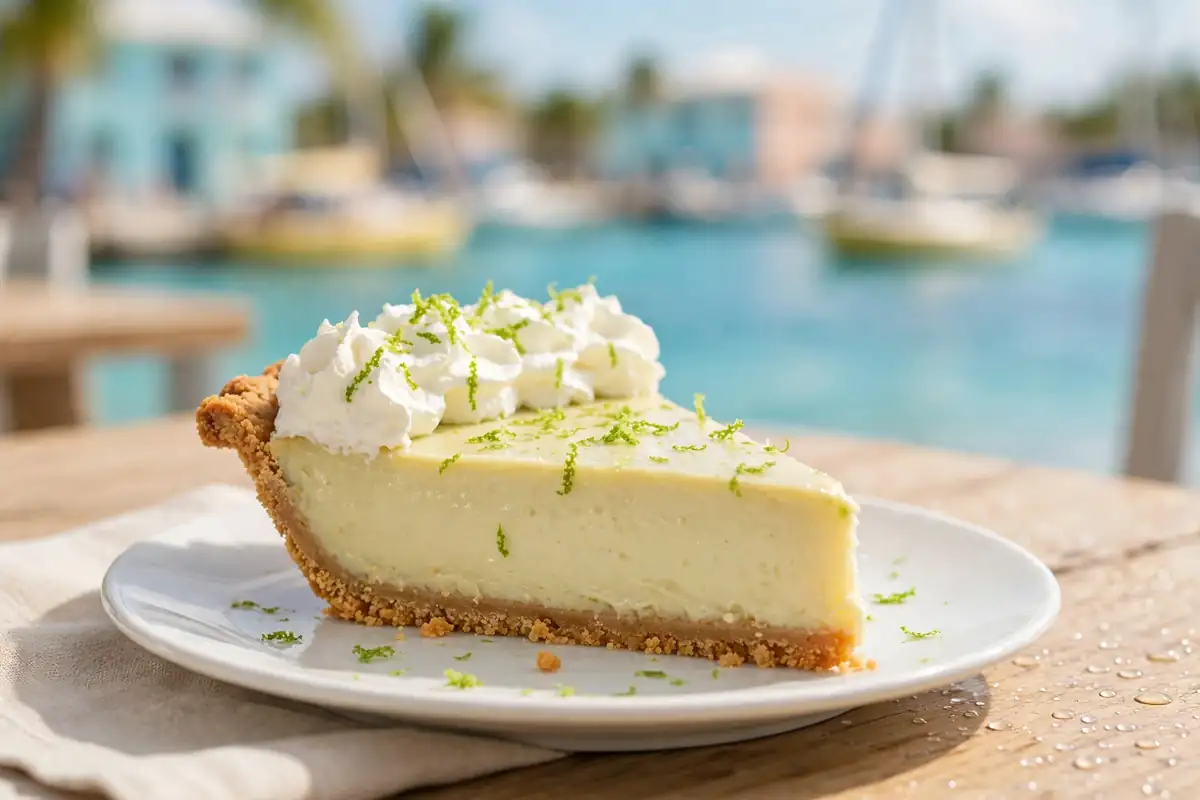
2. Key lime pie — Key West
Key lime pie is Florida’s official state pie, and it belongs to Key West. The pie is made from the small, tart Key limes that grow in the Keys, sweetened condensed milk and egg yolks, in a graham cracker crust, topped with whipped cream — never green food colouring, and never a meringue top on the real thing. The best slice is eaten in a Key West cafe, with the sea in view, and the argument over who makes the best one is the town’s favourite pastime. Read about Key lime pie on Wikipedia.
3. Stone crab claws — Miami Beach
Stone crab claws are Florida’s most luxurious food, and they are only available for half the year. The claws are harvested from October 15 to May 1, the fishermen take one claw and throw the crab back alive to regrow it, and the claws are served cold, cracked, with mustard sauce, at Joe’s Stone Crab in Miami Beach, which has been serving them since 1913. The season is the point: outside it, the claws on the menu are frozen, and the locals will tell you not to bother. Read about the Florida stone crab on Wikipedia.
Free things to do in Florida
Florida is not a cheap state, but it has a good list of free things, and you can build a whole free day out of them. The public beaches are free almost everywhere — Siesta Key, Clearwater, Cocoa Beach and Fort Lauderdale all cost nothing to walk onto, and the sunsets are free too. The National Naval Aviation Museum in Pensacola is free, with more than 150 aircraft. The grounds of the Castillo de San Marcos in St. Augustine are free to walk from 5:30 a.m. to midnight. The Sunset Celebration at Mallory Square in Key West is free, with street performers and the sun dropping into the Gulf. Disney Springs in Orlando is free to enter, with live music and window shopping. The historic streets of St. Augustine, the Art Deco District of Miami Beach and the Riverwalk in Tampa are all free to walk, and the best of them is the beach at dawn, when the sand is empty and the light is gold.
Frequently asked questions
How many days do you need in Florida?
Three days is the right amount of time for one region: the theme parks, or the Gulf Coast, or the Keys. Seven to ten days is the right amount for the whole state, with two or three days in Orlando, two on the Gulf Coast or the Space Coast, two in the Keys and a day in St. Augustine. Two weeks is not too long if you are travelling with children, because the theme parks, the beaches and the springs all take a full day each, and the state has enough to fill it. One day is enough for a single stop — the Everglades, the Castillo or a beach — but not for Florida.
What is the best time to visit Florida?
December to April is the best time to visit, for the dry, sunny weather and the manatees in the springs. October and November are probably the best single months for value: the humidity drops, the hurricane season ends and the Christmas season starts. May is the best month for the beaches, with warm water and thin crowds. Summer is the cheapest and the hottest, and it is the only season for bioluminescence, but the afternoon storms and the hurricane risk are real. September is the month to avoid, at the peak of hurricane season.
Do I need a car in Florida?
Yes. Florida is 500 miles long, the regions are two to five hours apart, and there is no statewide train except Brightline between Miami and Orlando. Fly into Orlando or Fort Lauderdale, rent a car at the airport, and use the toll transponder for Florida’s Turnpike. Budget $45 to $95 a day for a rental car, depending on the season, and book early for the winter holidays. The only trips that work without a car are a single-city stay in Miami Beach or Orlando, where the hotels, the parks and the beaches are close together.
Is Florida expensive?
Florida is a mid-priced American holiday state. A mid-range trip runs roughly $180 to $300 per person per day, including a hotel, a rental car, one paid attraction and meals, and the big tickets are the theme parks at about $119 to $189 a day, Kennedy Space Center at $77 and the Everglades at $35 per vehicle. But the free list is long — the beaches, the Naval Aviation Museum, the Castillo grounds, the sunsets and Disney Springs — and a family can have a good day for almost nothing. The best savings are the multi-day theme park tickets, the two-day Kennedy Space Center ticket for $14 more than one day, and the state parks, which charge about $6 to $8 per vehicle.
What is the number one thing to do in Florida?
Walt Disney World is the number one thing to do in Florida by visitor numbers, with more than 58 million visitors a year across the resort, and for families with children it is the answer. For everyone else, the answer depends on what you love: beach lovers pick Siesta Key or Clearwater, nature lovers pick the Everglades or the manatees, history lovers pick St. Augustine, and space lovers pick Kennedy Space Center. The honest answer is that Florida does not have one best thing — it has five, and the trip is choosing which ones are yours.
Is Florida good for kids?
Yes — Florida is the most family-friendly state in America. Walt Disney World and Universal are built for children, the beaches are shallow and warm, the springs are safe to swim in, the mermaid show at Weeki Wachee is made for small children, and the free attractions — the beaches, the Naval Aviation Museum, the sunsets — are the ones children remember longest. The only stops to think twice about are the long theme park days for very small children, who will struggle with the heat and the queues, and the Everglades in summer, when the mosquitoes are at their worst.
Further reading — Wikipedia, Reddit and Quora
For more on Florida, read Florida on Wikipedia, join the Florida community on Reddit, and read the Quora thread on fun things to do in Fort Lauderdale.
Your Florida trip, in one paragraph
Florida is the American state that has everything in one place, and seven to ten days here give you the best of it: an Orlando theme park, an Everglades airboat ride, the Castillo in St. Augustine, a swim with the manatees and a slice of Key lime pie in Key West, with white-sand beaches, natural springs and a rocket launch in between. Come in December to April for the best weather, or in May or November for the best value, stay in Orlando for the parks and the Gulf Coast for the beaches, rent a car, and eat the Cuban sandwich, the Key lime pie and the stone crab claws. Florida is the 34th guide in our series, and it sits alongside the other great American trips we have written about — Chicago, Nashville, Los Angeles, Orlando, Miami, San Diego, Denver, Savannah, Dallas, Charleston, San Francisco, Myrtle Beach, Las Vegas, San Antonio, London, Portland, Pigeon Forge, Puerto Rico, Atlanta, Phoenix, Paris, Maui, Key West, Colorado Springs, Sedona, Chattanooga, Palm Springs, St Louis, Tokyo, Japan, Kansas City, Tennessee and Branson — and if you want a state trip with a different flavour, the mountains of Tennessee and the islands of Puerto Rico are the natural next trips.

About the Author