Things to Do in Puerto Rico
20 Best Attractions, a 3-Day Itinerary, Where to Stay, and the Food You Cannot Miss
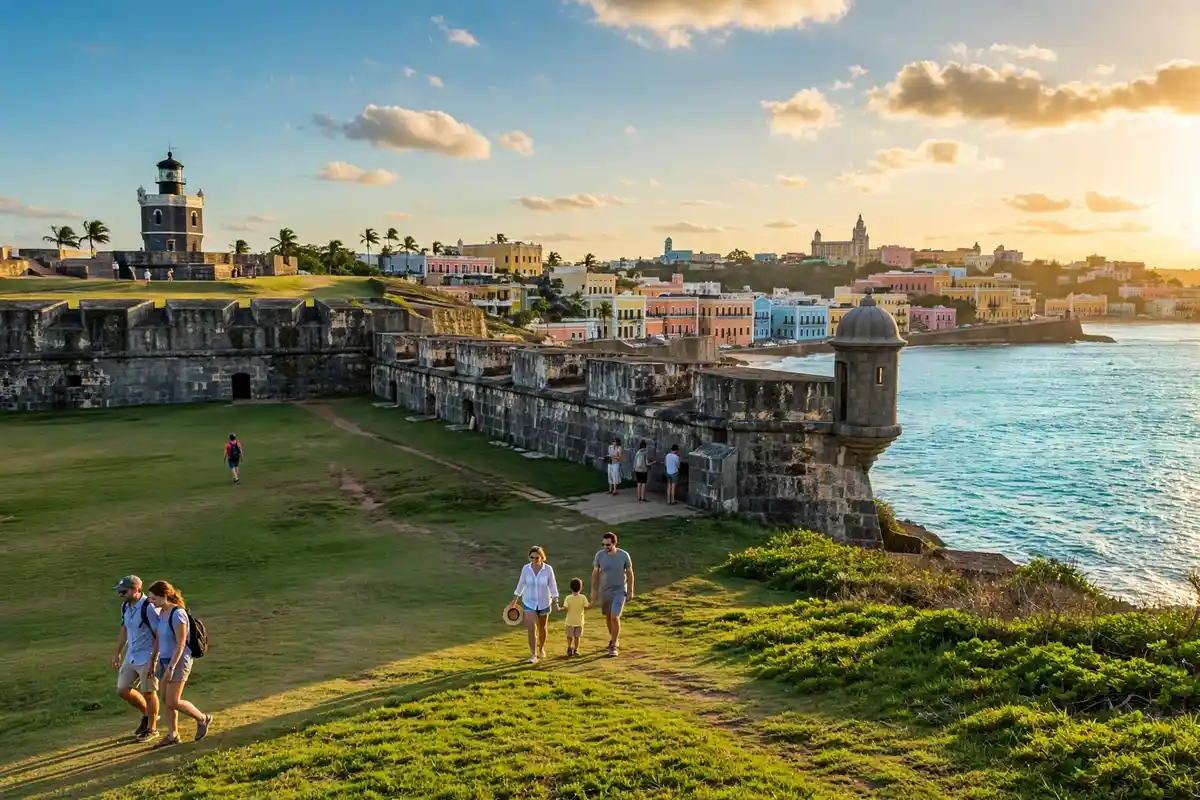
Quick Info
Best for: First-time Caribbean travellers, history lovers, beach seekers, surfers and food lovers — forts, rainforest, glowing bays and world-class beaches on one small island
Best time: December–April for dry, sunny days; May–June for lower prices and thinner crowds; avoid September–October, the peak of hurricane season
How long: 3 full days for San Juan, El Yunque and one island day; 5–7 days to add Vieques, Rincón and Ponce properly
Budget: Roughly $150–$250 per person per day for a mid-range trip with a rental car and one paid tour; a beach-and-walking day runs much cheaper, and every beach is free
Don’t miss: El Morro at golden hour, a hike in El Yunque, a bioluminescent bay on a moonless night, Flamenco Beach on Culebra and mofongo in Old San Juan
Puerto Rico is the Caribbean’s easiest great trip and its most surprising one — a United States territory where you need no passport, spend US dollars and use your own phone plan, yet find a 500-year-old walled city, the only tropical rainforest in the US National Forest System, three glowing bioluminescent bays and beaches that rank among the best on Earth, all on an island you can cross in about three hours. This guide gives you the 20 best things to do in Puerto Rico in a sensible island-wide order, a ready-made 3-day itinerary, honest advice on when to go, where to stay and how to get around, and the three foods you have to try before you leave — plus the free sights that cost nothing at all. Prices and hours change, so every price in this guide is marked as approximate — always check the official website before you visit.
One thing to know before you go: Puerto Rico is not one city, it is a whole archipelago. The main island is about 100 miles long and 35 miles wide, with two inhabited offshore islands — Culebra and Vieques — and the best trip mixes all three: San Juan for history and nightlife, the east for rainforest and glowing water, the islands for the beaches, and the west and south for surf, salt flats and slow colonial towns. This guide covers the whole island in one article, in the order that makes sense on the road.
For background before you go, the Wikipedia entry on Puerto Rico covers the island’s history, from its Taíno roots and Spanish colonial era to its modern status as a United States territory — it is linked in Further reading at the end of this guide.
Puerto Rico at a glance
| Question | Short answer |
| How long do you need? | 3 full days for San Juan, El Yunque and one island day; 5–7 days to add Vieques, Rincón and Ponce properly. |
| Best area for a first trip | Old San Juan for the first two nights, then Fajardo or Luquillo as the east-coast base for the rainforest, the bio bay and the ferries. |
| One thing to book early | Ferry tickets to Vieques and Culebra (up to 6 weeks ahead), bio bay kayak tours near a new moon, and Casa Bacardí tours. |
| One thing that is free | El Yunque entry, every beach (all beaches are public by law), walking Old San Juan and the Paseo de la Princesa. |
| Do you need a car? | Yes, outside San Juan — the island is about 100 miles long and public buses barely run; inside Old San Juan itself, walk everywhere. |
| Do you need a passport? | No, for US citizens — it is domestic travel, so bring a REAL ID for the flight. Non-US visitors follow normal US entry rules. |
Before the details, three warnings that most guides still get wrong. First, the ferries to Vieques and Culebra leave from Ceiba, not Fajardo — the terminal moved years ago, yet plenty of popular guides still send you to Fajardo. Second, Río Camuy Cave Park has been closed since 2023, and Ponce’s Museo de Arte de Ponce is closed for a reconstruction that began in May 2026 — both still appear as must-sees in guides that have not been updated. Third, El Yunque no longer needs a reservation: the PR-191 entrance is free, with no booking, from 8 a.m. to 5 p.m. This guide is built on what is actually open and running in late 2026, not on what used to be true.
The 20 best things to do in Puerto Rico
The list runs island-wide in a sensible travel order: Old San Juan first, then the east, then the offshore islands, then the south and west, and finally the central mountains and San Juan’s modern side. Every entry says what it costs, how long to allow, and what to watch out for.
1. Walk the blue cobblestones of Old San Juan
Start where every Puerto Rico trip should start: the walled old city on its small island at the mouth of San Juan Bay. Old San Juan was founded in 1521 and is the oldest city under the United States flag, a grid of steep streets paved with blue-grey adoquines — cobblestones made from furnace slag — lined with pastel colonial houses, wrought-iron balconies and shaded plazas. Give it a full unhurried morning: Calle del Cristo and Calle Fortaleza for the prettiest streets, the Cathedral of San Juan Bautista (the second-oldest cathedral in the Americas and the resting place of Juan Ponce de León), Plaza de Armas, and the little umbrella-covered stretch of Calle Fortaleza that everyone photographs. The old city is compact and entirely walkable, and it is free to wander — go early, before the cruise crowds arrive around midday, and again at dusk when the walls turn gold. The Wikipedia entry on Old San Juan is a good primer on how the city grew from a Spanish military outpost into the island’s cultural heart.
2. Stand on the ramparts of El Morro
Castillo San Felipe del Morro guards the north-west tip of Old San Juan, six levels of walls, ramps, gun batteries and sentry boxes stepping down from a grassy hill to the mouth of the bay. Spain began building it in 1539, and it anchored the defences of San Juan for more than 400 years; today it sits inside San Juan National Historic Site, part of the UNESCO World Heritage listing for La Fortaleza and the historic site. Walk the ramparts for the Atlantic views, climb to the lighthouse, and then do what local families do: fly a kite or roll down the great green lawn in front of the fort. One ticket covers both forts: about $10 for visitors aged 16 and over, good for 24 hours at El Morro and San Cristóbal, with children under 16 free, and payment is by card only in 2026. The fort’s story, from Spanish galleons to the Second World War, is told in full on the Wikipedia page for Castillo San Felipe del Morro.
3. Explore Castillo San Cristóbal, the giant land fort
A few blocks east of El Morro, Castillo San Cristóbal is the fort most visitors rush past — and the one that rewards a slower look. It is the largest fortification Spain built in the Americas, sprawling across about 27 acres at the eastern edge of the old city, built to protect San Juan from attack by land rather than by sea. Its maze of tunnels, cisterns, barracks and the eerie “Devil’s Sentry Box” (Garita del Diablo) tells the landward side of the city’s military history, and the views back across the old city rooftops are the best in San Juan. The same $10 combined ticket from El Morro covers it for 24 hours, so see both forts on the same day and save the receipt.
4. Stroll the Paseo de la Princesa and the city walls
The prettiest free walk in Puerto Rico runs along the south side of the old city walls. The Paseo de la Princesa is a tree-lined waterfront promenade from the cruise pier to the Puerta de San Juan, the great red gate that was once the city’s main entrance, with the bay on one side and the walls above you on the other. Street vendors sell piraguas (shaved ice) and snacks, local artists set up stalls at weekends, and the Raíces Fountain — a bronze tableau of the island’s Taíno, African and Spanish roots — marks the far end. Continue up through the gate and you are on the old city’s ramparts walk, with La Fortaleza, the governor’s residence and the oldest executive mansion in continuous use in the Western Hemisphere, just above you. Come at sunset, when the light on the water and the walls is at its best.
5. Tour Casa Bacardí in Cataño
Rum is Puerto Rico’s other great export, and Casa Bacardí in Cataño, just across the bay from Old San Juan, is the world’s largest rum distillery. Tours start with a short ferry ride from Old San Juan to Cataño, then a trolley through the distillery, the story of the Bacardí bat logo and the family’s exile from Cuba, and a tasting of aged rums — with a cocktail class and bayfront views of the old city to finish. Tours run from about $45 per person and sell out on cruise days, so book ahead. It is an easy half-day paired with a morning in Old San Juan, and it is the one distillery tour on the island that lives up to the hype.
6. Hike El Yunque National Forest
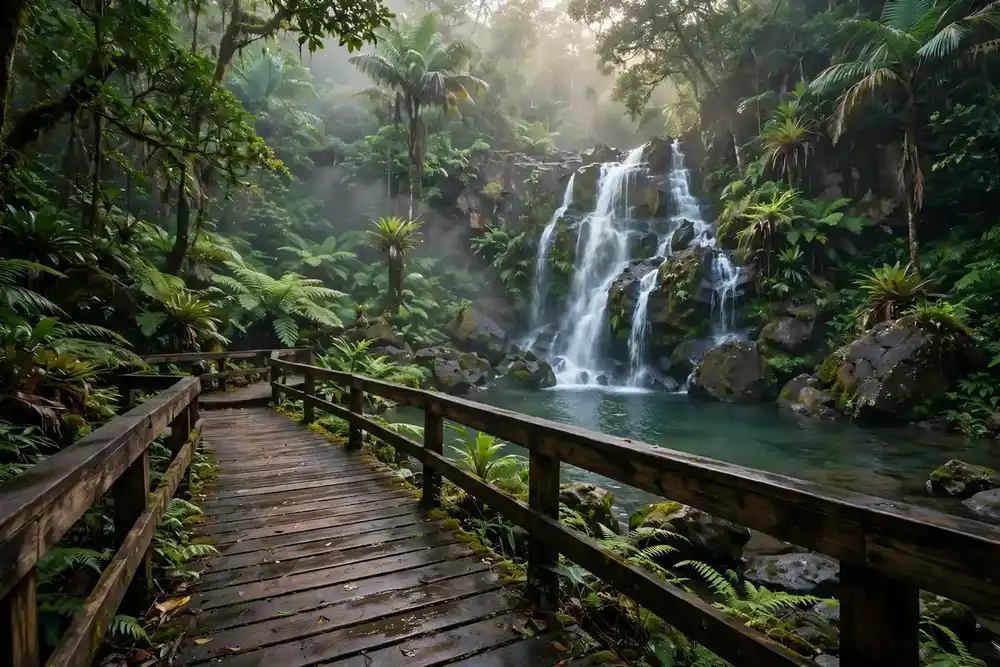
El Yunque is the only tropical rainforest in the US National Forest System — about 28,000 acres in the Luquillo Mountains, rising to the 3,494-foot El Yunque peak, catching the trade winds and with them a deluge of rain that feeds waterfalls, rivers and more than 240 tree species. The PR-191 entrance is free with no reservation, open 8 a.m. to 5 p.m., with capacity limited by parking — so arrive before 9 a.m. or after 2 p.m. Start at the El Portal visitor centre (about $8 for adults, $4 with a federal pass, reserve through recreation.gov) for the film and the exhibits, then drive up to La Coca Falls, climb Yokahú Tower for the ocean view, and hike one of the short trails to a waterfall pool. One honest warning: the popular La Mina Trail has been closed for construction, with a target reopening around summer 2027, so older guides that send you there are out of date — the Forest Service site lists the trails that are actually open. The Wikipedia entry on El Yunque National Forest covers the forest’s ecology, its Taíno name (Yuqué, “white lands”) and its wildlife, including the coquí tree frog you will hear at dusk.
7. Kayak the Laguna Grande bioluminescent bay
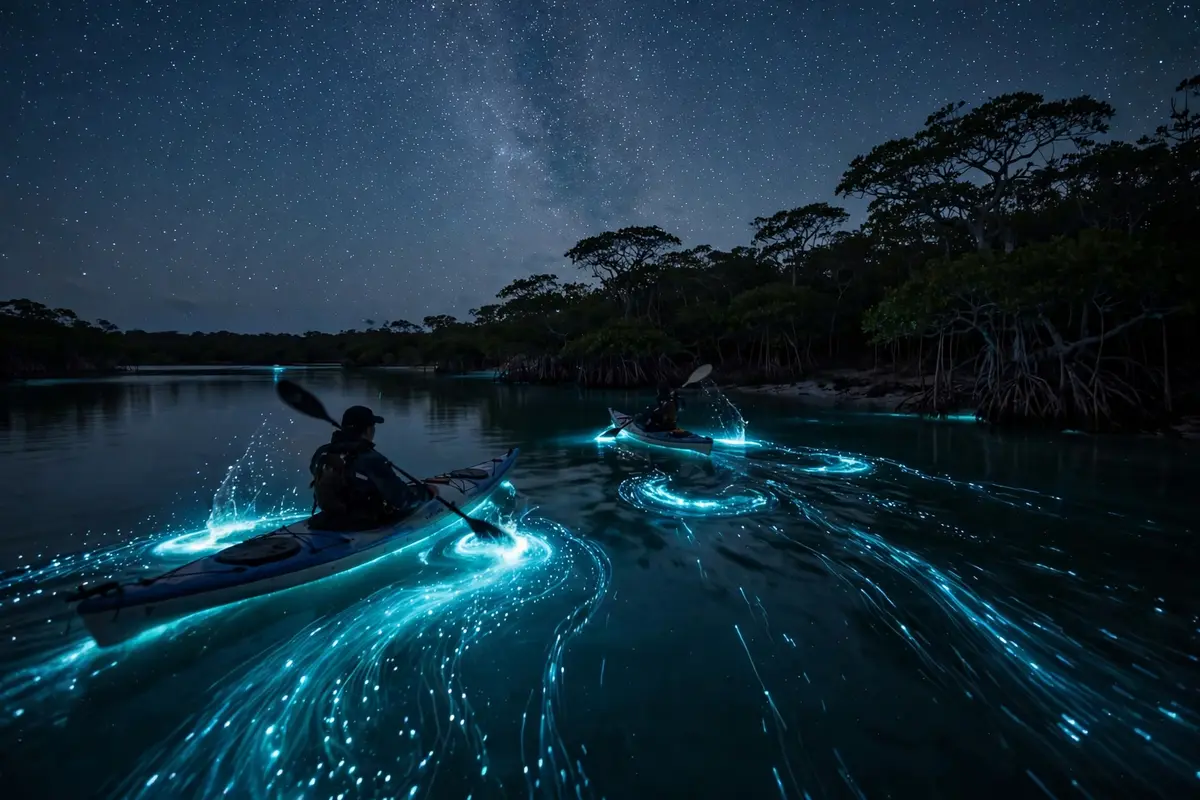
Puerto Rico has three bioluminescent bays, and Laguna Grande in Fajardo is the easiest to reach from San Juan — about an hour’s drive east, inside the Las Cabezas de San Juan Nature Reserve. On a dark night, every paddle stroke lights up the water in blue-green sparks: microscopic dinoflagellates that flash when disturbed, in concentrations so high the bay glows. Tours paddle through a mangrove channel at sunset and into the lagoon after dark, usually lasting about two hours. The glow is brightest near a new moon — the dark-sky dates in late 2026 fall around November 9 and December 8, with January 7, 2027 next — so plan the trip around the moon, not the weekend. Book a few days ahead; the small-group kayak tours sell out on the best nights.
8. Eat your way along the Luquillo kiosks
Luquillo Beach is the island’s classic family beach — a calm, palm-fringed balneario with showers, lifeguards and gentle water — but the real draw is the row of more than 60 food stalls behind it, the Kioskos de Luquillo. This is where Puerto Ricans come to eat on a Sunday: alcapurrias, bacalaítos, empanadillas, fresh-caught fish, piña colada in a pineapple, all for a few dollars a plate. Come hungry, pay cash at the small stalls, and pair it with a swim before or after. It sits ten minutes from El Yunque’s entrance, so it is the natural lunch stop on a rainforest day.
9. Spend a day on Flamenco Beach, Culebra
Flamenco Beach on Culebra is the beach that makes every world top-ten list, and it earns the praise: a wide horseshoe of powder-white sand, calm clear turquoise water, a coral reef just offshore, and the famous graffiti-covered abandoned military tanks at the edge of the sand — relics of the island’s years as a US Navy bombing range. It is a Blue Flag beach with showers, food kiosks, chair rentals and lifeguards in season. Getting there is the adventure: the passenger ferry from Ceiba takes about 45 minutes and costs about $2.25 one way, but it sells out days ahead in high season, so book online as soon as tickets go on sale (up to six weeks ahead) or take the short flight from Ceiba or San Juan. The Wikipedia page for Flamenco Beach tells the story of the tanks and the beach’s recovery from its military past.
10. Kayak Mosquito Bay on Vieques, the world’s brightest bio bay
Mosquito Bay on Vieques is the brightest bioluminescent bay in the world, according to Guinness World Records — a small, sheltered bay where the dinoflagellate concentration is so high that a hand trailed in the water leaves a trail of light and fish dart through the dark like comets. It is the single most memorable night experience in Puerto Rico, and it needs an overnight stay: the tours run after dark, so stay at least one night on Vieques. Kayak tours (clear-bottom kayaks are worth the small premium) and electric-boat tours both run from Esperanza; book well ahead, and time it to a new moon, when moonlight cannot wash out the glow. The bay’s science and its protected status are covered on the Wikipedia page for Mosquito Bay.
11. Meet Vieques’ wild horses and quiet beaches
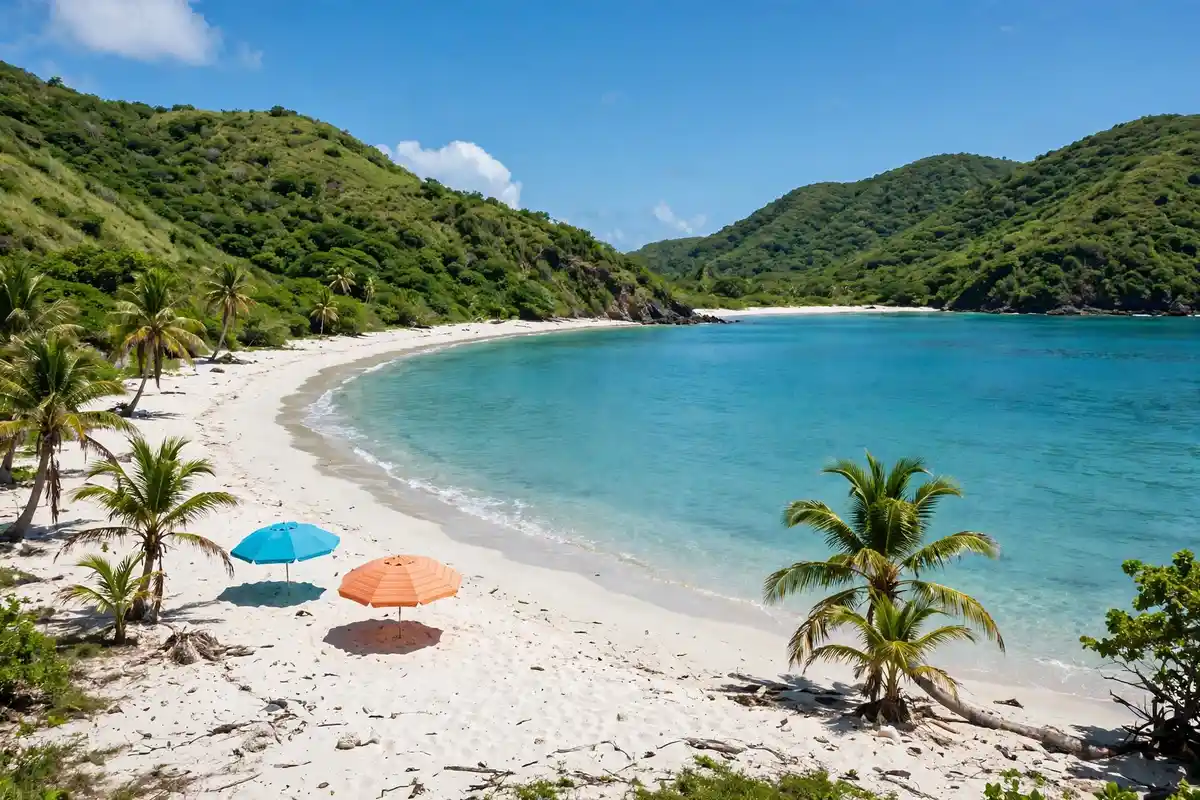
Vieques rewards slowing down. Beyond Mosquito Bay, the island has the Caribbean’s most unhurried beaches: Sun Bay, a long balneario with facilities and wild horses wandering the sand; Playa Caracas (Red Beach), a wide curve of sand inside the former Navy lands, now a wildlife refuge; and a string of smaller coves — La Chiva, Pata Prieta, Media Luna — that are often nearly empty on a weekday. The horses are free-roaming descendants of farm animals, and they wander the roads and beaches at dawn; give them space and never feed them. Snorkelling with sea turtles is best off the north shore, and the island’s small guesthouses and food trucks beat the big resorts for character. The Wikipedia entry on Vieques covers the island’s history, from sugar plantations to the Navy years and the protests that ended bombing practice in 2003.
12. Discover Ponce, the Pearl of the South
Ponce, on the dry sunny south coast, is Puerto Rico’s second city and its most elegant — a 19th-century centre of red-and-black firehouse architecture, neoclassical mansions and shady plazas that feels nothing like San Juan. Start at Plaza Las Delicias, with its cathedral and the Parque de Bombas, the striped red-and-black firehouse from 1882 that is now a small museum, then walk Calle Isabel and the Paseo Cheo Feliciano. Two honest warnings belong here: the Museo de Arte de Ponce, the city’s great art museum, is temporarily closed — its main building was damaged by the January 2020 earthquakes and a roughly $30 million reconstruction began in May 2026, with no reopening date announced — and the La Guancha boardwalk on the waterfront is being rebuilt, so check its status before planning a sunset there. Ponce is still well worth a day, and it is the gateway to the south-west’s beaches and salt flats. The Wikipedia entry on Ponce covers the city’s sugar, coffee and rum history.
13. Boat La Parguera’s bio bay and mangrove channels
La Parguera, a fishing village on the south-west coast near Lajas, holds Puerto Rico’s third bioluminescent bay — the only one you can swim in, since the others are kayak-only, and the only one where motorboats run. Evening boat tours thread the mangrove channels and cays, and on dark nights the water glows around the hull; by day the same boats run snorkelling trips to the offshore reefs and the sandbar at Cayo Caracoles. La Parguera is also the most local of the three bio bay towns, with waterfront seafood restaurants and a slower, working-village feel than Fajardo. If you are already in the south-west for Cabo Rojo, it is the easiest bio bay to add.
14. Surf and sunset in Rincón
On the far west coast, Rincón is Puerto Rico’s surf capital: Domes Beach hosted the 1968 World Surfing Championship, and the town has been a surf pilgrimage ever since. Winter brings the biggest swell (December–March), while summer is gentler and better for beginners, with surf schools on the main beaches. Even if you never stand on a board, Rincón is worth a day: the lighthouse at Punta Higüero, the cliff-top sunset at Domes, the small guesthouses and food trucks along the coast road, and whale watching from January to late March, when humpback whales pass offshore. It is about two and a half hours’ drive from San Juan, so most visitors stay a night or fold it into a west-coast loop.
15. Cabo Rojo: Playa Sucia, the lighthouse and the salt flats
The south-west corner is Puerto Rico’s driest and wildest stretch. Playa Sucia (La Playuela), a sweep of pale sand in a protected bay near Cabo Rojo, is one of the island’s most beautiful beaches, reached by a short dirt-road drive and a walk over a limestone headland. Above it stands Los Morrillos Lighthouse, built in 1882 on cliffs that drop to a turquoise sea, and behind it lie the pink salt flats of Salinas de Cabo Rojo — still worked, and fringed with flamingo-watching spots in the right season. The area is a wildlife refuge with little shade and few facilities, so bring water, sun protection and a full tank of fuel.
16. The Camuy caves — check before you go
The Río Camuy Cave Park protects one of the world’s great karst cave systems: a river-carved network of more than 200 caves, with a vast sinkhole and the cathedral-like Cueva Clara, where a shaft of light falls into a chamber the size of a hall. It is also the attraction in this guide with the biggest warning attached. The park has been closed indefinitely since 2023 after hurricane damage and management problems, and as of late 2026 the authorities had announced only a planned partial “soft opening” of two areas — Sumidero Tres Pueblos and Cueva Clara — before the end of the year, with no public reopening date live yet. Some big-name guides still list the caves as open, so do not build a day around them until the official site confirms it. If the soft opening has happened by the time you travel, it is one of the island’s great sights; the cave system’s scale and geology are covered on the Wikipedia page for Río Camuy Cave Park.
17. Fly The Monster zipline at Toro Verde
High in the central mountains near Orocovis, Toro Verde Adventure Park is home to The Monster — a 2.5-kilometre cable, flown lying face-down, that Toro Verde bills as the longest zipline in America, with riders reaching about 95 mph more than 380 metres above the valley floor. It is the island’s great adrenaline day, and the park backs it up with a seven-line circuit (about $89.99), The Beast, a climbing tower and mountain-bike trails, with an All You Can Do pass at about $99. The Monster itself costs about $114.99; riders must be at least 4 feet tall and between 100 and 270 pounds. The park is about an hour and three quarters from San Juan on mountain roads, so allow a full day, and book ahead — the Monster sells out on weekends.
18. Swim the waterfalls of Gozalandia
The central mountains hide Puerto Rico’s best natural swimming holes, and Gozalandia, near San Sebastián in the north-west, is the pick of them: a series of waterfalls and clear pools in a forested gorge, with a rope swing, cliff jumps and a natural rock slide, all reached by a short trail from the car park. It is the local alternative to the crowded waterfall trails near San Juan, and it pairs well with a west-coast day. Go after a dry spell — the pools are clearest then — and never swim in a river pool after heavy rain, when flash floods are a real risk. The nearby Charco Azul in Vega Baja is another local favourite if Gozalandia is busy.
19. Santurce after dark: La Placita and the art museums
San Juan’s modern side lives in Santurce, the working neighbourhood just east of Old San Juan. By day, visit the Museo de Arte de Puerto Rico, the island’s main art museum, and the street art around Calle Cerra; by night, head to La Placita — the Plaza del Mercado, a daytime produce market that turns after dark into an open-air street party of salsa, reggaeton, food stalls and bars, and the best window into how San Juan actually spends a Friday night. It is also the best answer to the closed Museo de Arte de Ponce: if you want great Puerto Rican art on this trip, see it here. Eat at the market stalls, stay for the music, and take a taxi or rideshare back — parking is tight and the streets are crowded.
20. Sail to Cayo Icacos from Fajardo
On the east coast, Fajardo is the island’s sailing capital, and the day trip to Cayo Icacos is the simplest way to spend a day on an uninhabited Caribbean island. Catamarans and small boats run half-day and full-day trips to the tiny cay, with snorkelling over the reef, a beach barbecue and open bar on most tours, and nothing on the island itself but sand, palms and clear water. It is also the practical base for everything in the east: the boats leave from the same marinas as the bio bay kayaks, and the ferry port at Ceiba is fifteen minutes away. Book a morning departure — the sea is calmest before midday and the light is best for snorkelling.
Puerto Rico in 3 days — a ready-made itinerary
Three days is the minimum for a first trip: one day in San Juan, one day east, one day on an island. If you have five to seven days, add a night on Vieques and a west-coast loop to Rincón and Cabo Rojo, with Ponce on the way back.
| Day | Where | Highlights |
| Day 1 — San Juan | Old San Juan and Cataño | Morning in Old San Juan: the blue cobblestones, the cathedral and El Morro. Afternoon at San Cristóbal and the Paseo de la Princesa. Evening: Casa Bacardí tour, then dinner and a piña colada in Old San Juan. |
| Day 2 — El Yunque and the east | Luquillo, El Yunque and Fajardo | Early start at El Yunque: El Portal, La Coca Falls and Yokahú Tower. Lunch at the Luquillo kiosks. Afternoon swim at Luquillo Beach. Evening: kayak the Laguna Grande bio bay from Fajardo. |
| Day 3 — Island day | Culebra or Vieques | Early ferry from Ceiba. Culebra: a full day on Flamenco Beach with snorkelling. Vieques: Sun Bay and Playa Caracas by day, Mosquito Bay by night (stay overnight for the bio bay). |
Day 1 — San Juan: forts, streets and rum
Base yourself in Old San Juan or Condado and start on foot. The old city rewards an early start: the streets are empty before 10 a.m., the light is soft, and the cruise crowds arrive around midday. See El Morro first, then San Cristóbal on the same $10 ticket, and walk the Paseo de la Princesa at sunset. Take the ferry to Cataño for the Casa Bacardí tour in the afternoon, and finish with dinner in Old San Juan — the restaurants on Calle San Sebastián and around Plaza de Armas are the island’s best concentration of good food.
Day 2 — El Yunque and the east: rainforest, kiosks and a glowing bay
Leave San Juan by 8 a.m. to beat the El Yunque parking rush — the forest is about 45 minutes east. Spend the morning on the PR-191 road: El Portal, La Coca Falls, Yokahú Tower and one waterfall trail. Eat lunch at the Luquillo kiosks, ten minutes away, then swim at Luquillo Beach. In the late afternoon drive to Fajardo for the Laguna Grande bio bay kayak; if the moon is bright, swap the bio bay for a sunset sail and save the glowing water for a new-moon night on Vieques.
Day 3 — Island day: Flamenco Beach or Mosquito Bay
Catch an early ferry from Ceiba — book the tickets the moment they go on sale, up to six weeks ahead, and arrive at the terminal an hour early. On Culebra, spend the whole day at Flamenco Beach: swim, snorkel the reef, eat at the kiosks and walk to the tanks. On Vieques, take the morning ferry, spend the day at Sun Bay and Playa Caracas, and stay the night for Mosquito Bay after dark. Either way, this is the day that makes the trip — build the whole itinerary around it, not the other way round.
Best time to visit Puerto Rico
Puerto Rico is warm all year — daytime temperatures sit between 75 and 85°F in every month — so the question is rain, crowds and price, not temperature. The dry season, December to April, is the most reliable stretch of sunny days and the busiest and most expensive; the shoulder months, May and June, are the sweet spot of good weather, lower prices and thinner crowds. Hurricane season runs June 1 to November 30, with the highest risk from August to October, and September and October are the months most experienced travellers avoid. Two seasonal bonuses: whale watching off the west coast from January to late March, and the San Sebastián Street Festival, which closes the world’s longest Christmas season on the third weekend of January in Old San Juan — in 2026 it ran January 15–18, with Ponce Carnival following in mid-February.
| Season | Months | Weather and crowds | Best for |
| Dry season (peak) | December–April | Sunny, low humidity, least rain; busiest and priciest | First trips, beaches, hiking, whale watching (Jan–Mar) |
| Shoulder season | May–June | Warm with short showers; thinner crowds, lower prices | Best value, bio bays, island hopping |
| Summer | July–August | Hot, humid, afternoon showers; family crowds | Surf schools, festivals, cheaper hotels |
| Hurricane season | June–November | Wettest months, storm risk highest Aug–Oct; lowest prices | Flexible travellers with travel insurance; avoid Sep–Oct |
Where to stay in Puerto Rico
San Juan has the most choice, but the best trip splits its nights: two in San Juan, one or two in the east, and a night on Vieques if the bio bay is on your list. Old San Juan suits first-timers who want to walk everywhere; Condado suits beach-and-nightlife travellers; Isla Verde suits families who want a resort beach near the airport; Fajardo and Luquillo suit nature-first trips; Rincón suits surfers; Vieques suits slow travellers. Book early for December to April and for any weekend near a new moon, when the bio bay tours fill the island hotels.
| Area | Best for | Expect to pay (approx) |
| Old San Juan | First-timers, history, walking everywhere | $180–$350 a night for a boutique hotel |
| Condado | Beach, nightlife, restaurants | $200–$400 a night for a beachfront hotel |
| Isla Verde | Families, resort beach, near the airport | $150–$300 a night for a resort |
| Fajardo and Luquillo | El Yunque, bio bay, ferries | $120–$250 a night for a hotel or guesthouse |
| Rincón | Surf, sunsets, slow west-coast days | $120–$250 a night for a guesthouse |
| Vieques | Mosquito Bay, quiet beaches | $150–$300 a night for a guesthouse or small inn |
Getting around Puerto Rico
A rental car is the single most important decision on this trip. Outside San Juan, public transport is thin: the AMA buses run in the metro area, the público vans between towns are slow and irregular, and rideshares work in San Juan but thin out fast beyond it. Pick up the car at Luis Muñoz Marín International Airport (SJU) and drive on the right, on US-style roads with Spanish signs — the main highways, PR-52 to Ponce and PR-22 along the north coast, are toll roads, so keep a rental with an electronic toll pass or small bills. The island is about 100 miles long, so San Juan to Rincón is about two and a half hours, San Juan to Ponce about an hour and a half, and San Juan to Ceiba about an hour. For the offshore islands, the passenger ferry leaves from Ceiba — not Fajardo, whatever older guides say — and costs about $2.00 one way to Vieques and $2.25 to Culebra, with tickets on sale up to six weeks ahead and residents getting priority; small planes also fly from San Juan and Ceiba to both islands. In Old San Juan itself, do not drive: the streets are narrow, parking is scarce, and everything is a walk.
Puerto Rico food you have to try
Puerto Rican food is the island’s most underrated attraction: Spanish, Taíno and African cooking fused into something entirely its own, served everywhere from white-tablecloth restaurants in Old San Juan to roadside lechoneras in the mountains. Eat at the kiosks, the chinchorros (roadside bars) and the market stalls, not just the hotel restaurants — that is where the food is best and cheapest.
Mofongo, the island’s signature dish
Mofongo is mashed fried green plantains, pounded with garlic and chicharrones (crisp pork cracklings) into a dense, savoury mound, usually served in a pilón with a cup of broth and stuffed with shrimp, chicken or pork. It is the dish to order on your first night, and the version at the small family restaurants of Old San Juan and Santurce beats the hotel versions every time. The Wikipedia page for mofongo traces the dish from its West African roots to the Puerto Rican table.
Lechón on the Ruta del Lechón
The Ruta del Lechón, the Pork Highway, runs through Guavate in the mountain town of Cayey, where a string of open-air lechoneras roast whole pigs on spits over charcoal and serve them by the pound with arroz con gandules (rice with pigeon peas), pasteles and cold beer. It is a weekend ritual for Puerto Rican families and a half-day drive from San Juan through the central mountains — go on a Saturday or Sunday, when every lechonera is open and the music is playing, and come hungry. Order a pound of lechón asado with a side of morcilla if you are feeling brave.
Piña colada, born in Old San Juan
The piña colada was created in Puerto Rico, and the commonly credited birthplace is Barrachina, a restaurant on Calle Fortaleza in Old San Juan, where bartender Ramón “Monchito” Marrero is said to have invented the drink in 1954. The rival claim comes from the Caribe Hilton, where another bartender says he created it the same year — but Barrachina is the place to raise a glass, in the courtyard where the plaque on the wall tells the story. The drink is Puerto Rico’s official national drink, and the Wikipedia page for the piña colada tells both origin stories.
Free things to do in Puerto Rico
Puerto Rico is generous to a tight budget. Every beach on the island is public by law, so the best sand in the Caribbean costs nothing. El Yunque’s entry is free, with no reservation, from 8 a.m. to 5 p.m. Walking Old San Juan, the Paseo de la Princesa, the city walls and the great lawn at El Morro — where local families fly kites — costs nothing. The Condado Lagoon is free to watch for manatees from the boardwalk, the art in Santurce’s street murals is free, and the sunset from the Punta Higüero lighthouse in Rincón is free. Add the Luquillo kiosks, where a full meal costs a few dollars, and a day of the island’s best experiences can cost less than a single theme-park ticket on the mainland.
Frequently asked questions
Do US citizens need a passport to visit Puerto Rico?
No. Puerto Rico is a United States territory, so for US citizens and permanent residents it is domestic travel: no passport, no visa, no customs on arrival. Bring a REAL ID-compliant driver’s licence or another acceptable photo ID for the flight, as you would for any domestic trip. Non-US visitors need whatever they would need to enter the United States — an ESTA visa waiver or a US visa — and should carry their passport.
What is the best time to visit Puerto Rico?
December to April is the dry season and the most reliable weather, with the lowest rainfall and the most sunshine — but also the highest prices and the biggest crowds. May and June are the best-value months, with good weather and thinner crowds. Avoid September and October, the peak of hurricane season (June 1 to November 30). For the bioluminescent bays, time your trip to a new moon, when the dark sky makes the glow brightest.
How many days do you need in Puerto Rico?
Three full days cover the essentials: San Juan, El Yunque and one island day. Five to seven days is the right length for a proper trip — it adds a night on Vieques for Mosquito Bay, a day in Ponce and the south-west, and a surf day in Rincón. Less than three days and you will spend most of the trip in transit; more than a week and you can add the central mountains, the coffee country around Jayuya and a second island.
How do you get to Vieques and Culebra?
By passenger ferry from Ceiba, on the east coast about an hour from San Juan — not from Fajardo, as older guides still say. The ferry costs about $2.00 one way to Vieques and $2.25 to Culebra, takes about 45 minutes to Culebra and about an hour to Vieques, and sells out well ahead in high season, so book online as soon as tickets go on sale, up to six weeks before you travel. Small planes also fly from San Juan and Ceiba to both islands in about 20 minutes. Stay at least one night on Vieques if you want to see Mosquito Bay, since the tours run after dark.
Is Puerto Rico safe for tourists?
The tourist areas — Old San Juan, Condado, Isla Verde, El Yunque, Fajardo, Rincón, Culebra and Vieques — are safe and well travelled, with the normal precautions of any city: watch your bag in crowds, do not leave valuables visible in a rental car, and avoid poorly lit streets late at night. The main risks are natural, not criminal: strong currents and rip tides on north and west coast beaches in winter, flash floods in rivers after rain, and hurricanes in season. Check the surf and weather before swimming, never swim in a river pool after heavy rain, and buy travel insurance for trips in hurricane season.
When is the best time to see a bioluminescent bay?
On a moonless night, as close to the new moon as possible — moonlight washes out the glow, so the darkest nights are the brightest. In late 2026 the new moons fall around November 9 and December 8, with January 7, 2027 next. Book a kayak tour a few days ahead for those dates, since they sell out first. Mosquito Bay on Vieques is the brightest of the three bays, Laguna Grande in Fajardo is the easiest from San Juan, and La Parguera in Lajas is the only one you can swim in.
Further reading — Wikipedia and Reddit
For deeper background, the Wikipedia entry on Puerto Rico covers the island’s history and geography, the Wikipedia entry on Old San Juan covers the walled city, and the Wikipedia entry on El Yunque National Forest covers the rainforest’s ecology. For trip reports, recent tips and honest answers from locals and regular visitors, the Reddit community r/PuertoRico is the liveliest place to ask before you go — the ferry, the bio bay moon dates and the cave closures are the questions that come up there most. No Quora thread on Puerto Rico could be verified as a live, useful discussion, so no Quora link is included here.
Your Puerto Rico trip, in one paragraph
Puerto Rico gives you a 500-year-old walled city, the only tropical rainforest in the US National Forest System, three glowing bays, a beach that ranks with the best on Earth and a surf town, a pork highway and a rum distillery — all on one island, in US dollars, with no passport. Walk Old San Juan at dawn, hike El Yunque before the crowds, time a bio bay to the new moon, book the Ceiba ferry the moment tickets go on sale, and save a night for Vieques. If this trip has given you the travel bug, the same kind of island-by-island, honest, up-to-date guide is waiting for your next trip: Chicago, Nashville, Los Angeles, Orlando, Miami, San Diego, Denver, Savannah, Dallas, Charleston, San Francisco, Myrtle Beach, Las Vegas, San Antonio, London, Portland and Pigeon Forge.

About the Author