Things to Do in London
20 Best Attractions, a 3-Day Itinerary, Where to Stay, and the Food You Cannot Miss
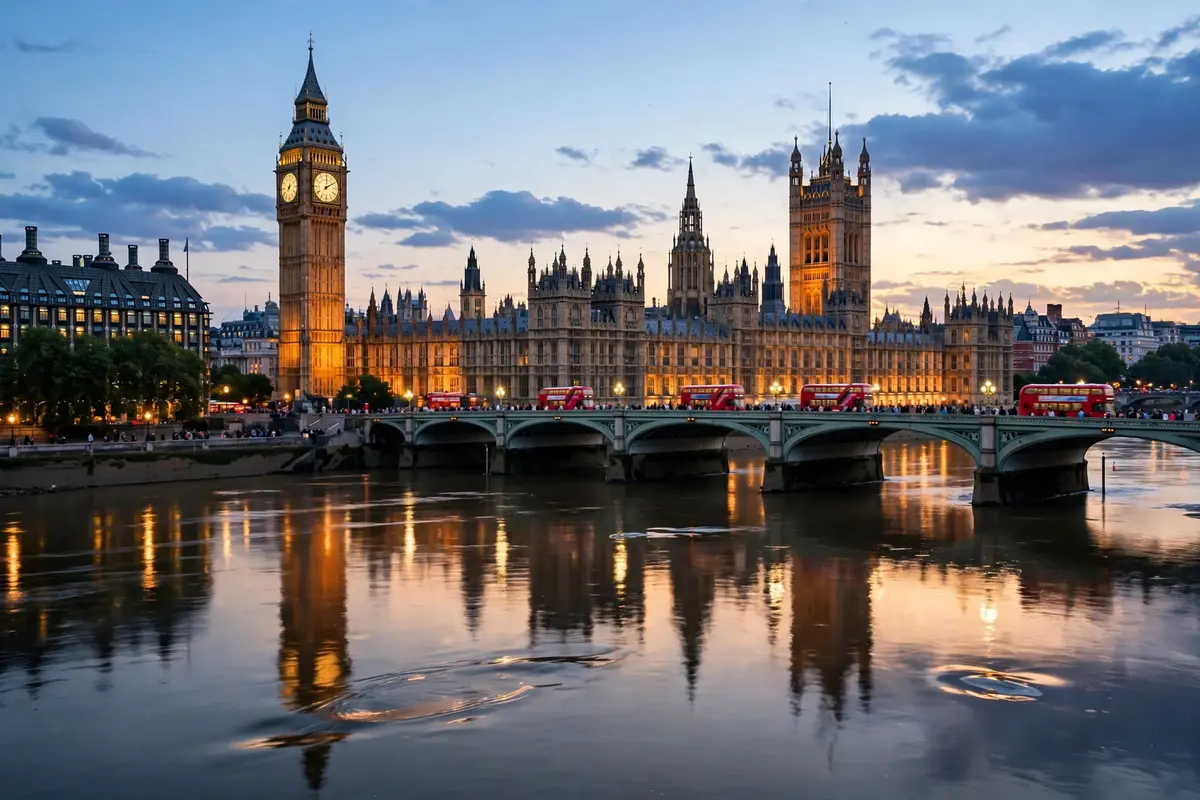
Quick Info
Best for: First-timers, history lovers, museum fans and foodies — royal palaces, free world-class museums, the Thames and the West End in one city
Best time: April–June and September–October for mild days and smaller crowds; December for the Christmas lights and markets
How long: 3 full days for the highlights; 2 days covers the essentials; add a 4th day for Windsor or the Harry Potter studio
Budget: Roughly £120–£220 per person per day for a mid-range trip; the British Museum, the National Gallery, Tate Modern and the big parks are free
Don’t miss: The Tower of London at opening, the Bayeux Tapestry at the British Museum, Borough Market at lunch and the view from Sky Garden
London is the city every traveller thinks they know and no one ever finishes. Founded by the Romans nearly 2,000 years ago, it grew into a capital of palaces, cathedrals and markets, and it still surprises first-time visitors: the best museums in the world are free, a medieval fortress holds the Crown Jewels a short walk from a glass skyscraper, and the food runs from a £6 fish and chips to a three-star tasting menu. And in 2026 the city is changing fast: the Bayeux Tapestry is on show at the British Museum for the first time, a brand-new museum has opened in Stratford, and another opens in Smithfield in late November. This guide gives you the 20 best things to do in London in a sensible order, a ready-made 3-day itinerary, honest advice on when to go, where to stay and how to get around, and the three foods you have to try before you leave — plus the free sights that cost nothing at all. Prices and hours change, so every price in this guide is marked as approximate — always check the official website before you visit.
One thing to sort out before you fly: most visitors who do not need a visa, including travellers from the United States and the European Union, now need a UK Electronic Travel Authorisation, the ETA, which costs £20, is valid for two years and is applied for through the UK ETA app or GOV.UK only. Apply before you travel — airlines can refuse boarding without it.
For background before you go, the Wikipedia entry on London covers the city’s history, from its Roman founding to the modern capital — it is linked in Further reading at the end of this guide.
London at a glance
| Question | Short answer |
| How long do you need? | 3 full days for the highlights; 2 days covers the essentials; 4 days if you add Windsor, Kew or the Harry Potter studio. |
| Best area for a first trip | Westminster and the South Bank — Big Ben, the Abbey, the London Eye and the Tower are all along the river. |
| One thing to book early | The Tower of London, the Bayeux Tapestry at the British Museum, Sky Garden free tickets and West End shows. |
| One thing that is free | The British Museum, the National Gallery, Tate Modern, the Natural History Museum, the V&A and the royal parks — the best of London costs nothing. |
| Do you need a car? | No — the Tube, buses and walking cover everything central. A car is a liability in London. |
The 20 best things to do in London
The list starts with the experiences that define London and that first-time visitors should protect time for, then moves into the markets, the neighbourhoods and the day trips beyond the city. If you only have two days, do numbers 1 to 10.
1. The Tower of London and the Crown Jewels
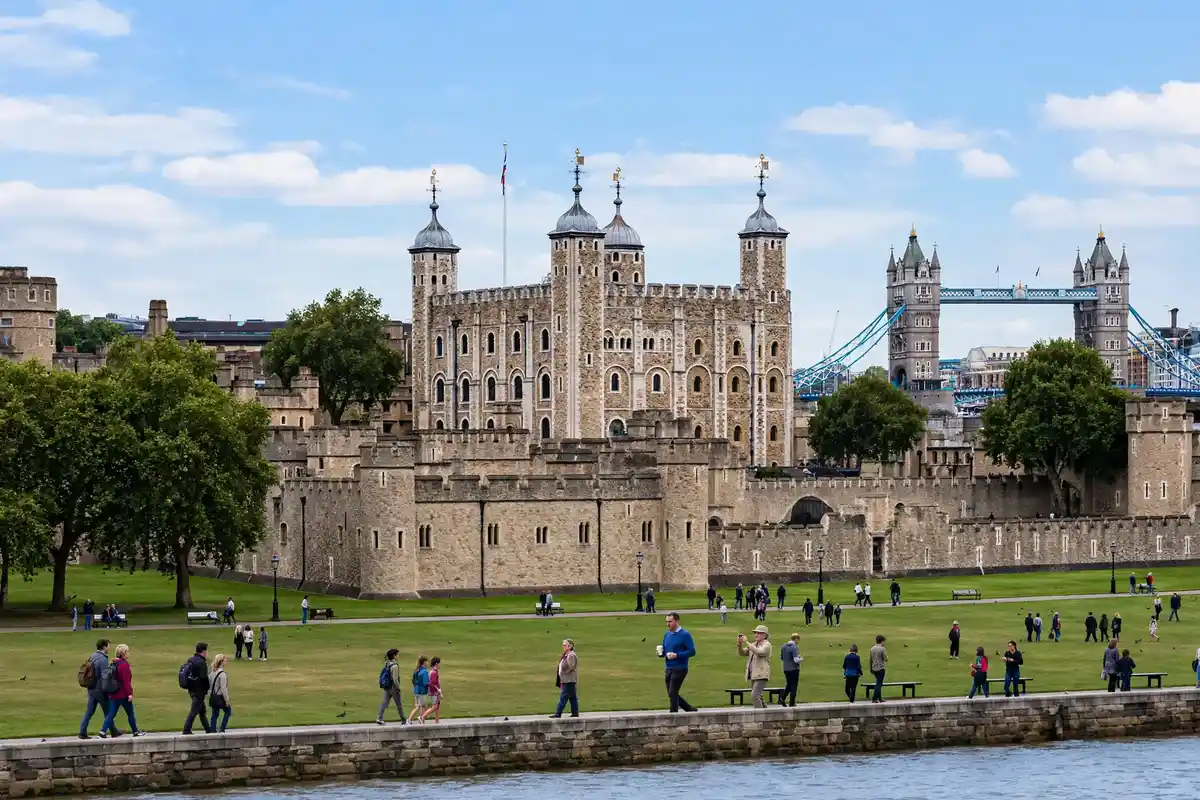
The Tower of London is the one paid sight no first-timer should skip. Begun by William the Conqueror in the 1070s, it has been a royal palace, a prison, an armoury and a treasury, and today it holds the Crown Jewels — including the Imperial State Crown and the Sovereign’s Sceptre — in the Jewel House. The Tower of London is also where the ravens live, guarded by the Yeoman Warders, the Beefeaters, who give the best free guided tour in London, and where the White Tower, the oldest part, holds the Royal Armouries. Go straight to the Crown Jewels first, before the queue builds, then take a Warder tour and walk the walls.
Practical tip: An adult ticket costs roughly £38 in 2026, or £41.80 with the optional 10% donation, and children aged 5 to 15 pay roughly £19 — prices are approximate, so check before visiting. Book a timed ticket online, go in at opening, and allow three hours. The last Yeoman Warder tour leaves at 3:15 pm.
2. Westminster Abbey and Big Ben
Westminster Abbey is the coronation church of England, and the most historic building in the country. Nearly every monarch since 1066 has been crowned here, and the abbey holds the tombs of kings and queens, the graves of poets in Poets’ Corner and the scientists Newton and Darwin. Westminster Abbey includes a multimedia guide in 14 languages in the ticket, and it is a working church, so visiting hours are short and change by day. Across the road stands the Palace of Westminster, home of Parliament, with Big Ben — the great clock tower, properly the Elizabeth Tower — rising over the river. Big Ben is free to admire from Westminster Bridge, and the tour that climbs inside the tower costs roughly £55 and must be booked far ahead.
Practical tip: Abbey tickets cost roughly £32 for adults in 2026 — prices are approximate, so check before visiting. The abbey is closed to sightseers on Sundays, so do not plan a Sunday visit, and go in the morning, when the light falls through the west window.
3. The British Museum and the Bayeux Tapestry
The British Museum is the best free museum in the world, and in 2026 it holds the most talked-about exhibition in Europe. The collection covers two million years of human history in more than 50 galleries: the Rosetta Stone, the Parthenon sculptures, the Egyptian mummies and the Sutton Hoo ship burial. The British Museum is free to enter, but the headline for 2026 is the Bayeux Tapestry, on loan from France for the first time and on display from September 10, 2026 to July 11, 2027 in Room 30. The exhibition costs roughly £33 for adults, and tickets through the end of 2026 have sold out, so check for returns or book a 2027 slot early. Book a free timed ticket for the museum itself for priority entry at busy times, and leave wheeled suitcases at the hotel — they are not allowed inside.
Practical tip: The museum is free and open daily from 10 am to 5 pm, until 8:30 pm on Fridays — prices are approximate, so check before visiting. Pick three galleries and do them properly rather than trying to see everything, and start with the Egyptian sculpture gallery and the Rosetta Stone on the ground floor.
4. Walk the South Bank from Westminster to Tower Bridge
The South Bank is the best free walk in London and the spine of any first trip. Start at Westminster Bridge, with Big Ben behind you, and walk east along the river past the London Eye, the National Theatre, the Southbank Centre and Tate Modern, across the Millennium Bridge to St Paul’s, then on past Shakespeare’s Globe and Borough Market to Tower Bridge. The walk is about 3 kilometres, flat, and free, and it packs more of London into two hours than any tour bus. Come back at dusk, when the river turns gold and the bridges light up, and the whole embankment fills with street performers and food stalls.
Practical tip: The walk is free, around the clock. Do it in the late afternoon so you finish at Tower Bridge at sunset, stop for lunch at Borough Market on the way, and wear good shoes — the riverside is cobbled in places and you will walk further than you think.
5. Ride the London Eye
The London Eye is the giant wheel on the South Bank, opposite the Houses of Parliament, and the fastest way to understand the shape of the city. The 30-minute rotation lifts you 135 metres over the Thames, with the Houses of Parliament, St Paul’s, the Shard and the Tower laid out below, and on a clear day you can see for 40 kilometres. The London Eye is at its best at sunset, when the city lights come on and the river glitters, and it is at its worst in low cloud, when you pay to sit inside a grey sky — so check the forecast and skip it on a cloudy day.
Practical tip: A standard ticket costs from roughly £29 online in 2026, against roughly £39 at the desk, and a flexible fast-track ticket costs from roughly £49 — prices are approximate, so check before visiting. Book online for a set time, aim for sunset on a clear day, and if the cloud is low, swap the Eye for St Paul’s dome or the free Sky Garden instead.
6. Climb the dome of St Paul’s Cathedral
St Paul’s Cathedral is the masterpiece of Sir Christopher Wren, rebuilt after the Great Fire of 1666, and its dome is the second-largest in the world. Inside, the floor, the crypt and the Whispering Gallery are worth the ticket alone, but the real reason to go is the climb: 528 steps up through the Stone Gallery to the Golden Gallery, 85 metres above the city, with the best 360-degree view in central London. St Paul’s Cathedral sits at the top of Ludgate Hill, and the view from the steps, down Fleet Street towards the City, is one of the great London postcards.
Practical tip: Tickets cost roughly £27 for adults in 2026 — prices are approximate, so check before visiting. The climb is steep and narrow, so go early before the stairwells fill, and note the cathedral is closed to sightseers on Sundays.
7. Buckingham Palace and the Changing of the Guard
Buckingham Palace is the King’s London home and the most photographed building in the city, and the Changing of the Guard in front of it is the great free ceremony of London. The guard change runs daily from April to July and on alternate days at other times of the year, at 11 am, with the new guard marching in from Wellington Barracks with a band. Buckingham Palace opens its State Rooms only in summer, when the royal family is away — the 2026 season closed on September 27, and the next summer opening runs from July 8 to September 26, 2027 — so for most of the year the palace is a view from the gates, and the ceremony is the show.
Practical tip: Watching the guard change is free. Arrive by 10:30 am for a spot at the Victoria Memorial, and if you want the State Rooms, book the summer opening the moment tickets go on sale in November — they sell out. The palace is closed to visitors outside the summer opening, apart from limited guided tours in winter.
8. The National Gallery and Trafalgar Square
The National Gallery is the free art museum on Trafalgar Square, and the best two hours of free culture in London. The collection holds more than 2,300 Western European paintings, from Leonardo, Van Eyck and Titian to Turner, Constable, Monet and Van Gogh, in a building that overlooks Nelson’s Column and the fountains. The National Gallery is free, open daily from 10 am to 6 pm and until 9 pm on Fridays, and the National Portrait Gallery is around the corner. Note that some rooms are closed in 2026 while a research centre is built — it opens in 2028 — so check the floor plan if you want a particular painting.
Practical tip: Entry is free, with a suggested donation of £5 — prices are approximate, so check before visiting. Go on a Friday evening, when it is open late and quiet, and start with the Turner and Constable rooms, which hold the greatest British paintings in the world.
9. The Natural History Museum and South Kensington
South Kensington holds three of the world’s great museums side by side, and the Natural History Museum is the one to do first. Its cathedral-like main hall holds a blue whale skeleton, and the dinosaur gallery, the earthquake simulator and the 80 million specimens behind the displays make it the best museum in London for families. The Natural History Museum is free, and next door stand the Science Museum, also free, and the V&A, the world’s leading museum of art and design, also free. The V&A’s new exhibition “Constantinople to Istanbul: One City, Two Empires” opened on November 7, 2026, and the museum is mostly closed on a handful of days for private events, so check the day before you go.
Practical tip: All three museums are free, open daily from 10 am to 5:50 pm, with the V&A open until 10 pm on Fridays — prices are approximate, so check before visiting. Book a free timed ticket online for the Natural History Museum at weekends and in school holidays, and pick one museum per half day — three in one day is a blur.
10. Eat your way through Borough Market
Borough Market is London’s oldest food market, trading under the railway arches by London Bridge for over a thousand years, and it is the best lunch in the city. The stalls sell everything from artisan bread and British cheese to oysters, salt beef bagels and Ethiopian coffee, and the market is at its best on a weekday lunchtime, when the traders are cooking and the crowds are thinner. Borough Market is free to enter, and the rule is simple: eat standing up, try the samples, and save room for a second lap.
Practical tip: Entry is free and the market is open Monday to Saturday, closed on Sundays — prices are approximate, so check before visiting. Go on a weekday, bring cash for the small stalls, and pair it with a walk across London Bridge to the Monument and the City.
11. Tower Bridge and its glass walkways
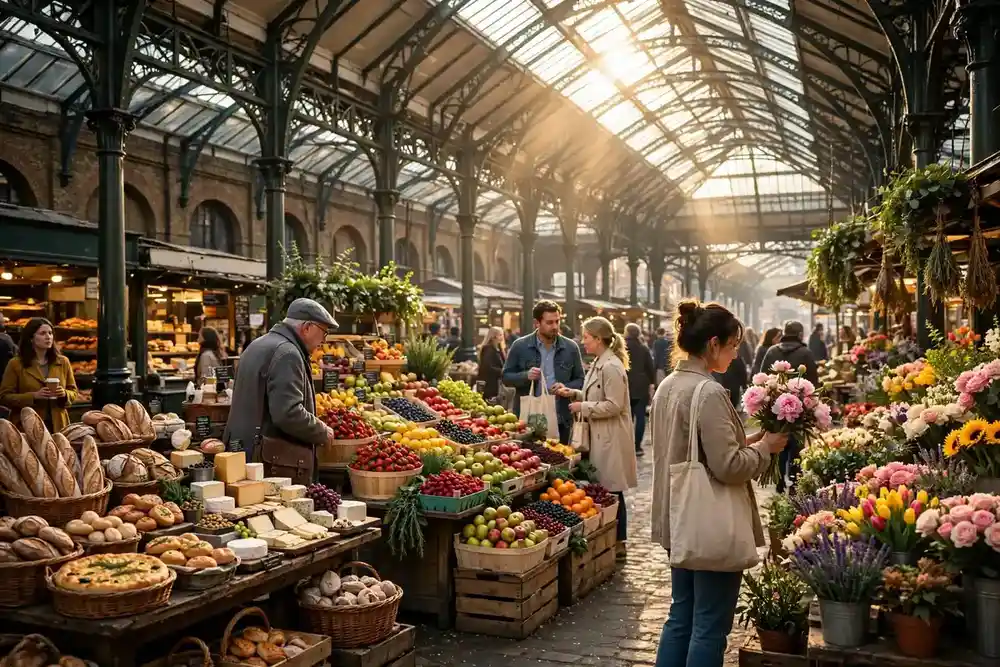
Tower Bridge is the bridge everyone mistakes for London Bridge, and it is worth going inside. Built in 1894, it still lifts for river traffic, and the walkways 42 metres above the Thames hold glass floors — look down and the traffic crosses far below your feet. Tower Bridge also holds the Victorian engine rooms, where the original steam engines that once raised the bridge still stand, and the views east to the Tower and west to the City are the best on the river.
Practical tip: Tickets cost roughly £18 for adults in 2026 — prices are approximate, so check before visiting. Book online, go in the morning for the clearest light, and check the lift times on the bridge’s website — watching the bascules rise is the free show, and it happens several times a week.
12. Hyde Park, Kensington Gardens and the Serpentine
Hyde Park is London’s green heart — 350 acres of open space in the middle of the city, joined to Kensington Gardens to the west, with the Serpentine lake between them. Hyde Park holds the Diana Memorial Fountain, the Italian Gardens, Speakers’ Corner and Kensington Palace, and it is where Londoners run, row, picnic and escape the streets. From November 19, 2026 the park’s south-east corner becomes Winter Wonderland, the Christmas fairground, with entry from £1 off-peak, and the rest of the park stays open and free throughout.
Practical tip: The park is free and open daily from 5 am to midnight. Hire a deckchair by the Serpentine on a sunny day, walk the Diana Memorial Playground if you have children, and pair the park with the South Kensington museums, which are a short walk south.
13. Camden Market and the Regent’s Canal
Camden Market is London’s alternative heart — a sprawl of markets around the canal lock in Camden Town, with vintage clothes, crafts, records and street food from every corner of the world, in old stables and warehouses. Camden has been the centre of London’s alternative music scene since the 1970s, and its pubs and venues still host live music most nights. Camden Market is the place to come for the London that is not on the postcards, and the walk along the Regent’s Canal towpath from Camden to Little Venice, or up through Primrose Hill for one of the best free views of the skyline, is the quiet half of the day.
Practical tip: The market is free to enter and open daily. Go on a weekday morning to beat the crowds, walk the canal towpath to Primrose Hill for the view, and keep an eye on your bag — Camden is busy and pickpockets work the market lanes.
14. Covent Garden and a West End show
Covent Garden is London’s theatre district, and the evening to book is a West End show. The piazza, with its street performers and the Royal Opera House, is the prettiest square in central London by day, and by night the theatres around it — the Lyceum, the Apollo, the Palace — put on the best musicals in the world. Covent Garden is also where to find the TKTS booth in Leicester Square, which sells same-day discounted tickets, and the shows run from around £25 for a restricted-view seat to £150 for the best stalls.
Practical tip: Book popular shows weeks ahead, and check the TKTS booth on the day for discounts. Eat before the show in Soho, which is a five-minute walk away, and book a late dinner — most shows finish around 10:30 pm.
15. V&A East, the brand-new museum in Stratford
V&A East is the most significant museum opening in London in years, and it is the reason to take the Elizabeth line to Stratford. The Victoria and Albert Museum’s new home in Queen Elizabeth Olympic Park opened on April 18, 2026, with galleries that put the collection’s greatest objects — from fashion and photography to design and performance — in a purpose-built space beside the ArcelorMittal Orbit. V&A East is free to enter, and it pairs with the Olympic Park itself, the London Aquatics Centre and the Westfield shopping centre, which make Stratford a full half day rather than a single stop.
Practical tip: Entry is free — prices are approximate, so check before visiting. Take the Elizabeth line to Stratford, go in the morning before the school groups arrive, and pair the museum with a walk through the Olympic Park and a ride up the ArcelorMittal Orbit for the view.
16. The new London Museum in Smithfield
The new London Museum is the city’s own history museum, reopening after an 11-year, £437 million redevelopment in the Victorian market buildings at Smithfield, and it opens on November 28, 2026. The London Museum traces 2,000 years of the capital’s history in its first home, the 1880s General Market, and its inaugural exhibition, “London Tastes”, runs from November 2026 to August 2027, celebrating the city’s food history from pie and mash shops to chicken shop culture. Admission is free, with late opening until 11 pm on Fridays and Saturdays, with live DJ sessions and a day-to-night programme — the museum is deliberately built to be visited after dark.
Practical tip: Entry is free, with a ticket booked online — prices are approximate, so check before visiting. Book ahead for the opening weeks, go on a Friday evening for the late opening, and note that the second building, the 1960s Poultry Market with its concrete dome roof, does not reopen until 2028.
17. Greenwich — and the Observatory closure to know about
Greenwich is London’s maritime quarter, a UNESCO World Heritage Site downriver from the Tower, and it holds one of the great traps for readers of out-of-date guides. The Royal Observatory, home of Greenwich Mean Time and the Prime Meridian line, closed on November 2, 2026 for a two-year, £77 million refurbishment called First Light, and it does not reopen until summer 2027 — so do not plan a trip around standing on the Meridian line this winter. Greenwich is still well worth the trip: the National Maritime Museum is free, the Cutty Sark tea clipper stands in dry dock on the riverfront, Greenwich Park has the best view back across the Thames to the City, and the painted hall of the Old Royal Naval College is one of the most beautiful rooms in London.
Practical tip: The park and the National Maritime Museum are free; the Cutty Sark and the Painted Hall are paid — prices are approximate, so check before visiting. Take the DLR to Cutty Sark station or the Thames Clipper boat from central London, which is the prettiest way to arrive, and skip the Observatory until it reopens in 2027.
18. Kew Gardens, the royal botanic gardens
Kew Gardens is the best half day out of central London — 300 acres of botanic gardens on the Thames in south-west London, a UNESCO World Heritage Site, with the great Victorian glasshouses, the Treetop Walkway 18 metres above the ground and the world’s largest collection of living plants. Kew Gardens is at its best in spring, when the magnolias and cherry blossom are out, and in autumn, when the trees turn, and the Temperate House, the largest Victorian glasshouse in the world, is worth the trip alone.
Practical tip: Adult tickets cost roughly £17 online from November 2026, and Kew sells adult tickets for £10 on Tuesdays until December 29, 2026 — prices are approximate, so check before visiting. Take the District line to Kew Gardens station, allow three hours, and go on a Tuesday if you can for the cheaper ticket.
19. Sky Garden, the free viewpoint above the City
Sky Garden is the best free view in London, and the one most visitors miss. Three floors of public gardens sit at the top of the Walkie Talkie building, 155 metres above the City, with a 360-degree panorama over the Tower, the Shard, St Paul’s and the Thames. Sky Garden is free, but you must book a free ticket online in advance — walk-ins are turned away at busy times — and the alternative, the Shard’s viewing platform, costs from roughly £28. Go at sunset, when the city lights come on and the gardens glow, and book the restaurant or bar if you want to stay past the public hours.
Practical tip: Entry is free with a ticket booked online — prices are approximate, so check before visiting. Book as early as you can, especially for sunset slots, bring photo ID, and leave large bags at the hotel — security is airport-style.
20. Day trip: Windsor Castle
Windsor Castle is the best day trip from London — the oldest and largest occupied castle in the world, and the King’s weekend home, 30 minutes by train from Paddington. Windsor Castle holds the State Apartments, St George’s Chapel, where Queen Elizabeth II is buried, and the Queen Mary’s Dolls’ House, and the town of Windsor itself, with its cobbled streets and the Long Walk to the castle, is worth an hour on its own. If castles are not your thing, the alternative day trip is the Warner Bros Studio Tour, the Harry Potter studio, which costs from roughly £53.50 and must be booked well ahead — no tickets are sold on the day.
Practical tip: Windsor Castle tickets cost roughly £30 for adults in 2026 — prices are approximate, so check before visiting. Take the train from London Paddington via Slough, go in the morning, and check the castle’s opening days before you travel — it closes on some Tuesdays and Wednesdays.
London in 3 days — a ready-made itinerary
| Day | Morning | Afternoon | Evening |
| Day 1 — Westminster and the river | Westminster Abbey and Big Ben | South Bank walk and Borough Market | London Eye at sunset and dinner in Soho |
| Day 2 — The Tower and the museums | Tower of London at opening | British Museum and Covent Garden | West End show |
| Day 3 — Parks, markets and the east | Hyde Park and Kensington Gardens | Natural History Museum and the V&A | Camden Market and the Regent’s Canal |
Day 1 — Westminster and the river
Start at Westminster Abbey at opening, then walk across Westminster Bridge for the classic view of Big Ben and the Houses of Parliament. Spend the afternoon on the South Bank — the walk east to Tate Modern, across the Millennium Bridge to St Paul’s, then on to Borough Market for lunch — and finish with the London Eye at sunset, followed by dinner in Soho. Day one is the classic London, and it is the one to get right.
Day 2 — The Tower and the museums
Go to the Tower of London at opening and head straight for the Crown Jewels, before the queue builds, then join a Yeoman Warder tour and walk the walls. Spend the afternoon at the British Museum — the Rosetta Stone, the Egyptian galleries and the Bayeux Tapestry if you have a ticket — then walk to Covent Garden for the piazza and an early dinner before a West End show. If the Bayeux tickets are sold out, swap in the National Gallery, which is free and ten minutes away.
Day 3 — Parks, markets and the east
Start in Hyde Park and Kensington Gardens, then spend the afternoon in South Kensington — the Natural History Museum and the V&A are side by side and both free. Finish in Camden Market for the late afternoon, with a walk along the Regent’s Canal to Primrose Hill for the sunset view. If you have a fourth day, add Windsor Castle, Kew Gardens or the new V&A East in Stratford.
Best time to visit London
| Season | What it is like | Best for |
| Winter (December–February) | Cold and dark, highs around 8°C, the cheapest hotels — with the Christmas lights and Winter Wonderland | Budget trips, the Christmas lights, museums |
| Spring (March–May) | Mild days of 12–18°C, blossom in the parks, the gardens at their best | First trips, the parks, Kew Gardens |
| Summer (June–August) | Warm days of 20–23°C, long evenings, the busiest crowds and the highest prices | The parks, the river, festivals and the palace opening |
| Autumn (September–November) | Mild and golden, smaller crowds, the river still warm enough for a cruise | First trips, the best weather of the year, exhibitions |
The best time to visit London is April to June or September to October, when the days are mild, the parks are at their best and the crowds are manageable. Summer is the classic season — warm, busy and full of festivals — but it is also the most expensive, and the big sights queue longest. Winter is the cheapest time to visit, with the Christmas lights on Oxford Street and Regent Street, the markets and Winter Wonderland in Hyde Park, but the days are short and dark by 4 pm. Whatever the season, London rain is a fact of life: it rains on roughly one day in three, so pack a light waterproof and plan a museum for the wettest afternoon.
Where to stay in London
| Area | Who it suits | Why stay there |
| Westminster and the South Bank | First-timers, walkers | Big Ben, the Abbey, the Eye and the river on your doorstep |
| Covent Garden and Soho | Theatre lovers, foodies | The West End, the restaurants and the nightlife on your doorstep |
| Shoreditch and the East End | A local feel, nightlife | Street art, markets, bars and the City a short walk away |
| Greenwich and the river | A quiet base, families | The park, the maritime museums and the boat into town |
First-timers should stay in Westminster or on the South Bank, where Big Ben, the Abbey and the London Eye are all a walk away. Theatre lovers who want the West End should look at Covent Garden and Soho, where the shows and the restaurants set the tone. South Kensington suits families, with the museums and Hyde Park on the doorstep, Shoreditch suits a local feel with a car-free night out, and Greenwich suits a quiet base with a boat into town. Whatever you book, stay inside Zones 1 and 2 if you want to walk: the sights, the stations and the restaurants are all within a mile or two of each other, and the Tube fare cap keeps the rest cheap.
Getting around London
Central London is walkable: Westminster, the South Bank, Covent Garden, Soho and the City are all within about two miles of each other, and the river walk is the flattest route in town. For anything further, the Tube is the backbone — 11 lines, running from about 5:30 am to midnight, with the Night Tube on Fridays and Saturdays on five lines — and the buses, the DLR, the Overground and the Elizabeth line fill in the gaps. The simplest way to pay is a contactless bank card or phone: tap in at the start and tap out at the end, and the system caps what you pay automatically. A Tube ride in Zone 1 costs roughly £3.00 off-peak or £3.10 at peak times in 2026, and a day in Zones 1 and 2 never costs more than £8.90, with a Monday-to-Sunday weekly cap of £44.70 — prices are approximate, so check before visiting. A bus or tram journey costs roughly £1.85, and an Oyster card costs £10.50, non-refundable, so most visitors should skip it and use contactless. Never buy a paper single ticket: at £7.00 it costs more than twice the contactless fare. From Heathrow, the Elizabeth line takes about 30 minutes to Paddington, and the Piccadilly line takes about 50 minutes to central London for less.
London food you have to try
Fish and chips
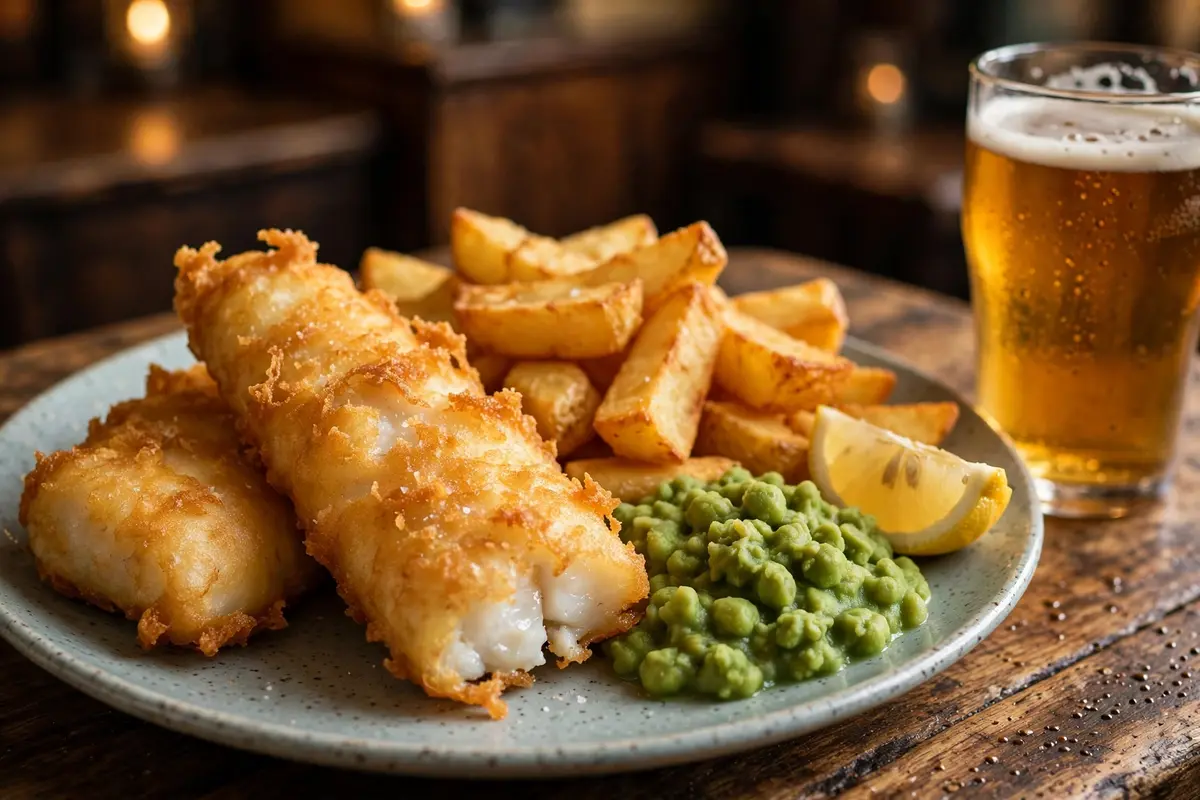
Fish and chips is London’s signature dish, and it was born in the East End. A fillet of cod or haddock in crisp batter, thick chips, mushy peas and a wedge of lemon, eaten with salt and vinegar — simple, cheap and unlike any fish and chips you have had at home. The best versions are in the old chippies, not the chains on the tourist streets, and the good ones fry to order, so expect a short wait. Order it to take away and eat it on a bench by the river, the way Londoners do.
Sunday roast
The Sunday roast is London’s weekly ritual, and the best meal of the week. Roast beef, lamb or chicken with roast potatoes, Yorkshire pudding, vegetables and gravy, served in a pub on a Sunday afternoon — and the pubs that do it well are booked out by noon. The roast is the dish that explains the British pub: a fire, a pint, a newspaper and a plate piled high. Book a table for Sunday lunch, go hungry, and order the beef with extra Yorkshire pudding.
Pie, mash and liquor
Pie, mash and liquor is the oldest fast food in London, and the one most visitors never try. A minced-beef pie with mashed potato and liquor — a green parsley sauce, not alcohol — eaten standing up at a Formica counter in one of the old pie shops of the East End. The shops are a London institution, some of them a century old, and the dish is the cheapest great meal in the city. Go to a proper pie shop, not a restaurant that lists it as a novelty, and eat it the way it comes: pie, mash, liquor, and a mug of tea.
Beyond the three dishes above, save room for the city’s other classics: a full English breakfast in a greasy spoon café, a curry on Brick Lane, where the Bangladeshi restaurants have fed the East End for fifty years, and afternoon tea in a grand hotel — expensive, but the one London meal that is a ceremony in itself. And one warning: the restaurants on the busiest stretch of the South Bank and around Leicester Square charge tourist prices for average food — eat where the locals eat, in Soho, in Borough Market and in the East End, not on the busiest corner of the walk.
Free things to do in London
The free list in London runs longer than in any other city in Europe. The British Museum, the National Gallery, Tate Modern, Tate Britain, the Natural History Museum, the Science Museum, the V&A and the National Portrait Gallery are all free, with donations welcome, and the royal parks — Hyde Park, Regent’s Park, Greenwich Park, Richmond Park — are free and open all year. The South Bank walk is free at any hour, the view from Primrose Hill is free, the Changing of the Guard is free, and Sky Garden’s viewpoint is free with a booked ticket. The markets are free to browse, the street performers in Covent Garden are free to watch, and the best free thing of all is a sunset walk along the Thames, from Westminster Bridge to Tower Bridge, with the city lighting up around you.
Frequently asked questions
How many days do you need in London?
Three full days covers the highlights: Westminster and the river, the Tower and the British Museum, and the parks and markets. Two days covers the essentials if you skip the day trip and pick one museum day. Add a fourth day for Windsor Castle, Kew Gardens or the Harry Potter studio — London rewards a slow day more than a rushed one.
Is London expensive?
Yes, but less than it looks. The big museums are free, the parks are free, the best walk in the city is free, and the Tube caps your transport at £8.90 a day in Zones 1 and 2. The expensive parts are the paid sights — the Tower at roughly £38, the Abbey at roughly £32, the London Eye from roughly £29 — so pick one or two and let the free museums do the rest. A mid-range trip runs roughly £120–£220 per person per day, and a budget trip is possible on half that if you eat at markets and stay outside Zone 1.
What is the best time to visit London?
April to June and September to October are the sweet spot: mild days, comfortable walking, smaller crowds and lower hotel prices. June to August is the classic season, warm and busy, with the longest days and the highest prices. December to February is mild and cheap, with the Christmas lights and Winter Wonderland, but the days are short and dark by 4 pm. It rains on roughly one day in three all year, so pack a light waterproof whatever the season.
Do you need a car in London?
No. Central London is walkable, the Tube and buses cover everything else, and a car is a liability — the congestion charge, the parking costs and the one-way streets make driving slower than the Tube. The only reason to hire a car is a day trip into the countryside, and even then the trains to Windsor, Oxford and the coast are faster.
Is London safe for tourists?
The tourist areas are safe with normal city sense: stay on the main streets and the river at night, keep valuables out of sight on the Tube and in crowded markets, and watch for pickpockets around Oxford Street, Camden Market and the South Bank. The central sights, the museums and the parks are safe in daylight, and the Tube runs late on Fridays and Saturdays. The real danger is the traffic — look both ways, because the cars come from the direction you do not expect.
What is the one thing you should not miss in London?
The Tower of London at opening, before the crowds arrive. It is the smallest, quietest moment in the city — the White Tower in the morning light, the ravens on the lawn, the Crown Jewels before the queue — and it is the experience every other stop in London builds on. After that, the Bayeux Tapestry at the British Museum and a walk along the South Bank at dusk.
Further reading — Wikipedia and Reddit
Wikipedia — London: the city’s history, geography and government. London on Wikipedia
Wikipedia — The Tower of London: the fortress, the Crown Jewels and the Yeoman Warders. The Tower of London on Wikipedia
Wikipedia — The British Museum: the collection, the Rosetta Stone and the Bayeux Tapestry. British Museum on Wikipedia
Reddit — r/london: the local community, with trip reports, restaurant recommendations and what is new in 2026. r/london on Reddit
Your London trip, in one paragraph
London is the city that does history, museums and the river better than anywhere else in Europe: the Tower and the Crown Jewels, the British Museum and the Bayeux Tapestry, Borough Market and the West End, and the best free museums in the world. Three days is enough to see it properly, and the 2026 changes — the Bayeux Tapestry at the British Museum, the new V&A East, the London Museum opening in Smithfield and the Observatory closed for two years — mean the guides from last year are already out of date. Book the Tower tickets, ride the Eye at sunset, and leave a morning free for the museums. If you want more city guides from this series, start with Chicago, Nashville, Los Angeles, Orlando, Miami, San Diego, Denver, Savannah, Dallas, Charleston, San Francisco, Myrtle Beach, Las Vegas and San Antonio — and if the river calls you back, the old city will still be here, 2,000 years of it, waiting.

About the Author