Things to Do in Charleston
20 Best Attractions, a 3-Day Itinerary, Where to Stay, and the Food You Cannot Miss
Quick Info
Best for: History lovers, foodies, beachgoers and first-time visitors — pastel streets, Civil War history, Gullah culture, Lowcountry food and the harbour in one walkable city
Best time: March–May and September–November for mild days and low humidity; March for the Wine + Food Festival, late May to early June for Spoleto
How long: 2 full days for the highlights; 3 days if you add the plantations and a beach
Budget: Roughly $160–$300 per person per day for a mid-range trip; the Battery, Rainbow Row, Waterfront Park and the Angel Oak are free
Don’t miss: Sunrise at the Pineapple Fountain, Fort Sumter, the International African American Museum, a plantation on the Ashley River, she-crab soup and a sunset on Shem Creek
Charleston is the oldest city in South Carolina — and the prettiest city in the American South. Founded in 1670 as Charles Town, on a peninsula where the Ashley and Cooper rivers meet the harbour, it grew rich on rice, indigo and cotton, all of it worked by enslaved Africans, and for a time it was one of the wealthiest cities in North America. Charleston is the city of pastel row houses and live oaks, of the Civil War’s first shots and the Gullah Geechee culture that grew from slavery’s hardest history, of she-crab soup and shrimp and grits and a harbour that glows after dark. And in 2026 the city is changing fast: new waterfront hotels, new restaurants and a museum that has already changed how America tells this story.
This guide gives you the 20 best things to do in Charleston in a sensible order, a ready-made 3-day itinerary, honest advice on when to go, where to stay and how to get around, and the three foods you have to try before you leave. Prices and hours change, so every price in this guide is marked as approximate — always check the official website before you visit.
Charleston at a glance
| Question | Short answer |
|---|---|
| How long do you need? | 2 full days for the highlights; 3 days is the balanced first trip; 4 days if you add Kiawah Island or a second plantation day. |
| Best area for a first trip | The Historic District, south of Calhoun Street — Rainbow Row, the Battery, the Market and King Street are all a walk from there. |
| One thing to book early | Fort Sumter ferry tickets (they sell out in spring and summer), Spoleto Festival tickets in May–June and popular restaurants on weekends. |
| One thing that is free | The Battery, Rainbow Row, Waterfront Park, the Angel Oak, the DASH trolley and the beaches — the best of Charleston costs nothing. |
| Do you need a car? | Not downtown — the peninsula is flat and walkable, with a free trolley. A car helps for the plantations, the Angel Oak and the beaches. |
For background before you go, the Wikipedia entry on Charleston covers the city’s history, from its founding as Charles Town in 1670 to the Civil War and the city’s rebirth — it is linked in Further reading at the end of this guide.
The 20 best things to do in Charleston
The list starts with the experiences that define Charleston and that first-time visitors should protect time for, then moves into the harbour, the plantations and the coast beyond the city. If you only have two days, do numbers 1 to 10.
1. Walk Rainbow Row
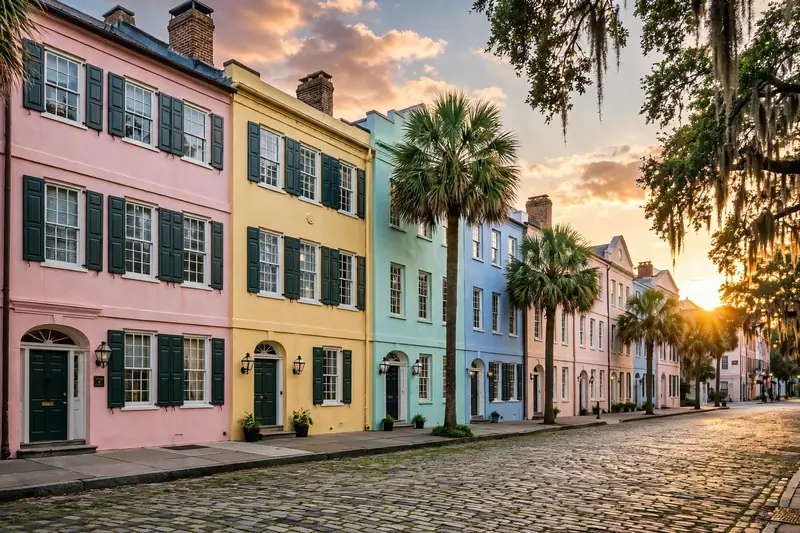
Rainbow Row is the first photograph every Charleston visitor takes — and it earns the attention. Thirteen Georgian row houses along East Bay Street, painted in shades of pink, lemon, mint and sky blue, date back to the 1740s, when this stretch was the commercial heart of the city’s waterfront. The houses were shops and merchants’ homes first, painted in pastel colours in the 1930s and 1940s when the row was restored, and the colours have stuck ever since. Come early in the morning, when the light is soft and the street is quiet, and walk the whole row slowly — the pastel fronts, the shuttered windows and the cobblestones are the Charleston you came for.
Practical tip: Rainbow Row is free to walk and best before 9am, when the tour groups have not yet arrived — prices are approximate, so check before visiting. The houses are private homes, so admire them from the street and keep the noise down. The best photographs come from across the street, looking north along the row.
2. The Battery and White Point Garden
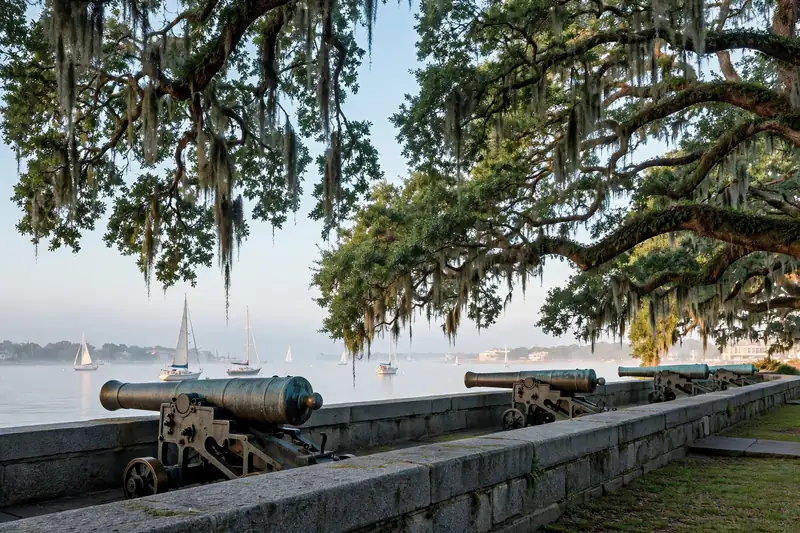
The Battery is the tip of the peninsula, where the Ashley and Cooper rivers meet the harbour — and the grandest walk in Charleston. The defensive seawall and its adjoining 5.7-acre White Point Garden sit at 2 Murray Boulevard, lined with historic cannons, monuments dating back to the 1800s and live oaks draped in Spanish moss. The mansions along Murray Boulevard and South Battery Street are some of the finest in the South, and the view across the harbour to Fort Sumter and Castle Pinckney is the reason people linger here. Come at sunrise, when the light comes up over the harbour, or at dusk, when the oaks go gold and the whole point feels like a painting.
Practical tip: The Battery and White Point Garden are free and open all day. Come at sunrise for the quietest photographs, and watch for dolphins in the harbour — they pass the point most mornings. The garden benches under the oaks are the best free seat in the city.
3. Take the ferry to Fort Sumter
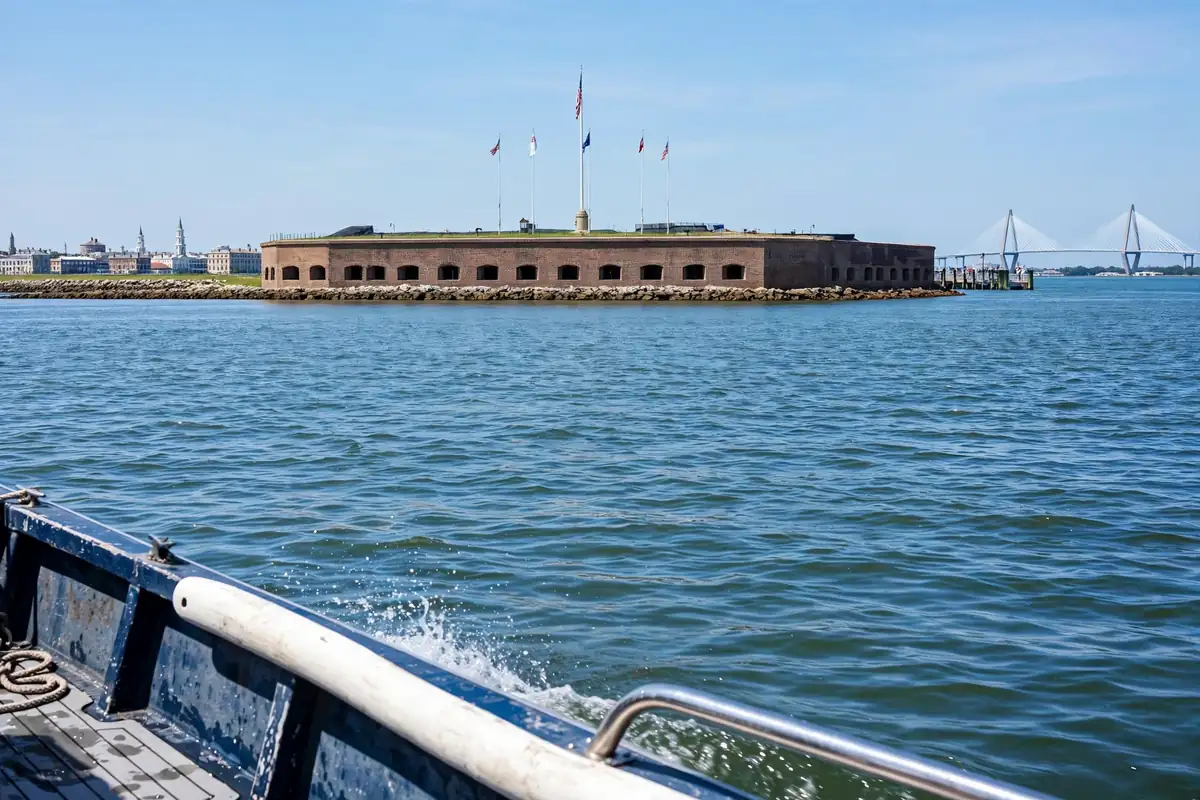
Fort Sumter is where the Civil War began — and standing on the spot makes that history feel closer than a textbook ever could. Confederate artillery opened fire on the federal garrison here on April 12, 1861, and the brick fort on its island at the entrance to Charleston Harbor still carries the scars. The fort itself is free to enter, but the only way to reach it is the authorised ferry from Liberty Square downtown or Patriots Point in Mount Pleasant, a 30-minute narrated cruise across the harbour with views of Rainbow Row, the Battery and the USS Yorktown. Rangers give short talks on the island, and the museum inside the fort tells the story of the siege in the words of the people who lived it.
Practical tip: Ferry tickets cost roughly $43–$46 for adults — prices are approximate, so check before visiting. From Liberty Square the boats leave at 9:30am, 12:00pm and 2:45pm from late February to late November. Book online before you travel: the ferries sell out in spring and summer, and the America the Beautiful pass does not cover the ferry. Allow about 2 hours and 15 minutes for the round trip.
4. The International African American Museum
The International African American Museum is the most important new museum in the American South — and the one Charleston visit that changes how you see the city. Opened in June 2023 at Gadsden’s Wharf, the museum stands on the site where enormous numbers of captive Africans were landed in the decades around 1800, and it tells the full story: the Middle Passage, the Gullah Geechee culture that grew from it, and the centuries of Black achievement that followed. The building is raised 13 feet above the historic site itself, treating the ground below as sacred rather than building over it, and the outdoor African Ancestors Memorial Garden, including the tide-driven Tide Tribute installation, is free and open to the public even without a ticket.
Practical tip: Adult admission costs roughly $22.50 — prices are approximate, so check before visiting. The museum is closed on Mondays, so plan it for another day, and book a timed slot online in advance, especially at weekends and in spring. Allow two to three hours, and do not skip the memorial garden outside.
5. Browse the Charleston City Market
The Charleston City Market has been the city’s shopping heart since the 1800s, and it is still the best place to buy something made in Charleston rather than made for tourists. The long market halls on Market Street hold more than 300 vendors, from sweetgrass basket weavers — the Gullah craft passed down through generations, and the one souvenir worth the price — to jewellers, artists and food stalls. Come in the morning, when the halls are cool and the weavers are at work, and stay for the night market on Friday and Saturday evenings, when the market fills with local makers and live music.
Practical tip: The market is free to browse and open daily. The sweetgrass baskets are the real thing — expect roughly $50 and up for a small one, and buy from the weavers themselves rather than the resellers. The night market runs on Friday and Saturday evenings; arrive before 7pm for the best stalls.
6. Waterfront Park and the Pineapple Fountain
Waterfront Park is Charleston’s front porch — 8 acres of shaded walkways, harbour breezes and swings along Concord Street, built in under a year after Hurricane Hugo hit in 1989. The Pineapple Fountain, the park’s centrepiece, is the symbol of Southern hospitality, and it is the most photographed spot in the city after Rainbow Row. Come at sunrise, when the fountain catches the first light and the harbour is still, or in the afternoon, when children wade in the fountain and the swings fill with people watching the boats. It is the easiest free hour in Charleston, and the best place in the city to sit and do nothing.
Practical tip: The park is free and open all day. Come at sunrise for the quietest photographs, and bring a picnic — the lawns along the harbour are made for it. The park is a two-minute walk from the City Market and the Aquarium, so it pairs with either.
7. Patriots Point and the USS Yorktown
Patriots Point Naval & Maritime Museum is the biggest day out across the harbour in Mount Pleasant — built around the aircraft carrier USS Yorktown, the World War II carrier that earned 11 battle stars and now sits at 40 Patriots Point Road as a floating museum. Climb through the hangar deck, the flight deck and the bridge, walk through a destroyer, the USS Laffey, and a submarine, and stand on the deck where the Fort Sumter ferry passes on its way out. The museum also holds the Medal of Honor Museum and the Vietnam Experience exhibit, and the views back across the harbour to downtown Charleston are some of the best in the city.
Practical tip: Admission costs roughly $28 for adults and $23 for children aged 6–12 when booked online — prices are approximate, so check before visiting. Parking is extra, at roughly $5.50 an hour up to $25 a day. Allow three to four hours, and pair it with the Fort Sumter ferry, which also leaves from the Patriots Point dock.
8. Shop, dine and people-watch on King Street
King Street is the spine of the peninsula and its main shopping street, running north from the Battery for well over a mile. The southern end around Broad Street is lined with antique dealers; the stretch near Marion Square is all fashion boutiques and big-name stores; and Upper King, north of Calhoun Street, is where the city goes out to eat and drink. The street is at its best in the late afternoon, when the shops are open, the restaurant patios fill and the whole of Charleston seems to be out. Marion Square, the broad green lawn at the top of the shopping district, hosts a much-loved Saturday farmers’ market through the warmer months.
Practical tip: King Street is free to walk and liveliest after 4pm. The Saturday farmers’ market in Marion Square runs through the warmer months — come before 10am for the best produce. The street is also where the city’s newest shops are landing, with several national brands opening new storefronts in 2026 and 2027.
9. Walk the Arthur Ravenel Jr. Bridge
The Arthur Ravenel Jr. Bridge is the cable-stayed span that ties downtown Charleston to Mount Pleasant — and the best free view in the city. The pedestrian and cycling path runs 2.5 miles each way along the bridge, climbing to 575 feet above the harbour, with the whole of Charleston laid out below: the peninsula, the harbour, Fort Sumter and the Yorktown. Walk it at sunrise, when the light comes up over the Cooper River, or at sunset, when the cables go gold. It is the walk most visitors skip and most locals recommend first.
Practical tip: The bridge path is free and open all day. The full crossing is 5 miles return, so allow about two hours on foot or an hour by bike — bike rentals are available downtown. Go early in summer: there is no shade on the bridge, and the midday heat is fierce. The park under the bridge on the Mount Pleasant side has a playground, a water feature and fishing spots.
10. The Angel Oak Tree
The Angel Oak is the oldest living thing you will meet in Charleston — a live oak on Johns Island estimated at 300 to 400 years old, standing 65 feet tall with a 25.5-foot circumference and a canopy wide enough to make you feel small standing under it. The tree has survived hurricanes, wars and the city’s growth, and it is free to visit, which makes it the best free half-day outside downtown. The branches, draped in Spanish moss, stretch so far that some rest on the ground, and the whole tree feels less like a tree and more like a cathedral.
Practical tip: The Angel Oak is free and open Monday to Saturday from 9am to 5pm and Sunday from 1pm to 5pm. You will need a car or a rideshare to get there — it is about 25 minutes from downtown — and come at golden hour, when the light comes through the canopy. Pair it with the Charleston Tea Garden on Wadmalaw Island, a ten-minute drive away.
11. The Old Exchange, the Provost Dungeon and the Old Slave Mart
The Old Exchange & Provost Dungeon is the building where Charleston’s hardest history happened under one roof. Built in 1771 as a customs house and exchange, it held British prisoners in its dungeon during the Revolutionary War, hosted the ratification of the United States Constitution in South Carolina, and later served as a post office and city hall. Two blocks away, the Old Slave Mart Museum stands on the site of a slave auction gallery from the 1850s, telling the story of the domestic slave trade in the words of the people who were bought and sold there. Together, the two small museums are the most honest hour in the Historic District — and the one most visitors remember longest.
Practical tip: The Old Exchange costs roughly $12 for adults, and the Old Slave Mart roughly $8 — prices are approximate, so check before visiting. The Old Slave Mart is closed on Sundays, so plan it for another day. Allow an hour for both, and take the guided dungeon tour at the Old Exchange if one is running.
12. Middleton Place
Middleton Place holds America’s oldest landscaped gardens — 65 acres of terraces, reflecting pools and live oaks laid out in 1741 along the Ashley River, and still the most beautiful garden in the Lowcountry. The house museum, the stableyards with heritage-breed animals, and the daily guided tours are all included with general admission, and the gardens change with the seasons: azaleas in spring, crape myrtle in summer, camellias in winter. The Middleton family story is told honestly here, including the lives of the enslaved people who built and worked the plantation, and the “Beyond the Fields” tour is the one to take if you want the full picture.
Practical tip: General admission costs roughly $35 for adults — prices are approximate, so check before visiting. A combination ticket with Drayton Hall costs roughly $50, and the two estates sit minutes apart on Ashley River Road, so they pair into one day. Arrive at opening for the gardens to yourself, and allow three to four hours.
13. Magnolia Plantation and Gardens
Magnolia Plantation and Gardens is the most visited plantation in Charleston — and the prettiest. The Drayton family has owned the land since 1676, and the gardens, begun in the 1840s as a gift from Reverend John Grimké Drayton to his wife, are among the oldest public gardens in the United States. There are 19 named gardens to walk, a 45-minute narrated tram ride through the Audubon Swamp Garden, where alligators, herons and turtles live among the cypress trees, and a 30-minute guided tour of the plantation house, the third to stand on the property. The “From Slavery to Freedom” tour tells the story of the enslaved people who built Magnolia, and it is the tour most guides underrate.
Practical tip: Garden admission costs roughly $35 for adults, with the house tour and tram ride extra — prices are approximate, so check before visiting. The gardens are open daily from 9am to 5pm, with last admission at 4pm. Allow four to five hours for the full experience, and come in spring, when the azaleas are at their best.
14. Drayton Hall
Drayton Hall is the plantation for people who love architecture — the earliest and finest example of Palladian architecture in the United States, built in 1738 and never modernised, so the house you walk through today is the house as it was built. There is no furniture inside, and that is the point: the plasterwork, the woodwork and the proportions are the exhibit. The grounds hold the oldest African American cemetery in the country still in use by descendants, and the interpreter-led tours tell the story of the Drayton family and the enslaved people who lived and worked here with unusual care.
Practical tip: Admission costs roughly $30 online or $35 at the gate — prices are approximate, so check before visiting. Drayton Hall is open Wednesday to Monday from 9am to 4:30pm and closed on Tuesdays, so plan it for another day. Book online: the gate price is higher, and the interpreter-led tours fill up.
15. Boone Hall Plantation
Boone Hall Plantation is the plantation with the avenue — a three-quarter-mile drive lined with live oaks planted in 1743, and the most photographed entrance in the Lowcountry. The estate, founded in 1681, holds a 1936 Colonial Revival house, nine original slave cabins that now hold exhibits on the lives of the enslaved people who lived there, and gardens that change with the seasons. Boone Hall is also the easiest plantation to reach without a car, a short rideshare from downtown, and the one most families choose first.
Practical tip: Admission costs roughly $30 for adults and $12 for children aged 6–12 — prices are approximate, so check before visiting. Boone Hall is open Monday to Saturday from 9am to 5pm and Sunday from 12pm to 5pm, and closes on Thanksgiving and Christmas Day. The ticket includes every tour that day, so arrive at opening and stay for the full round.
16. McLeod Plantation
McLeod Plantation is the plantation most guides skip — and the one that tells the story the others soften. The 37-acre estate on James Island, run by Charleston County Parks, was a working sea-island cotton plantation, and its tours focus on the lives of the enslaved people who built it and their Gullah Geechee descendants, rather than on the house. The transition-to-freedom story here, from emancipation through the Freedmen’s Bureau to the present day, is told in the cabins and the fields rather than in a ballroom, and it is the most honest plantation visit in Charleston.
Practical tip: Admission costs roughly $15 for adults — prices are approximate, so check before visiting. McLeod is the closest plantation to downtown, so it is the easiest option if you are using a rideshare rather than a rental car. Take the guided tour: the site is best understood with a guide, and the tours run several times a day.
17. South Carolina Aquarium
The South Carolina Aquarium is the best indoor attraction in Charleston — and the best rainy-day stop in the city. The state’s largest aquarium sits on the harbour at Liberty Square, next to the Fort Sumter ferry dock, and holds the Great Ocean Tank, a 385,000-gallon exhibit with sharks and rays, the Sea Turtle Care Center, where injured sea turtles are rehabilitated and released, and the touch tanks that keep children busy for an hour. The rooftop terrace looks straight out over the harbour, and your ticket lets you come and go all day, so you can pair it with Waterfront Park next door.
Practical tip: Admission costs roughly $42.75 for adults and $34.20 for children aged 3–12 at 2026 rates — prices are approximate, so check before visiting. Book online to skip the ticket line, and come at opening to beat the school groups. Allow two to three hours, and do not miss the Sea Turtle Care Center — it is the most popular exhibit in the building.
18. Take a ghost tour after dark
Charleston is called one of the most haunted cities in America — and unlike most cities that make that claim, Charleston has the receipts. The city was built on its dead: the Historic District sits over old burial grounds, the houses have 300 years of history, and the stories are documented, not invented. The best walking ghost tours focus on history first and ghost stories second, weaving documented history with reported paranormal activity through the alleys and past the Old City Jail, the Unitarian Churchyard and the Dock Street Theatre, the oldest theatre building in America. The tours run two hours over cobblestones and brick sidewalks, so wear walking shoes.
Practical tip: Ghost tours cost roughly $30–$40 per person — prices are approximate, so check before visiting. Book ahead for Friday and Saturday nights, when the best tours sell out, and choose a tour that leads with history: the stories are better when they are true. The Old City Jail, at 21 Magazine Street, is the stop most tours build around.
19. Shem Creek, Folly Beach and Sullivan’s Island
Shem Creek is where Charleston goes to watch the sunset — a working shrimp-boat creek in Mount Pleasant, lined with seafood restaurants whose decks sit over the marsh, where dolphins feed at dusk and the shrimp boats come in at the end of the day. From there, the barrier islands are twenty minutes away: Folly Beach, the laid-back surf town with a fishing pier and the best waves in the Lowcountry, and Sullivan’s Island, the quieter beach with wide sand, a lighthouse and the island’s low-key restaurants. All three beaches are free to walk, and the sand at Sullivan’s Island is the least crowded of the lot.
Practical tip: The beaches are free to access; parking varies, so check the signs before you leave the car. Come to Shem Creek at sunset for the dolphins, and to Folly Beach in the morning for the surf. Breach Inlet, between Sullivan’s Island and Isle of Palms, is the other free dolphin-watching spot locals name first.
20. Day trip: the Charleston Tea Garden on Wadmalaw Island
The Charleston Tea Garden is the one day trip no other American city can offer — America’s only tea garden, 127 acres of tea bushes on Wadmalaw Island, about 25 minutes from downtown. The trolley tour runs through the fields and the factory, where the tea is still processed on the original 1950s machinery, and the tasting room lets you try the garden’s black and green teas for free. It is the quietest, most unexpected half-day in the Lowcountry, and it pairs perfectly with the Angel Oak, a ten-minute drive away. Come in the morning, when the light is soft over the fields, and bring home a tin of the garden’s American Classic tea — the only tea grown in America.
Practical tip: The trolley tour costs roughly $15 for adults — prices are approximate, so check before visiting. The garden is open daily, and the factory tour runs on weekdays. Pair it with the Angel Oak and a lunch stop on Johns Island, and you have the best half-day outside downtown.
Charleston in 3 days — a ready-made itinerary
This plan groups sights that sit near each other, so you are sightseeing instead of crossing the city. Charleston is a walking city, so each day stays in one area, and the plan is built around the heat: the outdoors in the morning and the evening, the museums in the middle of the day. Timings are a guide, not a schedule to stress about — swap Day 2 and Day 3 if the weather demands it, and always do the Fort Sumter ferry first thing, when the harbour is calmest.
| Day | Morning | Afternoon | Evening |
|---|---|---|---|
| Day 1 — The Historic District | Rainbow Row, the Battery and Waterfront Park | International African American Museum and the Old Slave Mart, City Market | King Street dinner, ghost tour after dark |
| Day 2 — The harbour and Mount Pleasant | Fort Sumter ferry from Liberty Square | Patriots Point and the USS Yorktown, Shem Creek | Sunset at Shem Creek, dinner in Mount Pleasant |
| Day 3 — Plantations and the coast | Middleton Place gardens | Drayton Hall or Magnolia Plantation | Angel Oak at golden hour, Folly Beach sunset |
Day 1: The Historic District
Start at Rainbow Row in the morning, when the light is soft and the street is quiet, then walk the Battery and White Point Garden and Waterfront Park. In the afternoon, visit the International African American Museum and the Old Slave Mart, then browse the City Market and the shops on King Street. Finish the day with dinner on Upper King Street and a ghost tour after dark — the city is at its most atmospheric when the lamps come on.
Day 2: The harbour and Mount Pleasant
Start with the first Fort Sumter ferry from Liberty Square in the morning, when the harbour is calmest. In the afternoon, cross the Ravenel Bridge to Patriots Point for the USS Yorktown, then walk Shem Creek as the shrimp boats come in. End the day with dinner on a Shem Creek deck at sunset, watching the dolphins feed in the creek.
Day 3: Plantations and the coast
Start at Middleton Place at 9am opening, when the gardens are at their best, then visit Drayton Hall or Magnolia Plantation in the afternoon — the two estates sit minutes apart on Ashley River Road. End the trip at the Angel Oak at golden hour, then drive on to Folly Beach for a sunset walk on the pier — the right way to finish a Charleston trip.
Only have 2 days? Do Day 1 and Day 2, and add the Angel Oak on the morning of Day 2 if your flight is late. Only have 1 day? Do Rainbow Row, the Battery, Waterfront Park, the City Market and King Street — that is Charleston in miniature. With 4 days, add Kiawah Island for a beach and biking day, or a second plantation day on the Ashley River. Families with younger children should also look at the South Carolina Aquarium and the Children’s Museum of the Lowcountry, both an easy walk from Waterfront Park. And if you have a spare half-day, Charles Towne Landing — the 80-acre state park on the site of the first English settlement, with a 17th-century ship replica and a zoo of the animals the settlers would have met — is the stop most guides underrate.
Best time to visit Charleston
Charleston has a humid subtropical climate, so there is no bad month — but the city feels very different by season. The honest summary is this: March to May and September to November give you the best balance of mild weather, blooming gardens and smaller crowds, while summer is hot and humid, and winter is the cheapest and quietest time downtown.
| Season | What it is like | Best for |
|---|---|---|
| Winter (December–February) | Mild and quiet, highs around 55–65°F, the cheapest hotels — with the occasional cold snap | First trips, walking, budget trips |
| Spring (March–May) | Warm days in the 70s, azaleas and jasmine in bloom, the Wine + Food Festival in March and Spoleto in May–June | First trips, gardens, festivals |
| Summer (June–August) | Hot and humid, highs in the high 80s and 90s, afternoon thunderstorms — plan museums for midday and the beach for morning | Beaches, the Aquarium, early mornings |
| Autumn (September–November) | Warm and golden, smaller crowds, the MOJA Arts Festival in September–October | First trips, the plantations, the best weather of the year |
Remember that the Charleston Wine + Food Festival runs in March and brings the biggest restaurant crowds of the year — book tables months ahead if you come for it — and that Spoleto Festival USA fills the city with music, theatre and dance from late May to early June. Summer brings near-daily highs in the high 80s and 90s with afternoon thunderstorms, so plan the outdoors for the morning and the museums for the afternoon, and drink more water than you think you need. Whatever month you choose, pack for the humidity in summer and layers in winter: Charleston weather changes fast, and the low-lying streets near the Battery flood during king tides and heavy rain.
Where to stay in Charleston
For a first trip, stay in the Historic District, south of Calhoun Street, or on Upper King Street. You will be close to the sights in this guide, you will be able to walk in the evenings, and you will not lose time commuting. These are the areas to look at first:
| Area | Who it suits | Why stay there |
|---|---|---|
| Historic District — South of Broad | First-timers, walkers | Rainbow Row, the Battery and the Market on your doorstep |
| Upper King Street | Restaurants, nightlife | The best restaurants and bars on your doorstep |
| Mount Pleasant | Families, harbour views | Patriots Point, Shem Creek and the beaches on your doorstep |
| Folly Beach | Beach lovers, surfers | The sand, the pier and the surf shops on your doorstep |
| West Ashley | Budget trips, a local feel | Cheaper hotels, the plantations and the Tea Garden on your doorstep |
Wherever you choose, check how far the nearest DASH trolley stop is before you book — Charleston is a walking city, but a hotel that looks central can still be a 20-minute walk from the sights you visit most. Hotel prices swing sharply with the Wine + Food Festival, Spoleto and spring weekends, so comparing dates can save real money. And note the 2026 changes: The Cooper, the city’s first luxury waterfront hotel on the peninsula, debuted in March 2026; Live Oak Charleston, South Carolina’s first Tribute Portfolio hotel, opened in April 2026; and the Grand Bohemian Charleston became Hotel Operis, with a new rooftop bar, the Arden Room, on October 1, 2026 — so older guides that name the Grand Bohemian are already out of date.
Getting around Charleston
Charleston is a walking city, and the honest advice is to use your feet and the free DASH trolley downtown and a car or a rideshare for everything else. The core is well served, but the sights in this guide are spread across the peninsula, the harbour and the islands — and the heat makes walking long distances hard work in summer.
- Walking: The peninsula is flat and compact — you can cross the Historic District on foot in about 20 minutes — and every sight on Day 1 of this guide is a walk from Rainbow Row. The summer heat is the real limit: walk in the morning and the evening, and use the air-conditioning in between.
- Free DASH trolley: CARTA’s DASH trolley runs free through downtown, looping the Historic District, the Market and Upper King Street — the easiest way to get between the sights without a car. The trolley runs daily, and the stops are marked with green signs.
- CARTA buses: CARTA buses run across the peninsula and out to Mount Pleasant, West Ashley and the beaches. A ride costs roughly $2 — prices are approximate, so check before visiting. The buses are the cheapest way to reach the plantations without a car, though the service is infrequent.
- Carriage tours: The horse-drawn carriage tours are the classic Charleston introduction: a one-hour narrated ride through the Historic District, past Rainbow Row, the Battery and the churches. Tours cost roughly $50–$60 for adults — prices are approximate, so check before visiting — and they leave from the Market area. Book the first tour of the morning, when the streets are quietest.
- Rideshare: Rideshare cars are easy to find downtown and in Mount Pleasant, and are the simplest way to reach the plantations, the Angel Oak and the beaches without a car of your own. There is no direct public transit to the Tea Garden or the Angel Oak, so plan a rideshare for those days.
- Driving: A car is the most flexible way to reach the plantations, the Angel Oak, the Tea Garden and the beaches, and the sights in this guide are spread across them. Parking on the peninsula is expensive and the streets are narrow, so park in a garage downtown and walk once you are there. Watch for flooding after heavy rain: the low-lying streets near the Battery flood during king tides and storms.
- From the airport: Charleston International Airport (CHS) is about 20 minutes northwest of downtown by car and is served by rideshare and the CARTA bus. The airport is small and easy to navigate, and the drive downtown crosses the Ashley River into the Historic District.
- Cycling: The Ravenel Bridge path is the best ride in the city — 2.5 miles each way, 575 feet above the harbour — and the peninsula itself is flat and easy to cycle. Bike rentals are available downtown. Keep the bike to the bridge path and the parks in summer: the heat and the narrow streets make downtown cycling hard work.
Charleston food you have to try
You can eat very well in Charleston at every budget, from food stalls in the City Market to white-tablecloth dining on Upper King Street. But three foods are Charleston signatures, and a first trip is not complete until you have tried all three. The city’s restaurant scene keeps changing, too: Cheeky, a new seafood spot at 151 Meeting Street, CurrentBurger, a burger shop with a waterfront view at 176 Concord Street, and Cafe Lucca, a new coffee stop at 225 Meeting Street, all opened in the fall of 2026.
She-crab soup
She-crab soup is Charleston’s signature dish — a rich, creamy soup made with blue crab meat, crab roe and a splash of sherry, and the first thing most locals tell visitors to order. The soup was invented in Charleston in the early 1900s, and the best versions are still made the old way: a slow-cooked crab stock, heavy cream, and just enough sherry to lift it. Order it as a starter at Slightly North of Broad, the restaurant most locals name first, or at 82 Queen, and do not skip the sherry on top — it is part of the dish.
Practical tip: A bowl of she-crab soup costs roughly $12–$16 — prices are approximate, so check before visiting. Order it as a starter rather than a main: it is rich, and the best version is the one with the most crab in it. The soup is on almost every downtown menu, so try it twice and compare.
Shrimp and grits
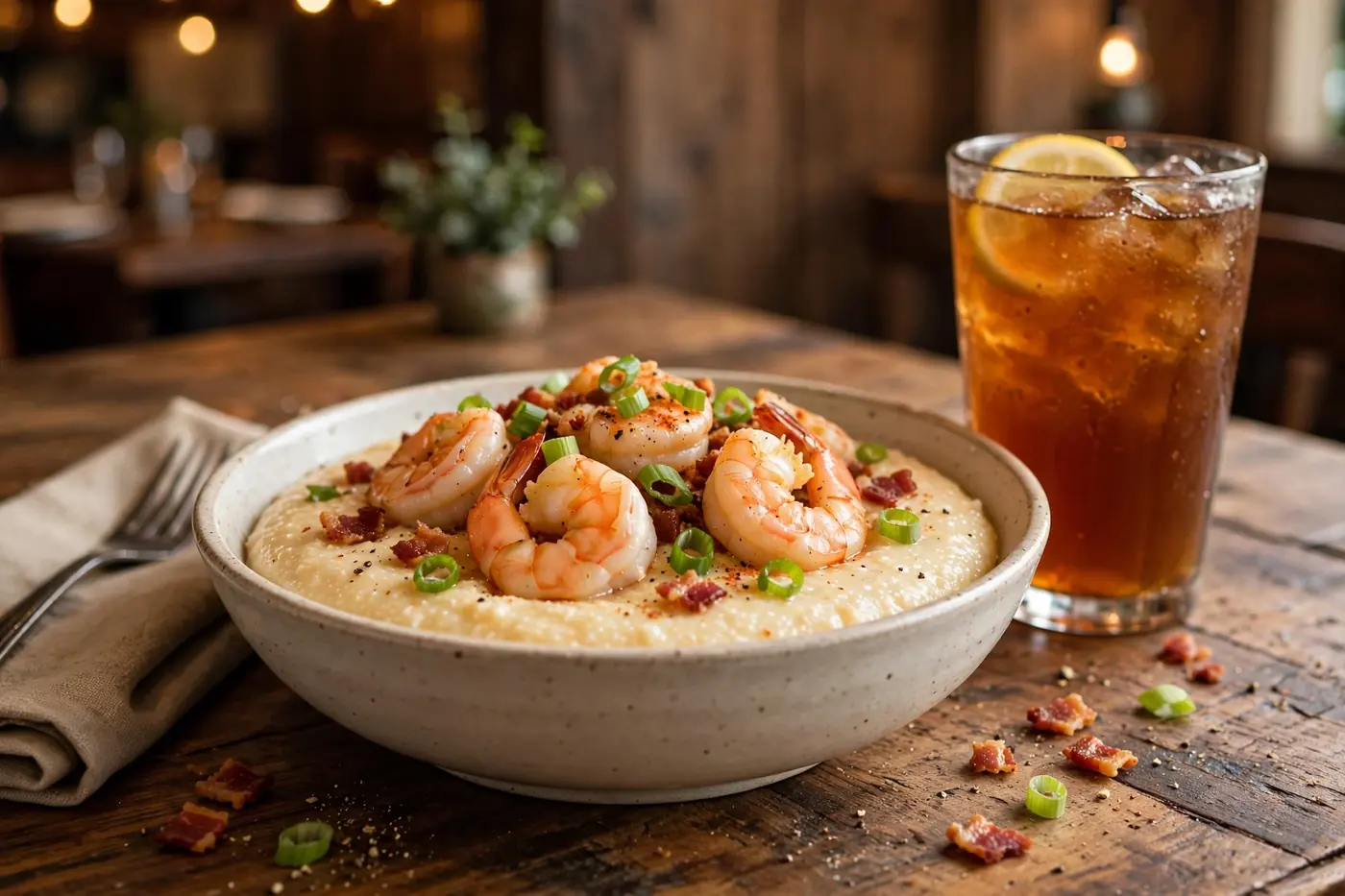
Shrimp and grits is the Lowcountry plate every first trip should include — plump shrimp, bacon and green onions over creamy stone-ground grits, and the dish that put Charleston on the food map. The grits are the test: stone-ground, slow-cooked and creamy, never instant, and the shrimp are local, caught in the waters off the coast. The best versions are at the neighbourhood restaurants rather than the chains — Slightly North of Broad, Hominy Grill’s successors on the peninsula, and the Shem Creek seafood houses — and the honest advice is to order it for brunch, when the grits are at their best.
Practical tip: Shrimp and grits costs roughly $16–$24 — prices are approximate, so check before visiting. Order it at brunch, when the best kitchens serve it, and ask for the grits the way the kitchen makes them: the stone-ground version is worth the wait.
Lowcountry boil
A Lowcountry boil is the meal Charleston eats outside — shrimp, sausage, corn on the cob and new potatoes, boiled together in one pot with Old Bay and poured out on a newspaper-covered table, eaten with your hands. It is the dish of the oyster roasts and the backyard parties, and the best place to try it is at a Shem Creek seafood house, where the shrimp come off the boats in the creek outside. Order it family-style, share it with the table, and do not ask for a fork: the boil is eaten with your hands, and the mess is part of it.
Practical tip: A Lowcountry boil costs roughly $20–$30 per person — prices are approximate, so check before visiting. Order it at a Shem Creek restaurant, where the shrimp are freshest, and come hungry: the boil is served family-style and the portions are generous. The oyster roasts in winter are the other Lowcountry ritual worth planning a trip around.
Beyond the big three, leave room for a plate of fried chicken and biscuits, a bowl of oyster stew, a family-style dinner on Shem Creek — and at least one neighbourhood meal in Mount Pleasant or on Upper King Street.
Free things to do in Charleston
Charleston is unusually generous to budget travellers. Several of its very best experiences cost nothing at all:
- The Battery and White Point Garden: Cannons, live oaks and the harbour at the tip of the peninsula — the grandest free walk in Charleston.
- Rainbow Row: Thirteen pastel Georgian houses along East Bay Street, the most photographed street in the South.
- Waterfront Park and the Pineapple Fountain: Eight acres of harbour breezes, swings and the Pineapple Fountain — the best free seat in the city.
- The Angel Oak Tree: A 300- to 400-year-old live oak on Johns Island, free to visit, with a canopy wide enough to make you feel small.
- The African Ancestors Memorial Garden: The outdoor garden at the International African American Museum, including the tide-driven Tide Tribute, is free and open to the public.
- The DASH trolley: CARTA’s free downtown trolley, running through the Historic District and Upper King Street.
- Folly Beach, Sullivan’s Island and Isle of Palms: Three barrier-island beaches, all free to walk, with the sand, the surf and the sunsets.
- Dolphin spotting at Shem Creek and Breach Inlet: Dolphins feed in Shem Creek at sunset and at Breach Inlet most mornings — the best free wildlife in the Lowcountry.
Build each day around one paid highlight and fill the rest with free sights. That is how a Charleston weekend stays affordable without feeling cheap — the free things here are genuinely the best things in the city.
Frequently asked questions
How many days do you need in Charleston?
Two full days covers the highlights: one day for the Historic District and one day for the harbour and Mount Pleasant. Three days is the balanced first trip, adding the plantations and a beach, and a fourth day is best spent on Kiawah Island or a second plantation day. One day is enough for Rainbow Row, the Battery, the Market and King Street — but you will wish you had stayed longer.
What is the best time to visit Charleston?
March to May and September to November are the sweet spot: mild days with highs in the 70s, the gardens in bloom in spring and the smallest crowds in autumn. Summer is hot and humid, with highs in the high 80s and 90s and afternoon thunderstorms, so plan museums for midday and the beach for morning. Winter is mild, with highs around 55–65°F, and the cheapest hotels of the year.
Do you need a car in Charleston?
Not for the main sights — the peninsula is flat and walkable, the DASH trolley is free, and rideshares cover the rest. A car helps for the plantations, the Angel Oak and the beaches, where there is no direct public transit. If you do rent one, park in a garage downtown and walk once you are there: parking on the peninsula is expensive and the streets are narrow.
Is Charleston expensive?
Charleston is one of the more expensive small cities in the United States: a mid-range trip runs roughly $160–$300 per person per day, and downtown hotel rooms can run well over $300 a night in spring. The way to keep costs down is to stay in Mount Pleasant or West Ashley, eat at the neighbourhood restaurants rather than the fine-dining rooms, and build your days around the free sights — the Battery, Rainbow Row, Waterfront Park and the beaches cost nothing.
Is Charleston safe for tourists?
The tourist areas are safe with normal city sense: stay aware late at night on Upper King Street, do not leave valuables visible in parked cars, and keep to the busy, well-lit streets after dark. The Historic District, the Market and King Street are well patrolled and busy into the evening. Watch for flooding after heavy rain: the low-lying streets near the Battery flood during king tides and storms, so check the forecast before you walk.
What is the one thing you should not miss in Charleston?
Fort Sumter. It is the place where the Civil War began, it is the most moving hour in the city, and it is the reason most first-time visitors come. Book the ferry before you travel — the boats sell out in spring and summer — and pair it with the International African American Museum afterwards, so you leave Charleston understanding the whole story, not just the pretty part.
Further reading — Wikipedia, Reddit and Quora
Want to dig deeper or hear directly from locals and other travellers? These pages are the best next stops:
- Wikipedia — Charleston — the city’s history, from its founding as Charles Town in 1670 to the Civil War and the city’s rebirth as one of America’s most visited small cities.
- Wikipedia — Fort Sumter — the history of the fort at the entrance to Charleston Harbor, from its construction to the first shots of the Civil War on April 12, 1861.
- Wikipedia — Rainbow Row — the story of the thirteen Georgian row houses along East Bay Street, from the 1740s to the pastel restoration of the 1930s and 1940s.
- Reddit — r/Charleston — the Charleston community on Reddit, where locals answer first-time visitors’ questions and share current tips on restaurants, the beaches and the best neighbourhoods.
- Quora — how many days in Charleston — travellers’ and locals’ answers on how many days you need to see the key sights in Charleston, South Carolina.
Your Charleston trip, in one paragraph
Start at Rainbow Row in the morning, walk the Battery in the afternoon, watch the sunset from Shem Creek, eat she-crab soup on King Street, spend a day at Fort Sumter and the plantations, and finish with the Angel Oak and a beach sunset. Do that, and you will leave Charleston understanding exactly why people who visit once tend to come back. And if you liked this guide, read our guide to things to do in Chicago, our guide to things to do in Nashville, our guide to things to do in Los Angeles, our guide to things to do in Orlando, our guide to things to do in Miami, our guide to things to do in San Diego, our guide to things to do in Denver, our guide to things to do in Savannah and our guide to things to do in Dallas — the same format, the same honest prices, and nine more great American cities.
Prices, hours and seasonal schedules in this guide are approximate and were given as a guide only. Please check the official website of each attraction before you visit.

About the Author