Things to Do in San Antonio
20 Best Attractions, a 3-Day Itinerary, Where to Stay, and the Food You Cannot Miss
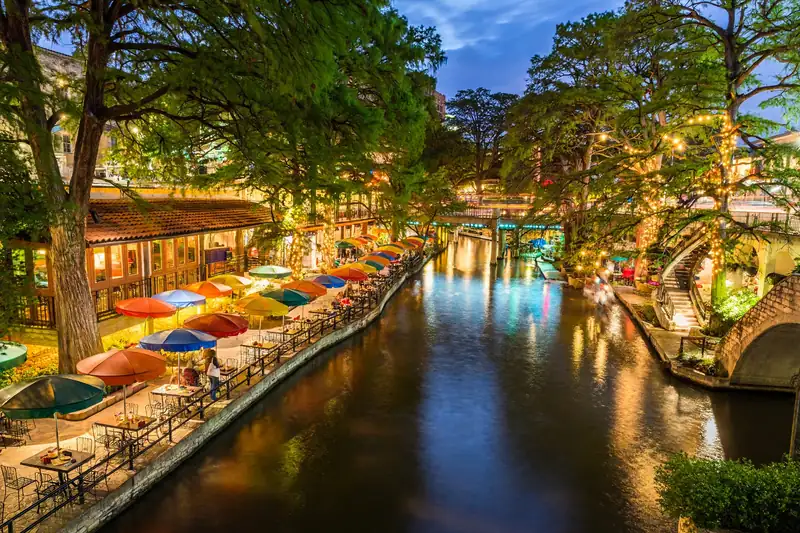
Quick Info
Best for: First-timers, history lovers, foodies and families — the Alamo, the River Walk, UNESCO missions, the Pearl and Tex-Mex in one walkable city
Best time: March–May and September–November for warm, dry days; April for Fiesta
How long: 3 full days for the highlights; 2 days covers the essentials; add a 4th day for the Hill Country
Budget: Roughly $120–$250 per person per day for a mid-range trip; the Alamo church, the missions, the River Walk and The Saga light show are free
Don’t miss: The Alamo at opening, a Go Rio river cruise at dusk, the Mission Trail by bike, the Pearl farmers market and a puffy taco
San Antonio is the oldest city in Texas and the one that surprises first-time visitors most. Founded in 1718 as a Spanish mission on the river, it grew into a city where an 18th-century battlefield sits a block from a river walk, where four more Spanish missions line a bike trail south of downtown, and where a 19th-century brewery has become the best food district in Texas. And in 2026 the city is changing fast: the Alamo has a new education center, the Pearl has a wave of new restaurants, and Fiesta is bigger than ever. This guide gives you the 20 best things to do in San Antonio in a sensible order, a ready-made 3-day itinerary, honest advice on when to go, where to stay and how to get around, and the three foods you have to try before you leave — plus the free sights that cost nothing at all. Prices and hours change, so every price in this guide is marked as approximate — always check the official website before you visit.
For background before you go, the Wikipedia entry on San Antonio covers the city’s history, from its founding in 1718 to the Texas Revolution and the modern city — it is linked in Further reading at the end of this guide.
San Antonio at a glance
| Question | Short answer |
| How long do you need? | 3 full days for the highlights; 2 days covers the essentials; 4 days if you add the Hill Country. |
| Best area for a first trip | Downtown and the River Walk — the Alamo, the river, Market Square and the Tower of the Americas are all a walk from there. |
| One thing to book early | Alamo Church free timed tickets, Fiesta parade seats in April, and Six Flags and SeaWorld tickets on summer weekends. |
| One thing that is free | The Alamo church and grounds, the four missions, the River Walk and The Saga light show — the best of San Antonio costs nothing. |
| Do you need a car? | Not downtown — the Alamo, the River Walk, the Pearl and Market Square are walkable or a short bus ride away. A car helps for the missions, the theme parks and the Hill Country. |
The 20 best things to do in San Antonio
The list starts with the experiences that define San Antonio and that first-time visitors should protect time for, then moves into the museums, the parks and the Hill Country beyond the city. If you only have two days, do numbers 1 to 10.
1. Visit the Alamo
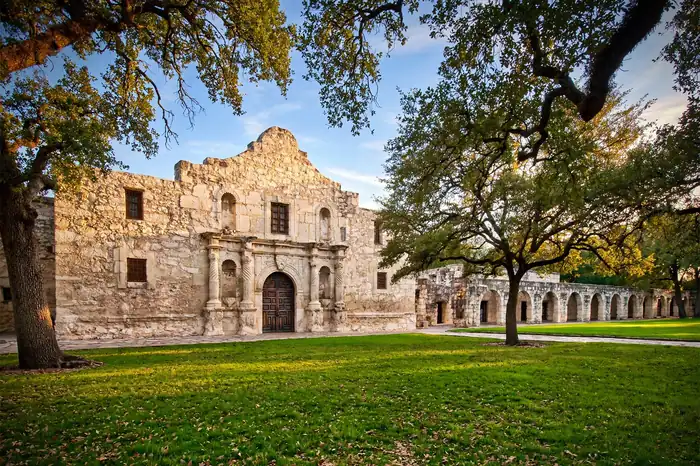
The Alamo is the reason most people come to San Antonio, and it still stops first-timers in their tracks. Founded in 1718 as Misión San Antonio de Valero, it became the site of the 1836 battle where 189 Texan defenders held out for 13 days against Santa Anna’s army — and the small limestone church, the Long Barrack and the gardens carry that story in a way no textbook does. The Alamo is free to enter, but you need a free timed ticket for the church, reserved online or collected at the Welcome Center. The big change for 2026 is the new Texas Cavaliers Education Center, which opened in summer 2026 behind the church, while the new Alamo Visitor Center and Museum — a conversion of the historic Crockett, Palace and Woolworth buildings — has been pushed back to spring 2028, so Alamo Plaza is still closed to vehicles and fenced along Houston Street. Inside the Ralston Family Collections Center, the Alamo Exhibit holds more than 500 artifacts, including the Phil Collins Collection, and the special exhibition “Sons of ’76: The Alamo in the Age of Revolutions” runs from September 4, 2026 through March 31, 2027.
Practical tip: The church and grounds are free and open daily from 9 am to 5:30 pm, except Christmas Day. The Alamo Exhibit costs roughly $15 for adults and $11 for children 12 and under, open 9 am to 5 pm with last entry at 4 pm — prices are approximate, so check before visiting. Reserve your free church ticket online before you arrive, go at opening to beat the crowds, and allow two hours for the church, the grounds and the exhibit.
2. Walk the River Walk and take a Go Rio cruise
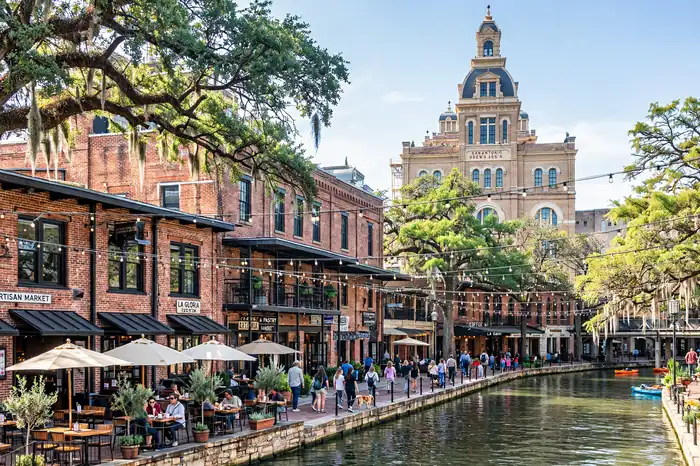
The River Walk is San Antonio’s living room — 15 miles of stone paths one level below the streets, lined with cypress trees, restaurants, hotels and arched footbridges, with the river itself running through the middle of downtown. The San Antonio River Walk pulls in around 14 million visitors a year, and the classic move is a Go Rio narrated cruise: a 35-minute electric-boat ride through the downtown loop that tells the city’s story while you sit back, running daily from 10 am to 10 pm for roughly $15.50. Walk it in sections rather than end to end — the downtown loop, the Museum Reach north to the Pearl, and the Mission Reach south to the missions are three different walks — and come back after dark, when the lights come on and the patios fill. From November 27, 2026 the downtown river is strung with holiday lights, and the Ford Holiday River Parade opens the season that evening at 6 pm.
Practical tip: Walking the River Walk is free, around the clock. Take the cruise at dusk for the best light, book dinner tables on the river on weekend evenings, and remember that the walkways are narrow and crowded at lunch — walk the upper street level if you are in a hurry.
3. Ride the Mission Trail — Texas’s only UNESCO World Heritage Site
Here is the part of San Antonio most first-timers skip and later wish they hadn’t. Beyond the Alamo, four more Spanish colonial missions line the river south of downtown — Concepción, San José, San Juan and Espada — and together with the Alamo they form the only UNESCO World Heritage Site in Texas. The San Antonio Missions are still active Catholic parishes, and entry to all four is free. Mission Concepción, two miles south of downtown, is the best-preserved Spanish colonial church in the United States, with original frescoes still visible inside. Mission San José, the “Queen of the Missions,” is the largest and the place to start — its visitor center, rose window and granary explain the whole system. Mission San Juan and Mission Espada are smaller and quieter, and Espada still waters its fields through an aqueduct built in the 1700s. The Mission Trail runs about 10 miles along the river, and the best way to do it is by bike on the Mission Reach trail.
Practical tip: The missions are free, with free parking, and open sunrise to sunset. Start at the San José visitor center in the morning, rent a bike downtown and ride south, and give it two to three hours — the Alamo alone is not the mission story.
4. Spend an evening in the Pearl District
The Pearl is the best food district in Texas and the most pleasant place in San Antonio to spend an evening. Built on the 22-acre site of the Pearl Brewery, which brewed beer here from 1883 to 1999, it is now a walkable district of restaurants, shops, apartments and public spaces along the Museum Reach of the River Walk. The original 1894 brewhouse is now Hotel Emma, a MICHELIN Two-Key hotel, the old stable is the Stable Hall music venue, and the Pullman Market food hall holds two MICHELIN-starred restaurants. The Saturday farmers market is the city’s best, and the Culinary Institute of America’s Texas campus sits in the middle of it all. The Pearl is also where the city’s food news is happening: Cured, the restaurant that put the district on the map, closed in January 2026 after 12 years, and its space becomes Rosso, an Italian steakhouse from three of Texas’s most acclaimed chefs, opening in late 2026. Santonia, a borderland cantina from the team behind Naco Mexican, opens in late November 2026, the coastal Mexican restaurant Amar opened on September 28, 2026, and a new boutique hotel, Perlen House, has been announced across the river from Hotel Emma.
Practical tip: The Pearl is free to wander; the garages are paid. Come on a Saturday morning for the farmers market, book dinner tables on weekend evenings, and walk the Museum Reach north from downtown — it is about 20 minutes on foot and prettier than driving.
5. See the city from the Tower of the Americas
Built for HemisFair ’68 and still the tallest thing on the skyline, the Tower of the Americas rises 750 feet over Hemisfair Park, and its observation deck has the best view in the city. The Tower of the Americas takes you up in 43 seconds to a deck that looks out over the whole downtown, the missions to the south and the Hill Country to the north, and admission includes Skies Over Texas, a 4D theatre ride. The revolving Chart House restaurant sits above the deck, and Hemisfair Park below has the Yanaguana Garden playground and the splash pad — the best free stop in the park for families. Go at sunset, when the city lights come on and the tower itself glows.
Practical tip: Admission costs roughly $19.50–$20 for adults in 2026 — prices are approximate, so check before visiting. Allow about an hour, book the restaurant ahead if you want a window table, and pair the tower with a walk through Hemisfair Park and the River Walk, which is a five-minute stroll away.
6. Eat and shop at Historic Market Square
Market Square, or El Mercado, is the largest Mexican market in the United States — three city blocks of shops, stalls, mariachi music and the smell of fresh tortillas, a few blocks west of downtown. The square has been a market since the 1700s, and today it holds more than 100 shops selling pottery, folk art, cowboy boots and piñatas, with restaurants around the edges. The anchor is Mi Tierra Café y Panaderia, open since 1941, where mariachis play at the tables and the bakery case is full of pan dulce. Come hungry: the square is where San Antonio’s Mexican food is cheapest and most honest, and the weekends are when it is liveliest, with music and dancing in the plaza.
Practical tip: Market Square is free to wander and open daily, roughly 10 am to 6 pm. Eat breakfast at Mi Tierra before the crowds, bring cash for the small stalls, and walk it with the Spanish Governor’s Palace, which is two blocks away.
7. San Fernando Cathedral and The Saga light show
San Fernando Cathedral is the oldest cathedral sanctuary in the United States — founded in 1738, with the current church completed in 1750 — and by night its facade becomes the city’s best free show. San Antonio | The Saga is a 24-minute video light show projected across roughly 7,000 square feet of the cathedral’s front, telling the history of San Antonio in light and music. The Saga, created by French artist Xavier de Richemont, has run since 2014 and its contract was extended through 2035. It plays Tuesday through Sunday at 9 pm, with a second showing at 9:30 pm on some nights, and Mondays are dark. Main Plaza, the square in front of the cathedral, is where the city began, and the show is best watched from the plaza benches with dinner beforehand on the River Walk, two minutes away.
Practical tip: The Saga is free, with no ticket and no reserved seating — prices are approximate, so check before visiting. Arrive 15 minutes early for a good spot, check the Main Plaza schedule for dark nights and holiday changes, and skip Monday, when there is no show.
8. The Japanese Tea Garden
The Japanese Tea Garden is the quietest, prettiest hour in San Antonio — and it is free. Built in an old limestone quarry in Brackenridge Park, it holds stone bridges, waterfalls, a koi pond full of fat orange fish, and winding paths under live oaks, with the Jingu House café serving spring rolls and tea beside the water. The garden is a short walk from the zoo and the Witte Museum, and it is the stop that turns a museum morning into a full Brackenridge day. Come at 7:30 am, when it opens and the light is soft and the crowds have not arrived.
Practical tip: Admission is free and the garden is open daily from 7 am to 5 pm. The steps are uneven and the paths are steep in places, so wear good shoes, and bring a camera — the pond, the bridges and the quarry walls are the most photographed spot in the park.
9. San Antonio Zoo and Brackenridge Park
The San Antonio Zoo sits in the middle of Brackenridge Park, a 343-acre green heart just north of downtown, and it is the city’s best family day. The zoo holds more than 750 species, and its newest trick is Kiddie Park — America’s oldest children’s amusement park, running since 1925 — which now lives inside the zoo, so one ticket covers the animals and the rides. Brackenridge Park itself is worth the trip: the miniature Brackenridge Eagle train loops the park, the Witte Museum and the Japanese Tea Garden are a short walk away, and the river runs through it. Go in the morning, before the heat, and treat the zoo as a half day, not a quick stop.
Practical tip: Zoo tickets start from roughly $32 for adults in 2026, with prices varying by day and some tickets as low as $8 — prices are approximate, so check before visiting. The zoo is included in the San Antonio CityPASS, parking in the garage is free during zoo hours, and the park is a ten-minute drive or bus ride from downtown.
10. The Witte Museum
The Witte Museum is the best museum in San Antonio for families and the best escape from the summer heat. Set on the river in Brackenridge Park, it covers Texas nature, science and culture in one building: dinosaurs and Ice Age mammals, the H-E-B Body Adventure with its climbing structures, and galleries on Texas history and the people who made it. The Witte is the museum locals actually take their children to, and it pairs naturally with the zoo and the Japanese Tea Garden, which are both a short walk away.
Practical tip: Admission costs roughly $17 for adults and $11 for children aged 4–12 in 2026, with children 3 and under free — prices are approximate, so check before visiting. Parking is free, special exhibitions cost extra, and two to four hours is about right, with the morning the quietest time.
11. San Antonio Museum of Art
The San Antonio Museum of Art sits in a former Lone Star Brewery complex on the Museum Reach of the River Walk, and it is the city’s best art museum. The collection runs from ancient Egyptian and Greek art through Latin American folk art to contemporary Texas work, with the Latin American galleries — pre-Columbian, Spanish colonial and modern — the strongest in the state. The building itself is worth the visit: brick brewhouse halls, a glass atrium and a terrace over the river. It is closed on Mondays, and it is the museum to pair with a Pearl lunch, since the district is a five-minute walk north.
Practical tip: Admission costs roughly $24 for adults in 2026, with children 12 and under free — prices are approximate, so check before visiting. Allow two hours, and ask about free hours for Bexar County residents, which the museum runs on selected evenings.
12. The McNay Art Museum
The McNay is San Antonio’s prettiest museum and its most surprising one — a Spanish Colonial Revival mansion in Alamo Heights holding one of the best modern art collections in Texas. The collection runs from medieval art through Picasso, O’Keeffe and Rivera to contemporary work, and the 23-acre grounds, with their sculpture garden and oak trees, are as good as the galleries. Best of all, general admission is free, which makes it the easiest great museum in the city to add to a trip.
Practical tip: General admission is free. Allow two hours, walk the sculpture garden before you go inside, and drive or take a rideshare — the McNay sits in Alamo Heights, about ten minutes north of downtown.
13. The Briscoe Western Art Museum
The Briscoe is the museum that explains Texas to itself. Set on the River Walk in a 1930s former library, it holds Western art and artifacts — bronze sculptures, Santa Anna’s sword, Pancho Villa’s saddle, a chuck wagon and a full-size stagecoach — with galleries on the vaquero, the cowboy and the Native peoples of the West. It is small, an hour or two at most, and it is the right stop after the Alamo, since it answers the question the battlefield raises: what happened next.
Practical tip: Admission is modest, with discounts for children, students and military — prices are approximate, so check before visiting. Enter from the river level, allow one to two hours, and pair it with a River Walk lunch, since the museum sits right on the water.
14. Natural Bridge Caverns
Natural Bridge Caverns is the best half-day out of the city — a cave system 60 feet underground, about 30 minutes north on I-35, with cathedral-sized rooms full of stalactites, stalagmites and flowstone. The Discovery Tour is the classic: a guided walk through the biggest rooms, including the Castle of the White Giants, with the cave a constant 70 degrees year-round. Above ground there is a Canopy Challenge ropes course and ziplines, a maze and a gem-mining sluice, and the Natural Bridge Wildlife Ranch, a drive-through safari, is five minutes down the road.
Practical tip: Cavern tour tickets cost roughly $30–$40 for adults in 2026 — prices are approximate, so check before visiting. Book ahead on weekends, wear shoes with grip, and bring a light jacket: the cave is cool even in August, and the summer heat above ground is the real challenge.
15. Six Flags Fiesta Texas
Six Flags Fiesta Texas is San Antonio’s thrill park, built into an old limestone quarry on the northwest side, and it is the one attraction that needs a full day. The coasters are the draw: the Iron Rattler, a wooden-steel hybrid that drops 171 feet off the quarry wall, the Wonder Woman Golden Lasso Coaster, and Dr. Diabolical’s Cliffhanger, the world’s steepest dive coaster. The water park, Hurricane Harbor, costs extra, and from March 6, 2026 the park sells Fast Lane Reserve and Fast Lane Ultimate in place of its old line-skip products. Holiday in the Park runs on select dates from November 21, 2026 through January 4, 2027.
Practical tip: One-day tickets are listed from roughly $45 online in 2026, against a headline gate price near $90, with parking from roughly $39 if bought online — prices are approximate, so check before visiting. Buy tickets online, go on a weekday if you can, and bring swimsuits: the quarry floor is a sun trap from May to September, and the park is open on select days outside summer, so check the calendar first.
16. SeaWorld San Antonio
SeaWorld San Antonio is the all-ages park on the west side, and 2026 is its biggest year yet. The headline is Barracuda Strike, which opened in March 2026 as the tallest inverted family coaster in North America, joining the coasters, the animal exhibits and the shows — orcas, sea lions and dolphins — that have always been the park’s core. Aquatica, the water park next door, runs from March 7 to October 12, 2026, and the pass bundle that covers both parks usually beats buying two single days, and makes the parking free.
Practical tip: Single-day tickets are listed from roughly $54 online in 2026 — prices are approximate, so check before visiting. Arrive at opening, ride the coasters first and save the shows for the afternoon heat, and put a city day between SeaWorld and Six Flags: two park days back to back are a lot in the Texas sun.
17. King William and Southtown
King William is San Antonio’s prettiest neighbourhood and the one most visitors never find. Settled by German merchants in the 1800s, it holds the city’s grandest Victorian mansions along King William Street, including the Steves Homestead from 1876, and it is a ten-minute walk south of the River Walk. Cross into Southtown and the mood changes: galleries, coffee shops and the Blue Star Arts Complex, with the First Friday art walk on the first Friday of every month, when the whole district stays open late. Eat here, too — Southtown holds some of the city’s best casual restaurants, from the Cookhouse’s New Orleans cooking to Rosario’s Tex-Mex.
Practical tip: King William and Southtown are free to wander. Go on a First Friday if you can, walk it in the late afternoon when the light is best, and use it as the quiet half-day between the downtown crowds and the Pearl.
18. La Villita and the Spanish Governor’s Palace
La Villita is where San Antonio began — the city’s first neighbourhood, settled in the 1700s on the south bank of the river, now a village of stone houses, artisan shops and galleries that hosts NIOSA, the four-night Fiesta block party, every April. Two blocks away stands the Spanish Governor’s Palace, a 1749 adobe residence that was the home and office of the Spanish governor, with period rooms, a courtyard and a chapel — the last visible trace of the Spanish presidio. Together they take about an hour, and they are the quietest historic stop downtown.
Practical tip: La Villita is free to wander and the Governor’s Palace charges a small admission fee — prices are approximate, so check before visiting. Pair both with Main Plaza and the cathedral, which are a two-minute walk away, and come in the morning, when the shops are just opening and the square is empty.
19. San Antonio Botanical Garden
The San Antonio Botanical Garden is 38 acres of calm on the east side of downtown, and the best place in the city to slow down. The Lucile Halsell Conservatory holds tropical palms and desert cacti under glass, the Family Adventure Garden is built for children, and the Culinary Garden grows the herbs and vegetables the city’s chefs cook with. Spring is the best season, when the wildflowers and roses are out, and the garden is at its quietest on weekday mornings.
Practical tip: Admission costs roughly $18–$22 for adults and $13–$15 for children in 2026, and the garden is open daily from 8 am to 7 pm — prices are approximate, so check before visiting. Allow two hours, go in the morning before the heat, and pair it with the McNay, which is a ten-minute drive away.
20. Day trip: Gruene and the Hill Country
Gruene is the best day trip from San Antonio — a tiny 1800s German town on the Guadalupe River, 30 minutes north-east, that time forgot and music saved. Gruene Hall, built in 1878, is the oldest dance hall in Texas, and on weekend nights it still fills with two-stepping crowds and touring bands. Around it are the Gruene General Store, antique shops and riverside restaurants, and in summer the Guadalupe and Comal rivers fill with tubers floating past New Braunfels. If you have the whole day, keep driving: Fredericksburg wine country is 90 minutes north, Wimberley’s swimming holes are an hour away, and the Hill Country roads between them are the prettiest driving in Texas.
Practical tip: Gruene is free to wander and Gruene Hall charges a cover only on show nights — prices are approximate, so check before visiting. Go on a weekend evening for the dance, tube the river in the morning before the crowds, and book wine tastings ahead in Fredericksburg, where the popular rooms sell out on Saturdays.
San Antonio in 3 days — a ready-made itinerary
| Day | Morning | Afternoon | Evening |
| Day 1 — Downtown icons | The Alamo and Main Plaza | River Walk cruise and Market Square | The Saga light show and dinner on the river |
| Day 2 — Missions and the Pearl | Mission Trail by bike (Concepción and San José) | Japanese Tea Garden, zoo and Witte Museum | Pearl District dinner and the farmers market |
| Day 3 — Museums and the Hill Country | Tower of the Americas and the Briscoe | San Antonio Museum of Art and Southtown | Gruene Hall dance or a Spurs game |
Day 1 — Downtown icons
Start at the Alamo at opening, when the light is soft and the crowds are thin, then walk to Main Plaza for the cathedral and the Spanish Governor’s Palace. Spend the afternoon on the River Walk — a Go Rio cruise, then Market Square for lunch — and finish with The Saga light show at 9 pm, followed by dinner on the river. Day one is the classic San Antonio, and it is the one to get right.
Day 2 — Missions and the Pearl
Rent a bike in the morning and ride the Mission Reach south to Concepción and San José, the two missions that reward the ride. Spend the afternoon in Brackenridge Park — the Japanese Tea Garden, the zoo and the Witte Museum are all a short walk apart — then take a rideshare north to the Pearl for the evening: the farmers market if it is a Saturday, dinner at one of the new restaurants, and a walk along the Museum Reach as the lights come on.
Day 3 — Museums and the Hill Country
Start at the Tower of the Americas for the view, then the Briscoe for the Western story. Spend the afternoon at the San Antonio Museum of Art and a wander through Southtown’s galleries, then drive north for the evening: Gruene Hall for a dance, or back downtown for a Spurs game at the Frost Bank Center. If you have a fourth day, add a theme park or the Natural Bridge Caverns.
Best time to visit San Antonio
| Season | What it is like | Best for |
| Winter (December–February) | Mild days in the 60s, cool nights, the cheapest hotels — with the River Walk holiday lights | First trips, budget trips, the holiday lights |
| Spring (March–May) | Warm days in the 70s and 80s, wildflowers in bloom, Fiesta in April | First trips, Fiesta, the missions |
| Summer (June–August) | Hot and humid, highs of 92–96°F, afternoon thunderstorms — the busiest theme-park months | Theme parks, pools, night shows |
| Autumn (September–November) | Warm and golden, smaller crowds, the river still warm enough for a cruise | First trips, the best weather of the year, Day of the Dead |
The best time to visit San Antonio is March to May or September to November, when the days are warm, the desert is comfortable and the crowds are manageable. October to April is the most comfortable window overall, with average highs from the 60s in winter to the low 80s in spring and fall. Summer is the classic season — hot, busy and full of Fiesta energy — but the heat is real: highs of 92 to 96°F from June through August, so plan your walking for the morning and the evening. Fiesta runs April 16–26, 2026, with the Battle of Flowers Parade on April 24, and the River Walk holiday lights begin on November 27, 2026.
Where to stay in San Antonio
| Area | Who it suits | Why stay there |
| Downtown River Walk | First-timers, walkers | The Alamo, the river, Market Square and the Tower of the Americas on your doorstep |
| The Pearl and Museum Reach | Foodies, couples | Hotel Emma, the farmers market, the museums and the river on your doorstep |
| Alamo Heights | A quiet base, families | Tree-lined streets, the McNay and the Witte a short drive away |
| Southtown and King William | Art lovers, a local feel | Galleries, First Friday, historic mansions and the Blue Star arts complex |
| La Cantera and the northwest | Theme-park families | Six Flags, SeaWorld and the Shops at La Cantera on your doorstep |
First-timers should stay downtown on the River Walk, where the Alamo, the river and Market Square are all a walk away. Foodies who want the best restaurants should look at the Pearl and the Museum Reach, where Hotel Emma and the farmers market set the tone. Alamo Heights suits a quiet base with a car, Southtown suits art lovers who want a local feel, and La Cantera suits theme-park families. Two hotel notes for 2026: the Perlen House boutique hotel has been announced at the Pearl, across the river from Hotel Emma, and Hotel Emma itself holds a MICHELIN Two-Key rating. Whatever you book, stay downtown if you want to walk: the River Walk, the Alamo and Market Square are all within a mile of each other.
Getting around San Antonio
Downtown San Antonio is walkable: the Alamo, the River Walk, Market Square, Main Plaza and the Tower of the Americas are all within about a mile of each other, and the river itself is the flattest walk in town. For anything further, the VIA bus runs downtown and out to the missions, the zoo and the theme parks, with a day pass costing roughly $2.75 — a good option for the run to the missions or the Pearl. Rideshare is cheap and fast, and a car is worth having if you plan the missions by bike, the theme parks or the Hill Country, and the airport is only about fifteen minutes from downtown. Downtown parking is mostly paid and metered, so use the garages near the River Walk rather than circling the streets, and note that the River Walk itself is for pedestrians only — no bikes on the downtown paths.
San Antonio food you have to try
Puffy tacos
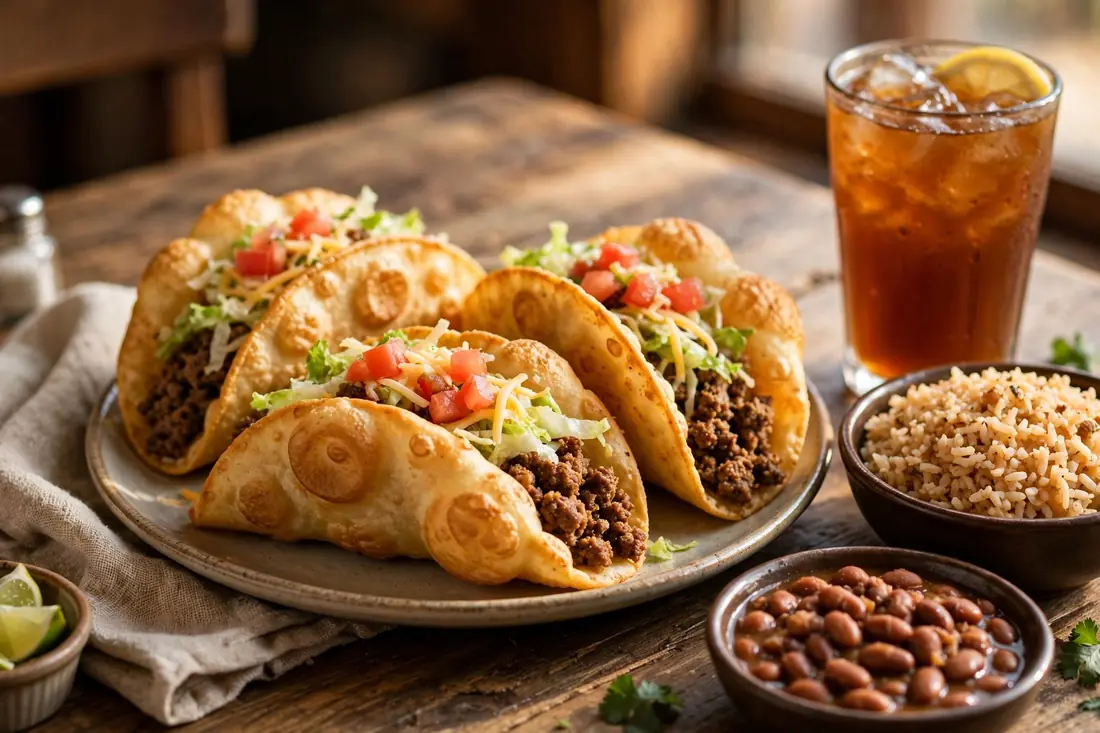
The puffy taco is San Antonio’s signature dish, and it was born here. A corn tortilla is fried until it puffs up like a pillow, then filled with seasoned ground beef, shredded lettuce, tomato and cheese — crisp on the outside, soft inside, and unlike any taco you have had before. Ray’s Drive Inn is widely credited with inventing it, and Henry’s Puffy Tacos is the classic place to eat it, with lines out the door at lunch. Order two, with a side of rice and beans, and eat them the way San Antonio does: hot, messy and with your hands.
Barbacoa and breakfast tacos
Breakfast tacos are San Antonio’s daily bread, and barbacoa is the filling that separates the locals from the visitors. Slow-cooked beef cheek, rich and tender, goes into a flour tortilla with eggs, and the result is the city’s favourite breakfast — sold at taquerias on every corner from 6 am. Pair it with a Big Red, the cherry-red soda that has been San Antonio’s own since 1937, and you have the most San Antonio breakfast there is. The best versions are in the small taquerias, not the chains, and the good ones sell out by 10 am.
Pan dulce and the Market Square feast
Pan dulce is the sweet end of San Antonio’s food story, and Market Square is where to eat it. The panaderías sell conchas, empanadas and cuernitos by the tray, and Mi Tierra’s bakery case is the most famous in the city — go in the morning, when the bread is still warm. Around the square, the restaurants serve the full feast: tamales, menudo, enchiladas and cabrito, with mariachis playing at the tables. It is the cheapest great meal in San Antonio, and the one that explains the city’s Mexican heart.
Beyond the three dishes above, save room for the city’s other classics: Texas barbecue — Terry Black’s opens its first San Antonio location on November 17, 2026 at 2102 Broadway, just up the road from the Pearl — the New Orleans cooking at the Cookhouse in Southtown, and a tasting menu at Mixtli, the progressive Mexican restaurant at the Pearl. And one warning: the famous cheap River Walk margaritas are long gone, and the tourist-trap restaurants on the river charge Strip prices — eat where the locals eat, on the square and in Southtown, not on the busiest stretch of the walk.
Free things to do in San Antonio
The Alamo church and grounds are the headline, but the free list runs long. The four missions are free, with free parking, and the Mission Trail is free to walk or bike. The River Walk is free to stroll at any hour, and The Saga light show is free every Tuesday through Sunday at 9 pm. The Japanese Tea Garden is free, the McNay Art Museum has free general admission, and the Pearl farmers market is free to browse on Saturday mornings. Hemisfair Park and the Yanaguana Garden playground are free, King William is free to wander, and the best free thing of all is a sunset walk along the Museum Reach, from downtown to the Pearl, with the river and the lights all to yourself.
Frequently asked questions
How many days do you need in San Antonio?
Three full days covers the highlights: the downtown icons and the River Walk, the missions and the Pearl, and the museums or the Hill Country. Two days covers the essentials if you skip the day trip and pick one theme park or one museum day. Add a fourth day for a theme park, for Natural Bridge Caverns, or simply for a slow day at the Pearl — San Antonio rewards a slow day more than a rushed one.
Is the Alamo free?
Yes — entry to the Alamo Church, the Long Barrack and the grounds is free. You still need a free timed ticket for the church, reserved online or collected at the Welcome Center, and the Alamo Exhibit in the Ralston Family Collections Center is the paid part, at roughly $15 for adults and $11 for children 12 and under in 2026. Guided tours cost extra, and the new Texas Cavaliers Education Center, which opened in summer 2026, is included in the visit.
What is the best time to visit San Antonio?
March to May and September to November are the sweet spot: warm days, comfortable walking, smaller crowds and lower hotel prices. October to April is the most comfortable window overall. June to August is the classic theme-park season, hot and busy, with highs of 92 to 96°F. December to February is mild and cheap, with the River Walk holiday lights. Fiesta runs April 16–26, 2026, and it is the biggest party of the year — book hotels early if you come for it.
Do you need a car in San Antonio?
Not downtown. The Alamo, the River Walk, Market Square, Main Plaza and the Tower of the Americas are all within about a mile, and the VIA bus covers the Pearl, the zoo and the missions cheaply. A car is worth it if you want the missions by bike, the theme parks, Natural Bridge Caverns or the Hill Country day trips — and the airport is only about fifteen minutes from downtown, so a rental is easy.
Is San Antonio safe for tourists?
The tourist areas are safe with normal city sense: stay on the River Walk, the Pearl and the main downtown streets at night, keep valuables out of sight in parked cars, and watch the heat — dehydration is the real danger in summer, so carry water and plan outdoor sights for the morning and evening. The downtown and River Walk areas are well lit and well patrolled, and the missions and parks are safe in daylight.
What is the one thing you should not miss in San Antonio?
The Alamo at opening, before the crowds arrive. It is the smallest, quietest moment in the city — the limestone church in the morning light, the gardens empty, the weight of 1836 still in the air — and it is the experience every other stop in San Antonio builds on. After that, a Go Rio cruise at dusk and a puffy taco for lunch.
Further reading — Wikipedia, Reddit and Quora
Wikipedia — San Antonio: the city’s history, geography and the River Walk. San Antonio on Wikipedia
Wikipedia — The Alamo: the mission, the 1836 battle and the Alamo Plan. The Alamo on Wikipedia
Wikipedia — San Antonio Missions: the four missions, the UNESCO World Heritage Site and the Mission Trail. San Antonio Missions on Wikipedia
Reddit — r/sanantonio: the local community, with trip reports, restaurant recommendations and what is new in 2026. r/sanantonio on Reddit
Quora — What are some popular local attractions to visit in San Antonio? Real answers from locals and visitors. Popular local attractions on Quora
Your San Antonio trip, in one paragraph
San Antonio is the city that does history, food and the river better than anywhere else in Texas: the Alamo and the missions, the River Walk and the Pearl, the puffy tacos and the free light show on the cathedral. Three days is enough to see it properly, and the 2026 changes — the new Alamo Education Center, the Pearl’s new restaurants, Fiesta’s biggest year yet and the new coaster at SeaWorld — mean the guides from last year are already out of date. Book the Alamo tickets, ride the river at dusk, and leave a morning free for the missions. If you want more city guides from this series, start with Chicago, Nashville, Los Angeles, Orlando, Miami, San Diego, Denver, Savannah, Dallas, Charleston, San Francisco, Myrtle Beach and Las Vegas — and if the river calls you back, the Alamo City will still be here, 300 years of it, waiting.

About the Author