Things to Do in Los Angeles: 20 Best Attractions, Itinerary & Tips (2026 Guide)
20 Best Attractions, a 3-Day Itinerary, Where to Stay, and the Food You Cannot Miss
Quick Info
Best for: Film and TV fans, beach lovers and first-time visitors — Hollywood history, free world-class museums, beaches and tacos in one sprawling, sunny city
Best time: March–April and September–November for mild weather, clear skies and smaller crowds
How long: 3 full days for the highlights; 4–5 days if you add Universal Studios or a Malibu day
Budget: Many top sights are free — Griffith Observatory, the Getty Center and The Broad cost nothing to enter; a studio tour or theme park is the big splurge
Don’t miss: Sunset at Griffith Observatory, the Hollywood Sign, Santa Monica Pier, the Getty Center and a taco crawl
Los Angeles is a city that sells a dream and then makes you work for it. It is the second-largest city in the United States and the working capital of film and television, but it is far more than its Hollywood image: world-class museums with free entry, 75 miles of beaches, neighbourhoods that speak a hundred languages, and some of the best food in America, from five-dollar tacos to tasting menus. The good news for a first-time visitor is that the city rewards a simple plan — one area a day — so you can see a lot without spending your trip in traffic.
This guide gives you the 20 best things to do in Los Angeles in a sensible order, a ready-made 3-day itinerary, honest advice on when to go, where to stay and how to get around, and the three foods you have to try before you leave. Prices and hours change, so every price in this guide is marked as approximate — always check the official website before you visit. Travellers also share their favourite picks in Quora answers from locals.
Los Angeles at a glance
| Question | Short answer |
|---|---|
| How long do you need? | 3 full days for the highlights; 4–5 days if you add Universal Studios or Malibu. |
| Best area for a first trip | Hollywood and Los Feliz for the icons, or Santa Monica for the beach — both are walkable bases. |
| One thing to book early | Universal Studios tickets, Warner Bros. Studio Tour seats and Getty Center timed-entry reservations — weekends sell out. |
| One thing that is free | Griffith Observatory — free exhibits and the best view in the city, from downtown to the ocean. |
| Do you need a car? | Yes, for most trips. LA is a driving city; Metro rail helps between downtown, Hollywood and Santa Monica, but the coast and the studios are far easier by car or rideshare. |
For background before you go, the Wikipedia entry on Los Angeles covers the city’s history, its film industry and its neighbourhoods in depth, and its Griffith Observatory and Hollywood Sign pages explain how the city became the entertainment capital of the world — all three are linked in Further reading at the end of this guide.
The 20 best things to do in Los Angeles
The list starts with the experiences that define Los Angeles and that first-time visitors should protect time for, then moves into neighbourhoods, culture and the coast. If you only have two days, do numbers 1 to 10. If you have three or more, work through the rest at a slower pace.
1. Watch the sunset from Griffith Observatory
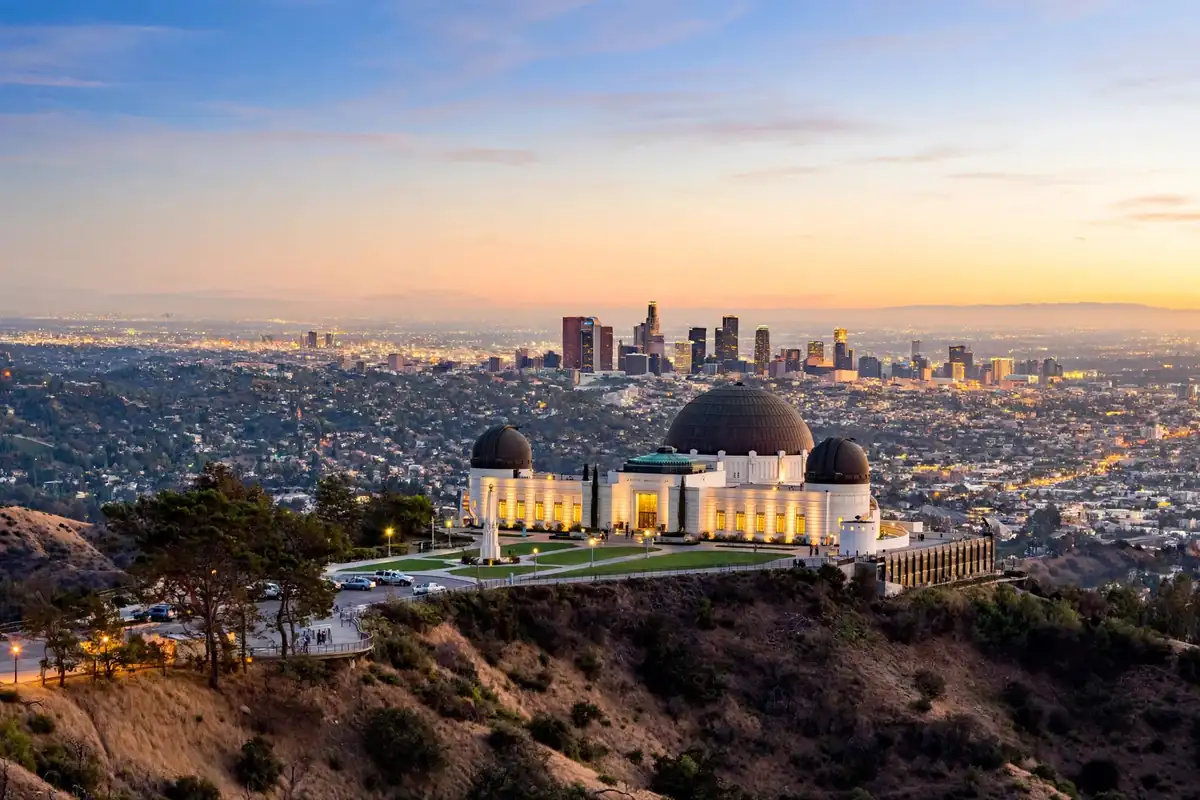
Griffith Observatory, on the south slope of Mount Hollywood, is the single best first stop in Los Angeles. Admission is free, the astronomy exhibits are genuinely good, and the terrace gives you the whole city in one look: downtown to the south, the Hollywood Sign to the west and, on a clear day, the Pacific Ocean. Come at dusk, when the building glows and the lights come on below, and stay for the public telescopes on clear evenings.
Practical tip: Exhibits and the terrace are free; planetarium shows cost roughly $7–$10 for adults — prices are approximate, so check before visiting. The observatory is closed on Mondays. Parking at the top is tight, so take the DASH shuttle from Los Feliz or walk up from the trailhead.
2. See the Hollywood Sign up close
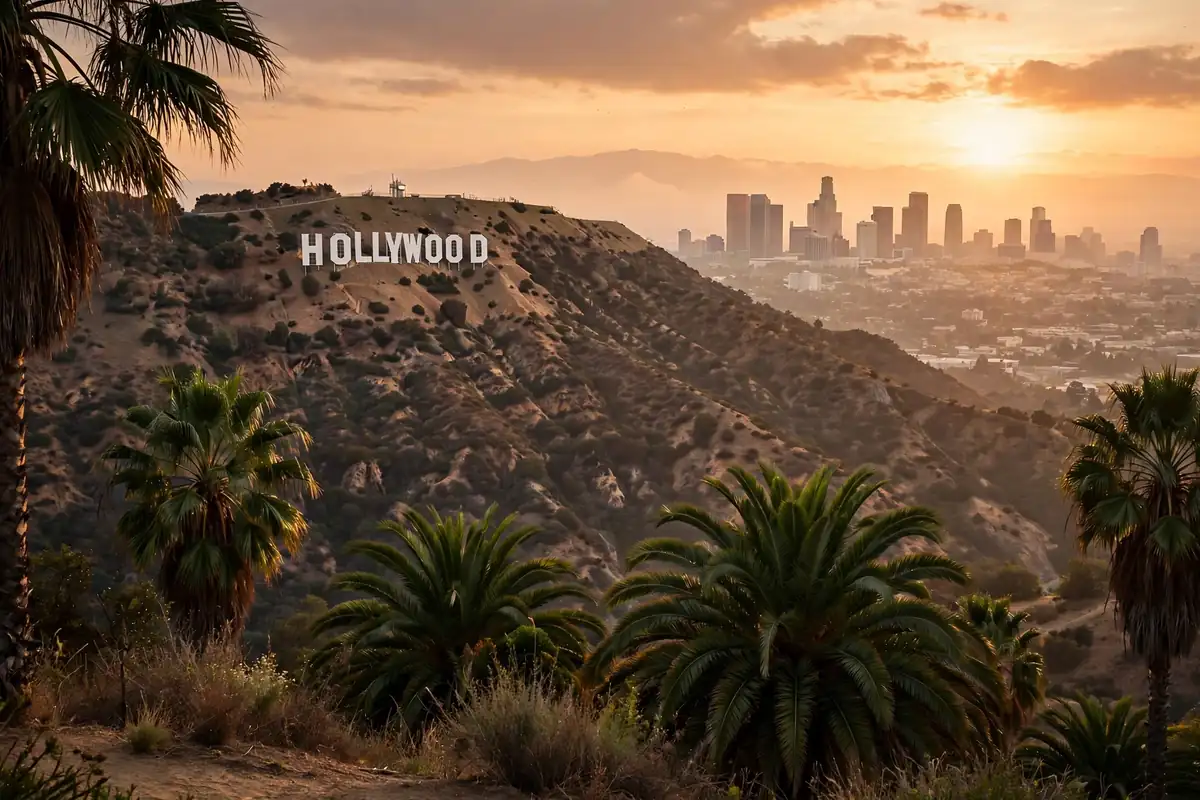
The Hollywood Sign is the most photographed sight in the city, and the best way to see it is on foot. You cannot touch the letters — they are fenced off and trespassing is illegal — but the trails in Griffith Park bring you close: the Mount Hollywood Trail and the Brush Canyon Trail both end with the sign filling the sky in front of you, and the Lake Hollywood Park viewpoint gives you the classic straight-on photo without a hike.
Practical tip: Go early in the morning or late in the afternoon for the best light and the thinnest crowds. Bring water and sun protection — there is almost no shade on the trails — and allow two to three hours for a round-trip hike.
3. Walk the Hollywood Walk of Fame and TCL Chinese Theatre
Hollywood Boulevard is where the film industry put its name on the pavement: more than 2,700 stars honouring actors, musicians and directors, set into the sidewalk along Hollywood Boulevard and Vine Street. The TCL Chinese Theatre, with its handprints and footprints in the forecourt, is the star of the strip, and the Dolby Theatre next door is where the Oscars are held. It is worth an hour, not a day — see the stars, take the photo, and move on.
Practical tip: Go in the morning, before the costumed characters and the crowds take over the boulevard. Keep your expectations honest: the Walk of Fame is a sidewalk, not a museum, and the real Hollywood is in the studios.
4. Spend a day at Universal Studios Hollywood
Universal Studios Hollywood is two things at once: a full theme park and a working movie studio. The Studio Tour — the original attraction, running since 1964 — takes you through real backlots, past the Bates Motel and Wisteria Lane, while the rides cover the Wizarding World of Harry Potter, Jurassic World and Super Nintendo World. It is the most expensive day in this guide and, for film fans and families, the most fun.
Practical tip: Tickets cost roughly $109–$149 depending on the day, and weekends sell out — prices are approximate, so check before visiting and book early. Arrive at opening, do the Studio Tour first, and expect a full day on your feet.
5. Take the Warner Bros. Studio Tour Hollywood
If Universal is the theme park, the Warner Bros. Studio Tour is the real studio visit. The guided tour in Burbank takes you onto working soundstages and backlots, through the costume and prop departments, and onto the recreated Central Perk set from Friends and the streets of Stars Hollow. It is smaller, quieter and more grown-up than Universal, and for film lovers it is the better tour.
Practical tip: Tours cost roughly $70–$80 and must be booked in advance — prices are approximate, so check before visiting. Allow three hours, and bring photo ID; it is a working studio, so some areas close without notice on filming days.
6. Explore the Getty Center
The Getty Center, on a hilltop above the 405 in Brentwood, is the best single museum visit in Los Angeles — and it is free. The Richard Meier architecture, the Central Garden designed as a work of art, and the collection of European paintings, including Van Gogh’s Irises, are all worth the trip, but the view from the terraces is what you remember: the whole basin, from downtown to the ocean. The tram ride up the hill is part of the fun. Plan it soon: the Getty Center is scheduled to close for improvements from March 2027 until 2028.
Practical tip: Entry is free but you need a timed-entry reservation, and parking costs roughly $20–$25 — prices are approximate, so check before visiting. Go on a weekday morning for the quietest galleries, and allow at least three hours.
7. Walk Santa Monica Pier and the beach
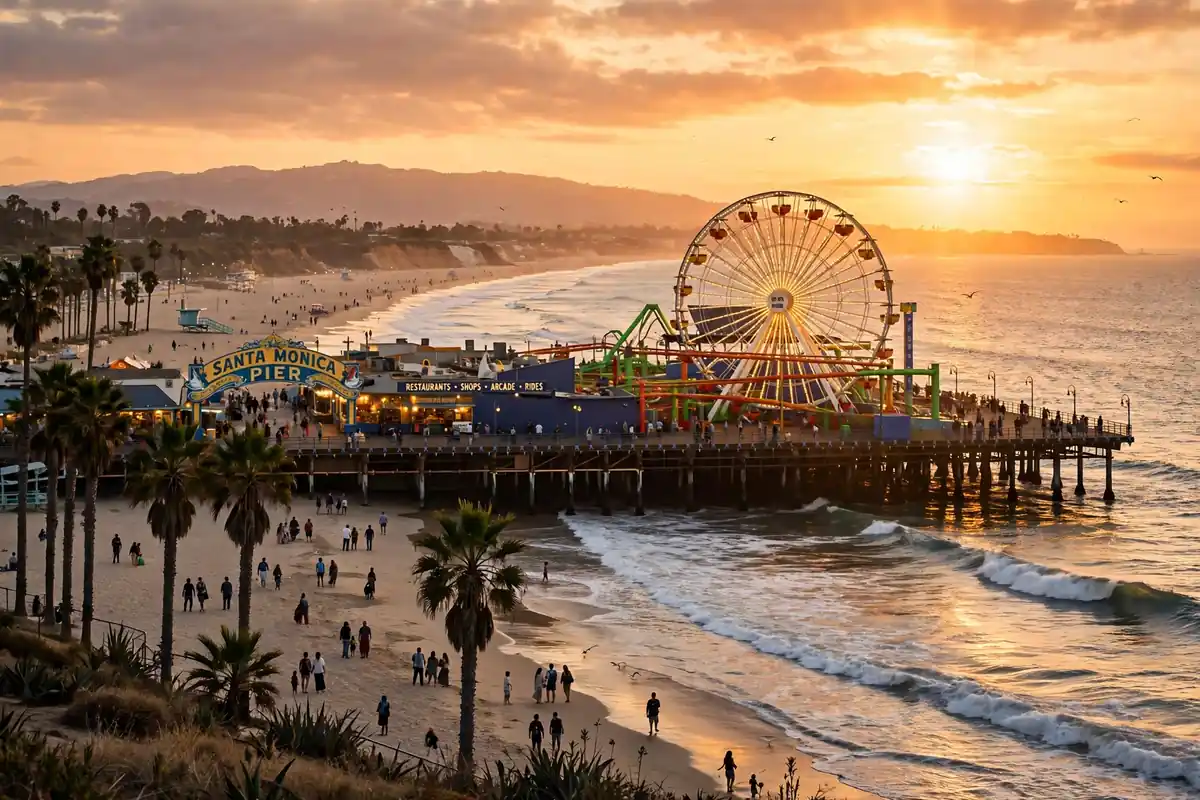
Santa Monica Pier is the symbolic end of Route 66 and the classic Los Angeles beach day: a Ferris wheel and a small amusement park on a pier over the Pacific, street performers, fishermen, and the wide sand of Santa Monica State Beach below. The beach path — the Marvin Braude Bike Trail — runs 22 miles along the coast, and the walk or cycle south to Venice is the best free afternoon on the Westside.
Practical tip: The pier is free to walk; rides and the aquarium are ticketed separately. Rent a bike and ride to Venice — it takes about 20 minutes — then ride back for sunset over the water.
8. Wander Venice Beach and the canals
Venice Beach is Los Angeles at its strangest and most entertaining: the boardwalk with its street performers, Muscle Beach, the skate park and the drum circle, all a few steps from the quiet, pretty Venice Canals — a small network of waterways built in 1905 that feels like another city entirely. Walk Abbot Kinney Boulevard for boutiques and cafes, then find the canals for the calmest photographs in LA.
Practical tip: Go in the late afternoon, when the boardwalk is at its liveliest and the light is best. Locals on r/LosAngeles regularly point first-timers to the canals and Abbot Kinney when they ask where the real Venice is.
9. See the art at The Broad
The Broad, in downtown Los Angeles, is the city’s great contemporary art museum — and it is free. The collection covers post-war and contemporary art, from Warhol and Basquiat to Koons, and Yayoi Kusama’s Infinity Mirror Rooms are the most photographed artworks in the city. The building itself, a white honeycomb “veil” over a dark vault, is worth the visit alone.
Practical tip: General admission is free, but the Infinity Mirror Rooms need a separate timed ticket that goes fast — book it online as soon as your dates are fixed. The museum is closed on Mondays.
10. Spend an afternoon at LACMA and La Brea Tar Pits
On Wilshire Boulevard’s Miracle Mile, two very different museums share one block. LACMA — the Los Angeles County Museum of Art — is the largest art museum in the western United States, and its Urban Light installation of 202 vintage street lamps is the most photographed spot in the city at dusk. Next door, the La Brea Tar Pits are the world’s most famous Ice Age fossil site, where mammoths and sabre-toothed cats were trapped in bubbling asphalt — and still are.
Practical tip: LACMA admission is roughly $25 for adults and the Tar Pits museum roughly $15–$18 — prices are approximate, so check before visiting. The tar pits outside are free to walk, and the Page Museum is the one to pay for.
11. Eat your way through Grand Central Market
Grand Central Market, open since 1917 in downtown Los Angeles, is the city’s great food hall: old-school vendors that have been there for decades beside newer stalls serving ramen, gourmet sandwiches and specialty coffee. The taco counters are the main event, but the market is also the cheapest way to taste the city’s range — Mexican, Chinese, Thai, Salvadoran and more — under one roof.
Practical tip: Come hungry and come for lunch, when every stall is open. Most dishes cost roughly $10–$15, so a full tasting lunch for two stays under $40 — prices are approximate, so check before visiting.
12. See the Walt Disney Concert Hall and downtown architecture
Downtown Los Angeles is where the city’s architecture shows off. The Walt Disney Concert Hall, Frank Gehry’s billowing steel masterpiece and home of the LA Philharmonic, anchors Grand Park, and a short walk takes you past the Bradbury Building — the 1893 landmark with its extraordinary iron-and-glass atrium — and the glass towers of Bunker Hill. It is the best free architecture walk in the city.
Practical tip: The concert hall’s gardens are free and open to the public, and the Bradbury Building’s ground floor is free to enter. Go in the late afternoon, when the steel catches the sunset.
13. Stroll Rodeo Drive and Beverly Hills
Rodeo Drive is the most famous shopping street in America, and you do not need a luxury budget to enjoy it. Walk the three blocks of designer storefronts and palm trees, look up at the mansions on the quiet residential streets behind them, and finish at the Beverly Hills sign in Beverly Gardens Park. It is pure people-watching, and it costs nothing.
Practical tip: Go on a weekday morning, when the street is calm and the light is good for photos. Pair it with the Original Farmers Market at The Grove, a short drive east, for a relaxed afternoon.
14. Explore the Academy Museum of Motion Pictures
The Academy Museum, on Miracle Mile in the Renzo Piano-designed former May Company building, is the largest institution in the United States devoted entirely to filmmaking. The galleries cover the history of cinema, the Oscars, and the craft behind the camera, and the rooftop terrace gives you a wide view over the Hollywood Hills. It is the museum for anyone who has ever loved the movies.
Practical tip: Admission is roughly $25 for adults — prices are approximate, so check before visiting. The museum is usually closed on Tuesdays, so plan around that, and allow two to three hours.
15. Hike Runyon Canyon
Runyon Canyon, in the Hollywood Hills above the city, is the most popular urban hike in Los Angeles — and the most social. The loop trail climbs to views over the whole basin, and on a clear day you can see from downtown to the ocean. Dogs run off-leash, celebrities walk their dogs beside everyone else, and the whole park feels like the city’s backyard.
Practical tip: Go in the morning or late afternoon — there is almost no shade, and midday heat is real. Bring water, wear proper shoes, and allow one to two hours for the loop.
16. Visit the Huntington Library, Art Museum, and Botanical Gardens
The Huntington, in San Marino east of downtown, is the calmest day in this guide: a 130-acre estate with a world-class library, an art collection including Gainsborough’s Blue Boy, and 16 themed gardens — a Japanese garden with a moon bridge, a desert garden of cacti, and a Chinese garden with a lake. It is the best escape from the city without leaving it.
Practical tip: Admission is roughly $29 for adults and timed tickets are required on weekends — prices are approximate, so check before visiting. Allow a full half day, and wear walking shoes: the gardens are large.
17. Walk Olvera Street and El Pueblo
Olvera Street is the oldest part of Los Angeles: a Mexican marketplace on the site of the 1781 pueblo, with colourful stalls, mariachi music and the smell of fresh tortillas. It is the city’s founding place, and the small museums and the Avila Adobe — the oldest standing house in Los Angeles — tell the story of the city before Hollywood. Come for an hour, stay for lunch.
Practical tip: The street is free to walk and the museums are free or cheap. Go in the morning, when the vendors are setting up and the light is good, and pair it with Union Station next door.
18. Drive the coast to Malibu and El Matador Beach
Malibu is the Los Angeles of postcards: 21 miles of beaches along the Pacific Coast Highway, with the Malibu Pier, the surfers at Surfrider Beach and the sea caves of El Matador Beach, where the sunset turns the rocks gold. It is a half-day drive, not a full day, and the coast road itself is half the experience.
Practical tip: Check current conditions before you go — parts of Pacific Palisades and Malibu were badly damaged by the January 2025 wildfires, and some beaches and roads have restricted access. Go on a weekday to avoid the weekend traffic on the coast highway.
19. Catch a game at Dodger Stadium
Dodger Stadium, in Chavez Ravine above downtown, is one of the great ballparks in America and the third-oldest in the major leagues. A Dodgers game is a full Los Angeles evening: the sunset over the outfield, the organ, the garlic fries and a crowd that treats baseball like a family occasion. Even if you have never watched baseball, the atmosphere is worth the ticket.
Practical tip: Buy tickets in advance for weekend games, which sell out, and arrive early — the stadium is in the hills and the roads around it fill up before first pitch. Check the official site for current prices before visiting.
20. Spend a day at Exposition Park’s museums
Exposition Park, south of downtown, holds two of the city’s best family museums in one place. The California Science Center is free to enter and home to the Space Shuttle Endeavour, while the Natural History Museum next door has one of the world’s great dinosaur halls. The Lucas Museum of Narrative Art, which opened in Exposition Park in September 2026, is the newest reason to come here. It is the easiest museum day in the city, and one of the cheapest.
Practical tip: The Science Center is free; the Natural History Museum costs roughly $18 for adults — prices are approximate, so check before visiting. Allow half a day for both, and book Endeavour tickets in advance on weekends.
Los Angeles in 3 days — a ready-made itinerary
This plan groups sights that sit near each other, so you are sightseeing instead of crossing the city. Los Angeles is a driving city, so each day stays in one area. Timings are a guide, not a schedule to stress about — swap Day 2 and Day 3 if the weather demands it, and always do the Observatory and the beach at sunset.
| Day | Morning | Afternoon | Evening |
|---|---|---|---|
| Day 1 — Hollywood and Griffith Park | Hollywood Walk of Fame and TCL Chinese Theatre, then the Warner Bros. Studio Tour | Runyon Canyon hike, then Melrose Avenue and the Academy Museum | Sunset at Griffith Observatory, dinner in Los Feliz |
| Day 2 — The Westside: beach and the Getty | The Getty Center, then Santa Monica Pier and the beach | Cycle the beach path to Venice — boardwalk, canals and Abbot Kinney | Sunset on Santa Monica Pier, dinner in Venice |
| Day 3 — Downtown and Miracle Mile | Grand Central Market breakfast, then Olvera Street and Union Station | The Broad, Walt Disney Concert Hall and the Bradbury Building | LACMA’s Urban Light at dusk, dinner in Koreatown |
Day 1: Hollywood and Griffith Park
Start on Hollywood Boulevard before the crowds, then take the Warner Bros. Studio Tour in the late morning. After lunch, hike Runyon Canyon for the view, walk Melrose Avenue for the shops and street art, and finish the day at Griffith Observatory for sunset — the single best hour in Los Angeles. Dinner in Los Feliz, the neighbourhood at the foot of the park, is the right end to the day.
Day 2: The beach and the Getty
Check the weather first: Day 2 is the outdoor day. Start at the Getty Center in the morning, then drive down to Santa Monica for lunch on the pier and an afternoon on the beach. Cycle the beach path south to Venice for the boardwalk, the canals and Abbot Kinney, then ride back to Santa Monica for sunset over the water.
Day 3: Downtown, museums and the famous food
Spend the morning downtown with breakfast at Grand Central Market, Olvera Street and Union Station, then the Broad and the Walt Disney Concert Hall. In the afternoon, take the Metro to Miracle Mile for LACMA and the La Brea Tar Pits, and end the trip at dusk under the Urban Light lamps — then a final dinner in Koreatown, where the barbecue and the late-night restaurants are the best in the city.
Only have 2 days? Do Day 1 and Day 2, and add the Broad and Grand Central Market on the morning of Day 2 if your flight is late. Only have 1 day? Do Griffith Observatory, the Hollywood Walk of Fame, Santa Monica Pier and a taco dinner — that is Los Angeles in miniature.
Best time to visit Los Angeles
Los Angeles has a mild Mediterranean climate and close to 300 sunny days a year, so there is no bad month — but the city feels very different by season. The honest summary is this: spring and autumn give you the best balance of mild weather, clear skies and manageable crowds, while summer is hot, busy and expensive.
| Season | What it is like | Best for |
|---|---|---|
| Spring (March–May) | Mild days, green hills, wildflowers; the most comfortable weather of the year | First trips, hiking, the full classic itinerary |
| Summer (June–August) | Warm and busy, highs in the 80s and 90s, beaches packed, the June gloom fog on the coast | Families, beach days, festivals — if you can take the crowds |
| Autumn (September–November) | Warm, clear and golden; the best stretch of the year, with Santa Ana winds and wildfire risk | Photography, food trips, relaxed sightseeing |
| Winter (December–February) | Cool and quiet, cheapest hotels, rain possible but usually brief | Budget trips, museums, theatre, the city at its calmest |
Remember that the coast is often foggy in the morning in June — the famous “June gloom” — and that early June brings big crowds to the theme parks. Whatever month you choose, pack layers: the beach is cool in the morning and the valleys are hot by midday, and the weather changes fast between neighbourhoods.
Where to stay in Los Angeles
For a first trip, stay in Hollywood and Los Feliz or in Santa Monica. You will be close to the sights in this guide, you will be able to walk in the evenings, and you will not lose time commuting. These are the areas to look at first:
| Area | Who it suits | Why stay there |
|---|---|---|
| Hollywood / Los Feliz | First-timers, film fans, short trips | Walk of Fame, the studios, Griffith Park and the Observatory on your doorstep |
| Santa Monica | Beach lovers, families, a relaxed feel | The pier, the beach path, Venice a short ride away, cooler evenings |
| West Hollywood / Beverly Hills | Couples, food lovers, a stylish feel | Restaurants and bars, Rodeo Drive, a short drive to the museums |
| Downtown | Culture lovers, budget trips, nightlife | The Broad, Grand Central Market, Union Station and the Metro on your doorstep |
| Silver Lake / Echo Park | Repeat visitors, a local feel | Cafes, boutiques and murals; a short ride east of downtown |
Wherever you choose, check how far the nearest freeway noise is before you book — LA is loud, and a room facing a freeway is a bad night’s sleep. Hotel prices swing sharply with conventions, awards season and big weekends, so comparing dates by even a day or two can save real money.
Getting around Los Angeles
Los Angeles is a driving city, and the honest advice is to rent a car unless your trip stays in a small area. The city covers about 469 square miles, and the sights in this guide are spread across it — but the Metro and rideshare cover the core well.
- Driving: A rental car is the most practical way to see LA. Traffic is worst on weekday mornings and evenings, so plan your days by area and drive once, not back and forth.
- Metro rail: The Metro B and D lines link downtown, Hollywood and Universal City, and the E line runs from downtown to Santa Monica. A day pass costs a few dollars and the trains beat the traffic.
- Rideshare: Rideshare is the easiest way to move between neighbourhoods at night, and it is cheaper than parking downtown. Across LA distances it adds up fast over several days, so use it for evenings, not everything.
- Buses and DASH: The Metro bus network covers the whole city, and the DASH shuttles run the short hops — including up to Griffith Observatory from Los Feliz. Check the official Metro site for current fares and routes before you travel.
- From the airport: Los Angeles International Airport (LAX) is about 18 miles south-west of downtown, roughly 30–60 minutes by car depending on traffic. Rideshare and the FlyAway bus both run to downtown and Hollywood; allow extra time, as LAX is under renovation until 2028.
- Cycling: The beach path is the best cycling in the city — 22 miles from Santa Monica to Torrance. Elsewhere, LA is not a cycling city, so keep the bike to the coast.
Los Angeles food you have to try
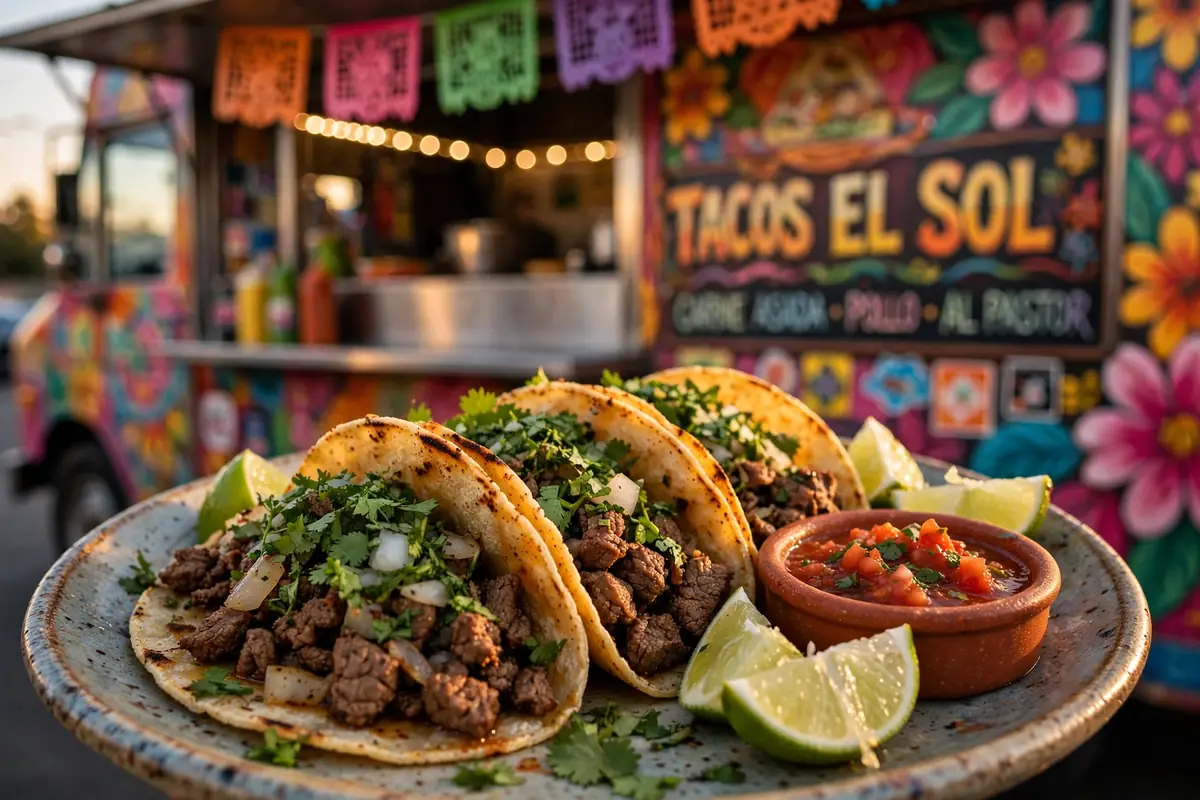
You can eat very well in Los Angeles at every budget, from fine dining in Beverly Hills to taco trucks on the eastside. But three foods are LA’s signatures, and a first trip is not complete until you have tried all three.
Tacos
Los Angeles is the taco capital of the United States, and the best tacos are usually the cheapest: al pastor from a truck, carne asada from a stand, and the city’s own invention — the crispy-shell taco dorado. The eastside, Boyle Heights and the San Gabriel Valley are where the serious taco hunting happens, but you can eat well on almost any corner. Follow the lines: if locals are queueing, the tacos are good.
Practical tip: Order two or three from different stalls and compare — most tacos cost roughly $2–$4 each, so a full taco dinner stays under $15. Go to a truck for the original experience or to Grand Central Market for the classic first-timer version.
Korean food in Koreatown
Koreatown, just west of downtown, is the largest Korean community outside Korea — and the best Korean food in America. The barbecue restaurants, where you grill your own meat at the table, are the famous first-timer experience, but the neighbourhood also has late-night tofu soups, fried chicken and the city’s best 24-hour restaurants. Come hungry, come late, and come with friends.
Practical tip: Barbecue for two costs roughly $50–$70 including the banchan sides — prices are approximate, so check before visiting. Book ahead on weekend evenings, and save room for the late-night dessert cafes.
Grand Central Market and the food halls
Grand Central Market is where LA’s food comes together in one room, but it is not the only food hall worth a stop. Smorgasburg LA, the Sunday open-air market in the Arts District, gathers dozens of vendors under one roof, and the Original Farmers Market at The Grove has been serving the city since 1934. A food hall crawl is the cheapest way to taste the city’s range in a single afternoon.
Practical tip: Go for lunch, go hungry, and go early — the best stalls sell out of the good stuff. Most dishes cost roughly $10–$15, and a full tasting lunch for two stays under $40.
Beyond the big three, leave room for a breakfast burrito, a bowl of ramen in Little Tokyo, a plate of Oaxacan mole on Pico Boulevard, and at least one neighbourhood meal in Silver Lake or Echo Park.
Free things to do in Los Angeles
Los Angeles is unusually generous to budget travellers. Several of its very best experiences cost nothing at all, so mix these into every day of your trip:
- Griffith Observatory and Griffith Park: Free exhibits and the best view in the city — the number-one experience costs nothing.
- The Getty Center and Getty Villa: Free entry to both, with world-class art and gardens; only parking and reservations cost.
- The Broad: Free contemporary art downtown, including the famous Infinity Mirror Rooms with a timed ticket.
- Venice Beach and the canals: Free to walk, photograph and people-watch; the boardwalk is the best free show in the city.
- Runyon Canyon: Free, with the best hike in the city and views from downtown to the ocean.
- Santa Monica Pier and the beach path: Free to walk and cycle; only the rides are ticketed.
- Olvera Street and Union Station: Free to walk, with the oldest part of the city and one of its most beautiful buildings.
- The Hollywood Walk of Fame: Free, a quick stroll past the stars of film, television and music on Hollywood Boulevard.
Build each day around one paid highlight and fill the rest with free sights. That rhythm — one big ticket, lots of walking, one great meal — is how you get the best Los Angeles trip for the least money.
Frequently asked questions
How many days do you need in Los Angeles?
Three full days is the sweet spot for a first trip: one day for Hollywood and Griffith Park, one day for the beach and the Getty, and one day for downtown and the museums. Four to five days works better if you add Universal Studios or Malibu; with a week, add a day trip to Joshua Tree or Santa Barbara.
What is the best time to visit Los Angeles?
March to May and September to November usually offer the best balance of mild weather, clear skies and smaller crowds than mid-summer. Summer is the most lively and best for the beach, but it is hot and crowded, and the coast is often foggy in June. Winter is the cheapest and quietest, but it can rain.
Do you need a car in Los Angeles?
For most trips, yes. LA covers about 469 square miles and the sights are spread out — a rental car is the most practical way to see them. If your visit stays in downtown, Hollywood and Santa Monica, you can manage on Metro rail plus occasional rideshare. A car is essential for Malibu, the studios and day trips.
Is Los Angeles worth visiting if you don’t like Hollywood?
Yes. Los Angeles is far more than Hollywood: the food scene alone is worth the trip, and the city also offers world-class art at the Getty and LACMA, the beaches of Santa Monica and Venice, desert gardens at the Huntington, and neighbourhoods — from Koreatown to Silver Lake — that feel like different cities. Many visitors arrive for the film history and leave talking about the food and the neighbourhoods.
Can you walk to the Hollywood Sign?
You can hike to viewpoints close to the sign, but you cannot touch the letters — they are fenced off and trespassing is illegal. The Mount Hollywood Trail and the Brush Canyon Trail both bring you close, and the Lake Hollywood Park viewpoint gives you the classic photo without a hike. Allow two to three hours for a round-trip hike, and bring water.
Where should a first-time visitor stay in Los Angeles?
Stay in Hollywood and Los Feliz or in Santa Monica. You will be able to walk to the Walk of Fame, the studios and Griffith Park from Hollywood, or to the pier and the beach from Santa Monica, and you will be a short drive from the rest. Light sleepers should stay a few blocks back from Hollywood Boulevard itself, where the crowds run late.
Further reading — Wikipedia, Reddit and Quora
Want to dig deeper or hear directly from locals and other travellers? These pages are the best next stops:
- Wikipedia — Los Angeles — the city’s history, geography and neighbourhoods, and how a Spanish pueblo became the entertainment capital of the world.
- Wikipedia — Griffith Observatory — how a 1935 gift to the city became its most loved public building and the best free view in Los Angeles.
- Wikipedia — Hollywood Sign — the story of the sign, from a 1923 real-estate advertisement to the most famous landmark in the world.
- Reddit — r/LosAngeles — the Los Angeles community on Reddit, where locals answer first-time visitors’ questions and share current tips on traffic, shows, food and neighbourhoods.
- Quora — What are the best not touristy things to do in Los Angeles? — locals’ and travellers’ personal answers on the less touristy side of Los Angeles, from neighbourhood food to hidden hikes.
Your Los Angeles trip, in one paragraph
Start at Griffith Observatory at sunset, walk the Hollywood Walk of Fame in the morning, spend a day on the beach at Santa Monica and Venice, and finish with the Getty Center and a taco crawl — then add one neighbourhood of your own choosing and a plate of Korean barbecue. Do that, and you will leave Los Angeles understanding exactly why people who visit once tend to come back. And if you liked this guide, read our guide to things to do in Chicago and our guide to things to do in Nashville — the same format, the same honest prices, and two more great American cities.
Prices, hours and seasonal schedules in this guide are approximate and were given as a guide only. Please check the official website of each attraction before you visit.

About the Author